ESRI working papers represent un-refereed work-in-progress by researchers who are solely responsible for the content and any views expressed therein. Any comments on these papers will be welcome and should be sent to the author(s) by email. Papers may be downloaded for personal use only.
Surplus Identification with Non-Linear Returns
Peter D. Lunn* and Jason J. Somerville†
Abstract: We present evidence from two experiments designed to quantify the impact of cognitive constraints on consumers' ability to identify surpluses. Participants made repeated forced-choice decisions about whether products conferred surpluses, comparing one or two plainly perceptible attributes against displayed prices. Returns to attributes varied in linearity, scale and relative weight. Despite the apparent simplicity of this task, in which participants were incentivised and able to attend fully to all relevant information, surplus identification was surprisingly imprecise and subject to systematic bias. Performance was unaffected by monotonic non-linearities in returns, but non-monotonic non-linearities reduced the likelihood of detecting a surplus. Regardless of the shape of returns, learning was minimal and largely confined to initial exposures. Although product value was objectively determined, participants exhibited biases previously observed in subjective discrete choice, suggesting common cognitive mechanisms. These findings have implications for consumer choice models and for ongoing attempts to account for cognitive constraints in applied microeconomic contexts.
*Corresponding Author: [email protected]
† Department of Economics, Cornell University.
Keyword(s): Surplus Identification, capacity constraints, bias and precision, S-ID Task
JEL Codes: D11, D12, D81, D83
Acknowledgements: These experiments were conducted as part of PRICE Lab, a research programme funded by four economic regulators in Ireland: the Central Bank of Ireland, Commission for Energy Regulation, Competition and Consumer Protection Commission and ComReg. The authors are especially grateful to Mark Bohacek for assistance with the experimental environment and design, to Stephen Lea, George Loewenstein, Féidhlim McGowan and Ted O'Donoghue for illuminating discussions and comments on drafts, and to audiences at the Economic and Social Research Institute, Network for Integrated Behavioural Sciences and Trinity College Dublin for feedback.
1
Introduction
Benefit accrues to economic agents through the process of exchange when what is acquired is worth
more than what is given up. A prerequisite for making gains from trade, therefore, is that agents
can accurately identify surpluses. This paper presents evidence that cognitive limitations disrupt
surplus identification, even when agents attend fully to a small volume of complete information. The
findings have implications for consumer choice models that aim to incorporate cognitive constraints
and the response of firms to such constraints.
To spot surpluses agents must integrate information about product attributes and prices.
Re-turns to different attributes and combinations of attributes may vary in scale and linearity.
Further-more, in a dynamic economy, prices, attributes and preferences evolve. Learning new associations
between them is an ongoing process for agents seeking to maximise utility; a process that is subject
to at least occasional error. Most of us have goods tucked away at home that did not live up
to our assessment when we bought them, as well as cherished possessions that we value far more
than originally anticipated. Doubtless such outcomes are, in part, due to stochastic variation in
unobservable product quality, but they may also be caused by failure to integrate observable
infor-mation accurately when deciding to purchase, i.e., to imprecise identification of surpluses. Thus,
the human ability to integrate non-linear and, often, novel attribute information is fundamental to
economic exchange and market efficiency. It is this ability that we examine experimentally.
Empirical assessment of how accurately people identify surpluses is, of course, hampered by the
subjective and unobservable nature of preferences. Previous investigations have mainly focused on
markets where relative surpluses can be (nearly) objectively defined, for example where goods are
(effectively) homogeneous (Grubb, 2009; Wilson and Waddams Price, 2010; Choi et al., 2010). The
assumption is that where consumers opt to pay more for essentially the same product they are failing
to identify surpluses accurately. The evidence, reviewed briefly below, suggests that consumers in
some markets fail to identify the highest surpluses, with mixed evidence regarding learning. Such
findings are generating an increasingly rich theoretical literature, with contrasting approaches to
the formalisation of cognitive constraints within models of consumer decision-making (Woodford,
2014), discrete choice (Matejka and McKay, 2015) and, increasingly, industrial organisation (Grubb,
2015).
adapted from the study of perceptual detection, keeping product attributes and associated returns
under complete experimental control. As described in detail below, we incentivise participants
to identify objectively defined surpluses based on a price and just one or two directly observable
product attributes. The method measures the magnitude of surplus required for reliable detection
when returns to attributes differ in linearity, scale and relative weight. The results reveal how the
accuracy of consumers’ surplus detection varies as a function of the shape of attribute returns. This
variation in accuracy is illuminating with regard to the concept of a “complex product”, which is
extensively used but rarely defined.
Our experimental results suggest that descriptively accurate choice models might focus on
im-precision in the integration of information when consumers must map incommensurate internal
scales to compare attributes and prices. We show that this imprecision is large and varies
sys-tematically with the shape of attribute returns. When people map attribute magnitudes to prices
they are able to detect a surplus reliably only when it corresponds to a substantial proportion of
the price or attribute range. The experiments reveal that surplus detection is largely unaffected
by whether returns are linear or non-linear, provided they are monotonic, but that it deteriorates
when returns are non-monotonic. Moreover, despite considerable exposure to the product and
re-peated feedback, decisions are subject to persistent biases, with only a modest role for learning.
We conclude that inaccuracy of surplus identification on this scale is likely to be an important
determinant of consumer outcomes in different product markets, with associated implications for
microeconomic models. The magnitude of the errors we uncover is consistent with Luce’s (1959)
view that decision-making is essentially a process of probabilistic choice.
The paper is organised as follows. Section 2 briefly reviews evidence on the ability of consumers
to identify surpluses, together with relevant theoretical developments. Section 3 describes the
“Surplus Identification” (S-ID) Task. Section 4 describes Experiment 1, which investigated surplus
identification for single-attribute products with varying degrees of diminishing returns. Section 5
presents Experiment 2, which increased the complexity of the attribute-price relationship via a
sec-ond attribute and non-monotonic associations. Section 6 explores additional hypotheses regarding
2
Literature review: Limits to Surplus Identification
2.1 Empirical Evidence
A growing empirical literature documents how consumers, in at least some markets, miss out on
surpluses. Apparent “mistakes” can be identified without the need to make strong assumptions
about preferences where offerings are (effectively) homogeneous and so the maximisation of
con-sumer surplus reduces to a process of cost minimisation, assuming positive marginal utility of
money. For instance, substantial numbers of mobile phone consumers fail to choose the lowest cost
tariff for their personal pattern of usage from a limited number of non-linear price plans (Grubb,
2009; Lambrecht and Skiera, 2006), probably because of overconfidence and inattention (Grubb
and Osborne, 2015). Similar evidence has been obtained for two- and three-part tariffs in domestic
electricity markets by Wilson and Waddams Price (2010), who conclude that “many of the choices
are consistent with genuine decision error or inattention” (p.665). Consumers in these studies faced
non-linear price structures. Some evidence suggests that non-linear returns to attributes may be
difficult for consumers to assess, including non-linear measures of fuel efficiency in the car market
(Larrick and Soll, 2008) and returns to compound interest in financial services markets (Lusardi
and Mitchell, 2011).
Other evidence suggests that consumers sometimes fail to assess surpluses accurately because
they overweight largely irrelevant but prominently advertised product attributes, or underweight
price components. This can be as simple as overweighting premium brands and, hence, failing to
benefit from cheaper generic medicines (Bronnenberg et al., 2015). In relation to indexed mutual
funds, laboratory experiments (Choi et al., 2010) and data on fund flows (Barber et al., 2005)
suggest overweighting of past performance information and underweighting of fees. This may have
implications for market structure since, despite the homogeneity of the good, price dispersion for
indexed funds rivals that for actively-managed ones (Hortacsu and Syverson, 2003). Grubb (2015)
reviews additional evidence for consumer errors when prices are multidimensional.
2.2 Constrained Capacity in Consumer Choice Models
Since at least Simon (1955), some microeconomic models have sought to incorporatebounded
ad-ditional capacity constraints to an otherwise standard utility maximisation model (Lipman, 1995).1
More recent models ofrational inattentionexploit information theory to recast economic agents as
input-processing vehicles subject to finite Shannon capacity limits (Sims, 1998, 2003; Sims et al.,
2010).2 Agents allocate limited attention optimally across information sources.3
Contrastingly, Woodford (2014) applies a capacity constraint to the processing of information
over time rather than across multiple sources, modelling the agent as an optimal sensor facing a
discrete choice, where the benefit of waiting to observe more signals trades off against the
prob-abilistic cost of an option becoming unavailable. Again, a fundamental limit is imposed on the
mutual information between the input state and an output signal, but the central trade-off to be
optimised differs. Because Woodford (2014) incorporates time, his model makes predictions about
decision response times that we test via the S-ID task.
Models of rational inattention provide generalisable explanations for stochastic errors, but little
guidance on the extent of inaccuracy or variation in errors across contexts. Other approaches
maintain the optimisation framework but introduce a non-optimal “behavioural” assumption to
explain why, in specific circumstances, surpluses may not be accurately identified. K˝oszegi and
Szeidl (2013) propose that utility is “focus weighted”, with greater weight placed on attributes
that differ most between available options. Bordalo et al. (2013) make the similar, but distinct,
assumption that additional weight is given to options with attributes that stand out relative to
other options. Implicit is a more general assumption about cognitive capacity, namely that there is
either too much immediate attribute information or too great a reliance on memory for attribute
weights. The result is context-specific calibration and, hence, non-optimal attribute weighting and
inaccurate surplus identification.
The above models represent advances in our understanding of how agents might miss out on
surpluses. Despite differences of approach, they possess important commonalities. Cognitive
ca-pacity is constrained with respect to the volume of relevant information that can be processed, or
attended to, simultaneously. However, the models make only limited predictions about the
mag-nitude and variability of errors. Yet the source of inaccuracies, their scale and variation across
1Alternative approaches dispense entirely with the concept of optimisation in favour of heuristics (see Gigerenzer
and Selten (2002)). See also Harstad and Selten (2013) and Rabin (2013).
2While Shannon Entropy has been primary used to model information-processing costs in the rational inattention
framework, more generalized cost functions exist (see Caplin and Dean (2013)).
3When each option is equally likely to be chosen ex ante, the probability of choosing an item reduces to the
markets have further theoretical significance. Most obviously, small individual errors may imply
trivial deviations from optimal outcomes, but large errors could imply significant welfare losses.
Consumer errors have implications for industrial organisation too. An increasingly developed
the-oretical literature explores the implications when the potential for errors is endogenous both to the
extent of consumer search and to firms’ decisions to exploit opportunities to obfuscate quality or,
more commonly, price (Gabaix and Laibson, 2006; Carlin, 2009; Wilson and Waddams Price, 2010;
Ellison and Wolitzky, 2012; Grubb, 2015). While space does not permit a thorough treatment
here, two points are notable. First, there is empirical evidence of firm obfuscation (Ellison and
Ellison, 2009; Muir et al., 2013). Second, the precise source of consumer error can be important to
firms’ decisions to obfuscate, to equilibrium price dispersion and to the relationship between prices
and marginal costs (Gabaix and Laibson, 2006; Gaudeul and Sugden, 2012; Gabaix et al., 2015;
Spiegler, 2014).
2.3 Learning to Identify Surpluses
The view that preferences develop over time through mistakes and feedback forms the basis of
Plott’s (1996)discovered preferences hypothesis. Applied to surplus identification, it suggests that
consumer mistakes reduce with feedback and market experience as consumers learn what they like.
Evidence of consumers’ capacity for learning is mixed. Costly mistakes can lead consumers to
make better choices, for instance in local telephony and credit card markets (Miravete, 2003;
Agar-wal et al., 2005, 2008). However, in telecommunications and electricity markets consumer mistakes
have been shown to persist (Lambrecht and Skiera, 2006) and to repeat over multiple switches
(Wilson and Waddams Price, 2010). This mixed evidence may imply that different psychological
mechanisms are key to different instances where consumers misjudge surpluses. The nature of
feed-back may matter. A credit card customer who does not initially consider the possibility of incurring
a particular penalty, may factor this possibility in after a single application of the fee. In contrast,
if surpluses are misjudged in a market with multiple product attributes or price components, agents
may remain unaware of the missed surplus and, consequently, error prone.
Even given sufficient information and feedback, evidence from psychology suggests that the
potential for learning may ultimately be limited. Dating back to Miller (1956) and beyond, an
that require them to process, simultaneously, more than around four separate “chunks” of
infor-mation (Cowan, 2000). A substantial literature also investigates the ability to learn functional
relationships, typically by requiring individuals to predict outcomes based on the magnitudes of
multiple cues. Broadly speaking, simple monotonic associations are learned best, but performance
deteriorates as cues are added and non-linear functions become more complex (Busemeyer et al.,
1997).
3
The Surplus Identification (S-ID) Task
3.1 Conceptual framework
The empirical research described above highlights markets where consumers misjudge surpluses.
Models of consumer choice and industrial organisation have been amended to account for the implied
limits to cognitive capacity. Yet a richer understanding of the prevalence, magnitude, persistence
and cause of consumers’ failure to identify surpluses is required. The experiments described here
offer a fresh approach, which centres on obtaining full experimental control over the scale, linearity
and relative weight of product attributes. This section introduces the logic of the experimental
task.
The Surplus Identification (S-ID) Task is an experimental paradigm devised by Lunn and
Bo-hacek (2015). It measures consumers’ ability to integrate attribute information from first
princi-ples, beginning with simple products that possess a single clearly observable characteristic, then
increasing complexity in an experimentally controlled fashion. In this way, it permits the empirical
isolation of those aspects of the attribute-price relationship that have a negative impact consumers’
surplus identification, allowing controlled investigation of what truly constitutes a “complex”
prod-uct. This contrasts with previous approaches that test for consumer biases in specific markets.
Instead the task isolates cognitive limitations that are likely to generalise across markets.
The S-ID task blends techniques from studies of perception, psychophysics and experimental
economics. Participants are presented with novel, computer-generated products, consisting of one or
more attributes and a price tag. We refer to these products as “hyperproducts”, because they permit
complete experimental control over the attribute-price hyperspace. Our hyperproducts possess
participants, thereby minimising any influence of prior beliefs or preferences. The attributes consist
of standard perceptual stimuli, the relative magnitudes of which previous studies of perception have
shown can be discriminated with high accuracy. This is important, because we are interested in how
accurately consumers integrate information to gauge surplus, not how accurately they discriminate
perceptual magnitudes.
The S-ID task tests surplus identification via a two-alternative forced-choice (2AFC) task,
as routinely employed in studies of perceptual detection (Macmillan and Creelman, 2004). The
attribute-price relationship is set by the experimenters and participants are incentivised to learn
it from examples and practice with feedback. Prices, attribute magnitudes and, hence, surpluses,
then vary over a succession of trials. On each trial, the consumer judges the surplus to be either
positive or negative, responding via one of two buttons, then receiving feedback. The S-ID task
therefore simulates the process of encountering a new product, making repeated purchase decisions
and receiving feedback about the surplus gained (or lost). Thus, the task circumvents the problem
of unobservable preferences by incentivising participants to identify surpluses that are objectively
defined and expressed in monetary terms. With this level of experimental control, surplus can be
varied from trial to trial and a precise statistical estimate of the probability of detection obtained.
Moreover, because the data are collected as a time-series, the extent and speed of learning can be
observed.
The S-ID task borrows from experimental economics by offering a clear incentive to adopt the
preference function set by the experimenters. In the experiments described below, a tournament
incentive was used. The most accurate performers received a significant monetary reward. Hence,
each participant’s unambiguous incentive was to learn and to apply the objective function that
related attribute magnitudes to prices as quickly and accurately as possible.
Several properties of the S-ID task are important to note. First, it is not a valuation or
pricing task: participants do not generate estimates of value or price, but decide only whether a
surplus is present. This feature is by design. When consumers decide on purchases they do not
typically generate numeric assessments. Second, participants are not placed under time pressure
but complete the sequence of trials in their own time, generally taking longer on more difficult trials.
While it is an empirical question as to whether surplus identification might improve with longer
feel they need to. Third, the unambiguous incentive to adopt the predetermined attribute-price
relationship imposes preferences upon participants. We contend that this process mimics learning
to apply subjective preferences formed through experience of real products. As described below,
the data offer empirical support, since we observe biases in our data that parallel those observed
in subjective discrete choice experiments, implying common cognitive mechanisms.
Overall, we find that participants readily grasp the idea of the S-ID task and compete for
rewards. The level of experimental control over repeated decisions generates rich data and permits
analyses that are beyond what is typically possible in most consumer choice experiments.
3.2 Main Measures
The SI-D Task is able to distinguish between inaccuracy arising from bias and from imprecision.
To quantify these effects, we employ two concepts from psychophysics: the “point of subjective
equality” (PSE) and the “just noticeable difference” (JND). Both correspond to the parameters of
a logistic “psychometric function” fitted to the bivariate data, where the binary dependent variable
is whether the participant responded that the surplus was positive and the continuous exogenous
variable is the magnitude of the surplus. When the surplus is very high, participants always respond
that it is positive; when it is very low they always respond that it is negative. Intervening levels
produce probabilistic responses.
The PSE and JND correspond to the location and slope respectively of the best fitting
psycho-metric function. Figure 1 illustrates the PSE and JND for data from a participant in one condition
in our first experiment. The PSE estimates the surplus at which the participant responded with a
probability of 0.5. Thus, the negative PSE indicates overestimation of surplus; a positive PSE would
indicate underestimation. One JND is then the difference in surplus required for the probability
that the participant detected a positive (or negative, since the psychometric function is symmetric)
surplus to rise from 0.5 to 0.86, which equates to one standard deviation of the underlying logistic
distribution. For an unbiased subject, it estimates how much surplus is needed to identify the
We model the probability of responding “Yes” to a surplus by the standard logistic formula, 4
Pr(“Yes”) = exp(θ0+θ1Surplus(%)) 1 + exp(θ0+θ1Surplus(%))
. (1)
The estimated coefficients for this sample data are θb0 = 0.77 and θb1 = 9.50, giving a PSE of
b
θ0/θb1 = −8.1% and a JND of π/(θb1
√
3) = 19.1%. Hence this participant perceived zero surplus
when in fact there was a negative surplus of 8.1%. The JND indicates than the participant required
[image:10.612.135.485.250.487.2]an increase in surplus equivalent to 19.1% of the price range to detect it with 86% reliability.
Figure 1: Sample data from experiment 1
The primary analyses measure changes in the PSE and JND by condition and over time.
Es-timating individual psychometric functions by participant and condition – as in equation (1) –
entails loss of statistical efficiency, so we instead estimate mixed effects logistic (MEL) models to
the complete data. Individuals are assumed to vary randomly in bias and precision, allowing for a
correlation between the two. Tests for changes by condition in the underlying fixed effects
param-eters constitute the main hypothesis tests of interest. Relative to an individual-level analysis, this
approach improves statistical power (Moscatelli et al., 2012).
4The use of a logistic is standard in psychophysics and micro-founded by models of rational inattention in situations
4
Experiment I
The most simple test of surplus identification with non-linear returns involves a single-attribute
product with a monotonic, continuous relationship between attribute and price. Experiment 1
aimed to generate baseline measures of accuracy and learning when facing diminishing returns to
attributes of varying degrees.
4.1 Method
Consumers from the Dublin area (N=36) were recruited through a market research company,
bal-anced by gender (19 female), age (M=36.1; SD=12.8) and working status (61% employed). Each
received a e20 participation fee. Participants were informed that the most accurate performer in every ten would win a e50 shopping voucher. (In addition to the main sample of 36, another 26 participants completed a pilot experiment to test how accurately the product attributes could be
discriminated, as briefly described at the beginning of Section 4.2).
The three “hyperproducts” used were Golden Eggs, Victorian Lanterns and Mayan Pyramids
- products with intuitive value that participants would be highly unlikely to have valued or traded
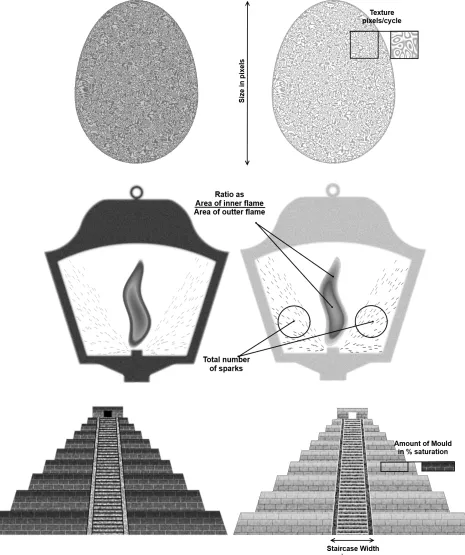
previously. Each hyperproduct could vary on two attributes (see Figure 2).5 For the Golden Egg,
overall size and the fineness of the surface texture (highest spatial frequency component) varied.
For the Victorian Lantern, the ratio of an inner blue flame to the overall flame and the number of
sparks emitted from the base varied. For the Mayan Pyramid, the width of the staircase and the
mouldiness of the bricks varied. On any one experimental run, however, participants attended to
only a single attribute, which uniquely determined the surplus. Each of the six attributes therefore
matched a standard visual discrimination task that has been thoroughly investigated previously:
discrimination of size, texture, ratio, numerosity, interval and colour saturation respectively.
The objectively defined price of the product on each trial depended on one attribute, as follows:
Phct=βh0+βh1xtα(c), xt∈[0,1], α(c)∈ n
1,2
3, 1 3
o
(2)
wherePhct is the price of hyperprudcth on trialtfor condition c in Euro,βh0 is the minimum
price a hyperproduct can take, βh1 scales attribute magnitudes onto the price range for a given
5
hyperproduct,xtis the normalised magnitude of the relevant attribute on trial t, and α(c) defines
the degree of diminishing returns. The value ofα(c) was therefore the main manipulation of interest
and took one of three values - 1 (linear,c= 1), 2/3 (moderate diminishing returns,c= 2), and 1/3
(rapid diminishing returns, c = 3). For each hyperproduct, the price range was always the same:
e180-420 for the Golden Egg;e7-35 for the Lantern; ande23,000-172,000 for the pyramid. Participants completed the following experimental procedure.6 Before each of six (two attributes
x three products) pseudo-randomised experimental runs, they were shown systematic examples of
attribute magnitudes and corresponding prices, followed by eight “practice” trials. They then
un-dertook 72 “test” trials. On each trial, t = 1, ...72, the task was always the same, to determine
whether the product was worth more (surplus) or less (no surplus) than the displayed price.
Par-ticipants proceeded at their own speed, with brief breaks between experimental runs and a longer
refreshment break after the third run. The session, including break, typically lasted just under an
hour.
The main experimental conditions, c ∈ {1,2,3}, corresponded to the three values of α(c),
pseudo-randomised across participants and attributes such that each participant completed two
runs for each condition, with the proviso that the two attributes of each hyperproduct corresponded
to different values of α(c). In addition, to check whether perceptual constraints played any role,
the range,r ∈ {high,low}, of attribute magnitudes was manipulated. In the “high” condition, the
maximum available perceptible range (based on pilot studies) was used, while in the “low” condition
this range was halved. Notwithstanding the non-linearity, one unit of the attribute was therefore
worth twice as much in the low range condition. Hence there was a total of three conditions, c,
three hyper-products,h, and two range conditionsr, leading to 18 possible combinations that were
pseudo-randomised across our 36 subjects.
The surplus, ∆t, on each trial was selected using an adaptive procedure. Each run of 72 test
trials consisted of nine blocks of eight. Within a block, ∆t corresponded to four positive and four
equal and opposite negative surpluses with a constant separation, {7δ, 5δ, 3δ, δ, -δ, -3δ, -5δ,
-7δ}, where δ was a proportion of the mean price, presented in a random order. If the participant
responded correctly on seven or eight trials,δ was reduced for the next block; if six were correct,δ
6
remained unchanged; if less than six, δ was increased. Thus, the difficulty of the task adapted to
the participant’s performance to aid efficient estimation of their capability.7
For each trial, t, the hyperproduct and displayed price were selected as follows. A “display
price”,Phtd, was drawn at random from a uniform distribution such thatPhtd ∈[βh0+|∆t|, βh0+βh1− |∆t|].
The surplus was added to generate the “product price”, i.e.,Pht=Phtd+∆t. The unique solution for
the relevant attribute magnitude, xt, was then derived and set according to (2). The non-relevant
attribute magnitude was selected randomly. Note that there was no correlation between the display
price and the correct answer, i.e, the probability of a positive or negative surplus was always 0.5.
Both the hyperproduct and its display price remained on screen until the participant responded
via one of two buttons on a response box. The participant then received three types of feedback:
a green tick or a red cross indicated whether the response was correct, an auditory beep
accom-panied an incorrect answer, and the truePht was presented. Feedback was left on screen until the
participant pressed a “NEXT” button.
4.2 Pilot Experiment
Prior to the main experiment, a pilot (N=26) checked the perceptual ability to discriminate the
attribute magnitudes. The findings matter, because noise inherent in perceptual representations
is not of interest here; imprecision in relating those representations to surpluses is. The pilot
design was identical to that described above, except that two hyperproducts were simply presented
alongside each other. One had an attribute magnitude calculated as for Phtd, the other as for Pht.
The participant had to determine which was superior.
Since normalised attribute magnitudes vary from zero to one, the JND can be measured as an
absolute difference. Figure 3 presents mean JNDs for the six attributes, in high and low range
conditions.8 The attributes were discriminated with high accuracy, with differences of less than 0.1
perceived reliably. There was variability across the attributes, with between 10 and 31 separate
levels of magnitude discernible.9 Thus, if perceptual noise were to limit performance in Experiment
7
Note that participants were aware that an adaptive procedure was being followed but unaware of how it worked and, hence, not able to make inferences based on the sequence of presentations. They were also aware that performance was being measured by the overall accuracy obtained, not by the proportion of correct responses. Thus, they understood that there was no gain to be had from temporarily responding incorrectly to then obtain easier trials.
8
Twelve runs for the mould condition were excluded due to a data recording error.
9
1, a similar pattern across attributes would arise.
Figure 3: Average JNDs across attribute and range condition.
4.3 Results
Mixed Effects Logits (MELs) were estimated using the following general specification:
In
Pr(“Y es”) 1−Pr(“Y es”)
ihcrt
= (φ0+µi) + (γ0+υi)sihcrt+φzhrct+γzhrct∗sihcrt (3)
where sihcrt = ∆icrt/βh1 is the normalised surplus for individual, i, on trial, t, for a given
hyperproduct, h, condition c and attribute range r. The fixed effects coefficients are denoted by
φ0, γ0,φ and γ. The model has normally distributed random effects, µi and υi with correlation
corr(µi, υi).10 zhrct is a vector containing the experimental manipulations of interest, including
dummy variables for the relevant range, r, extent of non-linearity, α(c), and any other variables
or interactions of potential interest. zhrct enters both individually and as an interaction term with
surplus,sihcrt. The vector of coefficientsφtherefore determines how bias varies across experimental
conditions, whileγ determines variation in precision.
From the properties of the logistic distribution, the average JND and PSE for a given attribute,
10
Note that the alternative fixed effects approach, with eachµiandυiincluded as regressors, leads to no substantive
change in the overall pattern of results. Moreover, the estimatedµiandυiare approximately normally distributed,
j= 1,2,3,4,5,6 (two for each hyper-product), and value ofα≡α(c), are given by
J N Dj,α=
π √
3.
1
γ0+γj +γα+γj∗α
(4)
P SEj,α=−
φ0+φj+φα+φj∗α
γ0+γj+γα+γj∗α
(5)
where, as in equation (3), eachφterm is the estimated coefficient for the appropriate condition
and each γ is the estimated coefficient for its interaction with the surplus. Thus, γj∗α is the
coefficient for the two-way interaction between the dummy variable for an attribute, the dummy
variable indicating the extent of non-linearity, and the surplus. Intuitively, therefore, it estimates
the impact on the slope of the psychometric function (and hence on precision) of the combination
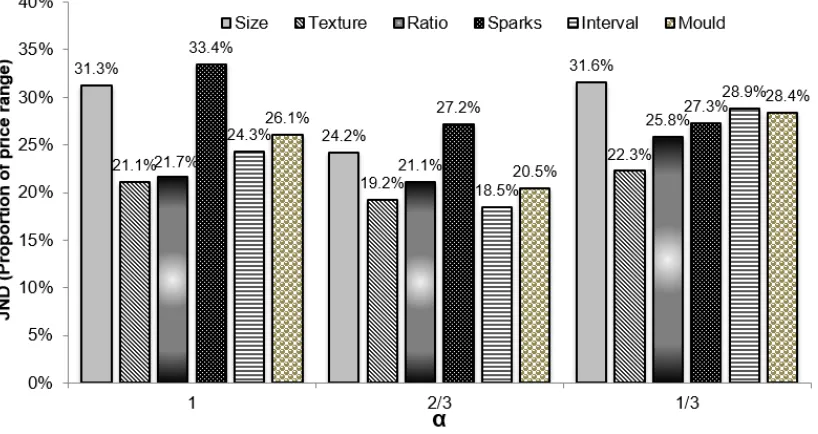
of a specific attribute and a specific α. Figure 4 presents estimated JNDs by attribute, j and
[image:16.612.112.521.353.570.2]condition,c.
Figure 4: Average JNDs and acrossα condition and attributes.
Note: JNDs estimated from MEL model with dummies for each attribute and level ofα, plus interactions between the two.
Three findings are of note. The first is the level of absolute performance. Even with a single,
easily perceptible attribute related monotonically to price, surplus identification was imprecise. To
identify a surplus reliably, participants required it to exceed 18% of the price range, with a mean
discrimination (c.f., Figure 3), suggesting that imprecision did not result from perceptual noise.
Third, the non-linearity in the attribute-price relationship had little impact. In fact, there was a
slight advantage for the moderate diminishing returns case,α= 23.
Relative to imprecision, observed biases were small, The PSE was always in the region of 0-5
percentage points, albeit with a slight overall negative bias. On average, participants judged that
the surplus was zero when the product was, in fact, worth 1.5 percentage points less than the
displayed price.
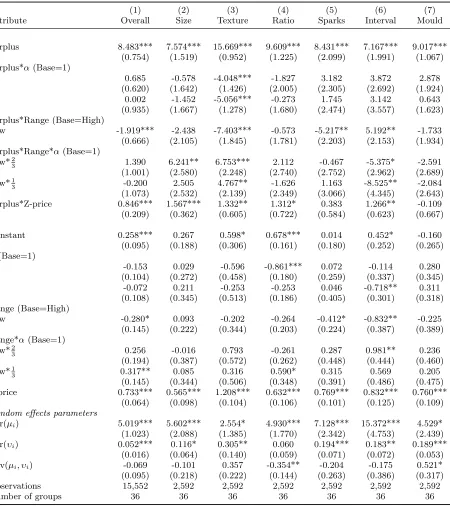
Table 1 provides a more detailed picture. Column (1) presents an overall model, aggregated
across attributes. The coefficient on the surplus is of course highly significant. The remainder
of the top half of the table presents interactions that test the impact of conditions on precision.
There was no overall effect of either non-linearity. The low attribute range had a modest negative
effect on the precision of surplus identification, although less so in the case of moderate diminishing
returns (α= 23). Precision was also influenced by location in the price range. The variable ‘Z-price’
corresponds to the display price expressed in standard deviations. The positive coefficient implies
that participants were somewhat more precise in the upper part of the price range.
The constant and its interaction terms indicate how the bias varied across conditions. The
positive coefficient confirms the slight general tendency to overestimate surplus. However, the
much larger effect was how the extent of bias varied across the price range. The positive coefficient
on Z-price shows that participants underestimated surpluses at the bottom of the price range and
overestimated them at the top.
Columns (2)-(7) estimate the model separately for each attribute.11 Variability in precision by
non-linearity and range was unrelated to perceptual discrimination, but followed a more complex
pattern. The advantage of moderate diminishing returns when the attribute range was low was
driven by two attributes only: the size and texture of the Golden Egg. Improved precision at higher
prices occurred for four of the six attributes. These inconsistencies may partly reflect idiosyncratic
aspects of the price ranges chosen for the three hyperproducts, such as the locations of salient round
prices, or may indicate non-linearities inherent in the perceptual coding of attribute magnitudes.
Nevertheless, four results were consistent across attributes: (1) surplus identification was imprecise;
(2) there was no advantage for linear over non-linear mappings of attributes to prices; (3) surpluses
11
Table 1: Mixed Effects Logit: Baseline models by attribute
(1) (2) (3) (4) (5) (6) (7)
Attribute Overall Size Texture Ratio Sparks Interval Mould Surplus 8.483*** 7.574*** 15.669*** 9.609*** 8.431*** 7.167*** 9.017***
(0.754) (1.519) (0.952) (1.225) (2.099) (1.991) (1.067) Surplus*α(Base=1)
2
3 0.685 -0.578 -4.048*** -1.827 3.182 3.872 2.878
(0.620) (1.642) (1.426) (2.005) (2.305) (2.692) (1.924)
1
3 0.002 -1.452 -5.056*** -0.273 1.745 3.142 0.643
(0.935) (1.667) (1.278) (1.680) (2.474) (3.557) (1.623) Surplus*Range (Base=High)
Low -1.919*** -2.438 -7.403*** -0.573 -5.217** 5.192** -1.733 (0.666) (2.105) (1.845) (1.781) (2.203) (2.153) (1.934) Surplus*Range*α(Base=1)
Low*23 1.390 6.241** 6.753*** 2.112 -0.467 -5.375* -2.591 (1.001) (2.580) (2.248) (2.740) (2.752) (2.962) (2.689) Low*1
3 -0.200 2.505 4.767** -1.626 1.163 -8.525** -2.084
(1.073) (2.532) (2.139) (2.349) (3.066) (4.345) (2.643) Surplus*Z-price 0.846*** 1.567*** 1.332** 1.312* 0.383 1.266** -0.109 (0.209) (0.362) (0.605) (0.722) (0.584) (0.623) (0.667) Constant 0.258*** 0.267 0.598* 0.678*** 0.014 0.452* -0.160 (0.095) (0.188) (0.306) (0.161) (0.180) (0.252) (0.265)
α(Base=1)
2
3 -0.153 0.029 -0.596 -0.861*** 0.072 -0.114 0.280
(0.104) (0.272) (0.458) (0.180) (0.259) (0.337) (0.345)
1
3 -0.072 0.211 -0.253 -0.253 0.046 -0.718** 0.311
(0.108) (0.345) (0.513) (0.186) (0.405) (0.301) (0.318) Range (Base=High)
Low -0.280* 0.093 -0.202 -0.264 -0.412* -0.832** -0.225 (0.145) (0.222) (0.344) (0.203) (0.224) (0.387) (0.389) Range*α(Base=1)
Low*2
3 0.256 -0.016 0.793 -0.261 0.287 0.981** 0.236
(0.194) (0.387) (0.572) (0.262) (0.448) (0.444) (0.460) Low*1
3 0.317** 0.085 0.316 0.590* 0.315 0.569 0.205
(0.145) (0.344) (0.506) (0.348) (0.391) (0.486) (0.475) Z-price 0.733*** 0.565*** 1.208*** 0.632*** 0.769*** 0.832*** 0.760***
(0.064) (0.098) (0.104) (0.106) (0.101) (0.125) (0.109)
Random effects parameters
Var(µi) 5.019*** 5.602*** 2.554* 4.930*** 7.128*** 15.372*** 4.529*
(1.023) (2.088) (1.385) (1.770) (2.342) (4.753) (2.439) Var(υi) 0.052*** 0.116* 0.305** 0.060 0.194*** 0.183** 0.189***
(0.016) (0.064) (0.140) (0.059) (0.071) (0.072) (0.053) Cov(µi, υi) -0.069 -0.101 0.357 -0.354** -0.204 -0.175 0.521*
(0.095) (0.218) (0.222) (0.144) (0.263) (0.386) (0.317) Observations 15,552 2,592 2,592 2,592 2,592 2,592 2,592
Number of groups 36 36 36 36 36 36 36
were underestimated for low-value products and overestimated for high-value ones; (4) there was
heterogeneity across individuals, with the standard deviation across consumers equivalent to a
difference in JND of approximately 6 percentage points of the price range.12
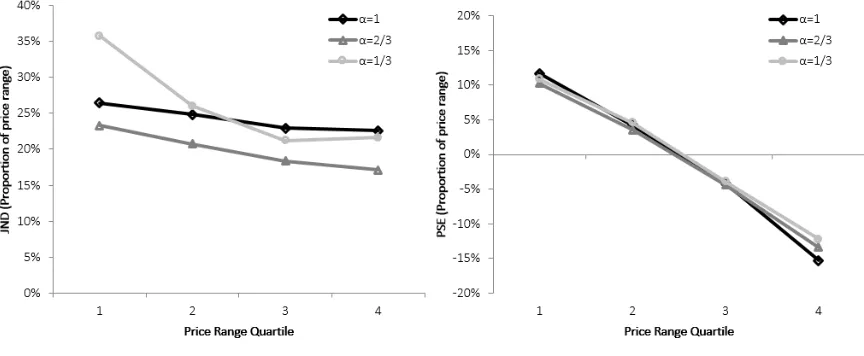
Figure 5 provides more intuition by presenting the estimated JND and PSE across price
quar-tiles, split by α condition. This confirms the modest improvement in precision at higher prices.
The JND for the first price quartile with severe diminishing returns (α= 13) stands out, suggesting
that when small changes in attribute magnitude translated into large changes in price,
percep-tual constraints evenpercep-tually reduced precision. However, changes in precision across the price range
were small compared to changes in bias, which were approximately linear and consistent across
[image:19.612.96.528.314.492.2]conditions.
Figure 5: JND and PSE by α across price range
Note: The above estimates of the PSEs and JNDs are based on an estimated MEL that allows for all possible two-and three- way interactions between the price range quartiles,αconditions and the size of the surplus.
4.3.1 Learning
Trial number within each experimental run and its squared term were added to the baseline
spec-ification. Perhaps surprisingly, neither had a statistically significant impact on precision or bias
(p>0.25), indicating a lack of learning despite multiple exposures with feedback. To examine this
12
This is captured by the random effects parameter var(µi). While there was also variation in bias across individuals,
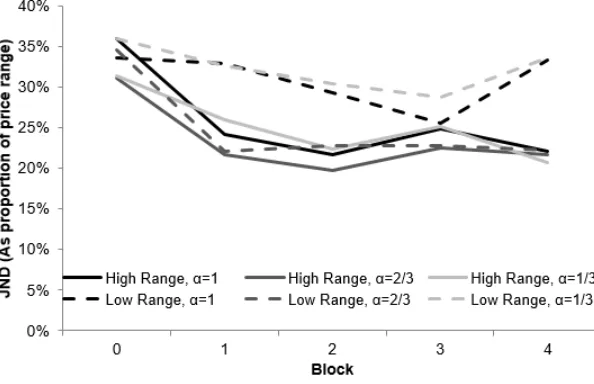
Figure 6: Average JND over time per experimental run.
Note: Each PSE is computed based on the parameter estimates from an MEL with non-linearity, range and block dummies specified, as well as their interactions. Block 0 refers to the initial 8 practice trials participants completed.
further, dummies separating each experimental run into four blocks of 18 trials were added to the
specification, which was also expanded to include a fifth block for the initial (non-incentivised)
practice trials (block 0). There was a statistically significant improvement in precision between the
practice and first block of test trials (p<0.001), but not thereafter. Although this difference may
reflect factors other than learning, such as participants experimenting with different strategies, the
implication remains that any learning was rapid. Figure 6 shows how JNDs evolved across
experi-mental runs for each α and range condition. For four of the six conditions, peak performance was
achieved after the practice trials, while for the other two learning was not robust.
A small learning effect did emerge over the whole experimental session (p<0.1), equivalent to
a decrease in JND of approximately three percentage points after 300 trials. This effect size is
small and its positive direction suggests that fatigue was not a factor. There was no equivalent
improvement in bias.
4.4 Discussion
The S-ID task produces quantitative measures of precision and bias in surplus identification. Facing
and systematically biased over the price range. Performance is clearly constrained by some form
of cognitive limitation.
The simplicity of the economic decision in Experiment 1 is important. Several recent models
that impose cognitive constraints on consumer choice hinge on how agents allocate limited attention
(Lipman, 1995; Sims, 2003), focus on a subset of relevant information (Bordalo et al., 2013; K˝oszegi
and Szeidl, 2013) or how they account for inevitable perceptual error (Woodford, 2012; Caplin and
Martin, 2015). Participants in Experiment 1 devoted their full attention to one salient attribute,
so allocation of attention across attributes was not involved. Similarly, attributes were designed
to minimise perceptual error. Indeed, the pilot study showed that relative magnitudes could be
perceived with high but variable precision across attributes. Contrastingly, surplus identification
was consistently imprecise. The limiting factor was, plainly, not perceptual in the sense of
dis-criminating relative magnitudes. Nor was performance affected by non-linear returns to attributes,
despite previous evidence that in some contexts consumers fail to account for non-linearities (see
Section 2).
Instead, the imprecision of surplus identification in Experiment 1 implies a more fundamental
limitation, the locus of which is neither perceptual, nor attentional, nor related to the shape of
returns. Rather, the ability to identify surpluses is limited by the need to compare relative location
on two otherwise incommensurate internal scales, one for monetary amounts, the other for attribute
magnitudes. The results suggest that internal representations of attributes can vary in granularity
(i.e., perceptual error) and linearity with only minimal impact on performance. Precision of surplus
identification is instead dominated by the mapping of one internal scale on to another, with limited
scope for learning once an initial mapping has been established. Such a constraint would explain the
consistent absolute level of performance, whereby the average observer requires a surplus equivalent
to one fifth of the price (or, equivalently, attribute) range for detection to be reliable.
An advantage of the S-ID task is that it generates separate measures of precision and bias. While
constraints in the mapping of incommensurate internal scales might explain uniform imprecision
across attributes, the consistent bias across the price range also requires explanation. Another
way to describe this bias is that, over trials, participants responded more to variation in attribute
magnitudes than to variation in prices. However, since this effect was independent of attribute,
might reflect a tendency for variation on a perceptual scale to be overestimated in comparison with
variation on a numeric one. This could happen if, for instance, the perceptual scale were subject to
visual contrast effects, leading differences in attribute magnitudes between successive presentations
to be exaggerated.
5
Experiment 2
The negligible impact of non-linear returns on surplus identification in Experiment 1 invites further
increases in the complexity of returns to attributes. The attribute-price relationships of everyday
products are frequently more elaborate than simple monotonic functions. What forms of complexity
might disrupt the uniformity of precision?
Experiment 2 increased the complexity, first, by incorporating a second attribute and, second,
by defining the attribute-price relationship via a range of more complex and economically interesting
functional forms, including some standard preference functions. (Hereafter we refer to the function
defining the attribute-price relationship as the “value function”.) These included functions with
increasing returns as well as non-monotonic and cyclical relationships.
The multi-dimensional attribute space also allowed us to test additional hypotheses arising
from Experiment 1. First, we reasoned that if biases when mapping attributes to prices result from
differences between the internal representations of visual and numeric quantities, a numeric product
feature would alter the bias. In half of the experimental runs, therefore, the magnitude of one of the
two attributes was presented numerically. Second, the use of numeric attribute magnitudes would
eliminate any error due to visual perception. Third, since adding a second attribute introduces
a new source of complexity in the form of the relative attribute weighting, we tested whether
performance was affected by relative weight. Lastly, and most straightforwardly, we hypothesised
that learning would be slower with more complex two-attribute products.
5.1 Method
Consumers from the Dublin area (N=24) were recruited through a market research company, with
approximate balance by gender (14 female), age (M=34.7, SD=13.0), and occupational status (54%
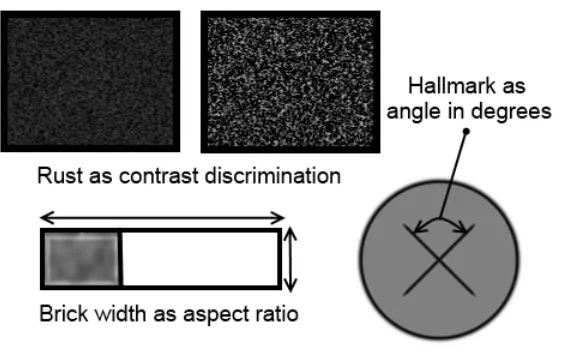
First, six additional attributes were employed.13 Three, one for each hyperproduct, were visual
(see Figure 7). On the Golden Egg, we varied a quality hallmark, the magnitude of which was
defined as the angle subtended by two intersecting lines. On the Victorian Lantern, we varied the
“rustiness” of the metal, defined as the contrast of an orange-brown versus black coloured texture.
On the Mayan Pyramid, we varied the flatness of the bricks, defined as the rectangular aspect ratio.
These visual stimuli were selected on the basis of the human ability to discriminate angle, contrast
[image:23.612.171.452.242.424.2]and shape with relatively high precision.
Figure 7: Additional continuous attributes in Experiment 2
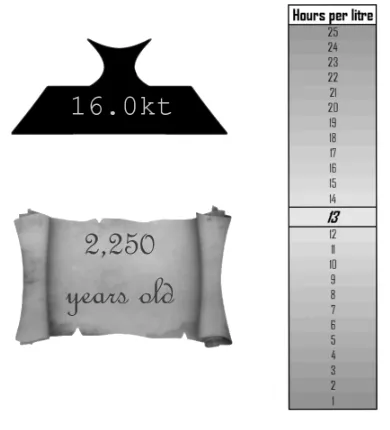
The other three attributes, again one for each hyperproduct, were numeric and appeared on
a label next to each hyperproduct (see figure 8). For the Golden Egg, we displayed the purity in
carats on a plinth; for the Victorian Lantern, fuel efficiency on a 25-point gradient scale; for the
Mayan Pyramid, age in years on a scroll.
Extending equation (2) to the two-attribute case,
Phtv =βh0+βh1fv(x1t, α1, x2t, α2) fv(·)∈[0,1] α1+α2= 1 (6)
wherevdenotes one of six value functions and theβs map the overall product magnitude,fv(·),
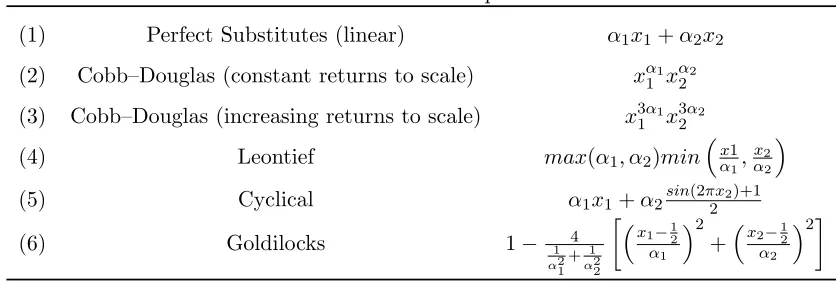
onto the price range for a given hyperproduct, h. Table 2 shows the six functional forms of fv(·),
which were designed to increase the complexity of the attribute-price relationship. Function (1) was
linear, with perfectly separable attributes. Function (2) had constant returns to scale overall, but
Figure 8: Numeric attributes in Experiment 2
diminishing returns (DRS) per attribute. Hence, these two value functions were equivalent to those
in Experiment 1, although with two-dimensions they differed with regard to separability. Function
(3) exhibited increasing returns (IRS) overall and for at least one attribute. Function (4) consisted
of a standard preference function in which attributes were perfect complements: the product was
as good as its weakest attribute (Leontief preferences). This specific form of complexity required
participants, first, to make a relative comparison of the attribute magnitudes and, then, to compare
the weakest against the displayed price. Function (5) combined one attribute with linear returns
with a more complex non-linear periodic attribute. We hypothesised that a cyclical attribute, with
more complex non-linear returns, would reduce precision and slow learning. Finally, function (6)
applied a non-monotonic non-linearity to both attributes, such that the centre of the attribute
space defined a perfect product. We called this the“goldilocks” value function, because the product
price corresponded to the distance in attribute space from the “just right” attribute levels.
Participants completed one run per value function. Each began with a learning phase in which
systematic examples of hyperproducts and prices were shown. In Figure 9, the order and locations
of the examples in attribute space are shown, together with indifference curves assuming balanced
attribute weights. Participants then undertook eight practice trials and 56 test trials (t). After
the product price,Phtz, was drawn (identically to Experiment 1), one combination of x1t and x2t
Table 2: Value function specifications
(1) Perfect Substitutes (linear) α1x1+α2x2
(2) Cobb–Douglas (constant returns to scale) xα11 xα22
(3) Cobb–Douglas (increasing returns to scale) x31α1x32α2
(4) Leontief max(α1, α2)min
x1 α1, x2 α2
(5) Cyclical α1x1+α2sin(2πx22 )+1
(6) Goldilocks 1− 4
1 α21+
1 α22
x1−1
2 α1
2
+x2− 1 2 α2
2
(i.e., equally weighted, 12,12; b = 1) for half the runs and unbalanced (23,13 or 13,23; b = 2) for the
other half. Value functions, products, combinations of attribute pairs, and attribute balance were
all pseudo-randomised across participants and runs.
5.2 Results
MEL models were estimated following the specification in equation 1, with only the exogenous
variables zhtvb augmented. The baseline model included dummy variables for value function, v,
whether attributes were balanced, b, and interactions between the two.14 The results (Table 2,
column (1) and Figure 10) reveal that increasing the complexity of the value function disrupted
surplus identification.
Before examining this variation more closely, the absolute level of performance invites comment.
In Experiment 1, a single attribute range matched the full price range. In Experiment 2, on average,
the range of each attribute mapped on to only half the price range. The JNDs in Figure 10 are
measured, therefore, as a proportion of an attribute range, such that precision when an attribute
was mapped to price on its own can be compared directly to precision when a second attribute was
simultaneously taken into account. In Experiment 2, reliable surplus identification with the easiest
value functions required a surplus equivalent to one third to one half of an attribute range, compared
to one fifth to one quarter in Experiment 1 (Figure 4). The higher JNDs indicate substantial loss
of precision when the second attribute had to be considered simultaneously.
While overall precision was reduced, Figure 10 again reveals little difference between monotonic
14
Figure 9: Learning phases by price function
linear and non-linear value functions. The Leontief value function with balanced attributes was
the only condition to produce JNDs as low as Experiment 1. The more complex periodic and
goldilocks value functions resulted in substantially greater imprecision. Table 2, column (1) provides
significance tests. The slight deterioration in precision with increasing returns was marginally
outside conventional levels of statistical significance, while the improvement in the Leontief case
was significant only when attributes were balanced. However, the deterioration with non-monotonic
value functions was highly statistically significant.
Although the complexity of the value function had a strong impact, variation in the relative
weights of the attributes did not. Unbalanced attributes significantly disrupted the Leontief value
function only. The additional complexity introduced by this value function primarily surrounded
the need for participants to make two sequential judgements, first assessing relative attribute
mag-nitudes, then the relationship of the weakest attribute to price. It is likely that the first stage was
disrupted by unbalancing the attributes.
Table 3: Mixed Effects Logits: Testing for variable in ability across value function
(1) (2) (3) (4)
Surplus 4.668*** 4.277*** 4.796*** 4.361*** (0.437) (0.501) (0.466) (0.525) Surplus*Value Function (Base=Linear)
Constant Returns to Scale 0.171 0.413 0.218 0.499 (0.535) (0.574) (0.538) (0.563) Increasing Returns to scale -0.756* -0.643* -0.787* -0.651* (0.434) (0.380) (0.447) (0.381) Leontief 3.000*** 3.153*** 3.393*** 3.567***
(0.502) (0.428) (0.560) (0.476) Cyclical -1.862*** -1.820*** -1.876*** -1.828***
(0.436) (0.430) (0.448) (0.446) Goldilocks -2.577*** -2.440*** -2.671*** -2.517***
(0.380) (0.398) (0.355) (0.380) Surplus*Unbalanced Attributes -0.171 -0.003 -0.225 -0.021
(0.451) (0.418) (0.473) (0.427) Surplus*Unbalanced Attributes*Value Function (Base=Linear)
Lenotief -2.584*** -2.867*** -2.955*** -3.272*** (0.818) (0.787) (0.883) (0.839) Surplus*Numeric attribute 0.583*** 0.647***
(0.224) (0.237)
Surplus*Z-price 0.084 0.183
(0.145) (0.198) Surplus*Numeric attribute*Z-price -0.208
(0.252)
Constant 0.311 0.267 0.298 0.242
(0.217) (0.222) (0.223) (0.225) Value Function (Base=Linear)
Constant Returns to Scale -0.634** -0.613** -0.624** -0.598** (0.263) (0.258) (0.273) (0.266) Increasing Returns to scale -0.197 -0.186 -0.169 -0.154
(0.396) (0.388) (0.413) (0.404) Leontief -0.279 -0.269 -0.289 -0.274
(0.307) (0.303) (0.323) (0.317) Cyclical -0.407* -0.405* -0.387 -0.380
(0.233) (0.231) (0.244) (0.246) Goldilocks -0.670*** -0.663*** -0.695*** -0.684***
(0.255) (0.253) (0.262) (0.260) Unbalanced Attributes -0.407 -0.396 -0.408 -0.390
(0.266) (0.261) (0.279) (0.272)
Numeric attribute 0.072 0.091
(0.103) (0.106)
Z-price 0.490*** 0.443***
(0.053) (0.062)
Numeric attribute*Z-price 0.098
(0.091)
Random effects parameters
Var(µi) 1.670*** 1.694*** 1.834*** 1.865***
(0.419) (0.425) (0.451) (0.456) Var(υi) 0.011* 0.011* 0.016* 0.016*
(0.006) (0.006) (0.009) (0.009) Cov(µi,υi) -0.011 -0.010 -0.032 -0.029
(0.051) (0.052) (0.060) (0.060) Observations 8,064 8,064 8,064 8,064
Number of groups 24 24 24 24
Figure 10: JNDs across value function and attribute balance conditions
Note: Each JND was computed based on a MEL that included the magnitude of the surplus, value function dummies, and an unbalanced weight dummy, as well as all two-way and three-way interaction terms.
overvalued. The consistency of this effect across value functions is evident from Figure 11 and
its statistical significance from Columns (2)-(4) of Table 2. Contrary to our hypothesis that this
bias might be caused by visual contrast effects, the bias was somewhat larger in the presence of
a numeric attribute, as indicated by the positive interaction between numeric attributes and the
normalised display price (Z-price). The numeric attribute did generate a slight but significant
improvement in precision. Translating the coefficients from Table 2, when the visual attribute was
replaced by a numeric one, for a monotonic value function, the JND fell from approximately 42%
to 37% of the attribute range.
5.2.1 Learning
It is important to investigate whether deterioration in the precision of surplus identification reflected
cognitive limitations or slower learning. As in Experiment 1, adding the trial number and its squared
term to the baseline model yielded no effect. Including the practice trials in the estimation produced
Figure 11: Variation in the PSE across the price range.
Note: Each PSE has been computed based on the parameter estimates from an MEL with all value function dummies, price quartile dummies, and their interactions included.
(p<0.05) on its square, in keeping with a rapid asymptotic learning curve. This pattern was not
consistent across value functions, however. Performance actually deteriorated for the goldilocks
value function relative to the practice trials (p<0.05). Indeed, this effect was large: average JND
was 32.2% percentage points higher than during the practice trials. The need to make judgements
relative to an absolute benchmark, a “just right” point retained in memory, appears to have greatly
increased imprecision despite repetition and feedback.
As in Experiment 1, the bias across the price range did not diminish; in fact it strengthened
marginally over the session. In contrast to Experiment 1, there was no overall improvement across
the experimental session.
5.3 Discussion
Experiment 2 confirms and extends the findings of Experiment 1. In this simplified and
experimen-tally controlled environment, with training and feedback over many trials, surplus identification is
imprecise, biased and subject to only modest learning. The absence of an advantage for linear over
non-linearity is increased to include turning points, however, performance declines substantially.
Attributes that can be both too large and too small are common. Examples include portion sizes
for food and drink, terms of loans, engine sizes; consumers often seek a “happy medium”.
The systematic bias across the price range is unaffected by the use of a numeric attribute, which
suggests it does not result from contrast effects associated with visual attributes. We return to
alternative possible causes in the General Discussion. Numeric attributes can, it seems, make a
marginal improvement to the precision of surplus identification, suggesting perhaps a small role
for perceptual error, but with the dominant capacity constraint in surplus identification being the
need to map one internal scale on to another.
6
Additional Tests and Analyses
This section details additional tests and analyses designed to address two issues regarding the
gen-eralisability of our results. First, surplus identification may require learning over days rather than
an hour, especially for complex non-linear value functions, where lack of learning could reflect poor
understanding rather than limited information integration. To explore this possibility, we recruited
some highly numerate economics students to compete in a surplus identification tournament
span-ning more than a week. Second, one could of course question whether our results generalise to
subjective choices among more familiar products. The S-ID task imposes preferences upon
partici-pants via incentives to match a predetermined function. It is not certain that this process engages
the same evaluation mechanisms as the identification of purely subjective surpluses. However, the
richness of the S-ID task data allow some instructive additional tests. Specifically, we test whether
several biases repeatedly documented in subjective consumer choice tasks also appear in our data.
In addition, we test specific predictions of Woodford’s (2014) Optimal Sensor Model, which have
been confirmed in subjective choice data. Positive results, in these tests strengthen the case that
common psychological mechanisms underpin responses in the S-ID task and subjective consumer
choices.
6.1 Additional test: send in the experts
Employing the experimental design of Experiment 2, a small group of economics undergraduates
were highly numerate and understood iso-value curves. Prior to each run, they were shown the
exact functional form offv(.), including graphical examples. Thus, any risk of misundersting was
eliminated. To increase opportunities for learning, value functions, attributes and weightings for
each participant remained the same across sessions; only presentation order varied. The experiment
was a tournament: the best performer won e50. Furthermore, participants were told before the third session that they would win e5 if performance in their third or fourth session improved on their first or second session respectively.
Figure 12 presents mean JNDs by value function across sessions. Surplus identification remained
imprecise, but JNDs were lower than for the sample of Dublin consumers, confirming this cohort’s
“expert” status.15 Reliable identification in the goldilocks case still required a surplus equivalent
to half an entire attribute range, but precision for the periodic function approached that for the
monotonic functions. The main purpose of this additional test was to provide greater
opportuni-ties for learning, yet it remained modest. Over four sessions totalling 1,536 trials with feedback,
competing for meaningful rewards, there was a slight improvement in precision for the monotonic
value functions (p<0.05), but the effect was very small. Meanwhile, the large and systematic bias
across the price range was replicated (p<0.001) and immune to learning. Thus, while young, highly
numerate students can outperform a representative sample of consumers, imprecision and bias are
not easily overcome. The only outstanding query from this exercise is the better relative precision
with the periodic value function. While we cannot be sure, participants seemed to find the
graphi-cal presentation particularly helpful, perhaps allowing them to match turning points to prices more
easily.
6.2 Tests for biases in common with subjective choice tasks
The S-ID task mimics the situation where a consumer encounters a new product and begins to learn
its worth. Yet the cost of gaining complete scientific control over attributes, prices and surpluses is
the need to impose preferences. If the S-ID task data were to contain similar patterns to those seen
in subjective consumer choice experiments, however, this would support the contention of common
psychological mechanisms. We therefore tested our data for some specific biases previously observed
in choice experiments.
15
Figure 12: JNDs across sessions for our expert sample
Note: Each JND has been computed based on the parameter estimates from an MEL with all value function dummies, session number dummies, and their interactions included.
6.2.1 Dilution and familiarity effects
Consumers often struggle to ignore irrelevant attributes. Meyvis and Janiszewski (2002) call this
the “dilution” effect and demonstrate across ten studies that irrelevant information alters consumer
product appraisals. The data from Experiment 1 are ideal for testing for dilution, because
partici-pants focused on one attribute while an irrelevant one varied randomly. Half the time, the attribute
to be ignored had been relevant on a previous run. We therefore added to the baseline MEL model
(Table 1, column 1) variables for the price signalled by the irrelevant attribute, for whether it had
been previously relevant and for the interaction between the two. Consistent with dilution, the
higher the value signalled by the irrelevant attribute, the greater the probability that the
partic-ipant perceived a surplus (p<0.01).16 Interestingly, the interaction term was non-significant; the
effect did not depend on whether the attribute had previously been relevant. This may reflect the
design of the hyperproducts, because attributes were selected to make intuitive sense, e.g., bigger
16It is important to note that because our method permits the separation of bias and precision in surplus
eggs were more valuable, rusty lanterns less, etc.
6.2.2 The attraction effect
The “attraction effect” refers to the greater likelihood of choosing a product that dominates another
on all attributes (Huber et al., 1982) and has been demonstrated for both matching and choice tasks
(Tversky et al., 1988). Although in our experiments only one product was visible during any one
trial, trials were sequential and the relationship between the attribute magnitudes of successive
products was essentially random. Hence, in Experiment 2, for some trials the product was better
on both attributes than the previous one, thereby dominating it. Conversely, for some others it
was dominated. We tested whether participants were biased by domination relative to the previous
product, by adding two dummy variables to the baseline model. There was indeed an attraction
effect: domination of the previous product exaggerated perceived surplus (p<0.05), while being
dominated by it diminished perceived surplus (p<0.1).
6.2.3 Loss aversion
Loss aversion was first formalised and investigated empirically by Kahneman and Tversky (1979).
An extensive literature has explored asymmetries in how humans and animals weight losses and
gains in choices. While explanations for these empirical phenomena remain controversial, replicable
findings that imply loss aversion in economic choice are numerous (Rick, 2011; Ericson and Fuster,
2014).
Each successive presentation in the S-ID task entails an increase or decrease in attribute
mag-nitude relative to the previous product (and feedback price). To the extent that the most recently
perceived attribute provides a reference point, loss aversion implies a downward bias in perceived
surplus on trials when the attribute magnitude decreased, compared to those when it increased,
all else equal. Experiment 1 offers an ideal test, as successive presentations varied in a single
monotonic attribute. We added to the baseline model a variable for the standardised change in
attribute magnitude relative to the previous product, interacted with a dummy to indicate a
de-crease or an inde-crease. This revealed a highly significant contrast effect: the difference in successive
magnitudes was exaggerated (p<0.001). Furthermore, there was a significant interaction with the
the PSE is shown in Figure 13. The contrast effect for decreases in attribute magnitude was slightly
more than twice that associated with equivalent increases, as is typically observed in studies of loss
[image:34.612.156.465.171.375.2]aversion in choice experiments.17
Figure 13: PSEs for changes in price relative to previous product.
Note: PSE was computed from parameter estimates from an MEL model including the standardised difference in attribute magnitude between the current and previous product, interacted with a dummy variable indicating whether the difference was positive (gain) or negative (loss). Interaction terms and standardised display price (Z-price) were included as controls.
6.3 Testing predictions of Woodford (2014)
Woodford (2014) demonstrates that his Optimal Information Constrained Model (OICM) of discrete
choice predicts patterns of response times when individuals choose between food items (Krajbich
et al., 2010). Although our experiments were not designed explicitly to test this model, there are
two reasons to check for consistency with the OICM. First, consistency would support a broader
application of the OICM model. Second, finding a similar pattern of response times in the S-ID task
would again suggest common mechanisms underpinning responses in the S-ID task and subjective
consumer choice.
17