Self-Perception and Performance.
Exploratory research into the narcissists’ first 20
months within a corporate graduate recruitment
programme.
A dissertation presented in partial fulfilment of the
requirements for the degree of
Doctor of Philosophy
in
Human Development Studies
Massey University, Palmerston North
New Zealand
Jeff Simpson
Abstract
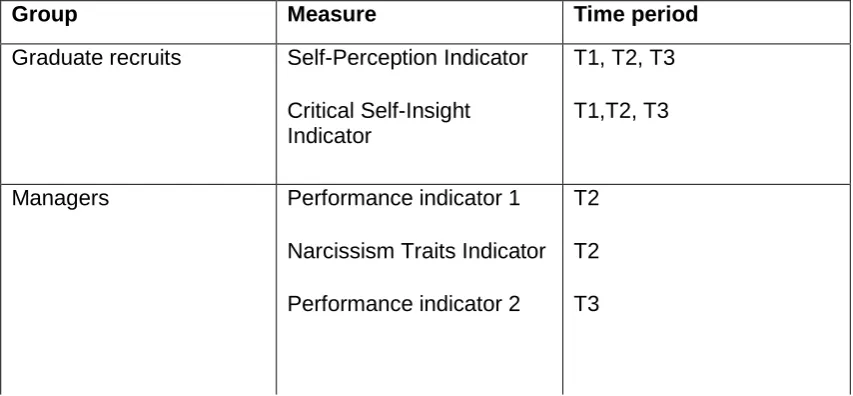
The intent of this exploratory study was to examine the nature and impact of narcissism in the early career stages of a graduate cohort, where there has previously been little applied narcissism research. Self-reports on self-perception and critical self-insight were obtained individually from 63 new recruits in a multi-national company as part of a graduate recruitment programme. Self-report data were collected on day one of the recruits’ induction programme followed by repeated data collections at nine months and at twenty months into their employment. In addition, at months nine and twenty, two line managers of each recruit completed indicators on their
perceptions of the recruits’ actual work performance. Using a newly designed narcissistic traits indicator, line managers also indicated their views of each recruit’s narcissistic tendencies. Results obtained indicated ten of the sixty three graduates had significant narcissistic tendencies. The self-ratings of recruits were subsequently compared to their actual performance as rated by their managers. The self-perceptions of those identified as having narcissistic tendencies were also compared to self-ratings and performance of peers displaying little or no narcissistic tendencies. In both the first and second years of employment, the results indicated that those viewed as having narcissistic tendencies significantly self-enhanced more than the non-narcissists and despite their comparative higher self-rating, non-narcissists underperformed in their role in comparison to non-narcissists. Narcissists’ self-perception was less consistent over twenty months, indicating a less stable sense of self than the non-narcissists. A critical insight (CSI) perception gauge was developed for assessing degree and style of self-critique. Although analyses revealed five clusters of sub-scales, the
Acknowledgements
It has been with pleasure and pride to have worked on this thesis with my two supervisors Dr John Kirkland and Dr David Bimler. John, many years ago, when I first began my tertiary education, you inspired my interest in human nature when I took your outstanding undergraduate papers. The subsequent perspectives I gained from the study of human attachment and personality development still strongly influence my professional practice today. David, I can’t thank you enough for your insightful guidance, support, assistance and good humour. You have been a critical factor in getting me through this process, particularly the last couple of years when it all seemed to be going wrong. Thanks for hanging in there with me.
Most of all, I want to thank my family, not only for their love and support through some of the bumpier patches but also for their good humour and never allowing me to lose perspective, despite narcissism being a regular topic of conversation for six years. I hope I have not put any of you off
potentially studying psychology in the future. Tracy, this simply couldn’t have been done without you and I appreciate your unfailing belief in me, this study and everything you have done to allow me to follow this dream. I love you very much.
To my parents, Dennis and Cathy, thank you for your unconditional love and for providing me with the secure base in which to explore.
Thank you to all the graduates who participated in this research, I wish you well in your future careers. I would also like to acknowledge the organisation that the graduate participant group came from. By mutual agreement, this organization has not been identified by name, but to those of you involved in this research, I would like to sincerely thank you for your trust, time, support and professionalism. It was a pleasure to work with you.
Table of Contents
Dedication………..…… i
Abstract... ii
Acknowledgements... iv
Table of contents... v
List of appendixes... ix
List of tables... x
List of figures... xi
CHAPTER ONE Introduction... 1
The narcissist in workplace settings…………...……….…….. 4
Theoretical assumptions ……….……… 5
Prompt for this research……….……….…………. 6
CHAPTER TWO Perspectives of narcissism………. 8
Defining characteristics of narcissism………... 8
Psychometric perspectives………... 12
Theories about the origins of narcissism... 14
Psychoanalytical... 14
Freud……….. 14
Kohut……….. 15
Kernberg……….... 16
Millon ………... 17
Stone... 17
Attachment theory……….………. 20
CHAPTER THREE The Narcissistic Self-Concept……….. 22
The ideal-self and actual-self……… 22
Maintaining the narcissistic self……… 24
Extreme Self-enhancement (ESE)………... 25
Denial………..…... 29
Attributional egotism……….….. 31
Self-regulation models and the role of the ego……….…. 32
CHAPTER FOUR Broader environmental influences on narcissism and the narcissist at work……….. 35
Narcissism within the corporate environment………. 38
The narcissistic personality at work………. 38
The performance of the narcissist……… 43
Narcissistic Supply – the workplace reservoir……… 46
CHAPTER FIVE The current study……… 50
The structure of the graduate’s career trajectory……….. 51
Conceptualisation………... 53
Current research objectives... 54
CHAPTER SIX Method & Procedure……….. 56
Rationale for approach... 56
Development of narcissism traits indicator... 61
Participants……….………. ... 65
Design of data collection... 66
Procedures and indicators………... 67
Critical self-insight (CSI)……… 70
Narcissism………... 71
Performance……… 73
First impression – impact at initial interview………... 74
Cognitive ability testing – pre-employment………. 74
Statistical analysis……….. 75
CHAPTER SEVEN Results………...….. 77
Preliminary statistics... 77
Rate of narcissism and agreement among managers... 79
Self-enhancement across all recruits... 80
Narcissism and self-perception………... 81
Self-enhancement, narcissists and non-narcissists... 83
Changes in self-perception……….………... 84
Relationship between assessment points and each self-enhancement scale……….……….…….…. 86
Stress……….…... 87
Flexibility……….….. 88
Self-reliance………. 89
Integrity………. 90
Mature assertiveness………. 91
Problem solving……….. 92
Self-confidence………... 93
Self-awareness ……….………. 94
Openness to ideas………... 95
Interpersonal skills………. 96
Critical self-insight (CSI)……….. 97
CSI, narcissists and non-narcissists………... 98
Cluster 1: Dominance………...……….... 100
Cluster 2: Unmotivated – disengaged………..… 101
Cluster 3: Narrow – Rigid………... 102
Cluster 4: Avoidant……….. 103
Narcissism and Performance……….. 105
Top performers’ self-perception……….. 106
Impression at interview………. 107
Comments on procedural validity and reliability... 111
Summary……….……… 114
CHAPTER EIGHT Discussion……….. 115
The task of early career and challenges for the narcissist…………. 116
The narcissists’ self-concept, actual-self and ideal-self……….. 118
Critical self-insight………. 127
Issues of adaptability and blind spots………... 129
The environmental push……….. 134
Implications for the narcissist; challenge for the organisation………. 134
Assisting the narcissist developmentally………... 138
Limitations and future research………... 139
Conclusion………..……… 141
References ………... 143
List of Appendixes
Appendix A: Introduction letter to graduates………....162
Appendix B: Self-Concept questionnaire………. 164
Appendix C: Performance indicator administered at T2……… 175
Appendix D: Performance indicator administered at T3…...177
Appendix E: Narcissism traits indicator.………. ……..180
List of Tables
Table 1: Summary of descriptions applied to self-enhancers (SE) by observers………. 28
Table 2: Sequence of data collection... 67
Table 3: Narcissism items and their source... 73
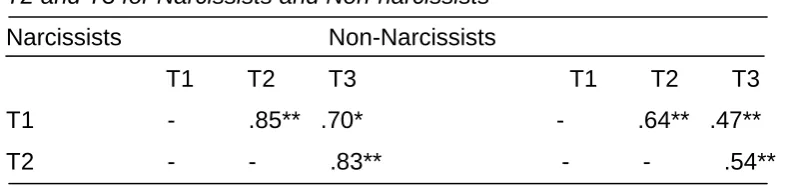
Table 4: Person’s correlation coefficients between self-enhancement Scores ...76
Table 5: Degree of agreement between each manager on individual narcissism items ... 79
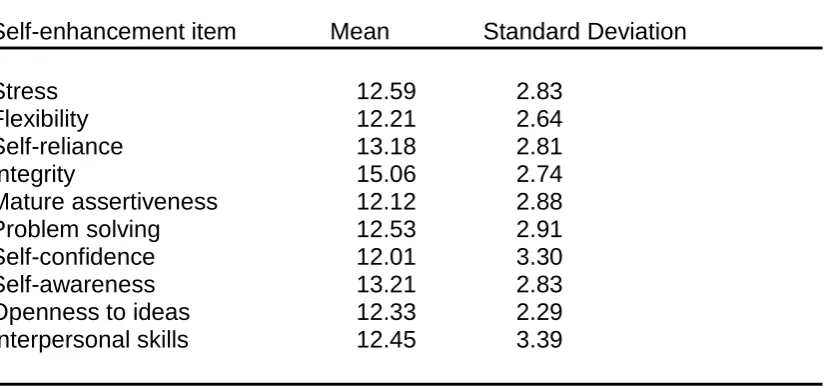
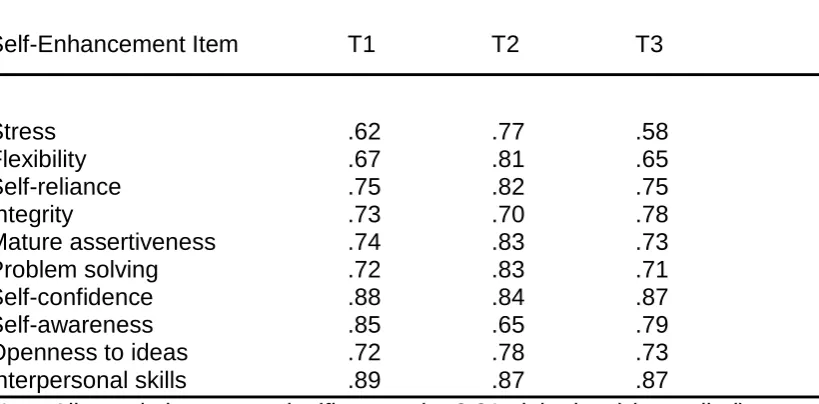
Table 6: Mean and standard deviation scores across all time periods of self-enhancement items………. .. 80
Table 7: Summary of correlations between actual-self and ideal-self-rating and self-rating against peers on self-enhancement items
over T1, T2 and T3………81
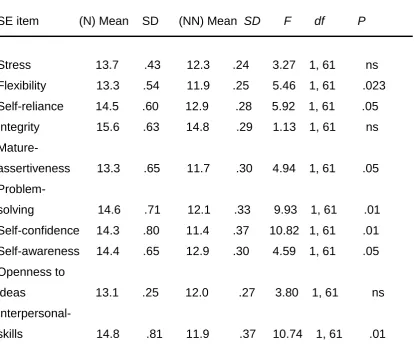
Table 8: Summary of narcissists’ (N) and non-narcissists’ (NN) self- rating on each self-enhancement (SE) item……….…84
Table 9: Summary table of narcissism main effects on the five CSI
List of Figures
Figure 1: Relationship between age and narcissism……… 37
Figure 2: Mapped items used for creation of narcissism trilemmas measure. One trilemma shown as
an equilateral triangle……….63
Figure 3: Example of self-enhancement self-rating item…………..69
Figure 4: Example of critical self-insight items………70
Figure 5: Screen shot example of trilemma format………….………72
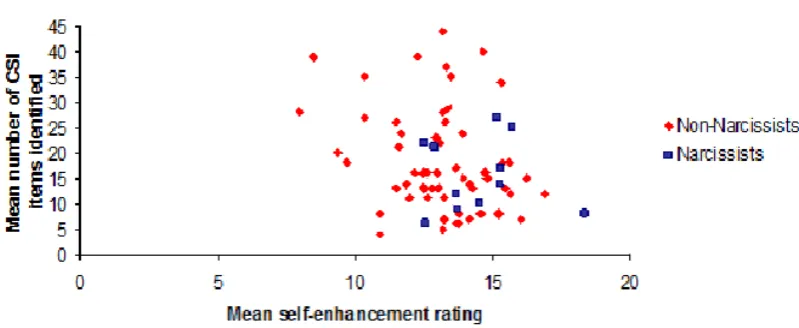
Figure 6: Critical self-insight and self-enhancement scores of narcissists and non-narcissists at T1………82
Figure 7: Critical self-insight and self-enhancement scores of narcissists and non-narcissists at T2………82
Figure 8: Critical self-insight and self-enhancement scores of narcissists and non-narcissists at T3………..83
Figure 9: Interaction between self-enhancement
self-ratings and time. Narcissists and non-narcissists….86
Figure 10: Comparison of narcissists and non-narcissistic
group on self-perception of stress management…………87
Figure 11: Comparison of narcissists and non-narcissistic
Figure 12: Comparison of narcissists and non-narcissistic
group on self-perception of self-reliance………. 89
Figure 13: Comparison of narcissist and non-narcissistic
groups on self-perception of integrity………...90
Figure 14: Comparison of narcissist and non-narcissistic
groups on self- perception of mature assertiveness……. 91
Figure 15: Comparison of narcissist and non-narcissistic
groups on self- perception of problem solving……….92
Figure 16: Comparison of narcissist and non-narcissistic
groups on self-perception of self-confidence……….. 93
Figure 17: Comparison of narcissist and non-narcissist
groups on self-perception of self-awareness………94
Figure 18: Comparison of narcissist and non-narcissist
groups in self-perception of openness to ideas………95
Figure 19: Comparison of narcissist and non-narcissist
groups in self-perception of interpersonal skills………….. 96
Figure 20: Comparison of narcissist and non-narcissist
mean scores across all CSIclusters……….99
Figure 21: Comparison of narcissists and non-narcissists
on CSI cluster 1………100
Figure 22: Comparison of narcissists and non-narcissists
Figure 23: Comparison of narcissist and non-narcissists
on CSI cluster 3………102
Figure 24: Comparison of narcissists and non-narcissists
on CSI cluster 4………..103
Figure 25: Comparison of narcissists and non-narcissists
on CSI cluster 5………..104
Figure 26: Self-enhancement rating – narcissists
and top performers……….107
Figure 27: Contrast on narcissism personality items.
Narcissists and top performers………110
Figure 28: Contrast on pro-social personality items.
CHAPTER ONE
INTRODUCTION
“One does not become enlightened by imagining figures of light, but by making the darkness conscious”. (Jung, 1967, p.335).
As a psychological concept ‘narcissism’ originated from Greek mythology, which told the story of a young man who ruined his life by becoming obsessively self absorbed and falling in love with his own reflection. In admiring this reflection, Narcissus was ultimately deceived, as he saw only perfection, blinding him to any other aspect of himself – any shadow or faults remained hidden and unacknowledged. According to Miller (1979) this myth is based on the concept of ‘true self’ and ‘false self’ with Narcissus’s death being a consequence of his fixation to a false self. A key moral theme is that full development is dependent on an openness to critical self-insights and the openness to fully experience the less pleasant or acceptable feelings people would rather escape from or deny. The one- dimensional, self-fixation Narcissus enjoyed prevented him from developing any form of object love beyond his own self. Narcissus was basically in love with himself (Elson & Kohut, 1987). As a psychological construct narcissism became a term to describe individuals with notable egoistic self-involvement coupled to the denial of personal faults.
Due to the recent upsurge of interest in narcissism, it has grown to become a theoretically complex and often controversial personality construct, having roots embedded within psychoanalytic theory. Since its psychological
models continued to tackle and try to understand its manifestations and broader psychological impact. However, regardless of theoretical orientation, narcissism is characterised by an unusually high degree of self-absorption and has strong social and cultural connotations; to be described as a narcissist or behaving in a narcissistic manner is never intended as a
compliment. In the broader social sense, to be so self-absorbed is almost the definition of a vice (Ridley, 1996). It is hardly considered pro-social as
societies generally praise and consider selflessness as a higher
developmental quality and decry self-centredness unless it is in the normal developmental phase of early childhood. Narcissism in adulthood is often inferred as normal childhood narcissism that never grew up. Prominent narcissism theorists e.g. Kohut (1978) viewed narcissism as healthy or unhealthy based primarily on its age appropriateness. Morf & Rhodewalt (2001) proposed that the narcissist presents with a fascinating combination of features with none more so than the almost infantile characteristics that most people leave behind during their early years of development. Narcissism could be viewed as much a developmental stage as it is a set of distinct behaviours. Keitlen (2001) deems that narcissism forms part of our natural primitive human core, but with normal development it becomes overlaid with more mature attitudes. When those attitudes are not developed, that
fundamental core impels the individual towards a dominant drive of self-aggrandisement. Other analytically-orientated theorists such as Reich (1960) have argued that narcissism is a reflection of an immature ego, unable to accurately test reality and form an accurate sense of self.
within society, despite not always being particularly likeable or pro-social. Of key interest in this research is the narcissist’s potential ability to excel within certain environments, particularly the corporate workplace.
Within the range of negatively-perceived-behaviours projected from
narcissism, there are some situations where the narcissist can present in a very positive light, especially when given the opportunity to publicly shine, for example within a job interview situation where the interviewee’s primary task is to impress. This, in part, may explain why narcissists can potentially be very successful from a career selection perspective. Ultimately, due to their
characteristic self-centredness, the narcissistic personality does run the high risk of conquering, dividing and failing within an organisation, but interestingly the narcissistic personality can also assist a rise to high-ranking positions and the acquisition of power and influence to do so. Thus, while narcissists are often characterised as appearing overly grandiose and potentially exploitive, they often have the capacity to project as articulate, seductive (Akhtar & Thomson, 1992) charming and engaging (Kernberg, 1975). However, the charm and engagement tends to wear off if the narcissist’s supply of external reinforcement stops serving as a positive and essential source of self-regard.
Throughout this thesis the term narcissism is used as a matter of definitional consistency. Because narcissism has been overused as a term when
The Narcissist in Workplace Settings
Few organisations would deliberately set out to hire someone with strong narcissistic tendencies; indeed the DSM IV clinical definition of narcissism would not be a part of any job description. The research around narcissistic traits applied to the workplace (as reviewed in Chapter three) tends to be so negative it is a wonder that any narcissist could ever find a job, far less hold one down. Even so people with these characteristics are not only employed but often promoted to positions of influence (McFarlin & Sweeney, 2000). Possibly, their narcissism is being projected in its more positive form within an environment that overtly or covertly values, or at times even needs, at least some of the characteristics of narcissism. McFarlin and Sweeney (2000) for example, discuss the corporate situational / environmental opportunities that promote an ease of passage for those with narcissistic tendencies to excel. They argue that at particular times an organisation may be vulnerable to the seductive charm and articulate positive persona often associated with a narcissist (Akhtar, 1989). There is probably a fine line drawn between
narcissism on the one hand and confidence on the other and that line may be very much in the eye of the beholder. What is self-centred to one observer may be goal-focused to another. Recent research by Blair, Hoffman, and Helland (2008) highlighted how distinctive behaviours can be viewed
differently. They found that narcissists in the workplace were rated negatively by their managers in terms of integrity and interpersonal performance.
However, when the same narcissists’ performance was rated by their own staff who reported to them, neither integrity nor interpersonal performance were identified as problem areas.
Narcissism in general has been the subject of much research over the past three decades, but comparatively little research has focused on the impact of narcissistic tendencies in the workplace (Judge, LePine & Rich, 2006;
impact of narcissism during the early career period. This research will investigate how those having narcissistic tendencies perform in their
workplace roles over a 20-month period. Specifically, this study will follow a group of first year graduates, within a corporate graduate recruitment
programme, identifying individuals described by their day-to-day managers as having narcissistic characteristics and will investigate the self-perceptions of those individuals over their first and second years of employment.
Talent identification (or as often referred to as “the war for talent”) and subsequent career development are critical elements to organisational development, as well as a significant company economic investment, especially for organisations that carry out larger scale graduate recruitment programmes. It is therefore of interest to investigate not only the performance of people with narcissistic tendencies but also its longer-term environmental accommodation/promotion or rejection/discouragement.
Theoretical Assumptions
Narcissism is rich in both research and theory. There are common central themes within most theoretical approaches. First, narcissism is generally viewed as a personality style originating from early childhood interactions with key caregivers. Second, poor self-esteem is the key underlying factor of narcissistic individuals. To counter anxiety attributable to self-esteem vulnerability, narcissists need to maintain a positive sense of self. This is achieved by engaging in extreme enhancement to maintain that self-image through a series of ego-defensive and self-regulatory behaviours. These behaviours are attempts to not only maintain their sense of ego-ideal but also to regulate and eliminate anxiety. At the core of narcissism is self- centeredness and the personal origins of narcissism are due to a damaged self-image at early stages of development (Stevens & Price, 1996).
dysfunctional proximity to one’s “ideal-self” or “ego-ideal”. Unlike Narcissus in the myth, normal, healthy and ultimately mature development of self is based on the capacity to integrate both positive and negative self- images into a realistic self-concept. Unlike the balanced and emotionally mature person, a narcissist will disassociate or split off any aspect of negative
self-representation, focusing on an exclusively positive self-image. Narcissism’s core feature is inflated self-image and the behaviours projected from a narcissistic style are due to an inability to maturely regulate the actual and ideal-self (Millon, 1996). This model of narcissism and ideal-self is extended in Chapter three.
Within a corporate environment, where egotism may or may not be rejected as readily as in other social institutions, I aim to investigate the possible impact narcissistic tendencies have on initial career trajectories of these individuals. For this study I will be employing the theoretical approach of narcissism being a fusion between actual-self and ideal-self, plus denial of personal shortcomings and lack of critical self-insight.
Prompt For This Research
The impetus behind this study arose from my work in organisational
for you?” Although for most people reflection upon and articulation of one’s shadow or downsides is rarely as easy or comfortable as focusing on their positives, some people respond with calm insight after a little thought. These are characteristics typical of what Loevinger (1976) would describe as a higher stage of ego development (Loevinger’s ego development model is discussed further in Chapter two). Whilst others are completely stumped by this question as they have never really thought about their downsides and therefore genuinely cannot respond. There is another, much smaller group of respondents who react defensively and sometimes confrontationally. They have been the source of inspiration for this study. Within this group, there are some who appear go into denial and simply refuse to answer questions that involve reflection about any negative aspects of themselves. Another
subgroup acknowledges they may have downsides but will then state, “That’s for others to deal with. It’s not my problem.” Usually these are people who are able to articulate positive aspects of themselves with ease. They speak highly of themselves and how impressive they are in the eyes of others. “I am a natural leader”, “I inspire people”, “I’m the go-to person” are common self-statements of this group. Many of these individuals will also claim that others are envious of them and their achievements.
From these work-place experiences, the main question I formed about this latter group was, “Does such a largely positive, yet seemingly lop-sided, narrow self-perspective have any impact on how such a person performs in the workplace?” In short, what are the effects of narcissistic traits in terms of workplace performance?
CHAPTER TWO
PERSPECTIVES OF NARCISSISM
Research on narcissism suggests it is a multifaceted construct (Bosson, & Prewitt-Freilino, 2007). Due to the volumes of literature about and
approaches to the study of narcissism, a concise definition is challenging since, in general, there is a lack of agreement (Miller & Campbell, 2008). The term narcissism has therefore suffered from multi-usage and has been used to describe any kind of self-inflation or focus upon oneself (Brown, 1997; Horney, 1951). The following literature review will explore perspectives about narcissism, its defining elements, its psychometric measurement, theories about the origins of narcissism, and developmental views including
attachment. Environmental perspectives about narcissism are reviewed in conjunction with narcissism in the workplace, in chapter four.
Defining Characteristics of Narcissism
Freud described narcissism as libidinal cathexis of the ego, whereas Hartman described it as the libidinal cathexis of the self (Westen, 1985). Horney
(1951) defines narcissism as a person in love with their own idealized self-image, self-adoring, and requiring endless confirmation of their self-perceived image. Millon (1996) proposes that narcissists’ primary motivation is to direct energy towards meeting their own egocentric wishes. Miller (1992) argued that narcissism is best understood as the combination of three dynamic factors:
1. the cause of narcissism being due to a distinct deficit in self-esteem 2. the highly focused effort to compensate for that deficit by pursuing
sources of self-affirmation – the narcissistic behaviour and 3. the pursuit of self-affirmation without the risk of interpersonal
An extensive review by Mollon (1993) identified nine prominent and representative models of narcissism. The three most common connecting themes among each model were grandiosity, grandiose self-image, and strong sense of self-sufficiency. Mollon’s model of narcissism distinguished nine major characteristics: 1. deceptive self-image, 2. lack of self-knowledge, 3. difficulty in reflection, 4. sado-masochistic interactions, 5. pride and vanity, 6. fear of being possessed, 7. envy, 8. self-absorption, 9. lack of parental support at a young age.
Akhtar (1989) differed somewhat from Mollon’s perspective adding that relationship with others was a key element when characterising narcissism.
Akhtar proposed narcissism was not merely grandiosity but also exploitation of others. Blais, Hilsenroth and Castlebury (1997), reported grandiosity as an essential feature and also argued that lack of empathy for others and a need for admiration were also defining characteristics of narcissism. Rosenthal and Pittinsky (2006) centralised their perspective by identifying arrogance as being the single overriding feature of narcissism.
In an overarching description, Westen (1990) describes narcissism as: “a cognitive-affective preoccupation with the self, where cognitive preoccupation refers to a focus of attention on the self; affective preoccupation refers to a preoccupation with one’s own needs, wishes, goals, ambitions, glory,
superiority, or perfection; and self refers to the whole person, including one’s subjective experience, actions and body” (p.227).
1. has a grandiose sense of self-importance (e.g., exaggerates achievements and talents, expects to be recognised as superior without commensurate achievements),
2. is preoccupied with fantasies of unlimited success, power, brilliance, beauty, or ideal love,
3. believes that he or she is “special” and unique and can be only understood by or should associate with, other special or high status people (or institutions),
4. requires excessive admiration,
5. has a sense of entitlement, i.e. unreasonable expectations of especially favourable treatment or automatic compliance with his or her
expectations,
6. is interpersonally exploitive , i.e. takes advantage of others to achieve his or her own ends,
7. lacks empathy; is unwilling to recognise or identify with the feelings and needs of others,
8. is often envious of others or believes that others are envious of him or her,
9. shows arrogant, haughty behaviours or attitudes,
While anti-social personality disorder and narcissism have often been viewed as very similar, clinical researchers Gunderson and Ronningstam (2001) have differentiated narcissism from anti-social personality disorder based on the following as being more typified by the narcissist; self-perceptions of grandiosity, exaggerated talents, regard for self as unique and sense of superiority.
by Atlas and Them (2008) suggests that overt narcissists tend to be less sensitive to criticism than the covert style. It is in the projection of self-confidence and extroversion where these two styles differ. Wink (1991) identified two distinct orthogonal factors; vulnerability / sensitivity and grandiosity / exhibitionism. Both carried the core narcissist features of self-indulgence, conceit and a disregard for others but the vulnerability /
sensitivity factors related to introversion, defensiveness and anxiety, whereas the grandiosity / exhibitionism factors related to extroversion, self-assurance and aggression. The focus of this study is on those with an overt or thick-skinned narcissistic style and does not include covert narcissism.
Further variations of narcissistic sub-types have been identified. For example, Bursten (1973) identified four major types of narcissism: paranoid,
manipulative, craving, and phallic. Millon and Davis (1996) also identified four main types that differed somewhat from Bursten’s, these being: the
unprincipled narcissist, the amorous narcissist, the compensatory narcissist, and the elitist narcissist.
The unprincipled narcissist is typified by an anti-social style, unscrupulous, amoral and deceptive tendencies, often accompanied by an intimidating
manner and lack of social conscience, on top of the basic narcissistic arrogant sense of their self-worth.The amorous narcissist tends to be highly socially seductive with a high need to reinforce self-worth by the demonstration of sexual prowess, whilst being genuinely avoidant of interpersonal intimacy. The compensatory narcissist is hugely driven to satisfy a striving for prestige due to a sense of insecurity and weakness and seeks to glorify their public standing. The elitist narcissist is deeply convinced of their own superiority and is typified by arrogance and a looking down upon others. Although there is likely to be a degree of blending between each of these sub-categories, an underlying theme of extreme self-enhancement is consistent throughout each.
other. This does raise a question “At what point does healthy self-esteem become narcissism?” (Wink, 1996). In differentiating positive self-esteem from narcissism, Pulver (1970) suggested that positive self-esteem is based on pleasurable affect whereas narcissism is represented by defensive high self-regard, self-centeredness and defensive pride. According to Kernberg (1975) healthy self-esteem is characterised by libidinal investment in the self,
however the normal self is integrated as a comprehensive and complex whole involving both positive and negative images resulting in a realistic self-concept. With narcissism, negative self-images are dissociated with, or split off. This perspective is also discussed later in this chapter.
Psychometric perspectives
A number of psychometric instruments have endeavoured to measure
narcissism. The development of DSM criteria has contributed directly to such measurement tools. Kernberg’s work on narcissism shaped much of the DSM’s initial criteria-structure of narcissism. A number of narcissism self-report scales such as the Narcissistic Personality Inventory (NPI; Raskin & Hall, 1979), Narcissistic Personality Disorder Scales – the Minnesota Multiphasic Personality Inventory (MMPI; Butcher, Dahlstrom, Grahan, Tellegan & Kaemmer, 1989), the California Psychological Inventory
narcissism scales (CPI: Gough, 1987) and subsequently narcissism scales utilizing the California Q-Set (CAQ: Block, 1961) are based on DSM criteria (Wink, 1992).
The NPI has been the most utilised psychometric tool in measuring
non-clinical narcissism and is constructed around the following scales: Leadership / Authority; Self-absorption / Self-admiration; Superiority/ Arrogance;
The Millon Clinical Multiaxial Inventory (MCMI –III: Millon, Millon, Davis & Grossman, 2009) contains a clinical measurement of narcissism and is made up of three scales: admirable self-image, cognitively expansive
(preoccupation with immature self glorifying fantasies) and interpersonally exploitive. The scales of the MCMI-III resemble the scales of the NPI, though the MCMI-III is focused on clinical diagnoses of narcissism whereas the NPI is based on narcissism in the general population – or non clinical use.
The Narcissistic Personality Disorder Scales (NPDS; Ashby, Lee, & Duke, 1979; Morey, Waugh & Blashfield, 1985) focuses on the covert, hypertensive aspects of narcissism such as low self-esteem, insecurity and proneness to worry. The MMPI narcissism scales are divided into two main dimensions: vulnerability / sensitivity and grandiosity / exhibitionism (Wink, 1991). This is one of the few measures aimed to detect the contrasting the thick and thin skinned dimensions of narcissism.
Generic personality inventories have identified specific narcissism factors. For example, Wink (1992) using the California Q-set (Block, 1978) identified three prominent factors: wilfulness, hypersensitivity, and autonomy. Higher scores on wilfulness were related to self-confidence, overt narcissism, assertiveness, rebelliousness, and being highly critical. Higher scores on hypersensitivity related to a tendency to be self-centred, withdrawn, under-controlled (impulsive) and lacking in well-being and were characteristic of covert narcissism. Autonomy related to a healthy form of narcissism, this included the presence of self-assurance, creative and intellectual interests, independence, and occupational success.
A small group of studies have also shown projective techniques (the
Narcissism – Projective and the Rorschach) have also been effective in the classification and differentiation between individuals (Hilsenroth, Fowler, Padawer, & Handler, 1997, Shulman, McCarthy, & Ferguson, 1988).
Narcissism research from a psychometric orientation has tended to view the construct in either its clinical or non-clinical form, although the conceptual difference between these two views is fuzzy. Research by Miller and
Campbell (2008) compared two different psychometric tools: the NPI (typically used for non-clinical populations) and the Personality Diagnostic
Questionnaire, PDQ-4 (typically used with clinical populations). Miller and Campbell found there was significant overlap in the traits captured by each measure but with some specific areas of difference. The NPI captured emotional resiliency and extroversion, while the PDQ-4 captured emotionally unstable, negative affect and sensitive – introverted narcissism. Both
measures highlighted the tendency for narcissism to be typified by an antagonistic interpersonal style.
The Diagnostic Interview for Narcissism (DIN: Gunderson, Ronningstam & Bodkin, 1990) has also been used in both clinical and research arenas and differs from other measures in that it employs a semi-structured interview format. The DIN is made up of 101 questions and grouped in 33 descriptive statements under five topic areas; grandiosity, interpersonal relationships, reactiveness, affects and mood states, and social and moral adaption (Millon, 2004).
Theories of the Origins of Narcissism
Psychoanalytic
Freud
result of children’s sense of their parents’ inability to provide love and reliable emotional protection and that narcissism was a distinctive style of attachment to oneself rather than to others. The result is the withdrawal of libido from others and its reinvestment towards the self. Due to this re-allocation there is little energy left to invest emotionally in anyone other than oneself (Lessem, 2005). Freud’s work prompted other theorists to hypothesise about
developmental origins of narcissism. The more prominent of these are introduced below.
Kohut
Heinz Kohut, initially a strong follower of Freudian psychology, broke away from Freud’s model of narcissism and in the eyes of the self-psychology movement revolutionized psychoanalytical thinking about narcissism (Lessem, 2005). Kohut viewed narcissism as a normal part of infant
development. He believed that the positive maturation of narcissism resulted in the development of qualities such as humour, creativity and wisdom. The negative development of narcissism was typified by grandiosity, a sense of entitlement and high self-importance, an unstable self-concept and the inability to relate to other people other than from the perspective of what benefits the person can bring to them.
Kohut’s approach was similar to other analytical theorists in that narcissism emerged from the early relationships with critical individuals (i.e. mother and father). Kohut’s concept of self-object needs provided an early base for understanding the development of narcissism, specifically, the building and maintenance of self-esteem via mirroring experience and a sense of safety – a sense of idealization (Lessem, 2005).
Longer-term manifestation of positive or negative narcissism was essentially dependent on these two factors: mirroring and idealisation. Mirroring referred to the responsiveness of the parent to provide a demonstration of love and attention, particularly in times of the child’s distress. Through such
Idealisation refers to the notion that the child sees the parent as the perfect
person, heightening the importance of mirroring as it comes from such an important person (Kohut, 1971). Kohut believed that the absence of empathic caregiver’s responsiveness to the child’s internal developmental needs results in the inability to develop a secure integrated self-structure (Heiserman & Cook, 1998). This ultimately results in arrested development forming in adulthood as a narcissistic sense of grandiosity, reflecting a yearning for unfulfilled narcissistic needs of early life (Kohut, 1978).
Kernberg
Otto Kernberg’s concept of narcissism differed from Kohut’s in that he viewed the narcissistic self as pathological, whereas Kohut viewed narcissism as being potentially positive in some areas. Kernberg, like Freud and Kohut, viewed narcissism as a result of dysfunctional early object relationships. Such relationships are characterised by a lack of consistent warmth and love from those primarily responsible for providing such care. Kernberg viewed narcissism as being a manifestation of narcissistic defences, the result of unmanageable degrees of emotional rage and frustration and a sense of loss and abandonment. This rage causes anxiety due to the threat of destroying any loving relationship with a primary care giver. In an attempt to preserve this relationship, the child projects all their bad self-representations outward and internalises only good self-representations (Heiserman & Cook, 1998). To protect oneself and maintain a sense of positive self-esteem
Kernberg also wrote extensively on the relationship between narcissists’ inability to differentiate between their actual-self and their ideal-self. To the narcissist, these are basically one and the same, there is a seamless fusion.
Millon
Theodore Millon’s view of the development of narcissism differs from that of the approach of Kernberg and Kohut. Millon believes narcissism is the result of an over-indulged child. As a result, the individual grows up lacking any motivation to actually work and develop the skills necessary to elicit the tributes they were unconditionally brought up with (Millon, 1996). Millon’s viewpoint is that children who are emotionally neglected are more likely to become anti-social rather than narcissistic. The adult narcissist is the result of unrealistic over-evaluation by parents creating a self-image so positive that the world is unable to sustain it. Miller (1981) also proposed narcissism as being the result of children being brought up as a symbol of their parents’ glorification rather than people in their own right. Thus, adult narcissism is due to a previous lack of genuine acceptance by parents of the child as an individual.
Stone
Similar to Millon, Michael Stone viewed the development of narcissism as due to either too much or too little adult praise (Stone, 1993). Over-indulged children regard themselves as overly superior to others, while emotionally neglected children build a compensatory sense of specialness; though at a deeper level feel worthless.
Ego Development
Early theorists such as Horney (1951) and later researchers such as Morf and Rhodewalt (2001) have referred to narcissism as a reflection of
within a developmental stage perspective. In essence, Loevinger’s model maps personality growth as a process that is characterised by moving beyond oneself, where one’s own needs, impulses and drivers are not the sole basis of operating, thinking, feeling and interacting. Higher ego development is typified by the recognition of the needs and feelings of others and a reflective capacity and broader cognitive complexity not characteristic of the narcissist (Manner & Durkin, 2000). Within the organisational environment, higher ego development relates to competence and effective decision making among managers (Bushe & Gibbs, 1990).
Within an ego development model, nine distinct stages of ego maturity are offered, ranging from impulsive at the lower end to integrated at the highest. Descriptions of each progressive stage tend to typify the narcissist as being at lower developmental stages with little relationship to the developmental
tendencies at the higher end. The higher developmental stages are typified as follows: Stage 5, the self-aware stage, the individual is typified by the ability to self-critique, as well as some awareness of self and others. Stage 6, the conscientious stage the individual has developed further self-critical
capacity, self-evaluative standards, reflective capacity, broader perspectives, high cognitive complexity, and principled morality. Stage 7, the individualistic stage is typified by greater tolerance of both self and others, awareness of inner conflicts, with a greater value placed on relationships rather than achievements. Stage 8, the autonomous stage is typified by a capacity to cope with inner conflicts and tolerance of ambiguity, an understanding of the multifaceted nature of people and a cherishing of individual uniqueness. Stage 9, the integrated stage equates to a full sense of one’s own identity with the ability to reconcile inner conflicts.
These developmental stages hold little resemblance to narcissistic
descriptions generally presented within the literature. However, two of the lower developmental stages show some strong similarities; the impulsive and self-protective stages. The impulsive stage (stage 2) as related to adulthood
is typified by a need for gratification, particularly sexual and aggressive
their primary focus is in relation to how things affect them. Impulsivity is characterised by a dispositional lack of self-control, impatience and from a narcissist’s perspective this is likely to be in the form of a desire for
recognition (Vazire & Funder, 2006). Impulsivity has been suggested as a characteristic of narcissism and has a strong empirical base. In an extensive review, Vazire & Funder (2006) found 21 of the 23 correlation studies showed a relationship between narcissism and impulsivity.
The self-protective stage (stage 3) is defined by Hy & Loevinger (1996), as opportunistic hedonism. At this stage, immediate gratification is a prime driver, and interpersonal relationships will be exploited to satisfy one’s own needs. Characteristic of this stage is the externalising of blame, a self-protective behaviour often at the core of narcissism. The individual at this stage tends to be vulnerable to expressing hostility and by nature
opportunistic. Relevant to this study, Hy & Loevinger (1996) speculate adults at this stage are not necessarily doomed: In reference to the self-protective; “... probably most find a place in normal society and may even be successful, given good luck, good looks, intellectual brilliance, or inherited wealth” (p.5).
However from a developmental perspective, narcissists lack the capacity to grow beyond the early stages of ego-development due to their narrow and defensive cognitive perspective of self. They seek only to confirm their grandiose self-views, condemning or denying information inconsistent with that self-concept.
Manner & Durkin (2000) have argued people who do not advance beyond the lower levels of ego development maintain their current level by selective inattention, bias attribution tendencies and not allowing dis-equilibriating information to enter into their existing cognitive structures. The capacity to accommodate challenging and disconfirming information promotes maturity and growth, but the narcissist seeks only to assimilate confirmational
forgiveness of others (Strelan, 2007; Eaton, Struthers, & Santelli, 2006; Brown, 2004).
Cavell’s, (1985), developmental perspective is that narcissism is not a
condition of our early development, but about a condition having gone wrong at an early age in extenuating circumstances.
Attachment Theory
Attachment models have also been applied to the study of narcissism. This is understandable due to the belief of many researchers that narcissism has its roots embedded in early key relationships. Attachment theory focuses on personality development being largely dependent on the quality of early attachment relationships thus continuing the analytical theme of early circumstantial influences. The founder of attachment theory, John Bowlby, believed an avoidant attachment style lay at the heart of narcissistic
personality disorder (Karen, 1994). Researchers focusing on adult
attachment styles such as Bartholomew (1990) have suggested that those with dismissive attachment styles are prone to being preoccupied with
achievement. Individuals with dismissive styles are typified as being dominant and competitive, as well as being potentially arrogant and controlling. As has been noted already, these descriptions are common references about
narcissists. For example, the dismissive attachment style is typified by a high sense of own self-worth at the expense of intimacy and a largely negative view of others. Research by Campbell & Foster (2002) has supported this position.
Smolewska and Dion (2005) viewed narcissism from both its overt and covert styles. They found that the most prominent relationship was between covert narcissism relating to anxious and avoidant attachment style rather than overt narcissism and dismissive attachment. The covert style, typified by
CHAPTER THREE
THE NARCISSISTIC SELF-CONCEPT
“At the icy heart of narcissism is the conviction that one is better than others”.
(Campbell & Green, 2008, p.73).
The following chapter addresses perspectives narcissists have of themselves. The relationship between ideal-self and actual-self is discussed and the
defence mechanisms and self-regulatory strategies employed to maintain their self-concept is reviewed.
The Ideal-Self and Actual-Self
The ‘ideal-self’ or ‘ego-ideal’ refers to a set of ideal-self representations, a hierarchically organised set of cognitive-affective schema consisting of conscious and unconscious rules, ideals and identifications (Westin, 1985). Originally a Freudian concept, the ego-ideal is conceptually driven within psychodynamic theory; it represents the good world we experience as infants (of which the individual is the centre), and the drive as adults to return to it. As Brown (1997) puts it, the ego-ideal is “Our model of the person that we must become in order for the world to love us” (p.644).
Holmes (2001) proposed that narcissism is best understood in terms of the discrepancy between ideal-self and actual-self. Narcissists have a unique perspective of how close they see themselves to the person they would ultimately like to be, “The gap between actual and ideal is distorted in
The concept of ego-ideal provides the underlying structure to narcissistic, defensive behaviour. It is what drives narcissists to reject and protect themselves from whatever it may be that they feel is vulnerable or limited about themselves. The ego-ideal represents what we could be if we were able to remove the causes of our anxiety (Schwartz, 1993). In essence, the ego-ideal represents a positive sense of self by way of denial of anxiety; the closer one feels a sense to one’s ego-ideal, the lesser the anxiety that is potentially experienced. Goren (1995) for example, views narcissism as a separation of the reflected self from the inner self, resulting in a unique set of psychological dynamics to regulate self-esteem.
Empirical research has found evidence for the narcissism and ideal-self discrepancy relationship. For instance, Kodaira & Oshio (2006) found that narcissists tended to have significantly lower ideal-self /actual-self
discrepancies than non-narcissists, and saw themselves as being highly talented and liked by others. Narcissists as measured by the Narcissistic Personality Inventory (NPI) were found to report a greater congruence between their ideal and actual self-concepts (Rhodewalt & Morf, 1995). Further significant relationships between ego-ideal and narcissism were found in a study conducted by Raskin, Novacek & Hogan (1991) that looked at the relationship between the NPI measured narcissism and ideal-self congruency. In addition, Raskin & Terry (1988) reported that the ideal selves of narcissists included characteristics such as aggressiveness, competitiveness and
omnipotence indicating that not only do narcissists see themselves as close to their ego-ideal, but their ego-ideals also reflect themes of dominance and grandiosity.
Kernberg (1976) proposed that the narcissist develops a grandiose sense of self by splitting off and denying perceived weakness. To Kernberg,
narcissism is essentially a fixation, where a person is unable to differentiate actual-self representations from their ideal-self representations. This
(Westin, 1985). Moreover, the mature person has a reasonably realistic sense of their own positive and negative aspects which is basically in harmony with their ideal-self (Kernberg 1998). The inability to fully integrate the positive and negative aspects of self is considered an indication of an immature self
(Watson, Bidermann, 1993).
In a similar vein, Reich’s (1960) view of narcissism is essentially the inability of the ego to engage in reality and develop an accurate perspective of self. In essence, a chief characteristic in the manifestation of narcissism is the failure to realistically cope with the difference between one’s ideal-self and actual-self. A false sense of one’s proximity to ego-ideal is maintained by ignoring and excluding any negative and vulnerable aspects of self. Narcissists dissociate, repress or project onto others all potentially negative aspects of themselves. This is demonstrated by their strong reaction and rejection of any form of negative feedback. The mature personality, in contrast to the narcissist personality, has the fundamental capacity for realistic self-criticism (Kernberg, 2004). Narcissists not only rate themselves very close to their ideal-self, but also remove themselves from any form of critical self-insight or self-critique.
While the narcissists’ self-perceived proximity to their ego-ideal functions to maintain their positive self-esteem, two challenging realities remain. The first is that the return to infantile narcissism or the attainment of ego-ideal is not actually possible and secondly, by perceiving oneself to have reached ego- ideal is to deny one’s real and more vulnerable self (Schwartz, 1993) thus blocking the opportunity for more complex mature development to occur.
Maintaining the Narcissistic Self
extreme self-enhancement (aggrandizement), denial and attributional egotism and broader self-regulatory mechanisms.
Extreme Self-Enhancement (ESE)
“Even in spite of our most heroic attempts we cannot reach perfection” (Whitmont, 1991, p.130).
Extreme self-enhancement (ESE) is almost by definition narcissism. To
Horney (1951) narcissism is best described essentially as self-inflation (Millon, 1996). Grandiosity that accompanies high self-enhancement is considered by Silverstein (2007) as one of the most accurate criteria for isolating narcissism.
Most people self-enhance to some degree and the tendency to do so does not in itself constitute narcissism. Positive self-esteem and a positive self-view is characteristic of psychological health (Baumeister, Boden & Smart, 1996), however, the narcissist self-reports a distinctly high degree of superiority in conjunction with other activated defence mechanisms. Moreover, with narcissists the enhancement is due to deep-ridden, unconscious doubt, based on the need to protect themselves and their vulnerable self-esteem. This more extreme form of self-enhancement is the key fundamental and consistent feature of narcissism (Kwan, John, Robins, & Kuang, 2008; Mischel & Morf, 2003; Sedikides & Strube, 1997; Campbell, Reeder,
Sedikides & Elliot, 2000; Weston, 1990; Paulhus, 1998; Brown & Zeigler-Hill, 2004). Not only do narcissists believe that they are superior to others but they are also extraordinarily motivated to seek glory, wealth, power and status to reinforce this image (Beck & Freeman,1990) .
such as egotist (Robins & John, 1997), self-aggrandizement (Brown, 1997) and the elitist narcissist (Millon, 1996). ESE includes the tendency to deny personal shortcoming. Denial is discussed below.
Of the DSM-IV’s (APA, 2000) five diagnosable symptoms of narcissism, the first three listed highlight the strong elements of ESE:
1. has a grandiose sense of self-importance
2. is preoccupied with fantasies of unlimited success, power, brilliance, beauty, or ideal love
3. believes that he or she is “special” and unique and can be only understood by, or should be associated with, other special or high- status people.
The DSM-IV also describes a defining characteristic of narcissism as the “exaggeration of one’s talents and accomplishments.” Millon, (1996)
succinctly describes the extreme self-enhancing style of the narcissist as the admirable self-image. “Believes self to be meritorious, special – if not unique – deserving of great admiration and acting in a grandiose or self assured manner, often without commensurate achievements: has a sense of high self- worth, despite being seen by others as egoistic, inconsiderate, and arrogant” (p.405).
claims the narcissist’s self-perception as being motivated by a high need for positive self-worth, even if such a perception is inaccurate.
Paulhus & Johns (1998) describe narcissists as having a superhero self-perception and see themselves as being superior to others on such facets as emotional stability, intelligence and influencing ability. The compulsion for narcissists to self-enhance is so pervasive that they will still exaggerate their abilities even when they can be openly displayed as being wrong (Paulhus, Harms, Bruce, & Lysy, 2003). Nathanson, Kurt and Paulhus (2005) found that high self-rating was a positive indication of security when that same high rating was consistent with others’ ratings of that individual. High self-rating, not supported by other raters, correlated with maladjustment.
By their very nature, narcissists report significantly inflated self-descriptions when compared to non-narcissists (Gabriel, Critelli & Ee, 1994).
Correspondingly, narcissism significantly negatively correlates with modesty (-.62) and humility (-.53) (Lee & Ashton, 2005). In essence, narcissists’ unrealistic positive self-views are based on the perception that they are exceptional people and superior to others, backed up by their cognitive bias to selectively attend to events and feedback that reinforce this self-perception. The narcissists’ downward comparison of others has also shown to increase their sense of positive self-affect (Bogart, Benotsch, & Pavovic, 2004).
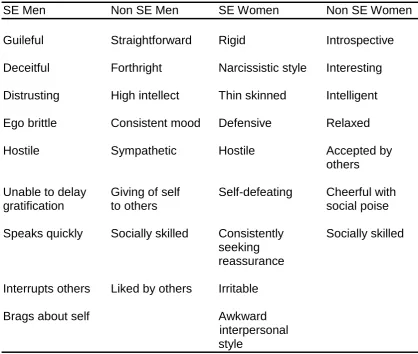
In a five year longitudinal study by Colvin, Block, and Funder (1995) the projection of narcissists’ self-enhancement tendencies was extensively researched. Table 1 highlights multiple ratings reported by those who were seen as significantly high self-enhancers in their late teens and
Table 1
Summary of Descriptions Applied to Male and Female High Self-Enhancers
(SE) and Non Self-Enhancers (Non-SE) by Observers
SE Men Non SE Men SE Women Non SE Women
Guileful Straightforward Rigid Introspective
Deceitful Forthright Narcissistic style Interesting
Distrusting High intellect Thin skinned Intelligent
Ego brittle Consistent mood Defensive Relaxed
Hostile Sympathetic Hostile Accepted by
others
Unable to delay Giving of self Self-defeating Cheerful with
gratification to others social poise
Speaks quickly Socially skilled Consistently Socially skilled seeking
reassurance
Interrupts others Liked by others Irritable
Brags about self Awkward
interpersonal style
Similarly, Heatherton and Vohs (2000) found that self-enhancers with high self-esteem when experiencing ego threat were described by others as arrogant, dislikeable and antagonistic and peers described narcissists as being aggressive and domineering (Clifton, Turkheimer, & Oltmanns, 2004). More recent research has continued to reinforce the detrimental influence of self-enhancement with Kwan, Oliver, Robins and Kuang, (2008) reporting that self-enhancers score high also on narcissism and were judged by
Denial
“If you cannot let yourself be afraid, that contributes to bravery, but it does not do much for sensing what goes on around you” (Levinson, 1994, p.428).
The function of denial is to distract attention and awareness from a troubling fact. Denial does not lead to realistic appraisals, as highlighted by Levinson’s quote above, but it is a powerful antidote to anxiety (Goleman, 1997). Its functional use in a general sense is to cope with and manage potentially overriding emotional pain, distress and conflict. It is a defence mechanism used periodically by most people, and as proposed by Sullivan (1953), it is part of the ego’s role in anxiety gate-keeping and the maintenance of a positive and coherent sense of self. However, for the narcissist it is a more active part of their fundamental make up, utilised generally and consistently to maintain a sense of confidence and invulnerability. Denial is considered to be one of the more immature forms of defence mechanism (Cramer, 1999).
Like Kernberg, Brown (1997) views denial within the narcissistic personality as being a small gap between ideal-self and actual-self. This small
discrepancy or fusion is a measurable indication of denial in action. In a workplace environment, denial is marked by reacting negatively to less than positive feedback, never admitting to mistakes and blaming others for failure (Wohlers & London, 1989). To admit fault would be counter to the narcissist’s need for a sense of superiority. Fundamentally, denial serves to conceal and self-deceptively hide disagreeable truths in order to preserve some positive sense of self-esteem.
immature state as it overly promoted a denial of the real human state and the suppression of any threatening features.
Likewise, Cramer (1995) found the use of denial and exploitiveness
significantly correlated with narcissistic style in late adolescence and similarly Cramer (1999) found positive correlations with university age narcissists and the use of denial. Cramer (2002) reported that people who excessively relied on denial were characterised by self-centredness, ego instability and a lack of impulse control. Block and Block (1980) found in their longitudinal study of adolescent individuals moving into adulthood, those who relied on the usage of denial were also characterised by self-centredness and narcissism.
Denial blocks painful and unattractive features from consciousness, and in the process, appears to have a significant effect on self-accuracy and self-
awareness. Girrens (2003) for example reports on the tendency of narcissists to avoid activities that involve introspection. Wohlers and London (1989) found a highly significant negative relationship within the work environment between self-awareness and denial. Moreover, low self-awareness and denial also clustered strongly with high self-promotion, fear of failure and giving up easily and negatively relates to self-objectivity. Fletcher (1997) reported that employees with a more accurate sense of self were fundamentally more self-critical and were more open to feedback as well as having a higher sense of organisational obligation than those with inaccurate, inflated self-perspectives. In addition, Dickinson and Pincus (2003) found that narcissists were often reported as having domineering and vindictive interpersonal problems but despite this, they denied having any interpersonal distress from these problems.
In essence, the use of denial provides an avoidant function for narcissists as it prevents intolerable anxiety within their fragile esteems and a
Denial is essentially characterised by immaturity (Cramer, 2006) and as Horney (1951) postulated, development is not possible if weakness is not accepted. Educational theorists such as Kid (1973) emphasised that the most important task in learning is the development of a self that is able to
successfully deal with reality. Accepting realistic feedback enables individuals to make intelligent changes thereby avoiding making mistakes again.
Attributional Egotism
As part of maintaining a highly positive self-view and self-esteem, narcissists engage in biased cognitive processes. That is, they filter what they need to self-promote and dismiss what they do not. Attributional egotism refers to attributing positive events or outcomes to oneself and attributing failure to causes external to oneself. Greenwald (1980) argued that ego cognitive biases are part of a normal personality; however, subsequent research indicates that the narcissist’s cognitive path differs to that of the non-narcissist. The more narcissistic a person is, the greater the tendency to engage in attributional egotism. Rhodewalt and Morf (1998) found that
narcissistic individuals significantly reported greater attribution to success and took less blame for failure than non-narcissists. Similarly Stucke (2003) found that following their performance feedback on intelligence tests, narcissistic people showed more self-serving attributions than did non-narcissists. In addition, task failure was attributed by narcissists to task difficulty, whereas non-narcissists attributed failure to their own lack of ability. More generically Ladd, Welsh, Vitulli, Labbe, and Law (1997) found that narcissists significantly differed from non-narcissists in how they made more internal and stable attributions of positive events and external attributions to negative. In terms of memory recollection, Rhodewalt and Eddings (2002) reported that narcissistic men tend to recall positive memories of situations involving rejection, than did non-narcissistic men.
Self-blame and self-critique are not trademarks of narcissism and by
away from any anxiety potentially experienced by failure. Narcissists tend to maintain overly positive self-views even when contradictory evidence is placed before them (Robins & John, 1998). As Stucke (2003) puts it, when failure is attributed to internal causes, one can only blame oneself. Nothing, it would appear, promotes self-esteem like success and the narcissistic mind-set would appear to be highly attuned to taking such perspective.
In essence, the grandiose narcissistic personality fuses ideal-self and actual-self. It is defensive in structure and thus unable to see or accept limitations or faults. Thus, the inability to see and accept oneself as fallible also distorts the ability to see others as independent and separate from oneself. From the psychodynamic perspective of narcissism, the role of others is to promote and maintain this unrealistic, idealised self-image. Therefore, the interpersonal mechanisms used by narcissists are very important in maintaining the narcissistic self and are a key component of more recent self-regulation models of narcissism.
Self-Regulation Models and the Role of the Ego
Self-enhancement, denial and attributional egotism are all prominent
components of a broader self-regulation process, though there is almost an unlimited range of self-regulatory techniques employed by narcissists (Campbell & Green, 2008). Contemporary models of self-regulation are reviewed below, though they could also be seen as extended reflections of earlier theoretical perspectives of the function of the ego, such as Sullivan’s (1953) model of the self-system. According to Sullivan, the function of the ego is to filter out anxiety and thus the individual tends to recognise only what is already in accord with their existing self-system. The ego, largely
Self-regulation models explain narcissism as a series of interactive traits that mutually feed into one another to maintain the narcissist’s positive sense of self.
Morf and Rhodewalt’s (2001) self-regulatory processing model is comprised of three interacting units: self-knowledge, interpersonal strategies, and
intrapersonal strategies. These make up what Morf and Rhodewalt term the narcissistic self-system and interact and mutually reinforce each other. The self-knowledge component is made up of self-general schemata, self-ascribed traits and believed abilities. The interpersonal component involves for
example, surrounding oneself with high status people – positive association, as well as the drive to be admired and to set up social situations that maintain the grandiose self. This is also done through outperforming others in
competitive settings and the derogation of those who do not promote that positive self-identity. The drive within the interpersonal component is to be admired. Intrapersonal self-regulation relates to self-aggrandising, the taking credit for positive outcomes (attributional egotism) and viewing self as
superior to others (self-enhancement).
While similar in many ways, other researchers have placed different
emphases on components of self-regulation models. For example, Campbell and Green’s (2008) agency model focuses on the social skills of the narcissist and the manipulation of their social relationships. Their model recognises the basic high agency and low communion aspects of narcissistic self-regulation but focuses on the fuel that maintains the behaviours – particularly how
people are utilised. To Campbell and Green five main types of fuel are sought by the narcissist: admiration, association (being with high status people), competition (the opportunity for glory), blame, and status elevation (people who will increase their social standing i.e. the sycophant).
The essence of the self-regulatory models is how narcissists actively
CHAPTER FOUR
BROADER ENVIRONMENTAL INFLUENCES ON
NARCISSISM AND THE NARCISSIST AT WORK
Bauer & Wayment (2008) stated, “Egotism is in” (p.7). They described our world as a place where egoistic, self-indulgence is promoted and it is okay to look after number one, live for the moment and get anything you want. The focus of this chapter is to review the environment’s contribution to narcissistic behaviour and then focus specifically on the effect of narcissism within the workplace.
As discussed in Chapter two, narcissism has been predominantly researched from clinical, personality and developmental perspectives; however, other researchers have proposed that the greater environment is responsible for narcissism. The most prominent of these have been Lasch (1979) who focused primarily on the American culture. Lasch referred to narcissism as the hallmark of American culture, a culture that overemphasised
consumerism, promoted the breakdown of family systems, and whose modernisation resulted in too much focus being placed upon individualism. Wirtz and Chiu (2008) have similarly argued that egotism is a direct reflection of a western culture that rewards status, competitiveness and distinction from others. To Wirtz and Chiu such individualistic environments promote
unrealistic optimism, self-serving attribution and the self-deceptive view that one is invincible.
Other contemporary researchers have echoed this approach, most