Multiple Large Scale Gene Expression Datasets in
Toxicology
Clare M. Lee1, Manikhandan A. V. Mudaliar2, D. R. Haggart5, C. Roland Wolf3,4, Gino Miele5, J. Keith Vass1,
Desmond J. Higham1*, Daniel Crowther6
1Department of Mathematics and Statistics, University of Strathclyde, Glasgow, United Kingdom,2College of Medical, Veterinary and Life Sciences, University of Glasgow, Glasgow, United Kingdom,3University of Dundee Medical Research Institute, Ninewells Hospital & Medical School, Dundee, United Kingdom,4CXR Biosciences Ltd, Dundee, United Kingdom,5Epsistem Ltd., Manchester, United Kingdom,6Sanofi, Frankfurt am Main, Germany
Abstract
Non-negative matrix factorization is a useful tool for reducing the dimension of large datasets. This work considers simultaneous non-negative matrix factorization of multiple sources of data. In particular, we perform the first study that involves more than two datasets. We discuss the algorithmic issues required to convert the approach into a practical computational tool and apply the technique to new gene expression data quantifying the molecular changes in four tissue types due to different dosages of an experimental panPPAR agonist in mouse. This study is of interest in toxicology because, whilst PPARs form potential therapeutic targets for diabetes, it is known that they can induce serious side-effects. Our results show that the practical simultaneous non-negative matrix factorization developed here can add value to the data analysis. In particular, we find that factorizing the data as a single object allows us to distinguish between the four tissue types, but does not correctly reproduce the known dosage level groups. Applying our new approach, which treats the four tissue types as providing distinct, but related, datasets, we find that the dosage level groups are respected. The new algorithm then provides separate gene list orderings that can be studied for each tissue type, and compared with the ordering arising from the single factorization. We find that many of our conclusions can be corroborated with known biological behaviour, and others offer new insights into the toxicological effects. Overall, the algorithm shows promise for early detection of toxicity in the drug discovery process.
Citation:Lee CM, Mudaliar MAV, Haggart DR, Wolf CR, Miele G, et al. (2012) Simultaneous Non-Negative Matrix Factorization for Multiple Large Scale Gene Expression Datasets in Toxicology. PLoS ONE 7(12): e48238. doi:10.1371/journal.pone.0048238
Editor:Ramin Homayouni, University of Memphis, United States of America
ReceivedFebruary 14, 2012;AcceptedSeptember 25, 2012;PublishedDecember 14, 2012
Copyright:ß2012 Lee et al. This is an open-access article distributed under the terms of the Creative Commons Attribution License, which permits unrestricted use, distribution, and reproduction in any medium, provided the original author and source are credited.
Funding:This work was supported by the Translational Medicine Research Collaboration—a consortium made up of the Universities of Aberdeen, Dundee, Edinburgh and Glasgow, the four associated NHS Health Boards (Grampian, Tayside, Lothian and Greater Glasgow & Clyde), Scottish Enterprise and Pfizer, by EPSRC Grant EP/E49370/1, by the Knowledge Transfer Account of the University of Strathclyde and by the 2007 DTI grant ‘‘New serum Biomarkers for Preclinical and Clinical Drug Safety Assessment’’. CML and DJH were supported by the Engineering and Physical Sciences Research Council of the UK, under their Fundamentals of Complexity Science call. DJH was funded by a Fellowship from the Leverhulme Trust. The funders had no role in study design, data collection and analysis, decision to publish, or preparation of the manuscript.
Competing Interests:DC was employed by Pfizer and legacy company Wyeth during the course of this work and is now employed by Sanofi. GM was employed by Pfizer and legacy company Wyeth during the course of this work and is now employed by Epistem. CRW is employed by CXR. Pfizer agreed to the publication of this manuscript. MM, DRH and JKV were funded through the TMRC. This does not alter the authors’ adherence to all the PLOS ONE policies on sharing data and materials.
* E-mail: [email protected]
Introduction
The aim of this work is to highlight the usefulness of a recently proposed extension to the technique of non-negative matrix factorization (NMF) by demonstrating its promise for early detection of toxicity in the drug discovery process. In particular, we (a) show that any number of related datasets can be treated simultaneously with this approach, (b) deal with practical issues that arise when the algorithm is applied to real datasets, (c) demonstrate its use with a new large scale microrray dataset, and (d) interpret the results from a biological perspective.
Computational Background
NMF seeks to represent a large complex dataset in terms of smaller factors. The name covers many algorithms. Each approximates a non-negative matrix as the product of two or
Figure 1. Three measures of the performance versus specified cluster size,k, when the data set is factorised as a single entity.(a) The value of the objective function fork~2,. . .,16. (b) The area under consensus cumulative density, [3,14]. (c) The cophenetic correlation coefficient, [3]. doi:10.1371/journal.pone.0048238.g001
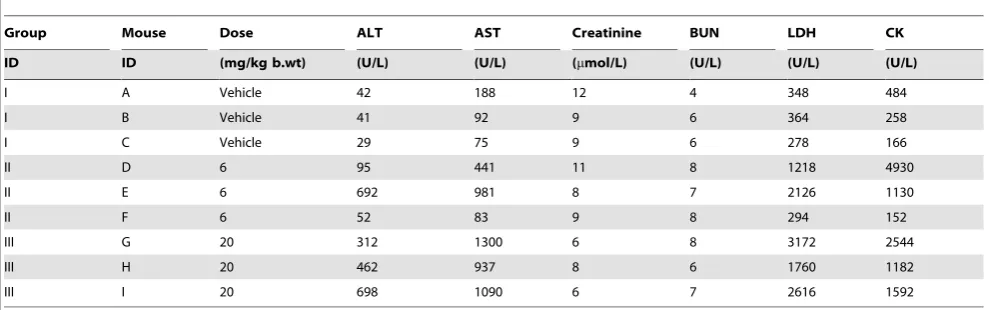
Table 1.Blood clinical chemistry analysis for each mouse.
Group Mouse Dose ALT AST Creatinine BUN LDH CK
ID ID (mg/kg b.wt) (U/L) (U/L) (mmol/L) (U/L) (U/L) (U/L)
I A Vehicle 42 188 12 4 348 484
I B Vehicle 41 92 9 6 364 258
I C Vehicle 29 75 9 6 278 166
II D 6 95 441 11 8 1218 4930
II E 6 692 981 8 7 2126 1130
II F 6 52 83 9 8 294 152
III G 20 312 1300 6 8 3172 2544
III H 20 462 937 8 6 1760 1182
III I 20 698 1090 6 7 2616 1592
The mice were randomly divided into three groups and treated with either Vehicle or two concentrations of PPM201 (6 or 20 mg/kg body weight). The response to the ‘‘therapeutic dose’’, 6 mg/kg, was found to vary widely for ALT (alanine aminotransferase), AST (aspartate aminotransferase), LDH (lactate dehydrogenase) and CK (creatine kinase). AST is raised in PPM201 treated animals, with mouse E (6 mg/kg) seeming to be especially raised; AST is known to be variable between animals, but mouse E also shows a higher level of ALT, indicating that there may be a shared mechanism for the two enzymes. Creatinine is decreased in liver and possibly kidney disease; the contrasts observed here are inconclusive. BUN (Blood, Urea and Nitrogen) is raised in kidney disease; results are again inconclusive. Following cardiac infarction LDH is increased after 12 hours, possibly also caused by liver toxicity; mouse E is markedly lower than the other PPM201 treated animals and it may be that its heart muscle profile might be more similar to the untreated mice. CK is, like LDH, increased in myocardial infarction and this supports the LDH findings for mouse E. doi:10.1371/journal.pone.0048238.t001
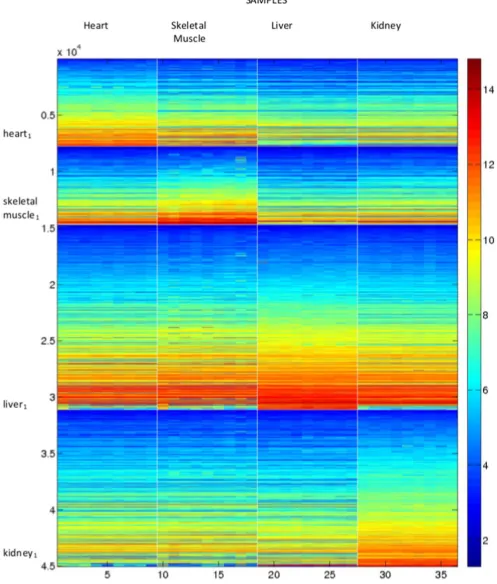
Figure 2. Factorising as a single dataset; reordering using the NMF fork~4.The columns show the samples and the rows the gene expression for each of the 45037 genes. Genes and samples are organised by cluster number. Elements within each cluster are ordered, with the largest value at the bottom/right. Each tissue is characterised by a group of highly expressed genes; from the top left to bottom right these are heart, skeletal muscle, liver and kidney. For comparison purposes, the characteristic 100 ‘‘best’’ genes in the four columns are names heart1,
skeletal muscle1,liver1andkidney1.
work of Badea [9,10], who considered an extension of NMF that deals with two data matrices. Simultaneous NMF is used in [9] to study pancreatic cancer microarray data alongside extra information concerning transcription regulatory factors. In [10] microarray datasets for pancreatic ductal adenocarcinoma and sporadic colon adenocarcinoma are sumiltaneously factorized in order to discover expression patterns common to both data sets. This simultaneous NMF approach readily extends to the case of an arbitrary number of data matrices and here, for what we believe to be the first time, we implement and evaluate the method on more than two. We also consider various practical
issues that must be tackled in order to produce a useful computational tool. To minimize the number of algorithmic parameters, make the results straightforward to interpret, and exploit the natural sparsity in the algorithm [9, section 3], we focus on hard clustering. The interesting issue of allowing clusters to overlap in this context is therefore left as future work.
Biological Background
We analyse gene expression data describing the molecular changes in four tissue types due to different dosages of an experimental pan-peroxisome proliferator-activated receptor (pan-PPAR) agonist PPM-201, provided by Plexxikon. PPARs have attracted great interest as potential therapeutic targets for diabetes [11], but major concerns have arisen due to clinically observed side-effects [12]. Hence, there are compelling reasons for toxicological studies at the gene expression level.
The material is organised as follows. In Section we describe the simultaneous NMF algorithm and outline our approach for using the output to order and cluster a dataset. Section describes the mouse microarray data, and the NMF results that arise when we treat it as a single dataset are given in Section . This is followed in Section by the analysis of the data split into four datasets corresponding to the known tissue types; liver, kidney, heart and skeletal muscle. In Section we compare the gene clusters from Sections and , and Section discusses the results. Conclusions are given in Section .
Methods
Algorithms
Given d non-negative data matrices A(i) of size m(i)|n for i~1,. . .,d, our aim is to simultaneously factorize all matrices so that
A(i)&W(i)H
with the additional constraints thatW(i)is a non-negative matrix of sizem(i)|kfori~1,. . .,d, andHis a non-negative matrix of sizek|n. Generalising naturally from the d~2case in [9], we seek to minimise the objective function
f(A(i),W(i),H)~X
d
i~1
b(i)EA(i){W(i)HE2 ð1Þ
whereb(i)~EA(1)E
EA(i)E. HereE:Edenotes the Frobenius norm. As in
[9] the b coefficients are designed to give equal weight to the different error terms. Based on the multiplicative update rules developed in [13], an iterative algorithm that attempts to solve the optimisation problem can be derived using a gradient descent method dz1 times. This gives us the following sequence of approximations forj~1,2,. . ., given initial choices W(i)½0 and H½0,
W(i)½jz1~W(i)jzg½Wj(i)A(i)H½jT{W(i)½jH½jH½jT
H½jz1~H½jzg½j H
Xd
i~1
[image:4.612.62.298.85.570.2]b(i)W(i)½jTA(i){W(i)½jTW(i)½jH½j !
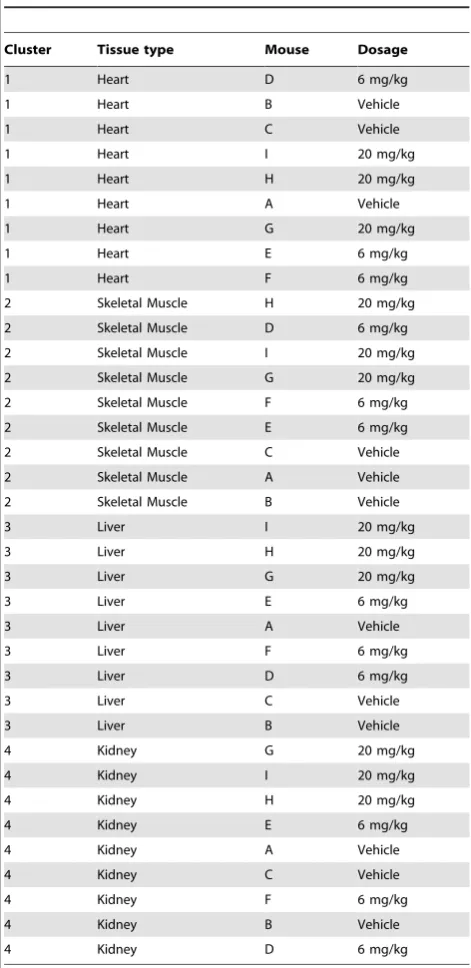
Table 2.Ordering of the tissue samples after single factorization of rank 4 of the entire dataset.
Cluster Tissue type Mouse Dosage
1 Heart D 6 mg/kg
1 Heart B Vehicle
1 Heart C Vehicle
1 Heart I 20 mg/kg
1 Heart H 20 mg/kg
1 Heart A Vehicle
1 Heart G 20 mg/kg
1 Heart E 6 mg/kg
1 Heart F 6 mg/kg
2 Skeletal Muscle H 20 mg/kg
2 Skeletal Muscle D 6 mg/kg
2 Skeletal Muscle I 20 mg/kg
2 Skeletal Muscle G 20 mg/kg
2 Skeletal Muscle F 6 mg/kg
2 Skeletal Muscle E 6 mg/kg
2 Skeletal Muscle C Vehicle
2 Skeletal Muscle A Vehicle
2 Skeletal Muscle B Vehicle
3 Liver I 20 mg/kg
3 Liver H 20 mg/kg
3 Liver G 20 mg/kg
3 Liver E 6 mg/kg
3 Liver A Vehicle
3 Liver F 6 mg/kg
3 Liver D 6 mg/kg
3 Liver C Vehicle
3 Liver B Vehicle
4 Kidney G 20 mg/kg
4 Kidney I 20 mg/kg
4 Kidney H 20 mg/kg
4 Kidney E 6 mg/kg
4 Kidney A Vehicle
4 Kidney C Vehicle
4 Kidney F 6 mg/kg
4 Kidney B Vehicle
4 Kidney D 6 mg/kg
doi:10.1371/journal.pone.0048238.t002
for some small positive matricesg½Wj(i), andg½Hj, withrepresenting element-wise multiplication. The iteration may be motivated through the intuition that wheng½Wj(i)andg½Hjare sufficiently small and positive each of these equations should reduce the objective function. This allows us to set
g½Wj(i)~ W(i) ½j
W(i)½jH½jH½jT and g
½j H~
H½j Pd
i~1
b(i)W(i)½jTW(i)½jH½j ,
again with the division being performed element-wise. Hence the overall iteration has the form
W(i)½jz1~W(i)½j A(i)H ½jT
W(i)½jH½jH½jT
H½jz1~H½j
Pd i~1
b(i)W(i)½jTA(i)
Pd i~1
b(i)W(i)½jTW(i)½jH½j :
The values in gW(i) and gH are non-negative due to the constraints on the matrices, however they are not necessarily small. The iteration decreases the objective function (1), so this leads to a locally optimum solution, but we cannot guarantee convergence to a global optimum. In particular, different initial conditions can lead to different factorizations of different quality.
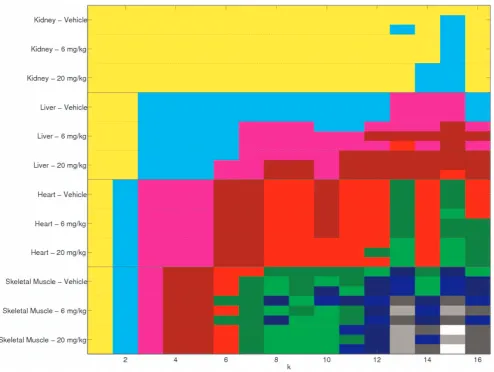
[image:5.612.61.556.58.430.2]Having iterated up to some stopping criterion and produced the factorizations, we use them to bi-cluster the data. Each sample is assigned to the cluster for which it has the largest value in the gene
Figure 3. Factorising as a single dataset.The clustering of the mouse samples fork~1,. . .,16. Within each column the samples in the same colour are clustered together. No value ofkreveals the known tissue/dosage subgroups, or places different tissues in the same cluster.
cluster and vice versa. In reordering the data for easy visualisation we organise the rows and columns by cluster number (assigned arbitrarily) and sort the elements within each cluster from the appropriate sample/gene set, with the largest value at the bottom/ right of that cluster. Given that the second factor is common to all the factorizations, it produces a matching ordering of the columns of the data.
Because the result depends on the choice of initial condition, and because the choice ofkis not automatic, further information is needed in order to specify a practical algorithm. To deal with the lack of uniqueness, we try several initial conditions and pick a realisation that minimises the objective function (1). We then continue until further runs do not significantly alter the results. The objective function value is also one of the criteria we use in order to decide which rank/clustering is the most ‘‘appropriate’’ for the data. By regarding the objective function as a function ofk, we identify values ofkwhere the decay in the objective function begins to diminish. In addition we also form a consensus matrix as in [3,14] for the clustering of the objects. This is the average of the
connectivity matrices C where for each initialisation Ci,j~1 if
objects i and j are clustered together and 0 otherwise. So the consensus matrix contains values between0and1with the(i,j)th element being the likelihood that objectsiandjcluster together. The cumulative density of these values is constructed, by summing the appropriate probabilities, and the area under this curve is the second measure we look at when considering choices fork. The third measure is the Pearson correlation of the cophenetic distances, as explained in [3].
Mouse data
[image:6.612.63.551.60.465.2]We apply these techniques to mouse gene expression data quantifying changes in four different tissue types following administration of different dosages (vehicle, therapeutic and toxic) of an experimental pan-PPAR agonist. The study design and clinical chemistry results are summarised in Table 1. ALT and AST are known markers in rodents for liver toxicity [15] and from this criterion mouse E may be showing a toxic response to
Figure 4. Three measures of the performance versus specified cluster size,k, when the four tissue types are factorised separately.
(a) The value of the objective function fork~2,. . .,10. (b) The area under consensus cumulative density function fork~2,. . .,10, [3,14]. (c) The cophenetic correlation coefficient, [3].
doi:10.1371/journal.pone.0048238.g004
PPM201, despite it being administered at a supposedly therapeutic dose level. This conditions our expectation of the gene-expression pattern for mouse E and suggests that it may be similar to the toxic level group III for liver.
Nine wild type mice (strain: C57BL/6J) were randomly divided into three groups; - Group-I, II and III. PPM-201 in the vehicle
[image:7.612.65.552.108.587.2]base was administered daily for 14 days at 6 mg/kg body weight dose rate to each mouse in Group-II and at 20 mg/kg body weight dose rate to each mouse in Group-III while the mice in Group-I received only the vehicle base. On 15th day, the mice were sacrificed to harvest blood, heart, skeletal muscle, liver and kidney tissues for clinical chemistry, microarray and histopathology
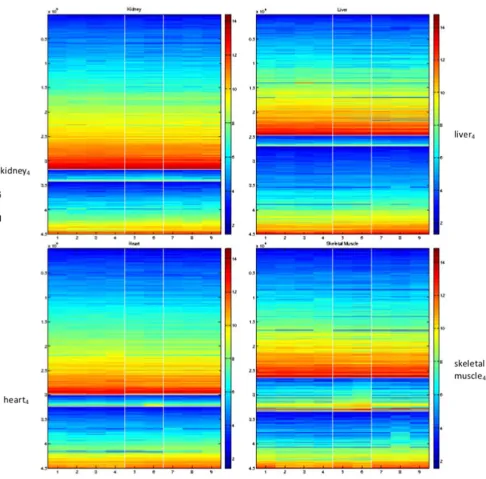
Figure 5. Factorisation of the four separate tissue types using simultaneous NMF withk~3.Top left, kidney; top right, liver; lower left, heart; lower right, skeletal muscle. The four tissue types are treated as separate sources of information across a common set of mice. Genes are therefore ordered differently in each of the four tissues, but the mice ordering is global. The resulting mouse ordering and mouse clusters are detailed in Table 3.
analysis. In the clinical chemistry analysis, alanine aminotransfer-ase (ALT, U/L), aspartate aminotransferaminotransfer-ase (AST, U/L), creat-inine kinase (CK, U/L), blood urea nitrogen (BUN, mmol/L), creatinine (mmol/L) and lactate dehydrogenase (LDH, U/L) were measured from the blood of each mouse. Two sections of liver, two sections of kidney, one or two sections of skeletal muscle, and one section of heart were prepared from each mouse, stained with hematoxylin and eosin (H&E), and examined by a veterinary pathologist. Total RNA was isolated from murine tissues using Qiazol-based homogenization and subsequent column-based purification (Qiagen) with on-column treatment. DNAse-free RNA was assessed for quality using Agilent Bioanalyser electrophoresis and acceptance criteria of RNA Integrity Number (RIN) greater than seven. 50 ng of total RNA was subsequently utilized as input to cDNA-based amplification and biotin-labelling using single-primer isothermal amplification according to the manufacturer’s instructions (Ovation System, NuGEN Technolo-gies). Unlabelled and biotin-labelled cDNA was qualitatively assessed by Agilent Bioanalyser electrophoresis to ensure identical size distributions of all samples pre- and post-fragmentation. Fragmented, biotin-labelled cDNA were hybridized to MOE430 2.0 GeneChip arrays (Affymetrix) with subsequent scanning and feature extraction according to the manufacturer’s instructions.
The dataset has been approved by the GEO curators and assigned the accession number GSE31561.
Ethics Statement
The in vivo procedures undertaken during the course of this study (Ref: CXR0631) were subject to the provisions of the United
[image:8.612.60.454.59.363.2]Kingdom Animals (Scientific Procedures) Act 1986. The study was approved by the CXR Biosciences Local Ethics Committee and complied with all applicable sections of the Act and the associated Codes of Practice for the Housing and Care of Animals used in Scientific Procedures and the Humane Killing of Animals under Schedule 1 to the Act, issued under section of the Act.
Figure 6. Factorisation of the four separate tissue types simultaneously.The clustering of the mice fork~1,. . .,9; colour indicates cluster number. One ‘‘misclassification’’ is found for several values ofk. This involves the mouse showing a toxic response to the lower (6 mg/kg) dose of PPAR agonist, as discussed in section .
doi:10.1371/journal.pone.0048238.g006
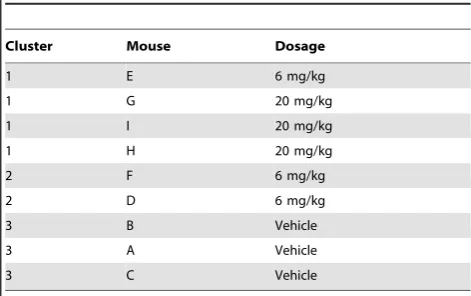
Table 3.Ordering of the tissue samples after a four-way factorization of rank 3.
Cluster Mouse Dosage
1 E 6 mg/kg
1 G 20 mg/kg
1 I 20 mg/kg
1 H 20 mg/kg
2 F 6 mg/kg
2 D 6 mg/kg
3 B Vehicle
3 A Vehicle
3 C Vehicle
The mouse clusters when split by tissue type and reordered using the 4-way simultaneous factorization fork~3.
doi:10.1371/journal.pone.0048238.t003
[image:8.612.318.554.557.705.2]Results Single dataset
First, the samples are treated as a single dataset, with thirty six samples and 45037 genes, hence the data matrixAis45037|36. This corresponds to the case where d~1 in Section . The factorizations were performed twenty times for each k~2,3,. . .,16, with a consensus matrix formed from the clustering of the samples. All gene clusters associated with this analysis are labelled with a subscript 1, e.g.,heart1.
Figure 1(a) shows the minimum size of the objective function that we observed for each value of k. We see that this value decreases monotonically, with a slower rate starting at around k~4. Figure 1(b) shows the area under the cumulative density curves for the same values ofk. This subfigure clearly points to k~4, as does subfigure (c) showing the cophenetic correlation.
Based on Figure 1, we conclude that when the data is factorized as a single entity, k~4clusters is the most appropriate choice. Reordering the dataset using the ordering fork~4in the manner described in Section gives the images shown in Figure 2. This figure shows the samples in the columns with cluster one at the top. To aid visualisation, the sample clusters are split by white lines, as are the gene clusters. This reordered data matrix shows a distinctive ‘‘ramp’’ effect in the blocks on the diagonal, placing genes that are most influential in identifying each tissue type to the bottom of the block. This figure also shows some of the differences in expression behaviour between the tissue types, particularly for the most influential genes.
Because we know the origin of the samples, we can confirm that the algorithm has put the heart samples in cluster one, the skeletal muscle samples in cluster two, the liver samples in cluster three, and the kidney samples in cluster four. The exact ordering of the
samples is shown in Table 2. This table also shows the mouse identification information for each sample, and we see that the mice are not ordered in the same way within each cluster. It is the liver and skeletal muscle samples that most closely respect the dosage levels within the clusters. Both these clusters only have one sample mis-ordered.
Given that the factorization has been performed for k~2,. . .,16we know what the clustering would be from all these rank factorizations. This information is displayed in Figure 3. Here the rows representing the samples are ordered in tissue then dosage subgroups. For each rankk, samples with the same colour are assigned to the same cluster. As we have seen before, fork~4
the samples are split into tissue types. The figure shows that this split persists atk~5with an empty cluster forming. In fact, for this range ofkthere are at most twelve clusters of samples. We also see from this figure that for no value ofkare the twelve tissue/dosage subgroups found.
Multiple datasets
[image:9.612.64.555.438.686.2]The test in Section indicates that the basic NMF factorization approach can deliver biologically meaningful results—separating the twelve samples by tissue type. But the failure to order correctly within tissue type according to dosage motivates the use of the multiple dataset generalization introduced in Section , where the four tissue types are treated as separate sources of information across a common set of mice. Intuitively, we would expect to add value to the data analysis by building known biology into the algorithm in this way. In this section, we therefore factorize the four new datasets simultaneously. This is similar to the test in Section in the sense that it produces a single ordering for the mice, but it has the potential to add extra information by providing four different, tissue-level, gene orderings. We thus haved~4matrices
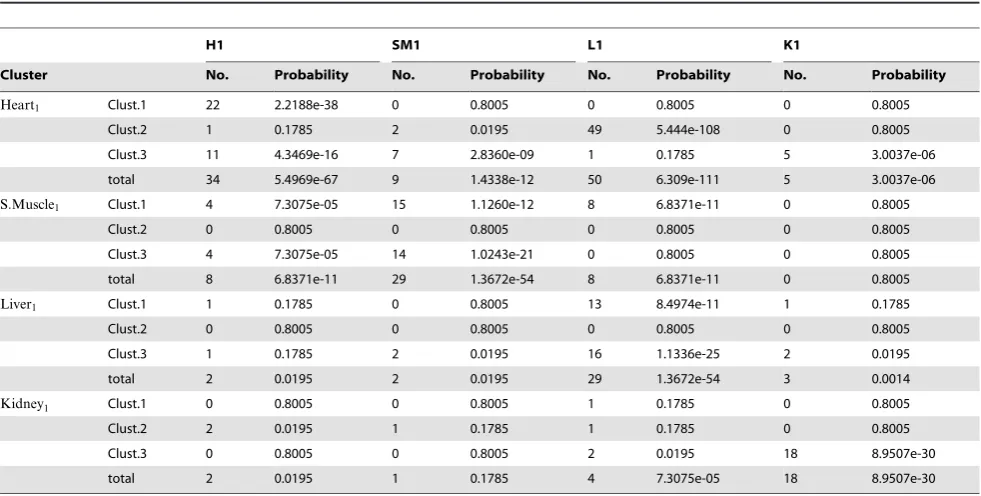
Table 4.Gene cluster comparison for indivdual tissues in the single matrix, ‘‘tissue1,’’ with the four separate tissue matrices ‘‘tissue4.’’
H1 SM1 L1 K1
Cluster No. Probability No. Probability No. Probability No. Probability
Heart1 Clust.1 22 2.2188e-38 0 0.8005 0 0.8005 0 0.8005
Clust.2 1 0.1785 2 0.0195 49 5.444e-108 0 0.8005
Clust.3 11 4.3469e-16 7 2.8360e-09 1 0.1785 5 3.0037e-06
total 34 5.4969e-67 9 1.4338e-12 50 6.309e-111 5 3.0037e-06
S:Muscle1 Clust.1 4 7.3075e-05 15 1.1260e-12 8 6.8371e-11 0 0.8005
Clust.2 0 0.8005 0 0.8005 0 0.8005 0 0.8005
Clust.3 4 7.3075e-05 14 1.0243e-21 0 0.8005 0 0.8005
total 8 6.8371e-11 29 1.3672e-54 8 6.8371e-11 0 0.8005
Liver1 Clust.1 1 0.1785 0 0.8005 13 8.4974e-11 1 0.1785
Clust.2 0 0.8005 0 0.8005 0 0.8005 0 0.8005
Clust.3 1 0.1785 2 0.0195 16 1.1336e-25 2 0.0195
total 2 0.0195 2 0.0195 29 1.3672e-54 3 0.0014
Kidney1 Clust.1 0 0.8005 0 0.8005 1 0.1785 0 0.8005
Clust.2 2 0.0195 1 0.1785 1 0.1785 0 0.8005
Clust.3 0 0.8005 0 0.8005 2 0.0195 18 8.9507e-30
total 2 0.0195 1 0.1785 4 7.3075e-05 18 8.9507e-30
H1, SM1, L1 and K1 are the gene clusters most characteristic for the heart, skeletal muscle, liver and kidney, respectively, in the single (combined) data set, as in Figure 2. Clust.1, 2, or 3 denotes the 100 genes most securely placed within the clusters of the diferently ordered genes in the 4-way factorization shown in Figure 5. The order of the clusters is 1–3, from the top of the figire, for each tissue. We refer to these clusters as ‘‘heart4cluster1,’’ etc. The overlap of theheart1from the one-way factorization toheart4is referred to asheart1heart4cluster 1.
of size45037|9. We again performed 20 factorizations, this time fork~2,. . .,10and these have been used to generate a consensus for clustering the mice.
The objective function and the consensus measurements are shown in Figure 4. The objective function in subfigure (a) does not show much decrease in convergence rate until we get to nine clusters. This is the point where each mouse is put into a cluster on its own. The area under the cumulative density curve in Figure 4(b) suggests using either rank k~3, or k~5 factorizations for the clustering. The correlation coefficients shown in subfigure (c) give the same two values as peaks, as well ask~8, though thek~3
peak is the highest.
Given these measurements we consider the four-way simulta-neous factorization fork~3in Figure 5. The reordered datasets are shown separately with the kidney dataset in the top left, the
liver dataset in the top right, the heart dataset in the bottom left and the skeletal muscle in the bottom right. The mouse ordering and mouse clusters that arise are shown in Table 3. The four subfigures in Figure 5 also illustrate that the gene clusters are different for each dataset. The three clusters for each tissue in this 4-way factorization are subsequently refered to in the form ‘‘tissue4, cluster 1,2 or 3. ’’ Table 3 shows that the simultaneous
NMF approach has recovered the known mouse treatments except for one misplacement. Figure 6 shows the clustering for the four-way simultaneous factorizations for k~1,. . .,9. This indicates that this mouse does not cluster with all those of the same dosage for any rank of factorization greater than two, instead it associates with the higher more toxic dosage. This is borne out by the known blood chemistry, as summarised in Table 1; the mouse that is
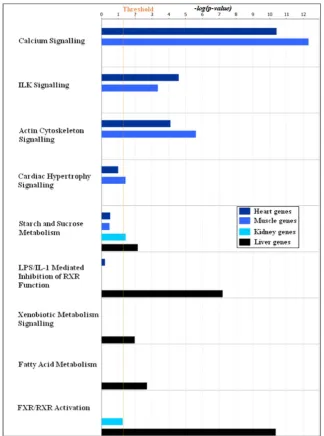
mis-Figure 7. Enrichment of canonical pathways in the four tissue specific gene clusters.The top one hundred most influential probe-sets in the four tissue specific gene clusters obtained in the first factorization were subjected to signalling and metabolic pathways analysis in the IPA software. This graph shows the comparison of canonical pathways enriched in the four tissue specific gene clusters,heart1,muscle1,kidney1and
liver1. The coloured bars show the significance of the enrichment for a particular pathway in the cluster computed by Fisher’s exact test.
doi:10.1371/journal.pone.0048238.g007
[image:10.612.57.382.59.496.2]classified exhibits a toxic response and is therefore classified with the mice that received the higher dose.
Comparing Gene clusters
Our aim now is to test the results from the novel multi-way NMF algorithm used in Section in order to see whether they (a) show consistency and (b) add value to the results in Section from standard NMF. We know that the four simultaneously factorized datasets correspond to the four clusters of samples that were discovered in an unsupervised manner from the single factoriza-tion of the full dataset. It could therefore be conjectured that the most influential genes in the first factorization will appear as influential genes in the four-way simultaneous factorization for that dataset, but less so for the other datasets.
Our comparisons involve four reference sets. For illustration, we chose an arbitrary threshold of one hundred; that is, we consider the top one hundred most influential genes from the four clusters in the first factorization shown in Figure 2. For easy reference these sets are referred to using the known tissue type. This means that the genes from cluster one are theheart1genes, those from
cluster two are themuscle1genes, those from cluster three are the
liver1 genes and those from cluster four are thekidney1 genes.
The 4-way factorization shown in Figure 5 identifies differently ordered gene clusters for each tissue, which we will refer to as ‘‘kidney4, cluster 1,2 or 3, etc. ’’ Table 4 shows the total number of co-incident genes between the top 100 lists arising from the one-way and four-one-way factorisations. The table also shows the probability of the two lists having that number of genes in common if the second list were randomly selected; hence these values come from the hypergeometric distribution. We see that the important genes for each tissue type appear significantly highly in the clusters from that tissue’s data type. In addition, all the tissue type genes also appear significantly within the reordering of the heart dataset. This link is reciprocated, with the heart genes appearing significantly frequently within the skeletal muscle dataset. Surprisingly, the greatest overlap arose between liver1
andheart4cluster 2. One of these genes, Apoliprotein A1, is being
considered as a marker for cardiac toxicity [16].
[image:11.612.59.410.60.427.2]We would like to demonstrate the utility of the factorization method by using the gene clusters obtained in our analysis to understand tissue specific effects of the experimental drug, PPM-201. Of course, we are not claiming that this is an exhaustive analysis of the effects of PPM-201. We analysed the gene clusters
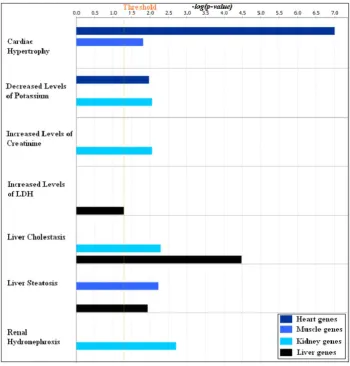
Figure 8. Enrichment of toxicity functions in the four tissue specific gene clusters.The top one hundred most influential probe-sets in the four tissue specific gene clusters obtained in the first factorization were subjected to IPA-Tox analysis in the IPA software. This graph shows the comparison of toxicity functions enriched in the four tissue specific gene clusters. The coloured bars show the significance of the enrichment for a particular toxicity functions in the cluster computed by Fisher’s exact test.
for pathways enrichment and gene ontology enrichment using DAVID [17] and Ingenuity Pathways Analysis (IPA) [18] tools. Table 5 shows the comparison of KEGG pathways enriched in the four tissue specific top one hundred most influential probe-sets obtained in the first factorization. Pathways enriched in these clusters differ according to the tissue types and can be considered as the pathways that are most perturbed by PPM-201. For example, arrhythmogenic right ventricular cardiomyopathy, hy-pertrophic cardiomyopathy and dilated cardiomyopathy are
enriched in heart, whereas starch and sucrose metabolism, drug metabolism and PPAR signalling pathway are enriched in liver. Similarly, Figure 7 shows the enrichment of canonical pathways in the four tissue specific clusters analysed using IPA. It also shows the tissue specific enrichment of pathways—calcium signalling, integrin linked kinase (ILK) signalling and cardiac hypertrophy signalling are enriched inheart1 and muscle1 clusters, whereas
[image:12.612.63.556.78.349.2]fatty acid metabolism and farnesoid X receptor (FXR)/retinoid X receptor (RXR) activation are enriched in the liver1 cluster.
Table 5.Enrichment of KEGG pathways in the four tissue specific gene clusters.
Kegg Pathways Heart Muscle Kidney Liver
1 mmu05412: Arrhythmogenic right ventricular cardiomyopathy %
2 mmu04020: Calcium signalling pathway
3 mmu04260: Cardiac muscle contraction
4 mmu05414: Dilated cardiomyopathy
5 mmu05410: Hypertrophic cardiomyopathy (HCM)
6 mmu04530: Tight junction % %
7 mmu00590: Arachidonic acid metabolism %
8 mmu00983: Drug metabolism
9 mmu04610: Complement and coagulation cascades
10 mmu00980: Metabolism of xenobiotics by cytochrome P450
11 mmu03320: PPAR signalling pathway
12 mmu00830: Retinol metabolism
13 mmu00040: Pentose and glucuronate interconversions %
14 mmu00591: Linoleic acid metabolism %
15 mmu00053: Ascorbate and aldarate metabolism %
16 mmu00860: Porphyrin and chlorophyll metabolism %
17 mmu00500: Starch and sucrose metabolism %
18 mmu00150: Androgen and estrogen metabolism %
19 mmu00140: Steroid hormone biosynthesis %
The top one hundred most influential probesets in the four tissue specific gene clusters were analysed using DAVID functional annotation tool. This table shows the comparison of KEGG pathways enriched in the four tissue specific gene clusters. Theicon indicates a p-valuev0:001and the%a0:001vp-valuev0:05showing the significance of the enrichment.
[image:12.612.58.557.529.693.2]doi:10.1371/journal.pone.0048238.t005
Table 6.Enrichment of KEGG pathways in the common genes between the clusters found by the two ways of factorization.
Kegg Pathways Heart1 Heart1 Muscle1 Liver1 Liver1 Liver1 Liver1
Heart4 Muscle4 Muscle4 Liver4 Liver4 Heart4 Muscle4
clust. 1 clust. 3 clust. 1 clust. 1 clust. 3 clust. 2 clust. 1
1 mmu04020: Calcium signalling pathway
2 mmu04260: Cardiac muscle contraction %
3 mmu04610: Complement and coagulation cascades
4 mmu05414: Dilated cardiomyopathy %
5 mmu00983: Drug metabolism %
6 mmu05410: Hypertrophic cardiomyopathy (HCM) %
7 mmu03320: PPAR signalling pathway %
8 mmu04530: Tight junction %
The probesets common to clusters formed by the 4-way simultaneous factorization and the top one hundred most influential probesets in the four tissue specific clusters were analysed for enrichment of KEGG pathways using DAVID functional annotation tool. Fishers’ exact test p-values for pathway enrichment in the clusters are shown graphically in this table. Theicon indicates a p-valuev0:001and the%a0:001vp-valuev0:05.
doi:10.1371/journal.pone.0048238.t006
Table 7.Muscle genes present in the calcium signalling pathway.
Sr. Probeset ID Gene Symbol Entrez Gene ID Entrez Gene Name
1 1427735 a at ACTA1 11459 Actin, alpha 1, skeletal muscle
2 1419312 at ATP2A1 11937 ATPase, Ca++transporting, cardiac muscle, fast twitch 1
3 1422598 at CASQ1 12372 Calsequestrin 1 (fast-twitch, skeletal muscle)
4 1427520 a at MYH1 17879 Myosin, heavy chain 1, skeletal muscle, adult
5 1425153 at MYH2 17882 Myosin, heavy chain 2, skeletal muscle, adult
6 1458368 at MYH4 17884 Myosin, heavy chain 4, skeletal muscle
7 1452651 a at MYL1 17901 Myosin, light chain 1, alkali; skeletal, fast
8 1457347 at RYR1 20190 Ryanodine receptor 1 (skeletal)
9 1440962 at SLC8A3 110893 Solute carrier family 8, member 3
10 1417464 at TNNC2 21925 Troponin C type 2 (fast)
11 1416889 at TNNI2 21953 Troponin I type 2 (skeletal, fast)
12 1450118 a at TNNT3 21957 Troponin T type 3 (skeletal, fast)
13 1419739 at TPM2 22004 Tropomyosin 2 (beta)
14 1426144 x at TRDN 76757 Triadin
[image:13.612.65.556.330.511.2]Table shows the probe-sets enriched for calcium signalling among the top 100 probe-sets from themuscle1gene cluster. doi:10.1371/journal.pone.0048238.t007
Table 8.Heart genes present in the calcium signalling pathway.
Sr. Probeset ID Gene Symbol Entrez Gene ID Entrez Gene Name
1 1415927 at ACTC1 11464 Actin, alpha, cardiac muscle 1
2 1416551 at ATP2A2 11938 ATPase, Ca++transporting, cardiac muscle, slow twitch 2
3 1422529 s at CASQ2 12373 Calsequestrin 2 (cardiac muscle)
4 1448827 s at MYH6 17888 Myosin, heavy chain 6, cardiac muscle, alpha
5 1448394 at MYL2 17906 Myosin, light chain 2, regulatory, cardiac, slow
1427769 x at MYL3 17897 Myosin, light chain 3, alkali; ventricular, skeletal, slow
7 1421126 at RYR2 20191 Ryanodine receptor 2 (cardiac)
8 1418370 at TNNC1 21924 Troponin C type 1 (slow)
9 1422536 at TNNI3 21954 Troponin I type 3 (cardiac)
10 1440424 at TNNT2 21956 Troponin T type 2 (cardiac)
11 1423049 a at TPM1 22003 Tropomyosin 1 (alpha)
12 1451940 x at TRDN 76757 Triadin
[image:13.612.65.554.554.711.2]Table shows the probe-sets enriched for calcium signalling among the top 100 probe-sets from theheart1gene cluster. doi:10.1371/journal.pone.0048238.t008
Table 9.Liver genes present in the calcium signalling pathway.
Sr. Probeset ID Gene Symbol Entrez Gene ID Entrez Gene Name
1 1449817 at ABCB11 27413 ATP-binding cassette, sub-family B (MDR/TAP), member 11
2 1419393 at ABCG5 27409 ATP-binding cassette, sub-family G (WHITE), member 5
3 1419232 a at APOA1 11806 Apolipoprotein A-I
4 1418278 at APOC3 11814 Apolipoprotein C-III
5 1449309 at CYP8B1 13124 Cytochrome P450, family 8, subfamily B, polypeptide 1
6 1418190 at PON1 18979 Paraoxonase 1
7 1450261 a at SLC10A1 20493 Solute carrier family 10, member 1
8 1449112 at SLC27A5 26459 Solute carrier family 27, member 5
9 1449394 at SLCO1B3 28253 Solute carrier organic anion transporter family, member 1B3
10 1424934 at UGT2B4 71773 UDP glucuronosyltransferase 2 family, polypeptide B4
Analysis of the same sets of genes for enrichment of toxicity functions in the IPA shows, in Figure 8, cardiac hypertrophy in
heart1genes, increased level of creatinine and hydronephrosis in kidney1 genes, and increased levels of lactate dehydrogenase (LDH) and steatosis inliver1genes.
[image:14.612.63.558.90.395.2]The common genes between the top one hundred most influential probe-sets in the four tissue specific clusters and the top one hundred most influential probe-sets in the clusters formed by 4-way simultaneous factorization of the split dataset were also analysed for enrichment of pathways, gene ontology and toxicity functions using DAVID and IPA. Tables 6, 7, 8, 9, 10, 11, 12, 13,
Table 10.Heart1heart4cluster 1. Common probesets between the top one hundred most influential probesets in theheart1 cluster and 20 mg/kg dosage cluster (cluster 1) of theheart4dataset.
Sr. Probeset ID Gene Symbol Entrez Gene Name
1 1415927 at ACTC1 actin, alpha, cardiac muscle 1
2 1416551 at ATP2A2 ATPase, Ca++transporting, cardiac muscle, slow twitch 2
3 1452363 a at ATP2A2 ATPase, Ca++transporting, cardiac muscle, slow twitch 2
4 1417607 at COX6A2 cytochrome c oxidase subunit VIa polypeptide 2
5 1460318 at CSRP3 cysteine and glycine-rich protein 3 (cardiac LIM protein)
6 1416023 at FABP3 fatty acid binding protein 3, muscle and heart (mammary-derived growth inhibitor)
7 1453628 s at LRRC2 leucine rich repeat containing 2
8 1451203 at MB myoglobin
9 1418551 at MYBPC3 myosin binding protein C, cardiac
10 1448554 s at MYH6 myosin, heavy chain 6, cardiac muscle, alpha
11 1448826 at MYH6 myosin, heavy chain 6, cardiac muscle, alpha
12 1448394 at MYL2 myosin, light chain 2, regulatory, cardiac, slow
13 1427768 s at MYL3 myosin, light chain 3, alkali; ventricular, skeletal, slow
14 1428266 at MYL3 myosin, light chain 3, alkali; ventricular, skeletal, slow
15 1418769 at MYOZ2 myozenin 2
16 1450952 at PLN phospholamban
17 1423859 a at PTGDS prostaglandin D2 synthase 21 kDa (brain)
18 1418370 at TNNC1 troponin C type 1 (slow)
19 1422536 at TNNI3 troponin I type 3 (cardiac)
20 1418726 a at TNNT2 troponin T type 2 (cardiac)
21 1424967 x at TNNT2 troponin T type 2 (cardiac)
22 1423049 a at TPM1 tropomyosin 1 (alpha)
doi:10.1371/journal.pone.0048238.t010
Table 11.Heart1heart4cluster 3.
Sr. Probeset ID Gene Symbol Entrez Gene Name
1 1422529 s at CASQ2 calsequestrin 2 (cardiac muscle)
2 1444429 at LRTM1 leucine-rich repeats and transmembrane domains 1
3 1439101 at MYLK3 myosin light chain kinase 3
4 1426615 s at NDRG4 NDRG family member 4
5 1436188 a at NDRG4 NDRG family member 4
6 1438452 at NEBL nebulette
7 1437442 at PCDH7 protocadherin 7
8 1436277 at RNF207 ring finger protein 207
9 1423145 a at TCAP titin-cap (telethonin)
10 1436833 x at TTLL1 tubulin tyrosine ligase-like family, member 1
11 1444638 at TTN titin
Common probesets between the top one hundred most influential probesets in theheart1cluster and vehicle dose cluster (cluster 3) of theheart4dataset. doi:10.1371/journal.pone.0048238.t011
[image:14.612.64.556.541.711.2]14, 15, 16, 17 summarise the results of this analysis, which are discussed further in the next section.
Discussion
The factorization and reordering of the dataset as a whole set (Figure 2 and Table 2) successfully clustered samples from the same tissue and further investigation showed that it simultaneously identified genes with a known relevance to those tissues. It was therefore reasonable to study the genes that were responsible for this differentiation. In the one-way clustering, the top 100 probe-sets from each of the four tissue specific clusters show remarkable
coherence for tissue specific pathways. The calcium signalling pathway is highly enriched in bothheart1and muscle1clusters;
these genes are linked to muscle contraction function. Muscle contraction is the prime function of cardiac and skeletal muscles. A deeper look at the probe-sets (Tables 7 and 8) from the heart and skeletal muscle clusters shows a successful identification of differences in the tissue types for this pathway; see Figure 9. MYH1, MYH2, MYH4 and MYL1 of the myosin family, which are specific to skeletal muscle, are found in themuscle1 cluster
while cardiac muscle specific myosin family members MYH6, MYL2 and MYL3 are found in the heart1 cluster [19]. This
[image:15.612.62.555.78.299.2]pattern is also true for troponin, calsequestrin, ryanodine and actin
Table 12.Muscle1muscle4cluster 1.
Sr. Probeset ID Gene Symbol Entrez Gene Name
1 1427735 a at ACTA1 actin, alpha 1, skeletal muscle
2 1418677 at ACTN3 actinin, alpha 3
3 1419312 at ATP2A1 ATPase, Ca++transporting, cardiac muscle, fast twitch 1
4 1417614 at CKM creatine kinase, muscle
5 1438059 at CTXN3 (includes EG:629147) cortexin 3
6 1455736 at MYBPC2 myosin binding protein C, fast type
7 1427868 x at MYH1 myosin, heavy chain 1, skeletal muscle, adult
8 1427026 at MYH4 myosin, heavy chain 4, skeletal muscle
9 1448371 at MYLPF myosin light chain, phosphorylatable, fast skeletal muscle
10 1418155 at MYOT myotilin
11 1427306 at RYR1 ryanodine receptor 1 (skeletal)
12 1417464 at TNNC2 troponin C type 2 (fast)
13 1416889 at TNNI2 troponin I type 2 (skeletal, fast)
14 1450118 a at TNNT3 troponin T type 3 (skeletal, fast)
15 1426142 a at TRDN triadin
Common probesets between the top one hundred most influential probesets in themuscle1cluster and 20 mg/kg dosage cluster (cluster 1) of themuscle4dataset. doi:10.1371/journal.pone.0048238.t012
Table 13.Muscle1muscle4cluster 3.
Sr. Probeset ID Gene Symbol Entrez Gene Name
1 1453657 at 2310065F04RIK RIKEN cDNA 2310065F04 gene
2 1434722 at AMPD1 adenosine monophosphate deaminase 1
3 1460256 at CA3 carbonic anhydrase III, muscle specific
4 1422598 at CASQ1 calsequestrin 1 (fast-twitch, skeletal muscle)
5 1439332 at DDIT4L DNA-damage-inducible transcript 4-like
6 1427400 at LBX1 ladybird homeobox 1
7 1419487 at MYBPH myosin binding protein H
8 1458368 at MYH4 myosin, heavy chain 4, skeletal muscle
9 1441111 at MYLK4 myosin light chain kinase family, member 4
10 1418373 at PGAM2 phosphoglycerate mutase 2 (muscle)
11 1444480 at PRKAG3 protein kinase, AMP-activated, gamma 3 non-catalytic subunit
12 1417653 at PVALB parvalbumin
13 1422644 at SH3BGR SH3 domain binding glutamic acid-rich protein
14 1449206 at SYPL2 synaptophysin-like 2
[image:15.612.63.566.506.712.2]Table 14.Liver1heart4cluster 2.
Sr. Probeset ID Gene Symbol Entrez Gene Name
1 1449817 at ABCB11 ATP-binding cassette, sub-family B (MDR/TAP), member 11
2 1425260 at ALB albumin
3 1416649 at AMBP alpha-1-microglobulin/bikunin precursor
4 1419233 x at APOA1 apolipoprotein A-I
5 1438840 x at APOA1 apolipoprotein A-I
6 1455201 x at APOA1 apolipoprotein A-I
7 1419232 a at APOA1 apolipoprotein A-I
8 1417950 a at APOA2 apolipoprotein A-II
9 1417610 at APOA5 apolipoprotein A-V
10 1417561 at APOC1 apolipoprotein C-I
11 1418278 at APOC3 apolipoprotein C-III
12 1418708 at APOC4 apolipoprotein C-IV
13 1416677 at APOH apolipoprotein H (beta-2-glycoprotein I)
14 1424011 at AQP9 aquaporin 9
15 1419549 at ARG1 arginase, liver
16 1421944 a at ASGR1 asialoglycoprotein receptor 1
17 1450624 at BHMT betaine–homocysteine S-methyltransferase
18 1451600 s at CES3 carboxylesterase 3
19 1455540 at CPS1 carbamoyl-phosphate synthase 1, mitochondrial
20 1418113 at CYP2D10 cytochrome P450, family 2, subfamily d, polypeptide 10
21 1416913 at ES1 (includes EG:13884) esterase 1
22 1418897 at F2 coagulation factor II (thrombin)
23 1417556 at FABP1 fatty acid binding protein 1, liver
24 1418438 at FABP2 fatty acid binding protein 2, intestinal
25 1424279 at FGA fibrinogen alpha chain
26 1428079 at FGB fibrinogen beta chain
27 1416025 at FGG fibrinogen gamma chain
28 1426547 at GC group-specific component (vitamin D binding protein)
29 1419196 at HAMP hepcidin antimicrobial peptide
30 1419197 x at HAMP hepcidin antimicrobial peptide
31 1436643 x at HAMP hepcidin antimicrobial peptide
32 1425137 a at HLA-A major histocompatibility complex, class I, A
33 1448881 at HP haptoglobin
34 1423944 at HPX hemopexin
35 1434110 x at LOC100129193 major urinary protein pseudogene
36 1428005 at MOSC1 MOCO sulphurase C-terminal domain containing 1
37 1417835 at MUG1 murinoglobulin 1
38 1451054 at ORM1 orosomucoid 1
39 1418190 at PON1 paraoxonase 1
40 1417246 at PZP pregnancy-zone protein
41 1426225 at RBP4 retinol binding protein 4, plasma
42 1451513 x at SERPINA1 serpin peptidase inhibitor, clade A (alpha-1 antiproteinase, antitrypsin), member 1
43 1418282 x at SERPINA1 serpin peptidase inhibitor, clade A (alpha-1 antiproteinase, antitrypsin), member 1
44 1423866 at SERPINA3K serine (or cysteine) peptidase inhibitor, clade A, member 3K
45 1417909 at SERPINC1 serpin peptidase inhibitor, clade C (antithrombin), member 1
46 1449112 at SLC27A5 solute carrier family 27 (fatty acid transporter), member 5
47 1449394 at SLCO1B3 solute carrier organic anion transporter family, member 1B3
48 1419093 at TDO2 tryptophan 2,3-dioxygenase
Table 14.Cont.
Sr. Probeset ID Gene Symbol Entrez Gene Name
49 1422604 at UOX urate oxidase, pseudogene
[image:17.612.64.559.182.379.2]Common probesets between the top one hundred most influential probesets in theliver1cluster and 6 mg/kg dosage cluster (cluster 2) of theheart4dataset’. doi:10.1371/journal.pone.0048238.t014
Table 15.Liver1liver4cluster 1.
Sr. Probeset ID Gene Symbol Entrez Gene Name
1 1425260 at ALB albumin
2 1419059 at APCS amyloid P component, serum
3 1419232 a at APOA1 apolipoprotein A-I
4 1419233 x at APOA1 apolipoprotein A-I
5 1438840 x at APOA1 apolipoprotein A-I
6 1455201 x at APOA1 apolipoprotein A-I
7 1417950 a at APOA2 apolipoprotein A-II
8 1416677 at APOH apolipoprotein H (beta-2-glycoprotein I)
9 1419549 at ARG1 arginase, liver
10 1417556 at FABP1 fatty acid binding protein 1, liver
11 1428079 at FGB fibrinogen beta chain
12 1426547 at GC group-specific component (vitamin D binding protein)
13 1448881 at HP haptoglobin
[image:17.612.61.555.449.707.2]Common probesets between the top one hundred most influential probesets in theliver1cluster cluster and 20 mg/kg dosage cluster (cluster 1) of theliver4dataset. doi:10.1371/journal.pone.0048238.t015
Table 16.Liver1liver4cluster 3.
Sr. Probeset ID Gene Symbol Entrez Gene Name
1 1428981 at 2810007J24RIK RIKEN cDNA 2810007J24 gene
2 1449817 at ABCB11 ATP-binding cassette, sub-family B (MDR/TAP), member 11
3 1417085 at AKR1C4 aldo-keto reductase family 1, member C4 (chlordecone reductase; 3-alpha hydroxysteroid dehydrogenase, type I; dihydrodiol dehydrogenase 4)
4 1451600 s at CES3 carboxylesterase 3
5 1449242 s at HRG histidine-rich glycoprotein
6 1431808 a at ITIH4 inter-alpha (globulin) inhibitor H4 (plasma Kallikrein-sensitive glycoprotein)
7 1434110 x at LOC100129193 major urinary protein pseudogene
8 1420465 s at LOC100129193 major urinary protein pseudogene
9 1426154 s at LOC100129193 major urinary protein pseudogene
10 1420525 a at OTC ornithine carbamoyltransferase
11 1436615 a at OTC ornithine carbamoyltransferase
12 1448680 at SERPINA1 serpin peptidase inhibitor, clade A (alpha-1 antiproteinase, antitrypsin), member 1
13 1448506 at SERPINA6 serpin peptidase inhibitor, clade A (alpha-1 antiproteinase, antitrypsin), member 6
14 1449394 at SLCO1B3 solute carrier organic anion transporter family, member 1B3
15 1424934 at UGT2B4 UDP glucuronosyltransferase 2 family, polypeptide B4
16 1422604 at UOX urate oxidase, pseudogene
family members [20–25] (Tables 7 and 8). FXR/RXR activation pathway genes are significantly enriched inliver1cluster (Figure 7)
with most of the enriched genes present in the bile acid synthesis and regulation (Figure 10) pathway, which is one of the core functions of liver [26–28]. FXR/RXR activation is also found in thekidney1cluster, albeit with moderate significance; FBP1 and HNF4A are the two genes present in this pathway and they may be involved in gluconeogenesis in kidney [29].
Splitting the dataset into four on the basis of tissue types and simultaneous non-negative factorization of them gave us the added reassurance of clustering the samples according to the dosage groups (Figure 5 and Table 3). The clustering of one mouse (Mouse E) from the lower dosage group (Group-II) with the higher dosage group (Group-III) can be explained by the higher PPM201 drug sensitivity of that mouse, indicated by the elevated levels of the toxocology markers ALT, AST, LDH and CK, compared with the rest of its group (Table 1). Comparisons of top probe-sets in tissue specific clusters with dosage specific clusters also show very high overlap of tissue specific genes in the four tissue types.
Heart1heart4cluster1 has 22 probe-sets that are common between
the top 100 probe-sets of heart1 cluster and 20 mg/kg dosage
cluster of heart4 dataset, and are highly enriched for cardiac
muscle contraction and hypertrophic cardiomyopathy pathways (Table 6). ACTC1, ATP2A2, MYH6, MYL2, MYL3, TNNC1, TNNI3, TNNT2 and TPM1 are the genes enriched for these two pathways and shared between these two clusters. However,
Heart1heart4 cluster 3, with 11 probe-sets in common between
the top 100 probe-sets ofheart1cluster and vehicle dose cluster of heart4 dataset, does not show enrichment for cardiac muscle
[image:18.612.62.558.79.335.2]contraction and hypertrophic cardiomyopathy pathways. From this we may assume that perturbation of cardiac muscle contraction and hypertrophic cardiomyopathy pathways by 20 mg/kg dosage may indicate toxic responses. We also see a similar pattern in skeletal muscle. Between the top 100 probe-sets
Table 17.Kidney1kidney4cluster 3.
Sr. Probeset ID Gene Symbol Entrez Gene Name
1 1456190 a at ACSM2A acyl-CoA synthetase medium-chain family member 2A
2 1427223 a at ACSM2A acyl-CoA synthetase medium-chain family member 2A
3 1425207 at BC026439 cDNA sequence BC026439
4 1424713 at CALML4 calmodulin-like 4
5 1424592 a at DNASE1 deoxyribonuclease I
6 1448485 at GGT1 gamma-glutamyltransferase 1
7 1460233 at GUCA2B guanylate cyclase activator 2B (uroguanylin)
8 1415969 s at KAP kidney androgen regulated protein
9 1415968 a at KAP kidney androgen regulated protein
10 1435094 at KCNJ16 potassium inwardly-rectifying channel, subfamily J, member 16
11 1450719 at MEP1A meprin A, alpha (PABA peptide hydrolase)
12 1418923 at SLC17A3 solute carrier family 17 (sodium phosphate), member 3
13 1417072 at SLC22A6 solute carrier family 22 (organic anion transporter), member 6
14 1423279 at SLC34A1 solute carrier family 34 (sodium phosphate), member 1
15 1425606 at SLC5A8 solute carrier family 5 (iodide transporter), member 8
16 1449301 at SLC7A13 solute carrier family 7, (cationic amino acid transporter, y+system) member 13
17 1435064 a at TMEM27 transmembrane protein 27
18 1423397 at UGT2B17 UDP glucuronosyltransferase 2 family, polypeptide B17
Common probesets between the top one hundred most influential probesets in thekidney1cluster and vehicle dose cluster (cluster 3) of thekidney4dataset. doi:10.1371/journal.pone.0048238.t017
Figure 9. Heart and muscle genes enriched in calcium signalling – muscle contraction pathway.IPA analysis of the top 100 probe-sets from heart and muscle gene clusters (Figure 7) showed the enrichment of calcium signalling pathway. In this figure, we have highlighted the genes present in this pathway in orange. Though this pathway is generalised for skeletal muscle contraction and cardiac muscle contraction, they differ in the members of the same gene family. The heart and muscle genes present in this pathway are given in Tables 7 and 8. Pathway diagram was drawn using Path Designer function of IPA [18].
doi:10.1371/journal.pone.0048238.g009
[image:18.612.61.260.372.623.2]ofmuscle1 cluster and 20 mg/kg dosage cluster ofmuscle4, and
between the top 100 probe-sets ofmuscle1and vehicle dose cluster
ofmuscle4, 15 and 14 probe-sets were in common and are named
as muscle1muscle4 cluster 1 and muscle1muscle4 cluster 3,
respectively. The calcium signalling–skeletal muscle contraction pathway is enriched inmuscle1muscle4cluster 1 with the presence
of ACTA1, ATP2A1, MYH1, MYH4, RYR1, TNNC2, TNNI2, TNNT3 and TRDN genes, whereas muscle1muscle4 cluster 3
does not show any significant enrichment for signalling or metabolic pathways.
Interestingly, 49 probe-sets in the liver1heart4 cluster 2 are
common between the top 100 probe-sets ofliver1cluster cluster
and 6 mg/kg dosage cluster ofliver4and highly enriched for acute
phase response signalling, prothrombin activation and FXR/RXR activation pathways with the presence of ALB, ABCB11, AMBP, APOA1, APOA2, APOC3, APOH, F2, FGA, FGB, FGG, HAMP, HP, HPX, ORM1, PON1, RBP4, SERPINA1, SER-PINC1, SLC27A5 and SLCO1B3 genes (Figure 11). This suggests alterations in lipid metabolism in liver along with tissue injury in heart induced by PPM-201 at 6 mg/kg dosage [30–33], which becomes more plausible when we look at the genes inliver1liver4
cluster 1 that are common between the top liver4 genes and
20 mg/kg dosage cluster ofliver4dataset. Enrichment of toxicity
functions inliver1heart4cluster 2 using IPA shows increased level
of LDH as one of the toxicity functions (Figure 12) which has been validated with the increased level of LDH in the clinical chemistry results.
Conclusions
We have demonstrated that multi-way simultaneous nonnega-tive matrix factorization can be usefully applied to the case of multiple datasets—here, for what we believe to be the first time, more than two large scale matrices were treated. The results were shown to be consistent with, and to add value to, standard nonnegative matrix factorization of the whole dataset.
In summarizing our biological findings, we first note that the roles of the three different isoforms of PPARs - PPAR-a, PPAR-b
(also known as PPAR-d) and PPAR-c in metabolism and their difference in expression in different tissues and different species are well known [34–36]. In mouse, PPAR-ais highly expressed in liver and to a lesser degree in kidney, heart and skeletal muscle;
[image:19.612.61.556.61.442.2]PPAR-b is expressed in many tissues but peaks in kidney, heart and intestine whereas PPAR-c is mostly expressed in adipose tissue
Figure 10. Liver genes enriched in FXR/RXR activation pathway IPA analysis of the top 100 probe-sets from theliver1 cluster (Figure 7) showed the enrichment of FXR/RXR activation pathway.The genes present in this pathway are highlighted in orange. The liver genes present in the pathway are given in Table 9. Pathway diagram was drawn using Path Designer function of IPA [18].
Figure 11. Enrichment of canonical pathways in the liver heart gene cluster no. 2.This gene cluster has 49 common probe-sets between the top one hundred most influential probe-sets in the liver gene cluster and top one hundred probe-sets in cluster number 2 (6 mg/kg dose rate) of the heart dataset reordered by 4-way simultaneous factorization. Canonical pathways enrichment for these 49 probe-sets analysed using the IPA software is shown in this figure. The length of the bars shows the Fisher’s exact test p-value for enrichment for a particular pathway in the cluster. doi:10.1371/journal.pone.0048238.g011
Figure 12. Enrichment of toxicity functions inliver1heart4cluster 2.This gene cluster has 49 common probe-sets between the top one
hundred most influential probe-sets inliver1heart4cluster 2 (6 mg/kg dose rate). Toxicity functions enrichment for these 49 probe-sets analysed using
[image:20.612.60.535.435.703.2][34,37]. Pan-PPAR agonists activate two or all of the pan-PPAR isoforms and differ in their pharmacological actions. Factorisation of the dataset after splitting it on the tissue basis appears to be beneficial in identifying tissue specific and dosage effects of the experimental pan-PPAR agonist PPM-201 in this study. This approach could be useful in understanding molecular mechanisms and identifying potential tissue specific toxicological effects before they are apparent in histopathology studies. In this study, histopathology examination of heart did not show any defect though our method of gene expression analysis could identify enrichment of acute phase response signalling genes in heart that may point towards building up of toxic responses in heart. Given the fact that many PPAR agonist drugs have been shown to cause cardiac toxicity on prolonged usage and FDA’s requirement of one year toxicity study for PPAR agonist drugs, our results show promising early detection of toxicity in the drug discovery process. Overall, our aim here is to establish a proof of principle for the approach of simultaneously analysing multiple, related large datasets. We therefore focused on a dataset where clear-cut validation is possible. However, we note that the technique is very
general, and therefore opens up many new opportunities in data-driven computational biology. In particular, it can be applied to heterogeneous sources of data; for example, generated by different laboratories or experimental methodologies. We are currently pursuing this approach in the study of colon cancer.
Acknowledgments
The computational work reported here made extensive use of the High Performance Computer Facilities of the Faculty of Engineering and Institute of Complex Systems at the University of Strathclyde. The authors also acknowledge Plexxikon for use of the compound.
Author Contributions
Conceived and designed the experiments: CML MAVM DRH CRW GM JKV DJH DC. Performed the experiments: CML MAVM DRH CRW GM JKV DJH DC. Analyzed the data: CML MAVM JKV DJH DC. Contributed reagents/materials/analysis tools: CML MAVM DRH CRW GM JKV DJH DC. Wrote the paper: CML MAVM JKV DJH DC.
References
1. Lee DD, Seung HS (1999) Learning the parts of objects by non-negative matrix factorization. Nature 401: 788–791.
2. Carmona-Saez P, Pascual-Marqui R, Tirado F, Carazo J, Pascual-Montano A (2006) Biclustering of gene expression data by non-smooth non-negative matrix factorization. BMC Bioinformatics 7: 78.
3. Brunet JP, Tamayo P, Golub TR, Mesirov JP (2004) Metagenes and molecular pattern discovery using matrix factorisation. Proc Nat Acad Sci 101: 4164–4169. 4. Fogel P, Young SS, Hawkins DM, Ledirac N (2007) Inferential, robust non-negative matrix factorization analysis of microarray data. Bioinformatics 23: 44– 49.
5. Kim H, Park H (2007) Sparse non-negative matrix factorizations via alternating non-negativityconstrained least squares for microarray data analysis. Bioinfor-matics 23: 1495–1502.
6. Pascual-Montano AD, Carmona-Saez P, Chagoyen M, Tirado F, Carazo JM, et al. (2006) bioNMF: a versatile tool for non-negative matrix factorization in biology. BMC Bioinformatics 7: 366.
7. Gao Y, Church G (2005) Improving molecular cancer class discovery through sparse non-negative matrix factorization. Bioinformatics 21: 3970–3975. 8. Devarajan K (2008) Nonnegative matrix factorization: An analytical and
interpretive tool in computational biology. PLoS Comput Biol 4: e1000029. 9. Badea L (2007) Combining gene expression and transcription factor regulation
data using simultaneous nonnegative matrix factorization. In: Proc. BIOCOMP-2007. pp. 127–131.
10. Badea L (2008) Extracting gene expression profiles common to colon and pancreatic adenocarcinoma using simultaneous nonnegative matrix factoriza-tion. In: Proc. Pacific Symposium on Biocomputing PSB-2008. pp. 267–278. 11. Artis DR, Lin JJ, Zhang C,WangW,Mehra U, et al. (2009) Scaffold-based
discovery of indeglitazar, a ppar pan-active anti -diabetic agent. Proceedings of the National Academy of Sciences 106: 262–267.
12. Jones D (2010) Potential remains for PPAR-targeted drugs. Nature Reviews Drug Discovery 9: 668–669.
13. Lee DD, Seung HS (2001) Algorithms for non-negative matrix factorization. Adv Neural Info Proc Syst 13: 556–562.
14. Monit S, Tamayo P, Mesirov J, Golub T (2003) Consensus clustering: a resampling-basedmethod for class discovery and visualization of gene expression microarray data. Machine Learning 52: 91–118.
15. Hall R (2001) Principles of clinical pathology for toxicology studies. In Principles and methods of toxicology. Taylor and Francis, Philadelphia, 4th edition. 16. Florvall G, Basu S, Larsson A (2006) Apolipoprotein A1 is a stronger prognostic
marker than are HDL and LDL cholesterol for cardiovascular disease and mortality in elderly men. The Journals of Gerontology Series A, Biological Sciences and Medical Sciences 61: 1262–1266.
17. Huang DW, Sherman BT, Lempicki RA (2009) Systematic and integrative analysis of large gene lists using DAVID bioinformatics resources. Nature Protoc 4: 44–57.
18. Redwood City CISI (2011). Ingenuity: Ingenuity pathways analysis; version 8.8. 19. Weiss A, McDonough D, Wertman B, Acakpo-Satchivi L, Montgomery K, et al. (1999) Organization of human and mouse skeletal myosin heavy chain gene clusters is highly conserved. Proc Natl Acad Sci USA 96: 2958–63. 20. Zhang L, Kelley J, Schmeisser G, Kobayashi YM, Jones LR (1997) Complex
formation between junctin, triadin, calsequestrin, and the ryanodine receptor.
proteins of the cardiac junctional sarcoplasmic reticulum membrane. J Biol Chem : 23389–97.
21. Jin J, Zhang Z, Bautista J (2008) Isoform diversity, regulation, and functional adaptation of troponin and calponin. Crit Rev Eukaryot Gene Expr 18: 93–124. 22. Parmacek M, Bengur A, Vora A, Leiden J (1990) The structure and regulation of expression of the murine fast skeletal troponin c gene. identification of a developmentally regulated, muscle-specific transcriptional enhancer. J Biol Chem 265: 15970–6.
23. Farah C, Reinach F (1995) The troponin complex and regulation of muscle contraction. FASEB J 9: 755–67.
24. Perry S (2003) What is the role of tropomyosin in the regulation of muscle contraction? J Muscle Res Cell Motil 24: 593–6.
25. Kobayashi T, Solaro R (2005) Calcium, thin filaments, and the integrative biology of cardiac contractility. Annu Rev Physiol 67: 39–67.
26. Matsukuma K, Bennett M, Huang J, Wang L, Gil G, et al. (2006) Coordinated control of bile acids and lipogenesis through fxr-dependent regulation of fatty acid synthase. J Lipid Res 47: 2754–61.
27. Scotti E, Gilardi F, Godio C, Gers E, Krneta J, et al. (2007) Bile acids and their signaling pathways: eclectic regulators of diverse cellular functions. Cell Mol Life Sci 64: 2477–91.
28. Gadaleta R, van Mil S, Oldenburg B, Siersema P, Klomp L, et al. (2010) Bile acids and their nuclear receptor fxr: Relevance for hepatobiliary and gastrointestinal disease. Biochim Biophys Acta 1801: 683–92.
29. Rhee J, Inoue Y, Yoon J, Puigserver P, Fan M, et al. (2003) Regulation of hepatic fasting response by ppargamma coactivator - 1alpha (pgc-1): Requirement for hepatocyte nuclear factor 4alpha in gluconeogenesis. Proc Natl Acad Sci USA 100: 4012–7.
30. Gervois P, Vu-Dac N, Kleemann R, Kockx M, Dubois G, et al. (2001) Negative regulation of human fibrinogen gene expression by peroxisome proliferator-activated receptor alpha agonists via inhibition of CCAAT box/enhancer-binding protein beta. J Biol Chem 276: 33471–7.
31. Oldgren J, Wallentin L, Grip L, R L, Nørgaard BL, et al. (2003) Myocardial damage, inflammation and thrombin inhibition in unstable coronary artery disease. EurHeart J 24: 86–93.
32. Baumann H, Gauldie J (1994) The acute phase response. Immunol Today 15: 74–80.
33. T M (2010) Nuclear receptors in the regulation of lipid metabolism. Curr Cardio Risk Rep 4: 142–149.
34. Kliewer SA, Forman BM, Blumberg B, Ong ES, Borgmeyer U, et al. (1994) Differential expression and activation of a family of murine peroxisome proliferator-activated receptors. Proc Natl Acad Sci, U S A 91: 7355–9. 35. Dreyer C, Krey G, Keller H, Givel F, Helftenbein G, et al. (1992) Control of the
peroxisomal beta-oxidation pathway by a novel family of nuclear hormone receptors. Cell 68: 879–87.
36. Guo Y, Jolly R, Halstead B, Baker T, Stutz J, et al. (2007) Underlying mechanisms of pharmacology and toxicity of a novel ppar agonist revealed using rodent and canine hepatocytes. Toxicol Sci 96: 294–309.
![Figure 4. Three measures of the performance versus specified cluster size, kcophenetic correlation coefficient, [3]., when the four tissue types are factorised separately.(a) The value of the objective function for k~2,](https://thumb-us.123doks.com/thumbv2/123dok_us/1675932.121036/6.612.63.551.60.465/performance-specified-kcophenetic-correlation-coefficient-factorised-separately-objective.webp)