City, University of London Institutional Repository
Citation
:
Abdelmalik, A. A., Abbott, A. P., Fothergill, J., Dodd, S. J. and Harris, R. C.
(2011). Synthesis of a base-stock for electrical insulating fluid based on palm kernel oil.
Industrial Crops and Products, 33(2), pp. 532-536. doi: 10.1016/j.indcrop.2010.11.019
This is the accepted version of the paper.
This version of the publication may differ from the final published
version.
Permanent repository link:
http://openaccess.city.ac.uk/13240/
Link to published version
:
http://dx.doi.org/10.1016/j.indcrop.2010.11.019
Copyright and reuse:
City Research Online aims to make research
outputs of City, University of London available to a wider audience.
Copyright and Moral Rights remain with the author(s) and/or copyright
holders. URLs from City Research Online may be freely distributed and
linked to.
City Research Online:
http://openaccess.city.ac.uk/
[email protected]
CREATED USING THE RSC ARTICLE TEMPLATE (VER. 3.1) - SEE WWW.RSC.ORG/ELECTRONICFILES FOR DETAILS
ARTICLE TYPE www.rsc.org/xxxxxx | XXXXXXXX
Synthesis of a Base-Stock for Electrical Insulating Fluid based on Palm Kernel Oil
Abdelghaffar A. Abdelmalik
a, Andrew P. Abbott
b, John C. Fothergill
a, Steven Dodd
aand Robert C.
Harris
bReceived (in XXX, XXX) Xth XXXXXXXXX 200X, Accepted Xth XXXXXXXXX 200X First published on the web Xth XXXXXXXXX 200X
5
DOI: 10.1039/b000000x
This report presents a method for synthesizing base-stock for green industrial products from a vegetable oil with a high composition of unsaturated fatty acids. Epoxy methyl ester of palm kernel oil were synthesized from laboratory purified palm kernel oil using a two-step reaction and the products were used as a base-stock for green electrical insulation fluid. Epoxidized palm kernel oil 10
was first prepared through epoxidation reaction involving purified palm kernel oil, acetic acid and hydrogen peroxide in the presence of amberlite as catalyst which lasted for 4 hours. It was then followed by transesterification reaction involving the epoxidized product a nd methanol in the presence of sodium hydroxide as catalyst to synthesize the corresponding epoxy methyl ester. The thermal and electrical breakdown properties of the epoxy methyl ester demonstrated significantly 15
improved properties for its use as raw material for bio -based industrial products such as electrical insulation fluids.
Introduction
In a quest for a renewable raw material that is economically viable without causing any environmental hazard, chemists 20
and engineers have embarked on a search for “Green” products for industrial applications. Among the targets are natural plant-based oils as an alternative to insulation fluids used in high voltage oil-filled electric equipments such as transformers. The basic challenge in using a natural 25
tryglyceride as a dielectric fluid is synthesising a fluid with low pour point and and high oxidative stability. The pour point, defined by ASTM D5853, is an index of the lowest temperature at which a liquid may be easily poured or pumped under specific condition. The thermal stability of the oil is a 30
function of the degree of saturation. It becomes more susceptible to oxidation as the degree of unsaturation progresses from monounsaturation to polyunsaturation. The relative instability of fatty acids to oxidation is roughly estimated to be 1:10:100 for saturated, mono-, and poly- 35
unsaturated C-18 triglycerides respectively1. Conversely, the
melting point of the oil decreases with the percentage of unsaturation. The unsaturated fatty acids generally have lower melting point than the saturated fatty acid. The high pour point of saturated fatty acid results from its uniform molecular 40
shape which enables the molecules to pack efficiently as it solidifies. Crystal formation is difficult in unsaturated fatty acids because of the bends and kinks introduced by the carbon-carbon double bonds. This limits the ability of the fatty acids to be closely packed. As a result, the more the 45
unsaturation, the harder it becomes for the molecules to crystallize. This will have the consequence of lowering the pour point of the oil.2 There are two major classes of
vegetable oils; one has higher concentration of saturated fatty acids which is more stable to oxidation but possesses a high 50
melting point. The other has a higher concentration of unsaturated fatty acids which is highly unstable to oxidation
but possesses a low melting point. Efforts has focused mainly on vegetable oil with higher concentration of unsaturated fatty acids because of its low melting and pour point. The use of 55
the existing commercial natural ester dielectric fluid (with higher ethylenic unsaturation) is restricted to hermetically sealed transformers to prevent oxidation3. Oils with higher
concentration of saturated fatty acids have always been ignored, even though they are more resistant to oxidation, 60
because they solidify at much higher temperatures. Solidification of insulation fluids in transformers could result in the formation of voids during a cold start leading to partial discharges (PD). PD initiation will weaken the insulation and may eventually lead to electrical breakdown.
65
Attaching molecular side chains through the C=C bond of vegetable oil could lead to an improvement of the pou r point of the oil and even the thermal stability. The side chains limit the ability of the fatty acids to be closely packed4,5.
Modification of the chemical structure of vegetable oil is 70
becoming more popular as the modified oil may be used as raw material for environmentally friendly products. Vegetable oils can be modified to add a side chains to alter the low temperature properties and possibly the oxidative stability.
75
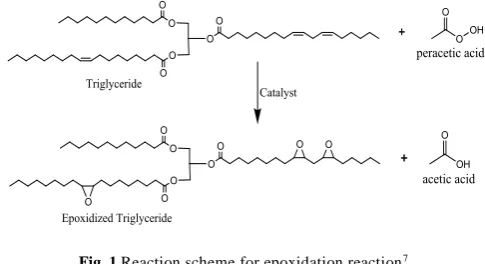
Fig. 1 Reaction scheme for epoxidation reaction7
[image:2.595.309.552.576.708.2]two-step process. The first stage involves reacting the double bond with peracid to convert it to epoxide. This is widely exploited for the modification of the properties of fatty acid 6.
Epoxidized vegetable oils are of significant commercial importance as they serve as promising intermediates for 5
deriving various bio-based products.6 The reaction scheme is
shown in figure 1. The second stage involves the grafting of molecular side chains to the epoxy group 7. This approach will
be useful in the development of electrical insulation liquid from vegetable oil where an improvement of the oxidation 10
stability and pour point is a challenge.
Several groups8–13 have worked on the epoxidation of various
vegetable oils to optimize the the product yield. Their report shows that the epoxidation reaction can be achieved using acidic ion exchange resin (AIER) as a catalyst. Epoxy methyl 15
esters of some natural oils, which can equally serve as starting materials for bio-based products, can be prepared either by the epoxidation of fatty acid methyl esters14,15 or the
transesterification of epoxidized vegetable oils. The transesterification of epoxidized soybean oil by Holser16
20
converted the oil to the corresponding methyl ester wit hout degradation of the epoxide functional group.
A series of derivatives has been synthesized from epoxidized soybean oil by Erhan and co-workers5,6,17,18. They produced
lubricant based stock from epoxidized soybean oil using acid 25
anhydride of various chain lengths. Bio-based lubricant with improved oxidative stability and low temperature properties has been formulated from epoxidized soybean oil. This was achieved using an acid-catalyzed ring-opening of the epoxide groups followed by esterification of the dihydroxy derivatives 30
(with acid anhydrides) to attach a side branched alkyl group. Sharma et al7 recently prepared acyl derivatives of soybean
oil of various branch sizes using boron trifluoride etherate as a catalyst to open the epoxy ring and activate the anhydrides simultaneously. Holser19 produced carbonated methyl soyates
35
from epoxy methyl soyate by reacting carbon dioxide with the epoxy ring at atmospheric pressure as a chemical intermediate for the synthesis of functional fluids, fuel additives, and other bio-based products. More industrial bio-based products, such as insulation fluid with improved properties, could be 40
developed from epoxidized methyl esters.
In this work, an attempt is made to synthesize base-stock of low freezing point from a vegetable oil with a higher concentration of saturated fatty acids. The epoxy methyl ester was synthesized by epoxidation of laboratory purified palm 45
kernel oil. The epoxidized oil was then split into its corresponding fatty acids through transesterification. The epoxidation process of Goud et al and the transesterification process of Holser were used for this synthesis. The viscosity, thermal properties and electrical breakdown characteristics of 50
the processed oils were studied.
Experimental
Materials
Crude palm kernel oil was purchased from Jarmac Ltd. Tonsil supreme 110 FF was obtained from Sud-Chemie Ltd. Trysil 55
300 was obtained from Grace Davison. Citric acid, sodium
hydroxide, acetic acid, hydrogen peroxide, amberlite IR-120,
diethyl ether, sodium bicarbonate, sodium chloride,
magnesium sulphate, methanol, sodium hydroxide and phosphoric acid were purchased from Sigma.
60
Purification
Palm kernel oil (CPKO) (100ml) was heated in a 500 ml conical flask to 700C. Aqueous citric acid solution (0.8 vol.%
of 64%) was added gently and mixed thoroughly with magnetic stirrer for 15 minutes. Aqueous NaOH solution (4 65
vol.% of 8%) was added to the mixture and was mixed thoroughly at 700C for 15 minutes. The mixture was dried in
vacuum at 950C for 30 minutes. Trysil 300 (1 wt%) was added
to the mixture at 700C and agitated for about 30 minutes to
prevent the silica settling out. Subsequently, 12 wt% of Tonsil 70
supreme 110 FF was added, stirred well with magnetic stirrer and the mixture was bleached in vacuum at 950C for 30
minutes. The sample was then filtered.
Epoxidation
Acetic acid (7g) was placed in a round bottom flask followed 75
by the addition of Amberlite IR-120 (16 wt%). The mixture was stirred continuously and followed by the addition of 1.5 moles of hydrogen peroxide per mole of ethylenic unsaturation to the mixture to produce peracetic acid (PAA). Laboratory purified palm kernel oil (PPKO) (50g) was placed 80
in a three-necked flask and was heated to 70OC followed by
the addition of the PAA mixture. This was allowed to react at 70OC for 7 hours with continuous stirring at 1200 rpm.
Aliquots were taking out every 1 hour for FTIR analysis to determine the maximum reaction time at 70OC. The sample
85
was then extracted with diethyl ether in separating funnel, purified with 5% NaHCO3 three times to neutralize the
remnant acid present and then a saturated solution of NaCl was added. The sample was dried over anhydrous magnesium sulphate, and the solvent then removed under reduced 90
pressure using a rotary evaporator.
Transesterification
The epoxidized oil sample was placed in a round bottom flask and heated to 70OC. 16.5g (33 wt%) of methanol was added
under moderated stirring and followed by 1.5 wt% anhydrous 95
NaOH as a catalyst. The reaction continued for 2 hours. The mixture was transferred into a separating funnel and was washed with dilute H3PO4. The emulsion was kept in an oven
at 45OC over night for separation. The bottom layer
containing the glycerol was discarded. The top layer 100
containing epoxy methyl ester (PKOEME) was dried over anhydrous magnesium sulphate and was then placed in a rotary evaporator under reduced pressure to remove the excess methanol.
Results and Analysis
105
Fig. 2 Samples
the maximum yield is obtained within a short time at high temperature, the epoxy ring is highly unstable and decomposes after a certain reaction time, found to be 4 hours 5
in this case. The functional groups present in the purified palm kernel oil, epoxidized palm kernel oil and the epoxy methyl ester of the palm kernel oil were analyzed using FTIR spectroscopy. The thermal analysis was carried out using differential scanning calorimetry.
10
FTIR Analysis
The FTIR spectra displayed characteristc peak of some functional groups common to PPKO, EPKO and PKOEME. The characteristic weak band of PPKO at 3003 cm-1 due to
=C–H stretching vibration of the carbon–carbon double bond 15
was absent in the spectra of EPKO confirming the absence of carbon–carbon double bonds in the epoxidized palm kernel oil sample. The peaks at 844cm-1 and 827 cm-1 are a fingerprint
of epoxidized ester which is common to both EPKO and PKOEME. The peaks at 1197 cm-1 and 1169 cm-1 on the
20
spectra of PKOEME are fingerprint of methyl ester of long-chain fatty acid20. The existence of the peaks at 844 cm-1 and
827 cm-1 on the PKOEME spectra shows that the
transesterification reaction occurred without degradation of the epoxy ring, which is needed for further modification of the 25
epoxy Methyl ester.
Viscosity
Fluids intended for electrical insulation are often expected to be able to flow under extremely cold weather conditions and act as an effective coolant at all times. Dielectric fluid may be 30
required to absorb the heat generated by the electrical unit and transport it either by convection or forced circulation. Studying the viscosity-temperature dependence and flow properties of the epoxy methyl ester is essential for its consideration as a potential candidate as a bio-based 35
insulation fluid. A suspended level capillary viscometer and a Paar DMA 40 digital density meter were used to determine the kinematic viscosity and the density of the epoxy methyl ester respectively.
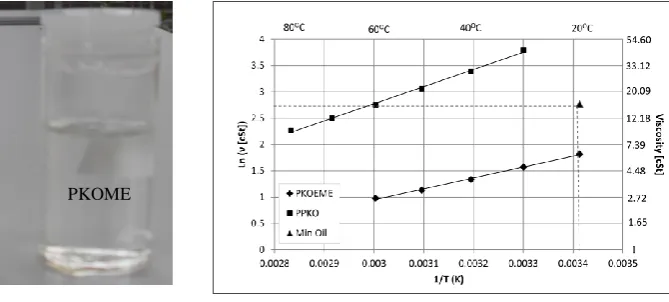
Figure 3 shows the Arrhenius plot demonstrating the effect of 40
temperature on the viscosity of the epoxy methyl ester. The viscosity-temperature relationship follows an activated behaviour. PKOEME has an activation energy of 17.31
Fig. 3 Arrhenius plot for the viscosity of epoxy methyl ester of PKO
45
kJ.mol-1 (0.18eV) and is slightly lower than the activation
energy of PPKO which is 26.92 kJ.mol-1 (0.28eV). The
kinematic viscosity of the epoxy methyl ester is 6.14 cSt at 20OC. This is considerably lower than mineral insulating oil
whose viscosity is 16 cSt at the same temperature. Viscosity 50
often has an overwhelming effect on the heat transfer capability of a fluid since it is a strong function of
temperature. Low viscosity enhances good heat
transferability.
Thermal Analysis by Differential Scanning Calorimetry 55
(DSC)
The melting behaviour of the oil samples were analyzed using DSC. This was carried out using Mettler Toledo DSC1 instrument. The samples were measured into the aluminium crucible, sealed with the crucible sealing press. It was then 60
placed in the furnace of the DSC and heated under nitrogen (flow rate of 50cm3/min) from 25OC to 50 OC at a rate of
50OC/min. It was held at that temperature for 1 minute, cooled
to -100OC at a rate -50OC/min and held there for 2 minutes. It
was then heated to 50OC at a rate 50OC/min and held there for
65
4 minutes. It was cooled to -100OC at a rate -10OC/min and
held there for 10 minutes, and then heated to 50OC at a rate
10OC/min. The thermogram of PPKO and PKOEME between
-60OC and 40OC is shown in fig. 4.
70
Fig. 4 DSC Thermogram
The characteristic melting temperatures, heats of fusion and the specific heat capacities of the samples are listed in Table 1. As the sample is heated from -100OC to 50OC, a
characteristic endotherm is observed in the region where 75
[image:4.595.207.542.62.213.2] [image:4.595.57.305.62.216.2] [image:4.595.308.552.523.676.2]phase transitions from solid to liquid state occur (Figue 4).
Table 1Thermal properties
Sample
Melting
Temperature
(OC)
Heat of
Fusion
(kJ.kg-1)
Specific Heat
Capacity
(kJ.kg-1.K-1)
Onset Peak
PPKO 14.56 26.19 90.11 2.0188
PKOEME -16.52 -6.90 132.42 1.857
Palm kernel oil contains fatty acids of different chain length,and each fatty acid has its melting point. The broad peak of the thermogram is a distribution of the melting point 5
of the fatty acids in the oil. Vegetable oil has a melting range and not a sharp melting point and the melting point is often defined as the temperature at which the oil is free of crystals21. The peak melting temperature of PKOEME occurs
at a significantly lower temperature than PPKO. Table 1 10
shows that PKOEME has a higher heat of fusion but a lower heat capacity than PPKO. This results from the presence of an epoxy ring in the chemical structure of some of its fatty acids. A comparison of the PKOEME with PKOME thermogram in fig. 4 shows the presence of melting peak at -40OC. This can
15
be assigned to the melting peak of the unsaturated fatty acids in the methyl ester. The peak is absent in PKOEME reaffirming the conversion of the double bonds to epoxy rings. The pour point of samples falls between the onset and peak melting temperatures. The pour point of PKOEME and PPKO 20
were estimated to be -10OC and 22OC respectively. The
splitting of the oil into its respective fatty acid reduced its melting temperature.
Electrical Breakdown properties
A breakdown liquid test cell was used for the breakdown 25
voltage measurement and consists of two stainless steel spheres of diameter 25mm as electrodes attached to brass rods. A gap of 1mm was created between the electrodes with a PTFE spacer. The cylindrical wall of the cell was made from PMMA.
[image:5.595.48.289.546.662.2]30
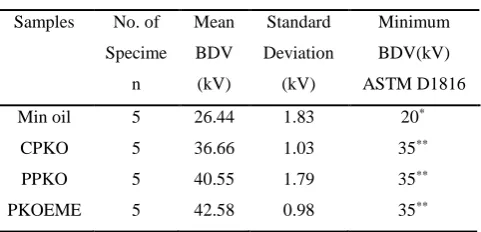
Table 2 Electrical Breakdown test result
Samples No. of
Specime n Mean BDV (kV) Standard Deviation (kV) Minimum BDV(kV) ASTM D1816
Min oil 5 26.44 1.83 20*
CPKO 5 36.66 1.03 35**
PPKO 5 40.55 1.79 35**
PKOEME 5 42.58 0.98 35**
*22 **23
The cell was designed for small sample volume measurement (5ml) as compared with the IEC 156:1995 standard designed cell with volume of 350 ml to 600 ml. The measured 35
breakdown voltage of the palm kernel oil samples satisfied the
quoted minimum breakdown voltage in literature measured with ASTM D1816 standard test method (Table 2). Palm kernel oil epoxy methyl ester (PKOEME) has significant improved breakdown strength. The average electric field 40
strength of the palm kernel oil ester derivative is about 60% higher compared with conventional mineral insulating oil. The measurements indicate that breakdown strength of palm kernel oil epoxy methyl ester is higher than the minimum breakdown voltage according to IEEE Std C57.147-2008. 45
Conclusion
Epoxy methyl ester of palm kernel oil has been synthesized from laboratory purified palm kernel oil. The synthesized product has a considerably lower melting point and viscosity of about 2.5 times less than that of mineral insulation oil. It 50
retained the epoxy functional group which is a path to further modification of the product. The low viscosity value will enhance efficient heat transfer since viscosity often has an overwhelming effect on the heat transfer capability of a fluid since it is a strong function of temperature. The viscosity and 55
specific heat capacity of the epoxy methyl ester suggest that it could serve as good dielectric coolant. It displayed excellent breakdown strength showing that the processing significantly improves the breakdown strength of the epoxy methyl ester. These preliminary results suggest that the synthesized epoxy 60
product is a potential material for a sustainable bio-based industrial products for high voltage insulation. A fluid is intended to be formulated from the epoxy methyl ester by attaching side chain via the epoxide site. This is expected to yield a fluid with an even lower pour point, improved 65
oxidation stability and good dielectric properties for high voltage insulation.
Acknowledgement
This study was supported by Islamic Development Bank under their Merit Scholarship programme and National Grid, UK. 70
References
1. T. V. Oommen, IEEE Electrical Insulation Magazine, 2002, 18, 6-11.
2. R. D. O’Brien, Fats and oils: formulating and processing for applications, CRC Press, 2004.
75
3. S. Tenbohlen, D. Vukovic, J. Harthun, S. Barker, R. Frotscher, Cigre session 2008, paper A2-102.
4. J. McMurry, Organic Chemistry, Brooks/Cole, USA., 2000.
5. H. S. Hwnag and S. Z. Erhan, JAOCS, 2001, 78, 1179-80
1184.
6. B. K. Sharma, A. Adhvaryu, Z. Liu, & S. Erhan, J. American Oil Chem. Society, 2006, 83, 129-136. 7. B. K. Sharma, Z. Liu, A. Adhvaryu, & S. Z. Erhan,
Journal of Agricultural and Food Chemistry, 2008, 56, 85
3049-3056.
Bioresource Technology 2006, 97, 1365–1371.
10. V. V. Goud, A. V. Patwardhan, & N. C. Pradhan, Ind. Eng. Chem. Res. 2007, 46, 3078–3085.
11. S. J. Park, F. L. Jin & J. R. Lee, Macromolecular Rapid Communication, 2004, 25, 724–727.
5
12. C. Cai, H. Dai, R. Chen, C. Su, X. Xu, S Zhang, & L. Yang, Eur. J. Lipid Sci. Technol., 2008, 110, 341–346. 13. R. Mungroo, N.C. Pradhan, V. V. Goud, A. K. Dalai, J.
Am. Oil Chem. Soc., 2008, 85, 887–896.
14. E. U. Ikhuoria, R. O. Obuleke, & F. E. Okieimen, Part 10
A: Pure and Applied Chemistry, 2007, 44, 235–238. 15. A. Campanella, C. Fontanini & M. A. Baltanas,
Chemical Engineering Journal, 2008, 144, 466–475. 16. R. A. Holser, Industrial Crops and Products, 2008, 27,
130–132. 15
17. S. Z. Erhan, A. Adhvaryu, Z. Liu, United States Patent
US 6,583,302 B1, 2002.
18. B. R. Moser, B. K. Sharma, K. M. Doll, S. Z. Erhan, J. Amer. Oil Chem. Soc. 2007, 84, 675-680.
19. R. A. Holser, 2007, J. Oleo Sci., 2007, 56, 12, 629-632. 20
20. R. M. Silverstein, F. X. Webster, D. J. Kiemle, Spectrometric Identification of organic Compounds, John Wiley & Sons Inc., 2005.
21. Foubert, K. Dewettinck, D. Van de Walle, A. J. Dijkstra and P. J. Quinn. The Lipid Handbook, CRC Press, 2007, 25
471-534.
22. C. T. Dervos, C. D. Paraskevas, P. Skafidas, P. Vassiliou, IEEE Insulation Magazine, 2005, 21, 11-19. 23. IEEE Std C57.147-2008, IEEE Guide for Acceptance
and Maintenance of Natural Ester Fluids in
30
Transformers, IEEE, 2008.
Notes and references
a Engineering Department, University of Leicester, Leicester, UK, LE1
35
b Chemistry Department, University of Leicester, Leicester, UK, LE1