UNIVERSITY OF LIVERPΟOL
An efficient stochastic dynamics framework for response
determination, reliability assessment, and performance
based design of nonlinear structural systems
Thesis submitted in accordance
with the requirements of the University of Liverpool
for the degree of Doctor in Philosophy
by
Ioannis P. Mitseas
ii
Abstract
An efficient stochastic dynamics framework for response
determination, reliability assessment, and performance
based design of nonlinear structural systems
by
Ioannis P. Mitseas
An approximate analytical technique for determining the survival probability and first-passage probability density function (PDF) of nonlinear multi-degree-of-freedom
(MDOF) structural systems subject to an evolutionary stochastic excitation vector is
developed. The proposed technique can be construed as a two-stage approach. First,
relying on statistical linearization and utilizing a dimension reduction approach the
nonlinear n-degree-of-freedom system is decoupled and cast into (n) effective
single-degree-of-freedom (SDOF) linear time-varying (LTV) oscillators corresponding to each
and every DOF of the original MDOF system. Second, utilizing the effective SDOF LTV
oscillator time-varying stiffness and damping elements in conjunction with a stochastic
averaging treatment of the problem, the MDOF system survival probability and
first-passage PDF are efficiently determined. Applications regarding MDOF structural
systems exhibiting highly nonlinear behavior subject to stochastic excitations possessing
separable as well as non-separable evolutionary power spectra (EPS) are included.
Furthermore, a computationally efficient methodology for conducting fragility
fragility surfaces are estimated for nonlinear/hysteretic MDOF structural systems subject to evolutionary stochastic earthquake excitations. An approximate nonlinear stochastic dynamics formulation which consist the core of the developed methodology, allows for the efficient computation of structural system fragilities in a straightforward manner while it keeps the computational cost for the corresponding analyses at a minimum level. Nonlinear MDOF structural systems exhibiting a hysteretic restoring force-displacement Bouc-Wen feature, serve as numerical examples for demonstrating the efficiency of the
proposed methodology. Comparisons with pertinent Monte Carlo simulations are
included as well demonstrating the satisfactory level of the exhibited accuracy.
Appended to the above, a novel integrated approach for structural system optimal
design considering life cycle cost (LCC) is developed. Specifically, a performance-based
multi-objective design optimization framework for nonlinear/hysteretic MDOF structural
systems subject to non-stationary stochastic excitations is formulated. The developed
approach encompasses an efficient analytical nonlinear stochastic dynamics approach for
the determination of the response EPS as well as the non-stationary inter-story drift ratio
(IDR) amplitude PDFs, circumventing computationally intensive numerical integrations
of the nonlinear equations of motion. It is notable that the proposed framework complies
with the most contemporary performance-based earthquake engineering (PBEE)
provisions proposed by the Pacific Earthquake Engineering Research (PEER) center.
Although the herein developed framework is tailored specifically for earthquake
engineering related applications, it can be readily modified to account for other hazard
kinds as well. Nonlinear building structures comprising the versatile Bouc-Wen
(hysteretic) model serve as numerical applications for demonstrating the efficiency of the
iv
Acknowledgements
I wish to express my sincere appreciation and gratitude to my research advisors
Professor Michael Beer and Assistant Professor Ioannis Kougioumtzoglou. Their wise mentorship and valuable suggestions during my studies at University of Liverpool are
highly appreciated. I am especially grateful to Ioannis Kougioumtzoglou for his substantial supervision, friendly encouragement, and invaluable guidance. Further, the
assistance of Lecturer Edoardo Patelli and Professor John Mottershead is also highly acknowledged.
I would like also to express my thanks to Senior Lecturer Agathoklis Giaralis and Professor Huajiang Ouyang for participating in my thesis committee and reviewing the manuscript.
The author feels indebted to the University of Liverpool for financial support over the years of his postgraduate studies. Further, the financial support from the State Scholarships Foundation (IKY) in Greece is also gratefully acknowledged.
Finally, I would like to express my gratitude to my family for their encouragement,
and trust in my skills, but mostly for their unconditional love. Specifically, I dedicate this
Table of contents
Abstract ... ii
Acknowledgements ... iv
Table of contents ... v
List of figures ... ix
List of tables ... xvi
1 Introduction ... 1
1.1 Motivation and objectives ... 1
1.2 Organization of the thesis ... 5
2 Stochastic representation of the seismic action ... 9
2.1 Models of the seismic excitation ... 9
2.2 Stochastic process modeling ... 9
2.2.1 Phenomenological seismic stationary models ... 10
2.2.2 Phenomenological seismic non-stationary models: separable and non-separable form ... 12
2.3 Stochastic seismological model ... 15
2.3.1 Radiation spectrum determination ... 15
2.3.2 Time-envelope function determination ... 17
3 An alternative analytical/approximate method to the type of nonlinear stochastic dynamic analysis ... 21
vi
3.2 Statistical linearization approximation ... 21
3.3 Dimension reduction and effective SDOF time-variant oscillator ... 25
3.4 Stochastic averaging treatment ... 26
4 Survival probability and first-passage PDF determination of nonlinear MDOF systems subject to evolutionary stochastic excitations ... 28
4.1 Preliminary remarks ... 28
4.2 Mathematical formulation ... 30
4.2.1 Statistical linearization based dimension reduction approach ... 30
4.2.2 Transition and joint nonlinear system response PDFs ... 31
4.3 Nonlinear MDOF system reliability assessment ... 33
4.4 Numerical applications ... 37
4.4.1 MDOF Bouc-Wen hysteretic building structure ... 37
4.4.2 Hysteretic 3-DOF structural system under evolutionary stochastic excitation of the separable form ... 41
4.4.3 Hysteretic 3-DOF structural system under evolutionary stochastic excitation of the non-separable form ... 47
5 Efficient fragility analysis within a PBEE framework for nonlinear MDOF structural systems ... 53
5.1 Preliminary remarks ... 53
5.2 Mathematical formulation ... 56
5.2.1 Statistical linearization based dimension reduction approach ... 56
5.2.2 Efficient fragility analysis framework ... 57
5.3.1 MDOF Bouc-Wen hysteretic building structure ... 59
5.3.2 Fragility surfaces considering a hysteretic MDOF building structure (case study I) ... 60
5.3.3 Fragility surfaces considering a hysteretic MDOF building structure (case study II) ... 67
6 Robust design optimization of linear MDOF structural systems in terms of inter-story drift and absolute floor acceleration features ... 74
6.1 Preliminary remarks ... 74
6.2 Mathematical formulation ... 76
6.2.1 Evolutionary spectral matrix analysis ... 76
6.3 Formulation of the optimal design problem ... 78
6.3.1 Single-objective optimization ... 78
6.3.2 Genetic algorithms ... 79
6.4 Numerical application ... 80
6.4.1 MDOF linear building structure ... 80
6.4.2 Performance measures for the determination of the response of a linear MDOF structural system ... 83
6.4.3 Robust design optimization problem considering various performance measures statistics ... 85
7 Performance-basedmulti-objective optimum stochastic structural design determination considering life-cycle cost ... 89
7.1 Preliminary remarks ... 89
viii
7.2.1 Statistical linearization based dimension reduction approach ... 93
7.2.2 Life-cycle cost PBE framework ... 95
7.3 Formulation of the optimal design problem ... 98
7.3.1 Multi-objective optimization ... 98
7.4 Numerical application ... 100
7.4.1 Three-story Bouc-Wen hysteretic building structure ... 101
7.4.2 Multi-objective optimal designs - Pareto optimal set ... 111
8 Concluding remarks ... 118
Appendix A Spectral representation method for simulating time-histories as samples of a stochastic process with a given power spectrum ... 123
References ... 124
List of Figures
Figure 2.1: Clough-Penzien power spectra for various levels of the amplitude of
the bedrock excitation spectrum ... 11
Figure 2.2: Typical realizations of the ground acceleration stationary stochastic process based on the C-P spectrum model for various levels of the amplitude . ... 12
Figure 2.3: Clough-Penzien Evolutionary Power Spectrum ... 13
Figure 2.4: Typical realizations of the ground accelerationnon- stationary stochastic process for various levels of the amplitude . ... 13
Figure 2.5: Non-separable excitation evolutionary power spectrum .. 14
Figure 2.6: Radiation spectrum for various and .... 17
Figure 2.7: Envelope function for various values and ... 18
Figure 2.8: Envelope function for various values and ... 18
Figure 2.7: Envelope function for various values and ... 18
Figure 2.8: EPS and sample ground motion for and ... 19
Figure 2.9: EPS and sample ground motion for and . ... 20
Figure 2.10: EPS and sample ground motion for and ... 20
Figure 4.1: Hysteretic three-DOF structural system ... 37
Figure 4.2: Non-stationary separable excitation power spectrum .. .... 42
x
Figure 4.4: Time-varying equivalent damping coefficient of the effective LTV system. ... 43
Figure 4.5: Survival probability for various values of the parameter λ for the first DOF; comparisons with MCS (10,000 realizations) ... 43 Figure 4.6: First-passage PDF for various values of the parameter λ for the first
DOF; comparisons with MCS (10,000 realizations).. ... 44
Figure 4.7: Survival probability for various values of the parameter λ for the second DOF; comparisons with MCS (10,000 realizations). ... 44 Figure 4.8: First-passage PDF for various values of the parameter λ for the
second DOF; comparisons with MCS (10,000 realizations) ... 45 Figure 4.9: Survival probability for various values of the parameter λ for the
third DOF; comparisons with MCS (10,000 realizations) ... 45 Figure 4.10: First-passage PDF for various values of the parameter λ for the third
DOF; comparisons with MCS (10,000 realizations). ... 46 Figure 4.11: Non-separable excitation evolutionary power spectrum . . 47
Figure 4.12: Time-varying equivalent natural frequency of the effective LTV system ... 48 Figure 4.13: Time-varying equivalent damping coefficient of the
effective LTV system. ... 48
Figure 4.14: Survival probability for various values of the parameter λ for the first DOF; comparisons with MCS (10,000 realizations). ... 49
Figure 4.15: First-passage PDF for various values of the parameter λ for the first DOF; comparisons with MCS (10,000 realizations).. ... 49
Figure 4.17: First-passage PDF for various values of the parameter λ for the second DOF; comparisons with MCS (10,000 realizations).. ... 50
Figure 4.18: Survival probability for various values of the parameter λ for the third DOF; comparisons with MCS (10,000 realizations). ... 51 Figure 4.19: First-passage PDF for various values of the parameter λ for the third
DOF; comparisons with MCS (10,000 realizations). ... 51 Figure 5.1: Nonlinear 3-DOF structural system ... 60
Figure 5.2: Fragility surface of a 3-DOF Bouc-Wen hysteretic system ( ) via the proposed approximate methodology for damage state (I)
“Moderate” ... 62 Figure 5.3: Fragility surface of a 3-DOF Bouc-Wen hysteretic system ( )
via MCS (5000 realizations) for damage state (I) “Moderate” ... 62 Figure 5.4: Fragility surface of a 3-DOF Bouc-Wen hysteretic system ( )
via the proposed approximate methodology for damage state (II)
“Heavy” ... 63 Figure 5.5: Fragility surface of a 3-DOF Bouc-Wen hysteretic system ( )
via MCS (5000 realizations) for damage state (II) “Heavy” ... 63 Figure 5.6: Fragility surface of a 3-DOF Bouc-Wen hysteretic system ( )
via the proposed approximate methodology for damage state (III)
“Major” ... 64 Figure 5.7: Fragility surface of a 3-DOF Bouc-Wen hysteretic system ( )
via MCS (5000 realizations) for damage state (III) “Major” ... 64 Figure 5.8: Fragility surface of a 3-DOF Bouc-Wen hysteretic system ( )
via the proposed approximate methodology for damage state (IV)
xii
Figure 5.9: Fragility surface of a 3-DOF Bouc-Wen hysteretic system ( ) via MCS (5,000 realizations) for damage state (IV) defined as
''Destroyed''. ... 65
Figure 5.10: Fragility curves of a 3-DOF Bouc-Wen hysteretic system ( ) for a constant value of epicentral distance . Analytical/ approximate as well as MCS data (5,000 realizations) are presented
for every considered damage state ... 66
Figure 5.11: Fragility curves of a 3-DOF Bouc-Wen hysteretic system ( ) for a constant value of moment magnitude . Analytical/ approximate as well as MCS data (5,000 realizations) are presented
for every considered damage state. ... 67
Figure 5.12: Fragility surface of a 3-DOF Bouc-Wen hysteretic system ( ) via the proposed approximate methodology for damage state (I)
“Moderate”. ... 68 Figure 5.13: Fragility surface of a 3-DOF Bouc-Wen hysteretic system ( )
via MCS (5,000 realizations) for damage state (I) “Moderate”. ... 68
Figure 5.14: Fragility surface of a 3-DOF Bouc-Wen hysteretic system ( ) via the proposed approximate methodology for damage state (II)
“Heavy”. ... 69 Figure 5.15: Fragility surface of a 3-DOF Bouc-Wen hysteretic system ( )
via MCS (5,000 realizations) for damage state (II) “Heavy”. ... 69
Figure 5.16: Fragility surface of a 3-DOF Bouc-Wen hysteretic system ( ) via the proposed approximate methodology for damage state (III)
Figure 5.17: Fragility surface of a 3-DOF Bouc-Wen hysteretic system ( ) via MCS (5,000 realizations) for damage state (III) “Major”. ... 70
Figure 5.18: Fragility surface of a 3-DOF Bouc-Wen hysteretic system ( ) via the proposed approximate methodology for damage state (IV)
“Destroyed”. ... 71 Figure 5.19: Fragility surface of a 3-DOF Bouc-Wen hysteretic system ( )
via MCS (5,000 realizations) for damage state (IV) “Destroyed”. .. 71
Figure 5.20: Fragility curves of a 3-DOF Bouc-Wen hysteretic system ( ) for a constant value of epicentral distance . Analytical/ approximate as well as MCS data (5,000 realizations) are presented
for every considered damage state. ... 72
Figure 5.21: Fragility curves of a 3-DOF Bouc-Wen hysteretic system ( ) for a constant value of moment magnitude . Analytical/ approximate as well as MCS data (5,000 realizations) are presented
for every considered damage state. ... 72
Figure 6.1: Linear 3-DOF structural system. ... 80
Figure 6.2: PS and EPS of the imposed stochastic excitation. ... 81
Figure 6.3: Analytical response estimates of the standard deviation of the relative displacements via the quasi-stationary approach compared to MCS
data for a set of 5,000 realizations
xiv
Figure 6.4: Analytical response estimates of the standard deviation of the absolute accelerations via the quasi-stationary approach compared
to MCS data for a set of 5,000 realizations
( ) ... 83
Figure 6.5: Performance measures trade-offs. ... 84
Figure 6.6: Frequency response functions considering the first floor of the structure. ... 85
Figure 6.7: Non-stationary values of the standard deviation of inter-story drifts for the initial and optimal design solution ... 87 Figure 6.8: Non-stationary values of the standard deviation of the absolute floor
acceleration for the initial and optimal design solution ... 87 Figure 7.1: Nonlinear 3-DOF building structure. ... 101
Figure 7.2: Mapping between the amplitude of the excitation spectrum and . ... 102
Figure 7.3: Clough-Penzien Evolutionary Power Spectrum . ... 103
Figure 7.4: Site hazard curve . ... 104
Figure 7.5a: Non-stationary response IDR amplitude PDF of the first DOF of the hysteretic MDOF system ( ) via the analytical approach ... 105
Figure 7.5b: Non-stationary response IDR amplitude PDF of the first DOF of the hysteretic MDOF system ( ) via Monte Carlo data (10,000 realizations). ... 105
Figure 7.6b: Non-stationary response IDR amplitude PDF of the second DOF of the hysteretic MDOF system ( ) via Monte Carlo data (10,000 realizations). ... 106
Figure 7.7a: Non-stationary response IDR amplitude PDF of the third DOF of the hysteretic MDOF system ( ) via the analytical approach ... 107
Figure 7.7b: Non-stationary response IDR amplitude PDF of the third DOF of the hysteretic MDOF system ( ) via Monte Carlo data (10,000 realizations). ... 107
Figure 7.8a: Non-stationary response IDR amplitude PDF of every DOF of the hysteretic MDOF system; comparison with MCS for
... 108
Figure 7.8b: Non-stationary response IDR amplitude PDF of every DOF of the hysteretic MDOF system; comparison with MCS for
. ... 108
Figure 7.9: Fragility curves for the first DOF of the hysteretic MDOF system considering each damage state ( ) . 109
Figure 7.10: Fragility curves for the second DOF of the hysteretic MDOF system considering each damage state ( ) . 110
Figure 7.11: Fragility curves for the third DOF of the hysteretic MDOF system considering each damage state ( ). 110
Figure 7.12:Depiction of the imposed stochastic constraint (two and three
dimensions). ... 113
xvi
Figure 7.14: Non-stationary response IDR amplitude PDF of the first DOF of the hysteretic MDOF system via the analytical approach (compromise
solution-Design B).. ... 115
Figure 7.15: Non-stationary response IDR amplitude PDF of the second DOF of the hysteretic MDOF system via the analytical approach
(compromise solution-Design B). ... 116
Figure 7.16: Non-stationary response IDR amplitude PDF of the third DOF of the hysteretic MDOF system via the analytical approach
List of Tables
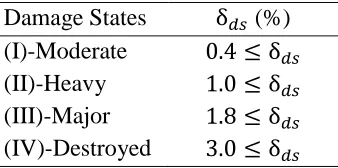
Table 5.1: Damage states (DS) and the associated inter-story drift ratio limits ( ). ... 61
Table 6.1: Initial and optimal design solution ... 86 Table 7.1: Damage states (DS), inter-story drift ratio limits and associated
costs ... 96 Table 7.2: Synoptically presented results regarding three different design
Chapter 1
Introduction
1.1
Motivation and objectives
In the general area of structural dynamics, an interesting and challenging branch has always been the efficient analysis of nonlinear systems subject to evolutionary excitations. Regarding the complexity that characterizes the majority of the today's engineering systems and structures, the rather simplified analysis approach that neglects any effect stemming from nonlinearities seems particularly inadequate for a realistic study of system behaviour. Although, the inclusion of nonlinear effects leads to an increasing of the complexity of the problem, a possible disregard can have considerably adverse consequences on the quality and the accuracy of the system analysis. Specifically, in the field of structural engineering, it is common for structural systems to be subjected to extreme seismic ground motion excitations. Therefore large system responses may reasonably occur. Clearly, in the earthquake engineering field structural systems become nonlinear and inelastic, exhibiting restoring forces that depend on the response history. This kind of behaviour is described in the literature by the term hysteresis. In this setting, the notion of conducting a realistic structural system analysis is weaved with the necessity of employing a nonlinear dynamics analysis extended to the challenging class of hysteretic systems. Available techniques oriented to earthquake engineering applications can be found in Iwan (1974).
nonlinear dynamic response history analysis to be performed. A degree of empiricism is inherent in the initial approach while the consideration of nonlinearity on the latter case increases the complexity of the problem as well as the associated computational cost which stems from the numerical integration of the governing nonlinear equations of motion. This interesting complementarity reveals the overriding need of conducting reliable structural system analyses considering the presence of nonlinearities under an integrated and efficient context.
Over the last decades particular interest has arisen for considering also stochasticity in problems related to the nonlinear system response determination. One major reason for this interest stems from the fact that seismic excitations are usually so complex that they can only be described in a stochastic sense (e.g., Spanos, 1976). In this regard, a reasonably fair treatment for problems related to the above kind, passes indispensably from the area of nonlinear stochastic dynamics. In conceptual agreement with the necessity of considering stochasticity in the formulation of problems related to structural system analysis and design, performance-based engineering (PBE) frameworks (e.g., Cornell and Krawinkler, 2000; Ellingwood, 2001; Porter, 2003; Mohle and Deierlein,
2004; Der Kiureghian, 2005; Ciampoli and Petrini, 2012; Barbato and Petrini, 2013)were
recently emerged by the structural engineering community. In general, PBE frameworks aim at facilitating risk-based decision making via performance assessment and design methods that properly account for the presence of uncertainties. Typically, a general
probabilistic framework for PBE analysis involves a number of analysis components such as: (i) stochastic hazard analysis; (ii) stochastic structural/damage analysis; and (iii) stochastic loss analysis reflecting the effect of the underlying uncertainties on a
quantifiable decision variable.
Zeldin, 1998; Schueller and Spanos, 2000; Proppe et al., 2003; Gamerman, 2006; Rubinstein and Kroese, 2008; Rubino and Tuffin, 2009) stands as the most potent method for conducting nonlinear stochastic dynamic analysis. Despite its wide applicability, it remains particularly cumbersome due to its significant associated computational cost. More recently, advanced simulation methods using variance-reduction techniques have been emerged. Among them, one can find i) importance sampling (e.g., Melchers, 1989; Song, 1997), ii) latin hypercube sampling (e.g., McKay et al., 1979; Florian, 1992), iii) adaptive sampling (e.g., Bucher, 1988; Mori and Ellingwood, 1993), iv) descriptive sampling (e.g., Saliby, 1990), v) line sampling (e.g., Koutsourelakis et al., 2004), vi) antithetic variates (e.g., Fishman and Huang, 1983), vii) directional simulation (e.g., Nie and Ellingwood, 2004; Nie and Ellingwood, 2005) and viii) subset simulation (e.g., Au and Beck, 2001b). The above MCS-based approaches are characterized by a significant computational advantage comparing to the conventional MCS method, however they still require a significant number of nonlinear dynamic analyses.
As an alternative during the same decades, random variable-based methods have been developed as well. In general, the above methods include the adoption of one or more limit-state functions involving a number of random variables. The first- and second-order reliability methods (FORM and SORM respectively), are usually employed for this class of problems. Some recent accounts of these methods can be found in Ditlevsen and Madsen (1996). It is noteworthy that these methods can also be used to nonlinear stochastic dynamic problems (e.g., Li and Der Kiureghian, 1995; Zhang and Der Kiureghian, 1997; Der Kiureghian, 2000; Franchin, 2004; Koo et al., 2005; Barbato and Conte, 2006; Jensen and Capul, 2006). Note in passing that the associated computational cost remains considerably high also in this case, rendered even prohibitive for cases where complex nonlinear large-scale MDOF structural systems are considered.
and nonlinear structural models under stochastic excitation have been proposed in the literature over the last decades (e.g., Nigam, 1983; Lin and Cai, 1995; Roberts and Spanos, 2003; Lutes and Sarkani, 2004). These include methods using perturbation, statistical linearization, Fokker-Planck equation, stochastic averaging and moment closure. It is noteworthy that among the above methods the statistical linearization method is the one that is characterized by the greater versatility and applicability. Regarding the other methods it should be noted that these are largely restricted to specialized nonlinear systems or forms of the excitation, and thus particularly
cumbersome to apply in structural engineering problems of the common practice.
Incorporation of stochastic approaches of the above kind in the analysis and design of structural systems can be found in (e.g., Crandall, 1958; Crandall, 1963; Crandall and Mark, 1963; Soong, 1973, Newland, 1993; Soong and Grigoriu, 1993, Preumont, 1994; Elishakoff, 1999; Roberts and Spanos, 2003; Lutes and Sarkani, 2004; Li and Chen, 2009).
demanding formulations has been developed. In the section that follows the organization of this thesis is given explicitly.
1.2
Organization of the thesis
The thesis comprises eight chapters followed by the list of cited references. Excluding
the first chapter, which plays an introductory role, and the final one, which contains the
concluding remarks, each of the remaining chapters are self-contained and include a
separate introductory section followed by the pertinent theoretical background and
integrated by sections presenting numerical results, as well as verification by digital
simulations in cases it is deemed appropriate.
Chapter 1 provides an introduction to the thesis and outlines the motivation and the
objectives of the current research effort. A brief requisite review of the methods for
conducting nonlinear stochastic dynamic analysis with emphasis to the ones that have
been applied to the field of structural dynamics is also included. Furthermore, the
contents of the thesis are briefly outlined.
Chapter 2 contains a presentation of the seismic excitation models that utilized
throughout this thesis for the stochastic representation of the seismic action.
Phenomenological stochastic seismic excitation models of both separable and non-separable kind as well as a more sophisticated stochastic seismological model that is
commonly applied in the earthquake engineering field are included.
In Chapter 3 an alternative analytical/approximate method to the type of nonlinear
stochastic dynamic analysis is presented. Specifically, relying firstly on an evolutionary
spectral matrix analysis approach and on statistical linearization second order response
statistics of a MDOF nonlinear system subject to a stochastic excitation vector with an
evolutionary broad-band power spectrum matrix are derived. Further, a system dimension
reduction/decoupling approach is introduced by determining an effective auxiliary LTV
SDOF system corresponding to each degree of freedom. Subsequently, relying on a
corresponding LTV SDOF systems are efficiently determined. Note that the approach can
handle readily stochastic excitations of arbitrary non-separable EPS forms that exhibit
strong variability in both the intensity and the frequency content.
In chapter 4 an approximate analytical technique for determining the survival
probability and first-passage PDF of nonlinear MDOF structural systems subject to a
non-stationary stochastic excitation vector is developed. The proposed technique can be
construed as a two-stage approach. First, relying on statistical linearization and utilizing a
dimension reduction approach the nonlinear n-degree-of-freedom system is decoupled
and cast into (n) effective SDOF LTV oscillators corresponding to each and every DOF
of the original MDOF system. Second, utilizing the effective SDOF LTV oscillator
time-varying stiffness and damping elements in conjunction with a stochastic averaging
treatment of the problem, the non-stationary marginal, transition, joint response
amplitude PDFs as well as the MDOF system survival probability and first-passage PDF
are determined. Overall, the developed technique appears to be efficient and versatile
since it can handle readily, at a low computational cost, a wide range of
nonlinear/hysteretic behaviors as well as various stochastic excitation forms, even of the
fully non-stationary in time and frequency kind. A 3-DOF structural system exhibiting
hysteresis following the Bouc-Wen model is included in the numerical examples section.
Comparisons with pertinent Monte Carlo simulations demonstrate the reliability of the
technique.
In chapter 5 a novel methodology for determining the seismic fragility of nonlinear
MDOF structural systems is developed based on an efficient approximate stochastic
dynamics technique. Specifically, fragility surfaces are determined for
modelled as a one-dimensional Markov process. Further, relying on the Fokker-Planck
(F-P) equation and on the associated first-order stochastic differential equation the
response amplitude envelope PDFs are obtained efficiently without resorting to numerical
integration of the nonlinear equations of motion. This attribute is of particular importance
since the computational cost of the corresponding analyzes is significantly limited.
Further, a direct transformation of the response amplitude envelope PDF yields the
non-stationary IDR amplitude envelope PDF. Then, considering the IDR as the selected
engineering demand parameter (EDP) and appropriately defined damage states structural
system related fragility surfaces are determined at a low computational cost. Building structures serve as numerical examples for demonstrating the efficiency and robustness of
the proposed methodology. Moreover, appropriate Monte Carlo analyses are conducted to
determine the accuracy of the approach.
Chapter 6 includes anefficient robust design optimization (RDO) framework for linear
MDOF structural systems subject to evolutionary stochastic earthquake excitations. A significant feature of the developed RDO framework relates to the consideration of both inter-story drift and absolute floor acceleration second order statistics as performance measures. Further, an efficient frequency domain approach is utilized for determining the system response EPS matrix circumventing computationally intensive Monte Carlo simulations. Furthermore, the optimization problem is solved by employing a Genetic Algorithm based approach. An illustrative numerical example is included to demonstrate the efficiency and robustness of the proposed framework.
In chapter 7 a novel and comprehensive approach for structural system optimal stochastic design considering LCC is developed. Specifically, a performance-based
multi-objective design optimization framework for nonlinear/hysteretic MDOF structural
systems subject to evolutionary stochastic excitations is formulated. Although the
developed PBE framework is tailored specifically for earthquake engineering related
applications in general agreement with the PBEE framework proposed by the PEER
center, it can be readily modified to account for other hazard kinds as well. The core of
technique based on the concepts of statistical linearization and of stochastic averaging for
determining the non-stationary system response amplitude PDFs; thus, computationally
intensive Monte Carlo simulations are circumvented. Next, the convolution between the
derived closed-form expressions for the non-stationary IDR amplitude PDFs with the
appropriately defined damage measures, leads to the computation of the system related
fragility curves corresponding to every DOF. Then a weighted integral of the fragility
curves over the derivative of the hazard rate function provides the annual rates of the
seismic demand exceeding specified levels of damage which in turn can be expressed in
design life rates. Upon obtaining the design life rates, the computation of the expected
value of the LCC due to seismic hazard can be done in a straightforward manner and at a
considerable low computational cost. Further, in the developed LCC formulation the
expected value of the seismic losses serves as the decision variable (DV), whereas the
coherent attribute of considering every DOF's behavior leads to better account for the
system overall performance in the formulation of the optimization problem. Finally, the
structural system stochastic design optimization problem is formulated as a
multi-objective one to be solved by a Genetic Algorithm based approach. Certain remarks
regarding the formulation of the problem, involve the concept of implementing
appropriate stochastic constraints for avoiding ''moving resonance'' phenomena. A
reinforced concrete building structure comprising the versatile Bouc-Wen (hysteretic)
model serves as a numerical example for demonstrating the efficiency of the proposed
methodology.
Chapter 2
Stochastic representation of the seismic action
2.1
Models of the seismic excitation
In the field of structural engineering, performing nonlinear dynamic analysis presupposes the definition of the seismic excitation in the form of acceleration time-histories. Commonly, these belong to the following three broad categories
realizations of a stochastic process real recorded seismic accelerograms
accelerograms from stochastic seismological models
Note in passing that throughout this thesis acceleration time-histories generated from the first as well as the third category have been utilized.
2.2
Stochastic process modeling
2.2.1 Phenomenological seismic stationary models
Given an earthquake occurs, the seismic wave produced by the seismic source is a
time process. Actually, the shape of the seismic wave through its propagation in the earth
media will undergo complex changes (Li and Chen, 2009). In applications related to
earthquake engineering, one of the most widely used stationary seismic models is the one
of Kanai-Tajimi (K-T) (Kanai, 1957). Based on empirical data the K-T model take into
account the dependence of the power spectrum on local soil conditions and the corresponding dominant frequency. Real earthquake records show that the time history of
the seismic motion accelerations usually includes three stages of vibrations: the initial,
the strong, and the attenuating stages. Clearly, the ground motion is a typical
non-stationary process and the assumption of stationarity cannot capture its modulation in
time. In cases where a stationary seismic model is adopted, it is assumed that this only
reflects the strong stage of the ground motion.
The seismic motion on the surface can be seen as a filtered white noise. In this setting,
if the ground motion on the bedrock is assumed as a zero mean white-noise process with
amplitude , and the soil surface is simulated as a linear single-degree-of-freedom
(SDOF) system, then the proposed stationary power spectrum (PS) for the K-T model is
given as
where and are the damping factor of the soil and the fundamental natural
frequency, respectively. Note that for the specific case of a zero-mean, stationary
Gaussian process the complete definition of the stochastic process can be done once its
power spectrum is specified. Meanwhile, the K-T model was found to exaggerate
inappropriately at the low frequency content of the ground motions. To overcome this
shortcoming, Clough and Penzien (1993) modified it appropriately by incorporating a
by the K-T form. The Clough-Penzien (C-P) spectrum model is assumed to have the
following form
where and are parameters describing the Clough-Penzien filter (Clough and
Penzien, 1993). For the parameters values and input white noise intensity and
the resulting power spectra are shown in Fig.(2.1).
Figure 2.1. Clough-Penzien power spectra for various levels of the amplitude of the
bedrock excitation spectrum .
Next, the spectral representation method of Shinozuka and Deodatis (1991) can be
employed to generate PS compatible excitation realizations; see also Appendix A.
Fig.(2.2) shows typical realizations of the ground acceleration stochastic process for the
Figure 2.2. Typical realizations of the ground acceleration stationary stochastic
process based on the C-P spectrum model for various levels of the amplitude .
2.2.2 Phenomenological seismic stationary models: separable and
non-separable form
Dealing with the non-stationarity of the ground motion, the necessity to capture the
rising and decaying sections of the seismic motion led to the introduction of
time-modulated non-stationary stochastic processes of the form
where stands for a stationary process and is a deterministic time function. Regarding the modulated time envelope function many different forms have been
proposed (Amin and Ang, 1968; Clough and Penzien, 1993; Mitseas et al, 2014b).
Throughout this thesis whenever a separable non-stationary seismic model is adopted, the
time-modulating envelope function is assumed to have the following form
where and are parameters of the envelope function; and k is a normalization
constant so that . Then, the excitation evolutionary power spectrum (EPS) can be defined as a product of the deterministic function and the stationary PS
. In this setting the EPS takes the following separable form
Considering the following values and for the envelope function the resulting EPS for the case of input white noise intensity is given in Fig.(2.3)
Figure 2.3. Clough-Penzien evolutionary power spectrum .
Further, excitation realizations compatible with the EPS of Eq.(2.5) are generated based
on the spectral representation technique (e.g. Shinozuka and Deodatis 1991). In Fig.(2.4),
typical realizations of the ground acceleration non-stationary stochastic process are
depicted for different values of amplitude .
Figure 2.4. Typical realizations of the ground acceleration non-stationary stochastic
Furthermore, evolutionary stochastic excitation models of the non-separable form
have been introduced as well. Clearly, excitations acting upon structural systems such as
wind, wave, and seismic loads commonly exhibit strong variability in both the intensity
and the frequency content. However, over the last decades the study of the available
recorded ground motion data was mainly focused on the frequency content of the ground
motion in terms of the modulation in time of the ground motion and to a less degree to
the evolution in time of the frequency content. One of the main characteristics of the
seismic shaking that of the decreasing of the dominant frequency with respect to time
(e.g., Liu, 1970; Spanos and Solomos, 1983) is comprised by the non-separable EPS
where stands for the amplitude of the bedrock excitation spectrum and is a
parameter of the model. Note in passing that the calibration of such non-separable models
that take into account this frequency-content time dependence versus statistical data has
proven to be a rather difficult task. Notable contributions towards this direction can be
found in (e.g., Conte and Peng, 1997; Lungu and Giaralis, 2013). In Fig.(2.5) the
non-separable EPS is given for the case of and .
2.3
Stochastic seismological model
In this section the most important elements of the stochastic seismological model developed in Boore (2003) are presented. This seismological model is characterized primarily by the radiation spectrum and the envelope function , where denotes the frequency expressed in Hz.
2.3.1 Radiation spectrum determination
The radiation spectrum of the ground motion at a site can be construed as the composition of several contributions from various factors such as the earthquake source (E), the path (P), the site (G), and the type of motion (I); this is expressed as
where the equivalent two point-source spectrum developed by Atkinson and Silva (2000) is adopted for the source E in the form
In Eq.(2.8), the symbol stands for the seismic moment (in dyn-cm), given by (e.g.,
Kanamori, 1977; Hanks and Kanamori, 1979)
Clearly the seismic moment and the moment magnitude are related via a unique
mapping. Further, the constant is given by the relationship
where is the average radiation pattern, is a coefficient to account for the partition of waves into two horizontal components, F is the free surface amplification; and are
reference distance. Next, the lower and upper corner frequencies and in Eq.(2.8) are
given by the relationships and (in Hz), respectively. The weighting parameter is described by the expression
. Further, the path component of the process that affects the
radiation spectrum of ground motion at a particular site is given by
where is the radial distance from the earthquake source to the site, with representing a moment dependent, nominal pseudo-depth (in km), given by the
expression . The employed regional quality factor is given by
whereas the modification of seismic waves by local site conditions is considered through the expression
where ; and is a near-surface amplification factor described via empirical curves for generic rock sites (e.g., Boore and Joyner, 1997). As a simplification it is
usually assumed that is equal to a constant value (e.g., Au and Beck, 2003). Next, considering the acceleration as the utilized type of ground motion yields , and the filter takes the form
In Fig.(2.6) the radiation spectra for various values of moment magnitude and a
constant value of the epicentral distance equal to are plotted. Regarding the parameters of the seismological model the following values are considered herein:
, , F = 4, and , , and
Figure 2.6. Radiation spectrum for various and .
2.3.2 Time-envelope function determination
The envelope function for the earthquake excitations is given by
where
and
Figure 2.7. Envelope function for various values and .
Further, seismic ground acceleration realizations at a site with moment magnitude
and epicentral distance r can be readily generated through the utilization of the derived
EPS by multiplying the radiation spectrum with the envelope function
; i.e.,
Next, the spectral representation method of Shinozuka and Deodatis (1991) can be
employed to generate EPS compatible excitation realizations. Figs.(2.8-2.10) show
typical realizations of the ground acceleration stochastic process as well as the associated
Figure 2.8. EPS and sample ground motion for and
Chapter 3
An alternative analytical/approximate method to the type of
nonlinear stochastic dynamic analysis
3.1.
Preliminary remarks
In this section, a recently developed approximate dimension reduction/decoupling
technique (Kougioumtzoglou and Spanos, 2013) for determining the non-stationary
response amplitude probability density function (PDF) of a nonlinear MDOF system
subject to evolutionary stochastic excitation is presented; see also Spanos and Lutes
(1980).
3.2.
Statistical linearization approximation
Consider an n-degree-of-freedom nonlinear structural system governed by the
equation
where denotes the response acceleration vector, is the response velocity vector, is the response displacement vector; , and denote the mass, damping and stiffness matrices, respectively; is an arbitrary nonlinear vector function of the variables , and . is a zero mean, non-stationary stochastic excitation vector process defined as where
The diagonality which characterizes the EPS matrix of the excitation process stems from
the assumption of lumped masses regarding the system under consideration (e.g., Roberts
and Spanos, 2003). Further, the non-stationary stochastic excitation process is regarded to
be a filtered stationary stochastic process according to the concept proposed by Priestley
(1965); see also Dahlhaus (1997). The excitation EPS matrix of Eq.(3.2) takes the form
where the superscripts (T) and (*) denote matrix transposition and complex conjugation,
respectively; is the modulating matrix which serves as a time-variant filter; and
is the power spectrum matrix corresponding to the stationary stochastic vector
process . Note that both separable and non-separable EPS can be defined considering Eq.(3.3). In this manner, excitations exhibiting variability in both the intensity and the
frequency content can be modelled. Focusing next on the frequency domain, the response
determination problem is defined as seeking the corresponding system response EPS
matrix of the form
According to the statistical linearization method (e.g., Soong and Grigoriu, 1993;
Crandall, 2000; Roberts and Spanos, 2003; Li and Chen, 2009), a linearized version of Eq.(3.1) takes the form
The and are deterministic matrices that are to be determined through the minimization of the expected value of the difference between Eqs.(3.1) and (3.5) in a
least square sense. The difference may be written as
Furthermore, it is also assumed that the statistics and especially the variances of the
process and are equal (Roberts and Spanos, 2003; Crandall 2001). Next, adopting the standard assumption that the response processes are Gaussian and considering the above
minimization criterion, the time-dependent elements of the equivalent linear matrices and are given by the expressions
and
Further, for a linear MDOF system subject to evolutionary stochastic excitation a matrix
input-output spectral relationship of the form
can be derived (e.g., Roberts and Spanos, 2003; Li and Chen, 2009), where
In Eq.(3.10) denotes the impulse response function matrix. Furthermore, the time dependent cross–variance of the response can be evaluated by the expression
It can be readily seen that Eqs.(3.7-3.11) constitute a coupled nonlinear system of
Analytical expressions (e.g., Li and Chen, 2009) for the impulse response function
handling cases where the excitation process is of the non-stationary kind could have been
utilized; leading to the computation of the convolution integral of Eq.(3.10). However,
omitting the convolution of the impulse response function matrix with the modulating
matrix can lead to substantial reduction of computational effort, especially for the case of
MDOF systems (e.g., Kougioumtzoglou and Spanos, 2013; Mitseas et al., 2014c). In this manner, Eq.(3.10) takes the form
where is the frequency response function (FRF) matrix defined as
Consequently, taking into account Eqs.(3.3) and (3.12), Eq. (3.9) becomes
Further, Eq.(3.14) is a straightforward generalization of the celebrated spectral
relationship based on stationarity and on the Wiener-Khinchin theorem. Thus, the above
expression can be regarded as a quasi-stationary approximate relationship which, in
general, yields satisfactory accuracy in cases of relatively stiff systems (e.g., Hammond,
1968,1973; Jangid and Datta, 1999). Note in passing that the spectral input-output relationship of Eq.(3.14) is exact for the case of stationary processes (e.g., Soon and
Grigoriu, 1993; Roberts and Spanos, 2003; Li and Chen, 2009). Further, adopting the aforementioned quasi-stationary approach, it can be readily seen that for the i-th degree
of freedom, using Eq.(3.2), Eq.(3.11) and Eq.(3.14) yields
Eqs.(3.15) and (3.16) hold true in the approximate quasi-stationary sense delineated
earlier. Clearly, Eq.(3.14) constitutes an approximate formula for determining the MDOF
system response EPS matrix at a low computational cost; thus, circumventing
computationally intensive Monte Carlo simulations.
3.3.
Dimension reduction and effective SDOF time-variant oscillator
Following next the system dimension reduction/decoupling approach developed in
Kougioumtzoglou and Spanos (2013), an auxiliary effective SDOF LTV system corresponding to the i-th degree of freedom can be defined as
where the time-varying equivalent stiffness and damping elements of the effective LTV
system can be determined by equating the variances of the response displacement and
velocity expressed utilizing the quasi-stationary FRF of Eq.(3.17) with the corresponding
ones determined via Eqs.(3.15-3.16); this yields
and
Clearly, Eqs.(3.18) and (3.19) in conjunction with Eqs.(3.15) and (3.16) constitute a
nonlinear system of two algebraic equations to be solved for the evaluation of the LTV
3.4.
Stochastic averaging treatment
Next, a stochastic averaging technique (e.g., Spanos and Lutes, 1980;
Kougioumtzoglou and Spanos, 2013) is applied for casting the second-order stochastic
differential equation (SDE) of Eq.(3.1) into a first-order SDE governing the evolution in
time of the response amplitude . In this regard, and based primarily on the assumption of light damping, it can be argued that the response of the effective LTV system of Eq.(3.17) exhibits a pseudo-harmonic behavior described by the equations
and
In Eq.(3.20) the response amplitude is a slowly varying function with respect to time defined as
whereas stands for the phase of the response . Further, relying on a combination of deterministic and stochastic averaging (e.g., Kougioumtzoglou and Spanos, 2013) a first-order SDE governing each and every degree-of-freedom response amplitude process takes the form
In Eq.(3.23), stands for a stationary, zero mean and delta correlated Gaussian white noise process of unit intensity, i.e., ; and , with
Fokker-Planck partial differential equation governing the evolution of the non-stationary
response amplitude PDF corresponding to the i-th degree of freedom; that is,
Next, the system non-stationary response amplitude is assumed to follow a
time-dependent Rayleigh distribution of the form (e.g., Spanos, 1978; Spanos and Solomos, 1983; Kougioumtzoglou and Spanos, 2013)
where accounts for the non-stationary response variance of the LTV system of Eq.(3.16). Substituting Eq.(3.24) into the F-P Eq.(3.23), yields a first-order ODE of the form
to be solved via standard numerical integration schemes such as the Runge-Kutta;
Overall, it can be readily seen that the presented approximate analytical technique not
only determines the original MDOF system response amplitude PDF for each and every DOF in an efficient manner by circumventing computationally demanding Monte
Carlo simulations, but also decouples the original system providing with effective
Chapter 4
Survival probability and first-passage PDF determination of
nonlinear MDOF systems subject to evolutionary stochastic
excitations
4.1
Preliminary remarks
Excitations acting upon structural systems such as wind, wave, and seismic loads
commonly exhibit evolutionary features. For instance, structural systems in seismic prone
areas are subject to stochastic excitations that exhibit strong variability in both the
intensity and the frequency content. This fact necessitates the representation of this class
of structural loads by non-stationary stochastic processes. Further, structural systems
under severe excitations can exhibit significant nonlinear behavior of the hysteretic kind.
Thus, of particular interest to the structural dynamics community is the development of
techniques for determining the response and assessing the reliability of
nonlinear/hysteretic systems subject to evolutionary stochastic excitations (e.g., Soon and
Grigoriu, 1993; Roberts and Spanos, 2003; Li and Chen, 2009).
Further, in engineering dynamics, the evaluation of the probability that the system
response stays within prescribed limits for a specified time interval is advantageous for
reliability based system design applications. In this regard, the first-passage problem, that
is, the determination of the above time-variant probability known as survival probability,
has been a persistent challenge in the field of stochastic dynamics for many decades.
In general, although the SDOF oscillator has been used extensively to model a wide
range of systems of engineering interest, in many cases the complexity of the system
MDOF one. In this regard, note that for the first-passage problem, analytical exact
solutions have not been possible even for the case of a SDOF linear oscillator under
stationary excitation. Clearly, the level of difficulty rises as the number of DOF increases,
or complex nonlinear behaviors are considered.
Monte Carlo simulation techniques are among the most potent tools for assessing the
reliability of a system (e.g. Schueller et al., 2004). Nevertheless, there are cases where the
computational cost of these techniques can be prohibitive, especially when large-scale
complex systems are considered; thus, rendering the development of alternative efficient
approximate analytical/numerical techniques for addressing the first-passage problem
necessary. Indicatively, one of the early approaches, restricted to linear systems, relies on
the knowledge of the mean up-crossing rates and on Poisson distribution based
approximations (e.g., Corotis et al., 1972; Vanmarcke, 1975; Barbato and Conte, 2001).
Further attempts to address the first-passage problem range from analytical ones (e.g.,
Kovaleva, 2009) to numerical ones (e.g., Solomos and Spanos, 1983). Furthermore,
techniques based on the concepts of the numerical path integral (e.g., Iourtchenko et al.,
2006; Naess et al., 2011; Kougioumtzoglou and Spanos, 2013; Kougioumtzoglou and
Spanos, 2014), of the probability density evolution (e.g., Li and Chen, 2009), or of
stochastic averaging/linearization (e.g. Spanos and Kougioumtzoglou, 2014) constitute
some of the more recent approaches.
In this chapter, an approximate analytical technique for determining the survival
probability and first-passage PDF of nonlinear MDOF structural systems subject to an
evolutionary stochastic excitation vector is developed. The proposed technique can be
construed as a two-stage approach. First, relying on statistical linearization and utilizing a
dimension reduction approach the nonlinear n-degree-of-freedom system is decoupled
and cast into (n) effective SDOF LTV oscillators corresponding to each and every DOF
of the original MDOF system. Second, utilizing the effective SDOF LTV oscillator
time-varying stiffness and damping elements in conjunction with a stochastic averaging
treatment of the problem, the MDOF system survival probability and first-passage PDF
The remainder of this chapter is organized as follows: In section 4.2 the mathematical
formulation of the problem is given. Specifically, in section 4.2.1 the statistical
linearization based dimension reduction approach delineated in chapter 2 is appropriate
modified to facilitate the first stage of the developed technique. Next, in section 4.2.2 it is
shown that the nonlinear MDOF system non-stationary marginal, transition and the joint
response amplitude PDFs can be approximated by closed-form expressions. Further,
section 4.3 provides analytical closed-form expressions for the time-dependent survival
probability of the nonlinear MDOF structural system as well as for the corresponding
first-passage PDF. In section 4.4, illustrative examples comprising a 3-DOF structural
system exhibiting Bouc-Wen hysteresis and subject to evolutionary stochastic earthquake
excitations are considered. Pertinent MCS data demonstrate the reliability of the proposed
technique.
4.2
Mathematical formulation
In this section, the mathematical formulation of the approximate analytical technique
for determining the survival probability and first-passage PDF of nonlinear MDOF
structural systems subject to an evolutionary stochastic excitation vector is presented.
4.2.1 Statistical linearization based dimension reduction approach
An n-degree-of-freedom nonlinear structural system governed by the Eq.(3.1) is
considered herein. It is noteworthy that the first stage of the proposed technique lies on
the utilization of the approximate dimension reduction/decoupling approach analytically
presented in chapter 3. Note in passing that instead of the frequency domain
Wiener-Khinchin relationship of Eq.(3.9), a state-variable formulation can be adopted yielding a
system of differential equations of the Lyapunov kind (e.g., Gajic and Qureshi, 1995;
Roberts and Spanos, 2003) for the system response covariance matrix. Nevertheless, although a pre-filtering treatment can be applied for considering non-stationary stochastic
possessing a non-separable EPS (e.g. realistic cases of earthquake excitations) cannot be
accounted for, at least in a straightforward manner.
Further, associated with the SDE of Eq.(3.23) is the Fokker-Planck (F-P) partial
differential equation governing the response amplitude transition PDF of the Markovian
process ; that is,
Specifically, considering the case ), the marginal system response amplitude PDF has been shown to follow the time-dependent Rayleigh
distribution of the form of Eq.(3.25).
4.2.2 Transition and Joint Nonlinear System Response PDFs
Taking into account that no change of state can occur if the transition time is zero i.e.,
and following a similar analysis as the one in Spanos
and Solomos (1983), the transition response amplitude PDF for the i-th
degree-of-freedom of the original MDOF system is assumed to be of the form
where and are functions to be determined and represents the modified Bessel function of the first kind and of zero order. Next,substituting Eq.(4.2)
into the F-P Eq.(4.1) and manipulating (see also Spanos and Solomos, 1983; Solomos and
Spanos, 1983; Spanos and Kougioumtzoglou, 2014) yields the linear first-order ODEs
Relying on the assumption that the equivalent damping and stiffness coefficients of the
effective LTV system follow a slowly varying with respect to time behavior, the
following approximations over a small time interval are introduced; i.e.,
and for . Next, based on
the slowly varying with time behavior of the EPS, is also treated as a constant over the interval . Further, based on the above assumptions, introducing the variable , and applying a first-order Taylor expansion around point
, Eqs.(4.3-4.4) become
and
Furthermore, considering Eqs.(3.26) and (4.5) and applying a first-order Taylor
expansion for the response variance around point yields
Relying next on the Markovian assumption for the process , the joint-response
amplitude PDF is given by
Utilizing Eqs.(3.25) and (4.2), Eq.(4.8) becomes
Further, setting
Eq.(4.7) yields
Next, considering Eqs.(4.5-4.6) and Eqs.(4.10-4.11), the joint response amplitude PDF
of Eq.(4.9) is given in the form
4.3
Nonlinear MDOF system reliability assessment
In this section the approximate analytical technique developed in Spanos and
Kougioumtzoglou (2014) for nonlinear SDOF survival probability determination is
generalized herein to account for MDOF systems by utilizing the statistical linearization
based dimension reduction approach.
In this regard, the survival probability is defined as the probability that the system
given that . Further, the first-passage PDF and the survival probability are related according to the expression
Next, adopting the discretization scheme employed in Solomos and Spanos (1983) yields
intervals of the form
where the response amplitude is assumed to be constant over due to its slowly varying in time behavior. In Eq.(4.14) represents the effective LTV system equivalent natural period given by
Note in passing that a smaller time interval can be chosen if higher accuracy is required.
In this regard, the survival probability is assumed to have a constant value over the
same time interval as well. Obviously, the survival probability is given by
where is defined as the probability that the response amplitude will exceed the prescribed barrier over the time interval , given that no crossings have occurred prior to time . Next, invoking the Markovian property of the response amplitude , one gets