Using TTouch to Reduce Stress
and Enhance Learning when
Training Guide Dogs
Janice Lloyd and Elizabeth (Lib) Roe
Excessive stress impairs learning. The Tellington TTouch method (TTouch) is used
to reduce stress and relax animals so they can learn more effectively. It aims at
increasing an animal’s body awareness and balance by using a combination of
techniques that include specific touches, body wraps, and leading (movement)
exercises. This article introduces the TTouch method, its role in sensory enhanced
learning, and provides a review of TTouch in the scientific literature and the way this
applies to stress in guide dogs. The article concludes with a discussion of the benefits
of integrating TTouch in guide dog training.
Guide dogs benefit people who are blind or vision impaired by facilitating independent mobility, providing companionship and improving social-function (Lloyd, Budge, Stafford, & La Grow, 2009; Lloyd, La Grow, Stafford, & Budge, 2008a, b). Although most dogs work well once matched to their handlers (owners) who are blind or vision impaired (Lloyd, La Grow, Budge, & Stafford, 2003) training a dog to be a guide can be a stressful time for even the most robust dog. Unfavourable effects of training include increased anxiety (Vincent & Michell, 1996), reduced concentration and a decreased ability to learn (Roe & Madigan, 2008a, b). Months of training are required to produce a guide dog, where the dog learns many tasks including those with a high level of discrimination. However, many dogs are withdrawn from training (Batt, Batt, Baguley, & McGreevy, 2008; Goddard & Beilharz, 1984; Tomkins, Thomson, & McGreevy, 2011) and some after qualifying
as a guide (Lloyd et al., 2003; Stafford, Erceg, Kyono, Lloyd, & Phipps, 2003) due to anxiety and fear-based behaviours resulting in considerable wastage for guide dog schools. Analyses of the records of training centres in England, U.S.A. and Australia by Goddard and Beilharz (1984) indicated that dogs failed, not because they could not learn what was required, but because competing responses such as fear, interfered with the dog’s performance. More recently, Hsu and Serpell (2003) and Duffy and Serpell (2008) identified several behavioural factors associated with success and failure of trainee guide dogs including stranger-directed aggression and non-social fear.
that occur in the body such for example, the release of neurochemicals cortisol and noradrenaline in response to changes in the environment. Perrin and Seksel (2013) described neuroplasticity as changes in the neural pathways and connections between neurons that occur in response to learning, the environment, and structural damage to the brain. Neurochemicals have wide-ranging effects on neuroplasticity and hence affect learning; thus, recognition of the behavioural signs of stress, and reducing stress, will increase learning.
Guide dog schools are challenged with developing dogs that are sensitive enough to be managed by their trainers and owners, yet temperamentally able to deal with the stress of training and working environments (Pouliot, 2002). Typically, dogs commencing training are young (12-20 months old) and many have recently left their ‘puppy-walking’ families to live in a kennel environment. Incorporating techniques to help the dogs relax, increase confidence and focus can assist learning and improve welfare at various stages throughout their development. Combining the Tellington TTouch method (or TTouch) as an adjunct to traditional guide dog training may help to achieve these goals (Lloyd & Roe, 2012). This paper will introduce the TTouch method, its rationale and discuss ways that it may influence the training and development of guide dogs.
The Tellington TTouch Method
TTouch is named after its originator, Linda Tellington-Jones. The method is based on the Feldenkrais technique, which is used to improve physical function by increasing self-awareness through movement. TTouch
aims at helping an animal relax, thus enabling it to learn more effectively. TTouch can also help to raise an animal’s awareness of its body, and this can improve physical balance. The method is used to support training, behaviour modification and veterinary care, and strengthens the human-animal bond. There are two aspects to the TTouch method – bodywork and groundwork.
Bodywork consists of (a) body wraps and (b) specific touches. Body wraps areused to
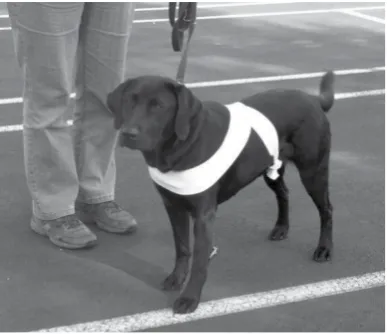
[image:2.496.255.449.381.548.2]enhance a dog’s sense of its body and can influence posture, confidence, movement, and behaviour. They are useful for calming excitable or fearful dogs. A simple and effective wrap can be made from an ACE (elastic) bandage (Figure 1) to create localised pressure and draw the dog’s attention to its body during movement. Touches are based on precise circular movements, slides, and lifts that can be applied all over the body. These can be used to relax or stimulate the
dog; to identify areas of tension and increase awareness to specific areas (Figure 2).
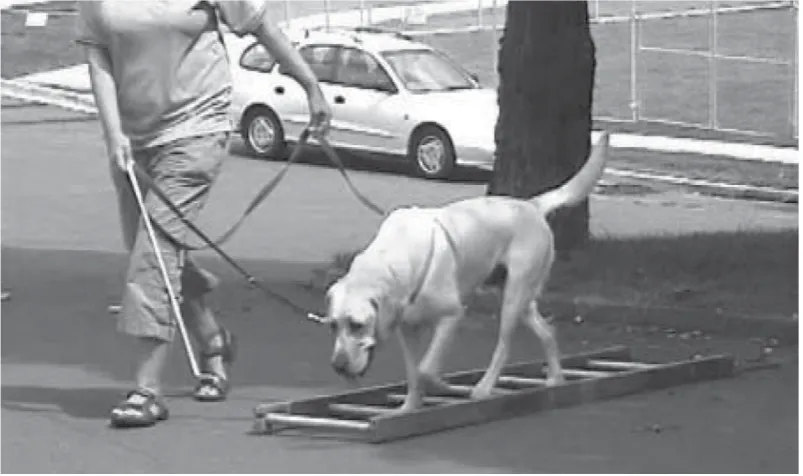
[image:3.496.48.244.57.227.2]Groundwork involves leading a dog through an obstacle course or a ‘confidence course’ (Figure 3). These leading exercises incorporate slow, deliberate movements that enable the dog to explore moving differently (i.e., non-habitually) and thus enhance coordination, focus, and confidence. Figure 4 demonstrates how another tool, the balance leash, is being adapted for guiding work. This concept is also illustrated in Figure 5 which shows a dog that has undergone TTouch training negotiating a traditional guide dog training obstacle course while in balance.
Figure 2. Bodywork: The ‘Zig-Zag’. This touch is applied in a sliding zig-zag pattern along the body. Depending on the speed of application, this touch can calm or stimulate an animal. Note: the alert tail carriage suggests that this dog is engaged with the activity. Reprinted with permission from Lib Roe and the Blind Foundation’s Guide Dog Services.
[image:3.496.48.450.331.569.2]How Does TTouch Work?
Touch has been reported to have calming effects in a variety of animals and people including children with autistic disorders, premature babies (swaddled), normal babies, and adults (Grandin, 1992, 2007). Touch triggers a range of changes in the nervous system, from local chemical responses to the release of endogenous opioids. The effect of touch in stimulating the skin has a massive, indirect effect on the rest of the body (Lindley, 2009), including the release of oxytocin and prolactin (among other hormones) both of which are important for bonding and nurturing (Case, 2005; Odendaal & Meintjes, 2003). Physical
contact, for example, stroking, has also been found to induce physiological relaxation of the heart in pet dogs (McGreevy, Righetti, & Thomson, 2005).
[image:4.496.50.244.60.295.2]In an elegant article on the role of TTouch in sensory enhanced learning in the dog, Cascade (2004) concluded that such sensory enhanced learning techniques as TTouch can be incorporated into any animal training program to improve performance by reducing stress, improving focus (ability to learn), and building confidence. Although outward changes in a dog’s behaviour or posture may be observed and measured, it is less easy to explain the ways that touch and movement has these effects. According to Cascade (2004), touch and movement influence the way the nervous system functions, and subsequently the ability to learn new behaviour through the function of sensory integration. It is this function that allows humans and other animals to learn and to make adaptive responses to new experiences and situations.
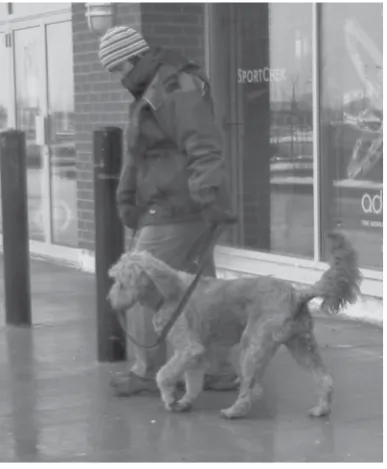
Figure 4. Groundwork: The TTouch balance leash technique. This technique teaches a dog to walk in balance on all four feet without pulling. The dog’s body (and brain) receives information via subtle “ask and release” signals with the leash on the chest. Integrating the balance leash technique as an adjunct to guide dog training improves positioning, focus, and confidence. Reprinted with permission from Lib Roe and Canadian Guide Dogs for the Blind.
[image:4.496.251.449.60.203.2]Cascade (2004) explains sensory enhanced learning through the three components of the ‘stimulus-response’ chain: (1) ‘input’ (i.e., how information is recognised), (2) ‘processing’ (i.e., how information is transferred and interpreted) and (3) ‘response’ (i.e., the effect of sensory processing).
(1) Input – how InformatIonIs recognIsed.
In addition to the five external senses of sight, sound, touch (tactile), taste, and smell, animals have two internal sensory systems to recognise information: these are the vestibular system and the proprioceptive system. The vestibular system, which is seated in the inner ear and responds to changes in head position, is important for balance and spatial orientation. The proprioceptive system aids in awareness of one’s body in space and is important for coordination of movement. The receptors for proprioception are located in muscles and joints and thus respond to movement.
Cascade (2004) emphasised the ways the nervous system (tactile) processes the difference between light and pressure touch. Receptors for both kinds of touch reside in the skin and mucous membranes, for example, those inside the mouth. Receptors for light touches detect subtle movement, for example, an insect crawling on one’s arm, while pressure touch receptors, which lie just beneath the skin, enable one to detect the location and duration of the touch and how much force was applied. TTouch activates the pressure receptors. This has a calming effect as the body processes the information.
Both TTouch and massage use pressure touch. However, TTouch works just below the
level of the skin providing sensory (tactile) input to the nervous system and enhancing body awareness, sensory processing, and integration. Massage takes many different forms, but typically the emphasis is on the deeper tissues of the body including muscles and tendons. Both approaches encourage relaxation and release of bracing patterns. However, the intent of TTouch is to achieve a level of engaged focus, (better to learn new behaviours), rather than deeper states of relaxation (Cascade, cited in Roe & Madigan, 2008b, p.13). A sage point made by Lindley (2009), is that massage,
being an intense stimulation, may be too
threatening and intimidating an interaction for a frightened or an anxious dog (i.e., the animal that needs the most relaxation).
(2) processIng – howInformatIonIs transferredandInterpreted.
There is much in the scientific literature on the relationship between serotonin and emotional state across a variety of species, and although the relationship is complex, it is generally believed that low levels are associated with depression. Serotonin levels can be boosted by several mechanisms, one of which is movement (i.e., proprioceptive input). During states of chronic stress, levels of serotonin fall, while norepinephrine increases. Norepinephrine is also released when an animal encounters new situations or novel experiences (non-habitual). Norepinephrine is associated with arousal and activity, and contributes to the sympathetic nervous system responses of freeze, fight, or flight and perhaps, in TTouch terms, ‘fool around’. While a certain amount of arousal is necessary to focus, too high a release of norepinephrine can result in reactive or aggressive behaviour (Cascade, 2004). On the other hand, dopamine affects motivation and thinking. It also affects the emotional centres of the brain and is associated with pleasure and emotional bonding/attachment. TTouch enhances levels of dopamine as it is released in response to pressure touch.
In addition to distinguishing between light and pressure touch, the tactile system also perceives temperature, pain, and vibration. However, these sensations are carried to the brain by separate pathways of the nervous system. This aspect of sensory processing is important in TTouch as one pathway carries protective sensations of pain, temperature, and light touch, while the other carries discriminative sensations like proprioception, vibration, and pressure touch (Cascade, 2004). Therefore, the simple act of applying the body wrap to a dog (Figure 1) may help to calm the dog, improve body awareness and increase focus as the wrap
provides pressure touch as well as enhancing the brain’s perception of where the body is in space. This conclusion is supported by the use of Lycra compression splints in the management of children with cerebral palsy to improve posture and reduce involuntary movement (Blair, Ballantyne, Horsman, & Chauvel, 1995).
(3) response – theeffectofsensory processIng.
pressure indicated that all these changes were associated with relaxation and reduced stress (Case, 2005).
Over-stimulating an animal can overwhelm it and exceed its ability to cope, while too little input may cause a loss of focus. Cascade (2004) refers to the ‘just right challenge’ which is the principle of giving a dog just the right amount of information to respond appropriately to its surroundings. This principle can be applied through the TTouch bodywork and groundwork techniques. Careful observation of the dog’s responses is important to apply the correct level and type of input. Touches can be adjusted by changing the pressure or tempo, moving to another part of the body or changing how much of the hand is in contact with the dog. Other examples include asking the dog to stop, slow down, or focus during leading exercises, as experiencing a state of physical balance is said to be associated with a more focused mental state, that is, one that enhances learning.
TTouch in the Scientific Literature
Alternative and complimentary therapies including acupuncture, dietary manipulation (to affect mood), TTouch, herbalism, homeopathy, bach flowers, reike, and shen are widely employed in veterinary practice to deal with a range of problems (Fogle, 2002; Lindley, 2009). These modalities are generally regarded with suspicion, due to a lack of understanding and/or a lack of empirical or research-based knowledge. However, a growing body of research on acupuncture, dietary manipulation and TTouch in people and other animals is available in the scientific literature (Lindley, 2009). Statistically and clinically significant
differences in TTouch groups have been reported in the literature for cows, horses, and people (Mills et al., 2010), but no studies that pertain to the dog could be found.
Research seems to indicate that subjects are less stressed when TTouch techniques are applied. Recent studies conducted by Probst, Spengler Neff, Leiber, Kreuzer, and Hillman (2012) and Probst, Hillmann, Leiber, Kreuzer, and Spengler Neff (2013) showed that positive handling using the TTouch method reduced behavioural and physiological stress reactions of beef cattle before slaughter, and, if TTouch was applied in early-life, improved meat quality. These researchers chose the TTouch method, as it is a standardised and therefore replicable method. A similar study in horses (Shanahan, 2003) indicated that non-aversive training based on the TTouch Equine Awareness Method (TTEAM) reduced loading time and stress during loading for horses with a history of resistance to trailer loading.
and intuition or a state of ideal functioning, and is thus useful for learning. Interestingly, beta brain waves, which are understood to be activated in humans when analytical thinking is involved, were only apparent when circular TTouches were used but not when being stroked, petted, brushed, massaged, or the skin pushed in more than three circles on the same spot. Intriguingly, when a horse walked through a labyrinth, beta brainwave activity was observed whenever the horse negotiated a turn – could this be, as the researchers hypothesised, an indication that the horse was thinking?
Stress in Guide Dogs
Studies on stress in guide dogs are limited in the scientific literature, and only two studies could be found. Vincent and Michell (1996) studied the relationship between blood pressure and stress prone temperament in trainee guide dogs (Labrador retrievers) to assess the level of stress during training. Stress-prone dogs were described as dogs that tended to become unusually anxious when exposed to novel situations during training (travelling in lifts, traffic noise, crowds, etc.) or a dog that had not adjusted to the kennel environment. Anxiety in these dogs was expressed in many ways including excessive barking, hyperventilation, subdued behaviour, and subtle changes in body postures or facial expressions. The results showed that stress-prone dogs were significantly more likely to have higher blood pressure readings than dogs that were not deemed stress-prone.
The second study on stress in guide dogs, conducted by Fallani, Previde, and Valsecchi (2007), analysed the behavioural and physiological reactions of guide dogs in a
distressing situation that promoted emotional attachment behaviours towards their owners. In this study, dogs were separated from their owners and the reactions of trained guide dogs were compared to trainee and untrained dogs. This study indicated that when separated from their owners, trained guide dogs are more controlled in their behaviours than trainee or untrained dogs. However, this response of the trained dog was accompanied by a stronger cardiac activation as measured by heart rate – suggestive of a greater emotional reaction in the trained dogs. Dogs in this study were either Golden retrievers or Labrador retrievers. Interestingly, Golden retrievers showed more behaviours suggesting distress for example, proximity seeking when separated from their owners, compared to Labrador retrievers: the latter exhibiting more playful and exploratory tendencies. Although no single criterion is adequate to assess stress, being able to assess canine behaviour is essential for guide dog trainers as it contributes to effective training and helps the trainer decide which dogs continue with training and at what rate.
Stress might arise in guide dogs due to the path in life these dogs take. Dogs are
social animals and have evolved to live in a
working in crowded situations, travelling on trains, planes, and automobiles, being unobtrusive for long periods, extending its ‘personal space’ to accommodate that of its handler, and disobeying unsafe commands – and all while wearing equipment that can sometimes be uncomfortable or poorly fitted (Lloyd, 2004).
While most of the literature on guide and other service dogs is client focussed since the dog is used to achieve certain goals for the handler (beneficence), more attention is now being paid to ethical issues, for example, the welfare of the dog (nonmaleficence). In an article that addressed the physical and psychological needs of service dogs, Wenthold and Savage (2007) stated that the most important activity the handler should undertake is to spend time bonding with the dog and performing exercises to build trust – potentially a role exists for the training of guide dog owners to use some aspects of TTouch (basic touches) to benefit themselves and their dogs.
TTouch and Guide Dog Training
Using TTouch as an adjunct to traditional guide dog training can be useful in many respects. These include issues with: coordination, focus, accepting equipment, adaptability, reactivity, confidence, self-control, and distraction. There is often more than one cause that leads to a particular behaviour. TTouch techniques help to identify factors which may be contributing towards a problem behaviour, and establish a starting point to work from. Addressing these factors individually can reduce the intensity of the problem or help to extinguish certain problem behaviours (Lloyd & Roe, 2012).
The touches used in TTouch provide pressure just below the level of the skin. This enhances sensory processing and integration with the intent of achieving a level of engaged focus, (better to learn new behaviours), rather than deeper states of relaxation that are affiliated with deep tissue massage (Cascade, 2004; Lindley, 2009). The touches together with body wraps help raise awareness to particular parts of the body and might be useful for dogs with a degree of ‘body sensitivity’ to learn to accept contact and equipment. The touches can also be used during training walks to settle anxious dogs.
It is commonly understood that the mental, emotional, and physical aspect of any being are interwoven, and the conditions of the body and behaviour can influence one another. Dogs, like people, can become accustomed to moving in habitual ways. Roe and Madigan (2008a) propose that there is a direct relationship between posture/tension and behaviour, and by changing a particular posture it may be possible to influence emotions and thus behaviour. Groundwork exercises provide the dog with opportunities to make decisions. Varying these exercises to meet the dog’s individual needs and allowing it some freedom of choice might help a guide dog reach its potential in its working role. It is feasible that dogs that are not afforded some measure of choice have less chance to develop self-control (Lloyd & Roe, 2012).
balance has more self-control. The balance leash (Figure 4) helps a dog balance with the intent of improving focus, self-control, and confidence. Additionally, when a dog becomes distracted or is fearful, its posture can change. This might affect balance. Recent research that examined the pressure distribution of three different types of guide dog harnesses (Peham, Limbeck, Galla, & Bockstahler, 2013) found that the right and left sternal regions were almost constantly loaded, which may also affect movement and coordination. Having two points of contact, for example, a lead attached to a flat collar and a step-in-harness (Figure 3), allows the trainer to help the dog regain balance and influence its movements and position in a variety of situations, thus developing the skills required for its working role.
Further research is required to measure the effects of integrating TTouch into guide dog training and effects on the dogs’ sensory system. However, anecdotal evidence suggests that the techniques have positively influenced the quality of several guide dogs in New Zealand and Canada, as well as other New Zealand working dogs including Detector Dogs and Assistance Dogs. Cases that show improvement include dogs with both strong ‘moving away from’ and ‘moving towards’ reactions to other dogs and novel objects. These dogs appear to be more confident and less distracted when working. The TTouch method has also been used for some dogs on the puppy-walking program and for withdrawn dogs in the process of rehoming. Not all dogs that show improvement are suitable to qualify as guides, but these dogs seem more relaxed in general and are easier to rehome.
Conclusion
Fear, anxiety, and arousal are significant causes of dogs being rejected as guides. These states are associated with physiological changes in the body through the release of hormones and neurochemicals. One reaction to these states is an overall increase in muscle tension, which affects posture and movement (Cascade, 2006). TTouch offers a variety of applications that can be individualised for each dog. TTouch bodywork is perceived to reduce the level of arousal and tension, and hence some reactive behaviours including context-specific barking, lunging, and growling. TTouch groundwork is thought to help a dog achieve physical and emotional balance by providing the dog with opportunities to have positive experiences and learn new responses by engaging in some purposeful movement activity.
Incorporating the TTouch method as an adjunct to traditional guide dog training may help to reduce stress and help dogs learn, which may be of particular value during the sometimes difficult transition from the puppy scheme to training. Providing puppy walkers with more tools to deal with a maturing juvenile dog will help each dog reach its potential, while teaching guide dog owners some basic touches may help to strengthen the owner-dog relationship. There is also the potential to broaden the trainer’s understanding of the dog’s ability and temperament, which could help trainers make more timely decisions regarding a dog’s future as a guide.
TTouch can help to identify problems and prevent problems developing. The techniques may help dogs develop skills
body awareness. Use of these techniques throughout the dogs’ development can help guide dog schools improve the quality of the dogs while maximising the dogs’ welfare.
Acknowledgement
The authors would like to acknowledge Ruth Bennett, National Trainer, New Zealand Customs Detector Dogs for proof reading the manuscript and providing many helpful comments. The authors would also like to thank Paul Metcalf, Head of Guide Dog Services, and staff at the Blind Foundation Guide Dogs (formerly Royal New Zealand Foundation of the Blind’s Guide Dog Services) for their on-going support.
References
Batt, L. S., Batt, M. S., Baguley, J. A., & McGreevy, P. D. (2008). Factors associated with success in guide dog training. Journal of Veterinary Behavior, 3, 143-151.
Blair, E., Ballantyne, J., Horsman, S., & Chauvel, P. (1995). A study of a dynamic proximal stability splint in the management of children with cerebral palsy. Developmental Medicine and Child Neurology, 37(6), 544-554.
Cascade, K. (2004). Sensory enhanced learning (the sensory side of TTouch). Retrieved from http://www.4dogs.co.nz/ sensory_learning.html
Cascade, K. (2006). TTouch applications for reactive dog behavior. TTeam Connections, 8(4), 13-15.
Case, L. P. (2005). The dog: Its behavior,
nutrition & health (2nd ed.). Blackwell
Publishing.
Duffy, D. L., & Serpell, J. A. (2008). Behavioral assessment of guide and service dogs. Journal of Veterinary Behavior: Clinical Applications and
Research, 3(4), 186-188.
Fallani, G., Previde, E. P., & Valsecchi, P. (2007). Behavioral and physiological responses of guide dogs to a situation of emotional distress. Physiology & Behavior, 90(4), 648-655.
Fogle, B. (2002). RSPCA new complete dog training manual. Dorling Kindersley. Goddard, M. E., & Beilharz, R. G. (1984). A
factor analysis of fearfulness in potential guide dogs. Applied Animal Behaviour Science, 12(3), 253-265.
Grandin, T. (1992). Calming effects of deep touch pressure in patients with autistic disorder, college students, and animals. Journal of Child and Adolescent Psychopharmacology, 2(1), 63-72. Grandin, T. (2007). Livestock handling and
transport (3rd ed.). Cabi.
Hsu, Y., & Serpell, J.A. (2003). Development and validation of a questionnaire for measuring behavior and temperament traits in pet dogs. Journal of the American Veterinary Medical Association, 223(9), 1293-1300.
Lindley, S. (2009). Complimentary therapies. In Horwitz, D. F., & Mills, D. S. (Eds.), BSAVA manual of canine and
feline behavioural medicine, 2nd ed. (pp.
259-269). Gloucester, UK: BSAVA. Lloyd, J. K. F. (2004). Exploring the match
between people and their guide dogs. Unpublished doctoral dissertation, Massey University, New Zealand.
guide dogs: Mobility and compatibility outcomes. [CD-ROM]. Proceedings of the 11th International Mobility Conference, Stellenbosch, South Africa.
Lloyd, J. K. F., La Grow, S., Stafford, K. J., & Budge, R. C. (2008a). The guide dog as a mobility aid part 1: Perceived effectiveness on travel performance. International Journal of Orientation & Mobility, 1(1), 17-33.
Lloyd, J. K. F., La Grow, S., Stafford, K. J., & Budge, R. C. (2008b). The guide dog as a mobility aid part 2: Perceived changes to travel habits. International Journal of Orientation & Mobility, 1(1), 34-45. Lloyd, J. K. F., Budge, R. C., Stafford,
K. J., & La Grow, S. (2009). A focus group discussion on using guide dogs. International Journal of Orientation &
Mobility, 2(1), 52-64.
Lloyd, J. K. F., & Roe, E. (2012). Integrating the Tellington TTouch method in guide dog training. Proceedings of the 14th International Mobility Conference,
pp. 127-130, Palmerston North, New Zealand.
McGreevy, P. D., Righetti, J., & Thomson, P. C. (2005). The reinforcing value of physical contact and the effect on canine heart rate of grooming in different anatomical areas. Anthrozoos, 18,
236-244.
Mills, D. S., Marchant-Forde, J. N., McGreevy, P. D., Morton, D. B., Nicol, C. J., Phillips, C. J. C., Sandøe, P., & Swaisgood, R. R. (2010). The encyclopedia of applied animal behaviour and welfare. Cambridge University press, Cambridge: CABI.
Odendaal, J. S. J., & Meintjes, R. A. (2003). Neurophysiological correlates of affiliative behavior between humans and dogs. The Veterinary Journal, 165(3), 296-301.
Peham, C., Limbeck, S., Galla, K., & Bockstahler, B. (2013). Pressure distribution under three different types of harnesses used for guide dogs. The
Veterinary Journal, 198, e93-e98.
Perrin, C., & Seksel, K. (2013). The role of stress in learning. Proceedings of the First Conference of the Australian Working Dog Alliance, Sydney, Australia, 62. Pouliot, M. (2002). Counter conditioning
fear behaviours. Proceedings of the International Federation of Guide Dog Schools for the Blind’s Guide Dog Seminar, Seoul,South Korea.
Probst, J. K., Hillman, E., Leiber, F., Kreuzer, M., & Spengler Neff, A. (2013). Influence of gentle touching applied a few weeks before slaughter on avoidance distance and slaughter stress in finishing cattle. Applied Animal Behaviour Science, 144,
14-21.
Probst, J. K., Spengler Neff, A., Leiber, F., Kreuzer, M., & Hillmann, E. (2012). Gentle touching in early life reduces avoidance distance and slaughter stress in beef cattle. Applied Animal Behaviour Science, 139, 42–49.
Roe, E., & Madigan, J. (2008a). Guide dog training and the benefits of using the Tellington TTouch method. Proceedings of the International Guide Dog Federation Seminar, London, England, 18.
Tellington TTouch method. Visionary, 12, 12-13.
Shanahan, S. (2003). Trailer loading stress in horses: Behavioural and physiological effects of nonaversive training (TTEAM). Journal of Applied Animal Welfare Science, 6(4), 263-274.
Stafford, K., Erceg, V., Kyono, M., Lloyd, J., & Phipps, N. (2003). The dog/ human dyad: A match made in heaven? Proceedings of the World Small Animal Veterinary Association Congress. Bangkok, Thailand, 225-227.
Tellington-Jones, L. (2006). EEG study of equine brain waves. TTEAM Connections Newsletter, 8(4). Retrieved from http://www.ttouch.com/PDFs/ EEGstudyOfEquineBrainwaves2006.pdf Tomkins, L. M., Thomson, P. C., &
McGreevy, P. D. (2011). Behavioral and physiological predictors of guide dog
success. Journal of Veterinary Behavior:
Clinical Applications and Research, 6(3), 178-187.
Vincent, I. C., & Michell, A. R. (1996). Relationship between blood pressure and stress-prone temperament in dogs. Physiology & Behavior, 1, 135-138. Wenthold, N., & Savage, T. A. (2007).
Ethical issues with service animals. Topics in Stroke Rehabilitation, 14(2), 68-74.
Wise, A. (1995). The high-performance mind. New York: Putnam.
Janice Lloyd, BSc (Hons), DCR, EMT, CVT, Grad
Cert Ed, Ph.D., Senior Lecturer in Veterinary