Rochester Institute of Technology
RIT Scholar Works
Theses
Thesis/Dissertation Collections
5-1-1974
Death Watch
Andrew Gelfand
Follow this and additional works at:
http://scholarworks.rit.edu/theses
This Thesis is brought to you for free and open access by the Thesis/Dissertation Collections at RIT Scholar Works. It has been accepted for inclusion in Theses by an authorized administrator of RIT Scholar Works. For more information, please [email protected].
Recommended Citation
COLLEGE OF FINE AND APPLIED ARTS ROCHESTER INSTITUTE OF TECHNOLOGY
DEATH WATCH
A THESIS SUBMITTED TO
THE FACULTY OF THE DIVISION OF FINE AND APPLIED ARTS IN CANDIDACY FOR THE DEGREE OF
MASTER OF FINE ARTS
DEPARTMENT OF WEAVING AND TEXTILE DESIGN
BY
ANDREW GELFAND
"There is no death of anyone but only in appear ance, even as there is no birth of any save only
in seeming. The change from
being
tobecoming
seems to bebirth,
and the change frombecoming
tobeing
seems to bedeath;
but in reality no one is everborn,
nor does one ever dye."Apollonius of Tyana
"Owing
to theI-Am-The-Body
notion, death is feared as
being
the loss of oneself. Birth and deathpertain to the
body
only, butthey
are superimposed on the self, giving rise to the delusion that birth and death relate to the self."
Sri Ramana Maharshi
ACKNOWLEDGMENTS
My
sincere thanks to Mr. Donald Bujnowski and Mr. MaxLenderman
of the textiledepartment,
Mr. Robert Heischman of painting, Mr. Keener Bond of the metal shop, Mr. Bob Wick-son ofdesign,
Mr. Stephen Thurston of Northern Illinois Uni versity atDeKalb,
and Mr. Walter Nottingham of theUniversity
of Wisconsin at River Falls.
PREFACE
It has been my sole concern throughout work on Death Watch, to communicate a specific vision of the final stage
in the evolution of human consciousness. The attempt has been made to transmit the nuances of mood, atmosphere and
setting which were experienced in an image in
July
of1973,
and which served as my guide and reference source in theevaluation of all subsequent work.
TABLE OF CONTENTS
LIST OF ILLUSTRATIONS v
OPENING QUOTATION vi
CHAPTER
I. SELF DIALOGUE
1-7
II. ON
MATERIALS,
TECHNIQUE AND PROCESS 8-21III. EPILOGUE
22-24
APPENDICES
A)
ON THE SYMBOLISM OF COLOR 25-26B)
ON THE SYMBOLISM OF FORMS 27-28C)
INCIDENTAL ESSAYS 29-31GLOSSARY
32-34
BIBLIOGRAPHY
35
LIST OF ILLUSTRATIONS
FIGURE
1,
Single Chain Crochet 102.
NeedleWrapping
123. Circular
Basketry
13
4. Double Weft
Twining
14
5
. SoumakTwining
. . . *15
6
. Split SoumakTwining
17
"The inherent universal impulse to wor
ship should be directed to aspiration and mystical love for the highest ideal which a symbol represents, not to the symbol as an oracle or a talisman."
A.F. Price
from The Diamond Sutra.
CHAPTER I
SELF DIALOGUE
Q: "How did you come to choose the image for Death Watch?"
A: "It would probably be more precise to say that the image ohose me. Although I have read some on the comparative
approach to death in Oriental and Occidental philosophy and have formed certain attitudes and dispositions of my own, I have never been overly preoccupied with the sub
ject. You see, here in the West it is easy to dispense with the reality of death simply
by
placing it in the realm of a ' subject', thus removing
it
from the sphereof immediate personal concern. The results of approach
ing
death in this way are exhibited in terms of aduality
betweenbeing
and non-being. Death becomes our antago nist and is seen solely in its aspect of annihilation. The refusal to acknowledge death as an immediate reality and as part of the same cosmic processby
which life sus tainsitself,
is founded upon the idea of a seperate self. It is this image of a seperate self that generates fear and the anxiety associated with the individual's loss ofidentity.
Only
through aninquiry
into the nature of self can the struggle betweenbeing
and non-being approach re solution. To place death outside oneself as an opposing force is to rob life of a certain precariousness and intensity,
which is theinsecurity
of being. All structuresand systems,
including
our psychologicaldefenses,
arewards against ambivalence and
disorder,
of placing ouridentity
in an untenable position. Human order in all itsaspects, while providing comfort and security, has reduced mankind to a pathological state of
dependency,
leaving
it spiritually undeveloped.Death,
life,
God,
are all at thecore of
being,
namely in the seat of consciousness. Deathis
definitive, being
definitive it demands nosupporting
explanation, only a way of approach. The approach to life and the approach to death is the same. If we were immedi
ately aware of life and the sense of
temporality,
and could see the relation between the personal and universal, thepossibility would exist to radically alter the
foundations
of consciousness and the basis of human interaction,"Q: "Would you say that Death Watch was born from this concern with temporality?"
A: "This is a difficult question to answer. No doubt several factors were responsible for the image which occured to me
on
July
23,
1973,
but it would bedifficult
for me to desense seemed to crystallize a number of thoughts and feelings which were
lying
dormant. I waslistening
to an informal talk on color
theory by
WalterNottingham,
in which he stressed the need of the artist to define his own language of color. I remembered a book I had read several years earlier. The
book,
The Hindu Science ofColor
by
Ramacharaka,
detailed the ancient account of auraswhich were developed
by
spiritual masters.According
tothese accounts, psychic states and emotions are accompa nied
by
specific gradations of color which surround thehead,
visible as auras to those sensetive enough to perceive them.
Fear,
lust, love,
greed, compassion, all emit a certain wavelength of the spectrum, thus giving credibility
to thetheory
that color is symbolic and reflects innate and altering traits.^ Ibegan*
thinking
of colorswhich held particular interest for me: green,
brown,
ma roon, and slowly a room took shape and I stood watching a funeral service. The room and all its objects were extremely
vivid: a chandelier in the form of adying
flower,
standing lamps in the shape of barren
trees,
a metallicurn, a sacrificial
table,
a wine decanter and chalices, a runner, a transparent coffin, the smell ofincense,
and the sound of a watch.Everything,
seen with remarkable clarity, was apprehended at once. Eachdetail,
though sepferate anddistinct,
revealed a certain interior logicthat,/supported the whole."
Q: "What made you decide to call this image Death Watch?"
A:
"There
are a number of factors that led me to this decision. I was primarily concerned with choosing a title that would best convey the vision as I had experienced it. The fact that I had witnessed a funeral service made me wish to con vey the sense of observation. The sound of the watch led me to play on the word watch, acting as both verb and noun.In Death Watch I think I found the most appropriate verbal metaphor for this sense of observation and time."
Q: "Did you find the sense of time which you experienced in any way contrary to the reality of the death state?" A:
"Well,
if we view death in absoluteterms,
that is if wesee it as the final and complete end of
being,
the flowof time indeed becomes paradoxical. On the other hand the fact that death is definitive and part of the realm of
1See
AppendixA,
"On the Symbolism ofColor",
fromGertrude
Jobes,
Dictionary
ofMythology.
Folklore andSymbols.
Vol.11,
being
is reason to assume that there exists a continuitybetween
being
and non-being. I feel that in the vividsense of time which was experienced in the vision there was a definite symbolic intention. Time in Death Watch
is not a sign of physical corruption but of passage and
transference,
an indication of thecontinuity
through and beyond the moment ofdeath,
of consciousness."2Q:
"Could
you elaborate further on what you believe to bethe importance of this observation through time?"
A: "I think I have made that clear."
Q: "What I meant was, do you feel that time serves any spe cific purpose as far as the spectator is concerned?"
A: "I would dispense with the use of the word purpose. There
is a definite sensation which accompanies the realization of time passing at
death,
a certain empathy with the fun eral service is established and the recognition of our ownmortality heightened. Beyond
this,
there is an awarenessthat in each instant we are moving forwards and
backwards,
and the time of death is every moment'3 This reality of
our
being,
that life and death supplant themselves ceaselessly,
I feel is hinted at in the symbol of the watch. Coupled with this realization is the certainty that theawareness which recognizes its mortality is beyond
it,
forchange can only be seen from a point of constancy.
Silence,
non-action: this is the level ofheaven and earth
This is perfect Tao. Wise men find here Their resting place.
Resting, they
are empty.*
Q: "It would seem then that the vision speaks as much of time as it does of eternity."
A:
"Yes,
most definitely. There was a definite reserve, afeeling
ofbarreness,
austerity, and incompletion. It was as if the objects had lost something, or were like manikins2See
AppendixD,
"Incidental Essays".5t.S.
Eliot,
The Four Quartets.(Har
court, Brace andWorld,
New
York,
1943
)pg. 42.which hinted at something beyond appearance. The objects
were
very
much like theatrical props which had assumed an arrangement both rhetorical andliteral,
figurative and abstract at the same time."Q:
"Do
you feel that each of the objects then had some spec ial significance for you? I recall that you stated thateach detail followed a certain interior logic. Could you elaborate on this?"
A:
"What
I meantby
this statement is the fact that each ob ject had some distinct characteristic or intention which kept it apart from the others. Each was representativeand reflected in its own way a certain aspect of
death,
purely on a symbolic level. Together the pieces acted
somewhat like the individual voices in a quartet, recog nizable in their own right yet all centered upon a basic theme. As work on Death Watch progressed, the basic mo tive of resolution which at first seemed primary, evolved into the desire to
convey
movement. Death became not theend all of
being
but the catalyst to evolving consciousness, thus the
feeling
of momentary repose and incompletion. This realization became evident in the formal relation of elements rather than in the individual work."Q: "Could you define what these aspects were and their sym bolic intention?"
A:
"The
interpretation of symbolism on any level is paradox ical in some way. Within any definition there exists the attempt to 'read in'our own projections, thus perhaps obscuring the
immediacy
of the sign. On the other hand there is no assurance that our speculations were not de riveddirectly
from the sign itself. The recourse to sym bolism hastraditionally
been associated with'synthesis',
or an amalgam that was multidirectional and beyond the scope of language.
Thus,
to represent symbols in any form other than pictographs is to do them great disservice. The strength of a symbol lies in its ability to evoke certainassociations common
to
its form and to link these assoc iations withnormally
unrelated systems. Take for instance the horizontal line as contrasted with the vertical line. The horizontal plane is associated with passivity and rest linked in some way to the posture of sleep. The verticalon the other hand denotes aspiration
being
linked to the upright posture of action* The cross, or synthesis of horizontal and vertical, is symbolic of balance or the integration of opposing force.
This
somewhat simplifiedQ:
"What
you say seems true enough but I do not understand how it was possible for you to begin work without someliteral translation of elements.
Certainly
the spec tator must in some way be challengedby
what confrontshim,
but the creator, must he not have complete clarityas regards his intentions?"
A: "I do not wish to delve on what should or should not be
the case as regards the creative process. The creator is a spectator
too,
often under the sway of some image.The image is the point of
departure,
importing
that image in its purity is clarity and the sole intention. Youare perfectly right in assuming that it was not possible
for me to begin work without a literal translation of elements, I took the image
literally
and conveyed it accordingly."Q: "I sense that you are
trying
to avoidinterpreting
your work?"A: "Oh?"
Q: "Would it be possible to simply describe what you felt
about the various objects and what
they
represented for you?"A:
"I
see we will not progress unless I dispense with thisquestion. The chandelier which
hung
above the coffin appeared in the form of adying flower,
traditional sym bol of fruition and life. The lightshung
out of life less stems, as ifthey
were expelled from the flower's inner core,indicating
a sense of exhaustion and theexpenditure of energy. The
feeling
was one of ascensionand
descension.
The entire form was pulled towards the earth, and yet the lights whichhung
from it created thesensation that the form was rising. The paradox of
light,
symbol of salvation and
hope,
emerging from the dead andilluminating
thedead,
seemed cause and effect at once,a mirror of death and regeneration. The standing lamps
in the form of barren
trees,
symbol of growth, spoke offrailty. The exposed roots and the
feeling
of nakednesswhich
they
conveyed were accompaniedby
the sense of illusion;
the stripping away of an artificial exterior toreveal a certain interior essence. The metallic urn,
symbol of emptiness, sign of salvation and the return to
original time.
The
wine decanter and, chalices, universalsymbols of
fertility,
cosmic union and salvation, standempty upon the altar
table,
place of benediction and prayer. The cups ofdeath,
one turned upon its side andthree standing, reflect the course of life and the ages
runner
leading
to the coffin denotes the path orjourney
which all mentake,
symbol of the passage through time to eternity. The transparent coffin, lined with the death robe, symbolizes the void or return to the source."Q:
"Is
there any historical validation of the interpretation which you have attributed to Death Watch?"A: "There are numerous references to be found in mythology of symbols and their divination. After recording my per sonal interpretation I decided to research any available material and found each of the objects in my work to have a cross-cultural significance.
5
Thisfinding
both dismayedand overjoyed me. I have found most artists to be extreme
ly
self indulgent egotists who credit themselves with thoughts and ideas which have a universal origin. The fact that this image was transpersonal and not the invention of my own minddismayed me, yet I felt convinced that I had touched and , drawn from what Carl
Jung
called the 'Collective Unconscious'"Q: "You said before that the basic motive in Death Watch was resolution and that this evolved into the
desire
to convey movement. What did you mean when you said that this realization was evident in the formal relation of elements rather than in the individual work?"
A: "Although the objects in themselves reveal a high degree
of order and a predetermined arrangement of technique and of
form,
alonethey
become purely ornamental and without meaning.It
is only in the placement and relationship of parts within a total setting thatthey
become vital and assume their function as symbolic aspects. The movementthat is established in this relationship is the movement of consciousness, aware and sympathetic to its own trans
formation."
Q: "Do you feel that you have succeeded in capturing the at mosphere which surrounded your original experience?"
A: Each attempt is filled with both success and failure. I
5
See Appendix B,"0n the Symbolism of Form".
In Jungian psychology the term refers to the substrata of consciousness wherin are stored the memories of the entire
human race,
Jung
believed that thehistory
of man was encodedin the physical organism and that this
history
was transmittedhave come to realize that between
fantasy
and realitythere is a very thin
line,
and that the impact of theillusory
and substantial on consciousness cannot attimes be distinguished.
Images,
like actualities,hap
pen and pass away, and the mind either sees its visions as real or attempts to escape from the 'unreality'
of its
encounters. I have watched
fantasy
become real, and between the vision and its manifestation there persisted
for the mind a common sense of involvement. Death Watch is a
transcription,
an image that was given concrete form. I can only trust that the same presence andfeeling
ofrevelation that existed in the vision has been carried
forth into embodiment, and that others who view it for the first time will relive, share and benefit
by
it."8
CHAPTER II
On
Technique,
Materials and ProcessThe choice of materials and techniques was founded upon
the structural and aesthetic potential of the elements employed,
and in their ability to transmit the image in its original con
text. The majority of forms in Death
Watch,
are composed ofshapes that we normally associate with the mediums of clay,
glass, wood and metal.
Chandeliers,
lamps,
urns,decanters,
chalices,
tables,
aretraditionally
linked to non-fiber techniques. The immediate problems which these forms posed were
structural: adapting fiber techniques to essentially non-fiber
structures.
Fiber had to be redefined to encompass materials that
could be utilized in a traditional manner, and which were con
sistent with various textile processes. Methods had to be
employed which would provide secure, stable
forms,
recognizableas symbols in a total setting, yet evoking the sense of literal
function and the materials linked to this function. Basic
criteria had to be established which would give credence to
the choice of materials and technique: l)Did the materials
provide the structural potential necessary, and if not, could
the material be made effective
by
employing alternative techniques? 2)Did the material and technique reflect the form as
conceived? 3)Did the process inhibit or express the symbolism
of form and function?
4)
Was the choice of color consistentwith the symbol?
The simplest and most direct approach was chosen over
the complex. Techniques that would communicate the form and
which were an integral part of the structure
itself,
wereselected over those which were purely ornamental and without
obvious relationship. Materials that
directly
satisfied theintention were chosen over those whose appeal might detract
Extensive
use of metal is exhibited in Death Watch.Fulfilling
the criteria which I had established, metal became the logical choice, both for its structural possibilities and in its adaptabilityto
the fiber process. In the combinationof metal with traditional fibers and fiber
techniques,
thecapacity to build forms becomes limitless. Malleable enough
to be molded into a myriad of shapes, as in the galvanized steel strips which are used in the urn and
decanter,
and soft enough to betwined,
as in the copper wire used in the urn and chalices, orbent,
as in the steel feet of the altartable,
metal exhibits a
durability
and strength not to be found in traditional fibers.Allowing
a freedom of movement, providingextensive control over
form,
offering a resolution to problems of support, metal structures which utilizefiber
techniques contain extensive applications both forindustry
and the individual craftsman.
Each piece in Death Watch evolved after experimentation
with various materials and processes, and each entailed several
problems of construction. The individual
forms,
materials and techniques are therefore discussed below in greater depth.A)
The ChandelierMaterials: Rubber
hosing,
silicone rubber, brass rods. Dimensions:Height-3',
Diameter-18".Process: Single chain crochet.
Method of Construction: The chandelier evolved after
several experiments which analyzed the possibilities of rubber
hosing
and crochet.Easy
to control and shape, the rubberhosing
when crocheted reflected an organic quality which was consistent with the image of thedying
flower.
Coupled with its self-supporting nature and ability to withstand stress, thehosing
10
and the placement of the electrical apparatus, dic
tated the method of construction. The form was to
be built additively: combining seperate crocheted
elements of varied scale into a whole
by joining
them at a central point. This approach permittedme great freedom in constructing the chandelier.
Parts were
temporarily bound,
shapes altered, re lationships changed, until the entire form reflecteda recognition that the image had been achieved.
Wiring
had to be completed as pasts were permanentlyjoined,
and any additional structural supports thatwere necessary to hold the appendages at the desired
level of elevation fixed into place. The
durability
of the rubber
hosing
and its ability to withstand heat were factors that warranted additional consideration. A substance had to be employed which was consistent with the sense of exhaustion,
depletion,
withthe
symbolism of theform,
and which provided a means of heat insulation. Silicone rubber, a substance that is soft enough to be molded or built up into layers to achieve a desired effect, fulfilled these essentials.
Illustration of Process:
Figure 1
11
B)The Floor Lamps
Materials:
Aluminum and brasstubing,
plywood, velveteen,wool, viscose, rayon, mercerized cotton, cowhair and
silicone rubber.
Dimensions:
Height-6',
Diameter-13".Process:
Needle wrapping.Method of Construction: The major technical concern in
the construction of the floor lamps was their ability
to be readily broken down into as many seperate ele
ments as possible, to facilitate ease in
handling
andtransportation. This stipulation
immediately
eliminated welding or the use of adhesives. Whatever means
was employed had to be an integral part of the structure
and at the same time retain the possibility of
being
disengaged at will. An adjustable one inch flange was
securely fitted into a half inch plywood base. The
main supporting structure, a five foot length of one
inch o.d. aluminum
tubing
that would allow the electrical wiring to pass unobstructed to the sockets, was
set into the flange and tightened. A method had to be
employed whereby the wiring would in no way connect the
main support to the base thus preventing them from
being
taken apart. A quarter inch hole was drilled atthe base of the main support just above the
flange,
and the main lead was passed through and spliced to the
leads from each of the individual lights. At marked
intervals on the main support holes were drilled to re
ceive the upper and lower three-eighths inch o.d. tubing,
The holes were then tapped and both ends of the
tubing
threaded. The appendages were then screwed
directly
into the main support and the sockets fitted on the
ends. While solid metal rods would have provided a
much sounder structure,
they
had to be eliminated sincethey
did not offer an insulated method of wiring. As12
to the upper appendages
they
cannot be removed. Thelower limbs or root section are however removable, thus
allowing each
lamp
to be broken down into five seperateelements. The base was covered with fabric and the
entire form wrapped with materials that would suggest,
in some way, the bark of trees. The root section, the
last to be completed, was wrapped and yarn inserted
into pre-drilled holes along the tubing. The choice
of the main support and the scale of the appendages
was determined solely
by
the symbolism of the form.Relationships that would evoke a sense of
fraility,
barreness,
exposure, were entirely responsible for thesize and placement of elements. Additional lengths of
electrical wire were eventually added and wrapped to
allow for access to wall and floor outlets.
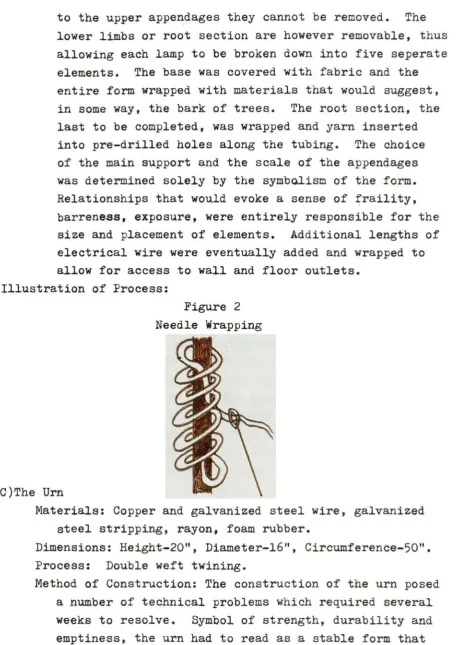
[image:20.552.52.523.77.723.2]Illustration of Process:
Figure 2
Needle
Wrapping
C)The Urn
Materials:
Copper and galvanized steel wire, galvanizedsteel stripping, rayon* foam rubber.
Dimensions:
Height-20", Diameter-16",
Circumference-50" .Process: Double weft twining.
Method of Construction: The construction of the urn posed
a number of technical problems which required several
weeks to resolve.
Symbol
of strength,durability
and13
at the same time evoked a sense of vacancy. What
ever structural system was chosen had to emphasize
the sense of support, while allowing space and light
to pass around and through the form. Materials that
could be shaped easily and that offered the greatest
degree of control had to be sought, and techniques
that were responsive to these materials analyzed.
After several
frustrating
attempts with a number ofmaterials and techniques that revealed which approaches
were viable, the means of construction became clear.
Various
basketry techniques,
historically
associatedwith the
building
of three dimensionalforms,
wereexplored, and the process which seemed in greatest
sympathy with my objectives chosen: double weft twin
ing. While this traditional technique supplied the
method of construction, traditional materials that
might compromise the form were abandoned in favor of
contemporary ones that would best
embody
it. Galvanized metal and copper wire were utilized in a study
which explored the potentials of these materials in
conjunction with the chosen technique. The study
convinced me that both the materials and technique
could be successfully employed in conveying the sym
bolism of the urn. A series of half-inch galvanized
metal strips were laid out in the traditional manner
for starting a circular basket form:
Figure
3
14
Copper
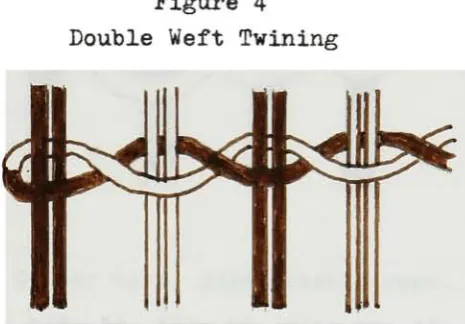
wire was then twined around the strips to thedesired width of the base.
(See
Figure4, below)
Thestrips were then bent upwards into the desired shape
and
temporarily
interwoven. The entire form was thentwined with the copper and galvanized wire to the
specified
height,
and the ends of the strips werefolded inward towards the center of the urn, and sand
wiched between two strips of foam which were then
wrapped together with rayon
Illustration of Process:
Figure
4
Double Weft
Twining
D)The Decanter
Materials: Galvanized steel, rat
tail,
cowhair, brass.Dimensions:
Height-15"
Diameter-3t"Circumference-11".
Process: Double weft twining. Soumak twining.
Method of Construction: While work on the urn was in pro
gress, I became aware that the same technique could be
utilized in constructing the decanter. A series of
galvanized strips were laid-out in a circular fashion
and twined with rattail. The strips were then bent
into shape and the
twining
continued up until the pointwhere the strips converged at the base of the neck.
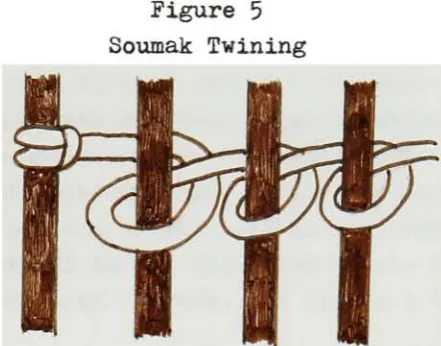
Soumak
twining
was then employed, creating the ribeffect evident in the upper portion of the
decanter,
to a point two inches beneath the rim. Instead of the
[image:22.552.161.394.276.438.2]15
the decanter was ended
by
wrapping the remainingportions of the strips and
bending
them around aprewrapped brass ring to the point where the twin
ing
stopped. Thetwining
was then resumed over thestrips up until the ring.
(See
Figure4
on page14)
Illustration of Process:
Figure
5
Soumak
Twining
E)The
ChalicesMaterials: Copper wire, gold elastic yarn.
Dimensions:
H"x 3",
ll"x5",
2i"x5",
3"x 3i".Process: Double weft twining.
Method of Construction: The chalices presented a fascin
ating challenge which involved two immediate concerns:
delicacy
and stability. After such approaches as crochet,
knetting,
wrapping and others were rejected, dueto
either functional or aesthetic reasons, a resolutionoccured purely
by
accident.Playing
with the copperscraps that remained from the urn, a method evolved
which was simple,
direct,
and which achieved thede*-sired effect. I had up until this time been
thinking
in additive terms: constructing a
base,
attaching
astem, and then adding a bowl. The scraps showed me
how the forms could be built in one continuous
length,
[image:23.552.161.382.200.373.2]16
that was built additively. A bundle of copper strips
was grouped together and wrapped in the middle to the
desired length of the stem. The bottom ends were
flared out into a circular base and twined. The upper
ends were spread into shape and
they
too were twined.The portions of copper that remained and which were
not covered
by fiber,
were turned and reinserted backinto the twined portions. The elastic fiber that was
used for the
twining
served a multiple purpose: itcould be pulled extremely tightly* and had the give
that was necessary for reinserting the copper ends,
it packed together well, thus providing for a con
sistent surface effect, and it reflected light which
was essential to the symbolism of the form.
(For
Illustration of
Process,
seeFigure
4 on page14)
F)The Candlestick
Materials:
Rattail,
brass rings, gold thread.Dimensions:
Height-5",
Base-4", Diameter-1",
Circumfer-ence-3"
.
Process: Split soumak twining.
Method of Construction: The candlestick, though not one
of the original forms in Death
Watch,
served to support the symbolism of the whole. While rummaging
through an antique shop I came across several pairs
of old candlesticks and was reminded of a
koan,
ormetaphysical riddle, that I had once read in an anthol
ogy on
Zen
Buddhism. The riddle concerned a Zen master who confronted a disciple with the question:
"where
does the flame of the candle go when it is blown out?"
The relation of the koan to my own work became immed
iately
clear, and the association of the extinguishedlight as a symbol of death obvious. It was not until
I happened upon a collection of brass rings that the
17
the resolution of structure. A group of rings of
various diameters would be built upon each other
and bound
by
successive strands of fiber. Aftersome experimentation with various materials and pro
cesses,! chose that fiber and technique which would
provide a delicate surface movement and which would
lock the rings
firmly
together,
thus providing asecure structure. I sought in the form an immediate
sense of energy and movement, a reflection of its
function as a carrier of light.
VThusly,
the fiberends, instead of
being
reinserted back into the candlestick
base,
were twined outward to a diameter of fourinches,
and the remaining lengths wrapped with goldthread and swirled around the form.
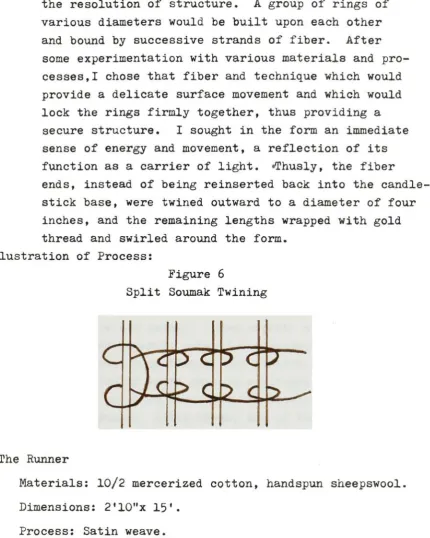
Illustration of Process:
Figure
6
Split Soumak
Twining
G)The Runner
Materials: 10/2 mercerized cotton, handspun sheepswool.
Dimensions: 2'10"x 15'.
Process: Satin weave.
Sett-20epi Threading-pointed twill
Reed-lOdent Tie-Up-1,4,7,2,5,8,3,6
[image:25.552.69.500.94.633.2]18
Method of Construction: The runner was woven on a
specialized instrument known as the
draw-loom;
socalled because of a mechanical apparatus that allows
individual warp threads to be raised
independently
of the weaving harnesses. The draw-loom consists of
thirty-three harnesses or
frames,
broken down intoa series of twenty-five back harnesses and eight front
harnesses. The bank of back harnesses is
hung by
cordssome distance behind the bank of front harnesses. Each
cord goes through a hole in the draw apparatus and ex
tends to the front of the loom where it ends in a
handle. When a back harness is pulled up, the handle
locks into a slot. The slots are arranged on a
wide-angled
V,
causing the farthest back harnesses to bepulled up more than the nearest ones. This gives an
even pattern shed at the reed. The front harnesses
carry the weave; the back harnesses carry the pattern.
When a back harness is raised all the warp threads on
that block are raised. When certain of the front har
nesses are
lowered,
some of the pattern harnesses arepulled
down,
thusbinding
the pattern to the weave.The particular weave that is exhibited in the runner
is known as satin weave and the resulting fabric is
called damask. Satin weave, one of the three basic
weaves, along with plain and
twill,
is characterizedby
the presence of spacedbinding
points, a systemwherein the warp and weft are bound together at reg
ular intervals. Satin is either warp-faced or
weft-faced. The figures of the design woven may be
weft-faced satin with a warp faced satin
background,
orwarp-faced satin with a weft-faced satin background.
In either case the cloth is reversible. What is
warp-faced on one side will be weft-faced on the reverse
side. The smooth surface of satin is produced
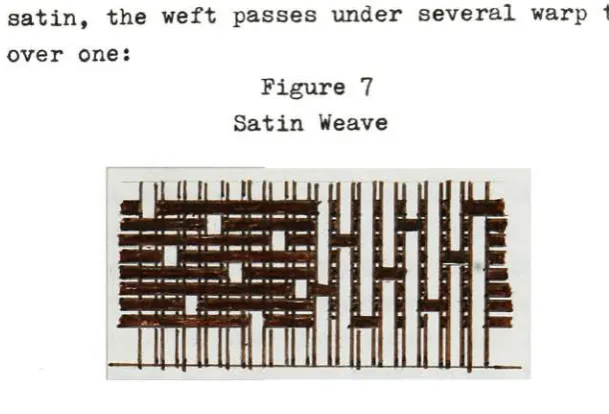
by
a19
floats. In weft-faced satin, the weft thread passes
over several warp threads and under one; in warp-faced
satin, the weft passes under several warp threads and
over one:
Figure
7
Satin Weave
to
_
The draw-loom was chosen because of the possibilities
it offered in creating graphic designs. I was pri
marily concerned with a design that was clear and
definitive and which portrayed in symbolic terms the
origin, growth and passing of life. It was this con
sideration which led me to the pointed twill and not
the straight repeat threading. A straight
threading
is one in which the harnesses are threaded in successive
order, a pointed
twill
threading
is one in which theharnesses are threaded to a point and then
inverted;
i.e. 123456787654321. A pointed twill forces the
weaver to think in terms of symmetry, since what is
woven on the right side of the twill will automatically
be repeated on the left. Although this is a limitation
in some ways, a
truly
graphic statement can be madewhich is free of a recognizable repeat, as regards the
vertical planes.
H)The Altar Table
Materials:
Iron,
cotton stripping, plywood, masonite, [image:27.552.104.409.127.334.2]20
Dimensions:
Height-4',
Diameter ofbase-3',
Diameter oftop-20",
Circumference of top-63".Process: Wrapping.
Method of Construction:
My
original intention was toconstruct the altar table in the same fashion as the
candlestick.
Using
lead coiling, I fashioned a continuous length of circular rings
by bending
the leadaround a tube about four inches in diameter. After
crocheting several rows of the rings
together,
itbecame apparent that the form contained neither the
aesthetic appeal or structural soundness which was
necessary. Several days passed and I began 'sketching'
with scraps of metal, a habit I had formed over the
previous two months, I knew that I wanted a simple,
elegant
form,
one that was reserved and which conveyed a sense of peace and stability. After many frus
trating
attempts an image of the tablefinally
emerged,and a scale model completed. The finished table is
fashioned from seven foot lengths of one-eighth
by
oneand one-half inch iron. At specified places the iron
was bent into shape, so that each element would serve
both as a base support and as an armature for support
ing
the top. Dueto
theinstability
of thelegs,
additional
lengths of iron had to be welded on at rightangles to provide additional support, and to prevent
the legs from 'giving'
when weight was applied. The
top
is constructed of masonite and plywood. Foursections, one-and-one-half inch wide and four inches
deep,
were cut in the masonite. The masonite was thensandwiched between two pieces of three-eighths inch
plywood, holes were drilled and countersunk from the
bottom,
and the three pieces fitted together with screws,The legs simply slide between the spaces in the mason
ite without the need of additional
fastening.
The legs21
and painted, and the edges tacked with material.
The bottom was then covered with felt and the mirror
c$mented into place.
I)
The
CaftanMaterials: Polyester crepe
Dimensions: Cut from
4^
yards of materialMethod of Construction: The caftan was fashioned and
22
CHAPTER III
EPILOGUE
My
work over the past year has been primarily concernedwith
developing
a language of form related to a specific stagein the evolution of human consciousness.
Growing
out of aninvolvement with comparative religion and various systems of
human
development,
my attention has been directed towardsexploring symbols and the means
by
which physical, psychic,and spiritual processes could be depicted!
Finding
in symbolsan integrated approach
by
which man's awareness can befocused,
and thus utilized in an Intelligent manner, my studies have
revealed certain essentials in
developing
a viable approachto education.
Centering,
or the gathering of energies into a focalpoint, is essential before any work can begin. To achieve
this state, the educator must take as his primary reference
'who*,
and not 'what' isbeing
taught. The subject of education is the subject
himself,
who is defined in terms ofthoughts, feelings,
ideas and relationships. Education thatbegins with an academic
discipline,
holding
the transmissionof that discipline above all else, is applied
learning,
aneffect without a cause.
Fostering
a mentality that istimid,
imitative and subservient to authority, applied education is
more concerned with systems than with human
life,
with answeringhow,
and not why actions are performed. A person in the positionof educator cannot
truly
understand the effects of his actionswithout first
developing
a sensetivity towards those he dealswith and an awareness of their needs.
True knowledge has no relation to memory or the recall of
previously learnt responses. Knowledge
is,
in essence, linkedto self-recognition and the spontaneous ability to receive what
is new in each moment. One can only reach new levels of aware
23
forces that inhibit a direct relationship with new and vital
experiences.
Knowledge,
in its truest sense, is a path ofliberation
from habit and routine, from purely mechanicalresponses, an awakening to
being
and a profound realizationof self and other.
It is this concern with the effects of educational prem
ises and methods, and the influences which
they
have upon humandevelopment,
which must be considered from the beginning. Onemust be able to 'sense'
the struggles and the barriers that pre
vent individual recognition before one can 'draw-out' and edu
cate nature.
Weaving,
like a number of crafts, presents uniqueopportunities to people involved in
them,
in apprehending themeaning of
time,
process, concentration and rhythm. It is withinthese realizations that self-recognition occurs and with it a
greater understanding of human dialogue. In the last analysis
it is the work, and only the work, which is the educator and
the instrument of knowledge.
The work will always reflect the state of mind of the cre
ator, and this reflection will in turn reveal the effect and
intention of the educator and the role played
by
his methods.If the educator is more concerned with
transferring
his ownreality and aesthetic sense, rather than
developing
the sensethat is inherent in the student's own nature, this too will
be revealed in the work. The ability to create vital works
is not fostered through direct influence or advice, but through
the educator's ability to awaken the student to his own movement.
Once this is achieved the educator has fulfilled his sole function.
Techniques,
thoughimportant,
are secondary to the artist'sgrasp of his own
being.
An impecable command oftechnique,
as iswell
known,
does not of necessity produce fine work, and yetthe opposite can hold true. When something is really vital and
moves us, we are not absorbed in an analysis of
techniques,
notwith how it was
done,
but with what it isdoing
to us.Techniques
are employed, adapted and invented according to need,
they
are not24
Like so much else, education must change and alter with
conditions, must constantly review its points of reference if it is to serve a fruitful purpose. In this respect no edu
cational system that is fixed in its attitudes or dispositions
can expect to survive. The fact that there is no method, no
approach and no system that can serve all in the same fashion
is reason to rely on an order that evolves from the educator-student relationship, an order that is vital and that grows
from dedication to a common aim: self knowledge.
My
desire to teach evolved from a dedication to the craft of weaving. The process taught me a great deal about the importance and character of attitude and intention on the creator's
part, the manner in which personal work is approached, the role
of frustration and anxiety,
involvement,
and the inter-relation betweenthought,
feeling
and action. It was these realizationswhich integrated for me, the meaning of creativity and creative
living,
and which broughtliving
and artistic endeavor into bal ance.Education,
in the highest social sense, has the sole objective of raising the student to a higher plane of awareness
than the educator, so that he in turn may better serve others and foster the evolution of the race. It is this awareness above all else to which I am now comitted, and which I seek to
25
iAPPENDIX A
ON THE SYMBOLISM OF COLOR
Colors,
ages of ManPeople First Age Second Third Fourth
Celtic white Greek yellow Hindu white Mexican white red white red yellow yellow red yellow red black black black black
Colors,
art of the OccidentPure or auspicious colors: black-grim
determination;
blue-constancy,
deity,
justice,
sky,truth;
green-fruitfulness, hope,
immortality,
life,
prosperity, vegetation; orange or gold-benevolence, earthly wisdom,
fire,
holy
spirit,hospitality,
marriage; pur ple-love oftruth, loyality,
martyrdom, royalty;red-blood,
love,
patriotism, valor; white-day, in nocence, perfection, purity; yellow or gold-divinity. highest values, sun, supreme wisdom.Impure or sinister colors: black-death,
despair,
evil,night, sin;
blue-discouragement; brown-barreness,
penitence,
renunciation, unfruitfulness,
winter;gray-barreness,
death,
despair,
penitence, renunciation, winter; green-envy,jealousy;
orange-devil, evil, malevolence; purple-mourning. regret; red-passion, war;
silver-night, moon; white-hypocrisy.
Colors.
Chinese ArtThey
have symbolic meaning only when in combination with one another. Black on red-happiness: black onyellow-re-ligiousness;
blue
on, black-evil spirit; blue on
white-devils'
colors; blue on yellow-old mourning; gold on black -old man's
death;
gold on red-specialhappiness;
gold onwhite-aristocracy: gold on yellow-imperialism. . . .
Colors,
formThe circle without corners represents the calm indwel
ling blue;
thehexagon,
although with angles, represents the energy yet peacefulness of yellow; the triangle with26
Colors,
the elements:Element China, Greek Hebrew
air yellow yellow
earth white blue wnite
fire red red red
water black green purple
Colors.
Freemasonry:Blue,
purple, scarlet, whiteColors,
music:The three primary colors are related "to the
1st,
3rd and5th intervals of which the so called first perfect chord is composed; to the vibrational power of the
key
of C red is assigned; yellow vibrates toE,
blue vibrates to G.Colors,
planets:Saturn-black
Jupiter-orange Iftars-red
Sun-gold Venus-yellow Mercury-blue Moon-silver
Colors,
the Christian trinity:Blue-God the
Father, heaven,
and the spirit of man; Red-theHoly
Ghost,
hell and thebody
of man;Yellow-the
Son,
earth and the mind of man." 10lOGertrude
Jobes,
Dictionary
ofMythology,
Folklore and27
APPENDIX B
ON THE SYMBOLISM OF FORMS
"...Flower:
derived from fleur-which yieldsliving
lord orfire;
emblematic of charity; a step in the searchfor the Sangraal(dish used at the last supper, in
it,
Joseph of Arimathea caught the bloodflowing
from the side of
Christ,
and it became a source offertility
and a test of purity) . Also symbolizesbeauty, birth,
creation,fruition,
mystery, regeneration, symmetry, frailty.
Tree:
Root
foundation,
producer, bearer.Tree:
Divine
assurance of renewal, law or spirit ofGod,
life and death.Beauty,
creation, fertility,
knowledge,
longevity,
organic unity,peace, power, resurrection, wisdom. Identical
with the prefix
tre,
the suffixtry,
and theword truth.
Tree with serpent coils: Biblical symbol of death. Tree stem:
Phallus,
universal axis.Tree of life:world
tree,
tree ofknowledge;
Hebrew emblem ofteaching,
Japanese symbol of themasculine principle. In Dionesian mythology symbol of creation and the birth of man.
Twin pillars:gateway of
life,
portals of eternity.In Egyptian antiquity the North pole of
day
andlight,
and the South pole of night ordarkness.
Urn: Symbol of
death,
female reproductive energy, lifesource,
fertility,
peace, purification. Caldron of plenty, container of sacredblood,
water or wine.Draped urn:
death,
mourningUrn
dripping
clear oil:Holy
life.Altar table:
Devotion,
sacrifice, worship, symbol of the creator,navel of the earth.
The Decanter:
Death,
fertility,
growth, humanfigure,
life source,light,
prayer, purification, wisdom, altar object,holder of ointment oils, sacrificial wine or sacred
28
Covered vase: one of the Buddhist eight glorious em
blems. Non-tantric symbol of one who has mastered yogic practices, signifying
treasury
of all desires.Crystal
vase: In northern European art signifies theimmaculate conception.
Four sided vase: The four noble Buddhist truths: 1. Suf
fering
exists from birth to old age, 2.Desire is the cause of suffering, 3.Freedom from suffering comesby
cessation of
desire,
4. Freedom from suffering is attained
by
virtuous living.Overflowing vase:Rain or the waters of life.
Six sided vase:
The
Chinese pao-ping, symbolizing perpetual harmony.
Transparent vase:Perfect unity of body.
Vase holding rod: Sexual union.
Vase with grapes:New wine.
Cups or Chalices:
Salvation,
wisdom, holder of water and wine,source of eternal life. Christian symbol of the
destiny
ofmankind, the Eucharist. In Greek and Hebrew tradition sym
bolizes the mystic union with the saving
God,
eternal life.Also symbolic of the bitter draught of death.
Broken cup:Broken life.
Cup
of clay:Life.Cup
of gold:The vulva, virginity, the Sangraal.Cup
with serpent :Poisin.Carpet Runner: Symbol of sovereignty.
The Casket:
Death,
rebirth,holy
place, asylum, salvation, sanctuary,
survival. Transporter of souls across the river ofdeath. Womb of the mother goddess.
Miscellaneous:
Mirror:
Destiny,
imagination,
prophecy, reflection, retrospection,
self examination, self realization,truth,
vanity. Fire or sun symbol. Believed to be a shield
which evil dare not
face,
thus wisdom, which is uhdefiledand has the brightness of everlasting life. The practice
of covering a mirror in a room with a corpse, is to pre
vent the corpse from
"looking
out"a comrade for itself
from among those present. Emblem of
divination,
revealerof the past, present and future. Al altar object sym
bolizing
light.Curtains:
Concealment,
protection, sky, veil before the hidden or inner room of God. 11
29
APPENDIX C
INCIDENTAL ESSAYS
ON TIME AND THE CREATIVE PROCESS
Time is the duration between experience, the dimension
of self reflection; experience, the absence of
duality
between subject and object, the dimension of self
forgetful-ness. In the act of direct experience, consciousness merges
with the field of perception and takes upon itself the reality
and
identity
of what is. No longer bound to the self centeredego with its conditioned mentality and free from the need to
pass judgement, without
hope,
belief,
or aspiration, consciousness lives in the moment of experience. Time begins in self
reflection and ends in self forgetfulness. Time has reality
only in relation to the finite ego struggling to become some
thing. Where consciousness maintains objectivity, i.e. exper
ience without evaluation, time ceases to have meaning.
In the creative act born of pure consciousness,
being
isprimary, in the creative act of egohood,
becoming
is primary.The
duality
betweenbeing
andbecoming
is the pivot of the creative process. Where the finished work is of prime importance
to the ego, process is the essential concern of consciousness.
Process in the creative act is the possibility of continual
transformation within the realm of
being,
the vulnerabilityof the psyche to immediate
influences,
the reality of existenceas itris revealed from moment to moment free of all attempts to
impose meaning or define structure. Where the mind is seeking
an end, where the object of creation is purposeful, the ego is
bound in
becoming,
of giving meaning to its own beliefs andperceptions.
In the act of creation through ego, self extension is the
root motivation, an attempt at giving the past complete domi
30
its reality is of the past, its movement the movement of mem
ory, its life the life of selected perceptions. The creative
work born of the ego is dated before its completion, and the
work only a reinforcement of a preconceived self identity.
The creative act of consciousness is born without effort,
without
thought,
it springs from the fact of its existence, isexistence itself. It is only in the act of ego that
despair,
conflict and frustration
live,
in the movement away from thepresent, in the attempt to escape the actual
by
pursuit of thepossible. Upon completion of the act the ego expands,
having
found
temporary
satisfaction, yet bound to repeat the act numberless times in order to re-live the sense of gratification.
Thus the movement of
despair,
time,
becoming
continues, andbeing
recedes further and further away, or is placed somewherein the future. Neither the creative act of consciousness or
of ego can be held up as the superior act, each reveals the re
ality of the creative mind and thus the possibility of its evo
lution;
to pass such judgement would be will an ideal world.The creative act of consciousness cannot be manifested in phy
sical
terms;
its art is metaphysical and beyond the sphere oftime,
not in the portrayal oflife,
but life itself. Aslang
uage is not the reality which it attempts to convey, so the work
is only a shadow of the actual. It is the grasping of what
is,
without
interference,
which offers thekey
to transformation andbeing. In the last analysis one cannot come "to
be",
one is.In summary: the creative act of consciousness is
being
itself,
is existence itself withouttime,
a statement of thatmoment of reality without pretense, a transcription of aware
ness without mind, an act without effort. The creative act of
ego is
becoming,
isduration,
is incomplete experience, thestatement of idea and purpose, the past memories and experience
of a finite mind, an act of will.
Ego exists as an object of consciousness, it is therefore
subservient to consciousness. Ego can be informed and directed
31
if it merges in the act of direct experience with consciousness.
This occurrence is self-transcendence, the union of the finite
with the infinite. Since this experience is without
time,
without
division,
and for that matter without a spectator, it canhardly
be expected to be portrayed. It is only when the egois '
shocked' in this way and again returns to temporal aware
ness, that experience of
being
can be approached. What resultsis a creative work which is
"informed",
which conveys the underlying
sympathy between self and cosmos; then the ego works throughthe awareness of its conditioned nature. Without the experience
of self oblivion, all acts of the ego are an attempt at
defining
being
rather than conveying it.At the end of all creation is the blank canvas, the empty
loom,
the death of art, man free from the instrument of expression,
being
the ultimate expression himself. The final liberation,paralleled
by
thefreeing
of the warp from theloom,
isthe primal state, a return to the origin, a state of infinite
possibility; emptiness is the underlying reality. As silence
exists at the root of all sound,and upon sound*
s passing is once
again seen to have always been
there,
so the instrument of cre ation in the preparation of warp, in the weaving, and in the32
GLOSSARY
Bobbin.
A small stick, card, special quill or tube on whichthread is wound.
Counterbalanced loom. A loom on which the heddles operate with cords revolving over rods or pulleys.
Damask. A reversible warp-faced satin pattern with weft faced
satin background.
Dent.
The
space betweenthe
teeth of the reed.Draft. There are several types of drafts: pattern draft-the
design;
chain draft-thethreading
plan forheddles;
lifting
draft,
pegdraft,
andtying-up
draft-terms fortying
harnesses totreadles;
weaving draft-order of manipulation of leversor treadles to make pattern.
Drawing In.
Entering
warp into heddle eyes.Draw Loom. Loom with multiple heddles for ornate pattern
weaving.
Eye or Eyelet. Center hole of heddle.
Float,
Warp
or weft may float or skip across thetop
of the weft or warp respectively.Harness. The frame which holds the
heddles.
Heddle.
String
loops or strips of metal,bone,
or wood containing
an eyelet through which the warp threads are strung.The
threading
of the heddles controls the pattern of thefabric.
Heddle
eyes. Holes or eyelets in heddles through which thewarp is passed.
Jack loom. A loom operated
by
a lever system; when the leveris pushed
down,
the harness is raised.Loom. A frame for weaving which is equipped with devices for
forming
sheds.Mercerized. Cotton thread treated with alkali under pressure
to
give a silky finish.33
Plain
weave. Alternate over-and-under weaving of weft,Reed. A frame containing
finely
spaced metal partitionsseperated
by
slits or dents through which the warp fiberspass and which, when battened against the newly thrown
weft,
firms
the fabric.Rising
shed loom. A jack loom.Satin. A weave characterized
by
pacedbinding
points or stitchers at regular intervals wherin the warp and weftare bound together.
Sett.
Number ofdents
to an inch in a reed.Shed. A space in the warp formed
by
raising up a heddleharness.
The space through which the shuttle is thrown.Shot.
A throw of the weft through the shed.Sinking shed loom. A counterbalanced loom.
Tabby
. Plain weaving with the same count of warp and weftto the inch.
Tabby
is also a term usedby
some weavers todenote the alternate throws of the foundation plain weave
which is placed between throws of pattern weft in overshot,
brocade,
and other weft-faced patterns, to preventlong
warpfloats.
Threading
draft, A graph pattern forthreading
the heddles.Threading the loom.
Threading
the warp into the heddle eyesand the dents.
Tie-up-draft. A pattern for
tying
up heddleharnesses,
lams,
treadles,
etc.Treadles. Foot pedal which control the operation of the heddle
harnesses on a foot-power loom.
Twill. A basic diagonal weave. Warps or wefts skip
two,
three,
four or five wefts or warps respectively.
Tying
up loom.Fastening
up heddle harness to treadles.Warp. The longitudinal yarns in the loom into which the cross
wise weft yarns are woven.
Warp faced. Fabric with closely spaced warps. Weft does not
show.
Warping block. A particular segment of the
threading
draft.34
Weaves.
A manner of manipulating the sheds to obtain a pattern,Web. The finished weaving, cloth.
Weft. The crosswise
filling
yarns; pick.Weft-faced.
Fabric with closely spaced wefts.Warp
does35
BIBLIOGRAPHY
Arnold,
Ruth,
Weaving on a Draw Loom.Massachusetts,
Arnold
Publications,
1956Birrell,
Verla. The Textile Arts. NewYork,
SchockenBooks,
1973
Castaneda,
Carlos. Journey toIxtlan.
NewYork,
Simonand
Schuster,
1972Cole,
R.V. The ArtisticAnatomy
ofTrees.
Philadelphia,
J.B. Lippincot and
Company,
1931Eliot,
T.S. The FourQuartets.
NewYork, Harcourt,
Braceand
World,
1943
Goldsmith,
Elisabeth. Ancient PaganSymbols.
NewYork,
Knickerbocker
Press,
1929.Gould,
Glen. PeriodLighting Fixtures.
NewYork,
Doddand
Mead,
1928Hindson, Alice,
DesignersDrawloom.
Boston,
T. BradfordCompany,
1958Jobes,
Gertrude.Dictionary
of Mythology. Folklore andSymbols. New
York,
ScarecrowPress,
1962Kapleau,
Philip. The Buddhist View of Death. The Wheel ofof
Death.
NewYork,
Harper andRowe,
1971Koch,
Rudolf. The Book of Signs. NewYork,
Dover Publications,
1955
Merton,
Thomas. TheWay
ofChuang Tzu.
NewYork,
New Directions,
1965
Price,
A.F. andMou-Lam,
Wong. The Diamond Sutra and TheSutra of Hui
Neng.
Berkeley,
Shambala Publications1961
Richards, M.C. Centering.
Connecticut,
WesleyanUniversity
Press,
1964
Rheims,
Maurice. TheFlowering
of ArtNouveau.
NewYork,
Harry
N.Abrams,
1970Wentz,
D.E. The Tibetian Book of theDead.
London,
OxfordUniversity Press,
1965
f
.^^^-^t^Sj ..pjjj^j. <