This is a repository copy of Modelling verbal aggression, physical aggression and inappropriate sexual behaviour after acquired brain injury.
White Rose Research Online URL for this paper: http://eprints.whiterose.ac.uk/95073/
Version: Submitted Version
Article:
James, Andrew I. W., Boehnke, Jan Rasmus orcid.org/0000-0003-0249-1870, Young, Andrew W. orcid.org/0000-0002-1202-6297 et al. (1 more author) (2015) Modelling verbal aggression, physical aggression and inappropriate sexual behaviour after acquired brain injury. Proceedings of the Royal Society B. ISSN 1471-2954
https://doi.org/10.1098/rspb.2015.0711
[email protected] https://eprints.whiterose.ac.uk/ Reuse
Items deposited in White Rose Research Online are protected by copyright, with all rights reserved unless indicated otherwise. They may be downloaded and/or printed for private study, or other acts as permitted by national copyright laws. The publisher or other rights holders may allow further reproduction and re-use of the full text version. This is indicated by the licence information on the White Rose Research Online record for the item.
Takedown
If you consider content in White Rose Research Online to be in breach of UK law, please notify us by
1 Modelling verbal aggression, physical aggression, and inappropriate
sexual behaviour after acquired brain injury
Andrew I. W. James1,2, Jan R. Bšhnke3,4, Andrew W. Young2, and Gary J.
Lewis2
1 Brain Injury Rehabilitation Trust, Leeds LS25 2HA, UK
2
Department of Psychology, University of York, York YO10 5DD, UK
3
Mental Health and Addictions Research Group, Hull York Medical School,
University of York, York YO10 5DD, UK
4
Department of Health Sciences, University of York, York YO10 5DD, UK
Author for correspondence:
A. James
2 Abstract
Understanding the underpinnings of behavioural disturbances following brain
injury is of considerable importance, but little at present is known about the
relationships between different types of behavioural disturbances. Here we
take a novel approach to this issue by using confirmatory factor analysis to
elucidate the architecture of verbal aggression, physical aggression, and
inappropriate sexual behaviour using systematic records made across an 8
week observation period for a large sample (n = 301) of individuals with a
range of brain injuries. This approach offers a powerful test of the architecture
of these behavioural disturbances by testing the fit between observed
behaviours and different theoretical models. We chose models that reflected
alternative theoretical perspectives based on generalised disinhibition (Model
1), a difference between aggression and inappropriate sexual behaviour
(Model 2), or on the idea that verbal aggression, physical aggression, and
inappropriate sexual behaviour reflect broadly distinct but correlated clinical
phenomena (Model 3). Model 3 provided the best fit to the data indicating that
these behaviours can be viewed as broadly distinct, but with some overlap.
These data are important both for developing models concerning the
architecture of behaviour as well as for clinical management in individuals with
brain injury.
Keywords:
Aggression, inappropriate sexual behaviour, brain injury, confirmatory factor
3 Introduction
Acts of aggression are of clear social concern, with significant costs
existing at both the economic (e.g. legal and prison costs) and the personal
(e.g. psychological scarring) level. Accordingly, understanding the
underpinnings of aggression is of considerable importance, yet little is known
about the relationship between different forms of aggressive and inappropriate
behaviours, especially in neuropsychological contexts. Here we take a novel
approach to this issue by exploring the architecture of behavioural
disturbances in a sample of individuals with brain injury through confirmatory
factor analysis. This approach provides a powerful window into the origins of
aggression for a number of reasons. First, acts of aggression in this
population are often significant in magnitude and frequency, moving our
analyses beyond the more commonly reported student or normal population
studies of aggression. Second, we were able to utilise a systematic and
detailed database of aggressive behaviours recorded as they occurred over
an 8 week observation period. Third, we investigated instances of
inappropriate sexual behaviours alongside verbal and physical aggression in
order to assess their links.
Disorders of behavioural regulation, including verbal aggression,
physical aggression, and inappropriate sexual behaviour, are problematic and
relatively common sequelae of severe acquired brain injury (1-7). While there
have been a number of studies investigating the nature and clinical correlates
of aggressive behaviours following brain injury (3, 8-13), only a handful have
4
addressed both aggressive and inappropriate sexual behaviours within the
same sample of patients, with mixed results to date concerning the
co-occurrence of these behaviours (7, 19, 20). Moreover, our previously reported
sample of 152 patients with brain injury (14) documented the only known
multivariate analysis of co-occurrence between aggression and inappropriate
sexual behaviour. In this study we found statistical distinctions between verbal
aggression, physical aggression, and inappropriate sexual behaviour based
on principal component analysis.
The limited work to date addressing the architecture of behavioural
disturbances following brain injury, alongside the broader benefits that
insights into the aetiology of aggression and inappropriate sexual behaviour
can bring to theory development, motivated the current study. To this end we
sought to examine an independent and larger sample of individuals with brain
injury in order to provide a more powerful test of the behavioural structure
through confirmatory factor analysis. This approach offers a rigorous and
hypothesis-driven examination of the relative merits of a given model of
observed behaviour compared to its competitor models, as well as an
absolute test of how well the model can explain observed data (15).
The three models we tested were chosen to closely reflect key
theoretical perspectives in the field. First, we fitted a model based on the
widely used neuropsychological concepts of disinhibition (16) or dysexecutive
syndrome (17). According to this perspective, the reason why most of us do
not usually show aggressive or inappropriate sexual behaviours in our daily
lives is that we are able to exercise a substantial degree of inhibitory control.
5
inhibitory control, or makes inhibition more effortful. Based on this line of
reasoning instances of verbal aggression, physical aggression, and sexually
inappropriate behaviour should covary, as they all reflect a common loss of
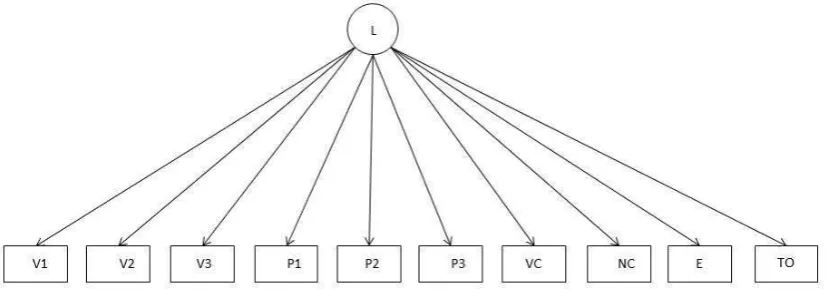
inhibitory control. Such a model, in its simplest form, would be represented by
a single common latent factor loading on each of the indicators of aggression
or sexual inappropriateness (see Figure 1a).
Our second model (see Figure 1b) was based on the common sense
distinction (evident in the words themselves) of a difference between
aggression and inappropriate sexual behaviour. From this perspective, verbal
and physical aggression should covary (both are instances of 'aggression',
even if one considers that physical aggression is the more severe) but they
will be broadly unrelated to inappropriate sexual behaviours (except perhaps
where these also involve aggression). Whilst we therefore separated these
factors in our second model, we also allowed them to correlate to some
degree, in line with work suggesting that they are likely to be at least modestly
correlated (14).
Our third theoretical model (see Figure 1c) was derived from these
earlier results (14) with principal component analysis of data from a smaller
and independent sample of 152 participants, in which we noted distinctions
between verbal aggression, physical aggression, and inappropriate sexual
behaviour following acquired brain injury that were interpreted to reflect
broadly distinct but correlated clinical phenomena.
6
To test these competing models we were fortunate to be able to draw
on a large database of systematically recorded instances of verbal
aggression, physical aggression, and inappropriate sexual behaviour
exhibited by 301 participants with severe acquired brain injury. The
participants had been admitted consecutively to a number of specialist
neurobehavioural rehabilitation centres across the UK. All incidents of these
behaviours over an 8-week assessment period were recorded as they
occurred by trained rehabilitation staff via specifically-designed psychometric
observational scales. This approach is a substantial advance over many other
studies investigating such behavioural disorders after brain injury, which are
typically forced to rely on judgments by health professionals (11, 18) and/or
patientsÕ families (3, 10, 13) that are often made some time after the incidents
in question. This introduces potential unwanted error arising from memory
biases and distortions and therefore represents a major limitation to such
studies. Frequency of occurrence and co-occurrence of different behaviours
may be underestimated, overestimated or missed altogether without a
contemporaneous method of recording (19). Systematic contemporaneous
recordings of the type we were able to use therefore constitute a gold
standard for this type of study.
The participants we studied had a number of different types of
precipitating brain injuries, and had been referred for residential assessment
for a variety of reasons that all centred on the likelihood of significant
neuropsychological sequelae. They can therefore be considered to represent
the full range of types of impairment that might affect behavioural regulation.
7
of these three major competing theoretical models detailed above best fitted
the patterns of disordered behaviour that were observed. In line with previous
work indicating that aggression contains both distinct and overlapping
components we predicted that a model characterised by such features (i.e.
Model 3) would provide the best fit to the data.
--- Insert Figure 1 about here ---
Method
Participants
Three hundred and one participants were recruited from a total pool of
admissions to seven organisational residential rehabilitation programmes
across the UK during the period January 2010 to June 2012. Two of the
programmes specialised in challenging behaviour while the remaining five
were classed as community re-integration (although one programme within a
local hospital ward was also considered sub-acute rather than post-acute).
Participants were included if they had completed at least 9 weeks of
residential neurobehavioural assessment, which included continuous
behavioural observation and recording.
Two hundred and thirty-five (78%) of the participants were male and 66
female. Age at admission, which was normally distributed, ranged from 16 to
76 years, with mean of 42.7 years and standard deviation of 14.6 years.
8
and leptokurtic, with a median value of 10 years. The majority of the sample
(93%) was identified as predominantly right-handed prior to their injury/illness.
Data regarding severity of injury were incomplete but indicative of
predominantly severe injuries. This is consistent with previous clinical
research (20, 21) in similar post-acute brain injury rehabilitation programmes
and with our previously reported sample (14). The most common diagnosis
was traumatic brain injury (56%), followed by cerebro-vascular accidents
(22%) and cerebral anoxia (11%). Other types of injuries or illnesses made up
11% of the sample and included infectious diseases (n = 16), cerebral tumour
(n = 6) and alcohol-related brain damage (n = 4).
The age at which the participants acquired their brain injuries or
illnesses ranged from 1 to 75 years and was normally distributed, with mean
age 39.7 years and standard deviation 16.8 years. The time between
injury/illness and admission to the rehabilitation programme ranged from 1
month to 636 months. These post-injury admission intervals were not normally
distributed, being positively skewed and leptokurtic with a median chronicity of
5.9 months.
Measures
Data were recorded across a continuous 9-week observation period
used as part of the assessment of each patient in the hospital rehabilitation
setting. To allow participants time to establish some kind of routine, data from
the first week of observation were not analysed, leaving records across an
8-week period for each of 301 participants. During this time, all instances of
9
inappropriate behaviours were recorded by trained staff immediately after they
were observed.
Aggressive behaviour was coded according to the Brain Injury
Rehabilitation Trust (BIRT) Aggression Rating Scale (BARS), which has
demonstrated good inter-rater reliability (22). The BARS codes aggression
into six categories reflecting the nature (verbal or physical) and severity (1, 2,
or 3) of each episode. Incidents of verbal aggression are scored as V1 for
non-directed, V2 for directed at another person or V3 for verbal threats.
Similarly, incidents of physical aggression are scored as P1 for non-directed,
P2 for damage to property and P3 for violence towards another person or
oneÕs self.
Episodes of inappropriate sexual behaviour were recorded by staff with
the St Andrews Sexual Behaviour Assessment Ð SASBA (23). This scale
consists of four categories of behaviour (Verbal Comments, VC; Non-Contact,
NC; Exposure, E; and Touching Others, TO) with four severity levels within
each category. This produces a matrix of 16 specific behaviour codes for
inappropriate sexual behaviour. Examples of behaviours categorised using
this system include: comments made directly to another person about their
genitals (VC3), beginning to masturbate in own bedroom without exposing
genitals when staff are present (NC3), intentionally exposing genitals to
another person (E3), touching another personÕs buttocks (TO3)
ParticipantsÕ behaviours were observed for the eight weeks of
assessment in order to obtain a baseline from which later clinical decisions
could be taken. For each participant, total frequencies of recorded incidents
10
behavioural variables, 6 of which came from the BARS (verbal aggression V1,
V2, V3; physical aggression P1, P2, P3) and 16 from the SASBA (verbal
comments VC1, VC2, VC3, VC4; non-contact NC1, NC2, NC3, NC4;
exposure E1, E2, E3, E4; touching others TO1, TO2, TO3, TO4). However, as
in our previous study (James & Young, 2013), each behavioural variable had
a highly non-normal distribution with an excess of zero counts. This was
particularly the case for most of the SASBA codes. In consequence, we
summed the SASBA data into the four categorical codes of verbal comments
(VC), non-contact (NC), exposure (E), and touching others (TO).
Analysis
All confirmatory factor models were fitted in R 3.1.2 (24) using mirt 1.8
(25). We used the Metropolis-Hastings Robbins-Monro hybrid algorithm for
estimation (26). To assess model fit we used the Baysian Information
Criterion Ð (BIC: (27), where lower values indicate more parsimonious fit in
model comparisons), the root mean squared error of approximation (RMSEA:
excellent fit < .05) and the comparative fit index (CFI: excellent fit > .95).
Results
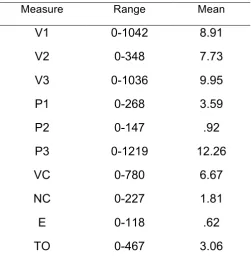
Ranges for all measures are available in Table 1. In brief, we observed
substantial variability across each of the measures, but with many scores at
zero or slightly above (median/mode = 0) for all variables.
11
Model Fitting
As detailed above, we tested a series of competing models (see
Figures 1 and 2). Model 1 was a common factor model with a single latent
factor loading on all of the indicators. Model 2 contained two correlated
common factors: the first for physical and verbal aggression and the second
for inappropriate sexual behaviour items. Model 3, our hypothesized model,
contained three correlated latent factors, with these factors loading on the
verbal aggression, physical aggression, and inappropriate sexual behaviour
indicators, respectively.
Due to the non-normality of the data we adopted a categorical
approach based on multidimensional item response theory (28) to fit our
theoretical models. The data were extremely right-skewed and each item of
the coding system had disproportionately many zero values. Although
alternative possibilities were considered (see Discussion), this categorical
approach has at least two key advantages: (1) categorisation makes it
possible to deal with both zero-inflated and right-skewed data; (2) categorising
and then analysing the data based on polychoric correlations neither assumes
that the categories are equidistant nor that the indicators are linearly related
(29), which allows for a better representation of data in the model. As such,
the data were re-coded into four categories: 0 instances of
aggression/inappropriate sexual behaviour over the 8 weeks = 0; 1 = 1; 2 to 4
= 2; 5 and above = 3. This coding scheme was deemed appropriate since it
ensured for all recoded variables at least 10 responses per category (only for
12
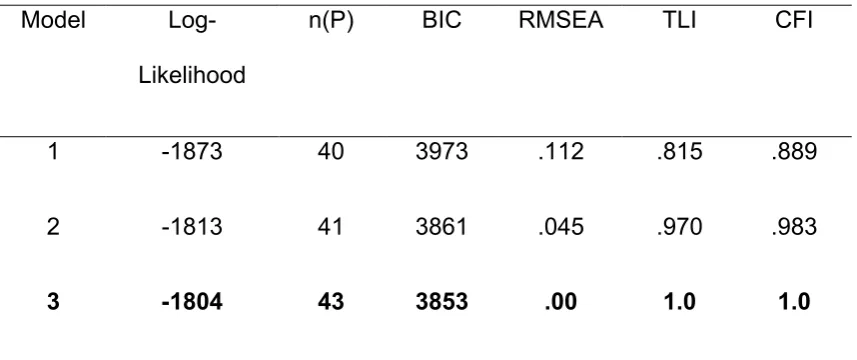
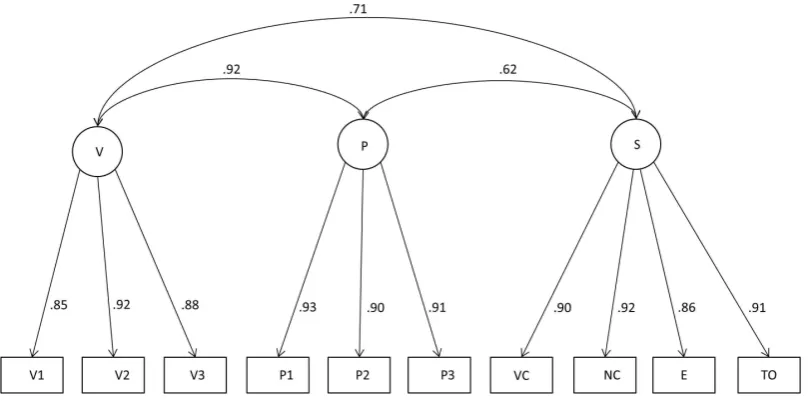
Model output is detailed in Table 2. Model 3 was the best fitting model
among the competing models and also provided an excellent absolute fit to
the data. All paths and inter-factor correlations were significant (< .01). The
final model (Model 3) is presented in Figure 2.
--- Insert Tables 2 and 3 about here ---
--- Insert Figure 2 about here ---
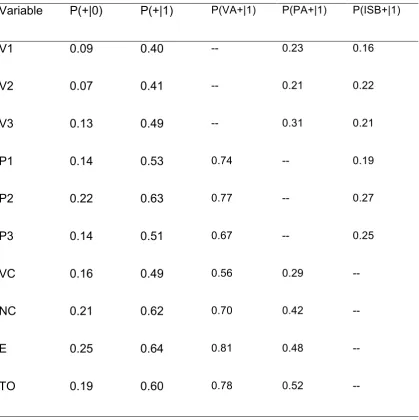
To facilitate clinical interpretation we conducted a complementary
analysis assessing the probability of displaying a given behaviour based on
another one having been reported. These results are detailed in Table 3. In
short these observations further illustrate how strong is the differentiation in
our sample between participants that show behavioural disturbance and those
that do not. As soon as any aggressive or sexually inappropriate behaviour is
recorded for a given patient, there is a probability of between .40 and .64 that
any other aggressive or sexually inappropriate behaviour will be observed as
well. Columns four to six of table 3 provide information on the predictive
power of the individual behaviours. Participants showing physical aggression
and inappropriate sexual behaviour are very likely to also show verbal
aggression (all P(verb+|1) > .50). The probabilities for the other two are
markedly lower; inappropriate sexual behaviour is particularly difficult to
predict from verbal and physical aggression.
13
The current study sought to test the factor structure of aggressive and
inappropriate sexual behaviours in a clinical sample. A model based on
considering physical aggressiveness, verbal aggressiveness and sexually
inappropriate behaviours as reflecting broadly distinct but correlated clinical
phenomena (Model 3) offered the best comparative fit to the data. Moreover,
this model also provided a good absolute fit to the data. These results, then,
indicate that these behaviours can be considered as distinct clinical
phenomena, although fairly substantial overlap is also apparent as
demonstrated by the sizeable inter-factor correlations. These findings suggest
that concepts of overall disinhibition or dysexecutive deficits may still be
appropriate, although it is clear that they are unable alone to provide a full
explanation of the covariation across these forms of aggressive and
sexually-inappropriate behaviour.
Importantly, this model was derived from our earlier results with
principal component analysis of a smaller independent sample of 152
brain-injured participants (14). The confirmatory factor analysis of a larger sample of
301 participants presented here therefore offers strong convergent evidence
of the modelÕs validity. In addition, the present study was able to draw on a
more sophisticated measure of sexually inappropriate behaviours (the
SASBA) than had been available in the prior study (20).
Some discussion is required with regards to our analytical approach in
light of the highly non-normal distribution of the data. We opted to use a
categorical analysis approach; however, we also considered alternative
approaches, including applying different transformations of the original count
14
Mahalanobis distances; (30)). While results differed in detail across these
transformations of the data, overall three factors always fitted the data better
than two-factor solutions. In contrast to our categorical analysis, however,
none of these approaches produced a satisfying level of absolute fit for any of
our theoretical models. The purpose of these transformations was to try to
accommodate the severe non-normality of the data, but it turned out that even
transformations of this kind were insufficient to normalise the data. As a
consequence, absolute fit indices Ð which are heavily dependent on normality
and linearity of the observed variables Ð will be negatively impacted, even
when an appropriate model is examined. As such this further confirms the
value of the categorical approach adopted here, which is free of these
assumptions (29).
As well as their implications for modelling and understanding what are
usually considered challenging behaviours, the findings have two substantial
clinical implications. First, these results provide support for assessing and
formulating these behaviours separately within the context of behavioural
management in individuals with acquired brain injury. This is consistent with
previously reported analyses (7, 31) showing differing maintaining factors and
environmental triggers for aggression and inappropriate sexual behaviour
after brain injury. A recent intervention case study (32) also documented the
specificity of treatment effects for inappropriate sexual behaviour in a young
man following severe traumatic brain injury.
Second, the results of our complementary analyses presented in Table
3 provide information concerning the relative risk of individuals demonstrating
15
been observed. This will be of considerable use to clinicians undertaking risk
assessments for admission of individuals with challenging behaviour into
residential facilities. For example, individuals demonstrating verbal aggression
have a relatively low likelihood of also exhibiting physical aggression or
inappropriate sexual behaviour. Conversely, individuals demonstrating
physical aggression are likely to also exhibit verbal aggression but not
inappropriate sexual behaviour. For those individuals displaying inappropriate
sexual behaviour, there is also a relatively high risk of exhibiting verbal
aggression. The risk of also exhibiting physical aggression is lower, although
it becomes higher with the more severe forms of observed inappropriate
sexual behaviour. Specifically, the risk of any physical aggression with the
lowest level of inappropriate sexual behaviour (through verbal comments) is
relatively low (0.29) but steadily increases with the severity of inappropriate
sexual behaviour, so that physical aggression in the context of sexually
inappropriately touching others becomes more likely than not (0.52).
In summary, here we find evidence for dissociable yet correlated
components of verbal aggression, physical aggression, and inappropriate
sexual behaviours using systematic records made across an 8 week
observation period for a large clinical sample of adults with severe brain
injuries. Complementary analyses demonstrated that, when a particular
behaviour had been observed, the probability of another form of aggressive or
16 Ethics. Ethics approval for this study was granted by the University of York
and The Disabilities Trust. As this was an archival study of routine clinical
data, participants were not required to provide informed consent.
Data accessibility. Raw and categorised behavioural data can be found
hereÉ
Competing interests. We have no competing interests.
AuthorsÕ contributions. AJ conceived of the study, collected the behavioural
data; JB conducted the statistical analyses; AY coordinated the study; GL
participated in the statistical analyses. All authors helped draft the manuscript
17
Table 1. Descriptive statistics from the sample for indices of aggression from
BARS (verbal aggression V1, V2, V3; physical aggression P1, P2, P3) and
sexually inappropriate behaviours from SASBA (verbal comments VC;
non-contact NC; exposure E; touching others TO).
Measure Range Mean
V1 0-1042 8.91
V2 0-348 7.73
V3 0-1036 9.95
P1 0-268 3.59
P2 0-147 .92
P3 0-1219 12.26
VC 0-780 6.67
NC 0-227 1.81
E 0-118 .62
TO 0-467 3.06
18
Table 2. Fit statistics for theoretical models
Model
Log-Likelihood
n(P) BIC RMSEA TLI CFI
1 -1873 40 3973 .112 .815 .889
2 -1813 41 3861 .045 .970 .983
3 -1804 43 3853 .00 1.0 1.0
Note. Bold = best fitting model; CFI = comparative fit index; TLI =
Tucker-Lewis index; n(P) = number of parameters; RMSEA = root mean squared
19
Table 3. Probability of observing aggression or inappropriate sexual
inappropriate behaviour in the absence/presence of other forms of aggression
or inappropriate sexual behaviour.
Variable P(+|0) P(+|1) P(VA+|1) P(PA+|1) P(ISB+|1)
V1 0.09 0.40 -- 0.23 0.16
V2 0.07 0.41 -- 0.21 0.22
V3 0.13 0.49 -- 0.31 0.21
P1 0.14 0.53 0.74 -- 0.19
P2 0.22 0.63 0.77 -- 0.27
P3 0.14 0.51 0.67 -- 0.25
VC 0.16 0.49 0.56 0.29 --
NC 0.21 0.62 0.70 0.42 --
E 0.25 0.64 0.81 0.48 --
TO 0.19 0.60 0.78 0.52 --
Note. P(+|0) = the probability of at least one incident of aggressive or sexually
inappropriate behaviour if no incidents are reported for the variable in
question; P(+|1) = the probability of at least one incident of aggressive or
20
variable in question; P(VA+|1) = the probability of at least one incident of
verbal aggressive behaviour if one or more incidents are reported for the
variable in question; P(PA+|1) = the probability of at least one incident of
physical aggressive behaviour if one or more incidents are reported for the
variable in question; P(ISB+|1) = the probability of at least one incident of
sexually inappropriate behaviour if one or more incidents are reported for the
21
Figure 1. Graphical representation of Models 1, 2, and 3
a)
Model 1. Single common factor model in which indices of verbal aggression
(V1, V2, V3) physical aggression (P1, P2, P3) and inappropriate sexual
behaviours (verbal comments VC, non-contact NC, exposure E, touching
others TO) are all related to a common latent variable (L), as might be
expected from concepts such as disinhibition or dysexecutive syndrome.
b)
Model 2. Two distinct but correlated factors model based on an aggression
(A) factor (verbal aggression V1, V2, V3; physical aggression P1, P2, P3) and
a second inappropriate sexual behaviour (S) factor (verbal comments VC,
23
c)
Model 3. Three distinct but correlated factors model based on a verbal
aggression (V) factor (V1, V2, V3), a physical aggression (P) factor (P1, P2,
P3), and an inappropriate sexual behaviour (S) factor (verbal comments VC,
24
Figure 2. Final best fitting model (Model 3) based on an inter-correlated verbal
aggression (V) factor (V1, V2, V3), a physical aggression (P) factor (P1, P2,
P3), and an inappropriate sexual behaviour (S) factor (verbal comments VC,
25 References
1. Baguley IJ, Cooper J, Felmingham K. Aggressive behavior following traumatic brain injury: how common is common? Journal of Head Trauma Rehabilitation. 2006 Jan-Feb;21(1):45-56. PubMed PMID: 16456391. Epub 2006/02/04. eng.
2. Johnson R, Balleny H. Behaviour problems after brain injury: incidence and need for treatment. Clinical Rehabilitation. 1996;10(2):173-80.
3. Kelly G, Brown S, Todd J, Kremer P. Challenging behaviour profiles of people with acquired brain injury living in community settings. Brain Injury. 2008 Jun;22(6):457-70. PubMed PMID: 18465387. Epub 2008/05/10. eng. 4. McKinlay WW, Brooks DN, Bond MR, Martinage DP, Marshall MM. The short-term outcome of severe blunt head injury as reported by relatives of the injured persons. Journal of Neurology, Neurosurgery and Psychiatry. 1981 Jun;44(6):527-33. PubMed PMID: 7276967. Epub 1981/06/01. eng.
5. Rao V, Rosenberg P, Bertrand M, Salehinia S, Spiro J, Vaishnavi S, et al. Aggression after traumatic brain injury: prevalence and correlates. Journal of Neuropsychiatry and Clinical Neurosciences. 2009 Fall;21(4):420-9.
PubMed PMID: 19996251. Epub 2009/12/10. eng.
6. Sabaz M, Simpson GK, Walker AJ, Rogers JM, Gillis I, Strettles B. Prevalence, Comorbidities, and Correlates of Challenging Behavior Among Community-Dwelling Adults With Severe Traumatic Brain Injury: A Multicenter Study. J Head Trauma Rehabil. 2013 May 1. PubMed PMID: 23640541. 7. Simpson GK, Sabaz M, Daher M. Prevalence, clinical features, and correlates of inappropriate sexual behavior after traumatic brain injury: a multicenter study. Journal of Head Trauma Rehabilitation. 2013 May-Jun;28(3):202-10. PubMed PMID: 23661072.
8. Alderman N. Prevalence, characteristics and causes of aggressive behaviour observed within a neurobehavioural rehabilitation service: predictors and implications for management. Brain Injury. 2007 Aug;21(9):891-911. PubMed PMID: 17729043. eng.
9. Alderman N, Knight C, Henman C. Aggressive behaviour observed within a neurobehavioural rehabilitation service: utility of the OAS-MNR in clinical audit and applied research. Brain Injury. 2002 Jun;16(6):469-89. PubMed PMID: 12119083.
10. Greve KW, Sherwin E, Stanford MS, Mathias C, Love J, Ramzinski P. Personality and neurocognitive correlates of impulsive aggression in long-term survivors of severe traumatic brain injury. Brain Injury. 2001
Mar;15(3):255-62. PubMed PMID: 11260773. Epub 2001/03/22. eng. 11. Kerr K, Oram J, Tinson H, Shum D. The correlates of aggression in people with acquired brain injury: a preliminary retrospective study. Brain Injury. 2011;25(7-8):729-41. PubMed PMID: 21561292. Epub 2011/05/13. eng.
26
13. Wood RL, Liossi C. Neuropsychological and neurobehavioral correlates of aggression following traumatic brain injury. Journal of
Neuropsychiatry and Clinical Neuroscience. 2006 Summer;18(3):333-41. PubMed PMID: 16963582. Epub 2006/09/12. eng.
14. James AI, Young AW. Clinical correlates of verbal aggression, physical aggression and inappropriate sexual behaviour after brain injury. Brain Injury. 2013;27(10):1162-72. PubMed PMID: 23909644.
15. Bollen KA. Structural Equations with Latent Variables. New York: Wiley; 1989.
16. Wood RL. Understanding neurobehavioral disability. In: Wood RL, McMillan T, editors. Neurobehavioral disability and social handicap after traumatic brain injury. East Sussex: Psychology Press; 2001.
17. Baddeley AD. Working memory. Oxford: Clarendon Press; 1986. 18. Simpson G, Blaszczynski A, Hodgkinson A. Sex offending as a psychosocial sequela of traumatic brain injury. Journal of Head Trauma Rehabilitation. 1999 Dec;14(6):567-80. PubMed PMID: 10671702. Epub 2000/02/15. eng.
19. Iverson GL, Hughes R. Monitoring aggression and problem behaviors in inpatient neuropsychiatric units. Psychiatric Services. 2000 Aug;51(8):1040-2. PubMed PMID: 10913459. Epub 2000/07/29. eng.
20. Braunling-McMorrow D, Dollinger SJ, Gould M, Neumann T,
Heiligenthal R. Outcomes of post-acute rehabilitation for persons with brain injury. Brain Injury. 2010;24(7-8):928-38. PubMed PMID: 20545448. Epub 2010/06/16. eng.
21. Glenn MB, Rotman M, Goldstein R, Selleck EA. Characteristics of residential community integration programs for adults with brain injury. Journal of Head Trauma Rehabilitation. 2005 Sep-Oct;20(5):393-401. PubMed PMID: 16170248. Epub 2005/09/20. eng.
22. Freeland JC, Corker T, Heritage T, James AIW. Inter-rater reliability of the BIRT Aggression Rating Scale (BARS) among neurorehabilitation staff following video-based training. Manuscript submitted for publication. 2015. 23. Knight C, Alderman N, Johnson C, Green S, Birkett-Swan L, Yorstan G. The St Andrew's Sexual Behaviour Assessment (SASBA): development of a standardised recording instrument for the measurement and assessment of challenging sexual behaviour in people with progressive and acquired
neurological impairment. Neuropsychological Rehabilitation. 2008 Apr;18(2):129-59. PubMed PMID: 18350412. Epub 2008/03/20. eng.
24. Team RC. R: A Language and Environment for Statistical Computing. Vienna, Austria: R Foundation for Statistical Computing; 2014.
25. Chalmers RP. mirt: A Multidimensional Item Response Theory
Package for the R Environment. Journal of Statistical Software. 2012;48(6):1-29.
26. Chalmers RP. Maximum-likelihood estimation of noncompensatory IRT models with the MH-RH algorithm. Applied Psychological Measurement. 2014;38(5):339-58.
27. Schwarz G. Estimated the dimension of a model. The Annals of Statistics. 1978;6(2):461-4.
27
29. Wirth RJ, Edwards MC. Item factor analysis: current approaches and future directions. Psychological methods. 2007 Mar;12(1):58-79. PubMed PMID: 17402812. Pubmed Central PMCID: 3162326.
30. Fidell LS. Using Multivariate Statistics. New York: Pearson; 2007. 31. Stewart I, Knight C, Alderman N, Haywad L. Inappropriate sexual behaviour observed within an older adult service: the use of the St Andrew's Sexual Behaviour Assessment (SASBA) in formulation, intervention and outcome. PSIGE Newsletter. 2010;110:62-72.
32. Kelly G, Simpson G. Remediating serious inappropriate sexual
behaviour in a male with severe acquired brain injury. Sexuality and Disability. 2011;29:313-27.