ISSN Online: 2165-3380 ISSN Print: 2165-3372
DOI: 10.4236/ojmm.2018.82003 Jun. 29, 2018 26 Open Journal of Medical Microbiology
Diagnostic Test Validity of Oxacillin Screen
Agar for the Detection of Methicillin Resistant
Staphylococcus aureus
Hafiza Sultana
1*, Md. Abdullah Yusuf
2, Jogendra Nath Sarker
3,
Md. Tofael Hossain Bhuiyan
4, Shirin Tarafder
51Department of Microbiology, Rangpur Medical College, Rangpur, Bangladesh
2Department of Microbiology, National Institute of Neurosciences & Hospital, Dhaka, Bangladesh 3Department of Microbiology, Dinajpur Medical College, Dinajpur, Bangladesh
4Department of Neurosurgery, Rangpur Medical College Hospital, Rangpur, Bangladesh
5Department of Microbiology & Immunology, Bangabandhu Sheikh Mujib Medical University, Dhaka, Bangladesh
Abstract
Background: Detection of Methicillin Resistant Staphylococcus aureus may vary in phenotypic and genotypic methods. Objective: The aim of this present study was to validate the oxacillin screen agar test for the detection of methi-cillin-resistant Staphylococcus aureus isolated from clinical specimens. Me-thodology: This cross-sectional study was planned to carry out in the De-partment of Microbiology and Immunology at Bangabandhu Sheikh Mujib Medical University, Dhaka from January, 2010 to December, 2010 for a period of one (01) year. Different clinical specimens were collected from the patients presented with infections at anybody sites. Isolation and identification of Sta-phylococcus aureus (S. aureus) were performed by staining, culture and bio-chemical tests. Oxacillin screen agar test was performed to detect the methicil-lin-resistant Staphylococcus aureus. PCR was performed for detection of the mecA gene for MRSA. Result: Out of the 22 suspected MRSA isolates 19 were mecA positive by PCR. The sensitivity and specificity of oxacillin screen agar were 100.0% (95% CI 82.3 to 100.0%) and 33.3% (95% CI 24.0 to 90.6%) re-spectively. The positive predictive value and negative predictive value of oxa-cillin screen agar test were 90.5% (95% CI 81.0 to 95.5%) and 100.0% (95% CI 20.6 to 100.0%) respectively. The accuracy of the oxacillin screen agar test was 90.9% (95% CI 71.7 to 96.3%). Conclusion: In conclusion oxacillin screen agar test has high sensitivity with low specificity for the detection of MRSA.
Keywords
Validity Test, Cefoxitin Disc Diffusion Test, Methicillin-Resistant,
How to cite this paper: Sultana, H., Yusuf, Md.A., Sarker, J.N., Bhuiyan, Md.T.H. and Tarafder, S. (2018) Diagnostic Test Validity of Oxacillin Screen Agar for the Detection of Methicillin Resistant Staphylococcus aureus. Open Journal of Medical Microbi-ology, 8, 26-33.
https://doi.org/10.4236/ojmm.2018.82003 Received: February 7, 2018
Accepted: June 26, 2018 Published: June 29, 2018 Copyright © 2018 by authors and Scientific Research Publishing Inc. This work is licensed under the Creative Commons Attribution International License (CC BY 4.0).
http://creativecommons.org/licenses/by/4.0/
DOI: 10.4236/ojmm.2018.82003 27 Open Journal of Medical Microbiology Staphylococcus aureus
1. Introduction
The prevalence of MRSA among clinical isolates varies from country to country and from institution to institution [1]. In Bangladesh, a multi-centre study [2]
shows the rate of isolation of MRSA from hospital patients ranged between 32 to 63%. Study by Zahan et al. [3] reported that, 15 (37.5%) out of 40 isolated S. au-reus strains were MRSA by oxacillin disc diffusion and agar dilution method but by PCR 10 (25%) strains yielded mecA gene. These data show that screening of the suspected MRSA strain by oxacillin disc diffusion does not coincide with PCR closely which needs further study to find out other antibiotic or method which can be more reliable as a screening test.
The Clinical and Laboratory Standard Institute has recommended cefoxitin disc diffusion method for the detection of MRSA for primary screening [4]. Multiple reports on the use of cefoxitin as an accurate surrogate marker for de-tection of mecA-gene-mediated methicillin resistance have been published. Among them Anand et al. [5] reported a comparative result of 50 S. aureus isolates using oxacillin screening agar and PCR which shows 100% agreement between PCR while 96.8% with oxacillin agar screen. Similarly, Mathew et al. [6] published their report on 610 strains of S. aureus. As seen here, out of 228 isolates of MRSA, mecA gene was positive in only 20 (3.2%) cases which was confirmed by PCR. This discrepancy encourages a need for further study with oxacillin screen agar test to come to a conclusion. Batista et al. [7] reported another comparative study of 53 clinical isolates of S. aureus using VITEK-2 system, oxacillin screen agar test and PCR which shows oxacillin screen agar method fails to detect some MRSA population due to its heterogenous resistance. Therefore, this present study was undertaken to detect the MRSA by oxacillin screen agar method and to com-pare it with PCR for the detection of mecA gene for MRSA.
2. Methodology
Sta-DOI: 10.4236/ojmm.2018.82003 28 Open Journal of Medical Microbiology phylococcus species and were confirmed by Gram staining, colony morphology, haemolytic status, pigment production, mannitol fermentation test, motility test (MIU) and other relevant biochemical tests like catalase test, coagulase test both slide and tube test as per standard procedure [8]. In this study, screening for MRSA was done by oxacillin and oxacillin screening agar [6]. In case of oxacillin the diameter of zone of inhibition ≤ 10 mm was taken as resistant [9]. Conven-tional PCR was performed to detect mecA gene of 22 suspected S. aureus strains resistant to oxacillin by disc diffusion method at the Molecular Laboratory in the Department of Microbiology and National Forensic DNA Profiling Laboratory of Dhaka Medical College, Dhaka. Methicillin-resistant S. aureus (MRSA) strain [ATCC 43300] were used as positive control. PCR for mecA gene detection were performed by formation of bacterial pellet, DNA extraction, preparation of reac-tion mixture (25µl) and running in thermo cycler. Primers used for detecreac-tion of the mecA gene producing a 309-bp amplicon were as follows:
mecA1-F-5' TGGCTATCGTGTCACAATCG 3' (positions 885 to 905) and mecA2-R-5' CTGGAACTTGTTGAGCAGAG 3' (positions 1174 to 1194) PCR reactions were performed in a thermocycler under the following condi-tions: initial denaturation for 10 minutes at 94˚C followed by 30 cycles at 94˚C for 1 minute, at 54˚C for 1 minute, then at 72˚C for 1 minute. Final extension was for 7 minutes at 72˚C. Mixed the amplicon and ladder with dye (4-5:1 ratio). Then pipetting and dispensing were done onto the wells on gel made by comb. Start the gel electrophoresis at 100 volt for 60 minutes until the end of the reac-tion indicated by orange color advancement was over. Ethidium bromide (7.5 µl) mixed with distilled water (100 ml). Gel was placed in this mixture for 30 mi-nutes staining. Again destaining done in pure water for 20 mimi-nutes. The des-tained gel was placed on UV transilluminator and observed for the presence of DNA bands. Gels were visualized and photographed under ultraviolet illumina-tion. Precautions were taken to prevent the samples from being contaminated by each other or by the skin of laboratory personnel.
3. Results
DOI: 10.4236/ojmm.2018.82003 29 Open Journal of Medical Microbiology
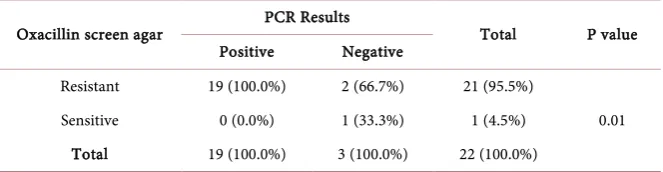
Table 1. Comparison of oxacillin screen agar with PCR results on suspected MRSA iso-lates (n = 22).
Oxacillin screen agar PCR Results Total P value Positive Negative
Resistant 19 (100.0%) 2 (66.7%) 21 (95.5%)
0.01 Sensitive 0 (0.0%) 1 (33.3%) 1 (4.5%)
Total 19 (100.0%) 3 (100.0%) 22 (100.0%)
The sensitivity and specificity of oxacillin screen agar were 100.0% (95% CI 82.3% to 100.0%) and 33.3% (95% CI 24.0% to 90.6%) respectively. The positive predictive value and negative predictive value of oxacillin screen agar test were 90.5% (95% CI 81.0% to 95.5%) and 100.0% (95% CI 20.6% to 100.0%) respec-tively. The accuracy of the oxacillin screen agar test was 90.9% (95% CI 71.7% to 96.3%) (Table 2).
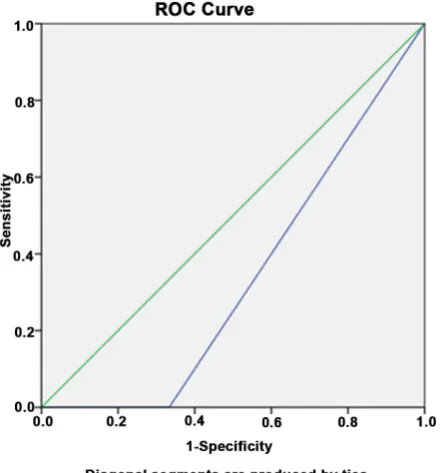
The receiver operative characteristics (ROC) curve was calculated and had found that the value of area under the curve (AUC) was low which was 0.33 with a 95% CI 0.0001 to 0.727 (p = 0.363) (Figure 1).
4. Discussion
The methods that stand out among the most utilized or best capable in the iden-tification of methicillin-resistant Staphylococcus aureus (MRSA) are agar dilu-tion method, disk diffusion, screening on agar with methicillin, automated me-thods (Microscan, Vitek), latex agglutination and the molecular method using PCR for the detection of the gene mecA [8] The polymerase chain reaction in real time (RT-PCR) was described as a useful PCR-based diagnostic tool [9][10]. Approximately 20.0% of healthy persons are persistent carriers of S. aureus and 60 percent are intermittent carriers. Colonization rates are increased in haemodialysis patients, illicit injecting drug users, surgical patients and patients with insulin dependence or poorly controlled diabetes [11]. Healthcare asso-ciated infection are leading causes of morbidity & mortality [12] and the man-agement of all these condition has been critically compromised by the appear-ance & rapid spread of antimicrobial resistappear-ance among the organisms floating in the hospital. Therefore, the importance of MRSA detection especially for
Table 2. Diagnostic test validity of oxacillin screen agar in diagnosis of MRSA.
Variables Values 95% CI Sensitivity 100.0% 82.3% to 100.0% Specificity 33.3% 24.0% to 90.6%
PPV 90.5% 81.0% to 95.5% NPV 100.0% 20.6% to 100.0% Accuracy 90.9% 71.7% to 96.3%
[image:4.595.208.539.610.710.2]DOI: 10.4236/ojmm.2018.82003 30 Open Journal of Medical Microbiology
Figure 1. ROC curve with the value of area under the curve (value = 0.333, 95% CI 0.0001 to 0.727; p value = 0.363).
therapeutic & epidemiological purpose is an acute need. Hence, the methods used to detect MRSA in clinical samples should have high sensitivity and speci-ficity and most importantly the result should be available within a short time
[13].
In this study, the number of suspected MRSA isolates by phenotypic methods was 22. Of these suspected cases 21 (95.5%) were detected MRSA by oxacillin screen agar while it was 19 (86.4%) by PCR for mecA gene. Identification of the mecA gene is the most reliable method of detecting MRSA isolates, however not all laboratories can include molecular biology techniques in their routine clinical practice. For this reason, it is essential that phenotypic techniques able to detect MRSA isolates in a rapid and accurate manner are made available, in order to ensure correct antibiotic treatment and to avoid the spread of MRSA isolates in the hospital environment.
de-DOI: 10.4236/ojmm.2018.82003 31 Open Journal of Medical Microbiology tection of mecA gene-positive isolates. Oxacillin agar screen methods were found to be more sensitive than oxacillin disc-diffusion methods which were not with the similar statement with our study.
Various other studies conducted in Bangladesh indicate an increasing trend of MRSA all over the country. A multi-center study involving four divisional hos-pitals reported a MRSA rate range between 32% to 63.0% [2]. Study on patients of DMCH by Afroz [9], from NITOR (National institute of Traumatology and orthopedics Rehabilitation) and by Jahan et al. [4] reported a very high preva-lence of MRSA which were 70.2% and 83.3% respectively. Such a high rate may be due to the specimen from post-operative wounds where the nosocomial in-fection is common. Other reasons may be small size of sample, severity of illness of the cases and the most important being that the above studies were based on susceptibility testing not confirmed by PCR. It seems that susceptibility testing for MRSA by oxacillin should only be treated as a screening test as Zahan et al.
[3] reported 25% MRSA by PCR while it was 37.5% by oxacillin susceptibility testing from Mymensingh Medical College. Therefore, it is the time to take ne-cessary measures to prevent the spread of MRSA by proper antibiotic policy, preventing nosocomial infection and proper detection and treatment of MRSA cases.
The present study indicates that the rate of MRSA among patients is moderate (15.8%) in nature. The laboratory technique that is evaluated in this study, the sensitivity and specificity of oxacillin screen agar varies from PCR which means it is highly sensitive but low specificity and may be helpful tool in the diagnosis of MRSA infection. In addition to that as MRSA were highly resistant to com-mon antimicrobial agents accurate detection is very important [13]. Therefore, it is necessary that antimicrobial susceptibility test on all MRSA isolates should be done to promote the rationale use of drugs and combat spread of MRSA.
AUC is an effective way to summarize the overall diagnostic accuracy of the test. It takes values from 0 to 1, where a value of 0 indicates a perfectly inaccu-rate test and a value of 1 reflects a perfectly accuinaccu-rate test. AUC can be computed using the trapezoidal rule [12]. In general, an AUC of 0.5 suggests no discrimi-nation which indicates that the ability to diagnose patients with and without the disease or condition based on the test; 0.7 to 0.8 is considered acceptable, 0.8 to 0.9 is considered excellent, and more than 0.9 is considered outstanding. A value of 0.5 for AUC indicates that the ROC curve will fall on the diagonal that is 45-degree line and hence suggests that the diagnostic test has no discriminatory ability [13]. ROC curves above this diagonal line are considered to have reasona-ble discriminating ability to diagnose patients with and without the dis-ease/condition. It is therefore natural to do a hypothesis test to evaluate whether the AUC differs significantly from 0.5.
5. Conclusion
DOI: 10.4236/ojmm.2018.82003 32 Open Journal of Medical Microbiology detection by PCR. Furthermore the area under the curve is low which indicates that the accuracy of oxacillin screen agar test is not a suitable test for the detec-tion of MRSA from the clinical specimens.
Contribution to Author
Hafiza Sultana, Jogendra Nath Sarker and Shirin Tarafder were involved from protocol preparation, data collection, analysis and reort writing. Md. Abdullah Yusuf and Md. Tofael Hossain Bhuiyan were contributed in the manuscript preparation and revision.
Conflict of Interest
There was no conflict of interest to any of the authors related to financial matter.
References
[1] Anwar, M.S., Jaffery, G., Bhatti, K.U., Tayyab, M. and Bokhari, S.R. (2004) Staphy-lococcus aureus and Nasal Carriage in General Population. Journal of the College of Physicians and Surgeons Pakistan, 14, 661-664.
[2] Haq, J.A. (2009) Emerging Bacterial Resistance to Antibiotics-Fighting a Losing Battle! Ibrahim Medical College Journal, 3, i-ii.
https://doi.org/10.3329/imcj.v3i1.2908
[3] Zahan, N.A., Hossain, M.A., Musa, A.K., Shamsuzzaman, A.K., Mahamud, M.C., Mamun, A.A., et al. (2009) PCR for mecA Gene of Methicillin-Resistant Staphylo-coccus aureus.Mymensingh Medical Journal, 18, 21-26.
[4] Jahan, Y., Jahan, F., Mamun, K.Z., Hossain, M.A., Shirin, T., Sahman, S., et al. (2004) Emergence of Methicillin-Resistant Staphylococcus aureus (MRSA) Asso-ciated with Wound Infections. Mymensingh Medical Journal, 13, 76-81.
[5] Anand, K.B., Agrawal, P., Kumar, S. and Kapila, K. (2009) Comparison of Cefoxitin Disc Diffusion Test, Oxacillin Screen Agar and PCR for mecA Gege for Detection of MRSA. Indian Journal of Medical Microbiology, 27, 27-29.
[6] Mathew, A.A., Thomas, M., Appalaraju, B. and Jayalaxmi, J. (2010) Evaluation and Comparison of Tests to Detect Methicillin-Resistant Staphylococcus aureus.Indian Journal of Pathology & Microbiology, 53, 79-82.
https://doi.org/10.4103/0377-4929.59189
[7] Batista, N.D., González, G., Pérez, M.L., Laich, F. and Álvarez, S.M. (2008) Evalua-tion of the Cefoxitin 30 μg Disc Diffusion Method for DetecEvalua-tion of Methicil-lin-Resistance in Selected Staphylococcus aureus Isolates. Revista Espanola De Quimioterapia, 21, 213-216.
[8] Velasco, D., del MarTomas, M., Cartelle, M., Beceiro, A., Perez, A., Molina, F., et al. (2005) Evaluation of Different Methods for Detecting Methicillin (Oxacillin) Resis-tance in Staphylococcus aureus. Journal of Antimicrobial Chemotherapy, 55, 379-382. https://doi.org/10.1093/jac/dki017
[9] Afroz, S. (2005) Detection of MRSA in Patients and Carriers by Evaluating Different Methods of Identification, Its Typing and Susceptibility to Vancomycin. M.Phil. Thesis, Department of Microbiology, Dhaka Medical College, Dhaka.
DOI: 10.4236/ojmm.2018.82003 33 Open Journal of Medical Microbiology Edition, Elsevier Livingstone, Philadelphia, 2321-2351.
[11] Baddour, M.M., AbuEIKheir, M.M. and Fatani, A.J. (2007) Comparison of Polyme-rase Chain Reaction with Phenotypic Methods for the Detection of Methicil-lin-Resistant Staphylococcus aureus. Current Microbiology, 55, 473-479.
https://doi.org/10.1007/s00284-007-9015-6
[12] Rosner. B. (2005) Fundamentals of Biostatistics. 6th Edition, Duxbury, Belmont, 64-66, Chapter 3.
[13] Hosmer. D.W. and Lemeshow, S. (2000) Applied Logistic Regression. 2nd Edition, John Wiley and Sons, New York, Chapter 5, 160-164.