UNIVERSITI TEKNIKAL MALAYSIA MELAKA
DEVELOPMENT OF FACE DETECTION AND RECOGNITION
IN HOME SECURITY USING SURF FEATURE
This report is submitted in accordance with the requirement of the Universiti Teknikal Malaysia Melaka (UTeM) for the Bachelor of Electronic Engineering
Technology (Telecommunication) With Honor’s.
by
HAIRIL HASHIMIE BIN MOHAMAD ASRI B071410025
910402-04-5467
UNIVERSITI TEKNIKAL MALAYSIA MELAKA
BORANG PENGESAHAN STATUS LAPORAN PROJEK SARJANA MUDA
TAJUK: DEVELOPMENT OF FACE DETECTION AND RECOGNITION FOR HOME
SECURITY USING SURF
SESI PENGAJIAN: 2017/18 Semester 7
Saya HAIRIL HASHIMIE BIN MOHAMAD ASRI
mengaku membenarkan Laporan PSM ini disimpan di Perpustakaan Universiti Teknikal Malaysia Melaka (UTeM) dengan syarat-syarat kegunaan seperti berikut: 1. Laporan PSM adalah hak milik Universiti Teknikal Malaysia Melaka dan penulis. 2. Perpustakaan Universiti Teknikal Malaysia Melaka dibenarkan membuat salinan
untuk tujuan pengajian sahaja dengan izin penulis.
3. Perpustakaan dibenarkan membuat salinan laporan PSM ini sebagai bahan pertukaran antara institusi pengajian tinggi.
4. **Sila tandakan ( )
SULIT
TERHAD
TIDAK TERHAD
(Mengandungi maklumat yang berdarjah keselamatan atau kepentingan Malaysia sebagaimana yang termaktub dalam AKTA RAHSIA RASMI 1972)
(Mengandungi maklumat TERHAD yang telah ditentukan oleh organisasi/badan di mana penyelidikan dijalankan)
Alamat Tetap:
Tarikh: ________________________
Disahkan oleh:
Cop Rasmi:
Tarikh: _______________________
FAKULTI TEKNOLOGI KEJURUTERAAN
Tel : +606 234 6623 | Faks : +606 23406526
Rujukan Kami (Our Ref) : Rujukan Tuan (Your Ref) :
17 DECEMBER 2017
Pustakawan
Perpustakaan UTeM
Universiti Teknikal Malaysia Melaka Hang Tuah Jaya,
76100 Durian Tunggal, Melaka.
Tuan/Puan,
PENGKELASAN LAPORAN PSM SEBAGAI SULIT/TERHAD LAPORAN PROJEK SARJANA MUDA TEKNOLOGI KEJURUTERAAN PEMBUATAN (BETT): HAIRIL HASHIMIE BIN MOHAMAD ASRI
Sukacita dimaklumkan bahawa Laporan PSM yang tersebut di atas bertajuk “DEVELOPMENT OF FACE DETECTION AND RECOGNITION IN HOME SECURITY USING SURF FEATURE” mohon dikelaskan sebagai *SULIT / TERHAD untuk tempoh LIMA (5) tahun dari tarikh surat ini.
2. Hal ini adalah kerana IANYA MERUPAKAN PROJEK YANG DITAJA
OLEH SYARIKAT LUAR DAN HASIL KAJIANNYA ADALAH SULIT.
Sekian dimaklumkan. Terima kasih.
Yang benar,
________________
Tandatangan dan Cop Penyelia
* Potong yang tidak berkenaan
iv
DECLARATION
I hereby, declared this report entitled “Development of Face Detection and Recognition in Home Security” is the results of my own research except as cited in
references.
Signature : ……….
Author’s Name : HAIRIL HASHIMIE BIN MOHAMAD ASRI
v
APPROVAL
This report is submitted to the Faculty of Engineering Technology of UTeM as a partial fulfillment of the requirements for the degree of Bachelor of Electronic Engineering Technology (Telecommunication) With Honor’s. The member of the supervisory is as follow:
vi
ABSTRAK
vii
ABSTRACT
viii
DEDICATION
To my beloved parents MOHAMAD ASRI BIN DAUD
ROHAYA BINTI OSMAN
To supervisor
ix
ACKNOWLEDGEMENT
I would like to express my special thanks of gratitude to my supervisor Madam Siti Haryanti binti Haji Hairol Anuar for his sincere guidance along the project. Secondly, I also would like to thank my panels, lecturer and friends for their contributions into my project by giving comments and advice to improve it.
x
TABLE OF CONTENT
DECLARATION ... iv
APPROVAL ... v
ABSTRAK... vi
ABSTRACT... vii
DEDICATION ... viii
ACKNOWLEDGEMENT ... ix
TABLE OF CONTENT ... x
LIST OF TABLES ... xii
LIST OF FIGURES ... xiii
LIST OF ABBREVIATIONS, SYMBOLS AND NOMENCLATURE ... xvi
CHAPTER 1 ... 1
1.0 Introduction ... 1
1.1 Neurons ... 1
1.1.1 Types of neurons ... 3
1.1.2 Synapses ... 4
1.1.3 Nerve Impulses ... 4
1.1.4 The synapse ... 5
1.1.5 Neurotransmitter ... 5
1.2 Biometric as A Security Approaches ... 6
1.2.1 Feature extraction ... 11
1.2.2 SURF algorithm ... 12
1.3 Problem statement ... 12
1.4 Objective ... 13
1.5 Work scope ... 13
CHAPTER 2 ... 14
2.0 Introduction ... 14
2.1 The Human Sense ... 14
2.2 Visual Cortex ... 14
2.2.1 Principles of Memory ... 15
xi
2.2.3 Recognition Process ... 17
2.3 Biometric Technologies ... 18
2.4 Brief History of Biometrics ... 20
2.4.1 Timeline of Biometrics System Development ... 21
2.4.2 Basic Function of Biometrics ... 24
2.5 Face Detection ... 25
2.5.1 Face Recognition ... 28
2.6 An Approaches ... 35
2.6.1 Neural Network method: ... 35
2.6.2 SURF method: ... 45
CHAPTER 3 ... 50
3.0 Background ... 50
3.1 Flowchart ... 50
3.1.1 Ubuntu ... 53
CHAPTER 4 ... 67
4.0 Introduction ... 67
4.1 Linux trial ... 67
4.2 MATLAB as an approach ... 71
4.3 Neural Network ... 79
CHAPTER 5 ... 105
5.0 Conclusion ... 105
5.1 Recommendation ... 106
xii
LIST OF TABLES
Table 1 List of Biometric Characteristic 7
Table 2 Comparison Between Different Types of Biometric Characteristics 9
Table 3 Basic Function of Biometric 25
Table 4 DoubJ Pixel Values of Image 84
Table 5 DoubQ Pixel Values of Images 84
Table 6 Image into Vector Process 8
4
Table 7 Image Conversion from Vector into Indices 84
Table 8 Distance Test 104
xiii
LIST OF FIGURES
Figure 1.1: Erythrocyte Cell in Blood Cells 2
Figure 1.2: Hepatocyte Cell in Liver 2
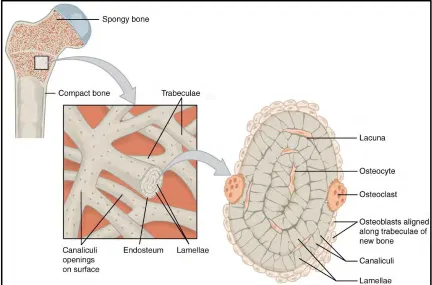
Figure 1.3: Osteocyte Cells in The Bone 3
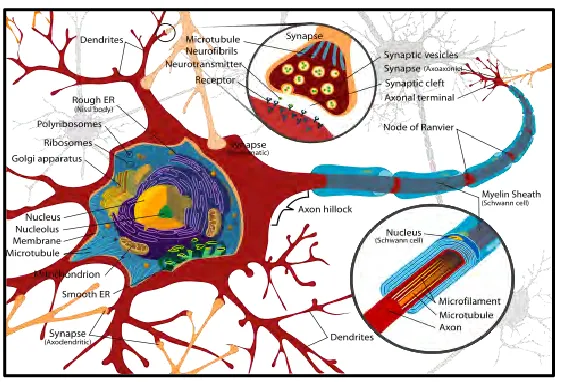
Figure 1.4: Axodendritic Synapse Cell 4
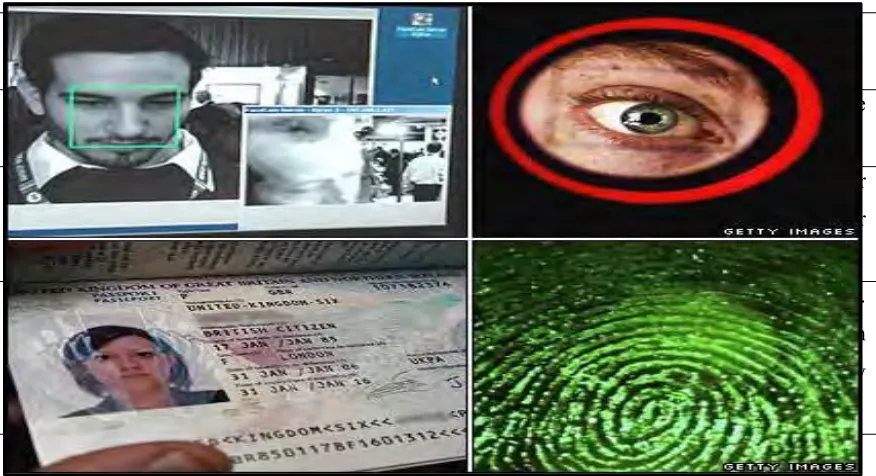
Figure 1.5: Types of Biometric Characteristics 7
Figure 1.6: Biometric System Implied on Passport for Security Purpose 8 Figure 2.0: Process of Recognizing an Object in Visual Cortex 16
Figure 2.1: Brain Part and Its Function 18
Figure 2.2: Example of structural face model 28
Figure 2.3: Principal Component Analysis Face Recognition 31
Figure 2.4: The Euclidean Distance Computation 32
Figure 2.5: A face detection by Lalendra Sumitha Balasuriya 33
Figure 2.6: Frontal view face detection model 34
Figure 2.7 Result table of “Peculiar images distribution on datasets 35 Figure 2.8: Face detection process using basic algorithm 36 Figure 2.9: Pre-processing windows step (a) Oval mask for ignoring
background pixel (b) Original window (c) Best fit linear function (d) Lighting corrected window (e) Histogram equalized window
37
Figure 2.10: Images with all the above threshold detection 37 Figure 2.11: Overlapping elimination or so called “heuristic” 38 Figure 2.12: Output from two networks ANDing together to improve
accuracy level 39
Figure 2.13: Inputs and architecture of the arbitration network 40
Figure 2.14: LBP code formation 41
Figure 2.15: Interested region part of face images 42
Figure 2.16: Images formation from LBP algorithm 42
Figure 2.17: Sparse and Tight histogram 43
Figure 2.18: Back propagation network architecture 44
Figure 2.19: The RBF network architecture 44
Figure 2.20: Example image from reference set (left) and test set (right).
Different in color and viewpoint 46
Figure 2.21: Repeatability score for image sequences. From left to right,
top to bottom 46
Figure 2.22: Precision graph from left to right, top to bottom 47 Figure 2.23: (a) The number of weak classifier at each stage of detector
(b) the accumulated rejection rate over the cascaded stage of the face detector
48
Figure 2.24: Top 3 local patches selected by training procedure in the
xiv
Figure 2.25: SIFT key point on the left and SURF key point on the right
for 420x380 images 49
Figure 2.26: Performance comparison of SIFT and SURF 49 Figure 2.27: SURF feature matching on a set of images 50
Figure 3.1: Work process flowchart 52
Figure 3.2 RUFUS program for burning the ISO file 55 Figure 3.3: Boot menu to enable the installation process take part 56
Figure 3.4: Dual boot operating system 56
Figure 3.5: Ubuntu interface with command terminal to run the code 57 Figure 3.6: Python default version in Ubuntu 16.04 58 Figure 3.6: Python default version in Ubuntu 16.04 59
Figure 3.8: Tensorflow environment activated 60
Figure 3.9: MATLAB interface 61
Figure 3.10: Button add-on to install require package for specific task 61 Figure 3.11: List of package installer for hardware support 62 Figure 3.12: First step of configuring list of cameras 63 Figure 3.13: Second step of identifies the camera ID 63 Figure 3.14: Steps in configuring the camera support resolution along
with installed camera in the computer in another type of command 64 Figure 3.15: Deep learning toolbox for machine learning 65 Figure 3.16: NNTOOL command line and toolbox interface 65
Figure 3.17: NNSTART command and toolbox 66
Figure 3.18: NNSTART toolbox interface 66
Figure 4.1: Real time face recognition and detection using tensor flow 69 Figure 4.2: Real time robust feed for recognition process 69
Figure 4.3: Error message on the program 71
Figure 4.4: Error message on syntax and indent used in the code line 72 Figure 4.5: Command line for object detection and recognition using
Alexnet 73
xv
Figure 4.7: Output image 2 from the recognition process 74 Figure 4.8: Command line for detecting the face in images feed 75
Figure 4.9: Output from the detected faces 76
Figure 4.10: Nose detection code 76
Figure 4.11: Output for nose detection 77
Figure 4.12: Command line for extracting eyes feature 77
Figure 4.13: Output from eyes feature extraction 78
Figure 4.14: KLT algorithm face detection 79
Figure 4.15: Image capture coding for 3 images 81
Figure 4.16: Command line for neural network image preprocessing 82 Figure 4.17: First step where two images need to be pick from selected
folder 83
Figure 4.18: Gray images selected to be process 83
Figure 4.19: Selecting the pattern recognition app to make a classification
and recognition over the images 85
Figure 4.20: Fetch over the converted images into the input and target to
be train by the neural network 86
Figure 4.21: Set the values for the required condition in training and
validate the data feed inside the network 86
Figure 4.22: Set the number of neuron in the hidden layer of the network 87 Figure 4.23: Training the network and error on the class inputs feed into
the network 87
Figure 4.24: Menu option 90
Figure 4.25: Refresh option 2 90
Figure 4.26: Popup windows for user detail 91
Figure 4.27: Interface of SURF face detection and recognition 97 Figure 4.28: Image classification and extraction kept inside database 97 Figure 4.29: Recognition of detected faces and display the person known
from the database 98
Figure 4.30: Example of montage stacked image 98
Figure 4.31: Input image 99
Figure 4.32: Test image 99
Figure 4.33: Key point feature extractor using blobs 100
Figure 4.34: SURF matches key point 101
Figure 4.35: Test image 1 102
Figure 4.36: Test image 2 102
Figure 4.37: Key point feature extractor using blobs 102
xvi
LIST OF ABBREVIATIONS, SYMBOLS AND
NOMENCLATURE
SURF - Speeded up robust features Nntool - Neural Network toolbox SOM - Self-Organizing Map GABA - Gamma-Aminobutyric acid
ID - Identity
ECG - Electrocardiography EEG - Electroencephalogram AdaBoost - Adaptive Boosting
SnoW - Sparse Network of Winnows SIFT - Scale-invariant Feature Transform ISO - International Organization for Standard ICAO - The International Civil Aviation Organization MRTDs - Machine-Readable Travel Documents
ABIS - Automated Biometric Identification System DoD - Department of Defense
DNA - Deoxyribonucleic Acid VOC - Visual Object Classes
PCA - Principal Component Analysis
FOI - FaceOnIt
LBP - Local Binary Pattern FDLib - Face Detection Library
FSDK - Face Software Development Kit AUC - Accurate Unconstrained Face Detector FLD - Fisher Linear Discriminant
NNSTART - Neural Network Start
1
CHAPTER 1
INTRODUCTION
1.0 Introduction
This chapter generally describe an overview of this project. Thus, it will cover out aspect like the background of the project, objective, problem statement and scope. The organization of the report are also state in this chapter for the preview of the report ahead.
1.1 Neurons
2
[image:18.612.142.518.421.629.2]3
Figure 1.3: Osteocyte Cells in The Bone
1.1.1 Types of neurons
4 1.1.2 Synapses
Represent a communication sites of where neurons are delivering the nerve impulses among themselves. Typically, it is not usually in actual physical contact because it is separated by an incredibly think gap, called the synaptic cleft. Under microscopic view, the synapses are divided into types in relation to its sites where the neuron almost touch and the sites includes of soma, dendrites, axons, and the tiny narrow projection called dendritic spines of which can be found in some of the dendrites. Axodendritic synapses form more than 50 percent of all synapses in the brain and in addition, it covers up most of the brain part to almost 30 percent of it.
1.1.3 Nerve Impulses
[image:20.612.188.469.340.531.2]Nerve impulse can be defined as a tiny, brief ‘spike’ of electricity travelling throughout a neuron. Basically, it consists of chemical particles moving across the cells out of the membrane from one side to other. For each
5
one of impulses, it was caused from the travelling ‘wave’ of the chemical particles known as ions where it has an electrical charge and are mainly made of the minerals sodium, potassium and also chloride. Inside of the brain, most impulses in most neurons are of the same strength at about 100 millivolts for one millisecond depending on the varying speed. Information signal delver by these impulses are according to how frequents they pass in term of impulses per seconds, the origins of the impulses and where they are heading to.
1.1.4 The synapse
Synaptic cleft which separates the membranes of sending and receiving cells has a width around 20nm and it is narrow for the neurotransmitter molecules can pass across over it extremely quick through simple diffusion process. Diffusion process are where it is moving from a region of higher concentration to much lower concentration. The time taken are relying on the neurotransmitter for the impulse to pass from pre- to post synaptic membranes are typically less than 2ms. And right after then, there is a recovery delay or clearance time which occurred when the concentration of neurotransmitter subsides and right before the next impulse can be sent cross over (Carter, 2009).
1.1.5 Neurotransmitter
6
of the body. As for example, the histamine involves in the inflammatory response, and the amino acid act as builder to the blocks for hundreds of kinds of protein molecules (Carter, 2009).
1.2 Biometric as A Security Approaches
Nowadays, people are using a group of alphabet and number as their secret access to some specific account. Although it is unique as it were a combination of alphabet and numbers, yet it is not guarantee as it easily forgotten or stolen which happened because of breach in the security by the hacker. Thus, it driven the engineer to comes up with more complex and more advance security method to ensure the safeness of the account and as for example the biometric system. Biometric is a method used to identify an individual by unique approach which are the person physiological, behavioral and psychological characteristic possess by that person. Key feature that is important for this system to work are the face, finger print, iris, palm, finger vein and way many more. Each feature carried out different kind of technique like the face recognition, finger print recognition, iris
7
Table 10 List of Biometric Characteristic
Physiological Behavioral Psychological
Face Voice Brain function
Fingerprint Signature/handwriting Cognitive-based biometric
system
Iris Keystroke dynamic
Palm Gait
Ear Heart beat
Vein Breath pattern
Footprint EEG
[image:23.612.109.539.428.623.2]retina ECG
8
Table 11 Comparison Between Different Types Of Biometric Characteristics
Face detection is a method used to determine whether there are any faces in the image and the location of each face if there is. In classic face detection, there are several types of it which include AdaBoost, Gabor neural network, neural network and SNoW. Each of it have their own specific features which might be handy for the user as for example the AdaBoost technique have much faster face detection while for a better accuracy, user can choose SNoW algorithm of which according to an evaluation made through public access database.
Type Stability Accuracy Signal
acquisition Application Physiological characteristic Relatively stable
Accurate Easy Widely applicable to all three
functions of biometrics Behavior
characteristic
Not very stable
Somewhat accurate
Easy Mostly used for authentication, or combined with other biometrics for authentication or identification Psychological
characteristic
Very unstable
Not accurate Very difficult
Still in early stage of development. Possibly used for spoof protection
in extreme high security
[image:24.612.111.549.103.341.2]environment