The Role of the School in
Supporting the Education of
Children in Public Care
Felicity Fletcher-Campbell, Tamsin Archer and Kathryn Tomlinson
National Foundation for Educational Research
Research Report No 498
The Role of the School in
Supporting the Education of
Children in Public Care
Felicity Fletcher-Campbell, Tamsin Archer and Kathryn Tomlinson National Foundation for Educational Research
The views expressed in this report are the authors' and do not necessarily reflect those of the Department for Education and Skills.
Contents
ACKNOWLEDGEMENTS i
EXECUTIVE SUMMARY ii
1. INTRODUCTION 1
1.1 Background 1
1.2 Aims of Research 1
1.3 Methodology 2
1.4 Structure of the Report 3
2. LITERATURE REVIEW 5
2.1 The Education of Children in Public Care 5
2.2 Government Policy 6
2.3 The Educational Environment 14
2.4 The Care Environment 16
2.5 The Role of Local Authorities 17
2.6 Sharing Good Practice 20
3. LOCAL AUTHORITY POLICY AND PRACTICE 21
3.1 The Local Authorities 21
3.2 Models of Local Authority Provision 22
3.3 Local Authority Policies 24
3.4 Initiatives to Support the Education of Children in Public Care 29
3.5 Management of Transitions 32
3.6 Post-16 Provision 34
3.7 Exclusions 35
3.8 Attendance and Truancy 36
3.9 Bullying 37
3.10 Celebrating Achievement 37
3.11 Funding 39
3.12 Provision for Pupils with Additional Educational Needs (AEN) 40
3.13 Multi-agency Working 42
3.14 Local Authority Support for Schools 43
3.15 Overview of Local Authority Support 45
4. SCHOOL POLICY AND PROVISION 50
4.1 Background to Case Study Schools 50
4.2 In-school Support Strategies 57
4.3 Additional Educational Needs 66
4.4 Behavioural Issues 71
5. DESIGNATED TEACHERS AND MULTI-AGENCY WORKING 93
5.1 Who are the Designated Teachers? 94
5.2 How were the Designated Teachers selected? 94 5.3 Designated Teachers’ Training 96
5.4 Local Authority Support for Designated Teachers 97
5.5 The Role of the Designated Teacher from the School Perspective 98
5.6 Liaison with Other Agencies 104
5.7 Overview of the Designated Teacher Role 113
6. KEY FINDINGS AND ISSUES FOR CONSIDERATION 114
6.1 The Role of the Local Authority 114
6.2 School Policy and Provision 122
6.3 The Role of the Designated Teacher 129
APPENDICES 134
Acknowledgements
Executive Summary
Introduction
The problems surrounding the education of children in public care are well researched and documented in both research and government literature. It is also an area where there is remarkable and rare consensus among researchers, policy makers, practitioners and importantly, young people themselves, about the central issues. These issues include low attainment and expectations, high mobility and exclusion rates, as well as the need to develop effective multi-agency working to support young people. The Guidance on the Education of Children and Young People in Public Care (DfEE and DoH, 2000) highlighted these issues and provided guidance to help local authorities in their role as ‘corporate parents’. This included schools identifying a ‘designated teacher’ to act as an advocate for the children in public care and the development of personal education plans for this cohort.
The impact of the Guidance has not been evaluated and the current research aims to highlight examples of success, focusing on support structures that schools have developed for the stability of and the provision for the education of children in public care. In particular, it focuses on the introduction of the role of the designated teacher. This research also establishes the context within which schools are working to support young people in public care, particularly with regard to key transitional points in their lives, and provision for those with additional educational needs.
Aims of the Research
The overall purpose of the research was to identify best practice within schools in providing children in public care with the support they need to fulfil their potential. Specifically, the aims were as follows:
• to provide in-depth good practice examples of effective strategies that schools are using to support the education of children in public care at key points in their lives, including the point at which they enter care, change school and approach GCSE exams
• to identify which strategies are most effective in reducing the levels of exclusion, truancy and bullying among this group of young people, and how and when these strategies are used to best effect
• to examine the particular obstacles to educational attainment for children in public care with special educational needs, mental health needs and English as an additional language, and identify those strategies that ensure needs are identified and addressed at an early stage.
Methodology
Key Findings – The Role of the Local Authority
Responsibility for Local Authority Provision
• Local authority contacts were mostly based in education departments but often had had some experience working in social services settings, which was felt to be an advantage in terms of collaborative work and communication.
• There were two identifiable organisational models for attending to the educational needs of young people in public care: the discrete model (or segregated approach), by which a dedicated team is responsible for a range of functions such as monitoring and direct services and the distributed model (or inclusive approach), by which a small number of people coordinate responses and maintain an overview of interventions but direct services and other functions such as monitoring are provided by other services and embedded within ‘normal’ provision.
Local Authority Policy
• In most of the case study authorities there was a discrete policy document on the education of children in public care: in a few cases this had been subject to review and revision and had been disseminated to all relevant personnel.
• In some cases, practitioners did not perceive that they had a specific policy for this group but referred to well-used and understood guidance documents.
• Increasingly, policy relating to the education of children in public care was distributed among a range of other policy documents within education, the local authority, or the region.
Personal Education Plans (PEPs)
• There was agreement that preparing PEPs for each young person in public care had not been an easy task and that ensuring that such documents were in place was only the starting point: they also had to be appropriate for the young person and helpful for those working with him/her.
• There was evidence of sound development in the design of PEPs, with the inclusion of more useful information and a more ‘user-friendly’ format.
• There was also evidence that the PEPs were used as an opportunity to gather the views of young people.
• In general, PEPs were seen as a strategic activity strengthening corporate parenting.
Specific Initiatives to Support the Education of Children in Public Care
• Local authority interviewees identified a number of national initiatives which benefited young people in public care directly or indirectly. These included: Excellence in Cities, Education Action Zones, Behaviour Improvement Plans, Connexions, Playing for Success, Health Action Zones, Lifelong Learning Partnerships and Quality Protects. Within these, singled out for particular mention were family literacy schemes and information technology provision. Non-government organisation initiatives included the Paul Hamlyn Foundation Right to Read grant.
• At a local level, school transfer schemes, key stage 3 programmes, homework and revision support, mentoring and basic skills support were referred to as valuable.
Transition Planning and Admissions
• All case study authorities recognised the particular difficulties encountered by children in public care moving from one school to another, whether at a ‘normal’ time or mid-term/year.
• Operating the admissions priority given to children in public care relies on the existence of in-care status data, which was not always available at the admissions stage.
• Several of the authorities had discrete programmes for Year 6 pupils while others supported the carers (providing information).
• The exchange of information regarding potential changes of care placement so that educational placements could be properly planned, was considered a critical element in effective provision.
Post-16 Provision
• At 16 responsibility for young people in public care usually switched to the Leaving Care team, thus providing potential difficulties as regards continuity.
• Some authorities had discrete provision to support post-16 education (financial and incentive payments) but most considered that what was available was inadequate.
Exclusions
• All authorities had access to discrete data on the exclusion from school of young people in public care.
• Similarly, most authorities tried to minimise the use of exclusion for this cohort, as they were aware of its particularly deleterious effect; various imaginative and effective preventative strategies were in place in some authorities.
• In most cases there was no discrete provision for young people in public care who were excluded although in some cases there was prioritised access to pupil referral units.
• Reintegration strategies were often more specialised, involving a range of people as appropriate to the young person concerned.
• Where schools had effective reintegration mechanisms, designed with the individual’s needs in mind, additional support for a young person in public care was not generally needed.
Attendance and Truancy
• The attendance of young people in public care was monitored discretely although the data was not necessarily monitored as frequently as would be required to take preventative action on non-attendance.
• Some authorities had regular multi-agency meetings to plan strategically for a young person who was truanting or refusing school.
Bullying
• While children in public care were often acknowledged, within general documentation, to be particularly vulnerable to bullying, no authority visited had discrete strategies to counter this bullying although some indicated ways of heightening awareness.
• Teachers suggested that children in public care were prone to bullying (as victim or perpetrator) on account of low self-esteem rather than because of the fact that they were in public care.
Celebrating Achievement
• In the case study authorities, the achievement of children in public care was celebrated either in large-scale, high profile events, or individually, as appropriate to particular cases.
• It was generally acknowledged that the celebration should be of all achievement, including ‘value-added’ and not just of academic attainment as the latter might ignore progress which was remarkable for an individual but not noteworthy according to public ‘norms’.
Funding
• Money to fund discrete support workers was variously acquired through LEA core funding, DfES Standards Fund and Quality Protects money with other sources being tapped locally for particular functions (e.g. ICT training for foster carers provided by a college of further education) or special purposes (e.g. books, computers).
• Most funding was related to specific projects or initiatives and, generally, there was relatively little flexibility to respond to individual needs other than in social workers’ limited discretionary budget.
• Additional and special educational needs, and mental health needs, were provided for through regular routes and budgets, though there was sometimes dedicated time (e.g. from an educational or clinical psychologist).
Multi-agency Working
• All those in teams for the education of children in public care worked extensively with other professionals – in some authorities, the teams were multi-disciplinary.
• There were formal structures for liaison at functional and strategic levels, sometimes for all vulnerable young people and sometimes discretely for children in public care.
• In several authorities there was an identified panel overseeing provision for children in public care (operating like a steering group).
• There was rarely a shared database but data were shared by a range of methodologies involving different personnel and services within departments; there was concern about the quality of the resultant data, particularly in terms of accuracy.
Local Authority Guidance Materials
• All case study authorities provided a range of written material relating to the education of children in public care.
• One authority had produced a governors’ toolkit.
Successes
• Several of the interviewees commented on improved joint working which was often related to cross-authority commitment to the role of the corporate parent.
• Some of the interviewees attributed these successes to the model of provision for children in public care within their authority.
Challenges
• The following were identified by interviewees as challenges:
− ensuring that all young people in public care had an appropriate educational placement
− creating effective mechanisms for the distribution of information that was timely
− making adequate preparation for, rather than reacting to, placement moves
− ensuring that all eligible young people in public care are entered for end of key stage assessment and GCSE/GNVQ
− maintaining a balance between proactive and reactive work
− managing staff changes at all levels
− managing the perceived slow rate of change within services
− developing strategies to ensure that the corporate parenting agenda was corporately, rather than personality, driven.
Key Findings – School Policy and Provision
Policy
• In some cases, schools claimed that their mission statement was sufficiently inclusive to meet the needs of pupils in public care.
• It was considered that it was best if policy is formulated following good practice;
• In some cases, schools denied that they had ‘policy’ but had, in effect, either excellent guidance documents operating at the functional level or had other documents which accommodated the needs of children in public care.
Admissions
• Children in public care were rarely prioritised within individual schools’ admissions policies except where local authorities stipulated that this be a criterion.
• Some schools said that they prioritised when oversubscribed, if the child was obviously in need.
Awareness of Policy among Staff
• Designated teachers had usually held awareness-raising sessions for colleagues.
• Some SENCOs and headteachers had attended specific training sessions in the authority with the designated teacher.
• A lot of local authority training was linked to other training regarding vulnerable children or child protection.
Identified Governors
• Some of the case study schools had allocated specific responsibility for pupils in public care to an identified governor but the strategy was too new for any effects to have been noted; some schools were doubtful that effects would have been beneficial.
National Initiatives
• There was evidence of the strategic use of opportunities afforded by national initiatives to benefit children in public care. Many references were made to the use of learning mentors.
• The list of specific strategies was almost identical to that cited by local authority officers, such as school transfer schemes and peer mentoring.
Funding
• Locally, there was some discretionary money available via the education of children in public care (ECPC) teams.
In-School Support
• Case study schools all had well developed pastoral structures available for all pupils regardless of whether their support needs were long-term or transient; there was thus a firm and well distributed structure of support and guidance which meant that individual needs could be met and children could exercise their own preferences as to whom to turn to for support.
Identifying Individual Needs
• Initial visits, previous records and PEPs were all used to identify the particular profile of needs of individual pupils in public care.
• Sensitive information was informative but usually distributed on a ‘need to know’ basis within schools.
The Management of Transitions
• Schools went to considerable lengths to ease school transfer, particularly where this occurred at non-standard times within the academic year or school term: emphasis was put on appropriate placement in tutor groups and initial support to help the young person settle in socially and academically.
Meeting Needs
• There was evidence that special educational needs, additional educational needs, additional language needs and mental health needs were all addressed through regular support networks available to all pupils; however, schools often prioritised the needs of this cohort and/or boosted normal levels of support.
• All services stressed the limited nature of support – thus this cohort may not have been receiving the optimal level of support for their particular needs.
Exclusions
• Most schools pursued a positive policy of not excluding pupils in public care on the basis of the deleterious effect that this might have on self-esteem and care placements.
• Where exclusions were necessary – for the child’s safety, for example – efforts were made to secure more appropriate provision.
• Schools made efforts to reintegrate effectively and in some cases supervised the child during the period of exclusion in order to reduce the burden on carers.
• Emphasis in the case study schools was on prevention.
Attendance and Truancy
• It was commented that the attendance of this cohort could, in fact, be higher than the school average because of better tracking mechanisms and the commitment of carers.
Bullying
• Bullying, whether being a victim or a perpetrator, was generally considered to be related to the child’s general condition (for example, low self-esteem) rather than directly to his/her legal status of being in public care.
• Schools operated a range of strategies for addressing problems of bullying: most of these were directed to all incidents of bullying rather than being specific to children in public care.
• Most children in public care interviewed felt that they were bullied for a reason other than being in public care (for example, because of appearance); in one case, staff considered that a pupil made herself open to bullying by demanding different treatment from other pupils because she was in public care.
Raising the Attainment of Pupils in Public Care
• Normal monitoring mechanisms were in operation for the academic progress of pupils in public care.
• Designated teachers were often very familiar with the progress of pupils and were able to relate this progress to experiences in public care.
• The cohort was generally entered for public examinations.
• Pupils in public care were often prioritised for careers advice or were given enhanced support for post-16 decisions.
Support Activities
• There was considerable variability in the degree to which children in public care participated in activities outside the regular curriculum: some care-related practices, such as taxiing to school, militated against involvement.
Personal Education Plans
• At school level, there were difficulties both in ensuring that PEPs were available for all pupils in public care and in separating out advice and support in various plans (e.g. individual education plans for pupils with special educational needs); some interviewees felt that plans could be repetitive and/or just a paper exercise.
• At best, the preparation of the PEP involved a range of people involved with the young person and took the latter’s views seriously.
• Only some secondary age pupils were aware of their PEPs; most of these felt that they were useful to record their progress at school.
Successes
• All interviewees considered it important to celebrate the successes of young people in public care and that this celebration should extend to a wide range of achievement and include the concept of ‘value-added’ and individual progress from a previous point relevant to the young person.
Challenges
• The principal challenge in dealing with children in public care was identified as managing their challenging behaviour.
• There was good awareness that challenging behaviour arose from the young people’s previous traumatic experiences, some of which might be known to the school, while other experiences (for example, those of asylum seekers) might only be guessed at.
• School staff found it a challenge making allowances for unacceptable behaviour while giving the right messages to other pupils: this was considered best addressed through discussion of individual differences which affected all pupils regardless of background or abilities.
• The forging of strong relationships with pupils causing concern so that the pupils knew that schools were prepared to support them was considered to be one of the most effective ways of addressing undesirable behaviour.
Key Findings – The Role of the Designated Teacher
Profile of Post-holders
• Most designated teachers had been in post for two to three years though some had reportedly been doing the job for longer in schools where the education of children in public care had been identified as one needing coordination.
• In primary schools, the headteacher commonly took responsibility; in secondary schools, it was usually a member of the senior management team – generally not the special educational needs coordinator.
• In some schools, responsibility was shared to ensure continuity for pupils if one person was unavailable.
• Relevant skills were perceived as: external liaison, pastoral care, and working with disaffected pupils.
Training
• Some local authority training had been delivered to staff from education and social services together.
• Training had generally been available but it was not always possible for all designated teachers to attend and it had not been repeated for those teachers or for newly appointed staff.
• Half the designated teachers interviewed had had no specific training but many relevant issues had been covered in child protection training which they had attended.
• Post-holders considered that they had benefited, or would benefit, from specific training either as a standalone session or within inclusion training.
• All designated teachers interviewed were confident that they knew where to go for help if needed.
Functions
• Designated teachers perceived themselves as responsible for:
− liaison with other professionals and carers
− advocacy for the young people
− maintaining an overview of the young people’s progress
• And needing:
− good relations with staff colleagues
− good relations with senior managers within education and social services.
• Direct work with young people varied depending on context and appropriateness: generally designated teachers in primary schools had more direct contact with the relevant children than did colleagues in secondary schools, where responsibilities were more dispersed.
Others’ Perception of the Designated Teachers
• Headteachers in the case study schools had a very good idea of the role and responsibilities of the designated teacher and of how they needed to support the post-holder.
• Other staff were not always so clear especially where responsibilities were distributed between senior managers.
Pupils’ Awareness of the Designated Teacher
• Several pupils interviewed were not aware of the role of the designated teacher but this was not an issue as all pupils said that someone with whom they were comfortable was available to them if they needed support; in some cases, this person was, in fact, the designated teacher, indicating the post-holder’s approachability.
Carers’ Awareness of the Designated Teacher
• Carers interviewed were aware of the designated teacher but not necessarily on account of the post held: rather, because that person had been particularly supportive or involved with the young person in public care.
The Designated Teacher’s Multi-agency Role
• All designated teachers engaged in multi-professional dialogue but with various responses – for some it was easier than for others.
• There was acknowledgement of the enormous organisational pressures under which social workers operated but, equally, recognition that these often adversely affected young people in public care.
• The variability of practice among social workers was commonly commented on.
• Designated teachers recognised the importance of information exchange but noted that this could draw undue attention to a young person if pursued unnecessarily.
Designated Teachers as a Corporate Group
• There was little evidence that designated teachers commonly met regularly as a discrete group nor that they regarded other post-holders as a support group; contact tended to be limited to transfer events.
Designated Teachers’ Relationships with Carers
• There was evidence that most designated teachers made great efforts to establish effective relations with carers and to stress that the school was interested in making the care placement work; however, responses varied.
1 Introduction
1.1 Background
The problems surrounding the education of children in public care are well researched and documented in both research and government literature (see chapter 2). It is also an area where there is remarkable and rare consensus among researchers, policy makers, practitioners and importantly, young people themselves, about the central issues. These issues include low attainment and expectations, high mobility and exclusion rates, as well as the need to develop effective multi-agency working to support young people. The Guidance on the Education of Children and Young People in Public Care (DfEE and DoH, 2000) highlighted these issues and provided guidance to help local authorities in their role as ‘corporate parents’. This included schools identifying a ‘designated teacher’ to act as an advocate for the children in public care and the development of personal education plans for this cohort.
The impact of the Guidance has not been evaluated and the current research aims to highlight examples of success, focusing on support structures that schools have developed for the stability of, and the provision for, the education of children in public care. In particular, it focuses on the introduction of the role of the designated teacher. This research also establishes the context within which schools are working to support young people in public care, particularly with regard to key transitional points in their lives, and provision for those with additional educational needs.
1.2 Aims of Research
The overall purpose of the research was to identify best practice within schools in providing children in public care with the support they need to fulfil their potential. Specifically, the aims were as follows:
• to identify which strategies are most effective in raising the attainment of children in public care and how and when those strategies are used to best effect
• to identify which strategies are most effective in reducing the levels of exclusion, truancy and bullying among this group of young people, and how and when these strategies are used to best effect
• to examine the particular obstacles to educational attainment for children in public care with special educational needs, mental health needs, and English as an additional language, and identify those strategies that ensure needs are identified and addressed at an early stage.
1.3 Methodology
There were three strands to the research: a review of the literature, interviews in local authorities and case studies in a sample of schools. The literature review focused on evaluative literature on the education of children in public care since 1998, using the extensive review undertaken by staff at the Scottish Council for Research in Education (Borland et al., 1998) as a foundation document. The literature review was used to inform the interview schedules that were developed for use in local authorities and schools. Interviews were conducted in eight local authorities, known by several sources to have relatively advanced practice concerning the education of children in public care. For such research, it was considered to be most efficient and effective to work with practitioners who were in the best position to identify good practice. The local authorities represented a spread in terms of geography, authority type, and size. Interviews were conducted with the named person (or people) with responsibility for the education of children in public care during the spring term 2003, in order to explore the local authority’s approach to the education of children in public care and to establish the context in which schools were working, including the resources upon which they could draw.
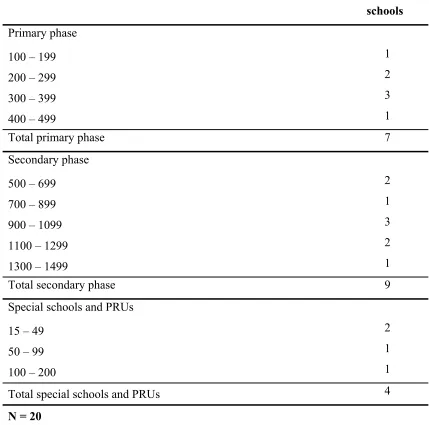
primary and secondary schools, special schools and pupil referral units. The research team then selected 20 schools from the list, which represented a range in school phase, size, location, types and levels of performance. The sample included foundation schools, schools within a selective system, specialist schools, Beacon schools, Excellence in Cities schools, rural schools and single-sex schools. These schools were invited to participate in the research and where one declined the offer, another school with similar characteristics was selected from the list. A total of 20 schools participated in this research from across the eight local authorities. They consisted of seven primary phase, nine secondary phase, two special schools (one of which was residential) and two pupil referral units. Over 100 interviews were conducted in the schools, with a range of personnel including the designated teachers for children in public care, headteachers, deputy headteachers, heads of year, class teachers, special educational needs coordinators (SENCOs), teaching assistants, school nurses, education welfare officers (EWOs), social workers and school office staff. Interviews were also conducted with a sample of pupils in public care attending these schools and their carers. In addition to the interviews, documentation was also collected, where available, at local authority and school level. This included copies of policies relating to the education of children in public care and templates for personal education plans (PEPs). It should be noted that this research was predominantly based on the views and experiences of education personnel and was not designed to represent the views of social care staff.
1.4 Structure of the Report
2 Literature
Review
2.1 The Education of Children in Public Care
It has been argued that ‘the dismal performance of children in public care is perhaps the longest-running scandal of our education system’ (Slater, 2002, p. 24). Despite children in public care coming overwhelmingly from low income backgrounds and conditions of abuse and deprivation, the experience of care seems to compound rather than ameliorate early disadvantages; indeed being in public care has been described as an ‘educational hazard’ (Khan, 1999; Pearce and Hillman, 1998). And the education system has also been shown to worsen the experience of care. Borland et al. report that many children ‘paint a picture of school experience adding to the turmoil of coming into care, rather than being a potential source of stability’ (Borland et al., 1998, p. 56).
Despite this picture, there is remarkable consistency in the literature on the education of young people in public care regarding the issues faced by those seeking to improve the educational experience. The problems include low attainment, high mobility and exclusion rates, low expectations and poor inter-professional collaboration (Fletcher-Campbell, 1997; Ofsted, 2001). It is notable that, although case study and anecdotal evidence is strong, collective data at local and national level are weak and until recently have been unavailable. Even in authorities with some of the most developed data-tracking practices, the data sets are far from satisfactory (Fletcher-Campbell and Archer, 2003), although it is notable in this context that the DfES have included an indicator for children in public care in the Pupil Level Annual School Census (PLASC).
The review is based on literature published in the United Kingdom over the past five years, since 1997, in order to build upon the work done by Borland et al. in their
Education and Care Away from Home: a Review of Research, Policy and Practice
(1998). The literature was selected from the results of searches of the British Education Index, Current Educational Research in the UK database, NFER’s library catalogue and NFER’s reference database, using the keywords ‘children in public care’ or ‘looked after children’ and ‘education’. Although the cut off for the publications was taken as the end of 2002, two significant documents were published in September 2003: the Social Exclusion Unit’s report A Better Education for Children in Care (SEU, 2003a) and the Government’s Green Paper, Every Child Matters (GB. Parliament. HoC, 2003). Given the importance of these publications for the education of this cohort, they have been included in this literature review, although the fieldwork was conducted before the publication of these key documents.
It is interesting to note that the majority of the issues which emerged in the first decade of work in the area, since Jackson’s (1987) seminal review of the literature that demonstrated how neglected the area was, have persisted up to the present. While there have been significant developments and improvements (for a range of these, see Jackson, 2001), the major challenges have remained, although there is an increased and greatly welcomed, focus on the outcomes of education for this cohort of young people. This was missing in the earlier studies which were concerned with the prior task of identifying what was problematic in the education of young people in the care system.
2.2 Government Policy
Utting’s influential report on abuse in children’s homes contains few specific recommendations on the education of these children, although it reported ‘rigorous representations about the inadequacies’ of education services (Utting et al., 1997, p. 25). McParlin expresses concerns that while Utting’s Children’s Safeguards Review
In response to the Utting report, the Government established Quality Protects to reform and regenerate services for children and particularly children in public care. An analysis of the Quality Protects Management Plans notes that most local authorities recognise the inadequacy of baseline data on the educational needs and attainment of children in public care (Khan, 1999). And Slater reports that within weeks of local authorities setting their first targets for attainment of children in public care, a survey revealed that two thirds did not know what results those children achieved (Slater, 2002).
The policy context in which this research was carried out was that of the then Department for Education and Employment and Department of Health’s joint
Guidance on the Education of Children and Young People in Public Care (DfEE and DoH, 2000). This consolidates some of the practices suggested in Circular 13/94 (DfE and DoH, 1994), including the identification of a designated teacher for children in public care in every school and the provision of personal education plans for every child. It also limits to twenty days the length of time a child in public care can be without a school place and requires local authorities to establish and maintain a protocol on the inter-agency sharing of relevant data concerning children in public care (DfEE and DoH, 2000).
The role of designated teacher was first introduced in Circular 13/94, which states:
Head teachers in primary schools and year tutors in secondary schools are in a position to hold a watching brief for all children being looked after in their school or year respectively, to provide advice and guidance in relation to individual children, and where necessary to coordinate the pastoral needs of the children concerned (DfE and DoH, 1994).
about care and impact of care upon education, in each school is critical to making joint working a reality.’
The Guidance therefore required that:
Schools should designate a teacher to act as a resource and advocate for children and young people in public care. LEAs and SSDs should coordinate suitable training for them and maintain an up-to-date list of designated teachers in schools in their area (DfEE and DoH, 2000, p. 33).
These new requirements were cautiously but hopefully anticipated by professionals. Fletcher notes that much of the pressure for revised guidance came from within local authorities, demonstrating a vested interest in ‘getting it right’ for children in public care (Fletcher, 1999). A recently completed study into the achievement at key stage 4 of young people in public care indicates that even local authorities known to be relatively advanced in their collection of data have considerable difficulties compiling profiles of children in their care (Fletcher-Campbell and Archer, 2003). The application of other aspects of the Guidance has yet to be evaluated and it is hoped that, at least in the case of designated teachers, the present project being undertaken by the NFER for the DfES will provide an indication of their success.
professionals and society generally and too much bureaucracy (p. 51). While, as noted, these issues ‘will be familiar to those working with children in care’ (p. 51), this publication’s important contribution is its extensive recommendations for action at central and local government levels and detailed strategies for measuring the success of these actions. An associated practice guide includes examples of good practice and contact details in order for others to take these forward (SEU, 2003b).
Several of the recommendations listed in the Social Exclusion Unit’s report are also considered in the Green Paper, Every Child Matters, which sets out the Government’s proposals for reforming children’s services, following the public inquiry led by Lord Laming into the death of Victoria Climbié (GB. Parliament. HoC, 2003). Of particular relevance to the subject of this research is the intention to impose a new duty on local authorities to promote the educational achievement of children in public care (p. 68). However, when implemented, other aspects of the Green Paper’s approach to improving outcomes for all children – notably its focus on joining up working practices and services at national and local level – are likely to have a positive impact on the education of children in public care. In particular, the Green Paper’s detailed proposals for information sharing, joint frameworks for assessment and increasing multi-disciplinary working in a number of ways (lead agency responsibility, multi-agency teams, and co-location on child-centred sites) are likely to be significant (pp. 51–64). Other proposals, including the proposal to legislate to create the post of Director of Children’s Services and the encouragement for the development of Children’s Trusts, should also have an impact, in the longer-term, on the education of this cohort.
many professionals and contrary to intentions to expect similar attainment of all children (McParlin, 1999; National Literacy Association and The Who Cares? Trust, 1999). It is therefore notable that a new target for children in public care for one year or more was introduced in 2003 to ‘substantially narrow the gap between the educational attainment and participation of children in care and that of their peers by 2006’ (SEU, 2003a, p. 73).
Low expectations of children in public care have been highlighted as a significant factor in their low attainment (Archer, 1999; Fletcher-Campbell, 1997). The Government’s targets go some way towards increasing these expectations.
At the end of Year 11, 53 per cent of children in public care remained in full-time education, as compared with 72 per cent of the general population, while 24 per cent were unemployed in the September after leaving school (DoH et al., 2002). In order to support and encourage more young people in public care and care leavers to continue in education or training, Pearce and Hillman (1998) state that support during the summer months between leaving school and taking up new education or training places is often crucial. They suggest that involvement in community activities or work placements during this period ‘should be the norm for each care leaver’ and that residential activities, such as those purchased from the Prince’s Trust, are cost effective in the long term. Like others, they suggest that financial incentives should be offered to encourage care leavers to participate in further education and training. It should be noted that Education Maintenance Grants are being piloted with this in mind (SEU, 2002, p. 68). Research into the views of young people has shown that managing personal finances is one of the main difficulties faced by care leavers and that they valued the introduction of independent advice provided by mentors, as their experience of care has made them wary of social services (The Prince’s Trust, 2003, p. 6).
school-aged children in public care who had been in public care for at least twelve months in the year up to 30 September 2001, 12 per cent missed at least 25 days of school and 1.3 per cent were permanently excluded, compared with 0.1 per cent of all children (DoH, 2002). A survey of ten LEAs in England demonstrated that of the children identified as having been excluded and having been in public care, 70 per cent had substantial problems by the time of the research, compared with 39 per cent of those who had never been in public care (Parsons et al., 2001).
Brodie’s (2001) in-depth study of exclusion of children in residential care provides illuminating evidence that exclusion is often seen as both inevitable and desirable by all professionals concerned. By examining exclusion as a process rather than as an unexpected event, she demonstrates that a change in circumstances is usually the starting point for exclusion and the schools in her study were always aware of this change. She notes that good relationships between professionals do not necessarily prevent exclusion; on the contrary, they sometimes facilitate it. Brodie notes the perception held by some social workers that the best support would be provided by removing the child from the classroom situation, in some cases in order to force other bodies to provide services and resources. Fletcher-Campbell (2001) similarly reports that exclusions may, in the long-term, be beneficial to a child’s education.
Children in public care have also been identified as particularly frequent runaways. Studies have shown that nearly half of those who have been in public care have run away at some point in their lives, because of unhappiness with their care placement, a desire to be living with their family, or the influence of the culture of children’s homes (Rees and Smeaton, 2001, p. 9; SEU, 2002, pp. 7–11). A relationship has been identified between running away and school attendance problems and studies indicate that education suffers for other reasons, as runaways do not take books or course work with them and because the limited financial support for 16 and 17 year olds makes it difficult for them to support themselves (Rees and Smeaton, 2001, p. 16; SEU, 2002, p. 67). However, there is some evidence that effective implementation of Quality Protects does decrease the incidences of running away (SEU, 2002, p. 33).
Borland et al. were unable to locate literature on the education of disabled children in public care (Borland et al., 1998, p. 35) and the field has changed little five years later. Read and Clements (2001) note that a significant minority of disabled children spend substantial periods of time away from their families and that local authorities should provide extra help to compensate for early deprivation in order to ensure that children in public care have the same rights to education as all. Yet, in the dearth of research on children in public care with disabilities the authors report nothing specific to their education (Read and Clements, 2001, p. 192). It is notable that Morris’ sympathetic report into the experience of disabled young people living away from their families, no mention is made of their education (Morris, 1998).
Information on the education of children in public care with English as an additional language (EAL) is also extremely scarce and must be gleaned from literature focussing on other issues. In their examination of the needs of disaffected young people in multi-cultural communities, in the context of the introduction of the Connexions service, Craig and Coles (2000) note that a quarter of their respondents had been in public care at some point. While a number of all respondents had felt supported by a key individual, more often this was someone met by accident rather than one professionally assigned. Similarly, the careers service was not seen as particularly helpful and when these disaffected young people were in touch with an agency, it was more likely to be a community voluntary organisation (Craig and Coles, 2002). However, the absence of literature focussing on the education of ethnic minority pupils in public care is notable (see Lee Comfort, 2001).
applications affecting examinations, and concern about dispersal elsewhere in the country and loss of exceptional leave to remain at age 18 (Bann and Tennant, 2002).
As yet there has been little research focussing particularly on whether ‘school provides a true asylum – a place where they can feel safe and secure’ (Walker, 2002, p. 24) and whether the educational needs of this particularly vulnerable group of children in public care are being met. A report on pupil mobility in schools finds that pupil mobility per se is not detrimental to the quality of education a school can provide, although problems arise when there are very high levels of mobility and of children with particular needs, of which asylum seekers are an example. But it provides little specific analysis of the effect of mobility on the education of those moving, as opposed to the effect on the schools (Dobson and Henthorne, 1999, p. 103). Strand’s examination of the effects of mobility on attainment at the end of key stage 1 demonstrates that although pupil mobility is associated with significantly lower levels of attainment in reading, writing and mathematics, when the impact of factors such as free school meals (FSM) entitlement, SEN and EAL are considered, the effect of mobility is substantially reduced, although still statistically significant. Strand suggests that ‘the reason a pupil moves school, rather than the change of school itself, is probably the most important factor in relation to attainment’ (Strand, 2002, p. 75). Similarly, although it has been shown that secondary schools with high levels of pupil mobility tend to have achieved lower results, Ofsted note that the affect of mobility on attainment is difficult to isolate, as it occurs alongside other factors including disrupted family life and those schools with high mobility tend also to be in areas of high social disadvantage (Ofsted, 2001).
2.3 The Educational Environment
The general environment in which any young person is educated is significant to his/her achievement and interacts with any discrete provision or particular needs.
for these expectations (Pearce and Hillman, 1998). But Elliott’s recent research (2002) suggests that while teachers expect children in public care to be unable to meet homework deadlines as consistently as those not in the care of the local authority, no significant difference can be identified in teachers’ expectations regarding the academic performance and attendance of children in public care and those cared for by their parents. However, while these results may suggest a change of attitude on the part of teachers, the small sample size and the methodological limitations of the research indicate that further data would be needed before concluding that attitudes have improved nationally (Elliott, 2002).
Beyond their explicit role in enabling educational attainment, schools have a wider role, in the promotion of other aspects of what could be termed ‘normality’ in the lives of children and young people in public care. Schools form a potential source of continuity in otherwise disrupted lives, a factor that has only recently been recognised by many social workers, for whom school placements have in past been a secondary concern to care placements. There is a growing recognition that continuity of school placement can be as important as that of carer and indeed can contribute to the success of both placements (Borland et al., 1998, p. 78; Fletcher-Campbell, 1997; Jackson, 2000). There is also a growing body of literature examining the resilience of children in public care, which helps to account for the obvious educational success of some care-leavers, despite their difficult school and home experiences. Several authors have highlighted the positive role of education in promoting resilience and strategies for coping (Borland et al., 1998, pp. 36–38; Flynn and Brodie, 2000).
61; Jackson, 2000, p. 73). As mentioned above, differing expectations in terms of attendance, completion of homework and general attainment ability are detrimental. Schools have also been identified as a valuable source of support with regard to runaways, both in terms of providing specific support to those who feel they have no-one else to turn to through counselling and confidential advice services and by providing information in the course of normal lessons on problems that can lead to children running away (SEU, 2002, pp. 23–27).
The role of designated teacher, first recommended by the Government in Circular 13/94 (DfE and DoH, 1994) and confirmed in the recent joint Guidance, has been widely welcomed as a valuable addition to the support system for children in public care (DfEE and DoH, 2000). The Guidance includes indications as to the designated teacher’s role and Believe in Me, produced by the National Literacy Association and the Who Cares? Trust (2002), provides valuable practical support for designated teachers and others encouraging literacy amongst those in public care. But as the role has only recently been introduced and training only completed for some within the last year, there is as yet little evaluative work. An Ofsted inspection of 26 local authorities known to have set targets to raise the achievement of children in public care reports that the majority of these LEAs view the designated teacher to be of prime importance and schools have assigned the role to a senior teacher or member of the senior management team (Ofsted, 2001). However, there remain few evaluated examples of good practice by designated teachers and their schools and the current research was intended to go some way towards filling this gap.
2.4 The Care Environment
reports on literacy projects with young people in public care and their families from the Basic Skills Agency and the Community Education Development Centre.
Although more work has been done relating to the education of children in residential homes (Brodie, 2001, for example), there remain few examples that may be used to develop good practice. Lindsay and Foley’s (1999) report on a residential project which has successfully returned to mainstream schools 97 of its 107 young people, is a notable exception. Six ‘touchstones’ in their success are identified, including inter-professional respect and teamwork; practical demonstration of the value of each individual; creating a culture in which education is valued; attention to detail in matching child to school and joint planning with the school before the child starts and a determination to handle setbacks without deflection from the key objectives. However, the authors note that their success emphasises the failings of the current systems, including the responsibility of mainstream education to support the needs of all its pupils, and the need for training for residential staff in order to help schools in this task (Lindsay and Foley, 1999).
2.5 The Role of Local Authorities
The concept of ‘corporate parenting’ has taken root in some local authorities (Fletcher, 1999), but, even in the most diligent, considerable work is still required to ensure that physical care, access to services and general encouragement are not seen as satisfactory limits to this parental responsibility. Rather, like their peers not cared for by the local authority, children in public care require sustained guidance, supervision and high expectations as to their ability to achieve (Bhabra et al., 2002, p. 4; Jackson, 2000).
group for the largest number of initiatives surveyed (46, or 21 per cent). As for other projects, funding proved a challenge for those concerned with children in public care, as did information sharing and collection and overcoming professional barriers. Key factors in the success of these particular collaborative endeavours were identified as the commitment of those involved, agreements over funding, good working relationships, focus, clarity and common aims (Atkinson et al., 2001).
A case study of operational and strategic level cooperation between education, social services and (at strategic level) health on the education of children in public care, undertaken as part of the above research project emphasises that inflexible funding structures inhibit innovation. However, multi-agency working makes possible a time- efficient and holistic approach to children’s needs, resulting in a coordinated response to those needs (Atkinson et al., 2002, pp. 194–204). Similarly, Fletcher-Campbell’s (1997) examination of education support services demonstrates that having ‘a foot in both camps’ of education and social services is a key factor in providing excellent support, trusted and valued by carers and teachers alike.
However, although Tomlinson (2003) provides a best practice guide to multi-agency working to enable local authorities to develop their practice, specific examples of evaluated successful multi-agency collaboration remain limited. Examples relating to children in public care are often embedded within studies concerned with wider groups, such as pupils with emotional and behavioural difficulties (Capey, 1997). It should be noted that even good multi-agency working does not necessarily improve educational outcomes for a child in public care. Indeed, as Brodie demonstrates, good relationships and consultation sometimes make it easier to exclude children from school who reside in residential homes (Brodie, 2001).
note that social workers have become more aware of the importance of ensuring school placements are an integral concern when considering a change of care placements (Fletcher-Campbell, 1997; but also see Skuse and Evans, 2001). Yet studies have shown that some social workers are unaware of their local authorities’ policies on the education of children in public care, despite the fact that, if excluded, the education of a child in public care is the responsibility of social services (Brodie, 2001, p. 146).
Some guidance has been published for other partners on the local authority’s corporate parenting responsibility. Fletcher’s guide for elected members, which does not presuppose specialist knowledge but provides a comprehensive checklist of required concerns, is a good example (Fletcher, 1999). The Government’s Guidance on the Education of Children and Young People in Public Care similarly includes a list of questions for Councillors to ask (DfEE and DoH, 2000). The Who Cares? Trust also published guidance for school governors on the education of children in public care (Fletcher, 1996). More radical are McParlin’s suggestions for the contributions that educational psychologists could make to reducing the structural marginalisation of children in public care and to reduce the stigmatisation to which he feels psychologists have contributed (McParlin, 1996).
With regard to disaffected young people in multi-cultural communities, voluntary organisations often have a significant role to play in supporting the education of young people in public care (Craig and Coles, 2002; Fry, 2001). While, arguably, it is an indication of the shortcomings of statutory agencies that there is a need for such provision, they can provide examples of good practice that may be adopted in the statutory sector. The Who Cares? Trust’s recent publication, Education Matters, for example, is a detailed resource book providing guidance to all professionals involved in the education this cohort on their and others’ roles and suggestions for more effective practice (Hibbert, 2003).
developed out of a belief that literacy is the bedrock of education and that the best way to improve on these children’s literacy is to encourage them to read for enjoyment. The main focus of Right to Read involved a pilot study in five local education authorities, including training and provision for creative achievement days; right to read road-shows to advise carers and the establishment of accessible starter libraries of at least 50 books in every residential home (The Who Cares? Trust and National Literacy Association, 2001). Brennan’s (2001) report on the success of the project in Blackburn with Darwen mirrors the positive feedback received by the Who Cares? Trust and National Literacy Association from carers and children in the authorities concerned. However, the latter note that the support of senior LEA staff was a critical factor in this success and conclude with recommendations for LEAs including a demonstrated commitment to accessing books; centralised strategies for improving access to books; guidance, training, resources and raised expectations for carers and involvement of the library service in making direct links with residential homes (The Who Cares? Trust and National Literacy Association, 2001, pp. 2–4).
2.6 Sharing
Good
Practice
3
Local Authority Policy and Practice
3.1 The Local Authorities
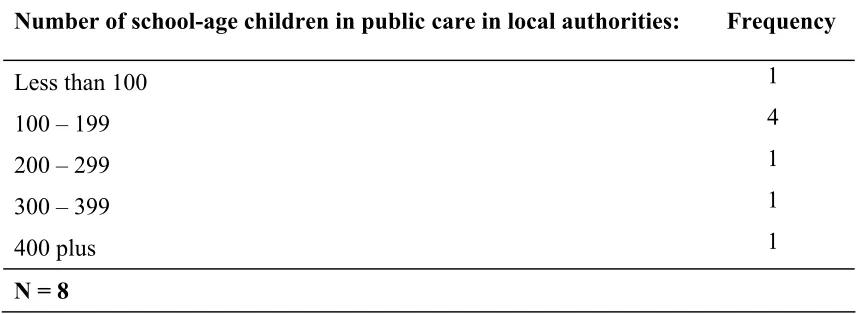
In the course of the research, eight local authorities were visited. These were selected from a long list of authorities that had been recommended by a number of sources as having good practice in supporting the education of children in public care. The eight represent a diversity of geographical region, type of authority (London borough, metropolitan district, unitary authority and shire county), size of authority in terms of number of schools and a range of achievement, special educational needs, attendance and attainment of children in public care. This chapter examines these local authorities’ provision for the education of children in public care, in order to establish the context within which the participating schools were working. Appendix 1 contains further information regarding the sample of local authorities that took part in this research in order to put these findings in context.
The individuals interviewed were generally the key contacts held by the DfES Vulnerable Children’s team. The majority of these were education officers based in education departments, although several of these posts were partly or fully funded by the social services department. In one authority, the interviewee was an education professional based in social services, which was felt to be a ‘very good idea, except that I’ve probably become an education specialist for social services’. In another authority, the key contacts were two members of social services staff based in social services. However, several of the interviewees based in education brought with them experience of working in social services departments, which was felt to be useful in their present posts.
3.2 Models of Local Authority Provision
A number of models of overall practice at local authority level have emerged through this research. The first of these is the distinction between ‘discrete’ and ‘distributed’ services with responsibility for the education of children in public care. These models were developed by the research team on the basis of the data collected and represent ideal types, rather than matching exactly to the provision in any one authority. In many of the case studies, provision lay somewhere between these two extremes.
In the ‘discrete’ model, one team of professionals is responsible not only for tracking the education of the authority’s children in public care, but also provides many of the additional services in terms of in or out of school teaching, personal education plan (PEP) coordination, coordination of multi-agency meetings and provision for additional educational needs (AEN).
In the ‘distributed’ model, the individual or team in question retains an overview of the educational needs and attainments of children in public care, but additional teaching and other services are provided by other departments and are embedded (although often prioritised) within mainstream provision for all children. In one medium-sized authority, ‘The service decided that we wanted the children to have priority in everything, but not to have a separate service, to some extent. They do have a separate service because they have us.’ Or, as the same interviewee commented with regard to funding, ‘We work closely with other people’s budgets’. The same was said by others with regard to other issues relating to the education of these young people: ‘I didn’t want to do anything as a single agency so all the training, etc. has been done in a multi-agency way, with health and social services colleagues.’
In a discussion about provision for excluded children, one interviewee neatly summarised the wider debate over discrete or distributed services for children in public care, saying:
support them up with additionality when you need it. If you have a discrete team it actually absolves [other] people of their responsibility.
However, the research data also provide examples of outstanding support for particular individuals by discrete teams and it is an interesting question whether the distributed model would be able to provide such focused and holistic support. As an interviewee in a discrete team reported, ‘Some people say that as long as there’s a team of people the schools aren’t going to do their bit, but we haven’t found this’.
Yet in circumstances where resources are financially and time limited, it may be more appropriate to embed good practice in the activities of the whole authority, rather than in one potentially resource- and time-restricted team. It is notable that having a discrete team did not necessarily lead to embedded services.
The impact of these two models will be highlighted where appropriate in the body of this report. However, it should be emphasised that the provision for the education of children in public care in the authorities visited rarely fitted completely into one of these models. For example, one interviewee who felt that responsibility for the education of these children needed to be distributed across the authority stated, with regard to the establishment of an Education Psychology Looked After Children (EPLAC) team, ‘that’s why I insisted on a dedicated team – their needs weren’t being assessed if they weren’t in school’.
A further interesting model evident in two of the local authorities visited was that of the key individual being described as a headteacher. As one explained:
I’ve been conceived as the head of a virtual school – we talk about our children in public care as a virtual school and I’m the headteacher. So my role is very much that of a headteacher – I need to know who my pupils are, where they are, that they’re attending, how they’re getting on, whether their needs are being met, whether they’re going to reach their potential – and if there are shortfalls in that, put in plans and interventions to address them.
Interestingly, this model of a virtual school was found in two authorities at the relative extremes of the discrete – distributed spectrum, in that in one the ‘headteacher’ had no staff to direct, but worked with other professionals across the LEA, while the other was also the line manager of a team of staff, some of whom provided regular supplementary or sole teaching of their children in public care. Furthermore, one of the authorities was small in size and the other was large (see Appendix 1 for relative sizes of authorities).
3.3 Local Authority Policies
The education of children in public care was reported to be a focus of policy and guidance in all of the authorities visited. In many cases, a discrete document had been written, sometimes resulting from consultation between health, education and social services. In over half the authorities visited, the policies on the education of children in public care were in the process of being revised, either because they were out of date (having been written two years previously) or because the document was ‘inherited’ by the current post holder and found to be unsatisfactory.
agreement had been distributed to all schools, social workers, foster carers and health professionals and at the time of the research was about to undergo its first review.
It is notable that the interviewee in this authority, having described the agreement in detail, stated that ‘We’ve not really got a policy’. This reluctance to elevate well-thought-out and practical documentation to the status of policy was found elsewhere. In another area, the document in question is known as ‘guidance for schools’, rather than a policy and is seen as a working document, responsive to adaptation as and when appropriate. ‘It is flexible and schools are asked to use it in a way that’s good for them’. As will be seen in chapter 4, some of the schools visited similarly did not see themselves as having a policy, but had written a number of documents based on successful activities or recognised need that reflected practice in the school. This suggests that where good practice drives documentation, rather than vice versa, professionals may be reticent in recognising the latter’s value.
Regional Out-of-authority Placement Protocol
One interviewee described the protocol drafted by officers from ten neighbouring local authorities regarding notification of placement of a child in one another’s authority and the processes to follow if the child needs additional support. Forms have been devised ensuring that the receiving authority obtains all necessary information.
As it’s a statutory obligation for social services departments to inform one another, we assumed that there’s a national form. But there isn’t. Some authorities were sending all the information you would want and some were just saying so-and-so is coming. So we’ve picked the best out of everybody’s and put together a statutory notification which will be sent [to social services] with copies for health and education.
The group has also drawn up flowcharts to guide professionals as to what to do if there are unforeseen problems. At the time of the research, the protocol was awaiting the approval of the Directors of Education in the authorities, but it was anticipated that this protocol would ‘support a lot of the issues for outside placements’.
3.3.1 Personal Education Plans
Interviewees in half of the authorities visited stated that ensuring that all young people in public care have a Personal Education Plan (PEP) had been ‘extremely tough’ or been done with ‘great difficulty’. It was clear from responses to questions regarding PEPs that this was a matter of concern, both in terms of ensuring that PEPs were in place for the majority of children in public care, but also in ensuring that they were appropriate for the young people and had the support of all agencies.
social workers, teachers, foster carers and others when PEPs were first launched. Yet in an authority that had undertaken careful prior negotiation, ‘we had a threatened strike by social workers about the PEP… it was picked up as a paperwork issue’.
The role of social workers in the PEP process was identified as an issue elsewhere. In one case, the turnover of social workers was seen as inhibiting progress towards a target of 80 per cent complete PEPs at any one time. Elsewhere, there were ‘compliance issues’, partly resolved by refocusing them as a management rather than an education issue, as part of aspirational care planning for young people. In one authority, with less than 100 school-age children in public care, the ECPC team had taken over almost complete responsibility for PEPs from social services. Each member of the team was assigned a caseload of known children in public care and would either ‘chase up the social workers or coordinate [the PEP] ourselves’, to the extent that the local authority contact address on the PEP was that of the ECPC team. It was noted that ‘the PEP is a social services document, but because we deal with the education of looked after children we are always involved in the PEP and it’s easier for us to coordinate them, rather than social services’. (Notably some schools also approached PEPs in this way; see section 4.5.3).
Most of the ECPC professionals interviewed had acc