LACTATION MANAGEMENT AMONG PRIMIMOTHERS
By
A. SHEELA MARGARET
A DISSERTATION SUBMITTED TO THE TAMILNADU Dr. M.G.R. MEDICAL UNIVERSITY, CHENNAI IN PARTIAL
FULFILMENT OF THE REQUIREMENT FOR THE DEGREE OF MASTER OF
LACTATION MANAGEMENT AMONG PRIMIMOTHERS
CERTIFICATE
Certified that this is the bonafide work of Mrs. A. SHEELA MARGARET, Dr. G. Sakunthala College of Nursing, Trichy, submitted in partial fulfilment of the requirement for the degree of Master of Science in Nursing from the Dr. M.G.R. Medical University, Chennai.
Prof. Mrs. Santham Sweet Rose, M.Sc.,(N) Ph.D Principal,
Dr. G. Sakunthala College of Nursing, Trichy.
LACTATION MANAGEMENT AMONG PRIMIMOTHERS
DISSERTATION COMMITTEE APPROVAL: _____________________
RESEARCH GUIDE : _______________________________
Prof. Mrs. IRENE LIGHT,M.Sc (N), Ph.D(N),
Vice Principal,
Dr. G. Sakunthala College of Nursing Trichy.
CLINICAL GUIDE : _______________________________
Prof. Dr. KANTHAMANI,
M.D., DGO., FICMCHIH.,
Professor,
Department of Obstetrics and Gynecology,
G.V.N. Hospital, Trichy
A DISSERTATION SUBMITTED TO THE TAMIL NADU Dr. M.G.R. MEDICAL UNIVERSITY, CHENNAI IN PARTIAL FULFILMENT OF THE REQUIREMENT FOR THE DEGREE OF
This is to certify that Ethical Committee of Dr. G. Sakunthala College of Nursing has discussed with its members the topic “A pre experimental study to determine the effectiveness of Computer Aided Instruction on knowledge and expressed practice of lactation management among primimothers at selected Maternity Hospitals, Trichy” opted by Mrs. A. SHEELA MARGARET and its implication on study objects for her thesis for M.Sc. Nursing programme and the committee passed clearance for the same topic for her to persue.
Prof. Mrs. SANTHAM SWEETROSE,M.Sc.(N), Ph.D
accompanied and blessed me with his immense grace throughout this study.
I am indebted to my Principal, Prof. Mrs. Shantham Sweet Rose, M.sc (N), Ph.D for her contribution, valuable support, carrying attitude without which i could never have completed this endeavour.
I would like to express my greatefulness to Prof. Mrs. Irene Light. M.sc (N), PhD., for her valuable guidance, suggestion and horrendous support during time of the study.
My sincere thanks to lectures Mrs. Palaniammal,M.sc (N )and all lectures of Dr.G. Sagunthala College of Nursing, Trichy. For their support and guidance timely help during my entire course.
I express my hearty felt gratitude to Dr. V.Jeyapal, M.S., FICS-President, Dr.V. Kanaga Raj, M.D., DCH., DLO - Secretary, Managing directors of Dr. G. Sakunthala College of Nursing, Trichy, for their valuable suggestions and timely guidance for the successful completion of the study.
I also take this opportunity to express my deep sense of gratitude to Dr. Veena, M.D., O.G., Dr. Kavitha, M.D., O.G., for their support through out my study.
Dr. Kanthamani, M.D., D.G.O.,F.I.C.M.C.H., professor in obstetrics and Gynecology, G.V.N Hospital, Trichy, for her timely support and constructive suggestions as a medical guide.
My sincere thanks to Prof. Mr. Jeya kumar, M.Sc., M.Phil., helping me in the analysis of the statistical data collected for this study.
throughout this project.
My sincere thanks to Prof. Sairam, M.A., B.Ed., M.Phil., for editing this manuscript.
I have an immense pleasure to thank the entire sample subjects. Without their participation their project would have not been completed successfully.
My due thanks to Golden Net computer centre staff (typists) for their sincere work in this project.
My loving thanks to my dear parents, husband Mr. M. Xavier Raj and daughters X. Monica Sherlyn and X. Sherina Merline for their wonderful moral support, financial aid and their indispensible blessings to complete this research project.
CHAPTER CONTENTS
NO
I
II
ACKNOWLEDGEMENT
ABSTRACT
INTRODUCTION
Significance and need for the study Statement of the problem
Objectives of the study Hypotheses
Operational definitions Assumptions
Delimitations
REVIEW OF LITERATURE
Introduction
Literature related to incidence and duration of breast feeding
Literature related to advantages of breast feeding Literature related to diet during lactation.
Literature related to common breast feeding problems and its management
Literature related to knowledge, attitude, and practices & effectiveness of teaching programmes on lactation
Literature related to assistance from health professionals and government health programmes related to breast feeding. Conceptual framework.
1 – 17
IV V VI
Research design. Setting of the study Population
Sample Sample size Sampling criteria Sampling technique Description of the tool Scoring procedure Validity and Reliability Pilot study
Data collection procedure. Plan for data analysis Ethical consideration
DATA ANALYSIS AND INTERPRETATION
DISCUSSION
SUMMARY, CONCLUSION, IMPLICATION AND RECOMMENDATIONS
Objectives of the study
Significant findings of the study Conclusion
Implications Limitations
Recommendations for the study.
REFERENCES
APPENDICES
46-60 61-69
70-78
TABLE
NO TITLE
PAGE NO
1
2
3
4
5
Frequency distribution of sample according to their background variables
Comparision of pretest and post test knowledge and expressed practice scores before and after CAI administration
Correlation between knowledge and expressed Practice score after CAI administration.
Association between the background variables and the post test level of knowledge
Association between the selected background variables and the post test level of expressed practice
48
53
54
55
FIGURE
NO TITLE
PAGE NO
1
2
3
Conceptual Framework
Knowledge scores of primimothers regarding lactation management before and after CAI administration
Expressed practice scores of primimothers regarding lactation management before and after CAI administration
36
51
APPENDIX TITLE
A B C
D E
Letter requesting for validation
List of experts consulted for content validity Instrument(English)
(Self- administered knowledge and expressed practice questionnaire)
Instrument (Tamil)
(Self- administered knowledge and expressed practice questionnaire)
Item Scoring
1. Knowledge
2. Expressed practice
Computer Aided Instruction (English) Computer Aided Instruction (Tamil) Letters
Letter requesting to validation
Letter seeking permission to conduct pilot study Letter seeking permission to conduct study
A pre experimental study to assess the effectiveness of computer aided instruction (CAI) on knowledge and expressed practice of lactation management among primi mothers was undertaken by Mrs. A.Sheela Margaret in partial fulfillment of the requirement for the degree of master science in Nursing under Dr. M.G.R Medical University, Chennai.
OBJECTIVES
1. To determine the level of knowledge regarding lactation management before and after CAI.
2. To determine the expressed practice on lactation management before and after CAI.
3. To determine the relationship between knowledge and expressed practice on lactation management among primimothers.
4. To determine the association between knowledge on lactation management with selected background variables.
5. To determine the association between expressed practice on lactation management with selected background variables.
6. Conceptual Frame Work : Rosen Stoch’s Health Belief Model.
Research Design : Pre experimental design O1 x O2
Population / Sample : Primimothers.
Tool : Knoweledge and expressed questionnaire.
Data Collection
Pretest was given for 30 minutes to each primimothers and CAI was given to participants for 45 minutes. The investigator had completed 2-3 samples daily and after delivery posttest was conducted to assess the knowledge and expressed practice.
Data Analysis
Descriptive statistics (frequency, percentage, mean and standard deviation) and inferential statistics (paired ‘t’ test and chi square test) was used to test the research hypothesis.
Major Finding
The mean post test level of knowledge is higher than mean pre test level of knowledge.
The mean post test level of expressed practice higher than mean pre test level of expressed practice.
There is a significant positive correlation between knowledge and expressed practice of primimothers regarding lactation management in post test.
Conclusion
CHAPTER- I INTRODUCTION
BACKGROUND OF THE STUDY
Breast feeding is as old as human kind. Breast milk is accepted as the unique, natural, and nutritious food, provided by nature for the newborn. It is universally acknowledged to be the best and complete food for infants including the sick and preterm babies, as it fulfils specific nutritional needs. Human milk is unequivocally considered as the best food for the neonate due to its physical, biochemical, and immunological qualities.
WHO (1991) defines breastfeeding as “the child has received breast milk (direct from the breast or expressed”).
Lactation is a process which leads to secretion of milk in alveoli of the female breast, its passage along the ducts to the ‘let down reflex’ and its ejection into the mouth of the baby by sucking.
Although lactation starts following delivery, the preparation for effective lactation starts during pregnancy. The physiological basis for lactation is divided into four phases. Preparation of breasts. (Mamogenesis), Synthesis and secretion of milk from the breast alveoli. (Lactogenesis), Ejection of milk (Galactokinesis), Maintenence of lactation (Galactopoiesis)
A healthy mother will produce about 500-800mls of milk a day to feed her infant with about 500 kcal /day. This requires about 600 kcal/day for mother which must be made up from mother’s diet or from her body store. For this purpose, a store of about 5 kg of fat during pregnancy is essential to make up any nutritional deficit during lactation. With the exception of iron and calcium, almost all other nutrients are provided in a well balanced diet.
There are usually no contraindications to exercise in moderation during lactation. Breast feeding prior to exercise and wearing supportive bra is recommended. Increased lactic acid production in the milk for about 30-90 minutes following strenuous exercise has led to temporary rejection of milk by some babies and also because of taste alteration of breast milk. -Ruth A wester (2009).
Chandrasekar T.S (2007) assessed the rates of initiation of breast feeding and exclusive breast feeding within six months after delivery in immunization clinic of Pokhara. The rates of initiation within one hour and within 24 hours of delivery were 72.7% and 84.4% respectively. EBF was practiced by 60.2% of the mothers. Colostrums was given as the first feed to 86.2% of babies. The common prelacteal feeds, (6.2%) sugar water, (5.9%) cow’s milk and (2.8%) complementary feeds were introduced by 12.7% of the mothers.
milk coupled with appropriate support to the mother is crucial to establishment of successful lactation.
Breast feeding promotion network of India (2005), made a survey in 49 districts on 9000 breast feeding mothers and found that 39.7% of mothers were exclusively breast fed up to six months, 53.3% of mothers were breast fed up to 3 months and 26.1% of mothers up to 2 months.
A study done by the “Press trust of India” (2004) in Calcutta reported that more than half of the women mistook colostrums as harmful to the babies and only 42% unemployed mothers followed exclusive breast feeding.
A national report of quantitative study regarding infant feeding practices of 98 blocks in 49 districts in India was conducted by Breast feeding promotion network of India (2003)”, the state wise distribution of initiation of exclusive breast feeding was in Andhra Pradesh 20%, Assam 46.5%, Kerala 81.7%, Karnataka 64.7%, Manipur 36.7%, Tamil nadu 62.3%, pondichery 24.5%, and in all over India it is only 28.3%. The state wise distribution of exclusive breast feeding in Andhra Pradesh 69.2%, Assam 28.6%, Delhi 11.4%, Kerala 40%, Manipur 89.9%, Tamil nadu 24.7%, Pondichery 24.7%, Karnataka 64.7%, and in over all India exclusive breast feeding was practiced by 39.7% of mothers only.
begin from 2ndtrimester i.e. examination of the nipple to look for whether it is normal and protractile. Care of the nipple is necessary to prevent mechanical problems of breast feeding. If retracted it should not be pulled out (nipple rolling-Halfman’s exercise), since it causes preterm labour. Inverted nipples may need to wear a nipple cup (a plastic shield) to help nipples become protuberant. Tone & contour of breast will be helped by the use of proper brassieres. Diet should be well balanced with extra proteins, calcium and iron. Mother must be convinced that the ability of breast feed does not depend on the size of the breast. Mother should be told that the adequate milk is secreted from 3rd & 4th postnatal day to allay their anxiety.
The mother need to be told about the following factors which are influencing breast feeding. The milk producing reflex is influenced by the psychology and confidence of the mothers, and love and affection of the mother for her baby develops psychological bondage. Early and frequent breast feeding stimulates the production and ejection reflexes. Feeding habits and technique are important to improve close contact, positioning comfort and regulate the demand for feeding. Social factors and false belief of people about colostrums were not good, it delays the first suckling of the baby. Improper diet and ill health of the mother during early lactation and faulty sucking cause inadequate stimulation. So adequate support, guidance and encouragement from family members and health care professionals are associated with enhanced milk production.
nipple and to maintain adequate breast hygiene specially in the last two weeks of pregnancy.
Advantages of breast feeding to infants, mothers, families and society are such as nutritional, immunological, developmental, psychological, social, economic and environmental benefits. Literature shows that in India, IMR can be reduced by achieving 90% target of exclusive breast feeding in the first six months of life.
Economically, breast feeding can be a major source of saving community funds. In the US alone, it has been estimated that if the US breastfeeding goals for 2010 can be realized, it has been estimated that 3.6 billion dollars will be saved. (Audrey. J, Naylor, et al (2009)
Ip S, Chung M., et al., (2007) provides strong evidence that human milk feeding decreases the incidence and/ or severity of diarrhoea (64%) , lower respiratory tract infection (72%), ottitis media (50%), bacteraemia, bacterial meningitis, botulism, urinary tract infection, and necrotizing enterocolitis , sudden infant death syndrome (36%), insulin- dependent diabetes mellitus (27%) , crohn’s disease, ulcerative colitis, lymphoma and leukaemia(19%), allergic and other chronic digestive diseases. It has also helped to reduce mortality and morbidity rate of neonates worldwide.
Other advantages of breast feeding for the lactating women are earlier returning to pre pregnant weight, delayed resumption of ovulation with increased child spacing, improved bone mineralization, postpartum with reduction in hip fractures in the postmenopausal period, reduction of hip circumference and reduced risk of ovarian cancer, endometrial cancer, and premenopausal breast cancer. Breast feeding has also been reported to decrease the risk of serious postpartum depression and maternally caused child abuse and neglect.
On August 4, (2004) Tamilnadu forces were deeply concerned over the statement made by local administration Minister M.K.Stalin regarding the need for cretch to women workers.
Health professionals should follow “10 steps to successful breast feeding” developed by UNICEF and WHO (1991) in hospitals and community settings. Health professionals should give current, accurate, and non-judgemental breast feeding information to enhance successful breast feeding.
Based on systematic review of controlled clinical trial available in Conchrane review, evidence suggests that duration and exclusivity of breast feeding are increased by help with positioning, demand feeding and postnatal support. Thus, it is the responsibility of all health professionals to encourage and support the mother for maintaining lactation.
faulty suckling techniques, sore nipples etc. These problems must be effectively managed by proper attachment of baby at breast, following antenatal preparation guidelines and hygienic measures, frequent sucking at breast, etc.,
Audrey. J, Naylor, et al., (2009) prepared Lactation Management self study modules by Wellstart international. It has considerable experience in developing a number of useful teaching techniques and tools for mothers, fathers and families. It consists of 3 modules which deals with basics of breast feeding, effective management and prevention of breast feeding problems.
Although breast feeding is natural and physiological, it needs to be protected, supported and it is necessary to have a sound knowledge about lactation management for mothers during antenatal and postnatal period.
SIGNIFICANCE AND NEED FOR THE STUDY
Breast milk is a natural food for infant, as it contains a combination of over 200 active constituents including immune protective agents, enzymes, hormones, fats, proteins, carbohydrates, vitamins, growth and other factors as well as essential nutrients in perfect balance for the growth and development of human infants. It also increases its chance of survival by protecting against various chronic and infective diseases and it provides economic benefits especially in developing countries where more than one third of population lives below poverty line.
Human milk is specific to the human species, a dynamic and complex biological fluid and there is a change in its composition during a feed, from feed to feed during the day and over time as the growing infant’s need change. Breast milk changes in appearance over time.
Mullany, Luke C. (2008) conducted a study in the initiation of breast-feeding within 1 hour after birth, has been associated with reduced neonatal mortality in a rural Ghanaian population. Approximately 7.7 and 19.1% of all neonatal deaths may be avoided with universal initiation of breast-feeding within the first day or hour of life, respectively. Community- based breast-feeding promotion programs should remain a priority, with renewed emphasis on early initiation in addition to exclusiveness and duration of breast-feeding.
BBC NEWS (2008) 6th May published as, “Long-term, exclusive breastfeeding appears to improve children's cognitive development. More evidence is being put forward that breastfed babies eventually become more intelligent than those who are fed with formula milk”. Canada's McGill University found breastfed babies ended up performing better in IQ tests by the age of six. The study of nearly 14,000 children is the latest in a series of reports to have found such a positive link.
Breast feeding currently saves 6 million lives each year preventing diarrhoea and other acute respiratory infections. A breast fed child is 14 times less likely to die from diarrhoea, four times less likely to die from respiratory disorders and 25 times less likely to die from other infections compared to non- breast fed infants. –Bimal Kanta Nayak (2009).
Stuebe, Alison M. (2010), Duration of Lactation and Maternal Metabolism at 3 Years Postpartum. i.e. Lactation has been associated with reduced risk of type 2 diabetes and the metabolic syndrome in mothers, concluded in this prospective cohort study, (517 participants were participated) and they did not observe a close - response relationship between duration of lactation and metabolic risk at 3 years postpartum.
Karen M. Edmond et al., states that (2005) Promotion of early initiation of breastfeeding has the potential to make a major contribution to the achievement of the child survival millennium development goal; 16% of neonatal deaths could be saved, if all infants were breastfed from day 1 and 22% if breastfeeding started within the first hour. Breastfeeding promotion programmes should emphasise early initiation as well as exclusive breastfeeding. This has particular relevance for sub-Saharan Africa, where neonatal and infant mortality rates are high but most women already exclusively or predominantly breastfeed their infants.
Michaelsen, Kim Fleischel et al., (2003), Meta analysis done on breast-feeding and brain development and a positive effect was found in two different samples of young adults using two different intelligence quotient tests.
Cultural influences may dictate decisions about how a mother feeds her infant. Many women believe that breast feeding is an important part of motherhood. Muslim women often breastfeed for the first two years. Some immigrants from countries where breastfeeding is the norm, may breastfeed for shorter duration or not at all because they lack the support system they had in their own country. (Riordon, 1993).
knowledge of mothers regarding physiology of lactation and breast feeding, affects the success of breast feeding to a greater extent.
Although the mother’s body produces enough milk as a normal part of the reproductive cycle, the technique of breastfeeding is a learned skill enhanced by practice and support ,when the patient need helpful information prenatally to know what to expect, the opportunity postpartum to practice attaching the baby to the breast and assessing the baby`s breast feeding effectiveness to provide the family with confidence, as they embark on this particular experience of parenthood.
Health professionals play a key role in promotion of breast feeding. Because of poor/little knowledge of mothers, the health team members must help, educate or assist them for maintaining lactation. On the other hand, mothers of hospitalised neonates need regular one-to one support from hospital staff. If mothers have not been supported and shown how to breast feed properly, they will have a fear that their breast milk supply is inadequate. Lack of confidence in their skill, neglects the maintenance of lactation and the mothers are unable to breast feed their neonate. Reasons documented for terminating breast feeding are insufficient milk, anxiety, lack of motivation, stress, and inconvenience, interference with work or studies and tiredness.
intake of diet which leads to decreased secretion of breast milk. Some mothers gave sugar water instead of colostrums. Some mothers suffered with sore / flat nipples and breast engorgement.
The individuals, nurses and administrators need to be aware of the importance of breast feeding. Nurses play a major role in teaching women about the benefits of breast feeding anticipatory guidance for problems that may occur since mother’s milk is the universally acknowledged ideal and complete food for her own baby.
STATEMENT OF THE PROBLEM
The pre experimental study to assess the effectiveness of computer aided instruction (CAI) on knowledge and expressed practice of lactation management among primimothers at selected maternity hospitals, Trichy, Tamilnadu during the year 2010-2011.
Objectives
1. To assess the level of knowledge regarding lactation management before and after CAI.
2. To assess the expressed practice on lactation management before and after CAI.
3. To determine the relationship between knowledge and expressed practice on lactation management among primimothers.
4. To determine the association between knowledge on lactation management with selected background variables.
5. To determine the association between expressed practice on lactation management with selected background variables.
OPERATIONAL DEFINITIONS Effectiveness
It refers to the result produced by agent or reaction.
practices towards lactation management as measured by knowledge and expressed practice questionnaire.
Computer Aided Instruction (CAI)
It refers to the facilitation of instant access to information with infinite patience, accuracy and it provides opportunity for systematically organized maximum learning for all learners. It provides complete individualizing instruction.
In this study, CAI refers to the use of computer as an aid for preparation of compact disc presentation of images and prerecorded voice recording on physiology of lactation, antenatal and postnatal preparation of pregnant mother for breast feeding regarding nipple and breast hygiene, diet which increases/ decreases lactation , rooming in practice, breast feeding technique and management of different problems associated with lactation such as insufficient milk secretion, breast engorgement, crack nipple /sore nipple and inverted or flat nipple.
Knowledge
Information acquired through experience or education.
Expressed Practice
The actual application of any method.
In this study, it refers to the practices followed for the management of lactation which was measured by expressed practice questionnaire.
Lactation management
Lactation management refers to the effective management of different problems that can occur during lactation period.
In this study, it refers to gaining knowledge and improving their practice regarding physiology of lactation, advantages of exclusive breast feeding, antenatal and postnatal preparation of pregnant mother for breast feeding regarding nipple and breast hygiene, diet which increases/ decreases lactation , breast feeding techniques , management of different problems associated with lactation such as breast engorgement, insufficient milk supply, crack nipple /sore nipple and inverted or flat nipple.
Primimothers
A woman who is pregnant for the first time.
Research Hypothesis At P < 0.05 level.
H1. There will be a significant increase in the level of knowledge on lactation management after CAI administration.
H2. There will be a significant difference in the level of practices on lactation management after CAI administration.
H3. There will be a significant relationship between knowledge and expressed practice on lactation management among primimothers.
H4. There will be a significant relationship between knowledge of primimothers on lactation management with selected background variables.
H5. There will be a significant relationship between the expressed practices of primimothers on lactation management with selected background variables.
Assumption
1. Primimothers have little knowledge regarding lactation management.
2. Providing information will improve the knowledge regarding lactation management and enhance learning process.
4. Primimothers will be cooperative to understand CAI.
5. CAI enables us to reach out the prevention and management of common problems associated with lactation such as breast engorgement, inadequate milk supply, crack nipple /sore nipple and inverted or flat nipple) and also to decrease the infant morbidity and mortality rate.
Delimitation
The study was delimited to
The mothers who were pregnant for the first time.
The mothers whose gestational age between 37-40 weeks.
The mothers who were not having any complications.
The mothers who did not attended previous teaching programme need related to lactation management.
The mothers who were coming regularly for the antenatal visit and planned to have their delivery at selected hospital.
30 samples only.
CHAPTER-II
REVIEW OF LITERATURE
Literature review is a critical summary of research on a topic of interest, often prepared to put a research problem in context or as the basis for an implementation project.
- (Polit & Hungler-1999)
The literature review is an essential component of the research process, as it aids the researcher in formulating the research plan. It also helps the researcher to conduct his/ her actual study.
Related literature was reviewed in depth regarding lactation management. For the present study, the report on review of literature is organized under the following headings.
1. Literature related to incidence and benefits of exclusive breast feeding practices.
2. Literature related to initiation and duration of lactation. 3. Literature related to diet during lactation.
4. Literature related to common breast feeding problems and its management
5. Literature related to knowledge, attitude, and practices & effectiveness of teaching programmes on lactation
1. LITERATURE RELATED TO INCIDENCE AND BENEFITS OF EXCLUSIVE BREAST FEEDING PRACTICES.
Ahmed AH, Sands LP. (2009) conducted a study to investigate the effect of pre- and post discharge interventions on breastfeeding outcomes and weight gain among preterm infants. Pre- and post discharge interventions were effective in promoting breastfeeding exclusivity, duration, and maternal satisfaction among mothers of preterm infants.
Kanimozhi VC., et al., (2009) states that breastfeeding for long duration was common in the study population. Lifetime duration of breastfeeding was inversely associated with breast cancer risk among premenopausal women (p-value of linear trend, 0.02). No such protective effect was observed in postmenopausal women, among whom a protective effect of parity was suggested.
Chandrasekhar T.S., (2007) assessed the rates of initiation of breast feeding and exclusive breast feeding with in six months after delivery in immunization clinic of Pokhara. The rates of initiation with in one hour and with in 24 hours of delivery were 72.7% and 84.4% respectively. EBF was practiced by 60.2% of the mothers. Colostrums was given as the first feed to 86.2% of babies.The common prelacteal feeds (6.2%) , sugar water (5.9%) and cow’s milk (2.8%), Complementary feeds were introduced by 12.7% of the mothers.
day 1 and 22% if breastfeeding started within the first hour. Breastfeeding promotion programs should emphasize early initiation as well as exclusive breastfeeding. This has particular relevance for sub-Saharan Africa, where neonatal and infant mortality rates are high but most women already exclusively or predominantly breastfeed their infants.
Kue young and others (2005) in Canada conducted a study regarding the incidence of type 2 diabetes among breast fed and non breast fed infants and it demonstrates that 68%of non breast feed infants were associated with type 2 diabetes and only 3% of breast fed infants are associated with type 2 diabetes.
Thomos M. Ball and David. M. Bennet (2004) done a study in Maharastra and comments that only 75% of mother initiates breast feeding immediately after birth and among those, 50% infants receive breast milk till six months of age and 25% of infants are receiving breast milk till one year of age.
Lawrence (2004) explains that breast milk offers a variety of immunologic properties that are found exclusively in human milk. Human milk has been shown to be effective in protecting the newborn against respiratory and gastro intestinal infections, otitis media, and numerous allergies.
Arch Dis Child., (2003), Conducted a study regarding Breast feeding and respiratory morbidity in infancy: a birth cohort study aimed to examine the relation between the duration of breast feeding and morbidity as a result of respiratory illness and infection in the first year of life and 2602 live born children ascertained through antenatal clinics at the major tertiary obstetric hospital in Perth, Western Australia concluded that predominant breast feeding for at least six months and partial breast feeding for up to one year may reduce the prevalence and subsequent morbidity of respiratory illness and infection in infancy.
2. LITERATURE RELATED TO INITIATION AND DURATION OF LACTATION
Prashant Gangal. MD., DCH., (2007) States that The Breast Crawl is a wonderful method to initiate breastfeeding. Proper initiation does not necessarily mean successful establishment of breastfeeding. Frequency of feeding and skin-to-skin contact is the key to success. Rooming-in, demand feeding, proper techniques of attachment, positioning and expression of breast milk coupled with appropriate support to the mother is crucial to establishment of successful lactation.
Working full time had a (p<0.05) negative effect on breast feeding. By 6 months after delivery, 26.1% of mothers employed full time, 36.6% of mothers working part time, and 37.3% of non working mothers breast feed their infant. Mothers who were not employed were more than two times as likely to breast feed to 6 months than mothers who worked full time.
M.Sai Sunil Kishore, et al., (2006) conducted in a rural population of the (Hariyana) state to study their breastfeeding practices, knowledge regarding usefulness of breastfeeding and factors influencing the breastfeeding practices concluded as EBF/FBF practices and breastfeeding knowledge are suboptimal among the rural North Indian mothers. Breastfeeding counselling with emphasis on correct technique can improve the EBF/FBF rates.
Kronborg. H., et al., (2003) conducted a randomized clinical trial study on the influence of psychological factors on the duration of breast feeding. Results showed duration of breast feeding, a positive association with mother’s schooling (p=0.002), intention to breast feed, (p=0.001) previous experience with breast feeding (p<0.001) effect of mother’s knowledge and dependence on parity of the child. Conclusion was to help mother’s focus on practical knowledge.
but lack of mothers supports after discharge and many barriers discourage exclusive breast feeding of infants in the first 6 months.
Visness (2003) examined the mothers of rural Minnesota regarding the application of employment with initiation and duration of breast feeding. Women with higher education and those who were not employed were more likely to initiate and maintain a longer duration of breast feeding and those who work full time stop breast feeding before 3 months.
3. LITERATURE RELATED TO DIET DURING LACTATION
Rozlyn Mignogna, NTP- Nutritional therapy practitioner, (2010), described the meal Planning with the Diet for Pregnant and Nursing Moms advised to take cord liver oil, milk, butter, fresh sea food/beef/lamb, 2 or more scrambled eggs, salads, 2 table spoon of coconut oil daily used in cooking etc, advice to avoid junk and commercial fried food, sugar, white flour, soft drinks, alcohol, cigarettes, drugs, caffeine products along with iron and calcium supplements.
Angeline Theeba I., et al (2007) conducted a study as garlic versus dry fish on breast milk secretion revealed that a prim mother with less breast milk secretion can gain in breast milk secretion with garlic intake on the second day of the postnatal period.
Ahalya (2007) carried out case control study on factors related to inadequate breast milk among cases and controls, the mothers without rest and sleep, who did not take nuts, who has stress about labour, with episiotomy wound had risk of inadequate breast milk.
Jania (2006) reports that dry fish has the galactogogues property and the protein content in the dry fish improves the milk secretion. (p< 0.05)
Olfat A. Darwish and Ezzat K. Amine (2006) conducted a study on food during pregnancy and lactation in Iraq presents the pattern of maternal diet during pregnancy and lactation in the three different study areas. The majority of mothers did not give any particular reason for their avoidance of these food items. Over 25 per cent believed that these foods might produce harmful effects on the foetus, while 19.2 per cent avoided these foods because of abdominal distension and discomfort.
vegetables. Whole grain, breads, cereals, calcium and protein rich foods. Nurses should seek every opportunity to select foods to promote well being and successful lactation.
4. LITERATURE RELATED TO COMMON BREAST FEEDING PROBLEMS AND ITS MANAGEMENT
JBI - The Joanna Briggs Institute (2009), recommended about The Management of Nipple Pain and/or Trauma Associated with Breastfeeding such as antenatal and early postnatal education on positioning and attachment technique is recommended in preventing or reducing nipple pain caused by breastfeeding. Warm water compresses are recommended over breast milk for the management of nipple pain and trauma related to breastfeeding. Antenatal nipple preparation may reduce nipple pain but caution is required due to the risk of uterus contraction.
Taveras. EM., et al., (2004) conducted a prospective cohort study on opinions and practices of clinicians associated with continuation of exclusive breast feeding. 288 mothers of low risk mother – newborn were selected. Findings revealed that mothers who discontinued exclusive breast feeding were more likely to have problems, have infant latching on or suckling (or): 3.8; 95% confidence interval (1.1-5.0) clinicians practices regarding formula supplementation of healthy infants and their opinions about importance of breast feeding advice are associated with likelihood that mothers will continue exclusive breast feeding.
lactating women suggests that mothers in all groups expressed relative satisfaction with the breastfeeding situation despite considerable discomfort interpreted with care but may suggest that care interventions play a great part in the recovery of these women as acupuncture treatment or the use of oxytocin spray.
A qualitative analysis of breast feeding problems was conducted by Stewart women knox. B. (2003) in west Bengal. Participants were approached at convenience from the women attending immunization clinic. He indicates that the main barriers to breast feeding are restricted freedom, and independence associated with family issues, return to work, social embarrassment, perceived social isolation, inability to carry out every day activities and social isolation.
Vijiyalakshmi. S. et al., (2000) conducted a non equivalent control group study on breast feeding technique in prevention of nipple sore to primi postnatal mothers were selected. Analysis revealed that the knowledge and skill gained in experimental group and the chi-square test showed a significant association between two groups.
5. LITERATURE RELATED TO KNOWLEDGE, ATTITUDE, AND PRACTICES & EFFECTIVENESS OF TEACHING PROGRAMMES ON LACTATION
Thurman, Sara Elizabeth., et al., (2009) states that a positive correlation between IBCLC - International Board Certified Lactation Consultant use and breastfeeding duration and promote a longer duration of breastfeeding at postpartum when utilized in primary care settings.
Patricia Joan Martens (2008) conducted a study on does Breastfeeding Education affect nursing staff beliefs, Exclusive Breastfeeding Rates, and Baby-Friendly Hospital Initiative Compliance? The Experience of a Small, Rural Canadian Hospital. Staff surveys and chart audits were conducted at both the intervention and control site hospitals prior to the intervention and 7 months after the intervention. Over a 7-month period, the intervention hospital experienced an increase in BFHI compliance (24.4 vs. 31.9, p <0.01), breastfeeding beliefs (55.0 vs. 58.8, p <0.05), and exclusive breastfeeding rates (31% vs. 54% of breastfed babies, p <0.05) but no change in breastfeeding attitudes (44.0 vs. 44.9, p=0.80). The control site experienced no change in BFHI compliance, beliefs, or attitudes but a significant decrease in exclusive breastfeeding rates (43% vs. 0%, p<0.05).
Malathy.D., et al., (2008) who conducted a descriptive survey carried out in Chennai, among mothers at last trimesters of pregnancy (n=100) concluded that the primigravida mothers attending the child birth preparation classes will have an adequate level of knowledge and favorable attitude towards child birth preparation.
was high. The experimental group had higher scores in breastfeeding knowledge and breastfeeding attitude at three days postpartum. The experimental group showed higher breastfeeding satisfaction at three days and one month postpartum.
Laurie Barclay. M.D., et al (2007), A single antenatal counselling session with educational materials improved breast-feeding practices up to 3 months after delivery and provision of printed or audiovisual educational material is not enough. Health care workers should make every effort to have one face-to-face encounter to discuss breastfeeding with expectant mothers before they deliver."
Dall'Oglio., et al., (2007) who conducted a study to evaluate a breastfeeding promotion programmes in an Italian neonatal intensive care unit (NICU) over a period of time, concluded that the implementation of a breastfeeding promotion program in NICU has a markedly positive effect on exclusive breastfeeding rate early after discharge.
Asia Ratag Presas., (2007) Conducted a Quasi experimental study concluded as the individual counseling on pure breast feeding was an effective intervention in improving the knowledge and practice of pregnant mothers in their last trimesters.
Evielyn Labbay (2006) did a study on the effect of lecture versus booklet on the knowledge and attitude of mothers regarding breastfeeding in barangay Libertad, Aurora, Zamboanga del Sur. The result in the said study showed that the knowledge significantly increased in both lecture and booklet groups from 11.56 to 16.88 and 12.12 to 15.50 respectively 1 month after intervention. The lecture group was also found out to have significantly higher mean scores compared to the booklet group. Both groups also improved in the attitude but with no significant difference when compared to one another.
Jacarol. C., et al., (2003), have conducted a prospective descriptive study on breast feeding knowledge, breast feeding confidence and infants feeding plans; effect on actual feeding practices. 83 first time mothers were selected. Results showed that breast feeding knowledge was strongly co-related with breast feeding confidence(r=0.262; p=0.025), & actual lactation duration (r=0.455, p=0.0001).
Nandhini. S, (2003) conducted a descriptive survey to assess the knowledge, attitude, practice and problems of postnatal mothers regarding breast feeding. 100 post natal mothers were selected who had normal deliveries. Findings revealed that knowledge and attitudes about breast feeding among postnatal mothers reflect the beliefs and practices prevalent among the women in the community.
Nam Mi Kang (1999) who conducted a study on knowledge, attitude and practice regarding breast feeding among primiparous couples, revealed the relationship between practice of breast feeding and mother’s knowledge (p= 0.031)and mother’s attitude (p=0.015).
Veronica Valdes., et al.,(1995) who conducted a experimental study on the effects on professional practices of a 3 day course on breast feeding assessed and reported changes in clinical breast feeding support practices (69%) following a 3 day course.
6. LITERATURE RELATED TO ASSISTANCE FROM HEALTH PROFESSIONALS AND GOVERNMENT HEALTH PROGRAMMES RELATED TO BREAST FEEDING
Kervin BE., et al., (2010) conducted a cross sectional study (n=164) states that the breast feeding outcomes to be improved and need to strengthen the professional support strategies since it is directly related to the better breast feeding behaviors.
Ogbuanu CA, et al., (2009) conducted a study and the findings suggest the need for targeting breastfeeding interventions to different subgroups of women. In addition, there are implications for policy particularly regarding breastfeeding support in hospitals.
Audrey J. Naylor, MD, et al (2009)Prepared by Wellstart International on Lactation Management as Self-Study Modules for mothers, fathers and families, It has considerable experience in developing a number of useful teaching techniques and tools. Module 1 deals with each woman brings her own frame of reference to the pregnancy and motherhood experience. Module 2: It deals with basics of Breastfeeding. Module 3: It deals with most breastfeeding problems and its prevention.
CONCLUSION
CONCEPTUAL FRAMEWORK
Conceptual framework for study is developed from the existing theory and helps in defining the concepts of interest and proposing relationship among them. The model gives direction for the planning, data collection and interpretation of findings
- (Burns and Groove, 1995).
The present study aims at determining the effectiveness of Computer Aided Instruction (CAI) on knowledge and expressed practice of primimothers regarding lactation management. The conceptual framework of the present study was developed based on Rosenstock’s and Becker’s health belief model.
Good health is an objective common to all people
- Rosenstock (1974).
Individual perception
In this study, the individual perceptions are the deficient knowledge and practices of the mothers regarding lactation management such as physiology of lactation, advantages of exclusive breast feeding, antenatal and postnatal preparation for lactation, factors which influence and decrease lactation, breast feeding techniques and management of minor discomforts occurs during lactation.
Perceived threats
Modifying factors
Factors that modify a person’s perception include the following
Background Variables
In this study, the background variables that have influence over the mother’s knowledge and expressed practice on lactation management include the age of the mother, education and occupation of the mother, family income, religion, residence and birth order of the mother.
Cues to Action
Cues to action can be either internal or external. In this study, the internal cues include the feeling of mother or thoughts about the ability to cope with pregnancy and breast feeding. The external cue is the investigator’s Computer Assisted Instruction on lactation management.
Likelihood of Action
The likelihood of a person taking recommended preventive health action depends on the perceived benefits of the action.
Likelihood of taking recommended preventive health action is the improvement in the knowledge and expressed practice of mothers on lactation management.
CHAPTER – III
Research methodology
Methodology for research refers to investigations of the ways of obtaining, organizing, and analyzing data. Methodology studies address the development, validation and evaluation of research tools and methods.
- (Polit-2004)
It dealt with the research methodology adopted for the study. It has research approach, research design, setting, population, sampling technique, research tool data gathering process and plan for data analysis.
Research Approach
Research approach indicates the basic procedure for conducting the study. The selection of approach depends upon the purpose of the study. The present study aimed at determining the effectiveness of CAI, physiology of lactation, advantages of exclusive breast feeding, antenatal and postnatal preparation for lactation, factors which influence and decrease lactation, breast feeding techniques and management of minor discomforts occurs during lactation. In order to achieve the objectives, an evaluative approach was found to be appropriative.
Research design
The investigator selected a pre experimental design, one group pretest and post test design for this study.
O1 X O2
Key
O1 = Pretest
X = CAI administration O2 = Post test.
Setting of the study
The study conducted at Jegadha Maternity Hospital, Trichy, which is situated away from the college about 2 kms.. This is a 50 beded maternity hospital. This unit comprises of one antenatal ward, one post natal ward, one labour room, one post operative ward and an operation theatre.
The antenatal outpatient department remains opened on all days from 8.00am to 1.00pm except Sundays. On an average, 10-20 primimothers attending the clinic per day and 50-60 primimothers deliver normally with episiotomy per month. The investigator selected this for availability of subjects and feasibility of conducting the study.
Population
Sample
The sample taken for the study was antenatal mothers who were attending antenatal OPD at Jegadha hospital, Trichy.
Sample Size
The size of the sample were 30 primimothers who were at 3rd trimester between 37-40 weeks of gestation.
Sampling technique
Convenience sampling entails using the most conveniently available people as study participants.
-(Polit-2004)
Non probability convenience sampling technique used for this study.
Criteria for sample selection Inclusion criteria
1. Primimothers of 16-35 years.
2. Primimothers gestational age between 37-40 weeks.
3. Primimothers who speak Tamil and English.
4. Primimothers who attend antenatal OP regularly and planed to have delivery at Jegadha Hospital, Trichy.
6. Primimothers who did not attend previous teaching programme related to lactation management.
Exclusion criteria
1. Primimothers with any high risk.
2. Primimothers with less than 36 weeks and more than 40 weeks.
Research tool & technique
The tool used for the research study was self administered knowledge and expressed practice questionnaire.
Description of the tool
The tool consists of 3 parts,
PART – I : The first part of the tool will be demographic data which includes age, educational status and occupation of the mother, income of the family, religion, residence and birth order of mother among girl children in her family.
PART – III : The 3rdpart of the tool consists of 20 items based on expressed practice.
Scoring procedure
Part – I : The total score of multiple choice items on knowledge regarding lactation management were 25. Each item was given “1” mark for correct answer and “0” mark for the wrong answer.
The result score was ranged as follows
Level of knowledge Score Adequate 76- 100% Moderately adequate 51-75% Inadequate 0-50%
Part – II : Regarding questions on expressed practice, it consisted of 20 items on rating scale always, occasional, and never. The positive to negative responses were scored from 2 to 0. That is “0 for Never, 1 for Occasional and 2 for Always”.. The score was ranged as follows.
The score range is as follows as the level of practice. Level of practice Score
Computer Aided Instruction
In this study, CAI was given for the group of study subjects and it was played for 45 minutes. After CAI, mothers were given time to ask doubts.
In this study, CAI refers to the use of computer as an aid for preparation of compact disc presentation of images and prerecorded voice recording on anatomy of breast, physiology of lactation, antenatal and postnatal preparation of pregnant mother for breast feeding regarding nipple and breast hygiene, diet which increases / decreases lactation, rooming in practice, breast feeding technique and management of different problems associated with lactation such as breast engorgement, insufficient milk supply, crack nipple / sore nipple and inverted or flat nipple.
Testing of the Tool Validity
Reliability
Reliability of the tool (split half technique) for knowledge is 0.78 and for expressed practice is 0.82.
Pilot Study
In order to list the feasibility and practicability, a pilot study was conducted after obtaining permission from the authority concerned and started from 15.06.2010 to 06.07.2010 in selected hospital , Trichy. A total of 5 primimothers with the gestational age between 37- 40 weeks were selected and conducted the pre test was conducted regarding knowledge and expressed practice on lactation management. Then, CAI was administered for 45 minutes and their doubts were cleared. After delivery, post test was conducted. These 5 mothers were not included in the main study. The data collected were tabulated and analyzed using descriptive and inferential statistics. The data were enumerable to statistical analysis and then the study was found to be feasible.
Data gathering Process
completion. Investigator was with them at the time of administration of the questionnaire. The pre test was conducted by using self administered questionnaire to 2 to 3 samples of primimothers per day for 30 minutes per client. Computer Aided Instruction was given to participants for 45 minutes after that their doubts were clarified. After delivery i.e. postnataly post test was conducted to assess the knowledge and expressed practices of mothers regarding lactation management.
Plan for data analysis
The data would be analyzed using descriptive and inferential statistics based on the objectives. The following plan of data analysis were developed.
Percentage mean, Frequency, and Standard deviation would be analyzed background data.
Paired t- test would be used to find out the effectiveness of CAI.
Correlation coefficient would be used to find out the relationship among knowledge and expressed practice of lactation management.
Ethical Considerations
CHAPTER IV
ANALYSIS AND INTERPRETATION OF DATA
This chapter deals with the description of the sample, analysis and interpretation of data to evaluate the effectiveness of Computer Aided Instruction (CAI) on lactation management. The obtained data have been classified, grouped and analyzed statistically based on the objectives of the study.
OBJECTIVES OF THE STUDY
1. To assess the level of knowledge regarding lactation management before and after CAI.
2. To assess the expressed practice on lactation management before and after CAI.
3. To determine the relationship between knowledge and expressed practice on lactation management among primimothers.
4. To determine the association between knowledge on lactation management with selected background variables.
5. To determine the association between expressed practice on lactation management with selected background variables.
ORGANIZATION OF THE FINDINGS
Section – 1 : Frequency and percentage distribution of sample according to background characteristics.
Section – II : Percentage distribution of knowledge and expressed practice scores on lactation management before and after administering CAI.
Section – III : Comparison of mean scores between pretest and posttest.
Section – IV: Correlation between knowledge and expressed practices scores of post test.
Section – IV: Association between selected background variables and posttest knowledge and expressed practices scores of primimothers on lactation management.
SECTION-I
This section deals with frequency and percentage distribution of background variables.
Table-1
FREQUENCY DISTRIBUTION AND PERCENTAGE OF SAMPLES ACCORDING TO THEIR BACKGROUND VARIABLES: N=30
S.No. Demographic Variables f %
1. Age of the mother (years)
a) 16 – 20 15 50
b) 21 – 25 08 28
c) 26 – 30 05 17
d) > 30 02 07
2. Education of mother
a) Illiterate 02 08
b) Primary School 03 10
c) Higher Secondary 12 40
d) Degree 13 43
3. Occupation of mother
a) House wife 23 77
b) Coolie 0 0
c) Private Concern 03 10
d) Government employed 04 13
4. Income of the family (`)
a) 1,500 - 3,000 09 30
b) 3,001 – 5,000 0 0
c) 5,001 – 10,000 15 50
d) > 10,000 06 20
5. Religion
a) Hindu 22 73
b) Christian 06 10
c) Muslim 05 17
d) Others 0 0
6. Residence
a) Rural 08 28
b) Urban 22 73
7. Birth order of mother among girl children
a) First born 20 6.7
b) Second born 05 17
c) Third born 05 17
The above table 1 shows the frequency distribution of background variables of primimothers.
The following inferences could be made are
The majority of the population belongs to the age group of 16-20 years were 15 (50), 21-25 years 8 (28), 26-30 years 5 (17) and > 30 years were 2 (7).
The educational level of mothers shows that 13 (43) were graduates, 12 (40) of them finished higher secondary, 3(10) were finished primary school and 2 (8) were illiterates.
The occupation of her shows that 23 (77) were house wives, 4(13) and 3(10) of them employed in government and private concern respectively.
Family income shows that 15 (50) were earning Rs.5000- 10,000, 9 (30) earning about Rs. 1500 - 3000, 6 (20) were earning > Rs.10000 per month.
Religion shows that majority of them 22 (73) were Hindus, 6 (17) of them were Muslims, and 5 (10) of them were Christians.
Regarding residence 22 (73) of them were from urban areas and 8 (28) of them were from rural areas.
SECTION-II
This section deals with the knowledge and expressed practice scores before and after CAI administration.
Figure-2
Percentage distrbution of knowledge scores of primimothers on lactation management before and after CAI.
26(87)
4(13)
0% 0%
18(60)
12(40)
0 10 20 30 40 50 60 70 80 90
Score
pre test posttest
Knowledge
in adequate mod.adequate adequate
The following inference could be made are
Figure-3
Distribution of expressed practice scores of primimothers on lactation management before and after CAI.
2(7) 2(7)
26(87)
19(64)
11(36)
0%
0 10 20 30 40 50 60 70 80 90
Score
Pre test post test
Expressed Practice
good practice satisfactory practice poor practice
The following inferences made are
SECTION – III
This section deals the comparison of scores between pre-test and post-test on knowledge & expressed practice before and after CAI administration.
Table-2
Comparison of mean scores between pretest and posttest on knowledge & expressed practice of primigravida mothers on lactation management before & after CAI administration.
Components Pretest Mean
Posttest Mean
Mean Difference
Standard
Deviation Paired ‘t’test
Knowledge 42.93 72.62 29.74 12.94 12.58*
Expressed Practice 47.08 82.57 35.49 15.29 12.70* *Significant at p < 0.05
The mean posttest knowledge (72.62) was higher than the mean pretest knowledge (42.93) with the standard deviation (12.94) and the obtained ‘t’ value (t = 12.58) was significant at p< 0.05.
SECTION-IV
This section deals with correlation between knowledge & expressed practice scores of post test.
Table-3
Correlation between posttest knowledge & expressed practice of primimothers on lactation management after CAI administration.
Items Mean Scores Standard Deviation r
Knowledge 72.67 12.945
Expressed Practice 82.57 15.299
0.840**
** Significant at p < 0.01
SECTION-V
This section deals with the association between the selected background variables of sample and the post test knowledge and expressed practice scores of primimothers on lactation management.
Table-4
Association between background variables and posttest knowledge of primimothers on lactation management.
N = 30
S.
No Background variables
Moderately
Adequate Adequate χ2
1. Age of the mother (years)
a) 16 – 20 5 10
b) 21 – 25 6 2
c) 26 – 30 1 4
d) > 30 0 2
6.258
2. Education of mother
a) Illiterate 2 1
b) Primary School 1 2
c) Higher Secondary 4 7
d) Degree 5 8
1.018
3. Occupation of mother
a) House wife 11 13
b) Coolie 0 0
c) Private Concern 1 2
d) Government employed 0 3
2.396
4. Income of the family (`)
a) 1,500 - 3,000 7 2
b) 3,001 – 5,000 0 0
c) 5,001 – 10,000 3 12
d) > 10,000 2 4
7.963**
5. Religion
a) Hindu 10 12
b) Christian 0 3
c) Muslim 2 3
d) Others 0 0
2.273
6. Residence
a) Rural 5 3
b) Urban 7 15 2.301
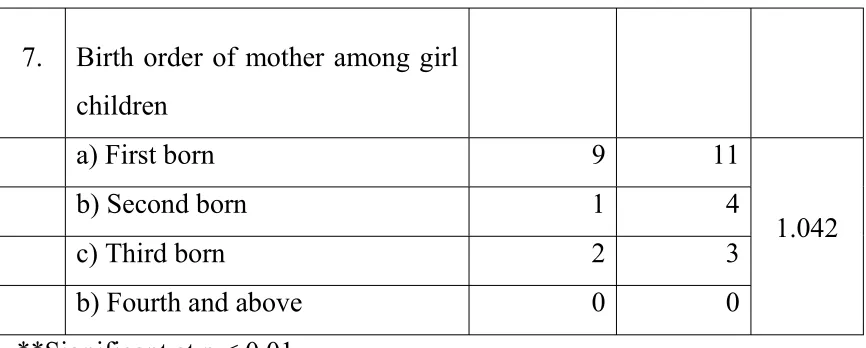
7. Birth order of mother among girl children
a) First born 9 11
b) Second born 1 4
c) Third born 2 3
b) Fourth and above 0 0
1.042
[image:71.595.100.533.135.309.2]**Significant at p < 0.01
Table-5
This section deals with the association between the selected background variables of sample and the post test expressed practice.
Association between background variables and posttest expressed practice of primimothers on lactation management.
S.
No Background variables
Moderately
Adequate Adequate χ2
1. Age of the mother (years)
a) 16 – 20 4 11
b) 21 – 25 6 2
c) 26 – 30 1 4
d) > 30 0 2
7.464*
2. Education of mother
a) Illiterate 1 2
b) Primary School 1 2
c) Higher Secondary 4 7
d) Degree 5 8
0.047
3. Occupation of mother
a) House wife 10 14
b) Coolie 0 0
c) Private Concern 1 2
d) Government employed 0 3
4. Income of the family (`)
a) 1,500 - 3,000 6 3
b) 3,001 – 5,000 0 0
c) 5,001 – 10,000 3 12
d) > 10,000 2 4
5.311
5. Religion
a) Hindu 9 13
b) Christian 0 3
c) Muslim 2 3
d) Others 0 0
1.931
6. Residence
a) Rural 4 4
b) Urban 7 15
7. Birth order of mother among girl children
a) First born 8 12
b) Second born 1 4
c) Third born 2 3
b) Fourth and above 0 0
0.718
CHAPTER – V
This chapter deals with the discussion of the study findings.
The study was done to determine the effectiveness of Computer Aided Instruction on lactation management among primimothers.
A pre-experimental design was used to conduct the study. Knowledge and expressed practice were assessed by self administered knowledge and expressed practice questionnaire and non-probability convenience sampling technique. The study sample consisted of 30 primimothers between 16-35yrs of age with 37-40 weeks gestational age. Using the above tool, data were collected and analyzed and the study findings revealed the following,
According to table-1, background variables of the primimothers, majority of them 15 (50) were between 16-20 years, their educational level showed 13(43) were graduates, 23(77) were house wives, their family income showed that 15(50) were earning Rs.5000- 10,000/ month. Religion shows that majority of them 22(73) were Hindus, 22 (73) of them were from urban areas. In regard to birth order among girl children in her family, majority of them were first born 20 (67).
The first objective of the study was to assess the of knowledge regarding lactation management of primimothers before and after Computer Aided Instruction administration.
In the present study, Figure – 2 shows the level of knowledge during the pre test and 26(87) of primimothers had acquired inadequate knowledge and 4(13) had acquired moderately adequate knowledge regarding lactaction management in the pre test. In the post test, 18(60) of them had acquired moderately adequate knowledge and 12 (40) of them had acquired adequate knowledge as shown in figure 2.
The mean posttest knowledge (72.62) was higher than the mean pretest knowledge (42.93) with the standard deviation (12.94) and the obtained ‘t’ value (t = 12.58) was significant at p< 0.05. Hence the stated hypothesis (H1) was accepted.
The investigator found that inadequate knowledge during pre test was due to lack of information regarding lactation management. The computer aided instruction had improved their knowledge level during post test. The result of the study insists the importance of health education to the client and family, since health education increased their knowledge and improved their practice. So the expectant mothers need to be informed and motivated about lactation management during antenatal checkup.
knowledge and favorable attitude towards child birth preparation including lactation management.
Kelleher CM (2007) conducted a qualitative, comparative socialogical study in 2 postpartum units in Boston clearly outlines the need for educating mothers about breast feeding in the prenatal period and during the first days after delivery, since the women experienced pain and discomfort during breast feeding.
Shu-Shan Lin., et al (2007) conducted a study to design a structured prenatal education programme on breastfeeding and to evaluate the effectiveness of the programme. Satisfaction with the programme was high. The rate of exclusive breastfeeding was higher for the experimental group at three days and one month postpartum.
Evielyn Labbay (2006) did a study on the effect of lecture versus booklet on the knowledge and attitude of mothers regarding breastfeeding in barangay Libertad, Aurora, Zamboanga del Sur. The result in the said study showed that the knowledge significantly increased in both lecture and booklet groups 1 month after intervention. Both groups also improved in their attitude towards breast feeding.
The second objective of this study was to assess express practice regarding lactation management among primimothers before and after computer aided instruction administration.
In the present study, expressed practice regarding lactation management showed that 26( 87), 2(7) & 2(7) of them had obtained poor, satisfactory and good practice scores respectively in the pre test. 11(37) &19 (63) of them had obtained satisfactory and good practice scores respectively in the post test as shown in figure – 3.
The mean post test expressed practice (82.57) was higher than the mean pre test expressed practice (47.08) with the standard deviation (15.29) and the obtained ‘t’ value (t = 12.703) was significant at p< 0.05. So the corresponding hypothesis (H2) was accepted as shown in table – 2.
The investigator found that primigravida mothers had obtained poor practice scores during pretest and good practice scores during post test. These findings suggest that increases in knowledge may increase their expressed practice and also primimothers get awareness regarding rationale for their practice. So, concerted efforts must be made by the health professionals to become aware of the importance of lactation management through out their antenatal and postnatal period.
These findings were supported by Kervin BE., et al., (2010) who conducted a cross sectional study, states that the breast feeding outcomes have to be improved and need to strengthen the professional support strategies since it is directly related to the better breast feeding behaviors.
Consultant use and breastfeeding duration and promote a longer duration of breastfeeding at postpartum when utilized in primary care settings.
Veronica Valdes., et al., (1995) conducted an experimental study on the effects on professional practices of a 3 day course on breast feeding assessed and reported changes in clinical breast feeding support practices following a 3 day course.
The third objective of the study was to correlate the knowledge and expressed practice regarding lactation management.
The investigator found that there was a significant positive correlation (r = 0.84) between the post test level of knowledge (mean = 72.67, standard deviation = 12.94) and post test level of expressed practice (mean = 82.57, standard deviation = 15.29) significant at p<0.01 as shown in table – 3.
These findings suggest that increase in knowledge may increase the expressed practice because the primimothers may be aware of the rationale for their practice. So health professionals should give current, accurate, consistent and non judgemental lactation management information to enhance successful breast feeding.
In the corresponding hypothesis 3 (H3), it was stated that there would be a significant relation between knowledge and expressed practice regarding lactation management among primimothers. The hypothesis 3was accepted by the study findings.