This is a repository copy of
Prognostic models for identifying risk of poor outcome in
people with acute ankle sprains: the SPRAINED development and external validation
study
.
White Rose Research Online URL for this paper:
http://eprints.whiterose.ac.uk/139382/
Version: Published Version
Article:
Keene, D.J., Schlüssel, M.M., Thompson, J. et al. (12 more authors) (2018) Prognostic
models for identifying risk of poor outcome in people with acute ankle sprains: the
SPRAINED development and external validation study. Health Technology Assessment, 22
(64). ISSN 1366-5278
https://doi.org/10.3310/hta22640
© Queen’s Printer and Controller of HMSO 2018. This work was produced by Keene et al.
under the terms of a commissioning contract issued by the Secretary of State for Health
and Social Care. This issue may be freely reproduced for the purposes of private research
and study and extracts (or indeed, the full report) may be included in professional journals
provided that suitable acknowledgement is made and the reproduction is not associated
with any form of advertising. Applications for commercial reproduction should be
addressed to: NIHR Journals Library, National Institute for Health Research, Evaluation,
Trials and Studies Coordinating Centre, Alpha House, University of Southampton Science
Park, Southampton SO16 7NS, UK.
[email protected] https://eprints.whiterose.ac.uk/ Reuse
Items deposited in White Rose Research Online are protected by copyright, with all rights reserved unless indicated otherwise. They may be downloaded and/or printed for private study, or other acts as permitted by national copyright laws. The publisher or other rights holders may allow further reproduction and re-use of the full text version. This is indicated by the licence information on the White Rose Research Online record for the item.
Takedown
If you consider content in White Rose Research Online to be in breach of UK law, please notify us by
HEALTH TECHNOLOGY ASSESSMENT
VOLUME 22 ISSUE 64 NOVEMBER 2018 ISSN 1366-5278
DOI 10.3310/hta22640
Prognostic models for identifying risk of poor
outcome in people with acute ankle sprains:
the SPRAINED development and external
validation study
David J Keene, Michael M Schlüssel, Jacqueline Thompson,
Prognostic models for identifying risk of
poor outcome in people with acute ankle
sprains: the SPRAINED development and
external validation study
David J Keene,
1
* Michael M Schlüssel,
1
Jacqueline Thompson,
1
Daryl A Hagan,
1
Mark A Williams,
2
Christopher Byrne,
3
Steve Goodacre,
4
Matthew Cooke,
5
Stephen Gwilym,
1,6
Philip Hormbrey,
6
Jennifer Bostock,
7
Kirstie Haywood,
5
David Wilson,
6
Gary S Collins
1
and Sarah E Lamb
1,5
on behalf of the
SPRAINED study group
1
Nuffield Department of Orthopaedics, Rheumatology and Musculoskeletal
Sciences, University of Oxford, Oxford, UK
2
Department of Sport, Health Sciences and Social Work, Oxford Brookes
University, Oxford, UK
3
Faculty of Health and Human Sciences, University of Plymouth, Plymouth, UK
4
School of Health and Related Research, University of Sheffield, Sheffield, UK
5
Warwick Medical School, University of Warwick, Coventry, UK
6
Emergency Department, Oxford University Hospitals NHS Foundation Trust,
Oxford, UK
7
Patient and public involvement representative
*Corresponding author
Declared competing interests of authors:Steve Goodacre is a member of the Health Technology
Published November 2018
DOI: 10.3310/hta22640
This report should be referenced as follows:
Keene DJ, Schlüssel MM, Thompson J, Hagan DA, Williams MA, Byrne C,et al. Prognostic models for identifying risk of poor outcome in people with acute ankle sprains: the SPRAINED
development and external validation study.Health Technol Assess2018;22(64).
Health Technology Assessmentis indexed and abstracted inIndex Medicus/MEDLINE,Excerpta Medica/EMBASE,Science Citation Index Expanded(SciSearch®) andCurrent Contents®/
Health Technology Assessment
HTA/HTA TARISSN 1366-5278 (Print)
ISSN 2046-4924 (Online)
Impact factor: 4.513
Health Technology Assessmentis indexed in MEDLINE, CINAHL, EMBASE, The Cochrane Library and the Clarivate Analytics Science Citation Index.
This journal is a member of and subscribes to the principles of the Committee on Publication Ethics (COPE) (www.publicationethics.org/).
Editorial contact: [email protected]
The full HTA archive is freely available to view online at www.journalslibrary.nihr.ac.uk/hta. Print-on-demand copies can be purchased from the report pages of the NIHR Journals Library website: www.journalslibrary.nihr.ac.uk
Criteria for inclusion in theHealth Technology Assessmentjournal
Reports are published inHealth Technology Assessment(HTA) if (1) they have resulted from work for the HTA programme, and (2) they are of a sufficiently high scientific quality as assessed by the reviewers and editors.
Reviews inHealth Technology Assessmentare termed‘systematic’when the account of the search appraisal and synthesis methods (to minimise biases and random errors) would, in theory, permit the replication of the review by others.
HTA programme
The HTA programme, part of the National Institute for Health Research (NIHR), was set up in 1993. It produces high-quality research information on the effectiveness, costs and broader impact of health technologies for those who use, manage and provide care in the NHS.
‘Health technologies’are broadly defined as all interventions used to promote health, prevent and treat disease, and improve rehabilitation and long-term care.
The journal is indexed in NHS Evidence via its abstracts included in MEDLINE and its Technology Assessment Reports inform National Institute for Health and Care Excellence (NICE) guidance. HTA research is also an important source of evidence for National Screening Committee (NSC) policy decisions.
For more information about the HTA programme please visit the website: http://www.nets.nihr.ac.uk/programmes/hta
This report
The research reported in this issue of the journal was funded by the HTA programme as project number 13/19/06. The contractual start date was in November 2014. The draft report began editorial review in August 2017 and was accepted for publication in February 2018. The authors have been wholly responsible for all data collection, analysis and interpretation, and for writing up their work. The HTA editors and publisher have tried to ensure the accuracy of the authors’report and would like to thank the reviewers for their constructive comments on the draft document. However, they do not accept liability for damages or losses arising from material published in this report.
This report presents independent research funded by the National Institute for Health Research (NIHR). The views and opinions expressed by authors in this publication are those of the authors and do not necessarily reflect those of the NHS, the NIHR, NETSCC, the HTA programme or the Department of Health and Social Care. If there are verbatim quotations included in this publication the views and opinions expressed by the interviewees are those of the interviewees and do not necessarily reflect those of the authors, those of the NHS, the NIHR, NETSCC, the HTA programme or the Department of Health and Social Care.
© Queen’s Printer and Controller of HMSO 2018. This work was produced by Keeneet al.under the terms of a commissioning contract issued by the Secretary of State for Health and Social Care. This issue may be freely reproduced for the purposes of private research and study and extracts (or indeed, the full report) may be included in professional journals provided that suitable acknowledgement is made and the reproduction is not associated with any form of advertising. Applications for commercial reproduction should be addressed to: NIHR Journals Library, National Institute for Health Research, Evaluation, Trials and Studies Coordinating Centre, Alpha House, University of Southampton Science Park, Southampton SO16 7NS, UK.
NIHR Journals Library Editor-in-Chief
Professor Ken Stein Chair of HTA and EME Editorial Board and Professor of Public Health, University of Exeter Medical School, UK
NIHR Journals Library Editors
Professor Ken Stein Chair of HTA and EME Editorial Board and Professor of Public Health, University of Exeter Medical School, UK
Professor Andrée Le May Chair of NIHR Journals Library Editorial Group (HS&DR, PGfAR, PHR journals)
Professor Matthias Beck Professor of Management, Cork University Business School, Department of Management and Marketing, University College Cork, Ireland
Dr Tessa Crilly Director, Crystal Blue Consulting Ltd, UK
Dr Eugenia Cronin Senior Scientific Advisor, Wessex Institute, UK
Dr Peter Davidson Consultant Advisor, Wessex Institute, University of Southampton, UK
Ms Tara Lamont Scientific Advisor, NETSCC, UK
Dr Catriona McDaid Senior Research Fellow, York Trials Unit, Department of Health Sciences, University of York, UK
Professor William McGuire Professor of Child Health, Hull York Medical School, University of York, UK
Professor Geoffrey Meads Professor of Wellbeing Research, University of Winchester, UK
Professor John Norrie Chair in Medical Statistics, University of Edinburgh, UK
Professor John Powell Consultant Clinical Adviser, National Institute for Health and Care Excellence (NICE), UK
Professor James Raftery Professor of Health Technology Assessment, Wessex Institute, Faculty of Medicine, University of Southampton, UK
Dr Rob Riemsma Reviews Manager, Kleijnen Systematic Reviews Ltd, UK
Professor Helen Roberts Professor of Child Health Research, UCL Great Ormond Street Institute of Child Health, UK
Professor Jonathan Ross Professor of Sexual Health and HIV, University Hospital Birmingham, UK
Professor Helen Snooks Professor of Health Services Research, Institute of Life Science, College of Medicine, Swansea University, UK
Professor Jim Thornton Professor of Obstetrics and Gynaecology, Faculty of Medicine and Health Sciences, University of Nottingham, UK
Professor Martin Underwood Warwick Clinical Trials Unit, Warwick Medical School, University of Warwick, UK
Please visit the website for a list of editors: www.journalslibrary.nihr.ac.uk/about/editors
Editorial contact: [email protected]
Abstract
Prognostic models for identifying risk of poor outcome in
people with acute ankle sprains: the SPRAINED development
and external validation study
David J Keene,
1* Michael M Schlüssel,
1Jacqueline Thompson,
1Daryl A Hagan,
1Mark A Williams,
2Christopher Byrne,
3Steve Goodacre,
4Matthew Cooke,
5Stephen Gwilym,
1,6Philip Hormbrey,
6Jennifer Bostock,
7Kirstie Haywood,
5David Wilson,
6Gary S Collins
1and Sarah E Lamb
1,5on behalf of the SPRAINED
study group
1Nuffield Department of Orthopaedics, Rheumatology and Musculoskeletal Sciences, University of Oxford, Oxford, UK
2Department of Sport, Health Sciences and Social Work, Oxford Brookes University, Oxford, UK 3Faculty of Health and Human Sciences, University of Plymouth, Plymouth, UK
4School of Health and Related Research, University of Sheffield, Sheffield, UK 5Warwick Medical School, University of Warwick, Coventry, UK
6Emergency Department, Oxford University Hospitals NHS Foundation Trust, Oxford, UK 7Patient and public involvement representative
*Corresponding author [email protected]
Background:Ankle sprains are very common injuries. Although recovery can occur within weeks, around one-third of patients have longer-term problems.
Objectives:To develop and externally validate a prognostic model for identifying people at increased risk of poor outcome after an acute ankle sprain.
Design:Development of a prognostic model in a clinical trial cohort data set and external validation in a prospective cohort study.
Setting:Emergency departments (EDs) in the UK.
Participants:Adults with an acute ankle sprain (within 7 days of injury).
Sample size:There were 584 clinical trial participants in the development data set and 682 recruited for the external validation study.
Predictors:Candidate predictor variables were chosen based on availability in the clinical data set, clinical consensus, face validity, a systematic review of the literature, data quality and plausibility of predictiveness of the outcomes.
Main outcome measures:Models were developed to predict two composite outcomes representing poor outcome. Outcome 1 was the presence of at least one of the following symptoms at 9 months after injury: persistent pain, functional difficulty or lack of confidence. Outcome 2 included the same symptoms as outcome 1, with the addition of recurrence of injury. Rates of poor outcome in the external data set
DOI: 10.3310/hta22640 HEALTH TECHNOLOGY ASSESSMENT 2018 VOL. 22 NO. 64
© Queen’s Printer and Controller of HMSO 2018. This work was produced by Keeneet al.under the terms of a commissioning contract issued by the Secretary of State for Health and Social Care. This issue may be freely reproduced for the purposes of private research and study and extracts (or indeed, the full report) may be included in professional journals provided that suitable acknowledgement is made and the reproduction is not associated with any form of advertising. Applications for commercial reproduction should be addressed to: NIHR Journals Library, National Institute for Health Research, Evaluation, Trials and Studies Coordinating Centre, Alpha House, University of Southampton Science Park, Southampton SO16 7NS, UK.
were lower than in the development data set, 7% versus 20% for outcome 1 and 16% versus 24% for outcome 2.
Analysis:Multiple imputation was used to handle missing data. Logistic regression models, together with multivariable fractional polynomials, were used to select variables and identify transformations of continuous predictors that best predicted the outcome based on a nominal alpha of 0.157, chosen to minimise overfitting. Predictive accuracy was evaluated by assessing model discrimination (c-statistic) and calibration (flexible calibration plot).
Results:(1) Performance of the prognostic models in development data set–the combinedc-statistic for the outcome 1 model across the 50 imputed data sets was 0.74 [95% confidence interval (CI) 0.70 to 0.79], with good model calibration across the imputed data sets. The combinedc-statistic for the outcome 2 model across the 50 imputed data sets was 0.70 (95% CI 0.65 to 0.74), with good model calibration across the imputed data sets. Updating these models, which used baseline data collected at the ED, with an additional variable at 4 weeks post injury (pain when bearing weight on the ankle) improved the discriminatory ability (c-statistic 0.77, 95% CI 0.73 to 0.82, for outcome 1 and 0.75, 95% CI 0.71 to 0.80, for outcome 2) and calibration of both models. (2) Performance of the models in the external data set– the combinedc-statistic for the outcome 1 model across the 50 imputed data sets was 0.73 (95% CI 0.66 to 0.79), with a calibration plot intercept of–0.91 (95% CI–0.98 to 0.44) and slope of 1.13 (95% CI 0.76 to 1.50). The combinedc-statistic for the outcome 2 model across the 50 imputed data sets was 0.63 (95% CI 0.58 to 0.69), with a calibration plot intercept of–0.25 (95% CI–0.27 to 0.11) and slope of 1.03 (95% CI 0.65 to 1.42). The updated models with the additional pain variable at 4 weeks had improved discriminatory ability over the baseline models but not better calibration.
Conclusions:The SPRAINED (Synthesising a clinical Prognostic Rule for Ankle Injuries in the Emergency Department) prognostic models performed reasonably well, and showed benefit compared with not using any model; therefore, the models may assist clinical decision-making when managing and advising ankle sprain patients in the ED setting. The models use predictors that are simple to obtain.
Limitations:The data used were from a randomised controlled trial and so were not originally intended to fulfil the aim of developing prognostic models. However, the data set was the best available, including data on the symptoms and clinical events of interest.
Future work:Further model refinement, including recalibration or identifying additional predictors, may be required. The effect of implementing and using either model in clinical practice, in terms of acceptability and uptake by clinicians and on patient outcomes, should be investigated.
Trial registration:Current Controlled Trials ISRCTN12726986.
Funding:This project was funded by the National Institute for Health Research (NIHR) Health Technology Assessment programme and will be published in full inHealth Technology Assessment; Vol. 22, No. 64. See the NIHR Journals Library website for further project information. Funding was also recieved from the NIHR Collaboration for Leadership in Applied Health Research, Care Oxford at Oxford Health NHS Foundation Trust, NIHR Biomedical Research Centre, Oxford, and the NIHR Fellowship programme.
ABSTRACT
NIHR Journals Library www.journalslibrary.nihr.ac.uk
Contents
List of tables xiii
List of figures xv
List of boxes xvii
List of abbreviations xix
Plain English summary xxi
Scientific summary xxiii
Chapter 1Introduction 1
Background 1
Incidence and costs 1
Usual clinical pathway 1
Value of a prognostic model 1
Requirements of a prognostic model 2
Existing prognostic models 2
Aim of the SPRAINED study 2
Chapter 2Overview of methods 3
Summary of study design 3
Systematic review of the literature 3
Expert consensus process 3
Developing a multivariable prognostic model from the CAST data set 3
External validation of the prognostic model in a prospective observational cohort study 4
Pilot of substudy of dynamic consent 4
Patient and public involvement 4
Ethics approval and monitoring 4
Study Steering Committee 5
Study Management Group 5
Reporting 5
Summary of changes to the study protocol and analysis plan 6
Chapter 3Systematic review 7
Introduction 7
Methods 7
Search strategy 7
Eligibility criteria 7
Data extraction 7
Risk-of-bias assessment 7
Data synthesis and reporting 8
Results 8
Study characteristics 8
Risk-of-bias assessment 11
Prognostic factors identified 11
Discussion 18
Limitations of ankle sprain prognostic factor studies 18 DOI: 10.3310/hta22640 HEALTH TECHNOLOGY ASSESSMENT 2018 VOL. 22 NO. 64
© Queen’s Printer and Controller of HMSO 2018. This work was produced by Keeneet al.under the terms of a commissioning contract issued by the Secretary of State for Health and Social Care. This issue may be freely reproduced for the purposes of private research and study and extracts (or indeed, the full report) may be included in professional journals provided that suitable acknowledgement is made and the reproduction is not associated with any form of advertising. Applications for commercial reproduction should be addressed to: NIHR Journals Library, National Institute for Health Research, Evaluation, Trials and Studies Coordinating Centre, Alpha House, University of Southampton Science Park, Southampton SO16 7NS, UK.
Chapter 4Consensus meeting 19
Introduction 19
Methods 19
Participants 19
Facilitators 20
Consensus process 20
Results 21
Participants 21
Pre-meeting questionnaire results 21
Consensus meeting results 22
Discussion 23
Chapter 5Development and internal validation of the SPRAINED prognostic
models in the CAST data set 25
Introduction 25
Methods 25
Individual participant data used to develop the models (study population) 25
Definition of the primary outcomes 25
Available candidate predictors and initial selection of variables for modelling 27
Development data set preparation 32
Exploratory analysis and data transformation 32
Handling missing data 33
Sample size considerations 35
Data modelling 36
Model update 37
Assessment of model performance 37
Shrinkage 38
Results 39
Baseline characteristics 39
Multivariable models 45
Model performance 45
Application of the SPRAINED study model 57
Chapter 6External validation study of the SPRAINED prognostic models 61
Introduction 61
Methods 61
Cohort design and study population 61
Sample size 61
Screening and eligibility assessment 62
Informed consent and recruitment 62
Data collection and management 62
Study assessments 63
Outcome measures 64
Predictors of poor outcome at 9 months after ankle sprain 64
Statistical methods 64
Results 68
Exploratory analysis 68
Model performance 73
Subgroup analyses 76
Model recalibration 76
CONTENTS
NIHR Journals Library www.journalslibrary.nihr.ac.uk
Chapter 7Overall discussion 79
Performance of the SPRAINED prognostic models 79
Summary 79
Strengths and limitations 80
Other prognostic models reported during the SPRAINED study 81
Clinical implications of the SPRAINED study 81
Implementation of the SPRAINED prognostic models 82
Recommendations for future research 83
Conclusions 83
Acknowledgements 85
References 89
Appendix 1Dynamic consent 95
Appendix 2Systematic review search strategy 97 Appendix 3Consensus meeting pre-meeting questionnaire 105 Appendix 4Emergency department clinical data set form 111
DOI: 10.3310/hta22640 HEALTH TECHNOLOGY ASSESSMENT 2018 VOL. 22 NO. 64
© Queen’s Printer and Controller of HMSO 2018. This work was produced by Keeneet al.under the terms of a commissioning contract issued by the Secretary of State for Health and Social Care. This issue may be freely reproduced for the purposes of private research and study and extracts (or indeed, the full report) may be included in professional journals provided that suitable acknowledgement is made and the reproduction is not associated with any form of advertising. Applications for commercial reproduction should be addressed to: NIHR Journals Library, National Institute for Health Research, Evaluation, Trials and Studies Coordinating Centre, Alpha House, University of Southampton Science Park, Southampton SO16 7NS, UK.
List of tables
TABLE 1 Changes to the protocol during the study by version number 6 TABLE 2 Key characteristics of included studies 9 TABLE 3 Risk-of-bias assessment of the nine included studies, in accordance with
the QUIPS tool 11
TABLE 4 Prognostic factors for short-term (≤8 weeks) outcome in acute lateral
ankle sprain 12
TABLE 5 Prognostic factors for medium-term (≤4 months) outcome in acute
lateral ankle sprain 13
TABLE 6 Prognostic factors for long-term (>4 months) outcome in acute lateral
ankle sprain 14
TABLE 7 Summary of all formally investigated prognostic factors across the
included studies 15
TABLE 8 Findings from the pre-meeting questionnaire including ratings of
importance for baseline prognostic factors and additional nominated factors 21 TABLE 9 Results of final voting for prognostic factors. Dichotomous responses
(yes/no) 22
TABLE 10 Definitions of time points in CAST 26 TABLE 11 Proportion of outcomes (and components) observed in the CAST data set 27 TABLE 12 Preselected candidate predictor variables from ED presentation and
baseline assessment 30
TABLE 13 Selected candidate predictor variables from the CAST 4-week follow-up
questionnaire 32
TABLE 14 Format and categories/units of candidate predictor variables in the
original CAST data set and after data manipulation 34
TABLE 15 Reason for exclusion of predictors before the modelling process 36 TABLE 16 Main methods of assessing prognostic model performance 38 TABLE 17 Summary of baseline characteristics (candidate predictors) of the
CAST sample 39
TABLE 18 Spearman’s rank-correlation coefficients between pre-selected
candidate predictors from baseline 48
DOI: 10.3310/hta22640 HEALTH TECHNOLOGY ASSESSMENT 2018 VOL. 22 NO. 64
© Queen’s Printer and Controller of HMSO 2018. This work was produced by Keeneet al.under the terms of a commissioning contract issued by the Secretary of State for Health and Social Care. This issue may be freely reproduced for the purposes of private research and study and extracts (or indeed, the full report) may be included in professional journals provided that suitable acknowledgement is made and the reproduction is not associated with any form of advertising. Applications for commercial reproduction should be addressed to: NIHR Journals Library, National Institute for Health Research, Evaluation, Trials and Studies Coordinating Centre, Alpha House, University of Southampton Science Park, Southampton SO16 7NS, UK.
TABLE 19 Summary of the full multivariable logistic regression models including
all 23 candidate predictors of poor outcome after ankle sprain (outcomes 1 and 2) 50 TABLE 20 Estimates of the final models for the prediction of outcomes 1 and
2 occurrence 52
TABLE 21 Summary of the full multivariable logistic regression including the predictors selected for the baseline models and the 4-weeks candidate predictors
for the updated models 53
TABLE 22 Intercept and regression coefficients of the prediction models for poor recovery 9 months after ankle sprain (outcomes 1 and 2), before and after
correction for optimism (shrinkage) 57
TABLE 23 Information on the relevant prediction models for poor recovery
9 months after ankle sprain 58
TABLE 24 Predictor variables and their formats in the original CAST data set, the final model and the SPRAINED data set (with respective numbers of
missing data) 65
TABLE 25 Baseline characteristics of CAST and SPRAINED cohort study samples 69 TABLE 26 Spearman’s rank-correlation coefficient matrix for all predictors
included in the SPRAINED prognostic model for the risk of poor outcome
9 months after acute ankle injury 72
TABLE 27 Outcomes and component symptoms,n(%), in the CAST and
SPRAINED data sets 73
TABLE 28 Summary of the combined performance measures (discrimination and calibration) for the prognostic models applied to the participants in the
SPRAINED study sample 73
TABLE 29 Models performance (numbers at risk and outcomes identified)
at varying risk thresholds for 1000 patients 76
TABLE 30 Transformations for non-categorical predictors in the recalibrated
models for outcomes 1 and 2 77
TABLE 31 Intercept and regression coefficients of the recalibrated prediction models for poor recovery 9 months after ankle sprain (outcomes 1 and 2), before
and after correction for optimism (shrinkage) 77
TABLE 32 Principal investigators/research fellows, nurses or therapists by hospital
site, in order of date starting recruitment 85
LIST OF TABLES
NIHR Journals Library www.journalslibrary.nihr.ac.uk
List of figures
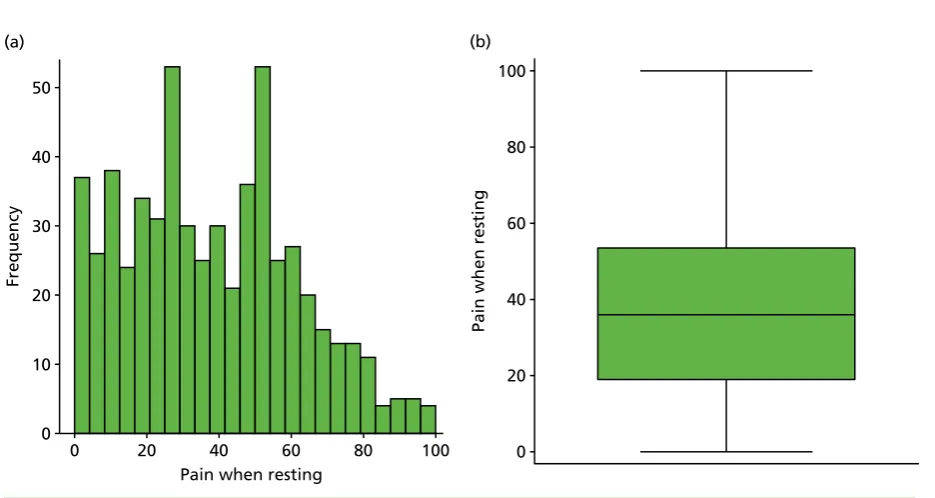
FIGURE 1 Stages of the SPRAINED study 3 FIGURE 2 Flow chart of the SPRAINED cohort study 5 FIGURE 3 The PRISMA flow diagram 8 FIGURE 4 Participants’age 41 FIGURE 5 Participants’height 42 FIGURE 6 Participants’weight 42 FIGURE 7 Participants’BMI 43 FIGURE 8 Pain score when resting at ED presentation 43 FIGURE 9 Pain score when bearing weight at baseline assessment 44 FIGURE 10 Short Form questionnaire-12 items (SF-12) mental component score 44 FIGURE 11 Decision curve analysis plot for outcome 1 54 FIGURE 12 Decision curve analysis plot for outcome 2 54 FIGURE 13 Calibration plot of the prognostic model for outcome 1 55 FIGURE 14 Calibration plot of the prognostic model for outcome 2 56 FIGURE 15 Flow of participants through the SPRAINED observational cohort study 69 FIGURE 16 Distribution of age values in the SPRAINED cohort study data set 71 FIGURE 17 Distribution of BMI values in the SPRAINED cohort study data set 72 FIGURE 18 Calibration plots for the baseline and updated prognostic models to
predict outcome 1, overlaying the 50 calibration lines derived from the individual
imputed SPRAINED data sets 74
FIGURE 19 Calibration plots for the baseline and updated prognostic models to predict outcome 2, overlaying the 50 calibration lines derived from the individual
imputed SPRAINED data sets 75
DOI: 10.3310/hta22640 HEALTH TECHNOLOGY ASSESSMENT 2018 VOL. 22 NO. 64
© Queen’s Printer and Controller of HMSO 2018. This work was produced by Keeneet al.under the terms of a commissioning contract issued by the Secretary of State for Health and Social Care. This issue may be freely reproduced for the purposes of private research and study and extracts (or indeed, the full report) may be included in professional journals provided that suitable acknowledgement is made and the reproduction is not associated with any form of advertising. Applications for commercial reproduction should be addressed to: NIHR Journals Library, National Institute for Health Research, Evaluation, Trials and Studies Coordinating Centre, Alpha House, University of Southampton Science Park, Southampton SO16 7NS, UK.
List of boxes
BOX 1 List of candidate predictor variables from the ED presentation data set 28 BOX 2 List of candidate predictor variables from the baseline assessment data sets 28
DOI: 10.3310/hta22640 HEALTH TECHNOLOGY ASSESSMENT 2018 VOL. 22 NO. 64
© Queen’s Printer and Controller of HMSO 2018. This work was produced by Keeneet al.under the terms of a commissioning contract issued by the Secretary of State for Health and Social Care. This issue may be freely reproduced for the purposes of private research and study and extracts (or indeed, the full report) may be included in professional journals provided that suitable acknowledgement is made and the reproduction is not associated with any form of advertising. Applications for commercial reproduction should be addressed to: NIHR Journals Library, National Institute for Health Research, Evaluation, Trials and Studies Coordinating Centre, Alpha House, University of Southampton Science Park, Southampton SO16 7NS, UK.
List of abbreviations
AFS Ankle Function Score
AIC Akaike information criterion
BMI body mass index
CAI chronic ankle instability
CAST Collaborative Ankle Support Trial
CDF clinical data set form
CI confidence interval
CRF case report form
DCA decision curve analysis
ED emergency department
EPV events per variable
EQ-5D EuroQol-5 Dimensions
ESP Extended Scope Practitioner
FAOS Foot and Ankle Outcome Score
GCP Good Clinical Practice
HeLEX Centre for Health, Law and
Emerging Technologies
HTA Health Technology Assessment
ICF informed consent form
LOWESS locally weighted scatterplot
smoothing
MAR missing at random
MeSH medical subject heading
MFP multivariable fractional polynomial
MICE multiple imputation by chained
equations
mNGT modified nominal group technique
MRI magnetic resonance imaging
NIHR National Institute for Health
Research
OCTRU Oxford Clinical Trials Research Unit
PPI patient and public involvement
PRISMA Preferred Reporting Items for
Systematic Reviews and Meta-Analyses
QUIPS Quality In Prognosis Studies
RCT randomised controlled trial
REC Research Ethics Committee
SD standard deviation
SMG Study Management Group
SPRAINED Synthesising a clinical Prognostic Rule for Ankle Injuries in the Emergency Department
SSC Study Steering Committee
DOI: 10.3310/hta22640 HEALTH TECHNOLOGY ASSESSMENT 2018 VOL. 22 NO. 64
© Queen’s Printer and Controller of HMSO 2018. This work was produced by Keeneet al.under the terms of a commissioning contract issued by the Secretary of State for Health and Social Care. This issue may be freely reproduced for the purposes of private research and study and extracts (or indeed, the full report) may be included in professional journals provided that suitable acknowledgement is made and the reproduction is not associated with any form of advertising. Applications for commercial reproduction should be addressed to: NIHR Journals Library, National Institute for Health Research, Evaluation, Trials and Studies Coordinating Centre, Alpha House, University of Southampton Science Park, Southampton SO16 7NS, UK.
Plain English summary
S
prains of the ankle joint ligaments are very common injuries. Most people recover within a few weeks but up to one in three people have a poor outcome. A poor outcome includes problems such as ongoing pain, difficulties moving about, lack of confidence and further sprains. It is challenging to work out who will recover and who will not because, when people come into emergency departments (EDs) for assessment, the ankle is often so sore that the patient cannot tolerate a thorough examination.We developed a tool to help predict who is at greater risk of a poor outcome. A tool like this would be useful as it would have the potential to assist clinical decision-making and could help identify the people with an acute ankle sprain who could benefit from rehabilitation and monitoring.
The tool takes into account participant characteristics, such as age, and injury characteristics, such as the severity of pain reported. The tool had good accuracy among a group of participants who had been involved in a clinical trial. To see how the tool performed in another group of participants, we recruited 682 participants from 10 EDs in the UK. We collected information on the participant and injury characteristics when the participant attended the ED and again 9 months afterwards. The research indicated that the tool has moderate ability to predict what will happen in the future. There are limitations to the accuracy of the predictions of the tool. However, our analyses suggest that using the tool is better than the scenario of not using a tool to identify people at risk of a poor outcome after ankle sprain.
To make use of the tool in clinical settings, it would benefit from being set up on a web-based application or a similar mobile platform to enable clinicians to enter information about a patient and obtain a
calculated risk score. The prediction tool could also be improved by further research to see how well it performs in routine clinical care and in other settings.
DOI: 10.3310/hta22640 HEALTH TECHNOLOGY ASSESSMENT 2018 VOL. 22 NO. 64
© Queen’s Printer and Controller of HMSO 2018. This work was produced by Keeneet al.under the terms of a commissioning contract issued by the Secretary of State for Health and Social Care. This issue may be freely reproduced for the purposes of private research and study and extracts (or indeed, the full report) may be included in professional journals provided that suitable acknowledgement is made and the reproduction is not associated with any form of advertising. Applications for commercial reproduction should be addressed to: NIHR Journals Library, National Institute for Health Research, Evaluation, Trials and Studies Coordinating Centre, Alpha House, University of Southampton Science Park, Southampton SO16 7NS, UK.
Scientific summary
Background
Ankle sprains are one of the most common musculoskeletal injuries. Although recovery can occur within weeks, up to one-third of patients still have problems with their ankle at 1 year post injury. In the acute phase there is no reliable way of establishing which patients are at risk of having a poor outcome.
Objectives
To develop prognostic models to be used in an acute setting to identify people at increased risk of poor outcome following an acute ankle sprain, and to evaluate the performance of these prognostic models in a prospective external validation study.
Methods
Research programme
A systematic review of prognostic factors for poor outcome after ankle sprain was conducted, followed by an expert consensus meeting, then development of prognostic models and external validation using data from a prospective observational cohort study.
Systematic review
The review was registered on the PROSPERO database: CRD42014014471. Electronic databases were searched [Allied and Complementary Database (AMED), EMBASE, PsycINFO, Cumulative Index to Nursing and Allied Health Literature (CINAHL) and SPORTDiscus, PubMed, Cochrane Register of Clinical Trials, Physiotherapy Evidence Database (PEDro)]. Studies that had participants with acute ankle sprain, a longitudinal design and assessment of at least one baseline prognostic factor were included. Eligibility assessments, data extraction and risk-of-bias assessments [using the Quality In Prognosis Studies (QUIPS) tool] were completed by two independent reviewers. A narrative synthesis was conducted.
Consensus meeting
A range of key stakeholders involved in ankle sprain care and research in the UK NHS, including patient and public representatives, health-care professionals and clinical researchers, were invited to a 1-day consensus meeting.
A modified nominal group technique (mNGT) was used to facilitate the consensus process. The participants were divided into three groups (participants were pre-assigned to groups to ensure that there was a mixture of clinicians, researchers and patient representatives in each group) and were asked to rank important prognostic factors, some of which were nominated in the pre-meeting questionnaire.
Discussions were immediately followed by a plenary session to report results of the group discussions to the entire group. A final session comprised a voting process, in which each participant indicated whether or not each factor should be included in the prognostic model. The number of votes allowed was limited to 10 per individual. This was completed independently on paper questionnaires. Factors with≥70%
agreement across participants were considered critically important and eligible for inclusion in the validation study.
DOI: 10.3310/hta22640 HEALTH TECHNOLOGY ASSESSMENT 2018 VOL. 22 NO. 64
© Queen’s Printer and Controller of HMSO 2018. This work was produced by Keeneet al.under the terms of a commissioning contract issued by the Secretary of State for Health and Social Care. This issue may be freely reproduced for the purposes of private research and study and extracts (or indeed, the full report) may be included in professional journals provided that suitable acknowledgement is made and the reproduction is not associated with any form of advertising. Applications for commercial reproduction should be addressed to: NIHR Journals Library, National Institute for Health Research, Evaluation, Trials and Studies Coordinating Centre, Alpha House, University of Southampton Science Park, Southampton SO16 7NS, UK.
Development of the models
Data sources
Individual participant data from the existing Collaborative Ankle Support Trial (CAST) database were used to develop two prognostic models for poor outcome after ankle sprain. CAST was a pragmatic, multicentre, randomised controlled trial (RCT), with blinded assessment of the outcome, designed to estimate the clinical effectiveness and cost-effectiveness of three different types of mechanical ankle support [Aircast®ankle brace (DJO Incorporated, Vista, CA, USA), Bledsoe®boot (Bledsoe Boot Systems,
Grand Prairie, TX, USA) or 10-day below-knee cast] for the initial management of severe ankle sprain (defined as an injury of grade 2 or 3, without fracture) compared with a double-layer tubular compression bandage.
The trial population comprised 584 individuals aged≥16 years attending emergency departments (EDs) in the UK with an ankle sprain and an inability to fully bear weight on the injured ankle at the time of presentation to the ED and at their review clinic appointment (the trial’s baseline assessment). People were excluded if they presented with an ankle fracture (apart from a flake fractures of<2 mm), any other
recent fracture, any contraindication to any of the four arms of the trial, poor skin viability preventing splinting or casting, or if their injury occurred>7 days before the first presentation at the recruiting ED.
Participants were followed up at 1, 3 and 9 months after randomisation.
Candidate predictors
Twenty-three candidate predictor variables collected during the enrolment and baseline assessments of CAST were examined; all of these variables came under the following domains: age, sex, pain, previous injury, ankle stability tests, weight-bearing ability and severity of presenting clinical signs and symptoms. These candidate predictor variables were chosen based on clinical consensus, face validity, systematic review of the literature, data quality and whether or not they were plausibly predictive of the outcomes.
Outcomes
The first prognostic model was developed to predict a composite outcome representing the presence of at least one of the following symptoms at 9 months post injury: persistent pain, functional difficulty or lack of confidence (outcome 1).
The second model was developed to predict a composite outcome representing the presence of at least one of the following symptoms or clinical events at 9 months post injury: persistent pain, functional difficulty, lack of confidence or recurrence of injury (outcome 2).
Sample size
Based on the CAST data set, between 20% (116/584) and 24% (140/584) of people attending an ED for an acute ankle sprain experienced a poor outcome at 9 months. As this was the first study aiming to produce prognostic models to predict poor outcome after ankle sprain, we relaxed the recommendation of five events per variable (EPV) for the number of variables in a logistic regression model. We included 23 candidate predictors (with a total of 35 degrees of freedom) in the full model, which meant an EPV ratio of approximately 3 (116/35) and 4 (140/35) for outcomes 1 and 2, respectively.
Analysis
Multiple imputation was used to handle missing data, with 50 imputed data sets created. Based on a logistic regression model, multivariable fractional polynomials (MFPs) were used to select variables and identify transformations of continuous variables that best predicted the outcome. Inclusion of predictors in the final models was based on a nominal alpha of 0.157 (equivalent to the Akaike information criterion) to reduce the risk of overfitting. Shrinkage of the regression coefficients and intercepts was performed based on heuristic shrinkage factors to correct for optimism. Predictive accuracy of the models was evaluated by assessing model discrimination (quantified by thec-statistic) and model calibration (flexible calibration plot).
SCIENTIFIC SUMMARY
NIHR Journals Library www.journalslibrary.nihr.ac.uk
External validation of the model
A prospective cohort study recruited people with acute ankle sprain attending one of 10 NHS EDs across England over a period of 9 months (July 2015–March 2016). There was no planned treatment allocation, as in a RCT, and EDs provided usual care in accordance with local protocols. Data collection took place at the time of a participant’s presentation to any of the study recruiting sites (baseline) and subsequently at 4 weeks and 4 and 9 months after the initial injury. People aged≥16 years with an acute ankle sprain
(of<7 days’duration) of any severity were invited to take part in the study. People with an ankle fracture
(except a flake fracture of<2 mm) or other recent (<3 months) lower limb fracture were excluded. During
this part of the study, a pilot of dynamic consent was also included in the later stages of recruitment. This gave participants an opportunity to use a website to interact with study information and update their preferences.
Results
Systematic review
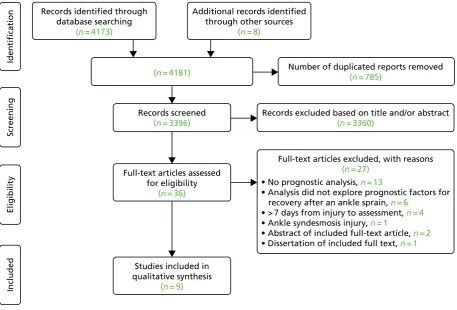
Searches identified 4173 reports, with eight reports identified from additional sources. Thirty-six reports were assessed in full-text screening and nine studies were included in the review.
One study was judged to be at low risk of bias, five at moderate risk of bias and three studies at high risk of bias. Incomplete and/or inadequate reporting standards were a common issue; for example, it was difficult to determine if prognostic factors were eliminated because of statistical reasons or poor clinical utility. None of the studies reported on performance of the prognostic models using methods to assess internal or external validation. Across the included studies, a wide range of prognostic factors was investigated. The prognostic factors that were analysed varied considerably between studies, with no common framing across the studies. The identified studies and risk-of-bias assessments were summarised to those attending the consensus meeting.
Consensus meeting
The consensus meeting was attended by 30 participants. The final consensus voting identified eight baseline factors that were deemed critical for the identification of people likely to have a poor recovery. These factors spanned pre-injury, sociodemographic, psychosocial and clinical assessment factors, encompassing a holistic biopsychosocial model of recovery. These factors were included in the data collection at baseline for the prospective observational study.
Performance of the prognostic models in development data set
The first model predicted the presence of persistent pain, functional difficulty or lack of confidence at 9 months and comprised age, body mass index, pain when resting, pain when bearing weight, number of days from injury to assessment, whether or not the injury is a recurrent sprain and the ability to bear any weight on the injured ankle (outcome 1). The apparent performance on a complete-case analysis of the CAST data set showed ac-statistic of 0.82 [95% confidence interval (CI) 0.75 to 0.89]. The combined
c-statistic across the 50 imputed data sets was 0.74 (95% CI 0.70 to 0.79), with good model calibration.
The second model predicted the presence of either persistent pain, functional difficulty, lack of confidence or recurrence of injury at 9 months and comprised pain when resting, pain when bearing weight, days from injury to assessment, ability to bear any weight on the injured ankle and whether or not the injury is a recurrent sprain (outcome 2). The apparent performance on a complete-case analysis of the CAST data set showed ac-statistic of 0.73 (95% CI 0.66 to 0.81). The combinedc-statistic across the 50 imputed data sets was 0.70 (95% CI 0.65 to 0.74), with good model calibration.
Updating these models, which used baseline data collected at the ED, with an additional variable at 4 weeks after the injury (pain when bearing weight on the ankle), improved the predictions of the models when compared, using decision curve analysis plots.
DOI: 10.3310/hta22640 HEALTH TECHNOLOGY ASSESSMENT 2018 VOL. 22 NO. 64
© Queen’s Printer and Controller of HMSO 2018. This work was produced by Keeneet al.under the terms of a commissioning contract issued by the Secretary of State for Health and Social Care. This issue may be freely reproduced for the purposes of private research and study and extracts (or indeed, the full report) may be included in professional journals provided that suitable acknowledgement is made and the reproduction is not associated with any form of advertising. Applications for commercial reproduction should be addressed to: NIHR Journals Library, National Institute for Health Research, Evaluation, Trials and Studies Coordinating Centre, Alpha House, University of Southampton Science Park, Southampton SO16 7NS, UK.
A substudy to pilot dynamic consent recruited 22 participants in the later phase of the prospective cohort study. Eight participants accessed their dynamic consent online web page and none changed his/her consent decisions during the study.
Performance of the models in the external data set
Discrimination of the model for outcome 1 was similar to that observed in the development data set (combinedc-statistic across the 50 imputed data sets=0.73, 95% CI 0.66 to 0.79), but calibration was
poor (combined calibration plot intercept=–0.91, 95% CI–1.18 to–0.65, and slope=1.13, 95% CI
0.76 to 1.50). For the outcome 2 model, the combinedc-statistic across the 50 imputed data sets was 0.63 (95% CI 0.58 to 0.69), the calibration plot intercept was–0.25 (95% CI–0.44 to–0.06) and the slope was 1.03 (95% CI 0.65 to 1.42). Discrimination of the updated model for outcome 1 was better (combinedc-statistic=0.78, 95% CI 0.72 to 0.84), but calibration did not improve substantially (combined
calibration plot intercept=–0.62, 95% CI–0.89 to–0.34, and slope=1.17, 95% CI 0.86 to 1.48). The
combinedc-statistic for the updated model for outcome 2 was 0.64 (95% CI 0.59 to 0.69), the calibration plot intercept was 0.12 (95% CI–0.07 to–0.32) and slope was 0.68 (95% CI 0.46 to 0.91). Finally, model performance was not better for the subgroup of participants with more severe injuries (ankle sprains of grade 2 or 3). All models were recalibrated (i.e. had their regression coefficients and intercepts re-estimated) using the external validation data set.
A substudy to pilot dynamic consent recruited 22 participants in the later phase of the prospective cohort study. Eight participants accessed their dynamic consent online web page and none changed his/her consent decisions during the study.
Conclusions
Both models and their updates provided good predictions of poor outcome for people with acute ankle sprain on the population used in their derivation. There was a slight decrease in model discrimination for both models when evaluated in a prospectively collected external validation cohort. The models predicting presence of persistent pain, functional difficulty, lack of confidence or recurrence of injury showed good calibration, whereas there was miscalibration of the model predicting persistent pain, functional difficulty or lack of confidence. Recalibration of the models may be required to improve the accuracy of the predicted risks in other populations (within and outside the UK).
Implications for health care
The SPRAINED (Synthesising a clinical Prognostic Rule for Ankle Injuries in the Emergency Department) study prognostic models performed reasonably well and showed benefit when compared with not using any model (i.e. consider all patients to be at a high risk of poor outcome); therefore, the models may assist clinical decision-making when assessing and advising people with ankle sprains in the ED setting and when deciding on ongoing management. The models benefit from using predictors that are simple to obtain during routine clinical assessment.
Recommendations for research
Further research to evaluate the performance of the models in other settings is recommended. Further refinement of the models, including external validation of the recalibrated models or identifying additional predictors, may be required. The impact of implementing and using either model in clinical practice, in terms of acceptability and uptake by ED staff, and their impact on patient outcomes, should be investigated.
Trial registration
This trial is registered as ISRCTN12726986. SCIENTIFIC SUMMARY
NIHR Journals Library www.journalslibrary.nihr.ac.uk
Funding
Funding for this study was provided by the Health Technology Assessment programme of the National Institute for Health Research. Funding was also recieved from the NIHR Collaboration for Leadership in Applied Health Research, Care Oxford at Oxford Health NHS Foundation Trust, NIHR Biomedical Research Centre, Oxford and the NIHR Fellowship programme.
DOI: 10.3310/hta22640 HEALTH TECHNOLOGY ASSESSMENT 2018 VOL. 22 NO. 64
© Queen’s Printer and Controller of HMSO 2018. This work was produced by Keeneet al.under the terms of a commissioning contract issued by the Secretary of State for Health and Social Care. This issue may be freely reproduced for the purposes of private research and study and extracts (or indeed, the full report) may be included in professional journals provided that suitable acknowledgement is made and the reproduction is not associated with any form of advertising. Applications for commercial reproduction should be addressed to: NIHR Journals Library, National Institute for Health Research, Evaluation, Trials and Studies Coordinating Centre, Alpha House, University of Southampton Science Park, Southampton SO16 7NS, UK.
Chapter 1
Introduction
Background
Incidence and costs
Ankle sprains are one of the most common musculoskeletal injuries. Between 3% and 5% of people who attend an emergency department (ED) in the UK do so as a result of sustaining a sprained ankle.1The vast
majority of sprains are of the lateral (outside) ligaments, and vary from minor stretching (grade 1) to a complete tear (grade 3).2Recent systematic reviews3,4conclude that≈30% of people still have problems
with their injury 1 year after an ankle sprain, depending on the outcome measured and, perhaps more importantly, the sampling frame. Many studies are restrictive in their sampling frame, either concentrating on elite athletes or excluding younger and older people. Studies also have variable inception and follow-up points, which further complicates interpretation. A large multicentre randomised controlled trial (RCT) conducted in EDs in the UK reported an estimated prevalence of poor outcome of 30% at 9 months.5
Other studies agree that recovery plateaus at around 9 months, and that residual disability after this point is likely to be persistent.6One potential consequence of ankle sprain, chronic ankle instability (CAI), is
implicated in the development of ankle osteoarthritis, even without an acute osteochondral lesion.7
Usual clinical pathway
Assessment of the injury in the acute phase is challenging as the ankle is often so swollen and painful that it cannot easily be examined. Most people are advised to rest, to elevate the ankle and to apply ice and compression; crutches are often issued if bearing weight is difficult. The Ottawa guidance8can be used to
reduce the requirement for imaging without missing significant fractures. If clinicians are concerned about the degree of injury, most health-care providers operate a system of review within 1 week in a trauma clinic or equivalent injury service. This time frame allows some resolution of swelling, and greater certainty in ascertainment of injury severity and presence of other significant mechanical derangement.9Treatment options
at this stage include further watchful waiting, diagnostics, intensive physiotherapy and immobilisation. Surgery may be considered at this stage, although most centres would initiate a test of conservative management first. We have previously published a survey of practice,1which remains a reasonable reflection of current
management in the UK.
Value of a prognostic model
In this report we utilise the terms recommended in the Prognosis Research Strategy (PROGRESS)10–12
framework to describe the different types of prognostic research. A prognostic factor is‘. . . any measure that, among people with a given health condition (that is, a start point), is associated with a subsequent clinical outcome (an endpoint)’.12A prognostic model is‘. . . a formal combination of multiple predictors
from which risks of a specific endpoint can be calculated for individual patients’.10
A prognostic model is advised to identify people likely to experience poor outcome after ankle sprain. There are several ways in which better prognostic information could yield benefit to the NHS and to patients. The first way would be the ability to decide whether or not an early review is merited and avoid unnecessary appointments. The second way would be the ability to target treatments and diagnostics more effectively and earlier in the recovery pathway. Finally, it could offer reassurance that people with ankle sprains who are not followed up are likely to be on a positive recovery trajectory. The large number of people who sustain an ankle sprain is a key issue for management; cost savings will accrue if treatments are more efficiently targeted. Any prognostic model needs to be simple to complete in the ED, ideally administered in a single assessment.
DOI: 10.3310/hta22640 HEALTH TECHNOLOGY ASSESSMENT 2018 VOL. 22 NO. 64
© Queen’s Printer and Controller of HMSO 2018. This work was produced by Keeneet al.under the terms of a commissioning contract issued by the Secretary of State for Health and Social Care. This issue may be freely reproduced for the purposes of private research and study and extracts (or indeed, the full report) may be included in professional journals provided that suitable acknowledgement is made and the reproduction is not associated with any form of advertising. Applications for commercial reproduction should be addressed to: NIHR Journals Library, National Institute for Health Research, Evaluation, Trials and Studies Coordinating Centre, Alpha House, University of Southampton Science Park, Southampton SO16 7NS, UK.
Requirements of a prognostic model
To be considered useful, a prognostic model should be clinically meaningful, accurate (well-calibrated with good discrimination) and generalisable (have been evaluated on a separate data set, referred to as external validation). Many prognostic models are developed using data sets that are too small, are not sufficiently generalisable, have questionable methodological quality (in particular, no or limited evaluation of predictive accuracy) and use inadequate statistical methods.10–12Other issues in developing a prognostic model are
variable selection, handling of missing data, timing and method (self-report vs. clinical examination).
Existing prognostic models
Hilleret al.13authored a systematic review of factors associated with the risk of sustaining an ankle sprain,
but there are few studies evaluating the risk of poor recovery after the injury. Other than recurrent sprain, few studies of post-injury recovery have considered wider predispositional factors. In 2008, van Rijnet al.3
published a systematic review of the clinical course and prognostic factors for recovery following ankle sprain. They found just one eligible study,14which concluded that a high level of sports activity was a
prognostic factor for residual symptoms (n=150).
To the best of our knowledge, there are no externally validated prognostic models for acute ankle sprain (seeChapter 3). Prognostic model studies to date are of limited generalisability because of highly selective patient populations (e.g. exclusion of some of the more severe types of injury, exclusion of older people and/or sole inclusion of athletic/military populations). We identified only one study that was judged as being of high methodological quality, but a limited number of candidate prognostic factors were assessed.15Therefore, development of a new prognostic model–by using robust methods, considering a
range of plausible prognostic factors and conducting an external validation–is advisable.
Polzeret al.4developed a prognostic algorithm and treatment pathway, but substantial sections were
based on expert judgements. A robustly developed and validated prognostic model could help better target treatment and improve outcomes for people who have an ankle sprain.10There are treatment
options available for people who have poor prognosis. The treatment with the most solid evidence base is physiotherapy.16Other options include surgical reconstruction of ligaments.17
Aim of the SPRAINED study
The aim of the Synthesising a clinical Prognostic Rule for Ankle Injuries in the Emergency Department (SPRAINED) study was to develop and validate a prognostic model for use in EDs for people with acute ankle sprain in order to identify those for whom recovery may be substantially prolonged or incomplete.
INTRODUCTION
NIHR Journals Library www.journalslibrary.nihr.ac.uk
Chapter 2
Overview of methods
T
he development of a prognostic model for ankle sprains required a research programme that was conducted in two stages and used a variety of research methods. In order to facilitate an understanding of the development and validation of the prognostic model, the methods used across the researchprogramme are outlined in this chapter. Full descriptions of the methods for the different stages of the research are contained in the following chapters.
Summary of study design
The SPRAINED study had two stages, summarised inFigure 1.
Systematic review of the literature
A systematic review was conducted to identify prognostic factors of poor outcome following acute ankle sprain to identify variables that could be considered from the array available in the data set described below (seeDeveloping a multivariable prognostic model from the CAST data set) and in the external validation study (seeExternal validation of the prognostic model in a prospective observational cohort study).
Expert consensus process
A modified nominal group technique (mNGT) was used to gain consensus and information on preferences. Briefing papers containing lay summaries of the preliminary modelling elements completed and prognostic factors identified in the systematic review were prepared and circulated to clinicians, patient and public representatives and clinical researchers. The consensus element was achieved through a face-to-face meeting, at which small groups were facilitated to answer a prespecified set of questions. Two steps were used in this process, the first one for identification of issues and general discussion, and the second for resolution and consensus.
Developing a multivariable prognostic model from the CAST data set
The Collaborative Ankle Support Trial (CAST) is, to date, the largest registered RCT of interventions for moderate to severe ankle sprains worldwide (n=584 participants).18Data were collected on a large
number of candidate prognostic factors, including those identified as potentially important by clinical
Stage 2
External validation of the prognostic model Stage 1
Prognostic model development 1. Systematic review of prognostic factors 2. Expert and PPI consensus process
3. Model development using CAST data set (n = 584)
ED cohort study of acute ankle sprains
(n = 682)
4-week, and 4- and 9-month follow-up
FIGURE 1 Stages of the SPRAINED study. PPI, patient and public involvement.
DOI: 10.3310/hta22640 HEALTH TECHNOLOGY ASSESSMENT 2018 VOL. 22 NO. 64
© Queen’s Printer and Controller of HMSO 2018. This work was produced by Keeneet al.under the terms of a commissioning contract issued by the Secretary of State for Health and Social Care. This issue may be freely reproduced for the purposes of private research and study and extracts (or indeed, the full report) may be included in professional journals provided that suitable acknowledgement is made and the reproduction is not associated with any form of advertising. Applications for commercial reproduction should be addressed to: NIHR Journals Library, National Institute for Health Research, Evaluation, Trials and Studies Coordinating Centre, Alpha House, University of Southampton Science Park, Southampton SO16 7NS, UK.
guidelines and consensus, and in previous multivariable analyses. The central research team had access to data at ED presentation, 2 to 3 days later, then at 1, 3 and 9 months after randomisation. Candidate prognostic factors were identified and included in multivariable models.
External validation of the prognostic model in a prospective
observational cohort study
We conducted a prospective observation study of 682 participants across 10 EDs in England between 20 July 2015 and 17 March 2016. In this final part of the research, the prognostic model developed in the earlier work was externally validated and recalibrated. A baseline pro forma was used to obtain participant and clinical data on the candidate predictor variables, completed by the ED clinician at initial attendance. Follow-up data were collected from participants at 4 and 9 months via telephone, postal or online
questionnaires, and captured persistent symptoms, the validated Foot and Ankle Outcome Score (FAOS),19
health service resource use and health-related quality of life, measured using the EuroQol-5 Dimensions, three-level version (EQ-5D-3L).20An overview of this part of the study is contained inFigure 2. Data collected
at baseline and 4 weeks after the injury were minimal, including mainly information on the predictors selected to compose the prognostic models developed for the two outcomes of interest. Data were also collected on a few baseline candidate predictors not present in the CAST data set to determine whether or not the prognostic validity of the models could be improved by the addition of this extra information.
Pilot of substudy of dynamic consent
Towards the end of recruitment for the external validation study, participants were offered the opportunity to join a dynamic consent pilot study. This gave participants an opportunity to use a website to interact with study information and update their preferences. Details of this substudy can be found inAppendix 1.
Patient and public involvement
The SPRAINED study recruited four patient and public involvement (PPI) representatives from a process of open advertisement on the People in Research website,21South Central Research Design Service e-bulletin, and the
John Radcliffe Hospital ED in Oxford. Our appointed PPI representatives had experienced an ankle sprain and accessed NHS ED services. One representative agreed to be the PPI lead representative and is a co-applicant.
In order to develop and refine our application, we held a programme development meeting with our PPI representatives. Our representatives reviewed and contributed to ideas and provided feedback on our programmes of work, including who the team should consist of, the experience of service use from the PPI perspective, the relevance of our proposed outcomes, the acceptability of the research methods and the role of PPI input in developing and guiding the full application and research programme. We sought input on what were important outcomes and these influenced the make-up of our composite outcome measure.
The PPI representatives were involved in piloting the pre-consensus meeting questionnaire and participated in the consensus meeting. We also had input from the lead PPI representative on interpretation of the results and in planning dissemination during a Study Management Group (SMG) meeting; they were involved in reviewing the report.
Ethics approval and monitoring
Ethics approval for the SPRAINED study was given by the National Research Ethics Committee (REC) (London–
Chelsea), REC number 15/LO/0538, on 10 April 2015. This trial was conducted in accordance with the ethics principles that have their origin in the Declaration of Helsinki22and that are consistent with Good Clinical
OVERVIEW OF METHODS
NIHR Journals Library www.journalslibrary.nihr.ac.uk
Practice (GCP)23and the applicable requirements as stated in the UK Framework for Health and Social Care
Research.24The sponsor of the study (University of Oxford) reviewed study documents before ethics submission.
The Oxford Clinical Trials Research Unit (OCTRU) assisted collaborating sites in obtaining the necessary approvals to allow the study to take place within their NHS trusts. The study was monitored and audited in accordance with the current approved protocol, GCP, relevant regulations and standard operating procedures. A monitoring plan was developed in accordance with OCTRU’s standard operating procedures.
Study Steering Committee
The Study Steering Committee (SSC) provided overall supervision of the study on the behalf of the funder and was chaired by an independent member. The SSC abided by the OCTRU Standard Operating Procedure (accredited by the UK Clinical Research Collaboration Clinical Trials Unit registration process) and SSC charter. The SSC monitored study progress and advised on scientific credibility.
Study Management Group
The SMG was made up of SPRAINED study investigators and staff working on the project within OCTRU and the Critical Care, Trauma and Rehabilitation Trials Group. This group oversaw the day-to-day running of the trial and met regularly.
Reporting
The chief investigator submitted progress reports throughout the study period to the REC, host organisation and sponsor.
Initial contact in ED Clinical data set collected
Information pack given Agreement to contact taken
Informed consent taken by research/CRN team
Study registration
Clinical data set sent to study office
First follow-up for additional prognostic variables up to 4 weeks
Postal, telephone or online questionnaire
4-month follow-up Postal, telephone or online
questionnaire
9-month follow-up Postal, telephone or online
[image:36.595.76.516.72.418.2]questionnaire
FIGURE 2 Flow chart of the SPRAINED cohort study. CRN, clinical research network.
DOI: 10.3310/hta22640 HEALTH TECHNOLOGY ASSESSMENT 2018 VOL. 22 NO. 64
© Queen’s Printer and Controller of HMSO 2018. This work was produced by Keeneet al.under the terms of a commissioning contract issued by the Secretary of State for Health and Social Care. This issue may be freely reproduced for the purposes of private research and study and extracts (or indeed, the full report) may be included in professional journals provided that suitable acknowledgement is made and the reproduction is not associated with any form of advertising. Applications for commercial reproduction should be addressed to: NIHR Journals Library, National Institute for Health Research, Evaluation, Trials and Studies Coordinating Centre, Alpha House, University of Southampton Science Park, Southampton SO16 7NS, UK.