The role of strategic intent in collaboration: knowledge
creation and transfer in the Australian logistics industry
PART A
By
Hilary Ann Pateman
BSc(SocSci)(Economics and Accounting)(Hons) Bristol University, UK;
Diploma of Education, Monash University, Australia
Declaration of Originality
"This thesis contains no material which has been accepted for a degree or diploma by the University or any other institution, except by way of background information and duly acknowledged in the thesis, and to the best of my knowledge and belief no material previously published or written by another person except where due acknowledgement is made in the text of the thesis, nor does the thesis contain any material that infringes copyright.”
Authority of Access
This thesis may be made available for loan and limited copying and communication in accordance with the Copyright Act 1968.
Abstract
Collaborating is a strategy frequently adopted by senior managers in organisations to achieve cost savings or access new markets. Collaboration provides a social, interactive context for knowledge creation and transfer. Knowledge is valuable and emphasised by organisational strategists to leverage diverse intellectual capabilities and human capital, which may contribute to sustainable competitive advantage. To maximise the opportunities to learn and innovate arising from a collaborative venture, the role of strategic intent may be significant. Strategic intent provides an objective focus for senior managers in organisations to assist the strategy process.
The purpose of this thesis is to explore the role of strategic intent in collaborations on knowledge creation, its transfer and absorptive capacity. Absorptive capacity is a critical component of an organisation’s ability to exploit knowledge creation and transfer. The definitions, elements, effects and interdependencies of these key concepts are the focus of continuing development within the academic and practitioner literature. There is a rich, conceptual literature with diverse perspectives that have little convergence and low levels of relevant empirical research. Additionally the comprehensive literature review highlights that cross-pollination of ideas or frameworks from diverse perspectives is lacking. Being able to offer insights to senior managers to inform their strategising is difficult in this complex domain.
clarifying the interdependencies between the concepts. A key theory is a model of knowing which shows the knowledge processes at work in an organisation. . The key concepts from the literature are explored with a mixed methods study of 32 senior managers in the Australian logistics industry. This industry is significant to the national economy and contains inter-organisational networks with many opportunities to collaborate. In Australia, the logistics industry is competitive, dynamic yet fragmented. Forming collaborative ventures becomes a potential strategic solution in this environment, an action strongly supported by the respondents.
Acknowledgements
This dissertation is the outcome of a long journey, over many years, in which several other theses have been begun but remain, like many quilts, as UFOs. The journey has been rewarding, with many twists and turns. The experience has helped me grow as a person; I’m now wiser, able to better funnel my curiosity and love of learning constructively and focus on my goals and contributions. I’ve come to believe in myself, loved and supported by so many people and, of course, my dog.
With gratitude I want to firstly thank Dr. Stephen Cahoon, who has walked by my side as a dear friend for much of this journey. He has taught me to be thorough and diligent, to live with ambiguity and confusion knowing that understanding will emerge (eventually). Stephen has inspired me with his contributions to our many learning conversations and his patient listening as my ideas developed. Perhaps, most importantly though, have been his unfailing belief in me and his utter commitment to steering me through, with loving kindness, no matter what life has thrown at me or how overwhelmed I felt. Besides this publication and its possible contributions to the academic world and industry, your legacy is my enduring friendship and ability to similarly inspire and help others with their learning journeys.
work ethic, dedication to research and study, insightful comments and understanding means far more to me than you may have realised Peggy.
To all my friends, including those at AMC who helped in the nerve-wracking final stages, you have my deep thankfulness for your continued, tireless support. You’ve all helped with your belief in me, your reminders to laugh and lighten up and your understanding as I worked my way through unexpected perils. I want to especially thank Kate for always encouraging me and checking in on my progress, Robynne for all the fun we’ve had devising research questions, Lisa and the Loughnan family for love, caring and unstinting support and Vicki for her never-ending supply of perceptive comments and love.
Glossary
ABS Australian Bureau of Statistics CFO Chief Financial Officer
CEO Chief Executive Officer
CAQDAS Computer-assisted qualitative data analysis
GM General Manager
IMA Innovation Masters Award IPO Initial Public Offering M&A Merger and Acquisition
MBA Master of Business Administration
MD Managing Director
MNC Multinational Corporation NAsia North Asia
NVivo Qualitative data analysis software package IPO Initial Public Offering
PRQ Primary Research Question R&D Research and Development RBV Resource Based View
Table of Contents
Declaration of Originality ...ii
Authority of Access ... iii
Abstract ... iv
Acknowledgements ... vi
Glossary ... viii
Table of Contents ... ix
List of Tables ... xiii
List of Figures ... xiv
Chapter 1 Introduction ... 1
1.1 Background to the study ... 2
1.2 Connectivity and collaboration ... 6
1.3 Collaboration and logistics ... 9
1.4 Strategic intent ... 11
1.5 Research questions and research objectives ... 15
1.6 Significance of the research ... 17
1.7 Structure of the thesis ... 19
Chapter 2 The business ecosystem, strategic intent, vision and ambidexterity ... 21
2.1 Introduction ... 22
2.2 Multi-theoretical approach and conceptual framework ... 23
2.3 The business ecosystem ... 27
2.3.1 Key influences and reciprocal flows in the business ecosystem ... 28
2.3.2 Industry structure ... 30
2.3.2.1 Model building ... 32
2.4 Strategic intent ... 34
2.4.1 A dynamic, emergent world ... 34
2.4.2 Strategic intent - a high level statement ... 36
2.4.3 The role of strategic intent ... 40
2.5 Organisational vision ... 45
2.5.1 Understanding organisational vision ... 45
2.5.2 The role of organisational vision ... 47
2.6 Organisational and managerial ambidexterity ... 55
2.6.1 Organisational ambidexterity ... 56
2.6.2 Managerial ambidexterity ... 57
2.6.3 Alignment ... 59
2.6.4 Coordinating mechanisms... 60
2.6.5 Dynamic capabilities ... 63
2.6.6 Managerial mindsets ... 64
2.7 Summary ... 70
Chapter 3 Collaboration and strategic benefits ... 73
3.1 Introduction ... 74
3.2 What is collaboration?... 74
3.2.1 Collaboration defined ... 75
3.3 Forms of collaborative arrangements ... 79
3.3.1 Conventional collaboration arrangements ... 80
3.3.2 Collaboration-enabled supply chains ... 83
3.4 Key success factors ... 86
3.4.1 Collaboration dynamics ... 86
3.4.2 Interpersonal and business relationships ... 90
3.4.3 Inhibitors and enablers of success ... 92
3.5 Strategic drivers to form collaborative ventures ... 94
3.5.1 Failure of collaborative ventures ... 95
3.5.2 Strategic decisions to collaborate ... 97
3.5.2.1 Classification systems for strategic drivers ... 99
3.5.3 Collaboration and dynamic effects ... 105
3.6 Summary ... 111
Chapter 4 Interactivity, knowing and absorptive capacity ... 113
4.1 Introduction ... 114
4.2 Knowledge ... 115
4.2.1 Two different perspectives on knowledge ... 116
4.2.2 Knowing and context ... 118
4.2.3 Knowledge defined ... 120
4.2.4 Organisations as distributed knowledge systems ... 122
4.3 Knowledge transfer in collaborative ventures ... 125
4.3.1 Antecedents of knowledge transfer ... 128
4.4 Knowledge creation ... 131
4.4.1 Knowledge creation theory development ... 132
4.4.1.2 Theoretical development of knowing ... 134
4.4.2 Knowing and collaborative ventures ... 136
4.5 Absorptive capacity and organisational learning ... 138
4.5.1 Critical aspects of absorptive capacity in collaborative ventures ... 140
4.5.1.1 Developing absorptive capacity ... 140
4.5.1.2 Organisational learning and collaborative ventures ... 145
4.6 Linking organisational learning, knowledge effects and strategic direction ... 147
4.6.1 Managing in practice for knowledge effects in collaborative ventures 147 4.7 Summary ... 152
Chapter 5 Research Methodology and Design ... 154
5.1 Introduction ... 155
5.2.1 Research philosophy ... 156
5.2.2 Mixed methods ... 158
5.3 Research design ... 161
5.3.1 Research questions ... 162
5.3.2 Conceptual framework ... 163
5.4 Research sample ... 165
5.4.1 Sampling frame ... 166
5.4.2 Unit of analysis and elite sample ... 167
5.5 Data collection ... 170
5.5.1 Telephone survey ... 172
5.6 Survey design, pre-testing and administration ... 174
5.6.1 Designing the telephone interview instrument ... 174
5.6.1.1 The opening section of the telephone interview instrument ... 174
5.6.1.2 Preparing the questions in the telephone interview instrument ... 176
5.6.1.3 The closing section of the telephone interview instrument ... 182
5.6.2 Pre-testing the telephone interview instrument ... 184
5.6.3 Administration of the telephone interview instrument ... 185
5.6.3.1 Advance letter and ethics approval ... 186
5.6.3.2 Confirmatory telephone calls... 188
5.6.3.3 Conducting the interview ... 189
5.7 Error control process ... 192
5.8 Summary ... 195
Chapter 6 Findings: collaboration in the Australian logistics industry ... 198
6.1 Introduction ... 199
6.2 Response rates ... 199
6.3 Data analysis methods ... 201
6.3.1 Descriptive and inferential statistics ... 203
6.3.2 Qualitative data ... 204
6.4 Demographic profiles of the respondents... 206
6.4.1 Industry sectors represented amongst the respondents ... 206
6.4.2 Profile of respondents... 208
6.5 Commentary on the Australian logistics industry ... 212
6.5.1 Levels of competition ... 213
6.5.2 Dynamism ... 214
6.5.3 Fragmented and/or divided? ... 215
6.5.4 Strategies and solutions ... 216
6.6 Collaboration ... 218
6.6.1 Respondents’ perspectives on collaboration ... 218
6.6.2 Collaboration levels ... 221
6.6.3 Commitment to collaboration ... 223
6.6.4 The strategic benefits and enablers of collaboration ... 226
6.6.3.1 Strategic role of collaboration ... 227
6.8 Summary ... 232
Chapter 7 Findings: strategic intent and knowledge effects ... 234
7.1 Introduction ... 235
7.2 Strategic intent ... 235
7.2.1 Strategy terminology used by the respondents... 235
7.2.2 In the public domain: the vision statement ... 242
7.2.3 The strategic intent in the private domain ... 244
7.2.4 Dissemination of strategic intent within the organisation ... 246
7.3 Strategic intent and collaborations ... 247
7.3.1 Strategic intent provides a frame of reference... 247
7.3.2 Reassessment of strategic intent ... 250
7.3.3 Long-term strategic intent and new ideas and learning ... 254
7.4 Strategic enhancement of absorptive capacity ... 256
7.4.1 Senior managers’ development ... 257
7.4.2 Significance of experience ... 259
7.4.3 Ways to share senior managers’ learnings ... 261
7.4.4 Activities for staff development that help with collaboration ... 262
7.5 Strategic intent and knowledge effects in collaborations ... 265
7.5.1 The respondents’ learning from collaborations... 266
7.5.2 Actions taken by respondents ... 268
7.5.3 Conceptual contribution ... 270
7.6 Summary ... 274
Chapter 8 Conclusion & Limitations... 276
8.1 Introduction ... 277
8.2 Purpose and value of the research ... 277
8.3 Summary of results ... 282
8.4 Limitations of the study ... 284
8.5 Directions for future research ... 286
List of Tables
Table 2.1 Key definitions of strategic intent ... 38
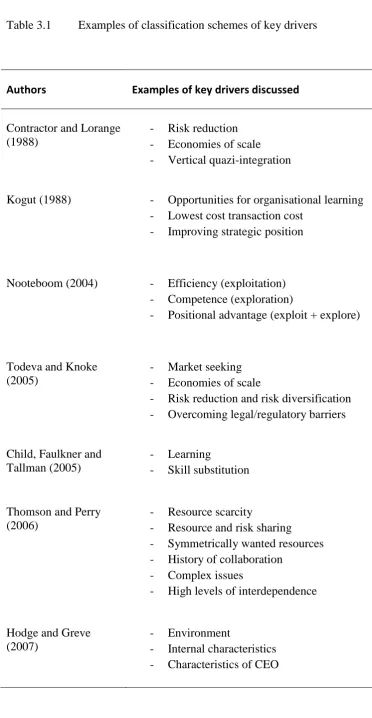
Table 3.1 Examples of classification schemes of key drivers………100
Table 5.1 Summary of question type in the telephone interview instrument ... 177
Table 5.2 Variables, research and contextual questions, Items on survey ... 183
Table 6.1 Different sectors of the logistics industry represented ... 206
Table 6.2 Representation by employee numbers... 207
Table 6.3 Representation by turnover ... 208
Table 6.4 Respondents’ role titles ... 209
Table 6.5 Respondents’ characteristics ... 211
Table 6.6 Strategic planning timeframes ... 217
Table 6.7 Number of collaborations ... 221
Table 6.8 Expected changes to the number of collaborations, next 10 years ... 222
Table 6.9 Strategic commitment to collaboration ... 224
Table 6.10 Strategic role of collaboration ... 227
Table 6.11 Summary of classifications for strategic role of collaboration ... 229
Table 6.12 Collaboration enablers categorised by theme... 232
Table 7.1 The respondents’ meaning of strategic intent ... 238
Table 7.2 Examples of hierarchies of strategy terms ... 240
Table 7.3 Frequency of reassessment of strategic intent ... 251
Table 7.4 Ranking of importance of reassessed strategy components ... 252
Table 7.5 Importance of learning within the respondent organisations ... 260
Table 7.6 Ranking of staff development activities ... 263
List of Figures
Figure 2.1 Reciprocal flows in the business ecosystem ………..26
Figure 2.2 Reciprocal flows in the business ecosystem………...33
Figure 2.3 The role of strategic intent ...………..41
Figure 2.4 Overlap of strategic intent and organisation vision ...………54
Figure 3.1 Relationship intensity continuum ………..82
Figure 3.2 A process framework of the collaboration black box ………88
Figure 3.3 Interactions in a collaborative venture ………...89
Figure 3.4 Strategic intent and collaboration effects...………..110
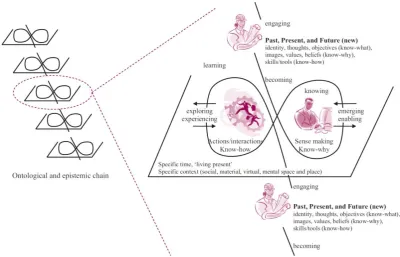
Figure 4.1 Becoming to know framework ……….135
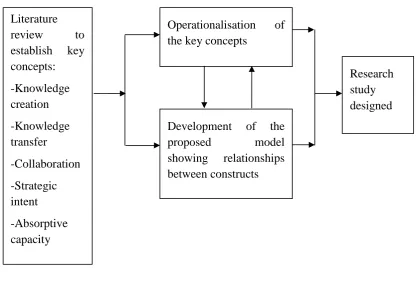
Figure 5.1 The research study’s design process...………..162
Figure 5.2 Conceptual model of thesis ………..165
Figure 6.1 Commitment to collaboration and strategic intent………225
Figure 7.1 Co-evolution of strategic intent and absorptive capacity………..…271
Figure 7.2 Model of strategic intent, absorptive capacity and knowing ……...273
1.1 Background to the study
Organisations operate in a dynamic business environment, in which a strategic competitive advantage can be quickly eroded, for example by technological change. To counteract this risk, organisations seek potential opportunities that can be exploited, preferably into the long-term, to enable continued growth and increase sustainability of the enterprise (Hamel & Välikangas 2003). Traditionally such opportunities were found based on internal strengths, for example a flourishing R&D department, or by acting alone in the external environment, such as a takeover.
However, over recent decades it is increasingly being recognised by academics and practitioners that more can be gained strategically by working together with other organisations than by working alone in competitively-bound isolation. Organisations are changing their willingness to collaborate and share, giving rise to more collaborative ventures (Hansen & Nohria 2004). Collaborative ventures give access to existing sources of competitive advantage, new ideas and other potential sources of long-term prosperity (Spekman, Kamauff & Myhr 1998). Today diverse collaborative ventures ranging from formalised contractual arrangements, such as a joint venture, to more informal business arrangements, for example co-sharing a warehouse, are flourishing. Senior managers then are recognising that by organisations working together strategically, mutual benefits can arise.
technology has enabled far-reaching change in the competitive paradigm (Bruinsma, Gorter & Nijkamp 2002; Gnyawali & Park 2009; Vargo & Lusch 2004). Consequently uncertainty and discontinuous change have become the norm (Ashkenas 1999; Christopher & Holweg 2011; Dicken 2007; Li Destri & Dagnino 2004; Rodrigue 2006; Storey et al. 2006). Deregulation, technological discontinuities and geopolitical shocks such as the demise of communism all contribute to this dynamic turbulence (Hamel & Välikangas 2003). Extended entities in a boundaryless world are increasingly common, driven by the economics of networks (Bruinsma, Gorter & Nijkamp 2002; Hansen & Nohria 2004; McGee & Sammut Bonnici 2002; Shapiro & Varian 1999) such that the global economy now comprises ‘a variety of complex intraorganizational and interorganizational networks’ (Dicken 1998, p. 239). Moreover global sourcing, shorter product life cycles, sophisticated products, customisation and fluctuating customer demand all contribute to this faster-paced business world (Bryant & Wells 1998; Soosay, Hyland & Ferrer 2008; Storey et al. 2006), increasing turbulence and complexity.
reverberate around business networks as witnessed by the impact of the global financial collapse in 2007 on myriad industries and economies. Amidst this coevolution is growing recognition of connectivity. Connectivity, for example with customers, suppliers and local research institutes enables emerging trends to be observed and critical information gathered (Deming 2000; Drucker 1988; Sandow & Allen 2005; Senge 1990) regardless of the likely effects or the organisation’s particular circumstances (Mattson 2003). In this changing business landscape, there is both a heightened awareness of the value of connectivity for organisations and increased need for sustainable competitive advantage.
advantage relies on organisations searching successfully for the balance between continuity and change.
2003; Ramaswamy & Gouillart 2010). Knowledge creation and transfer are thus vital to an organisation’s long term sustainability.
Competitive advantage then no longer solely resides in positioning and responding to market needs, but also includes the strategic exploitation of the organisation’s intellectual capital (Appelbaum & Gallagher 2000; Haugstetter & Cahoon 2010; Mason & Leek 2008; Sharkie 2003; Von Krogh, Ichijo & Nonaka 2000). Successful organisations are thus enacting continuous change, connecting more with other organisations and exploiting knowledge and creativity as their strategic foundation.
1.2 Connectivity and collaboration
Networks are a critical source of connectivity between organisations, such as those formed by logistics systems and supply chains. Within these interorganisational networks are other competing organisations, governments and customers. Interorganisational networks contain sources of value such as access to cost savings and distributed knowledge which may be successfully exploited (Bhatnagar & Viswanathan 2000; Dicken 2007; Tsoukas 1996). These interorganisational networks are continually evolving and thus dynamic, involving multiple actors searching for synergies that create mutual benefits. Arising from this then, is increasing recognition that logistics systems, supply chains and other inter-organisational networks provide connectivity to potential sources of value in the marketplace; such networks can enhance or provide competitive advantage and long-term sustainability.
Increasingly the inherent benefit of leveraging advantage from relationships has been brought to the fore (Dyer & Singh 1998; Eisenhardt & Martin 2000; Harrison et al. 2001). The interrelationships, for instance with manufacturers, distributors and retailers, enable critical flows such as information, finance, physical goods, services, transportation, storage and knowledge (Fernie 2004; Kim 2005; McCormack, Johnson & Walker 2003; Porter 1998). To maximise benefits from these flows organisations must both integrate and manage the value-creation process effectively and efficiently to simultaneously achieve customer satisfaction and a rewarding financial outcome for all participants (Ballou 2004; Whiteoak 2004). Accessing these critical flows and effectively integrating them into an organisation’s processes become critical capabilities in the current competitive paradigm.
However organisations are connected not only to both their customers and suppliers through collaborative ventures and their networks but also to their competitors. Lado, Boyd and Hanlon (1997, p. 111) comment ‘success in today’s business world often requires that firms pursue both competitive and cooperative strategies simultaneously’ (emphasis in original). With both rivalry and cooperation key features of the business landscape, the era of coopetition has been born; a term coined by the founder of Novell, also known as alliance capitalism (Bengtsson & Kock 1999; Johanessen & Olsen 2010; Koza & Lewin 1999; Mattson 2003; Song 2003; Tsai 2002). Coopetition creates an environment in which organisations are operating in paradox (Clarke-Hill, Li & Davies 2003; Lewis 2000; Nilsson 2006).
Consequently collaborative ventures are proliferating, with a view to establishing key long-term relationships within interorganisational networks to exploit synergies from cooperation and coordination (Hamel & Prahalad 1989; Hansen & Nohria 2004; Skjoett-Larsen, Thernoe & Andresen 2003; Spekman, Kamauff & Myhr 1998). Gnyawali and Park (2009) indicate that these relationships and networks are critical to both the strategy and the performance of SMEs. Such interrelationships forged in collaborative ventures between organisations offer the potential to achieve long-term sustainability through connectivity.
Collaborative ventures initially formed to gain market access may subsequently become critical nodes that facilitate access to, and creation of, new ideas that have the potential for innovation and change. The focal point for competitive advantage, then, is no longer necessarily the competitive advantage of an individual organisation, but the competitive advantage that comes from judicious use of the touch points and their critical flows and the subsequent synergies arising in the interorganisational network (Ballou 2004; Bruinsma, Gorter & Nijkamp 2002; Whiteoak 2004). Collaborations with competitors are vital for SMEs for example to access economies of scale, combine resources for additional leverage and work together to reduce individual risks as indicated by scholars such as Morris, Koçak and Özer (2007). Touch points accessed through communications and interactions in the context of these networked relationships enable management practices that foster organisational sustainability through access.
expertise are increasingly being seen as pivotal to long-term business sustainability and central to a knowing organisation (Adler & Kwon 2002; Choo 1998; Felin, Zenger & Tomsik 2009; Laycock 2005). A knowing organisation is adaptable, engaging in continuous learning and innovation, providing many opportunities for knowledge creation through interactivity by bringing together diverse knowledge, expertise and activities (Felin, Zenger & Tomsik 2009; Nicolini, Gherardi & Yanow 2003). To readily assimilate knowledge, both absorptive capacity and some overlapping knowledge are necessary (Cohen & Levinthal 1990; Minbaeva & Michailova 2004; Reagans & McEvily 2003; Szulanski 1996). Absorptive capacity is contained in an organisation’s routines and processes that continually assimilate knowledge to advantage, producing a dynamic organisational capability (Zahra & George 2002). Tang (2011, p. 273) explains that the ‘absorptive capacity of knowledge recipients is a necessary condition for efficient knowledge transfer, but it is not sufficient’. The transfer of causally ambiguous and complex knowledge may require adaptation and reconstruction (Attewell 1992) and relies on the knowledge sender’s attitudes, prior experience and behaviours to ensure that the receiver understands (Minbaeva & Michailova 2004). There are however relatively few empirical studies that have investigated the nature of this link across organisations’ boundaries on knowledge transfer (van Wijk, Jansen & Lyles 2008).
1.3 Collaboration and logistics
interorganisational networks being the management of the flow of goods and services from point of origin to point of consumption; increasingly its strategic significance is being recognised (Foggin 1989; Lambert, Emmelhainz & Gardner 1999; Mason & Leek 2008). Over recent decades there has been growing recognition of logistics as both a ‘source of competitive advantage and a crucial strategic imperative’ (Bhatnagar & Viswanathan 2000, p. 15). Further, logistics is a dynamic context, being characterised by frequent changes to service offerings (Yazdanparast, Manuj & Swartz 2010). Its role within an organisation contributes to sustainability not only of that organisation but to the whole distribution network (Rodríguez-Díaz & Espino-Rodríguez 2006). Moreover innovation occurs from learning in a logistics context (Langley 1999). Logistics thus provide opportunities to explore both continuity and change through knowledge creation and transfer.
Moreover evidence suggests collaborations in logistics are increasing (Dapiran et al. 1996; Kampstra, Ashayeri & Gattorna 2006; Teece 1988; Zineldin & Bredenlöw 2003). The contribution of collaborations to effective and efficient logistics appears crucial to sustainability; by integrating and strategically managing interdependencies within networks, logistics increases the potential for both exploration and exploitation to provide sustainability. By leveraging from these interorganisational networks, a key part of the value creation process can be strategically managed. Simultaneously a potentially sustainable competitive advantage can be built (Esper, Fugate & Davis-Sramek 2007). Boundary-spanning activities then, such as collaborative ventures in logistics, provide connectivity and an opportunity to create sustainability in today’s dynamic business environment. Logistics provides a valuable, dynamic context to explore collaborative ventures and knowledge creation and transfer.
1.4 Strategic intent
organisation’s activities and decision-making, being both a ‘desired leadership position’ and an ‘active management process to achieve it’ (Hamel & Prahalad 1989, p. 64). Generally strategic management principles have been founded in stability (Doz & Kosonen 2010), which is becoming increasingly rare in today’s dynamic marketplaces. Moreover, there has been little empirical investigation of strategic intent; for example little is known of its nature and role, how it is impacted by market dynamism or its relevance in strategy dynamics. Further strategic intent is regarded as an antecedent of an organisation’s ability to switch between continuity and change that requires empirical research (Raisch & Birkinshaw 2008). Consequently the role strategic intent may play in collaborative ventures is unknown.
knowledge creation and organisational learning in the academic literature (Easterby-Smith & Prieto 2008; Vera, Crossan & Apaydin 2011), making it difficult to proffer constructive ideas on its management in a collaborative venture. Further, serendipitous knowledge created as part of the interactions within the collaborative venture and its formation risks being overlooked, for instance it may be a knowledge effect that is additional to the purpose the collaboration was formed to achieve. Opportunities for growth and change may therefore be being missed as the strategic intent may act as blinkers on the people and the knowledge creation and transfer processes both within the collaborative venture itself and on those of the collaborating organisations.
to senior managers and their strategising. Furthermore the complex network of freight logistics offers many opportunities for coopetitive behaviour.
While recognising the importance of logistics to all developed and developing countries, Australia is chosen as the geographical scope of the study due to its heavy reliance on freight movement. Firstly Australia is an island continent dependent on freight networks, with a significant transport and logistics sector. Australian exports comprise approximately 20% of GDP (Department of Foreign Affairs and Trade 2013). The development and productivity of this $94billion industry that contributes approximately 3.1 per cent to Australian GDP is critical to the Australian economy. There are expectations that the freight task in Australia by 2020 will be double that of 2006. (Bureau of Transport Economics 2001; Kittel & Haugstetter 2011; KordaMentha 333 2012; National Australia Bank 2012). With the majority of the population widely dispersed along the coastal regions, logistics is critical to the nation’s prosperity and growth.
study focuses on Australian logistics as its context to contribute to the understanding of the role of collaboration in knowledge creation and transfer.
1.5 Research questions and research objectives
From the above discussion, it is considered that strategic intent may play a role in knowledge creation and transfer; however there is little empirical research on this relationship. Given that collaborations are a potential source for knowledge creation and transfer, the Primary Research Question (PRQ) for this study is:
PRQ: Does strategic intent contribute to knowledge creation and transfer in collaborations?
To investigate the PRQ, three Secondary Research Questions (SRQs) have been developed. Sources of innovation are necessary to an organisation’s long-term sustainability. Consequently knowledge creation and transfer may be a strategic benefit of a collaborative venture. To discover if senior managers in the Australian logistics industry regard collaborative ventures as potential sources of knowledge creation and transfer, the first SRQ investigates:
SRQ1: What are the potential strategic benefits of forming
collaborations?
managers take direction from an organisation’s strategic intent when deciding to form collaborative ventures. The second SRQ is expressed as:
SRQ2: Is an organisation’s strategic intent considered when forming
collaborations?
Finally, absorptive capacity is a critical component of an organisation’s capability to exploit knowledge creation and transfer (Zahra & George 2002). Decision making, through managerial strategy and actions, affects absorptive capacity (Andersén & Kask 2012). Having an impact on knowledge creation and transfer it may be expected that absorptive capacity is considered strategically. Such consideration would affect the knowledge creation and transfer that occurs in a collaborative venture. Consequently the final SRQ establishes:
SRQ3: Is absorptive capacity strategically developed to enhance knowledge
transfer and creation in collaborations?
1.6 Significance of the research
By investigating the role of strategic intent in collaborative ventures in Australian logistics, this research contributes to the growing body of knowledge relating to the practices of senior managers in organisations. With a particular focus on the application of strategy in the significant area of knowledge creation and transfer, the research study may contribute broadly to a better understanding of strategy implementation in practice.
More specifically, it may ascertain if strategic intent has a determining role on the strategic effects of collaborative ventures. A key effect that will be investigated is knowledge creation and transfer. Knowledge creation and transfer occur in an interactive environment, for instance where two or more entities intersect in a collaborative ventures. Interactions provide opportunities for the emergence of new ideas and innovation. For senior managers, then, collaborative ventures provide a rich environment in which opportunities may occur for growth and sustainability.
By investigating collaborative ventures this study will enable a more detailed investigation of aspects of their role and strategic significance to an organisation, particularly in Australian logistics. It will respond to comments by Cruijssen, Dullaert and Fleuren (2007) that research into collaborative ventures in logistics is scarce by contributing some empirical data to begin to address that scarcity.
role of collaborative ventures in Australian logistics which is heavily reliant on services, for instance storage and transport, it will investigate if there exists an opportunity for serendipitous knowledge creation in such interactive environments. Such findings can better inform senior managers in service industries on the significance of collaboration to maximise opportunities for knowledge creation, transfer and innovation.
Additionally by researching logistics in Australia this study may also contribute to the wider understanding of knowledge creation in interorganisational networks generally, particularly in coopetitive networks, and the role of strategic intent. By investigating the factors that may affect the transfer of knowledge between organisations it contributes to the understanding of the role of inter-organisational links and competitive advantage.
Moreover the research’s finding with regard to the impact of strategic intent on absorptive capacity and knowledge creation and transfer processes within collaboration will further develop academic and practitioner understanding of these key processes and their role. Furthermore it may identify if the role of strategic intent in these processes needs consideration by senior managers to enable potential opportunities for growth and innovation.
despite this, a diversity of scholarly exchanges leads to discipline development (Linderman & Chandrasekaran 2010). Moreover it does reflect an organisation’s reality. Powell, Koput and Smith-Doerr (1996, p. 118) insightfully argue ‘the neat distinctions of theory’ are often blurred by ‘the messy world of practice’. Rarely is any one area of an organisation considered in isolation strategically; the very fact that people are involved means that organisational managers need to be knowledgeable across different functions, such as both marketing and logistics, which may be informed by multiple theories.
Finally this thesis may contribute further to better understanding formation processes and benefits of collaboration that may contribute to a wider understanding of a theory of collaboration. Following Gray’s (1989, p. 230) conceptualisation of a collaboration as a ‘negotiated interorganizational order’ the way the stakeholders collectively construct strategy in the face of exogenous environmental pressures may be better understood. It may also confirm that these collaborative ventures are ‘imprecise, emergent, and (sic) exploratory’ which provide opportunities for knowledge creation and transfer (Gray 1989, p. 230).
1.7 Structure of the thesis
are traditionally low, such understanding is valuable, making the topic of this study important.
Chapter 2 The business ecosystem, strategic
intent, vision and ambidexterity
2.1 Introduction
Organisations are an integral part of the business ecosystem, a dynamic operating environment. Business models are established to achieve organisations’ vision and objectives to enable long term sustainability, determined by the strategising process. Such objectives may include exploiting existing products or exploring for new ideas and knowledge for innovation. Decisions to exploit or explore have different ramifications for activities undertaken and their outcomes. For instance, a strategy to explore for knowledge and innovation may trigger the formation of new collaborative ventures to align with an organisation’s strategic direction. Whilst engaged in new collaborative ventures the organisation simultaneously continues to face ongoing dynamism in the business ecosystem, besides being in an unfamiliar situation. Research shows that if organisations recognise external changes and then align and adapt to these changes they are more successful competitively (Fawcett, Magnan & McCarter 2008a; Gattorna 2006; Stonebraker & Afifi 2004). In a sense this places senior managers in a paradoxical situation (Lewis 2000) where the initial purpose for a strategic action may require change for a potential future, with an unknown outcome. Integrating the dynamism of the business ecosystem with the strategic direction of an organisation is thus a complex task for senior managers.
practice of implementing strategic intent through coordinating mechanisms and routines concludes the discussions of this chapter.
2.2 Multi-theoretical approach and conceptual framework
The focus for the thesis is the role of strategic intent in knowledge transfer and creation in collaborative ventures. The literature review therefore encompasses three key areas strategic intent, collaboration and knowledge, which are the broad areas studied in the literature. The interest of the thesis is how better understanding of these study areas can potentially inform senior managers. An organisation’s senior managers are responsible for the diverse functions, operating with multiple frames of reference that can help ‘understand complex reality’ (van de Ven & Johnson 2006, p. 813). Within an organisation it is usual ‘that multiple functions, resources, and disciplines are necessary to transform innovative ideas into reality’ (van de Ven 1986, p. 605).
phenomenon; theories are by necessity incomplete abstractions, consequently a ‘pluralistic approach of comparing multiple models of reality is therefore essential for developing valid knowledge’ (van de Ven & Johnson 2006, p. 817). Within this thesis the dynamics of organisational knowing and absorptive capacity, being capabilities, are central to the evolutionary perspective (Nelson & Winter 1982). Such capabilities are resources that contribute to competitive advantage (Barney 2001). Consequently theories of the resource-based view (Penrose 1959; Wernerfelt 1984), the business ecosystem (Moore 1993; Lewin & Volberda 2003) and dynamic capabilities (Teece et al 1997) provide the context for exploration of the concepts strategic intent, collaboration, absorptive capacity and organisational knowing. The extent to which these theories are included varies, as the thesis is contributing to preliminary theory building by connecting the key concepts and exploring relationships, rather than causal analysis (Carlile & Christensen 2005). Throughout the thesis the dynamic nature of the key concepts is central and they are approached from this perspective.
field in which specialized theories dealing with specialized topics seem unrelated to one another’ (Stryker 2008, p. 21).
Importantly drawing from the general management literature may assist in bridging the chasm between academics and practitioners. Academics operate at high levels of abstraction which is different to decision makers who are daily making concrete decisions and spending budgets; they are unable to wait for academics to define the terms (Schneider 2007). She continues that theory is concerned with causality whereas industry practitioners want functionality and finality; finality can be developed by ‘applying black-box approaches, whereas causality requires opening the box. According to Luhmann’s (2006) social systems theory, technicians need not ask the ‘why’ question as long as they receive satisfying results by asking the ‘how’ question’ (Schneider 2007, p.614). In such ways ‘the dual objectives of applied use and advancing fundamental understanding’ can be achieved (van de Ven & Johnson 2006, p. 803). Bowman, Singh and Thomas (2002, p. 46) indicate that ‘interdisciplinary research is, and should be, one of the primary, distinctive competences’ of the field of strategy and strategic management research. This thesis is drawing together several distinct concepts encapsulated in the practice of strategising in a collaborative venture. Thus a multi-theoretical approach is adopted.
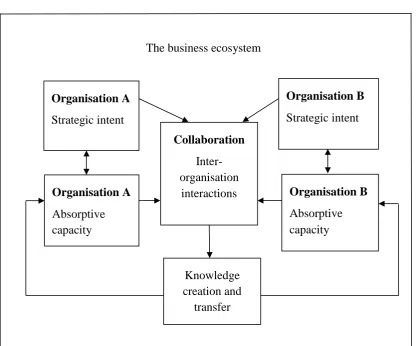
provide guidance throughout the literature review. The figure is simplified, to show the key connections (Mason & Leek 2008).
Figure 2.1 Conceptual framework of the thesis
In the figure, the companies A and B form a collaboration. Collaboration is the focus of Chapter 3. The collaboration has been selected as a strategy separately by each organisation as part of their strategic intent, to achieve their main ambition. Strategic intent is discussed further in this chapter. The companies and the collaboration operate in the business ecosystem, shown in the background. The business ecosystem contains external influences and reciprocal flows that may affect the companies and/or the collaboration and is also discussed in this chapter. In the process of
Organisation A
Strategic intent
Organisation A
Absorptive capacity
Collaboration
Inter-organisation
interactions
Knowledge creation and
transfer
Organisation B
Strategic intent
Organisation B
collaborating, the companies and their personnel interact, leading to knowledge creation and transfer. The knowledge creation and transfer are assimilated through the processes of absorptive capacity in each organisation. Knowledge creation, transfer and absorptive capacity are the focus of Chapter 4.
With the conceptual framework as a guidepost, the remainder of this chapter focuses on the business ecosystem and strategic intent. The next section discusses the role of the business ecosystem and its connection to strategising.
2.3 The business ecosystem
2.3.1 Key influences and reciprocal flows in the business ecosystem
When considering whether or not to form a collaborative venture, the strategic decision making processes generally include an analysis of the business ecosystem to identify key influences and trends (Aaker 1998; Lawrence & Lorsch 1967b; Porter 1991; Stonebraker & Afifi 2004). Although over time the names of the influences have changed, the categories of influence represented in it are relatively consistent, such as the technological, legal, political, economic, environmental and socio-cultural influences (Blau & Scott 1962; Borden 1991; Holloway & Hancock 1964; Johnson, Scholes & Whittington 2005; Kotler, Gregor & Rodgers 1977), to which more recently can be added the sustainability consciousness (Senge et al. 2008; Stead & Stead 2013). Utilising such classifications in analysis enables ready identification and analysis of trends that create opportunities and threats to an organisation’s strategic direction, aiding decision making (Porter 1980; Porter 1985).
environmental uncertainty, a multidimensional concept (McFarland, Bloodgood & Payan 2008), which affects strategic decision making and its outcomes.
Environmental uncertainty has been a central concept in economics and organisational theory for many decades (Conrath 1967; Dill 1958; Lawrence & Lorsch 1967b; Milliken 1987) leading to many definitions (Johnston, Gilmore & Carson 2008). Amongst the definitions there is however a commonality relating to lacks of information, knowledge and understanding and difficulties in predicting future changes (Johnston, Gilmore & Carson 2008). Such difficulties arise from the human aspect of problem solving when there are many complex variables at play, novelty, rapid change, imperfect foresight and an inability to know the consequences of decisions (Alchian 1950; Ansoff & McDonnell 1990; Conrath 1967). In such dynamic environments where senior managers are challenged in adaptive sensemaking (Bogner & Barr 2000), perceptions and thus decisions may differ.
(Lovelock 1979) and a range of disciplines including organisational sciences (Stead & Stead 2013). Organisations and their ecosystems are caught in an ongoing cycle of change with ever-increasing turbulence, resulting in organisational structures and processes that are more flexible and innovation-driven (Flier, Van Den Bosch & Volberda 2003; Lewin, Long & Carroll 1999; Lewin & Volberda 2003; Murmann 2013; Porter 2006; Stead & Stead 2013; Volberda & Lewin 2003). Reciprocity and permanence are key parts of the coevolutionary process, continuously morphing the organisation and its business ecosystem over time (Stead & Stead 2013) in an infinite dynamic spiral (Beck & Cowan 2006). Organisations and their collaborative ventures, being human activity systems, are thus dynamic, continually adapting, regulating, communicating and transforming to perpetuate their existence (Behara 1995), reflecting feedback, interdependencies and interactions with other human activity systems (Senge 1990).
2.3.2 Industry structure
suggest that the ecosystem is complex and self-sustaining, with ‘both competition and cooperation present simultaneously.’ The business ecosystem co-creates strategic benefits for all stakeholders (Ramaswamy & Gouillart 2010). Key changes in the business ecosystem, such as coopetition and technological advances, do not affect an industry in splendid isolation.
2.3.2.1 Model building
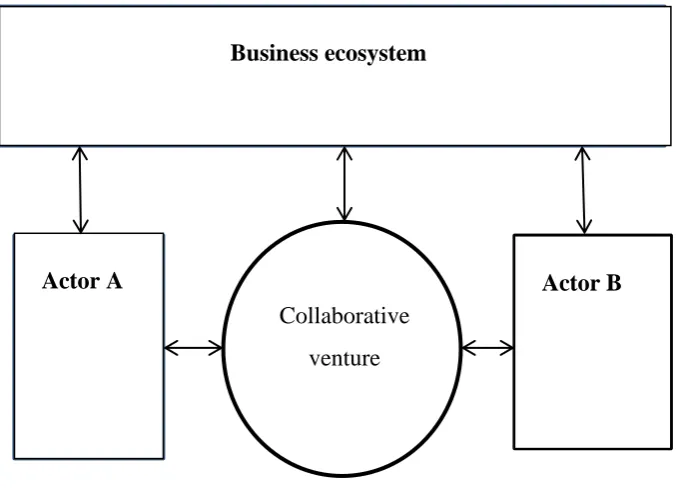
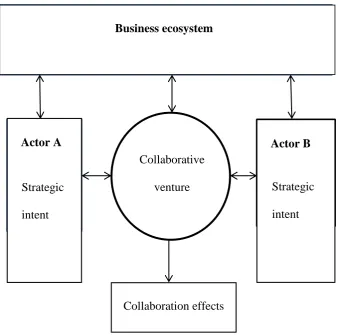
Organisations and the formation of collaborative ventures are mutually influenced, interconnected and interdependent in the business ecosystem. Strategic decision making occurs in this context. To assist subsequent analysis of the strategic drivers of collaborative ventures and the interdependencies that form, developing a model will help visualise the interrelationships and influences that are present. Analysis of the relationships of a system's components makes model building, system interrogations and simulations feasible which may generate further understanding (Lazer 1971; Senge 1990). By analysing and evaluating the hierarchy of a system's components and their interactions understanding of that system is furthered. Thus identifying, analysing and evaluating interactions and interrelationships between a collaborative venture and its business environment aids strategic decision making. To help guide the discussions that follow in this and subsequent chapters, Figure 2.1 below has been developed. The figure comprises two organisations, Actor A and Actor B, and a collaborative venture they have formed. The reciprocity and flows between these actors and the business ecosystem are shown with double-headed arrows.
Figure 2.2 Reciprocal flows in the business ecosystem
The information that is gathered from the business ecosystem is utilised in organisational strategising to achieve long-term sustainability. What is happening in the business ecosystem strongly influences strategic direction (Chrusciel 2011). Strategic direction has traditionally been regarded as a long-term view, looking some ten years or more into the future. Strategic direction is incorporated into strategy development, with strategies being established, often with timeframes of two-to-five years. Key strategic tools, such as the business model, are then used to implement the organisation’s planned strategy (Ghezzi 2013). The next section introduces the strategic intent.
Business ecosystem
Actor A Actor B
2.4 Strategic intent
The fields of strategy and strategic management are two complex fields significant to economic and business growth. Such significance has generated a keen interest in the fields, developing a rich academic literature in both over time (see for example seminal works by Chandler (1962), Ansoff (1965), Porter (1980; 1996), Mintzberg (1987; 1990), Aaker (1998) and a recent review of the strategy concept by Ronda-Pupo and Guerras-Martin (2012)). The centrality of these fields to modern business has resulted in a diverse academic and practitioner literature that has mushroomed. For senior managers, connecting the diversities of the literature with activities occurring in daily practice is complex.
2.4.1 A dynamic, emergent world
dynamic operating environment tight, detailed planning may not be appropriate for key processes, activities and relationships (Caniëls & Romijn 2008; Choi, Dooley & Rungtusanatham 2001). For instance there is increasing interest in understanding the new product development process as being non-linear, rejecting the traditional notion of detailed planning and a sequential decision-making process (McCarthy et al. 2006). Chesborough and Appleyard (2007) note that traditional strategy views ownership and control as being key levers for success (Simons 1994), which ignore potential value creation from external resources, such as those found in open innovation systems and the organisation’s networks. Recognition that the dynamic nature of strategy being practiced by managers and its future-orientation are being lost in the scientific-rationalist approaches to strategy is growing; practitioners are concerned academics are out of touch with reality (Bettis 1991; Gopinath & Hoffman 1995; Hafsi & Thomas 2005; Nonaka & Toyama 2007; Sandberg & Tsoukas 2011; Splitter & Seidl 2011). Deliberate, pre-planned strategic planning seems untenable with the business ecosystem no longer seen as predictable. Former advocates of planning are now emphasising skills such as acute awareness of the business ecosystem, agility and intelligence, with the ability to react rather than predict becoming more important (Wheatley 2006). The dynamic nature of strategy in both reacting to change and being a vehicle for change is bringing new approaches to strategy and its management.
beginnings, the dynamic nature of strategy is increasingly considered in academic and practitioner literature (Chesbrough & Appleyard 2007; Chia 2004; Johnson, Melin & Whittington 2003; Szpakowski 2011; Whittington 2004). Nonaka and Toyama (2007) argue that strategy has traditionally been seen as linear, more as planning and less as practice, to its detriment; it has failed to see the roles of emergence and art/craft (Chia 2004; Mintzberg 1990; Simpson 1998). Moreover the earlier focus on macro-analysis and causal, linear effects results in lost opportunities. The micro-practices of strategising contain the ability to adapt to emergence just-in-time, creating a source of competitive advantage (Balogun & Johnson 2005; Chesbrough & Appleyard 2007; Chia 2004; Jarzabkowski & Whittington 2008; Johnson, Melin & Whittington 2003; Weick 2001; Whittington 2004). However adaptation to the emerging opportunities and threats needs a frame of reference, which is what strategic intent provides.
2.4.2 Strategic intent - a high level statement
Hamilton, Eskin & Michaels 1998; Kroes 2009). However it encompasses both ‘the essence of winning’, ‘is stable over time’ and ‘sets a target that deserves personal effort and commitment’ (Hamel & Prahalad 1989, p. 64-66)(emphasis in original). Noting that the accelerating rate of change in the business ecosystem means that strategic planning is becoming more focused on shorter term plans, they consider that the ‘planning process typically acts as a “feasibility sieve”’ for strategies in an annual, cyclic process (Hamel & Prahalad 1989, p. 66). Hamel and Prahalad (1989) suggest that strategic intent is necessary to provide a more aspirational, long-term goal in the face of plans with short-term predictive horizons due to increasing turbulence. Underpinning their discussion is the anticipated growth of the organisation beyond current capabilities and resources, enabled by the focus of the strategic intent. Strategic intent sets the future direction, including the strategic or competitive priorities and objectives (Campbell & Yeung 1991; Hitt et al. 1995). Thus it directs the accumulation of capabilities and resources, providing ‘something to ‘aim’ for’ in a process of guided evolution (Lovas & Ghoshal 2000, p. 885). There is a degree of uncertainty about its achievability (Mantere & Sillince 2007). Table 2.1 provides a summary of the definitions of strategic intent.
changes in the business ecosystem. He argues that it is a creative process, not an analytical one, such as that applied to most strategic planning, echoing Moncrieff (1999). Moncrieff (1999, p. 274) suggests that in the process of strategy formation, analysis is enhanced when learning and creative thinking are included to challenge managers’ existing paradigms which can otherwise ‘dull organizational senses’.
Table 2.1 Key definitions of strategic intent
Authors Definition of strategic intent Time frame
Hamel and
Prahalad (1989, p. 64)
‘a [sustained] obsession with winning at all levels of the organisation’
10-20 years
Hamilton, Eskin and Michaels (1998, p. 408)
‘expressed through the setting of ambitious goals that both challenge and focus the resources and core capabilities of the organization’
10 years
Lovas and Ghoshal (2000, p. 882)
‘the one main ambition of the firm’
Long-term
Bate (2010, p. 33) ‘a strategic dream, an aspiration that can provide some sense of early direction but is not yet clear’
5-10 years
Edwards and Baker (2013, p. 28)
‘discerned as an espoused set of principles or a purpose statement’
Not given
Ryals and Davies (2013, p. 112)
‘an umbrella term covering a set of related constructs’
Ryals and Davies (2013) demonstrate the evolution of the term as it migrates to a different literature base. In the key account management literature, the term is considered more overarching, including the constructs ‘strategic and operational fit, goal congruence, mutuality and commitment’ (Ryals & Davies 2013, p. 112). In this literature, relationships are important, with a causal relationship between relationship effectiveness and strategic fit (Richards & Jones 2009). Consequently the use of strategic intent is applied in the context of the management of relationships and is closer in meaning to strategic fit. Ryals and Davies (2013, p. 117) exploring the role of strategic intent in dyadic business relationships utilised the term with this meaning, having both intentional ‘shared organizational goals’ and behavioural indicators, ‘related to actions or developments in the relationship’. They found that strategic intent is not the key feature of the type of relationships formed and that mutual strategic intent was lacking.
more as a rhetoric device while it is being created collectively, but once created its role in use is different.
This thesis investigates the role of strategic intent in knowledge creation and transfer in a collaborative venture. The definition of strategic intent offered by Lovas and Ghoshal (2000, p. 882) is adopted for this thesis, namely ‘the one main ambition of the firm’ which provides the objective focus for the strategy process, declaring the preferred outcome. Further the definition has been utilised as part of the development of a process model of strategy from a case study and literature (Lovas & Ghoshal 2000). The role of strategic intent is explored in the next section.
2.4.3 The role of strategic intent
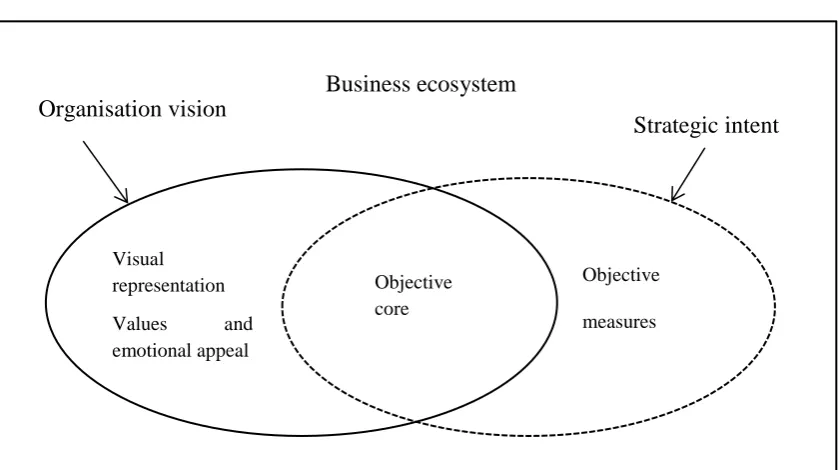
The role of strategic intent within an organisation has several purposes, which overlap. Figure 2.2 provides a simplified diagram of the role of strategic intent.
indicates that ‘A good strategic design is elegant in its simplicity, with well-defined parameters, clarity of purpose and success factors’.
Figure 2.3 The role of strategic intent
Source: Adapted from Moncrieff (1999, p. 274)
Furthermore strategic intent provides a reference point for alignment (Fiegenbaum, Hart & Schendel 1996). Doz and Kosonen (2010) argue that developing strategic agility in the top leadership team enables renewal and transformation of business models through meta-capabilities of strategic sensitivity, leadership unity and resource fluidity. Critical elements of these meta-capabilities are alignment around a common interest and imagining new business models, reframing the existing business model (Doz & Kosonen 2010). Strategic intent enables the development of the exploration and transition rules for how an organisation will migrate from its current business model to a new one through alignment. According to Itami and Nishino (2010) there are two components in a business model, the profit model and the business system. Strategic intent is core to the former, which shows how the
Strategy implementation
Emerging opportunities Strategic
intent
organisation will achieve differentiation and thus earn profits in the marketplace. The business system is put in place to enable the realisation of profit through strategic intent. Significantly however, it also enables new learning capabilities through its design of work flows and information systems (Itami & Nishino 2010). Such learning can then form the basis for future design configurations and growth potential.
Additionally strategic intent is temporally distanced from present day actions. Due to the preponderance of the linear approach to strategy, strategic intent is frequently established as a major part of strategic planning. A disconnection between now and the future may create a problem to be solved by the strategy process by supporting the emergence of knowledge creation and its assimilation to enable new opportunities to be realised (Hamel & Prahalad 1994). Moreover the emergence of opportunities and threats in the business ecosystem is partly driven by the innovation derived from new knowledge created through social interactions (Aramburu, Sáenz & Rivera 2006; Mintzberg 1990). Such knowledge has to be both recognised as being potentially of value and duly assimilated through an organisation’s processes to corporate strategy to contribute to innovation and value creation (Barr, Stimpert & Huff 1992). Strategic intent is critical in that it can both facilitate emergence and also enable that which is emerging to be noticed, assimilated and utilised. Adapting to emergence needs to be a key part of an organisation’s strategy as it is about creating a future for itself (Jansen, Cammock & Conner 2011; Mintzberg & Hunsicker 1988).
Instruments into being a low-cost provider of handheld calculators when the market changed to product differentiation led to the organisation missing opportunities (Hill & Jones 2005). Additionally the significance of strategic intent to outcomes can also be seen in the 1970s when Xerox Corporation focused on exploring photocopier innovations and failed to capitalise on breakthrough innovations in computing software and hardware, such as the mouse, graphical user interface and the first personal computer (Chesbrough & Rosenbloom 2002; Doz & Kosonen 2010). Strategic intent enables an organisation to achieve, but without factoring in dynamism and emergence to that intent, there is a risk it may stifle flexibility, agility and adaptability in a dynamic environment.
‘Deliberate and emergent strategies form the end-points of a continuum’. Without intentionality, agency is removed from the centre of strategic analysis, replacing it with the transmission of strategy practice.
Although conceptually strategy simplifies reality and strategies are developed to reduce uncertainty and provide inspiration, generally strategic management principles are based in stability (Doz & Kosonen 2010; Hay & Williamson 1997; Mintzberg 1987; Teece 1984). Such underpinning assumptions make investigating the role of strategic intent nowadays of interest, particularly its relevance in strategy dynamics. Despite the frequent usage of the term strategic intent throughout the academic and practitioner literature, there appears to be a paucity of empirical research into its role, definition or antecedents and outcomes in business and management disciplines. The previous discussion on the role and complexity surrounding strategic intent and the keen interest in best ensuring sustainable competitiveness through strategising, there remain many opportunities to further explore strategic intent.
2.5 Organisational vision
There is a general consensus that vision is a guide for intentional action (refer to (Child & Smith 1987; Christenson & Walker 2008; Collins & Porras 1996; Ford & Ford 1995; Hamel & Prahalad 1994; Hay & Williamson 1997; Kantabutra 2008b; Lipton 1996; Sidhu 2003; van der Helm 2009)). Understanding what is meant by the term vision is less clear. Over 20 years ago, Collins and Porras (1991, pp. 32-33) noted ‘words used to describe the process of providing direction to an organization have been under-defined and confused with each other’, a view echoed by Cummings and Davies (1994). There appears to have been little progress, with strategic vision, vision and organisational vision appearing in the academic and practitioner literature with little to differentiate their meaning or usage (Kantabutra 2008b). Similar to strategic intent, these terms also appear to lack empirically tested definitions or a theoretical framework for research. With vision research crossing many academic and practitioner domains, this is unsurprising (van der Helm 2009).
2.5.1 Understanding organisational vision
Benjamin 1999; Nanus 1996)). O’Connell, Hickerson and Pillutla (2011) note that a definition of vision may also include emotional appeals and values (Frese, Beimel & Schoenborn 2003; Zaccaro & Banks 2004b). Other scholars add some form of boundary to these core definitions. Raynor (1998, p. 371) for example qualifies his definition of organisational vision as ‘the desired future position of a company within its area of competition’. All are linked to effecting intentional action, in which Lipton (1996, p. 85) includes ‘what the organisation will do in the face of ambiguity and surprises’. Summarising the literature, Kantabutra (2008b) finds there are four organisational characteristics shared amongst the definitions of vision. Organisation vision is seen as a desired future state, providing a sense of direction, necessary for leadership to induce action and of importance to business strategy and planning.
strategic vision in the sense of its association with leadership. Consequently the boundary placed around the terminology is that any use of either organisational vision or vision is in the context of an organisation, regardless of whether at the individual, group or organisational level (van der Helm 2009).
Collins and Porras (1991, p. 32) indicate organisational vision ‘is an over-arching concept under which a variety of other concepts are subsumed’. Their organisational vision framework encompasses core ideology and an envisioned future (Collins & Porras 1994). Core ideology is self-identity, remaining consistent over time and transcending short-term fads and changes in leadership in the organisation. It comprises core values and purpose, the latter being regarded as long-lasting, unchanging and not-realisable. Envisioned future is for a shorter time-frame, some 10-30 years, which has an inherent duality of being aspirational, but also credible, something that may be able to be achieved. This big, hairy, audacious goal at the organisational vision level stretches current capabilities and is in itself a little visionary (Collins & Porras 1994). It is in this sense of an overarching term that the majority of vision definitions seem to fall.
2.5.2 The role of organisational vision
1990; Zaccaro & Banks 2004a). The organisational vision is commonly acknowledged as a driver of change (O'Brien & Meadows 2007; Senge 1990), affecting growth in entrepreneurial organisations (Baum, Locke & Kirkpatrick 1998), organisational performance (Kantabutra, 2008b) and the effective leadership of change management (Zaccaro & Banks 2004a). The organisational vision creates a shared understanding (Schatzki 2001) which regulates strategy practice, shaping strategists’ outlooks and can ‘predispose actors towards particular strategic choices of action’ (Chia & MacKay 2007, p. 228). Moreover Slack, Orife and Anderson (2010) in their surveys linking organisational vision and employee satisfaction found that organisations with management commitment to the organisational vision had higher levels of employee satisfaction. They posit this may increase overall organisational commitment to the organisational vision (Giblin & Amuso 1997; Lahiry 1994). Managerial commitment to an organisation is the degree to which organisational values and goals are adopted and identified with in undertaking daily responsibilities and activities (Tanriverdi 2008). Higher management commitment may thus increase the outcomes and alignment between senior strategists’ choices and the organisation’s vision.