BMC Health Services Research 2002,
2 x
Debate
Outcomes research in the development and evaluation of practice
guidelines
Louise Pilote *
1
and Ira B Tager
2
Address: 1Division of Clinical Epidemiology, Research Institute of the McGill University Health Center, Montreal, Canada and 2Division of Public Health Biology & Epidemiology, School of Public Health, University of California at Berkeley, Berkeley, USA
E-mail: Louise Pilote* - [email protected]; Ira B Tager - [email protected] *Corresponding author
Abstract
Background: Practice guidelines have been developed in response to the observation that variations exist in clinical medicine that are not related to variations in the clinical presentation and severity of the disease. Despite their widespread use, however, practice guideline evaluation lacks a rigorous scientific methodology to support its development and application.
Discussion: Firstly, we review the major epidemiological foundations of practice guideline development. Secondly, we propose a chronic disease epidemiological model in which practice patterns are viewed as the exposure and outcomes of interest such as quality or cost are viewed as the disease. Sources of selection, information, confounding and temporal trend bias are identified and discussed.
Summary: The proposed methodological framework for outcomes research to evaluate practice guidelines reflects the selection, information and confounding biases inherent in its observational nature which must be accounted for in both the design and the analysis phases of any outcomes research study.
Background
The development of practice guidelines
In clinical medicine, variations exist that do not appear to be related to variations in the clinical presentation and se-verity of disease [1–3]. In response, practice guidelines have been developed in an attempt to reduce the wide practice variations and, through this process, to increase the appropriateness and quality of medical care and to re-duce health care costs [4–8].
Despite the publication and dissemination of practice guidelines [9], there has been relatively little evaluation of the application and impact of clinical practice guidelines
[9–14]. Some of the difficulty in the evaluation of these guidelines relates to the methods that were used to devel-op them [9]. Guidelines have often have been develdevel-oped before adequate data have been available to assess the re-lationship between clinical practice patterns and desired clinical outcomes. Nevertheless, there have been some re-views of practice guideline evaluation [15,16].
While epidemiological designs are commonly used to evaluate the effectiveness of health care interventions, never has this been discussed in the context of outcomes research. We propose the use of a methodological
frame-Published: 25 March 2002
BMC Health Services Research 2002, 2:7
Received: 1 October 2001 Accepted: 25 March 2002 This article is available from: http://www.biomedcentral.com/1472-6963/2/7
work for outcomes research to evaluate practice guide-lines.
Methodological issues with the measurement of practice variations
In the debate about reasons to promote the development of practice guidelines, few have questioned whether the variations are real, or alternatively, whether they are sim-ply a function of methodological flaws in the measure-ment of medical practices themselves, the result of variations in practice patterns across groups of patients with a similar diagnosis, or both. Furthermore, few stud-ies have addressed whether practice variations, in fact, lead to outcome variations. Finally, little attention has been paid to the identification and measurement of initial conditions, that is, the potentially confounding factors and effect modifiers of the practice patterns outcomes re-lationship.
Measurement of practice pattern variation
The measurement of medical practice patterns is suscepti-ble to error. Measurement error may affect the validity of medical practice measurement in three major ways. First, it may lead to selection bias, in that subjects are selected to belong to a certain group based on an erroneous diag-nosis. Secondly, it may lead to misclassification of expo-sure (information bias), in that patients treated with a specific practice pattern are classified in the wrong diag-nostic group. Thirdly, it may lead to misclassification of outcomes, in that patients with a given outcome are clas-sified in the wrong diagnostic group.
Potential problems with the measurement of practice var-iations relate to the mechanisms that underlie the choice of groups that are compared in studies of practice varia-tions. These mechanisms must be defined clearly to min-imize selection bias. In many studies of practice variations, populations are arbitrarily divided according to hospitals, regions, counties, or countries. Little infor-mation is available about the factors that lead these groups to go to a particular hospital, live in a particular re-gion, go to a particular doctor, etc. The population base
from which each comparison group is derived should, in principle, be quite similar for all groups. Basically, if the groups are drawn from a similar population, unmeasura-ble and potentially confounding variaunmeasura-bles are more likely to be equally distributed between groups.
In addition, the measurement of practice variations can-not be valid without information on relevant "initial con-ditions". Initial conditions are all confounding factors and effect modifiers, other than the treatment/practice patterns, that may cause or influence the clinical out-comes of interest. These factors may explain practice vari-ations among groups that do not share similar initial conditions. To evaluate practice patterns-outcomes associ-ations, potential confounders must be identified and con-trolled for in the analysis.
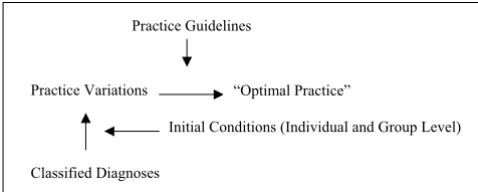
Aside from clinical presentation and severity of illness; the initial conditions to be identified and characterized as completely as possible include physician, patient, and practice environment factors (Table 1). Measurement of such factors is essential to minimize the chance of a sys-tematic error following confounding biases and effect modification (Figure 1).
[image:2.612.53.553.606.700.2]Identification and measurement of outcomes of interest Limitations to the development and evaluation of practice guidelines also include the absence of a clear concept of the targeted outcomes and the paucity of outcomes data to support these guidelines [17]. There appears to be only a weak relationship between the purpose of guidelines and many of the outcomes usually measured in clinical re-search, that is, the source of evidence for guideline devel-opment (evidence-based). The initial goals of establishing practice guidelines – to reduce costs and enhance the quality and appropriateness of treatment – are, in fact, rarely the basis for guideline development, since little data is available for these outcomes. To some degree, the devel-opment of guidelines has been driven by the availability of data on clinical outcomes, such as morbidity and mor-tality, rather than those outcomes related to the primary goals of the guidelines.
Table 1: Initial conditions to be taken into account when making inferences about practice patterns-outcomes associations
Patient factors Physician factors Environmental factors
Demographics Severity of illness Physicians' beliefs and interpretation of medical evidence
Medical insurance status (fee-for-service vs. managed care)
Heterogeneity of disease expression Medical uncertainty Availability of needed procedure
The evaluation of practice guidelines
Throughout the development of practice guidelines, the major deficiency has been the lack of an evaluative meth-od [18–27]. Thus, we suggest a methmeth-odological frame-work for outcomes research to be applied to evaluate practice guidelines. Outcomes research evaluates practice patterns as they occur in actual clinical settings. This type of research can describe practice patterns, evaluate their divergence from practice guidelines and determine the ef-fect of practice variations on outcomes. Outcomes re-search is necessarily observational in nature and, although observational studies have been used to evaluate health care interventions, the proposed methodological frame-work has yet to be applied to outcomes research.
Why should outcomes research be used to evaluate and validate practice guidelines? The primary goal of practice guidelines is the consistent adherence by physicians to practice patterns that achieve the "best" outcomes at the lowest cost. Outcomes research evaluates practice patterns as they occur in actual clinical settings, and is thus the log-ical method to evaluate practice guidelines. In fact, out-comes research and practice guidelines are connected through concepts that relate to efficacy and effectiveness research (Figure 2). Efficacy studies, which normally com-plement practice guideline development, are those per-formed in highly selected groups of patients to investigate if a particular intervention works under controlled condi-tions set by the study investigators. In contrast, outcomes research evaluates practice as it occurs in actual clinical settings [28]. Research in these settings is called effective-ness research because the investigators have limited con-trol over the conditions that qualify the practice settings. The difference between efficacy and effectiveness research can be summarized as follows: does it work at all (effica-cy) or does it work in the real world (effectiveness)? Thus, there exists a dynamic process in which evidence from both effectiveness and efficacy studies feeds into the velopment and evaluation of practice guidelines, as de-picted in Figure 2.
Most practice guidelines are derived from efficacy studies rather than effectiveness studies. Therefore, it is not sur-prising that practice guidelines are not fully applicable in actual clinical practice. We suggest that effectiveness stud-ies be used not only as a method to evaluate practice guidelines but also as a basis for their development. These could include both observational studies and effective-ness trials. Outcomes research better reflects practice in the real world and may make guidelines more likely to be applied. However, to date, little attention has been paid to the epidemiological underpinnings of the methods used to conduct outcomes research.
Discussion
We will first propose a methodological framework for outcomes research. Then, we will show how it can be used to evaluate practice guidelines. Finally, we will address the limitations of the proposed methodological framework.
Generic epidemiological issues in outcomes research In the proposed methodological framework, the generic issues related to outcomes research will be discussed in se-quential order. In outcomes research, the first step is to identify the study population and the groups (hospitals, providers, regions, etc.) that will be compared. The next step is the measurement of practice patterns and out-comes. After groups are compared on the basis of the treatment they receive and outcomes of interest, associa-tions are sought between practice patterns and the various measures of outcome. This step of the methodological framework raises issues of confounding bias because not all factors that can confound these associations are meas-ured and controlled or even known. The presence or ab-sence of confounding bias can be affected by the other sources of bias namely selection and information biases. Lastly, we discuss the issue of temporal trends. In the eval-uation of practice guidelines, the measurement of practice patterns may not be contemporaneous with the publica-tion of practice guidelines. This may explain and even lead to the frequently observed discrepancy between the actual practice and what the guidelines state that it should be. Fi-nally, two particularities of outcomes research 1) the pres-ence of ecological exposures in individual level studies and 2) the common use of large administrative databases are discussed.
Figure 1
Practice Guidelines
Practice Variations “Optimal Practice”
Classified Diagnoses
[image:3.612.55.294.88.184.2]Initial Conditions (Individual and Group Level)
Figure 2
Relationship between outcomes research and practice guide-lines
Efficacy Studies =
Practice Guidelines Development
Effectiveness Studies Practice Guidelines Evaluation
Specification of the model
Definition of the elements of the proposed epidemiological model for outcomes research
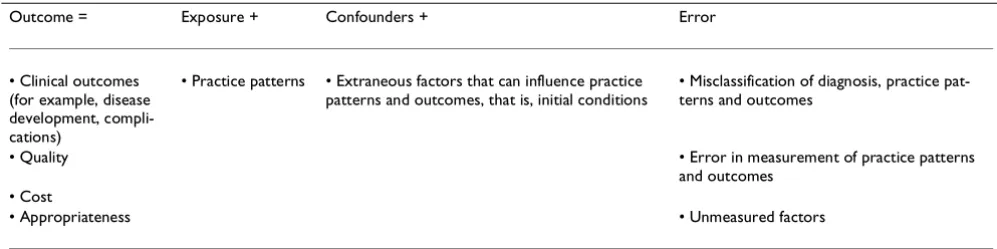
In the proposed model for outcomes research designed to evaluate practice guidelines, the outcome of interest can be a disease (Table 2). For example, if the practice patterns that are being studied pertain to coronary revasculariza-tion, complications such as mortality and reinfarction af-ter acute myocardial infarction may constitute the outcome of interest. Finally, the consequences of different practice patterns on medical resources (cost, quality and appropriateness) may be another possible outcome of in-terest.
In the studies of outcome research, practice patterns, (which constitute the exposure in the proposed model), range from the use of medication, diagnostic tests and therapeutic procedures to the length of hospital stay, transfer to other facilities and/or scheduled physicians vis-its. The primary goal of outcomes research is the evalua-tion of the effects of the selected practice patterns on the outcomes of interest. Consequently, any inference made about this association must be evaluated as a function of the potential selection, information (measurement error) and confounding biases. A limitation of outcomes re-search as it is most often performed is the lack of attention given to the measurement of each of the elements of the epidemiological model shown in Table 3. The basis of the proposed methodological framework will be the identifi-cation of generic sources of potential bias that relate to each element of the proposed model.
Selection bias
Since outcomes research is observational in nature, the choice of the study population and of the compared groups is highly susceptible to selection bias. As applied to outcomes research, selection bias is defined as a distortion in the estimate of the practice patterns outcomes associa-tion due to the way that subjects are selected for inclusion in the study population and in the different groups to be
compared [29]. A major consequence of selection bias is the potential confounding of inferences made about prac-tice patterns-outcomes associations. This occurs when some characteristics of the subjects related to practice pat-terns or clinical outcomes influence the selection or exclu-sion of individual subjects, groups of subjects or practice environments.
The selection process should be such that patients includ-ed in the study population come from the same target population [30]. Furthermore, patients or study members should have a similar probability of being selected and in-cluded in the actual population. Inclusion and exclusion criteria must be clearly defined in order to characterize the actual population as precisely as possible. Judging the in-ternal validity of a study is more feasible when there is a detailed account of how the individuals were selected to become members of the actual population. Finally, the study population, also needs to be carefully characterized so that the inferences derived from the analysis of the study population can be evaluated for both internal valid-ity (based on the data analyzed in the study) and external validity (the extent to which results obtained from the data analyzed in a particular study can be generalized to populations outside of the study). Any systematic differ-ences between those actually studied and the source (tar-get) population could result in biased estimates of the impact of a practice pattern on a clinical outcome.
[image:4.612.54.553.100.225.2]In many studies of outcomes research, groups exposed to different practice patterns are compared. The identifica-tion of such groups of patients is sought to assess the im-pact of different practice patterns on various outcomes in actual clinical settings and, as previously mentioned, can be used to assess practice guidelines. Because of such study design, it becomes unclear as to what the target pop-ulation precisely is. Is it the group (the set of patients in a given environment) or is it the individuals receiving the various practice patterns within each group? For example, in a study of regional variations in the treatment of acute Table 2: Epidemiological model for outcomes research to evaluate practice guidelines
Outcome = Exposure + Confounders + Error
• Clinical outcomes (for example, disease development, compli-cations)
• Practice patterns • Extraneous factors that can influence practice patterns and outcomes, that is, initial conditions
• Misclassification of diagnosis, practice pat-terns and outcomes
• Quality • Error in measurement of practice patterns
and outcomes • Cost
myocardial infarction in the U.S., the treatment of pa-tients (practice patterns) was compared across different re-gions of the U.S. In this study, one wishes to generalize the findings about practice patterns-outcomes associations to all individuals with acute myocardial infarction (individ-ual level). One also wishes to generalize the effect of the exposure, which is in this case practice patterns, to those prevalent in a given region (ecological level).
The presence of these two levels, the individual and the ec-ological levels, introduces an added level of complexity in terms of the assessment of the effect of the exposure on outcome. When comparing practice patterns across re-gions using individual data, there is a certain degree of correlation brought about by the clustering of practice patterns that needs to be taken into account. Such a corre-lation is very difficult to quantify. In contrast, when as-sessing the effect of the exposure at the individual level, there are ecological factors (initial conditions particular to a given region) that need to be taken into account. The data originating from studies with mixed design, which are often the design of outcomes research studies, need to be analyzed with special attention to the degree of corre-lation between the individual covariates and to the pres-ence of ecological exposure variables.
Another potential source of selection bias is the choice of the groups to be compared, which depends on the criteria used to divide the groups. Individuals included in the groups to be compared should have the same probability of being included in these groups. Not infrequently in outcomes research, geographic criteria (such as country, regions, hospitals) are used because such criteria allow the identification of clinically comparable groups that receive very different treatments, whose resulting outcomes can then be assessed. However, such a process must be scruti-nized for the possibility of selection bias other than the treatments that are being evaluated. Such selection bias would make groups not comparable as to clinical and oth-er factors that could affect outcomes.
The presence of a biased selection process could lead to confounding bias when practice patterns-outcomes asso-ciations are assessed. Such a situation may occur when the study groups are not comparable with regard to some characteristics of the subjects related to practice patterns or clinical outcomes that influenced the selection or exclu-sion of individual subjects, groups of subjects or practice environments. For example, in the same study of regional variations in the treatment of acute myocardial infarction, census regions of the U.S. were arbitrarily chosen as a ba-sis for comparison. In this example, patients with similar risk of developing the outcome of interest, which is de-fined here as a complication after acute myocardial infarc-tion, may not have had the same probability of being
included in the different groups to be compared. Con-founders may then bias the practice patterns/outcomes as-sociation if the selection of different risk groups is related to practice patterns.
Selection bias can also affect the assessment of outcomes. Potential sources of this bias include loss to follow-up or missing data. Follow-up data is difficult to obtain in out-comes research studies, which often rely on administra-tive databases for data acquisition. Linkage, either of different databases or of the same database over time, is often performed [31]. A failure to link the databases for a number of individuals presents a problem equivalent to having data missing for these individuals.
Information bias
The second step in outcomes research studies is the meas-urement of practice patterns and of the outcomes of inter-est. Here, issues of information bias must be considered. Information bias can be defined as a distortion of the po-tential practice patterns outcomes association due to mis-classification of subjects with regard to practice patterns, outcome measures or both, or due to measurement error [29].
Given the principles underlying the measurement of prac-tice patterns and outcomes, how are the measurements generally made in outcomes research studies? The meas-urement of the exposure (practice patterns) in outcomes research is valid only if it corresponds to the "true" prac-tice as performed in the clinical setting. Again, pracprac-tice can only be "true" if the diagnosis is correct. The identification of both patients with the disease of interest and their treat-ment requires a source of information that has the fea-tures of a diagnostic test.
In outcomes research, administrative databases are often used as an information source to identify a study popula-tion and to obtain data on exposure. The database coding of diagnoses and procedures can be used as a "diagnostic test" to identify the clinical condition for which practice patterns will be described and to classify the practice pat-terns themselves and the outcomes of interest. Such a "di-agnostic test" will have higher sensitivity and specificity values for some diagnoses than for others.
For example, administrative database coding will have higher sensitivity and specificity for procedure-related di-agnoses (such as hip fracture) because the diagnostic code is related to a major operation and is likely to be recorded for administrative purposes. In contrast, a diagnostic crite-rion for osteoarthritis can be quite vague and administra-tive coding is likely to have very low sensitivity and specificity for this diagnosis.
The use of databases as a diagnostic test must be validated in all outcomes research studies, especially those using ad-ministrative databases. Methods to validate these databas-es include chart reviews, a priori coding systems or both. These validation methods ensure that coding is as accurate and reproducible as possible, thus allowing the database to be used as a diagnostic test to identify the study popu-lation and the practice patterns and the outcomes in out-comes research. However, these validation methods are rarely used.
Finally, appropriate measures of outcomes that will serve to evaluate practice guidelines must be identified. This presents a problem because most practice guidelines aim to reduce practice variations, which will, in turn, lead to improved appropriateness and quality of care. However, how appropriateness and quality of care are measured is controversial and will not be discussed here [33–97]. Nev-ertheless, defining the outcomes that will be used to eval-uate practice guidelines is a crucial step in this process.
Quality of life and functional status measures constitute another group of outcome measures that should be in-cluded for the evaluation of practice guidelines. These di-mensions of outcomes have received more attention from
health providers, while consumers have become more concerned about outcomes of care. However, these out-comes also are difficult to measure, because they rely heavily on patient interviews and questionnaires. They are likely to vary with patient expectations, culture, and cli-mate and are thus potentially to be measured with error and be misclassified. A few reliable, valid instruments have been developed to assess health-related quality of life [91,92], but such instruments are not easily used to collect this information from large databases. There is a need to develop instruments to measure these types of outcomes, whether they are conversion factors for existing databases (such using length of stay as a proxy for cost) or new measures that could easily be integrated in adminis-trative databases. Such measures could include estimates of functional class or severity of illness.
At present, many outcomes research studies measure mor-tality and disease-specific morbidity. The validity of the measurement of these outcomes is limited by the type of database that is used. For example, using death registries to obtain causes for death is a notoriously invalid source for this type of information. There are many examples of poor correlation between cause of death as established by death registries versus disease registries. Death certificates in New York City during 1992 were assessed to determine the accuracy and frequency of reporting tuberculosis as a cause of death. Of 310 persons who died with active tu-berculosis in 1992 (based on a disease-specific registry), only 34% had tuberculosis listed on their death certificate. Thus, in this example, as in many others like it, using death certificates led to an inaccurate measure of disease burden [98].
Confounding bias
out-comes research, it is a common and important source of confounding if the procedure is either efficacious or par-ticularly harmful in high-risk patients. Many indices have been developed to measure the severity of illness when us-ing existus-ing databases to correct for such confoundus-ing, but one can never be sure that this type of confounding has been entirely controlled [100,101]. This presents an in-trinsic limitation of outcomes research.
Avoidance of confounding bias is limited by the source of data used to describe practice patterns, particularly when observational data, such as the large Medicare administra-tive databases, are used to compare outcomes among pa-tients who receive different treatments. The potential for confounding bias arises because many factors other than the treatment under evaluation may affect patient out-comes. These factors include comorbid diseases, severity of illness, and patient, physician and environmental fac-tors. Such factors are likely to influence treatment deci-sions but are difficult to capture fully in recorded data. Researchers cannot adjust for imbalances in prognostic factors that are unmeasured or poorly categorized and ad-ministrative data, in particular, may lack the precise and accurate coverage of clinical details needed to permit full and fair adjustments. Further data collection might solve this issue, but it is not always possible to collect additional information. Standard statistical modeling can attempt to adjust for the known differences between the groups, but this might not be sufficient for unmeasured differences.
Several alternative methods have been suggested. One method is subgroup analysis [102] to adjust for unmeas-ured differences between groups of individuals who differ on known risk factors. Another method consists of the use of instrumental variables [103,104]. Instrumental varia-bles are observable factors that influence treatments but do not directly affect patient outcomes. This approach uses the so-called instrumental variables to mimic a rand-omization of patients to different likelihoods of receiving alternative treatments. McClellan et al.[103] applied this methodology to assess whether more aggressive use of in-vasive cardiac procedures improved outcomes in the eld-erly. In this study, the instrumental variable was the distance of the patient's residence from the nearest hospi-tal with on-site angiography. The authors noted lower mortality among elderly individuals who received more aggressive treatment than among those treated more con-servatively.
Temporal trend bias
We propose a bias called a "temporal trend bias" that is particular to the use of outcomes research to evaluate practice guidelines. This bias results from the inability to control for secular trends. It reflects the fact that by the time practice guidelines are published and disseminated,
new treatments and technology are being incorporated into clinical practice. Thus, it is difficult to identify a pure application of a practice guideline whose application is not undermined by recent advances in medicine and tech-nology. For example, we evaluated the effect of a specific set of guidelines on return to work after acute myocardial infarction. The use of these guidelines had been successful in a university setting; this study assessed their use in a community setting. During the 5 years that elapsed be-tween these two studies, practices changed. The use of guidelines was less successful in the community not only because they did not influence practice but also because usual care had grown closer to the proposed guidelines [105].
Ecological exposure in individual level studies
A frequently encountered particularity of outcomes re-search study design is the presence of both ecological ex-posure and individual level covariates in the same analysis. Because the unit of analysis is a group, but infer-ences are made about the impact of a given practice pat-tern on individual outcomes, many outcomes research analyses have elements of both individual and ecological analyses [106]. In our study of regional variations in the treatment of acute myocardial infarction, measures de-scribing practice patterns at the regional level, ecological exposure, (proportion of patients receiving angiography, angioplasty, and coronary artery bypass surgery) were linked to the outcome measures of mortality adjusting for individual level variables that measured severity of dis-ease. Then, inferences were made about the use of these procedures at the patient level. Although the unit of anal-ysis is the region, which would demand an ecological analysis, there are individual level covariates, which are likely to be correlated within each region, that need to be taken into account.
var-iability, more reliable inferences about the associations between practice patterns and outcomes can be made.
Sources of data
The application of the proposed methodological frame-work for outcomes research largely depends on the sourc-es of data that are used to evaluate the effect of the practice variations on outcomes [56]. Most commonly, the study design is a retrospective cohort analysis and the dataset that is used has been obtained either for administrative purposes (discharge databases) or for a randomized clini-cal trial that addressed a different question [108]. Less of-ten, a prospective cohort study is designed to evaluate a particular set of practice guidelines [109]. Although a pro-spective design provides more control in data collection than a retrospective analysis, both designs are subject to selection, information and confounding biases.
The ideal database to use for the evaluation of practice guidelines is one that allows the precise measurement of the practice patterns (exposure) and outcomes (disease) as well as the measurement of potential confounders (se-verity of illness, precision of diagnosis, socioeconomic characteristics). Unfortunately, such a database probably does not exist. The strength of administrative databases, such as that of Medicare is that they allow the observation of large numbers of patients for which practice patterns can be evaluated as they occur in actual clinical practice. Furthermore, administrative databases allow the observa-tion of practice patterns outcomes associaobserva-tions in large numbers of unselected patients.
However, the limitations of such databases include the missing information about potential confounding factors, such as severity of illness, and the limited ability to meas-ure exposmeas-ure and outcome accurately. Many databases that are not designed for clinical research either mismeas-ure patient outcomes or fail to captmismeas-ure outcomes that are important to both physicians and patients (such as quali-ty of life and functional status). The control of these biases was the basis of the methodological framework for out-comes research proposed in this chapter.
The application of outcomes research methods to practice guideline evaluation
The application of outcomes research methods to practice guideline evaluation can accomplish several goals. One important goal is the evaluation of practice guidelines, that is, to determine to what extent the guidelines accom-plished their primary goals after their dissemination. We have suggested the model of chronic disease epidemiolo-gy as the methodological framework for outcomes re-search to evaluate practice guidelines.
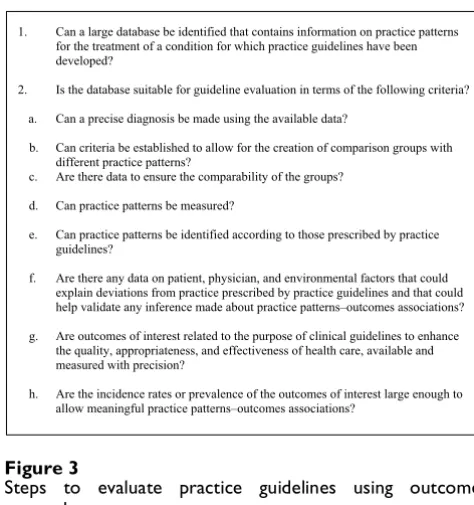
The steps to evaluate practice guidelines using outcomes research when the basic design is a retrospective cohort study are summarized in Figure 3 Some limitations to the application of this model exist. The reasons for the inabil-ity of the proposed methodological framework to deal completely with the intrinsic biases in outcomes research are listed in Figure 4. They relate mostly to the databases usually used in studies of outcomes research.
Summary
[image:8.612.312.549.448.700.2]The proposed methodological framework for outcomes research to evaluate practice guidelines reflects the selec-tion, information and confounding biases inherent in its observational nature which must be accounted for in both the design and the analysis phases of any outcomes search study. Indeed, a major limitation of outcomes re-search is the inability to account for unobserved heterogeneity that directly correlates with practice pat-terns and/or health outcomes. This may lend bias to any inferences made about practice variations and outcomes. "Researchers cannot correct for the subtle reason doctors choose one treatment over another for a particular pa-tient. That bias, in turn, can undermine the entire premise of outcomes research" [110]. These are intrinsic properties of outcomes research that can be dealt with only in part, by applying the principles of chronic disease epidemiolo-gy. Thus, this proposed methodology can serve as a frame-work for the conduct of outcomes research in the evaluation of practice guidelines but its application will be limited.
Figure 3
Steps to evaluate practice guidelines using outcomes research
1. Can a large database be identified that contains information on practice patterns for the treatment of a condition for which practice guidelines have been developed?
2. Is the database suitable for guideline evaluation in terms of the following criteria? a. Can a precise diagnosis be made using the available data?
b. Can criteria be established to allow for the creation of comparison groups with different practice patterns?
c. Are there data to ensure the comparability of the groups? d. Can practice patterns be measured?
e. Can practice patterns be identified according to those prescribed by practice guidelines?
f. Are there any data on patient, physician, and environmental factors that could explain deviations from practice prescribed by practice guidelines and that could help validate any inference made about practice patterns–outcomes associations? g. Are outcomes of interest related to the purpose of clinical guidelines to enhance
the quality, appropriateness, and effectiveness of health care, available and measured with precision?
Competing interests
none declared
References
1. Wennberg JE, Freeman JL, Shelton RM, Bubolz TA: Hospital use and mortality among Medicare beneficiaries in Boston and New Haven.N Engl J Med 1989, 321:1168-1173
2. Wennberg J, Gittlesohn A: Small area variations in health care delivery.Science 1973, 182:1102-1108
3. Leape LL, Park RE, Solomon DH, et al: Does inappropriate use ex-plain small-area variations in the use of health care services? JAMA 1990, 263:669-672
4. Eddy DM: Three battles to watch in the 1990s.JAMA 1993,
270:520-526
5. Eddy DM: Practice policies: What are they? JAMA 1990,
263:877-880
6. Eddy DM: Practice policies: Where do they come from?JAMA
1990, 263:1267-1272
7. Eddy DM: Practice policies: Guidelines for methods. JAMA
1990, 263:1839-1841
8. Eddy DM: Guidelines for policy statements: The explicit ap-proach.JAMA 1990, 263:2239-2243
9. Audet A-M, Greenfield S, Field M: Medical practice guidelines: current activities and future directions.Ann Intern Med 1990,
113:709-714
10. Marwick C: New health care research agency reflects interest in evaluating quality.JAMA 1990, 263:929-930
11. King SH: Clinical guideline development.Department of Health and Human Services. Rockville, Agency for Health Care Policy and Research
1990, 1-7
12. Fuchs VR: Managed care and merger mania. JAMA 1997,
277:920-921
13. McGuire LB: A long run for short jump: Understanding clinical guidelines.Ann Intern Med 1990, 113:705-708
14. Fletcher RH, Fletcher SW, Ed: Clinical practice guidelines.Ann In-tern Med 1990, 113:645-646
15. Grimshaw JM, Russel IT: Achieving health gain through clinical guidelines II: Ensuring guidelines change medical practice. Quality in Health Care 1994, 3:45-52
16. Mowatt G, Lib D, Grimshaw JM, et al: Getting evidence into prac-tice: The work of the Cochrane Effective Practice and Or-ganisation of Care group (EPOC). The Journal of Continuing Education in the Health Professions 2001, 21:55-60
17. Ellwood PM: Shattuck lecture – Outcomes management. A technology of patient experience.N Engl J Med 1988, 318: 1549-1556
18. Gifford F F: Outcomes research and practice guidelines: Up-stream issues for downUp-stream users.Hastings Centre report 1996, 38-44
19. Tower EC, Ballin S: Outcomes research and practice guideline development in health care reform.Circulation 1994, 90: 2607-2608
20. Roberts RG: Marriage of practice guidelines and outcomes re-search.Am Family Phys 1995, 51:1385-1386
21. Ellrodt AG, Conner L, Rieinger M, Weingarten S: Measuring and improving physician compliance with clinical practice guide-lines.Ann Intern Med 1995, 122:277-282
22. Eddy DM: Comparing benefits and harms: The balance sheet. JAMA 1990, 263:2497-2505
23. Logan RL, Scott PJ: Uncertainty in clinical practice: Implica-tions for quality and costs of health care.Lancet 1996, 347: 595-598
24. Saltman D: Guidelines: In search of certainty.Med J Aust 1997,
166:62
25. Povar G: Profiling and performance measures. What are the ethical issues?Med 1995, 33:JS60-JS68
26. Hadorn DC, Baker D: Development of the AHCPR-Sponsored heart failure guideline: Methodologic and procedural issues. J Quality Improvement 1994, 20:539-554
27. Kravitz RL, Laouri M, Kahan JP, Guzy P, Sherman T, Hilborne L, Brook RH: Validity of criteria used for detecting underuse of coro-nary revascularization.JAMA 1995, 274:632-638
28. Tanenbaum SJ: Sounding board: What physicians know.N Engl J Med 1993, 329:1268-1270
29. Kleinbaum DG, Kupper LL, Morgenstern H: Epidemiologic re-search. Principles and quantitative methods.New York, Van Nostrand Reinhold 1982, Chapter 12:
30. Kleinbaum DG, Kupper LL, Morgenstein H: Epidemiologic re-search. Principles and quantitative methods.New York, Van Nostrand Reinhold 1982, Chapter 10:
31. Roos LL, Wald R, Wadja A, Bond R, Hartford K: Record linkage strategies, out patient procedures and administrative data. Medical Care 1996, 34:570-582
32. Greenland S: Interpretation and choice of effect measures in epidemiologic analyses.Am J Epidemiol 1987, 125:761-768 33. Chassin MR: Quality of care.N Engl J Med 1996, 335:1060-1063 34. Guyatt GH, Sackett DL, Sinclair JC, Hayward R, Cook DJ, Cook RJ,
for the Evidence-Based Medicine Working Group: Users' guides to the medical literature. A method of grading health care rec-ommendations.JAMA 1995, 274:1800-1804
35. Trobe JD, Fendrick AM: The effectiveness initiative.Arch Oph-thamol 1995, 113:715-717
36. Feussner JR: Evidence-based medicine: New priority for an old paradigm.J Bone Miner Res 1996, 11:877-882
37. Brownman GP, Levine MN, Mohide A, Hayward RSA, Pritchard KI, Gafni A, A Laupacis: The practice guidelines development cy-cle: A conceptual tool for practice guidelines development and implementation.J Clin Oncol 1995, 13:502-512
38. Resenkov L, Chediak J, Hirsh J, Lewis HD: Antithrombotic agents in coronary artery disease.Chest 1989, 95(Suppl):52S-72S 39. Pilote L, Racine N, Hiatky MA: Differences in the treatment of
myocardial infarction in the United States and Canada: A comparison of two university hospitals.Arch Intern Med 1994,
154:1090-1096
40. Rouleau JL, Moye LA, Pfeffer MA, et al: A comparison of manage-ment patterns after acute myocardial infarction in Canada and the United States.N Engl J Med 1993, 328:779-784 41. Mark DB, Naylor CD, Hlatky MA, et al: of medical resources and
quality of life after myocardial infarction in Canada and the United States.N Engl J Med 1994, 331:1130-1135
42. Van der Werf F, Topol EJ, Lee KL, et al: Variations in patient man-agement and outcomes for acute myocardial infarction I the United States and other countries: Results from the GUSTO trial.JAMA 1995, 273:1586-1591
43. The GUSTO Investigators: An international randomized trial comparing four thrombolytic strategies for acute myocar-dial infarction.N Engl J Med 1993, 329:673-682
44. The GUSTO Angiographic Investigators: The effects of tissue plas-minogen activator, streptokinase, or both on coronary-ar-tery patency, ventricular function and survival after acute myocardial infarction.N Engl J Med 1993, 329:1615-1622 45. American Hospital Association guide to health care field.
Chi-cago: American Hospital Associaton 1993
[image:9.612.54.298.328.718.2]46. Neter J, Wassemman W, Kutner MH: Applied linear statistical models.Homewood, III: Richard D. Irwin 1990, 466-470
Figure 4
Reasons for the inability of the proposed methodological framework to deal with biases in outcomes research
• Lack of control over data quality.
• Lack of control over what is being collected; lack of data on practice patterns; lack of data on initial conditions; lack of data on all outcomes of interest for guideline evaluation.
• Difficulty with the measure of correlated data.
• Limited availability of statistical methods to deal with ecological exposures in individual level studies.
• Limited number of diagnoses amenable to be studied through this method.
47. Lee KL, Woodlief LH, Topol EJ, et al: Predictors of 30-day mor-tality in the era of repurfusion for acute myocardial infarc-tion: Results from an international trial of 41,021 patients. Circulation 1995, 91:1659-1668
48. Little RJA: Regression with missing X's: A review.J Am Stat Assoc
1992, 87:1227-1237
49. Teo KK, Yusuf S, Furberg CD: Effects of prophylactic an-tiarrhythmic drug therapy in acute myocardial infarction: An overview of results from randomized controlled trials. JAMA 1993, 270:1589-1595
50. Lamas GA, Pfeffer MA, Hamm P, Wertheimer J, Rouleau J-L, E Braun-wald: Do the results of randomized clinical trials of cardiovas-cular drugs influence medical practice? N Engl J Med 1992,
327:241-247
51. Yusuf S, Sleight P, Held P, McMahon S: Routine medical manage-ment of acute myocardial infarction: Lessons from over-views of recent randomized controlled trials.Circulation 1990,
82(Suppl):II-117-II-134
52. Rogers WR, Bowlby LJ, Chandra NC, et al: Treatment of myocar-dial infarction in the United States (1990 to 1993): Observa-tions from the National Registry of Myocardial Infarction. Circulation 1994, 90:2103-2114
53. Topol EJ, Ellis SG, Cosgrove DM, et al: Analysis of coronary angi-oplasty practice in the United States with and insurance-claims database.Circulation 1993, 87:1489-1497
54. The Cardiology Working Group: Cardiology and the quality of medical practice: A response.JAMA 1991, 265:496-498 55. Winters WL: Cardiology and the quality of medical practice:
A response.JAMA 1991, 265:496-8
56. Jollis JG, Ancukiwicz M, DeLong ER, Pryor DB, Muhlbaier LH, Mark DB: Discordance of databases designed for claims payment versus clinical information systems: Implications for out-comes research.Ann Intern Med 1993, 119:844-850
57. Every NR, Larson EB, Litwin PE, et al: The association between on-site cardiac catheterization facilities and the use of coro-nary angiography after acute myocardial infarction.N Engl J Med 1993, 329:546-551
58. Blustein J: High technology cardiac procedures: The impact of service availability on service use in New York State.JAMA
1993, 270:344-349
59. Rogers WJ, Baim DS, Gore JM, et al: Comparison of immediate invasive, delayed invasive and conservative strategies after tissue-type plasminogen activator: Results of the Thrombol-ysis in Myocardial Infarction (TIMI) Phase II-A trial.Circulation
1990, 81:1457-1476
60. Barbash GI, Roth A, Hod H, et al: Randomized controlled trial of late in-hospital angiography and angioplasty versus conserv-ative management after treatment with recombinant tissue-type plasminogen activator n acute myocardial infarction. Aqm J Cardiol 1990, 66:538-545
61. Wennberg JE: The paradox of appropriate care. JAMA 1987,
258:2568-2569
62. Yusuf S, Zucker D, Peduzzi E, et al: Effect of coronary artery by-pass graft surgery on survival: Overview of 10-year results from randomized trials by the Coronary Artery Bypass Graft Surgery Trialists Collaboration.Lancet 1994, 344:563-570 63. Topol EJ, Holmes DR, Rogers WJ: Coronary angiography after
thrombolytic therapy for acute myocardial infarction.Ann In-tern Med 1991, 114:877-885
64. Rogers WJ, Baim DS, Gore JM, et al: Comparison of immediate invasive, delayed invasive and conservative strategies after tissue-type plasminogen activator: Results of the Thrombol-ysis in Myocardial Infarction (TIMI) Phase II-A trial.Circulation
1990, 81:1457-1476
65. The TIMI Research Group: Immediate vs. delayed catheteriza-tion and angioplasty following thrombolytic therapy for acute myocardial infarction: No additional benefits from im-mediate percutaneous coronary angioplasty. JAMA 1988,
260:2849-2858
66. Simoons M, Arnold AE, Betriu A, et al: Thrombolysis with tissue plasminogen activator in acute myocardial infarction: No ad-ditional benefits from immediate percutaneous coronary an-gioplasty.Lancet 1988, 1:197-203
67. Topol EJ, Califf RM, George BS, et al: A randomized trial of imme-diate versus delayed elective angioplasty after intravenous
tissue plasminogen activator in acute myocardial infarction. N Engl J Med 1987, 317:581-588
68. Califf RM, Topol EJ, Stack RS, et al: Evaluation of combination thrombolytic therapy and timing of cardiac catheterization in acute myocardial infarction: Results of Thrombolysis and Angioplasty in Myocardial Infarction – phase 5 randomized trial.Circulation 1991, 83:1543-1556
69. Lee KL, Califf RM, Simes J, Van de Werf F, Topol EJ: Holding GUS-TO up to the light: Global utilization of streptokinase and tis-sue plasminogen activator for occluded coronary artery.Ann Intern Med 1994, 120:876-881
70. Ridker PM, Donnel CJ, Marder VJ, Hannekens CH: A response to "holding GUSTO up to the light".Ann Intern Med 1994, 120: 882-885
71. Breiman L, Friedman JH, Olshen RA, Stone CJ: Classification and regression trees.Belmont, Calif., Wadsworth International Group 1984 72. Chambers JM, Hastie TJ: Statistical models in S.New York,
Chap-man & Hall 1993, 414
73. Spertus JA, Weiss NS, Every NR, Weaver WD: The influence of clinical risk factors on the use of angiography and revascular-ization after acute myocardial infarction.Arch Intern Med 1995,
155:2309-2316
74. Henning H, Gilpin EA, Covell JW, Swan EA, O'Rourke RA, Ross J:
Prognosis after acute myocardial infarction: A multivariate analysis of mortality and survival.Circulation 1979, 59:1124-1136 75. The International Study Group: In-hospital mortality and clinical course of 20, 891 patients with suspected acute myocardial infarction randomized between alteplase and streptokinase with or without heparin.Lancet 1990, 336:71
76. Emod M, Mock MB, Davis KB, et al: Long-term, survival of medi-cally treated patients in the Coronary Artery Surgery Study (CASS) Registry.Circulation 1994, 90:2645-2657
77. Pryor DB, Shaw LR, McCants CB, et al: Value of the history and physical in identifying patients at increased risks for coro-nary artery disease.Ann Intern Med 1993, 18:81-90
78. Maichels KB, Yusuf S: Does PTCA in acute myocardial infrac-tion affect mortality and reinfarcinfrac-tion rates? A quantitative overview (meta-analysis) of the randomized clinical trials. Circulation 1995, 91:476-485
79. Califf RM, Harrell FE, Lee KL, et al: The evolution at medical and surgical therapy for coronary artery disease: A 15-year per-spective.JAMA 1989, 261:2077-2086
80. Alderman EL, Bourassa MG, Cohen LS, et al: Ten-year follow-up of survival and myocardial infarction in the randomized Coro-nary Artery Surgery Study.Circulation 1990, 82:1629-1646 81. Ferguson JJ: Meeting highlights, American Heart Association
68th Scientific Sessions. Anaheim, California, November 13 to 15 1995.Circulation 1996, 93:843-846
82. Detre KM, Peduzzi R, Hammermeister KE, Murphy ML, Hultgren HN, Takaro T: Five-year effect of medical and surgical therapy on resting left ventricular function in stable angina: Veterans Administration Cooperative Study.Am J 1984, 53:444-450 83. Holmes DR, Bates EX, Kleimen NS, et al: Contemporary
reper-fusion therapy for cardiogenic shock: the GUSTO-I trial ex-perience.J. Am Coll Cardiol 1995, 26:668-674
84. Meyer J, Merx W, Dorr R, Lamoertz H, Bethge C, Effert S: Success-ful treatment of acute myocardial infarction shock by com-bined percutaneous transluminal coronary revascularization (PTCR) and percutaneous transluminal coronary angi-oplasty (PTCA).Am Heart J 1982, 103:132-134
85. Lee L, Bates ER, Pitt B, Walton JA, Laufer N, O'Neil WW: Percuta-neous transluminal coronary angioplasty improves survival in acute myocardial infarction complicated by cardiogenic shock.Circulation 1988, 78:1345-1351
86. Granger CB, Califf RM, Armstrong PW, et al: Non-invasive testing is done only in low risk patients with unstable angina and non-Q wave myocardial infarction (MI): Results from GUS-TO-IIa.J Am Coll Cardiol 1996, 27(Suppl):181A abstract
87. BARI Investigators: Protocol for the Bypass Angioplasty Revas-cularization Investigation.Circualtion 1991, 84(Suppl V):V-1-27 88. Hlatky MA, Charles ED, Nobrega F, et al: Initial functional and
89. Hlatky MA, Boineau RE, Higginbotham MB, et al: A brief self-admin-istered questionnaire to determine functional capacity (the Duke Activity Status Index).Am J Cardiol 1989, 64:651-654 90. Nelson CL, Herndon JE, Mark DB, Pryor DB, Califf RM, Hlatky MA:
Relation of clinical and angiographic factors to functional ca-pacity as measured by the Duke Activity Status Index.Am J Cardiol 1991, 68:973-975
91. Stewart AL, Greenfield S, Hays RD, et al: Functional status and well-being of patients with chronic conditions. Results from the Medical Outcomes Study.JAMA 1989, 262:907-913 92. Stewart AL, Hays RD, Ware JE: The MOS short-form general
health survey. Reliability and validity in a patient population. Med Care 1988, 26:724-735
93. Lipset SM: Continental divide. The Values and Institutions of the United States and Canada.New York, Routledge 1991, 1-18 94. Anderson RT, Aaronson NK, Wilkin D: Critical review of the
in-ternational assessments of health-related quality of life.Qual Life Res 1993, 2:369-395
95. Guillemin F, Bombardier C, Beaton D: Cross-cultural adaptation of health-related quality of life measures: Literature review and proposed guidelines.J Clin Epidemiol 1993, 46:1417-1432 96. Feinstein AR, Sosin DM, Wells CK: The Will Rogers
phenome-non. Stage migration and new diagnostic techniques as a source of misleading statistics for survival in cancer.N Engl J Med 1985, 312:1604-1608
97. Kirshner B, Guyatt G: A methodological framework for assess-ing health indices.J. Chron Dis 1985, 38:27-36
98. Washko RM, Frieden TR: Tuberculosis surveillance using death certificate data, New York City, 1992.Public Health Reports
1996, 111:251-255
99. Wen SH, Hernandez R, Naylor CD: Pitfalls in nonrandomized outcomes studies.JAMA 1995, 274:1687-1691
100. Deyo RA, Cherkin DC, Ciol MA: Adapting a clinical comorbidity index for use with ICD-9-CM administrative database.J Clin Epidemiol 1992, 45:613-619
101. Daley J, Schwratz M: Developing risk-adjustment methods.In: Risk Adjustment for Measuring Health Care Outcomes 1994, 199-238 102. Breslow N, Day N: The analysis of case-controlled studies.Lyon,
IARC 1980, 338
103. McClellan M, McNeil BJ, Newhouse JP: Does more intensive treatment of acute myocardial infarction in the elderly re-duce mortality? Analysis using instrumental variables.JAMA
1994, 272:859-866
104. McClellan M, Newhouse JP: The marginal cost-effectiveness of medical technology: A panel instrumental-variables ap-proach.J Econometrics 1997, 77:39-64
105. Pilote L, Thomas RJ, Dennis C, Goins P, Houston N-Miller, Kraemer HC, C Leong, Berger WE, Lew H, Heller RS, Rompf J, Debusk RF: Re-turn to work after uncomplicated myocardial infarction: A trial of practice guidelines in the community.Annal Intern Med
1992, 117:383-389
106. Schwartz S: The fallacy of the ecological fallacy: the potential misuse of a concept and consequences.Am J Pub Health 1994,
84:819-824
107. Gastonis CA, Epstein AM, Newhouse JP, S-Normand L, McNeil BJ:
Variations in the utilisation of coronary angiography for eld-erly patients with an acute myocardial infarction.Med Care
1995, 33:625-642
108. Green J, Wintfield N: How accurate are hospital discharge data for evaluating effectiveness of care?Med Care 1993, 31:719-731 109. Gleason PP, Kapoor WN, Stone JR, Lave JR, Obrosky DS, Schulz R:
Medical outcomes and antimicrobial costs with the use of the American Thoracic Society guidelines for outpatients with community-acquired pneumonia.JAMA 1997, 278:32-39 110. Greenfield S: The state of outcomes research: Are we on
tar-get?N Engl J Med 1989, 320:1142-1143
Pre-publication history
The pre-publication history for this paper can be accessed here:
http://www.biomedcentral.com/1472-6963/2/7/prepub
Publish with BioMed Central and every scientist can read your work free of charge
"BioMedcentral will be the most significant development for disseminating the results of biomedical research in our lifetime."
Paul Nurse, Director-General, Imperial Cancer Research Fund
Publish with BMCand your research papers will be:
available free of charge to the entire biomedical community
peer reviewed and published immediately upon acceptance
cited in PubMed and archived on PubMed Central
yours - you keep the copyright
[email protected] Submit your manuscript here:
http://www.biomedcentral.com/manuscript/