ISSN: 2278-3075,Volume-8 Issue-8S2, June 2019
Abstract: Most universities offer a low-speed commercial Internet for basic research and a separate high-speed R&E network for research requiring hundreds of tera-byte-class big data transmission. However, from a researcher's perspective, there is a limit to the use of high-speed network services provided by the R&E network because they basically have to choose one of them through a congested campus network. Therefore, for big data transmission, researchers should build separate optical networks inside the campus network for the connection of high-speed R&E network, or ask campus network managers to ensure bandwidth equal to most of the internal network bandwidth. Furthermore, campus network managers usually configure campus network to use commercial Internet. He/she manually provides R&E network connection as a request comes from user. This paper presents a new user-centered multi-ISP service method that enables users to efficiently overcome the current problems of IP routing, where dynamic changes to their ISP are not possible in nature. To overcome these problems, Fine-granule convergence of routing-related technologies is newly developed to provide user-oriented ISP switching.
Keywords: Multiple ISP Service, Automatic ISP Alteration, User-centric ISP Switching, Big Data Transfer, Physically Dynamic Network Separation
I.INTRODUCTION
Most universities offer campus network[1] services connected to multiple ISPs (Internet Service Providers). They provide campus network services by connecting one or more commercial ISPs and one or more national R&E ISPs. However, researchers inside the university belong to only one ISP service domain due to the inherent limitations of IP routing technology, so even though the campus network is connected to multiple ISPs, only one ISP service is 100% available and the other ISP service is virtually underutilized. This is because network services provided by ISPs other than the representative ISPs set up on the campus network are available to users only if the network administrator manually registers each such service in routing information. In particular, most universities have set default routing for traffic on campus networks to basically go toward the commercial Internet, leaving very high speed network
service provided by national research networks 100% unavailable to campus researchers. This is because the routing information for research institutions and big data centers around the world is so large that campus network administrators cannot manually set it up on campus external gateway routers. So, if scientists want to build networks for big data[2][3] transmission or to support high security services with universities and research institutes overseas, then they need to get help from network managers. To make matters worse, routing information for oversea data centers was manually set up on campus representative routers with the help of network managers. Nevertheless, it is difficult to achieve the performance needed to transmit big data due to the congestion of campus networks that we know well. If you try to transfer big data using a campus network, it can cause inconvenience to other campus network users as big data transmission can result in loss of normal traffic on campus networks. Therefore, big data researchers on campus have built high-speed networks separately from campus networks and access them for big data transmission. At this time, the network cards of his system should be reconstructed using IP addresses allocated by the high-speed R&E network. Such separate network construction and management is a significant overhead of the research project budget to researchers despite their limited time use, which negatively affects their project process. In addition, this exceptional campus networking increases the inefficiency overhead at the overall campus network management level. In summary, university campus networks already have multiple ISPs connected so that rich network services are available over the network, but with the campus network environment at the 1980s level, campus network operating cost is to increase significantly if the demand for big data research increases. To address this problem, many high-tech network device vendors developed and service advanced technologies such as SDN and so on, but vendors of networkequipment present solutions with ISP-centric networking services, it requires high investment costs in enhancing campus networks. Therefore, this paper presents a new method that allow user to select ISP services. User-centric ISP selection[4]
Comparative Study on the User-Controlled ISP
Switching for Big Data Transmission in
Multi-ISP-Connected Campus Network
1
Comparative Study on the User-Controlled ISP Switching for Big Data Transmission in Multi-ISP-Connected Campus Network
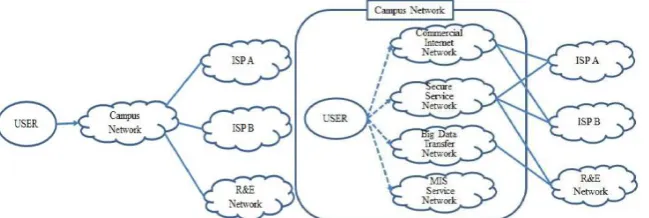
network and the aggregated form of campus networks in which optional use of specialized networks for specialized
[image:2.595.143.468.78.187.2]network services provided by various ISPs.
Figure 1. Comparison of all-in-one network services (Left) and specialized networks service (Right)
II.PROBLEMS
Network routing information for domestic and foreign research institutes by R&E network ISP is so large that most universities use only some of the routing information for domestic research institutions. Universities are using them as a way to establish static routing. Therefore, if an in-campus scientist wants to collaborate with a foreign research institute or a new domestic research institute, he or she must request a configuration of new logical network routing. Sometimes there are many situations where additional physical network needs to be built newly because of characteristics of big data transmission. This results in a large loss of time and effort to researchers who lack research time.
In today's IP address-based Internet environment, network users are allowed to use network services from the specific ISP, even if they are connected to multiple ISPs. This is basically because the university's network manager organized the campus network devices using the IP addresses assigned by the ISP that contracted with the representative ISP service for the campus network. If users change their IP address randomly to use other ISP services, networking can be lost or confused with the routing information exchange scheme at home and abroad. If you want to get another ISP service, you need to get a new IP address from another ISP. And campus IP routing information should be reconfigured so that new IP addresses can be used. However, other ISP in universities is usually R&E networks because of big data transmission. Manually reconfiguring the campus network routing system is becoming increasingly inefficient whenever a big data researcher accesses another ISP service because big data-based researchers are increasing in universities due to the increasing dependence between big data and research. It should now be possible to automatically
reconfigure routing information in the form of pinpoints for one user on the campus network. And this reconfiguration should not affect the entire campus network or ISP routing. In addition, only certain routing information for network services provided by the user's desired ISP should be provided by the network administrator to reduce the risk of overhead and security of network management tasks. The reason why campus network administrators need to support the reconfiguration of routing information at the pinpoint level is that the size of routing information provided by ISPs is very large. Therefore, it is almost impossible to support all network routing information provided by other ISP on campus networks. The campus network uses a default routing method that serves only routing information for subnetworks of internal networks and other non-specific network research connections that are handled by the commercial ISP. In case of big data transmission, even if routing information has been changed to use specific network services of a particular ISP, separate high-speed physical networks can be required because big data transmission problems arise due to internal network congestion. In other words, separate physical networks should also be presented in parallel.
ISSN: 2278-3075,Volume-8 Issue-8S2, June 2019
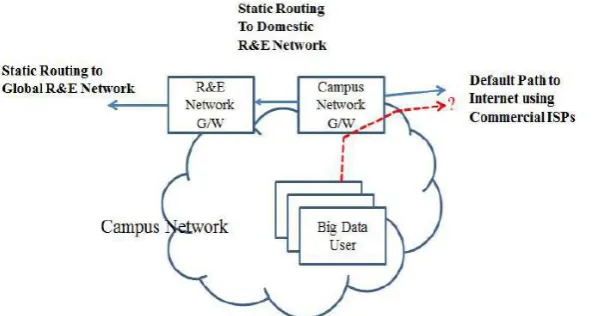
Figure2 Examples of campus routing configuration cases and big data transfer issues in multiple ISP environments III.RELATEDRESEARCHES
[image:3.595.160.458.57.215.2]Related studies for transferring hundreds of terabytes of big data can be largely divided into two categories. The first is the physically deployment of a separate optical communication network for big data transmission, and the second is the logically deployment of a dedicated network for big data dynamically whenever users need it. Examples of the first category are LHCOPN[5] and ScienceDMZ[6], and the second category is SONATA[7] and iNDIRA[8]. LHCOPN is a project led by the CERN Research Institute in Switzerland that separately constructs optical networks in the form of global and end-to-end support for big data transmission networks. Science DMZ, which is led by ESNet in the U.S., uses Internet network, but is going to establish a separate and dedicated Internet. ScienceDMZ provides guaranteed Internet bandwidth between DTNs by installing Internet dedicated to big data between servers. SONATA implements Network Function Virtualization (NFV)/Virtual Network Function (VNF) as a micro-service architecture, providing the platform to deliver the new services users demand. iNDIRA supports a framework that enables network configuration as a user demand base as application of SDN's North Bound Interface. These two categories use advanced networking technologies[9] such as optical networking and SDN to transmit big data. New networking technologies generally lack compatibility with existing technologies, so to serve campus internal researchers with new networking technologies, campus network managers must either build new entire existing campus networks or replace a significant portion. It can take a lot of money or it can take a lot of time to introduce new technologies.
Table 1: Comparison of the approach method of related researches
Communit
y Project Category
CERN HEP LHCOPN Private Optical
Network
ESNet iNDIRA Framework
KISTI GSDC(This
Paper)
User Support
Application
In this study, to minimize gap impacts caused by delays due to the introduction cost of advanced networking technologies, we would like to propose new service methods that can be addressed at the application level as much as possible. Our methods that demonstrate similar functionality to those of the above research projects by applying new, fine-granule IP networking technologies that are already applied in the IETF standard but not well utilized today. This study is aimed at helping big data researchers conduct big data-based research in their campus smoothly with the GSDC(Global Science Data hub Center) project, which is being pushed by KISTI(Korea Institute of Science and Technology Information). The following table 1 briefly summarizes the differences between this study and other studies.
IV.METHODFORUSER-CONTROLLEDISP SWITCHING
4.1. Basic Direction for Design
The first is to Provide ISP switching service for scientists who study hundreds of terabytes of big data in a university environment that combines commercial Internet and national R&E networks. The second is tosupport general research using commercial internet during normal time. The third is to support high-speed connection between local user and oversea data center only when researching big data
4.2. Condition Details for Target Service
Comparative Study on the User-Controlled ISP Switching for Big Data Transmission in Multi-ISP-Connected Campus Network
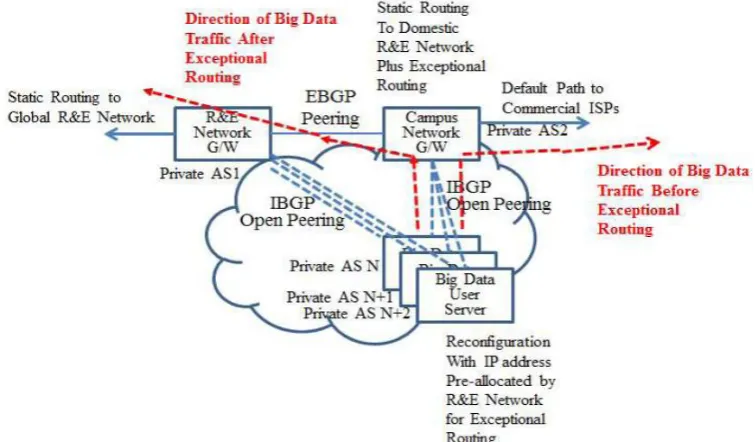
Figure 3. Application example of key technologies for dynamic ISP switching 4.3. Key Procedures for ISP Switching
Basically, three players such as big data researchers inside the campus, campus network managers, and research network ISP administrators for big data transmission, form processes for routing information sharing and approval protocols. And then, add the confirm process to the process of sharing routing information between scientists and the R&E network to make sure that the big data sites that scientists need are accessible. And then, add the process of IP allocation assigned by the R&E network ISP to the process of sharing routing information between scientists and campus network administrators. And then, add the ensuring process that the route information required by scientists is also valid on campus network to the process of sharing routing information with campus network managers and research network ISPs. Finally add routing support that enables new IP addresses from the research network to be deployed on logical networks, guaranteed bandwidth, or serviced on separate physical networks in campus network.
4.4. Key Technologies for ISP Switching
The first isIBGP[10][11].We use IBGP to share routing information among scientists, research network ISPs, and campus network managers. The open peering concept has been newly introduced to allow arbitrary scientists within the campus network to use IBGP.
The Second isprivate AS[12][13] Numbering. When sharing routing information using IBGP technology, we configure IBGP to use the Private AS number in order to avoid confusion in the existing routing system.
The third is host IP address-based routing information filtering. Because the routing information delivered by the R&E network is very large, it is shared using routing
information filtering technology to share only IP route information from the scientists' preferred site. That is, scientists share only single routing information for big data sites that they need to transmit big data.
The Fourth islongest match first routing. Global routing for the Internet uses CIDR[14][15] technology to exchange routing information to reduce the size of routing information. Therefore, the longest IP address size within the campus network is 32 bits, providing internal routing services with host routing information, which enables special routing services only for specific hosts within the campus network without causing disruption of routing outside the campus network.
The fifth ismapping between host IP address routing and optical link interface. Big data may be temporarily transferred by a dedicated optical network, bypassing the congested campus network for very-high speed transmission. It is possible by mapping host routing information in 32-bit to the interface of the fiber optic link network. Figure 3 shows the conditions of application of the above technologies
ISSN: 2278-3075,Volume-8 Issue-8S2, June 2019
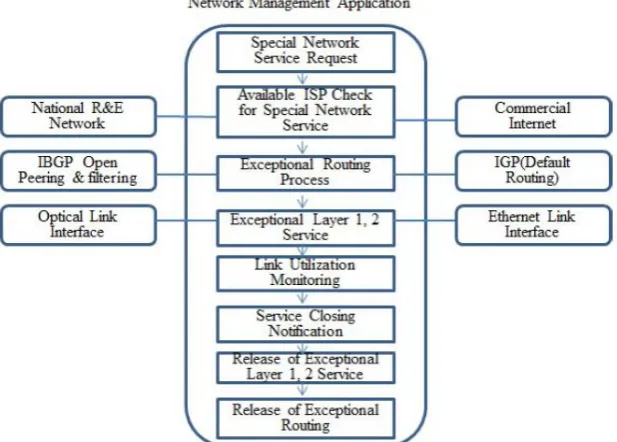
Figure 4. Exceptional Networking Service Sequence for User-Oriented ISP Switching
It has passed fifty years after the Internet was developed, it became difficult for Internet to perform new advanced networking functions. But it has already become only global network platform that is utilized in all areas around the world, making it impossible to change. And since almost all networking services are available on the Internet today and there can be problems only in very special cases. Therefore, adding exception processing features only for that case can be a good solution as a new approach with the strategy that providing advanced networking services at lower cost than upgrading the entire Internet platform. The exception-based ISP switching concept supports users updating exceptional routing information for ISP switching on demand. To this end, IBGP-based open peering was supported between users and ISP-connected routers on campus network, which is an Internet with the default-routing and tiered network architecture. In order to prevent malicious use of exceptional routing, private AS and IBGP adopted instead of EBGP and we limited by updating only external host routing information in a single 32-bit unit. 32 bit based routing information is not propagated among ISPs. For big data transmission, ISP switching services should also support physical path changes. Big data should be able to be transferred to separate private networks or optical networks rather than to traditional crowded campus networks. For this purpose, we have added ways to define the optical link interface, which allows only host IP-based routing. Of course, it was assumed that one of the R&E network IP addresses allocated under the agreement between the R&E network manager and campus network manager was used in advance. Therefore, big data traffic based on host IP-based routing information selected by users could flow to a separate optical
V.CONCLUSION
In this paper, we have introduced how it is possible for big data researchers working within the campus network to use changing the Big Data transmission path to an ISP with direct very high speed link without the help of campus network administrators or external ISP network managers. The study of cutting-edge science has become increasingly dependent on the Big Data research. This trend of data-based research is accelerating more and more in the scientific field with the introduction of artificial intelligence technology. Therefore, it is expected that more and more campus researchers will need big data transfers. Despite the need to provide more new functions and services of campus network than ever before, campus networks are not easily upgraded due to the limitations of the university's low budget for informatization service and less staff for IT resource management. The age-old campus network environment is increasingly causing inconvenience for big data researchers in universities. And, more importantly, to address these problems, it is difficult to predict the evolution of campus networks in a short period of time, as vendors are trying to primarily provide their new solution equipment with the business strategy of all systems of their existing campus networks. Thus, this study was carried out for the provision of a short-term solution for the service of high-performance, advanced campus networks in existed campus networking environment, using the exceptional case based fine-granule convergence method to apply unused but advanced IETF standards in IP routing technologies.
Comparative Study on the User-Controlled ISP Switching for Big Data Transmission in Multi-ISP-Connected Campus Network
global hub center.
REFERENCES
1. Matt C. Opinion: A new era of campus network design. Network World.
2018 Jun.;
https://www.networkworld.com/article/3281447/lan-wan/a-new-era-of-ca mpus-network-design.html
2. Harvey BN. Big Data Sciences Programs and Networks. Internet2 Global
Summit. 2018 May;
https://meetings.internet2.edu/media/medialibrary/2018/05/23/20180508 -newman-bigdatanetworks.pdf
3. Prabhat. Big Science Problems, Big data solutions. 2015 Nov.;
https://www.oreilly.com/ideas/big-science-problems-big-data-solutions
4. Daniel G. Competition and Dynamic Bargaining in the Broadband
Industry. 2017 Mar.;
https://scholar.princeton.edu/sites/default/files/dgoetz/files/dtgoetz_jmp.p df
5. LHCOPN - Large Hadron Collider Optical Private Network,
https://twiki.cern.ch/twiki/bin/view/LHCOPN/WebHome
6. Eli D, Lauren R, Brian T, Jason Z, Mary H. The Science DMZ: A Network
Design Pattern for Data Intensive Science, Scientific Programming. 2014 Jan; 22(2):173-185. DOI: 10.3233/SPR-140382
7. Hadi RK, Holger K. Joint Orchestration of Cloud-Based Microservices and
Virtual Network Functions. Accepted in The Ninth International Conference on Cloud Computing, GRIDs, and Virtualization. 2018 Jan; arXiv:1801.09984
8. Mariam K, Eric P, Anu M, Brian T, Chin G, Inder M. Enabling Intent to
Configure Scientific Networks for High Performance Demands. Future Generation Computer Systems. 2018 Feb;79(1): 205-214
9. Nathan FS, Danny AP, Raphael VR, Mateus AS, Christian ER. Network
Service Orchestration: A Survey. IEEE COMMUNICATIONS SURVEYS & TUTORIALS. 2018 Mar.; arXiv:1803.06596v2 [cs.NI]
10.Yakov R, Tony L, Susan H. A Border Gateway Protocol 4 (BGP-4). IETF.
2006 Jan; RFC4271: https://tools.ietf.org/html/rfc4271
11.Tony B, Ravi C, Enke C. BGP Route Reflection: An Alternative to Full
Mesh Internal BGP (IBGP). IETF. 2006 Apr.; RFC4456:
https://tools.ietf.org/html/rfc4456
12.Jon M. Autonomous System (AS) Reservation for Private Use. IETF. 2013
Jul.; RFC6996: https://tools.ietf.org/html/rfc6996.
13.WIKIPEDIA. Autonomous system (Internet). 2018 Oct.;
https://en.wikipedia.org/wiki/Autonomous_system_%28Internet%29
14.WIKIPEDIA. Classless Inter-Domain Routing (CIDR).
https://en.wikipedia.org/wiki/Classless_Inter-Domain_Routing. 15.Vince F, Tony L. Classless Inter-domain Routing (CIDR): The Internet