Interventions to improve exercise behaviour
in sedentary people living with and beyond
cancer: a systematic review
L Bourke*
,1, K E Homer
1, M A Thaha
2, L Steed
1, D J Rosario
3, K A Robb
4, J M Saxton
5and S J C Taylor
11Department of Primary Care and Public Health, Barts and The London School of Medicine and Dentistry, Blizard Institute, Queen
Mary University of London, London, UK;2Academic Surgical Unit, Centre for Digestive Diseases, Barts and The London School of
Medicine and Dentistry, Blizard Institute, Queen Mary University London, London, UK; 3Academic Urology Unit, Department
of Oncology, E Floor, Royal Hallamshire Hospital, University of Sheffield, Glossop Road, Sheffield, UK; 4Department of Physiotherapy, Bart’s Hospital, London, UK and5School of Allied Health Professions, University of East Anglia, Norwich, UK
Background:To systematically review the effects of interventions to improve exercise behaviour in sedentary people living with
and beyond cancer.
Methods: Only randomised controlled trials (RCTs) that compared an exercise intervention to a usual care comparison in
sedentary people with a homogeneous primary cancer diagnosis, over the age of 18 years were eligible. The following electronic databases were searched: Cochrane Central Register of Controlled Trials MEDLINE; EMBASE; AMED; CINAHL; PsycINFO; SportDiscus; PEDro from inception to August 2012.
Results:Fourteen trials were included in this review, involving a total of 648 participants. Just six trials incorporated prescriptions that
would meet current recommendations for aerobic exercise. However, none of the trials included in this review reported intervention adherence of 75% or more for a set prescription that would meet current aerobic exercise guidelines. Despite uncertainty around adherence in many of the included trials, the interventions caused improvements in aerobic exercise tolerance at 8–12 weeks (SMD¼0.73, 95% CI¼0.51–0.95) in intervention participants compared with controls. At 6 months, aerobic exercise tolerance is also improved (SMD¼0.70, 95% CI¼0.45–0.94), although four of the five trials had a high risk of bias; hence, caution is warranted in its interpretation.
Conclusion: Expecting the majority of sedentary survivors to achieve the current exercise guidelines is likely to be unrealistic.
As with all well-designed exercise programmes, prescriptions should be designed around individual capabilities and frequency, duration and intensity or sets, repetitions, intensity of resistance training should be generated on this basis.
It is estimated that there are now around 29 million people living with or beyond cancer globally (excl. non-melanoma skin cancer) (GLOBOCAN, 2008), and this number will continue to rise as a result of an ageing population, increased detection and improving survival (Maddamset al, 2009). For many cancer survivors, iatrogenic harm caused by primary treatment, and the transition from end of treatment to living beyond cancer, can have an impact on all aspects of life for the individuals and their families (Ferrellet al, 1998).
Europe’s largest survey assessing patient-reported outcomes in people living with and beyond cancer reported that o25% meet the current physical activity guidelines, 43% have trouble with fatigue and 45% experience fear of disease recurrence (Department of Health—Quality Health, 2012). Furthermore, around 50% of people with cancer have an existing chronic condition (Elliottet al, 2011) and are at an increased risk of developing new comorbidities such as heart failure, coronary heart disease, osteoporosis and diabetes
*Correspondence: Dr L Bourke; E-mail: [email protected]
Received 17 October 2013; accepted 1 November 2013; published online 12 December 2013
&2014 Cancer Research UK. All rights reserved 0007 – 0920/14
Keywords:breast cancer; colorectal cancer; prostate cancer; aerobic exercise; resistance exercise; adherence; guidelines
during the survivorship period (Khan et al, 2011). For these individuals, the proportion suffering on-going poor health, quality of life and disability may be as high as 25–30% (Elliottet al, 2011). Exercise interventions for cancer survivors have received increasing attention over the last decade as an effective way to improve health-related quality of life, physical function and reduce fatigue (Fonget al, 2012; Mishraet al, 2012a, b). Associations with the reduced risk of disease recurrence have also come to prominence (Holmes et al, 2005; Meyerhardt et al, 2006, 2009; Kenfield et al, 2011; Richman et al, 2011). The current exercise guidelines indicate that cancer survivors should achieve 150 min per week of aerobic exercise and twice weekly resistance (strength) training (Rock et al, 2012). However, as few individuals achieve such physical activity levels, a comprehensive review of behaviour-change effectiveness including which interventions meet the current guidelines is crucial. The aim of this study was to systematically review the effects of exercise interventions on exercise behaviour in sedentary people living with and beyond cancer.
MATERIALS AND METHODS
Search strategy. Full details of the MEDLINE search (which was adapted accordingly for separate databases) can be seen in the parallel publication of Bourke et al (2013). Briefly, the following electronic databases were searched: Cochrane Central Register of Controlled Trials MEDLINE; EMBASE; AMED; CINAHL; PsycINFO; SportDiscus; PEDro from inception to August 2012. To supplement this evidence, grey literature was evaluated, leading experts in the field and charities were written to and reference lists of other recent systematic reviews were screened for potential trials.
Eligible studies. Only randomised controlled trials (RCTs) involving adults (18 years or over) that aimed to improve exercise behaviour compared with a usual care comparison group with a sedentary lifestyle (i.e., not undertaking 30 min or more of the structured exercise of at least a moderate intensity, 3 days per week) were included. Participants were required to have been histologically or clinically diagnosed with cancer regardless of sex, tumour site, tumour type, tumour stage and type of anticancer treatment received. Only interventions that detailed the frequency, duration and intensity of aerobic exercise behaviour, or the frequency, intensity, type, sets, repetitions of resistance exercise behaviour were included. The exercise programmes could be individual or group, professionally led or not, and home, community, primary care or exercise facility based. Eligible RCTs must have included at least 6 weeks of follow-up.
In an effort to attempt to understand how different interven-tions might be relevant to each type of cancer and its specific treatment methods, we did not include studies of heterogeneous cancer cohorts (i.e., patients with different primary cancer sites). Studies in ‘at risk’ populations that are addressing primary prevention research questions were not included. Trials directed specifically at end-of-life-care pathways or hospital in-patients were also excluded.
Study quality. Risk of bias and methodological quality were assessed in accordance with the Cochrane Collaboration’s tool for assessing risk of bias (Higgins and Green, 2011). Two review authors (LB and KH) applied the risk of bias tool independently, and any differences were resolved by discussion with a third review author (ST or DR).
Outcomes. Primary outcomes were aerobic exercise behaviour (frequency, duration and intensity) and resistance exercise behaviour (sets, repetitions and intensity). Interventions were judged as successful in achieving their exercise goals as identified in
the study methods if they reported at least 75% adherence over the given follow-up period (Martin and Sinden, 2001). We also assessed which interventions were designed to achieve the American Cancer Society’s guidelines for exercise in people living with and beyond cancer – that is aerobic exercise of at least 150 min per week – with at least 2 days per week of strength training (Rock et al, 2012). Secondary outcomes were change in aerobic fitness or exercise tolerance, change in skeletal muscle strength and endurance, adverse events and intervention attrition rate.
Screening and data extraction. All titles and abstracts were screened to identify studies that might meet the inclusion criteria or that could not safely be excluded without full-text assessment (e.g., where there is no abstract available) by two of the authors working independently (LB and KH). Full texts were retrieved for these articles. All eligible papers were formally abstracted by at least two members of the group working independently (LB and KH) using the data collection form and the risk of bias tool (Higgins and Green, 2011). Any disagreements were resolved by discussion with one more review author (ST or DJR).
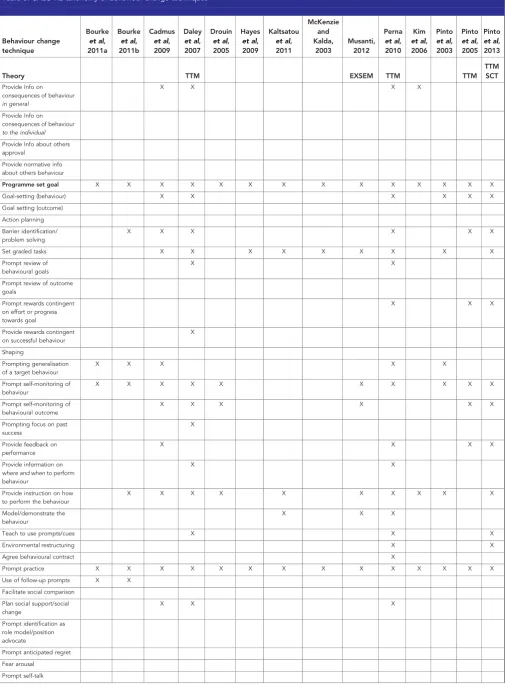
Data synthesis. Data on adherence were quantified in terms of number of prescribed exercise sessions attended as a proportion of those prescribed. Interventions were categorised in terms of the behaviour-change techniques (BCTs) used according to the ‘Coventry, Aberdeen & London—Refined’ (CALO-RE) taxonomy by a health psychologist trained in using this taxonomy (LS) and checked by LB (Michie et al, 2011). Where possible, and if appropriate, meta-analyses of review outcomes were performed. A fixed-effect model was used if there was no significant statistical heterogeneity (I2X50%). For continuous outcomes (e.g., fitness or exercise tolerance), the standardised mean difference between treatment arms was estimated by extracting the final value and standard deviation of the outcome of interest with the number of participants assessed at follow-up. The Cochrane group RevMan version 5.2 statistical analysis software was used to carry out meta-analyses (Cochrane IMS, 2013).
RESULTS
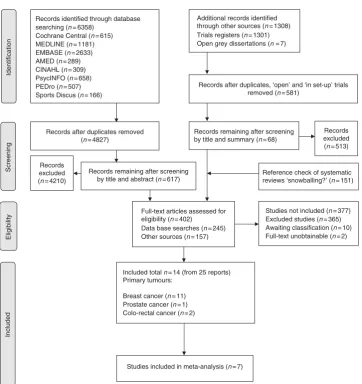
We identified 5559 unique records from research database records from grey literature and ‘snowballing’ techniques, which included reference checking from recent large systematic reviews (see Figure 1, PRISMA flow chart). Given that the detail of prescribed exercise is rarely reported in manuscript abstracts (e.g., frequency, intensity and duration of exercise prescription), this led to a large number of manuscripts being evaluated at the full-text stage (n¼402). After consensus agreement between study authors, 14 RCTs were included in this review (McKenzie and Kalda, 2003; Pintoet al, 2003, 2005, 2013; Drouinet al, 2005; Kimet al, 2006; Daleyet al, 2007; Cadmuset al, 2009; Hayeset al, 2009; Pernaet al, 2010; Kaltsatouet al, 2011; Bourkeet al, 2011a, b; Musanti, 2012). A total of 648 participants were randomised in these trials. A total of 377 reports were excluded; reasons for exclusion were: non RCTs – for example, reviews or comment/editorial articles; mixed cancer cohorts or cohorts that included non-cancer populations; trials that failed to describe essential metrics of exercise prescrip-tion used in the intervenprescrip-tion; trials involving active participants at baseline; trials involving hospital in-patients; interventions that were o6 weeks in follow-up; trials involving participants o18 years of age; not able to translate into English.
in obese cohorts (Drouin et al, 2005; Cadmuset al, 2009). The overwhelming proportions of participants were White, with only one study reporting data from an ethnically diverse sample (Perna et al, 2010). Comorbidities at baseline were largely unclear or unreported, with only two studies (Daleyet al, 2007; Hayeset al, 2009) reporting on proportion with lymphedema, and one trial reporting on proportion with clinically relevant depression scores (Pernaet al, 2010).
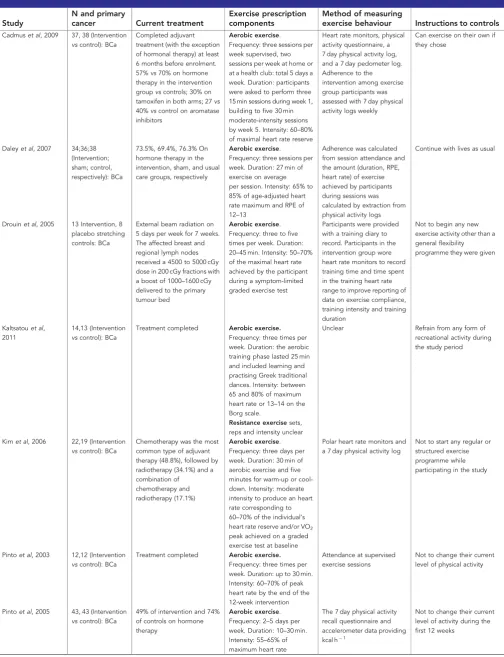
Seven trials used a combination of supervised and non-supervised exercises (Pinto et al, 2003; Kimet al, 2006; Cadmus et al, 2009; Hayes et al, 2009; Perna et al, 2010; Bourke et al, 2011a, b); four trials were exclusively home-based (Drouin et al, 2005; Pinto et al, 2005, 2013; Musanti, 2012); and just three were exclusively supervised trials (McKenzie and Kalda, 2003; Daley et al, 2007; Kaltsatou et al, 2011). Contact with exercise professionals or study researchers ranged from 20 times over 12 weeks (Hayeset al, 2009) to weekly phone calls after an initial one-to-one exercise consultation (Pintoet al, 2005, 2013). Just six trials incorporated prescriptions that would meet the Rock et al(2012) recommendations for aerobic exercise, that is, 150 min per week (Cadmuset al, 2009; Pintoet al, 2013) or resistance exercise, that is, strength training exercises at least 2 days per week (Pernaet al, 2010; Bourkeet al, 2011a, b; Musanti, 2012). Only three trials were identified that attempted to objectively validate independent exercise behaviour with accelerometers or heart rate monitoring (Pinto et al, 2005, 2013; Cadmus et al, 2009). A summary of included studies can be seen in Table 2.
Quality of studies. Three trials were judged not to include a high risk of bias (Drouinet al, 2005; Cadmuset al, 2009; Bourkeet al, 2011b). The majority of uncertainty in judging trial bias came from a lack of clarity around randomisation procedures and blinding of study outcome assessors (McKenzie and Kalda, 2003; Pinto et al, 2003, 2005, 2013; Kaltsatouet al, 2011). The majority of trials in the review were judged to include at least one element indicating a high risk of non-standard bias. These included adherence data missing or not clear (McKenzie and Kalda, 2003; Hayeset al, 2009; Kaltsatouet al, 2011; Musanti, 2012); high attrition at follow-up (Pinto et al, 2003; Bourkeet al, 2011a); significant differences in those participants excluded from trial analysis/dropouts (Pinto et al, 2003; Kimet al, 2006; Musanti, 2012); numbers randomised to trial arms and trial completion rate are unclear (Perna et al, 2010); significant differences in cohorts at baseline (Pinto et al, 2003, 2005; Musanti, 2012); inconsistencies between objective and subjective measures of exercise behaviour (Pintoet al, 2005, 2013).
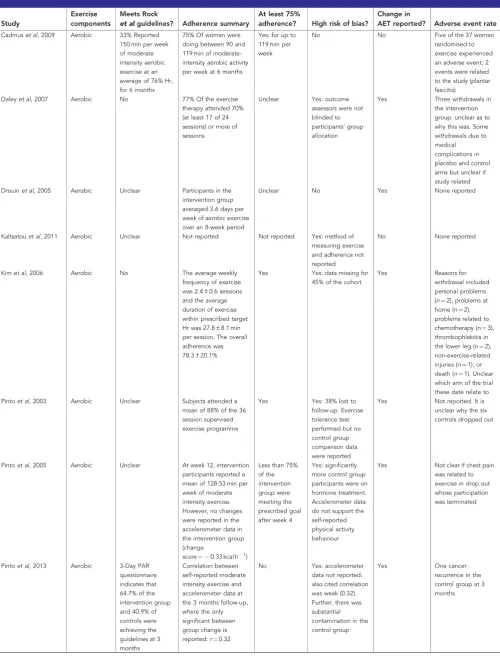
Effects of the interventions. None of the trials included in this review reported an adherence of 75% or more, to a prescription that would meet the Rocket al(2012) aerobic exercise guidelines. Only three trials reported an adherence of 75% or more to a lower aerobic exercise goal (Cadmuset al, 2009; Bourkeet al, 2011a, b). Notably, all three incorporated both a supervised and independent exercise component as part of their intervention and none placed restrictions on the control group in terms of their exercise behaviour. Cadmuset al(2009) appeared to be the most successful Records identified through database
searching (n= 6358) Cochrane Central (n= 615) MEDLINE (n= 1181) EMBASE (n= 2633) AMED (n= 289) CINAHL (n= 309) PsycINFO (n= 658) PEDro (n= 507) Sports Discus (n= 166)
Screening
Included
Eligibility
Identification
Additional records identified through other sources (n= 1308) Trials registers (n= 1301) Open grey dissertations (n= 7)
Records after duplicates removed (n= 4827)
Records remaining after screening by title and abstract (n= 617) Records
excluded (n= 4210)
Full-text articles assessed for eligibility (n= 402) Data base searches (n= 245) Other sources (n= 157)
Studies not included (n= 377) Excluded studies (n= 365) Awaiting classification (n= 10) Full-text unobtainable (n= 2)
Studies included in meta-analysis (n= 7) Included total n= 14 (from 25 reports) Primary tumours:
Breast cancer (n= 11) Prostate cancer (n= 1) Colo-rectal cancer (n= 2)
Records after duplicates, ‘open’ and ‘in set-up’ trials removed (n= 581)
Records remaining after screening by title and summary (n= 68)
Records excluded (n= 513)
[image:3.595.118.481.41.426.2]Reference check of systematic reviews ‘snowballing?’ (n= 151)
Table 1.Characteristics of included studies
Study
N and primary
cancer Current treatment
Exercise prescription components
Method of measuring
exercise behaviour Instructions to controls
Cadmuset al, 2009 37, 38 (Intervention
vscontrol): BCa
Completed adjuvant treatment (with the exception of hormonal therapy) at least 6 months before enrolment. 57%vs70% on hormone therapy in the intervention groupvscontrols; 30% on tamoxifen in both arms; 27vs
40%vscontrol on aromatase inhibitors
Aerobic exercise. Frequency: three sessions per week supervised, two sessions per week at home or at a health club: total 5 days a week. Duration: participants were asked to perform three 15 min sessions during week 1, building to five 30 min moderate-intensity sessions by week 5. Intensity: 60–80% of maximal heart rate reserve
Heart rate monitors, physical activity questionnaire, a 7 day physical activity log, and a 7 day pedometer log. Adherence to the intervention among exercise group participants was assessed with 7 day physical activity logs weekly
Can exercise on their own if they chose
Daleyet al, 2007 34;36;38 (Intervention; sham; control, respectively): BCa
73.5%, 69.4%, 76.3% On hormone therapy in the intervention, sham, and usual care groups, respectively
Aerobic exercise. Frequency: three sessions per week. Duration: 27 min of exercise on average per session. Intensity: 65% to 85% of age-adjusted heart rate maximum and RPE of 12–13
Adherence was calculated from session attendance and the amount (duration, RPE, heart rate) of exercise achieved by participants during sessions was calculated by extraction from physical activity logs
Continue with lives as usual
Drouinet al, 2005 13 Intervention, 8 placebo stretching controls: BCa
External beam radiation on 5 days per week for 7 weeks. The affected breast and regional lymph nodes received a 4500 to 5000 cGy dose in 200 cGy fractions with a boost of 1000–1600 cGy delivered to the primary tumour bed
Aerobic exercise. Frequency: three to five times per week. Duration: 20–45 min. Intensity: 50–70% of the maximal heart rate achieved by the participant during a symptom-limited graded exercise test
Participants were provided with a training diary to record. Participants in the intervention group wore heart rate monitors to record training time and time spent in the training heart rate range to improve reporting of data on exercise compliance, training intensity and training duration
Not to begin any new exercise activity other than a general flexibility programme they were given
Kaltsatouet al, 2011
14,13 (Intervention
vscontrol): BCa
Treatment completed Aerobic exercise.
Frequency: three times per week. Duration: the aerobic training phase lasted 25 min and included learning and practising Greek traditional dances. Intensity: between 65 and 80% of maximum heart rate or 13–14 on the Borg scale.
Resistance exercisesets, reps and intensity unclear
Unclear Refrain from any form of recreational activity during the study period
Kimet al, 2006 22,19 (Intervention
vscontrol): BCa
Chemotherapy was the most common type of adjuvant therapy (48.8%), followed by radiotherapy (34.1%) and a combination of
chemotherapy and radiotherapy (17.1%)
Aerobic exercise. Frequency: three days per week. Duration: 30 min of aerobic exercise and five minutes for warm-up or cool-down. Intensity: moderate intensity to produce an heart rate corresponding to 60–70% of the individual’s heart rate reserve and/or VO2 peak achieved on a graded exercise test at baseline
Polar heart rate monitors and a 7 day physical activity log
Not to start any regular or structured exercise programme while participating in the study
Pintoet al, 2003 12,12 (Intervention
vscontrol): BCa
Treatment completed Aerobic exercise.
Frequency: three times per week. Duration: up to 30 min. Intensity: 60–70% of peak heart rate by the end of the 12-week intervention
Attendance at supervised exercise sessions
Not to change their current level of physical activity
Pintoet al, 2005 43, 43 (Intervention
vscontrol): BCa
49% of intervention and 74% of controls on hormone therapy
Aerobic exercise. Frequency: 2–5 days per week. Duration: 10–30 min. Intensity: 55–65% of maximum heart rate
The 7 day physical activity recall questionnaire and accelerometer data providing kcal h1
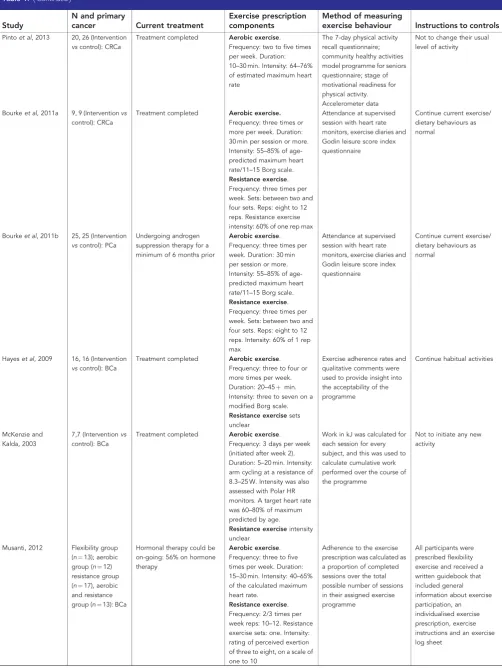
Table 1.( Continued )
Study
N and primary
cancer Current treatment
Exercise prescription components
Method of measuring
exercise behaviour Instructions to controls
Pintoet al, 2013 20, 26 (Intervention
vscontrol): CRCa
Treatment completed Aerobic exercise. Frequency: two to five times per week. Duration: 10–30 min. Intensity: 64–76% of estimated maximum heart rate
The 7-day physical activity recall questionnaire; community healthy activities model programme for seniors questionnaire; stage of motivational readiness for physical activity. Accelerometer data
Not to change their usual level of activity
Bourkeet al, 2011a 9, 9 (Interventionvs
control): CRCa
Treatment completed Aerobic exercise.
Frequency: three times or more per week. Duration: 30 min per session or more. Intensity: 55–85% of age-predicted maximum heart rate/11–15 Borg scale.
Resistance exercise. Frequency: three times per week. Sets: between two and four sets. Reps: eight to 12 reps. Resistance exercise intensity: 60% of one rep max
Attendance at supervised session with heart rate monitors, exercise diaries and Godin leisure score index questionnaire
Continue current exercise/ dietary behaviours as normal
Bourkeet al, 2011b 25, 25 (Intervention
vscontrol): PCa
Undergoing androgen suppression therapy for a minimum of 6 months prior
Aerobic exercise. Frequency: three times per week. Duration: 30 min per session or more. Intensity: 55–85% of age-predicted maximum heart rate/11–15 Borg scale.
Resistance exercise. Frequency: three times per week. Sets: between two and four sets. Reps: eight to 12 reps. Intensity: 60% of 1 rep max
Attendance at supervised session with heart rate monitors, exercise diaries and Godin leisure score index questionnaire
Continue current exercise/ dietary behaviours as normal
Hayeset al, 2009 16, 16 (Intervention
vscontrol): BCa
Treatment completed Aerobic exercise. Frequency: three to four or more times per week. Duration: 20–45þmin. Intensity: three to seven on a modified Borg scale.
Resistance exercisesets unclear
Exercise adherence rates and qualitative comments were used to provide insight into the acceptability of the programme
Continue habitual activities
McKenzie and Kalda, 2003
7,7 (Interventionvs
control): BCa
Treatment completed Aerobic exercise. Frequency: 3 days per week (initiated after week 2). Duration: 5–20 min. Intensity: arm cycling at a resistance of 8.3–25 W. Intensity was also assessed with Polar HR monitors. A target heart rate was 60–80% of maximum predicted by age.
Resistance exerciseintensity unclear
Work in kJ was calculated for each session for every subject, and this was used to calculate cumulative work performed over the course of the programme
Not to initiate any new activity
Musanti, 2012 Flexibility group (n¼13); aerobic group (n¼12) resistance group (n¼17), aerobic and resistance group (n¼13): BCa
Hormonal therapy could be on-going: 56% on hormone therapy
Aerobic exercise. Frequency: three to five times per week. Duration: 15–30 min. Intensity: 40–65% of the calculated maximum heart rate.
Resistance exercise. Frequency: 2/3 times per week reps: 10–12. Resistance exercise sets: one. Intensity: rating of perceived exertion of three to eight, on a scale of one to 10
Adherence to the exercise prescription was calculated as a proportion of completed sessions over the total possible number of sessions in their assigned exercise programme
study regarding the promotion of aerobic exercise behaviour, with 75% of the intervention group reporting between 90 and 119 min per week of moderate intensity exercise, at an average heart rate of 76% of predicted maximum, for 6 months. However, of these three trials, only two (Bourkeet al, 2011a, b) met the Rocket al(2012) exercise guidelines: specifically, two to four sets of resistance exercise at 60% of one rep maximum, for eight to 12 reps, was carried out twice per week, for just 6 weeks. These three trials shared the following BCTs: goal setting, self-monitoring of behaviour and prompting practice, which were common to most of the interventions, included in the review; however, additionally these three studies included generalisation of a target behaviour – that is, getting people to engage in exercise outside of the immediate intervention environment.
These trials did not explicitly state a theoretical basis. Other studies such as Daleyet al(2007) or Pernaet al(2010) were much more comprehensive in their reporting of BCTs and were based on recognised behaviour-change theory. Full details of intervention coding according to the CALO-RE taxonomy (Michieet al, 2011) of exercise BCTs can be seen in Table 3. Several trials might have achieved an adherence of 75% or more; however, because of unclear reporting it was not possible to make a judgement on whether this criterion had been fulfilled.
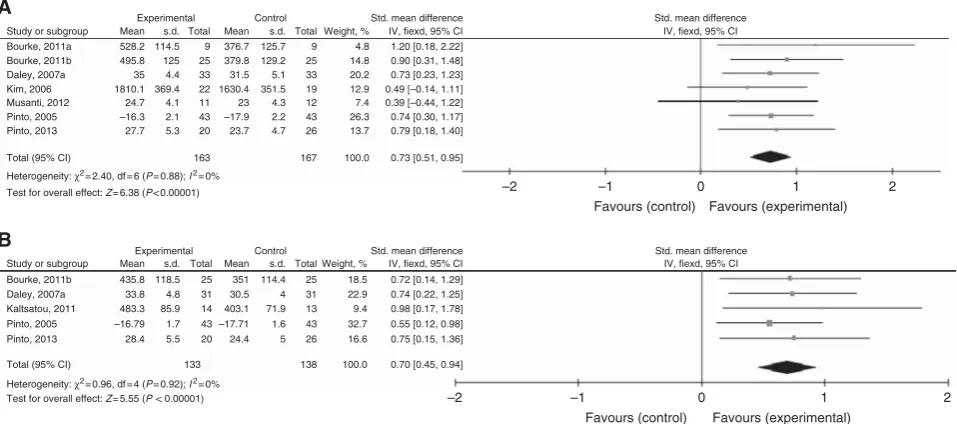
A meta-analysis of change in aerobic exercise tolerance was carried out on seven trials that reported these outcomes. Aerobic exercise tolerance was significantly better after 8–12 weeks of follow-up in intervention vs control in 330 participants (SMD¼0.73, 95% CI¼0.51–0.95) and at 6 months of follow-up in intervention vs control in 271 participants (SMD¼0.70, 95% CI¼0.45, 0.94; see Figure 2). The 6-month data should be viewed with caution as four of the five trials were judged to have a high risk of bias. Limb strength was significantly better in intervention vs controls in 91 participants (SMD¼0.51, 95% CI¼0.09–0.93). After removing one trial for a high risk of bias (Musanti, 2012), in 68 participants the moderate effect size was still apparent but was no longer significant (SMD¼0.47, 95% CI¼ 0.01, 0.96).
Attrition rates during the intervention from the included trials ranged from 25% (Pinto et al, 2003) to 0% (Drouinet al, 2005) (median 6%), with five trials not clearly reporting attrition in the intervention arm. Eight trials reported adverse events that ranged from minor – for example, muscular–skeletal problems (Musanti, 2012) to major events – for example, death (Kim et al, 2006). However, only one study was explicit as to which of these adverse events were caused by participating in the intervention group (two instances of plantar fasciitis; Cadmuset al, 2009).
DISCUSSION
The review findings indicate that currently there is a lack of convincing evidence to suggest that existing exercise interventions are useful for achieving the Rocket al(2012) guidelines of 150 min per week of aerobic exercise and twice per week of resistance exercise, in sedentary cancer cohorts. Adherence to exercise interventions, which is crucial for understanding treatment dose, is frequently poorly reported. Importantly, the fundamental metrics of exercise behaviour, that is, frequency, intensity and duration, or repetitions, sets and intensity of resistance training, although easy to devise and report, are seldom included in published clinical trials. Attempting to reproduce any exercise prescription without detailing these metrics is fraught with problems, and most likely not possible. The extent of exclusion at the full-text screening stage (377 publications excluded from 402) provided the first indication of problems associated with quality of reporting in this research field.
The supportive evidence that we have narratively synthesised suggests that interventions that combine the supervision of exercise training in tandem with a requirement of independent exercise are likely to promote better adherence. Use of generalisation of behaviour was also a common and relatively unique feature of interventions, which reported better adherence.
Despite the uncertainty around adherence in many of the included trials, the interventions caused improvements in aerobic exercise tolerance at 8–12 weeks and 6 months of follow-up.
Such improvements could be interpreted as reassuring: some of the doubts around adherence might only extend to reporting issues rather than real problems with fidelity. Alternatively, this result could have arisen from the rapid, relatively large early gains in function expected in sedentary participants from exercise training, which could mask smaller changes in non-adherers. Further, aerobic exercise tolerance should not be considered as definitive evidence of changes in aerobic fitness (with the accompanying spectrum of underlying physiological adaptation). It could simply reflect individuals becoming accustomed to the feeling of exertion from exercise testing and a better tolerance towards perceptions of fatigue.
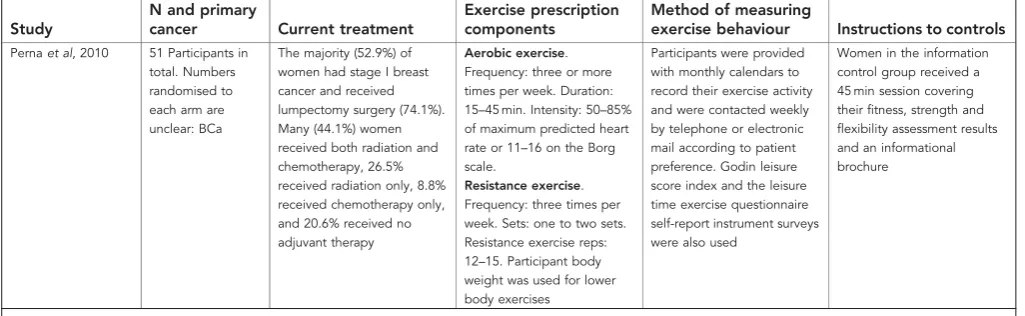
[image:6.595.43.556.65.223.2]To the authors’ knowledge, this is the first comprehensive review to evaluate RCTs with respect to their success in improving exercise behaviour in sedentary cancer cohorts against state of the art recommendations for these patients. The large majority of these trials included women with breast cancer, the remaining three were in people with prostate and colorectal cancer. Furthermore, the Table 1.( Continued )
Study
N and primary
cancer Current treatment
Exercise prescription components
Method of measuring
exercise behaviour Instructions to controls
Pernaet al, 2010 51 Participants in total. Numbers randomised to each arm are unclear: BCa
The majority (52.9%) of women had stage I breast cancer and received lumpectomy surgery (74.1%). Many (44.1%) women received both radiation and chemotherapy, 26.5% received radiation only, 8.8% received chemotherapy only, and 20.6% received no adjuvant therapy
Aerobic exercise. Frequency: three or more times per week. Duration: 15–45 min. Intensity: 50–85% of maximum predicted heart rate or 11–16 on the Borg scale.
Resistance exercise. Frequency: three times per week. Sets: one to two sets. Resistance exercise reps: 12–15. Participant body weight was used for lower body exercises
Participants were provided with monthly calendars to record their exercise activity and were contacted weekly by telephone or electronic mail according to patient preference. Godin leisure score index and the leisure time exercise questionnaire self-report instrument surveys were also used
Women in the information control group received a 45 min session covering their fitness, strength and flexibility assessment results and an informational brochure
Table 2.Summary of study exercise behaviour
Study
Exercise components
Meets Rock
et alguidelines? Adherence summary
At least 75%
adherence? High risk of bias?
Change in
AET reported? Adverse event rate
Cadmuset al, 2009 Aerobic 33% Reported 150 min per week of moderate intensity aerobic exercise at an average of 76% Hr, for 6 months
75% Of women were doing between 90 and 119 min of moderate-intensity aerobic activity per week at 6 months
Yes: for up to 119 min per week
No No Five of the 37 women
randomised to exercise experienced an adverse event; 2 events were related to the study (plantar fasciitis)
Daleyet al, 2007 Aerobic No 77% Of the exercise therapy attended 70% (at least 17 of 24 sessions) or more of sessions
Unclear Yes: outcome assessors were not blinded to participants’ group allocation
Yes Three withdrawals in the intervention group: unclear as to why this was. Some withdrawals due to medical complications in placebo and control arms but unclear if study related Drouinet al, 2005 Aerobic Unclear Participants in the
intervention group averaged 3.6 days per week of aerobic exercise over an 8-week period
Unclear No Yes None reported
Kaltsatouet al, 2011 Aerobic Unclear Not reported Not reported Yes: method of measuring exercise and adherence not reported
No None reported
Kimet al, 2006 Aerobic No The average weekly
frequency of exercise was 2.4±0.6 sessions and the average duration of exercise within prescribed target Hr was 27.8±8.1 min per session. The overall adherence was 78.3±20.1%
Yes Yes: data missing for 45% of the cohort
Yes Reasons for withdrawal included personal problems (n¼2), problems at home (n¼2), problems related to chemotherapy (n¼3), thrombophlebitis in the lower leg (n¼2), non-exercise-related injuries (n¼1), or death (n¼1). Unclear which arm of the trial these date relate to Pintoet al, 2003 Aerobic Unclear Subjects attended a
mean of 88% of the 36 session supervised exercise programme
Yes Yes: 38% lost to follow-up. Exercise tolerance test performed but no control group comparison data were reported
Yes Not reported. It is unclear why the six controls dropped out
Pintoet al, 2005 Aerobic Unclear At week 12, intervention participants reported a mean of 128.53 min per week of moderate intensity exercise. However, no changes were reported in the accelerometer data in the intervention group (change
score¼ 0.33 kcal h1)
Less than 75% of the intervention group were meeting the prescribed goal after week 4
Yes: significantly more control group participants were on hormone treatment. Accelerometer data do not support the self-reported physical activity behaviour
Yes Not clear if chest pain was related to exercise in drop out whose participation was terminated
Pintoet al, 2013 Aerobic 3-Day PAR questionnaire indicates that 64.7% of the intervention group and 40.9% of controls were achieving the guidelines at 3 months
Correlation between self-reported moderate intensity exercise and accelerometer data at the 3 months follow-up, where the only significant between group change is reported:r¼0.32
No Yes: accelerometer data not reported: also cited correlation was weak (0.32). Further, there was substantial contamination in the control group
overwhelming majority of participants were White, with only one trial made up of an ethnically diverse population. As such, other ethnicities are substantially under-represented. Thirteen of the 14 included trials were conducted in North America or Western Europe, with one trial from Australia. All were in high-income nations. No evidence was found from low- or middle-income countries, and it is uncertain whether the featured interventions would be deliverable in these parts of the world.
Another recent systematic review that examined predictors of adherence to exercise in people living with and beyond cancer
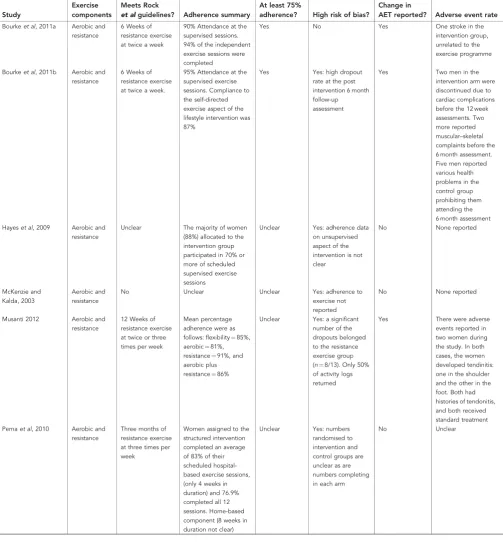
[image:8.595.46.550.65.609.2](Husebo et al, 2013) found that the transtheoretical model of behaviour change and the theory of planned behaviour were significantly associated with better exercise adherence. The current review does not explicitly support such conclusions. It should be noted that there are key differences in each review methodology, with the present review only including RCTs and people who were sedentary at baseline. Other recent systematic reviews have focused on the potential health-related outcomes of exercise interventions for people living with and beyond cancer. In this respect, Fonget al (2012) similarly reported improvements in aerobic exercise Table 2.( Continued )
Study
Exercise components
Meets Rock
et alguidelines? Adherence summary
At least 75%
adherence? High risk of bias?
Change in
AET reported? Adverse event rate
Bourkeet al, 2011a Aerobic and resistance
6 Weeks of resistance exercise at twice a week
90% Attendance at the supervised sessions. 94% of the independent exercise sessions were completed
Yes No Yes One stroke in the
intervention group, unrelated to the exercise programme
Bourkeet al, 2011b Aerobic and resistance
6 Weeks of resistance exercise at twice a week.
95% Attendance at the supervised exercise sessions. Compliance to the self-directed exercise aspect of the lifestyle intervention was 87%
Yes Yes: high dropout rate at the post intervention 6 month follow-up assessment
Yes Two men in the intervention arm were discontinued due to cardiac complications before the 12 week assessments. Two more reported muscular–skeletal complaints before the 6 month assessment. Five men reported various health problems in the control group prohibiting them attending the 6 month assessment Hayeset al, 2009 Aerobic and
resistance
Unclear The majority of women (88%) allocated to the intervention group participated in 70% or more of scheduled supervised exercise sessions
Unclear Yes: adherence data on unsupervised aspect of the intervention is not clear
No None reported
McKenzie and Kalda, 2003
Aerobic and resistance
No Unclear Unclear Yes: adherence to exercise not reported
No None reported
Musanti 2012 Aerobic and resistance
12 Weeks of resistance exercise at twice or three times per week
Mean percentage adherence were as follows: flexibility¼85%, aerobic¼81%, resistance¼91%, and aerobic plus resistance¼86%
Unclear Yes: a significant number of the dropouts belonged to the resistance exercise group (n¼8/13). Only 50% of activity logs returned
Yes There were adverse events reported in two women during the study. In both cases, the women developed tendinitis: one in the shoulder and the other in the foot. Both had histories of tendonitis, and both received standard treatment Pernaet al, 2010 Aerobic and
resistance
Three months of resistance exercise at three times per week
Women assigned to the structured intervention completed an average of 83% of their scheduled hospital-based exercise sessions, (only 4 weeks in duration) and 76.9% completed all 12 sessions. Home-based component (8 weeks in duration not clear)
Unclear Yes: numbers randomised to intervention and control groups are unclear as are numbers completing in each arm
No Unclear
Table 3.CALO-RE taxonomy of behaviour-change techniques
Behaviour change technique
Bourke
et al, 2011a
Bourke
et al, 2011b
Cadmus
et al, 2009
Daley
et al, 2007
Drouin
et al, 2005
Hayes
et al, 2009
Kaltsatou
et al, 2011
McKenzie and Kalda,
2003
Musanti, 2012
Perna
et al, 2010
Kim
et al, 2006
Pinto
et al, 2003
Pinto
et al, 2005
Pinto
et al, 2013
Theory TTM EXSEM TTM TTM
TTM SCT
Provide Info on consequences of behaviour
in general
X X X X
Provide Info on consequences of behaviour
to the individual
Provide Info about others approval
Provide normative info about others behaviour
Programme set goal X X X X X X X X X X X X X X
Goal-setting (behaviour) X X X X X X
Goal setting (outcome)
Action planning
Barrier identification/ problem solving
X X X X X X
Set graded tasks X X X X X X X X X
Prompt review of behavioural goals
X X
Prompt review of outcome goals
Prompt rewards contingent on effort or progress towards goal
X X X
Provide rewards contingent on successful behaviour
X
Shaping
Prompting generalisation of a target behaviour
X X X X X
Prompt self-monitoring of behaviour
X X X X X X X X X X
Prompt self-monitoring of behavioural outcome
X X X X X X
Prompting focus on past success
X
Provide feedback on performance
X X X X
Provide information on
where and whento perform behaviour
X X
Provide instruction on how to perform the behaviour
X X X X X X X X X X
Model/demonstrate the behaviour
X X X
Teach to use prompts/cues X X X
Environmental restructuring X X
Agree behavioural contract X
Prompt practice X X X X X X X X X X X X X X
Use of follow-up prompts X X
Facilitate social comparison
Plan social support/social change
X X X
Prompt identification as role model/position advocate
Prompt anticipated regret
Fear arousal
tolerance and muscle strength. One substantial difference in the methodology of the present review when compared with other Cochrane reviews in the area (Mishra et al, 2012a, b) is that we only included studies where the essential metrics of exercise behaviour are reported.
There are limitations to this review, namely the large majority of these trials included women with breast cancer. One trial involved men with advanced prostate cancer and two trials involved colorectal cancer survivors. Although these three primary cancers make up the majority of the population living with and beyond cancer, other common cancers such as lymphoma and lung cancer do not appear at all in this review. Less common cancers are also not represented in the evidence base. Furthermore, the over-whelming majority of participants were White, with only one trial made up of an ethnically diverse population.
Recently, in the largest survey of cancer survivors (covering multiple cancer types) to be conducted in Europe (N¼3300), the UK Department of Health reported that o25% of people living
with and beyond cancer are achieving 30 min of exercise on 5 or more days per week. (Department of Health—Quality Health, 2012) This is a clear indicator that the overwhelming majority of cancer survivors are not active. It is therefore of critical importance that future research is designed to improve exercise behaviour in sedentary individuals living with or beyond cancer, particularly in under-represented groups. All trials should report as standard, frequency, intensity and duration of aerobic exercise, as well as reps, sets and intensity of resistance exercise used in intervention prescriptions. Using these essential metrics of exercise prescription will not only help to achieve a balance between safe yet effective exercise but will also ensure that meaningful re-evaluation over time can be undertaken, as adaptation or disease progression dictates.
[image:10.595.46.553.49.248.2]Reporting of adherence as a single proportion of the cohort who attended/performed exercise according to the set prescription and reporting of BCTs (e.g., using the CALO-RE taxonomy) needs to be standardised. By achieving these standardisations, oncology Table 3.( Continued )
Behaviour change technique
Bourke
et al, 2011a
Bourke
et al, 2011b
Cadmus
et al, 2009
Daley
et al, 2007
Drouin
et al, 2005
Hayes
et al, 2009
Kaltsatou
et al, 2011 McKenzie and Kalda, 2003 Musanti, 2012 Perna
et al, 2010
Kim
et al, 2006
Pinto
et al, 2003
Pinto
et al, 2005
Pinto
et al, 2013
Theory TTM EXSEM TTM TTM
TTM SCT
Prompt use of imagery
Relapse prevention/coping planning
X X
Stress management/ emotional control training
X
Motivational interviewing
Time management
General communication skills training
Stimulate anticipation of future rewards
Abbreviations: EXSEM¼Exercise Self-Esteem Model; SCT¼Social cognitive theory; TTM¼Transtheoretical model.
Experimental Study or subgroup
Bourke, 2011a 528.2 114.5
125 4.4 369.4 4.1 2.1 5.3 27.7 –16.3 24.7 35 1810.1 495.8 9 9 25 33 19 12 43 26 4.7 2.2 4.3 351.5 5.1 129.2 376.7 379.8 31.5 1630.4 23 –17.9 23.7 20
163 0.73 [0.51, 0.95]
–2 167 43 11 22 33 25
125.7 4.8 1.20 [0.18, 2.22]
0.90 [0.31, 1.48] 0.73 [0.23, 1.23] 0.49 [–0.14, 1.11] 0.39 [–0.44, 1.22] 0.74 [0.30, 1.17] 0.79 [0.18, 1.40]
Favours (control) Favours (experimental) 13.7 100.0 26.3 7.4 12.9 20.2 14.8 Bourke, 2011b Daley, 2007a Kim, 2006 Musanti, 2012 Pinto, 2005 Pinto, 2013
Total (95% CI)
Heterogeneity: χ2= 2.40, df = 6 (P= 0.88); I2= 0%
Test for overall effect: Z= 6.38 (P< 0.00001)
Control s.d.
Mean Total Mean s.d. Total Weight, %
Std. mean difference Std. mean difference
435.8 33.8 483.3 –16.79 28.4 5.5 1.7 85.9 4.8 118.5 25 31 14 43 20 24.4 403.1 30.5 351 114.4 71.9 4 1.6 5 26 138 43 13 31 25 18.5 22.9 9.4 32.7 16.6
100.0 0.70 [0.45, 0.94]
0.75 [0.15, 1.36] 0.55 [0.12, 0.98] 0.98 [0.17, 1.78] 0.74 [0.22, 1.25] 0.72 [0.14, 1.29]
–17.71
133
–2 –1
Favours (control) Favours (experimental) Bourke, 2011b
Daley, 2007a Kaltsatou, 2011 Pinto, 2005 Pinto, 2013
Total (95% CI)
Heterogeneity: χ2= 0.96, df = 4 (P= 0.92); I2= 0%
Test for overall effect: Z= 5.55 (P < 0.00001)
Experimental Study or subgroup
Control
Mean s.d. Total Mean s.d. Total Weight, %
Std. mean difference Std. mean difference
IV, fiexd, 95% CI IV, fiexd, 95% CI
IV, fiexd, 95% CI IV, fiexd, 95% CI
0 1 2
2 1
0 –1
Figure 2. Meta-analysis of (A) aerobic exercise tolerance at 8–12 weeks of follow-up and (B) aerobic exercise tolerance at 6 months of follow-up.
[image:10.595.59.538.291.503.2]scientists and clinicians will help to bring the discipline up to the level of acceptable rigour that will help to elucidate dose response of exercise interventions for given health outcomes. This should afford an opportunity to communicate achievable exercise recommendations for sedentary people living with and beyond cancer.
DISCLAIMER
This review received no external funding.
REFERENCES
Bourke L, Doll H, Crank H, Daley A, Rosario D, Saxton JM (2011a) Lifestyle intervention in men with advanced prostate cancer receiving androgen suppression therapy: a feasibility study.Cancer Epidemiol Biomarkers Prev
20(4): 647–657.
Bourke L, Homer K, Thaha M, Steed E, Rosario J, Robb K, Saxton J, Taylor S (2013) Interventions for promoting habitual exercise in people living with and beyond cancer.Cochrane Database Syst Rev(9): CD010192. Bourke L, Thompson G, Gibson DJ, Daley A, Crank H, Adam I, Shorthouse A,
Saxton J (2011b) Pragmatic lifestyle intervention in patients recovering from colon cancer: a randomized controlled pilot study.Arch Phys Med Rehabil92(5): 749–755.
Cadmus LA, Salovey P, Yu H, Chung G, Kasl S, Irwin ML (2009) Exercise and quality of life during and after treatment for breast cancer: results of two randomized controlled trials.Psychooncology18(4): 343–352.
Cochrane IMS. RevMan 5.2 software http://ims.cochrane.org/revman/ download (accessed 01 March 2013).
Daley AJ, Crank H, Saxton JM, Mutrie N, Coleman R, Roalfe A (2007) Randomized trial of exercise therapy in women treated for breast cancer. J Clin Oncol25(13): 1713–1721.
Department of Health – Quality Health (2012)Quality of Life of Cancer Survivors in England: Report on a pilot survey using Patient Reported Outcome Measures (PROMS). Available at https://www.wp.dh.gov.uk/ publications/files/2012/12/9284-TSO-2900701-PROMS.pdf.
Drouin JS, Armstrong H, Krause S, Orr J, Birk TJ, Hryniuk WM, LE H (2005) Effects of aerobic exercise training on peak aerobic capacity, fatigue, and psychological factors during radiation for breast cancer.Rehabil Oncol23: 11–17.
Elliott J, Fallows A, Staetsky L, Smith PW, Foster CL, Maher EJ, Corner J (2011) The health and well-being of cancer survivors in the UK: findings from a population-based survey.Br J Cancer105(Suppl 1): S11–S20. Ferrell BR, Grant M, Funk B, Otis-Green S, Garcia N (1998) Quality of life in
breast cancer. Part II: psychological and spiritual well-being.Cancer Nurs
21(1): 1–9.
Fong DY, Ho JW, Hui BP, Lee AM, Macfarlane DJ, Leung SS, Cerin E, Chan WY, Leung IP, Lam SH, Taylor AJ, Cheng KK (2012) Physical activity for cancer survivors: meta-analysis of randomised controlled trials. BMJ344: e70.
GLOBOCAN (2008) Estimated age-standardised incidence and mortality rates: both sexes. Available at http://globocan.iarc.fr/factsheet.asp (accessed 10 September 2013).
Hayes SC, Reul-Hirche H, Turner J (2009) Exercise and secondary lymphedema: safety, potential benefits, and research issues.Med Sci Sport Exer41(3): 483–489.
Higgins JPT, Green S (eds). (2011)Cochrane Handbook for Systematic Reviews of Interventions Version 5.1.0 (Updated March 2011).
The Cochrane Collaboration.
Holmes MD, Chen WY, Feskanich D, Kroenke CH, Colditz GA (2005) Physical activity and survival after breast cancer diagnosis.JAMA293(20): 2479–2486.
Husebo AM, Dyrstad SM, Soreide JA, Bru E (2013) Predicting exercise adherence in cancer patients and survivors: a systematic review and meta-analysis of motivational and behavioural factors.J Clin Nurs22(1-2): 4–21.
Kaltsatou A, Mameletzi D, Douka S (2011) Physical and psychological benefits of a 24-week traditional dance program in breast cancer survivors.J Bodyw Mov Ther15: 15.
Kenfield SA, Stampfer MJ, Giovannucci E, Chan JM (2011) Physical activity and survival after prostate cancer diagnosis in the health professionals follow-up study.J Clin Oncol29(6): 726–732.
Khan NF, Mant D, Carpenter L, Forman D, Rose PW (2011) Long-term health outcomes in a British cohort of breast, colorectal and prostate cancer survivors: a database study.Br J Cancer105(Suppl 1): S29–S37. Kim CJ, Kang DH, Smith BA, Landers KA (2006) Cardiopulmonary
responses and adherence to exercise in women newly diagnosed with breast cancer undergoing adjuvant therapy.Cancer Nurs29(2): 156–165.
Maddams J, Brewster D, Gavin A, Steward J, Elliott J, Utley M, Moller H (2009) Cancer prevalence in the United Kingdom: estimates for 2008. Br J Cancer101(3): 541–547.
Martin KA, Sinden AR (2001) Who will stay and who will go? A review of older adults’ adherence to randomized controlled trials of exercise.J Aging Phys Activ9(2): 91–114.
McKenzie DC, Kalda AL (2003) Effect of upper extremity exercise on secondary lymphedema in breast cancer patients: a pilot study.J Clin Oncol21(3): 463–466.
Meyerhardt JA, Giovannucci EL, Holmes MD, Chan AT, Chan JA, Colditz GA, Fuchs CS (2006) Physical activity and survival after colorectal cancer diagnosis.J Clin Oncol24(22): 3527–3534.
Meyerhardt JA, Giovannucci EL, Ogino S, Kirkner GJ, Chan AT, Willett W, Fuchs CS (2009) Physical activity and male colorectal cancer survival. Arch Intern Med169(22): 2102–2108.
Michie S, Ashford S, Sniehotta FF, Dombrowski SU, Bishop A, French DP (2011) A refined taxonomy of behaviour change techniques to help people change their physical activity and healthy eating behaviours: the CALO-RE taxonomy.Psychol Health26(11): 1479–1498.
Mishra SI, Scherer RW, Geigle PM, Berlanstein DR, Topaloglu O, Gotay CC, Snyder C (2012a) Exercise interventions on health-related quality of life for cancer survivors.Cochrane Database Syst Rev8: CD007566.
Mishra SI, Scherer RW, Snyder C, Geigle PM, Berlanstein DR, Topaloglu O (2012b) Exercise interventions on health-related quality of life for people with cancer during active treatment.Cochrane Database Syst Rev8: CD008465.
Musanti R (2012) A study of exercise modality and physical self-esteem in breast cancer survivors.Med Sci Sports Exerc44(2): 352–361.
Perna FM, Craft L, Freund KM, Skrinar G, Stone M, Kachnic L, Youren C, TA B (2010) The effect of a cognitive behavioral exercise intervention on clinical depression in a multiethnic sample of women with breast cancer: a randomized controlled trial.Int J Sport Exercise Psychol8: 36–47. Pinto BM, Clark MM, Maruyama NC, Feder SI (2003) Psychological and
fitness changes associated with exercise participation among women with breast cancer.Psychooncology12(2): 118–126.
Pinto BM, Frierson GM, Rabin C, Trunzo JJ, Marcus BH (2005) Home-based physical activity intervention for breast cancer patients.J Clin Oncol
23(15): 3577–3587.
Pinto BM, Papandonatos GD, Goldstein MG, Marcus BH, Farrell N (2013) Home-based physical activity intervention for colorectal cancer survivors. Psychooncology22(1): 54–64.
Richman EL, Kenfield SA, Stampfer MJ, Paciorek A, Carroll PR, Chan JM (2011) Physical activity after diagnosis and risk of prostate cancer progression: data from the cancer of the prostate strategic urologic research endeavor.Cancer Res71(11): 3889–3895.
Rock CL, Doyle C, Demark-Wahnefried W, Meyerhardt J, Courneya KS, Schwartz AL, Bandera EV, Hamilton KK, Grant B, McCullough M, Byers T, Gansler T (2012) Nutrition and physical activity guidelines for cancer survivors.CA Cancer J Clin62(4): 242–274.