City, University of London Institutional Repository
Citation
:
Twamley, K., Irvine, P., Procter, S. and Macfarlane, A. J. (2006). An evaluation of maternity care provided in three Sure Start Local Programmes in Islington. Summary report. London, UK: City University London.This is the published version of the paper.
This version of the publication may differ from the final published
version.
Permanent repository link:
http://openaccess.city.ac.uk/17260/Link to published version
:
Copyright and reuse:
City Research Online aims to make research
outputs of City, University of London available to a wider audience.
Copyright and Moral Rights remain with the author(s) and/or copyright
holders. URLs from City Research Online may be freely distributed and
linked to.
City Research Online: http://openaccess.city.ac.uk/ [email protected]
An evaluation of maternity care
provided in three
Sure Start Local Programmes
in Islington
Summary report
September 2006
Katherine Twamley
Penelope Irvine
Susan Procter
Alison Macfarlane
St Bartholomew School of Nursing and Midwifery,
Institute of Health Sciences,
CONFIDENTIAL DRAFT REPORT 2 Published in 2006 by
City University Northampton Square London EC1V 0HB © 2006
All rights reserved. No part of this publication may be reproduced or transmitted in any form or by any means, electronically or mechanically, including photocopying, recording or any information storage or retrieval system, without either prior written permission in writing from the publisher or a license permitting restricted copying. In the United Kingdom such licenses are issued by the Copyright Licensing Agency: 90 Tottenham Court Road, London W1P 0LP.
British Library Cataloguing in Publication Data
A catalogue record for this report is available from the British Library. ISBN 978-1-900804-02-8NTR
Research Team
Susan Procter, Alison Macfarlane, Katherine Twamley, Penelope Irvine, Susan Richards, Lisa Hilder and Ros Bryar
Steering Group
Mike Sherriff, Director of Islington Sure Start
Rachel Ambler, Consultant Midwife Whittington Hospital Fiona Horigan, Programme Manager Sure Start Holloway Joelle Leader, Programme Manager Sure Start Copenhagen Sam Page, Health Visitor Islington Primary Care Trust Jenny Rathbone, Programme Manager Sure Start Hillmarton
Acknowledgements
Our thanks go first to the women who took part in this study and shared with us their experiences of being pregnant and giving birth in the Islington area.
We are also grateful to the many professionals working with and in Islington Sure Start services who related to us their experiences of delivering maternity care and aided us in our collection of data.
We would also like to thank all the individuals who provided data for quantitative analysis, with special thanks to Liz Whitehurst from the Whittington Hospital, Ian Wright from Islington Sure Start Unit, Katrin Karlsdottir from Sure Start Holloway, and Lea Sookhoo from the Islington Primary Care Trust.
CONFIDENTIAL DRAFT REPORT 3
Summary Report
An evaluation of maternity care provided in three Sure Start
Local Programmes in Islington
This report summarises the key findings and recommendations. The methods and detailed findings are described in the full report and further analysis of the
quantitative data is in a supplementary report “Detailed quantitative analysis and findings.” Both are available from Islington Sure Start.
1.0 Introduction
This project was commissioned to gain a better understanding about the impact of different approaches to the provision of maternity services operating within three Sure Start areas in Islington, Hillmarton, Holloway and Copenhagen. The first approach provided funding for two additional midwives in the Manor Gardens team based at the Whittington Hospital so that caseload midwifery was provided for women living in Holloway. A second Sure Start Local Programme Area, Copenhagen, employed a Maternity Health Care Assistant and the third, Hillmarton, had no enhanced service for maternity care.
1999-2001 2002 2003 2004 2005
July: MCA Copenhagen started October: Caseload Ho
llo
w
ay started
[image:5.595.73.757.153.498.2]Oct MCA Copenhagen left
Figure 1: Timeline for services offered by Sure Start Local Programme areas
Sept MCA Hillmarton s
tar
ted
Caseload: Holloway
March: F
irst expected deliveries of
women rece
iving ca
selo
ad midwifer
y
throughout pregnancy
Dec02: First expected deliveries of
Copenhagen women receiving MCA care
MCA: Copenhagen
2006
MCA: Hillmarton
Routine
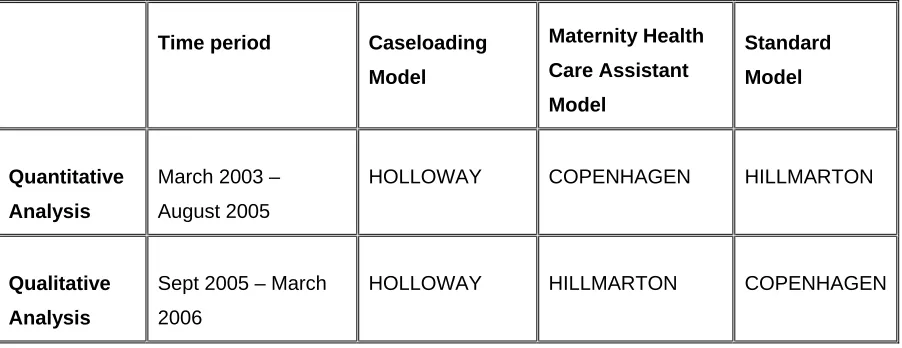
Table 1.1. Approaches to maternity services within Sure Start areas operating during
the quantitative and qualitative analysis periods
Time period Caseloading
Model
Maternity Health
Care Assistant
Model
Standard
Model
Quantitative
Analysis
March 2003 –
August 2005
HOLLOWAY COPENHAGEN HILLMARTON
Qualitative
Analysis
Sept 2005 – March
2006
HOLLOWAY HILLMARTON COPENHAGEN
In addition, each Sure Start Local Programme provides a diverse range of activities and services of use to women during their pregnancy and after. This is illustrated in Tables 1.2. and 1.3. The following is a brief description of each area at the time of the evaluation.
1.2
Description of the three areas
1.2.1 Holloway – Caseload Midwifery
In Holloway Sure Start funded the employment of two extra midwives in the
her at birth. Due to high caseloads, sometimes women cannot be seen by one of the pair during her birth. Since the two extra midwives were appointed in a team from the Whittington Hospital, only women who access antenatal care through the Whittington will have a caseload midwife. Women who access antenatal and delivery care through hospitals other than the Whittington did not have a caseload midwife except for their postnatal home care.
Sure Start Holloway provided an array of groups and activities similar to those provided in the other two Sure Start Local Programme areas such as a breastfeeding group and baby massage (See Table 1.2). Services relevant to the maternity targets were also available (Table 1.3) which included links with smoking cessation services and a service level agreement with Child and Adolescent Mental Health Services for additional services related to pre and postnatal depression.
1.2.2 Hillmarton
No enhanced midwifery services were available in Hillmarton during the quantitative data collection period (see Figure 1) and thus Hillmarton was able to act as a control for the quantitative analysis. During the qualitative data collection period Hillmarton employed 1.5 Maternity Health Care Assistants at the Whittington hospital, similar links with University College Hospital have subsequently been considered. The Maternity Health Care Assistant provides general administrative support for the midwifery team as well as support to the women through help with breastfeeding and advice on the care of the newborn. Maternity Health Care Assistants also register women to Sure Start and promote Sure Start activities to them.
Activities offered in Hillmarton are shown in Table 1.2. They included a
breastfeeding group which was supported by the Maternity Health Care Assistants and actively encouraged by them. There was also baby yoga and baby massage.
Hillmarton was the only area to employ a smoking cessation counsellor and also the only area of the three not to have a service level agreement with Child and Adolescent Mental Health Services. This meant that although the heath visitors in the area were trained to do listening visits for women at risk of post-natal depression, they could not refer women to a psychologist in Child and Adolescent Mental Health Services. Adult
CONFIDENTIAL DRAFT REPORT 7 mental health services are available, however, and one woman in the Hillmarton qualitative sample had been successfully referred to a psychologist there.
1.2.3 Copenhagen
Due to recruitment difficulties which are discussed in the main report, Copenhagen had no enhanced service for maternity care during the qualitative data collection period and thus acted as a comparator in the qualitative evaluation. The Goodinge midwifery team at the Whittington serves both Copenhagen and Hillmarton. This means that the same midwives will receive some administrative assistance from the Maternity Health Care Assistants in Hillmarton but the women who live in the
Copenhagen area do not receive any assistance from them. This was the reverse of the situation during the earlier quantitative data collection period.
Unlike the Sure Start areas of Holloway and Hillmarton, where the majority of women access antenatal care and give birth at the Whittington hospital, women from Copenhagen access care from a range of hospitals. Only about a fifth of women in this area access maternity care through the Whittington hospital. The primary reason for this appears to be the geographic location of hospitals in Islington, relative to the Copenhagen Sure Start area, with other hospitals notably University College Hospital London being closer the Copenhagen Sure Start area than the Whittington.
Similar Sure Start activities were available in Copenhagen, as Table 1.2 shows, such as a breastfeeding group and a ‘play and stay’ group. On the other hand, Copenhagen was the only Sure Start Local Programme area to have a Fathers’ Group and a
Table 1.2 Sure Start Group Activities
Groups or activities offered (September 2005 – February 2006) Sure Start Local Programme Area Young Parents Group Mother and baby exercise class Adult Exercise Class Childminder and Baby Group Baby Massage Breast feeding Group Free Crèche Fathers Group Alternative Therapies First Time Parents Group Baby Play Group Baby Yoga
Copenhagen 9 9 9 9 9 9 9 9
Hillmarton (Maternity Health Care
Assistant) 9 9 9 9 9 9 9 9 9
Holloway
(Caseloading) 9 9 9 9 9 9 9
Table 1.3 Sure Start Services Offered
Services offered Sure Start Local Programme Area Caseload Midwifery Maternity Health Care Assistant Smoking Cessation Counsellor Smoking Cessation Services CAMHS Psychologist Service for PND
Health Visitors trained in listening visit Breastfeeding Group Copenhagen 9 (quantitative data
analysis period) 9 9 9 9
Hillmarton (Maternity Health Care Assistant) 9 (qualitative data analysis period)
9 9 9 9
Holloway
2.0 Methods
The methodology is grounded in a whole systems research model [1] using a case study analysis for each individual area and then comparing the three against one another. Evidence from both quantitative and qualitative data is drawn together to identify as far as possible the extent to which the different approaches to supporting maternity service provision in Islington have contributed to the Sure Start targets.
2.1 Quantitative
methods
The quantitative part of the project involved a systematic review of local data collection systems, including data from hospital systems, child health data from the Islington Primary Care Trust, and databases used by Sure Start programmes. In
undertaking the review several unanticipated events occurred, which limited the scope of this part of the project.
Firstly, along with eight other primary care trusts in North East London, Islington Primary Care Trust had moved to a new child health system CHIA (Child Health Interim Application). Major problems were experienced with this system and as a result the Primary Care Trust was not able to provide relevant population based birth notification data, which were to form a key part of the analysis. Neither current data, nor past data which had been downloaded from the previous system could be
accessed.
Secondly, data from only one of two local hospitals, the Whittington, could be obtained within the project period, as University College London Hospital was experiencing problems with its recently installed new computer system. The
unavailability of these data was a problem as it led to a gap in data about women from the Copenhagen area, a high proportion of whom do not deliver at the Whittington. Thirdly, problems with data quality meant only Whittington hospital data from 2002 onwards were analysed. Without baseline data for an earlier period, any differences in outcomes could not be attributed to the new approaches to maternity care. Not
it was possible to give a description of target areas and outcomes identified by Sure Start for each of the three areas.
2.2 Qualitative
methods
In depth interviews were undertaken with five midwives involved in Sure Start programmes in Islington as well as the two Maternity Health Care Assistants employed in Hillmarton. Additional short (20 minute) telephone interviews were conducted with service providers in each of the three areas. This included Sure Start, Whittington hospital and Primary Care Trust staff.
Thirty-eight interviews were undertaken with service users, the majority of which were face to face interviews lasting about an hour. These interviews were recorded and transcribed with permission from participants except for one participant who preferred notes taken. Shorter more targeted interviews were conducted later in the data collection phase to fill gaps in the data and to ensure a wider pool of respondents. Telephone interviews were recorded via notes. Participants from both phases received a £10 Tesco voucher as a thank you for taking part in the study. The interview
schedule was semi-structured in style and was designed to elicit experiences from all stages of the pregnancy, birth and looking after the newborn. In particular information was gathered about experiences with health and Sure Start services and how these interactions affected their overall experience. The constant comparison method of analysis was used to explore the emerging data.
3.0 Findings
Quantitative and qualitative evidence derived from the data in Islington on each of the Sure Start targets will be combined to give a composite picture of findings. Evidence from the literature will then be discussed and used to support recommendations.
Additional contextual evidence from qualitative data will then be presented separately and used to develop an explanatory model of effectiveness of Maternity Sure Start Programme.
3.1 Smoking
Accurate baseline data were not available for each Sure Start programme, but it was estimated that around 24% of women in the Islington area smoked during pregnancy. Data on smoking at delivery from 2004 to 2005 were available from the Whittington hospital. These showed that 11.7% of women in Holloway smoked at delivery
compared to 22.3% in Hillmarton, a significant difference. Smoking in Hillmarton is also noted to be higher than the national average of 17% women smoking in
pregnancy.
Ethnicity was identified as one factor that may be associated with the higher rate of smoking in Hillmarton, with women from ‘white’ backgrounds, who are more likely to smoke, making up a larger percentage of women in this area. The Hillmarton Sure Start area also includes the women’s prison. The rate of smoking among this sub-group of the population is unknown, although it is expected to be higher than average. The expected association between smoking and low birthweight was found in
Hillmarton, although data were not available to look at possible associations with other factors, notably social class, which is associated with both smoking and low birthweight.
In both Holloway and Hillmarton between 20 and 30% of the women smoking before pregnancy had stopped by the time of booking, with a further 20 to 30% of women stopping before delivery. Overall, around 50% of smokers in both Holloway and Hillmarton areas continued to smoke throughout pregnancy however. Data were not available to assess the effectiveness of smoking cessation services.
All the women interviewed in the qualitative study knew about the adverse effects of smoking and alcohol on their unborn child and took their own decisions in relation to their use of these substances. None of the women reported drinking alcohol to excess. Of the few who smoked most gave up and the rest cut down the number of cigarettes smoked. Their decisions to cut down or stop smoking were related more to what was happening in their personal lives, in particular their ability to manage the stresses in their lives, than to any external input. Partners or family members were less likely to give up smoking though were reported to smoke outside the house once the baby was born.
The findings on smoking among pregnant women in Islington reflect the broader literature on smoking cessation which indicates that smoking is very much related to deprivation and to ethnicity [2-4]. Box One gives the range of smoking cessation interventions identified in a recent Cochrane review of interventions to promote smoking cessation during pregnancy. The review concluded that “smoking cessation programs have been shown to increase smoking cessation, reduce preterm birth and low birthweight, and increase, mean birthweight, smoking cessation programs need to be implemented in all maternity care settings. Attention to smoking behaviour
together with support for smoking cessation and relapse prevention needs to be as routine a part of antenatal care as the measurement of blood pressure. Local piloting of programs shown elsewhere to be effective would be a good place to begin. In order to avoid 'victim-blaming', or the perception of 'victim-blaming', attention needs to be given to the existing evidence on barriers to implementation in antenatal care. …. Interventions involving additional group sessions during pregnancy have been reported as being poorly attended in most settings, though accepted in two trials in Scandinavia”[5].
There was some evidence from the data that the smoking cessation counsellor was not well linked into Sure Start programmes. The findings, given above, reinforce the need to provide support for smoking cessation to pregnant women and their partners as an integral part of the obstetric and midwifery service rather than as a separate stand-alone service. As the Cochrane review reports the approach to smoking cessation needs to recognise the social stressors associated with continued smoking that are well documented in the literature [5] and which were found in this study. The evidence both nationally and from this study highlights the need to support these women on a broader level in order to facilitate their attempts to reduce and stop smoking.
Taken from Lumley J, Oliver SS, Chamberlain C Oakley L Interventions to promote smoking cessation during pregnancy. The Cochrane Collaboration , The Cochrane Library 2006, Issue 3.
Box One Types of smoking cessation interventions
(1) Information about the harmful effects of smoking on the foetus and infant, the mother herself or other family members (verbal, written or both).
(2) Advice by a health professional to 'stop smoking'.
(3) Supplementation of advice by reinforcement at subsequent antenatal visits. (4) Supplementation of advice by group counselling.
(5) Supplementation of advice by the provision of peer support.
(6) Supplementation of advice by recording smoking status, or measuring by-products of smoking at other antenatal visits.
(7) Supplementation of advice by feedback of the effects of smoking on the foetus (foetal movements, foetal breathing, foetal heart rate).
(8) Supplementation of advice by positive information about the foetus and foetal development (for example, describing the ultrasound in detail).
(9) Individualised advice and support for smoking cessation based on 'stages of change'. (10) Provision of pregnancy-specific self-help manual on strategies for quitting. Provision of the following as an adjunct to information and advice:
• nicotine replacement therapy;
• telephone follow up with reinforcement of advice and strategies and incentives for quitting;
• rewards.
(11) Strategies to change the attitudes, knowledge and behaviour of healthcare providers with respect to smoking cessation.
3.2
Breastfeeding
Some population data were available to examine breastfeeding at birth. Baseline data for the year 2001-02 had previously been provided to Sure Starts Holloway and Copenhagen by Islington Primary Care Trust. Combining exclusive breastfeeding and mixed feeding at birth, in line with Sure Start target measurement, 57% of babies in Holloway and 66% of babies in Copenhagen were breastfed at birth. Islington Primary Care Trust was able to supply data from July 2003 onwards only for this evaluation, which indicated that the rate of breastfeeding at birth was highest in Holloway (86.5%), followed by Copenhagen (82.8%) and then Hillmarton (78.1%).
Combining these data, significant increases in breastfeeding in Holloway and
Copenhagen were found, coinciding with the introduction of caseload midwifery and Maternity Health Care Assistants in 2002. Breastfeeding rates increased by between 20% and 30% in these areas. Without comparative data for Hillmarton, however,
these increases cannot be attributed to the approaches to midwifery services operating in Holloway and Copenhagen. It is possible that the increases are at least partly due to a general increase in breastfeeding seen across the UK during this time period.
The rates of breastfeeding at birth in all three Sure Start areas compare favourably with the national breastfeeding rate, which was 78% in 2005. Increases in the initiation of breastfeeding have occurred in all three areas since the introduction of Sure Start programmes.
Limited quantitative data were available on breastfeeding at 6 weeks and later points in time.
Most women interviewed appreciated the importance of breastfeeding and expressed a wish to breastfeed. The post-partum period was particularly important in influencing and establishing breastfeeding. Many women did not receive access to Sure Start support for breastfeeding until 2 or 3 weeks after the birth. The findings suggest that support is required much earlier within the first 24 hours of birth and quite intensively during the first month following birth. Breastfeeding support needs to be responsive to each womens’ individual needs and difficulties. There is a definite role here for a trained Maternity Health Care Assistant. At the time of interviewing Maternity Health Care Assistants had not yet received training in breastfeeding assistance, although they had completed other training courses. Also, at this time Maternity Health Care Assistants were usually only visiting the women postnatally, normally two weeks after giving birth.
The breast feeding group in Hillmarton was particularly well attended by our interviewees from that area and these women reported sustained breastfeeding more often than those in the other two areas. This group was run by an experienced peer supporter for breast feeding and was spoken of enthusiastically by the attendees. The Maternity Health Care Assistant was particularly influential in facilitating women to attend this and other group activities. Attendance at similar groups in Copenhagen declined steeply following the loss of Maternity Health Care Assistant and nursery nurse roles there. None of the women interviewed in Holloway attended the breast feeding group. Instead these women accessed one-to-one support for breast feeding
from their named midwife or Health Visitor. Quantitative data recorded by the Manor Gardens team, showed, however, that 88% of women receiving caseloading services in Holloway were still breastfeeding at 4 weeks and 97% of the women who initiated breast feeding were still breast feeding at 4 weeks. Caseloading therefore provides good support for breast feeding in these first four weeks, but fails to link women into other support groups such as the Sure Start breast feeding group. This means that women lose the support after caseloading stops. From the combined data it would appear that either group or individual professional support for breast feeding is effective at supporting women to breast feed up to four weeks. Accessing a support group may improve social support and sustained breast feeding beyond four weeks however. The effectiveness of Maternity Health Care Assistants could be improved if they were enabled to make contact with women prior to birth or in the immediate post-partum period.
Evidence from other research suggests that care received in postnatal care wards is particularly important in establishing breast feeding [6] but women interviewed in this study felt that assistance to breastfeed in the postnatal wards is not sufficient.
Furthermore, it appears that the wards are not conducive to rest and recovery after delivery and do not conform to the environment recommended in the NICE guidelines as an appropriate environment to initiate breast feeding [7]. In the light of this, there is a need to review postnatal care provided at all hospitals used by women in Islington. It is unlikely that breast feeding rates will improve substantially unless this is
addressed.
Current postnatal midwifery practice at the Whittington hospital favours a ‘hands off’ approach to breast feeding support in the immediate post-partum period. The evidence on whether to provide women with ‘hands on’ or ‘hands off’ approach in the early postnatal period is inconclusive. However, a recent randomised controlled trial indicates that ‘hands off’ care is no more effective than routine care and may be less effective than routine care which included some ‘hands on’ care in establishing and maintaining breast feeding [8].
In order to sustain breastfeeding and increase the length of time for which mothers choose to give breast milk rather than formula feed, peer support programmes and /or
lay support have been shown to be effective, the former particularly so with women on low incomes and those who have expressed a wish to breastfeed [6, 9].
4.3 Mental
Health
Accurate baseline data were not available to measure postnatal depression but it had been estimated that 16.5% of mothers in the Islington area experienced this. A range of services are available in Islington.
A service level agreement with Child and Adolescent Mental Health services (CAMHS) had previously led to the training of Health Visitors in the use of the Edinburgh Postnatal Depression Scale for assessment. If indicated by this tool five listening visits were undertaken by Health Visitors, the assessment was repeated and the woman referred on to mental health services if required. Holloway and
Copenhagen had a service level agreement for referral of women with postnatal depression to CAMHS Psychology services, Hillmarton referred women to regular adult mental health services.
No information on postnatal depression was systematically collected or recorded in local data collection systems. Some information was recorded by Health Visitors using the Edinburgh Postnatal Depression Scale and the provision of ‘listening visits’, but this was not well integrated into child health systems. Within Sure Start
programmes, confidentiality issues meant that information about individual women was not provided by psychologists to Sure Start, and summary data were not routinely available. As a consequence, no quantitative data were available on this subject.
In interviews, few women reported mental health issues but from those that did it appears that the Edinburgh Postnatal Depression Scale is well accepted and
understood if it is then followed up by support from health care professionals. Women valued information about postnatal depression as it enabled some women to self-diagnose and identify whether their current mental health was normal or whether they needed to seek help. The Maternity Health Care Assistants interviewed felt they had an important role in preventing postnatal depression and other health care
professionals were keen to help women with this issue, usually through encouraging
them to attend group activities offered in the local Sure Start Programmes. Women spoke very positively about the effect of these groups on their well being indicating they may well provide valuable protection against the onset of mental health
problems.
Current guidelines on postnatal mental health recommend that routine assessment with tools such as the Edinburgh Postnatal Depression Scale is not undertaken [7]. Instead guidelines recommend that two questions are asked at postnatal contact (“During the last month, have you often been bothered by feeling down, depressed or hopeless?” and “During the last month have you often been bothered by having little interest or pleasure in doing things?”). Assessment is selective depending on the answer given to each question, with an element of professional judgement to be included in the assessment. Mild to moderate problems should be treated with listening support and psychological treatments in preference to drug treatment. It is recommended that a Health Visitor undertake up to five listening visits if mild to moderate mental health problems are identified, if they are not better after five visits they should be referred to a psychologist. It appears that current practice in Islington conforms to the recommendations in the guidelines provided that the Edinburgh Postnatal Depression Scale is not used routinely or in isolation. Furthermore, our data indicated that the Maternity Health Care Assistant has an important role in helping people with, or at risk of developing, mental health problems to access groups and other forms of social support.
4.4 Access to antenatal care
Some data were available from the Whittington Hospital to examine the timing of booking appointments and attendance at antenatal appointments for women who were booked and delivered at the Whittington Hospital. Women from the Holloway area were significantly more likely than women from Hillmarton to attend a booking appointment before 12 weeks pregnancy, and to attend the number of antenatal appointments recommended in NICE guidelines. This is likely to be associated with the provision of caseload midwifery for women from Holloway, where home visiting was available throughout the antenatal period. Women from Holloway were also more likely to access antenatal care later in pregnancy, after 20 weeks of gestation. This may be related to the transience of a subgroup of women from Holloway. Baseline
data were not available to examine whether women’s patterns of accessing antenatal care in the three Sure Start areas has changed over time.
Most women attended antenatal appointments even though it was a struggle if they had toddlers or physical health problems. In the qualitative data collected here late booking was a result of lost and missing paper work and referrals or of women moving into the area late in their pregnancy.
These findings indicate that maternity services in Islington appear to be having some success in engaging women early in pregnancy and throughout their pregnancy, particularly in the Holloway area where caseloading midwifery was available. The National Service Framework for Maternity indicates services need to be proactive in engaging all women early in pregnancy, particularly those from disadvantaged groups, and more women in the Sure Start areas need to be engaged earlier in
pregnancy [10]. The National Service Framework also indicates a need for flexibility in services designed around the woman – the caseload approach in Holloway provides such flexibility, and the move to locating midwives within Children’s Centre is likely to provide increased flexibility for woman in other areas [10].
4.5 Outcomes at birth
The small numbers of low birthweight babies born in each of the three Sure Start areas makes it difficult to obtain robust estimates of the percentage of low birthweight babies and means that there is insufficient statistical power to detect changes in birthweight over time. Data from the Whittington Hospital suggest that 8.4% of babies born to Holloway women were low birthweight, as were 5.6% of babies born to women from Hillmarton. Analysis of child health data suggested that there has been a decrease in the proportion of low birthweight babies born to Copenhagen residents, but no difference was detected in Holloway or Hillmarton. This result should be interpreted cautiously as data from Islington PCT were available for this analysis only up until February 2004.
Around two-thirds of women from the Sure Start areas who delivered at the Whittington Hospital had a spontaneous vaginal delivery, and just over half had a spontaneous onset of labour and delivery. The distribution of methods of delivery was
similar to that for all of England, and no significant differences were found between the three Sure Start areas. Overall, the pattern of complications at labour and delivery among women from the Sure Start areas also appeared similar to those for England, the small numbers of events limited the scope for comparisons.
In undertaking this evaluation, it was anticipated that the small number of births in each of the Sure Start areas would mean that there would not be sufficient statistical power to be able to detect differences between areas. This is likely to be an on-going issue in monitoring outcomes such as low birthweight. Combining data over a period of a number of years increases power, but the small numbers of low birthweight babies mean estimates remain somewhat unstable.
4.0 Qualitative findings on users’ and providers’ experiences
4.1 Diet
Women knew about the importance of eating a healthy diet and again made decisions depending on personal circumstances. Women living in temporary accommodation needed access to affordable healthy eating venues and/or more control over their kitchen space to improve their diet.
4.2
Access to Sure Start support groups
Most women understood Sure Start as the support groups, such as breastfeeding, tots, baby massage, and baby yoga shown in Table 1.2 rather than as caseloading
midwifery or Maternity Health Care Assistants. These groups were appreciated by a lot of the women particularly those in Hillmarton. For women using them they provided an important social function and support and information network. Other women intended to use them but were finding it difficult to get sufficiently organised to attend. A third group of women did not respond to this type of service provision and are unlikely to engage with it.
These three categories do not appear to be related to differences in the social
circumstances of the women. They are more related to individual choice and lifestyle.
Women with toddlers as well as a new born baby were less likely to attend these groups because they were unsure how the toddler would manage in the group and found it easier to stay home. The Maternity Health Care Assistant had a role to play in helping women to get sufficiently organised to attend. For those women reluctant to attend groups some suggested the timing was wrong, or it did not suit their lifestyle. Others would have valued groups at a different time when partners were around to look after toddlers or when partners were around to attend groups with them or take toddlers to give them some rest.
4.3 Population
transience
Women in Islington from all sections of society who were experiencing the birth of their first child were quite mobile. Many first time mothers were setting up home in response to the pregnancy, mostly with partners, in or around the area, and moving into and out of Sure Start areas as part of this process. This created a high level of transience. Most women were identified by the universal services provided by Sure Start indicating a good communication system, although some felt they would have liked information about Sure Start services earlier in their pregnancy. Access to Sure Start services were important enough to influence decisions about where to live. One woman who moved into a Sure Start area maintained contact with her GP in another part of Islington because she valued the care given by this GP. This is also an important aspect of choice. Women who already had children seemed settled in the area. Most reported having had their previous children in the Whittington Hospital. These women were less likely to use Sure Start services because of the demands of their older children and the fact they had an established support network in the area.
4.4
Hard to reach and Disadvantaged groups
The evaluation found that ‘hard to reach’ and ‘disadvantaged’ groups had good access to Sure Start services despite being a highly transient population. In both Hillmarton and Holloway women designated as ‘hard to reach’ and ‘disadvantaged’ were accessed via the Sure Start data base and were included in the first round of
interviews. Evidence from Copenhagen showed that, following the departure of first the Maternity Health Care Assistant and then the nursery nurse, access to Sure Start services declined rapidly. Copenhagen was the only area in which we were unable to access ‘hard to reach’ and ‘disadvantaged’ groups through the Sure Start database,
reinforcing the importance of the additional maternity roles in facilitating access for all women including ‘hard to reach’ and ‘disadvantaged’ women to these
programmes. This provides evidence of the strength of the universal approach to service provision which characterises Sure Start programmes. It is important that in any future re-configuration of services such as the introduction of Children’s Centres that this access is not compromised.
Despite targeted sampling for more disadvantaged groups, limited data are available due to shorter interviews and the use of interpreters. Available data suggest that these women have similar issues to the less ‘disadvantaged’ women. For example, women living in temporary accommodation are likely to have difficulties accessing care due to their mobility, similar to other women moving in and out of the area. This
transience and the use of a shared kitchen can also affect their diet. Young mothers appear to appreciate peer support and networking available through teenage mother groups. Women with English as a second language were satisfied with the translation services or used their husbands, which they did not perceive as a problem. However, despite this there was some evidence that women who relied on their partners for translation did not always receive the information about Sure Start services. This maybe because partners did not think the Sure Start groups were relevant to non English speakers. Partners of non English speakers need to be helped to understand the needs of pregnant women and new mothers and encouraged to help their partner to access the support she needs. Ways of meeting the needs of non English speaking women need to be identified.
4.5 Caseloading
midwifery
Caseloading midwifery increased the women’s satisfaction with the clinical care they received. In particular, women really valued the home visits. In the qualitative sample of 13 women eligible for caseloading midwifery services, ten gave birth in the
Whittington where the Manor Gardens Team worked. The other three women were unaware of caseloading services available in the Whittington and chose other hospitals for a variety of reasons. Of the ten who gave birth in the Whittington, nine described having a named midwife and only one of these did not have her named or
partner-midwife attending at the delivery. In the other Sure Start areas, the majority of women expressed a desire for more continuity in their care.
Local evaluations of practices which offer caseload midwifery have found that the continuity of carer appears to improve maternity outcomes including fewer
interventions in labour [11, 12]. Given the increased satisfaction of users and the potential benefits for maternity outcomes, any move to reduce continuity in care should be avoided if possible.
Continuity of care is advocated both by the NICE guidelines on antenatal care, which recommend that women receive continuity of care throughout the antenatal period by a small group of carers, as well as in the National Service Framework for Maternity which advocates continuity of support during pregnancy, childbirth and the postnatal period [10, 13].
4.6
Service Delivery and Staff Support
Difficulties in recruiting midwives for caseloading midwifery in Hillmarton appear to have arisen due to the heavy workload and low grade offered for the new positions, coupled with some perceived lack of support from management. In terms of retention of staff, it appears that although Holloway midwives have very high job satisfaction they also feel there is a lack of understanding about and support from management for their roles. Sure Start staff in all three Sure Start Local Programme areas were anxious about the future and what it holds for their jobs and their clients.
Of the three models, it appears that caseloading midwives share more information with other agency groups. There are few formal meetings held in the Holloway area, however and such meetings would be useful for working together and not just sharing of information. In Copenhagen, staff across agencies appear to be working together better than in the other two Sure Start Local Programme areas. This is likely to be due to the length of the programme and the Nursery Nurse post which is shared between Islington Primary Care Trust and Sure Start Copenhagen.
The Maternity Health Care Assistants were funded by Sure Start and based in the midwifery team which provided services for both Hillmarton and Copenhagen.
Midwives reported greater knowledge of the Copenhagen Sure Start Local
Programme area while the Maternity Health Care Assistant was in post and better information about the Hillmarton Sure Start Local Programme area now that
Maternity Health Care Assistants are there. Additionally, the Maternity Health Care Assistants share some information about clients with the midwives, usually through their manager, but not so much directly with Sure Start.
4.7 Issues in data collection and systems for monitoring
Given the lack of data available for certain outcome areas, the Islington Sure Start Unit asked for some recommendations concerning data collection systems to ensure that in future data will be available for monitoring.
Ideally, local population-based data should be available in order for the impact of local Sure Start programmes to be monitored. The new interim child health system in Islington, CHIA, should have provided some population data, such as breastfeeding at birth and 6 weeks. A committee, chaired by the Deputy Director of Public Health for London was convened in the summer of 2006 to review CHIA and alternative systems and make recommendations for the future. Even if functioning, CHIA would not have provided other required data, for example about smoking during pregnancy;
breastfeeding at 4 months, or support for postnatal depression. In theory, the National Programme for IT should bring together data from across the health system at a population level, but there is considerable scepticism about whether and when this will happen and the problems with CHIA have increased concerns. In the meantime, it is suggested that there is a need for functioning hospital and child health systems and for them to work more closely together to provide data needed. For example:
• Information on smoking during pregnancy is collected in hospitals. This could be included in birth notification form data which is forwarded to child health systems so that population based rates can be derived.
• Currently data are not collected about breastfeeding at four months. There is scope to collect this information at the four month immunisation appointment attended by most children and return it to the child health system along with the immunisation data.
• Mental health data collected by health visitors should be better integrated or linked into the child health systems, although further thinking is also needed about how postnatal depression and support for women should be monitored.
There were many gaps in data collected by Sure Start Local Programmes. These problems of missing data need to be addressed so that contact with particular groups, such as lone or teenage parents can be monitored. Issues concerning the identification of contact during the antenatal and postnatal period also need to be resolved. A more comprehensive review of databases used by Sure Start Local Programmes would be required in order to make further recommendations about their potential for future monitoring.
5.0 Findings and the Whole Systems Approach
The data analysis has revealed the usual disjuncture between qualitative and quantitative data with quantitative data able to supply population trends but an
incomplete picture; and qualitative data able to describe experience but not generalise that experience to larger populations. This section attempts to integrate where possible findings from both sets of data and develop an explanatory model which could be used to inform future policy. This will be done using the whole system methodology described in the original tender document.
This methodology is comprised of four principle perspectives on the whole system:
• The causal system
• The data system
• The organisational system
• The patient/user experience
The causal system will be represented through an explanatory model which links data, organisation and user experience.
The Sure Start targets create data points (data system) which link individual
experience and behaviour to population level information systems. The organisational
system is structured to provide the support required to enable individual users to meet targets. User behaviour is partly shaped by access to the organisational system and policy is based on the assumption that their experience of this system will influence the extent to which their behaviour reflects the Sure Start targets.
The data on user experience indicate that most users were aware of the health behaviours associated with Sure Start targets i.e. most users recognised the need to stop smoking, reduce alcohol intake, eat a healthy diet and to breastfeed their child.
The organisational system offered a variety of services to help service users to realise these aims.
For the most part smoking behaviour, alcohol intake and diet were behaviours that were managed independently of the support services provided by Islington Sure Start. The exception was women in temporary accommodation who identified difficulties in eating a healthy diet because of lack of control over kitchen space. More access to affordable healthy eating venues for these women or more control over kitchen space are required if these women are to be supported to eat healthily during and after pregnancy.
The evidence from the literature indicates that smoking cessation is effective in helping pregnant women to reduce or stop smoking but it appears that it is particularly effective when integrated into existing ante-natal care (Lumley et.al 2006). More integration of smoking cessation services with midwifery services could increase the effectiveness of these services in Islington. This means a more holistic approach to smoking cessation rather than isolated strategies to reduce smoking. In other words, it is important to look at the broader context of the woman’s life and identify within that context what makes giving up or reducing smoking difficult and to address these difficulties.
The need to include fathers in Sure Start programmes was important. The data indicate that women attempting to give up smoking during pregnancy would be helped if their partner also stopped smoking. Currently services seem to focus exclusively on women. In the interviews women indicated that their partners wanted
more opportunity to participate in Sure Start activities and more could be done to help them achieve this. Women who do not speak English often relied on their partners to translate. These women were often not informed of Sure Start activities by their partners. More could be done to help these fathers link into Sure Start activities and help these women to access Sure Start services.
Breastfeeding and the mental health of women following birth were supported by a variety of different groups. For those women accessing and using these groups the qualitative evidence suggests they did help women to adopt the behaviours required to meet Sure Start targets but the groups did not suit everyone. Some women were not attracted to the idea of support groups and others had difficulty accessing them. This was particularly the case for women with toddlers as well as a new baby and for women who did not speak English who felt they would have difficulties
communicating at the group or who were simply not informed about them by the person translating Sure Start information.
For some women choosing not to use these groups, social support was available through family and friends and therefore they did not require this type of service to maintain their well-being. These women did not, therefore, necessarily benefit from the support to maintain breastfeeding apparent among the Hillmarton women who attended a group there.
There was a major gap in service provision in meeting the breast feeding target in the postnatal care available to women both in hospital and in the community. Many women were not given information about the support groups until three or four weeks postnatally whereas support is needed most intensively in the first few days and weeks following birth.
6.0 Conclusion
The evidence from this evaluation indicates that both caseloading midwifery and Maternity Health Care Assistant roles impacted positively in enabling Islington to meet Sure Start targets, but that they worked in different ways. Caseloading
midwifery impacts through one-to-one support and continuity of care which women
valued highly. Maternity Health Care Assistant roles facilitated access to Sure Start groups and programmes which were also valued by those women who accessed them. The Maternity Health Care Assistant role seemed to increase overall access to these groups. However, not all women choose groups as a preferred method of support. Both caseloading midwifery and the Maternity Health Care Assistant role also supported access to Sure Start services for women from ‘hard to reach’ and ‘disadvantaged’ groups.
Some gaps in provision were found in particular in the immediate postnatal period. These gaps indicated that the current organisation of maternity care, while providing high levels of user satisfaction and contributing to the effectiveness of Sure Start in Islington, was not optimising the capacity of the system to support women to adopt behaviours which would further improve Sure Start targets. Informing women about Sure Start programmes earlier in their pregnancy, improving postnatal hospital care and facilitating access to Sure Start programmes for fathers could increase further the effectiveness of Sure Start programmes. Problems with the quantitative data prevented examination of the effectiveness of these programmes at a population level but even if the quantitative data had been available this would not have guaranteed the statistical power required to detect changes in the behaviour of small groups of women.
In moving to Children’s Centres it is important that the provision of maternity services in Islington replicates the key features of these roles if the achievements of Islington Sure Start are to be maintained.
7.0
Key Recommendations
7.1 Sure Start Targets
7.1.1 Smoking Cessation
- From this study it appears that the ability to reduce or stop smoking arises from personal motivation and appropriate psychological and social circumstances. Greater integration of smoking cessation services with Maternity services in Islington, taking a more holistic approach to the women’s needs, may improve outcomes.
- Partner/family members do not have the same motivation to reduce or stop smoking and should be included in attempts to reduce harm to the unborn and to aid the woman in giving up smoking.
7.1.2 Breastfeeding
- Support for breast feeding is needed in particular in the initial few hours and days in the postnatal care ward. The role of both caseloading midwives and the
Maternity Health Care Assistant in the provision of immediate postnatal care needs to be considered.
- The physical environment for hospital postnatal care should be reviewed and improved in line with NICE guidelines.
7.1.3 Mental health
The role of the Maternity Health Care Assistant in helping women with mild to moderate postnatal depression access a wider social support network needs to be supported and maintained.
7.1.4 Diet
Homeless women living in temporary accommodation need access to affordable healthy food outlets and/or more control over their kitchen space.
7.1.5 Disadvantaged women
- The partners of women who do not speak English need to be helped to understand their partners’ needs and to support their partner in accessing services.
- Ways of increasing access to services for non English speaking women are required.
7.2 Organisational Recommendations
7.2.1 Sure Start Access
- Women with older children need provision of care for these children in order to increase their ability to access services in Sure Start.
- The Maternity Health Care Assistant Role plays an important function in bringing women into services, this could be done ante as well as post-natally.
- Inclusion of partners in general into Sure Start activities needs attention.
Considering the outreach approach of Maternity Health Care Assistants’ success in recruiting women, a similar role for partners could work to include more men.
7.2.2 Continuity of Care
Many women interviewed from all three Sure Start areas highly valued continuity in their care, moves to un-integrated care in any of the hospitals may lessen women’s chances of getting this.
7.2.3 Allocation of Service Provision
Since over half of the women in Copenhagen use University College London Hospital whereas only one in five attend the Whittington Hospital, it is important for the registration and care of these women that any future enhanced services work with University College London Hospital.
7.2.4 Staff Communication
Multi-agency referral meetings are possible and are more likely to occur where there is shared staff such as existed between the Islington Primary Care Trust and Sure Start Copenhagen.
7.3 Data
Recommendations
7.3.1 Working with Islington Primary Care Trust
Once Islington Primary Care Trust has returned to a situation in which it has a functioning child health system, possible enhancements should be investigated - Investigation with Islington Primary Care Trust and local hospitals about the inclusion of information on smoking during pregnancy in the birth notification dataset forwarded to child health systems to provide data for monitoring at a population level. - Investigation with Islington Primary Care Trust about the feasibility of
collecting information on breastfeeding at the four month immunisation appointment. - Investigation with Islington Primary Care Trust about the availability of mental health data collected by the health visitors and its integration or linkage into child health systems
7.3.2 Mental Health
Further consideration of how postnatal depression and support for women is monitored across the Islington area.
7.3.3 Staff Roles
Managers of Sure Start Local Programmes to promote the importance of databases used for monitoring to all staff, including the role of staff in collecting data and providing feedback to staff from data that is collected.
7.3.4 Sure Start Databases
A more comprehensive review of the SmartStart and E-Start databases used by Sure Start Local Programmes is required to address particular issues with these systems, including distinguishing between antenatal and postnatal contact and discrepancies in standard reports. This could form part of a wider review of the information systems needed by children’s centres.
7.3.5 Baseline Data
In moving to Children’s Centres in Islington, accurate baseline data should be
collected for monitoring the impact of programmes on outcomes for women, children and families. Where data do not exist, a co-ordinated approach is needed in working with services across the area to develop data collection and systems for recording.
References
1. Procter, S., et al., The Development of an Applied Whole-Systems Research Methodology in Health and Social Care Research:A Canadian and United Kingdom Collaboration. Critical Public Health, 2000. 10(3): p. 331-341. 2. Bolling, K., Infant Feeding Survey 2005: Early results. 2006, BMRB Social
Research, The Information Centre, England.
3. Hamlyn, B., et al., Infant Feeding 2000. 2002, The Stationary Office: London. 4. NHS and H.S.C.I. Centre, Health Survey for England 2004: The Health of
Ethnic Minority Groups. 2005, Public Health Statistics.
5. Lumley, J., et al., Interventions for promoting smoking cessation during pregnancy. Cochrane Database Syst Rev, 2004(4): p. CD001055.
6. Sikorski, J., et al., Support for breastfeeding mothers. Cochrane Database Syst Rev, 2002(1): p. CD001141.
7. National Collaborating Centre Primary Care, Routine postnatal care of women and their babies. 2006.
8. Wallace, L.M., et al., A randomised-controlled trial in England of a postnatal midwifery intervention on breast-feeding duration. Midwifery, 2006. 22(3): p. 262-73.
9. Fairbank, L. and et al, A systematic review to evaluate the effectiveness of interventions to promote the initiation of breastfeeding. Health Technology Assessment, 2000. 4(25).
10. Department of Health, Maternity Standard, National Service Framework for Children, Young People and Maternity Services. 2004, DH Publications: England.
11. Sandall, J. and e. al, Evaluation of the Albany Midwife Practice, Final Report. 2001, King's College: London.
12. McCourt, C. and L. Page, Report of the Evaluation of One-to-One Midwifery. 1996, Hammersmith Hospitals NHS Trust and TVU: London.
13. National Collaborating Centre for Women’s and Children’s Health, Antenatal care: routine care for the healthy pregnant woman. 2003, RCOG Press, National Institute for Clinical Excellence: London.