City, University of London Institutional Repository
Citation
:
Twamley, K., Irvine, P., Procter, S. and Macfarlane, A. J. (2006). An evaluation of maternity care provided in three Sure Start Local Programmes in Islington. Final report. London, UK: City University London.This is the published version of the paper.
This version of the publication may differ from the final published
version.
Permanent repository link: http://openaccess.city.ac.uk/17259/
Link to published version
:
Copyright and reuse:
City Research Online aims to make research
outputs of City, University of London available to a wider audience.
Copyright and Moral Rights remain with the author(s) and/or copyright
holders. URLs from City Research Online may be freely distributed and
linked to.
An evaluation of maternity care
provided in three
Sure Start Local Programmes
in Islington
Final Report
September 2006
Katherine Twamley
Penelope Irvine
Susan Procter
Alison Macfarlane
St Bartholomew School of Nursing and Midwifery,
Institute of Health Sciences,
Published in 2006 by
City University Northampton Square London EC1V 0HB
© 2006
All rights reserved. No part of this publication may be reproduced or transmitted in any form or by any means, electronically or mechanically, including photocopying, recording or any information storage or retrieval system, without either prior written permission in writing from the publisher or a license permitting restricted copying. In the United Kingdom such licenses are issued by the Copyright Licensing Agency: 90 Tottenham Court Road, London W1P 0LP.
British Library Cataloguing in Publication Data
A catalogue record for this report is available from the British Library.
ISBN 978-1-900804-01-1NTR
Research Team
Susan Procter, Alison Macfarlane, Katherine Twamley, Penelope Irvine, Susan Richards, Lisa Hilder and Ros Bryar
Steering Group
Mike Sherriff, Director of Islington Sure Start
Rachel Ambler, Consultant Midwife Whittington Hospital Fiona Horigan, Programme Manager Sure Start Holloway Joelle Leader, Programme Manager Sure Start Copenhagen Sam Page, Health Visitor Islington Primary Care Trust Jenny Rathbone, Programme Manager Sure Start Hillmarton
Acknowledgements
Our thanks go first to the women who took part in this study and shared with us their experiences of being pregnant and giving birth in the Islington area.
We are also grateful to the many professionals working with and in Islington Sure Start services who related to us their experiences of delivering maternity care and aided us in our collection of data.
We would also like to thank all the individuals who provided data for quantitative analysis, with special thanks to Liz Whitehurst from the Whittington Hospital, Ian Wright from Islington Sure Start Unit, Katrin Karlsdottir from Sure Start Holloway, and Lea Sookhoo from the Islington Primary Care Trust.
Table of Contents
Chapter 1: Introduction ...1
1.0 Description of Context...1
1.1 Holloway...3
1.2 Hillmarton ...6
1.3 Copenhagen...6
Chapter 2: Aims and objectives...8
Chapter 3: Methods ...11
3.1 Quantitative Methods...13
3.1.1 Data sources...13
3.1.2 Analysis...16
3.1.3 Limitations...18
3.2 Qualitative Methods...20
3.2.1 Professionals...20
3.2.2 Service Users...21
3.2.3 Data Collection and Analysis...23
3.2.4 Limitations and Issues in data collection...23
Chapter 4: Findings for Sure Start Targets ...25
4.1 Smoking during pregnancy ...25
4.2 Breastfeeding ...35
4.3 Mental Health...47
4.4 Access to and provision of antenatal care...51
4.5 Low birthweight babies...58
4.6 Delivery methods and complications at birth ...61
4.7 Summary ...66
Chapter 5: Qualitative findings on users’ experiences...69
5.0 Introduction...69
5.1 Sure Start engagement and satisfaction ...70
5.2 Disadvantaged Groups ...86
5.3 Groups with Special Needs...89
5.4 Summary ...90
Chapter 6: Staff experiences of delivering services ...92
6.0 Introduction...92
6.1 Communication between staff ...92
6.2 Recruitment Difficulties in Hillmarton...97
6.3 Job Satisfaction/Retention ...100
6.4 Staff experiences of data collection ...104
6.5 Summary ...107
Chapter 7: Bringing the findings together...108
7.1 Conclusion ...110
7.2 Key Recommendations ...111
7.2.1 Sure Start Targets...111
7.2.2 Organisational Recommendations...112
7.2.3 Data Recommendations...113
Appendices...115
Appendix 1: City proposal ...115
Appendix 2: Data Sources for Quantitative Analysis ...124
Appendix 4: Qualitative Interview Schedules ...138
Appendix 5: Table of service users recruited for qualitative interviews ...146
References...151
List of Figures... iii
List of Tables ... iii
Chapter 1: Introduction ...1
1.0 Description of Context...1
1.1 Holloway...3
1.2 Hillmarton ...6
1.3 Copenhagen...6
Chapter 2: Aims and objectives...8
Chapter 3: Methods ...11
3.1 Quantitative Methods...13
3.1.1 Data sources...13
3.1.2 Analysis...16
3.1.3 Limitations...18
3.2 Qualitative Methods...20
3.2.1 Professionals...20
3.2.2 Service Users...21
3.2.3 Data Collection and Analysis...23
3.2.4 Limitations and Issues in data collection...23
Chapter 4: Findings for Sure Start Targets ...25
4.1 Smoking during pregnancy ...25
4.2 Breastfeeding ...35
4.3 Mental Health...47
4.4 Access to and provision of antenatal care...51
4.5 Low birthweight babies...58
4.6 Delivery methods and complications at birth ...61
4.7 Summary ...66
Chapter 5: Qualitative findings on users’ experiences...69
5.0 Introduction...69
5.1 Sure Start engagement and satisfaction ...70
5.2 Disadvantaged Groups ...86
5.3 Groups with Special Needs...89
5.4 Summary ...90
Chapter 6: Staff experiences of delivering services ...92
6.0 Introduction...92
6.1 Communication between staff ...92
6.2 Recruitment Difficulties in Hillmarton...97
6.3 Job Satisfaction/Retention ...100
6.4 Staff experiences of data collection ...104
6.5 Summary ...107
Chapter 7: Bringing the findings together...108
7.1 Conclusion ...110
7.2 Key Recommendations ...111
7.2.1 Sure Start Targets...111
7.2.2 Organisational Recommendations...112
Appendices...115
Appendix 1: City proposal ...115
Appendix 2: Data Sources for Quantitative Analysis ...124
Appendix 3: Sample Information pack for recruitment of service users ...133
Appendix 4: Qualitative Interview Schedules ...138
Appendix 5: Table of service users recruited for qualitative interviews ...146
References...151
List of Figures
Figure 1.1 Timeline for services offered by Sure Start Local Programme areas...2Figure 4.1.1 Smoking at delivery by Sure Start area of residence...27
Figure 4.1.2 Smoking status throughout pregnancy ...29
Figure 4.1.3 Smoking during pregnancy by Sure Start area of residence: Women who smoked 12 months prior to booking only ...30
Figure 4.2.1 Feeding method by Sure Start area of residence ...37
Figure 4.2.2 Feeding types by year: All Islington ...39
Figure 4.2.3 Breastfeeding at birth, by year and area of residence...40
Figure 4.5.1 Timing of booking visits by Sure Start area of residence ...54
Figure 4.5.2 Per cent of deliveries where recommended number of antenatal appointments were attended by Sure Start area of residence and parity...56
Figure 4.6.1 Delivery method by Sure Start area of residence ...63
List of Tables
Table 1.1 Approaches to maternity services within Sure Start areas operating during the quantitative and qualitative analysis periods ...1Table 1.2 Sure Start Group Activities...5
Table 1.3 Sure Start Services Offered...5
Table 3.1 Availability of data about Sure Start outcome areas of interest by local data collection system...15
Table 4.6.1 Deliveries with selected complications by method of onset of labour and by delivery, March 2003 to August 2005, All Whittington Deliveries ...66
Chapter 1: Introduction
1.0 Description of Context
This project was commissioned to gain a better understanding about the impact of three different approaches to the provision of maternity services operating within three Sure Start areas in Islington. Initially, the first approach funded two additional midwives at a local hospital to provide caseload midwifery for women in one area. A second Sure Start Local Programme Area employed a maternity health care assistant and the third had no enhanced service for maternity care. Over time, the areas
changed their approaches due to recruitment difficulties. These changes meant that for the evaluation a ‘time line approach’ was taken. Figure 1.1 outlines changes in service provision over the years 1999 to 2005.
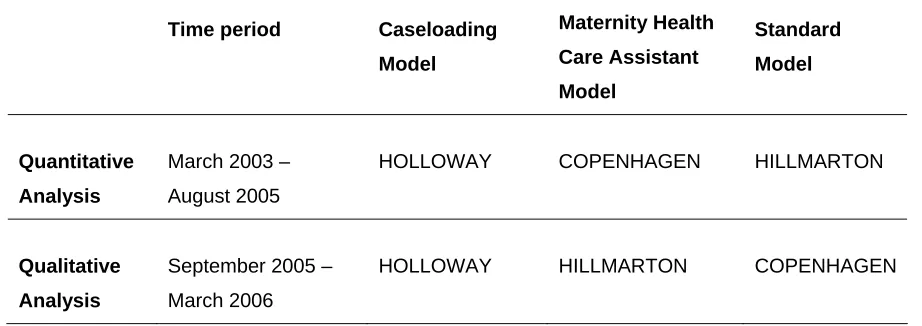
For the quantitative component of the evaluation, routinely collected data relating to the period from 1 March 2003 to 31 August 2005 were analysed. During this period Copenhagen employed a maternity health care assistant and Hillmarton had no extra service. For the qualitative component, data were collected from women who had given birth between 1 September 2005 and 28 February 2006, at which time Hillmarton employed 1.5 maternity health care assistants and Copenhagen had no enhanced service. Throughout the evaluation period, Holloway had a caseload
[image:7.595.86.547.600.763.2]midwifery service. Table 1.1 shows the approaches to maternity services operating in the Sure Start areas during the quantitative and qualitative analysis periods.
Table 1.1. Approaches to maternity services in Sure Start areas during the time periods included in the quantitative and qualitative analyses
Time period Caseloading
Model
Maternity Health
Care Assistant
Model
Standard
Model
Quantitative
Analysis
March 2003 – August 2005
HOLLOWAY COPENHAGEN HILLMARTON
Qualitative
Analysis
September 2005 – March 2006
Figure 1.1: Timeline for services offered by Sure Start Local Programme areas red by Sure Start Local Programme areas
1999-2001 2002 2003 2004 2005
July: MCA Copenhagen started October: Caseload Ho
llo
w
ay started
October MCA Copenhagen left
Septembe
r MCA Hillmarton
sta
rte
d
Caseload: Holloway
March: F
irst expected deliveries of
women rece
iving ca
selo
ad midwifer
y
throughout pregnancy
December: First exp
ected deliv
eries
of
Copenhagen women receiving MCA care
MCA: Copenhagen
2006
MCA: Hillmarton
Routine
In addition, each Sure Start Local Programme area provided a diverse array of activities and services of use to women during their pregnancy and after. This is illustrated in Tables 1.2 and 1.3. A brief description of the services and activities in each area at the time of the evaluation are described briefly below.
1.1 Holloway
In Holloway, the employment of two extra midwives in the Whittington Hospital funded by Sure Start, meant that a caseload midwifery service could be provided. In this model each woman is allocated to a named midwife for the duration of her antenatal appointments, her labour and her postnatal care at home. Unlike standard care, the antenatal appointments are at home and organised at the convenience of both client and midwife. The exception to this is when a scan is needed or if the client is in need of an interpreter, in which case appointments can occur in the hospital.
Furthermore, the period over which midwives continued to visit the woman at home postnatally was extended to 28 days after birth, twice the standard 14 days.
At the time of the interviews, each midwife was partnered with another midwife so that when she was off call she could be covered by her partner. In this way the client could get to know both midwives. The aim was to have one of the two attending her at birth but due to high caseloads, this was not always possible. Since the two extra midwives were appointed in a team from the Whittington Hospital, only women who gave birth in the Whittington could have a caseload midwife. Thus women who gave birth in other hospitals did not have a caseload midwife except for their postnatal care at home.
Table 1.2 Sure Start Group Activities
Groups or activities offered (September 2005 – February 2006) Sure Start Local Programme Area Young Parents Group Mother and baby exercise class Adult Exercise Class Childminder and Baby Group Baby
Massage Breast feeding Group
Free
Crèche Fathers Group Alternative Therapies First Time Parents Group
Baby Play Group Baby Yoga
Copenhagen 9 9 9 9 9 9 9 9
Hillmarton (Maternity Health Care
Assistant) 9 9 9 9 9 9 9 9 9
Holloway
(Caseloading) 9 9 9 9 9 9 9
Table 1.3 Sure Start Services Offered
Services offered Sure Start Local Programme Area Caseload
Midwifery Maternity Health Care Assistant Smoking Cessation Counsellor Smoking Cessation Services CAMHS Psychologist Service for PND Health Visitors trained in listening visit Breastfeeding Group
Copenhagen (quantitative data 9
analysis period) 9 9 9 9
Hillmarton (Maternity Health Care Assistant) 9 (qualitative data
analysis period) 9 9 9 9
9 9
9 9
Holloway
Mental Health Services.
1.2 Hillmarton
No enhanced midwifery services were available in Hillmarton during the quantitative data collection period, as Figure 1.1 shows, so Hillmarton was used as a control in the quantitative data analyses. During the qualitative data collection period Hillmarton employed 1.5 maternity health care assistants at the Whittington hospital. The
maternity health care assistant was there to provide general administrative support for the midwifery team as well as support to the women through help with breastfeeding and advice on the care of the newborn. Maternity health care assistants also registered women to Sure Start and promoted Sure Start activities to them. At the time they were interviewed, the maternity health care assistants were not visiting the women until the postnatal period, usually a couple of weeks after they gave birth, although they had contact with some women in the postnatal ward.
Activities offered in Hillmarton included a breastfeeding group. This was supported by the maternity health care assistants and actively encouraged by them. There was also baby yoga, which was popular, and baby massage, as Table 1.2 shows.
Hillmarton was the only area which employed a smoking cessation counsellor and also the only area of the three which did not have a service level agreement with Child and Adolescent Mental Health Services as Table 1.3 shows. This meant that although the health visitors in the area were trained to do listening visits, they could not refer women to a psychologist in Child and Adolescent Mental Health Services. Adult mental health services were available, however, and one woman in our Hillmarton qualitative sample had been successfully referred to a psychologist there.
1.3 Copenhagen
Copenhagen area. This situation was reversed during the quantitative data collection period.
Unlike the Sure Start areas of Holloway and Hillmarton, where the majority of women accessed antenatal care and gave birth at the Whittington hospital, women from Copenhagen access care from a range of hospitals, with only about a fifth using the Whittington hospital. The primary reason for this appears to be the geographic location of hospitals in relation to the Copenhagen Sure Start area, with other hospitals notably University College London Hospital being closer than the Whittington.
Similar Sure Start activities such as a breastfeeding group and a ‘play and stay’ group were available in Copenhagen, as Table 1.2 shows, but Copenhagen was the only Sure Start Local Programme area to have a Fathers’ Group and a ‘Childminder and baby group’. It also had links with smoking cessation services and a service level
Chapter 2: Aims and objectives
2.0 Aims of the research
To provide a clear understanding about the results achieved from different approaches to providing maternity services in three Sure Start areas in Islington and the ways in which Sure Start Local Programmes have worked with midwives to achieve this.
2.1 Objectives
1. To provide a clear understanding about similarities and differences in the needs being met and the aspects of care being improved by maternity service provision in the three Sure Start Local Programme areas in Islington
2. To identify how this relates to any differences in the population of the areas and location of hospitals and other service provision.
3. Have a clear understanding about how each approach to maternity service provision contributes to the following Sure Start targets
• Reduction of smoking during pregnancy
• Increases in breastfeeding at birth, six weeks and subsequently • Reduction in pre and postnatal depression
• Reduction in the percentage of low birthweight babies, defined as weighing less than 2500g at birth
• Provision of antenatal advice, support and information
4. Have a clear understanding about how each approach to maternity service provision contributes to:
• Improvements in attendance rates for antenatal appointments • Reductions in complications at birth requiring medical intervention • Reduction in late bookings
5. Have a clear understanding about user satisfaction with different approaches to service provision and the impact of the different approaches on the choices available to women
6. Have a clear understanding about how each approach to maternity service provision contributes to better outcomes for women living in disadvantaged or minority groups and communities including teenage parents, women living in temporary accommodation and refugees and asylum seekers.
7. Have a clear understanding about how each approach to maternity service provision contributes to better outcomes for women with particular needs such as those with disabilities, HIV or sickle cell, women living with domestic violence, those who are not fluent in English and provision of contraceptive and sexual health advice to teenage parents.
2.2. Ethics
2.3. Project Management
Chapter 3: Methods
The methodology is grounded in a whole systems research model [1]. Whole systems approaches are becoming increasingly influential in health and social care policy [2-4]. Four principal perspectives on the whole system have been identified [5]:
1. The causal system is a “network of causal relationships which points towards trends and processes unfolding gradually over the long term” This focus fits with Islington’s need to identify how practice developed through Sure Start can inform discussions with the Primary Care Trust commissioning
department about long term commissioning plans for maternity services in Islington.
2. For many of the most important areas of the whole system, we have very few data. The structure of explanation cannot be determined by the availability of systematic data. Where a particular explanatory factor is important, but precise data are lacking we must use every means at our disposal to do that factor justice. A review was undertaken of local data collection systems to identify data which were relevant to the outcomes and objectives. Few data had previously been available to Sure Start and part of this project aimed to identify alternative sources of data and information for use in monitoring.
3. The organisational whole system is by far the most common context in which whole systems are analysed. The emphasis is on making the various parts of the health and social care system function together as a single system rather than as parallel systems. The organisational perspective is relevant to this proposal in two ways. Firstly, there is a need to collate evidence of changes in outcomes for mothers, children and families arising from the different
4. The patient or service user experience of the whole system recognises that the whole system comes together and is embodied in the experience of each individual user. The individual experience, therefore, provides a microcosm of the level of service integration achieved locally and provides evidence of model outcomes.
A strength of this evaluation lies in the fact that it is possible to compare findings from three midwifery services provided separately in three distinct geographic areas. This lends itself to multiple case study evaluation [6, 7]. For the purpose of the evaluation each midwifery approach has been treated as a case study. Case study design allows for the identification of complex contextual conditions, enabling the exploration of micro as well as macro variables and how this impacts on practice and service delivery outcomes. It also allows for comparison between cases to build a picture to inform the overall Islington Sure Start programme.
A distinction has been made between intrinsic case studies where the interest is in gaining a greater understanding of the particular case under study and instrumental case studies where a case is studied mainly to provide insight into an issue for the purpose of theorisation or generalisation [6]. This evaluation falls somewhere between the two. It will provide an analysis of the particular in each case. At the same time, it draws conclusions about what is important about each case in relation to the
evaluation objectives set out previously, rather than in relation to theorisation. It does not attempt to redraw generalisations about Sure Start programmes per se.
3.1 Quantitative Methods
The overall aim of this part of the project was to use quantitative data to describe the contribution of the three Sure Start programmes and the pre-existing maternity services to meeting Sure Start targets in the three programme areas in Islington. To achieve these aims, local routine systems were reviewed to assess the availability and quality of the data and relevant data were specified and requested. A descriptive analysis was then undertaken to compare maternity service provision and outcomes in the Holloway, Copenhagen and Hillmarton programme areas before and after the Sure Start programmes were established.
3.1.1 Data sources
The following data collection systems were identified as holding relevant data:
a) Maternity data in hospital-based data systems:
(i) Whittington Hospital Patient Administration System (PAS)
(ii) Manor Gardens Team Statistics database from the Whittington Hospital London
(iii) University College London Hospital (UCLH) Patient Administration System (PAS) until June 2005 when a new IT system was installed.
b) Population-based data held by the Islington Primary Care Trust (i) Regional Interactive Child Health System (RICHS) until June 2005
(ii) Child and Community Health Interim Application (CHIA) from July 2005 onwards
(iii) Health visitors intention form data
c) Data from Sure Start programmes
(i) Islington Sure Start Unit Central Monitoring Database
(ii) Databases held by Holloway, Copenhagen and Hillmarton Sure Start Programmes
system in July 2005. It was known from the outset that up to date data could not be extracted from CHIA, but it was hoped that data downloaded from RICHS before its withdrawal could be accessed via CHIA. This also proved impossible. Data from University College London Hospital, which had also changed to a new computer system in July 2005, were not available within the timeframes of the evaluation or in subsequent months.
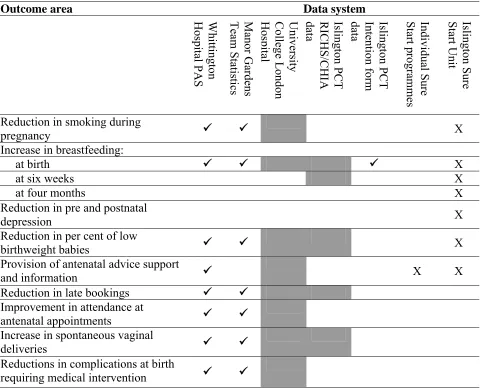
Within systems from which data could be extracted, the recording of data relevant to Sure Start targets and outcomes varied considerably, with no data being available to assess some outcome areas. The quality of data also varied within each system, further limiting the scope of the evaluation. Timeframes for the evaluation meant that some of the data were provided too late to be analysed. Table 3.1 below provides a
summary of the relevant data items that were collected routinely. Entries with a tick in bold (9) indicate data that were available for this evaluation; entries shaded in grey indicate data that were recorded but were not available for the evaluation. Entries with a cross (X) indicate systems where data were obtained but were unusable because of their poor quality.
Table 3.1 Recording of data about Sure Start outcome areas of interest in local data collection systems
Outcome area Data system
Whittington Hospital PA S Manor Gardens Team Statis tics University College London H os pit al Isling ton PCT RICHS/CHI A da ta Isling ton PCT Inten tion fo rm
data Individual S
ure Start p rogra mmes Isling ton Su re Start Unit
Reduction in smoking during
pregnancy 9 9 X Increase in breastfeeding:
at birth 9 9 9 X at six weeks X at four months X Reduction in pre and postnatal
depression X
Reduction in per cent of low
birthweight babies 9 9 X Provision of antenatal advice support
and information 9 X X Reduction in late bookings 9 9
Improvement in attendance at
antenatal appointments 9 9 Increase in spontaneous vaginal
deliveries 9 9 Reductions in complications at birth
requiring medical intervention 9 9
Data were recorded but not accessible
Appendix 2 contains a summary of each of the local data collection systems reviewed, and the availability and quality of the data they contained. Further details of the review of local data collection systems and analyses of available data have been provided to the Sure Start Unit in a supplementary report.
3.1.2 Analysis
Analyses were undertaken to examine the following outcome areas • Reduction of smoking during pregnancy
• Increases in breastfeeding at birth
• Reduction in the percentage of low birthweight babies • Provision of antenatal advice, support and information • Reduction in late bookings
• Increases in attendance rates for antenatal appointments • Increases in spontaneous vaginal deliveries
• Reductions in complications at birth requiring medical intervention
Data were not available to assess the following areas:
• Increases in breastfeeding at six weeks and subsequently • Reduction in pre and postnatal depression
Definitions of measures used to assess each of these areas are provided in the results section.
The analysis was undertaken for all or a portion of the time period 1 March 2003 to 31 August 2005, subject to the availability of data. This was a period when there were no major changes in service provision.
period were provided by the Whittington Hospital, but due to limited resources and time for evaluation, there was insufficient time to analyse these data.
For some outcome areas, all data available for the period from 1 April 2002 to 31 January 2006 were examined to maximise numbers within groups or to look at changes over time. This approach does not take into account the changes in service provision referred to in the preceding paragraphs.
Post codes were used to assign women and their babies to the Sure Start areas of Holloway, Hillmarton and Copenhagen. Where data were available for other Islington residents, these were assigned to the ‘Other Islington’ group, or in the case of the Whittington PAS data, ‘Other Whittington’.
The Sure Start areas were used as a proxy for the three different approaches to maternity care. It was assumed that Holloway Sure Start would have access to the caseload midwifery approach, Copenhagen residents to the maternity health care assistant approach, and Hillmarton residents would have just standard maternity services and act as a control group.
This should be interpreted with caution as it is not known how many women and babies within each Sure Start area actually received the approach to midwifery care assigned to them. For example it was estimated that about two-thirds of women in Holloway received caseload services throughout pregnancy, and 20% received them for only part of their pregnancy. This was a particular issue for the Copenhagen area where the maternity health care assistant worked from the Whittington Hospital, but only around 18% of women from the Copenhagen area delivered there.
A comparison of baseline data with intervention data would have provided the most robust estimates of the contribution of the different Sure Start approaches to
The scope of the analysis undertaken was restricted by the availability of data for each outcome and varied by source of data. Two approaches were used.
1. Percentages were calculated for groups for a specified time period and chi-square tests performed to compare differences between groups and assess their significance. To maximise the numbers of women or babies in any one group, and thus increase our ability to detect any significant differences, percentages were calculated based on grouping cases together over a period of time, for example all those in Holloway from March 2003 to August 2005.
2. Percentages were calculated on a calendar year basis, and confidence intervals constructed around percentages to provide an estimation of the reliability of the estimate.
The results of the descriptive analyses of quantitative data are given in Chapter 5. Additional details of analyses of data for each outcome area, including time periods examined, methods used and results, are given in a supplementary report to Islington Sure Start.
3.1.3 Limitations
The analysis of data available from routine local data collection systems was limited by a number of factors.
Population-based child health system data would have provided information for all women and babies in the three Sure Start areas, regardless of where they accessed maternity services. In its absence, there was a reliance on data from the Whittington Hospital, in which women from Copenhagen Sure Start are particularly poorly
represented in these data. Overall, lack of child health system data impeded evaluation of services which were designed to be universal.
Copenhagen Sure Start was poor among these data and the small numbers on which they are based mean that they are not very stable estimates.
To compensate this, data were requested from University College London Hospital, where many women from the Copenhagen area received maternity care, but the data were not available within the timeframes of the project. In addition, some of the data provided by the Whittington Hospital could not be cleaned and analysed in the time available. Thus the short time frame for the quantitative evaluation restricted access to data and the extent to which, data could be analysed.
The second major limitation of the quantitative aspects of the evaluation is the lack of baseline data for target areas. As a result, where differences were found between Sure Start areas, the difference could not be attributed to the approach to midwifery as alternative explanations, such as pre-existing differences between areas could not be ruled out. While there were some start point data available from Sure Start
programmes, the data were generally not sufficiently robust to be used for evaluation purposes.
Thirdly, small numbers in data about some outcomes made it difficult to obtain reliable estimates for the target area and there was inadequate statistical power to detect differences. This was a particular problem in the analysis of birthweight data, smoking during pregnancy, and selected complications at birth requiring medical interventions.
3.2 Qualitative Methods
This section describes the data collection strategy used to collect the interview data from service users and professionals.
3.2.1 Professionals
In depth interviews were undertaken with five of the midwives involved in Sure Start programmes in Islington as well as the two maternity health care assistants employed in Hillmarton. Additional short (20 minute) telephone interviews were conducted with service providers in each of the three areas. These are listed below and include Sure Start, Whittington Hospital and Primary Care Trust staff. Unless there was only one person in the role, professionals were chosen at random from a contact sheet.
Sometimes, for convenience, other members took part instead. These interviews were used to ascertain the experience of colleagues in working with Sure Start maternity services and their view of the impact it has had on meeting Sure Start targets locally. Issues around job satisfaction and cross agency working were also elicited. With the permission of participants, all interviews were either tape recorded and transcribed or recorded via rigorous note taking. The interview schedule used with professionals is shown in Appendix 4.
Professionals interviewed:
Efforts to recruit general practitioners and smoking cessation staff were not successful.
3.2.2 Service Users
Sampling
In order to ensure that the sampling strategy for the service users was as objective as possible, we did not use a convenience sample. Where possible we avoided asking staff to identify service users. In order to facilitate this, and to maximise variability in the sample group, there were two phases of sampling The first was through the local Sure Start databases and the second, which was more ‘targeted’ sampling, was done with the aid of health visitors.
Phase One
An anonymised database was obtained from each Sure Start Local Programme, containing information about each woman who had given birth in the selected time period. Typical information included ethnicity, language spoken, postcode and lone parent status. The data varied between programmes, with Holloway supplying the most detailed information. Using these different characteristics, a computer
programme was used to select a sample with a representative distribution of women from the different categories, for example ethnic groups. Once the sample had been selected, the list of women selected, known to the researcher only by code, was sent back to the relevant Sure Start Local Programme.
interview. All service users chose to have the interview in their homes. An interpreter or Language Lline was used for participants who did not understand English.
From phase one of the sampling ten women were interviewed in Holloway and Hillmarton and eight in Copenhagen. Copenhagen had fewer women overall
registered on its database and they were less diverse, tending to be well educated and from Britain or Europe. This can be seen in Appendix 5, which gives a breakdown of characteristics of all women sampled. Women sampled in phase one are identified by a numbered code of the form Cop05 and those sampled in phase two, have a lettered code of the form CopB.
Phase Two
Islington Sure Start was eager to have as wide a representation of women as possible and especially to ensure the inclusion of women who fell in to the following
categories:
•Teenage parents
•Women living in temporary accommodation •Refugees and asylum seekers
•Women with disabilities •Women with HIV or sickle cell •Women living with domestic violence •Women not fluent in English
The Sure Start Local Programme databases that were used in the first phase of
to a more manageable twenty minute targeted interview which was undertaken over the telephone.
Women who did not return an ‘opt out’ slip were contacted by the researcher, as in phase one, and asked to take part in a telephone interview. Since many women decided to have the interview immediately, they were given the researcher’s contact details in case they wished to withdraw consent afterwards. Language line was used via a conference call for those participants who did not understand English.
In phase two, five women were interviewed from Copenhagen, three from Holloway and two from Hillmarton. Their characteristics are shown in Appendix five.
3.2.3 Data Collection and Analysis
All face to face interviews were recorded and transcribed with permission from participants except for one participant who preferred notes taken. Telephone interviews were recorded via notes. Participants from both phases received a £10 Tesco voucher as a thank you for taking part in the study. The interview schedule was semi-structured in style and was designed to elicit experiences from all stages of the pregnancy, birth and looking after the newborn. In particular information was gathered about experiences with health and Sure Start services and how these interactions affected their overall experience.
The patient or service user experience of the whole system was used to identify how services come together and are experienced at an individual level and to identify when, where and how integration is achieved at a local level. Combining this
information with that gathered from professionals allowed a detailed picture of each Sure Start Local Programme area to be constructed. A constant comparison approach to analysis was used to encourage within case and between case analysis to test out the evolving findings.
3.2.4 Limitations and Issues in data collection
details of women for research even though this was all done in an ethical manner there was some delay in the recruitment phase. This meant that in phase two, interviews with women were short and focused and were undertaken over the telephone. For this reason the data gathered in phase two are not as rich. This also means that for Copenhagen where there was a less diverse group in phase one of recruitment, less information was gathered from ‘disadvantaged women’ in that area than in the other two Sure Start areas.
In recruiting of staff for interviews, we were unable to recruit general practitioners and the smoking cessation services for interviews into our sample. Several attempts were made to contact these people but busy schedules on both sides meant that ultimately contact was not possible.
Chapter 4: Findings for Sure Start Targets
This section presents the results of the quantitative analyses of data, combined with selected analyses of qualitative data, for Sure Start targets and outcome areas. For each area, the Sure Start targets are defined, together with existing baseline data where available. The measure used to assess progress towards the target in this evaluation is then presented, followed by data for women and babies in the Sure Start areas of Holloway, Copenhagen, and Hillmarton. In most cases, Whittington Hospital PAS data have been used, so analyses are restricted to data for deliveries at the Whittington hospital. Where data from Islington Primary Care Trust were available at a population level, figures for all Islington residents are also included. Qualitative data are also included, where available, to give a fuller picture of the issues.
This information is then combined to describe the effectiveness of each approach to maternity services provision.
4.1 Smoking during pregnancy
Reducing smoking during pregnancy fits within the Sure Start objective of improving health. Targets for reducing smoking have been set both within the Government Public Service Agreements (PSAs) for 2001-2004 and 2003-2006, as well as within the Service Delivery Agreement (SDA) for individual Sure Start programmes. The targets are:
• To achieve by 2004 a 10 per cent reduction in the number of women who smoke in pregnancy in the Sure Start area (SDA target)
• In fully operational programmes, achieve by 2005-06 a 6 percentage point reduction in the proportion of mothers who continue to smoke during pregnancy (PSA target)
Limited data were available to assess the percentage of women smoking during pregnancy. When Sure Start programmes were established, data on smoking during pregnancy were not routinely collected in hospital or community systems but Sure Start programmes worked with service providers to fill this gap. Information on smoking during pregnancy has been collected by the Whittington Hospital midwifery teams and recorded in the Patient Administration System since May 2004. Data are recorded for smoking status 12 months prior to booking, at the time of booking and at time of delivery. The Manor Gardens Midwifery Team also recorded information about smoking during pregnancy in a separate database, along with referrals to smoking cessation services.
Accurate local baseline data are therefore not available. The best estimate available was based on the Infant Feeding Survey1995 [8]. Data derived from this were used to
suggest that an estimated 24% of mothers in the Camden and Islington boroughs smoked during pregnancy. The 2000 Infant feeding survey estimated that 35% of all
women in England smoked in the year before or during their pregnancy, 46% of women who smoked gave up sometime prior to or during pregnancy, while 54% continued smoking [9]. Overall, 19% of women in England smoked throughout pregnancy, and smoking during pregnancy was more common among women in manual socio-economic groups and among younger women.
Information about smoking during pregnancy is not recorded in birth notification data supplied by hospitals to primary care trusts. Health visitors collect information about smoking among women and households at the time of visit following the birth, but do not collect information retrospectively on smoking during pregnancy.
4.1.2 Smoking at delivery
[image:33.595.110.499.450.631.2]Data on smoking at time of delivery were used as a proxy measure of smoking during pregnancy as these data were the most complete. The time period examined was from May 2004, when this item was first recorded, to August 2005. Only women whose smoking status at delivery was known were included.
Figure 4.1.1 shows the percentage of women in the Holloway, Copenhagen and Hillmarton areas smoking at delivery, together with figures for all women delivering at the Whittington Hospital. Overall, 15.3% of all women delivering at the
Whittington Hospital were recorded as smoking at delivery. Smoking was most prevalent among women living in the Hillmarton Sure Start area, 22.3% of whom smoked at delivery, and less prevalent among women residing in the other two areas, with 11.7% of women living in Holloway and 13.5% of those living in Copenhagen smoking at delivery. The differences between the prevalence of smoking were statistically significant (χ2 = 11.302, df = 3, p = 0.01).
Figure 4.1.1 Smoking at delivery by Sure Start area of residence, births in Whittington Hospital, May 2004-August 2005
0% 10% 20% 30% 40% 50% 60% 70% 80% 90% 100%
Holloway Copenhagen Hillmarton All Whittington deliveries
Area of residence
P erc en ta ge of de live ry e pi sode s Unknown No Yes
Source: Whittington Hospital PAS data
A number of factors are known to be associated with smoking, including social class and ethnicity. No measure of social class was available in the data to assess whether differences in smoking status reflected differences in the socio-economic status of the women living in the three areas. The Sure Start areas in Islington were known to be among the most deprived areas in the country, although it is also known as a borough where affluent and deprived people live in the same localities.
The Whittington Hospital used its own coding of ethnicity rather than the national coding classification used in the census. Among women delivering at the Whittington Hospital, 21.6% of women of white ethnic backgrounds smoked at delivery compared with only 3.8% of women in groups originating from the Indian sub-continent and 6.8% of women in African ethnic groups.
The significant differences between the rates of smoking in the Sure Start areas of Holloway and Hillmarton are likely to reflect differences in the ethnic mix of women living there. Among Holloway residents, there were lower proportions of women of white backgrounds and higher proportions of African women, who are less likely to smoke, compared with Hillmarton which had higher proportions of women from white backgrounds and fewer African women.
As mentioned above, baseline data were not available to assess whether the
prevalence of smoking in Hillmarton and Holloway Sure Start areas had changed over time. This makes it impossible to assess the contribution of caseload midwifery to the lower level of smoking in Holloway.
4.1.3 Smoking during pregnancy
Data about women for whom data were recorded in the Whittington PAS on smoking at 12 months prior to booking, at time of booking, and at time of delivery data were examined to provide an overall picture of the pattern of women’s smoking during pregnancy. To maximise the numbers of cases, all women with complete data who gave birth from May 2004 to January 2006 were included.
Almost two-thirds (65.3%) of all women did not smoke at any point in time during their pregnancy.
Of the women smoking 12 months prior to booking, 39.4% had stopped smoking at the time of booking. This is consistent with previous research which reports that around one-third of women stop smoking spontaneously when they find out they are pregnant.
[image:35.595.171.400.347.534.2]The diagram below illustrates the pattern of women’s smoking 12 months prior to booking, at the time of booking and at the time of delivery.
Figure 4.1.2 Smoking status throughout pregnancy, women delivering at the Whittington Hospital, May 2004-January 2006
Started smoking during pregnancy, 4.4%
Relapsed before delivery, 2.0% Quit by booking,
9.9%
Quit by delivery, 8.5%
Smoked throughout,
9.8% Did not smoke,
65.3%
Source: Whittington Hospital PAS data
Continuation of smoking during pregnancy by women living in the Holloway and Hillmarton Sure Start areas
possible effects of the introduction of maternity health care assistants in September 2005.
[image:36.595.104.502.363.531.2]When asked at booking about smoking at 12 months prior to booking, 40.9% (52) of women from Hillmarton and 26.2% (61) of women from Holloway had reported smoking. In both these areas, almost half of these women who smoked 12 months prior to booking continued to smoke throughout pregnancy.
Figure 4.1.3 shows the percentage of women in the Holloway and Hillmarton areas who smoked at 12 months prior to booking, by smoking status at booking and delivery.
Figure 4.1.3. Smoking during pregnancy by area of residence, women who smoked 12 months prior to booking only
0% 10% 20% 30% 40% 50% 60% 70% 80% 90% 100%
Holloway Hillmarton
Area of residence
Pe
r c
en
t of
de
live
ry e
pis
ode
s
Quit by booking Quit by delivery Smoked throughout
Source: Whittington Hospital PAS data
In Hillmarton, of the 52 women who smoked 12 months prior to booking, 21.2% had stopped at the time of booking. A further 30.8% stopped by the time of delivery. Almost half, 48.1%, of all women who smoked 12 months prior to booking, were still smoking at the time of booking and at the time of delivery.
smoking at time of booking and at delivery. Of the 40 women smoking at the time of booking, 70% were smoking at the time of delivery.
The Manor Gardens Team Statistics database provides an additional source of data on the continuation of smoking during pregnancy for women residing in Holloway and receiving caseload services. Among women for whom data were available about smoking at the times of booking and delivery, there were 41 women smoking at time of booking, of whom 14 were referred to smoking cessation services and four of whom were not smoking at delivery. Overall, 80.5% of women who smoked at the time of booking were smoking at time of delivery. The small numbers of women in each of these groups makes it difficult to draw clear inferences.
4.1.4 Qualitative data about smoking
There were few smokers in the sample overall, and similar patterns of experiences with smoking and smoking cessation were seen across all three areas. Findings are therefore examined for all three areas together.
Overall, about one-third of women or 13 of the 38 interviewed reported ever smoking. Most who had smoked, had given up some years previous to becoming pregnant. One or two mentioned that this was ‘part of the plan’, to give up some time before
attempting to have a baby. Of the remaining women, most of them gave up immediately upon discovering their pregnancy. The majority of these women expressed relative ease in giving up, knowing it was best for the baby:
KT: And was it difficult to give up smoking?
I: No, ‘cause you know you’re doing it for a really valid reason,
it’s like, yeah, you haven’t really got a choice in the matter, if you don’t
stop smoking you could harm your baby, so stop.
Cop08
KT: Did you find it difficult to give up?
I: No, ‘cause as soon as I knew I was pregnant that’s it, I stopped.
Those who did not give up smoking, felt that they had reduced their smoking as much as possible within sometimes difficult circumstances such moving to a new country or having little family support or the general pressures and difficulties involved in being pregnant. None of them used any cessation services, nor did they express any desire to do so.
I don’t know, I don’t … I don’t want to give up. I really enjoy it. I think
it’s the only enjoyable part of my life at the moment, so … I’ll stick with it.
Hlw20
I smoke. I smoked, I used to smoke, and I still smoke. I smoke about five or
six cigarettes a day. During the pregnancy I used to have maybe three
cigarettes. I couldn’t stop. I didn’t try. <Laughs> It’s just so many things
happening, that to make an effort to stop it’s like, with everything else on
top … it’s difficult… I was hoping that … I really wanted to stop and I
was just hoping that it wouldn’t harm the child. Of course it was difficult;
I was far from my family, I was already making so much sacrifice in doing
that, it was difficult, a bit too much.
Hil26
When asked about assistance, this woman said she had been given a number for a helpline by her GP but that she didn’t want to use it. She did suggest that maybe nicotine patches would have been useful but it seemed overall she had a low motivation to stop smoking.
One other woman gave up when she discovered she was pregnant and started again after her child was born. She expressed similar sentiments of having already a lot to deal with.
The following woman explains why she thinks smoking cessation would not be of use to her partner:
I believe that if it’s not in your head you won’t appreciate it. I mean if,
you know, it is the same, or if someone, a health visitor will tell you, or I
tell you, which am your partner from ten years, and say look, stop
smoking, and it’s not in your head, if you don’t appreciate it from me you
don’t appreciate from someone else either. So it has to come from you
<laughs> you know? When you decide then you get help, don’t get the
help if you don’t want to stop.
Cop05
The women tended to justify their partner’s continued smoking by saying that their partner did not smoke around the baby and all of them were asked to smoke outside of the house. None of the women mentioned not smoking around the house during pregnancy. Furthermore, research has shown that having a partner that smokes makes it less likely that women will stay off cigarettes. As the following midwife explains:
Or if it’s a teenager, she’s in a house and she’s got, her room’s lovely and
you know and away from the house but everyone in the house is smoking
…it’s very hard when they’re in an environment to just give up for
themselves, even though it is beneficial for themselves and baby, just you
have to be a very strong person to give up I think ‘cause it’s one of the
hardest things to give up.
Goodinge midwife1
4.1.5 Evidence in context
The findings on smoking among pregnant women in Islington reflect the broader literature on smoking cessation which indicates that smoking is very strongly associated with deprivation and to ethnicity [9-11]. Box One gives the range of smoking cessation interventions identified in a recent Cochrane review of
cessation programs need to be implemented in all maternity care settings. Attention to smoking behaviour together with support for smoking cessation and relapse
prevention needs to be as routine a part of antenatal care as the measurement of blood pressure. In order to avoid 'victim-blaming', or the perception of 'victim-blaming', attention needs to be given to the existing evidence on barriers to implementation in antenatal care. …. Interventions involving additional group sessions during pregnancy have been reported as being poorly attended in most settings, though accepted in two trials in Scandinavia”[12].
Box One Types of smoking cessation interventions
(1) Information about the harmful effects of smoking on the foetus and infant, the mother herself or other family members (verbal, written or both).
(2) Advice by a health professional to 'stop smoking'.
(3) Supplementation of advice by reinforcement at subsequent antenatal visits. (4) Supplementation of advice by group counselling.
(5) Supplementation of advice by the provision of peer support.
(6) Supplementation of advice by recording smoking status, or measuring by-products of smoking at other antenatal visits.
(7) Supplementation of advice by feedback of the effects of smoking on the foetus (foetal movements, foetal breathing, foetal heart rate).
(8) Supplementation of advice by positive information about the foetus and foetal development (for example, describing the ultrasound in detail).
(9) Individualised advice and support for smoking cessation based on 'stages of change'.
(10) Provision of pregnancy-specific self-help manual on strategies for quitting. Provision of the following as an adjunct to information and advice:
• nicotine replacement therapy;
• telephone follow up with reinforcement of advice and strategies and incentives for quitting;
• rewards.
(11) Strategies to change the attitudes, knowledge and behaviour of healthcare providers with respect to smoking cessation.
Taken from Lumley J, Oliver SS, Chamberlain C, Oakley L. Interventions to promote smoking cessation during pregnancy. The Cochrane Collaboration. The Cochrane Library 2006, Issue 3.
documented in the literature [12] and which were found in this study. The evidence, both nationally and from this study, highlights the need to support these women on a broader level in order to facilitate their attempts to reduce and stop smoking.
4.2 Breastfeeding
Sure Start services work to “promote breastfeeding, whilst supporting all women
whatever their chosen method” (Children’s NSF – Maternity Standard – Markers of
Good Practice). The Service Delivery Agreement target between Sure Start Islington and individual Sure Start programmes is for “All local programmes to give guidance
on breastfeeding, nutrition, hygiene and safety”.
Sure Start programmes do not have a specific target for increasing breastfeeding, but rather work to promote breastfeeding among women while also supporting women whatever their chosen feeding method. The programmes are required to report on the percentage of women breastfeeding at birth, six weeks and at four months. The Sure Start measure of breastfeeding is the percentage of babies either breast fed exclusively or receiving mixed feeding.
Data about the initiation of breastfeeding at birth were available on a population basis from the intention form data recorded by health visitors. Similar data were also available from the Whittington Hospital PAS for women who delivered there and from the Manor Gardens Team Database. Population-based data about feeding at birth and six weeks of age are recorded in child health systems but could not be accessed because of the problems with CHIA. No data were recorded about breastfeeding at four months.
Baseline data
Baseline data for the period before Sure Start began had been provided by Islington PCT for Copenhagen and Holloway but not for Hillmarton. These were based on Islington PCT Snapshot and RICHS data. It had been estimated that from 57% to 61% of babies in Holloway were breastfed at birth (Holloway M5 2001-2002 data;
2000, estimated that 71% of women in England and Wales and 81% of women in London and the South East Region initiated breastfeeding at birth [9].
It had been estimated that between 34% and 48% of babies in the Holloway area were breastfed at six weeks (Holloway M5 2001-2002; and Holloway Delivery Plan 2001), as were 34% of babies in Copenhagen (Copenhagen M5 2001-2002). In comparison, 43% of mothers in England and Wales as a whole were breastfeeding six weeks after birth in 2000 [9]. The Central Sure Start Programme monitoring data, supplied by the PCT using data from RICHS, indicated that in the financial year 2003-2004, 71% of babies in Holloway were breastfed at six weeks, as were 56% of babies in Hillmarton. Some caution should be applied to these figures however, as by six weeks, data were missing for between 20-25% of babies.
4.2.1 Breastfeeding at birth
The percentage of babies breastfeeding at birth is first examined for babies born from 1 July 2003 (when data collection commenced) to 31 August 2005, to eliminate any effect of changes in midwifery services from September 2005 onwards, using data from the PCT intention forms. Data is also examined from July 2003 to December 2005 to assess any changes in breastfeeding over time.
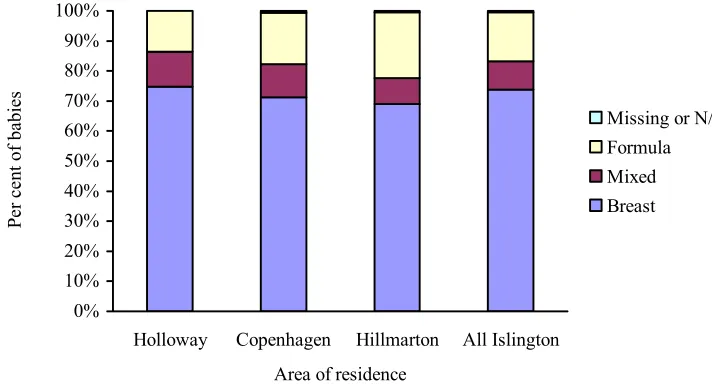
Figure 4.2.1 Feeding method by Sure Start area of residence
0% 10% 20% 30% 40% 50% 60% 70% 80% 90% 100%
Holloway Copenhagen Hillmarton All Islington Area of residence
Pe
r c
en
t of
ba
bie
s
Missing or N/A Formula Mixed Breast
Source: Health visitors’ intention forms
In Islington as a whole, 73.7% of babies were exclusively breastfed at birth; 16.3% were formula fed and 9.5% were mixed fed. Combining exclusive breastfeeding with mixed feeding showed that 83.6% of all babies in Islington were breastfed to some extent at birth.
4.2.2 Factors associated with breastfeeding
Islington is an ethnically diverse area and feeding methods are known to vary with ethnicity. African women are more likely than others to practice mixed feeding. Within Islington, 10.8% (596) of babies were identified as African. Of these babies, 73.7% were exclusively breastfed at birth, and 18.6% had mixed feeding. The rate of mixed feeding among African babies was almost double the 9.5% for Islington as a whole.
The proportions of African babies breastfed and having mixed feeding varied between Sure Start areas. Copenhagen had the highest rate of mixed feeding at birth among African babies, 29.6%, while 57.7% of African babies were exclusively breastfed. In contrast, Holloway and Hillmarton had higher rates of exclusive breastfeeding among African babies, 76.5% and 77.4% respectively. Rates of exclusive breastfeeding among African babies in Holloway and Hillmarton were similar or higher than rates of exclusive breastfeeding for all babies in these areas. The differences in feeding methods of African babies in the three Sure Start areas were statistically significant, with African babies in Copenhagen showing lower rates of exclusive breastfeeding and higher rates of mixed feeding.
It is likely that rates of breast and mixed feeding vary for women from different parts of Africa but no data were available about the countries of origin of African women in the three areas. Rates may also vary according to hospital of birth, reflecting the support given for breastfeeding, but it was not possible to investigate this because of limitations of time and data availability. Data on other factors known to be associated with breastfeeding, such as age, socio-economic status and parity, additional were not available for analysis.
4.2.3 Changes in breastfeeding over time
Data for the period from July 2003 to December 2005 showed an increase in the proportion of babies in Islington as a whole who were exclusively breastfed at birth, as Figure 4.2.2 shows. This rose from 69.3% in 2003 to 76.8% in 2005. A
Figure 4.2.2 Feeding types by year, all Islington residents, July 2003-December 2005
0% 10% 20% 30% 40% 50% 60% 70% 80% 90% 100%
2003 2004 2005
Year
Pe
r c
en
t of
ba
bie
s
Exclusive Breastfeeding Mixed Feeding
Formula Breastfeeding
Source: Health visitor intention forms
To examine changes over time within Sure Start areas, Figure 4.2.3 shows the
percentage of babies breastfed in each of the Sure Start areas for the years 2003, 2004, and 2005, with baseline data for 2001-2002 included where available.
Compared to start point data provided by Sure Start, there were large increases in breastfeeding at birth for both Holloway and Copenhagen babies from 2001-2002 to 2003. Between 2003 and 2005, a significant increase in babies breastfed at birth was seen in the Hillmarton Sure Start area. In the Holloway and Copenhagen area only small fluctuations in the percentage of babies breastfed at birth were seen over the years 2003 to 2005.
Figure 4.2.3 Breastfeeding at birth, by year and area of residence
0% 10% 20% 30% 40% 50% 60% 70% 80% 90% 100%
2001-02 2003 2004 2005
Year
Pe
rc
ent
age
of ba
bi
es
Holloway Copenhagen Hillmarton All Islington
Source: Islington PCT baseline data and health visitor intention forms
4.2.4 Breastfeeding at 4 weeks following birth in Holloway
The only data available for the evaluation on breastfeeding subsequent to birth was from the Manor Gardens Team Statistics which recorded data on the percentage of women breastfeeding at four weeks. These data indicate that 88.3% of women were breastfeeding at four weeks, 67.3% exclusively and 21.0% as part of mixed feeding methods. Of the women who commenced breastfeeding at birth, 97.0% were breastfeeding at four weeks. Further, almost half of the women who did not initiate breastfeeding at birth were breastfeeding at four weeks. Some caution should be exercised in interpreting these data. They include only women who delivered with the Manor Gardens team midwives and maintained contact with them until four weeks later. As mentioned previously, this is likely to exclude approximately 20% of women from the Holloway area who moved out of the area prior to delivery.
4.2.5 Qualitative data about breastfeeding
and in general any assistance and advice was appreciated by the women, particularly in the early stages after giving birth, which was the most difficult period:
KT: And did you find it difficult to breastfeed in the beginning?
I: God, it was hell, it was awful <laughs>. Really, really painful
and bleeding and nasty, it was horrible, horrible, but after the first two
weeks it got better, not completely better, but that made me think, right I’ll
keep going, you know, and now it’s just really easy really…
Hil28
For some women it came as a surprise that breastfeeding was so difficult. Flagging this up during pregnancy might be a good idea so that women can be more prepared for difficulties and how to deal with them. The following woman describes how practical advice was particularly useful:
I wasn’t sure if she was being fed and the midwives came round to see me
at home, you know, they said, they showed me a certain way to have her
stomach to stomach and that seemed to help actually and I found
[daughter’s name] was sucking a lot more and they said, yes she is
feeding. So where I’d thought she wasn’t feeding, they said, no she is, you
can tell by the way her jaw’s moving.
Hil20
How to recognise that the baby was feeding arose as an important issue for the women as many were apprehensive about not giving enough milk to their babies even when s/he was putting on a sufficient amount of weight. Not being able to provide enough milk was often cited as a reason to introduce bottle feeding.
He feeds only for 10, 15 minutes, well not every day but every other day, I
get worried that maybe it’s not enough and I know that he’s gaining
weight, so I know that actually it’s enough for him because he’s gaining
weight, but I just get worried, oh maybe it’s not enough, because you hear
and she was in the hospital at the same time and that’s when I met her,
and her baby feeds for 45 minutes...
Hil07
Previous research has shown that perception of inadequate milk supply is a common reason stated to introduce formula feed [8]. Medically this should be a rare occurrence [13, 14] and could be related to incorrect latching on, which can be avoided by
appropriate professional assistance.
4.2.5.1 Hillmarton
In Hillmarton all women breastfed exclusively for over six weeks except for one young mother who never breastfed and one woman who stopped after a week.
In Hillmarton, the maternity health care assistant was on hand to give help and assistance in breastfeeding, but only two of the women explicitly mentioned the maternity health care assistant as having given help with breastfeeding. Of these two women, one, Hil18 expressed frustration at having received what she felt was
conflicting advice from the maternity health care assistant and other information sources:
‘cause the lady that came from Sure Start, I’m sure she was part of the
breastfeeding group, and she said oh you should be breastfeeding ten
minutes from each boob and I’m thinking, but then you’ve got a lot more
to sort of make up and this, that and the next thing and it wasn’t till I’d
got a book, I said to (baby’s father) I said I’m going to get this because I
want to know for myself just a wee bit and it wasn’t till he got that that the
first lot of milk when they latch on is more thirst-quenching and then when
they’ve been on you for about five, ten minutes, your milk thickens and
that’s the stuff that will fill them up. Now if you do ten minutes from each,
they’re not going to get that, they’re only going to get the thirst-quenching
stuff so they’ll end up being hungry, so I thought I’m not going to be doing
that then, I’ll just do the way I’m doing it.
Hil18