Kimber, J. and Palmateer, N. and Hutchinson, S.J. and Hickman, M. and Goldberg, D.J. and Rhodes,
T. (2010) Harm reduction among injecting drug users - evidence of effectiveness. In: Harm reduction:
evidence, impacts and challenges EMCDDA, Lisbon, April 2010. European Monitoring Centre for
Drugs and Drug Addiction , pp. 115-163. ISBN 978-92-9168-419
http://
strathprints
.strath.ac.uk/
25573
/
Strathprints is designed to allow users to access the research output of the University
of Strathclyde. Copyright © and Moral Rights for the papers on this site are retained
by the individual authors and/or other copyright owners. You may not engage in
further distribution of the material for any profitmaking activities or any commercial
gain. You may freely distribute both the url (
http://
strathprints
.strath.ac.uk
) and the
content of this paper for research or study, educational, or not-for-profit purposes
without prior permission or charge. You may freely distribute the url
(
http://
strathprints
.strath.ac.uk
) of the Strathprints website.
Harm reduction among injecting drug users — evidence of
effectiveness
Jo Kimber, Norah Palmateer, Sharon Hutchinson, Matthew Hickman, David Goldberg and Tim Rhodes
Abstract
This chapter synthesises and evaluates the available direct evidence relating to the impact of needle and syringe programmes (NSPs), opioid substitution treatment (OST), drug
consumption rooms (DCRs), and peer naloxone distribution (PND) on HIV/hepatitis C (HCV) incidence/prevalence, injecting risk behaviour and overdose-related mortality. To achieve this, we conducted a review of reviews; a systematic and explicit method used to identify, select and critically appraise relevant findings from secondary level research (systematic reviews and/or meta-analyses) into an evidence briefing. In the absence of high-quality reviews, appraisal of the evidence was supplemented with a targeted review of the primary literature. We find that there is sufficient review-level evidence that OST reduces HIV transmission, while the evidence in support of NSPs reducing HIV transmission is more tentative, and for DCRs currently insufficient. There is tentative evidence that OST has limited effectiveness in reducing HCV transmission, and insufficient evidence to support or discount NSPs or DCRs’ ability to reduce HCV transmission. There is sufficient review-level evidence that NSPs, OST and DCRs reduce self-reported injecting risk behaviour. There is sufficient review evidence that OST reduces risk of overdose mortality, but insufficient evidence to support or discount the effect of DCRs or PND on overdose deaths at the community level. Our review shows evidence in support of a variety of harm reduction interventions but highlights an uneven presence of high-quality review evidence. Future evaluation of harm reduction programmes should prioritise methodologically robust study designs.
Keywords: injecting drug use, review methods, and needle syringe programmes, opioid substitution treatment, drug consumption rooms, peer naloxone distribution.
Introduction
Injecting drug use is a global and regional public health problem, with an estimated 15.9 million injecting drug users (IDUs) worldwide and prevalence rates in European Union (EU) Member States ranging between 0.6 and 15.1 per 1 000 population aged 15–65 years (EMCDDA, 2009; Mathers et al., 2008). IDUs, especially opiate users, experience excess morbidity and mortality, being approximately 10 times more likely to die compared to their non-IDU peers (Bargagli et al., 2006; Degenhardt et al., 2004; Degenhardt et al., 2006).
drug overdose deaths among IDUs in community and custodial settings is a key objective of the EU drug strategy (European Commission, 2007). Interventions that directly target these harms include: needle and syringe programmes (NSPs) and opioid substitution treatment (OST); supervised drug consumption rooms (DCRs), and peer naloxone distribution (PND).
NSPs provide sterile needle/syringes and other injecting equipment to IDUs. Delivery is diverse and can include ‘primary’ fixed site, mobile and/or outreach services and ‘secondary’ access via community pharmacies, other health services and/or vending machines (WHO, 2007). NSPs operate across all EU Member States (EMCDDA, 2008; see also Cook et al., 2010).
OST is prescribed to dependent users to diminish the use and effects of illicit opiates. Treatment is most efficacious when it is continuous and given at adequate doses (Amato et al., 2005; Faggiano et al., 2003; Ward et al., 1997). Community-based OST is available across all EU Member States and prison-based OST is officially available in the majority of Member States, although overall accessibility is limited (EMCDDA, 2008; see also Stevens et al., 2010). It is estimated that in 2007 more than 650 000 opioid users received OST in Europe, and the most commonly prescribed forms are methadone maintenance treatment (MMT) and buprenorphine maintenance treatment (BMT) (EMCDDA, 2008).
DCRs offer a low-threshold environment to use pre-obtained drugs hygienically and to access targeted safer injecting advice and intervention in case of overdose (Kimber et al., 2003; see also Hedrich et al., 2010). DCRs have been operating in Europe for more than 25 years and are available in 59 cities across Germany, Luxembourg, the Netherlands, Norway, Spain and Switzerland (EMCDDA, 2008).
Peer naloxone distribution (PND) or ‘take-home naloxone’ programmes provide the antagonist drug, with training to IDUs and/or carers to improve their capacity for effective intervention at opioid-related overdose (Darke and Hall, 1997). Naloxone is currently available on a take-home basis in Italy (where it is widely dispensed by addiction services), Germany, Spain, Lithuania and Norway (Reitox, 2008). PND pilots have also taken place (Dettmer et al., 2001; McAuley et al., 2009; Strang et al., 2008) and are underway (National Treatment Agency, 2009; Parmar, 2008) in the United Kingdom.
The availability and delivery of harm reduction interventions can be controversial outside of the public health arena and vulnerable to shifts in the political environment at the local, national and international level (Bewley-Taylor, 2002; Broadhead et al., 1999; Small, 2007). This re-enforces the need for policymakers to have access to up-to-date evidence briefings on the targeted outcomes and effectiveness of the relevant interventions.
Methods
Our evaluation of the evidence is based primarily on the ‘review of reviews’, or tertiary level research method (Kelly et al., 2002). This is a systematic and explicit method to identify, select, and critically appraise relevant findings from secondary level research (i.e. systematic reviews and/or meta-analyses) into an evidence briefing.
We have drawn substantively on our recent review of reviews of harm reduction interventions (Palmateer et al., 2008; Palmateer et al., 2010). Our inclusion criteria were English language systematic reviews, syntheses, or meta-analyses that examined the effectiveness of NSPs, OST and DCRs in relation to HIV and HCV incidence/prevalence and/or injecting risk behaviour outcomes. For this chapter we have updated our previous review of reviews (Palmateer et al., 2008) by searching for any new reviews published between March 2007 and August 2009 and by conducting additional searches for relevant English language systematic reviews, syntheses, or meta-analyses that examined the effectiveness of OST, DCRs and PND in preventing overdose.
Databases searched were: CINAHL, Cochrane Library, EMBASE, IBSS, MEDLINE, and PsycINFO. To identify grey literature and minimise English language publication bias we also searched publications of key international agencies for harm reduction. These included: the European Monitoring Centre for Drugs and Drug Addiction (EMCDDA), the National Institute on Drug Abuse (NIDA), the United States Institute of Medicine, the United Nations Office on Drugs and Crime (UNODC), and the World Health Organization (WHO). All databases were searched from 1980 to March 2009 except CINAHL, which was searched from 1982 to March 2009. At the screening stage it was apparent that reviews from the 1980s and 1990s had been superseded by more recent reviews and we restricted our appraisal of reviews published from 2000 onwards.
Abstracts were screened and evaluated by two reviewers to determine if the paper met the inclusion criteria. If there was disagreement regarding the relevance of an abstract the full paper was retrieved for further evaluation. In the event of a lack of consensus a decision was reached by discussing points of disagreement.
Selected reviews were critically appraised using a tool that considers the rigour of the methods used to identify the relevant literature, the appraisal of the primary literature, the quality of the analysis in the case of meta-analysis, and the appropriateness of the conclusions (Kelly et al., 2002; Palmateer et al., 2010).
Reviews rated 1 or 2 were included as high-quality (‘core’) reviews. Reviews rated 3 were retained as ‘supplementary’, not considered to be of sufficient quality to rely on the author’s conclusions but viewed as providing complementary information on the effectiveness of the interventions.
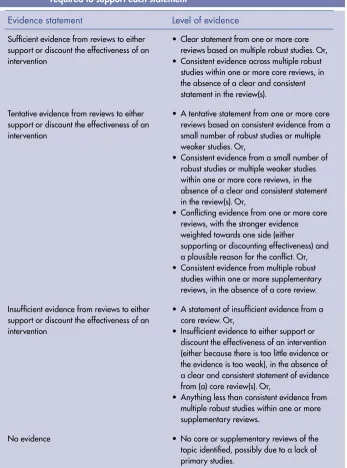
sufficient; (ii) tentative; (iii) insufficient; or (iv) no evidence from reviews. These classifications are based on a framework (Table 5.1) that considers the quality of the reviews, the reviewers’ conclusions and the designs/findings of the primary studies (Ellis et al., 2003).
Table 5.1:
Types of evidence statements and the level of evidence that wasrequired to support each statement
Evidence statement Level of evidence
Sufficient evidence from reviews to either support or discount the effectiveness of an intervention
• Clear statement from one or more core reviews based on multiple robust studies. Or, • Consistent evidence across multiple robust
studies within one or more core reviews, in the absence of a clear and consistent statement in the review(s).
Tentative evidence from reviews to either support or discount the effectiveness of an intervention
• A tentative statement from one or more core reviews based on consistent evidence from a small number of robust studies or multiple weaker studies. Or,
• Consistent evidence from a small number of robust studies or multiple weaker studies within one or more core reviews, in the absence of a clear and consistent statement in the review(s). Or,
• Conflicting evidence from one or more core reviews, with the stronger evidence weighted towards one side (either
supporting or discounting effectiveness) and a plausible reason for the conflict. Or, • Consistent evidence from multiple robust
studies within one or more supplementary reviews, in the absence of a core review.
Insufficient evidence from reviews to either support or discount the effectiveness of an intervention
• A statement of insufficient evidence from a core review. Or,
• Insufficient evidence to either support or discount the effectiveness of an intervention (either because there is too little evidence or the evidence is too weak), in the absence of a clear and consistent statement of evidence from (a) core review(s). Or,
• Anything less than consistent evidence from multiple robust studies within one or more supplementary reviews.
No evidence • No core or supplementary reviews of the topic identified, possibly due to a lack of primary studies.
[image:5.454.41.388.130.598.2]Consistent with an evidence-based medicine approach (Glaziou and Heneghan, 2009; Sackett et al., 1996), study designs considered to provide more ‘robust’ evidence of effect were controlled trials, longitudinal cohort and case-control designs, while ecological, serial cross-sectional and cross-sectional designs were considered to provide ‘weaker’ evidence of effect. We do not discount the importance of different study designs and data sources, including cross-sectional and qualitative studies, to evaluate the process and impact of public health interventions (Petticrew, 2009), but our aim here is to assess quality of the review-level evidence.
With regard to our interpretation of the reviews’ reported results of primary studies, a ‘positive’ finding refers to an observed reduction in the stated outcome associated with the intervention, a ‘negative’ finding refers to an increase in the outcome associated with the intervention, and ‘no association’ refers to no statistically significant effect. Where a review reported a finding as positive or negative, it was assumed that the result was statistically significant at the 5 % level even if this was not explicitly stated; where a review reported ‘no association’ it was assumed that this indicated a non-statistically significant result (Palmateer et al., 2010).
A priori we recognise that no or weak evidence of effectiveness may primarily reflect the quality and/or number of studies available and does not necessarily indicate a lack of intervention effectiveness. We also acknowledge that the history of harm reduction interventions has to a large extent (and necessarily) been driven by community actions and pragmatic public health policies (See also Cook et al., 2010), with some interventions implemented in the absence of high-quality trials or intervention-based research.
Results
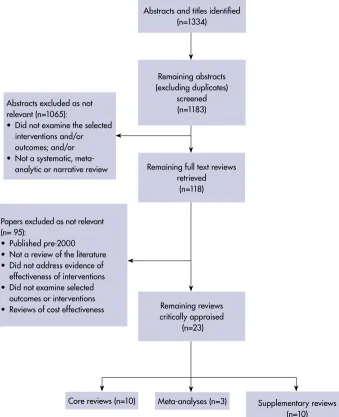
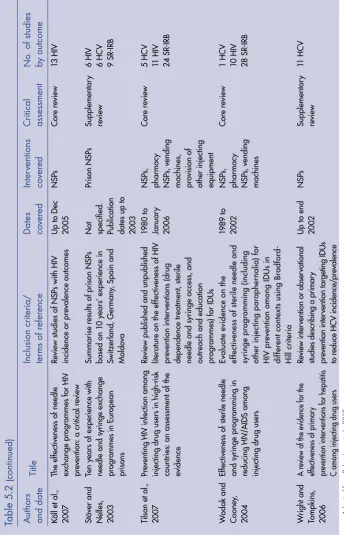
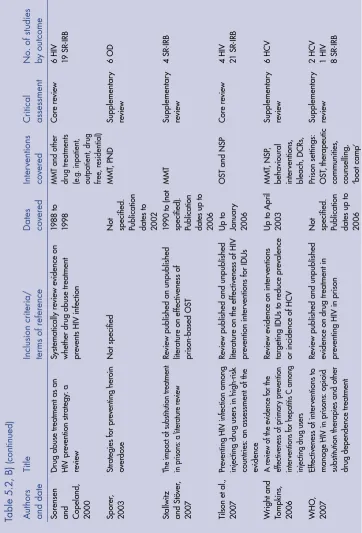
The results of the review of reviews literature search are presented in Figure 5.1. We identified nine (five core and four supplementary) reviews of the effectiveness of NSPs, 11 (three core, six supplementary, two meta-analyses) of OST, four (three supplementary, one meta-analysis) of DCRs, and one supplementary review of PND (Table 5.2).
Figure 5.1: Papers identified in the review of reviews
Abstracts and titles identified (n=1334)
Remaining abstracts (excluding duplicates)
screened (n=1183) Abstracts excluded as not
relevant (n=1065):
• Did not examine the selected interventions and/or outcomes; and/or •
Not a systematic, meta-analytic or narrative review
Papers excluded as not relevant (n= 95):
• Published pre-2000 • Not a review of the literature • Did not address evidence of
effectiveness of interventions • Did not examine selected
outcomes or interventions • Reviews of cost effectiveness
Core reviews (n=10) Supplementary reviews
(n=10) Meta-analyses (n=3)
Remaining reviews critically appraised
(n=23)
Remaining full text reviews retrieved
(n=118)
[image:7.454.37.376.167.584.2]Ta
bl
e 5
.2
:
Su m m ar y o f r ev ie w s b y i nt er ve nt io n an d o ut co m esA
)
N
ee
dl
e
sy rin ge p ro vi sio n: n ee dle s yr in ge p ro gr am m es , p ha rm ac y a cc es s a nd v en di ng m ac hi ne s A ut ho rs an d d at e Ti tle In cl us io n c rit er ia / te rm s o f r ef er en ce D at es co ve re d Int er ve nt io ns co ve re d C rit ic al asse ss m en t N o. o f s tu di es by o ut co m e D ol an e t a l., 20 03 a Pr iso n-ba se d s yr in ge e xc ha ng e pr og ra m m es: a r
ev ie w o f int er na tio na l r es ea rc h a nd de ve lop m en t Re vi ew p ub lis he d a nd un pu bl ish ed stu di es o n p ris on NS Ps a nd in te rv ie w s w ith p ris on NS P ex pe rts N ot sp ec ifi ed . Pu bl ic ati on s up t o 2 00 2 Pri so n NS Ps Su pp le m en tar y revi ew 6 H IV 6 H CV G ib so n e t al ., 2 00 1 Ef fe ct ive ne ss o f s yr in ge e xc ha ng e pr og ra m s i n r ed uc in g H IV r isk be ha vio ur a nd H IV se ro co nv er sio n a m on g I D Us Re vie w p ub lis he d s tu di es o f t he ef fe ctiv en es s o f s yri ng e ex ch an ge pr ogr am s i n r ed uc in g H IV ri sk b eh av io ur an d H IV s er oc on ve rsi on a m on g I DU s, re gar dl es s o f d es ig n. A lso i nc lud ed s tu di es th at ex am in ed e ffe cts o f s yri ng e ex ch an ge on H BV a nd H CV s er oc on ve rsi on 19 89 to en d 1999 N SPs Co re r ev ie w 3 H C V 6 H IV 23 s el f-r ep or te d in je cti ng ri sk be ha vi ou r ( SR -IRB ) Isl am a nd Co nig ra ve , 20 07 A ss ess in g th e ro le o f s yr in ge di sp en sin g m ac hi ne s a nd m ob ile va n ou tle ts in re ac hi ng ha rd -to -r ea ch a nd h ig h-ris k gr ou ps o f i nj ec tin g dr ug u se rs (ID U
s): a r
[image:8.454.72.420.61.610.2]Ta
bl
e 5
.2
(c on tin ue d) A ut ho rs an d d at e Ti tle In cl us io n c rit er ia / te rm s o f r ef er en ce D at es co ve re d Int er ve nt io ns co ve re d C rit ic al asse ss m en t N o. o f s tu di es by o ut co m e Kä ll e t a l., 20 07 Th e e ffe ct iv en es s o f n ee dl e ex ch an ge p ro gr am m es f or H IV pr ev ent ion: a c
[image:9.454.35.379.73.608.2]B)
O
pi
at
e
sub sti tu tio n t re at m en t A ut ho rs an d d at e Ti tle In cl us io n c rit er ia / te rm s o f r ef er en ce D at es co ve re d Int er ve nt io ns co ve re d C rit ic al asse ss m en t N o. s tu di es b y out co m e A m at o e t al ., 2 00 5 O ve rv ie w o f t he s ys te m at ic re vi ew s o f t he e ffe ct iv en es s o f op ia te m ai nt en an ce t he ra pi es : av ai la bl e r es ea rc h t o i nf or m cl in ic al p ra ct ic e a nd r es ea rc h Su m m ari se m aj or fi nd in gs o f fiv e Co ch ra ne r ev ie w s o n O ST f or op io id d ep en de nc e U p t o 2 00 3 O utc om es in cl ud ed re te nti on i n tre at m en t, u se of h er oi n a nd ot he r dr ug s, an d m or ta lit y M et a-a na ly sis 2 O D Be st e t a l., 20 00 O ve rd os in g o n o pi at es Re vi ew h ow o pi at e o ve rd os es o cc ur an d c an b e p re ve nt ed N ot sp ec ifi ed . Pu bl ic ati on da te s u p t o 20 00 O ST , P N D, D CR s Su pp le m en tar y revi ew 6 O D C apl eh or n et a l., 1 99 6 M et ha do ne m ai nt en an ce a nd ad di ct s’ r isk o f f at al h er oi n ov erd os e U se d at a o n d ep en de nt h er oi n us er s’ ri sk of d
Ta
bl
e 5
.2
, B
)
(c on tin ue d) A ut ho rs an d d at e Ti tle In cl us io n c rit er ia / te rm s o f r ef er en ce D at es co ve re d Int er ve nt io ns co ve re d C rit ic al asse ss m en t N o. o f s tu di es by o ut co m e So re ns en an d Co pe la nd , 20 00 D ru g a bu se t re at m ent a s a n H IV p re ve nt io n s tra te gy : a re vi ew Sy ste m ati ca lly r ev ie w e vi de nc e o n w he th er dr ug a bu se t re at m en t pr ev en ts H IV i nf ec tio n 19 88 t o 19 98 M M T a nd o th er dru g tre atm en ts (e .g . i np ati en t, out pa tie nt , dr ug fre e, re sid ent ia l) Co re r ev ie w 6 H IV 19 S R-IRB Sp or er , 20 03 St ra te gi es f or p re ve nt in g h er oi n ov erd os e N ot s pe ci fie d N ot sp ec ifi ed . Pu bl ic ati on da te s t o 20 02 M M T, P N D Su pp le m en tar y revi ew 6 O D St al lw itz an d S tö ve r, 20 07 Th e i m pa ct o f s ub sti tu tio n t re at m ent in p ris ons: a l
ite ra tu re r ev ie w Re vi ew p ub lis he d a n un pu bl ish ed lit er at ur e o n e ffe ctiv en es s o f pri so n-ba se d O ST 19 90 t o ( no t sp ec ifi ed ). Pu bl ic at io n da te s up to 20 06 M MT Su pp le m en tar y revi ew 4 S R-IRB Ti lso n e t a l., 20 07 Pr ev ent in g H IV i nfe ct io n a m on g in je ct in g d ru g u se rs i n h ig h-ris k co unt rie s: a n a ss es sm ent o f t he evi de nc e Re vi ew p ub lis he d a nd un pu bl ish ed lit er at ur e o n t he e ffe ctiv en es s o f H IV pr ev en tio n i nt er ve nti on s f or I D U s U p t o Ja nu ar y 20 06 O ST a nd NS P Co re r ev ie w 4 H IV 21 S R-IRB W rig ht a nd To m pki ns , 20 06 A r ev ie w o f t he e vid en ce f or t he ef fe cti ve ne ss o f p rim ar y p re ve nt io n int er ve nt io ns f or h ep at iti
s C a
[image:11.454.35.397.77.610.2]C)
Dr
ug
co ns um pt io n r oo m s A ut ho rs an d d at e Ti tle In cl us io n c rit er ia / te rm s o f r ef er en ce D at es co ve re d Int er ve nt io ns co ve re d C rit ic al asse ss m en t N o. s tu di es b y out co m e H edri ch , 20 04 Eu ro pe an r ep or t o n d ru g co ns um pt io n r oo m s D es cri be D C R h ist or y, p ra cti ce a nd ev id en ce o n i nd iv id ua l a nd p ub lic he alt h o ut co m es U p t o e nd 20 03 D C R p ro ce ss in di ca to rs a nd he alt h o ut co m es Su pp le m en tar y revi ew 1 H C V 1 H IV 13 S R-IRB 2 O D Ke rr e t a l., 20 07 Th e r ol e o f s afe r i nj ec tio n fa ci lit ie s i n t he r es po ns e t o H IV / A ID S a m on g i nj ec tio n d ru g us ers Re vi ew p ub lis he d ar tic le s, n ov el ab str ac ts, a nd r ev ie w s o f gr ey a nd no n-En gl ish l ite ra tu re o n h ea lth im pa ct s o f D C Rs U p t o J un e 20 07 D CR s Su pp le m en tar y revi ew 10 S R-IRB 5 O D M ill oy a nd W oo d, 20 09 Em er gi ng r ol e o f s up er vis ed in je cti ng f ac ilit ie s i n h um an im mu no de fic ie nc y v iru s p re ve nt io n U se a va ila bl e p ee r r ev ie w ed es tim at es o f r el ati on sh ip b et w ee n D C R u se a nd s yri ng e s hari ng U p t o 2 00 9 D CR s M et a-a na ly sis 3 S R-IRB W oo d e t al ., 2 00 6 Su m m ar y o f fi nd in gs f ro m t he ev al ua tio n of a p
Needle and syringe programmes (
1)
Effects on HIV incidence/prevalence
Evidence of the effects of NSPs on HIV incidence/prevalence was considered in four core reviews (Gibson et al., 2001; Käll et al., 2007; Tilson et al., 2007; Wodak and Cooney, 2004), which included a total of 18 primary studies with HIV incidence or prevalence outcomes.
Tilson et al., 2007, the most recent and rigorous of these reviews, identified 13 relevant studies: four prospective cohort (Bruneau et al., 1997; Mansson et al., 2000; Schechter et al., 1999; Strathdee et al., 1997), two case-control (Patrick et al., 1997; van Ameijden et al., 1992), three ecological (Des Jarlais et al., 2005b; Hurley et al., 1997; MacDonald et al., 2003), and two serial cross-sectional studies (Des Jarlais et al., 2005a; Hammett et al., 2006). Other studies included in their discussion were Des Jarlais et al. (1995) and Coutinho (2005).
Two of the prospective cohort studies (Bruneau et al., 1997; Strathdee et al., 1997) found NSP participation was associated with a higher incidence of HIV seroconversion. Tilson et al., 2007 highlighted that these findings may have been related to several factors, including: restrictive service delivery characteristics; high-risk IDUs being more likely to use the NSP (selection bias); and the availability of clean injecting equipment from other sources (dilution bias).
The authors also refer to four ecological studies demonstrating declining HIV incidence/ prevalence in the context of NSP provision or expansion (Des Jarlais et al., 1995; Des Jarlais et al., 2005b; Hurley et al., 1997; MacDonald et al., 2003). Tilson et al. concluded that: ‘The evidence of the effectiveness of [NSPs] in reducing HIV prevalence is considered modest, based on the weakness of these study designs’ (2007, p. 149). Their conclusions are consistent with the equivocal results from cohort and case-control studies; this review also undertook the most rigorous evaluation of the primary studies and also considered outcomes related to HIV incidence/prevalence separately from injecting risk behaviour.
Käll and colleagues (2007) identified 13 studies examining NSPs and changes in HIV incidence/prevalence outcomes published to the end of 2005, including 11 studies identified in other reviews and two additional studies (Amundsen et al., 2003; Valente et al., 2001). With regard to HIV seroincidence, in seven studies there was no reported association with NSPs (Amundsen et al., 2003; MacDonald et al., 2003; Patrick et al., 1997; Schechter et al., 1999; Schoenbaum et al., 1996; Valente et al., 2001; van Ameijden et al., 1992); one study found a positive effect (Des Jarlais et al., 1996), and one study found a negative effect (Bruneau et al., 1997).
The authors also highlighted three longitudinal studies with a negative baseline association between NSP use and HIV seroprevalence (Bruneau et al., 1997; Millson et al., 2003; Strathdee et al., 1997) and three ecological studies of seroprevalence that found protective
effects of NSPs (Health Outcomes International et al., 2002; Hurley et al., 1997), but argued that these studies did not control for probable confounding from differences in the stage of the HIV epidemic relative to the introduction of NSPs. Käll and colleagues concluded that ‘the effectiveness of NEPs to reduce HIV among IDUs is overrated. Errors in categorising studies in favour of NEPs have been made (Wodak and Cooney, 2004; Wodak and Cooney, 2006) and studies claiming positive results have not been adequately scrutinized’ (2007, p. 6).
Wodak and Cooney (2004) did not consider separately the effects of NSPs on HIV
transmission versus injecting risk behaviour, and this may have led to the evidence of reduced injecting risk behaviour having a bearing on conclusions drawn with respect to HIV
incidence/prevalence: ‘There is compelling evidence that increasing the availability and utilization of sterile injecting equipment by IDU reduces HIV infection substantially’ (p. 28). Of the 38 studies they reviewed, 10 were relevant to HIV (Bruneau et al., 1997; Des Jarlais et al., 1996; Heimer et al., 1993; Hurley et al., 1997; Ljungberg et al., 1991; MacDonald et al., 2003; Monterroso et al., 2000; Patrick et al., 1997; Schechter et al., 1999; Strathdee et al., 1997); five had positive findings (Des Jarlais et al., 1996; Heimer et al., 1993; Hurley et al., 1997; Ljungberg et al., 1991; MacDonald et al., 2003), two had negative findings (Bruneau et al., 1997; Strathdee et al., 1997), and three did not find an association (Monterroso et al., 2000; Patrick et al., 1997; Schechter et al., 1999). Four of the five positive findings were generated by studies with weaker designs (Heimer et al., 1993; Hurley et al., 1997; Ljungberg et al., 1991; MacDonald et al., 2003).
Gibson et al. (2001) reviewed studies published up until 1999, all of which were covered in the reviews discussed above. They gave consideration to potential bias in studies with negative results, but not for those with protective findings. They concluded that there is ‘Substantial evidence that syringe exchange programmes are effective in preventing [HIV risk behaviour and] HIV seroconversion among IDU’ (p. 1338). However, as for Wodak and Cooney, their conclusions seemed inconsistent with the HIV studies reviewed: two cohort studies showed an increased risk of HIV infection associated with NSPs (Bruneau et al., 1997; Strathdee et al., 1997), one (meta-analysis using cohort data) showed a
protective effect of NSPs (Des Jarlais et al., 1996), and three (one cohort, two case-control) showed no association (Patrick et al., 1997; Schechter et al., 1999; van Ameijden et al., 1992).
The United Kingdom National Institute for Clinical Excellence’ review of optimal NSP service delivery (Jones et al., 2008) included a review of reviews component on HIV prevention that evaluated the four reviews considered above. Consistent with our assessment, they
concluded:
There is evidence from two good-quality systematic reviews [Wodak and Cooney, 2004; Gibson et al., 2001] to support the effectiveness of NSPs in reducing HIV infection among IDUs. However, findings from two other systematic reviews [Tilson et al., 2007; Käll et al., 2007], including one good quality review [Tilson et al., 2007], suggest that the evidence may be less convincing.
Pharmacy access
Evidence of the effectiveness of pharmacy access to needles/syringes in reducing HIV prevalence was examined in one core review (Wodak and Cooney, 2004), which identified two relevant studies (Hunter et al., 1995; Nelson et al., 1991). A serial cross-sectional study observed that declines in HIV prevalence in the United Kingdom coincided with a period of increased access to needles/syringes through pharmacies and NSPs (Hunter et al., 1995). Second, a cross-sectional survey found a lower HIV prevalence in diabetic IDUs, who had ready access to sterile syringes through pharmacies, compared with non-diabetic IDUs (Nelson et al., 1991). They also referred to two studies as evidence of ‘replication of findings’: an ecological study that found pharmacy exchange was a common characteristic of cities that had maintained HIV prevalence rates of less than 5 % over the previous five years (Des Jarlais et al., 1995), and a rapid assessment study that attributed a low HIV infection rate in Georgia in part to the availability of syringes in pharmacies (De Jong et al., 1999).
Wodak and Cooney (2004) concluded that ‘There is reasonable evidence that pharmacy availability of sterile injecting equipment does provide specific benefits in addition to those derived from NSPs’ (p. 29). We note, however, that this is based on a small number of primary studies with weaker designs.
Vending machines
One core review (Wodak and Cooney, 2004) reported the results of a cross-sectional study of IDUs (Obadia et al., 1999), which found that primary users of vending machines were less likely to be HIV positive, although this was not significant after adjustment in a multivariable model. The authors stated that ‘Access to sterile needles and syringes from community pharmacies and syringe vending machines was shown in all nine studies to be effective in reducing risk behaviour and HIV seroprevalence’ (p. 18). We note, however, that this conclusion is drawn on one study of vending machines with a weak design.
Prison
Two supplementary reviews (Dolan et al., 2003a; Stöver and Nelles, 2003) reported on HIV and HCV incidence from six prison NSP evaluations in Switzerland, Germany and Spain (Jacob and Stöver, 1997; Jacob and Stöver, 2000; Meyeno et al., 2000; Nelles et al., 1997; Villaneuva, 2002). Based on serological testing in five studies and self-report in one study, no new cases of HIV (or HCV) infections were observed in these prisons during one to two years of follow-up. Both reviews provided limited details about the design and quality of these
evaluation studies.
Evidence statement for NSPs and HIV incidence/prevalence
Primary NSP
Based on a tentative statement from one core review, supported by consistent evidence from less robust primary studies, we conclude that there is tentative evidence to support the effectiveness of NSPs in reducing HIV incidence/prevalence among IDUs.
Pharmacy access
Despite a tentative statement of effectiveness from a core review, the evidence is based on a small number of primary studies with weak designs. We conclude that there is insufficient review-level evidence to either support or discount the effectiveness of pharmacy access to needles/syringes in reducing HIV prevalence among IDUs.
Vending machines
There is insufficient review evidence to either support or discount the effectiveness of needle/ syringe vending machines in reducing HIV transmission among IDUs.
Prison
Given a lack of evidence from core reviews, and evidence of uncertain quality from supplementary reviews, we conclude that there is insufficient review-level evidence to either support or discount the effectiveness of prison NSPs in reducing HIV transmission among IDUs.
Effects on HCV incidence/prevalence
Evidence of the effects of NSPs on HCV incidence/prevalence was considered in three core reviews of NSPs and HIV (Gibson et al., 2001; Tilson et al., 2007; Wodak and Cooney, 2004) and one supplementary review (Wright and Tompkins, 2006). The core reviews, however, were focused on HIV outcomes and none examined HCV in any detail, covering seven primary studies between them. Wodak and Cooney included one study (Hagan et al., 1995), Tilson et al. identified six (Des Jarlais et al., 2005b; Hagan et al., 1995; Hagan and Thiede, 2000; Mansson et al., 2000; Sarkar et al., 2003; Taylor et al., 2000), and Gibson et al. included three (Hagan et al., 1995; Hagan et al., 1999; Lamden et al., 1998).
Tilson et al. (2007) concluded there was moderate evidence that ‘HIV prevention programmes that include NSPs have less of an impact on HCV transmission than on HIV transmission’ (p. 149). Similarly, in their review of reviews Jones et al. (2008) concluded, ‘There is insufficient evidence from two systematic reviews [Wright and Tompkins, 2006; Tilson et al., 2007] to determine the impact of NSPs on hepatitis C infection in IDUs’ (p. 32).
In our search of the primary literature published since Wright and Tompkins’ we identified three additional cohort studies of HCV incidence and NSP use (Hagan et al., 2004; Roy et al., 2007; van den Berg et al., 2007). Time to HCV seroconversion was not associated with being an NSP user at baseline after a median of 2.1 years’ follow-up (Hagan et al., 2004) or with NSP use in the preceding six months (Roy et al., 2007). In the Amsterdam Cohort Study among ever IDUs, NSP use alone was not associated with lower risk of HCV seroconversion but full participation in both NSPs and MMT was associated with a lower risk of HCV infection in ever IDU compared to no participation (van den Berg et al., 2007).
No core or supplementary reviews were identified that examined HCV incidence/prevalence outcomes in relation to pharmacy access or vending machines. For details on prison NSPs and HCV incidence/prevalence see the section ‘Prisons’, p. 128.
Evidence statement for NSPs and HCV incidence/prevalence
Primary NSP
Based on an absence of clear statements from the core reviews, and inconsistent evidence from the primary studies identified in the core reviews and supplementary review, we conclude there is insufficient review-level evidence to either support or discount the effectiveness of NSPs in reducing HCV transmission among IDUs. Evidence from subsequently published longitudinal primary studies suggests no independent association of NSP use on HCV incidence.
Pharmacy access and vending machines
There is no review-level evidence of the effects of pharmacy access to needles/syringes or vending machines on HCV prevalence/incidence among IDUs.
Prison
Effects on injecting risk behaviour
The largest body of evidence on the effect of NSPs relates to changes in self-reported injecting risk behaviour. Three core reviews reported on a total of 43 studies, 39 of which showed a positive effect of NSPs in reducing injecting risk behaviour, and 20 of these were cohort studies.
Tilson et al. (2007) identified 25 studies (Bluthenthal et al., 2000; Cox et al., 2000; Des Jarlais et al., 2000; Gibson et al., 2002; Hagan et al., 1993; Hagan and Thiede, 2000; Hammett et al., 2006; Hart et al., 1989; Hartgers et al., 1992; Huo et al., 2005; Keene et al., 1993; Klee et al., 1991; Longshore et al., 2001; Monterroso et al., 2000; Ouellet et al., 2004; Schoenbaum et al., 1996; van Ameijden and Coutinho, 1998; van Ameijden et al., 1994; van den Hoek et al., 1989; Vazirian et al., 2005; Vertefeuille et al., 2000; Vlahov et al., 1997; Watters, 1994; Wood et al., 2002; Wood et al., 2003), 14 of which were longitudinal cohort studies (Bluthenthal et al., 2000; Cox et al., 2000; Gibson et al., 2002; Hagan and Thiede, 2000; Hart et al., 1989; Huo et al., 2005; Monterroso et al., 2000; Ouellet et al., 2004; Schoenbaum et al., 1996; van Ameijden and Coutinho, 1998; van den Hoek et al., 1989; Vertefeuille et al., 2000; Vlahov et al., 1997; Wood et al., 2002) and demonstrated reductions in self-reported needle sharing (lending or borrowing needles/syringes). They concluded that there was ‘moderate evidence to show that multi-component HIV prevention programmes that include needle and syringe exchange’ are associated with a reduction in self-reported sharing of needles and syringes’ (Tilson et al., 2007, p. 154).
Wodak and Cooney (2004) identified 28 primary studies of injecting risk behaviour (defined as needle/syringe borrowing, lending, or reuse). Among these studies, there were 24 positive (Bluthenthal et al., 1998; Bluthenthal et al., 2000; Cox et al., 2000; Des Jarlais et al., 1994; Des Jarlais et al., 2000; Donoghoe et al., 1989; Frischer and Elliott, 1993; Gibson et al., 2002; Gleghorn et al., 1998; Guydish et al., 1995; Guydish et al., 1998; Hartgers et al., 1989; Heimer et al., 1998; Keene et al., 1993; Oliver et al., 1994; Paone et al., 1994; Peak et al., 1995; Power and Nozhkina, 2002; Schoenbaum et al., 1996; Singer et al., 1997; van Ameijden and Coutinho, 1998; van Ameijden et al., 1994; Vlahov et al., 1997; Watters, 1994), one negative (Klee et al., 1991), and three indeterminate (Donoghoe et al., 1992; Hartgers et al., 1992; Klee and Morris, 1995) results relating to the association between NSPs and injecting risk behaviour. The reviewers did not formulate any conclusions specifically regarding injecting risk behaviour.
after the closure of an NSP, and Hagan et al. observed a decline in the proportion borrowing used syringes among NSP attendees (pre- vs. post-intervention comparison). The authors concluded that there is substantial evidence that NSPs are effective in preventing HIV risk behaviour among IDUs.
Pharmacy access
Two core reviews examined evidence of the effects of pharmacy access to needle/syringes and injecting risk behaviour and identified a total of seven studies. Tilson et al. (2007) identified two serial cross-sectional studies that compared injecting risk behaviour before and after liberalisation of the laws permitting syringe sale from pharmacies in New York (Pouget et al., 2005) and Connecticut (Groseclose et al., 1995); both found that reports of syringe sharing among IDUs declined. The authors concluded, ‘A few studies have examined the impact on drug-related HIV risk, and found suggestive evidence of a reduction’ (p. 160). Wodak and Cooney (2004) reported on a further five cross-sectional studies (Caslyn, 1992; Gleghorn et al., 1995; Ingold and Ingold, 1989; Nelson et al., 1991; Richard et al., 2002) and all found pharmacy access was associated with lower levels of injecting risk behaviour.
Vending machines
Two core reviews, Tilson et al. (2007) and Wodak and Cooney (2004), both referred to a pilot study of vending machines in a German prison (Heinemann and Gross, 2001), although their reporting of the study results differs. Wodak and Cooney reported that significant decreases in needle-sharing subsequent to the introduction of the programme were found, whereas Tilson et al. stated that this study showed that IDUs will use vending machines as a source of sterile needles/syringes. Tilson et al. concluded that there was insufficient evidence of the effectiveness of vending machines in reducing HIV risk; the conclusions of Wodak and Cooney are as above, for HIV.
A supplementary review of vending machines (Islam and Conigrave, 2007) identified 37 studies of vending machines that reportedly engaged ‘hard to reach and high risk’ IDUs, but no details were provided on these studies or changes in injecting risk behaviour associated with access to vending machines.
Prison
Evidence statement for NSPs and self-reported injecting risk behaviour
Primary NSP
Based on consistent evidence across multiple robust studies, as well as moderate to strong statements of evidence in support of an effect of NSPs on self-reported injecting risk behaviour from two core reviews, there is sufficient review-level evidence to support the effectiveness of NSPs in reducing self-reported injecting risk behaviour among IDUs.
Pharmacy access
Based on less robust studies identified within two core reviews, there is tentative review-level evidence to support the effectiveness of pharmacy access to needles/syringes — in addition to dedicated NSPs — in reducing self-reported injecting risk behaviour among IDUs.
Vending machines
Given conflicting statements of evidence from core reviews based on one primary study with a weak design, there is insufficient review-level evidence to either support or discount the effectiveness of vending machines in reducing injecting risk behaviour among IDUs.
Prison
Despite consistent findings across multiple studies in a supplementary review suggesting reductions in injecting risk behaviour, due to a lack of information on the quality of the studies we conclude that there is insufficient review-level evidence to either support or discount the effectiveness of prison NSPs in reducing self-reported injecting risk behaviour among IDUs.
Opiate substitution treatment (
2)
Effects on HIV incidence/prevalence
Evidence of the effects of OST on HIV incidence/prevalence was considered in three core reviews (Gowing et al., 2008; Sorensen and Copeland, 2000; Tilson et al., 2007), which identified eight studies between them (Dolan et al., 2003b; Hartel and Schoenbaum, 1998; Metzger et al., 1993; Moss et al., 1994; Novick et al., 1990; Rhoades et al., 1998; Serpelloni et al., 1994; Williams et al., 1992). These comprised two randomised control trials (RCTs) (Dolan et al., 2003b; Rhoades et al., 1998), four cohort studies (Hartel and Schoenbaum, 1998; Metzger et al., 1993; Moss et al., 1994; Williams et al., 1992), one case-control study (Serpelloni et al., 1994), and one cross-sectional study (Novick et al., 1990).
(2) Most of the review-level evidence on the effectiveness of OST relates to MMT, but the findings can be largely taken to
Three cohort studies showed the odds of HIV seroconversion were greater for untreated individuals or those with interrupted MMT compared to those who remained continuously in MMT (Metzger et al., 1993; Moss et al., 1994; Williams et al., 1992). A cohort study and case control study showed lower daily dose and more time out of MMT was also
associated with higher risk of HIV seroconversion (Hartel and Schoenbaum, 1998;
Serpelloni et al., 1994). In an RCT of 50mg versus 80mg MMT no seroconversions occurred in six months of follow-up (Rhoades et al., 1998). A retrospective cohort study found no HIV seroconversions among long-term MMT patients (Novick et al., 1990). An RCT of MMT in prison found no difference in HIV incidence between those in MMT and waitlist controls, although this was in the context of a short period of follow-up and low HIV prevalence (Dolan et al., 2003b).
The conclusions from all three reviews allowed that continuous MMT is associated with lower rates of HIV seroconversion while acknowledging that those who resist treatment or leave treatment may inherently engage in more HIV risk behaviours than those who stay in treatment longer.
Specifically, Gowing et al. (2008), in their Cochrane Review (updated from an earlier version in 2004), concluded, ‘Few data … limit the conclusiveness of any analysis, but these studies consistently indicate lower rates of [HIV] seroconversion associated with substitution
treatment. This suggests that reductions in risk behaviour do translate into actual reduction in cases of HIV infection’ (p. 22); Tilson et al. (2007) concluded that:
Modest evidence from prospective cohort and case-control studies shows that continuous opioid agonist maintenance treatment is associated with protection against HIV seroconversion. This association persists after controlling for many confounders. These studies also show that the risk of HIV seroconversion is inversely related to length of time in treatment. However the possibility of bias in these findings from self selection cannot be ruled out.
(Tilson et al., 2007, p. 92)
Finally, Sorensen and Copeland (2000) concluded that:
Four out of the six studies reviewed … provided firm evidence for the protective effect of MMT against HIV seroconversion. These findings are more convincing because they are based on biologically verified outcomes … [but] nearly all the studies are inherently limited by a self-selected treatment sample.
(Sorensen and Copeland, 2000, p. 27)
Prison
Evidence statement for OST and HIV incidence/prevalence
Based on consistent evidence from three core reviews, there is sufficient review-level evidence to conclude that OST in community settings is effective in reducing HIV seroconversion, especially among those in continuous treatment.
There is insufficient review-level evidence to draw conclusions about the effect of OST on HIV seroconversion in prison settings. Data from one RCT in a jurisdiction with low HIV prevalence found no difference in HIV incidence between those receiving MMT and controls.
Effects on HCV incidence/prevalence
One supplementary review (Wright and Tompkins, 2006) examined evidence of the effects of OST on HCV incidence/prevalence and identified six studies. A cohort and a case-control study found a non-significant trend toward lower HCV incidence among those in MMT compared to those not in treatment (Rezza et al., 1996) or those who have left treatment (Thiede et al., 2000). A Dutch cohort study found MMT (in combination with NSPs) was not associated with any decreases in annual HCV incidence over four years (van Ameijden et al., 1993). Three cohort studies did not find any differences in HCV incidence between those in MMT and those not in MMT (Chamot et al., 1992; Crofts et al., 1997; Selvey et al., 1997).
Wright and Tompkins (2006) concluded that, ‘As regards methadone maintenance therapy, whilst it has been successful in reducing the incidence of HIV, the evidence for its effectiveness in reducing HCV incidence is less convincing’ (p. 5).
In our primary literature search we identified five community-based studies of HCV and OST published since Wright and Tompkins’ review. Three cohort studies suggested a positive impact of OST: HCV incidence was lower among those in continuous OST compared with those with interrupted OST (Hallinan et al., 2004); MMT in the past six months was protective against both primary (non-infected IDUs) and secondary (mono-infected IUDs) HIV and HCV infection (Miller et al., 2004); and HCV incidence was similar among those who were not in OST during follow-up or in OST for follow-up to six months, but was lower amongst those in treatment for 7 to 12 months (Craine et al., 2009). One cohort study found no difference in risk of HCV seroconversion among IDUs recruited from MMT clinics and IDUs recruited from NSPs (Maher et al., 2006) and in the Amsterdam Cohort Study, as described earlier, MMT alone was not associated with lower risk of HCV seroconversion but full participation in both MMT and NSPs was associated with a lower risk of HCV infection (van den Berg et al., 2007).
Prison
difference in HCV incidence between RCT prison MMT and waitlist control groups at five-month follow-up (Dolan et al., 2003b). However, at four-year follow-up, retention in MMT was associated with reduced HCV infection, while short MMT episodes (less than five months) were significantly associated with greater risk of HCV (Dolan et al., 2005).
Evidence statement for OST and HCV incidence/prevalence
Based on consistent evidence showing weak or no association from multiple longitudinal studies within a supplementary review, we conclude that there is tentative review-level evidence of OST having limited impact on HCV transmission. However, taken together with recently published primary studies, the available evidence suggests OST contributes to a reduction in the risk of HCV seroconversion among those in continuous treatment.
There is insufficient review-level evidence to either support or discount the effectiveness of OST with respect to HCV transmission in prison settings. One RCT suggests that retention in MMT from prison to community settings is associated with reduced HCV incidence.
Effects on injecting risk behaviour
Three core reviews examined the effect of OST on injecting risk behaviour. The evidence falls into three broad categories: prevalence and frequency of injection; sharing of injecting equipment; and scores of drug-related risk.
Gowing et al. (2008) identified one RCT (Dolan et al., 2003b) and six cohort studies that reported the prevalence of injecting drug use before and after OST (Camacho et al., 1996; Chatham et al., 1999; Gossop et al., 2000; King et al., 2000; Magura et al., 1991; Teeson et al., 2006); three RCTs (Dolan et al., 2003b; Lott et al., 2006; Strang et al., 2000) and six cohort studies that reported frequency of injection at baseline and follow-up (Batki et al., 1989; Brooner et al., 1998; Camacho et al., 1996; Chatham et al., 1999; Kwiatkowski and Booth, 2001; Simpson et al., 1995); and two cohort studies that
examined both the proportion and frequency of injection (Camacho et al., 1996; Chatham et al., 1999). Tilson et al. identified the same studies except Teeson et al., 2006 and Lott et al., 2006. The studies varied in terms of follow-up periods (range 3 to 12 months) and the measurement of frequency of injecting, but all studies showed statistically significant decreases in injecting risk behaviour from baseline to follow-up (Gowing et al., 2008; Tilson et al., 2007).
MMT associated with fewer injections (Baker et al., 1995; Greenfield et al., 1995; Meandzija et al., 1994; Stark et al., 1996).
Gowing et al. (2008) identified three RCT and six cohort studies that examined the proportion who reported sharing equipment before and after a period of MMT. Tilson et al. (2007) identified the same studies except Teeson et al. (2006) and Schroeder et al. (2006). Eight out of nine (Camacho et al., 1996; Chatham et al., 1999; Dolan et al., 2003b; Gossop et al., 2000; Grella et al., 1996; Margolin et al., 2003; Schroeder et al., 2006; Teeson et al., 2006) found a significant reduction in sharing between baseline and follow-up. The ninth study (King et al., 2000), found a non-significant reduction in reported sharing.
Sorensen and Copeland (2000) additionally reported on one RCT and three cohort studies of in-treatment samples that showed that retention in MMT was associated with decreases in sharing of injecting equipment (Camacho et al., 1996; Magura et al., 1998; Rhoades et al., 1998; Saxon et al., 1994) and one cross-sectional study that found no differences in sharing between new treatment entrants and the rest of the sample (Caslyn et al., 1991). One cohort study and four cross-sectional studies comparing those in treatment with non-treatment found MMT was associated with decreased sharing (Caplehorn and Ross, 1995; Greenfield et al., 1995; Klee et al., 1991; Longshore et al., 1993; Stark et al., 1996) and one cross-sectional study found no differences in sharing (Baker et al., 1995).
Gowing et al. (2008) identified four RCTs, one cohort and two cross-sectional studies comparing drug-related HIV risk scores among those in and out of OST (Abbott et al., 1998; Avants et al., 1998; Baker et al., 1995; Chatham et al., 1999; Mark et al., 2006; Marsch et al., 2005; Sees et al., 2000). Tilson et al. (2007) identified the same studies except Mark et al. (2006) and Marsch et al. (2005). Four studies (Abbott et al., 1998; Avants et al., 1998; Chatham et al., 1999; Marsch et al., 2005) found significant decreases in drug-related HIV risk behaviour scores before and after OST. Sees et al. (2000) found no significant difference in mean risk scores between intake and six-month follow-up between MMT and methadone detoxification groups. Finally, Baker et al. (1995) and Mark et al. (2006) compared the drug risk scores for those currently in OST and not in OST and in both studies the mean score was significantly lower for the cohort receiving OST at the time of interview.
The conclusions of all three core reviews allowed that OST was associated with reductions in self-reported prevalence and frequency of injection, sharing of injecting equipment and injecting risk behaviour risk scores. Gowing et al. (2008) concluded:
Substitution treatment is associated with a significant decrease in the proportion of participants reporting injecting drug use and in the frequency of injection … [and] a significant decrease in the sharing of injecting equipment … studies that reported [injecting risk behaviour] scores also showed a significant reduction is risk associated with substitution treatment.
Tilson et al. (2007) concluded:
Moderate to strong evidence from one RCT and a number of observational studies show that patients receiving methadone maintenance treatment report reductions in several drug-related HIV risk behaviours, including frequency of injecting and sharing of injecting equipment. These patients also had lower summary scores of drug-related risk behaviour compared with pre-treatment levels.
(Tilson et al., 2007, p. 89)
Sorensen and Copeland (2000) concluded,
26 out of 28 studies showed positive results in reducing HIV risk behaviours … In this review both longitudinal studies of in-treatment samples and studies comparing treatment patients with other samples found very strong evidence that drug abuse treatment decreases the risk of HIV infection by decreasing needle-use. The evidence is less strong, but still substantial, that drug abuse treatment changes the needle use patterns of participants (e.g. less needle-sharing, more use of sterile needles).
(Sorensen and Copeland, 2000, pp. 27–8)
Prison
Two supplementary reviews examined prison OST and injecting risk behaviour (Stallwitz and Stöver, 2007; WHO et al., 2007). WHO et al. identified seven studies of prison-based OST and injecting risk behaviour (Bayanzadeh et al., undated; Boguña, 1997; Dolan et al., 1996; Dolan et al., 1998; Dolan et al., 2003b; Heimer et al., 2005; Heimer et al., 2006), although some of these studies reported very similar findings from the same data set (i.e. Heimer et al., 2005 and 2006; Dolan et al., 1996 and 1998). Stallwitz and Stöver (2007) also referred to three studies included in WHO et al. (Boguña, 1997; Dolan et al., 1998; Dolan et al., 2003b). Across all studies, opioid-using IDUs who received MMT in prison reported injecting significantly less frequently than those not receiving MMT in prison. WHO et al. concluded: ‘Prison-based OST programmes appear to be effective in reducing the frequency of injecting drug use and associated sharing of injecting
equipment, if a sufficient dosage is provided and treatment is provided for longer periods of time’ (p. 9).
Evidence statement for OST and injecting risk behaviour
Based on consistent evidence from multiple robust studies in three core reviews there is sufficient review-level evidence to support the effectiveness of OST in reducing the frequency of injection, the sharing of injecting equipment and injecting risk behaviour scores.
Effects on overdose-related mortality
We identified two meta-analyses (Amato et al., 2005; Caplehorn et al., 1996) and three supplementary narrative reviews that considered OST and overdose-related mortality (Best et al., 2000; Darke and Hall, 2003; Sporer, 2003). Between them they referred to 14 primary studies (Caplehorn et al., 1994; Cushman, 1977; Darke and Ross, 1999; Darke et al., 2000; Davoli et al., 1993; Fugelstad et al., 1995; Gearing and Schweitzer, 1974; Gronbladh et al., 1990; Gunne and Gronbladh, 1981; McGregor et al., 2002; Poser et al., 1995; van Ameijden et al., 1999; Yancovitz et al., 1991; Zador et al., 1996).
Amato et al. (2005) synthesised the results of five systematic reviews of OST effectiveness in treating opioid dependence. However, they were only able to pool data for all cause mortality for MMT versus waiting list/no treatment from two controlled studies (Gunne and Gronbladh, 1981; Yancovitz et al., 1991) and found non-significant trend suggestive of a reduced risk of death in MMT (RR 0.15, CI 0.02-1.0). The authors concluded, ‘Death within the time frames of a clinical trial is a rare event, even in a high risk population like opiate users … for the statistical power needed to study mortality, big RCTs or long follow-up periods are required’ (p. 325).
Caplehorn et al. (1996) conducted a meta-analysis of mortality in and out of MMT based on the results of the aforementioned RCT (Gunne and Gronbladh, 1981) and five cohort studies (Caplehorn et al., 1994; Cushman, 1977; Gearing and Schweitzer, 1974; Gronbladh et al., 1990; Poser et al., 1995) from Sweden, Germany, Australia and the United States. MMT reduced risk of death by 75 % (relative risk 0.25, CI 0.19-0.33), due almost entirely to decreases in deaths due to overdose. Notably the included results were all from high-dose programmes. They concluded:
Addicts were one-quarter as likely to die while in methadone maintenance treatment because they were less likely to die from heroin overdose or suicide. These are most probably direct, pharmacological effects of methadone and are likely to be dose-dependent. This conclusion gives strong support to the argument that all heroin addicts should have access to high-dose, long term maintenance treatment.
(Caplehorn et al., 1996, p. 190)
Other studies referred to in the three supplementary reviews (Best et al., 2000; Darke and Hall, 2003; Sporer, 2003) highlight that overall risk of overdose death is reduced significantly while in treatment compared to never being in treatment or after leaving treatment. An Italian case-control study of 4 200 IDUs found the risk of overdose death was over three times higher among those who left MMT compared to those still in
treatment, and over seven times higher in the first 12 months after leaving treatment (Davoli et al., 1993). In a Swedish cohort study of 472 HIV-infected IDUs, risk of death by overdose or trauma was reduced by 75 % while in MMT compared to never being in treatment (Fugelstad et al., 1995).
was a third of that in patients on lower doses (van Ameijden et al., 1999). Additionally systematic audits of coronial data on heroin-related deaths in Australia have shown that around 98 % of deaths occurred among individuals not enrolled in MMT at the time of their death (Darke and Ross, 1999; Darke et al., 2000; McGregor et al., 2002; Zador et al., 1996).
Conclusions from all three supplementary reviews consistently supported that being in OST is associated with a substantial reduction in the risk of opioid overdose
compared to no treatment or after leaving treatment. Best et al. (2000) also highlighted that the risk of overdose death during treatment is greatest during induction and that risk of death out of treatment is greatest immediately after leaving/being dropped from treatment.
We identified four longitudinal primary studies of OST and overdose-related mortality published since 2003, which all found significant reductions in mortality risk during treatment compared to when out of treatment (Brugal et al., 2005; Clausen et al., 2008; Davoli et al., 2007; Degenhardt et al., 2009).
An Italian prospective cohort study of 10 454 heroin users entering treatment found those retained in MMT had a 90 % reduced risk of death compared to those not in treatment (Davoli et al., 2007). Similarly in a Spanish cohort of 5 049 heroin users entering
treatment, risk of overdose death was seven times greater for those not in MMT at the time of death (Brugal et al., 2005). A Norwegian prospective data linkage study of mortality among 3 789 heroin users who applied for OST showed risk of overdose death was reduced by 80 % while in treatment compared to OST waiting list or after leaving
treatment (Clausen et al., 2008). In an Australian state-wide OST retrospective data linkage study of 42 676 individuals entering treatment over a 20-year period, OST contributed to a 29 % reduction in mortality (mostly due to overdose and trauma) across the entire cohort (Degenhardt et al., 2009).
Finally, an ecological study of access to OST and overdose deaths in France during a rapid scale-up of OST (particularly BMT) suggests that as the number of drug users in OST increased, there was a concurrent rapid decline in the annual number of opioid related overdose deaths (Emmanuelli and Desenclos, 2005).
Prison
Evidence statement for OST and overdose
Based on consistent evidence from one meta-analysis and multiple robust studies in supplementary reviews, there is sufficient review-level evidence to support the effectiveness of OST in reducing the risk of opioid overdose death. Recently published high-quality primary studies also support that OST reduces risk of overdose death for those retained in treatment compared to those waiting for treatment or who have left treatment.
There is insufficient review evidence to support or discount the effectiveness of prison-based OST and overdose prevention. Findings from one post-RCT follow-up study suggest that retention in prison based OST after release was associated with reduced mortality.
Supervised drug consumption facilities
Effects on HIV and HCV incidence/prevalence
A supplementary review (Hedrich, 2004) identified two linked studies that examined the effect of DCR on operation BBV incidence/prevalence in Sydney (MSIC Evaluation Committee, 2003). No evidence of an increase or decrease in the incidence of notifications for HIV, HCV or HBV infections in the DCR locality compared to control localities were attributable to the operation of the DCR (MSIC Evaluation Committee, 2003). It was acknowledged a priori that low population prevalence of these infections and the limited coverage of one DCR made it unlikely there would be a detectable community-level impact on BBV incidence (MSIC Evaluation Committee, 2003). Complimentary case-control and serial cross-sectional studies of HCV incidence and HCV prevalence respectively among IDUs in the DCR locality found HCV incidence was stable and that a trend towards increased HCV prevalence was consistent with national trends among IDUs (MSIC Evaluation Committee, 2003).
Hedrich (2004) concluded:
Few data are available regarding the impact of the rooms on the incidence of infectious diseases among clients. Methodologically, it is difficult to establish a causal effect of the rooms per se that can be distinguished from the effects of the gamut of health promotion and harm reduction activities aimed at preventing drug-related infectious diseases.
(Hedrich, 2004, p. 77)
Evidence statement for DCRs and HIV/HCV incidence/prevalence
Effects on injecting risk behaviour
Two supplementary reviews (Hedrich, 2004; Kerr et al., 2007), a synthesis of Vancouver evaluation findings (Wood et al., 2006) and a meta-analysis (Milloy and Wood, 2009) examined evidence of the effect of DCR use on self-reported (and in some instances staff-reported) injecting risk behaviour.
Hedrich (2004) identified 13 studies of DCRs and injecting risk behaviour (Benninghoff and Dubois-Arber, 2002; Benninghoff et al., 2003; Jacob et al., 1999; Linssen et al., 2000; Meijer et al., 2001; Minder Nejedly and Bürki, 1996; MSIC Evaluation Committee, 2003; Poschadel et al., 2003; Reyes Fuentes, 2003; Ronco et al., 1996; van der Poel et al., 2003; Zurhold et al., 2001). These comprised mostly serial and single cross-sectional studies with small sample sizes. However, they consistently showed a positive impact of DCR use on injecting-related risk behaviour, including: improved knowledge and/or practice of injecting hygiene and safer use (Benninghoff and Dubois-Arber, 2002; Benninghoff et al., 2003; Jacob et al., 1999; Linssen et al., 2000; Meijer et al., 2001; MSIC Evaluation Committee, 2003; Poschadel et al., 2003; van der Poel et al., 2003; Zurhold et al., 2001); increased use of sterile injecting equipment for all injections (Minder Nejedly and Bürki, 1996; MSIC Evaluation Committee, 2003; Reyes Fuentes, 2003; Ronco et al., 1996); decreases in needle syringe and other equipment sharing (Benninghoff and Arber, 2002; Benninghoff et al., 2003; Dubois-Arber et al., 1999; MSIC Evaluation Committee, 2003).
Hedrich concluded:
Clients of consumption rooms report improved knowledge of safer use and injection techniques as well as reductions in risk behaviour. Positive behavioural changes are confirmed by staff, although this process is sometimes slow. Despite methodological limitations, it is likely that safer use education given at consumption rooms has contributed to this. Effects increase with length and frequency of service use and behaviour changes are sustained outside the facilities.
(Hedrich, 2004, p. 77)
Kerr et al. (2007) referred to seven of the same studies as Hedrich (2004) (Benninghoff and Dubois-Arber, 2002; Benninghoff et al., 2003; Jacob et al., 1999; Meijer et al., 2001; Minder Nejedly and Bürki, 1996; Ronco et al., 1996; van der Poel et al., 2003) and Kerr et al. (2007) and Wood et al. (2006) both referred to three studies of DCR use and injecting risk
behaviour from the prospective IDU cohort studies of the Vancouver evaluation (Kerr et al., 2005; Stoltz et al., 2007; Wood et al., 2005). The prevalence of syringe sharing decreased in the cohort after the facility opened and only among DCR users (Kerr et al., 2005). Regular DCR use was associated with reduced syringe lending by HIV-infected IDUs and reduced syringe borrowing by HIV-negative IDUs (Wood et al., 2005). DCR use was independently associated with decreased reuse of syringes, increased use of sterile water and increased use of alcohol swabbing of injection sites (Stoltz et al., 2007).
pooled estimate of 0.31 (95 % confidence interval 0.17-0.55) represented a 69 % reduction in the likelihood of syringe sharing among DCR users.
Evidence statement for DCRs and injecting risk behaviour
Based on consistent evidence from multiple studies identified in two supplementary reviews and a meta-analysis we conclude there is tentative review-level evidence that DCR use is associated with reduced injecting risk behaviour and improvements in injecting practices and hygiene, especially for injections that occur on DCR premises, and among those who are regular DCR users.
Effects on overdose mortality
Two supplementary reviews (Hedrich, 2004; Kerr et al., 2007) identified an ecological study of DCRs and overdose mortality. A time series study of drug-related deaths in four German cities found a significant association between the operation of DCRs (often in multiple sites) and the reduction of drug-related deaths (Poschadel et al., 2003). Hedrich (2004) also described another time series study of DCR operation and overdose deaths and ambulance call-outs to suspected opioid overdoses in Sydney, which was inconclusive due to
confounding changes in the drug market after the opening of the DCR that led to a significant reduction in heroin use (MSIC Evaluation Committee, 2003).
Potential deaths prevented by DCR operation have also been estimated. Hedrich (2004) reported on a multiplier estimation study from Sydney that suggested that clinical intervention staff prevented at least four deaths per year (MSIC Evaluation Committee, 2003). Hedrich (2004) also applied a mortality rate of 2 % to data on annual supervised drug consumption episodes in Germany (Poschadel et al., 2003), assuming that one ‘person year of active use’ equals 1 000 consumptions, and estimated that at least 10 deaths per year were prevented by the operation of DCRS in Germany.
Hedrich (2004) concluded:
There is some evidence ... that consumption rooms can contribute to a reduction in drug-related deaths at community level. The robustness of these analyses remains to be verified by further research data based on longitudinal analyses in different contexts that reproduce these results across time or geographic location … There is no evidence at all that consumption rooms contribute to increased morbidity or mortality risks among drug users. Millions of drug consumptions have been supervised and thousands of emergencies been treated — with no deaths from overdose.