The role of language proficiency and statistical learning in on-line comprehension of
syntax among bilingual adult readers
A thesis submitted for the degree of Master of Philosophy in
Research School of Psychology
The Australian National University
November 2017
By
(Keri) Yuk Ling CHUI
Abstract
Statistical learning (SL) is the ability to identify co-occurring regularities from the
environment, and has been implicated in learning across a range of skills, including
language. This research project investigated whether there are associations between
SL and on-line sentence processing in L1 Chinese L2 English bilinguals, and sought
to examine whether second language proficiency mediated the relationship between
visual SL and L2 language processing. To this end, two studies were conducted. In
Study 1, sixty Chinese-English bilinguals completed a self-paced reading task in
Mandarin and English, which tested participants’ on-line processing of subject and
object relative clauses (RCs). They also completed a nonlinguistic visual SL task and
a battery of additional measures measuring L2 English proficiency and general
cognitive abilities. The results revealed that only nonverbal intelligence predicted L1
Chinese RCs processing, and neither visual SL capacity nor L2 proficiency predicted
L2 English RCs processing. One possible explanation is that SL is partially
modality-specific. Therefore, an auditory SL task was employed in addition to visual
SL task in Study 2. In Study 2, fifty-two native Mandarin-speaking adults completed
tests of visual and auditory SL, a self-paced reading task measuring the online
processing of Mandarin relative clauses, and measures of general cognitive abilities.
The results showed that auditory SL capacity independently predicted reading times
although the effect was marginal. The findings from Study 2 suggest that individual differences in adults’ capacity for SL are associated with on-line processing of
Table of Contents
Abstract……….2
Table of Contents………..4
List of Tables……….5
List of Figures………...7
Chapter 1: Overview……….8
Chapter 2: Literature review………...12
Relative clause………12
Word order/experience account………...14
Distance-based dependency locality theory (DLT)……….14
Universal parsing account………...15
Mandarin RCs: An interesting test case………...18
Mandarin RCs processing………...19
Individual difference in on-line English RCs processing………....24
What is SL?...31
Statistical learning and adult language processing………...34
Statistical learning and second language acquisition………...41
The Present research………...46
Chapter 3: Study 1………...48
Chapter 4: Study 2………...82
Chapter 5: General Discussion…..………....102
Appendix A: Mandarin experimental sentences of Study 1……….……..115
English Experimental Sentences of Study 1………....118
Appendix B: Mandarin Experimental sentence of Study 2………...121
List of Tables
Study 1Table 1………...50 Self-rated Proficiency and Learning skill of English (n = 40)
Table 2………63 Descriptive Statistics for Predictor Variables in Chinese Sample
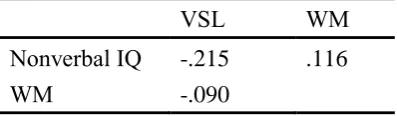
Table 3………63 Simple Bivariate Pearson Correlations between Predictor Variables in Chinese Sample Table 4………67 Main effect of RC structure by region of interest
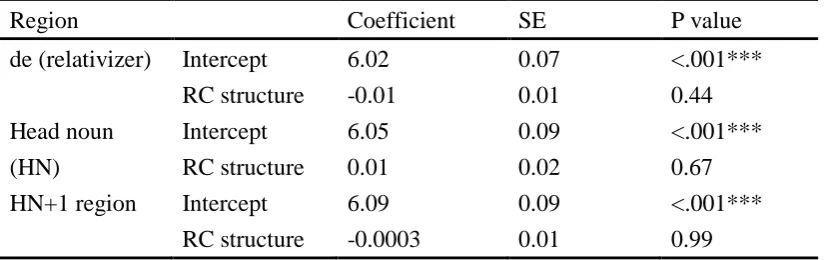
Table 5………68 Main effects of VSL, non-verbal IQ, RC structure and their interaction by region of interest.
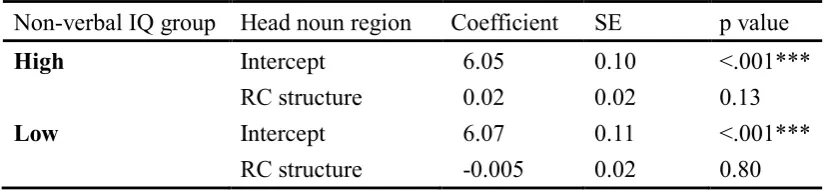
Table 6………71 Main effect of RC structure by non-verbal IQ group
Table 7 ………...73 The main effect of VSL group, non-verbal IQ group and Chinese RC structure and their interaction by region of interest.
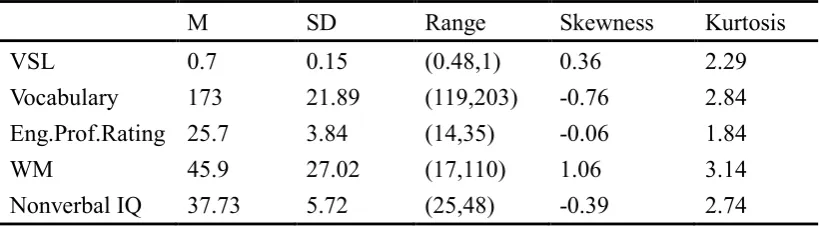
Table 8………75 Descriptive Statistics for Predictor Variables in English Sample
Table 9………75 Simple Bivariate Pearson Correlations between Predictor Variables in English Sample Table 10………..77 Main effects of VSL, Vocabulary, English Proficiency rating, non-verbal IQ and no. of characters by region of interest in English sample
Table 11………..80
Study 2
Table 12………..91 Descriptive Statistics for Predictor Variables in Chinese syntactic processing
Table 13………..92 Simple bivariate Pearson Correlation Between Predictor Variables in Chinese syntactic processing
Table 14………...94 Main effect of RC structure by region of interest
Table 15………...97 Main effects of VSL, ASL, RC structure and their interaction by region of interest.
List of Figures
Study 1Figure 1. ………...57 The 16 shapes used in the visual SL task
Figure 2. .………...65 Mean raw reading times of each region of interest in Chinese RCs
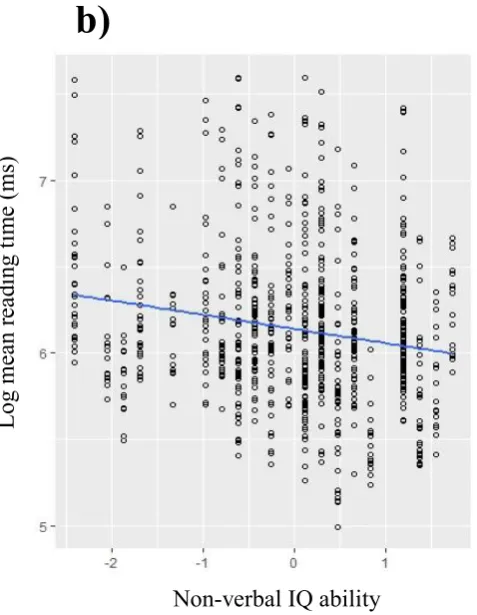
Figure 3.………...69 Correlation between the non-verbal IQ ability and RC reading times for:
a) SRCs and b) ORCs, over the whole sample.
Study 2
Figure 4………...93 Mean raw reading times of each region of interest in Chinese RCs.
Chapter 1
Overview
Language comprehension is generally regarded as a rapid, on-line process that
requires readers and listeners to construct an incremental representation of
components of language and rapidly map it to meaning. While early theories of
parsing did not assume the presence of individual differences, recent work suggests a
range of sources of individual variability. One recent skill that has been linked to
individual differences in parsing is statistical learning (SL): the human ability to
identify the co-occurring regularities from the environment (Kaufman, DeYoung,
Gray, Jiménez, Brown, & Mackintosh, 2010; Perruchet & Pacton, 2006). A growing
number of studies have investigated the links between statistical learning (SL) and
language. For instance, SL has been shown to be important for language acquisition
in several domains, including from phonological learning (e.g., Speciale, Ellis &
Bywater, 2004), word segmentation (e.g., Saffran, Newport, & Aslin, 1996; Evans,
Saffran, & Robe-Torres, 2009), syntactic acquisition (Kidd, 2012; Kidd & Arciuli,
2016), and reading proficiency (e.g. Arciuli & Simpson, 2012).
While most early studies with adults concentrated on the role of SL in linguistic
performance at the group level, a growing body of research indicates that SL is also
framework, studies that have assessed individual differences in SL via artificial
grammar learning (AGL) tasks have reported associations with adult L1 language
processing (Misyak, Christiansen, & Tomblin, 2010; Misyak & Christiansen, 2012).
Although these data are no doubt important, most of the subjects in these studies
were monolingual participants and the linguistic tasks were conducted in languages
that use alphabetic scripts. Accordingly, relatively few empirical studies have
investigated the role of SL in second language (L2) acquisition or processing. Frost,
Siegelman, Narkiss, and Afek (2013) and Kaufman, DeYoung, Gray, Jiménez,
Brown, and Mackintosh (2010) are examples of such studies that have linked SL to
L2 literacy proficiency (specifically, literacy and general abilities measured via
secondary school exams). Other studies have shown that SL predicts L2 morphology
acquisition (Brooks & Kempe, 2013; Brooks, Kwoka, & Kempe, 2017; Granena,
2013; McDonough & Trofimovich, 2016). Still, no study has demonstrated a link
between SL and on-line syntactic processing in L2 populations.
To fill these research gaps, this thesis aims to investigate whether there is a
direct link between SL and language processing in the first (L1) and second (L2)
language of Chinese-English bilinguals and seeks to examine whether second
language proficiency mediates the relationship between visual SL and L2 language
Chapter 2 is the Literature review. In the first section, I survey studies that have
investigated the online processing of syntax, with a focus on one particular structure
- relative clauses. These structures are interesting for several reasons. Firstly, they are
the most commonly used structures in past studies of individual differences, and
secondly, they are structurally very different in the two languages investigated in this
thesis – Mandarin and English. The first section of Chapter 2 largely focuses on the
key findings of studies of Mandarin relative clause processing. In the second section
of Chapter 2, I address the individual difference in relative clauses processing, and
review several theoretical accounts that predict different sources of individual
differences. The following section introduces SL capacity as a potential variable that
could explain individual differences in sentence processing among L1 and L2
learners. I define SL, and review some research findings on the link between SL
capacity and L1 adult language processing. The subsequent section reviews
empirical evidence for an association between SL capacity and L2 morphology
learning, along with the role of L2 language proficiency in L2 sentence processing.
In Chapter 3, I present the results of Study 1, which investigated the role of SL
in the L1 (Mandarin) and L2 (English) processing of RCs. Chapter 4 presents the
Study 1. Finally, Chapter 5, the General Discussion, draws the results of Study 1 and
Chapter 2
Literature review
One major goal of psycholinguistics is to discover the cognitive mechanisms
that support human language. One method for testing the role of potential cognitive
mechanisms is the study of individual differences (e.g., Kidd & Arciuli, 2016;
Misyak, Christiansen, & Tomblin, 2010; Misyak & Christiansen, 2012), and this is
the approach taken in this thesis. This chapter reviews studies of on-line syntactic
processing, with a main focus on individual differences. A common feature of the
past research, and one that I also followed in my own studies, is a focus on one
structural type that elicits large individual differences in speakers – subject and
object RCs. I next introduce RCs and review the different theoretical explanation of
their processing difficulty.
Relative clauses
RCs are subordinate clauses that modify a noun phrase (NP). Although several
different types of RCs exist, the field of sentence processing has almost exclusively
concentrated on two types of restrictive RCs, which I will refer to here as subject and
object RCs. Consider (1a) and (1b) below, (taken from Just & Carpenter, 1992).
(1a) The reporter [that_ attacked the senator] admitted the error.
Sentence (1a) is a subject RC; the head noun the reporter serves as the subject
of the RC, as indicated by the underscore gap. Sentence (1b) is an object RC, with
the head noun serving as the grammatical object position of the embedded verb
attacked.
An extensive literature has reported that object RCs (ORC) are typically more
difficult to process than subject RCs (SRC). This result is most clearly observed in
European languages such as English (e.g., Gibson, Desmet, Grodner, Watson, & Ko,
2005; Gordon, Hendrick, Johnson, & Lee, 2006; King & Just, 1991; Traxler, Morris,
& Seely, 2002), French (e.g., Cohen & Mehler, 1996), German (Mecklinger,
Schriefers, Steinhauer, & Friederici, 1995), and Dutch (e.g., Mak, Vonk, &
Schriefers, 2002), but has also been observed in more typologically diverse
languages such as Korean (e.g., Kwon, Gordon, Lee, Kluender, & Polinsky, 2010)
and Japanese (e.g., Miyamoto & Nakamura, 2003; Ueno & Garnsey, 2008). This has
come to be known as the subject-object asymmetry.
There are several proposed explanations of the subject-object asymmetry. This
thesis focuses on reviewing the following accounts: (i) the word order / experience
based account (Bever, 1970; MacDonald & Christiansen, 2002), (ii) the
distance-based dependency locality theory (DLT) (Gibson, 1998, 2000) and (iii) the universal
Word order / experience account
The word order account explains the preference for subject RCs with reference
to the general preference to build structure according to the frequent, or canonical
word order of a language (Bever, 1970; MacDonald & Christiansen, 2002). In
English the canonical word order is subject-verb-object (SVO). SRCs follow this
pattern, whereas ORCs do not, instead of having the marked object-subject-verb
(OSV) word order. The suggestion is therefore that the difficulty associated with
ORCs is due to the relative infrequency of the OSV order in the language (see Wells
et al., 2009). In this sense the account is experience-based, since it argues that an
individual’s experience with a given word order influences syntactic processing.
Distance-based dependency locality theory (DLT)
An alternative account is Gibson’s (1998, 2000) the distance-based dependency
locality theory (DLT). The underlying assumption of DLT is that there are working
memory limits on sentence processing, which can be quantified via two concepts:
storage and integration costs. Specifically, storage cost refers to resource cost
associated with storing partially-built structure, whereas integration cost refers to the
integration of the current word into the structure. These concepts are best explained
by way of example. In English, the DLT predicts greater difficulty for ORCs because
higher storage and integration cost when compared to SRCs (compare 1a to 1b).
Specifically, ORCs result in greater storage cost because two unintegrated NP
arguments must be held in memory before the identification of the gap. For example,
in sentence (1b) both the reporter and the senator must be held in memory, whereas
for subject RCs such as (1a) only the head noun is activated before the identification
of the gap (i.e., the reporter). ORCs also result in greater integration cost at the RC
verb. Here the two NPs must be integrated into the structure of the sentence at this
crucial point. In comparison for a SRC, there is no cost because the head noun and
the RC object occur either side of the verb, in their canonical order, and can be
integrated into the parse as soon as they are encountered.
Universal parsing account
Under the universal parsing account, Lin and Bever (2006) propose an
incremental minimalist parser which builds syntactic structure according to
hypothesised universal syntactic principles. On this account, the parser is argued to
build a hierarchical structure of a sentence. For structures containing RCs, the parser
begins searching for a gap to fill once it encounters the head noun, and will predict
gaps at potentially legitimate sites and attempt to fill them as quickly as possible (the
‘Active Filler Strategy’, Frazier, 1987). Since the underlying representational nature
higher hierarchical syntactic structure gets filled earlier than one situated at a lower
syntactic position. In this sense, a SRC preference is predicted universally (i.e.,
across all languages of the world containing RCs), as the gap in a SRC is located
higher than the gap in an ORC. Therefore, whereas accounts like the DLT (Gibson,
2000) explain syntactic complexity effects as due to the linear distance between a
head noun and the hypothesized gap, the universal parsing account explains
complexity via hierarchical distance. Therefore, according to this universal parsing
account, the difficulty in processing an object RC is based on the longer structural
distance between the relativizer and the object gap than that between the relativizer
and the subject gap in a SRC. The gap and relativizer locations for the SRC and
ORC in the hierarchical syntactic structure are illustrated in (2a) and (2b)
(2a) syntactic tree for English SRC
(2b) syntactic tree for English ORC
Note: S = sentence (the root node); NP = noun phrase; VP = verb phrase; CP = complementizer phrase; IP = Inflection phrase; C = complementizer; V= verb
S
NP
VP
The navigator
CP
V
NP
found the map
C IP
that (relativizer)
NP
VP
GAP_subject
V
NP
revered the captain
S
NP
VP
The navigator
CP
V
NP
found the map
C IP
that (relativizer)
NP
VP
the captain
V
NP
Mandarin RCs: An interesting test case.
Although the SRC preference has been widely regarded to be universal across
both head-initial (e.g., for English, see Gibson, et al., 2005; for Dutch, see Mak,
Vonk, & Schriefers, 2002; and for French, see Cohen & Mehler, 1996), and
head-final languages (e.g., for Korean, see Kwon, et al., 2010; for Japanese, see Miyamoto
& Nakamura, 2003), results from studies of Mandarin RC processing have produced
a range of puzzling findings. Interestingly, different theories make differing
predictions regarding RC difficulty in Mandarin. In contrast to those theories that
predict a universal subject preference (e.g., Lin & Bever, 2006), both the word order
account (MacDonald & Christiansen, 2002) and the DLT (Gibson, 1998,2000)
predict an object advantage. This is because Mandarin has the typologically rare
combination of SVO word order and head-final RCs (Dryer, 2005). As such, whereas
SRCs like (3a) have a non-canonical VOS word order and a large distance between
the head noun (athlete) and the gap, object RCs like (3b) follow the canonical SVO
word order and have a shorter distance between the head noun (athlete) and the gap.
(3a) Mandarin SRC
崇拜 艺术家 的 运动员 享用了 一顿 美味的 晚餐。
[Chongbai yishujia de ] yundongyuan xiangyongle yidun meiweide wancan
(3b) Mandarin ORC
艺术家 崇拜 的 运动员 享用了 一顿 美味的 晚餐。
[yishujia chongbai de] yundongyuan xiangyoungle yidun meiweide wancan
[The artist adored __i that ] the athletei enjoyed a delicious dinner. ‘The athlete that the artist adored enjoyed a delicious dinner.’
Therefore, Mandarin, like other Chinese languages such as Cantonese (see also
Chan, Yang, Chang, & Kidd, 2017), potentially serves as a key language in debates
concerning RC processing and its universality. Accordingly, there have been
numerous recent studies focusing on the language, which have notably yielded
inconsistent results. In the next section I summarise these studies.
Mandarin RCs processing
In line with those studies that support the universal SRC preference, Lin and
Bever (2006) investigated the processing of two types of RCs in Mandarin (i) SRCs
vs. ORCs, and (ii) relative clauses modifying the main clause subject vs. the main
clause object. Examples of the two types of RCs are shown in (4)
(4) a. Subject-modifying SRC
勾引 院長 的 少女 撞到 了 議員。
gouyin yuanzhang de shaonyu zhuangdao le yiyuan V1 N1 DE N2 V2 N3
‘The young lady that seduced the dean bumped into the congressman.’
b. Subject-modifying ORC
院長 勾引 的 少女 撞到 了議員。
yuanzhang gouyin de shaonyu zhuangdao le yiyuan N1 V1 DE N2 V2 N3
[dean seduce__ i DE ]young lady i bump into ASP congressman
‘The young lady that the dean seduced bumped into the congressman.’
c. Object-modifying SRC
議員 撞到 了 勾引 院長 的 少女。
yiyuan zhuangdao le gouyin yuanzhang de shaonyu N1 V1 V2 N2 DE N3
congressman bump into ASP[__i seduce dean DE] young lady i
‘The congressman bumped into the young lady that seduced the dean.’
d. Object-modifying ORC
議員 撞到 了 院長 勾引 的 少女。
yiyuan zhuangdao le yuanzhang gouyin de shaonyu N1 V1 N2 V2 DE N3
congressman bump into ASP [ dean seduce __ i DE] young lady i
‘The congressman bumped into the young lady that the dean seduced.’
The results showed that the reading times on both relativizer (de) and the head
regardless the RC modification. This result is consistent with the universal parsing
account.
Vasishth, Chen, Li, and Guo (2013) have also found evidence in favor of a SRC
advantage in Mandarin. In a meta-analysis of 13 prior studies that have used the
self-paced reading method, they found evidence for an overall subject advantage. They
also reported two of their own empirical studies that were consistent with the
meta-analytic evidence. Also using the self-paced reading methodology, they found a
significant subject advantage at the head noun in their Experiment 1, and a
significant subject advantage in the word region following the head noun in their
Experiment 2. In contrast to Lin and Bever (2006), however, they did not interpret
their data to be consistent with the universal parsing account. Instead, the authors
attributed the subject-relative advantage in Mandarin RC processing to structural
frequency. Specifically, they argued that, while Mandarin has canonical SVO word
order, which according to the word order account should favor ORCS, SRCs are
actually more frequent in Mandarin than ORCs, therefore potentially explaining the
effect. They reported corpus data consistent with this interpretation.
While those studies reviewed above found a significant SRC advantage, several
studies have found significant oRC advantages across a range of methodologies,
Tu, Cha, & Wu, 2016), a maze task (i.e., a task that similar to self-paced reading, in
which the participants are required to make a choice between two alternatives when
reading every word of the sentence ) (e.g. Qiao, Shen & Forster, 2012), and
self-paced reading (e.g. Chen, Ning, Bi, & Dunlap, 2008; Gibson & Wu, 2013; He, Xu,
& Ji, 2017). Thus, these data support the word order and DLT accounts. For instance,
Hsiao and Gibson (2003) found that, in singly embedded RCs, participants read the
first two words in ORCs faster than the first two words in SRCs, but the reading time
difference at the relativizer (de) and the head noun regions did not reach
significance. In a subsequent study, Gibson and Wu (2012) investigated RC
processing in discourse context. That is, participants read passages of text that
supported either an SRC or an ORC interpretation. Studies in English have found
that a supporting discourse context can remove the subject advantage (Grodner,
Gibson, & Watson, 2005). Regardless, their Mandarin results still suggested an
object advantage, with participants processing ORCs faster than SRCs at the head
noun. In line with the DLT, the authors argued that Chinese RCs processing is
constrained by working memory limitations, which causes the parser to favor
building the ORC structure.
In a more recent series of eye-tracking studies, Sung et al. (2015) and Sung et
reading, including gaze duration, regression path duration, and regression rate. The
authors concluded that the ORC preference in processing Chinese RCs is attributable
to the unique typological properties of Mandarin. That is, because Mandarin has both
SVO word order and head-final RCs, ORCs follow canonical SVO word order and
have a shorter distance between the gap and the head noun, making them easier to
process.
A more recent self-paced reading study reported similar results. He et al. (2017)
used self-paced reading task to investigate SRCs and ORCs processing in young
(aged 19 –25 years) and older adults (aged 60-65 years). They showed that ORCs
were easier to process than SRCs in both young and older adults. Specifically, the
authors reported that the older adults had difficulty processing SRCs compared to
ORCs from the head noun onwards. He et al. interpreted their findings to suggest
that a range of factors contribute to the difficulty of Chinese RCs processing, such as
age, language specificity, and linguistic experience.
Finally, individual differences research suggests that, as in more commonly
studied languages like English, the processing of Chinese RCs is also subject to
individual differences. Chen et al. (2008) examined the role of working memory
capacity in Mandarin-speaking participants’ processing of centre-embedded RCs.
working memory (WM). The participants were then divided into high and low WM
capacity groups. They found that the first two words in ORCs were processed
significantly faster than in SRCs among low working memory capacity group.
However, no significant difference was found in high working capacity group,
presumably because they possessed the WM resources to process both structural
variants (especially SRCs) without significant cost.
In summary, although there have been several studies investigating the
processing of SRCs and ORCs in Mandarin, the results have been mixed One feature
of the data that any theory must explain is the pervasive presence of individual
differences in syntactic processing, and particularly in RCs. There has been a long
history of individual differences research that have focused on RCs (e.g. Just &
Carpenter, 1992) in addition to other syntactic phenomena (e.g., Farmer et al., 2017;
Pearlmutter & MacDonald, 1995). The potential sources of these varied abilities
have been revealed by examining the parsing difficulty during on-line sentence
comprehension, which have then been linked to independently measured cognitive
skills. I discuss this research next.
Individual differences in on-line English RCs processing
Although traditional linguistic approaches to language such as the Universal
individual differences in syntactic processing, more psycholinguistically-oriented
theories such as the DLT (Gibson, 2000) and Experience-based account (MacDonald
& Christensen, 2002) postulate different mechanisms that can be linked to individual
differences research.
The DLT (Gibson, 2000) assumes that WM capacity constrains structure
building. Since WM capacity varies in the population, variation in reading times
should be directly related to variation in WM. Accordingly, WM-based accounts
predict that complex sentence structures impose cognitive burden on parsing because
they consume significant WM resources, which results in longer reading times (e.g.
Gibson, 1998; Just & Carpenter, 1992; King & Just, 1991). In contrast,
experience-based theories predict that the ease of parsing a particular syntactic structure depends
on its frequency within the language and the person’s experience with that structure
(e.g., MacDonald & Christiansen, 2002; Wells, Christiansen, Race, Acheson, &
MacDonald, 2009; Gennari, Mirkovic, & MacDonald, 2012; see also Kidd, Brandt,
Lieven, & Tomasello, 2007). Structures that are less frequent will hinder
comprehension, which in turn slows processing speed in comparison to more
frequent structures.
Individual differences in working memory capacity have been empirically
46 English speaking participants’ verbal working memory capacity using the
Daneman and Carpenters (1980) reading span task. Participants were divided into
two groups according to their WM capacity (high versus low span, via a median
split). Participants also completed a self-paced reading task, where the focus was on
the processing of English SRCs and ORCs. The results showed that participants with
low working memory capacity processed ORCs more slowly than participants with
high working memory capacity, which was indexed by the increased reading time on
the main verb (a critical region that indicated the syntactic complexity). While
shorter reading times were reported on the main verb for SRC than for ORC among
high-span participants and low-span participants, no significant correlation was
found between reading span scores and SRC. Thus, the authors argued that SRC
were easier to process than ORC as the word order of ORC was more demanding on
the working memory resources. The authors concluded that variability in WM
capacity constrained the on-line processing of syntactic information, as measured via
reading times and comprehension-question accuracies.
Just and Carpenter (1992) used a computational model of reading, CC
READER (Just & Carpenter, 1992, p.140), to simulate the reading time patterns
reported by King and Just (1991) and suggested that, in comparison to the high WM
comprehend the more difficult ORCs. Just and Carpenter further investigated several
studies comparing participants with high and low working memory spans, which
demonstrated that complex syntactic processing is mediated by a single WM
capacity, which interacts with the comprehension cues at syntactic, lexical,
contextual, semantic, and pragmatic levels as a whole. Under this capacity constraint
account, individual differences in verbal working memory capacity are implicated in
the online comprehension of syntactically complex sentences, and are specifically
constrained by a domain-general WM capacity.
Working from the assumption that sentence difficulty is directly related to an
individual’s experience with language rather than capacity limits per se, MacDonald
and Christiansen (2002) simulated individual differences in RC processing using a
connectionist modelling. In the simulations, the models used simple recurrent
networks (SRNs, Elman, 1991) to acquire and parse grammar. Notably, the models
are sensitive to frequency: the more frequent the structure, the more quickly it will
be acquired the more easily it will be processed. The authors trained 10 connectionist
networks to predict the upcoming word in syntactically simple and complex
sentences. The sentences in the training corpus were generated from a probabilistic
context-free grammar, including subject noun-verb agreement, present and past tense
embedded subject and object relative clauses. Specifically, the occurrence
probability of SRCs and ORCs was evenly distributed; that is, the two constructions
occurred with equal frequency (2.5% the training corpus).
To examine the role of experience with the frequency distribution in the input,
the networks’ learning performance was assessed in terms of grammatical prediction
error scores (GPE, Christiansen, 2001; Christiansen & Chater, 1999) across training
epochs. The results showed that, after the first training cycle, the networks
encountered processing difficulty on the critical main verb region in ORCs, as
indicated by higher error scores, but not in SRCs. However, the difference in
processing difficulty between SRCs and ORCs diminished after the networks
receiving the second and the third training cycles. As such, the training effect for
ORCs, which have non-canonical and therefore irregular word order, was larger than
that for the regular canonical SRCs. As the training corpus contained relatively
larger number of simple transitive sentences, which follow English canonical SVO
word order, SRC processing was facilitated by the exposure to other sentences
following the same word order pattern. In contrast, there are no other sentences in
English that follow the irregular OSV pattern (except for object clefts, e.g., It was the
apple that the boy ate, which did not occur in the training corpus).Hence, the
MacDonald and Christiansen call this effect the frequency × regularity interaction.
The idea is that, because in English SRCs have the regular SVO word order, their
acquisition and processing should not be affected by their frequency. However,
because ORCs do not have a common word order, their acquisition and processing is
wholly dependent on the frequency with which they occur in the language. Because
ORCs are not frequent, this therefore explains their difficulty relative to SRCs.
The frequency by regularity interaction hypothesis therefore makes the
prediction that increases in exposure should improve an individual’s processing of
ORCs but not SRCs. To test this hypothesis, Wells, Christiansen, Race, Acheson, and
MacDonald (2009) conducted a training study. Participants completed a reading span
task (Daneman & Carpenter, 1980) before they were assigned to either an
experimental or a control group. In the experimental group, participants were
exposed to SRCs and ORCs over several sessions, thereby increasing their
experience with the structures. In contrast, the control group was exposed to a
different set of structures, such as sentential complements (e.g., The organizers
estimated that more than 1000000 people attended the peace rally last year) and
conjoined clauses (e.g., The amateur golfer had beaten many of the pros and even
won the celebrated championship). Participants’ online processing proficiency of
the pre-test, two groups of participants showed longer reading times for ORCs than
SRC at the main verb (a critical region that indicated the syntactic complexity). In
the post-test, reading times for both RCs had reduced across groups, while the
decrease was larger for ORCs than SRCs in the experience group when compared to
that with the control group. Thus, the findings were consistent with the predictions of the frequency × regularity interaction. That is, exposure to RC structures increases
processing efficiency, but does so more for the non-canonical object RCs. The
authors concluded that linguistic exposure plays a significant role in syntactic
processing, thus supporting the experience-based account. Moreover, they argue
against a WM account, since the two groups were equated on WM capacity.
Wells et al. suggested that the additional RC experience may have altered
participants’ knowledge about distributional frequency of head noun type and RC
type co-occurrences. That is, the greater number of object RCs in particular may
have changed the experimental group’s expectation at ambiguous points in the
structure, namely, the relative pronoun (the student that ...), such that an ORC
analysis was more likely than prior to training. Taken together, MacDonald and
Christiansen (2002) and Wells et al. (2009) suggest language experience play
The findings of Wells et al. also suggest that differences in experience can lead to
different patterns of results.
Overall, the experience-based approach argues that individual differences in the
difficulty of parsing a particular syntactic structure depends on distributional
properties within the language and the person’s experience with that structure. Yet,
the biological mechanism that individuals adopt to detect the sensitivity to statistical
structure and the extraction of these distributional regularities remains debatable.
Recently, a growing number of studies have suggested individual differences in
statistical learning ability is one possible mechanism (e.g., Brooks & Kempe, 2013;
Brooks, Kwoka, & Kempe, 2017; Granena, 2013; Kidd, 2012; Kidd & Arciuli, 2016;
McDonough & Trofimovich, 2016; Misyak & Christiansen, 2012; Misyak,
Christiansen, & Tomblin, 2010a, 2010b). I consider this possibility in the next
section.
What is SL?
This section begins with a general definition of statistical learning (SL),
focusing on how individual differences in SL are related to language learning. I then
briefly review some empirical findings on the link between SL capacity and L1 adult
Statistical learning has been broadly defined as the sensitivity to detect the
co-occurring regularities from the environment (Kaufman, DeYoung, Gray, Jiménez,
Brown, & Mackintosh, 2010; Perruchet & Pacton, 2006). As such, SL has been
proposed to be implicated in numerous human abilities, including language learning,
perception, categorization, segmentation of continuous input, prediction and
generalization via different sensory modalities (Frost, Armstrong, Siegelman, &
Christiansen, 2015). Over the past two decades, the role of SL in language
acquisition has received a lot of attention. In their seminal study, Saffran et al. (1996)
showed that 8-month-old infants were capable of segmenting continuous speech
based on co-occurrence probabilities between adjacent syllables. The task began
with a 2-minute familiarization phase, in which twenty-four 8- month-old infants
were exposed to a continuous auditory input sequence that consisted of four
three-syllable words (bidakupadotigolabubidaku). The input word strings followed a
statistical distribution in which words had high transitional probabilities (TP) within
syllables (TP = 1.0, e.g. bida) but low transitional probabilities at word boundaries
(TP = 0.33, e.g. kupa). Following familiarization, the infants were required to
discriminate the target words from the extra foil nonwords (TP = 0), which were
from the same pool of syllables as the input words. The result demonstrated that
compared to target words, suggesting that they discriminated between the trained and
untrained words.
Similarly, Saffran, Newport and Aslin (1996) constructed an artificial language
of six three-syllable words (babupu, bupada, dutaba, patubi, pidabu, and tutibu) to
investigate adults’ segmentation of speech and detection of word boundaries. The six
words were then used to construct a continuous auditory input sequence.
Specifically, the input word strings followed a statistical distribution, where words
had varied transitional probabilities (TP) within syllables (TP range from 0.31 to
1.0), and low transitional probabilities at word boundaries (TP between 0.1 and 0.2).
After training for 21 minutes, participants were required to discriminate the target
word from the foil, which was either a nonword or a part-word foil in a
two-alternative forced choice task. Participants’ performance on identifying the target
word was significantly above chance. The authors concluded that adults are also able
to detect word units by using transitional probability cues identified from the input.
That is, an SL mechanism that might be important for acquisition is operational in
adults.
Taken together, the above studies suggest that infants and adults are sensitive to
and can identify statistical regularities present in auditory sequences. Based on these
Werker, & Gerken, 2002), vocabulary learning (e.g., Hay, Pelucchi, Graf Estes, &
Saffran, 2011), syntax acquisition (e.g., Kidd, 2012; Kidd & Arciuli, 2016) and even
specifically to the processing of RC structures (e.g., Misyak et al., 2010).
Importantly, recent has shown that, just like WM, SL ability systematically varies in
the population and is therefore subject to individual differences.
Statistical Learning and Adult Language Processing
Several studies have identified correlations between independent tests of SL and
first language processing in adult populations. For instance, Conway,
Bauernschmidt, Huang, and Pisoni (2010) tested SL in two modalities (visual and
auditory), and showed that performance on both tasks was related to language. In the
visual sequence learning task, participants were required to view a sequence of
colored squares (red, blue, yellow, green), which were displayed one at a time in one
of four different positions on a computer screen (upper left, upper right, lower left,
lower right) and which followed a probabilistic artificial grammar. The participants
were then required to reproduce sequences that either followed or did not follow the
artificial grammar. Performance on this task was related to an auditory language
processing task in which participants were required to identify words in predictable
or unpredictable contexts (e.g. I’ve got a cold and a sore throat versus David knows
In a second study, Conway et al. (2010) investigated whether auditory SL was
related to performance on a task measuring participants’ ability to predict upcoming
words in distorted speech while watching a person speaking. In addition, the
participants’ language ability was assessed by two subtests of the Test of Adolescent
and Adult Language (TOAL-3; Hammill, Brown, Larsen, & Wiederholt, 1994);
namely, the Reading/Vocabulary test and Reading/Grammar test. IQ was also
measured. The results once again demonstrated a significant relationship between SL
and language processing, a relationship which held after controlling for language
proficiency and IQ. In a final study, Conway et al. again showed a strong
relationship between visual statistical learning and language processing, this time
controlling for working memory, inhibition (a measure of Executive Function), and
IQ. Overall, this research provides convincing evidence that SL is implicated in
online language processing. However, the results are limited in that the language
processing task only measured participants’ ability to identify words in context.
More recent studies have investigated the role of SL in the processing of a central
feature of language – grammar.
Misyak, Christiansen and Tomblin (2010) investigated whether individual
differences in SL predicted online processing of SRC and ORC structures. They
tood) that followed an artificial grammar (AG) containing both adjacent and
non-adjacent dependencies between items. For instance, for the sequence dak-pel-vot
there is a local relationship between adjacent non-words (an adjacent dependency),
but a non-adjacent and long-distance relationship between dak and vot (a
non-adjacent dependency). The results showed that individual differences in nonadjacent
SL correlated with the processing of RC sentences that contained non-adjacent
dependencies, suggesting that individual differences in SL predict variation in
grammatical processing.
In an additional study, Misyak and Christiansen (2012) investigated whether
adjacent SL and nonadjacent SL tasks in AG was related to processing of adjacent
and non-adjacent dependencies in natural language. Participants were tested on an
independent measure of language comprehension, where the sentences contained
adjacent and non-adjacent dependencies. Three syntactic structures were examined,
namely, subject (6) and object (7) relative clauses, animate (8) and inanimate (9)
reduced relative clauses, and sentences containing lexical ambiguities (10 - 11).
(6) The reporter that attacked the senator admitted the error.
(7) The reporter that the senator attacked admitted the error.
(8) The defendant examined by the lawyer turned out to be unreliable.
(10) Chris and Ben are glad that the bird perches [seem easy to install] /
[comfortably in the cage].
(11) The teacher told the principal that the student needs [were not being met] /
[to be more focused].
In addition, they controlled for a set of six linguistic, cognitive and personality
variables. The results indicated that SL, verbal working memory, and comprehension
of all three sentence types were correlated. After controlling for the effect of all the
above six predictors, only adjacent SL predicted the comprehension accuracy of
sentences containing lexical ambiguities, whereas only nonadjacent SL predicted the
comprehension accuracy of subject-object RCs. The authors concluded that
individual differences in SL of adjacent and nonadjacent tasks in the artificial
grammars predicted parsing of local and long-distance relationships in sentences. It
is important to note, however, that while significant effects were observed, their
sample was relatively small (n = 30), and as such their regression analyses may have
been unstable given the large number of independent variables they included in their
models.
Clear relationships between SL and grammatical comprehension have also been
found in developmental populations. Kidd and Arciuli (2016) developed a battery of
using a visual SL task developed by Arciuli and Simpson (2012). In this task,
children were exposed to a series of 12 “alien” cartoon characters displayed one at a
time on the computer screen. Unbeknown to the children, the visual presentation of
aliens followed a probabilistic pattern. Specifically, the aliens appeared in four
triplets in which three aliens always occurred together. Therefore, there were high
transitional probabilities (TP) between aliens within triplets and low TP between
triplets. Following familiarization, a surprise test phase began. In the test, children
were required to identify triplets from foils in a two-alternative forced choice task.
The children’s grammatical comprehension was tested using a picture pointing task.
Four syntactic structure were measured, including simple active (e.g. which mouse is
kissing the chicken?), passives (e.g. which mouse is being kissed by the chicken?),
subject RCs (e.g. where is the mouse that is kissing the chicken?), and object RCs
(e.g. where is the mouse that the chicken is kissing?). The children were also tested
on three covariate measures. General verbal and non-verbal ability was measured via
the Peabody Picture Vocabulary Test IV (PPVT-4, Dunn& Dunn, 2007) and Raven’s
Colored Progressive Matrices (RCPM, Raven, Raven & Court, 1998) respectively.
WM was assessed by the Listening Span task (Gathercole & Pickering, 2001). The
above the influence of the three covariate measures. The authors concluded that a
domain-general capacity for SL is implicated in the acquisition of syntactic structure.
A recent event-related potential (ERP) study conducted by Daltrozzo, Emerson,
Deocampo, Singh, Freggens, Lee and Conway (2017) has also reported correlations
between visual SL of nonlinguistic stimuli and grammatical ability in L1 English
speaking adults. They investigated the association between visual SL and language
performance by employing three standardized measures. Seventeen native English
adults’ SL capacity was measured by visual SL task developed by Jost, Conway,
Purdy, Walk, and Hendricks (2015). In the task, participants viewed a sequence of
six colored circles on a computer screen one at a time. Unbeknown to the
participants, a set of statistical regularities were created among the 6 colored circles.
For each participant, a standard stimulus, a high predictability (HP) predictor, a low
predictability (LP) predictor, and the target stimulus were randomly assigned to one
of six coloured circles. In each trial, the standard stimulus repeatedly occurred and
appeared prior to either HP or LP predictors (i.e. each with a 50% probability of
appearance). The target and the standard followed the HP predictor on 90% and 10%
of the trials respectively, whereas the target and the standard followed the LP
predictor formed 20% and 80% of the trials respectively. After the exposure of
continuous stream of colored circles by hitting the button on the computer. The
adults’ language ability was assessed on three standardized measures: final words
prediction and grammatical ability was tested using the Sentence Completion subtest
and the Grammaticality Judgement subtest of the Comprehensive Assessment of
Spoken Language (CASL, Carrow-Woolfolk, 1999), respectively. Receptive
vocabulary was measured via PPTV-4 (Dunn & Dunn, 2007). The results showed
that visual SL predicted the grammatical ability and receptive vocabulary, but there
was no association with sentence completion. Noting that the role of attention in SL
tasks is controversial, Daltrozzo et al. further tested adults’ general selective
attention as a covariate measure. The authors reported that the association between
SL and grammatical performance held irrespective of attention, whereas the
correlation of SL and receptive vocabulary did not. These findings provide additional
evidence for the link between SL and grammar ability.
Overall, the above studies on L1 populations demonstrate that individual
differences in SL are linked to language processing in children and adults. To the
extent that this link is attested across modalities (e.g., visual SL predicting spoken
language), the SL mechanism supporting language processing may be
domain-general. Since second language (L2) learning may also rely on the acquisition of
environment, which reflect a general capacity of SL (Onnis, 2012; Frost, 2012; Frost,
Siegelman, Narkiss, & Afek, 2015), it is worthwhile examining whether SL has a
role to play in L2 processing. In the next section I discuss past research that has
investigated the link between SL and L2 acquisition
Statistical Learning and Second Language Acquisition
Relatively few studies have investigated the role of SL in second language (L2)
acquisition or processing. In one study, Frost, Siegelman, Narkiss, and Afek (2013)
investigated the role of SL in predicting L2 reading proficiency of Hebrew by native
speakers of English. They tested participants’ visual SL via their ability to detect
adjacent dependencies in the continuous stream of abstract shapes (Turk-Browne,
Jungé, & Scholl, 2005; see also Glicksohn & Cohen, 2011; Kim, Seitz, Feenstra, &
Shams, 2009). In this task, participants saw the stream of 24 abstract shapes
presented one at a time on a computer screen. Similar to the task used by Kidd and
Arciuli (2016), the shapes followed a probabilistic pattern, but contained 8 triplets.
Following familiarization, participants were required to discriminate the triplets from
the false triplets in a two-alternative forced choice task. Three tasks were used to
measure participants’ Hebrew reading proficiency, one measuring non-word
decoding, another measuring real word reading, and another measuring
and general cognitive abilities were also measured. The results revealed a significant
correlation between SL and Hebrew (L2) reading proficiency in all three reading
tasks, irrespective of general cognitive factors. The authors concluded that SL
predicted second-language literacy acquisition.
Kaufman, DeYoung, Gray, Jiménez, Brown, and Mackintosh (2010) examined
the relationship between implicit learning in 16 to 18-year-old English students and
L2 exam performance. They used a Serial Reaction Time (SRT) task to test
participants’ probabilistic sequence learning. In the task, participants viewed an
abstract shape (an asterisk) occur in one of four positions on a computer screen, and
the participants were required to press the button on the keyboard that corresponded
to the position in which the shape appeared as quickly as possible. Unbeknown to the
participants, the order of the digit sequences was based on a specific probabilistic
distribution (Schvaneveldt & Gomez, 1998). The participants’ SL was assessed via a
reduction in reaction time across trials in patterned blocks versus random blocks.
The participants’ L2 performance was assessed using the L2 (i.e. French / German)
General Certificate of Secondary Education (GCSE) exam scores (UK Year 10
equivalent). The results revealed a significant correlation between SL and L2 GCSE
exam score. While suggestive, the result is not very specific, as it is unclear to which
Similarly, Granena (2013) investigated the role of SL ability in early and late
Chinese-Spanish bilinguals’ L2 morphosyntactic acquisition. SL was measured via
two tasks. The first investigated participants’ ability to extract phonotactic statistical
information (i.e., internal statistical structure) from a series of non-words (Speciale,
Ellis, & Bywater, 2004). The second tested participants’ ability to learn statistical
sequences of visual patterns in a serial reaction time task (SRT task). The
participants’ knowledge of several aspects of Spanish was tested, including (i)
noun-adjective gender agreement, (ii) subject-verb agreement, (iii) noun-noun-adjective number
agreement, (iv) subjunctive mood, (v)perfective/imperfective aspect, and (vi)
passives. A significant association was found between auditory sequence learning
ability and knowledge of Spanish morphological agreement in early L2 learners (i.e.,
those who had begun learning Spanish before puberty). In contrast, performance on
the visual probabilistic SRT task was significantly associated with grammatical
sensitivity to agreement relations in late L2 learners (i.e., those who began learning
Spanish post-puberty). Thus, these findings indicated that individual difference in
sequence learning predicted L2 language proficiency scores.
Recently, McDonough and Trofimovich (2016) examined the role of SL and
WM in 140 Thai-English bilinguals’ acquisition of two grammatical constructions.
dependencies (following Misyak et al., 2010). In addition, the bilinguals’ WM was
measured using the backwards digit span task from the Wechsler Adult Intelligence
Scale, WAIS-III (Psychological Corporation, 1997). Two L2 constructions were
tested: the novel Esperanto transitive (e.g tauro batas cevalon, i.e. bull hits horse),
and English double-object dative construction (e.g., John built the table a leg). In the
exposure phase, participants heard the Esperanto transitive alternation, where word
order because the suffix -n is used to mark the object in the sentence (i.e. SVO, e.g.
tauro batas cevalon and OVS, e.g. cevalon batas tauro [bull hits horse]. The English
double-object dative construction varied in terms of prototypical sentence with
human recipient (12) and nonprototypical sentence with inanimate noun phrases as
object and recipient (13).
(12) Mr. Smith enjoyed teaching students about chemistry. But they had a lot of
problems with the last exam, so he told them the answer.
(13) John’s children broke a table while they were playing. It was his favorite
table, so John built the table a leg.
Following exposure, the bilinguals’ L2 grammatical structure learning was
assessed using a forced-choice picture selection task. The results showed that SL
double-object dative construction, whereas WM was not related to learning. Hence,
these findings suggest that SL supports the learning of L2 morphosyntactic patterns.
With respect to the frequency distribution of L2 input structure, Brooks, Kwoka
and Kempe (2017) investigated the role of SL and general cognitive abilities in 54
English adults’ learning of L2 Russian inflectional morphology. The participants’ SL
was assessed using auditory sequences of 10 monosyllabic nonwords (hep, tam, biv,
dupp, jux, lum, meep, sig,zoet,rauk) that followed an artificial grammar containing
adjacent-dependencies. After training, the participants were required to discriminate
sequences that followed the rules in a two-alternative forced choice task. L2 learning
was assessed through the participants’ learning of Russian noun cases. The
frequencies of each noun were exposed to the participants in a balanced or skewed
distribution (i.e. the specific nouns occurred more frequent than other nouns).
Participants’ L2 Russian morphology learning was tested across three sessions, in
which session 2 and 3 were composed of training and testing phases, whereas
session 1 merely included training phase.
The results showed that SL and nonverbal intelligence predicted L2 Russian
morphology learning. In addition, the authors reported a significant correlation
between nonverbal intelligence and the generalization of L2 case-marking suffixes to
showed that balanced frequency input supported generalization in L2 learning.
Furthermore, phonological short-term memory and verbal working memory were not
related to L2 learning. Brooks et al. (2017) interpreted their findings to suggest that
individual difference in SL and nonverbal intelligence have a prevailing role over
frequency distribution of input in L2 morphology acquisition.
However, one study by Robinson (2005) did not find a relationship between SL
and L2 grammar. This study investigated the correlation between SL and novel L2
Samoan grammar learning in 37 Japanese-English adults. In the SL task, the author
tested the proficient L2 learners (i.e., English Majors) using letters strings that
followed a statistical pattern, developed by Knowlton and Squire (1996), whereas the
novel L2 Samoan learning was assessed by the grammatical judgment task. There
was no significant link between SL task and the novel L2 Samoan grammaticality
performance. In contrast, a significant link was found between intelligence (IQ) and
the above two tasks, while WM was correlated with the grammatical judgement task.
Therefore, although the weight of evidence suggests that SL is implicated in L2
learning, null results have been reported.
The Present Research
This review of the literature has shown that infants and adults are able to detect
sensitive to distributional properties of their own language. However, SL appears to
be a skill that is subject to significant and meaningful individual differences.
Accordingly, SL has been linked to individual differences in how children acquire
and how adults process language (e.g., in children: Kid & Arciuli, 2016; in adults:
Misyak & Christiansen, 2012). Most of the research has investigated first language
acquisition and processing; however, there is now a small literature looking at L2
learning and processing. Most published studies have reported a significant role for
SL in L2 learning, but despite these suggestive results many questions remain. For
instance, is SL similarly implicated in an individual’s L1 and L2? Is SL differentially
implicated in L2 learning depending on an individual’s level of proficiency, given
that proficiency plays a crucial role in L2 processing (Hopp, 2006; Jackson, 2008;
Rah & Adone, 2010)? Is the SL-language link evident or even different in a
Chapter 3
Study 1: The Role of Visual SL and L2 Language Proficiency in
Chinese and English Sentence Processing
Study 1 aimed to investigate the relationship between the capacity of visual
statistical learning (VSL) and on-line sentence processing in bilingual speakers who
speak Mandarin as their L1 and English as their L2, and sought to examine whether
second language proficiency mediates the relationship between VSL and L2
language processing. Given that SL has been reported to predict English language
processing among L1 populations, and that a role for SL in L2 language learning has
been identified (Frost, Siegelman, Narkiss, & Afek, 2013; Mcdonough &
Trofimovich, 2016; Brooks, Kwoka, & Kempe, 2017), it was hypothesized that
participants’ VSL ability would be independently associated with L1 (Chinese) and
L2 (English) syntactic processing. Specifically, we expected to find that
Chinese-English bilinguals with higher VSL scores would show better performance in both
L1 and L2 sentence comprehension tasks than those with lower VSL scores, as
reflected by faster reading times, even when other linguistic and cognitive variables
Method
Participants
Sixty (40 females, 20 males; age: M = 22.3 years, range: 18-34)
Chinese-English bilingual undergraduate and postgraduate students were recruited via the
Psychology Research Participation Scheme at The Australian National University.
All participants provided their informed consent and were paid $30 as compensation
for their participation across two testing sessions. The participants were all native
speakers of Mandarin, with no reported history of uncorrected visual, auditory or
neurological impairments. The data of participants with less than 80% accuracy on
the language comprehension tasks was removed from the analysis. Based on the
inclusion criteria, 40 participants were selected to be valid in English sample (11
males, 29 females; age: M = 22.2 years, SD = 3.65, range = 18-34) and 55
participants (16 males, 39 females) with a mean age of 22.27 (SD = 3.26, range =
18-34) were considered in Chinese sample.
Participants were asked to complete a L2 language history questionnaire
adapted from Li, Zhang, Tsai and Puls (2015) about (i) their age at which they
started learning English (L2), (ii) self-rated proficiency of English in terms of
listening, speaking, reading, and writing, using 7-point Likert scale (from 1= very
poor to 7 = native-like), and (iii) a rating of how good the participant’s L2 learning
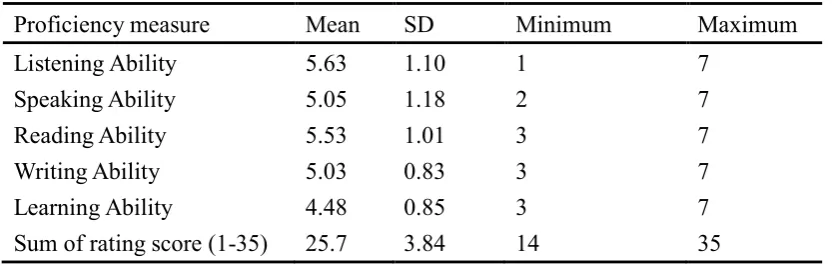
Excellent).The forty valid participants started using English as L2 at the mean age of
7.4 years (SD = 5.3 years, range = 3-18). Table 1 summarizes the participants’
[image:50.595.112.530.225.358.2]self-rated proficiency and learning skill of English.
Table 1
Self-rated Proficiency and Learning skill of English (n = 40)
Proficiency measure Mean SD Minimum Maximum
Listening Ability 5.63 1.10 1 7
Speaking Ability 5.05 1.18 2 7
Reading Ability 5.53 1.01 3 7
Writing Ability 5.03 0.83 3 7
Learning Ability 4.48 0.85 3 7
Sum of rating score (1-35) 25.7 3.84 14 35
On average, participants reported good command of English in the domains of
listening, reading, speaking and writing. However, more than half (52.5 %) of the
participants rated their English learning ability as limited to average, indicated by
self-rating between 3 and 4. As the participants were students of The Australian
National University, they all had achieved a minimum academic IELTS score of 6.5
to meet English Language admission requirements. Therefore, while some
self-ratings were low, we can be confident that they had reasonable English-language
proficiency.
Materials and Procedures
The participants were tested on five tasks across two testing sessions. The
differences studies, each participant was tested on the tasks in the same order, which
aims to reduce any unwanted error variance associated with variation in testing
procedures. An on-line Chinese (L1) sentence comprehension task, a non-verbal IQ
test, and the L2 English Language proficiency measures were included in the first
session. For the L2 English Language proficiency measures, the participants were
asked to complete (i) the L2 language history questionnaire (as described
previously), and (ii) the Peabody Picture Vocabulary Test (PPVT, Dunn & Dunn,
2007). An on-line English (L2) sentence comprehension task, a measure of working memory, and a visual SL task were conducted in the second session. Each is
described below.
Sentence Comprehension Task
Two sets of stimulus items were developed to test participants’ Chinese (L1)
and English (L2) sentence comprehension. The target sentence structures were
subject and object RCs. Each stimulus set (i.e., Chinese and English) contained 160
test sentences, composing 64 Relative Clause (RC) sentences (32 subject RCs and 32
Object RCs) and 96 filler sentences.
Mandarin Self-paced Reading Task
Thirty-Two Chinese singly-embedded RC sentence pairs were constructed, with
each pair containing a subject- and object-extracted version of the sentence. Thirteen
singly-embedded RCs were adapted from Hsiao and Gibson (2003). The remaining
four pairs were created anew. All noun phrases were animate, since past studies have
shown that animacy moderates the complexity associated with ORCs in Mandarin
(e.g., Wu, Kaiser, & Andersen, 2012). The following are examples for the two types
of Chinese RCs.
(14 a) Subject-extracted RC (SRC)
崇拜 艺术家 的 运动员 享用了 一顿 美味的 晚餐。
[Chongbai yishujia de ] yundongyuan xiangyongle yidun meiweide wancan [__i adored the artist that] the athletei enjoyed a delicious dinner
V1 N1 de N2 V2 DET Adj. N3 “The athlete that adored the artist enjoyed a delicious dinner.”
(14 b) Object-extracted RC (ORC)
艺术家 崇拜 的 运动员 享用了 一顿 美味的 晚餐。
[yishujia chongbai de] yundongyuan xiangyoungle yidun meiweide wancan [The artist adored __i that ] the athletei enjoyed a delicious dinner.
N1 V1 de N2 V2 DET Adj. N3 “The athlete that the artist adored enjoyed a delicious dinner.”
In sentence (14a), the head noun the athlete occupies the subject position within the
RC, as denoted by the underscore gap. In contrast, in sentence (14b), the head noun
occupies the object position. The test sentences varied in length, from 11 to 19 words
(mean length = 15 words). The length of the RCs was five to seven characters. All
The Chinese RCs were interspersed within 96 filler sentences, which contained
three different types of structures: (i) Chinese pivotal sentences1 as shown in (15),
(ii) passive sentences (BEI structure with an agent) as shown in (16), and (iii)
declarative sentence, as shown in (17).
(15) 教授 鼓励 小陈 进行 癌症 研究。
jiaoshou guli [xiaochen jinxing aizheng yanjiu] N1 V1 N2 V2 NP3
“Professor encouraged Mr. Chen to conduct cancer research.”
(16) 这些 议员 的 提案 全 被 财政 部长 否决 了。
Zhexie yiyuan de tian quan bei caizheng buzhang foujue le
“The parliamentarians’ proposals were rejected by the finance minister.”
(17) 芬兰 是 观察 北极 光 的 最佳 地点 之一。
Fenlan shi guancha beiji guang de zuijia didian zhi yi “Finland is one of the best places to observe the northern lights.”
There were 32 tokens of each filler type. All target structures and fillers were
presented in simplified characters. After reading the complete sentence on a
computer screen, participants were required to answer a Yes/No comprehension
question. For Chinese RC sentences, half of the comprehension questions asked
about the main clause and the other half asked about the relative clause. For each
1 Here, Chinese Pivotal Sentence refers to the generalized structure of NP1 + VP1+NP2+VP2, in