EC Regional Policies
M a y 1995 EN
Summary of SPDs Objective 2 United Kingdom
The structural Funds and the
reconversion of regions affected
by industrial decline in the
United Kingdom, 1994-1996.
D
In December 1994, the European Commission approved the Single Programming Documents (SPDs) for the 13 areas in the United Kingdom containing regions eligible under Objective 2 of the Structural Funds (regions in industrial decline).
These documents, which are individually summarised in this pack, contain a breakdown of how the total EU grant of 2,142 million ECUs (over £1.7 billion) will be spent during the period 1994-1996.
Through its contribution, the European Union seeks to pro vide economic and social support to these regions.
Eligible regions
The Eastern Scotland Objective 2 region covers the travel to work areas of Alloa, Falkirk, Stirling (part), Kirkcaldy, Dunfermline, Bathgate, Edinburgh (part), Arbroath and Dundee. Unemployment in the newly-designated Edinburgh wards of Craigmillar and Niddrie averaged 18.6% between 1990 and 1992. The region has a persistently high unemployment problem.
Other structural weak-nesses include a small company base, low growth in indigenous sectors, a conservative business sector, poorly developed, stressed or degraded supporting infrastructure and a vul-nerable employment structure.
Eastern Scotland
Strategy
To exploit the region's scientific and technological capabilities to ensure diversification and innova-tion.
To enhance skills, promote the technological design base and provide appropriate infrastructure. To exploit the international market.
To capitalise upon assets.
To achieve a synergy of funds, actions and policies. Above all, to provide the socio-economic situa-tion in the region with an effective and focused mix of actions.
Priorities
Business and trade
development
Delivering support services for start-up and growing businesses.
1.1.-1.2.
SME start-up, growth and development
Highlands
\ Central
Strathclyde
Grampian /
Tayside ^ f
S o ^ c"Flfe A.
¿_^^ LuthidnX^^
} Borders c ^
Zones eligible under Objective 2
waste management; schemes to encourage greater use of public transport.
2.2.
Transport and communications
1.3.
Provision of sites and premises, and related training facilities to promote and facilitate economic development
1.4.
Assisting skills training for SMEs
1.5.
Promoting regional skills development
Business environment, image
and tourism
To build on the strengths of and deal with the resi-dual problems in image and environment, transport and communications and tourism.
2.1.
Image enhancement and management of the environment
Upgrading town and city centres; recycling and
2.3.
Regional tourism development
2.4.
Assisting training in support of tourism, heritage and the environment
'riority
Locally-based initiatives
Building local partnerships, encouraging better integration with other funding sources.
3.1.-3.2.
Locally-based initiatives
Useful address
Technology and innovation
To increase and stimulate interaction, improve skill levels in the use of appropriate technology through-out the workforce and to further the concept of innovation.
Mr D BREW
Chair of Monitoring Committee
Tel: 031 2444576
Fax: 031 2444785
4.1.
Research, technology and innovation
develop-ment for SMEs Breakdown of Structural Fund contribution
Mr G MCLAREN Head of Secretariat Tel: 0383 622537
4.2.
Provision of sites and premises to promote and facilitate technology transfer, training and inno-vation
4.3.
Developing skills in technology and innovation
Priority 4
15.2% \
Priority 3
9.8%
Priority 2 35.2%
Priority 1 38.7%
Scottish Office
New St Andrew's House EDINBURGH EH1 3TG
Priorities
Structural Fund
contribution
National/public
funding
Private
funding
Priority 1 46.826 59.815 106.641
Priority 2 42.550
73.716
116.266
Priority 3
11.89312.500
24.393
Priority 4
Technical assistance
18.431
121.000
23.971
171.359
42.402
292.359
(ECU millions)
Eligible
regions
The population covered by Objective 2 in East London and the Lee Valley is approximately 0.554 million. The East London and Lee Valley Objective 2 area includes those parts of Greater London most seriously affected by industrial de cline. Between 1984 and 1991 the six London Boroughs that make up the ELLV lost 26,000 in dustrial jobs. The unem ployment level across the area is 22.8%.
The area's major prob lems may be summarised as follows:
- continuing decline of manufacturing
- weak transverse trans port linkages
- derelict land
- low educational attain ment
- high unemployment and associated urban
depri-East London and the
Strategy
The strategy is to enable East London and the Lee Valley to develop a modernised, competitive, di verse and expanding economy, bringing prosperity to its business sector, new economic opportunities to its workforce and economic and social integra tion within its communities, including its large and richly diverse ethnic community.
Priorities
Business Development Support
To increase the start-up rate of SMEs, raise SME survival rates, and to ensure provision of the neces sary workforce skills for the success of SMEs.
1.1.
SME Advice and Support Services
Business advisory services, assistance towards consultancy support.
1.2.
Improving Access to Finance Support for new and existing funds
1.3.
Expansion and improvement of sites, company growth and job retention and creation in exis ting industrial areas
1.4.
Improving skills and training for business needs Creating a qualified workforce in the area
Buckinghamshire Γ
/ A
Surrey
Hertfordshire
*^*i Greater / Λ London
v>
I
J
EssexKent
Zones eligible under Objective 2
2.1.
Innovation and technology transfer
RTD strategy; support for innovation and technology transfer for SMEs; grants for product and process development.
2.2.
Advanced Telematics
Increase take up of telematics by SMEs.
2.3.
Training for new technologies and advanced te lematics
Priority 3:
Targeted Inward Investment
Improving existing industrial buildings and estates and enhancing the image and utility of existing in dustrial areas.
Actions for knowledge-based
industries and advanced
technological development
The focus of actions will be to develop a strategy which will offer a package of support to meet the technology needs of businesses in the Lee Valley.
3.1.
Site and new premises development,
site reclamation, services, improving access to sites and related environmental improvements
3.2.
Lee Valley
Useful address
Mr ROBIN YOUNG Regional Director Tel: 0171 2760438 Fax: 0171 2765827Action to develop cultural
industries and advanced
producer services and
industries
To encourage the development of advanced produ cer services and industries, often geared to new technology, and of cultural industries including de sign and the performing arts.
4.1.
Support for advanced producer services and industries
Joint marketing ventures; ensuring access to tech nology for project development.
5.1.
Support for local training strategies
5.2.
Support for community business and individual enterprise
5.3.
Development of public transport to improve ac cess to employment
5.4.
Action to improve the urban environment
Promoting comprehensive programmes of environ mental improvement.
Mr MALCOLM JOHN Head of Secretariat Tel: 0171 2174635 Fax: 0171 2174509
Government Office for London
2705 Millbank Tower 21/24 Millbank LONDONSW1Ρ4QU
4.2.
Support for cultural industries
Encouraging the diversification of cultural industries
in the area.
Breakdown of Structural Fund contribution
4.3.
Training for service industries (cultural indus tries, tourism and producer services)
Targeted assistance to create
and access employment for
communities
Investing in the people of the ELLV and enhancing their employment opportunities.
Priority 5
26.5% \
Priority 4 14.1%*"
Technical assistance 0 . 5 % Priorityl
23.6%
I Priority 3 18.2%
Priority 2 17.1%
Priorities
Structural Fund
contribution
National/public
funding
Private
funding
Total
Priority 1 17.48 17.01 5.86 40.35 I
Priority 2 12.69 11.84 I 3.14 27.67 I
Priority 3 13.47 14.03 j 6.57 I 34.07
Priority 4 10.47 9.32 3.28 23.07
Priority 5 19.51 38.85 6.97 ¡ 65.33
Technical assistance
Total
0.38
74.00
0.38
91.43
25.82
0.76
191.25
(ECU millions)
Eligible regions
The East Midlands Objective 2 area can be defined broadly as the North Nottingham and Derbyshire coalfield area together with the City of Nottingham. It comprises the travel to work areas (TTWAs) of Mansfield, Chesterfield, Worksop, the City of Nottingham and parts of the Nottingham TTWA in Ashfield district.
The area contains many mining villages and col-lieries. Despite this concentration of heavy industry, the east of the area includes Sherwood Forest, Rufford Country Park and Clumber Park, all used extensively for tourism and leisure. Four conurbations together account for 75% of the Objective 2 area's total population of 684,000: Mansfield, Chesterfield, Worksop and the City of Nottingham.
The area's weaknesses can be summarised as follows:
- strong localised dependence on declining sectors.
- problem inner urban areas and isolated rural coalfield settlements. - few high technology sectors and a lack of major financial service centres.
- lack of a strong regional identity.
- poor road links east-west.
- poor level of educational attainment and training. - low historic levels of inward investment.
6 Objective 2 East Midlands
East Midlands
Strategy
The overall aim of the strategy is to facilitate the economic regeneration of the Objective 2 area by addressing the underlying structural weaknesses of its economy. It will achieve this by strengthening the technological base of the economy, increasing the competitiveness of existing businesses, encourag-ing diversification into new products and markets and increasing the competitive advantage of the area in attracting new investment.
Priorities
North \
West f
West Midlands
' Yorkshire and Humberside
nV
f
*ÀzA
t Leicestershire
\ ,-.
.'
T J ^ I A /
Lincolnshire I
/ East Anglia
Research and innovation
To improve the competitiveness of SMEs by he ping them to introduce Innovations in product and pro-cess development; to faciliate SME acpro-cess to ex-pertise, services and advice in modern technolo-gies, and to a suitably trained workforce.
1.1.
Assistance to SMEs for innovation and product and process development
Small Firms Merits Award in R&T (SMART): expendi-ture in the Objective 2 area will be doubled by the ERDF to allow scope for the extension of the scheme to meet local needs.
1.2.
Zones eligible under Objective 2
Strengthening enterprise and
indigenous businesses
To Improve the competitiveness of existing SMEs, to increase the rate of SME formation, survival and growth, to increase income generated by tourism and the jobs it can support.
2.1.
Promoting SME start-up, growth and develop-ment
2.2.
Strengthening support for innovation in industry Improving SME access to sources of capital
1.3.
Development and application of clean technolo-gies
Grants to SMEs linked to job creation; demonstra-tion SMEs.
1.4.
Training in advanced technology
1.5.
Advanced telecommunications dissemination projects
Information on the availability of advanced telecom-munications services; facilitating local access to ad-vanced telecommunications.
2.3.
Developing the tourism industry
Implementation of local Tourism Development Action Plans which support SPD objectives.
2.4.
Training for business needs
Provision of skills training, customised training packages for established businesses.
Priority 3:
Encouraging diversification of
the economy
3.1.
Support for the diversification of activities in traditional sector companies
Clubs for exporters; design counselling; licensing brokerage.
3.2.
Increasing inward investment
3.3.
Developing sites and premises, including voca-tional training facilities
Landscaping of existing under-utilised industrial sites; business parks on former colliery sites.
3.4.
Improving transport infrastructure directly linked to economic development
Public transport lirking the Nottingham job market to isolated mining communities.
3.5.
Developing human resources
|
Community economic
development
To enable the most disadvantaged communities to compete for economic opportunities.
4.1.
Environmental improvements
Clearance of derelict sites in inner urban areas.
4.2.
Developing economic opportunities
Arts and crafts workshops in inner urban areas.
4.3.
Improving access to training and employment
Improvements to the public transport system for people in disadvantaged areas; childcare provision.
4.4.
Developing pathways to employment
Breakdown of Structural Fund contribution
Priority 4 19%
Technical assistance
1 °/
Priority 1
14.5%
Priority 3 34.4%
Useful address
Mr D MORRISON Regional Director Tel: 0115 9596349
Mr MIKE MEECH Ms ALISON SIMPSON Mr TERRY EVANS Heads of Secretariat Tel: 0115 9506181 Fax: 0115 9509159
Government Office East Midlands
Severns House 20 Middle Pavement NOTTINGHAM NG1 7DW
Priority 2 31.1%
Priorities Structural Fund contribution
National/public funding
Private funding
Total
Priority 1 11.480 11.910 10.000 33.390
Priority 2 24.600 26.230 10.000 60.830
Priority 3 \ 27.180 43.630 20.000 i 90.810
Priority 4 14.950 16.680 - 31.630
Technical assistance
Total
0.790
79.000
0.790
99.240
-40.000
1.580
218.240
(ECU millions)
Eligible regions
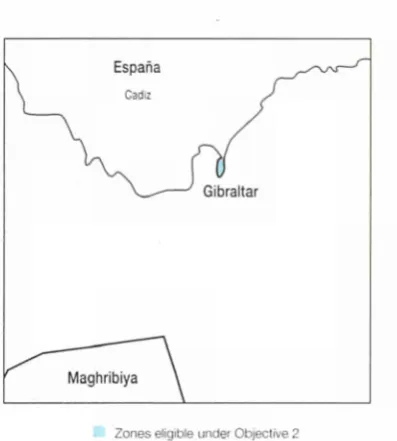
[image:8.595.353.552.134.355.2]The peninsula of Gibraltar is adjacent to the southern tip of the Spanish mainland. It covers an area of 584 ha and supports a population of some 30,000 people, a figure that has remained stable in recent years. Gibraltar's economy has traditionally been heavily dependent on defence services. At their peak these contributed some 65% of Gibraltar's GDP. Over the last ten years this has undergone a very dramatic decrease to only around 10% of GDP.
The economy of Gibraltar has many unusual fea-tures, most of which stem from its small size. Its land and other indige-nous resources are small; virtually no part of Gibraltar is capable of sustaining any kind of agriculture. Gibraltar is unable to benefit from any economies of scale. In the absence of domes-tic manufacturing of any kind, the economy is heavily dependent on im-ports. Yet despite these constraints, Gibraltar has good education facilities, a population bilingual in English and Spanish, established financial and shipping services and an advanced telecommuni-cations network, an attractive location and a distinctive heritage.
Gibraltar
Strategy
The global objective is to maximise the po-tential for generating wealth and employ-ment in Gibraltar through sustainable eco-nomic diversification, particularly towards the tourism sector. Gibraltar's tourism poli-cy aims to cater for two broad categories of tourist, the day visitor and the longer stay visitor. This strategic objective will be achieved by building a new and attractive image for Gibraltar, cultivating specific mar-ket sectors, particulary the high value-added conference market, increasing the amount of repeat business, developing daily excursion traffic and increasing the fre-quency of call of cruise ships.
The SPD will also support productive in-vestment in SMEs. Facilities for industrial activity have already been improved by the opening of the New Harbours complex (in-dustrial park) and the Europa Business Centre. This work now needs to be consoli-dated by encouraging maximum utilisation of the new premises. Key strategic targets will be the creation of 400 new jobs and the generation of a 10% increase in revenue from tourism.
Measures
tourism and business
development
The aims of this measure are to enhance the potential for economic activity related to tourism to create income and employment in Gibraltar, to enhance the quality and at-tractiveness of industrial/commercial facili-ties and to safeguard and enhance the terri-tory's natural and built environment and he-ritage.
Gibraltar
Maghribiya
Zones eligible under Objective 2
Activities: Development of tourist attrac-tions and visitors facilities and associated environmental works; tourism promotion; improvement of facilities for business and aid to productive investment.
Measure
Improving the flow of
tourist and business traffic
The aims of this measure are to improve ac-cess to Gibraltar tourist and business areas; reduce traffic bottlenecks and sustain in-creased visitor numbers.Activities: Projects which improve access to industrial areas and points of non-road ac-cess to the territory; projects which facilita-te the arrival and departure of tourists and business visitors.
easure 3:
Human resources
development
The aim of this measure is to improve the economy of Gibraltar by stimulating enter-prise and responding to economic expan-sion by providing training for new jobs crea-ted or in prospect.
Activities: Training of trainers; wage subsidy schemes; development of flexible training packages (including training outside Gibraltar).
Breakdown of Structural Fund contribution
Useful address
Mr Hon MICHAEL ROBINSON Deputy Governor Tel: 350 70071
Mr FRANCIS SHERIFF Head of Secretariat
Measure 1 69%
Tel: 350 74704
The Convent DTI Suite 771 Europort GIBRALTAR
Priorities
Structural Fund
contribution
funding
National/public
Private
funding
Total
Measure 1 3.450 3.250 | 0.200 Ì 6.900
Measure 2 0.650 1.950 - 2.600
Measure 3 ! 0.900 ! 1.100 Í - ! 2.000
Total | 5.000 6.300 0.200 11.500 |
(ECU millions)
Eligible regions
The population covered by Objective 2 in Greater Manchester, Lancashire and Cheshire is approxi mately 2.79 million. It in cludes those parts of the North West region most seriously affected by in dustrial decline. Since 1979 the NW region has lost 453,000 manufactu ring jobs (47% of the total).
The area's major pro blems may be summari sed as follows:
dependence on a nar row range of manufactu ring industries.
a low level of firms in highgrowth sectors. serious physical consequences of indus trial decline.
low levels of invest ment in innovation. high levels of unem ployment and longterm unemployment.
Greater Manchester,
Strategy
The strategy for the future has two fundamental coals:
• to develop a high level of prosperity across the Objective 2 area and
• to support and promote the sustainable regenera
tion of the local economy.
Priorities
10 Objective 2 Greater Manchester, Lancashire and Cheshire
Support for Small Businesses
To increase the level of economic activity in the area by addressing major constraints to the survival ofsmall businesses.
1.1.
General support for micro and small busi
nesses
Business advice; diagnostic services; supply chain networks.
1.2.
Improving access to capital
Creation and or expansion of regional venture capital funding.
1.3.
Refurbishment of existing and provision of
new workspace, incubator units and managed
workspace
1.4.
Training for micro and small business needs
Priority 2:
Action to strengthen and
diversify mediumsized
enterprises
To help mediumsized enterprises to survive
and grow in an increasingly competitive business environment.
2.1.
Action to stimulate best practice and new
business opportunities
2.2.
Spinout companies and exploitation of techno
logy
Development of Intercompany links and partner
ships; audit and diagnostic analysis to identify
potential opportunities.
2.3.
Clean technologies; environmental assessment
and process development
North
/ * Lancashire S
\ ^ÍVVT</ Greater \
Jrfeeeyside^ViManchester
\ k ^"υ~Λ
V Cheshire ~ Λ ^
West Midlands L
Yorkshire and Humberside
ν East \ Midlands
Zones eligible under Objective 2
2.4.
Training in new skills and new ways of working
Priority 3:
Development of knowledge
based industries and advanced
technology
To provide a coherent approach to research and
technological development.
3.1.
Grants for individual companies and clusters of
companies in product and process development
3.2.
Strengthening the research and technological
development system to meet the needs of
industry
3.3.
Advanced telecommunications
Participation in the information superhighway.
3.4.
Training to meet the needs of business for
research and technological development
Priority 4:
Action to attract inward
investment and support the
needs of the key corporate
sector
To facilitate inward Investment and followon invest ment and to provide an adequate infrastructure for
industry and commerce.
4.1.
Refurbishment and provision of new sites,
Lancashire and Cheshire
4.2.
Strategic communication improvements linked to inward investment and the needs of the key corporate sector
4.3.
Marketing and aftercare for inward investment
4.4.
Training and employment measures linked to inward investment, the needs of the key corpo rate sector and associated environmental and capital infrastructure improvements
Tourism and cultural industries
and image enhancement
To encourage sustainable economic activity in key growth industries and to promote the image of the area to visitors.
5.1.
Provision of new or upgraded tourist facilities to complement existing attractions or to exploit new opportunities
5.2.
Improvements of advice and information systems for tourists and tourism promotion
5.3.
Support for cultural and media industries
5.4.
Environmental and other improvements in city and town centres and other tourist destinations
Improvements to the environment and appearance of town centres; pedestrianisation and trafficcalming.
5.5.
Training for tourism, media, cultural and spor ting industries
Priority 6:
Action for community economic
development
To put the area's people and employers at the centre of the regenerative process.
6.1.
Support for local training
Work experience schemes; prevocational and basic training.
6.2.
Community economic projects
Support for appraisals of the needs of areas; pro jects to increase utilisation of IT.
6.3.
Targeted environmental improvements
6.4.
Access to work
Improvements in public transport; provision of child care facilities.
Breakdown of Structural Fund contribution
Priority 6
17%
-Technical assistance
1%
Priority 5
16.7%
Priority 1
15.3%
Priority 2
18.1%
Useful address
Mrs MARIANNE NEVILLE ROLFE
Regional Director Tel: 0161 8385555
Mr JOHN BROWN Head of Secretariat Tel: 061 8385300 Fax: 061 8385304
Government Office North West
Sunley Tower Piccadilly Plaza MANCHESTER M1 4BE
Priority 4
20.9% \ Priority 3
11%
Priorities
Structural Fund
contribution
National/public
funding
Private
funding
Total
Priority 1 50.30 53.08 26.50 129.88
Priority 2 59.60 | 66.07 26.30 I 151.97
Priority 3 i 36.30 39.50 | 23.60 ! 99.40
Priority 4 68.80 70.96 ! 27.20 166.96
Priority 5 ! 54.90 | 57.08 I 23.40 135.38
Priority β 55.80 60.73 [ 7.60 124.13
Technical o o n o c o c QO
assistance J J U ói>¿ " 6·8 2
Total 329.00 350.94 134.60 814.54
(ECU millions)
Eligible regions
The North East England Objective 2 area corres-ponds to all of the coun-ties of Tyne and Wear and Cleveland along with parts of the counties of Durham and Northumberland, and covers a total area of 8,600 km2. The population
of the region is a little more than 2.6 million. In the last decade, the North East has experien-ced major economic re-structuring. Shipbuilding, steel, engineering and coal mining accounted for nearly a quarter of em-ployment in 1975. The last major shipbuilding yard has recently closed and the recent programme of colliery closures has brought to an end large-scale deep mining in the region. Unemployment levels for the region have been persistently above the national average for several years (South Tyneside has unemploy-ment levels of 17.7%, the highest rate in the whole of mainland Britain). The region has several weaknesses in addition to the contraction of its dustrial base. These in-clude a limited tradition of indigenous enterprise, low levels of R&D in local com-panies, inadequate exploi-tation of modern manage-ment skills and poor reten-tion of graduates, as well as industrial dereliction and pockets of severe eco-nomic deprivation. However, it also has a number of strengths: low cost sites and premises, an adaptable workforce, an excellent inward invest-ment record, a high quality of life and a developing bu-siness support network.
North East of England
Strategy
To create an increasingly self-reliant and diverse economic base so as to improve the overall prospe-rity and quality of life of the North East and to assist access to social and environmental benefits and new economic opportunities. The programme will help to achieve this goal by bringing together a wide range of partners, many of which have specialist roles but all of whom are working towards the com-mon end of economic regeneration.
Priorities
Strategic business
development and inward
investment
Improving conditions for growth in the key corpor-ate sector and embedding the benefits of inward investment in the regional economy.
1.1.
Strategic sites and premises
Provision of strategic business facilities, assoc ated site reclamation works and other, environmental improvements.
1.2.
Gateway and network facilities
Development of urban passenger transport systems, local freight networks; improvement of non-road communications terminals, where directly linked to job creating development.
1.3.
Inward investment support & supplier chain de-velopment
Development of an effective local supply infrastruc-ture, including the mapping of key supplier chains.
1.4.
Specific training needs of strategic businesses and inward investors
Graduate retention initiatives; wage and training subsidy schemes.
Scotland
Tyne and Wear
Zones eligible under Objective 2
Priority 2:
SME and local business
development
Encouraging the consolidation and development of the region's SME base via a three-tier business sup-port strategy.
2.1.
Clusters of competitive advantage
2.2.
SME development
2.3.
Local enterprise development
2.4.
Facilities for training and business
2.5.
Specific training needs of SMEs and local busi-ness
Priority 3:
Development of
knowledge-based industries
Building on regional strengths in higher and further education and promoting innovation to increase the knowledge base and competitiveness of local in-dustry.
3.1.
Facilities for the enhancement of R&D and tech-nology transfer
3.2.
Development and integration of clean technolo-gies
4.2.
Promotion and marketing of tourism
4.3.
Training for the cultural and tourism industries
Community economic
development
Extra assistance targeted at severely deprived areas to promote the inclusion of disadvantaged groups in the region's economic regeneration.
5.1.
Community development packages
Useful address
Mrs PAMELA DENHAM Regional Director Tel: 0191 2324722
Mr JAMIE MCKAY Head of Secretariat Tel: 0191 2324722 Fax: 0191 2357706
Government Office for North East
Stanegate House 2 Groat Market NEWCASTLE UPON
3.3
New technology skills
iority 4:
Developing the cultural and
tourism industries
Comprehensive support aimed at increasing the economic benefits of increased visitor numbers, and improved image.
4.1.
Facilities for, and productive investment in, the tourism and cultural industries
5.2.
Targeted pre-vocational, vocational and basic skills training
Breakdown of Structural Fund contribution
NE1 1YN
Priority 5 11%«.
Priority 4 Á^Ê
12.5% " fl
Priority 3 3 ^ ^ ^ H 16% ^ ^ ^
Tecinical assistance T 2%
1 WgSSB . Priorityl ^ ^ - * 22.5%
^ ^ ~ - , Priority 2 ^ M ^ ^ ^ 36%
Priorities
Structural Fund
contribution
funding
National/public
Private
funding
Total
Priority 1 69.30 j 93.86 31.70 I 194.86
Priority 2 110.90 115.68 20.11 246.69
Priority 3 ! 49.25 48.94 11.71 ! 109.90
Priority 4 38.50 41.56 6.44 86.50
Priority 5 33.90 36.39 2.80 | 73.09
Technical
assistance
Total
6.15
308.00
6.49
342.92
-72.76
12.64
723.68
(ECU millions)
Eligible regions
The Plymouth Objective 2 area is located in the county of Devon in the south western peninsula of the United Kingdom. It comprises the adminis-trative area of the City of Plymouth and the parishes of Webury, Brixton, Yealmpton, Cornwood, Harford, Bickleigh, Shaugh Prior, Sparkwell and Ivybridge. Plymouth is the most remote urban centre in England, with a population of some 265,843.
Between 1981 and 1991, industrial employment in the City of Plymouth fell by a third, representing a net loss of 12,000 indus-trial jobs. Many of these job losses have been in the shipbuilding sector. The region's weaknesses include peripherality, a narrow economic base, lack of jobs and firms in business and financial services, and severe en-vironmental and social problems in some inner city areas. Its strengths include a rich maritime and industrial heritage, a steady build-up of com-ponent, sub-assembly and service industry firms and good potential for indigenous growth through the SME sector.
Plymouth
Strategy
The conversion plan aims to achieve cohesion bet-ween Plymouth's social and economic position and that of more prosperous regions in the Community, especially by redeveloping the area from its present situation as an area in industrial decline. Since this decline is principally related to the reduction in em-ployment at the naval dockyard and is supplemen-ted by reductions in employment in other military establishments, the overall objective is to replace these jobs with others.
Priorities
Prion
Industry and business
development
To offer an attractive range of sites and premises in order to attract investment from outside the area and to encourage maximum indigenous growth.
1.1.
Sites and premises
Acquisition, refurbishment, etc of sites, support for ancillary Infrastructure, improvement and provision of training infrastructure.
1.2.
Business access
Improvement of acces to employment areas.
1.3.
SME development
Enhancing services and supporting productive investment.
1.4.
Training for company requirements
Improving work skills.
Development of
knowledge-based industries
To encourage firms to exploit competitive advan-tages which their location offers in terms of the accessibility of research and technical excellence.
,/ Cornwall
7
Devon
South West .
L Somerset __^_-¿L Dorset
Zones eligible under Objective 2
2.1.
Enhancement of technology transfer
Establishment and support of technology transfer services.
2.2.
Development and application of clean technolo-gies
Encouraging best environmental practice
2.3.
Training for new technology
Providing skills related to new technology
Priority 3:
Tourism development
To provide new attractions to penetrate new mar-kets; to refurbish and retarget some of the area's older attractions.
3.1.
Tourist attractions and visitor facilities
Funding the setting up of Tourist Information Centres.
3.2.
Productive investment in tourism
Improving the quality of tourism in the area.
3.3.
Training for tourism
Improving tourism skills and management.
Priority 4:;
Community economic
development
To ensure that the benefits of conversion are shared by all communities in the region.
Useful address
Mr BRIAN LEONARD Regional Director Tel: 0117 9878525
Mr RICHARD HEYWOOD Head of Secretariat Tel: 0752 221891 Fax: 0752 227647
4.1.
Community economic development packages
Projects to encou'age joint working between the community, private, voluntary and public sectors in local job creation.
4.2.
Community regeneration skills
Vocational and management training, job search and employment for local communities
Breakdown of Structural Fund contribution
Priority 3
25.5%
Priority 4 11.2%
Priority 2 J 14.1%
Technical assistance 1.1%
Priority 1 48.1%
Government Office for the South West Tollgate House Houlton Street BRISTOL BS2 9DJ
Priorities
Structural Fund
contribution
National/public
funding
Private
funding
Priority 1
Priority 2
Priority 3
Priority 4 3.24 3.45 | 0.25 f 6.94
Technical assistance
Total
0.31 29.00
0.32 34.05
-6.19
0.63 69.24
(ECU millions)
Eligible regions
The population covered by Objective 2 in Industrial South Wales numbers approximately 1.7 million, almost two thirds of the total population of Wales. The eligible area co vers 3.660 square kilometers which comprises the coastal plain, in which are situated the area's major conurbations of Cardiff, Newport, and Swansea, and an upland pla teau with narrow, densely po pulated valleys running North to South.
In spite of the diversification which took place during the 1950s and 1960s, the econo mic history of Industrial South Wales has been dominated until relatively recently by the coal and steel industries. The restructuring of the steel in dustry, with its significant im provements in competitive ness and growth in productivi ty, has led to many job losses. The coal industry has been hit by a drop in demand for car bonbased fuels in response to the growing use of alternat ive sources of energy, and this has also resulted in job losses.
Efforts to encourage the deve lopment of new industries has met with considerable suc cess in recent years, and fore casts suggest that the ser vices sector and manufactu ring industry will become im portant wealthcreating sec tors in Industrial South Wales during the next five years.
The region's main problems include a poorly qualified workforce, a lack of high valueadded activities from external investors, struggling valley areas and urban areas, low levels of investment in in novation and high levels of unemployment coupled with below average levels of em ployment among men and
Industrial South Wales
Strategy
The overall objective for Industrial South Wales is to
improve economic growth through the creation of a
diversified industrial base concentrating on SfVEs,
and leading to a selfsufficient economy which
takes account of environmental needs. Special at
tention will be given to actions to strengthen and
expand the SME fabric and to making Industry and
business as a whole more competitive.
Priorities
Action for the valleys and other
disadvantaged urban
communities
To assist the creation of high quality jobs, improve
training opportunities and enhance the supporting
transport and community infrastructure whilst main
taining and improving the environment.
1.1.
Community development packages
Formulation of Community development strategies;
crime prevention and community safety measures
where these support local economic activity; com
munitybased environmental action; provision and
refurbishment of community facilities.
1.2.
Access from the coastal plain to the valleys
Improvement of road links and public transpor faci
lities to faciliate access from the coastal plain to the
industrial sites In the valleys.
1.3.
Urban regeneration
External renovation of key buildings and buildings
for business use; landscaping of derelict sites.
1.4.
Support for local training
Implementation of local training strategies; basic
adult learning in association with appropriate voca
tional training; work experience schemes linked to
¿~ Dyfed
■fejf
^ >
West Glamorgan ^ ^ <> * \ Mid Glamorgan —
South Glamorgan —
< > West / „ S Midlands
/ Powys \
Τ South/West
Zones eligible under Objective 2
training; training and employment actions to assist
access to employment opportunities; care services
for dependents of those on ESFsupported activity.
Action for industry and
business
To sustain and stimulate industry and business so
that industrial decline is combatted by economic
development and diversification, maximising the po
tential for positive economic and social impact whilst
safeguarding and, where possible, enhancing the
natural and built environment.
2.1.
Provision of sites and premises
Provision/upgrading of industrial sites, necessary
onsite ancillary infrastructure, premises; reclama
tion of derelict and contaminated sites; provision of
training and R&D facilities.
2.2.
Business access
Provision or improvement of roads and public trans
port facilities giving direct access to specified in
dustrial or business sites which are being developed
within the programme period; provision and deve
lopment of railfreight terminals.
2.3.
Business support
Aids to product and process innovation and invest
ment; access to seed and venture capital; business
advice and support services; supplierchain deve
lopment.
2.4.
Training for industry and business
Customised training for companies resulting from
training audits and business plans; guidance and
counselling; training of the workforce employers
wish to recruit; work placement schemes; employ
ment initiatives.
Priority 3:
Action to support the
development of knowledge
based industries
To expand and develop the knowledge base and
competitiveness of local industry by building on re
gional strengths and thereby creating a highly diver
sified and advanced industrial base.
3.1.
Technology transfer and innovation
R&D actions; product development; technology
transfer; technology audits; technology commercia lisation; enhancing innovation in enterprises by de veloping links with further and higher education ins
titutions; access to information highways.
3.2.
Development and application of clean technolo gies
Development of depollution and clean production
techniques; development of alternative energy and waste exchange/disposal/recycling techniques; promotion of such techniques in SMEs.
3.3.
New technology skills
Multiskilling and retraining of workers to adapt to
new technology; postgraduate training for em
ployées; development of training systems; support for costs of taking on graduates and other highly
qualified personnel.
Action for tourism
To encourage the development of tourism and
increase the economic benefits from this sector to
the area.
4.1.
Tourism facilities
Provision of new tourism facilities and attractions;
upgrading existing tourism facilities; direct access
to tourist sites; conservation and enhancement of
natural and built environment linked to tourism.
4.2.
Support for tourism
Marketing and promotion of the region for tourism;
productive investment in tourism.
4.3.
Training for tourism
Training for workers and the potential workforce in
tourism industries, including language training; trai
ning in relation to new management, information
and technology within the tourism industry.
Breakdown of Structural Fund contribution
Priority 4 12.3% \
Technical assistance 5%
Priority 3
16.9%'
Pnonty 1 32.6%
Priority 2 37.7%
Useful address
Mr MICHAEL COCHLIN Chair of Monitoring Commitee
Tel: 01222 825245
Fax: 01222 825386
Dr MIKE DUNN Head of Secretariat Tel: 01222 823157 Fax: 01222 823900
Welsh Office Cathays Park CARDIFF CF1 3NQ
Priorities Structural Fund contribution
National/public funding
Private funding
Total
Priority 1 61.34 116.17 ι 5.08 I 182.59
Priority 2 70.97 114.60 22.80 208.37
Priority 3 31.73 37.37 8.20 77,30
Priority 4 | 23.03 28.15 5.02 56,20
Technical
assistance
Total
0.93
188.00
0.98
297.27
41.10
1.91
526,37
Eligible regions
The Thanet travel to work area, the area granted Objective 2 status, cor-responds with the admi-nistrative boundary of Thanet District Council, which is within the coun-ty of Kent. It covers an area of 103.6 sqkm and has a resident population of 127,000. Its main towns are the seaside re-sorts of Margate, Ramsgate and Broadstairs. The built and natural environment of Thanet varies from outstanding in its archi-tectural heritage to other parts suffering industrial and commercial decay. The coastline is a Site of Special Scientific Interest.
Thanet has severe struc-tural economic problems. In 1993, its unemploy-ment rate exceeded the EU rate by some 54%, GDP per head of popula-tion is declining relative to the EU average, de-pendence upon seasonal employment such as tou-rism, agriculture and port and ferry-related activi-ties has resulted in an unstable economic base and many of the compa-nies operating in Thanet are small. In addition, the region lies within east Kent, which is recognised as being that part of Kent most affected by the Channel Tunnel, the rationalisation of the ferry port operations and the impact of the Single Market.
Thanet
Strategy
The vision of the Thanet Objective 2 programme is to develop the region as a prosperous part of :he UK and Europe, with a diverse economic base which provides access to employment for all sec-tions of the community. The vision rests upon two inter-related components for regeneration: the Central Island Initiative and the Internationalisation of Thanet. These will build on Thanet's strengths and the unique opportunities offered by available land for development, proximity to Europe, an inter-national airport and a successful seaport.
Key features of the Central Island Initiative are the development of the Kent International Business Park, the further expansion of the airsirelated de-velopments at Mansion Airport and the improve-ment of links between Port Ramsgate and the Kent International Business Park. The internationalisation of Thanet seeks to exploit its proximity to the mar-kets of mainland Europe, the attractive natural and urban environment, and the combination of trans-port links.
Priorities
Industry and services
To realise the potential of the Central island area to create new employment opportunities and attract new inward investment, whilst strengthening the existing SME base through a diversified local eco-nomy.
1.1.
Sites and premises
Provision of sites; on-site infrastructure and pre-mises; environmental improvements to industrial sites; provision of an open learning resource centre.
Greater London Surrey
East Sussex
Zones eligible under Objective 2
1.2.
Aid to productive investment
Advice and guidance to SMEs; financial support to SMEs.
1.3.
Technology transfer and development program-me
Assisting the development of new products and processes in SMEs; improving links between indus-try and academic institutions; encouraging the dis-semination and take-up of best practice; developing and increasing take-up of clean technologies; deve-loping and encouraging access to information high-ways.
Internationalisation of Thanet
2.1.
International accessibility
Support for the development and Improvement of
facilities for commercial and tourist traffic at Port
Ramsgate; support for the construction of a new di
rect access road to Port Ramsgate.
2.2.
International tourism
Development and upgrading of visitor attractions
including promenades and seafront areas; external
renovation of historic and key buildings; develop
ment of coastal environment for green tourism.
Priority 3:
Human resources
3.1.
Training for companies
Development of customised training packages;
training in SMEs to develop skills; training of trainers.
3.2.
Vocational guidance and counselling and em
ployment support measures
Provision of vocational guidance; recruitment and
retention packages, selfemployment incentives,
wage subsidies.
Breakdown of Structural Fund contribution
Useful address
Mrs GILLIAN ASHMORE Regional Director Tel: 0171 6059019
Ms LUCY ROBINSON Head of Secretariat Tel: 0171 6059051 Fax: 0171 6059068
Government Office for the South East Charles House 375 Kensington High Street
LONDON W14 8QH
2.3.
International marketing and promotion of
Thanet
Marketing of Thanet for inward investment; promo
tion and marketing of Thanet as a tourist destination. Priority 2 44.5%
Priority 4 14.3%
Technical assistance 1.2%
Priority 1 40%
Priorities
Structural Fund
contribution
National/public
funding
Private
funding
Total
Priority 1
5.6
6.387
3.913
I
15.9
I
Priority 2
6.236
40.364
1.674
48.274
Priority 3
¡
Î
ι
\
2.45
0.19
4.64
Technical
assistance
0.164
Total
V
\
0.164
49.365
5.777
0.328
69.142
(ECU millions)
Eligible regions
The area covered by the Objective 2 programme comprises the three tra-vel to work areas of Barrow, Whitehaven and Workington. The area forms a linear belt stretch-ing some 120km along the Cumbrian coast in the north west of England. The area has a population of some 238,000 inhabitants. The economy of the area is characterised by dependence on two major employers, British Nuclear Fuels and Vickers Shipbuilding and Engineering. Long-term unemployment in West Cumbria and Furness stands at 36.5%.
The key weaknesses of the area include a high dependence on rapidly contracting industrial employment, in particular in the nuclear and defence industries, peripherality, low wage rates, a low rate of SME develop-ment, severe unemploy-ment among young people and a lack of higher education facilities. Its strengths include poten-tial for spin offs from high technological activity, particular/ in environ-mental protection, proxi-mity to an area of outs-tanding natural beauty and established support networks and partner-ships.
West Cumbria and
Strategy
The strategy for West Cumbria and Furness is based on diversification of economic activity away from the region's narrow Industrial base. At the same time, it aims to capitalise on the technological ex-cellence of its major industries to raise the knowled-ge base of local companies and knowled-generate high quali-ty employment. The strategy also seeks to increase the number of visitors attracted into the region, and to promote balanced development by focusing spe-cial assistance on its most deprived areas.
Priorities
Scotland I
ƒ Í
\ l i b Cumbria
^ North ^ West
ι Northumberland
? Durham Yorkshire
and Humberside
Industrial and business
development
Encouraging the consolidation and development of the region's SME base.
Zones eligible under Objective 2
2.1.
Enhancement of technology transfer
Facilities for and promotion of R&D and technology transfer for the benefit of indigenous enterprise.
1.1.
Sites and premises
Reclamation of derelict sites; construction of busi ness promises.
1.2.
Business access
1.3.
SME development
Marketing and advice services, especially for high potential firms.
1.4.
Training for companies
2.2.
Development and application of clean technolo gies
Particular focus on the environmental performance of local business
2.3.
New technology skills
Priority 3:
Tourism development
Maximising the region's potential to generate economic advantage from attracting tourism and lengthening visitor stays.
Development of
knowledge-based industries
Exploiting the potential of high-tech used in regional companies to develop the knowledge base of local businesses (particulary in the environmental sector).
3.1.
Tourist attractions and visitor facilities
3.2.
Productive investment in tourism
3.3.
Training for tourism
Furness
Useful address
Mrs MARIANNE NEVILLE ROLFE
Regional Director Tel: 0161 8385555
Priority 4:
Community economic
development
Extra assistance directed by locally formulated strategies targeted at severely deprived areas to promote the inclusion of disadvantaged groups.
4.1.
Community development packages
4.2.
Provision of vocational training in the targeted areas
Breakdown of Structural Fund contribution
Priority 4
13.5%
Priority 3
20.9%
Priority 2
24%
Technical assistance
1.6%
Priority 1 40%
Mr BEN CHAPMAN Chair of Monitoring Committee
Tel: 0161 8385300
Mr FRENCH Head of Secretariat
Government Office North West
Sunley Tower Piccadilly Plaza MANCHESTER M1 4BE
Priorities
Structural Fund
contribution
funding
National/public
funding
Private
Total
Priority 1 i 10.00 11.42 3.88 | 25.30
Priority 2 I 6.00 5.75 5.68 17.43
Priority 3 5-23
5.28 I
3.50 I 14.01Priority 4 3.37 3.61 0.69 7.67 j
Technical assistance
Total
0.40 l 0.44
26.50
-13.75
0.84 65.25
(ECU millions)
Eligible regions
The Western Scotland Objective 2 area (the Glasgow conurbation and parts of Strathclyde) has a population of 2.3 million - 45% of the total for Scotland. Shifts in global markets and tech-nological changes have undermined the traditio-nal base of the region's economy. Most of the major industries on which the region's past prospe-rity was built have now gone or been totally transformed.
The region's structural weaknesses can be summarised as follows: - a high dependence on service industries. - fewer firms in productive industries than the national average. - poor business creation performance.
- high and persistent levels of unemployment and long-term
unemployment. - one of the most peripheral industrial regions of the EU.
Western Scotland
Strategy
The strategic aim Is to enhance the competitiveness of the Western Scotland economy to Improve eco-nomic growth, job prospects and the quality of life of the regional population. Also, to improve economic and social cohesion within the region to increase economic development opportunities for individuals and communities faced with growing social and economic exclusion.
Priorities
Development of the regional
business sector
To support the creation of SMEs in the region and to encourage the creation of a skilled and flexible workforce.
1.1.
Improvement of access to capital
1.2.
Applied research, technological development and innovation
1.3.
Provision of consultancy services in the fields of management, marketing, quality, design and environmental competitiveness
Initiatives to strengthen intra-regional linkages and commercial relationships.
1.4.
Skill development of SMEs and business sustai-nability
1.5.
Human resource development - emerging work-force/potential workforce
J
fj{
ft
k Central ^^~^>
ç Lothian Strathclyde X
1 Borders
Dumfries and Galloway
Zones eligible under Objective 2
Priority 2:
Creation of a high quality
business infrastructure
Continuing efforts to improve industrial sites and premises, environment (esp. derelict land and pro-perty recycling) and transport and communications.
2.1.
Provision of industrial and commercial infra-structure
Support for the creation of business centres, incu-bator units.
2.2.
Transport and communications
Constructing and improving access roads and rail access.
2.3.
Improvement of the regional environment and image
Increasing the rate at which land Is recycled; recrea-ting natural habitats at urban fringes.
Development of tourism and the
cultural sector
To generate income from outside the region, pro-mote the region internationally and revitalise the region's image.
3.1.
Provision of visitor attractions and facilities
Developing a number of new visitor attractions.
3.2.
Information marketing, promotion and festivals
3.3.
Vocational training
Achieving economic and social
cohesion
Encouraging the contribution that disadvantaged areas can make to growth in the regional economy as a whole.
4.1.
Business development and sustainability
4.2.
Human resource development
Breakdown of Structural Fund contribution
Useful
addresses
Mr D BREW
Head of Scottish Office Tel: 031 2444576 Fax: 031 2444785 Mr L RUSSELL Head of Secretariat Tel: 0141 2484900 Fax: 0101 2481656 Scottish Office
New St Andrew's House EDINBURGH EH1 3TG
Priority 4
Priority 3
13.2%
Priority 2
38.5%
Priority 1
33.3%
Strathclyde European Partnership
Strathclyde House 6 94 Elmbank Street GLASGOW G2 4DL
Priorities
Priority 1 Priority 2 Priority 3 Priority 4
Technical assistance
Structural Fund
contribution
95.110
109.970
37.620
40.300
286.000
National/public
funding
106.260
174.530
43.680
46.660
374.260
Private
funding
201.370
284.500
81.300
86.960
660.260