Monograph:
Nice, K, Davidson, J and Sainsbury, R orcid.org/0000-0002-1217-6818 (2009) Provider-led Pathways: Experiences and views of early implementation. Research Report. Department for Work and Pensions Research Report, No. 595 . HMSO , Norwich.
[email protected] https://eprints.whiterose.ac.uk/ Reuse
Items deposited in White Rose Research Online are protected by copyright, with all rights reserved unless indicated otherwise. They may be downloaded and/or printed for private study, or other acts as permitted by national copyright laws. The publisher or other rights holders may allow further reproduction and re-use of the full text version. This is indicated by the licence information on the White Rose Research Online record for the item.
Takedown
If you consider content in White Rose Research Online to be in breach of UK law, please notify us by
Provider-led Pathways:
Experiences and views of
early implementation
Katharine Nice, Jacqueline Davidson and Roy Sainsbury
First Published 2009.
ISBN 978 1 84712 608 5
Contents
Acknowledgements ... ix
Summary ...1
1 Introduction ...9
1.1 Policy and operational context ...9
1.1.1 Provider-led Pathways and Jobcentre Plus-led Pathways ...9
1.1.2 Funding arrangements and targets for Provider-led Pathways ...10
1.1.3 Contract management ...11
1.1.4 The Provider-led Pathways process ...11
1.2 Research aims and questions ...12
1.3 Research design and methods ...13
1.4 Structure of the report ...15
2 The experiences and views of Jobcentre Plus Advisers, Third Party Provision Managers and Contract Managers ...17
2.1 Programme design ...17
2.1.1 Contract design and implementation ...17
2.1.2 The role of Jobcentre Plus advisers ...18
2.1.3 Provision for existing incapacity benefits recipients ...18
2.2 The work-focused interview at Jobcentre Plus and handover processes ...19
2.2.2 Content of the interview and PLPA explanation of
provider ...21
2.2.3 Making referrals and transferring information ...23
2.2.4 Client attendance at provider interviews ...23
2.2.5 Jobcentre Plus post-referral contact with clients ...24
2.2.6 Advisers’ awareness of client progress ...25
2.2.7 Working relationships with provider staff ...26
2.3 TPPMs’ and Contract Managers’ roles and working relationships ...28
2.3.1 The roles of TPPMs and Contract Managers ...28
2.3.2 Relationships between TPPMs and Contract Managers ...30
2.3.3 Relationships between TPPMs or Contract Managers and provider managers ...31
2.4 Provider delivery and performance ...32
2.4.1 Views about provider staffing ...32
2.4.2 Views about providers’ use of waivers, deferrals and sanctions ...33
2.4.3 Views about client interventions offered ...33
2.4.4 Views about provider performance ...35
2.5 Summary ...37
3 The experiences and views of provider frontline staff and managers ...39
3.1 The handover from Jobcentre Plus to providers ...39
3.1.1 Volume of referrals ...39
3.1.2 Jobcentre Plus waivers and deferrals ...40
3.1.3 PLPA explanation of provider ...40
3.1.4 Making referrals and transferring information ...41
3.1.5 Working relationships between provider staff and Jobcentre Plus staff ...42
3.2 Provider delivery ...44
3.2.1 Implementation ...44
3.2.3 Staff recruitment, retention and development ...44
3.2.4 Models of delivery ...46
3.2.5 Conducting work-focused interviews ...48
3.2.6 Failing to attend and sanctioning ...50
3.2.7 Provision of client interventions ...51
3.2.8 Working relationships ...54
3.3 Provider performance ...55
3.3.1 Client feedback ...55
3.3.2 Views about performance ...56
3.4 Summary ...58
4 The experiences and views of incapacity benefits recipients taking part in Provider-ledPathways ...61
4.1 Employment positions over time ...61
4.1.1 Employment position at the time of the research interview ...61
4.1.2 Thoughts about health and paid work before the first work-focused interview with the provider...62
4.2 Learning about Provider-led Pathways ...63
4.2.1 How people came to learn about Provider-led Pathways ....63
4.2.2 Information about the provider received by those who did not have a work-focused interview at Jobcentre Plus ...64
4.3 The work-focused interview at Jobcentre Plus ...64
4.3.1 Information about the provider received by those who had a work-focused interview at Jobcentre Plus...64
4.3.2 Views about the usefulness and relevance of the work-focused interview at Jobcentre Plus ...65
4.4 Understanding what would happen with the Pathways provider ...65
4.4.1 The requirement to attend further work-focused interviews with the provider ...65
4.4.2 Impressions of the provider before attending the first work-focused interview ...67
4.5 Contact with the Pathways provider ...68
4.5.1 The first work-focused interview at the provider ...68
4.5.2 Subsequent work-focused interviews at the provider ...70
4.5.3 Views about work-focused interviews and other contact with the Pathways provider ...70
4.5.4 Failure to attend work-focused interviews with the provider ...72
4.5.5 Understandings, perceptions and experiences of sanctions ...72
4.5.6 Views about location and premises ...73
4.6 Experiences of provider support ...74
4.7 Support received through other sources ...76
4.7.1 Support from Jobcentre Plus ...76
4.7.2 Support from family and informal networks ...77
4.8 Current situation and influences in moving towards work ...78
4.8.1 People who had moved into employment ...79
4.8.2 People thinking about paid work and taking steps towards it ...80
4.8.3 People not currently thinking about work ...81
4.8.4 People who wanted paid work but thought it an unlikely possibility ...81
4.9 Views on the future ...81
4.10 Summary ...84
5 Conclusions and discussion ...87
5.1 Tension between the ‘black box’ contract design and the expectations and level of involvement of Jobcentre Plus and Department for Work and Pensions ...87
5.2 The tension between the discretion given to providers in establishing Condition Management Programmes and expectations of its use ...89
5.3 Unclear divisions of responsibility ...89
5.4 The implications of procedural problems ...90
5.4.1 Information provision ...91
5.5 The importance of attendance at the Jobcentre Plus
work-focused interview ...92
5.6 Failing to attend and sanctioning ...93
5.7 The fit between what Provider-led Pathways provides and people’s expectations and needs ...94
5.7.1 Contact and support over a period of time ...94
5.7.2 Staff knowledge and skills ...94
5.7.3 The tension between job outcome targets and tailoring support to people’s needs ...95
5.7.4 Providing the required support ...96
5.7.5 In-work support ...97
5.7.6 Client choice ...97
5.8 Summary: lessons learned so far ...97
5.8.1 Client circumstances and attitudes ...97
5.8.2 Working well ...98
5.8.3 Problems emerging ...98
5.8.4 Concluding comments ...99
Appendix A Provider-led Pathways, early implementation study: research methods ...101
Appendix B Research instruments ...115
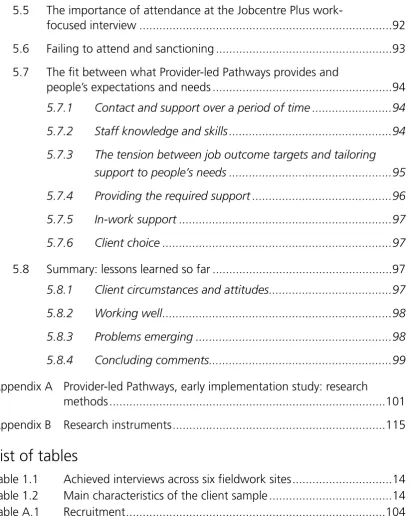
[image:8.595.98.513.111.632.2]List of tables
Table 1.1 Achieved interviews across six fieldwork sites ...14Table 1.2 Main characteristics of the client sample ...14
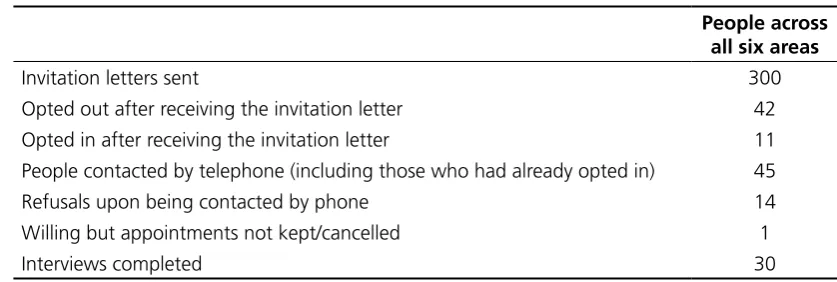
Table A.1 Recruitment ...104
Table A.2 Job titles and roles of participating frontline staff ...111
Table A.3 Age and sex of participants...112
Table A.4 Household types amongst participants ...112
Table A.5 Self-reported health conditions ...113
Acknowledgements
We are very thankful to the people who agreed to take part in focus groups and individual interviews for this study: Jobcentre Plus advisers, Third Party Provision Managers, Contract Managers, managerial and frontline staff of provider organisations, and incapacity benefits recipients who had taken part in Provider-led Pathways.
The project was managed by Janet Allaker at the Department for Work and Pensions (DWP) and we are thankful for her support and constructive contributions.
The research team at the Social Policy Research Unit (SPRU) had overall responsibility for writing this report, but the study depended on collaborative working. We would like to thank colleagues at the Policy Studies Institute (PSI), Maria Hudson, Sandra Vegeris, Sheere Brooks and Kathryn Ray, and at the National Centre for Social Research (Natcen), Jenny Graham, Martha Warrener and Helen Ranns who took a full part in design, fieldwork and the early stages of analysis.
Summary
Introduction
Provider-led Pathways is the final phase of the national roll-out of the Pathways to Work initiative that was first introduced in 2003. It provides information, advice and practical help to people receiving incapacity benefits to help them take up paid employment. Provider-led Pathways is delivered by private companies and not-for-profit third sector organisations rather than Jobcentre Plus.
This report presents findings from qualitative research carried out in 2008 to explore experiences of the early implementation of the Provider-led Pathways programme from the perspectives of incapacity benefits recipients, staff of provider organisations, and staff of the Department for Work and Pensions (DWP) and Jobcentre Plus. The study was commissioned by DWP and led by the Social Policy Research Unit (SPRU) at the University of York in collaboration with the National Centre for Social Research (Natcen) and the Policy Studies Institute (PSI).
The study comprised the collection and analysis of qualitative data gathered in face-to-face and group interviews with key actors in six Jobcentre Plus districts in Great Britain, including:
• 30 incapacity beneits recipients; • 38 staff of provider organisations; • 46 staff of DWP and Jobcentre Plus.
The study focused on the key areas of:
• Pathways clients’ experiences of referral process from Jobcentre Plus to a provider organisation;
• clients’ experiences of compulsory work-focused interviews and support provided;
• liaison arrangements between Jobcentre Plus and provider organisations;
• performance monitoring and contract management by Jobcentre Plus and
DWP.
The research was designed to provide early feedback from key players in order to inform the development of policy and practice.
Experiences and views of Jobcentre Plus advisers, Third Party
Provision Managers and Contract Managers
Third Party Provision Managers (TPPMs) and Contract Managers were largely supportive of the concept of a ‘black box’ contract, giving providers discretion to design service structure and content. However, the findings show that a lack of guidance for providers meant that TPPMs and Contract Managers spent a large proportion of their time giving providers advice and assistance regarding day-to-day management and procedural matters. It was not always clear how responsibility for monitoring aspects of provider delivery was divided between TPPMs and Contract Managers, and there was also some dissatisfaction with the level of scrutiny afforded by management information, especially where the only information available was produced by providers.
The new divisions of responsibility between providers and Jobcentre Plus had resulted in some uncertainty among advisers regarding the use of waivers and deferrals, and variation between advisers in the conduct of the first work-focused interview. Advisers were also uncertain about whether they should provide help to people who returned to Jobcentre Plus for assistance after being referred to the provider. In addition, many advisers felt that their level of job satisfaction had reduced since responsibility for case managing and supporting clients had been transferred to provider organisations, and whilst the future of their role seemed uncertain.
Jobcentre Plus advisers’ knowledge of the interventions offered by the provider varied, and was more advanced where advisers had regular opportunities to meet provider staff and to discuss their relative roles. Such opportunities for collaboration between all levels of provider and Jobcentre Plus staff were also thought to be useful for resolving tensions, building rapport, sharing good practice, highlighting problems, giving staff ownership of responses to problems, and discussing individual cases. Closer working relationships developed where individuals initiated informal contact with their counterpart at the provider organisation or Jobcentre Plus. This was in contrast to Jobcentre Plus advisers who felt removed from provider staff, or that the contact made by provider staff was a nuisance.
Jobcentre Plus advisers, TPPMs and Contract Managers raised a number of concerns about the ways providers were delivering the programme, such as the levels of
what was expected; approaches to sanctioning; and prioritising targets over the
needs of individuals. One of the most significant concerns was that providers were under-performing, primarily because they had set unrealistic job outcome targets.
Experiences and views of provider frontline staff and
managers
Feedback from provider staff and managers suggests that procedures for delivering Pathways were not always working efficiently. A number of problems associated with the handover of clients from Jobcentre Plus were identified and considered to have reduced providers’ opportunities to engage people and achieve job outcomes. These problems included perceptions that Jobcentre Plus advisers were not ‘selling’ Pathways well enough to ensure people attended further interviews
and engaged with the programme; inadequate information from Jobcentre Plus advisers about clients; and technical problems that meant notiication of the irst
provider interview was delayed or not sent to some people at all. Furthermore, provider staff and managers were unhappy about the volume of paperwork (in particular, the burden of work associated with following up non-attendance and applying for benefit sanctions), and the length of time it took to apply sanctions to payments.
Provider frontline staff described establishing good relationships with Jobcentre Plus staff where they (and advisers) had been willing to work together and communicate regularly. Having pre-existing relationships with Jobcentre Plus staff was also helpful. One benefit of collaborating with advisers was that provider staff gained insights about individual clients and ideas for meeting their needs. Poor or underdeveloped relationships existed where provider staff perceived barriers to initiating contact with advisers, or found advisers ‘difficult’.
Provider staff had a diverse range of previous work experience, with a mix of those who had experience of working with the client group, or in employment services, and those who did not. For a number of providers, it had been a struggle to recruit the right people, and many had lost staff within the first few weeks and months of the contract. At present, most managers were satisfied that they had enough staff to meet demand, although some staff felt that shortages in personnel had led to large caseloads, staff being asked to cover other roles, and services being temporarily unavailable.
Most providers described using a range of in-house, sub-contracted and external provision. In-house services involved a variety of work-related support, such as careers advice, training or job brokering. Mostly, the Condition Management Programme had been sub-contracted and views about the programme’s usefulness were mixed. Close working relationships had been struck up with sub-contractors and other external organisations where they delivered interventions at the Pathways provider’s premises, and where staff liaised with each other throughout the client’s engagement with the service. However, sub-contracting different components of provision (for example, separating work-focused interviews from the delivery of interventions) could sometimes lead to inconsistent and inadequate support for clients.
Provider staff outlined a number of ways in which they thought Pathways had helped people, including:
• motivating people using better-off calculations;
• encouraging and assisting people to take up voluntary work or training as a step towards paid employment;
• helping some people to think positively about work;
• supporting people to make positive life changes (such as taking more care about their appearance); and
• helping people to stay in work.
However, most providers perceived that clients were, on the whole, harder to help than they had anticipated. Some staff observed a tension between meeting targets and meeting clients’ needs and there were concerns that job outcome targets were being prioritised ahead of clients’ wellbeing and ability to sustain employment. Finding it harder than expected to engage or to help people was thought to be a significant reason why providers were currently underperforming against the targets they had set themselves in their contracts. Other reasons for not meeting targets were perceiving financial support for transitions into work as insufficient, and experiencing problems reaching the expected number of referrals from Jobcentre Plus.
Experiences and views of incapacity benefits recipients
taking part in Provider-led Pathways
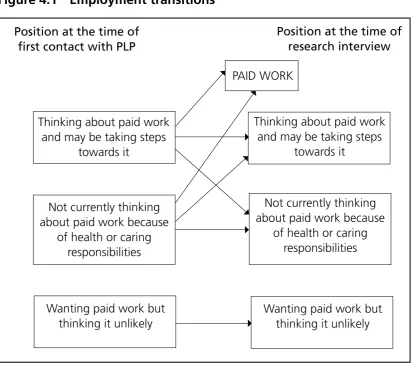
Among the clients interviewed, views and capabilities concerning health and paid work varied. It was possible to divide people into three sub-groups according to views held at the time of their first contact with the provider:
• people who were thinking about paid work and, in some cases, taking steps towards it;
• people who were not thinking about paid work in the near future because of their health or caring responsibilities;
By the time of the research interview some people had moved into paid work, most of whom were from group one above. Those who moved into paid work from group two attributed this move to support from the Pathways provider and support from personal networks. No one from the third sub-group moved nearer to work.
Evidently, not everyone had been informed about Provider-led Pathways by Jobcentre Plus staff in a face-to-face interview. Instead, some people said they had heard about their obligation to attend provider interviews via a letter either from Jobcentre Plus or from the provider. There were varying understandings of what the provider organisation was or of what they would offer. Whilst most people understood that the provider was something to do with paid work and that they might face a cut in their benefit if they did not attend, there were also people who felt that they had not received enough information about the provider. These people had not understood that their attendance was mandatory, that sanctions could be applied if they failed to attend, or that they were required to attend more than one interview.
People who were aware of the threat of sanctions generally thought that this was unnecessary because they would have gone to the provider willingly, or inappropriate because people might be unwell and unable to attend. Miscommunications between provider staff had resulted in letters about sanctions being sent to people who had missed an appointment but who had notified staff of their reason.
The support received by people from providers included emotional support (encouragement and motivation from personal advisers), practical assistance (for example, intensive one-to-one job search help, arranging health interventions, or helping to construct a CV), and information and access to financial assistance (such as in-work tax credits and benefits).
Some people’s progress had been affected by the timing of medical examinations connected to their benefit claim. People were often disappointed and felt let down when they lost eligibility for incapacity benefits, and with it eligibility for provider support, after a medical examination. Often, these people felt that their health condition had not improved and that they would have valued more intensive help to find work, especially where they found the Jobseeker’s Allowance regime hard to comply with.
At the time of the research interview, a range of outstanding support needs were identified by people who were thinking about or taking steps towards paid work, some of whom were still in contact with the provider. Some people who had come to the end of the mandatory interviews wanted to continue their contact and had arranged to do so. Those who did not want further contact had not found their experience of the provider beneficial. There were also people who had no immediate plans to access help from the provider, but were aware that they could return any time in the next three years if they wanted to.
Conclusions and discussion
This study of the early implementation of Provider-led Pathways sought to explore early experiences and views of key informants. It was not within the remit of the study to assess the impact of the programme, nor to compare Pathways contractors’ performance with Jobcentre Plus’s delivery of the programme. There will be further evaluation research on Provider-led Pathways over the coming years that will address the questions of the impact and cost-effectiveness of delivering government welfare to work programmes via contracted-out services. Although an ‘early implementation’ study cannot answer these questions, the findings have provided insights into what was working well and problems that had emerged during the early months of Provider-led Pathways.
The following experiences demonstrated ways in which the programme was working well:
• inding provider staff pleasant and helpful;
• feeling that the environment within provider premises was hospitable, and a more inviting place than Jobcentre Plus;
• meeting needs, where people felt the support received was beneicial and appropriate;
• challenging people to think differently about their employment prospects; • contributing to people’s progress and movements into work, by providing
encouragement, financial support and access to other helpful provision.
A number of problems that were experienced might be considered ‘teething problems’ because they are likely to diminish with the increased knowledge and experience that will build up over time. These included:
• a variety of procedural and technical problems regarding referrals and contacting clients;
• a lack of knowledge among Jobcentre Plus advisers (of provider services) and
However, there were also problems that might require changes to policy or guidance. These problems included:
• the way that provider staff are incentivised to focus on people who are considered
job ready and leave those furthest from work inadequately supported, because of the way providers are contracted to deliver job outcomes and are paid
according to the number achieved;
• uncertainty about divisions between roles and responsibilities regarding the use of waivers and deferrals, service provision and case management;
• a perceived lack of guidance for providers in operating day-to-day procedures
and for delivering particular interventions such as the Condition Management
Programme;
• the loss of support to people who may still need it to re-enter the labour market because they lose entitlement to incapacity beneits;
• unmet needs, where the support offered was not tailored to suit the individual;
• a lack of choice for clients regarding who provides support and the burden on
1 Introduction
This report presents findings from qualitative research carried out in 2008 to explore experiences of the Provider-led Pathways programme from the perspectives of incapacity benefits recipients, staff of provider organisations, and staff of the Department for Work and Pensions (DWP) and Jobcentre Plus in the early phase of implementation. The study was commissioned by DWP and led by the Social Policy Research Unit (SPRU) at the University of York in collaboration with the National Centre for Social Research (Natcen) and the Policy Studies Institute (PSI). The research was designed to provide early feedback from key players in order to inform the development of policy and practice.
Provider-led Pathways refers to the final phase of the national roll-out of the Pathways to Work initiative that was first introduced in 2003 in seven pilot areas and had been extended to 17 further areas by 2006. In all of these areas Pathways to Work was delivered by Jobcentre Plus on behalf of DWP. In 2007, DWP announced that the programme was to be extended to the remaining 31 districts in Great Britain but in a departure from previous policy, services would be provided by a mix of private companies and third sector (i.e. voluntary, and not-for-profit) organisations rather than Jobcentre Plus (hence the name Provider-led Pathways).
Provider-led Pathways was implemented in two stages, in December 2007 and April 2008. Although a programme of evaluation research has been planned by DWP to test its success or otherwise, this will not deliver findings until 2010. Therefore, in order to provide early feedback to DWP on the operation of Provider-led Pathways the research reported here was commissioned.
1.1
Policy and operational context
1.1.1 Provider-led Pathways and Jobcentre Plus-led Pathways
• a requirement placed on new claimants of incapacity beneits to attend a series of work-focused interviews;
• the establishment of new, specialist teams of Personal Advisers to advise and support claimants;
• a range of services and inancial measures provided by Jobcentre Plus and
by external provider organisations (called collectively the ‘Choices’ package) available to claimants to encourage and support their progress towards a return to work. Included in the Choices package are new measures introduced as part of Pathways to Work – the Condition Management Programme, In-Work Support, and Return to Work Credit – alongside existing disability employment programmes and financial support, including:
- access to Disability Employment Advisers; - the New Deal for Disabled People;
- WORKSTEP;
- Access to Work and Residential Training Colleges.
Under Provider-led Pathways provider organisations have been given a large degree of autonomy in how they deliver the Pathways programme (what has become known as the ‘black box’ approach). Contracts between DWP and provider organisations stipulate that a series of work-focused interviews is carried out with clients and that each provider must offer some form of Condition Management Programme.1
Providers must also provide tailored, work-focused support alongside a personal action plan. However, apart from these requirements, provider organisations are largely free to decide what services they offer within the ‘black box’, including the freedom to sub-contract services.2
1.1.2 Funding arrangements and targets for Provider-led Pathways
The prime mechanism used by DWP to ensure that provider organisations deliver the desired results of people entering paid employment and sustaining jobs is the
1 The Condition Management Programme is a venture devised jointly by the
Department of Health and Department for Work and Pensions. Condition Management Programme practitioners are health professionals who provide advice and information (based on a bio-psychosocial model of health and illness) to Pathways clients in order to overcome barriers such as anxiety and lack of confidence. The Condition Management Programme does not offer ‘treatment’ for health conditions but is intended to be empowering by educating people about what they might be capable of despite their health condition. The Condition Management Programme has been subject to two studies: Barnes and Hudson (2006), and Warrener et al. (2009).
2 We understand from DWP that Pathways providers have received guidance about
funding regime. Put simply, providers are paid in three ways:
• a ‘service fee’ for taking people onto their caseloads; • a job outcome payment when a client starts work;
• a ‘sustained employment’ payment when a client maintains work for 26
weeks.
A minimum target for the number of job entries was stipulated in the Invitation To Tender and, as part of their bids, providers were asked to state the number of job entries they expected to achieve. The providers whose bids scored the highest based on quality and price were then awarded a contract.
1.1.3 Contract management
The responsibility for overseeing Provider-led Pathways contracts lies with DWP
Contract Managers. In brief, Contract Managers monitor the performance of providers against contractual and legislative requirements, and where necessary take appropriate action. Hence they will receive and scrutinise management information and other feedback and may have direct contact with providers as necessary, especially in the early days of the contracts. Delivery of the programme is also aided by the Third Party Provision Managers (TPPMs). TPPMs do not have a contract management function but provide a more hands-on role to enhance the effectiveness of Provider-led Pathways. For example they:
• oversee administrative processes to ensure a smooth and effective journey for the client between Jobcentre Plus and the provider organisation;
• liaise with Jobcentre Plus adviser managers to inform them of available provision;
• promote Provider-led Pathways through the media or local marketing material; • respond to complaints from Provider-led Pathways clients;
• work with employer engagement and local partnership staff to identify the
provision required to meet the needs of the local employer base.
(The experiences of Contract Managers and TPPMs are discussed fully in Chapter 2.)
1.1.4 The Provider-led Pathways process
All new claimants of incapacity benefits (including Employment and Support Allowance (ESA) from October 2008) are required to engage actively with Pathways to Work. The process they will go through will typically take the following course:
• referral to the local provider organisation operating in the Jobcentre Plus district;3
• up to ive further work-focused interviews with the provider organisation.
The purpose of the initial Jobcentre Plus interview, according to Jobcentre Plus guidance, was for an adviser to tell the claimant about the operation of Provider-led Pathways, introduce the provider organisation, and explain the requirements that they would need to meet in order to continue their eligibility for benefit. The first work-focused interview would result in a formal, written referral to the provider that would include an initial work-focused action plan.
(The experiences of the Provider-led Pathways process from the perspectives of clients, Jobcentre Plus staff and provider staff are analysed in depth in Chapters 2-4.)
1.2
Research aims and questions
The overall objective of the study was to provide some early feedback for DWP on the experiences of the users of Provider-led Pathways (i.e. incapacity benefit claimants referred to a Pathways provider), the staff of provider organisations, and the relevant staff of Jobcentre Plus offices, i.e. front line advisers, and TPPMs.
To meet this objective a number of topics were explored with each of the key actors.
For DWP and Jobcentre Plus staff, including front line staff, TPPMs and Contract Managers
• Their experiences of making referrals from Jobcentre Plus to the provider. • Their experiences of liaison arrangements with provider organisations for
accessing services such as Access to Work, permitted work payments, and Return to Work Credit.
• Liaison with provider organisations regarding sanctions. • Monitoring the performance of provider organisations.
• Contract management issues arising from early months of implementation.
For provider organisation staff, including front line staff and managers
• The interventions offered to clients.
• Their experiences of referrals from Jobcentre Plus and to sub-contractors.
3 As part of the second stage of implementation in April 2008 in three areas
• Their experiences of liaison arrangements with Jobcentre Plus for access to
specialist services (such as Access to Work, permitted work payments, Return to Work Credit).
• Working with Jobcentre Plus TPPMs and Contract Managers.
• Knowledge and experience of deferring and waiving work-focused interviews,
and of sanctions.
• Their views on the extent to which some clients are harder to help than others.
For Provider-led Pathways clients
• Their understanding of the requirement to attend work-focused interviews at
Jobcentre Plus and the provider organisation.
• Their experiences of the initial work-focused interview with Jobcentre Plus, and
of the referral process to the provider organisation.
• Their experiences of work-focused interviews administered by the provider
organisation.
• Their knowledge and experience of deferring and waiving work-focused
interviews, and of sanctions.
• Their experiences of Condition Management Programme, job brokers and
other services.
• Their overall view of the usefulness of the Provider-led Pathways service.
1.3
Research design and methods
The research design adopted for this study was based on qualitative data collection and analysis techniques as these are most suited to the in-depth exploration of understanding processes and experiences.
A full explanation of sampling, response rates, data collection and analysis can be found in Appendix A.
Six fieldwork sites were selected from the first stage of Provider-led Pathways implementation. Each site had a different provider organisation and represented different labour market environments.
A mix of one-to-one interviews and group interviews was used to collect data with the three groups of key actors. Topic guides were designed to steer the face-to-face and group interviews. These are reproduced in Appendix B.
Table 1.1 Achieved interviews across six fieldwork sites
Type of interview Number New Incapacity Benefit (IB) claimants Face-to-face 30
Pathways Provider organisations – front line staff Group 30 in 6 groups Pathways Provider organisations – managers Face-to-face 8
Jobcentre Plus – front line advisers Group 34 in 6 groups
Jobcentre Plus – TPPMs Face-to-face 6
Jobcentre Plus – Contract Managers Face-to-face 6
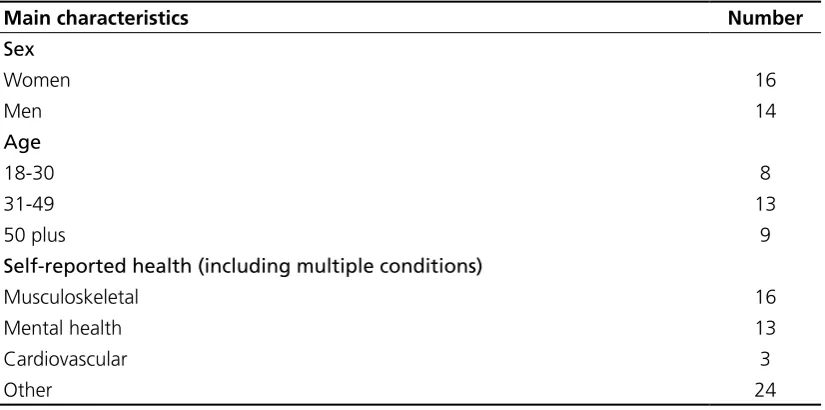
For the client interviews DWP supplied a sampling frame of incapacity benefits recipients from which a purposive sample was selected to provide a spread of ages and roughly equal proportions of men and women. Research participants were not selected according to their health condition, but data on self-reported health conditions were collected during interviews. Table 1.2 sets out the main characteristics of the claimant sample.
Table 1.2 Main characteristics of the client sample
Main characteristics Number
Sex
Women 16
Men 14
Age
18-30 8
31-49 13
50 plus 9
Self-reported health (including multiple conditions)
Musculoskeletal 16
Mental health 13
Cardiovascular 3
Other 24
[image:25.595.93.506.412.617.2]1.4
Structure of the report
Chapter 2 presents analysis of data generated from group interviews with Jobcentre Plus advisers and individual interviews with Jobcentre Plus TPPMs and DWP Contract Managers. It covers respondents’ views about the Provider-led Pathways programme design, experiences and views of the first work-focused interview and referral processes, TPPMs’ and Contract Managers’ roles and working relationships, and perceptions of provider delivery and performance.
Chapter 3 draws on data from provider frontline staff and managers to explore their experiences of the early stages of implementing Provider-led Pathways, including experiences of the handover from Jobcentre Plus, experiences and views of various elements of providers’ delivery of the programme, and their assessments about their performance so far.
Chapter 4 presents analysis of the experiences and views of people taking part in Provider-led Pathways, including their contact with staff in Jobcentre Plus and provider organisations, their use of services accessed via the provider and their views on the usefulness and effectiveness of Pathways.
Chapter 5 provides a summary of the main findings and a discussion of some of the policy implications arising from the findings.
2 The experiences and
views of Jobcentre Plus
Advisers, Third Party
Provision Managers and
Contract Managers
This chapter presents analysis of data generated from group interviews with Jobcentre Plus advisers (or Provider Led Pathways Advisers (PLPAs)), and individual interviews with Jobcentre Plus Third Party Provision Managers (TPPMs) and Department for Work and Pensions (DWP) Contract Managers. The chapter is divided into four main parts: views about the Provider-led Pathways programme design (Section 2.1), experiences and views regarding the first work-focused interview and handover processes (Section 2.2), TPPMs’ and Contract Managers’ roles and working relationships (Section 2.3), and perceptions of provider delivery and performance (Section 2.4). The chapter concludes with a summary of the main findings.
2.1
Programme design
2.1.1 Contract design and implementation
Limiting the contract to one provider per district was thought of as a strength of the programme and a weakness. A preference for having one provider was that it simplified service delivery by ensuring that all support was provided from one place. On the other hand, criticisms of this arrangement were that some districts
were too large for one organisation to handle; and that having one provider per
Some TPPMs made positive comments about the use of a ‘black box’ contract design. This form of contract set out a small number of key elements that contractors must provide (for example, a series of work-focused interviews, a Condition Management Programme), but in the main gave them the freedom to design their support packages as they saw fit. The flexibility of the funding arrangements was thought to encourage innovation and enable providers to transfer money not spent on easier-to-help clients to people with greater needs. Another comment, however, was that it would have been useful if the contract had provided more details about expected elements of provision, so that providers were aware of current best practice and the likely costs involved4. More guidance on setting up
low level procedures, such as dealing with the referral lists from Jobcentre Plus, would also have been welcome and would have created consistency in the way districts worked with providers.
2.1.2 The role of Jobcentre Plus advisers
One of the most significant differences between Provider-led Pathways and Jobcentre Plus Pathways was the removal of responsibility for work-focused interviews and case management from Jobcentre Plus advisers to contracted provider staff. On the whole, advisers’ spoke emotively about their role in Provider-led Pathways, feeling that their level of job satisfaction had reduced with the reduction in their level of contact with, and responsibility for, clients. Having only one work-focused interview to conduct left most advisers feeling that their knowledge and expertise was a wasted resource. Some could not understand why they still held a role within Pathways, especially as the first provider interview seemed to cover the same ground as the Jobcentre Plus interview. There was some concern amongst advisers that their role in Pathways would at some point be phased out and their jobs would be at risk.
At the time of the interviews, many of the advisers had multiple roles, working with a number of client groups. Some were unhappy about the pressure to take on a multi-faceted adviser role, especially where this necessitated travel between Jobcentre Plus offices. On the other hand, there were also advisers who welcomed the opportunity to use their advisory skills with other client groups because these skills were no longer employed when working with incapacity benefits recipients.
2.1.3 Provision for existing incapacity benefits recipients
PLPAs were also concerned about the impact of Provider-led Pathways arrangements on existing clients (i.e. those who were not new or repeat incapacity benefits claimants and were not mandated to attend work-focused interviews). At present,
4 Staff of a provider who delivered part of the Condition Management
it was thought likely that existing clients were missing out on support because they had to be signposted to the local provider, rather than receive immediate support and advice from Jobcentre Plus. Some advisers thought that people who had built up the motivation to approach Jobcentre Plus for help may not make the same effort to seek help from an unfamiliar organisation. And as there were no formal referral mechanisms for existing clients, providers would not know who to follow up as a potentially interested client. As a result, some advisers explained that they try to provide help directly to people voluntarily seeking support.
Advisers also expressed feelings about no longer being able to continue offering support to clients who had been on caseloads for some time. One perception was that it felt like a ‘breach of trust’ to have offered support in the past and not now be able to provide it. Some advisers felt so strongly about providing continuity of support that they took time to help such clients who returned to Jobcentre Plus.
2.2
The work-focused interview at Jobcentre Plus and
handover processes
2.2.1 Referral rates from Jobcentre Plus to providers
The Invitation to Tender set out the number of expected claims for incapacity benefits and the number of expected referrals from Jobcentre Plus to the provider.5 The TPPM and Contract Manager in one district were aware of provider
complaints that Jobcentre Plus was not referring enough clients, but also knew that the management information refuted these claims. However, in two districts the TPPMs and Contract Managers explained how fewer new incapacity benefits claims had been made than had been predicted.6 This meant that PLPAs were
conducting fewer work-focused interviews and a smaller number of clients were being referred to contractors than had been expected. It was also suggested that in this situation providers were expected to engage more voluntary clients, in order to boost the numbers of people entering the programme.
Other factors affecting the number or flow of referrals were identified by advisers
and included the size of the Jobcentre Plus ofice and stafing capacity; staff availability and the impact of holidays or advisers’ other responsibilities; and
management objectives in individual offices.
The rate at which clients failed to attend work-focused interviews was also thought to be important. Advisers in rural areas thought that they had particularly high fail to attend rates because of the distances to travel to get to Jobcentre Plus. A sanctioning policy is in place to combat non-attendance and encourage compliance, enabling advisers to apply for a reduction in benefit when interviews
5 These figures were forecast by DWP analysts.
are missed. Although decision making about sanctions varied between advisers,7
in general most agreed that sanctioning was a last resort. Advisers in two areas commented on how their current sanctioning behaviour compared with the past.8
Some of these advisers suggested that their current role was under more scrutiny, and that the process was more directive, in Pathways compared with previous roles. However, whilst advisers in one area thought they were sanctioning more often now, advisers in the other area did not perceive a change in their decision making. Advisers reported that, most commonly, those clients notified about the possibility of being sanctioned attended interviews before the sanction was applied. This suggests that failing to attend may have delayed referrals to providers, but not significantly affected the overall number of referrals.
Waivers and deferrals
Another factor affecting the number and flow of mandatory referrals to providers was the extent to which PLPAs used waivers or deferrals.9 In the Pathways
programme delivered by Jobcentre Plus, advisers were able to waive or defer further work-focused interviews if they felt it appropriate to do so. Some of the advisers interviewed for this study said they were comfortable utilising their discretion and described instances where they had waived or deferred benefit recipients because they were too ill to attend interviews, or because they were in hospital. However, a large proportion of the advisers felt that their discretion to waive or defer was either limited or non-existent. Some said that there was no choice but to follow
7 Practice in one district differed markedly between advisers who had
responsibility for making the initial request for sanctions, and those who said that a compliance team made this decision instead.
8 The authors understand that Pathways to Work was not implemented in
the districts represented in this research until Provider-led Pathways began. Thus, it is not clear what past sanctioning activity advisers were comparing their current behaviour with. It is possible that they were comparing their role in Pathways with previous adviser work with other mandated benefit recipients, such as those in receipt of Jobseeker’s Allowance.
9 A waiver issued by a PLPA would result in a referral to the provider as a
the decision formulated by the computerised screening tool,10 even where this
decision seemed nonsensical and would not be beneficial to the client. In two areas, advisers described needing to obtain authorisation from a manager in order to issue a waiver or deferral.
Analysis of the data suggests that advisers also lacked clarity about who was best placed to issue waivers and deferrals, and at what stage in the Pathways process. Jobcentre Plus advisers gave several arguments in favour of reserving waiver/deferral decisions for provider staff. These ranged from feeling that it was in the client’s best interests to become engaged in the programme to learn about what was on offer, even if their circumstances dictated that they should be waived
or deferred later; to feeling pressure from targets to complete a certain number of
interviews within a certain timeframe, and to refer the expected number of people to the provider.
However, some Jobcentre Plus advisers recognised that not waiving or deferring also had its consequences. Some spoke of receiving ‘slapped wrists’ from management where they had referred people (on a mandatory basis) who providers said could not be helped immediately. They had been made aware that referrals which resulted in waivers or deferrals reflected negatively on providers’ performance, especially where providers were issuing more waivers and deferrals than the contract allowed. A number of TPPMs and Contract Managers perceived that advisers were at fault for referring people inappropriately, and had circulated guidance on appropriate referral practice. However, TPPMs tended to support their advisers’ decisions by explaining that they were doing what was asked of
them contractually by meeting referral targets; or by suggesting that providers had
misinformed impressions of appropriate and inappropriate referrals. In one area the TPPM had found it useful to convene a meeting with provider staff to help them understand why they were referred harder to help clients and to prepare approaches to support these individuals.
2.2.2 Content of the interview and PLPA explanation of provider
A typical work-focused interview at Jobcentre Plus, as described by PLPAs, involved the following:
• discussing the client’s health condition(s) and other relevant personal circumstances;
• applying the screening tool, and encouraging those not screened in to seek help from the provider;
10 The screening tool indicated whether an individual was deemed likely to
• ‘selling’ the provider; • writing an action plan.
The duration and purpose of the work-focused interview did not seem to be consistent amongst advisers or across districts. Some perceived it as a short interview where they repeated the same message with each client. This contrasted with advisers who said the interview typically lasted an hour and was an holistic exploration of the client’s problems and needs. If appropriate, those who described the latter gave practical assistance by conducting job searches and financial better-off calculations,11 or gave advice about benefit entitlement. They might also spend
time talking about suitable next steps and provide contact details for relevant organisations who might be able to help. However, there was also an awareness of their limitations. One comment made was that it was hard for an adviser to know in just one interview how best to help an individual. These advisers were also clear that they were not able to help the client ‘take steps’, by facilitating contact with external organisations or by providing constant encouragement over a period of time. If they talked to the client about their support options then they would note this, and the client’s response to the offer, in the action plan so that provider staff would know what had been discussed.
Advisers generally explained that all further assistance would be available from the Pathways provider, not Jobcentre Plus. At this point there was occasionally a need to reassure clients that the interviews would be similar to the one at Jobcentre Plus and that there would be no expectation to take up a job12. The level of detail
entered into by advisers in talking about the provider and their services varied. Some used the provider information leaflet to talk through the interventions offered, but in general advisers felt that they did not possess sufficient knowledge to be able to specify what might be of potential benefit to individuals and that they were ‘sending people into the unknown’. One adviser explained that they had stopped giving detailed information when client feedback suggested that the provider was not delivering what had been expected. Another comment was that provider details had been hard to come by initially, but the flow of information was steadily improving. At the time of the research interviews, provider newsletters (designed to raise advisers’ awareness of service provision and outcomes), were in circulation or planned in some areas.
11 Better-off calculations compare household finances whilst on benefits with
a projection of household finances if in paid work. The calculations take into account eligibility for tax credits and other in-work benefits, and liability for extra expenses such as travel costs.
12 The research took place before the introduction of ESA and the additional
2.2.3 Making referrals and transferring information
Jobcentre Plus advisers explained that all new or repeat incapacity benefits claimants who attended a work-focused interview would be referred to the provider. Those who had not been screened in, or waived, would be referred as voluntary clients, and providers would decide whether to attempt to engage them in the programme.
In most areas, providers first learned that a referral was being made by Jobcentre Plus when the PLPA telephoned. Whilst some advisers welcomed this opportunity to make the client’s first appointment in the client’s presence, there were also concerns about this method of information transfer. One concern was that giving personal details over the phone, in earshot of other people in the Jobcentre Plus office, seemed in breach of data protection law. Another view was that making an appointment for the client seemed to contradict the rapport-building achieved through the interview, and it would be better if providers arranged their own appointments. There were also advisers who rarely telephoned first, choosing only to do so when they felt the client was particularly vulnerable and that it would be helpful to discuss the client’s needs with the provider. Some advisers also explained that they advised particularly keen clients to initiate contact with the provider themselves as soon as possible.
The formal and essential part of making a referral was accomplished when PLPAs completed a referral form and sent it to the provider in the post, with the client’s action plan. This form requested information about the client’s health, reasons for claiming incapacity benefits, employment history, and general personal and household circumstances. In one area, the provider had also requested details about clients’ benefit entitlements in order to conduct better-off calculations.
Advisers made, generally, positive comments about providers’ referral systems. However, some felt there was too long an interval between the Jobcentre Plus interview and the first provider interview (commonly four to five weeks) and that as a result clients could lose motivation and interest. Exceptionally, the Contract Manager and TPPM in one area were aware that mandatory clients were waiting up to 12 weeks to be seen by the provider. Explanations offered were that the provider did not have enough resources to process referrals more quickly, or that the provider was overlooking some of the paperwork sent by Jobcentre Plus. In places where Jobcentre Plus offices were situated close to provider premises, voluntary clients were said to be able to access the provider on the same day as seeing the PLPA. Then again, there was also evidence that some providers were taking months to see people who had volunteered to take part because of the volume of mandatory referrals or a shortage of staff.
2.2.4 Client attendance at provider interviews
interviews at provider premises. A number of TPPMs noted that providers’ fail to attend rates were lower than those for Jobcentre Plus interviews and that this might be because advisers were promoting providers well in the initial interview, or because providers reminded each client a number of times about forthcoming appointments.
In one area, however, the attention of Jobcentre Plus staff had been drawn to the high fail to attend rate for the first provider interview. The TPPM and Contract Manager suggested that advisers were not ensuring clients were well informed about what a referral to the provider would mean, and that voluntary clients in particular were not making the effort to attend. To reduce the number of missed appointments, the district was piloting an initial group session for new claimants, and introducing a phone call to the client from the PLPA between the Jobcentre Plus interview and the first provider interview to ‘keep clients warm’. The group session would be conducted by a PLPA and member of provider staff and was designed to introduce the programme and provider, and to reassure people about the nature of participation in Pathways.
2.2.5 Jobcentre Plus post-referral contact with clients
All of the Jobcentre Plus advisers who took part in the study perceived that they were not supposed to deal with incapacity benefits claimants after they had been referred to providers. This was markedly different to previous adviser roles, which had involved being the client’s main point of contact and source of support over a period of time. One view was that there was a tension between the instruction not to see clients again and ongoing pressure to meet targets for the number of work trials submitted and better-off calculations completed. Despite being aware that they should have no contact, in practice there were a number of scenarios where advisers had post-referral contact with clients, including where:
• clients (who had begun provider interviews) returned to advisers for help or advice;
• clients needed assistance in the interval between being referred and attending the irst provider interview;
• providers requested that advisers work with the client.
Clients initiating contact after registering with the provider
it by saying that otherwise clients might not receive much-needed help, especially where they were dissatisfied with the provider.
Where people came to advisers with specific complaints about the provider, advisers either dealt directly with provider staff to resolve problems, or notified the TPPM who then liaised with provider managers. One commonly held opinion was that people who came to Jobcentre Plus because they were dissatisfied with the provider’s service wanted to continue receiving support from the PLPA, rather than from provider staff.
Clients requiring help between referral and first appointment
There were also occasions where advisers stepped in to help people who had been referred to providers, but had not yet attended their first appointment. These people were either ready to start a job and wanted help to apply for tax credits or other financial support, or had lost entitlement to benefits and needed advice. Although in such cases it was not clear whether Jobcentre Plus or provider organisations were responsible for providing support, advisers were mostly happy to help because they did not want the client to be left unsupported.
Provider-requested contact between advisers and clients
The third scenario, identified by some advisers and TPPMs, was contact with clients requested by provider staff. They reported that providers had sometimes sent people back for help that Jobcentre Plus was not responsible for delivering, such as basic skills training or better-off calculations. One view was that provider staff did not seem to understand that Jobcentre Plus advisers no longer provided interventions.13 Coming back to Jobcentre Plus for assistance in this way was
distinct from referral to a Disability Employment Adviser (DEA), which remained available to Pathways clients (and is discussed further in Section 2.3.3).
2.2.6 Advisers’ awareness of client progress
Although advisers knew that their role was limited to conducting the first work-focused interview, some expressed a wish to know what had happened to clients after referral. There were no formal mechanisms for feeding back information about client progress to PLPAs. However, advisers sometimes learned of outcomes
from people who returned to Jobcentre Plus; from provider staff during routine
enquiries or discussions about individuals,14 from provider newsletters presenting
‘success stories’; and from formal notiications, such as ‘exit notices’ when clients
ended benefit claims.
13 One view from provider staff was that PLPAs had ‘washed their hands’ of
clients once they had referred them to the provider and, therefore, that they were unwilling to provide any further assistance.
14 Some provider staff said they made a point of feeding back information
There were opposing views about whether advisers should receive regular updates on client progress. Those in favour argued that having a better understanding of clients’ (positive) experiences with the provider would enable them to pass on this
information to new claimants; and that they would be less inclined to waive or
defer people if they were assured that provider staff could help people with severe or complex problems. Advisers who did not see a need for feedback explained that they had no time to keep track of individuals and that nothing was learned from hearing about their outcomes.
2.2.7 Working relationships with provider staff
Both formal and informal contact with provider staff was described by Jobcentre Plus advisers, TPPMs and Contract Managers. The working relationships between TPPMs or Contract Managers and provider managers will be explored in Section 2.3. The rest of this section considers the formal and informal communication between Jobcentre Plus advisers and provider frontline staff, as reported by advisers, TPPMs and Contract Managers.
Formal or regular contact
Analysis of the data suggests that the frequency and format of communication between the frontline staff of Jobcentre Plus and provider organisations was not uniform across districts, and that some areas were happier with their arrangements than others. A number of districts had adopted formal ways of communicating, such as:
• organising events at the beginning of the pilot so that Jobcentre Plus and provider staff could meet;
• arranging for Jobcentre Plus staff to shadow provider staff, to share good practice and to learn about the provider’s processes;
• provider-produced newsletters carrying updates on provision and client outcomes;
• establishing a Link Adviser (member of provider staff) in each area of the
district to be the main link between Jobcentre Plus and the provider regarding
day-to-day matters;
• establishing formal ‘cluster’ or ‘area meetings’ bringing staff together
regularly.
There were also several districts where there were no organised, regular forums for sharing information or meeting together. Advisers described how there was no ‘set structure’ for communicating with provider staff. Practice often differed between advisers in the same district because arranging regular meetings with provider staff was left to their own initiative. One TPPM was currently developing a protocol for communication but this only allowed for the views of frontline staff to be fed through managers who liaised with providers. Some advisers demonstrated a desire for greater contact through regular meetings and opportunities to observe each others’ interviews.
Informal or ad hoc contact
Informal contact between frontline staff varied between individuals and across areas. Some advisers described developing positive and mutually beneficial relationships with their counterparts in the provider organisation. These relationships were characterised by feeling able to phone each other for help, advice and information whenever necessary, or by having worked together to assess a particular client’s case and identify suitable interventions. In general, advisers found it easier to work with provider staff who seemed flexible and keen to do what was best for the client. One comment was that relationships had improved over time, as staff became better acquainted with one another.
A different perspective was offered by some advisers who thought that informal and ad hoc contact from provider staff could be a nuisance and unnecessary. They reported that provider staff had rung for help which they should have been able to deliver themselves (for example, asking advisers to help a client apply for Permitted Work), or for advice on topics which they should already have been well equipped to handle (for example, identifying suitable interventions for an individual).
2.3
TPPMs’ and Contract Managers’ roles and working
relationships
Provider-led Pathways contracts were larger than previous contracts, both in financial value and in geographical coverage.15 TPPMs and Contract Managers
who took part in the study were all acutely aware of how these contracts and their success were of interest to many people, given its focus on what was considered a politically sensitive client group and its adoption of a different division of responsibility between Jobcentre Plus and external providers. The high status of the contracts meant that TPPMs and Contract Managers were heavily involved in their implementation, and continued to play a part in directing provider delivery and assessing performance.
2.3.1 The roles of TPPMs and Contract Managers
TPPMs explained that they were tasked with ensuring the smooth operation of the client journey from Jobcentre Plus to the provider. In practice, this meant working with Jobcentre Plus staff and provider staff to implement effective processes between the two, and monitoring their operation. The role of Contract Managers was described as monitoring and managing the provider’s performance against targets set in the contract. This required collaboration with provider managers to ensure they were implementing the programme as per the contract, and monitoring client outcomes.
Maintaining a separation of responsibilities
In principle at least, most TPPMs and Contract Managers felt that their roles were distinct. However, some observed that, in practice, the separation of responsibilities was not easy to maintain. In particular, TPPMs were often interested in performance matters because they needed to report back to their District Manager about the performance of Pathways and of their advisers in particular. The blurring of roles did not seem to be a problem where the TPPM and Contract Manager felt they shared an excellent working relationship (see Section 2.3.2). However, there had been occasions where some Contract Managers felt the TPPM had stepped outside their remit by ‘micro-managing’ and ‘bypassing’ them in making decisions. One reason offered for this was that TPPMs used to undertake local contract management and might have found it hard to relinquish this role for the Pathways contract.
15 Previous contracts, such as New Deal for Disabled People, would often have