S Ü ^ $
E EUROPEAN
Y COM M U N IT
Importance of cell de
velopment stage on
the radio-sensitivity
of plants
Quarterly Information Bulletin of the
European Atomic Energy Community
(Eur
atom)
1964-3
Contents:
3 Nuclear technology serves European
agriculture
10 Induction of mutations In barley at
various stages of development
12 Using radioisotopes to study plant
growth
15 Food Irradiation—an improvement to
human diet
18 Irradiated mushrooms taste better
20 How does the Dragon Project stand
Ì
24 Research and Information
28 The use of „nuclear" patents as an
information source
29 Euratom news
Published and edited by
:
Euratom, Dissemination of Information
Directorate, 51-53 rue Belliard, Brussels.
Telephone: 13 40 90
For subscription rates please see overleaf.
The Euratom Commission or any persons
acting on its behalf disclaim all liability with
respect to the completeness of the
information contained in this periodical as
well as to any damage which might result
from the use of information disclosed or of
equipment, methods or processes described
therein.
Any article published in this bulletin
may be reproduced in whole or in part
without restriction, provided that the
source is mentioned.
Picture credits:
Cover: Arie Nijhof,
Benne-kom (Netherlands); p. 2: Min. van Land
bouw en Visserij, The Hague; p. 8: Euratom/
ITAL Association, Wageningen (Nether
lands); p. 11 : Max-Planck-Institut für Züch
tungsforschung, Cologne-Vogelsang (Ger
many); p. 12, 13, 14: Euratom/ITAL Asso
ciation, Wageningen; p. 17: Keystone and
FAO; p. 20: UKAEA. United Kingdom; p.
31 : GKK, Karlsruhe (Germany); p. 32: dpa.
Quarterly
Five editions:
English, German, French, Italian and Dutch
Subscriptions to:
Agence et Messageries de la Presse (A.M.P.),
34, rue du Marais,
Brussels, Belgium.
Yearly subscription rates:
United Kingdom 18/-; United States
$
3.50;
Basic rate:
Europe: 125 Belgian Francs
Other countries: 175 Belgian Francs
Single copies:
United Kingdom 6/; United States $ 1 .
-Prlnted in the Netherlands
Q u a r t e r l y Information Bulletin of the Euro
pean A t o m i c Energy C o m m u n i t y (Euratom)
19643
The C o m m u n i t y ' s mission is t o create the conditions necessary f o r che speedy estab
lishment and g r o w t h of nuclear industries in the member States and thereby c o n t r i b ute t o the raising of living standards and the development of exchanges w i t h o t h e r countries (Article 1 of the Treaty i n s t i t u t i n g
the European A t o m i c Energy C o m m u n i t y ) .
t o p i radioisotopen s hip propulsion schiffs antrieb propulsion na vale propulsione nava le scheepsvoortstuwi ng biology biologie biologie biologia bio logie medicine medi zin médecine medicin a geneeskunde healt h p r o t e c t i o n gesundh eitsschutz p r o t e c t i o n sanitaire protezione s anitaria bescherming van de gezondheid automatic data proces sing automatische inf o r m a t i o n information automatique informa zione automatica auto matische v e r w e r k i n g van gegevens insura nee versicherungswes en assurances assicura zione verzekeringen economics Wirtschaft économie economia e c o n o m i e e d u c a t i o n and training ausbildu ng enseignement inse gnamento onderwijs en opleiding p o w e r reactors leistungsreak t o r e n réacteurs de pu issance r e a t t o r i di po tenza energie reactor en nuclear fusion ke rnverschmelzung fusi on nucléaire fusione nucleare kernversmei ting radioisotopes r adioisotope radioisot opes radioisotopi ra dioisotopen ship pr opulsion schiffsantrie b propulsion navale propulsione navale s c h e e p s v o o r t s t u w i n g biology biologie biolo gie biologia biologie medicine medizin mé decine medicina gene eskunde health ■ p r o tection gesundheitssc hutz p r o t e c t i o n sanit aire protezione sanita ria bescherming van de gezondheid auto matic data processing automatische informa t i o n information auto matique informazione automatica automatis che v e r w e r k i n g van g egevens insurance v ersicherungswesen as surances assicurazioni verzekeringen econ omics Wirtschaft èco nomie economia eco nomie education and t r a i n i n g ausbildung enseignement insegn amento onderwijs en opleiding p o w e r reac tors leistungsreakto ren réacteurs de pu issance r e a t t o r i di po tenza energie reactor en nuclear fusion ke rnverschmelzung fusi on nucléaire fusione nucleare kernversmei ting radioisotopes r adioisotope radioisot opes radioisotopi ra dioisotopen ship p r opulsion schiffsantrie
In t h e eyes of t h e public nuclear
technology is so closely associated w i t h
t h e building of nuclear p o w e r plants
t h a t t h e t w o notions t e n d t o coincide.
N e v e r t h e l e s s , t h e day w h e n a substan
t i a l p a r t of t h e e l e c t r i c i t y supplied t o
t h e grids of t h e E u r o p e a n C o m m u n i t y
w i l l be of nuclear o r i g i n is still s o m e
distance a w a y . T o ensure t h a t i t does
c o m e , vast, c o m p l e x and costly r e
search projects have been launched,
each one of t h e m a perfectly l e g i t i m a t e
step on a long r o a d .
O n t h e o t h e r hand t h e r e a r e fields of
i m m e d i a t e and v i t a l i m p o r t a n c e f o r
m a n In which nuclear technology is
a l r e a d y fully fledged; i t is not t o o m u c h
t o say t h a t r a d i a t i o n s and radioisotopes
have established themselves as indis
pensable aids t o scientific progress in
biology, m e d i c i n e and a g r i c u l t u r e .
In this issue, a g r i c u l t u r e has been
singled o u t as an e x a m p l e of one of
these v i t a l fields. Such a choice was not
a r b i t r a r y : i t was guided by t h e fact t h a t
t h e l a b o r a t o r i e s of t h e E u r a t o m / I T A L
Association, specially d e d i c a t e d t o t h e
use of nuclear techniques in a g r i c u l
t u r e , a r e t o be officially opened this
or
Laboratories of the Euratom/ITAL Association.
The evolution of agriculture has sometimes determined and always deeply influenced that of man and of human society. The basic role of agriculture derives from its unique social and economic features.
Throughout man's slow advance from the gathering of roots and wild berries t o the refined methods of cultivation used today, agriculture has sought t o satisfy the most vital of all needs—the need for food. A t the same time it has assumed an economic importance which has always been of the first rank. For comparison we may note that in recent years the annual sale of electrical energy in the six Member States of Euratom has amounted t o about 5 thousand million dollars, whereas agricultural production has been around 22 thousand million dollars. Moreover, agriculture in these countries has become a veritable industry, giving direct occupation t o a class of the population which has always played an effective and original part in the social, economic, and political development of society.
Man formerly devoted the greater part of his time t o the search for food. Today seven seconds is the period of direct human w o r k needed t o produce a kilogram of maize in the American corn belt. Results of this kind are due neither t o nature nor to chance, but to the continuous search for improvement and perfection. This search has gone on at all times—let there be no doubt about i t — w h e t h e r in laboratories and experimental lots as we know them today, o r i n a frequently confused and empirical, and sometimes even unconscious form.
The demographic explosion which is taking place justifies more than ever the pursuit of this research in the most varied forms, and i t has been proved that nuclear techniques may contribute substantially t o the acquisition of knowledge in the most diverse branches of agronomy, ranging from the detailed study of cell physiology t o the use of fertilisers. Generally speaking, these nuclear techniques can contribute firstly t o the g r o w t h of produc t i v i t y (by improving yields or use of resources) and secondly to the reduction of losses caused by a number of factors coming into play during g r o w t h or after the harvest. Whether in countries w i t h intensive agriculture or in under-developed regions, radioactive tracers and radiations are a positive and valuable contribution from the nuclear field t o the quest for better living.
By entering into an association w i t h the Dutch Institute ITAL (instituut voor Toepassing van Atoomenergie in de Landbouw), Euratom has sought t o make use of the capacities of the Wageningen centre for training and research in agronomy—one of the foremost in the w o r l d . Nowhere else is there such a concentration of institutions and laboratories w o r k i n g in the most varied fields: In all matters relating t o the use of nuclear techniques in their activities the Euratom/ITAL Association makes use of their special knowledge and makes it available t o the six Member States.
W i t h one exception, the association contract between Euratom and ITAL represents the only direct activity of the Euratom Commission in the agricultural field; it is, however, amplified by a series of sub-contracts in the Netherlands and other countries.
In this way, Euratom's w o r k in connection w i t h the application of nuclear techniques to agronomical research is conceived as a co-ordinated programme; aimed at harnessing the specialities of the various countries, it employs a precious tool for a vital purpose. Every effort will be made ~.o ensure that it succeeds.
R A Y M O N D K. APPLEYARD, Director of the Biology Division of the Euratom
E U B U 313
Nuclear technology
serves
European agriculture
In the Dutch province of Gelderland, 55 miles f r o m Amsterdam and 3 miles from Wageningen, stands a large modern con struction dedicated t o the peaceful use of atomic energy. Its purpose is not the almost traditional one, nowadays, of harnessing the forces of the atom for the p r o d u c t i o n of power, but of investigating the new o p p o r t u n i t i e s which nuclear energy offers t o agriculture.
In a 10 acre area covered by beech and oak, its buildings and facilities, w o r t h todate more than three and a half million dollars, give t o a staff of 80 the means of carrying o u t a research programme geared t o this purpose.
This is the " E u r a t o m / I T A L Association".
W h a t is t h e E u r a t o m / I T A L Association ?
Created by the Dutch G o v e r n m e n t in 1957 as the Institute for the Application of A t o mic Energy in A g r i c u l t u r e (Stichting Insti tuut voor Toepassing van Atoomenergie in de Landbouw—ITAL), its construction was started in mid 1960 and is expected t o be completed by 1965. By that t i m e its facilities, which include a research reactor, w i l l be in full operation.
The ITAL Institute was given w i d e r scope when Euratom associated w i t h i t . A contract p u t t i n g the seal on the association was signed in 1961, f o l l o w i n g which the Institute was given its present name. Euratom's c o n t r i bution is not simply a dry and mechanical one confined t o the handing over of funds. It is a living one in t h e sense that the con tract provides for an arrangement whereby scientists f r o m different disciplines and
f r o m different European countries are t o w o r k side by side in the Institute. Some modifications had of course t o be brought t o the planned facilities and t o the research programme in view of the fact that the Institute no longer served only national interests but also those of the whole European C o m m u n i t y .
The policy of the Association is governed by an international management c o m m i t t e e on which sit six members, three representing ITAL and three Euratom.
The study of the biological consequences of radiation has been considered i m p o r t a n t ever since man learned how t o release nuclear energy. Its harmful consequences have, naturally enough, received particular a t t e n t i o n : effects of accidental exposure t o intense radiation, radioactive contamination in the animals and plants which constitute o u r food etc. From this point of view the fundamental aim is t o neutralise t h e risks which attend the development of nuclear energy.
O n the o t h e r hand, some of the biological consequences can be t u r n e d t o man's ad vantage, and it is especially in this context that much of the w o r k of the Euratom/ ITAL Association has t o be placed. In a w o r l d where one person in t h r e e is under nourished and where lack of coordination offers an image of increased p r o d u c t i o n of food on the one hand and its amazing waste on the other, nuclear techniques w i l l be precious if they are capable of helping t o provide man w i t h the food necessary t o his subsistence.
The Institute's research programme ac cordingly aims at t h e p r o d u c t i o n of more
and better food and its rational and eco nomic storage. In practice, this means: — using radiation t o induce suitable genetic changes in plants, thus adapting them t o modern requirements;
— using new nuclear techniques o r new developments of them f o r learning more about the physiological mechanisms of plants and about the environmental factors which affect t h e i r g r o w t h and r e p r o d u c t i o n ; — extending the storage life of fresh or preserved foods by the use of radiation.
T h e effect of r a d i a t i o n on living m a t t e r
Biological material is affected by radiation because a transfer of energy occurs f r o m the radiation t o the material. Before expanding on this, let us look at the different types of radiation which are relevant t o biological problems, namely αrays, ßrays, yrays and neutrons.
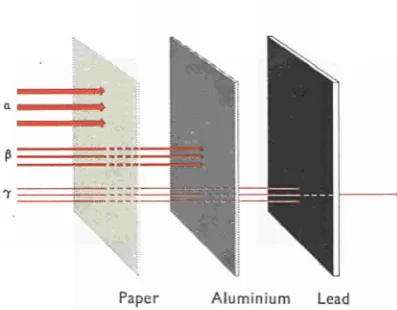
αrays are relatively heavy particles made up of t w o . p r o t o n s and t w o neutrons (they are in fact helium nuclei moving at a certain velocity). They are directly ionising, but t h e i r penetration into living tissue is low, which means that they are of m i n o r importance, except in a few special cases. Figure 1 gives an impression of t h e i r penetration as com pared t o that of ßrays and γ r a y s ; a mere sheet of paper can stop αradiation.
firays are electrons, i.e. negatively charged particles such as those which o r b i t around the nuclei of atoms, moving at high veloci ties. They are more penetrating than αrays and are capable like them of ionising directly
Paper A l u m i n i u m Lead
Figure 1: Relative penetration of α, β ond
γray s.
Figure 2: Ionising effect of ßrays. Α ß
particle is a highvelocity electron. Its electri cal charge is negative; it therefore tends to attract the (positively charged) protons in the nuclei of atoms near which it passes and to repel their (negatively charged) electrons. In an atom which is in a normal state, the positive charges are balanced exactly by the negative charges. The effect of the ßparticle may be to upset the balance, i.e. to cause Ionisation, in the way shown on the drawing. The nuclei of the atoms shown, atoms of lithium, are made up of three protons (white) and four neutrons (black).
the ßray ( o r αray) is close enough t o an atom for its electrical charge t o interact w i t h that of the atom ; the result is that the atom is divided i n t o positively and nega tively charged parts (see figure 2).'
γrays (and Xrays) are, like light rays, a f o r m of electromagnetic radiation. It is essentially t h e i r higher energy which dis tinguishes t h e m f r o m light rays. They are much more penetrating than ßrays and can also cause ionisation, but, as they have no electrical charge, they do so indirectly (see Figure 3).
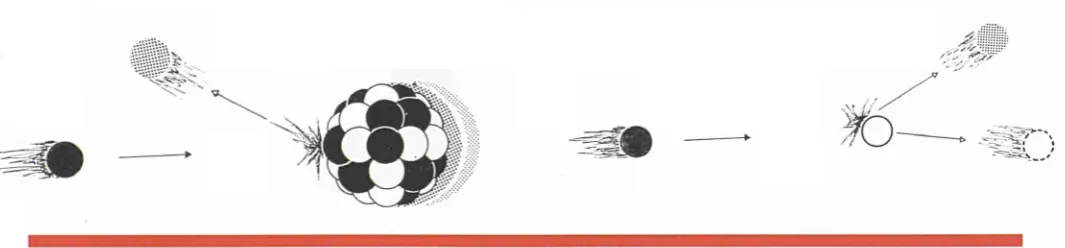
Neutrons are the uncharged particles which make up, t o g e t h e r w i t h protons, the nuclei of elements. They are usually generated in nuclear reactions as fast neutrons, but slow d o w n as they interact w i t h the nuclei of the atoms which lie in t h e i r path. Figures 4 and 5 describe the fate of fast neutrons when they interact w i t h the nuclei of either heavy o r light elements. Once they have slowed d o w n sufficiently, neutrons are readily absorbed by nuclei and can spark off various nuclear reactions (see Figure 6). In many cases, these reactions produce ßradiation o r y r a d i a t i o n , o r b o t h , which in t h e i r t u r n lead t o ionisation.
Thus ßrays, yrays and neutrons all cause Ionisation t o occur, the first directly and t h e others indirectly. But w h y is such importance given t o ionisation?
Because it is t h e most s t r i k i n g manifestation of the transfer of energy which occurs when radiation interacts w i t h biological material. If biological material is compared t o a com plex and highly automated factory, the ef fect of radiation can be imagined as aseries of small explosions occurring at different points in the factory and interfering w i t h its normal operation.
O n the o t h e r hand, although the ionisations can be t h o u g h t of as the explosions t h e m selves, i t is clear t h a t this is not the whole s t o r y : perhaps fires w i l l be started, t o x i c gases w i l l be released etc. The moral of this analogy (which w i l l be abandoned here and now before it becomes t o o misleading) is that ionisation is only the initial event and that it is followed by an extremely complex set of chemical, biochemical and physical consequences.
O u r knowledge about the nature of these consequences is still imperfect. W e may f o r
I. Ic should of course be stressed that the drawings, with all their orbits, black spheres, white spheres etc., do not correspond to reality but are merely convenient representations of i t .
instance k n o w by e x p e r i m e n t , sometimes w i t h a reasonable degree of accuracy, how much radiation is needed t o secure the death of a particular t y p e of cell, w i t h o u t fully understanding the mechanisms which bring it about. This does not mean that the knowledge w h i c h we do have has no practi cal value; i t can be of immediate interest, f o r example, t o k n o w the radiation dose capable of k i l l i n g the bacteria which cause r o t t i n g in a particular f r u i t variety. Never theless, we are much in t h e position of someone w h o could determine the strength of a steel beam of given dimensions only by loading i t until it b r o k e ; whereas it is evident that a l i t t l e schooling in mathe matics and in the principles of strength of materials w o u l d have produced the answer by simple calculation. W h a t is more, this knowledge w o u l d enable a similar calculation t o be made f o r a beam of any shape o r size. This point has been somewhat laboured because it is particularly relevant t o the kind of research which t h e Euratom/ITAL Association has undertaken. Its longterm aim is t o arrive at the kind of allembracing fundamental knowledge which can produce solutions t o broad groups of problems. O n the o t h e r hand i t w o u l d be a pity not t o e x p l o i t immediately the o p p o r t u n i t i e s of fered by nuclear energy; it w o u l d be a pity, f o r instance, not t o use radiation in o r d e r t o develop new useful plant varieties, however empirical the methods may be. In any case, i t is difficult t o dissociate the longterm and t h e s h o r t t e r m aims. Most types of e x p e r i m e n t yield results which are of both fundamental and practical value.
The
Euratom/ITAL
Associ
ation
programme
and
its
facilities
D e v i a t i o n s in plants induced by r a d i a t i o n
The aim of the agricultural geneticist is t o obtain new varieties of cultivated plants having interesting o r useful characteristics. He may, f o r instance, endeavour t o increase the o u t p u t of a plant type o r make it more resistant t o disease.
[image:8.595.24.223.124.279.2] [image:8.595.24.224.531.706.2]Figures 3a and 3b: Effect of y-rays.-y-rays have no electrical charge. Therefore, unlike ß-rays, they leave the atoms near which they pass undisturbed. On the other hand, when they hit an electron orbiting round a nucleus they may transfer to it either the whole of their energy (photo-effect; Figure 3a) or part of their energy (Compton (photo-effect; Figure 3b). The main result of this interaction is that a high energy electron is released. This electron then behaves virtually like a ß-particle and can cause ionisation as shown in Figure 2.
hybridisation and crossing, which take advantage of the variations which exist in nature, there is also the technique involving the induction of mutations, i.e. sudden hereditary changes, in living organisms. Irradiation is one of the ways in which the geneticist can bring about these mutations. Whereas the conventional methods make use of existing material, mutation breeding
amounts t o the creation of totally new material. The method is therefore particu larly useful in the case of species where few natural variations occur.
It has been known for some time that inherited characteristics are dictated by the genes located in the chromosomes which are part of the living cell. It would seem that i t is by interfering w i t h the genes and chro
mosomes that irradiation is effective in inducing mutations.
From a practical point of view, using irra diation efficiently means inducing the great est possible number of mutations in a plant in order t o have statistically the best chance of finding a useful mutation. It is known that this number, for a given quantity of material, is related t o the dose of radiation absorbed or, in other words, t o the quantity of energy absorbed.
However, a l i m i t is set by the amount of radiation the plant can stand w i t h o u t being killed by it. This "radio-sensitivity" in t u r n can be influenced by varying the plant's environment when it is treated, by irra diating one rather than another part of it and by treating it at different stages in its development.
However, far more important is the nature of the mutations induced. Experiments have shown that the mutation " s p e c t r u m " depends on what agent is used and on the environmental conditions both before and after treatment. For these reasons the Euratom-ITAL Association aims, in collabo ration w i t h a number of research institutes, at examining the exact influence of the environmental conditions on the results of irradiation. Four economically important crops, namely potatoes, beans, peas, and tomatoes are and w i l l be treated w i t h various mutagenic agents (X-, y - o r neutron radiation, as well as chemicals), under con trolled conditions, t o study their response. In order t o make an accurate comparison of the effects of different radiations, a
[image:9.595.19.552.580.704.2]Figure 4: Interaction of a fast neutron with the nucleus of a heavy element. —When a fast neutron hits the nucleus of a heavy element, it transfers to it only a small part of its energy and then bounces off.
Figure 5: Interaction of a fast neutron with the nucleus of a light element. -When a fast neutron hits the nucleus of a light element, it imparts a considerable amount of its energy to it. The largest energy transfer occurs when a neutron collides with a hydrogen nucleus (as shown In the figure), which consists simply of a proton having the same mass as the neutron.
Figure 6: Interaction of a slow neutron with the nucleus of an element. Two examples are given of the Interaction of a slow neutron with a nucleus. In both cases the neutron is absorbed.
Left: A neutron interacts with a (stable) nit rogen14 nucleus, which releases a proton to give a(radioactive) carbon14 nucleus. The carbon14 nucleus emits a ßparticle and dis integrates into a stable nitrogen14 nucleus.
Right: A neutron interacts with a proton (hydrogen nucleus) to give a deuteron. γra diation is released.
knowledge of the dose received by the biological material is needed. For this reason a good deal of t r o u b l e has been taken over the precision of measurements in o r d e r t o secure reproducible results. The facilities which the Euratom/ITAL As sociation has available for this w o r k include its research reactor, " B A R N " (Biological A g r i c u l t u r a l Reactor Netherlands), f r o m which both slow and fast neutrons can be obtained (see figure 7).
The reactor is equipped w i t h a chamber, situated b e l o w t h e c o r e , in which luminosity, t e m p e r a t u r e and humidity can be adjusted at w i l l . In this way it is possible t o irradiate e n t i r e plants o r plant parts in welldefined environmental conditions. The neutrons produced by the core may travel t h r o u g h a heavy water tank, thus becoming slow neutrons, and enter the irradiation chamber after passing t h r o u g h a bismuth filter
either in acute conditions, involving a large dose and a short exposure period, o r using relatively low doses and long exposures. The aim is t o determine not only the lethal effects but especially the sublethal effects caused by exposure under any of these conditions.
In o r d e r t o understand irradiation better as an instrument for inducing mutations and t o be in a position t o use it more ef ficiently, a number of research projects of a basic character have been undertaken. For instance it is known that useful muta tions can be obtained by irradiating seeds. A seed is essentially made up of the embryo,
which is the t i n y complex of cells which contains t h e potential of the fully g r o w n plant, and the endosperm, teeming w i t h the reserves necessary t o the embryo's g r o w t h at t h e t i m e of germination. W h i l e it is interesting t o determine the global effects
;
~^
iO
y
O
which reduces t o a m i n i m u m the y r a d i a t i o n which would otherwise interfere w i t h the study of the effects of neutrons. By empty ing the heavy water tank and placing a boron plate t o absorb and thus f i l t e r our slow neutrons, fast neutrons can be obtain ed.
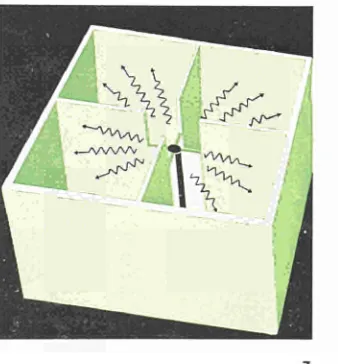
The Association also possesses t w o y i r radiation facilities. One is a " y g r e e n h o u s e " in which it is possible t o adjust t h e amount of radiation absorbed by the plants in a given length of t i m e . The o t h e r is a building divided into f o u r chambers sharing one ysource (see figure 8) which is ten times more powerful than that of the y g r e e n house. As the climate in each chamber can be c o n t r o l l e d separately i t is possible t o conduct experiments simultaneously in which plants receive t h e same dose of radiation under different environmental conditions.
A w i d e range of doserates is thus available : plants of various species can be irradiated
of irradiation on the seed, it is of even greater interest t o establish the effects it has on the e m b r y o and t h e endosperm taken separately, and the particular consequences which irradiation of the one produces for the other. This is w h y a project has been supported by the Association which involves transplanting irradiated embryos into non irradiated endosperm and, conversely, non irradiated embryos into irradiated endo sperm.
[image:10.595.29.588.364.463.2]Reactor pool
Beam tubes
C o n t r o l plate
Reactor core
Graphite elements
Thermal column
Irradiation cubicle (j
Heavy water diffusor ( ¿ ) — — _ J' ~ ~ ■
Bismuth shields (¿}
Lighting @
Irradiation r o o m (n
Figure 7: Vertical section of the Euratom/ITAL Association's " B A R N " reactor. The reactor, which is of the swimmingpool type, is fuelled with 90°/o enriched uranium, and has an
output of 100 KW.
Radioisotopes in biological research
Radioisotopes and radioactive " l a b e l l e d " compounds can be detected, even when they are present in biological material in in finitesimal quantities, thanks t o the radi ation they emit. They are t h e r e f o r e a precious aid t o biological research: it is f o r instance possible t o trace the use made by a plant of a particular n u t r i e n t by " l a b e l l i n g " it w i t h a radioactive isotope. The increasing interest in this new tool calls f o r a constant awareness of instrument development t o suit the requirements of the biologist. Indeed improvements in the methods of detection have t o be sought continuously, not only t o allow detection of smaller and smaller quantitites in smaller and smaller samples, but also t o insure t h e accuracy of the information given.
The scope of the soilplant research car ried o u t at the Association's Institute aims primarily at ascertaining the mechanism of absorption and accumulation of inorganic chemical substances by plants. It t h e r e f o r e includes studies of r o o t and leaf absorption and studies on movement of these elements in the soil (Figure 9). W h i l e c o n t r i b u t i n g accurate information on the fate of nuclear fission and wasteproducts in t h e " f o o d
c h a i n " of man, the projects under way concentrate on the uptake and utilisation of chemical elements essential f o r plant g r o w t h . The practical aim of this research is t o develop better fertilisers and b e t t e r methods of applying t h e m , as well as t o learn more about the physiology of plants. The Euratom/ITAL Assocation has, besides standard devices such as GeigerMuller counters, liquid scintillation counters o r yspectrometers, equipment specially de signed and constructed in its o w n workshop facilities f o r specific purposes. Efforts have been successfully made t o measure very low activity present in plant material, f o r instance in o r d e r t o f o l l o w the deposition of radioactive nuclides on vegetation after atomic explosions.
The application of semiconductor radiation absorbers is also c u r r e n t l y studied. They offer the possibility of distinguishing yrays f r o m ßrays and even of distinguishing between ßrays of different energies. These advantages, coupled w i t h t h e i r very small size, make these instruments very attractive t o biologists.
Photographic tracing of isotopes o r " a u t o radiography" is a method often used by biologists of the Euratom/ITAL Association. The method relies on the fact that a photo
graphic emulsion is sensitive not only t o light but t o all kinds of radiation.
A typical e x p e r i m e n t might run on these lines: a plant is given a n u t r i e n t labelled w i t h a radioisot ope which i t absorbs t h r o u g h the r o o t s ; after a t i m e , the plant is sacri ficed and an autoradiograph of one of its leaves is made; the picture w i l l show w h e t h er the labelled substance has reached the leaf and, if so, in what parts of the leaf it is localised.
It is only t o o easy t o obtain fallacious auto radiographs. Therefore improvements are constantly sought in the preparation of the material before exposure and in the method of ensuring contact of the emulsion w i t h the materia! during exposure. For instance, experience having indicated the necessity of freezedrying the plant material in o r d e r t o obtain accurate results, facilities are now available f o r that purpose at t h e Institute. Special facilities f o r the g r o w t h of plants under c o n t r o l l e d environmental conditions make i t possible t o obtain uniform biological material f o r experimental purposes. W h e n completed, t h e laboratories w i l l dispose of a total area of 170 m2 where t e m p e r a t u r e ,
[image:11.595.65.364.36.348.2] [image:11.595.377.546.530.712.2]humidity and light intensity can be altered at w i l l t o suit the requirements f o r o p t i m u m g r o w t h of various plants. The installation w i l l allow the safe use of most isotopes at doses t o o high t o be p e r m i t t e d in a standard laboratory.
P r e s e r v a t i o n of food
Radiations can be used w i t h success in the fight against spoilage of food products, first of all because they can kill bacteria. H o w e v e r they may also have a direct effect on t h e food product, by modifying its physiological development, f o r instance by bringing about delays in ripening and in hibiting cell g r o w t h . These facts have led food technologists t o seek new possibilities in t h e i r field by using irradiation.
The effects of relatively low doses of ionising
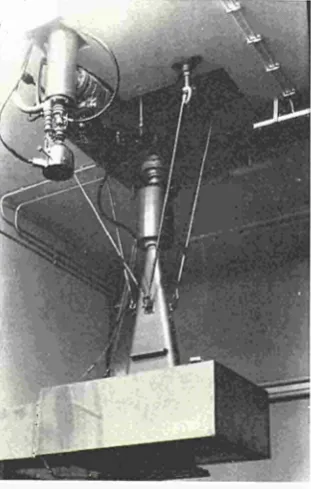
Figure 10: The Van de Graaff electron acceler ator of the Euratom/ITAL Association's Insti tute. The accelerator is used in conjunction with an endless belt system of adjustable height carrying the material to be irradiated. It is used for determining the effects of irradiation on food products at various doses.
Figure 9: Experimental setup for the study of movement of inorganic salts in soils. The columns are filled with soil, sand or resins or mixtures of the last two. The top 2 cm layer has been labelled with strontium85 or stron tium90. A leaching solution can be introduced at the top to simulate rainfall. The flowrate can be adjusted up to a maximum of 15,000 mm per year.
radiations on perishable food, in particular localised doses such as surface irradiation o r socalled " p a s t e u r i s a t i o n " of only some layers of the product, have been investigated w i t h relative success. The advantages of not t r e a t i n g the e n t i r e product are obvious, since possible induced chemical changes are restricted t o t h e surface and cost of t r e a t ment is lower. This approach has been considered most promising and is being investigated at t h e Euratom/ITAL Associ ation.
Besides technological questions and t h e immediate prospects of extending t h e shelf life of soft f r u i t such as strawberries, t h e fundamental physiological aspects of t h e problems involved w i l l be examined. The general metabolism of the f r u i t and vege table as influenced by radiation w i l l be considered per se and in its effect on t h e microorganisms responsible f o r its normal spoilage. Some of the w o r k is being carried out in collaboration w i t h t h e Institute f o r Research on Storage and Processing of H o r t i cultural Produce, Wageningen.
Facilities available at t h e Euratom/ITAL Association in Wageningen have been de signed t o cope w i t h this initial research programme and the subsequent develop ments which can be expected. A Van De Graaff electron^ generator w i t h a w i d e voltage range' is available (Figure 10). U n i f o r m radiation of a large object may be achieved w i t h the equipment available by "scanning the b e a m " backwards and for wards.
75 m3 of storage facilities are also available
in w h i c h t e m p e r a t u r e and relative h u m i d i t y can be varied as desired f o r experimental purposes w i t h i n ranges of ■—5 t o + 3 5 ° C and 4 0 — 9 5 % respectively.
I. The range is 0,5 —2 million Volts. The maximum dose rate obtainable is 40.000 rads/second for elec trons and I2.000 rads/hour at I meter distance from the target for Xrays.
[image:12.595.403.562.128.710.2] [image:12.595.63.219.461.706.2]Sub-contracts of the Euratom/ITAL Association
Some sectors of the Euratom/ITAL Association's programme are investigated through sub-contracts let t o other institutes in the Euro pean Community. This not only completes the programme of the Association but contributes t o an efficient use of existing European facilities, thus making for integration on an European scale of research in the Association's field.
In 1963 approximately 250,000 dollars were allocated for w o r k on genetics, on the study of the living cell and on food technology through such sub-contracts.
In 1964, this sum is expected t o show a f u r t h e r increase. In June 1964, the following sub-contracts were under way:
Food technology
"The Application of ionising radiation for increasing keeping quality of horticultural produce"
Instituut voor Bewaring en Verwerking van Tuinbouwproducten — Wageningen, the Netherlands.
"The genetical hazards of irradiated f o o d " —
Université de Liège, Centre Interfacultaire des Sciences Nucléaires, Laboratoire de Génétique —Liège, Belgium.
M u t a t i o n Breeding
"Effects of radiations and chemicals on different stages of the ontogenetic cycle in higher plants";
"Experimental mutagenesis in Triticum durum";
"Studies on the radiosensitivity of plants"
-Comitato Nazionale per l'Energia Nucleare, Centro di Studi Nucleari della Casaccio— Rome, Italy.
"Embryo-endosperm relations in irra diated seeds"
Istituto Botanico della Università di Cagliari (Sardinia), Italy
"Mutagenic changes in the vernalisation pattern (including daylength and tem perature reactions)"
Instituut voor de Veredeling van Tuinbouwge-wassen—Wageningen, the Netherlands.
"Mutation research on peas, bush beans and potatoes"—
Stichting voor Plantenveredeling—Wagenin-gen, the Netherlands.
"Investigations about pleiotropy and expressivity of mutated genes"— Institut für landwirtschaftliche Botanik der Universität Bonn—Bonn, Germany.
"Utilisation of mutations in plant breeding
a. Significance of micro-mutations in barley and wheat;
b. Significance of macro-mutations in barley;
c. Diploidisation of autotetraploid bar l e y " —
Landbouwhogeschool — Wageningen, the Max-Planck Institut für Züchtungsforschung Netherlands. —Köln-Vogelsang, Germany.
"Comparison of the mutagenic effect of X-rays, gamma rays, neutrons and ethylene methane sulfonate (EMS) on peas and tomatoes";
"Fundamental radio-cytogenetic in vestigations";
E U B U 314
Induction of mutations in barley at various stages
of development
A c o n t r i b u t i o n t o t h e i n d u c t i o n of a r t i f i c i a l m u t a t i o n s in plants
Dozent Dr. HORST G A U L , MaxPlancklnstltut für Züchtungsforschung, KölnVogelsang, Germany
There are no d o u b t farmers w h o are un aware that some of t h e crops they g r o w are mutants obtained by exposure t o ionising radiations. They may be equally unaware of t h e t i m e and effort which many research w o r k e r s arespendingon developing t h e new method of breeding these artificial mutants. The new method has great advantages as compared w i t h conventional breeding techniques. Above all, i t can produce new and b e t t e r varieties in a much s h o r t e r t i m e . In f u t u r e i t may prove a revolutionary supplement t o conventional methods o r perhaps even supersede t h e m t o a large e x t e n t , thus helping t o solve the problem of t h e f u t u r e feeding of t h e human race t h r o u g h larger and b e t t e r harvests. O n the o t h e r hand, the new technique still involves a number of drawbacks, some of which are extremely serious. W o r k is c u r r e n t l y proceeding w i t h particular i n t e n
sity in many research institutes t h r o u g h o u t the w o r l d in o r d e r t o establish a theoretical basis f o r t h e i m p r o v e m e n t of mutation breeding.
There are already many clear indications of t h e great practical importance of radiation induced mutants. For example, t h e s h o r t talked variety of barley "Pallas" can yield more than t h e m o t h e r variety. Thanks t o its s h o r t culm i t is less subject t o lodging, in o t h e r words it is much less easily bent o r beaten d o w n by rain. It can therefore be given larger applications of fertiliser, p a r t i cularly nitrogen. W i t h o t h e r varieties high nitrogen applications have t o be avoided in spite of t h e fact that they mean a larger yield, because otherwise the barley lodges. The Pallas barley was bred in Sweden. A l t h o u g h i t only came on the market recent ly i t has speedily ousted o t h e r varieties in
rainy England f o r example, last year occupy ing 2 0 % of t h e t o t a l barleysown area. There are yet o t h e r radiationinduced bar leys which are being widely sown, and similar examples could be given f o r o t h e r cereals and f o r quite different crops such as peas, beans, rape, mustard and peanuts. It w i l l be sufficient t o mention the new beanvariety "Sanilac", which has attained great importance in the U n i t e d States. It is an example of the combination of a t r a d i tional method of breeding w i t h m u t a t i o n i n d u c t i o n . A n earlyripening mutant p r o d u ced by ionising radiations was crossed w i t h breedingnursery lines which were resistant t o a dangerous fungus disease (Colleto t r i c h u m lindemuthianum). The new variety "Sanilac" obtained f r o m these crossings is b o t h earlyripening and diseaseresistant; in addition i t yields more than t h e " M i c h e l i t e " variety f r o m which the mutant originated.
4 8
4 2
3 6
3 0
.
<s>
®.
«
ï
/■/'yT
I
Ί
^ v 1
\
k
\ .
t'■—►
22,5 27,5 32,5 37,5 « . 5 -47,5 52,5 57,5 62,5 67.5 72.5 77,5 82,5
[image:14.595.11.223.557.689.2]Kernel yield per single plant progeny (gm)
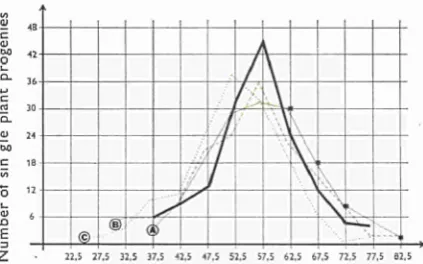
Figure 1: Results of an experiment on grain yield after irradiating barley plants. Each of the four lines represents the yield results of 150 individual plant progenies. The black line corresponds to the variability of the (unirradiat-ed) mother variety. The three coloured lines represent the radiation-induced variability. (A = irradiated before meiosis, B=irradiated at pollen stage, C=irradiated at zygote stage).
It is interesting to note that yield variability appears to be both positively and negatively influenced (as compared to the mother variety) when irradiation is applied before meiosis; in contrast to this, both post-meiotic irradiations gave rise to predominantly negative mutants (with lower yields than the mother variety).
Following the discovery of the mutagenic action of ionising radiations in 1927, i t was believed that mutations occurred complete ly at random. It has since become clear that this is not always t r u e , and that a certain amount of control of the mutation process is possible.
Irradiation produces mutations by affecting the chromosomes which are present in the living cell and which contain the genes which determine hereditary characteristics. T w o fundamentally different types of mutation can be observed: either the chromosomes are broken, after which the fragments are lost o r rearranged t o form new chromosomes w i t h an altered structure (chromosome-muta tions), o r the genes themselves are altered (gene-mutations).
Figure 2: Mutants germinating from a barley spike.
The barley spike is grown from irradiated seeds. The spike was laid for germination in a sand bed and originated, apart from 10 normal green plants, four chlorophyll-deficient pale green mutants.
Experiments carried out on barley have repeatedly shown that treatments given in addition t o irradiation can lead t o differ ences in the ratio between each type of mutation (i.e. between chromosome- and gene-mutations). It has also been shown that they could alter the spectrum of gene-mutations and thus favour the emergence of definite groups of mutants showing partic ular characteristics.
What type of additional treatment can alter the effect of ionizing radiation? There are first of all a number of physical and chemical agents such as heat, colchicine and carbon dioxide, t o mention only a few. These "secondary factors" may be applied
before, during o r after irradiation. Recent experiments carried out at the Max-Planck-lnstitut für Züchtungsforschung, under contract to the Euratom/ITAL Asso ciation, have shown that purely biological factors, and in particular the stage of devel opment of the irradiated plants may also alter the gene-mutation spectrum. Barley spikes were irradiated w i t h a cobalt-60 source at three different stages of devel opment, before and after meiosis. Plants were then g r o w n from the seeds which formed in the irradiated spikes. It is well-known that these plants show so-called primary radiation Injury, but as yet no specific mutation characteristics. For genetic
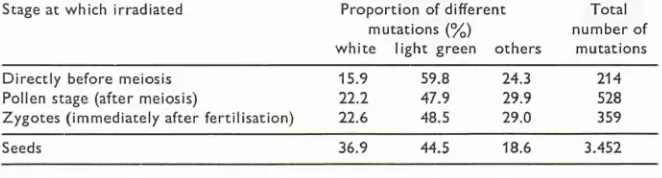
reasons mutants segregate for the first time in the following generation. In order to recognise and record these mutants, the spikes obtained from the seeds were made t o germinate on a sandbed (see fig. 2). In experiments of this type, some spikes segre gate seedlings which exhibit chlorophyll deficiencies e.g. these seedlings are w h i t e , yellow or light-green. They have partly or completely lost the ability t o form chloro phyll. Table 1 summarises the results of the experiments. For purposes of comparison, the results have also been given of many previous seed irradiation experiments. It can be seen f r o m the Table that many more white mutations (indicating complete loss of the ability t o form chlorophyll) occurred when the seed itself was irradiated than when irradiation t o o k place at the stages before and after fertilisation of the egg cell which precede seed-formation. From a practical angle, plants w i t h chloro phyll deficiencies are of no interest. They are, however, useful t o the scientist because they are mutations which can be spotted and classified easily. Chlorophyll mutation frequency serves as a test reaction for the efficiency of the treatment applied.
Most of these chlorophyll mutants die off. Mutants which survive are of course much more Important for practical breeding purposes.
It has now been indicated that large mutative changes—even when they lead t o fully viable plants—are of minor Interest. They may indeed transform a " s o f t " into a hard o r a susceptible into a resistant variety, but the creation of this one valuable characte ristic is normally accompanied, w i t h some
exceptions, by a general lowering of yield. We believe that small mutations, particu larly those affecting yield or quality, are more important than the drastic ones. Investigations on small mutations, such as are being carried out in our laboratory, are lengthy, since several generations must be grown before definite conclusions can be drawn. Fig. 1 gives some of the results ob tained t o date. They indicate—as was t o be expected—that many harmful mutations have been induced, but that some mutants apparently have a higher yield than the mother variety, as can be observed on the right-hand side of Fig. 1.
The Figure shows that a specially^high proportion of poor (lower-yield) mutants was observed when irradiation was carried out öfter meiosis.
Against this it can be seen that irradiation before meiosis produced approximately equal numbers of positive and negative mutants—if this finding is considered t o be reliable. This favourable result contrasts not only w i t h those obtained for irradiation after meiosis, but also w i t h those which we have obtained in numerous experiments on the irradiation of mature seeds. A point of quite special interest is that—as we have seen—irradiation before meiosis also led t o the smallest number of w h i t e (i.e. particularly badly-damaged) chlorophyll mutants.
These data require confirmation. Therefore the Investigations bearing on yield w i l l be continued through the following gener ations. One of the practical aims w i l l of course be t o isolate those mutants giving the highest yields.
Table I. Spectrum of chlorophyll mutations after irradiation of barley spikes with a cobalt-60 source.
Irradiation took place at three stages of development before and after meiosis (before and after fertilisation of the egg cell, i.e. at stages preceding seed formation). For comparison, a summary of the results of seven experiments involving X-radiation of seeds Is also given.
Stage at which irradiated Proportion of different Total
mutations (%) number of white light green others mutations Directly before meiosis
Pollen stage (after meiosis)
Zygotes (immediately after fertilisation)
15.9 22.2 22.6 59.8 47.9 48.5 24.3 29.9 29.0 214 528 359
Seeds 36.9
44.5
18.6 3.452 [image:15.595.200.531.618.707.2]E U B U 3-15
Using radioisotopes
to study plant growth
EMILIO LEVI, Euratom/ITAL Association, Wageningen
Conservative estimates indicate that the w o r l d total food production must be doubled by 1980 and trebled by the year 2000. This is not only t o cope w i t h increases in w o r l d population, but also t o feed more adequately the present one. Professor Cépède of the Institut agronomique in Paris, Lord Boyd O r r and others have estimated that today approximately t w o thirds of the w o r l d suffers from hunger, ranging from malnutrition t o actual starvation. The role of agriculture in solving this problem is obvious. For thousands of years, man has attempted by trial and error, or more recently through careful experimen t a t i o n , t o increase plant and animal pro duction and reduce spoilage. Besides i n t r o ducing more method into the trial and e r r o r procedure, which is perhaps more spectacu lar, scientists have also been striving t o acquire a deeper understanding of nature in o r d e r t o exploit its mechanisms more fully. It can be stated quite safely that our know ledge of the laws which govern the g r o w t h and development of plants, for instance, is far from complete today; only a firm grasp of them w i l l allow us t o plan for our future well-being.
Plant g r o w t h is, broadlyspeaking, influenced by t w o factors, a genetical one, which is inherited and specific, and an environmental one, which is variable. The environment in t u r n includes factors such as light, temper ature, chemical element supply etc., each of which plays a role, interlocked w i t h all the others, affecting ultimately plant g r o w t h and reproduction. Soil scientists, botanists and plant physiologists are still attempting t o understand the fundamental links be tween plants and their environment. It is
true that what is perhaps the most im portant process in plant g r o w t h , photo synthesis, by which green plants use the sun's energy t o form compounds essential t o their life from air and water, has been largely unravelled, in particular by Calvin, using carbon-14, a radioactive isotope of carbon. Yet other processes are either superficially known or are still the subject of controversy.
Radioisotopes have been a great help t o agricultural scientists t o study, explain and attempt t o control various biological, physi cal or chemical processes going on in soils and in the roots of plants taking up nutritive chemicals. The movement of these chemi cals as such or in the f o r m of compounds in tissues w i t h i n the plant and their role in cell g r o w t h are also subjects of active research in which radioisotopes are used constantly w i t h success.
However, the advent of nuclear energy has also placed man in f r o n t of a new problem. A t o m i c accidents, as well as the disposal of radioactive waste, may affect food supply if harmful nuclides are picked up and transported in the soil-plant-animal-man cycle. Although the problems involved are obviously complex from a health physics point of view, f r o m an agricultural point of view they are directly related t o the basic studies scientists have been carrying out. The problems involved in assessing amounts of iodine, caesium or strontium found in plants following nuclear accidents are not basically different from those posed by the study of the absorption and movement of elements essential for normal plant g r o w t h . For Instance, trying t o find out how radio nuclides penetrate through leaf surfaces
involves the same kind of research as trying t o improve the utilisation of leaf applied fertilisers, weed killers o r insecticides. The movement, availability and uptake of any mineral element from the soil are governed by physico-chemical laws which do not discriminate the origin of that element. It is clear therefore that any acquisition t o our knowledge of plants and their environ ment will allow us t o interpret and suggest remedies for specific cases of artificial con tamination.
Since it is practically impossible t o alter
the climate in which plants grow, the mech anisms governing the uptake and utilisation of nutritive elements are, besides genetical considerations, the main focus of research. Root n u t r i t i o n is the most easily controlled factor and therefore much attention has been paid t o the distribution of the root system itself in the ground, and the distri bution and transformation of chemical com pounds in the soil and their use by plants. Some of the first experiments using radio isotopes dealt w i t h the absorption of phos phorus by crops. They indicated a hitherto unknown fact. Plants use about 5 0 % of the phosphorus applied as fertiliser and only 1 0 % of that in the soil. When fertilisers are applied, plants take up more phosphorus from the soil itself than if no fertiliser were added.
[image:17.595.203.552.125.343.2]Similarly, the problem of how to apply fertilisers t o growing crops was studied w i t h much more success using radioisotopes than when only conventional chemical meth ods were available. It was found, for instance, that phosphatic fertiliser present only 3 t o 4 centimetres below the seeds will be utilised w i t h i n a few days, giving a rapid strong g r o w t h , whereas placed deeper, o r even 5 centimetres aside, they will only be used weeks later, w i t h consequent delays in crop g r o w t h . Previously held opinions in both
Figure 2. Beans growing in an aerated nutrient solution under controlled temperature, humidity and light conditions.
During an experiment the turntables are made to rotate so as to eliminate the effects of slight differences in temperature and light intensity from one point of the chamber to the other. The turntables also make for easy handling of radioisotopes.
Foliar and root uptake experiments are currently carried out at the Euratom/ITAL Association's Institute in connection with studies on the mechanisms involved in plant growth.
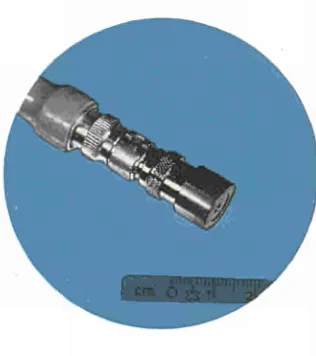
Figure 1. Semi-conductor detectors used to measure in vivo radioactivity in plants.
cases had t o be modified following these experiments.
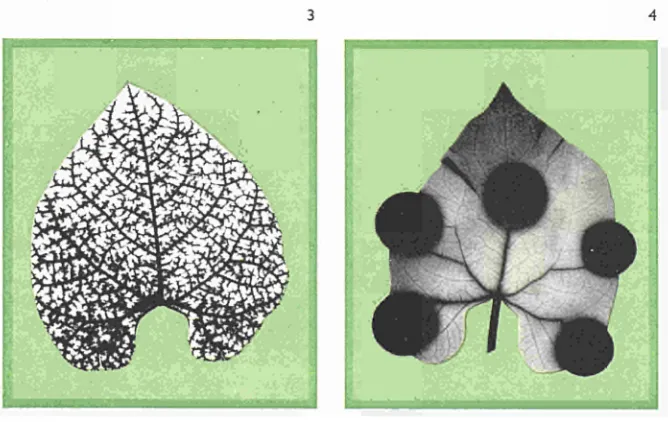
In regions where low temperature of the soil prevents normal penetration of sub stances through roots, leaf application of fertilisers becomes advisable. In the past ten years this practice has been extended t o crops grown in temperate regions, particu larly in the United States, because i t can be mechanised, or on the assumption that the fertilisers were better utilised in this way since the leaf area is very large and food may be transported directly t o the f r u i t f r o m the leaves. Although this matter is still open t o controversy, radioisotopes have allowed it t o be studied in details not possible before. W e can now see and measure accurately the penetration of labelled chemical elements, t h e i r path t o the conducting system and their distribution in the rest of the plant. Autoradiographs, made by placing the plant material containing the radioisotope in contact w i t h a photographic emulsion, give a clear picture of the distribution. On the basis of the visual images i t is possible t o
determine more exactly the pathway of penetration and transport f r o m the point of application and the value of theories established as w o r k i n g hypotheses. It was for instance found, through experi ments carried out under controlled con ditions at the Institute of the Euratom/ITAL Association in Wageningen, that only a very small fraction of water solutions of phos phorus ,or caesium salts applied t o bean leaves is actually used by the plant. The major part is either removed by washing o r rain, o r held in the treated leaf w i t h o u t f u r t h e r significant release t o non-treated parts of the plant.
While this new information is of an en couraging nature in the study of contami nation problems, i t is obvious that for better utilisation of chemical fertilisers, insecticides o r weed killers supplied t o plants through leaf applications, it is neces sary t o influence the t w o factors mentioned, for instance by adding various compounds such as w e t t i n g agents.
[image:17.595.30.188.460.638.2]plants and the accumulation in their tissues of elements that may be reutilised later are directly connected w i t h our knowledge of the movement of simple or complex sub stances in plants as well as their direction, speed and composition. Again, the use of radioisotopes has greatly helped the study of these problems.
Despite the static nature of plants, physi ological processes occur in them at very fast rates. They are able t o send t o regions of utilisation substances manufactured or stor ed elsewhere in a matter of minutes. Water has been reported t o move at a rate faster than five metres per hour while sugars for med as products of photosynthesis move at 60 centimetres per hour or more.
These values have raised controversies since they may prove or disprove long accepted theories. The use of very sensitive radiation detection equipment, such as semi-conductors, offer possibilities for in vivo measurements which, it is hoped, w i l l help t o clarify the problem. Encouraging results have been obtained w i t h these detectors in preliminary experiments car ried out at the laboratories of the Euratom/ ITAL Association.
It will thus be possible, by improving our knowledge in this field and by finding solutions t o various complex problems of cell development and plant anatomy, t o supply crops, w i t h o u t waste, w i t h the ele ments they need at a particular moment t o
increase the yield of their comestible parts. However, crop production cannot be discussed today w i t h o u t considering pro tection from insects or diseases and compe t i t i o n f r o m weeds for light, water and nutrients. In pest control studies, which have t o be based on the same mechanisms as those involved in crop production, labelled compounds are used t o a very great extent and have already led t o con siderable increases in the yields of arable land or pastures.
[image:18.595.65.399.498.709.2]The accurate detection of infinitesimal quantities of chemical substances in plants and soils through proper handling of radio isotopes or labelled compounds, coupled w i t h the development of experimental facilities for controlling environmental con ditions, offer t o agricultural scientists today possibilities that could not have been imagined 30 years ago. It is however neces sary t o state that for botanists, plant physi ologists o r soil scientists, more than just radioisotopes and refined electronic meas uring devices are necessary. Experiments must be carefully designed t o prevent errors and t o rule out the emergence of secondary phenomena which can mask the t r u t h . Above all there is a need for close collabo ration of scientists from different disciplines. Only in this way can we increase our know ledge of plant life on which we depend if we aim at making every day a day w i t h bread for the population of the w o r l d .
Figure 3. Bean leaf containing calcium-45 absorbed through the roots.
Figure 4. Bean leaf showing downward transport of 5 drops of phosphorus-32 applied to its upper surface. To be noted are the transport of the substance in the vein system and its presence in the tissues, unlike figure 3.
E U B U 3-16
Food irradiation — an
improvement to human diet
D. DE ZEEUW, Euratom/ITAL Association
In the constant struggle t o supply food t o man, t w o clear problems appear, namely food production and food storage and distribution. Both problems are equally important and therefore require equal attention. However, this has not been the case in the past and the result is that while sufficient food is produced t o feed most men, the population of the w o r l d is generally under- or mal-nourished because of lack of adequate storage and distribution systems and facilities.
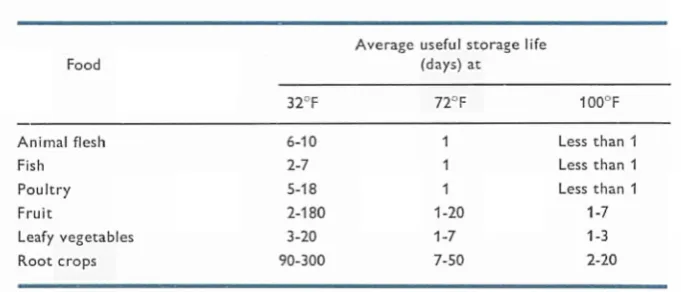
All our food begins t o deteriorate shortly after it has been harvested, gathered o r slaughtered. This breakdown is mainly the result of its decomposition and its subse quent use as an energy source for micro organisms. There is definitely a competition between man and micro-organisms as t o who w i l l consume the food first. The useful storage life of fresh untreated plant and animal tissues at various temperatures is given in table 1. Although some f r u i t and root crops keep considerably longer than other edible products, it should be borne in mind that these f r u i t and root crops are normally harvested only once a year; it is clear that for their adequate distribution, in particular t o distant places, good methods of preservation are still required.
Among the various methods available t o man since he first discovered drying and
smoking, are canning, freezing and, more recently, irradiation. Preservation by means of ionising radiations occupies a special place for it meets more o r less the ideal goals of the trade, that is retention of the natural o r fresh characteristics of the food product.This is due t o the fact that radiations can kill bacteria w i t h o u t , as in the canning process, for instance, leading t o appreciable temperature increases in the product. Another advantage of radiations is t h e i r physiological action on living tissues, for instance retardation of ripening processes in fruit, inhibition of cell elongation (and thus of sprouting in some vegetables), sterilisation of harmful insects responsible for the infestation of grain, etc . . .
Before evaluating this method of food preservation accurately one should however state that doses of more than 500.000 rads often cause unacceptable changes in the physiology and therefore appearance and quality of the products treated.
Furthermore the possibilities could not be evaluated w i t h o u t a w o r d about t h e i r hazard t o man. Research to-date shows that irradiation at the doses required for com mercial usefulness has no harmful effects. N o induction of radioactivity nor formation of toxic or carcinogenic substances was found in irradiated food products. The Canadian and United States Public Health
Authorities have in fact, after much research, authorised the marketing of γ-irradiated potatoes and pre-cooked bacon. A favour able decision is expected in the United States for the marketing of irradiated wheat. Similar authorisations are expected in the United Kingdom for irradiated cereals and eggs.
As far as nutritive value is concerned, it has been shown that in general no noticeable reduction occurred following irradiation. When i t did occur it was no greater than that produced by more classical methods of food preservation.
Much research has been carried out in the last t w e n t y years t o evaluate irradiation as a tool for food preservation. It would be t o o long t o enumerate the products con sidered throughout the w o r l d but some concrete results have been already obtained. They can be summarised as follows:
Sprout inhibition in potatoes and onions:
Commercial application of ionising radi ations for sprout inhibition is very advanced in Canada and Russia. O t h e r possible meth ods give the same results but are not always allowed because of health hazards. En couraging results have already been ob tained w i t h low dose irradiation