RESEARCH ARTICLE
Using Intervention Mapping to develop
the Parents as Agents of Change (PAC
©
)
intervention for managing pediatric obesity
Geoff D. C. Ball
1*, Aislin R. Mushquash
2,3, Rachel A. Keaschuk
4, Kathryn A. Ambler
5and Amanda S. Newton
6Abstract
Background: Pediatric obesity has become increasingly prevalent over recent decades. In view of the psychosocial and physical health risks, and the high likelihood that children with obesity will grow to become adults with obesity, there is a clear need to develop evidence-based interventions that can be delivered in the health care system to optimize the health and well-being of children with obesity and their families. The aim of this paper is to describe the development, implementation, and planned evaluation of a parent-based weight management intervention designed for parents of 8–12 year olds with obesity.
Methods/results: The principles of Intervention Mapping (IM) were used to develop an intervention called Parents as Agents of Change (PAC©). From 2006 to 2009, an environmental scan plus qualitative (individual interviews with
parents and children), quantitative (medical record reviews), and literature review data were collected to gain broad insight into family factors related to pediatric obesity and its management. Theoretical frameworks and empirical evidence guided curriculum development, which was founded primarily on the tenets of family systems theory and cognitive behavioral theory. PAC was developed as a manualized, 16-session, group-based, health care professional-led intervention for parents to address individual, family, and environmental factors related to the management of pediatric obesity. The intervention was refined based on feedback from local and international experts, and has been implemented successfully in a multi-disciplinary weight management centre in a children’s hospital.
Conclusion: IM provided a practical framework to guide the systematic development of a pediatric weight manage-ment intervention for parents of children with obesity. This logical, step-by-step process blends theory and practice and is broadly applicable in the context of obesity management intervention development and evaluation. Following intervention development, the PAC intervention was evaluated within a randomized clinical trial.
Trial registration NCT01267097; clinicaltrials.gov
Keywords: Child, Cognitive therapy, Obesity, Parents, Pediatric obesity, Weight reduction programs
© The Author(s) 2017. This article is distributed under the terms of the Creative Commons Attribution 4.0 International License (http://creativecommons.org/licenses/by/4.0/), which permits unrestricted use, distribution, and reproduction in any medium, provided you give appropriate credit to the original author(s) and the source, provide a link to the Creative Commons license, and indicate if changes were made. The Creative Commons Public Domain Dedication waiver (http://creativecommons.org/ publicdomain/zero/1.0/) applies to the data made available in this article, unless otherwise stated.
Background
Pediatric obesity is a major public health concern inter-nationally [1]. Along with impacting 10–20% of children in the United States [2] and Canada [3], excess weight is associated with various medical (e.g., insulin resistance [4]), psychological (e.g., poor self-esteem [5]), and rela-tional problems (e.g., bullying [6, 7]) and tends to persist
into adulthood along with its associated comorbidities [8]. With these issues in mind, it is imperative to develop, implement, and evaluate weight management interven-tions designed to optimize the health of children with obesity and their families.
Comprehensive, family-based interventions that target lifestyle behaviors are effective in improving children’s weight status and weight-related health risks [9–11]. However, the extent to which parents and their children actively participate in family-based interventions has varied within and between intervention studies to date.
Open Access
*Correspondence: [email protected]
A growing body of evidence has demonstrated that inter-ventions designed for parents exclusively, often referred to as Parents as Agents of Change (PAC©) programs, are
both efficacious and effective [12–17]. There are impor-tant practical advantages to parent-only interventions over parent-and-child or one-on-one care, which include reduced staffing, materials, physical space, money, and (potentially) less stigmatization for the child [18–20]. In addition, parents play leadership roles in families, so interventions designed for parents to help them estab-lish and maintain healthy home environments and serve as positive role models for their children is a logical and appropriate intervention approach.
Despite evaluation of and support for PAC interven-tions, scant details are available in the literature regard-ing intervention rationale, theoretical underpinnregard-ings, curricular components, decision-making processes, and evaluation plans. This is a limitation since decision-mak-ers (e.g., physicians, managdecision-mak-ers, administrators) within health care systems strive to provide evidence-based, effective and efficient health services to improve the health of children with obesity and their families [21]. The need for such interventions is reflected, at least within Canada, in the number of family-based, clinical
pediatric weight management centres that have emerged in recent years [22]. In the absence of details regard-ing how interventions were conceived, developed, and evaluated, stakeholders are left with inadequate informa-tion to inform future planning; in turn, this can have a negative impact on program initiation and sustainability. This concern is particularly relevant for chronic diseases such as obesity since successful management is a chal-lenge for families and clinicians, requiring long-term planning, support, and monitoring. The purpose of this manuscript is to describe the process we used to develop a PAC lifestyle intervention for parents of 8–12 year olds with obesity that could be offered within the health care system.
Methods and results
The PAC intervention was developed and implemented using strategies consistent with Intervention Map-ping (IM) [23] (Fig. 1). This process ensures that newly developed interventions are grounded in theory and empirical data; evidence suggests this approach to inter-vention development is associated with improved effec-tiveness [24]. IM involves a series of sequential steps beginning with a needs assessment (Step 1) and creating
Step 1:
Needs Assessment
Step 2:
Performance & Change Objectives
Step 3:
Theory-Based Framework
Step 4:
Curriculum Development
Step 5:
Adoption & Implementation
Step 6:
Evaluation & Dissemination Plan
E V A L U A T I O N DISSEMINATION
Identify target population; explore feasibility & clinical need; assess local capacity; consult with stakeholders; complete background research; review relevant literature
Specify objectives; define proximal goals; state expected lifestyle, behavioral, and cognitive changes; delineate determinants of change
Identify evidence-based and appropriate theories of behavior change; translate methods into practical strategies; align strategies with objectives
Develop, design & review intervention materials; ensure curriculum aligns with strategies & objectives; solicit feedback from stakeholders, including expert review panel
Identify adopters & end-users; pilot test intervention; include in local clinical pathway; establish sustainability plan
Develop evaluation plan; establish evaluation metrics; secure resources for evaluation; plan knowledge translation strategy to disseminate intervention results & materials to external stakeholders
[image:2.595.60.540.402.699.2]performance objectives, determinants, and change objectives by specifying who and what will change as a result of the intervention (Step 2). Then, theory-based methodologies and strategies are selected (Step 3), the intervention is designed and organized (Step 4), and the intervention is adopted and implemented (Step 5). The last step involves finalizing an evaluation plan (Step 6). For the sake of parsimony, and to remain consistent with previous reports describing the process of interven-tion development [25, 26], our methodological approach and associated outcomes are combined and described in detail below.
Step 1—needs assessment
We conducted a needs assessment with various stake-holders (e.g., children, parents, providers, researchers, policy makers) to explore issues related to offering pedi-atric weight management care. In 2006, while our clinical program was under development, administrators at the local children’s hospital commissioned a province-wide environmental scan of health services and resources for children with obesity and their families. This process involved interviews with more than 40 stakeholders (e.g., health care providers, researchers) and findings revealed there were no dedicated clinical health services for pedi-atric obesity in the province of Alberta (population: ~4,000,000) and therefore no local infrastructure to build upon. Many interviewees underscored the importance of providing pediatric weight management care for children and hoped that our new centre could provide these ser-vices and provide guidance for health care professionals working in primary care and community-based settings.
In 2006 and 2007, we collected qualitative data regard-ing treatment preferences from parents (n = 21) and children (n = 20) who were waiting to receive care from our program [27]. Parents and children were interviewed individually (and separately). We collected informa-tion across a broad range of areas including nutriinforma-tion, peers, parenting strategies, physical activity, screen time, school, treatment preferences, and past experiences receiving weight management care. At the family level, parents expressed difficulties with maintaining consist-ency in their efforts to support change in their children’s lifestyle behaviors and tended to vacillate in their parent-ing strategies between extremes (i.e., leniency and con-trol). Although parents often express positive intentions, such inconsistent parenting behaviors are associated with pediatric obesity and are increasingly targeted in obesity prevention and management interventions [28, 29]. At the health care system level, families expressed a desire for family-oriented care and support from health care professionals to help them achieve and maintain healthy family changes. Overall, these qualitative data highlighted
the complexity of pediatric obesity and offered insight into proximal familial and distal system-level factors, which may influence the likelihood that children and their families will be successful in their weight-manage-ment efforts, and that we needed to consider in our inter-vention development.
In 2007, we studied the lifestyle behaviors of chil-dren referred to our weight management centre [30]. Data were collected before children and their families received weight management services and revealed that most children did not achieve lifestyle recommenda-tions prior to receiving care. For instance, the minor-ity (i) consumed the recommended servings/day of vegetables and fruit (14.1%), (ii) participated in the rec-ommended amount of physical activity time (7.4%) or accumulated adequate steps/day (4.1%), (iii) adhered to daily screen time guidelines (22.7%), and (iv) met nightly sleep time goals (47.4%). We recently published the anthropometric and lifestyle characteristics of parents of children with obesity before families initiated weight management care [31]. Most parents satisfied crite-ria for overweight (BMI ≥ 25 kg/m2; n = 61; ~25%) or
obesity (BMI ≥ 30 kg/m2; n = 139; ~57%), few (<20%)
consumed the recommended servings/day of vegeta-bles and fruit, many (>60%) consumed excessive sugar-sweetened beverages, and the minority (~20%) achieved the recommended physical activity recommendations. Results among parents were consistent with those among children and suggested that families were not achieving lifestyle behavior recommendations prior to receiving health services. Therefore, our data suggested the need for a family-oriented intervention designed to help par-ents and their children with obesity to improve lifestyle behaviors (e.g., increase dietary quality, increase physical activity, and reduce physical inactivity), which are linked to improvements in weight management and reductions in health risk [9, 32].
development to a great extent. Since then, several addi-tional reports [13–15] have supported parent-only approaches to managing pediatric obesity.
Step 2—performance and change objectives
The overall goal of Step 2 is to define specific interven-tion goals that are developed from specific performance objectives and determinants of behavior change [39]. We used the results of Step 1 to inform our performance and change objectives. Performance objectives are the effects of the intervention on the target group with respect to what should be learned or specific behavior(s) that should be modified. Matrices that combine these performance objectives with specific determinants of pediatric obesity were developed to define intervention goals, namely spe-cific learning objectives (i.e., what the target group needs to learn or acquire) and specific change objectives (i.e., what the target group needs to change).
As an overarching aim, our intervention goal was to improve the health and well-being of children with obe-sity by helping parents to make healthy changes within their families. More specifically, and consistent with the mandate of our local pediatric weight management cen-tre, the primary goal of our intervention was to improve the weight status of children with obesity by working with their parents exclusively to make cognitive, behav-ioural, and lifestyle changes that enable weight man-agement success. Although accomplishing a goal of substantial weight loss could reduce many of the physi-cal and psychosocial health risks that accompany obesity in childhood, few children are able to achieve this ideal. Operationally, successful pediatric weight management can represent either a stabilization or a reduction in BMI z-scores over time [35]. Even modest improvements in children’s weight status are associated with positive changes in cardiometabolic risk factors [40–42] suggest-ing that dramatic weight reductions are not required to improve health outcomes.
We observed that lifestyle behaviors related to obesity were common in both parents and their children, and that an intervention designed to improve cognitive, behavioral,
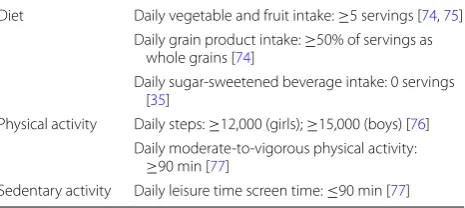
and lifestyle habits in families was meritorious. Subse-quently, we organized performance objectives (Table 1) to guide how parents would achieve this aim within the intervention. In generating the performance objectives, we met with an inter-professional team of health care pro-fessionals who offer pediatric weight management care to children and families at our local children’s hospital. Their clinical experience and training in nutrition, health promotion, physical activity, exercise physiology, mental health, nursing, endocrinology, and pediatric medicine complemented our research expertise. We shared the results of our needs assessment, local research studies, and literature review with this group to inform our ongo-ing discussions. After considerongo-ing performance objec-tives and the determinants of pediatric obesity, the group examined which lifestyle habits were most amenable to change and then generated a list to consider for inclusion in the intervention. Given the fundamental roles of diet and physical activity in determining energy balance and weight management success, we established six lifestyle-related change objectives (three diet- and three physi-cal activity-related; see Table 2). We chose these goals because: (i) of their impact on obesity and weight man-agement, (ii) they offered families tangible targets they could work on together, and (iii) families were unlikely to be achieving all of these targets at presentation, so all Table 1 Performance objectives for the Parents as Agents of Change (PAC©) intervention
Performance objectives were designed for parents to help them make changes (lifestyle, behavioral, cognitive, interpersonal) to enable weight management for their children
Parents learn the causes and consequences of childhood obesity Parents learn how they can facilitate and reinforce changes
Parents learn about how they can serve as positive role models and leaders within their family Parents can identify and discuss real and perceived barriers to make positive changes Parents can discuss and prioritize solutions by problem-solving plans to make positive changes Parents can discuss and implement strategies to make and maintain positive changes
[image:4.595.61.529.124.215.2]Parents can explore how their thoughts and feelings influence their behaviors in helping their children to make positive changes
Table 2 Lifestyle goals within the Parents as Agents of Change (PAC©) intervention
The lifestyle goals of PAC© were based on our team’s interpretation of the
best available evidence for pediatric weight management at the time the intervention was developed
Diet Daily vegetable and fruit intake: ≥5 servings [74, 75] Daily grain product intake: ≥50% of servings as
whole grains [74]
Daily sugar-sweetened beverage intake: 0 servings [35]
Physical activity Daily steps: ≥12,000 (girls); ≥15,000 (boys) [76] Daily moderate-to-vigorous physical activity:
≥90 min [77]
[image:4.595.306.539.264.368.2]families would be able to identify at least one lifestyle behavior that they could address [30, 31].
Step 3—theory‑based framework
The goal of Step 3 is to identify and select theory-based models that are relevant to families, obesity, and behavior change, and then translate them into practical interven-tion tools used to target the identified change objectives. Given the role of the family in children’s health behaviors, developing theoretically-driven interventions that incor-porate parents as leaders within their families is vitally important [43]. With this in mind, elements were taken from well-established theoretical models to develop the PAC intervention; specifically, we drew upon family sys-tems theory (FST) [44, 45] and cognitive behavior ther-apy (CBT) [46, 47]. Relevant details from each theory are described below.
Family systems theory
According to FST, parenting style is often conceptualized as the emotional climate in which parenting practices occur [48] and parenting style can influence children’s lifestyle behaviors and weight as it represents the context in which specific parenting practices and lifestyle behav-iors are presented [49]. Three distinct parenting styles are discussed in the literature, namely: authoritative, authori-tarian, and permissive [50]. Authoritative parenting incorporates shared decision-making, high expectations paired with warmth and compassion, and setting and enforcing appropriate limits and consequences. Author-itative parenting is associated with better outcomes including more healthful eating practices and lower rates of obesity in children [51, 52].
Similar to authoritative parenting, authoritarian par-enting is characterised by high expectations; however, involves little warmth and compassion and instead involves high levels of discipline and rigid control. Authoritarian parenting is associated with more adverse outcomes as children are overly controlled by their par-ents and not able to develop autonomy and appropriate self-regulation skills [53].
Permissive (or indulgent) parenting is typified by lit-tle to no demands placed on the child paired with high levels of warmth and compassion. Permissive parenting styles can have a detrimental effect on a family’s ability to make changes in their lifestyle behaviors and can pro-mote unhealthy lifestyle patterns [54]. For example, par-ents using a permissive parenting style often do not exert expectations on their children and may not provide the guidance that is needed for children to develop self-regu-lation in their eating and their activity behaviors [55].
Along with characteristic parenting styles, family sys-tems theory suggests that dysfunction in the familial
organization or structure contributes to dysfunction in the child, and that children’s behaviors should be con-ceptualized in terms of the entire family system [56]. In his work, Minuchin suggests children who experience psychosomatic symptoms or disordered eating behaviors often have families that are enmeshed, conflict avoidant, and lacking in conflict resolution. In such families, the ill-ness and symptom is often maintained as a means of pre-serving homeostasis or status quo in the family system [57, 58].
Many tenets from family system theory can be applied to understanding pediatric obesity. Our intervention focuses on helping parents to work towards developing more helpful parenting approaches (e.g., authoritative parenting) and recognizing behaviors within their family structure that (inadvertently or unintentionally) main-tain unhealthy habits. For example, one PAC session focuses on positive parenting partnerships and practical skills such as setting limits with respect lifestyle behav-iors, maintaining appropriate boundaries, and improving communication among family members. In addition to the specific content on parenting practices, parents are encouraged throughout the intervention to make use of these new parenting techniques as they implement other changes in the family.
Cognitive behavioral therapy
The collective body of evidence derived from clinical research supports the application of cognitive behavioral therapy (CBT)-based interventions in weight manage-ment for both adults [59–61] and children [62, 63]. CBT is a theoretically-based treatment approach that high-lights the relationship between cognitions (thoughts), feelings, and behaviors, and utilizes techniques involving motivational enhancement, goal-setting, problem-solv-ing, and knowledge/skill acquisition that can facilitate sustainable behavior changes [46, 47]. In our interven-tion, skills gained through CBT are designed to help par-ents identify and change the parenting mechanisms that maintain their children’s current lifestyle habits. Our CBT-trained health care professionals work with par-ents to link knowledge, attitudes, thoughts, and feelings to behaviors and facilitate setting incremental goals that build week-to-week and are individualized to match the degree of parental motivation to change.
stress and anxiety or increase skill and competence. For these reasons, we included training for parents on exam-ining their beliefs about food and activity behaviors and how these behaviors are encouraged in the home. Raising parental awareness of their own beliefs about food and activity behaviors can help parents break the transmis-sion of these beliefs to their children.
CBT encourages consistent participation and col-laboration between health care professionals and par-ticipants. We used a Socratic questioning approach to help parents find their own answers to problems which is linked more closely with intrinsic motivation and can lead to sustainable behavior change [64], instead of hav-ing questions answered or problem-solved by a health care professional.
As mentioned above, PAC is deliberate in promot-ing parental adoption of more authoritative parentpromot-ing strategies and recognizing patterns in the home. CBT techniques can also be helpful in improving such parent-ing strategies and improvparent-ing parent–child interactions [65, 66]. During PAC, health care professionals work with parents who have more permissive (e.g., makes few demands) or authoritarian (e.g., restricts child autonomy) parenting styles to develop authoritative parenting skills.
Step 4—curriculum development
The aim of Step 4 is to describe the scope and components of the intervention. To achieve this aim, we completed a series of activities to develop the PAC curriculum. First, we held a 3-day, facilitated workshop with a team of clini-cians (e.g., pediatrician, nurse practitioner, dietitian, exer-cise specialist, health promoter) that offers health services for obesity management at our local children’s hospital. The purpose of these sessions was to solicit input from front-line clinicians to determine the topics and issues for inclusion in the curriculum, perspectives that were com-plemented by information retrieved from the published literature as well as online descriptions of existing weight management services. It is important to mention that PAC curriculum developers were also a part of the weight man-agement team, serving as clinical psychologist (RAK) and program director (GDCB). Second, based on the infor-mation gathered and consistent with the objectives and theoretical underpinnings of the intervention, we created 16 inter-related and manualized sessions (each 60–90 min in duration) that could be delivered in a group setting by health professionals to parents of children with obesity. The group-based format met our need to offer health ser-vices for families in a way that optimized our available physical space, personnel, and funding. Topics covered in the PAC curriculum were relevant to weight management including nutrition, physical activity, sedentary behavior, parenting, communication, mental health, and behavior
change. It is worth noting that a wide range of topics was discussed during the workshop; however, we gained con-sensus from the group on the issues thought to be most important for parents to make lifestyle, behavioral, and cognitive changes to enable weight management in chil-dren. Third, complementing the information included in each individual session, we embedded practical activities that were consistent with CBT. For instance, at the start of each session, health care providers delivering PAC would initiate a facilitated discussion with parents about their goals for the past week and encourage them to share their successes and challenges with the group. This activity reinforces aspects of CBT (linking thoughts and feelings with behaviors) and provides an opportunity for parents to learn from one another as well as validate experiences among parents since many shared common situations and challenges in making and maintaining positive changes in their families. Additional materials were developed that aligned with intervention content, including a (i) PAC Snapshot template that can be populated with clinical (e.g., systolic blood pressure), anthropometric (e.g., BMI percentile), and lifestyle (e.g., steps/day) data from chil-dren pre- and post-intervention; this resource highlights potential areas of interest for families to address during the intervention as well as highlights changes in modifi-able outcomes (e.g., nutrition, physical activity) from the start to the end of the intervention; (ii) PAC Goal-Setting
template that adheres to well-established principles (spe-cific, measurable, attainable, relevant, and timely) [67] and is used by parents on a week-to-week basis to struc-ture their goal-setting plans; and (iii) PAC Tracking Sheet
template that can be used by both parents and children to monitor lifestyle habits, including recording steps/day or intake of vegetables and fruit.
Intervention materials were developed using Microsoft PowerPoint© and Word©. PowerPoint© was used to
cre-ate two complementary slide decks—one for health care professionals (PAC leaders) and one for parents, which are printed and organized in binders. Both slide decks include the same presentation slides that are shown to the group, but the leaders’ version also includes details (viewable in the notes section) in each individual slide on the session purpose, resources needed to deliver the session, information to emphasize for parents during the presentation, and literature cited/evidence in support of the content. The parents’ version also includes space for note-taking and for completing specific activities that are aligned with the session content.
observation led us to provide sessions on obesity (e.g., definitions, causes, consequences), nutrition (e.g., eating meals away from home, portion sizes), and physical activ-ity (e.g., activactiv-ity versus exercise, screen time) in the first half of the intervention, which helped clinicians to engage with parents given that these topics were often expected by families and to allow families to work on lifestyle and behavioral changes over time. Sessions that focus on other topics (e.g., parenting, communication, time man-agement, self-esteem) were delivered in the second half since these topics can be more secondary for parents, but allow leaders and parents to relate earlier content-related issues (e.g., eating more vegetables and fruit) to later pro-cess-related topics (e.g., improving time management skills to enable healthier meals).1 Further, we
incorpo-rated a number of different activities across the 16 ses-sions to capitalize on different adult learning styles and preferences, which included group discussions, brain-storming, interactive and experiential learning, paired conversations, and individual private activities. In gen-eral, longer interventions result in a greater likelihood of success in weight management [10]; however, interven-tion length needs to correspond with most families’ read-iness, willingness, and ability so that enrolment and participation are optimized, which includes considering work, school, and seasonal or intermittent commitments such as holidays and exams. We believe there is nothing extraordinary about 16 sessions (in lieu of, for instance, 15 or 17 sessions) that can be delivered over 16 consecu-tive weeks. This duration was informed by our local weight management clinic, which could offer PAC to families twice annually (September to December; January to April), and was long enough for parents to progress through a series of stages believed to be important for small groups (forming, storming, norming, performing, and adjourning) [68]. We also relied on evidence suggest-ing that this intervention duration was likely long enough for children with obesity to experience improvements in weight and health [69, 70].
Once the PAC intervention was drafted, we commis-sioned an international expert review panel with mem-bers from Canada, the United States, and Israel to review all PAC materials. Individuals possessed a blend of clini-cal and research expertise in CBT, obesity, nutrition, as well as intervention development and evaluation. Upon the review of the intervention, panel members provided us with a critical evaluation of our intervention, which led to subsequent refinements in concepts, content, and clarity to PAC materials.
1 For additional information regarding session content, please see Table 1 in
Ball et al. [71] or contact the first author (GDCB).
Step 5—adoption and implementation
For Step 5, we worked with the team of health care profes-sionals offering weight management services to families at our local children’s hospital to adopt the PAC interven-tion into their clinical pathway. Because this team helped us to develop the content of the PAC intervention, this step was a logical extension and reflected their ongoing participation. At the time we started to develop the PAC intervention in 2006, the only health services available for weight management at our children’s hospital included individual care; therefore, the group-based PAC inter-vention offered the clinic and families a new treatment modality that complemented existing services. Despite a lack of data on the efficacy and effectiveness of the PAC intervention, the team agreed to offer it as a clinical ser-vice and help evaluate it for feasibility, acceptability, and satisfaction.
From 2007 to 2009, we pilot-tested the PAC interven-tion with 58 families, which included a total of 72 par-ents who were recruited through our local pediatric weight management clinic (unpublished data). In part-nership with clinical and administrative members of the clinic, we recruited and enrolled parents of children (8–12 years old) with obesity who were participating in the clinic. Families were enrolled in six individual cohorts that varied in size from eight to 14 parents. The attrition rate was 25% and, on average, parents attended 13 out of 16 sessions. The intervention was delivered by 14 differ-ent intervdiffer-ention leaders (two leaders per cohort), which included health care professionals and clinical trainees with expertise in exercise physiology, health promotion, nursing, nutrition, psychology, and social work. Each ses-sion took between 60 and 90 min to deliver. Within this pilot, we offered two versions of the PAC intervention; the CBT version of PAC was delivered by individuals with experience and training in CBT whereas a com-panion version of the PAC intervention, which included the same goals, duration, and content, was offered in a more traditional, didactic format that did not include CBT-specific activities (e.g., linking thoughts and feel-ings to behaviors). The non-CBT version of PAC was offered by health care professionals and clinical trainees who did not possess training in CBT. We piloted two ver-sions of PAC since our goal (beyond the pilot phase) was to secure external research funding to compare the effec-tiveness of two parent-based interventions for managing pediatric obesity.
made while the PAC intervention was being delivered week-to-week, but gave us the opportunity to men-tor and support our clinical team members. Each ses-sion was also followed by a short debriefing period that included cataloguing issues that arose during the session and required follow-up prior to the next session (e.g., questions from parents that extended beyond interven-tion content and leader knowledge; unexpected par-ent group member absences). On a week-to-week basis, we also incorporated modest contingency rewards (e.g., free family admission passes to local recreation center) to capitalize on families’ extrinsic motivation for chang-ing lifestyle habits, which families were eligible for when they returned their completed PAC Tracking Sheets. Other elements were incorporated into the PAC inter-vention that were designed to enhance families’ partici-pation and perceived value in the program. For instance, (i) all families received two pedometers that they could use to track their daily steps; (ii) PAC leaders and parents were encouraged to share educational resources with their group by placing supplementary materials (e.g., recipes, health tips, books and brochures) on a commu-nity resource table, which encouraged participants to be active in sharing information and experiences; and (iii) families were encouraged to contact PAC leaders or the clinic secretary if they believed they would benefit from additional support through one-on-one consultations with clinicians (e.g., dietitian, exercise specialist, psychol-ogist, pediatrician) from the weight management clinic.
We did not establish specific metrics regarding feasibil-ity, but our collective experience revealed that the PAC intervention was easy to add to the clinical pathway of health services for weight management and the health care professionals valued the intervention as a treatment option for families, which complemented the one-on-one care they already offered. To gain perspectives from par-ents who completed the PAC intervention, we had them complete structured exit surveys at the completion of the curriculum to provide us with feedback on a variety of intervention elements (e.g., content, duration, timing, likes/dislikes, and recommendations for changes), which offered insights related to acceptability and satisfaction. Parents reported that the material was helpful in address-ing their children’s weight management and found the content of PAC was useful for them and their families. Based on their feedback, minor refinements were made to the content and organization of the final version of the PAC intervention. Overall, parents’ responses (n = 72) were favorable with most reporting they believed the 60–90 min session length (54/72; 75%) and 16-session duration (62/72; 86%) were just right. Further, most par-ents agreed or strongly agreed that they (i) were satisfied
with the PAC intervention (68/72; 94%), (ii) had their expectations met (61/72; 85%), and (iii) were able to make healthy lifestyle changes as a result of the program (70/72; 97%).
Step 6—evaluation and dissemination
In step six, we built on the experience we gained during the pilot-testing phase of intervention development and refinement. We secured external research funding to evaluate the PAC intervention within a two-armed, par-allel, single-blinded, superiority, randomized clinical trial [71]. We chose a study design that allowed us to com-pare the effectiveness of the PAC intervention based on principles of CBT versus a non-CBT version of PAC in targeting the diet, physical activity, and sedentary activ-ity change objectives mentioned in step 2 (see Table 2). The non-CBT version of PAC was similar in content and structure, but lacked components of CBT that link thoughts and feelings to behaviors. The outcomes assessed at pre-intervention, post-intervention, 6-, and 12-months follow-up will include the child’s BMI z-score, and cardiometabolic, lifestyle, and psychosocial vari-ables in children and parents. Our study retained meth-odological rigour while adapting to the local needs of the pediatric weight management clinic to offer timely health services to families. We will finalize and submit the results of our trial for publication in the coming months, data that follow a complementary study that explored families’ experiences and perceptions related to the PAC intervention [72].
From the onset of this research, we believed that other clinicians and health care administrators may be inter-ested in offering the PAC intervention to families in other regions. Through word of mouth, this has occurred, with colleagues from three other communities/clinics slated to provide the PAC program over the coming year. We shared information about PAC within our local children’s hospital administration via briefing notes and provin-cially through Alberta Health Services’ website and a pro-vincial network of clinicians and administrators whose work focuses on preventing and managing pediatric obesity. Although we did not establish a formal dissemi-nation plan, we partnered recently with the Canadian Obesity Network (www.obesitynetwork.ca) to use their existing infrastructure and network of members to share information about the PAC intervention to a broader audience of stakeholders.
Discussion and conclusions
interventions are promising strategies for helping to manage pediatric obesity. Despite empirical support for PAC interventions, little information is available in pub-lished literature and elsewhere regarding the rationale and development of these programs. The purpose of this manuscript was to describe the development, imple-mentation, and planned evaluation of a new PAC weight management intervention using an IM framework. Our PAC intervention addresses individual, family, and envi-ronmental factors related to managing pediatric obesity by involving parents of 8–12 year olds with obesity in a 16-session, group-based, clinician-led program. Informa-tion relevant to weight management including nutriInforma-tion, physical activity, sedentary behavior, parenting, commu-nication, mental health, and behavior change is provided throughout the sessions. Parents are supported through-out the program in setting realistic goals, self-monitor-ing, and problem solving.
The IM approach used in developing the PAC inter-vention has many strengths. Specifically, this approach allowed the research team to systematically incorporate information from stakeholders (including parents, chil-dren, providers, researchers, and policy makers), theoret-ical models of behavior change and obesity management, and existing empirical data. Not only is IM associated with improved effectiveness [24], but it also promotes capacity building as other healthcare teams and research-ers can benefit from the detailed account of the inter-vention development. Despite the strengths of IM, this approach is resource intensive and time consuming [26, 73], which may be a barrier to smaller healthcare teams. Moreover, the PAC program discussed here was devel-oped within a specific clinic, so it is possible that data obtained (e.g., needs expressed from stakeholders) might differ in other jurisdictions. All PAC program materials, including leader manuals, parent resources, and a how-to on delivery the intervention, are available for a licens-ing fee so that other healthcare teams can offer the PAC intervention in their local area. Healthcare teams inter-ested in the PAC intervention are encouraged to contact the first author (GDCG) with questions and to discuss opportunities for adaptation and implementation.
Abbreviations
BMI: body mass index; CBT: cognitive behavioral therapy; FST: family systems theory; IM: Intervention Mapping; PAC: Parents as Agents of Change©.
Authors’ contributions
GDCB conceived of the study and its design (with ASN) and co-authored the first draft of the manuscript. ARM co-authored the manuscript. RAK co-led the intervention development and co-authored the manuscript. KAA co-authored the manuscript and assisted with intervention refinements. ASN conceived of the study and its design (with GDCB) and co-authored the manuscript. All authors read, helped to edit, and approved the final manuscript prior to submission. All authors read and approved the final manuscript.
Author details
1 Department of Pediatrics, University of Alberta, Room 4-515, Edmonton Clinic Health Academy, 11405-87th Ave, Edmonton, AB T6G 1C9, Canada. 2 Department of Pediatrics, University of Alberta, Edmonton, AB, Canada. 3 Department of Psychology, Lakehead University, 955 Oliver Rd, Thunder Bay, ON P7B 5E1, Canada. 4 #780 Princeton Place, 10339-124th St, Edmonton, AB T5N 3W1, Canada. 5 Health Technology & Service Policy, Research & Innovation Branch, Strategic Planning & Policy Development Division, Alberta Health, 18th Floor, ATB Building, 10025 Jasper Ave, Edmonton, AB T5J 1S6, Canada. 6 Department of Pediatrics, University of Alberta, Room 3-526, Edmonton Clinic Health Academy, 11405-87th Ave, Edmonton, AB T6G 1C9, Canada.
Acknowledgements
We wish to acknowledge the children and parents who helped to inform the development of the PAC intervention. We also appreciate the administrative, clinical, and research support received from our colleagues at the Pediatric Centre for Weight and Health (Stollery Children’s Hospital, Alberta Health Services, Edmonton, AB) and the University of Alberta, including (in alphabeti-cal order) Bobbi Barbarich, Amanda Beekman, Tesia Bennett, Laurie Gaboury, Dena Gushattey, Mary Jetha, Lindsay Johnson, Cheryl Krug, Erica Lauridsen, Brad Leier, Kelly Mackenzie, Lauren Melnyk, Thea Moss, Judy O’Leary, Rhiannon Prince, Rosann Skwarok, Anna Stephenson, and Lisa Tremblay. Finally, we are grateful for the institutional support provided by the Department of Pediatrics (Faculty of Medicine & Dentistry, University of Alberta) and Stollery Children’s Hospital (Alberta Health Services). At the time of this research, GDCB was sup-ported by salary awards from the Canadian Institutes of Health Research (CIHR; New Investigator Award) and Alberta Innovates—Health Solutions (Population Health Investigator Award). ASN was supported by a CIHR Career Develop-ment Award from the Canadian Child Health Clinician Scientist Program in partnership with the SickKids Foundation, Child & Family Research Institute (British Columbia), Women & Children’s Health Research Institute (Alberta), and Manitoba Institute of Child Health.
Competing interests
GDCB, RAK, and ASN copyrighted the term Parents as Agents of Change© with the federal government of Canada. The PAC curriculum is a commercially-available intervention through GDCB and the University of Alberta through a dissemination partnership with the Canadian Obesity Network (http://www. obesitynetwork.ca). ARM and KAA have no financial or non-financial compet-ing interests to declare.
Availability of data and materials
Original data can be made available by contacting the corresponding author.
Ethics
This study was reviewed and approved by the Human Research Eth-ics Board at the University of Alberta, Edmonton, AB, CANADA (approval #PRO00001635). Participants provided informed consent prior to participating.
Reprints
Reprints will not be made available by the authors.
Financial Support
During the time of this research, GDCB was supported by a New Investigator award from the Canadian Institutes of Health Research (CIHR) and a Popula-tion Health Investigator Award from Alberta Innovates—Health SoluPopula-tions. MSN was was supported by a CIHR Career Development Award from the Canadian Child Health Clinician Scientist Program in partnership with the Sick-Kids Foundation, Child & Family Research Institute (British Columbia), Women & Children’s Health Research Institute (Alberta), and Manitoba Institute of Child Health.
Received: 21 November 2016 Accepted: 21 December 2016
References
2. Ogden CL, Carroll MD, Kit BK, Flegal KM. Prevalence of child-hood and adult obesity in the United States, 2011–2012. JAMA. 2014;311:806–14.
3. Roberts KC, Shields M, de Groh M, Aziz A, Gilbert JA. Overweight and obesity in children and adolescents: results from the 2009 to 2011 Cana-dian Health Measures Survey. Health Rep. 2012;23:37–41.
4. Goran MI, Ball GD, Cruz ML. Obesity and risk of type 2 diabetes and car-diovascular disease in children and adolescents. J Clin Endocrinol Metab. 2003;88:1417–27.
5. Wang F, Wild TC, Kipp W, Kuhle S, Veugelers PJ. The influence of childhood obesity on the development of self-esteem. Health Rep. 2009;20:21–7. 6. van Geel M, Vedder P, Tanilon J. Are overweight and obese youth more
often bullied by their peers? A meta-analysis on the correlations between weight status and bullying. Int J Obes. 2014;38:1263–7.
7. Zeller MH, Reiter-Purtill J, Modi AC, Gutzwiller J, Vannatta K, Davies WH. Controlled study of critical parent and family factors in the obesigenic environment. Obesity. 2007;15:126–36.
8. Singh AS, Mulder C, Twisk JW, van Mechelen W, Chinapaw MJ. Tracking of childhood overweight into adulthood: a systematic review of the literature. Obes Rev. 2008;9:474–88.
9. Janicke DM, Steele RG, Gayes LA, Lim CS, Clifford LM, Schneider EM, Car-mody JK, Westen S. Systematic review and meta-analysis of comprehen-sive behavioral family lifestyle interventions addressing pediatric obesity. J Pediatr Psychol. 2014;39:809–25.
10. Whitlock EP, O’Connor EA, Williams SB, Beil TL, Lutz KW. Effectiveness of weight management interventions in children: a targeted systematic review for the USPSTF. Pediatrics. 2010;125:e396–418.
11. Oude Luttikhuis H, Baur L, Jansen H, Shrewsbury VA, O’Malley C, Stolk RP, Summerbell CD. Interventions for treating obesity in children. Cochrane Database Syst Rev. 2009;21:CD001872.
12. Ewald H, Kirby J, Rees K, Robertson W. Parent-only interventions in the treatment of childhood obesity: a systematic review of randomized controlled trials. J Public Health. 2014;36:476–89.
13. Boutelle KN, Cafri G, Crow SJ. Parent-only treatment for childhood obe-sity: a randomized controlled trial. Obesity. 2011;19:574–80.
14. Jansen E, Mulkens S, Jansen A. Tackling childhood overweight: treating parents exclusively is effective. Int J Obes. 2011;35:501–9.
15. Magarey AM, Perry RA, Baur LA, Steinbeck KS, Sawyer M, Hills AP, Wilson G, Lee A, Daniels LA. A parent-led family-focused treatment program for overweight children aged 5 to 9 years: the PEACH RCT. Pediatrics. 2011;127:214–22.
16. Golan M, Crow S. Targeting parents exclusively in the treatment of child-hood obesity: long-term results. Obes Res. 2004;12:357–61.
17. Golan M, Fainaru M, Weizman A. Role of behavior modification in the treatment of childhood obesity with the parents as the exclusive agents of change. Int J Obes Relat Metab Disord. 1998;22:1217–24.
18. Janicke DM, Sallinen BJ, Perri MG, Lutes LD, Silverstein JH, Brumback B. Comparison of program costs for parent-only and family-based interven-tions for pediatric obesity in medically underserved rural settings. J Rural Health. 2009;25:326–30.
19. Golan M, Kaufman V, Shahar DR. Childhood obesity treatment: targeting parents exclusively v. parents and children. Br J Nutr. 2006;95:1008–15. 20. Golan M, Weizman A, Apter A, Fainaru M. Parents as the exclusive
agents of change in the treatment of childhood obesity. Am J Clin Nutr. 1998;67:1130–5.
21. Eneli I, Norwood V, Hampl S, Ferris M, Hibbeln T, Patterson K, Pomietto M, Hassink S. Perspectives on obesity programs at children’s hospitals: insights from senior program administrators. Pediatrics. 2011;128:S86–90. 22. Ball GD, Ambler KA, Chanoine JP. Pediatric weight management
programs in Canada: where, what and how? Int J Pediatr Obes. 2011;6:e58–61.
23. Bartholomew LK, Parcel GS, Kok G. Intervention mapping: a process for developing theory- and evidence-based health education programs. Health Educ Behav. 1998;25:545–63.
24. Bartholomew LK, Parcel GS, Kok G, Gottlieb NH. Intervention mapping: designing theory- and evidence-based health promotion programs. New York: McGraw-Hill Companies; 2001.
25. Schmid AA, Andersen J, Kent T, Williams LS, Damush TM. Using interven-tion mapping to develop and adapt a secondary stroke preveninterven-tion program in Veterans Health Administration medical centers. Implement Sci. 2010;15:97.
26. Kwak L, Kremers SP, Werkman A, Visscher TL, van Baak MA, Brug J. The NHF-NRG in balance-project: the application of intervention mapping in the development, implementation and evaluation of weight gain prevention at the worksite. Obes Rev. 2007;8:347–61.
27. Holt NL, Moylan BA, Spence JC, Lenk JM, Sehn ZL, Ball GD. Treatment preferences of overweight youth and their parents in Western Canada. Qual Health Res. 2008;18:1206–19.
28. Pinquart M. Associations of general parenting and parent–child relationship with pediatric obesity: a meta-analysis. J Pediatr Psychol. 2014;39:381–93.
29. Gerards SM, Sleddens EF, Dagnelie PC, de Vries NK, Kremers SP. Interven-tions addressing general parenting to prevent or treat childhood obesity. Int J Pediatr Obes. 2011;6:e28–45.
30. Ball GD, Lenk JM, Barbarich BN, Plotnikoff RC, Fishburne GJ, Mackenzie KA, Willows ND. Overweight children and adolescents referred for weight management: are they meeting lifestyle behaviour recommendations? Appl Physiol Nutr Metab. 2008;33:936–45.
31. Avis J, Jackman A, Jetha MM, Ambler KA, Simvakumar M, Krug C, Ball GDC. Lifestyle behaviors of parents of children referred for pediatric weight management: are they meeting recommendations? Clin Pediatr. 2015;54:1068–75.
32. Sung-Chan P, Sung YW, Zhao X, Brownson RC. Family-based models for childhood-obesity intervention: a systematic review of randomized controlled trials. Obes Rev. 2013;14:265–78.
33. Lau DC, Douketis JD, Morrison KM, Hramiak IM, Sharma AM, Ur E, Obesity Canada Clinical Practice Guidelines Expert Panel. 2006 Canadian clinical practice guidelines on the management and prevention of obesity in adults and children. CMAJ. 2007;176:S1–13.
34. National Institute for Health and Clinical Excellence. Obesity: guidance on the prevention, identification, assessment and management of over-weight and obesity in adults and children. London: National Institute for Health and Clinical Excellence; 2006.
35. Barlow SE, Expert Committee. Expert committee recommendations regard-ing the prevention, assessment, and treatment of child and adolescent overweight and obesity: summary report. Pediatrics. 2007;120:S164–92. 36. Spear BA, Barlow SE, Ervin C, Ludwig DS, Saelens BE, Schetzina KE, Taveras
EM. Recommendations for treatment of child and adolescent overweight and obesity. Pediatrics. 2007;120:S254–88.
37. August GP, Caprio S, Fennoy I, Freemark M, Kaufman FR, Lustig RH, Silverstein JH, Speiser PW, Styne DM, Montori VM, Endocrine Society. Prevention and treatment of pediatric obesity: an endocrine society clini-cal practice guideline based on expert opinion. J Clin Endocrinol Metab. 2008;93:4576–99.
38. American Dietetic Association. Position of the American Dietetic Associa-tion: individual-, family-, school-, and community-based interventions for pediatric overweight. J Am Diet Assoc. 2006;106:925–45.
39. Bartholomew LK, Parcel GS, Kok G, Gottlieb NH, Fernandez ME. Planning health promotion programs: an intervention mapping approach. 3rd ed. Hoboken: Jossey-Bass (Wiley); 2011.
40. Holm JC, Gamborg M, Bille DS, Gr Nb KHN, Ward LC, Faerk J. Chronic care treatment of obese children and adolescents. Int J Pediatr Obes. 2011;6:188–96.
41. Kolsgaard ML, Joner G, Brunborg C, Anderssen SA, Tonstad S, Andersen LF. Reduction in BMI z-score and improvement in cardiometabolic risk factors in obese children and adolescents. The Oslo Adiposity Interven-tion Study—a hospital/public health nurse combined treatment. BMC Pediatr. 2011;11:47.
42. Reinehr T, Kleber M, Toschke AM. Lifestyle intervention in obese children is associated with a decrease of the metabolic syndrome prevalence. Atherosclerosis. 2009;207:174–80.
43. Kitzman-Ulrich H, Wilson DK, St George SM, Lawman H, Segal M, Fairchild A. The integration of a family systems approach for understanding youth obesity, physical activity, and dietary programs. Clin Child Fam Psychol Rev. 2010;13:231–53.
44. Broderick CB. Understanding family process: basics of family systems theory. Thousand Oaks: Sage Publications; 1993.
45. Beavers WR, Hampson RB. Successful families: assessment and interven-tion. New York: WW Norton & Company; 1990.
• We accept pre-submission inquiries
• Our selector tool helps you to find the most relevant journal • We provide round the clock customer support
• Convenient online submission • Thorough peer review
• Inclusion in PubMed and all major indexing services • Maximum visibility for your research
Submit your manuscript at www.biomedcentral.com/submit
Submit your next manuscript to BioMed Central
and we will help you at every step:
47. Beck JS. Cognitive therapy: basics and beyond. New York: Guilford Press; 1995.
48. Darling N, Steinberg L. Parenting style as context: an integrative model. Psychol Bull. 1993;113:487–96.
49. Rhee K. Childhood overweight and the relationship between parent behaviors, parenting style, and family functioning. Ann Am Acad Polit Soc Sci. 2008;615:11–37.
50. Baumrind D. Child care practices anteceding three patterns of preschool behavior. Genet Psychol Monogr. 1967;75:43–88.
51. Sleddens EF, Gerards SM, Thijs C, de Vries NK, Kremers SP. General parent-ing, childhood overweight and obesity-inducing behaviors: a review. Int J Pediatr Obes. 2011;6:e12–27.
52. Patrick H, Nicklas TA. A review of family and social determinants of chil-dren’s eating patterns and diet quality. J Am Coll Nutr. 2005;24:83–92. 53. Zubatsky M, Berge J, Neumark-Sztainer D. Longitudinal associations
between parenting style and adolescent disordered eating behaviors. Eat Weight Disord. 2015;20:187–94.
54. Johnson R, Welk G, Saint-Maurice PF, Ihmels M. Parenting styles and home obesogenic environments. Int J Environ Res Public Health. 2012;9:1411–26.
55. Lengua LJ, Honorado E, Bush NR. Contextual risk and parenting as predic-tors of effortful control and social competence in preschool children. J Appl Dev Psychol. 2007;28:40–55.
56. Minuchin S, Baker L, Rosman BL, Liebman R, Milman L, Todd TC. A con-ceptual model of psychosomatic illness in children: family organization and family therapy. Arch Gen Psychiatry. 1974;32:273–80.
57. Minuchin S, Fishman HC. The psychosomatic family in child psychiatry. J Am Acad Child Psychiatry. 1979;18:76–9.
58. Minuchin S, Rosman BL, Baker L. Psychosomatic families: anorexia in context. Cambridge: Harvard University Press; 1978.
59. Rapoport L, Clark M, Wardle J. Evaluation of a modified cogni-tive—behavioral programme for weight management. Int J Obes. 2000;24:1726–37.
60. Wilson GT. Behavioral treatment of obesity thirty years and counting. Adv Behav Res Ther. 1994;16:31–75.
61. Brownell KD, Jeffery RW. Improving long-term weight loss: pushing the limits of treatment. Behav Ther. 1987;18:353–74.
62. Kirschenbaum DS, Gierut KJ. Five recent expert recommendations on the treatment of childhood and adolescent obesity: towards an emerging consensus—a stepped care approach. Child Obes. 2013;9:376–85. 63. Braet C, Tanghe A, Decaluwe V, Moens E, Rosseel Y. Inpatient treatment
for children with obesity: weight loss, psychological well-being, and eat-ing behavior. J Pediatr Psychol. 2004;29:519–29.
64. Miller WR, Rollnick S. Motivational interviewing: preparing people for change. 2nd ed. New York: Guilford; 2002.
65. Sanders MR, Kirby JN, Tellegen CL, Day JJ. The triple P-positive parenting program: a systematic review and meta-analysis of a multi-level system of parenting support. Clin Psychol Rev. 2014;34:337–57.
66. Mendlowitz SL, Manassis K, Bradley S, Scapillato D, Miezitis S, Shaw B. Cognitive-behavioral group treatments in childhood anxiety disorders: the role of parental involvement. J Am Acad Child Adolesc Psychiatry. 1999;38:1223–9.
67. Doran GT. There’s a S.M.A.R.T. way to write management’s goals and objectives. Manag Rev. 1981;70:35–6.
68. Tuckman BW, Jensen MAC. Stage of small-group development revisited. Group Org Manag. 1977;2:419–27.
69. Shaibi GQ, Cruz ML, Ball GD, Weigensberg MJ, Salem GJ, Crespo NC, Goran MI. Effects of resistance training on insulin sensitivity in overweight Latino adolescent males. Med Sci Sports Exerc. 2006;38:1208–15. 70. Epstein LH, Valoski A, Wing RR, McCurley J. Ten-year follow-up of
behavio-ral, family-based treatment for obese children. JAMA. 1990;264:2519–23. 71. Ball GD, Ambler KA, Keaschuk RA, Rosychuk RJ, Holt NL, Spence JC, Jetha
MM, Sharma AM, Newton AS. Parents as agents of change (PAC) in pedi-atric weight management: the protocol for the PAC randomized clinical trial. BMC Pediatr. 2012;12:114.
72. Holt NL, Neely KC, Newton AS, Knight CJ, Rasquinha A, Ambler KA, Spence JC, Ball GDC. Parents as agents of change for managing pediatric obesity: how do families perceive and experience interventions delivered to parents exclusively? J Nutr Educ Behav. 2015;47:427–31.
73. McEachan RRC, Lawton RJ, Jackson C, Conner M, Lunt J. Evidence, theory and context: using intervention mapping to develop a worksite physical activity intervention. BMC Public Health. 2008;8:326.
74. Health Canada. Eating well with Canada’s food guide. Ottawa: Govern-ment of Canada; 2007.
75. Garriguet D. Overview of Canadians’ eating habits, 2004. Health Rep. 2006;18:17–32.
76. Tudor-Locke C, Pangrazi RP, Corbin CB, Rutherford WJ, Vincent SD, Raustorp A, Tomson LM, Cuddihy TF. BMI-referenced standards for recommended pedometer-determined steps/day in children. Prev Med. 2004;38:857–64.