A MIXED METHOD STUDY TO ASSESS THE
EFFECTIVENESS OF (IEC) PACKAGE REGARDING
IMPACT OF SOCIAL NETWORK ON KNOWLDGE AND
LIFESTYLE CHANGES AMONG COLLEGE STUDENTS
STUDYING IN SELECTED COLLEGE,
TIRUVANNAMALAI
-DISSERTATION SUBMITTED TO
THE TAMIL NADU DR.M.G.R.MEDICAL UNIVERSITY
CHENNAI
IN PARTIAL FULFILMENT OF REQUIREMENT FOR THE DEGREE
OF
A MIXED METHOD STUDY TO ASSESS THE
EFFECTIVENESS OF (IEC) PACKAGE REGARDING
IMPACT OF SOCIAL NETWORK ON KNOWLDGE AND
LIFESTYLE CHANGES AMONG COLLEGE STUDENTS
STUDYING IN SELECTED COLLEGE,
TIRUVANNAMALAI
Certified that this is the bonafide work doneMs.G. PRIYA, M.Sc. II Year Student VIGNESH NURSING COLLEGE, MANALURPET ROAD,
KIZHANAIKARAI,
TIRUVANNAMALAI – 606603 TAMIL NADU
COLLEGE SEAL
SIGNATURE: _____________________
Dr. (Mrs).S.VIJAYALAKSHMI R.N., R.M., M.Sc. (N), M.A., PH.D (N), PRINCIPAL & PROFESSOR IN NURSING, VIGNESH NURSING COLLEGE,
MANALURPET ROAD, KIZHANAIKARAI TIRUVANNAMALAI - 606 603, TAMIL NADU
Dissertation Submitted to
THE TAMIL NADU DR.M.G.R.MEDICAL UNIVERSITY
CHENNAI
In partial fulfilment of requirement for the degree
MASTER OF SCIENCE IN NURSING
A MIXED METHOD STUDY TO ASSESS THE EFFECTIVENESS
OF (IEC) PACKAGE REGARDING IMPACT OF SOCIAL
NETWORK ON KNOWLDGE AND LIFESTYLE CHANGES
AMONG COLLEGE STUDENTS STUDYING IN SELECTED
COLLEGE, TIRUVANNAMALAI
Approved by Dissertation Committee in July 2015 PROFESSOR IN NURSING RESEARCHDr. (Mrs). S.VIJAYALAKSHMI ______________________ R.N., R.M., M.A., M.Sc.(N)., PhD (N)., Principal & Professor in Nursing
Vignesh Nursing College, No. 131, Kizhanaikarai,
Tiruvannamalai – 606 603, Tamil Nadu. CLINICAL SPECIALITY EXPERT
Mr. S.RAJESH
______________________ R.N., R.M., M.Sc.(N)., Head of the Department, Mental Health Nursing, Vignesh Nursing College, No. 131, Kizhanaikarai,
Tiruvannamalai – 606 603, Tamil Nadu
PSYCHIATRIST EXPERT Dr. M. SELVAKUMAR
______________________ M.B.B.S, D.P.M DNB (PSY) FIPS Psychiatrist
Appa Mental Hospital
Tiruvannamalai, Tamil Nadu.
Dissertation Submitted to
THE TAMIL NADU DR.M.G.R.MEDICAL UNIVERSITY
CHENNAI
In partial fulfilment of requirement for the degree of
MASTER OF SCIENCE IN NURSING
ACKNOWLEDGEMENT
First of all, I praise God, the almighty for providing me this opportunity and granting me the capability to proceed successfully. This dissertation appears in its current form due to the guidance and assistance of several people. Therefore I would like to offer my sincere thanks to all of them.
I express my heartfelt thanks to Mr. R. Kuppusamy, Chairman, Vignesh Group of Institutions, for giving me the opportunity to pursue my study in this prestigious institution, and enduring support by giving all the facilities for pursuing my study.
I would like to express my sincere gratitude and heartfelt thanks and great honour to Dr. (Mrs) S.Vijayalakshmi, Principal, Vignesh Nursing College, my esteemed promoter for her motivation, enthusiasm, and immense knowledge, her rich professional experience, and efficient guidance, without whom this study would not have been moulded in this shape.
I would like to express my special appreciation and deep thanks to Prof. (Mrs) S.Vasanthakumari, Vice Principal, Vignesh Nursing College for her
trust, insightful discussion, offering valuable advice, constant support during the whole period of study and especially for patience and aspiring guidance during the writing process which helped me to step cautiously in the right direction.
I feel pleasure to extend my gratitude and sincere thanks to Mr. S.Rajesh Head of the Department, Mental health Nursing, Vignesh Nursing College, for his compassionate spirit of stalwart support, valuable guidance, suggestions, and encouragement, to frame the study in the right way and to complete my study.
I would like to express my sincere thanks to my co-ordinator Mr. V.Poovaragavan, Associate Professor, Department of Medical Surgical Nursing,
I express immense thanks to Mrs. R.Jayalakshimi, Associate professor, Mrs. A.Padmavathi, Assistant professor, Mrs. U.Udayasankari, Associate professor Mrs. G.J.Joice Prema, Assistant professor, and Mrs. R.Suguna, Assistant professor, and all M.SC., Nursing Faculties for their aspiring guidance invaluably constructive criticism and sharing their truthful and illuminating views insightful discussion on number of issues related to the study.
I would like to express my sincere thanks to Ms. A.Valarmathi, Associate Professor, for valuable support and encouragement to complete my study.
A memorable note of earnest gratitude to Mrs. M.Jayalakshimi, Principal, Arunesha arts and Science College, Thiruvannamalai, for granting approval to proceed the study at their college and their concern and cooperation during the study.
I am greatly indebted to express my heartfelt thanks to all the Mental Health Nursing experts for their valuable suggestions in validating the tool for the study.
My immense thanks to Librarian and Computer Operator for their immense help throughout the entire period of study.
A special bouquet of thanks to Mr.J.Maria Elaya Gandhi for Editing and Appropriateness in English language.
Last but not the least, A special Thanks to my family words cannot express how grateful I am to my beloved father mother Mr.A.Govindan and Mrs.G.Poongavanam for all the scarifies that made. Your prayer and blessing sustained to reach the prolonged destination.
LIST OF ABBREVATIONS
APS - American Psychiatric Association ESU - Excessive Internet Use
ASN - Abuse of Social Network
ISN - Impact of Social Networks
PIU - Problematic Internet Use
LSC - Life Style Changes
AAP - American Academy Paediatrics IMA - Internet Mobile Association BBC - British Broadcasting Corporation
IEC - Information Education Communication
SN - Social Network
MSN - Misuse of Social Network
SNS - Social Network Site
SNA - Social Network Addiction
ID - Internet Addiction
MD - Mean Difference
NS - Not Significant
F - Frequency
UG - Under Graduate
S - Significant
SD - Standard Deviation
TABLE OF CONTENTS
CHAPTERS
NO. CONTENTS PAGE NO
ABSTRACT
1 INTRODUCTION
1.1 Background of the study 1
1.2 Need for the study 3
1.3 Statement of the problem 5
1.4 Objectives 5
1.5 Operational Definitions 6
1.6 Assumptions 7
1.7 Null Hypothesis 7
1.8 Delimitations 8
1.9 Conceptual Framework 8
2 REVIEW OF LITERATURE
2.1 Reviews related to impact of social network among college student.
11
2.2
Reviews related to knowledge and lifestyle changes regarding impact of social network among college students.
17
2.3
Reviews related to effectiveness of IEC package regarding impact of social network among college student.
19
3 RESEARCH METHODOLOGY
3.1 Research Approach 21
3.2 Research Design 21
3.4 Setting of the Study 22
3.5 Population 23
3.6 Sample 23
3.7 Sample Size 23
3.8 Sampling Technique 23
3.9 Criteria for Selection of Samples 23
3.10 Development and Description of Tool 24
3.11 Content Validity 26
3.12 Ethical Consideration 26
3.13 Reliability of the Tool 29
3.14 Pilot Study 29
3.15 Procedure for Data Collection 30
3.16 Plan for Data Analysis 31
4 DATA ANALYSIS AND INTERPRETATION 34
5 DISCUSSION 55
6
SUMMARY, CONCLUSION,
IMPLICATIONS,
RECOMMENDATIONS
59
BIBLIOGRAPHY 64
LIST OF TABLES
TABLE NO. TITLE PAGE NO.
1. Frequency and percentage distribution of demo graphic variables in respect to Age, Educational status of father, Family income and Type of family, Area of residence, Mode of stay.
35
2.
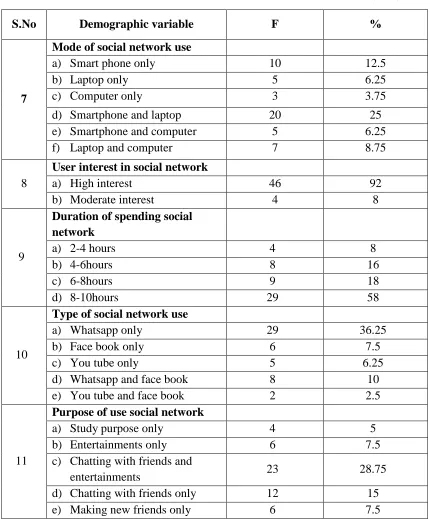
Frequency and percentage distribution of demographic variables in respect to Mode of social network use, User interest in social network, Duration of spending social network, Purpose of use social network.
37
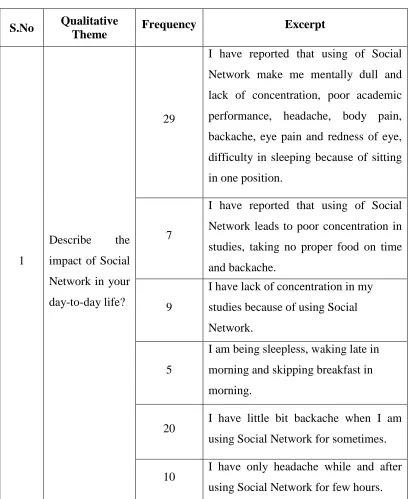
3. Excerpt and frequency distribution of impact of social network among college students.
39
4. Mean and standard deviation regarding impact of social network on knowledge among college students.
45
5. Mean and standard deviation regarding impact of social network lifestyle changes among college students.
48
6. Correlate between post-test level of knowledge and life style changes regarding impact of social network among college students
50
7. Association of pre and post-test means difference level of knowledge regarding impact of social network among college students with their selected demographic variable.
51
8. Association of pre and post test means difference level of life style changes regarding impact of social network among college students with their selected demographic variable
LIST OF FIGURES
FIGURE NO. TITLE PAGE NO.
1. Conceptual framework based on J. W. Kenny Open System Model
10
2. Schematic representation of research design 33
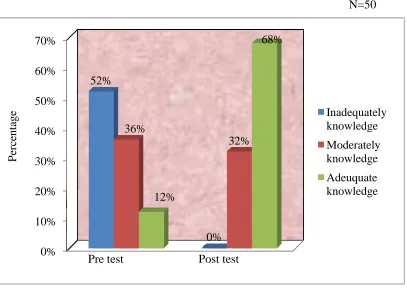
3. Percentage distribution of pre and post-test level of knowledge regarding impact of social network.
44
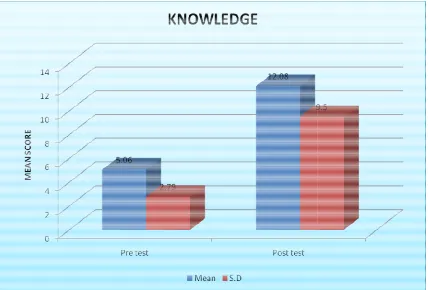
4. Mean and standard deviation regarding impact of social network on knowledge among college students.
46
5. Percentage distribution of pre and post-test level of life style changes regarding impact of social network among college students.
47
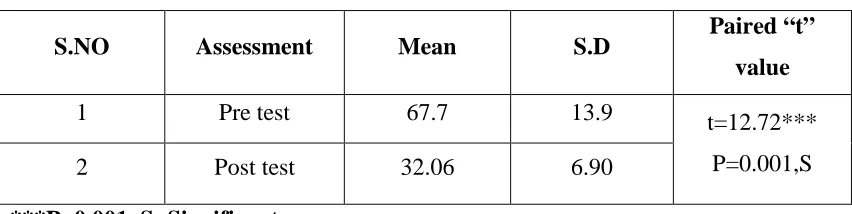
6. Mean and standard deviation regarding impact of social network life style changes among college students.
LIST OF APPENDICES
APPENDIX TITLE PAGE NO.
A Letter seeking permission for conducting the study i
B Letter granting permission for conducting the
study ii
C
Content validity
(i) Letter seeking experts opinion for content validity
(ii) List of experts for content validity
iii
D Certificate for English editing v
E Informed consent requisition form – English vi
F Informed consent – English vii
G Copy of Data Collection Tool viii
H Coding for Demographic Variables xvii
I IEC package xix
ABSTRACT
A Mixed Method Study to Assess the Effectiveness of IEC Package regarding Impact of Social Network on Knowledge and Life Style Changes among College Students Studying in Selected College, Thiruvannamalai.
INTRODUCTION
Social network have become prominent parts of life for many young people today. Most people engage with social network without stopping to think what the effects are on our lives. There are many positive aspects, but there are equally as many dangers that come with the use of sites such as Face book, Twitter, LinkedIn, Pinterest, Google +, Instagram, gaming sites, and blogs. According to World Health Organization Nearly two-fifths or 38.5 percent of all students surveyed fall within the overweight or obese/extremely obese categories 29.1 percent student suffered physical health 1.2 billion Face book users, in that 450 million people suffering from mental disorders.
The many dangers of social network, including mental and physical implications. Some physical effects of social network are, weight gain, poor posture, eye strain and poor circulation, inadequate sleep, neglecting diet pattern. Social network may also have effects on mental health, social network to decreased self-esteem, depression, addiction and suicide. That excessive use may leave social network user lonely, detached and bored, anxiety. This study highlights the significance of IEC Package to modify the life style and reduces the risk of negative impact of social network use and to give the awareness of heath problem among college students.
OBJECTIVES:
RESEARCH DESIGN:
The research design adopted for this study is embedded design which comes under concurrent design of mixed method design.
SETTING:
The study was conducted in Arunesha arts and Science College, located at Tiruvannamalai, and duration of the study was 4 weeks only.
SAMPLING TECHNIQUE:
In Qualitative study purposive sampling technique was adopted
In Quantitative study Simple Random sampling technique was used by using lottery method was adopted to select the subjects who met the sample selection criteria
PARTICIPANTS:
In Qualitative method 80 students recruited between 18 - 25 years age, who fulfil the inclusive criteria.
In Quantitative method 50 students recruited who fulfil the inclusive criteria.
INTERVENTION:
Selected interventional package (IEC) Package was provided after the pre-test assessment among the college student. The duration of the session was 30 - 45 minutes. Post test was conducted to evaluate the effectiveness of IEC package.
MEASUREMENT AND TOOL:
Qualitative data was collected by focus group questionnaire method regarding Impact of social network. Quantitative data was collected interview method regarding impact of social network on Knowledge and life style changes by using of structured knowledge questionnaire and life style modification scale.
Qualitative method: On thematic analysis revealed that Out of 80 students a majority, 50 students have the negative impact on their life such as, poor academic performance, mental dullness, lack of concentration, physical illness, sleeplessness, neglecting the diet on proper time, less social interaction in society, many participant reported that social network creating the risk for their personal life, and abolishing the written and oral communication skill and they have reported that they dependent on social network.
Quantitative method: On analysis of pre-test knowledge the mean value was 5.06 with S.D 2.79 and post-test mean value of mean was 12.08 with S.D 9.5. The calculated paired “t” value of t = 20.100 was found to be statistically significant at p<0.001 level.
On analysis of pre-test life style changes, the mean value was 67.7 with S.D 13.9 and post-test mean value of life style changes was 32.06 with S.D 6.90. The calculated paired “t” value t = 12.72 was found to be statistically significant at p<0.001 level.
On analysing the post-test knowledge, the mean value was 12.08 with S, D 9.5 and the post-test mean level of life style changes value was 32.06 with S.D 6.90. The calculated Karl Pearson’s correlation value of r = 0.775 shows a positive correlation which found to be statistically significant at p<0.001 level which indicate that there was difference in the post test level of knowledge and life style changes among students, this clearly shows that the administration of IEC package may enhanced the knowledge and improve the healthy life styles.
CONCLUSION:
CHAPTER – I
INTRODUCTION
“We all have ability. The difference is how we use it.”
-Stevie Wonder 1.1 BACKGROUND OF THE STUDY
A social network is a website that brings people together to talk, share ideas and interests and makes new friends.
Social networking has greatly impacted society, especially when it comes down to common sites such as face book, my space, or even twitter. Social networking has a positive impact on society but mostly has a negative impact.
Social networking site is described as a “website where individuals can set up an online profile, describing his/her interests”. It has been seen to have both a negative and positive effect on society. The social networking websites make it so that the way people can easily interact with the people around them whether it is people they know or people they don’t. Sites such as face book, Myspace, and twitter give people the opportunity to communicate with other individuals.
Abuse of social network can have various negative consequences for the internet addict, such as failure to fulfil role obligations at school and at home, impairment of social relationships, violating schools rules and laws because of social network.
The numbers of social network users in India are estimated that there will be around 197 million active users in India. Among top social network sites in India Whatsapp is the leading social network. There are 900 million Whatsapp user, 118 million face book users, college students and young men still from 60 percent of social network user in India. In Tamilnadu, around 27.1 percent of students have been diagnosed with a mental health illness within their lifetime 18.5 percent were reported being diagnosed during their lifetime with depression and 16.3 percent were diagnosed with anxiety. Nearly two-fifths of 38.8 percent of students have overweight or obese/extremely obese categories.
According to Honor Whiteman, (2015) stated that “Face book is the leading social networking site, with more than 1.2 billion global active users every month”. The site's popularity is followed closely MySpace, Twitter, LinkedIn. The latest statistics show that around 42% of online adults use multiple social networking sites. The majority of social network users are under the age of 30- years. Around 45% of Internet users aged 65 years or older now use Face book, increasing from 35% in 2012.
American Academic Paediatrics articles stated that, Seventy-five percent of teens now own cell phones, and 25 percent use them for social media, 54 percent for texting, and 24 percent for instant AAP, discouraging parents from letting kids use Face book and other sites, but they’re urging parents to follow the guidelines they’ve laid out. This way electronic media can serve their kids rather than harm them. Here are some of the guidelines AAP recommends messaging and more than 50% of US teens log onto social media sites every day. Get your kids talking about their social media lives just so you know what they are doing. Check in with them daily about cell phone and computer use. Keep yourself in the loop. Keep your computer in a public area of your home so you can see what’s going on.
Among issues of social network to create the awareness to the public regarding social networks addiction and to make healthy young generation.
Dr. A. JeesuKulandairaj (2010) conducted a descriptive study to assess the impact of social network on life style of youth. Samples are selected from students of different colleges and higher secondary schools and youth working in various companies and offices in Chennai, Tamil Nadu. Data was collected through questionnaire method and interview method. The researcher interviewed the young people both male and female. The sampling method in this study is stratified convenience random sampling. The study reveals that youth who are spending more than 6 hour in SNS is highly influenced by SNS in their lifestyle than others.
1.2 NEED FOR THE STUDY:
Social network have become prominent parts of life for many young people today. Most people engage with social network without stopping to think what the effects are on our lives. There are many positive aspects, but there are equally as many dangers that come with the use of social network.
Excessive Internet use is emerging as one of the more negative aspects of young people's online activities. For youth, the negative aspects of the Internet include Internet addiction as well as online risks such as exposure to sexually explicit material and online victimization including harassment or cyber bullying.
There are many dangers of social network, including mental and physical implications. Some physical effects of social network are weight gain, poor posture, eye strain, poor circulation, inadequate sleep and neglecting diet pattern. Social network may also have effects on mental health, decreased self-esteem, depression, addiction and suicide. The excessive use may leave social network user lonely, detached bored and anxiety.
British Broadcasting Corporation News report (2014) stated that as the youth tend to spend many hours on these sites, they rarely have face-to-face interaction. According to various studies, scientist’s evaluation determined that social isolation can lead to a host of emotional, psychological, physical and mental problems which include anxiety, depression and somatic complaints. Being social and connected had become dangerous for both mind and body.
Teenagers today are becoming more self – centered caused by their urge to create an image for themselves through the Face book profiles. Therefore these social networking sites are not just affecting the mind but are also affecting the body by creating more unhealthy people. These sites may also lead to addiction. The violation of human right is another set of negative impact on teenagers. This is due to too much of freedom of teenager that leads to meet up resulting to harassment and abuse.
Mobile Association of India (2015) stated that in the 26 cities that covered 65,000 persons in that 1.6 million school children use the internet for about 322 minutes a week and about 3.4 million college students use the internet about 433 minutes a week.
Bonasanya (2010) a descriptive study was conducted in china, for adolescent for problematic internet use. The sample consist of 708 fresh man (360 male & 348 female) sample was selected by using simple random sampling method. The study result revealed that weekly internet use of participant most of respondents 59.75% used internet (male 63.89% & female 59.75%). Majority participant use 2-4 hours on internet each day, (46.39%) female participants, (50.29%) male participants were reported that their life style was changed because of excessive use of social network.
From the above review and investigators experience, student’s experiences varied level of health problem, because of social network they spent excessive time on the social network, they changed their dietary patterns by postponing or ignoring regular meals, having a bite of whatever was available, social network use, thereby reversing their sleep pattern and they reduce the academic performance. This motivated the investigator to undertake a study to assess impact of social network on knowledge and life style changes among college students at Tiruvannamalai.
1.3 STATEMENT OF THE PROBLEM:
A Mixed Method Study to Assess the Effectiveness of IEC Package regarding Impact of Social Network on Knowledge and Lifestyle Changes among College Students Studying in Selected College, Tiruvannamalai.
1.4 OBJECTIVES
1. To assess the impact of social network among college students.
2. To assess the pre and posttest level of knowledge regarding impact of social network among college students.
3. To assess the pre and post test level of life style changes regarding impact of social network among college students.
4. To correlate between post test level of knowledge and life style changes regarding impact of social network among college students.
5. To determine the association in the pre and post test mean difference level of knowledge and life style changes among college students with their selected demographic variable.
1.5 OPERATIONAL DEFINITION
EffectivenessIn this study, effectiveness refers to the outcome of IEC Package on the level of knowledge and life style changes regarding the impact of social network assessed by using structured knowledge questionnaire and life style modification scale.
IEC package
In this study IEC package refers to information, education and communication where information, education given using lecture method on social network both positive benefits negative effects and misuse of social network, and management of social network addiction, education is given using by power point presentation.
Information & Education
It is a transmission of the content regarding impact of social network & measures for positive life style changes through lecture method using lesson plan.
Communication
It is a transmission of information on the impact of social network and measures for positive lifestyle changes through the use of PPT.
Impact
In this study, impact refers to both positive and negative effects of social network.
Social network
Social network refers to the way of communication among college students who share their interest, activities, and real life connection through Facebook, Whatsapp.
Knowledge
In this study, knowldge refers to awareness of college students regarding impact of social network and to modify the life styles.
Lifestyle changes
It refers to day to day activities influenced by the impact of social network effect on physical activity, mental activity, sleep pattern changes, diet pattern changes, and academic performance changes, which was measured by using life style modification scale.
College students
In this study it refers to students between the age group of 18 – 25 years studying UG course.
1.6 ASSUMPTION:
1. The College students may use social network frequently and may have decreased knowledge regarding impact of social network which may alter their life style.
2. IEC package regarding impact of social network may enhance the knowledge regarding impact of social network and improve the positive life style changes
1.7 NULL HYPOTHESES:
NH1 - There will be no significant difference between pre and post-test level of
knowledge regarding impact of social network among college students at p<0.05 level.
NH2 - There will be no significant difference between pre and post-test level of
life style changes regarding impact of social network among college students at p<0.05 level.
NH3 - There will be no significant correlation between post-test level of
knowledge and life styles changes regarding impact of social network among college students at P<0.05 level
1.8 DELIMITATIONS
1. The study period is delimited to 4 weeks only. 2. The study is conducted in selected setting only.
1.9
CONCEPTUAL FRAME WORKThe Conceptual framework or a model is made up of concept. It provides the guidelines to proceed to attain goal and objective of the based on the theory. It is a schematic representation of the steps, activities and outcome of the study.
The investigator adapted J.W.KENNY OPEN SYSTEM THEORY as a base for developing the conceptual framework.
The study is based on the concept that teaching the IEC package regarding impact of social network knowledge and life style changes to college students studying in selected college.
In Input:
In this study, input refers to demographic variables such as Age, Educational status of father, Monthly income, Type of family, Mode of social network use, Purpose of social network use, and Duration of spending in social network.
The Investigator assess the pre-test level of knowledge and life style changes among college students by using structure knowledge questionnaire and life style modification scale.
An open system is a system that regularly exchanges feedback with its external environment. Open system are inputs, process, output, goals, assessment and evaluations and learning are all important to open system include the boundaries external environment and equal finality.
Healthy open system continuously exchanges feedback with their environment, analyse that feedback, adjust internal systems as needed to achieve the systems goals, and then transmits necessary information back out to the environment.
Throughput:
In this study, throughput refers to providing intervention of IEC package. The IEC package refers to information, education communication where information, education given lecturer method by using power point presentation on introduction, risk factor associated with social network, positive impact and negative impact of social network for improving the lifestyle modification and prevention of social network addiction.
Output:
In this study, Output refers to assessment of post test level of knowledge and life style changes among college students by using structure knowledge questionnaire and life style modification scale.
The population is categorized based on their knowledge such as adequate knowledge, inadequate knowledge and life style was categorized by healthy life style and unhealthy life style. And those with inadequate knowledge and unhealthy life style will be reinforced with information education communication.
Enhancement
INPUT
[image:24.595.34.793.66.502.2]
Reassessment
FIG. 1. CONCEPTUAL FRAMEWORK BASED ON J.W.OPEN KENNY SYSTEM THEORY
Demographic variables:Age, Educational status of Parents, Type of family, Monthly income, Area of residence, Mode of social network use, Duration of Spending social network, Purpose of use, Type of social network use, User interest, mode of stay
PRETEST QUALITATIVE ASSESMENT QUANTITATIVE ASSASSESMENT Assess the impact of social network by using
focus group questionnaire among college
students
Asses the knowledge and life style changes by
using structured Knowledge questionnaire & lifestyle
modification scale among college students
Administration of IEC package regarding impact
of social network on knowledge and life style
changes among college students Assessment of impact of social network knowledge and life style changes by using structured knowledge questionnaire
and life style modification Knowledge Life style changes Inadequate knowledge Moderately knowledge Unhealthy life style Healthy life style
INPUT THROUGHPUT OUTPUT
CHAPTER - 2
REVIEW OF LITERATUREThe review of literature is an essential aspect of scientific research. Its entails the systematic identification, reflection, critical analysis and reporting of existing information in relation to the problem of interest. The purpose of review of literature is to obtain comprehensive knowledge and in-depth information about the effectiveness of IEC package regarding impact of social network on knowledge and life style changes among college students.
Review of literature is “a systematic study of a number of previous studies which help to support the research work done”. It includes all types of studies. It gives an idea of how the study can be conducted and what was already on this context of study.
The review of literature is organized under the following sections:
Section 2.1: Reviews related to impact of social network
Section 2.2: Reviews related to impact of social network lifestyle changes
Section 2.3: Reviews related to effectiveness of IEC package on impact of social network
Section 2.1: Reviews related to impact of social network
Ghulam shabir (2015) conducted a descriptive study to assess the impact of social network on youth in is lamia university of Bahawalpur, Pakistan. The population of the study was youth of Bahawalpur City. The sample of 300 youngsters was selected using non random sampling method. Study samples included both male and female in Bahawalpur City. Data was collected through questionnaire method. Finding shows that majority of the respondents show agreement with these influences of social network. Respondents opted face book as their favourite social network form, and then they like Skype as second popular form of social network, 46 percent responded to connect social network in education purpose.
Khan, Shahzad (2014) conducted a descriptive study to assess the “Impact of Social Networking Websites on Students”. The purpose of this study was to explore the impact of social networking websites on students. Data were collected through questionnaire method. The 168 respondents were randomly selected from Pakistan. The findings of the result revealed that the students whose age range from 15 to 25 mostly use networking websites for entertainment, 60% of male students commonly used social networking websites for knowledge. Graduate students generally prefer social networking websites for entertainment. The analysis also showed that 67% people used social networking websites due to influence of their friends.
Aida Abdullah (2014) conducted an explanatory study to assess the negative effects of social network sites such as Face book among Asia Pacific University scholars. The researcher distributed 152 surveys to students of the chosen university to examine and study the negative effects. The population in this study is around eight thousand students. The researcher used Random Sampling method. Data was collected through survey questionnaire method. Snowball sampling method was used. The study result revealed that signifies that using social network sites might damage the health, specifically the user might get addicted to the internet. In addition, the researcher rejects hypothesis null and accepts the hypothesis.
The study findings reveal that social network sites it has attracted millions of users due to affordance and reach. The review shows that it is used for different purposes. While some use it for socializing purposes, others use it for academic purposes to complement classroom teaching and learning activities. Although there is evidence that student’s use of SNSs might affect their performance. This indicates that while some students use SNSs for socializing, others might use it for learning activities thus enhancing academic perform.
Kayseri Turkey (2014) conducted a qualitative study is to assess the effects of social networks on student in Malaysia. Participants of the study were 24 students (6 males and 18 females). Data were collected through focus group interviews methods. Purpose sampling techniques method was used. The study revealed that only four students expressed that social networking has no effect at all while others agreed that social networking has somewhat positive and negative effects on their social lives. The most common positive effect emerged as keeping in touch with the ones whom can be seen rarely or cannot be seen at all, the participating students expressed that communicating with old friends through social networks as one positive effect of these sites, and they also mentioned that changing lifestyles by time may cause negativities in communication.
Wang et.al., (2013) conducted a descriptive study to assess the Effect of Social network on College Students. This study explores the advantages and disadvantages of student’s use of social networking. Total sample size is 50, in that 48 including (26 males and 22 female students. Data were collected through interview method. The study result revealed that 45% of the sample admitted that they spent 68 hours per day checking social media sites, while 23% spent more than 8 hours 20% spent 2-4 hours and only, 12% spent less than 2 hours on this task. The study concluded that while most college students used social media and spent many hours, there was a negative aspect to college students, use of social network.
The total population for the study was Five Thousand Two Hundred and Forty Nine (5249). The stratified sampling method was adopted for the study. Data were collected by interview method. The study result revealed that majority of respondents used Whatsapp and Face book for making friends and chatting. In addition, majority of respondents experienced negative effects such as poor grammar and spelling, late submission of assignment, less study it majority of respondents experienced negative effects such as poor grammar and spelling, late submission of assignment, less study time and poor academic performance due to the heavy participation on social media networks.
Jane Lim See Yin – (2013) conducted a mixed method study to assess the engagement of social network for academic purpose for undergraduate student in Malaysia. The total sample size is 331 responses collected from an online questionnaires administered. Qualitative data were collected by Face-to-face interviews were conducted on participants, Quantitative data was collected by online questionnaires method. Mixed Method Sequential Research deign was used .The study result revealed that Almost 55% of the respondents claimed that they are not sure whether there is any Social network Policy within their institution of study. Only 28% of them said that there is a Social network Policy within their Institution and 17% said that there is no Social network Policy in their Institution. Finally, Social network is the tools to support teaching and learning activities in class.
JosanD, et.al, (2012) conducted a study to assess the relationship of Social network in relation to the Academic Performance of the students of Bachelor of Science in Information Technology at Centro Escolar University-Malolos. The sample size is (138) respondents were drawn using stratified random sampling. There are 102 males and 36 females participated in this study. The study revealed that Seventy one (71) or 51.4% of the respondents have reached below satisfactory grade average while sixty seven (67) or 48.6% students have successfully reached the satisfactory academic performance from an average grade. Sixty one (61) or 44.3% fall under the Occasional User of Social Media while seventy seven (77) or 55.7% fall under Frequent User of Social Media.
Johnson Yeboah (2011) conducted a study to assess and identify the impact of social network (whatsapp messenger) on the performance of tertiary students in Ghana from the perspective of the students. 50 students from five tertiary institutions were interviewed and 500 questionnaires were administered to students from same institution. Data was collected through questionnaire, interview, observation and focus group method was used. The study revealed that Whatsapp instead of making communication easier and faster thereby enhancing effective flow of information and idea sharing among students, rather has impacted negatively on the performance of tertiary students in Ghana. The study among other things unveiled the following: whatsapp takes much of students study time, results in procrastination related problems, destroys students’ spellings and grammatical construction of sentences and distracts students from completing their assignments.
The total average of students scoring 60-80% is 69% of total population. Students who scored 60-80% of marks generally use social networking websites for entertainment.
R. Junco (2010) conducted a experimental study to assess the effect of twitter among college students, in Pennsylvania University USA. A total of 125 students taking a first year majors participated in this study (70 in the experimental group and 55 in the control group). Data were collected through questionnaire method. Sample was selected by simple random sampling method. The study results revealed that the experimental group had a significantly greater increase in engagement than the control group. Analyses of Twitter communications showed that students and faculty were both highly engaged in the learning process in ways that transcended traditional classroom activities. This study provides experimental evidence that Twitter can be used as an educational tool to help engage students and to mobilize faculty in to a more active and participatory role.
Morse (2010) conducted a mixed method study to assess the student perception regarding social network in Department of Agricultural Leadership, Education, and Communications at Texas A&M University. The total population of this study is 92 students. The instrument for this study consisted of two parts. The quantitative section addressed student perceptions regarding comfort level with and current use of social media tools. In the qualitative section, students were asked to describe their perceived advantages and disadvantages of the use of social media in the classroom. Qualitative data were analysed using thematic analysis and quantitative data were analysed using descriptive statistics. The study findings revealed that Face book was the social media tool students were most comfortable with and used most frequently. Advantages included social media helping increase quality and efficiency of communication between students and the instructor. Disadvantages revolved around issues of use and access to social network.
Section 2.2: Reviews related to impact of social network lifestyle changes:
We randomly divided the sample (n=708) at Time 1 into two independent groups. Data were collected through questionnaire and interview method. The study result revealed that weekly internet use of participant most of respondents 59.75% used internet (male 63.89% & female 59.75%). Majority participant 2-4 hrs on internet use each day male (46.39) female (50.29). Different life style changes described problematic internet use physical changes & social activity changes diet pattern changes, sleep pattern changes.
Dr. A. JeesuKulandairaj (2013) conducted a descriptive study to assess the impact of social network on life style of youth. Samples are selected from students of different colleges and higher secondary schools and youth working in various companies and offices in Chennai, Tamil Nadu. On the convenience of the researcher data were collected through questionnaire method and interview method. The researcher interviewed the young people both male and female. The sampling method in this study is stratified convenience random sampling. The study reveals that youth who are spending more than 6 hour in SNS is highly influenced by SNS in their lifestyle than others.
Based on the result of the findings, it was recommended that students should use their knowledge about their environment’s attributes to nurture and maintain their integrity and commitment to the university in order to develop new skills to participate and stay safe in the new digital environment.
Mohamed El Khouli (2012) conducted a descriptive study to assess the Negative Aspects of Using Social Networking Affecting the Family Stability in Abu Dhabi. Sample was selected random method. The total sample size is 1266. Data was collected through interviews using questionnaires method. The study revealed that excessive use for social networking sites cause mental disorders and aggressive tendencies, especially among adolescent. Abuse of these sites by some teens / cause isolation of children, publishing the photos, videos, and articles that be abusive to religion, customs and traditions.
JyotiRanjanMuduli (2011) conducted a study to assess technological gadget addiction its impact on health and life style changes on college students. The study was conducted in NIT, Rourkela. It is situated in the steel city Rourkela of the state Odessa of India. A purposive sampling method was followed to collect information from 150 students of the Institute out of which 90 were male and 60 were female students. Data were collected questionnaire methods. Semi-structured and unstructured interviews were conducted. The study revealed that the respondents using the gadgets for a long period of time have negative impacts on their health. Most of the respondents using ear phones for more than 6 hours have hearing problems compared to the others. The respondents are busy with their gadgets for more than 6 hours are having several problems like problems in logical thinking, headaches, depression, and anxiety.
The top four reasons that prompted students’ use of social network tools were found to be social engagement (85%), direct communications (56%), speed of feedback/results (48%), and relationship building (47%).
Section 2.3: Reviews related to effectiveness of IEC package on impact of social network
Syed Muhammad Rafi, (2014) conducted a study to assess the effectiveness of IEC package on effect of internet addiction among adolescent boys between 16-22years in Bangalore, Karnataka. Total sample size is 100. Data were collected by structured questionnaire method on internet addiction. After data collection the investigator found out that Seventeen percent of teenagers were psychologically addicted. The investigator was administered (IEC) package on internet addiction among students. The study revealed that after administration of (IEC) package internet addicting level has reduced as evident by 63% of student decrease in time spend in social network which is highly significant.
Sushma Mishra, (2012) conducted a survey study to assess the effectiveness of structured teaching program on Internet addiction among university students at the graduate and undergraduate level Robert Morris University. The total population of the study is 87 students, (54 male, 46 female). Data were collected survey method. The data was analyzed using SPSS v21. The survey questions were Likert type questions, mostly on a 5 point scale. The study revealed that after implementing structured teaching program 75% student they improved from internet addiction and 25 % of student having the mild stage of internet addiction.
Dr. Langat Andrew Chris (2011) conducted a study to assess the effectiveness of structured teaching program on twitter addiction among undergraduate students in one of the Kenya universality in USA. A total sample size is 64 students; Simple random sampling was used to select a representative group. Data were collected Questionnaires and interview method. The study revealed that 50% of male and 58% female students were addicted. After implementation of interventional package the 75% of student reduced from the addiction and they improved their healthy life styles.
CHAPTER – 3
RESEARCH METHODOLOGY
This chapter describes the methodology to assess the effectiveness of IEC package regarding impact of social network on knowledge and life style changes among college students studying at Tiruvannamalai. This study includes Research Approach, Research Design, Variables, Setting, Population, Sample, Criteria for Sample Selection, Sample Size, Sampling Technique, Development and Description of Tool, Scoring Procedure, Content Validity, Pilot study, Reliability of the Tool, and Procedure for Data Collection and Plan for Data Analysis.
3.1 RESEARCH APPROACH
The research approach used in this study was mixed method research approach.
A mixed methods research approach was used for this study as the investigator will explore qualitatively regarding impact of social network among college students and after which quantitatively to assess the knowledge and life style changes regarding impact of social network among college students.
3.2 RESEARCH DESIGN
Research design is the researchers over all plans for obtaining answers to hypothesis (Polit, 2008).
The research design adopted for this study is embedded design.
GROUP QUALITATIVE QUANTITATIVE
PRE TEST INTERVENTION
QUANTITATIVE POST TEST
Students QL QN1 X QN2
Schematic representation of embedded design QL : Qualitative
QN : Quantitative X : IEC package
1 : Pre test
2 : Post test
In this study, qualitative method assessment of impact of social network was assessed by using focus group questionnaire, it consisting of 6 items. In quantitative method, pre assessment of level of knowledge and life style changes was assessed by using structured knowledge questionnaire and life style modification scale. It consists of 20 items, followed by the investigator implement the IEC package. At the end of the 4 week, the post test was conducted to evaluate the level of knowledge and life style changes by using same structured knowledge questionnaire and life style modification scale.
3.3 VARIABLES Independent Variable
The independent variable for the study was selected interventional package (IEC) Package.
Dependent Variables
The dependent variables for the study were knowledge and Lifestyle changes
Extraneous Variables
The extraneous variables were Age, Educational status of father, Monthly income Area of residence, Type of family, Mode of stay, Duration of spending time in social network, mode of technology use, User interest in social network, Type of social network use and purpose of social network use .
3.4 SETTING OF THE STUDY
3.5 POPULATION
Population is entire set of individuals of objects having some common characteristics. The Population comprises of college students who are studying in Arunesha arts and Science College at Thiruvannamalai.
Accessible Population
Accessible population for the study was college students between the age of 18 to 25 years studying in Arunesha arts and Science College at Tiruvannamalai.
3.6 SAMPLE
Sample refers to a subset of a population selected to participate in a research study. The study sample comprises of college students between 18 to 25 years of age who satisfy the inclusion criteria.
3.7 SAMPLE SIZE
The sample size is 80 subjects for qualitative approach and 50 subjects for quantitative approach.
3.8 SAMPLING TECHNIQUE
In the study, purposive sampling technique was adopted in qualitative method and quantitative method the simple random sampling technique was used to select the subjects who met the inclusive and exclusive criteria.
3.9 CRITERIA FOR SAMPLE SELECTION Inclusive Criteria
1. Female student’s age group between 18 to 25 years.
2. Students studying in UG course 3rd year in computer science department.
Exclusive Criteria
3.10 DEVELOPMENT AND DESCRIPTION OF THE TOOL
Tool was developed from extensive review of literature, internet source and opinion of the experts.
The instruments for this study consist of two parts. Quantitative section
Qualitative section
The qualitative section
The investigator conducted the focused group interview regarding impact of social network, which describe the students perception.
In the quantitative section,
The investigator assessed the knowledge and life style changes regarding impact of social network, by using life style modification scale and structured questionnaire method.
The tool used for data collection has 3 sections. Section: A: Demographic variables Section: B: Focus group questionnaire Section: C: Intervention tool
Section- A
This section consists of Demographic data such as Age, Educational status of the parents, Income of the family, type of the family, Area of residence, Modes of social network use, User interest in social network, Duration of spending social network, Type of social network use and Purpose of social network use.
Section –B
Structured knowledge questionnaire used to assess the level of knowledge regarding impact of social network. Structured knowledge questionnaire consists of 10 items.
Life style modification scale used to assess the level of life style change regarding impact of social network. It consists of 20 items.
SECTION – C
IEC package is regarding impact of social network knowledge and life style changes among college students.
The knowledge was assessed by using structured knowledge questionnaire. The total item was 10. Each correct answer was given a score for one mark. The maximum score was 10.
Method of Scoring:
S.NO DESCRIPTION SCORE
1. Inadequate knowledge >75%
2 Moderate knowledge 51-75%
3 Adequate knowledge > 75%
Life style changes were assessed by using life style modification scale the total item is 20. Each correct answer was given a score of five marks. The maximum score was 100.
To interpret level of life style changes the score were distributed as follows:
Scoring key:
Rarely Occasionally Frequently Often Always
1 2 3 4 5
SCORING INTERPRETATION
1 - 50 - Healthy life style
3.11 CONTENT VALIDITY
The content validity of the tool was established on the basis of opinion of 1 psychiatrist, 1psychologist expert, 7 Nursing experts specialized in Mental Health Nursing Based on the suggestions of the experts changes were made in the tool after consulting with the research guide.
3.12 ETHICAL CONSIDERATION
Ethics is a system of moral values that is concerned with the degree to which the research procedures adhere to the professional, legal and social obligations to the study participants.
(A) BENEFICENCE
The investigator followed the fundamental ethical principal of beneficence (doing well) by adhering to:
a) Freedom from harm and discomfort
Participants were not subjected to unnecessary risks from harm or discomfort during the study period.
b) Protection from exploitation
Participants were assumed that their participation or information provided by them would not be used against them in any way.
(B) RESPECT FOR HUMAN DIGNITY
The investigator followed the second ethical principle of respect for human dignity. It includes the right to determination and the right to self-disclosure.
a) The Right to self determination
The researcher gave full freedom to the participants to decide voluntarily whether to participate in the study or to withdraw from the study and the right to ask questions.
b) The right to full disclosure
(C) JUSTICE
The selection of study participants was completely based on research requirements.
A full privacy was maintained throughout the process of data collection.
(D) CONFIDENTIALITY
The researcher maintained confidentiality of the data provided by the study participants.
DEVELOPMENT OF IEC PACKAGE
Teaching plan is a guide for the teacher because it helps to cover the topic comprehensively with proper sequence of points and without missing anything.
The steps to prepare teaching plan were: 1. Review of literature
2. Framing the outline content
3. Preparation and organization of content 4. Election of audio visual aids
5. Preparation of the final draft
1. Review of literature
An extensive literature review was under taken from research and non-research materials, internet sources and journals, etc. regarding impact of social network on knowledge and life style changes among college students.
2. Framing the outline of the content
3. Preparation and organization of the content
Content of the IEC package is on impact of social network on knowledge and life style changes. The content was organized under various headings according to the objectives. IEC package was organized under various headings such as impact of social network, risk factor associated with social network, tips to improving life style modification, and prevention of social network addiction.
4. Selection of audio visual aids
The audio visual aids were selected power point presentation and charts.
5. Preparation of the final draft of the IEC package
General and specific objectives of the teaching plan were given in the beginning of the IEC package. Final draft of the IEC package was organized under various heading such as general information about impact of social network, life style changes on excessive using of social network and solution to the problems.
Description of Information Education Communication (IEC) package
IEC package was prepared to enhance the knowledge of students regarding impact of social network on knowledge and life style changes which consists of the following content.
Introduction,
Risk factor associated with social network life style on social network, Positive impact and negative impact of social network,
Life style changes on excessive use of social network Tips for improving the life style modification, Prevention of social network addiction
Content validity of the IEC package
3.13 RELIABILITY OF THE TOOL
Reliability is defined as the extent to which the instrument yields the same result on repeated measures. It is, thus, concerned with consistency, accuracy, stability, and homogeneity.
The Reliability of the tool was established by inter-rater method to assess the internal consistency of the test. The reliability score was obtained for knowledge was r = 0.86 and for life style changes was r = 0.82. Hence the tool was considered highly reliable for proceeding with the study.
3.14 PILOT STUDY
Pilot study is a small scale version or trial run designed to test the methods to be used in a larger group, more rigorous study which is sometimes referred to as the parent study (Polit, 2008).
Pilot study is a trail for main study to test the reliability appropriateness and feasibility of the study and the tool. The formal permission was obtained from principal of Vignesh Nursing College. The investigator obtained permission from Arunesha arts and Science College at Tiruvannamalai. The study period 6 days in weeks. The investigator selected 30 subjects in qualitative approach by using purposive sampling method, and 10 subjects selected in quantitative approach by using simple random sampling technique method.
The result of the pilot study when analyzed stated that tools were reliable, feasible and practicable to conduct the main study and there was a significant improvement of healthy lifestyle among college students after administration of (IEC) Package at p< 0.001 level. The pilot study revealed that the study was feasible.
3.15 PROCEDURE FOR DATA COLLECTION
Data collection is the gathering of information needed to address the research problem. The word data means information that is systematically collected in the course of study.
This study was conducted at Arunesha Arts and science college, Tiruvannamalai. The data was collected for a period of 4 weeks in the month of Jan - Feb 2015. Prior permission from the authorities was sought. The purpose and risk of the study was explained and confidentiality was maintained. The investigator gave brief information about self and the purpose of the study to the subjects.
During the data collection procedure, the investigator introduced to the college students and established rapport with the subjects. They were assured that no physical or emotional harm would be done in the course of the study. The study subjects were selected by purposive sampling and simple random sampling technique based on sample selection criteria. A total of 80 college students were recruited in qualitative approach and 50 students were recruited in quantitative approach. The subjects were made to sit comfortably in a well-ventilated room and confidentiality while data were assured. After obtaining their verbal and written informed consent for willingness to participate in the study, the investigator collected the data.
This study was carried in two stages of analysis qualitative analysis and quantitative analysis
Qualitative data collection method
Interviews were carried out in a non-intrusive manner and non-judgmental manner. The duration of each session is 1hour. Each interview conversation was recorded and transcribed to elicit a detailed account of the sessions. This was then exposed to thematic analysis. The Each interview conversation was recorded and transcribed to elicit a detailed account of the sessions. This was then exposed to thematic analysis. After content analysis, 50 participants were chosen for the next stage of quantitative analysis.
Quantitative data collection method:
The investigator conducted the pretest to assess the knowledge and life style changes among college students by using structured knowledge questionnaire and life style modification scale this took around 25-30 min. After assessment of pretest, the investigator implemented the interventional package (IEC) by using PPT presentation. The duration of the session was 30 - 45 minutes.
At the end of the fourth week (30th day) post test was conducted to assess the knowledge and life style changes by using structured knowledge questionnaire and life style modification scale.
Data were analyzed in two way approach qualitative analysis and quantitative analysis.
3.16 PLAN FOR DATA ANALYSIS Qualitative data analysis
Qualitative data were analyzed using thematic analysis. The Qualitative data were analyzed using content analysis a “technique that enables researchers to study human behaviour in an indirect way, through an analysis of their communications”. Each participant was assigned a unique numerical identifier, and then participant’s responses were analysed and grouped into themes. Participants were asked to list the impact of social network on them. Participant responses were analyzed to determine themes using words, phrases and sentences as the units of analysis.
Qualitative data analysis
Quantitative data were analysed using descriptive statistics and inferential statistics’ each method will be presented separately.
Descriptive Statistics:
1. Frequency and percentage distribution used to analyse the demographic variables among college students.
2. Mean and standard deviation used to assess the knowledge regarding impact of social network and life style changes among college students.
Inferential Statistics
1. Paired “t” test used to compare the pre and post test level of knowledge regarding impact of social network and life style changes among college students.
2. Karl Pearson correlation coefficient “r” used to correlate the knowledge regarding impact of social network and life style changes among college students.
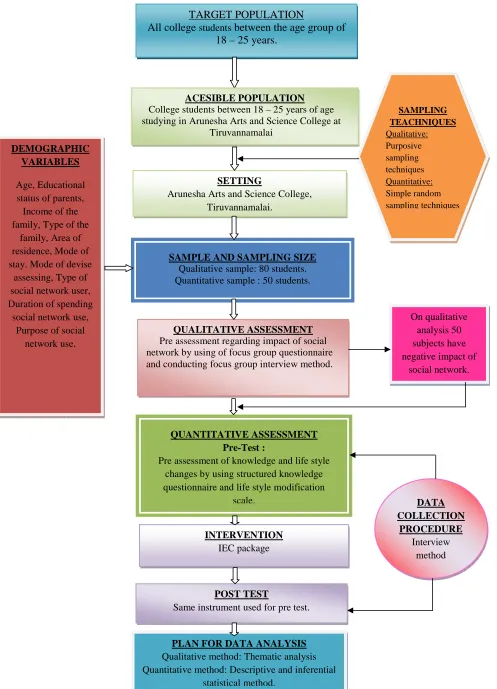
FIG. 2: SCHEMATIC REPRESENTATION OF RESEARCH DESIGN
TARGET POPULATION
All college students between the age group of 18 – 25 years.
SETTING
Arunesha Arts and Science College, Tiruvannamalai.
SAMPLE AND SAMPLING SIZE
Qualitative sample: 80 students. Quantitative sample : 50 students.
QUALITATIVE ASSESSMENT
Pre assessment regarding impact of social network by using of focus group questionnaire and conducting focus group interview method.
QUANTITATIVE ASSESSMENT Pre-Test :
Pre assessment of knowledge and life style changes by using structured knowledge questionnaire and life style modification
scale.
INTERVENTION
IEC package
PLAN FOR DATA ANALYSIS
Qualitative method: Thematic analysis Quantitative method: Descriptive and inferential
POST TEST
Same instrument used for pre test.
DEMOGRAPHIC VARIABLES
Age, Educational status of parents, Income of the family, Type of the
family, Area of residence, Mode of stay. Mode of devise
assessing, Type of social network user, Duration of spending
social network use, Purpose of social
network use.
On qualitative analysis 50 subjects have negative impact of
social network. SAMPLING TEACHNIQUES Qualitative: Purposive sampling techniques Quantitative: Simple random sampling techniques DATA COLLECTION PROCEDURE Interview method ACESIBLE POPULATION
College students between 18 – 25 years of age studying in Arunesha Arts and Science College at
CHAPTER – 4
DATA ANALYSIS AND INTERPRETATON
This chapter deals with the analysis and interpretation of data collected from 80 students to assess the effectiveness of (IEC) Package regarding impact of social network on knowledge and life style changes among college students at Arunesha arts and science college Tiruvannamalai. Statistical analysis is a method for rendering quantitative information meaning full and intelligible. This enables the researcher to summarize, organize, evaluate and interpret and communicate information in numerical form.
The data collected for the study were grouped and analyzed as per the objectives set for the study. Data analysis includes both descriptive and inferential statistics.
ORGANIZATION OF DATA
Section 4.1: Description of demographic variable of subject regarding impact of social network knowledge and life style changes among college students.
Section 4.2: Assessment of impact of social network among college students Section 4.3: Assessment of pre and post test level of knowledge regarding
impact of social network among college students.
Section 4.4: Assessment of pre and post test level of life style changes regarding impact of social network among college students.
Section 4.5: Correlation of post test level of knowledge and life style changes regarding impact of social network
SECTION 4.1: DESCRIPTION OF DEMOGRAPHIC VARIABLES REGARDING IMPACT OF SOCIAL NETWORK ON KNOWLEDGE AND LIFE STYLE CHANGES AMONG COLLEGE STUDENTS
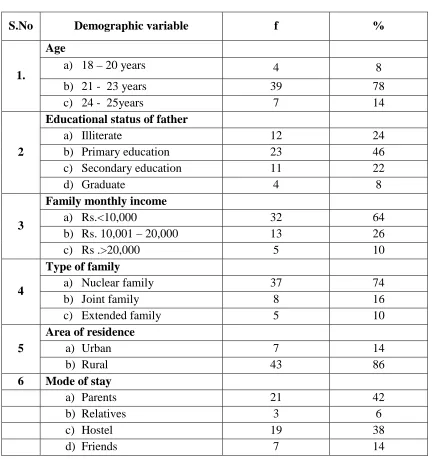
Table 1: Frequency and percentage distribution of demo graphic variables in respect to Age, Educational status of father, Family income, Type of family, Area of residence and Mode of stay.
N = 50
S.No Demographic variable f %
1.
Age
a) 18 – 20 years 4 8
b) 21 - 23 years 39 78
c) 24 - 25years 7 14
2
Educational status of father
a) Illiterate 12 24
b) Primary education 23 46
c) Secondary education 11 22
d) Graduate 4 8
3
Family monthly income
a) Rs.<10,000 32 64
b) Rs. 10,001 – 20,000 13 26
c) Rs .>20,000 5 10
4
Type of family
a) Nuclear family 37 74
b) Joint family 8 16
c) Extended family 5 10
5
Area of residence
a) Urban 7 14
b) Rural 43 86
6 Mode of stay
a) Parents 21 42
b) Relatives 3 6
c) Hostel 19 38
[image:49.595.101.533.210.669.2]Table 1 shows