OK-Net Arable
Description of farmer innovation groups
Deliverable number D2.1 Dissemination level Public
Delivery date 29/02/2016
Status Final
Lead beneficiary
PFT LTD (Organic Research Centre)
Author(s) Beth Cullen, Dominic Amos, Susanne Padel
Contributors
An Jamart, Lieven Delanote, Birgit Pelican, Stoilko Apostolov, Carlo Ponzio, Airi Vetemaa, Merit Mikk, Laurence Fontaine, Adeline Cadillon, Frank Oudshoorn, Zoltan Dezsény, Stephanie Fischinger, Bram Moeskops
This project has received funding from the European Union’s Horizon 2020 research and innovation programme under grant agreement No. 652654. This communication only reflects the author’s view. The Research Executive Agency is not responsible for any use that may be made of the information provided.
1
Contents
Contents ... 1
1 Executive summary ... 2
2 Introduction ... 3
3 Methods ... 4
4 Description of the practice partners ... 5
5 Description of the farmer innovation groups ... 8
6 Comparison of key characteristics ... 14
Main aims, set up and modes of operation ... 14
6.1 Who are the members ... 15
6.2 7 Summary of agronomic and climatic context ... 17
Farming systems ... 18
7.1 Main crops grown, yields and rotations ... 19
7.2 Soils ... 22
7.3 Main challenges identified ... 23
7.4 Solutions proposed ... 28
7.5 8 Comparison of farmer group responses with research evidence ... 32
9 Analysis of farmer group’s current access to information... 37
10 Potential for innovation ... 42
11 Concluding remarks for the next stages of the OK-Net Arable project ... 43
12 References ... 46
2
1
Executive summary
This report has been produced as part of the Organic Knowledge Network Arable (OK-Net Arable) project by members of Work Package 2 which adopts an interactive multi-actor approach, bringing practitioners from regional innovation groups together with advisers and scientists. This work package is responsible for facilitating testing of practical and educational materials with farmer innovation groups. The aim of this report is to provide a description of the farmer innovation groups involved with the project.
In order to gather information about the groups a common data collection framework was developed. This framework was used to collect information about the structure of the farmer innovation groups, the agronomic context of the groups, existing knowledge and skills, main challenges faced as well as potential solutions and potential tools to address these challenges The data collection exercise has resulted in a description of the 14 farmer groups involved in the project, located in 10 countries. The groups have similarities in that they have mostly been established with an arable focus and have connections to research institutes. All groups have been established relatively recently, between 2010 and 2015. Members are a mix of new entrants and experienced organic farmers, most groups include farmers who have farmed organically for over 10 years. The members range in age from 20 to 70 years old, but most group members are over 30 years of age, and are predominantly male.
The farmer innovation groups represent a range of farm types including cereal producers, organic mixed farms, including livestock and field vegetables (e.g. potatoes, cabbage, leeks etc.), horticultural farms as well as stockless arable cropping systems. In terms of typical crops grown, most groups appear to be focused on cereal crops, which is to be expected given the focus of the project.
The report outlines some common challenges identified by the groups, namely: weed management, soil fertility, and pest and disease control. Other challenges were also mentioned, including: lack of knowledge and research, nitrogen management, nutrient cycling, challenges with grass and clover rotations, soil water content, cultivation issues, climatic changes, seeds and the availability of organic varieties
3
2
Introduction
The aim of the OK-Net Arable project is to improve the exchange of innovative and traditional knowledge among farmers, farm advisers and scientists to increase productivity and quality in organic arable cropping throughout Europe, and to improve their environmental performance, in order to satisfy citizens and consumer demand.
The project has three specific objectives: 1) to create a European network of well-functioning organic arable farmer innovation groups representing the best examples of co-innovation by farmers and researchers; 2) to digest and synthesize scientific and practical knowledge about organic arable farming to identify best practices (the project will develop and test innovative practical and educational material based on this information); 3) to create a European platform for knowledge exchange focusing specifically on organic arable drawing on experiences from diverse contexts. The project consists of 4 work packages. As part of the project, Work Package 2 has formed an international network of regional organic arable farmer innovation groups in order to better understand the success factors that make end-user and education materials effective and useful in a practical context. This will enable the project to identify solutions that farmers, agricultural advisers and researchers have developed that could be tested in other regions and countries.
In order to facilitate effective knowledge exchange between farmers and advisers in diverse countries, it is necessary to better understand these farmer innovation groups and the contexts in which they operate. This includes: the relationship between the groups and with ‘practice partners’ who represent research institutes and organic sector organisations who provide advisory services for producers; the aims and working arrangements of these groups, their members and the agronomic and climatic contexts within which the groups operate. In order to identify the factors that constrain organic arable production it is also useful to gain an understanding of what farmers perceive to be their main challenges and use these to identify farmer information needs. As well as identifying challenges it is also useful to assess farmer ideas for solutions as this enables us to understand their current knowledge base and to identify where there are gaps.
4
3
Methods
At the start of the project a data collection framework was designed to gather information about the farming contexts of the innovation groups, the challenges they face, their ideas for solutions and knowledge exchange tools that are currently utilised. The ‘practice partners’ involved with the project (Bioforum Vlaanderen/INAGRO, Bionet, Bioselena, Con Marche Bio, Estonian Organic Farming Foundation, ITAB, ÖMKI, SEGES, VÖP and ORC) identified arable farmer groups that they wanted to work with during the project in order to identify and test innovative practical and advisory materials (see description of WP2 for more details). Information about these groups, and their farming contexts, was collected using the data collection framework.
The data collection process was divided into three parts:
1. Part 1 focuses on information about the practice partners, the farmer group, farming context of the group members, the knowledge sharing infrastructure and group dynamics. Most of this information was collected by the practice partners themselves, with some input from the groups when necessary.
2. Part 2 consists of participatory exercises to obtain views from the farmer group about challenges and solutions, innovations and tools for knowledge exchange. These exercises were facilitated by the practice partners with the selected farmer groups and the results were documented.
3. Part 3 contains a survey about the channels that individual farmers currently use to access information. These questions were circulated to individual farmers within the groups to complete themselves either online via SurveyMonkey or on paper.
The framework was used to collect information in a common format across the respective countries. Overall there were good responses from the groups to Parts 1 but with some variation in the level of detail provided. Responses were less detailed regarding questions about knowledge exchange and innovation. The participatory exercises of Part 2 about challenges and solutions were reportedly popular with many of the groups because they gave a chance for group members to play an active role in discussions, useful and detailed information was gathered as a result.
5
4
Description of the practice partners
OK-Net Arable works with ten ‘practice partners’ who are engaged in research and innovation activities in various parts of Europe. Each of the partners works closely with established groups of organic arable farmers or farmer associations in various capacities. As such the partners act as group coordinators and as the main contact point for the project. The ‘practice partner’ organisations represent a variety of institutional types including non-profit and non-governmental organisations, research institutes, agricultural advisory services and agricultural cooperatives. The practice partners and their relationship with the farmer groups are outlined briefly below.
1. Bionet Austria is an educational research project that was founded by advisers of the chambers of agriculture and researchers from FiBL Austria in 2005, to adapt (inter)national research results to Austrian conditions and to evaluate farmers’ existing knowledge. Bionet established different working groups to facilitate two-way exchange of knowledge between farmers, advisers and researchers. About 70 farms participate actively in the project. The farms are located in all regions of Austria with arable cropping and vegetable farming. Problems affecting arable farming are discussed, and topics and farms are selected for field trials. The results of the field trials are promoted via a website, leaflets and seminars. Two regional groups are actively participating in OK-Net Arable.
2. BioForum Flanders is a non-profit sector organisation for organic farming and food. The organisation works across the value chain with producers, processors and consumers. BioForum Flanders started a farmers’ network for arable crops and vegetables in 2008. BioForum is the facilitator of the networks and the INAGRO Department of Organic Crop Production acts as the research/dissemination partner. The network aims to optimise production practices, farm management and product quality as well as to improve sales. The network facilitates knowledge exchange between farmers, researchers and other actors in the value chain. The farmers take the lead in these networks. The cropping network is participating in OK-Net Arable.
3. Bioselena Foundation for Organic Agriculture in Bulgaria is a Bulgarian non-governmental organisation (NGO). The main aim of Bioselena is to develop and support sustainable and organic agriculture, biodiversity preservation and environmental protection. Bioselena established a network of farmers, researchers and advisers in 2014 with the aim of sharing existing information, best practices and innovative methods to solve the main problems of organic arable production. One group of arable farmers participates in the project.
4. ConMarcheBio in Italy is a consortium established in 2010 consisting of five organic farmer cooperatives. ConMarcheBio represents the majority of organic farmers in the Marche region and covers the whole durum wheat value chain, from wheat production to pasta making. The aim of the organisation is to improve and promote the production of several organic cereals supporting a return to greater diversity through the use of ancient grains. A smaller group of farmers was brought together to work on the project
6 dedicated to the national coordination of research and experiments. The institute brings together field experts, researchers and professionals to produce technical information about organic production methods that are useful to both organic and conventional farmers. ITAB established the RotAB network and has links with the BASE farmer network which both participate in the OK-Net Arable project. ITAB proposed to involve the BASE-ABC group in the OK-Net Arable project because they are very innovative, willing to exchange knowledge and complement the experience of the RotAB network.
6. The Estonian Organic Farming Federation (EOFF) is an NGO that aims to support the development of organic farming, from primary production to processing and marketing. It provides information, training, policy development and is engaged in research and sector development projects both at national and international level. The main target groups are actors in the organic sector (farmers, processors, caterers, traders etc.) and the wider public. By organising seminars, workshops, field days, study trips the groups aim to provide better access to knowledge to the organic farmers in Estonia. The group working on cropping systems with OK-Net Arable was established in 2015.
7. The Research Institute of Organic Agriculture (ÖMKi) in Hungary works to enhance research and development in organic agriculture and food production. The organisation has developed an organic arable farming network to engage farmers in participatory practical research to increase their productivity and competitiveness. The network tests the performance of types, varieties, preparations, methods, and seed mixes under a diversity of practical conditions. Participating farmers learn from these experiences, gaining knowledge and feedback that is directly relevant to their growing conditions and production methods. The network contributes to a broader understanding of organic production in Hungary and indicates solutions that can help to improve the sector. The network also organises meetings and produces online open access publications to publicise the research results. The group working with OK- Net Arable was initiated to address a specific crop production challenge: variety testing.
8. The Knowledge Centre Denmark (SEGES) is a private non-profit demonstration and research organisation owned by the Danish Agriculture and Food Council. The organisation has established a network of arable farmers which aims to improve yields and reduce dependency on conventional animal manure. The network uses the farmer field school approach where farmers advise each other and local advisers act as facilitators. Both farmers and facilitators have received up-to-date scientific information on topics like manuring, catch crops, crop rotations, P and K fertilisation etc. and refer to local field trials for results. SEGES coordinates the work and also organises local field trials, produces fact sheets and develops advisory tools, for example to calculate mineral balances on farm and field level. Information is exchanged through an online platform. Three groups are participating in the OK-Net Arable activities.
7 sectors and climatic regions in Germany are involved. Currently, approximately 100 farmers are members of the network. They organise themselves into sub-groups to investigate specific questions. The nutrient management subgroup is currently engaging with the OK-Net Arable project.
8
5
Description of the farmer innovation groups
The groups selected by the practice partners are described below. These descriptions cover the establishment and aims of each group, the group size, age and gender of the members and a summary of the working modality of the group in terms of facilitation and frequency of meetings. The farming context is briefly described as well as the major challenges faced. The data that has been collected for each group is indicative of the ranges within the group. Therefore the data only enables us to discuss broad patterns and trends for further exploration as the project progresses.
Austria
Bionet Burgenland/Bionet Lower Austria
The Burgenland/Lower Austria group was established in 2005 within the framework of the nationally funded educational project ‘Bionet’. The driving force was to encourage the exchange of experience between farmers, advisers and researchers. The main aim of the group is to implement field trials to assess specific plant varieties, the results of these trials are published and made available to group members and other farmers. Inspections of the field trials are organized for interested farmers in order to promote learning. There are 18 members of the group, 10 males and 8 females aged between 25 and 55. The group meetings are held several times per year and are facilitated by both group members and advisers.
Members of the group farm cereals, field crops and mixed crops with livestock. Farms range in size from 40 to 250 ha with an average farm size of 100 ha. Crops grown by the groups include wheat, barley, maize, soybean and sunflower. Soils vary but are generally silt clay loams. The group has a continental climate with the most limiting climatic factor being lack of rainfall in spring and summer. The top three production challenges identified by the group are soil fertility, nutrient cycling and climatic changes, namely increased incidents of drought.
Biokompetenzzentrum Schlägl
The Biokompetenzzentrum Schlägl (“Organic Competence Centre”) was founded in 2011 by the Association of Graduates of Bioschule Schlägl (The “Bioschule” is an agricultural college with a focus on Organic Farming) and the Research Institute of Organic Agriculture (FiBL Austria) and is funded by the province of Upper Austria. The aim of the group is to conduct field trials in arable farming in order to develop site-specific organic agriculture that is relevant to producers in the region. There have been various field trials on participating farms in recent years. Information is available via a group website and interested farmers can arrange to visit the trial sites. There are approximately 8 members of the group, 4 males and 4 females aged between 20 and 55. The group meets twice a year, meetings are facilitated by college staff.
9
Belgium
Biobedrijfsnetwerk Akkerbouw-groenten
The BioForum Biobedrijfsnetwerk Akkerbouw-groenten (Arable-vegetables group) was initiated in 2010, prompted by positive experiences with similar groups for fruit and dairy farms. The arable group’s main focus is on soil fertility and weed management, but other themes have also been tackled such as disease and pest control, machinery, farm systems and packaging of potatoes. The group is also interested to explore other areas. The group aims to facilitate the exchange of information and experiences between farmers, and between farmers and advisers/researchers. It also strives to discuss and disseminate research outcome, discuss policy issues, identify new topics for research, and provide a space for farmers to get together and network with one another. The group involves approximately 20 members, 15 male and 5 female aged between 30 and 60. The group meets three times per year and meetings are facilitated by advisers from BioForum/INAGRO. The group farms cereals, mixed crops with livestock and horticultural crops with an average farm size of 10 ha. Crops grown include wheat, triticale, pea/faba bean, triticale mix, potato, and many outdoor vegetables such as leek and celeriac. Soils vary widely from very sandy to clay loam, resulting in differing water holding/draining capacities. The soils are generally quite fertile. The group farms in a northern temperate climate and finds the most limiting climatic factor to be extreme weather events caused by climate change. Summers are short and regular rain increases pressure from weeds and diseases. The three most important production challenges are soil fertility, pests and disease, and weed control.
Bulgaria
Bioselena
The group was established before launching the project "OK-Net Arable". The aim of the group is to improve knowledge exchange, cooperation and the development of organic agriculture in Bulgaria. The network operates mainly in the south central region of Bulgaria with stockless arable farms and mixed farms. Farmers have been involved in testing innovative technologies with the aim of increasing the area of sustainably managed land in the country. Currently there are approximately 12 farms actively participating in the network, 7 men and 5 women aged between 28 and 52. The group meets twice per year; the meetings are facilitated by an adviser.
The groupfarms cereals, mixed crops with livestock, and horticultural crops, with some protected cropping. Farm sizes of group members range from 7.4 ha – 180 ha. Arable crops grown include wheat, barley, spelt, rye, triticale, millet, peas and field beans. Soils vary considerably from very high sand content to very high in clay. Most soils have low permeability making them susceptible to flooding and drought. Most soils have low levels of organic matter and are not naturally fertile. The group farms over two climatic regions, continental and Mediterranean. According to the group, the most limiting factor in both these climates seems to be a lack of precipitation in the summer. The three most important production issues are a general lack of technical knowledge and experience, pest and disease control, and weed control.
Denmark
SEGES Sjaelland
10 operates in the Sjaelland (Zealand) region, the largest island of Denmark. There are 6 active members of the group currently, all males aged between 49 and 65. The group is closed to new members. The group meets five times per year and the meetings are facilitated by an adviser. The group farms cereals, has general cropping and farms horticultural crops, on an average farm size of 60 ha. Arable crops grown include wheat, barley, rye, peas, field beans and oilseed rape. Soils vary across the farms from loamy sand to silty clay loam. The group farms in a northern temperate climate and sites too much precipitation in spring and autumn as the most limiting climatic factor. The three most important production issues are availability of organic fertilisers, rotations involving clover grass leys and economic issues (how to get a reasonable income).
SEGES Vejle
This group was initiated by a national funded project to reduce the use of manure from conventional farms and find alternative organic fertilizers. Members of the group were identified by the group facilitator. The group operates in the region of Vejle, southeast of the Jutland peninsula. 6 farmers participate in the group, all males aged between 40 and 60. The group is closed to new members. The members meet three times per year and the meetings are facilitated by an adviser.
The group farms cereals and cereals with field crops with an average farm size of 22 ha. Crops grown include barley, oats, rye, peas and faba beans. Soil varies but is generally sandy (loamy sand/ sandy loam). The organic matter content is fairly low and soils with higher clay content can be hard to work in the spring. The group farms within a northern temperate climate and sees the main limiting factor as a short growing season. The group has identified the three major production challenges as weeds, minerals, and management (equipment) for weeding.
SEGES Videbaek
The group was initiated in 2013 as part of project “High yielding organic arable farming without conventional manure”. The aim of the group is to share experience and learn new possibilities. The group operates in the region of Videbaek, on the Jutland peninsula in west Denmark. 6 farmers are participating in the group at the moment, all males. The group is closed to new members. Meetings are facilitated by an adviser.
The group is made up of mixed cropping farms, growing barley, rye, triticale, peas and horse beans. Soils are quite sandy (loamy sand) with low water holding capacity. The group farms in a northern temperate climate and views high precipitation in spring as the most limiting climatic factor. The three major challenges for the group are management of nutrients, minerals and weeds.
Estonia
Maheklaster
11 The group farms cereals, field crops, mixed crops with livestock and horticultural crops. Farms of the group members range from 15 ha to 1,110 ha with an average farm size of 283ha. Arable crops grown include wheat, rye, oats, peas and beans. Soils are very variable but are typically sandy loam. Overall soil fertility is moderate to poor. The group farms under a northern temperate climate, long, cold winters are the biggest limiting climatic factor and group members find the unpredictability of the weather very challenging with either too much or too little precipitation during the growing season. The top three challenges of organic arable production faced by the group are soil fertility, weed control, and pest and disease control.
France
BASE-ABC
The BASE (Biodiversity Agriculture Soil & Environment) group was initially started by conventional farmers in the area of Bretagne. Today approximately 800 farmers and technicians have joined the network. They are dispersed all over France (as well as one group in the south of England and another in Ireland). A sub-group, BASE-ABC, was created in 2015 specifically for organic farmers. This group maintains a strong link to the wider BASE network. The organic group is focused on specific questions linked to organic farming and reduced tillage. The aims of the group are to: improve organic farming systems; exchange ideas on innovative farming practices; exchange on experiences of farmers to progress together; respect the soil by reducing tillage; experiment on-farm. There are currently 22 members of the group. 11 of these members were included in the data collection exercises, 10 men and 1 woman aged between 40 and 61. The group meets once a year and the meetings are facilitated by group members.
The group farms cereals, has general cropping and some mixed cropping with livestock, with farm sizes ranging from 29 to 350 ha. Arable crops grown include wheat, barley, triticale, maize, soya and faba beans. Soils type varies through all the major textural classes from sandy loam, through silt loam to silty/sandy clay with varying levels of organic matter. The group farms in a northern temperate climate and find that the most limiting climatic factors are high precipitation in spring and autumn and not enough precipitation during the summer months. The top three challenges of organic arable production faced by the group are nitrogen management, weed management, and organic breeding & varieties.
RotAB Network
The RotAB network consists of 12 long-term farm experiments that aim to assess stockless organic arable crop systems in order to design more resilient and sustainable cropping systems. All members of the network rely strongly on agro-ecological crop management practices, for example increased use of legumes in crop rotation, incorporation of cover crops, and intercropping. The agronomic, economic, social and environmental performance of the systems’ are evaluated in order to assess their robustness and sustainability. As a multi-stakeholder network RotAB encourages knowledge exchange between farmers and between researchers/advisers working on the trials. As the group is a network of long term experiments established for research purposes it has unique characteristics when compared to other farmer groups. The group meets once or twice a year and meetings are facilitated by advisers.
12 groups are located all over France, from sandy loam to silty clay. The groups are spread across France and farm in two climatic regions. Group members are mainly located in a northern temperate climate and one of them in a Mediterranean climate. Across these two climatic regions the biggest limiting factors are too much precipitation in spring, and in autumn, and dry summers. The three most important production challenges are weed management, nitrogen management, and biodiversity.
Germany
VÖP – nutrient management subgroup
10 farmers from the VÖP network with a specific interest in nutrient management are involved in the OK-NeT Arable project. The group is located in the eastern Lower Saxony region called “Wendland”. This group works specifically with farmers who have little or no livestock. The main aim of the group is to further develop the nutrient management techniques utilised by the group members, including enhancing the cooperation between farms. The group meets 4 times a year and organises farm visits to exchange ideas and knowledge. There are also plans to attend field days in the region. The group members are male ranging from 47 to 64 years of age.
The group farms cereals, general cropping, mixed cropping with livestock and horticulture. A high proportion of the members grow root crops (potatoes) and some produce vegetables. Farm sizes of group members range from 40 ha to 180 ha with an average farm size of 150 ha. The group farms within a northern temperate climate and views the major limiting climatic conditions as high rainfall in spring and autumn and dry summers. Some members of the group rely on irrigation for potatoes due to dry summers. The three major production challenges identified by the group are nutrient supply, crop rotations, and weeds and diseases.
Hungary
ÖMKi
This group was initiated by ÖMKi in 2011 in collaboration with interested organic farmers to address a specific production challenge, namely variety testing. The aims of the group are: to test wheat, emmer, einkorn, spelt and soy varieties under on-farm conditions suitable for organic farming and to test inoculants and agronomic techniques for soy production. The group encourages the sharing of knowledge and experience among members and the dissemination of information both between group members and with fellow farmers. As well as engaging in practical testing the group organizes meetings and provides publications to help expand Hungarian organic expertise. There are currently 26 members of the group, they are all males aged between 45 and 70. Members are located in Trans-Danubia (West-Hungary) and on the Great Plain (East Hungary). The group meets twice a year and meetings are facilitated by an adviser.
13
Italy
ConMarcheBio
For the purposes of the OK-Net Arable project a sample of farmers were brought together from a larger group of farmers belonging to four cooperatives grouped under Con Marche Bio (consortium of cooperatives). The aim of this group is to grow cereals and sell them to organic processors. 49 members were interviewed, 40 males and 9 females aged between 30 and 65. The Con Marche Bio groups meet around 6 times a year. The meetings are facilitated by the advisers of the consortium. The group mainly farms cereals; livestock are present on about 10 to 15% of the farms. The average farm size of group members is 35-40 ha. Arable crops grown include durum wheat, spelt, barley, field bean, chick pea and alfalfa (three years on average). Soils are generally clay/silt with a typical textural class of clay loam. Soils are hard to work in wet conditions and have poor drainage. The groups finds it challenging trying to incorporate green manures at the end of the winter. The group farms in a continental/sub continental climate and finds the most limiting climatic factor to be too much precipitation in the autumn. The group identified machinery for weeding and cultivations, lack of quality seed suitable for organic production, and soil fertility as the most important production challenges facing them.
United Kingdom
ORC Arable group
This group was established for the purposes of the OK-Net Arable project to ensure the inclusion of UK farmers. Meetings are held on farms of group members on a rotational basis. Members come from different parts of the UK, but mostly from the south east and south west of England. Communication takes place via email and an online Wiggio platform has been established. 9 farmers are actively involved in the group at the current time, all male aged between 30 and 60. Group meetings are held on a quarterly basis and are facilitated by ORC staff using participatory approaches. Membership of the group is open and is likely to expand over time.
14
6
Comparison of key characteristics
Main aims, set up and modes of operation
6.1
The dynamics of the farmer innovation groups vary from country to country. Most of the groups were established prior to the OK-Net Arable project and as such have different aims and operational structures.
Some groups have been established with very specific aims, for example the Danish groups are researching issues of nutrient supply, whereas the BASE-ABC sub-group in France was established to explore reduced tillage options for organic farming, and the main aim of the ÖMKi group in Hungary aims is to test wheat and soy varieties under organic farming conditions. Some groups form part of a larger network of organic farmers, but have been selected to participate in the project. For example the Biobedrijfsnetwerk Akkerbouw-groenten group from the BioForum network in Belgium has been identified because of their focus on arable production. The BASE-ABC group is part of the larger BASE network in France. Some of the groups have been established to work with farmers from a specific region, for example ConMarcheBio in Italy works with farmers from the Marche region; the two Austrian groups have been established in specific regions as well as the three SEGES groups in Denmark. Other groups have been established to facilitate exchanges between farmers from different regions e.g. both the RotAB and BASE networks in France and the VÖP network in Germany.
The majority of the groups have been established by a research institute or have links to a research organisation. Therefore, it is perhaps not surprising that ‘knowledge exchange’ is stated as a core aim for the majority of the groups. Knowledge exchange includes farmer-to-farmer knowledge sharing as well as exchange between farmers, researchers and advisers. Four of the practice partners (and their associated farmer groups), BioForum Flanders, ConMarcheBio, ÖMKi and EOFF, go beyond farmer-to-farmer and farmer/adviser knowledge exchange and aim to connect actors across the ‘value chain’ by encouraging interactions between farmers, processors and traders and other actors from the agricultural and food sectors.
Most farmer innovation groups were established between 2010 and 2015, the oldest group is Bionet Burgenland/Bionet Lower Austria which was established in 2005. The group sizes range from 6 to 49 members, the smallest groups being the three Danish regional groups which have 6 members each and two larger groups of 26 members in Hungary and 49 members in Italy. However, it should be noted that the Italian ‘group’ is a sample of farmers taken from a much larger group of established farmer cooperatives and as such is atypical when compared with the other groups. Based on facilitator observations, the newer groups have fewer sub-groups and less informal meetings which may indicate that group dynamics may be influenced by the length of establishment.
15 Facilitation seems to be informal and mostly entails coordination of meetings and bureaucratic jobs associated with producing information and ensuring communication between the members. It is not clear whether ‘facilitators’ are given any professional facilitation training in order to help with the management of the groups. As such it is likely that the style of facilitation will vary between the groups. For example, the regular meetings of the ÖMKi group in Hungary are reportedly relatively formal in style with lectures about specific research topics and field visits. Face-to-face meetings with group members also take place between these meetings which are more informal. Professionally facilitated discussion is not typical among the groups. This is interesting because apparently there is an increasing demand among agricultural advisers for the development of ‘soft skills’ such as teaching methodologies, coaching, general advisory techniques, management of difficult situations in advisory work and communication (Opancar 2014, 22).
All groups have regular meetings, the frequency of meetings ranges from once a year to once a month. The Estonian group currently meets on monthly basis, because it has only been recently established and frequent meetings are often required during the early phase of group formation. The group aims to meet between 3-4 times per year in future. On average, most of the groups seem to meet two to three times a year. Most of the meetings are held on farm. In addition to these meetings most groups organise field days, workshops, seminars or meetings about specific topics of interest to the group members. The topics of these field days, seminars and training events vary and are sometimes determined by researchers or advisers and sometimes by the farmers. For example, the last group meeting of the Bionet Burgenland/Bionet Lower Austria group was on the topic of sustainability assessment; this topic was decided by researchers. Meetings on special topics are also organised once a year by Biokompetenzzentrum Schlägl, for the last two years the topics have been decided by researchers.
Email, telephone and SMS messages are the most commonly used methods of communication between meetings. Use of other online communications tools, such as Dropbox (BioForum Belgium and RotAB France), Wiggio (UK) and group websites (BioNet Austria) are used by some groups but are not common. The ÖMKi group in Hungary use a mailing list called ‘Listserve’ to communicate with members but there is low activity mainly consisting of one-way communication from the coordinator to farmers. The RotAB France network is planning to utilise an intranet website in the future. Some group members use social media platforms for communicating and sharing information between meetings, for example some members of Biobedrijfsnetwerk Akkerbouw-groenten in Belgium use social channels but do not specify which ones, and some group members in SEGES Sjaelland (DK) use Facebook, but this is not common. Among members of the ConMarcheBio group in Italy social media is mostly utilised by younger group members. BASE France uses a mailing list to share information between members. Various dissemination tools are being used successfully by the groups, for example meeting reports are written by facilitators in Denmark and digital newsletters are circulated by BioForum in Belgium to keep members updated.
Who are the members
6.2
16 other groups, for example in the Bioselena group in Bulgaria the most experienced members have been farming organically for up to 12 years and the most experienced members of the Maheklaster group in Estonia have been fully organic for up to 11 years. This perhaps reflects a later uptake of organic methods in these countries, compared to other EU countries where organic production is more established. Most groups do not have an official ‘leader’ but it is recognised that certain farmers within the groups have more technical knowledge or experience than others, which corresponds to group dynamics in terms of age range and length of time that members have farmed organically.
The age of the members across the 14 farmer innovation groups ranges from 20 to 70. Groups in some countries, namely Austria and Estonia have younger members than other groups, the youngest members across the groups are aged between 20 and 25. Certain groups seem to be older in their composition for example, e.g. the BASE-ABC group in France whose members range from 40 to 62 and two of the Danish groups whose members range from 49 to 65 and 40 to 60. The oldest group member is from ÖMKi Hungary at 70 years old. Individual responses to the online questionnaire (part 3 of the monitoring framework) indicate that most groups consist of people aged 40 and above and generally have a lower proportion of younger members. The Danish and Italian groups particularly seem to have a higher proportion of older members, which reflects broader trends reported in both countries in terms of an ageing farming population (Madsen-Østerbye 2014, Caggiano 2014.
All of the farmer groups consist mainly of male members; which is unsurprising as agriculture has traditionally been a ‘male’ occupation. However, it should be acknowledged that although female representation in the groups is low, women play a significant role in agricultural systems, particularly in terms of provision of agricultural labour and for farms that depend on family labour. According to the PRO AKIS country report 35% of women are employed in the agricultural sector in Flanders (Labarthe & Moumouni 2014), and 33.3% of farms in Italy are managed by women (Caggiano 2014). In the UK, Denmark and Hungary the farmer groups are exclusively male. The highest female representation seems to be in Austria where the groups are half male and half female which perhaps indicates that this is an intentional target.
17
7
Summary of agronomic and climatic context
The selected farmer innovation groups operate in geographic regions representing important climatic and environmental conditions for arable crops in Europe. The areas reach from Denmark and Estonia, over Austria, Belgium, France, Germany, Hungary and Bulgaria to Italy.
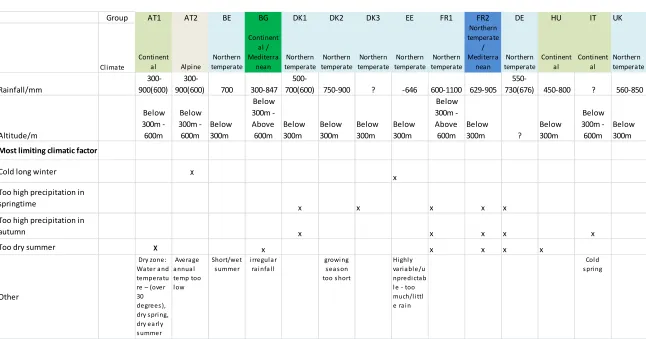
Groups are located mainly in three European climate zones: over half of the farmer groups (9 out of 14) are located within the northern temperate climate zone: Belgium, three Danish groups, Estonia, UK, two French groups and Germany. Four of the groups are located within the continental climate zone: Bionet Burgenland in Lower Austria, Bioselena in Bulgaria, ÖMKi in Hungary and ConMarcheBio in Italy. The Biokompetenzzentrum Schlägl group in Austria is the only group located in the alpine climatic zone. Bioselena in Bulgaria and RotAB in France have members located in the Mediterranean climate zone, as well as the continental and northern temperate zones respectively. All the OK-NeT Arable farmer groups contain members who are working on land that is situated at different altitudes. Seven of the groups only contain farmers who are working below 300 m above sea level (masl) Belgium, Hungary, Estonia, the three Danish groups and the RoTAB network in France. Six of the ten groups have farmers working land at between 300 and 600 masl: Austria, Bulgaria, France, Germany and Italy. Only two groups, in Bulgaria and France, have farmers who are farming above 600masl. Two groups, Bioselena in Bulgaria and BASE-ABC in France, have members farming across all three altitude groups indicating a variation of agronomic and climatic conditions between the group members.
In terms of annual rainfall, the ranges vary from group to group depending on geographical location, with expected trends for high rainfall observed for groups located along the eastern coasts of water bodies (due to the prevailing westerly wind flow) and for groups farming at altitude. Rainfall also can vary considerably within one group of farmers. For example, a range of annual rainfall between eastern and western locations in the UK was reported from 592mmyear¯¹ (West) to 857mmyear¯¹ (East).
There are however some similarities across all groups with most groups receiving an annual rainfall of between 300mm to 900mm per year. Very few farmer groups receive rainfall of higher than 900mm per year with BASE-ABC in France the only exception with a maximum of 1100mm. Where data giving the average (instead of the range) of annual rainfall are presented, these averages are with-in 600 to 700mm (Bioforum in Belgium and Maheklaster in Estonia). Furthermore, the averages of several groups whose ranges are reported lie between 600mm to 700mm (Bionet Burgenland and Biokompetenzzentrum Schlägl in Austria, SEGES Sjaelland in Denmark and VOP IN Germany).
18 The limiting production factors vary between countries and are influenced by the climatic zones in which the groups are located. Overall the northern temperate climate zone is associated with a short growing season and too much precipitation in spring and autumn, unpredictability of rainfall and extreme weather events. The continental climate zone is associated with lack of precipitation in the summer or too much precipitation in autumn. The alpine zone is associated with cold winters. In terms of rainfall, SEGES Sjaelland (DK), BASE-ABC (FR), RotAB Network (FR), VOP (DE), Con Marche Bio (IT), and ORC Arable group (UK) listed high rainfall in autumn as a limiting factor. Sjaelland (DK1), Videbaek (DK), BASE-ABC (FR), RotAB Network (FR) and VOP (DE) groups listed high spring rainfall as a major limiting factor. All groups that listed too much rainfall in autumn or spring as an issue are located within the Northern Temperate climatic zone. Although wheat producing members of ÖMKi (HU) group, located in the Continental climatic zone report high ground water levels in spring causing production problems, and high rainfall in autumn leading to poor wheat quality and delayed soya harvest. Bionet Burgenland (AT), Bioselena (BG), BASE-ABC (FR), RotAB Network (FR), VOP (DE) and ÖMKi (HU) groups identified dry summers as a limiting climatic factor though these groups do not fit neatly into one climatic zone, spanning three zones of Northern Temperate, Continental and Mediterranean. Interestingly, Bioforum Flanders from Belgium was the only group to identify wet summers as a climatic limiting factor (heavy summer storms which result in problems with late blight in potato and makes mechanical weed control difficult for 2 or 3 weeks).
Certain groups have also reported changes in the climatic conditions, for example in Austria where farmers are experiencing increasing incidents of drought, and many of the groups report problems due to unpredictable rainfall. See Table 1 in Appendix.
Farming systems
7.1
The farmer innovation groups represent a range of farm types including cereal producers, organic mixed farms, including livestock and field vegetables (e.g. potatoes, cabbage, leeks etc.), horticultural farms as well as stockless arable cropping systems. The majority of the farms are rain fed, although in Denmark the Videbaek farms use irrigation for sandy soils, in Hungary vegetable producers from the ÖMKi group irrigate their fields from wells or canals, irrigation structures are also reported in Bulgaria, and Italy.
In terms of typical crops grown most groups appear to be focused on cereal crops. Some of the groups have more of an emphasis on field and horticultural crops than others, e.g. Belgium where members of the group produce potato and other vegetables such as leek and celeriac. Bulgarian group members produce peppers, cucumbers, raspberries, pumpkin and tomato and members of the Estonian group produce carrot, cabbage and turnips as well as a range of other vegetables. The RotAB network (FR) has a specific focus on stockless systems, as do the three SEGES groups in Denmark who are aiming to reduce reliance on conventional manure.
19 members in Austria (Schlägl) keep pigs and keeping poultry was only reported by members of the Burgenland group in Lower Austria. Schlägl group members in Austria seem to be more livestock oriented than members of other groups with more livestock types and higher stocking rates reported. This is possibly because there are many mixed-cropping farms in this area with grassland, and the group also works on intensive/extensive grassland cultivation indicating the potential for livestock integration within the farming systems.
Farms across the ten countries include a range of ecological features. All groups report that their farms include hedgerows which are important features for on-farm biodiversity. Types of hedges include both old established and newly planted ones. Some groups report the presence of wooded and forested areas on their farms e.g. Bulgaria, Austria Schlägl, Denmark Vejle, Estonia and France. Also water features are mentioned: Bulgarian farms have irrigation canals, lakes and ponds, Hungarian farms feature canals and Italian farms feature water ditches. Some groups have a specific interest in incorporating more ecological features into their farming systems in an attempt to increase biodiversity, for example the RotAB group in France try to manage and improve biodiversity by implementing agroecological features such as hedgerows and grass margins and agroforestry systems. This emphasis on agroecology is a stated aim of the network.
Farm sizes between the groups range from the smallest at 0.5 ha in Hungary to the largest of 1,110 ha in Estonia. Farm sizes vary markedly within the groups with some wide ranges reported, for example 17 ha to 300 ha in Denmark Sjaelland, 0.5 ha to 600 ha in Hungary, 5 ha to 300 ha in Italy and 15 to 1110 ha in Estonia. Despite these ranges, generally the land holdings of group members appear to be larger than reported average land holdings for the individual countries, possibly due to the arable focus of the groups. For example, all members of the UK group have holdings larger than the national average of 77 ha (Prager, & Thomson 2014). However, many of the groups have some members with smaller areas of land than national averages, for example in Belgium where the smallest reported land size of a group member is 1ha compared to the average of 25ha in Flanders (Department of Agriculture & Fisheries 2015). The average size of agricultural holdings varies from country to country, and between regions within specific countries. According to information from the monitoring framework, group members from the Schlägl group in Upper Austria seem to have smaller farm sizes than group members from Burgenland in Lower Austria, which may be a reflection of the different regions where the groups are located. Similarly members of the group from SEGES Vejle in Denmark seem to have larger areas of land than the SEGES Sjaelland group, and larger average holdings at 220 ha than the national average of 66ha (Madsen-Østerbye 2014).
Main crops grown, yields and rotations
7.2
Crops
20 Grain legumes feature highly amongst the rotations with all groups growing at least one of these crops. Most common are peas and field beans with ten groups growing one or both of these crops. Less common grain legumes include soya beans (Bionet Burgenland, France and Hungary), chickpeas (Italy) and lentils (France). Winter oil seed rape is only grown by members of one of the Danish groups (Sjaelland) reflecting the challenge of growing this crop organically. Sunflowers are produced in Austria Burgenland and Hungary, and sesame in Bulgaria. Maize is grown by several groups (Both Austrian groups, Bulgaria, Belgium, both French groups and in Hungary).
Grass-clover mixes are grown by members of five groups: Austria Schlägl, Belgium, Maheklaster in Estonia, BASE-ABC in France and members of the ORC group in UK. It is no surprise that grass/clover leys are utilised by farmers without stock and where these leys are not used, lucerne is grown instead as an alternative forage legume (Bioselena Bulgaria, ÖMKi Hungary, RotAB Network and Con Marche Bio Italy). Two groups use both grass-clover and Lucerne as forage legumes (Schlägl Austria and BASE-ABC France) and these groups have cattle stock in their systems. It must be noted that although grass/clover mixes are only mentioned as a typical crop by some of the groups, most groups include them as part of their typical rotations.
Root crops are grown by some groups with Schlägl in Austria and the Belgium group growing potatoes, and the Estonian group growing carrots. Other field vegetables are grown but these are limited to the Belgium, Bulgarian and Estonian groups.
Yields
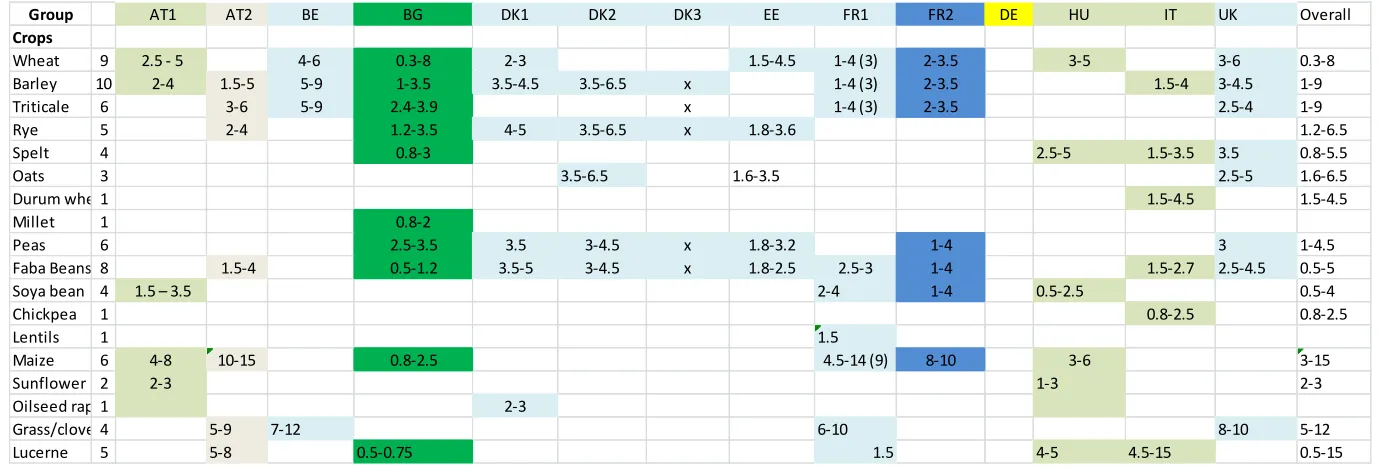
Yields of the major crops grown vary between groups across Europe but also within each group. Variation in yield is likely to be a result of physical variations (i.e. climate and soil) as well as differences in management practices. Although there do not appear to be clear trends in terms of climatic zones, generally in terms of cereals grown, northern temperate groups from Belgium and Denmark tend to achieve the highest yields and groups based in Bulgaria and Estonia tend to have lower yields. See Table 2 in Appendix.
Wheat: In Bulgaria the reported variation in yields across the group ranges from 0.3 to 8 t/ha. Excluding this group, yields range from 1 to 6 t/ha with a likely average somewhere around 3t/ha.
Barley: The yield range is 1 to 7 t/ha although only Belgium reaches yields that high with most groups reporting yields between 1.5 to 6.5t/ha.
Triticale: The picture is similar to barley with an overall range in yield between 1 t/ha and 9 t/ha. Again it is only the Belgian group that reports such high yields with the five other groups growing the crop failing to exceed 6t/ha. The lowest yielding group are BASE-ABC in France who yield as low as 1t/ha.
Rye: The range of yields is less variable (1.2-6.5 t/ha) with the highest yields from Sjaelland in Denmark, and the lowest in Bulgaria.
Spelt: Yields range from 0.8 – 5.5 t/ha with Hungary yielding highest and Bulgaria yielding lowest.
Oat: Yields range from 1.6 t/ha to 6.5t/ha with Vejle, Denmark having the highest yield and Estonia having the lowest yield.
21 The only root crop grown by more than one group is potatoes and yields for these vary drastically in the Belgian group from 15 to 40 t/ha. Yields are less varied in Austria (Schlägl), ranging from 15 to 25 t/ha.
Faba bean: Yields vary from 0.5 to 5 t/ha across all groups. The lowest yielding group farms in Bulgaria while the highest yielding group is Sjaelland in Denmark. Pea yields are less variable than faba bean yields ranging from 1 to 4.5 t/ha. Vejle Denmark has the highest yields while RotAB France has the lowest. Estonia also has quite low yields in comparison with the other groups.
Soya bean: Yields range from 0.5 to 4 t/ha with a relatively small range of yields within each group. Hungarian yields are lowest, with both French groups yielding highest.
Grass clover: yields between 5 and 12t DM/ha have been reported across the groups with Belgium yielding highest and Schlägl in Austria yielding lowest.
Lucerne: Yields vary widely from 0.5 to 15t DM/ha. The Bulgarian group has the lowest yields while the highest yields are from the Italian group but there is a wide range of yields reported from this group of 4.5 to 15t DM/ha.
The data suggests there would appear to be a need to improve yield performance and stability. Though the highest yields achieved are comparable with conventional yields (particularly for grain legumes) there is clearly a much bigger spread and greater variation. The Bulgarian and Estonian groups frequently reported the lowest yields while the Belgian and Danish groups often reported the highest yields. This also indicates that it should be possible to improve average yields through knowledge exchange aimed at improve agronomic practises through the activities of the project.
Rotations
Variations in rotation exist for a number of reasons, with climate and soil type determining to a large extent the suitability of certain crops for inclusion in the rotation and the mix of enterprises on the farm impacting on what is grown. Typical rotations, as reported by the groups, range from three to nine years with huge diversity among each group.
22
Soils
7.3
As part of this report it is only possible to make simple comparisons of the soils in terms of edaphology and more specifically soil organic matter (SOM). It is necessary to note that soil texture, climate, landscape and management all contribute to the SOM and so SOM levels between groups and farms will be as diverse as the farms themselves, however, reported SOM levels serve as a good guide to the various soils given SOM’s contribution to a number of diverse soil functions that promote crop growth. A thorough comparison of soils is beyond the remit of this report, and would be challenging due to the huge variation between different countries, regions within countries and between fields on individual farms.
23
Main challenges identified
7.4
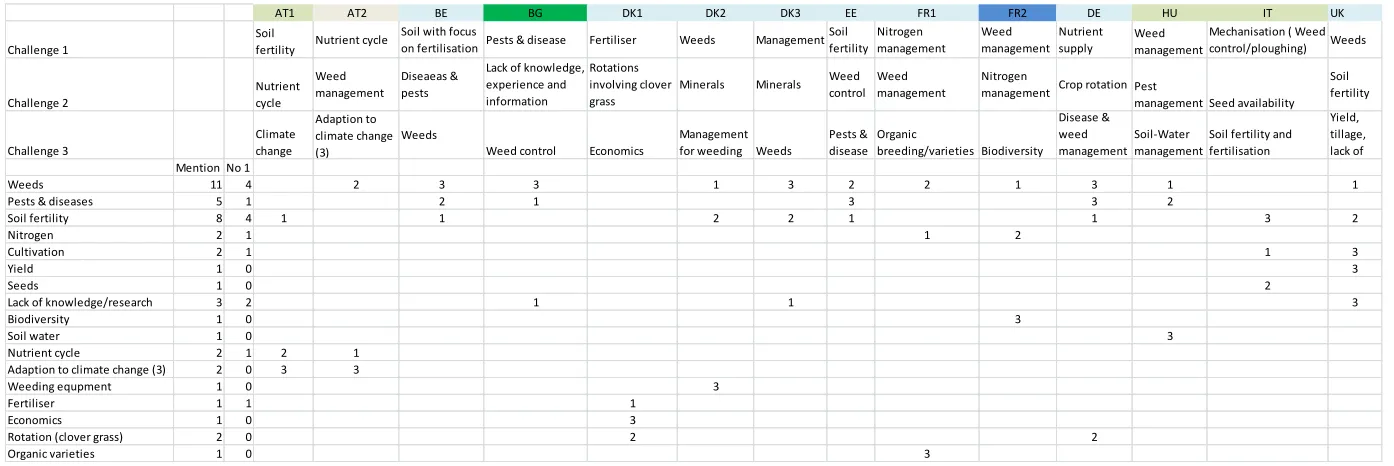
The results presented here are based on a facilitated process carried out in each group, collecting views from the farmer group about challenges and solutions, innovations and tools for knowledge exchange in a co-ordinated way. Some main general challenges are reported by all groups, but depending on regions and climate, the prioritisation of the main challenges differed. While for some groups the main issue is weed management, other groups have highlighted soil fertility or disease control as their most pressing challenge. In the following section we report on some of the challenges that are highly rated by all the groups. It is important to emphasise in this section that the results are reported for the whole group and not for individual farms. See Table 3 in Appendix. Weed management
Weed management was mentioned by 12 out of 14 groups as one of their top three issues (this includes one group who mentioned weeding equipment). This challenge was ranked number one by 4 of the groups.
The most commonly occurring weeds across the groups are thistle (Cirsium) and fat hen (Chenopodium album), both mentioned by seven groups, and docks (Rumex L.), mentioned by six groups. Some other common weeds reported are couch grass (Elymus repens) mentioned four times, wild oat (Avena), chickweed (Stellaria media), knotweed (Fallopia) and mayweed (Matricaria), all mentioned by three groups. Perennial ryegrass (Lolium), charlock (Sinapsis arvensis), ragweed (Ambrosia) and annual meadow grass (Poa annua) were all mentioned by two groups. Blackgrass (Alopecurus myosuroides) was reported as a problem in the UK, but not in other countries. Quickweed (Galinsoga) was also mentioned as a problem in Belgium, particularly for vegetable farms.
Approaches to weed control vary between countries, as do the weeds. As a cornerstone of organic farming it is unsurprising that all groups mention crop rotation as a control strategy for many weeds. More interesting are the different approaches taken, with several groups using intercropping and cover cropping to create competition and help suppress weeds. In several groups grass clover leys are mentioned as a key strategy to control annual and perennial weeds and one group uses nurse cropping to establish perennial legumes. Control strategies vary from system to system with higher value vegetable crops tending to be mulched and manually weeded, with one group using flame weeding.
24 manures to perform cultivations and offer competition for weeds. Green manures are also used to improve soil structure as some arable weeds favour compacted, waterlogged soils.
Crop management as a tool for weed control is mentioned by three groups who use sowing date, sowing density and optimum crop nutrition to help the crop out compete the weeds. Although only three groups are explicit about the use of crop management, it is very likely several, if not all, groups employ this strategy in combination with a varied rotation.
There does not appear to be a trend towards one strategy or another depending on types of weed present, although groups with a high perennial weed burden such as SEGES Vejle in Denmark report needing to use a combination of all strategies and mechanical weeding becomes more crucial. Two groups are explicit about the lack of knowledge and advice available on weed control and weed suppressive rotations.
Weed control strategies are incredibly farm specific and depend on the weeds present, the farming system, the climate and soil moisture as these play an important role in the efficacy/feasibility of mechanical control. There is however a commonality in several of the major weed species (docks, thistles, couch, fat hen, wild oats) causing issues for farmers across Europe and in some of the control methods and control barriers (cost of machinery and lack of knowledge). Farmers are also aware of the connections between weeds and underlying soil fertility issues, i.e. weeds as indicators of soil fertility issues were mentioned by groups in Belgium and the UK.
Soil fertility:
Soil fertility was mentioned by 8 out of the 14 groups as one of their top three issues, and ranked number one by 4 of the groups. The issues surrounding soil fertility for the farmer groups appear to be four-fold: 1) how to effectively design and manage rotations for maximum fertility; 2) what off-farm inputs to include, when to apply them and how to get hold of them; 3) how to cultivate soil to maintain fertility; 4) knowledge gaps on how to manage the system for maximum fertility and how to measure soil fertility using soil and plant tissue analysis.
All groups use rotations to build fertility with the inclusion to a lesser or greater extent of fertility building grass clover (or other forage legume e.g. Lucerne) leys. To compliment this fertility building phase, several groups include grain legumes such as faba beans as a fertility building cash crop. Five groups mention the use of cover cropping and the inclusion of green manures to help manage the nutrient supply though issues around incorporation in the spring exist. One group mentions the use of “cut and carry” as a method of transporting fertility around the farm. Several groups have highlighted the importance of using catch crops to limit the amount of nitrogen leaching, with one group using intercropping of a grain legume and cereal for a “catch and release” system where the legume provides nitrogen to the cereal crop.
25 biogas plants. Nutrient cycling is an open system as grain is exported off farm and three groups see using sewage sludge or city compost as a way to close the cycle. There is a trend for groups located in Denmark, Austria and Germany to discuss the use of both sewage sludge and biogas digestate for use as fertiliser.
There is recognition from one group that different manures may need to be applied at different points in the rotation to maximise the benefits while reducing the risk of leaching by applying liquid manure to grassland and solid manure to arable land. Three groups mention the additional use of soil improvers/activators with sea minerals, rhizoctonia inoculation and mycorrhizae to improve fertility. Only one group is explicit about the need to increase soil organic matter with the addition of manure, compost and organic fertiliser to improve fertility and only one group expresses the need to manage nutrients other than Nitrogen.
Tillage is mentioned by three groups with respect to soil fertility, with reduced/min-till used to improve fertility by reducing the oxidation and subsequent loss of soil organic matter and nitrogen. One of the groups requires more information on cultivations and their effects on nitrogen loss and a further two groups mention the knowledge gap and the need for extra information and advice about soil fertility management and more specifically, how to increase soil organic matter (including storage and application timing), legume species for intercropping, cover crop management and undersowing, and nitrogen mineralisation. Two groups rely on systematic nutrient testing and analysis of soil and plant tissue in order to guide management and it would appear that more groups could benefit from this approach.
Farmers across the groups seem to conduct some kind of soil analysis on an irregular basis; the specific types of testing were not mentioned. On average testing occurs every 5 years. The longest reported period between testing is 8 years in Austria Schlägl, and the shortest is every year by members of the BASE-ABC network in France.
As with the weed control issue, soil fertility management is specific to the farming system and to an extent the climate which dictate management strategies. It appears that all key nutrients could be limiting factors in terms of yield. Nitrogen is supplied to the system using legumes, but this remains challenging for stockless farmers that also have the greatest issues providing other nutrients to the system. Regulations surrounding the use of off farm manure, sewage sludge and digestate make the issue of managing soil fertility difficult for stockless organic arable farmers despite the sustainability of these nutrient sources.
Pests & diseases:
Pests and diseases were mentioned by 5 out of 14 groups as one of their top three challenges, but were ranked number one by only one of the groups. Pests and diseases differ from group to group and are heavily influenced by the climate, soil, crops grown and the crop rotation. These factors also make the risks variable from year to year. Generally groups with more of an emphasis on horticultural and field crops, namely Bulgaria and Estonia, reported a wider range of pests and diseases due to a greater diversity of crops.
26 (powdery; Blumeria graminis and downy; Peronospora farinose) also mentioned by three groups. Commonly reported pests include pollen beetles (Meligethes spp), wireworm (Agriotes spp.) and aphids (Aphidoidea spp.).
The groups that include pests and diseases as one of the top three production challenges all report using rotations, drilling date, tillage and variety selection to help mitigate the risk factors and threat. The majority do use biofungicides and bioinsecticides certified for use under organic standards and these are usually copper/sulphur based, though neem oil is also used. There are issues for the groups surrounding a lack of resistant crop varieties, and certified plant protection products. One group mentions the use of pheromone traps.
The necessity to protect crops has encouraged members of one group to experiment with using home-made compost infusions to deal with the issue, with another group mentioning the use of nettle manure as a soil improver. Four groups mention pollen beetle as a problem (it should be noted that three of the groups are from Denmark) and the lack of direct control options once the pest reaches threatening levels, and the relative speed of outbreak, could be one reason why so few groups include oilseed rape in their rotations.
There are also built in conflicts arising from management strategies. For example, where ploughing in residues may help to limit carry-over of disease from crop residue it is clearly at odds with the aim to reduce the intensity of tillage. Also, one group mentions the use of certain green manures to control nematodes but this may increase the number of brassicas in rotation, increasing the risk of soil-borne diseases such as club root.
One group, Bioselena in Bulgaria, has explicitly mentioned the need for more information on plant protection products and better forecasting of pests and disease to help inform management strategies. In Belgium, damage to crops from wild animals and birds is a major concern and netting of crops causes much additional work for farmers and is sometimes not sufficient to protect crops from rabbits and deer. They have also experienced problems with crows (corvids) pulling out cereal, maize and vegetable seedlings. Bird damage also makes crops vulnerable to weed infestations.
Other issues
Other highly ranked issues included: lack of knowledge and research, problems with nitrogen management, nutrient cycling, challenges with grass/clover rotations (how to get more clover in the rotation), soil water content, cultivation issues, climatic changes, availability of organic seed. Many of these issues are interrelated and connect with the three most frequently cited challenges outlined above.