Learning Agreement Pilots
Process Evaluation
Research Report DCSF-RR120
Sue Maguire, Jo Thompson and Madeleine Wahlberg
Centre for Education and Industry, University of Warwick
Tom Levesley, Linda Miller, Claire Johnson,
Research Report No
DCSF-RR120
Learning Agreement Pilots
Process Evaluation
Sue Maguire, Jo Thompson and Madeleine Wahlberg
Centre for Education and Industry, University of Warwick
Tom Levesley, Linda Miller, Claire Johnson, Becci Newton,
Peter Bates, Rosie Page and Jim Hillage
Institute for Employment Studies
The views expressed in this report are the authors’ and do not necessarily reflect those of the Department for Children, Schools and Families.
Prepared by:
INSTITUTE FOR EMPLOYMENT STUDIES Mantell Building
University of Sussex Campus Brighton BN1 9RF
UK
Tel. + 44 (0)1273 686751 Fax + 44 (0)1273 690430
www.employment-studies.co.uk
Copyright © 2009 Institute for Employment Studies
Acknowledgements
The project team would like to express their sincere thanks to the project managers in the LAP pilot areas who gave generously of their time in interviews and in setting up interviews or facilitating contact with other local stakeholders and employers, who we also thank for their time and contributions. Together they provided invaluable insights into the
implementation of both initiatives.
We are most grateful to the members of the project steering group, in particular, Susanna Greenwood, from the Department for Children, Schools and Families (DCSF) for their guidance and support.
Finally, we would like to thank Gill Brown from IES for her efficient administrative and secretarial support. At CEI, we would like to express our thanks to Pat Lyness for her diligence in transcribing and managing a large amount of data and to Caroline White for her assistance with data analysis.
Institute for Employment Studies
The Institute for Employment Studies is an independent, apolitical, international centre of research and consultancy in public employment policy and organisational human resource issues. It works closely with employers in the manufacturing, service and public sectors, government departments, agencies, and professional and employee bodies. For 40 years the Institute has been a focus of knowledge and practical experience in employment and training policy, the operation of labour markets, and human resource planning and development. IES is a not-for-profit organisation which has over 60 multidisciplinary staff and international associates. IES expertise is available to all organisations through research, consultancy, publications and the Internet.
IES aims to help bring about sustainable improvements in employment policy and human resource management. IES achieves this by increasing the understanding and improving the practice of key decision makers in policy bodies and employing organisations.
Contents
SUMMARY 4
1 INTRODUCTION 11
1.1 Learning Agreement Pilot (LAP) 12
1.2 Extension to the Activity and Learning Agreements 13
1.3 The Report 14
2 METHODOLOGY 15
2.1 Data collection on the local implementation and delivery of the pilots 15
3 MANAGEMENT OF THE LEARNING AGREEMENT PILOTS (LAP) 18
Key findings 18
3.1 Introduction 19
3.2 Management delivery models 19
3.3 Staffing structures 21
3.4 Management of LAP: the providers’ perspective 25 3.5 Links with other stakeholders and employers 26 3.6 Management information requirements 27
4 DELIVERY OF THE LEARNING AGREEMENT PILOTS (LAP) 28
Key findings 28
4.1 Introduction 29
4.2 Marketing and brokerage 29
4.3 Identifying, procuring and managing provision 32 4.4 Application processes, monitoring and payment systems 34
5 EMPLOYERS AND THE LEARNING AGREEMENT 36
Key findings 36
5.1 Introduction 36
5.2 Approaches and attitudes to training 37 5.3 Motivation for participation in the Learning Agreement 38 5.4 Setting up the Learning Agreement 40 5.5 Benefits of participation in a Learning Agreement 43 5.6 Bonus payments and wage compensation 44
6 THE LAP, ITS OUTCOMES AND EMERGING ISSUES RELATING TO THE
RAISING OF THE PARTICIPATION AGE (RPA) 46
Key findings 46
6.1 Introduction 46
6.2 LAP policy and desired outcomes 47
7 CONCLUSIONS 54
7.1 The LAP 54
7.2 LAP management and delivery 54
7.3 The LAP offer 55
7.4 LAP: the employers’ perspective 56
7.5 Outcomes 57
7.6 Implications for national roll-out 57
Summary
The Activity Agreement (AA) and Learning Agreement Pilots (LAP) were launched in 12 areas of England in April 2006 for a two-year period. Activity Agreements were designed for young people (aged 16 or 17) not in employment, education or training (NEET) and operated in eight of the 12 areas. Young people had to be NEET for 20 weeks to be eligible. They received an allowance (three variants of which were tested in different pilot areas) and continuous support, in return they agreed to take part in tailored activities designed to help them progress towards an employment or education and training outcome. Learning Agreements were aimed at 16 to 17 year olds in jobs without training (JWT) and also operated in eight of the 12 pilots areas (ie both pilots operated in four areas and they each operated separately in four others). Under a Learning Agreement, young people took part in agreed activities, which included undertaking a designated course.
This summary focuses on findings from the Learning Agreement Pilots.
The Evaluation
The evaluation had three main strands:
■ a quantitative element, using surveys of young people to measure the impact of the pilots in comparison to a number of control areas
■ a programme theory element, focusing on testing some key aspects of the policy to identify what works, what doesn’t and the reasons for this
■ a process evaluation, examining the ways in which the pilots have been set up and delivered and the main issues associated with their implementation.
This report focuses on the process evaluation, which comprised three waves of fieldwork in the pilot areas. Respondents included project managers, operational staff from Connexions and local LSCs, and representatives from education and training providers.
Key findings
In the first year, LAP had been slow to get off the ground and take-up rates, even with modified delivery targets, remained a challenge. The first year of the pilot was widely regarded as a set up year, given the delays in policy implementation and low take-up rates that pilot areas faced. Significant progress had been made during the second year of
delivery. The decision to extend the pilot for a further year from April 2008 was welcomed, in order to embed the implementation of the pilot, which had largely only begun in the second year of delivery.
■ LAP was an opportunity to engage with the young people in jobs without training (JWT) and their employers. LAP has provided an invaluable opportunity to develop a greater understanding of this segment of the youth labour market, which prior to the launch of LAP, had not been a key policy concern. It unearthed labour market intelligence about the JWT group and their employers, as well as developing an infrastructure to support the learning and training needs of the JWT population. This resource will be critical to support the Raising the Participation Age (RPA) agenda.
■ The focus of responsibility for local LSCs was to fund learning and training provision and to promote the initiative among employers. Connexions staff had concentrated to a much greater extent on identifying and contacting eligible young people. LAP has facilitated closer links between LSCs and Connexions at the local level, as well as developing greater competence among Connexions staff to work more effectively with employers and training providers.
■ Take-up rates were highest in areas where provision was dominated by key skills, basic skills and Technical Certificate programmes - that is where young people were largely recruited to provision that had been set up before their entry to the programme.
■ While flexibility over provision remained an issue, significant progress had been made in terms of identifying some training providers who could adapt their training delivery to support specific needs.
■ The key to retaining young people on LAP was the continued support they received from LAP advisers, and to training providers and their employers. Young people who had support from their employer as well as PA support, were reported to have higher retention and completion rates.
■ Attempting to meet the learning needs of young people and, as far as possible, the training needs of their employers within the parameters of the Section 96, which comprises the LSCs learning aims database (see section 6.3), has been a complex arrangement to deliver. The vexing issue of how to reconcile competing demands within LAP policy challenged its implementation.
■ The piloting of LAP tested the effectiveness of using a combination of financial incentives, agreements and support to encourage participation in post-16 education or training among the JWT group. Evidence from the process strand of the evaluation of the LAP would suggest that some key lessons have been learnt to inform policy development.
Background
It was widely acknowledged that considerable movement or ‘churning’ took place among young people in the NEET and JWT groups. This was largely attributed to the nature and content of the employment available to young people in JWT and to the low level of aspirations often found among young people in the NEET group. The delivery of LAP heightened awareness of the strong inter-relationship between local NEET strategies and local economic development.
Management of LAP
The LAP was managed locally by Connexions Partnerships and local LSCs. Joint delivery responsibility for the LAP demanded that Connexions and local Learning and Skills Council (LSC) staff work together to manage the implementation of the initiative. In some cases, this was a new venture. During the course of the pilot, stronger links have been established between the two agencies. In addition, the LAP enabled Connexions Services to work more closely with training providers, since the implementation of the pilot has enabled Connexions staff to become more involved in the management and delivery of training provision.
The task facing project managers was more complex in pilot areas which comprised large numbers of local authority areas and required the need to set up multiple sets of contractual and management structures. Management and organisational structures tended to be more complex where a pilot area comprised a number of local authority areas.
Two models of implementation were in evidence:
1. Local Area Autonomy - predominantly in large pilot areas, where project managers within Connexions, had a strategic role in overseeing the delivery of the pilot by operating through a network of local managers.
2. Central Management - in pilot areas which comprised a small number of local authority areas, project managers retained responsibility for operational staffing and had a
standardised approach to the delivery of LAP.
With regard to potential national roll-out, the demise of Connexions Partnerships and the re-integration of Connexions Services within individual local authority control, would mean that the ‘umbrella’ role carried out by project managers could not be replicated within any new arrangements.
The implementation of the initiative was also hampered by organisational change, which occurred within both Connexions and local LSCs and which adversely affected staff recruitment and retention to the pilot.
During the second year of the pilot, national LSC guidance had become more consistent and stable and consequently, operational staff at local level were more confident about the LAP ‘offer’ and how to promote it.
Staffing structures
LAP Advisers within Connexions needed a different skill set, compared with mainstream PAs. As well as being able to work with young people, LAP advisers needed to be able to ‘sell’ the concept of the initiative to young people and employers. They also needed an understanding of the available learning opportunities. Some new and redeployed Connexions staff found that working with employers and with young people to identify their training needs required new skills and/or challenged their existing skills. Difficulties were reported in
recruiting and retaining staff who could work effectively with both young people and employers.
The recruitment of LAP Advisers within Connexions was slower in areas where staffing was managed by local authority personnel departments, due to the time taken to have vacancies and recruitment authorisation approved. This impeded the development of the initiative in some pilot areas. Staff recruitment had been more successful and sustained in areas where managers had employed staff from a wider range of backgrounds - in particular, staff with backgrounds in training and development and/or who had experience of promoting employment and training initiatives to employers and young people.
Contracting provision
Local LSCs had set about contracting with local training providers in a number of different ways. In some areas, an invitation to tender for LAP provision had been issued to all learning and training providers and contracts had been re-negotiated on an annual basis. In four pilot areas, provision was contracted through consortia arrangements, in which the local LSC devolved responsibility for the management and delivery of LAP provision to a group of training providers. Setting up consortia arrangements and subsequent delays in brokering provision had impeded LAP delivery during its first year of implementation.
There were mixed views about the effectiveness of the consortia approach. Even within individual pilot areas, there were differences in performance and in levels of satisfaction with consortia arrangements between Local Authority areas. The consortium model worked well when:
■ there was a strong lead provider who had effective communication with other partners, who was committed to the initiative, and had the ability to influence other providers
■ there was a good relationship between the providers involved
■ the consortia included a representation from all key training providers in the area ie colleges (large and small), voluntary sector organisations as well as private training providers, which could offer a breadth of provision which could be delivered flexibly, and
■ the consortia had forged positive links with other local stakeholders, most notably the 14-19 partnership and Connexions.
Management Information
The lack of a uniform and fully operationalised MI system across all pilot areas had
weakened the implementation of the initiative. Prior to the launch of any national initiative, a review of current arrangements needs to take place, so as to ensure that any national delivery of LAP is fully supported by one MI system, which is able to deliver data which are timely, responsive, consistent and accurate.
Delivery of LAP
Marketing and Promotion
While there was evidence of a wide range of marketing and publicity activity, it was the one-to-one engagement between LAP advisers and young people and to a lesser extent through employer engagement, which appeared to be the most effective strategies for entry into the initiative. Any future planning for the potential roll-out of the initiative may wish to review the likely added value for take-up rates of expenditure on marketing and publicity strategies and materials.
Using the CCIS database to identify young people in the JWT category had exposed
inaccuracies in the data. A key lesson learnt from the LAP pilot, is that infrequent tracking of young people in JWT had resulted in a lack of up-date information about the JWT group and their employers.
Provision
Take-up rates were highest in pilot areas where provision was established prior to young people’s entry to LAP, in particular with regard to the delivery of key skills and Technical Certificate programmes. There were mixed views about the value of this approach. On the one hand, focusing on personal transferable skills equipped young people with the
foundations to progress into Apprenticeship training, by enabling them to receive bite-sized chunks of a full framework agreement; it also brought throughput to LAP, in terms of
numbers and completions and was fairly straightforward to deliver. On the other hand, there was concern about the extent to which this approach was really learner-led, as opposed to provider-led, and whether these programmes were what young people or employers really wanted and would offer all groups of young people routes back into learning.
Most areas had identified that private training providers could be more flexible than colleges, with regard to the delivery of LAP provision because they tended to be smaller organisations, focused on work based training delivery and were not working primarily within the confines of an academic year timetable for delivery.
While the piloting of LAP had provided some opportunity to instigate a limited degree of change to the scope and delivery of provision to young people in work, significant changes to training providers’ behaviour had not happened.
Outcomes
During the first year of delivery, the biggest issue facing pilot areas had been securing sign ups to LAP. However, it was reported that retention rates were generally good. One area had a 70 per cent retention rate, which they attributed to the support given to young people by LAP advisers.
It was stated that the propensity for young people to drop out of LAP increased if the young person was not supported by their employer to take part in the programme, or where their employer was not aware that they were doing so.
Some young people were reported to be progressing to Apprenticeships after completing LAP. In addition, some young people were also completing LAP for a second time
(sometimes as part of an Apprenticeship programme). Determining accurate retention and progression rates was hampered by the limitations of MI systems.
LAP: the employers’ perspective
Participating employers welcomed the Learning Agreements. They felt that the LAP engaged young people in learning in a way that their school careers had not and helped them acquire job-specific, personal and social skills.
Whilst providing free training was seen as important, with a few exceptions wage
compensation payments to employers appeared to have little impact on their propensity to take part in the Learning Agreement. In contrast, employers thought that bonus payments to employees were important.
Employers felt that the process of taking part in the Learning Agreement was made very easy for them. In part this was due to the structure of the Agreements, which employers said created very little disruption to their businesses, and also the good quality information and support they received from Connexions staff. The Learning Agreements were therefore a straightforward means by which employers could support young employees.
Implications for national roll-out
■ The introduction of LAP had enabled Connexions and local LSCs to work together to develop strategy to support the needs of young people in the JWT category. This is of great significance to any subsequent roll-out of the initiative and to policy makers supporting the implementation of the RPA agenda.
■ The pilot has exposed severe problems with regard to the lack of capacity and resources among providers, most notably colleges, to offer a greater degree of flexibility and
diversity to their range of provision, in order to meet the demands of an increasingly diverse group of learners.
■ In terms of national roll-out, further consideration needs to be given to whether the needs of young people and employers can be successfully met within one initiative.
■ Examples of good practice with regard to the lessons learnt from the implementation of LAP should be shared more widely between pilot areas and evidenced for potential national roll-out.
Future considerations
The three visits to the pilot areas constituted the key element of the two year process evaluation of the LAP pilots. The data gathered from these visits provide evidence which should assist policy makers in supporting the implementation of the RPA agenda.
There was substantial evidence to suggest that since there had previously been limited contact with the JWT population and their employers, LAP had been launched hastily. Prior to the implementation of the RPA, a rigorous appraisal of the needs of the JWT group and their employers needs to be undertaken, which should include:
■ developing systems which provide up-to-date destination data on all groups of young people, including those in the JWT group
■ training Connexions staff to develop their capacity to work with employers
■ developing intelligence on local employers who employ young people in JWT
■ introducing strategies to strengthen partnership delivery arrangements
■ establishing some form of accreditation in sectors or organisations where significant amounts of in-house training are already being delivered, rather than persuading young people and employers to take part in other forms of training and development
■ reviewing the feasibility of whether the learning and training needs of both young people and employers can be successfully delivered within one initiative. The vexing issue of how to reconcile these competing demands within LAP policy challenged its implementation.
In preparation for a post-RPA era, the following systems and structures should be considered:
■ Since, one-to-one engagement with a young person and, to a lesser extent their
employer, was the key to their participation in LAP, a much wider range of support should be established for young people who choose early labour market entry, including advice and guidance on local labour market opportunities, job placement support and in-work advice on their future learning and training needs
■ Engagement with young people should be underpinned by the recruitment of guidance and support workers who are both confident in dealing with employers and competent in their understanding of the needs of young people in the labour market
■ A greater degree of flexibility within the qualification framework should be introduced, in order to achieve a more attractive learning offer to all young workers, as well as ensuring that providers, most notably colleges, are required to adapt their delivery arrangements to meet the needs of an increasingly diverse cohort of learners
1 Introduction
The United Kingdom has one of the lowest rates of post-16 participation in education or employment in Europe, with the problem being particularly acute at age 17. Just under ten per cent of 16 and 17 year olds in England, around 100,000 young people, do not participate in any form of education, training or employment. A further 85,000, around six per cent of the cohort, are in jobs, which do not offer accredited training. This pattern varies across the UK, although the nation has one of the lowest rates of participation in full-time education,
especially at age 17, in Europe.
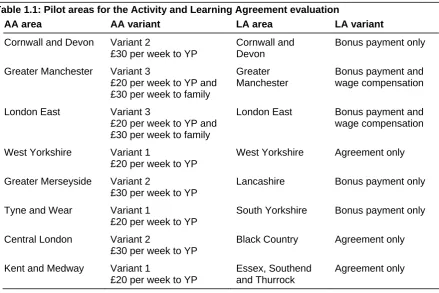
The 2005 Budget announced the piloting of two new initiatives aimed at extending participation in education and training among young people who were not in education, employment or training (NEET) and young people who were in jobs without training (JWT). Sixty million pounds was allocated over two years to Activity Agreement (AA) Pilot to support and encourage disengaged 16-17 year olds back into learning. In addition, £80m over two years was allocated to Learning Agreement Pilots (LAP) for 16-17 year olds in work with no training to increase access to training options for this group. Activity Agreements and Learning Agreements were piloted in 12 areas of England from April 2006 for a two-year period. Young people (and in some areas, parents) were offered a weekly allowance in return for agreeing to a plan and completing activities to integrate them back into learning. In some pilot areas, young people received bonus payments in recognition of their
achievements, and financial incentives were paid to employers in some LAP areas. A number of variants of AAs and LAP were piloted, with a view to identifying the most successful models. Table 1.1 sets out the pilot areas and the variants which were piloted.
The Department for Children, Schools and Families (DCSF), formerly the Department for Education and Skills (DfES), commissioned the Institute for Employment Studies (IES), the Centre for Education and Industry (CEI) and the National Centre for Social Research (NatCen) to undertake the evaluation of the Activity and Learning Agreement Pilots. The evaluation comprised three strands:
■ a summative evaluation, which involved the collection of quantitative data in pilot areas and a number of control areas, in order to measure the effectiveness of the pilots
■ a process evaluation, which explored the local implementation and delivery of the pilots in each area
Table 1.1: Pilot areas for the Activity and Learning Agreement evaluation
AA area AA variant LA area LA variant
Cornwall and Devon Variant 2
£30 per week to YP
Cornwall and Devon
Bonus payment only
Greater Manchester Variant 3
£20 per week to YP and £30 per week to family
Greater Manchester
Bonus payment and wage compensation
London East Variant 3
£20 per week to YP and £30 per week to family
London East Bonus payment and
wage compensation
West Yorkshire Variant 1
£20 per week to YP
West Yorkshire Agreement only
Greater Merseyside Variant 2
£30 per week to YP
Lancashire Bonus payment only
Tyne and Wear Variant 1
£20 per week to YP
South Yorkshire Bonus payment only
Central London Variant 2
£30 per week to YP
Black Country Agreement only
Kent and Medway Variant 1
£20 per week to YP
Essex, Southend and Thurrock
Agreement only
Source: IES / CEI Research Team
1.1 Learning Agreement Pilot (LAP)
The Learning Agreement pilot was a joint initiative between Connexions and the local Learning and Skills Council in each pilot area. The initiative was targeted at young people aged 16-17 who were working but not engaged in any accredited training. A Learning Agreement, which outlined the accredited training that the young person was undertaking, was drawn up between a Connexions Personal Adviser, the young person and their employer. The Learning Agreement was aligned to the following principles, outlined in the Learning Agreement Delivery Specification (December 2005).
■ Personalised: agreed activities were tailored to the individual and took account of personal needs and abilities, determined by the profiling and assessment process undertaken by the young person with the Personal Adviser.
■ Participation: focused on encouraging and supporting the young person to participate in accredited training.
■ Flexibility: ensured, where possible, that learning provision was responsive and flexible to meet the needs of the young person and, where applicable, their employer.
The eligible learning provision comprised all qualifications listed which were included under Section 96 of LSC’s Learning Aims Database. This included qualifications accredited at Level 2 or above but not standalone NVQs. It contained:
■ Apprenticeships
■ Advanced Apprenticeships
■ BTEC and similar FE courses
■ GCSEs
■ A-levels.
The provision may have supported progression to Level 2, as long as the learning plan also addressed basic and / or key skills; including:
■ NVQ 1
■ Technical Certificates
■ Basic Skills (literacy and numeracy)
■ Short courses over ten guided learning hours (and on section 96).
Stand alone Key Skills qualifications, including wider skills and those which support the LSC’s Skills for Life Target, were also eligible.1
1.2 Extension to the Activity and Learning Agreements
A twelve month extended period of trialling the Activity and Learning Agreement Pilots, began in April 2008 and was accompanied by a number of changes to the delivery of both initiatives. These changes to local implementation were designed to increase take-up rates and develop approaches to support a raised participation age. The objectives of the pilots in the extension phase are to:
■ test the effectiveness of brokerage and Learning/Activity agreements as a tool for re-engaging young people now and within the context of a Raising the Participation Age (RPA), in particular in relation to those dropping out of learning
■ maximise the number of young people in JWT engaging with learning either with their employer or independently
■ monitor and understand how the extension is managed and implemented in different areas and to highlight good practice and any problems in the process with a view to inform the current NEET/JWT situation and RPA
■ understand what works (or does not work ) within the extension: to understand how young people respond to agreements and brokerage and to understand for whom, in what circumstances, and in what respect the intervention has worked for the ‘stock’ of NEET and JWT and to inform how the approach would work under RPA.
1
From April 2008, within the Learning Agreement pilot areas, the existing variants were retained, apart from in areas, which had operated a wage compensation model. A wage compensation model was no longer available to employers/young people recruited to the programme.
1.3 The Report
This report focuses on the presentation of findings from the three stages of the process evaluation, which constitutes the final report on the LAP from this strand of the evaluation (see Maguire et al., 2008, for a review of the first year findings from the evaluation). The implementation and administrative mechanisms through which the pilots were introduced were examined, with particular emphasis on the perceptions of those responsible for the pilots’ local management. The views of those involved in the delivery of the pilots about their perceived relevance and impact and how they have been received in each locality, was also collected. In addition, two rounds of interviews were completed with a sample of employers in six pilot areas.
2 Methodology
The aim of the process evaluation was to understand the local implementation of the pilots, map the context in which the initiatives were being piloted and highlight good practice. The process evaluation had three strands:
■ data collection on the local implementation and delivery of the pilots
■ the collation of contextual information
■ employer research.
2.1 Data collection on the local implementation and delivery of the pilots
Data collection for the process evaluation primarily involved visiting the pilot areas three times during the course of evaluation. Findings from the three visits to the pilot areas are presented in this report.
2.1.1 Initial visits
Initial visits were made to all pilot areas in May/June 2006 and interviews were conducted with local project managers. Early visits to the Activity and Learning Agreement pilot areas enabled evidence to be collected on the initial implementation of the initiative(s), take-up rates and any reported ‘teething problems’. A total of twenty face-to-face interviews were conducted with LAP project managers and LSC. The majority of interviews were tape recorded with the permission of respondents and transcribed verbatim for subsequent analysis. Findings based on an analysis of the data generated from initial discussions with project managers are presented here. Individual area profiles were drafted, in consultation with local project managers, and updated at the end of second round visits. For most areas, additional information was gained from copies of local delivery plans, and publicity and administrative materials.
2.1.2 Second round visits
A second round of visits to the pilot areas, to interview project managers and a range of other local stakeholders, took place during the latter part of 2006 and early in 2007. In all pilot areas (both AA and LAP), a roundtable discussion was held with project managers and local delivery staff and a maximum of eight face-to-face interviews were conducted with a range of stakeholders, including education and training providers and representatives from Jobcentre Plus and the Local Learning and Skills Council (LSC). In order to provide a better
understanding of local implementation models, the number of interviews with representatives from key organisations was extended in six pilot areas.
Most notably, there was an emphasis on expanding fieldwork in pilot areas that
encompassed large geographical areas, those that covered a number of local authority areas, those which were delivering both pilots and those where separate management and delivery arrangements were in place to implement each policy initiative. Fieldwork was extended in the following pilot areas:
■ Greater Manchester, which includes ten local authority areas and was delivering both the Activity Agreement (AA) Pilot and the Learning Agreement Pilot (LAP).
■ London East, which is a large urban area (ten local authorities) and is delivered both the AAP and the LAP.
■ Cornwall and Devon, which is a large rural area and delivered both AAs and the LAP.
■ Greater Merseyside, which is a large urban area (six local authorities) and delivered AAs.
■ Kent and Medway, which is an urban/rural area and had 11 access points to AAs across the area.
A range of data-gathering techniques, which were tailored to the particular requirements of each pilot area, were used. These included:
■ in-depth face-to-face interviews (maximum of three) / telephone interviews (maximum of six) with representatives from key organisations, such as the local LSC, education and training providers and employer organisations
■ scrutiny and analysis of reports and documents (eg publicity material, Learning Agreements)
■ when appropriate, observation of procedures and practices, such as meetings between Personal Advisers (PAs) and young people to discuss Learning Agreements, payment issues etc.
This resulted in an additional nine interviews being conducted in each of the six pilot areas which have been identified as requiring additional fieldwork. During the second round visits to LAP pilot areas, a total of 155 respondents were interviewed and this constituted the largest fieldwork phase.
2.1.3 Third round visits
A final round of interviews with project managers and the second phase of the extended programme of fieldwork in six pilot areas was conducted at the end of 2007/early 2008. A total of 60 interviews were also conducted in LAP areas, which excluded the employer sample), during the third round visits to LAP areas.
Roundtable discussions and face-to-face interviews with project managers and other key staff were tape recorded (with respondents’ permission), and were either transcribed verbatim or written up by the interviewer for subsequent analysis.
2.1.4 Employer research
A sample of employers was interviewed to examine their experience of, and views on, their involvement in the Learning Agreement Pilots. Interviews with employers involved in the pilot were carried out during the second and third round visits to pilot areas but for the purpose of this section we refer to wave 1 and wave 2 interviews with employers:
■ 28 wave 1 interviews took place between January and March2007
■ 36 wave 2 interviews took place between November and February 2008.
Additionally, five interviews took place with employers not involved in the pilot.
In the wave 1 interviews, most of the employers that were interviewed were fairly small businesses, often family-run, with little or no experience of formal training or government supported training, from a wide range of sectors. In many cases, the businesses consisted of just two family members (usually father and son) with over two-thirds of all employers
interviewed employing 25 or fewer people. Only four employers had more than 50 employees.
3 Management of the Learning Agreement Pilots (LAP)
Key findings
■ The introduction of LAP enabled Connexions and local LSCs to work together to develop strategies to support the needs of young people in the JWT category. Links have been strengthened between the two agencies during the course of the pilot.
■ Project managers played a key role in local implementation, in terms of establishing and maintaining co-management roles with their counterparts within the local LSC, as well as taking strategic responsibility for the local implementation and delivery of the initiative.
■ The task facing project managers was more complex in pilot areas which comprised large numbers of local authority areas and required the need to set up multiple sets of
contractual and management areas. In addition, achieving consistency in terms of management and delivery arrangements was more difficult to achieve. This is a key message, which should be reviewed in the event of national roll-out of the LAP and the piloting of future initiatives.
■ The implementation of the initiative was also hampered by organisational change, which occurred within both Connexions and local LSCs and which adversely affected staff recruitment and retention to the pilot.
■ During the second year of the pilot, national guidance had become more consistent and stable and, consequently, operational staff at local level were more confident about the LAP ‘offer’ and how to promote it.
■ Connexions LAP advisers required a different ‘skill set’ from mainstream operational staff, including the ability to work effectively with both employers and young people and the confidence to ‘sell’ the package to both client groups.
■ All areas reported that there had been a shortfall in operational staff recruitment. The delay in notifying pilot areas about the decision to extend the pilot for a further year had led to some staff on fixed term contracts finding alternative employment.
■ Provider consortia arrangements had taken a long time to establish and made the setting up and delivery of provision cumbersome and over-bureaucratic. There were mixed views about the effectiveness of the consortia approach, although valuable lessons, which should inform any future roll-out of the initiative, have been learnt.
■ From the providers’ perspective, referrals for LAP training had increased during the second year of the pilot and the providers’ sample was more positive about, and more engaged with the initiative.
3.1 Introduction
This chapter sets out the context in which the Learning Agreement Pilots (LAP) were delivered, as well as establishing the ways in which the pilot areas set about managing the initiative. It also explores the extent to which partnership working assisted local management of the pilots.
3.1.1 Background
The Learning Agreement pilots were perceived to have offered Connexions Partnerships / Services the incentive to become more involved with young people who had entered jobs without training (JWT) and who, in recent years, had not been a strategic priority. Joint delivery responsibility for the LAP also demanded that Connexions and local Learning and Skills Council (LSC) staff work together to manage the implementation of the initiative. In some cases, this was a new venture. During the course of the pilot, stronger links were established between the two agencies. In addition, the LAP had enabled Connexions Services to work more closely with training providers, since the implementation of the pilot required Connexions staff to become more involved in the management and delivery of training provision.
It was widely acknowledged that considerable movement or ‘churning’ took place among young people in the NEET and JWT groups. This was largely attributed to the nature and content of the employment available to young people in JWT and to the low level of aspirations often found among young people in the NEET group. The delivery of LAP heightened awareness of the strong inter-relationship between local NEET strategies and local economic development.
3.2 Management delivery models
This section explores the approaches to design and delivery of the LAP, in particular the joint delivery of the initiative by Connexions and local LSC management.
3.2.1 Delivery plans
LAP delivery plans were drawn up jointly by Connexions and LSC senior management staff. They included proposals to deliver the pilot based on estimated population sizes, which had been calculated at national level. In consultation with national LSC and DCSF, substantial changes had been made to delivery plans. Population sizes had been over-estimated and delivery targets had to be more closely aligned to local estimates of the number of young people in JWT, which, in all cases, was significantly lower than national calculations. Throughout the two-year pilot phase, staffing figures had been re-profiled downwards in response to reduced population sizes and to lower than anticipated take-up of LAP.
3.2.2 Local project managers
Project managers were appointed to develop the initiatives in all pilot areas. In two pilot areas, one project manager oversaw the development of both the LAP and AAs. The role of project managers within Connexions Partnerships was to take strategic responsibility for the local implementation and delivery of the initiative, including the development and
management of systems relating to IT and MI, as well as budgeting, marketing and staffing. In addition, LAP project managers had responsibility for establishing and maintaining co-management roles with their counterparts within the local LSC. There was very low staff turnover amongst staff at project management level.
systems was directly linked to the network of local authority areas which co-existed in the locality. In many cases, pilot areas comprised a large number of local authority areas, each of which had separate procedures in place with regard to the Connexions management and delivery. If LAP is to be rolled out nationally, it will be important to establish contractual arrangements which ensure that a consistent level of support is secured across all local authority areas, ie Children’s Trusts.
There was evidence to suggest that consistency was sometimes difficult to achieve within pilot areas where some Connexions Services were under local authority control, while others, in the same pilot area, had not completed their integration into local authorities. The delivery of LAP rested primarily on partnership working agreements, as opposed to service level agreements, which made any degree of enforcement more difficult to apply. In addition, in some pilot areas, project managers oversaw the delivery of the LAP across multiple local authority areas. This made the implementation of the initiative more complex, in terms of achieving coherence of delivery arrangements.
In all pilot areas, local steering groups or pilot boards were established at the early stages of the pilot and had, in most cases, continued to meet on a regular basis. They comprised representatives from local stakeholder groups, including education and training providers, sector skills councils, regional and local government offices, employer and voluntary groups and, in some cases, young people. In addition, project managers had regular meetings with local delivery managers and operational staff. In one pilot area, there was a joint steering group for LAP and AAs.
3.2.3 Joint delivery
Joint ownership over the design and implementation of the initiative had required closer working links between local LSC and Connexions staff, which led to enhanced working relationships between the two agencies over the two-year period. In a small number of cases, collaborative links were already well established between the two organisations prior to the introduction of the pilot. In some areas, posts were co-funded by the LSC and
3.2.4 Support at national level
There was widespread criticism in the first year of the pilot of the many changes to, and versions of, Guidance Notes that had been issued at national level. It was widely asserted that information received from national offices had been inconsistent.This had created confusion about the LAP offer at the local level, with regard to young people’s qualification entitlement within the programme and its relationship to other government supported training provision, most notably Apprenticeships. The lack of definitive guidance was reported, by local management and operational staff, to have hampered the development of the pilot.1 However, final round visits to the pilot areas found evidence that national guidance had become more consistent and stable and, consequently, operational staff at local level were more confident about the LAP ‘offer’ and how to promote it.
3.2.5 The impact of organisational change
The implementation of the initiatives had coincided with a programme of structural re-organisation for national and local LSCs and within Connexions Partnerships. Local LSC structures had shifted towards a regional agenda, which had resulted in staff levels, roles and responsibilities being changed. The impact of local LSC re-organisation on the delivery of the LAP had been that, in some LSC areas, insufficient numbers of staff were in post to manage and deliver the initiative at the early stages of the pilot, and the staff who were in post were often over-stretched.
Connexions Partnerships / Services were also facing structural change over a two-year period. In each local authority, Children’s Trusts had been set up and the funding that goes directly to 47 Connexions Partnerships had been transferred to 150 local authorities. In parts of some pilot areas, this process had already taken place, while in other areas, all services moved within local authority control by April 2008. This led to some changes in the way in which the LAP was managed. For example, in one pilot area, when the Connexions partnership ceased to exist, the LAP contract was delivered by a private company, which found that it could no longer have open access to local Connexions offices, nor to their IT support services, once the Connexions function resided within individual local authority control.
3.3 Staffing structures
Project managers had teams of local managers who line managed operational staff. There were two types of management structure in place:
Type A - Local Area Autonomy
In pilot areas which comprised a small number of local authority areas, project managers tended to have had a direct involvement in staff recruitment and operated centralised control over the delivery of the pilot. In this model, while local managers were responsible for the day-to-day management of operational staff, there was centralised management and standardised delivery of the initiative across the pilot area.
1
Type B - Central Management
In pilot areas which were made up of a greater number of local authorities, a devolved management structure was in place. While local managers reported to their project manager, they held responsibility for the recruitment of operational staff, and significant variation existed between local areas in the ways in which the pilot was delivered. Third round visits found evidence of re-structuring within local management and delivery arrangements. In two areas, two or more local authority areas had been clustered together and were managed by a divisional manager, who reported directly to the project manager.
Significant delays with staff recruitment were reported in many pilot areas during first and second round visits. Where recruitment was managed within local authority areas, delays were caused when job specifications and staff recruitment had to be routed through
centralised personnel departments, as opposed to being undertaken directly by Connexions Partnerships / Services. All areas reported that there had been a shortfall in operational staff recruitment, which was linked to a reduction in staffing needs due to the re-profiling of the eligible population and, in many cases, to problems associated with staff recruitment and retention. In particular, the delay in notifying pilot areas about the decision to extend the pilot for a further year had led to some staff on fixed term contracts finding alternative employment and had exacerbated staffing difficulties. In some areas, staffing levels were scheduled to increase as a result of the extension to the pilot.
Operational staff had been given a number of job titles, including those of Training Adviser, Learning Adviser, Brokers, Personal Adviser, Learning Development Adviser, Learning and Skills Broker, Keyworker and Training Pays Adviser. Within some pilot areas, different job titles existed between local authority areas.
3.3.1 Operational skill needs
The role of ‘LAP adviser’ was very different to that of the generic Personal Adviser (PA) operating within mainstream Connexions Services. PAs focused on working with young people and had received generic training to recognise and empathise with their personal needs. However, the delivery of LAP required a different set of skills, which included ‘selling’ the concept of LAP to both young people and employers, and many areas had initially struggled to recruit staff who could effectively work with both client groups. As a
consequence, in some areas where LAP staff were employed or redeployed from existing Connexions personnel, problems were reported in relation to their ability and confidence in working with employers and, to a lesser extent, in having the diagnostic skills to identify the learning and training needs of young people in the labour market.
Staff recruitment had been more successful and sustained in areas where managers had employed staff from a wider range of backgrounds - in particular, staff with backgrounds in training and development and/or who had experience of promoting employment and training initiatives to employers and young people. In one pilot area, staff seconded from Jobcentre Plus were effective in using their customer care and employer engagement skills in
promoting LAP.
The need for a different skill set among LAP advisers, ie ‘selling’ skills and the ability to work effectively with both employers and young people, is a key lesson learnt from the delivery of the pilot and will need to be acted upon in a national delivery model if the pilot is rolled out.
Two teams operated in some pilot areas - one concentrating on employer engagement, and the other working with young people.
‘It’s proved to be a really good mix. Because each are bringing in a particular set of skills and knowledge to share with the other and it has, I’m sure that’s contributed a lot
to our improved performance over the last six months.’ Connexions local area
manager
During the course of the two-year pilot phase, it was apparent that Connexions staff had become more confident in both their work with employers and about the objectives of the pilot. In some areas, there concern was expressed about the degree to which LAP advisers were not integrated with mainstream Connexions staff. This was attributed to the following:
■ the temporary status of the LAP
■ the differences in terms of background and skills between PAs and LAP advisers, and
■ the lack of engagement of many Connexions staff with the local labour market and training providers.
‘(LAP advisers) feel quite distant from what Connexions do on a day-to-day basis.’
Connexions local area manager
In some pilot areas, initiatives had been introduced to improve communications between LAP advisers and mainstream staff. These included organising communication workshops to help devise strategies to improve links with PAs working in schools and in outreach locations. In another area, monthly meetings had been set up between LAP advisers and school based PAs, to share information about caseloads and to help promote referrals between different groups of advisers.
3.3.2 Caseload targets
Lessons learnt in the first year of the pilot, in terms of gathering a more realistic
understanding about the scale of the eligible population, the nature of their employment and the capacity of learning and training providers to match expectations, led to a reduction in the targets set for operational staff. Staff morale had been adversely affected when it had
become apparent in the early stages of delivery that significant volumes of inaccurate data had been stored (since young people in JWT had not previously been a priority group), as well as by the amount of time it had taken to make contact with young people.
3.3.3 Location
The majority of LAP advisers were located in Connexions Offices. In some cases, LAP teams were organised either on a geographical basis or in terms of responsibility for young people working in specified occupational groupings. Some LAP advisers were
■ located in a range of education and training providers’ premises (including Train to Gain)
■ based in a range of premises, such as voluntary organisations and partnership
organisations which had agreed to act as host sites in each of the local authority areas.
In one pilot area, responsibility for LAP recruitment was subcontracted to a range of
education and training providers, with the aim of encouraging greater take-up of LAP using their employer links and their contact with young people leaving education and training provision. In this model, delivery staff responsible for LAP recruitment were employed by education and training providers.
3.3.4 Contracting with training providers
Local LSCs had set about contracting with local training providers in a number of different ways. In some areas, an invitation to tender for LAP provision had been issued to all learning and training providers and contracts had been re-negotiated on an annual basis. In other areas, there had been a focus on contracting provision within specific skills sectors where there was a concentration of young people in jobs without training and/or in allocated ‘travel to learn’ areas. At the early stages of the pilot, there were delays in the procurement of LAP provision in all pilot areas. These were attributed to the restructuring which was occurring within LSC, as this had impacted on staffing and, consequently, on the release of invitations to tender and contracts with local training providers. However, during the second year of the pilot, there was evidence that LAP contracting had ‘bedded down’ and was functioning well.
Consortia delivery
In four pilot areas, provision was contracted through consortia arrangements, in which the local LSC devolved responsibility for the management and delivery of LAP provision to a group of training providers. For example, in one pilot area, the tender specification for LAP provision stipulated that, within each local authority, there was a requirement for a consortia bid, which included representation from three out of the four key provider types, ie a college, a local authority, a voluntary/community organisation and a private training provider. In addition, it was a requirement that at least one member of the consortium had some experience of delivering Entry to Learning (E2E) provision. E2E is designed to help young people to develop their motivation and confidence, personal effectiveness and basic and key skills, and to give them a range of opportunities to gain vocational knowledge, skills and understanding. The aim is that young people will progress into an Apprenticeship, further learning and / or a job.Each consortium had a partnership lead organisation. While it was hoped that this approach would ensure a breadth of experience to deliver flexible provision to meet the needs of young people who are in jobs without training, consortia arrangements had further protracted contracting arrangements because of the time it had taken for some education and training providers to form partnerships. Delays were also attributed to the LSC’s move towards a competitive procurement process. In one pilot area, it had taken 11 months from the start of the pilot to operationalise a consortium approach to the supply of LAP provision. In addition, some LAP advisers felt constrained by consortia arrangements, particularly when provision needs could not be fulfilled within the consortium.
The consortium model worked well when:
■ there was a strong lead provider who had effective communication with other partners, and who was committed to the initiative, as well as having the ability to influence other providers
■ there was a good relationship between the providers involved
■ the consortia included a representation from all key training providers in the area ie colleges (large and small), voluntary sector organisations and private training providers, which can offer a breadth of provision and can be delivered flexibly
■ the consortia had forged positive links with other local stakeholders, most notably the 14-19 Partnership and Connexions.
Crucially, it was widely asserted that the key to harnessing effective consortia arrangements for training delivery also rested on having ‘the right person in charge’.
It’s the right person and the right partnership structure……so that people see that their interest is in the partnership area and not in their own individual kind of financial and
promotional drive, or whatever.’ Project manager
From an LSC perspective, it was suggested that the lessons learnt with regard to contracting to deliver a consortia approach included the need for future specifications to be tighter, and, in particular, to provide evidence of:
■ a clear structure
■ a defined brokerage role
■ the role of the lead provider
■ the roles and responsibilities of individual providers
■ time lines for delivery.
3.4 Management of LAP: the providers’ perspective
Second and third round visits to the pilot areas included a number of interviews with education and training providers, which delivered LAP training. At the end of the first year, frustration was expressed at the lack of referrals that had materialised through LAP. Many respondents, in particular among representatives from consortia-lead organisations, felt that an enormous amount of time had been spent preparing bids and setting up consortia, which had, in the majority of cases, resulted in marginal delivery of LAP provision.
There was also some concern among providers that were operating outside of local consortia arrangements about a lack of referrals, which was attributed to requests for training not being passed beyond consortia members. In some areas, providers would also have welcomed more engagement with employers and in setting up initial Learning Agreements with young people, as opposed to being solely involved in training delivery to young people.
‘I think we could get more involved in setting the milestones, because really, the
Learning Agreement is all agreed before we get involved.’ Private training provider
3.5 Links with other stakeholders and employers
The implementation of LAP has enabled Connexions staff and, to a lesser extent, LSC staff, to strengthen their links with local stakeholders, most notably local authorities, Business Links, local Chambers of Commerce, Train to Gain and other training brokers. In addition, it enabled closer links with many national and local employers to be established.
A lower than expected number of referrals to LAP were received from Business Links, local Chambers of Commerce, Train to Gain and other training brokers, despite initial hopes that these agencies would offer a route into the local labour market and, more specifically, to employers which employ young people in JWT. In some areas, local referral systems included a fixed payment for each employer contact. The shift of responsibility for Connexions to local authority control had sometimes brought with it the need for project managers to raise awareness among local authority managers of the existence of LAP, as well as the roles and responsibilities of LAP delivery staff. In addition, in some areas, the shift in responsibility for Connexions had enabled project and local managers to identify that local authorities could be doing more to employ young people, especially through the
Apprenticeship route.
One of the greatest challenges facing LAP delivery was employer engagement. Two specific issues were raised in relation to this issue. Firstly, since LAP was a pilot initiative and
operated in a small number of areas, there were on-going issues related to securing the inclusion of national employers, in particular, national retailers and fast food chains. While some areas had negotiated the cooperation of local managers of national companies in LAP delivery, many local managers would not engage with LAP, since agreement had not been secured at national level. While there were ‘pockets of success’ with national companies, it was suggested that stronger links need to be established with the National Employers’ Service. One pilot area was planning to appoint a National Employers’ Coordinator to develop a database and to develop closer links with large companies working in the local area.
Secondly, securing the engagement of employers which employ young people in JWT, many of whom had rejected any engagement with other training incentives and/or attached any real value to training young people, was an on-going issue. While significant progress had been made in many areas, most respondents concluded that they still had a long way to go in terms of persuading employers who did not see any value training, to participate in LAP.
‘I do agree that the employers are difficult, especially our harder to reach employers that don’t train with the lower skill jobs. They are very, very difficult, and how we are ever going to convince them, you know, someone just picking and packing in a
warehouse, you know, needs skills.’ LSC representative
‘In terms of employer engagement, I think it’s a really valid project, but it’s extremely challenging because - particularly for the SME, the type of employers that we’re targeting - because of their issues in terms of releasing young people during work
3.6 Management information requirements
‘MI has been a pain since day one of the pilot. It’s on every meeting, every agenda.’
LAPproject manager
Most project managers reported that MI requirements had been difficult to manage and time-consuming throughout the life of the pilot. On-going changes to data requirements at national level had meant that ‘add-ons’ had to be incorporated into the CCIS system, which made data delivery onerous and cumbersome. In addition, it was reported that many LAP advisers were not familiar with the operation of the CCIS system, and this had also impeded MI delivery. It was widely felt that LSC at national level had not fully appraised their own data needs or understood the parameters of Connexions data systems. Consequently, the on-going changes to data requirements had become a source of deep frustration at local level. It was also reported that the MI system was further complicated by both Connexions and local LSC providing monthly reports. While Connexions submitted the majority data return, the LSC return had a different set of rules and regulations attached to it.
There was a consensus among respondents, about the demand for a clear definition of data requirements at national level, as well as some feedback on why certain types of data were needed. This would ensure that data were recorded in a consistent way across all pilot areas, thereby enabling performance between areas to be measured in an accurate way. For example, confusion and inconsistency had arisen over definitions of a ‘sign up’, the 16 hour rule and employer engagement.
4 Delivery of the Learning Agreement Pilots (LAP)
Key findings
■ While there was confusion among delivery staff in the early stages of the pilot about the LAP ‘product’, operational staff were confident about the implementation of LAP in the second year of the pilot.
■ The CCIS database was widely used to identify the eligible population in the JWT
category, although it had exposed inaccuracies in the data stored. A key lesson from the LAP pilot was that infrequent tracking of young people in JWT had resulted in a lack of updated information about the JWT group and their employers.
■ Direct contact with young people and, to a lesser extent, their employers, was the primary recruitment strategy to LAP.
■ While most pilot areas had held discussions and/or set up agreements with Train to Gain brokers, Business Link advisers and representatives from local Chambers of Commerce, a small number of referrals had been received from these organisations.
■ Marketing and promotion materials and events supported direct engagement activities with young people and employers. However, any future planning for the potential roll-out of the initiative may wish to review the likely added value for take-up rates of high
expenditure on marketing and publicity strategies and materials.
■ Take-up rates were highest in pilot areas where provision was established prior to young people’s entry to LAP, in particular with regard to the delivery of key skills and Technical Certificate programmes. There were mixed views about the value of this approach. On the one hand, focusing on personal transferable skills equipped young people with the
foundations to progress into Apprenticeship training by enabling them to receive bite-sized chunks of a full framework agreement; it also brought throughput to LAP, in terms of numbers and completions and was fairly straightforward to deliver. On the other hand, there was concern about the extent to which this approach was really learner-led, as opposed to provider-led, and whether these programmes were what young people or employers really wanted and would offer all groups of young people routes back into learning.
■ Most areas had identified that private training providers could be more flexible than colleges, with regard to the delivery of LAP provision, because they tended to be smaller organisations, focused on work based training delivery and were not working primarily within the confines of an academic year timetable for delivery.
■ While the piloting of LAP had provided some opportunity to instigate a limited degree of change to the scope and delivery of provision to young people in work, there had been no significant changes to training providers’ behaviour. This was attributed to:
□ LAP numbers, and hence associated funding, being too small to warrant change among providers; and
4.1 Introduction
This chapter reviews the issues that emerged during the evaluation team’s three visits to the pilot areas, in relation to the delivery of the LAP. In particular, it focuses on marketing and brokerage of the LAP, application and payment processes and identifying and procuring LAP provision.
4.2 Marketing and brokerage
Marketing and publicity of LAP targeted at young people was largely driven by Connexions, since they were the main budget holders for this area of implementation. Pilot areas had been very active in identifying target populations, raising awareness and informing potential applicants about the existence of the provision. Direct contact with young people and, to a lesser extent, their employers, was the primary recruitment strategy. During the course of the pilot, expertise has been developed in recognising the times in an annual cycle when
marketing should be targeted at young people (ie over the Summer / Autumn months when school leavers are entering the labour market) and other periods of the year when more attention should be directed at the employer route. Direct contact was supported by an array of marketing and publicity materials and events, in order to raise awareness of the initiative and to stimulate self-referrals.
4.2.1 Direct contact with young people
The main tool used within Connexions services to identify the target population of young people was the CCIS database, which stored destinations data on young people. The first year operation of the pilot exposed severe problems with regard to the reliability and accuracy of CCIS data on the JWT group. Since young people in JWT had not previously been a priority group for Connexions, in terms of conducting regular follow-ups of their status following the completion of compulsory education, the data stored on the JWT group was often out of date when young people were contacted about joining LAP. The use of CCIS data to market LAP to young people exposed a need for ongoing, rather than one-off, follow-up for all grofollow-ups of young people, not only those who were defined as NEET.
During the first year of the pilot, there was widespread frustration felt by LAP advisers with regard to the slow progress that had been made in identifying the eligible population and in encouraging young people, as well their employer, to sign up to LAP. They often made multiple telephone calls to young people before some contact could be established and evening and weekend working was required in order to maximise the chances of young people being available. It was found that a substantial number of young people who were reported to have been eligible for LAP had either changed their destination status, most frequently by becoming NEET, or were unable to be contacted.
into employment. A limited number of referrals were achieved through ‘word of mouth’ recommendations, and a payment/gift voucher was being offered in some areas to young people who had successfully referred a friend to the programme.
‘We’ve tried radio advertising, we’ve tried press advertising, we’ve done all sorts really but to be quite honest for us, nothing has worked better than picking up the ‘phone to those young people and saying ‘We believe that you are in work. Would you be
interested in this?’ Connexions local manager
The most effective engagement tool was the day-to-day work of LAP Advisers contacting and working with young people and their employers to explain the initiative and to promote the importance of training.
It was suggested by one Project manager that the accuracy of data on the JWT group could be improved by the reactivating of a statutory instrument called F2404, which required employers to notify Connexions if they employed a 16/17- year old school leaver.
4.2.2 The employer route
The employer route into securing sign ups to LAP had generated a lower than expected response to the initiative. While most pilot areas had held discussions and or set up agreements with Train to Gain brokers, Business Link advisers and representatives from local Chambers of Commerce, there was disappointment at the small number of referrals that had been received. This was attributed to LAP being a pilot initiative and to 16-18 year olds not being a key part of their targets within their overall business strategies.
In some pilot areas, concern was expressed about the lack of co-ordination with regard to contacting and working with employers. In some cases, LAP advisers, Train to Gain Brokers, LSC staff and representatives from LAP training providers retained some responsibility for local employer liaison. There was a r