Open Access
Research article
Does vancomycin prescribing intervention affect
vancomycin-resistant enterococcus infection and colonization in
hospitals? A systematic review
Monique A de Bruin*
1and Lee W Riley
2Address: 1Department of Medicine, Stanford University School of Medicine, Medicine Residency Office S101 (m/c 5109), Stanford, CA 94305,
USA and 2Divisions of Infectious Diseases and Epidemiology, School of Public Health, University of California, Berkeley 140 Warren Hall,
Berkeley, CA, 94720, USA
Email: Monique A de Bruin* - [email protected]; Lee W Riley - [email protected] * Corresponding author
Abstract
Background: Vancomycin resistant enterococcus (VRE) is a major cause of nosocomial infections in the United States and may be associated with greater morbidity, mortality, and healthcare costs than vancomycin-susceptible enterococcus. Current guidelines for the control of VRE include prudent use of vancomycin. While vancomycin exposure appears to be a risk factor for VRE acquisition in individual patients, the effect of vancomycin usage at the population level is not known. We conducted a systematic review to determine the impact of reducing vancomycin use through prescribing interventions on the prevalence and incidence of VRE colonization and infection in hospitals within the United States.
Methods: To identify relevant studies, we searched three electronic databases, and hand searched selected journals. Thirteen studies from 12 articles met our inclusion criteria. Data were extracted and summarized for study setting, design, patient characteristics, types of intervention(s), and outcome measures. The relative risk, 95% confidence interval, and p-value associated with change in VRE acquisition pre- and post-vancomycin prescription interventions were calculated and compared. Heterogeneity in study results was formally explored by stratified analysis.
Results: No randomized clinical trials on this topic were found. Each of the 13 included studies used a quasi-experimental design of low hierarchy. Seven of the 13 studies reported statistically significant reductions in VRE acquisition following interventions, three studies reported no significant change, and three studies reported increases in VRE acquisition, one of which reported statistical significance. Results ranged from a reduction of 82.5% to an increase of 475%. Studies of specific wards, which included sicker patients, were more likely to report positive results than studies of an entire hospital including general inpatients (Fisher's exact test 0.029). The type of intervention, endemicity status, type of study design, and the duration of intervention were not found to significantly modify the results. Among the six studies that implemented vancomycin reduction strategies as the sole intervention, two of six (33%) found a significant reduction in VRE colonization and/or infection. In contrast, among studies implementing additional VRE control measures, five of seven (71%) reported a significant reduction.
Conclusion: It was not possible to conclusively determine a potential role for vancomycin usage reductions in controlling VRE colonization and infection in hospitals in the United States. The effectiveness of such interventions and their sustainability remains poorly defined because of the heterogeneity and quality of studies. Future research using high-quality study designs and implementing vancomycin as the sole intervention are needed to answer this question.
Published: 10 April 2007
BMC Infectious Diseases 2007, 7:24 doi:10.1186/1471-2334-7-24
Received: 19 July 2006 Accepted: 10 April 2007
This article is available from: http://www.biomedcentral.com/1471-2334/7/24
© 2007 de Bruin and Riley; licensee BioMed Central Ltd.
Background
Since emerging 20 years ago [1], vancomycin-resistant enterococcus (VRE) has spread throughout the world to become a major cause of nosocomial infections. Ameri-can hospitals have experienced a particularly dramatic increase in the occurrence of VRE colonization and infec-tion [2]. According to the Center for Disease Control and Prevention (CDC), the percentage of enterococcal isolates resistant to vancomycin reported by United States (US) hospitals increased from 0.3% in 1989 to over 25% of all isolates in 1999 [2]. Data from the 2004 National Noso-comial Infection Survey indicated that VRE caused approximately one third of infections in intensive care units (ICUs).
The reported increases in VRE colonization and infection among hospitalized patients are of concern for several rea-sons. Infections due to VRE may be associated with greater morbidity, mortality, lengths of stay and hospital costs than those due to vancomycin-susceptible enterococci (VSE), independent of co-morbid conditions that may have led to infection [3,4]. Of note, this topic remains controversial as some investigators have reported a lack of association between VRE infections and increased mor-bidity and mortality [5-11].
The progression of VRE colonization and infection at an institution is often from sporadic cases to monoclonal outbreaks and then to polyclonal endemicity. Once estab-lished, endemicity is difficult to eradicate [12-14]. Due to the combination of intrinsic and acquired resistance, treatment options for infections caused by VRE are extremely limited. Transfer of vancomycin resistance determinants to more virulent organisms is also of great concern, and intermediate and vancomycin-resistant Staphylococcus aureus have already emerged [15].
In 1995, as a response to rising rates of VRE colonization and infection, the CDC's Hospital Infection Control Prac-tices Advisory Committee (HICPAC) established guide-lines for control of VRE. These include prudent vancomycin use, as well as infection control measures to limit cross-contamination. Despite these recommenda-tions, the precise association between vancomycin use and VRE colonization and infection remains unclear. Sub-stantial research from animal models [1,16,17] and indi-vidual-level studies [18-20] has supported a role of vancomycin use in contributing to VRE acquisition. In a meta-analysis by Carmeli et al., among 15 individual-level studies using optimal control groups, vancomycin expo-sure conferred a 2.7-fold increased risk of VRE acquisition [21]. In addition to being a risk factor for VRE acquisition, vancomycin exposure may also increase VRE detection in patients already colonized, by eliminating other coloniz-ing bacteria and allowcoloniz-ing VRE to flourish [22].
There are conflicting data, however, that suggest that ante-cedent vancomycin exposure may not pose significant risk to individual patients [22-24]. In fact, a review by Har-barth et al. on antibiotic exposure and VRE concluded that intravenous vancomycin use may have a limited role in contributing to new VRE acquisition, while cepha-losporins and anti-anaerobic agents may have a greater effect.
Even less clear is the role of vancomycin restriction and control on clinically significant VRE acquisition at the population level. Data from the largest ecologic study to date showed that vancomycin was the most significant 'modifiable' risk factor leading to VRE colonization [25]. Yet results from studies investigating the impact of reduc-tions in vancomycin use on VRE colonization and infec-tion have been heterogeneous [20,26-36]. We conducted a systematic review of the available literature to evaluate the impact of reducing vancomycin use through vancomy-cin prescribing interventions on the prevalence and inci-dence of VRE colonization and infection in US hospitals.
Methods
Search strategy
We searched the following electronic databases: PubMed including Medline, as well as Web of Science, and the Cochrane Library. Searches were limited to studies pub-lished from 1987 (the year VRE was first reported in the US) to March 2006 (the date the search was conducted); searches were also limited to human subjects. The search terms included "Enterococcus," "Enterococcus faecalis," "Enterococcus faecium," "vancomycin," "antibiotic resist-ance," "antimicrobial resistresist-ance," "drug resistresist-ance," "pre-scribing," "guidelines," "restriction," "colonization," and "infection." All titles and abstracts (if available) from each of the searches were examined, with relevant articles being obtained for review. In articles with unclear relevance, full text versions were also scanned. Subsequently, reference lists of all identified reports, studies and reviews were screened to identify additional studies. Although we did not impose language restriction while searching, we included only English language articles in our review.
Selection criteria
minimum number of data points was imposed. Only published studies were included.
We excluded the following: studies outside of the United States (since the epidemiology of VRE is different else-where), animal studies, reviews, case reports and observa-tional studies. Also excluded were studies that did not observe a significant reduction in vancomycin use follow-ing an intervention aimed at dofollow-ing so since this was the intervention of interest. Finally, we excluded studies with a focus on antecedent vancomycin use as a risk factor for VRE acquisition in individual patients, as this review focused on population level associations. The review could not be limited to studies investigating the effect of vancomycin use reductions alone on VRE colonization and infection, as several studies simultaneously investi-gated other interventions, such as restriction of other anti-biotics and infection control measures. If a trial had multiple published reports, the latest reports, with the longest duration of follow up, were included. No studies were excluded based on quality criteria alone.
Data extraction and outcome measures
The final set of included articles was assessed by one reviewer (MAD), who extracted data from all studies. The reviewer was not blinded to the names of the authors, institutions, journal of publication or study results. Infor-mation was collected on the publication year, study period, setting, design, number of participants, selection and characteristics of participants, laboratory methods for determination of VRE infection status, characteristics and timing of interventions, duration of follow-up, timing and frequency of outcome measurements, and the report-ing of other possible confoundreport-ing variables.
The outcome measures of interest were extracted from each study. These included measurements of vancomycin use and prevalence or incidence of VRE acquisition before and after an intervention to reduce vancomycin usage, and the corresponding confidence intervals (95%) when provided. Data from the entire pre- and post-intervention periods, or as much as reported, were included. When sev-eral months or years of pre- and post-intervention data were reported separately, the data for each period was combined. For example, data reported as the incidence of cases in each individual month were combined to find the cases per day over all months in the time period, assuming 30 days per month. For studies in which an intervention took place during a certain month, the prior month(s) were included as pre-intervention and following month(s) as post-intervention, but the actual month of intervention was excluded from these periods.
Data analysis and statistical methods
Absolute and relative (percentage) changes in vancomy-cin use and VRE acquisition were calculated from pre- and post-intervention data. The relative risk (RR) of VRE colo-nization or infection in the intervention group compared with the control group was calculated by dividing the probability of VRE acquisition in the post-intervention period by the probability of VRE acquisition in the pre-intervention period. A RR below one represented a protec-tive effect of vancomycin reduction on VRE colonization or infection. When sufficient data were reported, the 95% confidence interval for the RR and the p-value were calcu-lated by EpiInfo StatCalc. Statistical significance was indi-cated by a p-value of less than 0.05. For studies reporting cases per unit of time without including the number of patients tested, it was assumed that the number of patients tested per unit of time was constant. When sam-ple size was reported in terms of the number of cultures over the entire study period, it was assumed that a con-stant number of cultures were obtained for each unit of time, in order to obtain the sample size for pre- and post-intervention periods, and thereby permit calculation of the confidence intervals for relative risk.
Studies were categorized according to the hierarchy of quasi-experimental study designs [37]. According to this classification scheme, category A studies do not use con-trol groups, while category B studies do. A1 studies use a group pretest-posttest design and A2 studies use a 1-group pretest-posttest design with a double pretest. We have chosen to denote A1 studies which use multiple posttest measurements as "A1*" and A2 studies using multiple posttest measurements as "A2†." In general, stud-ies using a control group are of higher quality than those without controls, and studies with multiple pretest and posttest measurements are preferable to those without such repeated measurements. For a more complete review on the subject, see bibliographical reference 36.
Because of the heterogeneity among study designs, popu-lations, interventions, and quality, a pooled summary estimate would not provide a meaningful estimate of effect; therefore, meta-analysis was not performed. Instead, a simple vote count was tabulated to determine the number of studies finding a significant decrease, increase or no change in prevalence or incidence of VRE colonization and/or infection. The range of point esti-mates for each category of studies was noted.
study population, 4) outbreak status of the institution or ward(s) under investigation, 5) type of quasi-experimen-tal design and 6) duration of intervention.
The proportion of studies in each stratum finding an increase, decrease and no change in VRE colonization and/or infection, and the range of point estimates within each stratum was noted. The quality of each study was assessed by informal methodological criteria, and possi-ble sources of bias were investigated. Discrepancies in study quality were examined as potential contributors to inter-study heterogeneity.
Results
Search results
Of the 2027 citations identified after literature searches, 12 were judged to meet our inclusion criteria and were included in this review [20,26-36]. All included studies presented pre- and post-intervention data, with the preva-lence or incidence of VRE colonization and/or infection compared before and after implementation of a vancomy-cin use reduction intervention at the institution or ward under investigation. No similar systematic reviews or ran-domized controlled trials were found.
Description of included studies
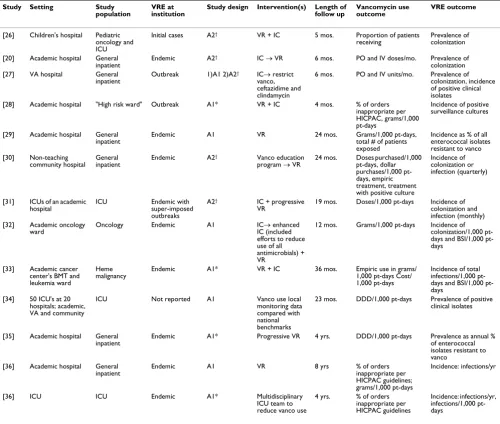
Table 1 describes the major characteristics of each study included in the review. A total of 12 articles describing 13 studies are included. The studies were published between 1992 and 2005. They were clustered around the lowest ranking designs of the classification of quasi-experimental studies proposed by Harris et al. [37] (Table 1). All studies lacked a control group and none removed and reintro-duced interventions. Eleven of 13 took place at a single teaching hospital [20,26-29,31-33,35,36], one was at a non-teaching community hospital [30] and one was a multi-center trial of both academic and community hos-pitals [34]. One study reported initial cases of VRE coloni-zation [26], two reported current outbreaks without an endemic problem [27,28], and one reported a superim-posed outbreak on an endemic problem with VRE infec-tions [31]. Aside from the multi-site study that did not specify outbreak status [34], the remaining studies described a VRE problem of several years duration [20,26,29,30,32,33,35,36]. No article provided explicit definitions for outbreak vs. endemicity, and classifica-tions may have varied. One study reporting an outbreak described it as lasting over four years [27]; it is possible that other studies may have considered this type of time frame to constitute endemicity.
Six studies implemented institution-wide interventions to a population of general inpatients [20,27,29,30,35,36], while seven performed ward-specific interventions including malignant hematology [33], oncology [26,32],
ICU [26,31,34,36] or "high-risk" [28] patients. For all studies, the comparison group consisted of patients in the same hospital or ward as the intervention group, but prior to the implementation of the intervention. Therefore, the two groups differed temporally. Few studies provided comparison of key features of the two groups, including type and severity of illness, length of stay, and other fea-tures known to affect the risk of VRE acquisition. The types of interventions, and the timing and sequence of imple-mentation varied widely. Six studies implemented vanco-mycin reduction efforts alone [29,30,34-36], five implemented vancomycin reduction efforts plus infection control [20,26,28,31,33], and the remaining studies used a combination of vancomycin reduction efforts, infection control efforts, and efforts to reduce the use of other classes of antibiotics [27,32,35]. All studies conducted during outbreaks [27,28,31] involved multiple interven-tions simultaneously, presumably due to the urgency of controlling the outbreak. Studies used several different measures and units for tracking changes in vancomycin use.
Measures of VRE included colonization and/or infection, with studies varying on which they used, whether they provided definitions for their measure(s), and if provided, which definitions they used. Two studies reported meas-uring colonization only [20,26]. One study reported measuring the percentage of VRE in surveillance cultures of high risk patients, and it is unclear whether this number represents colonization with or without infection [28]. Three studies reported the proportion of enterococcal iso-lates resistant to vancomycin among specimens ordered for clinical reasons [29,34,35], and the study by Morgan et al. states explicitly that this number represents both col-onization and infection [29]. Three studies reported colo-nization and infection separately [27,32,33]. All definitions of colonization were similar, defined as the proportion of surveillance cultures or proportion of a point prevalence survey that were VRE-positive. Three studies reported infections without providing definitions [30,36] and two stated using the CDC definition of infec-tion [32,33].
the number of new cases over time or patient-days. The duration of follow up ranged from four months to eight years, with a median duration of 23 months and a mean duration of 27 months. Little or no data were reported on the following characteristics of study participants: age, gender, or underlying illnesses including HIV.
Overall impact of vancomycin reductions on VRE acquisition
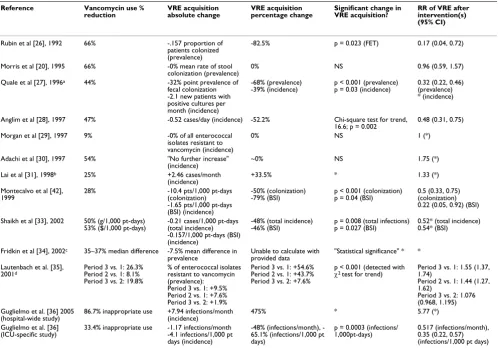
Table 2 describes the relative reduction in vancomycin use and changes in VRE acquisition for each of the studies. All articles, by definition of inclusion, reported a significant
reduction in vancomycin use. The study by Lai et al. [31] reports initial unsuccessful attempts to reduce vancomy-cin use, followed by vancomyvancomy-cin restriction efforts which were successful. Our analysis of this study includes only the portion in which vancomycin was restricted, during which time vancomycin usage was significantly reduced. The study by Lautenbach et al. [35] reports an initial sig-nificant reduction in vancomycin usage, but then usage returned to pre-intervention levels by the end of the study. In this case, we included only the initial period during which vancomycin use was significantly reduced, as the latter portion did not meet inclusion criteria. The
multi-Table 1: Characteristics of studies included in the systematic review
Study Setting Study
population
VRE at institution
Study design Intervention(s) Length of follow up
Vancomycin use outcome
VRE outcome
[26] Children's hospital Pediatric oncology and ICU
Initial cases A2† VR + IC 5 mos. Proportion of patients
receiving
Prevalence of colonization
[20] Academic hospital General
inpatient Endemic A2
† IC → VR 6 mos. PO and IV doses/mo. Prevalence of
colonization
[27] VA hospital General
inpatient Outbreak 1)A1 2)A2
† IC→ restrict
vanco, ceftazidime and clindamycin
6 mos. PO and IV units/mo. Prevalence of colonization, incidence of positive clinical isolates
[28] Academic hospital "High risk ward" Outbreak A1* VR + IC 4 mos. % of orders
inappropriate per HICPAC, grams/1,000 pt-days
Incidence of positive surveillance cultures
[29] Academic hospital General
inpatient Endemic A1 VR 24 mos. Grams/1,000 pt-days, total # of patients
exposed
Incidence as % of all enterococcal isolates resistant to vanco [30] Non-teaching
community hospital
General inpatient
Endemic A2† Vanco education
program → VR
24 mos. Doses purchased/1,000 pt-days, dollar purchases/1,000 pt-days, empiric treatment, treatment with positive culture
Incidence of colonization or infection (quarterly)
[31] ICUs of an academic hospital
ICU Endemic with
super-imposed outbreaks
A2† IC + progressive
VR
19 mos. Doses/1,000 pt-days Incidence of colonization and infection (monthly) [32] Academic oncology
ward Oncology Endemic A1 ICIC (included → enhanced
efforts to reduce use of all antimicrobials) + VR
12 mos. Grams/1,000 pt-days Incidence of colonization/1,000 days and BSI/1,000 pt-days
[33] Academic cancer center's BMT and leukemia ward
Heme
malignancy Endemic A1* VR + IC 36 mos. Empiric use in grams/1,000 pt-days Cost/
1,000 pt-days
Incidence of total infections/1,000 days and BSI/1,000 pt-days
[34] 50 ICU's at 20 hospitals; academic, VA and community
ICU Not reported A1 Vanco use local
monitoring data compared with national benchmarks
23 mos. DDD/1,000 pt-days Prevalence of positive clinical isolates
[35] Academic hospital General inpatient
Endemic A1* Progressive VR 4 yrs. DDD/1,000 pt-days Prevalence as annual %
of enterococcal isolates resistant to vanco
[36] Academic hospital General inpatient
Endemic A1 VR 8 yrs % of orders
inappropriate per HICPAC guidelines; grams/1,000 pt-days
Incidence: infections/yr
[36] ICU ICU Endemic A1* Multidisciplinary
ICU team to reduce vanco use
4 yrs. % of orders
inappropriate per HICPAC guidelines
Incidence: infections/yr, infections/1,000 pt-days
Abbreviations: ICU = intensive care unit, BMT = bone marrow transplant, VA = Veteran's Affairs, → = followed by, DDD = defined daily dose, HICPAC = Hospital Infection Control Practices Advisory Committee, Pt-days = patient-days, BSI = blood stream infections, VR = vancomycin restriction, IC = infection control, vanco = vancomycin
[image:5.612.56.556.101.525.2]center trial by Fridkin et al. describes reductions in vanco-mycin use for sites implementing unit-specific interven-tions but not for those implementing hospital-wide interventions; only data from sites with unit-specific inter-ventions were included [34]. The article by Guglielmo et al. includes a hospital-wide intervention to reduce vanco-mycin use and corresponding changes in VRE infections, as well as a later ICU-specific intervention, again with cor-responding changes in VRE infections [36]. Since the results of these two interventions are reported separately in their article, they are discussed as separate studies in this review, and count as separate votes in the stratified analysis.
Overall, the 13 studies reported inconsistent findings. Seven studies [26-28], [32-34,36] reported statistically
sig-nificant improvement in the prevalence or incidence of VRE colonization and/or infection, with relative reduc-tions ranging from 46% [33] to 82.5% [26]. Three studies reported no change in levels of VRE colonization [20,30] or clinical isolates [29]. Three studies reported an increase in VRE measures, one of which was statistically significant [35]. The other two noted increases of 33.5% [31] and 475% [36], but with no indication of significance and with insufficient data reported to calculate the p-value.
Stratified analysis
[image:6.612.58.556.304.656.2]As described above, substantial heterogeneity was present in the direction and magnitude of study outcomes, likely reflecting the widely varying study settings, populations, and interventions. To explore this heterogeneity, we strat-ified by pre-specstrat-ified covariates suspected of affecting the
Table 2: Study results – reductions in vancomycin use and changes in VRE
Reference Vancomycin use %
reduction VRE acquisition absolute change VRE acquisition percentage change Significant change in VRE acquisition? RR of VRE after intervention(s) (95% CI)
Rubin et al [26], 1992 66% -.157 proportion of
patients colonized (prevalence)
-82.5% p = 0.023 (FET) 0.17 (0.04, 0.72)
Morris et al [20], 1995 66% -0% mean rate of stool
colonization (prevalence) 0% NS 0.96 (0.59, 1.57)
Quale et al [27], 1996a 44% -32% point prevalence of
fecal colonization -2.1 new patients with positive cultures per month (incidence)
-68% (prevalence)
-39% (incidence) p < 0.001 (prevalence)p = 0.03 (incidence) 0.32 (0.22, 0.46) (prevalence) * (incidence)
Anglim et al [28], 1997 47% -0.52 cases/day (incidence) -52.2% Chi-square test for trend,
16.6; p = 0.002
0.48 (0.31, 0.75)
Morgan et al [29], 1997 9% -0% of all enterococcal
isolates resistant to vancomycin (incidence)
0% NS 1 (*)
Adachi et al [30], 1997 54% "No further increase"
(incidence) ~0% NS 1.75 (*)
Lai et al [31], 1998b 25% +2.46 cases/month
(incidence) +33.5% * 1.33 (*)
Montecalvo et al [42],
1999 28% -10.4 pts/1,000 pt-days (colonization)
-1.65 pts/1,000 pt-days (BSI) (incidence)
-50% (colonization)
-79% (BSI) p < 0.001 (colonization)p = 0.04 (BSI) 0.5 (0.33, 0.75) (colonization) 0.22 (0.05, 0.92) (BSI)
Shaikh et al [33], 2002 50% (g/1,000 pt-days)
53% ($/1,000 pt-days) -0.21 cases/1,000 pt-days (total incidence) -0.157/1,000 pt-days (BSI) (incidence)
-48% (total incidence)
-46% (BSI) p = 0.008 (total infections)p = 0.027 (BSI) 0.52* (total incidence)0.54* (BSI)
Fridkin et al [34], 2002c 35–37% median difference -7.5% mean difference in
prevalence Unable to calculate with provided data "Statistical significance" * * Lautenbach et al. [35],
2001d Period 3 vs. 1: 26.3%Period 2 vs. 1: 8.1%
Period 3 vs. 2: 19.8%
% of enterococcal isolates resistant to vancomycin (prevalence): Period 3 vs. 1: +9.5% Period 2 vs. 1: +7.6% Period 3 vs. 2: +1.9%
Period 3 vs. 1: +54.6% Period 2 vs. 1: +43.7% Period 3 vs. 2: +7.6%
p < 0.001 (detected with
χ2 test for trend) Period 3 vs. 1: 1.55 (1.37, 1.74)
Period 2 vs. 1: 1.44 (1.27, 1.62)
Period 3 vs. 2: 1.076 (0.968, 1.195) Guglielmo et al. [36] 2005
(hospital-wide study) 86.7% inappropriate use +7.94 infections/month (incidence) 475% * 5.77 (*)
Guglielmo et al. [36]
(ICU-specific study) 33.4% inappropriate use -1.17 infections/month-4.1 infections/1,000 pt days (incidence)
48% (infections/month), -65.1% (infections/1,000 pt days)
p = 0.0003 (infections/
1,000pt-days) 0.517 (infections/month), 0.35 (0.22, 0.57) (infections/1,000 pt days)
Abbreviations: FET = Fisher's exact test, NS = not significant, BSI = blood stream infection *Insufficient data reported to perform calculation
aQuale: only prevalence data used to calculate significance, RR (CI); insufficient data to calculate for incidence bLai: data on VRE incidence are from five months prior to intervention and final five months of follow up cFridkin: includes only data from ICUs implementing unit-specific change
study results, and performed simple vote counts of the number of studies within each strata (Table 3).
[image:7.612.56.554.100.278.2]Six studies (46%) implemented vancomycin reduction measures as the sole type of VRE control intervention [29,30,34-36]. The remaining seven studies also imple-mented infection control and/or restriction of additional antimicrobial agents [20,26-28,31-33]. Although it was not statistically significant, studies that controlled vanco-mycin alone revealed a trend towards lower efficacy in reducing VRE colonization and infection (33%) when compared to those that used additional measures (71%). Additionally, both studies (100%) restricting multiple classes of antimicrobial agents reported improvements [27,32].
We investigated whether results of studies varied by ward-specific vs. hospital-wide interventions and by severely ill vs. moderately ill patient populations. Both stratifications yielded identical results, as all ward-specific units included sicker patients. Six of seven studies (86%) focus-ing on ward-specific interventions and includfocus-ing severely ill patients reported significant reductions in VRE coloni-zation and/or infection [26,28,32-34,36]; only one did not [31]. Of the studies implementing hospital-wide VRE control efforts and including moderately ill patients, only one [27] of the six [20,27,29,30,35,36] (17%) reported a reduction in VRE colonization or infection during the post-intervention period. Fisher's exact test comparing the strata yielded a p-value of 0.029. Two of the articles describe implementation of both unit-specific and hospi-tal-wide interventions, and assessed the impact of each on VRE colonization and/or infection separately [34,36].
Both of these (100%) reported reductions in VRE infec-tions for the ICU-specific interveninfec-tions, but worsening of VRE infections for the hospital-wide interventions, with one also failing to reduce vancomycin use at the hospital level. This example may highlight the relative success of interventions implemented at the ward-level compared with the hospital-level.
Study results were suspected of varying by whether an institution was facing an outbreak and/or endemic prob-lem with VRE. Outbreaks tend to be easier to control than endemic problems. Further, by definition, outbreaks are recognized as such when they are controlled [12,13,38]. All three studies (100%) at institutions without endemic VRE reported reductions in post-intervention VRE acquisi-tion; two of these were amidst an outbreak [27,28] and one during the institution's initial cases [26]. The studies with an endemic VRE problem reported less favorable results: of the nine [20,26,29-33,35,36], only three (33%) [32,33,36] reported significant reductions in VRE coloni-zation or infection and another three (33%) reported no improvement [20,29,30]. The study with an outbreak superimposed on an endemic VRE problem reported worsening of VRE acquisition [31], perhaps suggesting less success of interventions during an endemic problem, whether or not super-imposed outbreaks are present. As noted above, the multi-site study by Fridkin et al. was excluded from this analysis because it lacked information regarding outbreak status of the various sites [34].
To assess for an association between study design and results, we stratified studies according to the hierarchy of quasi-experimental study designs scheme [37]. Five
stud-Table 3: Stratification by covariates
Variable Number of studies Significant % reduction in VRE acquisition Fisher's exact test comparing strata
Type of intervention NS1
Vancomycin reduction alone 6 2
Vancomycin plus other interventions 7 5
Site-based2 (p = 0.029, FET2)
Ward alone 7 6
Hospital-wide 6 1
VRE acquisition occurrence3 NS
Outbreak only 2 2
Endemic (with or without outbreak) 9 3
Study design NS
A1 5 3
A1* 4 4
A2 † 5 2
Duration of intervention NS
≤ 6 months 4 3
> 6 months 9 4
1 NS = not significant result of Fisher's exact test comparing strata
2 Stratification by severity of illness yields identical results to the site-based stratification: "ward alone" and "high severity of illness" are identical strata; "hospital wide" and moderate severity of illness" are identical strata
3Excluded Rubin et al. (initial cases) and Fridkin et al. (multi-cite, outbreak/endemic status not reported)
ies were of 1-group pretest-posttest design (A1), four were of this same design but with multiple posttests (A1*), and five performed a double pretest with multiple posttests (A2†). No significant difference in outcomes based on the present small variations in design could be detected, per-haps due to the small number of studies in each category. For A1 classification, the proportion of studies finding a significant reduction in VRE was 3/5 (60%), for A1* stud-ies, 4/4 (100%), and for A2†studies, 2/5 (40%) (see Table 1 footnote).
Finally, the duration of an intervention was assessed for its impact on results. Interventions may take time to have an impact on VRE acquisition, and in turn the efficacy of interventions may wane over time, particularly since there is a behavioral component to the types of interventions employed by studies. Furthermore, the background VRE epidemiology in the US is one of continued increase, so studies looking over a longer time period may have greater difficulty in achieving reductions in VRE. Three [26-28] of four studies [20,26-28] (75%) with interven-tions of less than or equal to six months reported signifi-cant improvement in VRE acquisition. Of note, these four studies were the earliest performed of all included in this review. Fewer studies with interventions lasting greater than six months saw improvement; four [32-34,36] of nine [29-36] (44%) reported significant reductions in VRE acquisition. Further, one of these studies [35] with inter-ventions lasting seven years, reported that after four years, the interventions were no longer effective and vancomy-cin usage returned to baseline. Meanwhile, VRE acquisi-tion increased throughout the study period.
Discussion
Many US hospitals continue to struggle with worsening rates of VRE colonization and infection, and current guidelines for prudent vancomycin use are lacking in evi-dence for their effectiveness [39]. Determining the effect of this particular VRE control strategy would assist hospi-tals to better direct their infection control efforts. This review summarizes the impact of reductions in vancomy-cin use on VRE colonization and infection at the popula-tion level, based on a systematic review of the literature.
Principal findings
Our findings indicate that a slight majority of studies demonstrated improvement in control of the organism following reductions in vancomycin use, although indi-vidual studies reported a wide range of results. Seven of thirteen studies (54%) reported reductions in VRE coloni-zation and/or infection; three (23%) reported no signifi-cant change, and three (23%) reported increases. Overall the percentage change in VRE acquisition ranged from a reduction of 82.5% [26] to an increase of 475% [36]. Interestingly, of six studies that used vancomycin
restric-tion as the sole intervenrestric-tion, only two showed a signifi-cant reduction in VRE acquisition, whereas of the seven that implemented antimicrobial drug restriction plus infection control, five showed a significant VRE acquisi-tion reducacquisi-tion. This observaacquisi-tion suggests that an effective intervention for VRE infection and colonization control may require more than drug restriction alone.
Limitations of this review
Our analysis has significant limitations related to the methodology and reporting of the available studies. None of the 13 studies reviewed in this report used experimental designs that would have allowed a definitive answer to our main question. Each of these studies used a quasi-experimental approach of lower hierarchy. In fact, all the studies fell below category A3 of the classification pro-posed by Harris et al. [37] (Table 1). Quasi-experimental studies possess significant limitations including 1) diffi-culty in controlling for important confounding variables (due to lack of randomization), 2) results that are explained by the statistical principle of regression to the mean (the principle that elevated rates will tend to return to baseline, even without an intervention) and 3) matura-tion effects (natural changes over time) [40].
None of these studies used segmented regression analysis nor were they randomized clinical trials. To evaluate the efficacy of a single intervention (e.g. reduction in vanco-mycin usage), randomized clinical trials may be ethically unacceptable given that commonly there is urgency in controlling an infectious agent or disease (e.g. VRE colo-nization and infection) in a timely manner and in includ-ing other interventions (e.g. infection control, reduction in the usage of other antibiotics). An alternative to rand-omized clinical trials may be the use of segmented regres-sion analysis. This experimental approach is considered superior in design to other types of quasi-experimental studies by several investigators [33]. Segmented regression analysis enhances the internal validity of results, as com-pared with a simple comparison of composite data from pre- and post-intervention periods. None of the 13 studies obtained or provided sufficient data for us to perform a segmented regression analysis. To perform such analysis would have required collection of pre- and post-interven-tion data at equally spaced time intervals that span enough periods to detect pre-existing trends and cyclical patterns. Specifically, according to Wagner et al. [41], a general recommendation is to obtain 12 data points both before and after the intervention.
rates for patient-days at risk. Morgan et al. demonstrated the importance of this adjustment [29]. Based on unad-justed data, they found a significant reduction in vanco-mycin usage; however, after adjusting for total patient days and for the percentage of patients receiving vanco-mycin, the two groups appeared to be "similar" in terms of vancomycin usage (no p-value reported). Often concur-rent interventions were implemented, which likely con-founded the results. Studies did not assess the influence of "contact patterns" (i.e. individual contact episodes with VRE carriers) and "colonization pressure" (the overall proportion of patients colonized with VRE in the unit), which are central components of VRE transmission, since the organism is predominantly spread by cross-contami-nation.
The heterogeneity of studies and results were of concern, and prevented us from conducting meta-analysis. Simple vote counts of individual studies were instead performed; these methods are crude and do not take into account sample size or variance, and do not provide a summary estimate of effect. In performing subgroup analysis by key variables to explore heterogeneity, the number of studies in individual strata was small. Therefore, our ability to detect a significant difference may have been limited by these small numbers.
Based on sub-group analysis by simple vote counts, results appeared to vary by the following covariates: type of inter-vention, ward-specific vs. hospital-wide interventions (significant p-value), severity of illness of patient popula-tions (significant p-value), VRE acquisition occurrence at the institution, study design, and the duration of the inter-vention. Studies with longer durations of interventions often reported less successful results. As an example, Lau-tenbach et al. [35] report that after the fourth year of van-comycin reduction efforts, vanvan-comycin usage had increased to baseline, while VRE acquisition continued to increase throughout the study period. Such findings may relate to challenges with sustaining interventions, as well as background increases in the overall prevalence and incidence of VRE within the United States.
Other possible explanations for the observed heterogene-ity include variabilheterogene-ity in study qualheterogene-ity, interventions to reduce vancomycin, study populations and their selec-tion, differences between interventions and control groups including non-concurrence, differences in out-come measures and duration of follow up. For example, the setting and design of studies evolved over the 13 years. Earlier studies involved initial cases of VRE or outbreaks, and follow up lasted only months; in contrast, recent studies were in endemic settings and follow up lasted up to a decade. Lack of control for confounding variables may also be affecting study results differentially.
In addition to heterogeneity across studies and the pres-ence of confounding variables, other possible reasons for the mixed results should be considered. In some studies, vancomycin usage rates may have been insufficiently reduced to realize benefit or cross-contamination may have limited the efficacy of vancomycin reduction inter-ventions. Alternatively, targeting antibiotic use, including vancomycin, may not be sufficient to reduce the incidence of VRE cases in endemic settings, since a significant number of infected or colonized patients may continue to serve as reservoirs.
Suggestions for the design of future studies
Several of the methodological shortcomings observed in the studies reviewed here could be improved upon in future research. Ideally, randomized clinical trials should be performed. However, this design is often considered impractical by infection control personnel and may be unethical in outbreak settings. Alternatively, implement-ing higher quality quasi-experimental study designs (e.g. category B designs, which use control groups) or using segmented regression analysis may allow for more causal interpretation of observed associations than using quasi-experimental designs of lower quality (e.g. less than A3) [37,40]. When possible, distinct control groups should be used. Collection of additional data points before and after implementation of an intervention may shed further light on baseline trends, the immediate and sustained impacts of the intervention, maturation effect, and cyclical/sea-sonal patterns. By having sufficient data points to perform segmented regression analysis, the internal validity of studies would be improved.
In order to clearly answer the question of whether reduc-tion in vancomycin usage results in a decrease of VRE col-onization and disease, a significant decrease in vancomycin prescriptions should be the only variable introduced. This approach would not be possible in out-break settings. However, it would be feasible in endemic settings where there is less of a need for concurrent imple-mentation of infection control measures. Additionally, collection of adequate pre-intervention data points would be more possible because of relatively less urgency. More discussion of why authors chose their particular study designs, as well as their strengths and limitations would be helpful to readers and in the design of future studies. Standardized nomenclature regarding study designs should be implemented to enhance the clarity of research designs and methodology.
Conclusion
Untied States, as is recommended by current guidelines [39]. The effectiveness of such interventions and their sus-tainability remain poorly defined because of heterogene-ity in study design and results, as well as insufficient study quality to enable adequate causal inference. In general, studies implementing vancomycin reduction as the sole intervention to control VRE were less successful than those implementing additional VRE control strategies, although there may have been too few studies to detect a significant difference between groups. Future research using experimental designs of higher quality and imple-menting vancomycin use reduction as the sole interven-tion is needed to answer this quesinterven-tion.
Competing interests
The author(s) declare that they have no competing inter-ests.
Authors' contributions
MAD designed the study, searched the databases, extracted the data, analyzed the results and wrote the manuscript. LWR conceived of the study, participated in its design and coordination, assisted with analysis and interpretation of data, and provided critical revision of the manuscript for important intellectual content. Both authors read and approved the final manuscript.
Acknowledgements
Support for manuscript submission was provided by the Fogarty Interna-tional Center, NIH (Grant # TW006563). The authors wish to thank Theo de Bruin and Jonathan Volk for reviewing an earlier version of this manu-script. This study was presented in part at the Society for General Internal Medicine California Regional Conference, March 24, 2007, San Francisco, California, United States.
References
1. Leclercq R, Derlot E, Duval J, Courvalin P: Plasmid-mediated resistance to vancomycin and teicoplanin in Enterococcus faecium. N Engl J Med 1988, 319(3):157-161.
2. National Nosocomial Infections Surveillance (NNIS) system report, data summary from January 1992-April 2000, issued June 2000. Am J Infect Control 2000, 28(6):429-448.
3. Stosor V, Peterson LR, Postelnick M, Noskin GA: Enterococcus faecium bacteremia: does vancomycin resistance make a dif-ference? Arch Intern Med 1998, 158(5):522-527.
4. Salgado CD, Farr BM: Outcomes associated with vancomycin-resistant enterococci: a meta-analysis. Infect Control Hosp Epide-miol 2003, 24(9):690-698.
5. DiazGranados CA, Zimmer SM, Klein M, Jernigan JA: Comparison of mortality associated with vancomycin-resistant and van-comycin-susceptible enterococcal bloodstream infections: a meta-analysis. Clin Infect Dis 2005, 41(3):327-333.
6. Lautenbach E, Bilker WB, Brennan PJ: Enterococcal bacteremia: risk factors for vancomycin resistance and predictors of mortality. Infect Control Hosp Epidemiol 1999, 20(5):318-323. 7. Stroud L, Edwards J, Danzing L, Culver D, Gaynes R: Risk factors for
mortality associated with enterococcal bloodstream infec-tions. Infect Control Hosp Epidemiol 1996, 17(9):576-580.
8. Garbutt JM, Ventrapragada M, Littenberg B, Mundy LM: Association between resistance to vancomycin and death in cases of Enterococcus faecium bacteremia. Clin Infect Dis 2000,
30(3):466-472.
9. Shay DK, Maloney SA, Montecalvo M, Banerjee S, Wormser GP, Arduino MJ, Bland LA, Jarvis WR: Epidemiology and mortality
risk of vancomycin-resistant enterococcal bloodstream infections. J Infect Dis 1995, 172(4):993-1000.
10. Lucas GM, Lechtzin N, Puryear DW, Yau LL, Flexner CW, Moore RD:
Vancomycin-resistant and vancomycin-susceptible entero-coccal bacteremia: comparison of clinical features and out-comes. Clin Infect Dis 1998, 26(5):1127-1133.
11. Peset V, Tallon P, Sola C, Sanchez E, Sarrion A, Perez-Belles C, Vindel A, Canton E, Gobernado M: Epidemiological, microbiological, clinical, and prognostic factors of bacteremia caused by high-level vancomycin-resistant Enterococcus species. Eur J Clin Microbiol Infect Dis 2000, 19(10):742-749.
12. Kim WJ, Weinstein RA, Hayden MK: The changing molecular epi-demiology and establishment of endemicity of vancomycin resistance in enterococci at one hospital over a 6-year period. J Infect Dis 1999, 179(1):163-171.
13. Stosor V, Kruszynski J, Suriano T, Noskin GA, Peterson LR: Molec-ular epidemiology of vancomycin-resistant enterococci: a 2-year perspective. Infect Control Hosp Epidemiol 1999,
20(10):653-659.
14. Nelson RR, McGregor KF, Brown AR, Amyes SG, Young H: Isola-tion and characterizaIsola-tion of glycopeptide-resistant entero-cocci from hospitalized patients over a 30-month period. J Clin Microbiol 2000, 38(6):2112-2116.
15. Appelbaum PC: The emergence of vancomycin-intermediate and vancomycin-resistant Staphylococcus aureus. Clin Micro-biol Infect 2006, 12 Suppl 1:16-23.
16. Wong MT, Kauffman CA, Standiford HC, Linden P, Fort G, Fuchs HJ, Porter SB, Wenzel RP: Effective suppression of vancomycin-resistant Enterococcus species in asymptomatic gastrointes-tinal carriers by a novel glycolipodepsipeptide, ramoplanin.
Clin Infect Dis 2001, 33(9):1476-1482.
17. Pultz NJ, Stiefel U, Donskey CJ: Effects of daptomycin, linezolid, and vancomycin on establishment of intestinal colonization with vancomycin-resistant enterococci and extended-spec-trum-beta-lactamase-producing Klebsiella pneumoniae in mice. Antimicrob Agents Chemother 2005, 49(8):3513-3516. 18. Handwerger S, Raucher B, Altarac D, Monka J, Marchione S, Singh KV,
Murray BE, Wolff J, Walters B: Nosocomial outbreak due to Enterococcus faecium highly resistant to vancomycin, peni-cillin, and gentamicin. Clin Infect Dis 1993, 16(6):750-755. 19. Karanfil LV, Murphy M, Josephson A, Gaynes R, Mandel L, Hill BC,
Swenson JM: A cluster of vancomycin-resistant Enterococcus faecium in an intensive care unit. Infect Control Hosp Epidemiol 1992, 13(4):195-200.
20. Morris JG Jr., Shay DK, Hebden JN, McCarter RJ Jr., Perdue BE, Jarvis W, Johnson JA, Dowling TC, Polish LB, Schwalbe RS: Enterococci resistant to multiple antimicrobial agents, including vanco-mycin. Establishment of endemicity in a university medical center. Ann Intern Med 1995, 123(4):250-259.
21. Carmeli Y, Samore MH, Huskins C: The association between antecedent vancomycin treatment and hospital-acquired vancomycin-resistant enterococci: a meta-analysis. Arch Intern Med 1999, 159(20):2461-2468.
22. Harbarth S, Cosgrove S, Carmeli Y: Effects of antibiotics on noso-comial epidemiology of vancomycin-resistant enterococci.
Antimicrob Agents Chemother 2002, 46(6):1619-1628.
23. Harris AD, Karchmer TB, Carmeli Y, Samore MH: Methodological principles of case-control studies that analyzed risk factors for antibiotic resistance: a systematic review. Clin Infect Dis 2001, 32(7):1055-1061.
24. Ostrowsky BE, Venkataraman L, D'Agata EM, Gold HS, DeGirolami PC, Samore MH: Vancomycin-resistant enterococci in inten-sive care units: high frequency of stool carriage during a non-outbreak period. Arch Intern Med 1999, 159(13):1467-1472. 25. Fridkin SK, Edwards JR, Courval JM, Hill H, Tenover FC, Lawton R,
Gaynes RP, McGowan JE Jr.: The effect of vancomycin and third-generation cephalosporins on prevalence of vancomycin-resistant enterococci in 126 U.S. adult intensive care units.
Ann Intern Med 2001, 135(3):175-183.
26. Rubin LG, Tucci V, Cercenado E, Eliopoulos G, Isenberg HD: Vanco-mycin-resistant Enterococcus faecium in hospitalized chil-dren. Infect Control Hosp Epidemiol 1992, 13(12):700-705. 27. Quale J, Landman D, Saurina G, Atwood E, DiTore V, Patel K:
Publish with BioMed Central and every scientist can read your work free of charge
"BioMed Central will be the most significant development for disseminating the results of biomedical researc h in our lifetime."
Sir Paul Nurse, Cancer Research UK
Your research papers will be:
available free of charge to the entire biomedical community
peer reviewed and published immediately upon acceptance
cited in PubMed and archived on PubMed Central
yours — you keep the copyright
Submit your manuscript here:
http://www.biomedcentral.com/info/publishing_adv.asp
BioMedcentral 28. Anglim AM, Klym B, Byers KE, Scheld WM, Farr BM: Effect of a
van-comycin restriction policy on ordering practices during an outbreak of vancomycin-resistant Enterococcus faecium.
Arch Intern Med 1997, 157(10):1132-1136.
29. Morgan AS, Brennan PJ, Fishman NO: Impact of a vancomycin restriction policy on use and cost of vancomycin and inci-dence of vancomycin-resistant Enterococcus. Ann Pharmaco-ther 1997, 31(9):970-973.
30. Adachi W Bolding, Fern, Armstrong, Robert: Experience with Vancomycin Education and Order Sheet to Limit Vancomy-cin Use. In Hospital Pharmacy Volume 32. Issue 10 Lippincott - Raven; 1997:1370-1373.
31. Lai KK, Kelley AL, Melvin ZS, Belliveau PP, Fontecchio SA: Failure to eradicate vancomycin-resistant enterococci in a university hospital and the cost of barrier precautions. Infect Control Hosp Epidemiol 1998, 19(9):647-652.
32. Montecalvo MA, Jarvis WR, Uman J, Shay DK, Petrullo C, Rodney K, Gedris C, Horowitz HW, Wormser GP: Infection-control meas-ures reduce transmission of vancomycin-resistant entero-cocci in an endemic setting. Ann Intern Med 1999,
131(4):269-272.
33. Shaikh ZH, Osting CA, Hanna HA, Arbuckle RB, Tarr JJ, Raad: Effec-tiveness of a multifaceted infection control policy in reducing vancomycin usage and vancomycin-resistant enterococci at a tertiary care cancer centre. J Hosp Infect 2002, 51(1):52-58. 34. Fridkin SK, Lawton R, Edwards JR, Tenover FC, McGowan JE Jr.,
Gaynes RP: Monitoring antimicrobial use and resistance: com-parison with a national benchmark on reducing vancomycin use and vancomycin-resistant enterococci. Emerg Infect Dis 2002, 8(7):702-707.
35. Lautenbach E, LaRosa LA, Marr AM, Nachamkin I, Bilker WB, Fishman NO: Changes in the prevalence of vancomycin-resistant enterococci in response to antimicrobial formulary interven-tions: impact of progressive restrictions on use of vancomy-cin and third-generation cephalosporins. Clin Infect Dis 2003,
36(4):440-446.
36. Guglielmo BJ, Dudas V, Maewal I, Young R, Hilts A, Villmann M, Gibbs L, Gropper M, Jacobs R: Impact of a series of interventions in vancomycin prescribing on use and prevalence of vancomy-cin-resistant enterococci. Jt Comm J Qual Patient Saf 2005,
31(8):469-475.
37. Harris AD, Lautenbach E, Perencevich E: A systematic review of quasi-experimental study designs in the fields of infection control and antibiotic resistance. Clin Infect Dis 2005,
41(1):77-82.
38. Nelson RR: Selective isolation of vancomycin-resistant ente-rococci. J Hosp Infect 1998, 39(1):13-18.
39. Recommendations for preventing the spread of vancomycin resistance. Recommendations of the Hospital Infection Con-trol Practices Advisory Committee (HICPAC). MMWR Recomm Rep 1995, 44(RR-12):1-13.
40. Harris AD, Bradham DD, Baumgarten M, Zuckerman IH, Fink JC, Per-encevich EN: The use and interpretation of quasi-experimen-tal studies in infectious diseases. Clin Infect Dis 2004,
38(11):1586-1591.
41. Wagner AK, Soumerai SB, Zhang F, Ross-Degnan D: Segmented regression analysis of interrupted time series studies in med-ication use research. J Clin Pharm Ther 2002, 27(4):299-309. 42. Montecalvo MA, Jarvis WR, Uman J, Shay DK, Petrullo C, Horowitz
HW, Wormser GP: Costs and savings associated with infection control measures that reduced transmission of vancomycin-resistant enterococci in an endemic setting. Infect Control Hosp Epidemiol 2001, 22(7):437-442.
Pre-publication history
The pre-publication history for this paper can be accessed here: