Abstract: The social and economic development of any territory (region, area, municipality) is conditioned by the diverse factors of internal and external environment: federal and regional development programs, the living standards of population, budget investments, the degree of health system development, the territorial peculiarities and many others. In its turn, the level of entrepreneurship development plays an important role in the process of social and economic development of the territory as one of the activities of a person or a circle of people, within which new jobs are created, tax revenues are increased, the spheres of the territory influence and its interaction with various partners are expanded, including foreign ones, the level of innovative developments is growing, etc. At that, within the framework of the present article, the authors will prove that the process of entrepreneurship development occurring within a particular territory must have a dynamic nature that defines it as the trajectory of entrepreneurial activity long-term growth, accompanied by its significant quantitative changes and mutually conditioned qualitative transformations aimed at population life quality improvement. Also, the authors of the article note that the existing mechanisms and approaches to the development, implementation and evaluation of entrepreneurship dynamic development model do not allow to include all stakeholders in this process effectively. Moreover, many authors do not consider this process at all or consider it from the viewpoint of the cyclical nature concerning the emergence of entrepreneurial activity individual subjects, rather than from the standpoint of entrepreneurship process as a whole. The authors made an attempt to determine the factors that influence the process of entrepreneurship dynamic development: economic and subeconomic (personal qualities of an entrepreneur, etc.); to describe the principles that ensure the dynamic development of entrepreneurship: the transition from the management of entrepreneurship development "from above" to the management "from below", the collective responsibility of all stakeholders, the parity of the relations between the business community and the authorities regulating entrepreneurial activity, ensuring the continuity of generations for the development of long-term entrepreneurial activity, the focus on the scope of business expansion; to describe the model ensuring the dynamic development of entrepreneurship and provide the algorithm for its effectiveness evaluation; to identify stakeholders that directly affect the dynamic development of entrepreneurship and include foreign partners in their composition as the prerequisite ensuring the qualitative functioning of the designated process model and its effectiveness evaluation, taking into account the territorial peculiarities described in the article of the Far Eastern Federal District of Russia (FEFD).
Keywords: dynamic development of entrepreneurship, model, stakeholders, efficiency, factors, principles, evaluation algorithm.
Revised Manuscript Received on April 12, 2019.
Ekaterina G. Shumik, Candidate of Science (Economics), Associate
Professor, Department of Management at FSBEI HE "Vladivostok State University of Economics and Service", Russia, Vladivostok
Marina N. Arnaut, Candidate of Science (Economics), Associate
Professor, Department of Management at FSBEI HE "Vladivostok State University of Economics and Service", Russia, Vladivostok
Ksenia V. Smitskikh, Candidate of Science (Economics), Associate
Professor, Department of Management at FSBEI HE "Vladivostok State University of Economics and Service", Russia, Vladivostok
I. INTRODUCTION
1. Urgency of entrepreneurship dynamic development provision in the region
The current period of socio-economic development of the country is accompanied by an active growth of business structures. In this regard, the authorities consider this sector of management as more and more important. However, the efficiency of individual economic entities decreases, which indicates the need to ensure the dynamism of entrepreneurship development.
At present, the process of entrepreneurship development is fundamentally regulated by state bodies as a separate element of federal and regional programs for territorial development. However, this approach is not an effective one, because the objectives presented in these programs are poorly focused on taking into account the opinions of all stakeholders and take into account the regional features of enterprise development only partially.
Thus, the dynamic development of entrepreneurship in the region should be determined not so much by the program of the authorities, but should be also formed by integrating the activities, the interests and the needs of all parties interested in this process. At the same time, the existing mechanisms and approaches to the model development, implementation and evaluation for the dynamic development of entrepreneurship in the region do not allow an effective inclusion of all stakeholders in this process. All of the mentioned above causes the relevance of this article topic.
1.2 Basic approaches to the definition of entrepreneurship dynamic development
In modern society the role of entrepreneurship is reinforced. Entrepreneurship is often defined as a socio-economic phenomenon that performs certain functions. At the same time, the necessity of its dynamic development is emphasized. The study of theoretical approaches to "dynamic development" allowed the authors to conclude that there is no single approach to the notion of dynamic development, and often it is regarded from qualitative and quantitative aspect.
Thus, D. Birch believes that a dynamically developing company is an enterprise with an initial sales volume of one hundred thousand dollars a year, characterized by no less than a 20 percent increase in revenues.1
Dynamic Development as the Way of
Entrepreneurship Efficiency Increase
According to A.Yu. Yudanova, dynamically developing companies are medium-sized enterprises, whose development rates make up 30% per year, and they need to be supported for four or more years.2 G.I. Lisin shares this opinion in general, but he believes that this term makes 5 years at least.3
In contrast, V. Lapidus does not specify a specific framework, but he determines dynamically developing companies as the enterprises that operate at the level of several hundred million dollars and "grow very fast".4 In foreign practice high-impact firms are distinguished, the average age of such companies is twenty-five years, they make up 2-3% of all firms, but they account for the majority of jobs and a significant share of income in economy.5
This approach to the evaluation of dynamic development is characterized with the shortcoming formulated by G.B. Kleiner: "An attempt to measure certain complex social phenomena numerically and adequately in a quantitative scale is reminiscent of an attempt to explore an iceberg in terms of its top".6
The position of the authors proposing to express it through the study of qualitative characteristics is based on the impossibility to present a dynamical development with an exclusively numerical characteristic. The authors point out that "the category of rest and motion can not be applied to characterize economic statics and dynamics. It is true that every movement is a change. But it is not true that every change is a movement." Thus, a constant accelerated movement can not be the characteristic of dynamic development, it is necessary to transform economic elements and their relationships qualitatively.7
S. Kuznets defined dynamic development as the ability of entrepreneurial organizations to get out of economic crises, while increasing their quality level.8 E.V. Kondratiev, developing this provision, believes that since any organization passes certain life cycles, then the dynamic development is the process of transition from one type of economic equilibrium to another, and each subsequent stage differs from the previous one by a higher degree of complexity and differentiation.9
Based on this, modern researchers interpret dynamic development as the transition from a cyclic to a sustainable character, with a mutual transition of quantity to quality and vice versa, with the change in structural indicators. Thus, G.A. Polskaya defines dynamic development as "an ongoing process of organization development that ensures their effective activity in combination with the qualitative aspect of their social development in a given target area and an optimal implementation of the interests of relation subjects." A.S. Ivashchenko believes that the main indicator of dynamic development is not a high growth, but the changes in the structure of production.11 E.N. Zakharova notes that at the time of qualitatively new property acquisition, the behavior of the system becomes unstable and unpredictable.12 D.K. Beybalaeva defines dynamic development using the law of ontogenesis, while noting the need to activate the processes of self-development that determine its character.13
Kharlamova E.E. in her monograph about a dynamically developing organization, characterized it as the striving for a constant increase of its development pace, the development
of new technologies, the increase of output, the expansion of task range to be solved, the development of new markets to increase profits, and the striving for a stable equilibrium state.14
Bekmuhamedova B.U. determines the dynamic development of the economy as a balanced development, creating a solid base to raise the population life level and quality.15
In his scientific work Stolyarenko V.V. highlights a key condition for a dynamic development in the form of various integration processes that provide a synergistic effect: "A rationally organized integration ensures the creation of additional benefits among organizations based on joint partner use of resources and market infrastructure opportunities. The synergetic approach, characteristic for integration processes, ensures the achievement of larger results for each of the interacting business structures than those that could be obtained without integration development."16
The researchers Azaryan Ye.M. and Kuzmenko R.V. determined that the generation and the dissemination of dynamic development process of the region largely depend on the state of the institutional environment: "One of the main functions of the organizational and economic component is the constant increase of motivation for innovation and research activities, and the intensity of such processes depends on the incentives proposed by the institutional component."17
Proceeding from the presented analysis, it is possible to draw the following conclusion: dynamic development is not so much a stable quantitative change but a qualitative transition that allows to achieve a certain equilibrium in case of unstable conditions. The prerequisites for a dynamic development arise in the situation when the economic system is not in a state of sustainable development as a result of changes in entrepreneurship operation conditions, which simultaneously leads to increased risks.
Within the work presented by the authors, the dynamic development of entrepreneurship is such a trajectory of entrepreneurial activity long-term growth, which is accompanied by significant quantitative changes in production volume and product sales, works and services, employment and budget revenues, and interdependent qualitative changes in the structure of economic activity species and trends aimed at population life quality improvement.
1.3 The model of entrepreneurship dynamic development
We should consider the dynamic development of entrepreneurship within the framework of the economic model. The economic model is understood as a simplified representation of economic reality.
Usho A.U. considering the need to build economic models, writes about the need to move their static character to dynamic one, which requires the consideration of existing conditions and their structural and cyclical changes to ensure the successful adaptation to them.2 It is worth noting
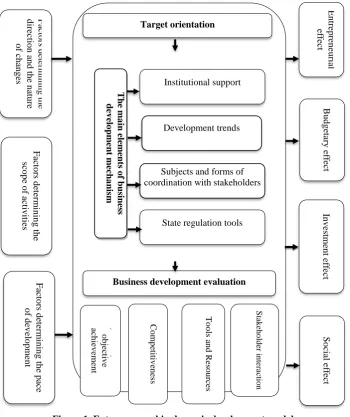
[image:3.595.124.475.122.540.2]that the inclusion of a regional aspect in model development is the prerequisite for understanding the mechanisms of entrepreneurship development.3
Figure 1. Entrepreneurship dynamic development model The main elements of the model were reviewed by the
authors earlier and within the framework of this study they proposed to consider one of the key elements of evaluation: the evaluation of interaction between interested parties.
This unit is the most important one, as the development of the business system occurs with an active influence of all participants.
The development of entrepreneurship dynamic development model is based on the relationship between economic and subeconomic (entrepreneur personal qualities, etc.) variables (factors). The model describes the relationship between the factors, reflects the economic outcome of the relationship, predicts the options for a situation development. It includes quantitative and qualitative factors, digital and non-digital ones.
First of all, the provision of entrepreneurship dynamic development should be based on the following principles, presented on Figure 2.
Figure 2. The principles of entrepreneurship dynamic development provision Target orientation T he ma in elements o f bus ines s dev elo pm ent mecha nis m Institutional support
Subjects and forms of coordination with stakeholders
Development trends
State regulation tools
Business development evaluation
The principle of transition from entrepreneurship development management "from above" to the management "from below" is necessary to increase the interest of all stakeholders. The collective responsibility of all stakeholders for entrepreneurship development provision is necessary to make it dynamic. Entrepreneurs should take responsibility and obligations for their support activities, and should receive it on this condition only. The parity of the relations between the business community and the authorities makes it possible to formulate a common vision of goals, as well as the place and the role of entrepreneurship in the socio-economic development of the region, based on the search for the parity of interests between all participants; the principle allows to reach the consensus between all participants.
The provision of generation continuity is necessary for the stable development of entrepreneurship. The principle is aimed on the involvement of population in business. Besides, the implementation of this principle is necessary to ensure long-term entrepreneurial activity. At the same time, it is necessary to take into account the difference between the mentalities of different generations of entrepreneurs. The focus at entrepreneurship sphere expansion and its implementation are necessary to ensure a stable quantitative growth, which allows for a qualitative transformation with the implementation of the previous principles.
II. PROVISION OF ENTREPRENEURSHIP DYNAMIC DEVELOPMENT METHODS
2.1 Review and highlighting of stakeholders for entrepreneurship dynamic development provision
According to the scientific literature, the dynamic development of entrepreneurship is regarded, as a rule, from the perspective of economic activity subject interests, but the results of entrepreneurship development are not only commercial but also public in nature and affect the interests of many subjects: population, authorities and strategic partners. Proceeding from this, entrepreneurship is included in the system of relationships between various stakeholders.
The study and the analysis of works devoted to the issues of the stakeholder approach application allowed to systematize the approaches to the classification of stakeholder types and their interests.
In modern works of Russian and foreign authors, the priority attention is paid to key stakeholders - the owners (shareholders) and the top managers of a company.12,13
Some authors identify internal and external stakeholders. Internal ones include the local population, business entities (residents), government bodies, local authorities, local public organizations and local media. External bodies include state authorities, public organizations (regional, federal, international), investors, population (non-resident migrants), business entities (non-residents), media (regional, federal, international).45,46
Such researchers as K.S. Solodukhin7, M.S. Rakhmanova8, O.Yu. Hazov9 determine the following groups of stakeholders: shareholders; buyers; state; suppliers and contractors; credit organizations. Besides interests, the authors determine the following effects: the amount of dividends paid for the analyzed period; the increase of share
value; the quality of purchased goods, the convenience of its payment; tax payments taking into account the timeliness of their payment; an actual volume of production in kind or in sum; a negative impact on the environment, etc. K.S. Solodukhin, M.S. Rakhmanova believe that stakeholders are not just "groups and persons", as the bearers of certain interests affected by firm activities, but the "investors" of a certain type of resource47-50.
Taking into account the rapidly changing conditions in which entrepreneurship develops, other authors identify foreign partners as a separate group of stakeholders.101112
Foreign scholars also use a different typology during the classification of stakeholders. Thus, A. Mendelow considers interested parties depending on their interests, their power, and, accordingly, the ability to influence the activities of an enterprise and the desire to do so.13 The integrated indicator - the influence of a stakeholder - is determined by power and interest multiplication. R. Mitchell's typology is the extension of A. Mendelow's model. The typology is based on three factors: legality, significance and urgency, that is, the legal legitimacy to give instructions, the strength of an interested party's influence on an enterprise, the minimum necessary speed of responses to interested party requests. G. Savage classifies interested parties and also offers the most appropriate strategies for their interaction.15 Its typology and strategies are based on a stakeholder potential (likelihood) determination to damage an organization and its potential (willingness) to cooperate. A. Fridman and S. Miles include consumers, employees, local community, suppliers and distributors, shareholders, media, the society as a whole, business partners, future and past generations, the representatives of the scientific community, competitors, civil society, the representatives of stakeholders with their interests, investors and public authorities in the list of stakeholders.16
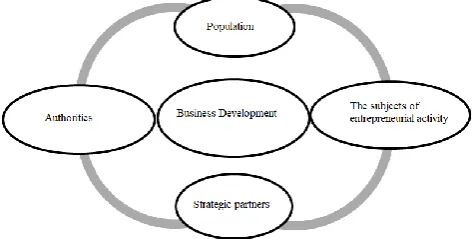
[image:4.595.308.545.560.679.2]Based on the conducted research, the authors identified the participants of the relationships, whose interests are affected by the results of entrepreneurship development. Among them are the following ones: the subjects of entrepreneurial activity; strategic partners; local population; authorities (Figure 3).
Figure 3. The system of relations between the main groups of stakeholders in the context of
entrepreneurship development
- the residents and the non-residents in a particular region; - with and without economic ties with other subjects of entrepreneurial activity in the region;
- the legal entities and the subjects of entrepreneurial activity without a legal entity.
Strategic stakeholders (partners), for example, include: - long-term Russian and foreign investors of the company, interested in its long-term and successful development;
- the owners, who are also the providers of financial and business resources.
The local population is characterized by a wide range of features, including: sex-age structure; national and ethnic composition; purchasing power; migration processes. It can be considered as the source of potential labor resources, the basis of the territory entrepreneurial potential; the consumers of products, works and services produced by the entrepreneurs of a particular territory.
The bodies of power are the bodies of legislative and executive power of Russian Federation subject, implementing the state policy in the field of entrepreneurship, including the regulation and the support of entrepreneurial activities.
2.2 Entrepreneurship dynamic development evaluation methods
Currently, the approach to entrepreneurship assessment based on stakeholder theory is popular among economists, and moreover, the partner evaluation is the variation of the evaluation involving stakeholders.
In the framework of the approach based on the assessment of business dynamism from the point of view of stakeholders, O.Yu. Khazov1, M.O. Tarsky and E.G. Pershina offer an integral indicator of an enterprise overall efficiency for interested groups, reflecting, in their opinion, the ratio of the useful result (effect) received by the interested groups to the costs of these groups during the interaction with an enterprise. In its turn, M.M. Basheva3 offers the classification of indicators to evaluate the state of an enterprise, used by various stakeholders:
1. State bodies use the following indicators: the ratio of own circulating assets; the provision of workers with housing taking into account demographic changes; the indicator of debtor's liability security with its assets; the actual amount of emissions into the natural environment.
2. Infrastructure organizations use the following indicators: the amount of payments for charitable purposes; the number of contracts with educational institutions on the internship; the amount of costs for staff development; the availability of certificates confirming the safety of products for the end user. 3. Industry enterprises use the following indicators: the
coefficients of financial stability; enterprise rating; the coefficients of profitability; the volume of similar product supply to foreign markets.
Such authors as Dolmatova I.N. and Ivashkovskaya I.V. offer to use the financial indicators and criteria that evaluate business processes and HR processes. According to the authors, these coefficients reflect the real value of the company, which is of interest to foreign stakeholders.4
Other researchers believe that the real investment projects are important for long-term investors: capital investments; innovative investment in intangible assets; the investment in circulating asset growth.5
Such foreign authors as T. Rowley6, offer the model to identify the significance of stakeholders during the evaluation of entrepreneurial activity on the basis of the stakeholder approach; R. Mitchell uses the balance model of stakeholder resource relations on the basis of the network model.
As was noted previously, the partnership evaluation is popular among the existing assessments, involving stakeholders, the essence of which is that stakeholder representatives are systematically involved in the planning and evaluation work. The scheme of its implementation is described in detail by the works from Rita O'Sullivan.7 The partner assessment is different from other approaches, also involving stakeholder participation, by the following: it allows for a different degree of involvement.8 That is, the degree of stakeholder representative participation may be different during the partner evaluation of various programs. The evaluator determines the appropriate level of stakeholder representative involvement depending on the degree of their preparedness, the nature of the tasks to be accomplished and the available resources.
According to the definition by Liliana Rodriguez-Campos, who actively promotes the idea of partner evaluation, "partner evaluation is the assessment that involves an intensive cooperation between an evaluator and stakeholders in the assessment process."9
According to the analysis, it follows that at the present time most of the approaches to entrepreneurship dynamic development evaluation do not fully cover the most important social and budgetary components of the issues under study. A number of scientific approaches has a rather narrow focus, which does not allow to use them in the development of comprehensive measures to support the development of entrepreneurship in the region. Therefore, the development of measures to support and stimulate the development of entrepreneurship will not be able to cover all the problematic aspects of enterprises and will not be effective enough.
Thus, it is necessary to develop the methodology to assess the dynamic development of entrepreneurship. Since entrepreneurship is an economic system with an internal and external development process, the methodology should also include the assessment from the perspective of entrepreneurship development participants and take into account the economic, social and financial performance of small and medium-sized enterprises in the long run. Thus, the evaluation of entrepreneurship dynamic development is reduced to the evaluation of the criteria for business entity development effectiveness, but taking into account the previously described stakeholder approach.
Thus, the content of business entity interests is the desire to increase revenues, expand the scale of activities, apply modern technologies and efficient staff management. The most significant interests of strategic partners include the return on a project and the high level of the investment climate in the region. The interests of the regional authorities are determined by the goals and objectives: the improvement of local population living standards; the provision of employment to local people; the increase of budget revenues; the growth of production and sales of goods, works and services. The main interests of the local population reflecting the value system include: income growth, employment, living conditions and environment preservation.
Thus, the dynamic development of entrepreneurship in the region on the basis of the stakeholder approach includes the following components:
- entrepreneurial efficiency within the interests of business structures;
- investment effectiveness, in terms of strategic partners; - budgetary efficiency from the standpoint of the regional development purposes and tasks, faced by public authorities; - social effectiveness, reflecting the interests, is determined by the system of local population values.
[image:6.595.358.494.219.327.2]In order to assess the dynamic development of entrepreneurship from the standpoint of stakeholder interests, it is proposed to use the system of indicators presented on Figure 4.
Figure 4. Indicator evaluation system concerning entrepreneurship dynamic development
Proceeding from the presented figure, the assessment of entrepreneurship dynamic development of entrepreneurship consists of four units: entrepreneurial, budgetary, investment and public efficiency. A set of absolute and relative indicators is proposed for each unit, on the basis of which the integral index is created.
To create integral indicators, they calculated the weight coefficients and set the rate for indicators. In order to determine the weight coefficients, it is necessary to use the expert method. In order to implement expert decision-making methods, they involved relevant qualified experts. During the ranking of performance indicators, it is advisable to take into account the opinions of experts directly who faced the studied problems in practice.
III. RESULTS
3.1 Analytical calculations
In order to approbate the proposed methodology in this work, the object of the study will be the subjects of small and medium-sized businesses (hereinafter SMEs) of the macroregion - the Far Eastern Federal District (hereinafter referred to as the FEFD).
At present, the most important dual task is being solved in FEFD: the transition of the vast territory to a dynamic socio-economic development and the provision of a competitive breakthrough to integration and close cooperation with the APR countries.
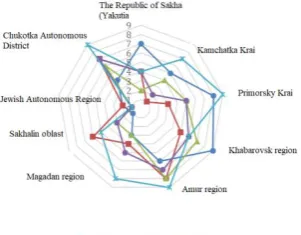
[image:6.595.70.266.399.539.2]Figure 5 presents the regional ratings assigned in accordance with the values of entrepreneurial efficiency integral indicator.
Figure 5. The positions of the Far Eastern Federal District on the integral indicator of entrepreneurial efficiency in the dynamics for the period of 2012-2016
(author calculation)
Thus, according to the entrepreneurial effectiveness of entrepreneurship development, the best results were shown by Magadan, Sakhalin regions and the Republic of Sakha (Yakutia) in 2012-2016. In 2014, there was the decline of these indicators in all regions. The same trend is also characteristic of labor productivity. This may be due to the impact of the financial and economic crisis that emerged in 2014. Chukotka Autonomous District and the Jewish Autonomous Region are the least effective in terms of entrepreneurship development. The remaining regions show a consistently good level of entrepreneurial effectiveness.
Figure 6 presents the regional ratings assigned in accordance with the values of budget efficiency integrated indicator.
Figure 6. The positions of the Far Eastern Federal District on the integral indicator of budgetary efficiency
[image:6.595.352.503.572.689.2]Analyzing the results of business development budget efficiency assessment in the regions of the FEFD, we can state the deterioration of the overall picture concerning the ratio of budget revenues and the amount of state support funds - in some regions the values of indicators are reduced several times. The same is also true for the relation of added value change in entrepreneurship to the costs of its support. This indicates the instability of the business environment and the lack of clear programs for entrepreneurship financing, according to which fixed amounts of state support should be allocated. The indicators of added value and budget revenues from entrepreneurial activity vary little from year to year, therefore, corrective measures are required precisely in the direction of entrepreneurship state financing. The ratio of new jobs to the cost of the budget for their creation either increased or remained at the same level, which is a positive trend.
Thus, according to the budget efficiency of business development, the best results were presented by Sakhalin Oblast, the Jewish Autonomous Region and the Kamchatka Territory in 2012-2016. Chukotka Autonomous District and the Amur Region are the least effective for entrepreneurship development. The remaining regions are relatively average.
[image:7.595.357.499.99.205.2]Figure 7 presents the regional ratings assigned in accordance with the values of social efficiency integral indicator.
Figure 7.The positions of the Far Eastern Federal District on the integral indicator of social efficiency in
the dynamics for the period of 2012-2016 (author calculation)
According to the obtained results, they can note the increase of employment in the business sector as a favorable trend: the ratio of the number of employed in SME to the total number of economically active population in the regions increased during 2012-2016. The dynamics of the ratio of the average monthly incomes of employees employed in small and medium businesses to the value of the consumer basket increased until 2013 inclusive, in 2014 this indicator decreased against the background of crisis phenomena and rising prices.
The funds allocated by small and medium-sized businesses for the implementation of social projects and programs were also significantly lower in 2014-2015 as compared with a stable increase in 2012-2013. Consequently, when crisis phenomena appear in the economy, business entities reduce expenditure items by the elimination of social programs and projects from them.
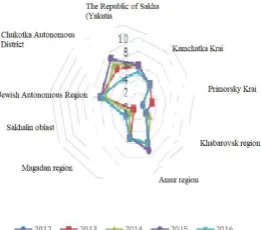
Figure 8 presents the regional ratings assigned in accordance with the values of investment efficiency integral indicator.
Figure 8. The positions of the Far Eastern Federal District on the integral indicator of investment efficiency
in the dynamics for the period of 2012-2016 (author calculation)
According to the integral indicator of investment efficiency in general, there is a stable dynamic across all the regions throughout the period under study, with the exception of 2016. In this regard, it is expedient to analyze separate components of investment efficiency.
The indicator of investment profitability had not any strongly pronounced tendency. In some regions, the peak took place in different years. Consequently, the volume of investment in the entrepreneurial sector of the economy is difficult to predict and it is inexpedient to count on this type of financing.
The ratio of attracted private investment volume to the volume of state support funds is characterized by sharp fluctuations, which indicates the instability in business environment and the need for activities at the state level to create a favorable investment climate and state support for small and medium-sized enterprises.
The financing of population teaching concerning the basics of entrepreneurial activity in a number of regions was not carried out at all or was not carried out each year. The only exception was the Sakhalin Oblast and the Chukotka Autonomous Okrug, where funds were allocated consistently every year during 2012-2016.
IV. DISCUSSION
[image:7.595.104.235.376.491.2]At that, the dynamic development of entrepreneurship in the region should be determined by integrating the activities, the interests and the needs of all parties interested in this process. The subjects interested in the dynamic development of entrepreneurship by the parties (stakeholders) are: first and foremost it is the population whose quality of life directly depends on the performance of business entities in a particular territory; the subjects of entrepreneurial activity, aimed at investment profitability increase; the strategic partners, whose aspiration is expressed in risk reduction during investing and the reduction of payback period; a state whose budget receipts directly depend on the long-term and effective activity of business entities, etc.
However, we must not forget about the territorial uniqueness of each business process. The history of development, state support programs, natural and climatic conditions determine the uniqueness of the regions, as well as their needs and the opportunities for the dynamic development of entrepreneurship.
The Far Eastern Federal District (FEFD) is the largest one in Russia. In FEFD almost all entities (except for the Amur Region and the Jewish Autonomous Region) have the access to the sea. Another feature of the district is the presence of a land border with the KPDR, as well as THE sea borders with Japan and the United States. On the basis of the FEFD, the Vladivostok free port projects are implemented, which includes two international transport corridors. In addition, the FEFD is the part of the territories for advanced social and economic development in Russian Federation (TOSER). The designated elements of the FEFD are held under the auspices of Russian Federation Government Decree No. 308 "On the approval of RF state program concerning the social and economic development of the Far East and the Baikal region" issued on April 15, 2014 and can not be fully implemented without the development of entrepreneurship at the proper level. Moreover, the mentioned components of the FEFD uniqueness make the process of dynamic development of entrepreneurship directly dependent on the participation of an additional party in the group of stakeholders, namely, foreign investors.
The inclusion of foreign investors in a dynamic development model, as well as in the evaluation of its effectiveness, will expand the range of correlation links, and, most importantly, will ensure that the territorial uniqueness of the FEFD is taken into account.
The correlation between foreign investors and the process of entrepreneurship dynamic development in the FEFD is conditioned by the fact that the favorable conditions for entrepreneurship process development with foreign investments have been created on the territory of the designated region. Foreign investors are the interested party, to which the colossal responsibility is entrusted, taking into account the analysis of normative documents and the statements of government body representatives.
Given the scale of free business niches, legislative initiatives, the extensive plans for the development of the FEFD territory and not fully satisfactory values of local investments, the foreign investments in the development of FEFD entrepreneurship will be able to implement the prospects for the territorial growth of the region.
At the same time, the investments in the development of foreign entrepreneurship are venture ones, that is, highly risky. Foreign investors should have a certain guarantee of their investment profitability. This guarantee can be provided, partially, by the relevant legal acts, but, to a greater extent, by taking into account the opinion of a designated stakeholder in the development of entrepreneurship programs for the Far Eastern Federal District, via the opportunities and the needs of foreign investors, and the developing elements of investment attractiveness in Russian business.
Thus, the inclusion of an additional party - the foreign investors - in the structure of stakeholders within the dynamic development of FEFD entrepreneurship is the prerequisite for model qualitative functioning provision concerning the designated process and its effectiveness evaluation.
REFERENCES
1. Ban Ki-moon H.E. Thematic debate on the "State of the World Economy and Finance in 2012". General Assembly [Electronic resourse]. Electronic resource. Access mode: // URL: http://www.unmultimedia.org/tv/webcast/2012/05/he-
ban-ki-moon-thematic-debate-on-the-state-of-the-world-economy -and-finance-in-2012-general-assembly.html
[Reference date 04/03/2018.]
2. Birch D. The Job Generation Process. A report prepared by the Massachusetts Institute of Technology Program on Neighborhood and Regional Change for the Economic Development Administration, U.S.
3. Yudanov A.Yu. The experience of competition in Russia. The reasons for success and failures. Moscow: KnoRus, 2007. p. 342.
4. Lisin G.I. The creation of a dynamically developing entrepreneurial network strategy. The Institute of Economics of the Ural Branch of the Russian Academy of Sciences. Ekaterinburg, 2012.- 25 p.
5. Lapidus V.A. Nizhny Novgorod Business Newspaper. № 7, May 2009 // Electronic resource. Access mode: httpURL: centr-prioritet.ru/ct/txt/464/. [Reference date: 10.06.2018.] 6. Good Business Goal: To Be A High-Impact Firm // Electronic
resource. Access Mode URL:
www.hrp.org/Site/docs/ResourceLibrary/High-Impact_Firms_Gazelles_Revisited.pdf [Reference date:
10.02.2018.]
7. G.B. Kleiner "To evaluate not by goals, but by values" Speech on the report by S.S. Sulakshin, V.E. Bagdasaryan, S.M. Stroganov "Quality and Success of Public Management Policy" // Electronic resource. Access mode: httpURL: kleiner.ru. [Reference date: 10.06.2018.]
8. Kondratiev N.D., Yakovets Yu.V., Abalkin L.I. Large cycles of conjuncture and the theory of foresight. Selected works. M.: Economics, 2002. p. 215
9. Kuznets S. Economic system by Dr. Schumpeter, presented and criticized; Perlman M. Two phases of Kuznets's interest in Schumpeter / Comp. by the Dr. of Geogr. Sciences, Prof. V.M. Moskovkin, Cand. of history. D.Yu. Mikhailichenko, translated by E.E. Perchik; Ed. by the Dr. of Economy, Prof. V.S. Ponomarenko. "INJEK" Publishing House, 2012. 128 p. 10. Kondratiev E.V. System-institutional development of the
management personnel of an enterprise: theory and
effectiveness [Electronic resource]. URL: http:
11. Polskaya G.A. Material incentives for labor as the factor of consumer cooperation trade dynamic development. Abstract from Belgorod, 2008. 24 p.
12. Ivaschenko A.S. The reasons for the dynamic development of newly industrialized country economy in southeast Asia (1960-ies - the beginning of the 21st century). The voice of the past. Kuban Historical Journal. 2013. V. 3-4. pp. 38-52. 13. Zakharova E.N., Martyshina Т.V. Sustainability of
development as a key goal of regional management // KANT. № 3 (12). 2014. pp. 4-6.
14. Beybalaeva D.K. The problems of dynamic development for territorial-sectoral relations and their structuring in the regional economy. Electronic resource. Access mode URL: www.rppe.ru/wp-content/uploads/2008/10/beybalaeva-d-k.pd [Reference date: 04/05/2018]
15. Kharlamova E.E. The theory and the methodology of effective management concerning the dynamic development of an educational organization / Monograph. 2015 Publisher: Volgograd State Technical University (Volgograd). p. 160
16. Bekmuhamedova B.U. Dynamic and balanced development of
the economy as the indicator of the solid base to raise population life level and quality // BEST SCIENTIFIC ARTICLE 2018. The collection of articles of the 17th International Scientific and Research Contest. Editor in charge: Gulyaev Herman Yuryevich. 2018
17. Publisher: MCSC "Nauka i Prosveshchenie" pp. 130-132
18. Stolyarenko V.V. The improvement of the business
partnership system is the key condition for the dynamic development of hotel service sphere // The collection of scientific articles. L.N. Anisimova (editor in charge); Moscow State Regional University, The Faculty of Technology and Entrepreneurship. Moscow, 2017 Publisher: Moscow State Regional University (Moscow). pp. 89-95
19. Azaryan E.M., Kuzmenko R.V. Institutional conditions in the organizational and economic component of industrial region dynamic development generation and dissemination // Bulletin of Economic Research Institute. 2016. Publisher: The Institute for Economic Research (Donetsk). No. 4(4). pp. 60-68.
20. Economic theory: political economy. Ed. by Bazilevich V.D. Moscow: Rybary, 2009. - 870 p.
21. Principal principles of model creation for the development of regional socio-economic systems. Electronic resource. Access mode URL: https://cyberleninka.ru/article/n/printsipialnye- osnovy-postroeniya-modeley-razvitiya-regionalnyh-sotsialno-ekonomicheskih-sistem. Reference date: June 30, 2013 22. Basareva V.G. Institutional features of small business sector
development during the period of transformational changes / V.G. Basareva // Region: Economics and Sociology. - 2010. - N 3. - pp. 249-266
23. Kaplan R. Strategic maps. Transformation of intangible assets into tangible results: Translation from English. / R. Kaplan, D. Norton. - M.: Olymp-Business, 2005. - 512 p.
24. Gurkov I.B. The strategy and the structure of a corporation / I.B. Gurkov. - M.: Delo, 2006. - 320 p.
25. Svetnik T.V. Strategic alliances and competitive strategies in foreign business / T.V. Svetnik // Social and economic aspects of business development: Intern. scientific-practical. conf. Irkutsk, 6 April, 2010 - Irkutsk: The Publishing House of Irkutsk State University, 2010. - pp. 280-285.
26. Tazhitdinov I.A. The application of the stakeholder approach in the strategic management of territorial development // Economics of the region. 2013. Issue 2 (34)
27. Grabar V.V., Salmakov M.M. The analysis of project stakeholders: methodology and tools // ARS Administrandi. Issue 2. 2014.
28. Mukhortov E.M. The management of industrial complex strategic development on the basis of the stakeholder approach // The economic journal. Moscow: LLC "Ippolitov Publishing House". V. 28. № 4. 2012. pp. 62-70.
29. Solodukhin K.S. The development of strategic management methodology by university on the basis of stakeholder theory: dis. by the Dr. of Econ. sciences.
30. Rakhmanova M.S. The development of innovative strategic analysis methods of the university on the basis of interested party theory: the dissertation by the candidate of economic sciences, Vladivostok, 2009.
31. Khazov O.Yu. Comprehensive assessment of the economic efficiency of enterprises from the standpoint of interested groups: author's abstract. diss. by the cand. of econ. sciences. 32. Ralston D.A. et al. Today's State-owned Enterprises of China:
Are They Dying Dinosaurs or Dynamic Dynamos? // Strategic Management Journal. 2006. Vol. 27. No. 9. pp. 825-843. 33. Liao S., Zhang Y. A New Context for Managing Overseas
Direct Investment by Chinese State-Owned Enterprises // China Economic Journal. 2014. Vol. 7. No. 1. pp. 126-140
34. BOCHAROV N.A. STEAKHOLDERS AS THE TOOL OF
SOCIAL INTERACTION OF COMPANIES. HERALD OF
THE UNIVERSITY (STATE UNIVERSITY OF
MANAGEMENT) Publishing House: State University of Management (Moscow). Number: 10; Year: 2015 Pages: 250-254.
35. Mendelow A. Stakeholder Mapping, Proceedings of the 2nd International Conference on Information Systems. Cambridge, MA, 1991.
36. Mitchell R.K., Agle B.R., Wood D.J. Toward a Theory of Stakeholder Iden-tification and Salience: Defining the Principle of Who and What Really Counts // Academy of Management Review. 1997. Vol. 22, No. 4. pp. 853-888. 37. Savage G.T., Nix T.W., Whitehead and Blair. Strategies for
Assessing and Managing Organizational Stakeholders // Academy of Management Executive. 1991. Vol. 5, No. 2. pp. 61-75.
38. Friedman A., Miles S. Stakeholders: Theory and Practice. Oxford: OxfordUniversityPress, 2006.
39. Khazov O.Yu. Comprehensive assessment of the economic efficiency of enterprises from the positions of stakeholders. Dis. by the Cand. of econ. sciences. Volgograd. 2006. 40. Tarsky M.O., Pershina E.G., Podzorova Galina Anatolievna.
Steakholder management as the tool improving the quality of organization management.
41. Basheva M.M. The determination of preferred strategic enterprises by interested parties. Diss. by the c. of e.
42. Dolmatova I.N. The value of a non-public company: the assessment from the standpoint of stakeholders // Russian Entrepreneurship. 2011. № 3 (2). pp. 64-70. 3. Ivashkovskaya I.V. Company value modeling. Strategic responsibility of the boards of directors. M.: Infra-M, 2009. 430 p.
43. The analysis of the investment strategy from the standpoint of stakeholder theory. BYCHKOVA S.M., MAKAROVA N.N, Zhidkova E.A. The theory of Accounting, Control and Analytical Processes No. 1/2017, pp. 33-38
44. Rowley T. Logical-structural approach and its application for analysis and activity planning [Electronic resource]. URL: http://www.libma.ru/nauchnaja_literatura_prochee/logiko_str ukturnyi_podhod_i_ego_primenenie_dlja_analiza_i_planirova nija_dejatelnosti/p7.php
45. Gabdullin, R., Kozhabaev, K., & Kostangeldinova, A. (2018). Organization of educational and developmental training of school students at mathematics lessons. Opción, 34(85), 605-631.
46. O'Sullivan, R. G., Skaga, J., & Chernow, M. (2005). First 5 Los Angeles Child Care Initiative Evaluation Phase II Final Report. Chapel Hill, NC: Evaluation, Assessment & Policy Connections, School of Education, University of North Carolina at Chapel Hill.
47. Fitzpatrick, J. L., Sanders, J. R. & Worthen, B.R. (2004).
Program evaluatio, 3rd
48. Rodruguez-Campos, L. (2005). Collaborative evaluations: A step-by-step model for the evaluator. Tamarac, FL: LluminaPress
49. Quezada-Sarmiento, P. A., and Enciso, L. (2016). Knowledge Representation and Ontological Model based on Software Engineering Body of Knowledge as a tool to Evaluate Professional and Occupational Profiles. Journal of
Information Systems Engineering & Management, 1(3), pp.
199-208. https://doi.org/10.20897/lectito.201636