This is a repository copy of Evaluating the experiences and support needs of people living with chronic cancer: Development and initial validation of the Chronic Cancer Experiences Questionnaire (CCEQ).
White Rose Research Online URL for this paper: http://eprints.whiterose.ac.uk/104130/
Version: Accepted Version
Article:
Harley, C orcid.org/0000-0002-8800-4238, Pini, S, Kenyon, L et al. (2 more authors) (2019) Evaluating the experiences and support needs of people living with chronic cancer: Development and initial validation of the Chronic Cancer Experiences Questionnaire (CCEQ). BMJ Supportive and Palliative Care, 9 (1). e15-e15. ISSN 2045-435X
https://doi.org/10.1136/bmjspcare-2015-001032
© 2016, The Authors. Published by BMJ Publishing Group. This is an author produced version of a paper published in BMJ Supportive and Palliative Care. Uploaded in accordance with the publisher's self-archiving policy.
[email protected] https://eprints.whiterose.ac.uk/
Reuse
Items deposited in White Rose Research Online are protected by copyright, with all rights reserved unless indicated otherwise. They may be downloaded and/or printed for private study, or other acts as permitted by national copyright laws. The publisher or other rights holders may allow further reproduction and re-use of the full text version. This is indicated by the licence information on the White Rose Research Online record for the item.
Takedown
If you consider content in White Rose Research Online to be in breach of UK law, please notify us by
Evaluating the experiences and support needs of people living with
chronic cancer: Development and initial validation of the Chronic Cancer
Experiences Questionnaire (CCEQ)
Clare Harley1, Simon Pini2, Lucille Kenyon2, Amrit Daffu-O ‘ 1, Galina Velikova2
1School of Healthcare, Baines Wing, University of Leeds, Leeds, West Yorkshire, LS2 9JT UK. 2Section of Patient Centred Outcomes Research, Leeds
Institute of Cancer Studies and Pathology, University of Leeds, Bexley Wing, St James's Hospital, Beckett Street, Leeds, LS9 7TF UK.
Correspondence to Clare Harley: [email protected]
ABSTRACT
Background Many advanced cancers are managed as chronic diseases, yet there are currently no international guidelines for the support of patients living with chronic cancer. It is important to understand whether care and service arrangements meet the needs of this rapidly growing patient group. This study aimed to develop
clinical and support services.
Methods The research began 1 July 2010 and finished 21 February 2013. A conceptual framework and initial item-bank were derived from prior interviews with 56 chronic cancer patients. Items were reviewed by four oncologists and one clinical nurse specialist and during two focus groups with nine patients. Pilot questionnaires were completed by 416 patients across five cancer units. Item selection and scale reliability was explored using descriptive data, exploratory factor analysis, internal consistency analyses, multi-trait scaling analyses, and known-groups comparisons.
Results The final Chronic Cancer Experiences Questionnaire (CCEQ) includes 75 items. Sixty-two items
-0·88 and minimal scaling errors.
Known-groups comparisons confirmed subscale utility in distinguishing between patient Known-groups. Subscales were labelled: Managing Appointments, Co-ordination of Care, GP Involvement, Clinical Trials, Information and Questions, Making Treatment Decisions, Symptom Non-reporting, Keyworker, Limitations, Sustaining Normality, Financial Advice, Worries and Anxieties, Sharing Feelings With Others, and Accessing Support. Thirteen items assessing symptom experiences were retained as single items.
Conclusions The CCEQ has the potential to be used as a clinical instrument to assess patient experiences of chronic cancer or to screen for patient needs. It may also be used as an outcome measure for evaluating programmes and models of care and may identify areas for service development that could ultimately improve the care and support received by chronic cancer patients.
Keywords: Chronic cancer; advanced cancer; metastatic cancer; patient-reported outcome measures; experience of care.
Background
Approximately 50% of people diagnosed with cancer are predicted to survive their disease for at least ten years1 and a substantial proportion will be living with advanced disease.2 Chronic cancer is a
unique phase of the advanced cancer trajectory and is defined as a diagnosis of active, advanced or
metastatic cancer that cannot be cured but can be managed through long-term continuous or cyclical
treatment and/or on-going clinical observation .3 A key finding from the 2014 National Cancer Patient
Experiences Survey (NCPES)4 was that patients who had a cancer recurrence were least likely to report
understanding the different needs and concerns of patients with recurring cancer and those where treatment has not been effective.4
I
that matter most to patients.5V For
women with advanced breast cancer, research has shown that satisfaction with experience of care is poor, that care is predominantly in the hospital setting, and there is little evidence of involvement of general practitioners or palliative care services.6 Prior research by the authors, interviewing 56 patients living with chronic cancer (breast, gynaecological, colorectal, renal, and prostate cancers), identified that patients experience a range problems, including: difficulty managing treatment schedules and frequent hospital appointments; a lack of integration between hospital and community/general practice services; difficulty coping with multiple and changing symptoms alongside the cyclical nature of chronic cancer; and difficulty dealing with uncertainty.3
To gain a bette
wished to administer a survey across our region. We reviewed the content of existing validated instruments but concluded that no single instrument assessed the key areas important to patients living with chronic cancer. For example, the NCPES focuses on early diagnosis and treatment and
predominantly inpatient care experiences. The Patient Assessment of Chronic Illness Care7 assesses
-management in a community setting and assumes that patient behaviour will influence
their disease outcomes.8 The EORTC outpatient Satisfaction with Care Questionnaire
(OUT-PATSAT35)9,10 is potentially useful but it is not yet validated. We felt there was an opportunity to gain insight into this area by translating the outcomes of our prior interview study into a new patient questionnaire. This article reports the development and preliminary validation of this new questionnaire, named the Chronic Cancer Experiences Questionnaire (CCEQ).
Methods
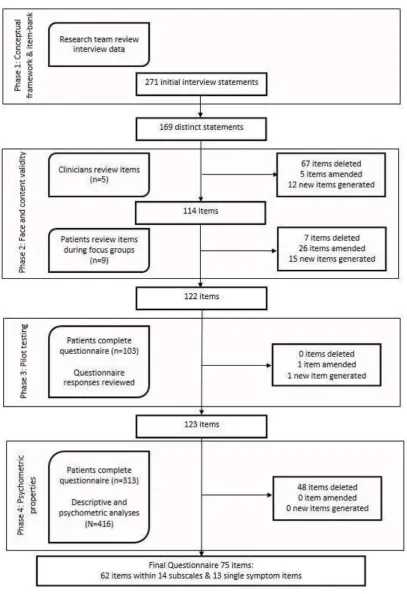
A mixed-methods approach to questionnaire development was undertaken through four phases:
Phase 1 C ramework and item-b generated questionnaire structure and content based
on previous patient interviews; Phase 2 F content v , clinicians and patients reviewed
and suggest amendments to the item-bank; Phase 3 P t tested the clarity of items and
feasibility of administration; and Phase 4 Psychometric properties administered the instrument
across multiple cancer units and psychometric analysis determined subscale structures, internal consistency, and construct validity. The development stages of the questionnaire, summarised in
Figure 1, align with best practice guidelines in questionnaire development.11
Phase 1: Conceptual framework and item-bank
Semi-structured interviews with 56 patients living with chronic cancer were reviewed to establish a conceptual framework for the questionnaire.3 A framework approach12 to thematic analysis was
undertaken, which utilised a priori themes from the Department of Health Generic Choice Model for
Long Term Conditions (GCM).13 The GCM was used in the development of coding themes as it
establishes universal factors that are hypothesised to be pertinent to all persons living with a long-term condition: self-care and self-management; clinical support; supporting independence; psychological support; and social and economic factors. These factors combined with emerging themes from the interviews to establish a broad theoretical framework for the questionnaire. The
methods and outcomes of this analysis have been previously reported.3
Questionnaire items were generated by grouping similar interview extracts and deriving composite statements. Statements were based on direct patient quotes, aiming
, such that items remained a true representation of the original data.14,15 This method
generated a large initial item-bank covering every aspect of experiences. The
experience or opinion as a brief statement. Each statement was operationalised to reflect a preference (e.g., I would prefer to have fewer hospital appointments ), an experience (e.g., Having cancer and treatment has caused me financial difficulty ), or question (e.g., Do you get constipated? ). For each statement a five-point Likert-scale was devised to allow respondents to
demonstrate their agreement with each statement (e.g., Strongly Agree A Neither Agree
D Disagree “ D ), t N A
for most items. Items that addressed similar issues were grouped as discrete sections within the conceptual framework.
Phase 2: Face and content validity
Clinician review
The first-draft questionnaire was distributed in paper form to oncology practitioners, who had previously participated in interviews to discuss the definition of chronic cancer and patients experiences. Practitioners reviewed the items and provided free-text feedback on content and phrasing. Feedback was reviewed and tabulated and items were refined accordingly.
Patient focus groups
Patients reviewed the second-draft questionnaire during two focus groups using discourse methods similar to cognitive interviews.14 Eligible patients were: attending outpatient oncology clinics at a cancer unit for treatment, review, or follow-up assessments; had breast, colorectal/gastrointestinal,
renal, prostate, or gynaecological disease that met the chronic cancer definition.3 All were conversant
and literate in English. All patients were initially approached by clinical staff and the research team provided study information and consented patients to the study. Leeds Central NHS Ethics Research Committee approved the particulars of this programme of research (reference: 10/H1313/28) and all patients provided written informed consent prior to participation. Focus groups were conducted in a private room at the cancer unit, were audio recorded, and lasted 120-minutes. Participants reviewed the questionnaire in groups of two or three and provided written and verbal feedback on each item and response option. Audio files were transcribed and comments were tabulated against individual items. Questionnaire items were refined
consensus.
Phase 3: Pilot testing
For the third-draft questionnaire, free-text sections were added to allow respondents to provide additional comments on their symptoms, information preferences, or completing the questionnaire. Free-text feedback was used to verify the content of items (to ensure important content was not missing) and applicability of the questionnaire. The questionnaire was administered at a cancer unit on paper alongside a brief demographics questionnaire which included questions about social support (marital status, living arrangements), current employment, and educational attainment. Patients completed and returned the questionnaires during their hospital visit or from home via pre-paid postal return. Questionnaire responses were tabulated and feedback was reviewed. Ethical, governance, and eligibility criteria were as reported for the focus groups.
Phase 4: Psychometric properties
represented a poorer/negative experience and response data was linearly transformed to a 0-100
scale. Items endorsed N A classified as missing data for analysis purposes. Items
were grouped according to the six domains of the conceptual framework and subjected to principal axis factoring (PAF) with promax rotation allowing for correlation between factors. Standard diagnostic tests were carried out to ensure suitability for PAF (Kaiser-Meyer-Olkin measure and
B T models was restric K
Eigen values >1. Factors were labelled according to item content, variance accounted for by each factor was recorded, and item loading values (>±0.3) were tabulated. Emergent factors were explored
for optimal item reduction and internal consistency reliability (C
coefficients)16 .7 was considered acceptable.17 Multi-trait scaling analyses examined
optimal item placement across subscales. Item-convergent validity was confirmed by a correlation of
r 0.4 between an item and its own scale, corrected for overlap.18 Item-discriminant validity was confirmed by item-own scale correlations greater than item-other scale correlations and scaling errors were recorded.
Subscale scores were calculated as the mean of contributing items, where there was less than 50% missing data from subscale items. One-way analysis of variance (ANOVA) and independent samples t-tests examined the statistical significance of any group differences in subscales between: clinic group (breast, gastro-intestinal/colorectal, gynaecological, prostate, and renal); chronic disease duration (0-35, 36+ months); age (above and below mean age of sample: 41-67, 68-90 years); and education level (up to compulsory school level, beyond compulsory school level). Bonferroni
corrections were applied to multiple post-hoc comparisons.19
Role of the funding source
Dimbleby Cancer Care, who funded this research, had no role in study design, data collection, data analysis, data interpretation, or writing of the report. The corresponding author had full access to all the data in the study and had final responsibility for the decision to submit for publication.
Results
The study was carried out between 1 July 2010 and 21 February 2013,
Phase 1: Conceptual framework and item-bank
T included six themes: clinical services; care and
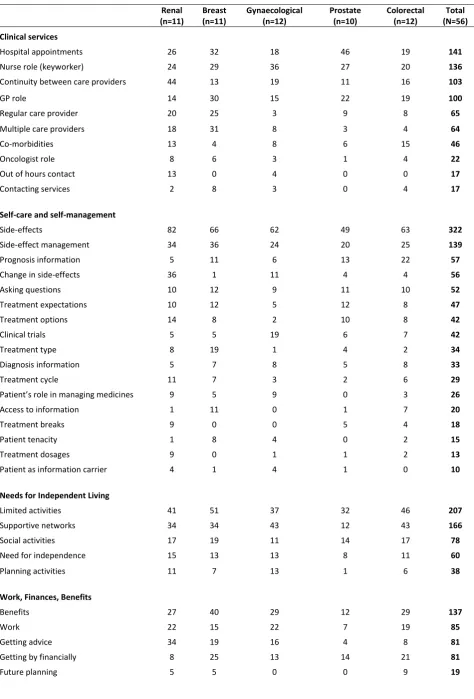
self-management; needs for independent living; work, finances, and benefits; psychological experiences; and support pathways.3 Interview extracts were organised within each theme and the range and frequency of topics that patients discussed are shown in Table 1. Questionnaire items were derived
by reducing interview statements into succinct quotes, which resulted in an initial bank of
271 items that described the entire content of the interviews. The item-bank was reviewed by the research team and iteratively refined until 169 items summarised the content of the original data without exact duplication. Similar items were retained in an attempt to identify the best item phrasing.
Phase 2: Face and content validity
Clinician feedback
Patient focus groups
Forty-nine patients were approached about participation in the focus groups, of these 30 were interested and took study information. Once the session dates were booked 12 patients were unavailable and 4 did not feel well enough to participate. Of the 14 patients who agreed to participate, five subsequently dropped out; 2 due to changes in treatment schedule and 3 did not feel well enough to participate on the day. Nine patients participated in one of the two focus group sessions (renal (n=3), colorectal/gastrointestinal (n=3), gynaecological (n=2), and breast (n=1)). Of the
114 items, 81 were retained unchanged. Seven ambiguous items
my insistence that has ensured I ); 26 items were amended to improve
I clinic I
have fewer hospital ; and 15 new items were suggested for clinical trials, finance and
benefits, GP role in care, information and support needs.
Phase 3: Pilot testing
The third-draft questionnaire included 122 items plus three free-text sections. 103 patients completed the questionnaire from a sample of 127 (81% response rate). Patients self-reported marital, employment, and educational status. Clinical details (diagnosis, disease free duration,
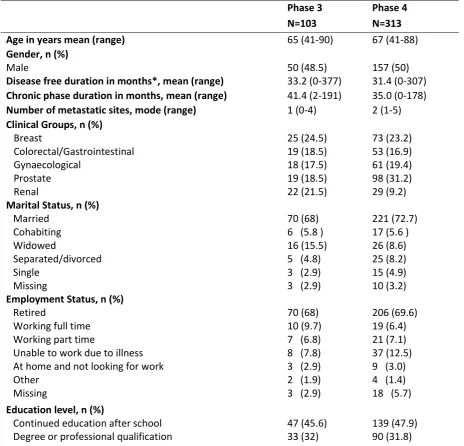
Patient clinical and demographic information are summarised in the second column (Phase 3) of Table
2. Reviewing patient questionnaire responses identified one I
I T
I A new item was added to the clinical
trials section I have Y N N
“
Phase 4: Psychometric properties
The fourth-draft questionnaire was administered to 342 patients across five cancer units and 313 patients returned completed questionnaires (92% response rate). As the questionnaires administered during phases 3 and 4 were very similar, response data was pooled to maximise sample size (N=416) for psychometric exploration of subscale structure and internal reliability. Missing data was low (item response rate range 91.59-99.76%). Demographic details of the phase 4 sample are summarised in the third column (Phase 4) of Table 2. Respondent-to-item ratios for Principal Axis Factoring (PAF) for each of the six questionnaire domains ranged from 9.7:1 (Clinical services, 43-items) to 69.5:1 (Finances and Benefits, 6-items).
Internal Scale Structure
Symptom items were not entered into PAF as they are typically of patient
experiences20,21 and we did not wish to develop symptom subscales. Thirteen subscales were
identified from PAF that achieved acceptable internal consistency (C 0.71-0.88) and
one subscale A “ .68). Item fit for all subscales
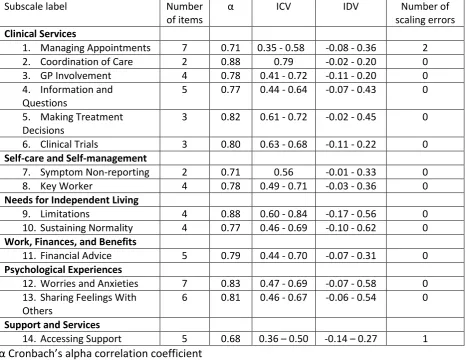
was evaluated using multi-trait analyses (see Table 3). Two items from Managing Appointments and
one item from Accessing Support subscales had item-convergent correlations below r=0.40 (r=0.35,
r=0.39, and r=0.36 respectively), however none of these items correlated more strongly with any other subscale so were retained for further analysis. Sixty-one single items remained after analysis: 13 items assessing common side-effects of cancer treatments were deemed useful to the questionnaire and were retained, the remaining 48 items were removed.
“ M A C - C GP I K
W A “ F W O
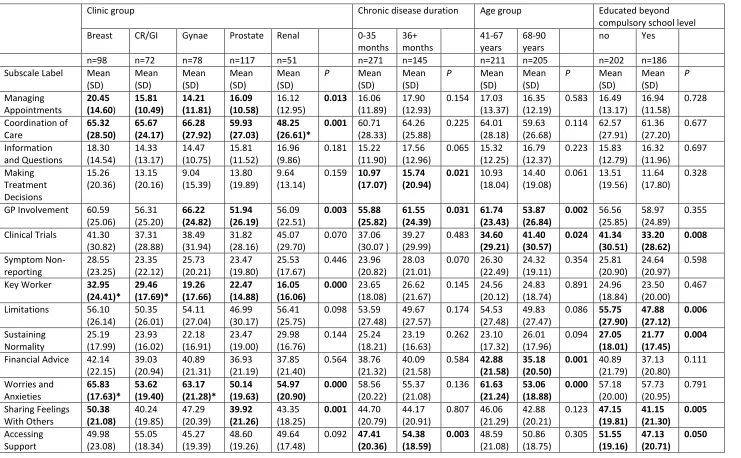
groups (P<0.05), with patients from breast clinics reporting the highest (poorest) scores (Table 4).
Higher scores for GP I M T D were reported by patients with
(P<0.05). Younger patients (41-67 years) reported GP I F
A W A d to older patients (68-90 years) (P<0.01), whereas older
C T P<0.05). Patients who were
not educated beyond compulsory C T L
“ N “ F W O A “ P<0.05). There
I Q “
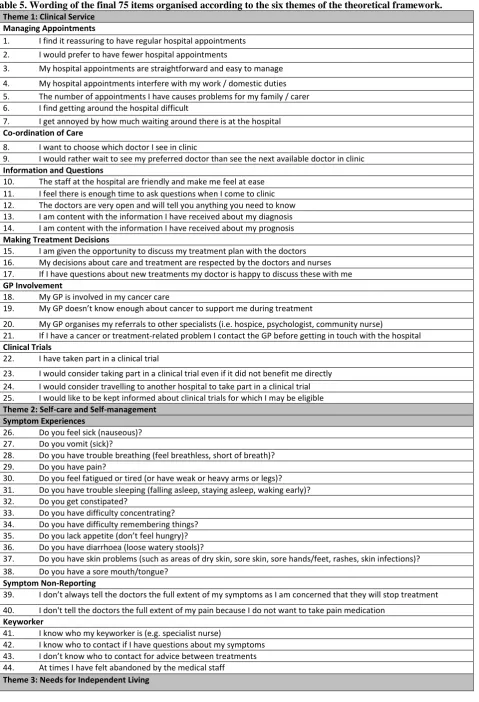
Non- P>0.05). The final questionnaire items are presented in Table 5.
Discussion
This study developed a questionnaire to capture patient experiences of living with chronic cancer and their views on clinical and support services. The rationale for developing the CCEQ was that existing instruments, particularly the NCPES4, do not capture the range of experiences relevant to patients living with chronic cancer. The CCEQ is intended to support clinicians and researchers to develop a better understanding of this rapidly growing yet under-studied patient group.
Robust methods for developing psychometrically valid multidimensional patient experience instruments are yet to be established. The methods used in the current study combine two approaches taken from needs-based quality of life (NB-QoL)22 and health-related quality of life
(HRQL)15 instrument development. Grounding the questionnaire in a conceptual framework based on
patient-reported experience and deriving items directly from patient interview quotes is aligned with
NB-QoL methods. NB-QoL instruments, however, are unidimensional measures
life needs. The CCEQ was designed to assess multidimensional c
and views on clinical services. Therefore HRQL methods such as exploratory factor analysis and classic psychometric methods were used to derive subscales and multi-trait scaling and known-groups analyses were used to validate the subscale constructs.
The CCEQ covers a broad range of experiences, which have been identified as important to
patients living with chronic cancer.3,6 The CCEQ assumes that patients with chronic cancer have an
ongoing and predominantly outpatient relationship with hospital-based oncology services, with supplementary involvement from primary care and community or palliative care services, as
described in previous research.3,6 The importance of hospital-based outpatient services is reflected
in the new instrument, which devotes 21 items (28% of questionnaire) to this area, including:
managing frequent and lengthy hospital appointments ( Managing Appointments Co-ordination of
Care ); receiving information about prognosis and diagnosis and the opportunity to ask questions ( Information and Questions ); support for treatment decisions ( Making Treatment Decisions ); and participating in clinical trials ( Clinical Trials ). The remainder of the survey reflects that away from the
cancer unit, patients predominantly - - “
E “ N
-K F A A “ “ F W O and develop
strategies for managing their daily activities and social responsibilities around the effects of disease
and treatment ( Limitations ; Sustaining Normality W A ).
Given the lack of existing validated measures, the construct validity of the subscales was explored -groups analysis, which compares subscale scores across demographic and clinical factors that are hypothesised to influence patient experiences of care and services. We identified
that patients attending breast cancer clinics had the highest scores (worse experiences M
“ F O T is corroborated by broader literature which reports that breast cancer patients tend to report poorer quality of life and greater unmet psychological needs compared to patients from other cancer groups.23-25 Patients with longer chronic disease duration reported poorer scores for GP I
M T D , which potentially reflects increased dependence on cancer units
but reduced treatment choices with advancing cancer. Interestingly, we identified that patients with
C T L
“ n N “ F O
A “ higher educational attainment. These findings make
intuitive sense but contradict previous research which found no relationship between educational
status and support needs in women with advanced breast cancer.26 Two subscales did not vary by
I Q “ N
-Scores for these subscales were comparatively low, showing that patients generally did not report problems in these areas. As such, the discriminative utility of these scales needs to be confirmed in future work. Overall, the data suggests that the 14 subscales are psychometrically valid and subscale mean scores should be derived rather than analysing individual item responses. Multi-item scales have the advantage over single items by reducing bias, misinterpretation, and measurement error in
assessments27 and verify the significance of the underlying constructs.28
The results of this study should be considered within the context of several limitations. The early-stage development of the instrument was carried out in a single cancer unit and only the final fourth-draft version of the survey was administered to patients attending different cancer units. Limiting the earlier stages of the work to one cancer unit may have introduced biases in the nature and range of experiences that were included in the questionnaire. It is important to recognise that this manuscript presents preliminary psychometric data. Further work is needed to determine the reproducibility or stability of scores over time (test-retest reliability) and the unidimensionality of the
new subscales needs to be confirmed, for example using Rasch analysis.29 Some of these limitations
could be addressed by reviewing instrument performance following a trial period of use in clinical practice or through a clinical audit. Collecting data during routine practice may allow the inclusion of a more diverse patient sample than can be captured during research and would allow exploration of how useful the instrument may be in supporting the evaluation of services and identifying areas for improvement. Another issue that may be explored by use of the questionnaire in routine practice is acceptability of the instrument to patients. At 75 items, clinicians may be concerned that the questionnaire is overly long or burdensome to patients. The responses from patients during the development of this questionnaire suggests that the questionnaire would be well received. Patients commented that the questionnaire was simple and straightforward to complete and although there are a large number of questions, they felt the instrument positively reflects the complexity and far reaching consequences of living with chronic cancer. As such, we anticipate that the questionnaire will be acceptable to the majority of patients with chronic cancer, particularly if it is used sparingly such as part of an annual review or one off service evaluation.
Despite these limitations, the methodological approach undertaken in developing the instrument thus far has been robust, has been driven by the experiences of a large number of patients, and has resulted in a questionnaire that captures pertinent data about patients experiences of living with chronic cancer and their perspective of clinical and support services. The CCEQ and scoring guidelines are freely available from the authors.
Conclusions
I
disease phase, it has the potential to be used as a clinical instrument to assess patient experiences or to screen for patient needs. It may also be used as an outcome measure for evaluating programmes and models of care and may help to identify areas for service development that could ultimately improve the care and support received by chronic cancer patients.
Footnotes
Contributors: CH and GV developed the protocol for the study. SP, AD, and LK collected and managed study data. CH, SP, and GV analysed and interpreted the study data. CH, GV, SP, and AD contributed to drafting the report. All authors have seen and approved the final version of the report.
Funding: This study was funded by Dimbleby Cancer Care Research Fund. The sponsors had no role in the study design, the data collection, analysis, and interpretation, or the writing of the report.
Competing interests: All authors have completed the ICMJE uniform disclosure form
atwww.icmje.org/coi_disclosure.pdf (available on request from the corresponding author) and declare: no support from any organisation for the submitted work other than those acknowledged above; no financial relationships with any organisations that might have an interest in the submitted work in the previous three years; no other relationships or activities that could appear to have influenced the submitted work.
Ethical Approval: The study was approved by Leeds Central Research Ethics Committee (reference number 10/H1313/28).
Data sharing: Details of how to obtain additional data from the study (for example, raw questionnaire data) are available from the corresponding author at [email protected]
T T
References
1. Cancer Research UK. Cancer Survival Statistics. http://www.cancerresearchuk.org/cancer-info/cancerstats/survival/ (accessed 19/02/2015).
2. Maddams J, Brewster D, Gavin A, et al. Cancer prevalence in the United Kingdom: estimates for 2008.
British journal of cancer 2009; 101(3): 541-7.
3. Harley C, Pini S, Velikova G. Defining chronic cancer: patient experiences and self-management needs. BMJ Support Palliat Care 2012; 2: 248-55.
4. Quality Health. National Cancer Patient Experiences Survey. https:// www.quality-health.co.uk/surveys/national-cancer-patient-experience-survey.
5. Coulter A, Fitzpatric R, Cornwell J. The point of care. Measures of patient experience in hospital: purpose, methods and uses. London: The King's Fund; 2009.
6. Reed E, Simmonds P, Haviland J, Corner J. Quality of life and experience of care in women with metastatic breast cancer: a cross-sectional survey. Journal of pain and symptom management 2012; 43(4): 747-58.
7. Glasgow RE, Wagner EH, Schaefer J, Mahoney LD, Reid RJ, Greene SM. Development and validation of the Patient Assessment of Chronic Illness Care (PACIC). Medical care 2005; 43(5): 436-44.
8. Garratt AM, Bjaertnes OA, Krogstad U, Gulbrandsen P. The OutPatient Experiences Questionnaire (OPEQ): data quality, reliability, and validity in patients attending 52 Norwegian hospitals. Quality & safety in health care 2005; 14(6): 433-7.
9. Poinsot R, Altmeyer A, Conroy T, et al. [Multisite validation study of questionnaire assessing out-patient satisfaction with care questionnaire in ambulatory chemotherapy or radiotherapy treatment].
Bulletin du cancer 2006; 93(3): 315-27.
10. Arraras JI, Rico M, Vila M, et al. The EORTC cancer outpatient satisfaction with care questionnaire in ambulatory radiotherapy: EORTC OUT-PATSAT35 RT. Validation study for Spanish patients. Psycho-oncology
2010; 19(6): 657-64.
11. Johnson C, Aaronson A, Blazeby JM, et al. Guidelines for Developing Questionnaire Modules. 4th ed: EORTC Quality of Life Group; 2011.
12. Ritchie J, Lewis J. Qualitative research practice: a guide for social science students and researchers. London: Sage; 2003.
13. Department of Health. Generic Choice Model for Long Term Conditions. London; 2007.
14. Fayers PM. Assessing quality of life in clinical trials: methods and practice: Oxford University Press, USA; 2005.
15. McKenna SP, Doward LC, Niero M, Erdman R. Development of needs-based quality of life
instruments. Value in health : the journal of the International Society for Pharmacoeconomics and Outcomes
Research 2004; 7 Suppl 1: S17-21.
16. Cronbach LJ. Coefficient alpha and the internal strucutre of tests. Psychometrika 1951; 16(3): 297-334.
17. Cortina JM. What is coefficeint alpha? An examination of theory and applications. Journal of Applied
Psychology 1993; 78(1): 98-104.
18. Ware JE, Harris WJ, Gandek B, Rogers BW, Reese PR. MAP-R for Windows: Multitrait/Multi-item analysis program - revised user's guide. Boston, MA: Health Assessment Lab; 1997.
19. Bonferroni CE. Teoria statistica delle classi e calcolo delle probabilità. Pubblicazioni del Regio Istituto
Superiore di Scienze Economiche e Commerciali di Firenze 1936; 8: 3-62.
20. Fayers PM, Hand DJ, Bjordal K, Groenvold M. Causal indicators in quality of life research. Quality of
life research : an international journal of quality of life aspects of treatment, care and rehabilitation 1997;
6(5): 393-406.
21. Fayers PM, Hand DJ. Factor analysis, causal indicators and quality of life. Quality of life research : an
international journal of quality of life aspects of treatment, care and rehabilitation 1997; 6(2): 139-50.
23. Engel J, Kerr J, Schlesinger-Raab A, Eckel R, Sauer H, Holzel D. Comparison of breast and rectal cancer patients' quality of life: results of a four year prospective field study. European journal of cancer care 2003;
12(3): 215-23.
24. Apolone G, Filiberti A, Cifani S, Ruggiata R, Mosconi P. Evaluation of the EORTC QLQ-C30
questionnaire: a comparison with SF-36 Health Survey in a cohort of Italian long-survival cancer patients.
Annals of oncology : official journal of the European Society for Medical Oncology / ESMO 1998; 9(5): 549-57.
25. Sanson-Fisher R, Girgis A, Boyes A, Bonevski B, Burton L, Cook P. The unmet supportive care needs of patients with cancer. Supportive Care Review Group. Cancer 2000; 88(1): 226-37.
26. Aranda S, Schofield P, Weih L, et al. Mapping the quality of life and unmet needs of urban women with metastatic breast cancer. European journal of cancer care 2005; 14(3): 211-22.
27. Bowling A. Research Methods in Health. Buckingham: Open University Press; 1997.
28. Rattray J, Jones MC. Essential elements of questionnaire design and development. Journal of clinical nursing 2007; 16(2): 234-43.
Table 1. Patient interview coding framework, summarising the thematic content of the interviews and the frequency by which each issue was raised by patients per clinic group.
Renal (n=11)
Breast (n=11)
Gynaecological (n=12)
Prostate (n=10)
Colorectal (n=12)
Total (N=56)
Clinical services
Hospital appointments 26 32 18 46 19 141
Nurse role (keyworker) 24 29 36 27 20 136
Continuity between care providers 44 13 19 11 16 103
GP role 14 30 15 22 19 100
Regular care provider 20 25 3 9 8 65
Multiple care providers 18 31 8 3 4 64
Co-morbidities 13 4 8 6 15 46
Oncologist role 8 6 3 1 4 22
Out of hours contact 13 0 4 0 0 17
Contacting services 2 8 3 0 4 17
Self-care and self-management
Side-effects 82 66 62 49 63 322
Side-effect management 34 36 24 20 25 139
Prognosis information 5 11 6 13 22 57
Change in side-effects 36 1 11 4 4 56
Asking questions 10 12 9 11 10 52
Treatment expectations 10 12 5 12 8 47
Treatment options 14 8 2 10 8 42
Clinical trials 5 5 19 6 7 42
Treatment type 8 19 1 4 2 34
Diagnosis information 5 7 8 5 8 33
Treatment cycle 11 7 3 2 6 29
P 9 5 9 0 3 26
Access to information 1 11 0 1 7 20
Treatment breaks 9 0 0 5 4 18
Patient tenacity 1 8 4 0 2 15
Treatment dosages 9 0 1 1 2 13
Patient as information carrier 4 1 4 1 0 10
Needs for Independent Living
Limited activities 41 51 37 32 46 207
Supportive networks 34 34 43 12 43 166
Social activities 17 19 11 14 17 78
Need for independence 15 13 13 8 11 60
Planning activities 11 7 13 1 6 38
Work, Finances, Benefits
Benefits 27 40 29 12 29 137
Work 22 15 22 7 19 85
Getting advice 34 19 16 4 8 81
Getting by financially 8 25 13 14 21 81
Psychological Experiences
Attitude towards illness 21 48 39 23 50 181
Worries 25 32 16 21 16 110
Emotions 12 26 22 7 24 91
Acceptance 8 16 11 14 25 74
Individual perspective 11 23 7 13 18 72
Burdening others 6 19 9 6 21 61
Faith and trust 3 24 9 10 12 58
Experiences 8 16 8 1 11 44
Coping strategies 8 18 12 3 2 43
Sustaining normality 5 5 4 13 4 31
Uncertainty 7 4 6 7 5 29
Support Pathways
Support from services 31 47 30 17 24 149
Attitude to services 19 21 14 2 11 67
Hospice 1 32 8 7 6 54
Patient peer support 6 10 11 8 7 42
Domestic support/services 11 8 6 4 6 35
Patient as carer 2 14 2 4 9 31
Access/barriers to services 3 10 10 0 4 27
Transport 9 4 1 9 1 24
Suggestions for services 4 14 0 2 2 22
Social network 4 13 0 0 4 21
Drug delivery + prescriptions 9 5 1 0 3 18
Self-care support 10 3 0 1 2 16
Nutritionist 2 2 0 0 0 4
Faith healer 0 1 2 0 0 3
Table 2. Patient Demographic and Clinical Data
Phase 3 Phase 4
N=103 N=313
Age in years mean (range) 65 (41-90) 67 (41-88)
Gender, n (%)
Male 50 (48.5) 157 (50)
Disease free duration in months*, mean (range) 33.2 (0-377) 31.4 (0-307)
Chronic phase duration in months, mean (range) 41.4 (2-191) 35.0 (0-178)
Number of metastatic sites, mode (range) 1 (0-4) 2 (1-5)
Clinical Groups, n (%)
Breast
Colorectal/Gastrointestinal Gynaecological
Prostate Renal
25 (24.5) 19 (18.5) 18 (17.5) 19 (18.5) 22 (21.5)
73 (23.2) 53 (16.9) 61 (19.4) 98 (31.2) 29 (9.2)
Marital Status, n (%)
Married Cohabiting Widowed
Separated/divorced Single
Missing
70 (68) 6 (5.8 ) 16 (15.5) 5 (4.8) 3 (2.9) 3 (2.9)
221 (72.7) 17 (5.6 ) 26 (8.6) 25 (8.2) 15 (4.9) 10 (3.2)
Employment Status, n (%)
Retired
Working full time Working part time
Unable to work due to illness At home and not looking for work Other
Missing
70 (68) 10 (9.7) 7 (6.8) 8 (7.8) 3 (2.9) 2 (1.9) 3 (2.9)
206 (69.6) 19 (6.4) 21 (7.1) 37 (12.5) 9 (3.0) 4 (1.4) 18 (5.7)
Education level, n (%)
Continued education after school Degree or professional qualification
47 (45.6) 33 (32)
139 (47.9) 90 (31.8)
Table 3. Subscale internal reliability, item-convergent validity, item-discriminant validity, and validity scaling errors
C
ICV Item-convergent validity, item to own scale correlation corrected for overlap IDV Item-divergent validity, item to other scale correlation
Subscale label Number
of items
ICV IDV Number of
scaling errors
Clinical Services
1. Managing Appointments 7 0.71 0.35 - 0.58 -0.08 - 0.36 2
2. Coordination of Care 2 0.88 0.79 -0.02 - 0.20 0
3. GP Involvement 4 0.78 0.41 - 0.72 -0.11 - 0.20 0
4. Information and Questions
5 0.77 0.44 - 0.64 -0.07 - 0.43 0
5. Making Treatment Decisions
3 0.82 0.61 - 0.72 -0.02 - 0.45 0
6. Clinical Trials 3 0.80 0.63 - 0.68 -0.11 - 0.22 0
Self-care and Self-management
7. Symptom Non-reporting 2 0.71 0.56 -0.01 - 0.33 0
8. Key Worker 4 0.78 0.49 - 0.71 -0.03 - 0.36 0
Needs for Independent Living
9. Limitations 4 0.88 0.60 - 0.84 -0.17 - 0.56 0
10. Sustaining Normality 4 0.77 0.46 - 0.69 -0.10 - 0.62 0
Work, Finances, and Benefits
11. Financial Advice 5 0.79 0.44 - 0.70 -0.07 - 0.31 0
Psychological Experiences
12. Worries and Anxieties 7 0.83 0.47 - 0.69 -0.07 - 0.58 0 13. Sharing Feelings With
Others
6 0.81 0.46 - 0.67 -0.06 - 0.54 0
Support and Services
Table 4. Differences in subscale scores by clinic group, chronic disease duration, age group, and education level.
Clinic group Chronic disease duration Age group Educated beyond
compulsory school level Breast CR/GI Gynae Prostate Renal 0-35
months 36+ months 41-67 years 68-90 years
no Yes
n=98 n=72 n=78 n=117 n=51 n=271 n=145 n=211 n=205 n=202 n=186
Subscale Label Mean (SD) Mean (SD) Mean (SD) Mean (SD) Mean (SD) P Mean (SD) Mean (SD) P Mean (SD) Mean (SD) P Mean (SD) Mean (SD) P Managing Appointments 20.45 (14.60) 15.81 (10.49) 14.21 (11.81) 16.09 (10.58) 16.12 (12.95)
0.013 16.06
(11.89)
17.90 (12.93)
0.154 17.03 (13.37)
16.35 (12.19)
0.583 16.49 (13.17) 16.94 (11.58) 0.728 Coordination of Care 65.32 (28.50) 65.67 (24.17) 66.28 (27.92) 59.93 (27.03) 48.25 (26.61)*
0.001 60.71
(28.33)
64.26 (25.88)
0.225 64.01 (28.18)
59.63 (26.68)
0.114 62.57 (27.91) 61.36 (27.20) 0.677 Information and Questions 18.30 (14.54) 14.33 (13.17) 14.47 (10.75) 15.81 (11.52) 16.96 (9.86)
0.181 15.22 (11.90)
17.56 (12.96)
0.065 15.32 (12.25)
16.79 (12.37)
0.223 15.83 (12.79) 16.32 (11.96) 0.697 Making Treatment Decisions 15.26 (20.36) 13.15 (20.16) 9.04 (15.39) 13.80 (19.89) 9.64 (13.14)
0.159 10.97 (17.07)
15.74 (20.94)
0.021 10.93
(18.04)
14.40 (19.08)
0.061 13.51 (19.56)
11.64 (17.80)
0.328
GP Involvement 60.59 (25.06) 56.31 (25.20) 66.22 (24.82) 51.94 (26.19) 56.09 (22.51)
0.003 55.88 (25.82)
61.55 (24.39)
0.031 61.74 (23.43)
53.87 (26.84)
0.002 56.56
(25.85)
58.97 (24.89)
0.355
Clinical Trials 41.30 (30.82) 37.31 (28.88) 38.49 (31.94) 31.82 (28.16) 45.07 (29.70)
0.070 37.06 (30.07 )
39.27 (29.99)
0.483 34.60 (29.21)
41.40 (30.57)
0.024 41.34 (30.51) 33.20 (28.62) 0.008 Symptom Non-reporting 28.55 (23.25) 23.35 (22.12) 25.73 (20.21) 23.47 (19.80) 25.53 (17.67)
0.446 23.96 (20.82)
28.03 (21.01)
0.070 26.30 (22.49)
24.32 (19.11)
0.354 25.81 (20.90)
24.64 (20.97)
0.598
Key Worker 32.95 (24.41)* 29.46 (17.69)* 19.26 (17.66) 22.47 (14.88) 16.05 (16.06)
0.000 23.65
(18.08)
26.62 (21.67)
0.145 24.56 (20.12)
24.83 (18.74)
0.891 24.96 (18.84)
23.50 (20.00)
0.467
Limitations 56.10 (26.14) 50.35 (26.01) 54.11 (27.04) 46.99 (30.17) 56.41 (25.75)
0.098 53.59 (27.48)
49.67 (27.57)
0.174 54.53 (27.48)
49.83 (27.47)
0.086 55.75 (27.90) 47.88 (27.12) 0.006 Sustaining Normality 25.19 (17.99) 23.93 (16.02) 22.18 (16.91) 23.47 (19.00) 29.98 (16.76)
0.144 25.24 (18.21)
23.19 (16.63)
0.262 23.10 (17.32)
26.01 (17.96)
0.094 27.05 (18.01)
21.77 (17.45)
0.004
Financial Advice 42.14 (22.15) 39.03 (20.94) 40.89 (21.31) 36.93 (21.19) 37.85 (21.40)
0.564 38.76 (21.32)
40.09 (21.58)
0.584 42.88 (21.58)
35.18 (20.50)
0.001 40.89
(21.79) 37.13 (20.80) 0.111 Worries and Anxieties 65.83 (17.63)* 53.62 (19.40) 63.17 (21.28)* 50.14 (19.63) 54.97 (20.90)
0.000 58.56
(20.22)
55.37 (21.08)
0.136 61.63 (21.24)
53.06 (18.88)
0.000 57.18
(20.00) 57.73 (20.95) 0.791 Sharing Feelings With Others 50.38 (21.08) 40.24 (19.85) 47.29 (20.39) 39.92 (21.26) 43.35 (18.25)
0.001 44.70
(20.79)
44.17 (20.91)
0.807 46.06 (21.29)
42.88 (20.21)
0.123 47.15 (19.81) 41.15 (21.30) 0.005 Accessing Support 49.98 (23.08) 55.05 (18.34) 45.27 (19.39) 48.60 (19.26) 49.64 (17.48)
0.092 47.41 (20.36)
54.38 (18.59)
0.003 48.59
(21.08)
50.86 (18.75)
0.305 51.55 (19.16)
47.13 (20.71)
Table 5. Wording of the final 75 items organised according to the six themes of the theoretical framework. Theme 1: Clinical Service
Managing Appointments
1. I find it reassuring to have regular hospital appointments
2. I would prefer to have fewer hospital appointments
3. My hospital appointments are straightforward and easy to manage
4. My hospital appointments interfere with my work / domestic duties 5. The number of appointments I have causes problems for my family / carer 6. I find getting around the hospital difficult
7. I get annoyed by how much waiting around there is at the hospital Co-ordination of Care
8. I want to choose which doctor I see in clinic
9. I would rather wait to see my preferred doctor than see the next available doctor in clinic Information and Questions
10. The staff at the hospital are friendly and make me feel at ease 11. I feel there is enough time to ask questions when I come to clinic 12. The doctors are very open and will tell you anything you need to know 13. I am content with the information I have received about my diagnosis 14. I am content with the information I have received about my prognosis Making Treatment Decisions
15. I am given the opportunity to discuss my treatment plan with the doctors 16. My decisions about care and treatment are respected by the doctors and nurses 17. If I have questions about new treatments my doctor is happy to discuss these with me GP Involvement
18. My GP is involved in my cancer care
19. M GP during treatment
20. My GP organises my referrals to other specialists (i.e. hospice, psychologist, community nurse)
21. If I have a cancer or treatment-related problem I contact the GP before getting in touch with the hospital Clinical Trials
22. I have taken part in a clinical trial
23. I would consider taking part in a clinical trial even if it did not benefit me directly 24. I would consider travelling to another hospital to take part in a clinical trial 25. I would like to be kept informed about clinical trials for which I may be eligible Theme 2: Self-care and Self-management
Symptom Experiences
26. Do you feel sick (nauseous)? 27. Do you vomit (sick)?
28. Do you have trouble breathing (feel breathless, short of breath)? 29. Do you have pain?
30. Do you feel fatigued or tired (or have weak or heavy arms or legs)? 31. Do you have trouble sleeping (falling asleep, staying asleep, waking early)? 32. Do you get constipated?
33. Do you have difficulty concentrating? 34. Do you have difficulty remembering things?
35. D feel hungry)?
36. Do you have diarrhoea (loose watery stools)?
37. Do you have skin problems (such as areas of dry skin, sore skin, sore hands/feet, rashes, skin infections)? 38. Do you have a sore mouth/tongue?
Symptom Non-Reporting
39. I doctors the full extent of my symptoms as I am concerned that they will stop treatment
40. I don't tell the doctors the full extent of my pain because I do not want to take pain medication Keyworker
41. I know who my keyworker is (e.g. specialist nurse)
42. I know who to contact if I have questions about my symptoms
43. I
Limitations
45. The cancer / treatment limits what I can do physically
46. The cancer / treatment limits my ability to do social activities / hobbies 47. I get frustrated by not being able to do what I used to do
48. I I I
Sustaining Normality
49. I feel that I lead a pretty normal life 50. I get out and about most days
51. I try to live today like I have every other day of my life 52. I find keeping active and busy is a good way to cope Theme 4: Work, finances, and Benefits
Financial Advice
53. Having cancer and treatment has caused me financial difficulty 54. I'd like to talk to someone about my finances
55. I don't know who to go to for financial advice
56. I would like advice about my entitlement to benefits (social security) or grants 57. I am worried about paying bills or getting into debt
Theme 5: Psychological Experiences Worries and Anxieties
58. The uncertainty of what's going to happen is the hardest part 59. I don't think about my illness that much
60. I worry about how my family will cope in the future 61. I often feel anxious or worried
62. I find waiting for test / scan results a very difficult time 63. If I get an ache or pain I think it is the cancer growing 64. I am scared of dying
Sharing Feelings with Others
65. I don't cope that well, I just bury my head in the sand 66. There are times when I feel isolated and alone 67. I have lost confidence in social situations
68. I I I
69. I worry that I am burdening people if I ask for help 70. I tend to bottle up my emotions
Theme 6: Support Pathways Accessing Support
71. I have been given information about how I can access recommended support services (e.g. home care, Macmillan, or hospice)
72. Things would have to get really bad before I got involved with support services / centres 73. Macmillan are only for people who are very ill or near end of life