Copyright © 1998, American Society for Microbiology
mRNA Instability Elements in the Human Papillomavirus
Type 16 L2 Coding Region
MARCUS SOKOLOWSKI,† WEI TAN,‡ MARIANNE JELLNE,
ANDSTEFAN SCHWARTZ*
Microbiology and Tumorbiology Center, Karolinska Institute, 171 77 Stockholm, Sweden
Received 14 August 1997/Accepted 3 November 1997
Human papillomavirus capsid proteins L1 and L2 are detected only in terminally differentiated cells,
indicating that expression of the L1 and L2 genes is blocked in dividing cells. The results presented here
establish that the human papillomavirus type 16 L2 coding region contains cis-acting inhibitory sequences.
When placed downstream of a reporter gene, the human papillomavirus type 16 L2 sequence reduced both
mRNA and protein levels in an orientation-dependent manner. Deletion analysis revealed that the L2 sequence
contains two cis-acting inhibitory RNA regions. We identified an inhibitory region in the 5
*
-most 845
nucleo-tides of L2 that acted by reducing cytoplasmic mRNA stability and a second, weaker inhibitory region in the
3
*
end of L2. In contrast, human papillomavirus type 1 L1 and L2 genes did not encode strong inhibitory
sequences. This result is consistent with observations of high virus production in human papillomavirus type
1-infected tissue, whereas only low levels of human papillomavirus type 16 virions are detectable in infected
epithelium. The presence of inhibitory sequences in the L1 and L2 mRNAs may aid the virus in avoiding the
host immunosurveillance and in establishing persistent infections.
Human papillomaviruses (HPVs) are nonenveloped DNA
tumor viruses that can induce a variety of proliferative lesions
upon infection of epithelial cells (28, 53, 70, 72). To date, more
than 70 different HPV types have been identified (24). Each of
these types infects either mucosal or cutaneous epithelium at
distinct anatomical sites. Members of a subset of the HPV
types are etiological agents of cancers, e.g., HPV-16, and are
referred to as high-risk types, whereas certain HPV types are
rarely or never found in cancers, e.g., HPV-1, and are referred
to as low-risk types (28, 35, 53, 71). HPV-1 infects cutaneous
epithelium at the plantar surface of the foot, whereas HPV-16
shows tropism for mucosal epithelial cells.
The production of HPV virions is strictly linked to the
dif-ferentiation stage of the infected epithelial cell, and viral
late-gene products, L1 and L2 (Fig. 1), are detected primarily in the
terminally differentiated cells in the upper layers of the
epi-thelium (11, 23, 32, 33, 53, 56, 61). One reason for the
restric-tion of HPV late-gene expression to terminally differentiated
cells and for the differences observed in the levels of expression
of late-gene products from various HPV types may be the
presence of negative regulatory elements in the HPV late
mRNAs. Such elements were originally described by Kennedy
et al. (29, 30), who reported the identification of an inhibitory
sequence in the HPV-16 late 3
9
untranslated region (UTR)
(Fig. 1) which acted by reducing mRNA stability in vitro. Other
investigators proposed that the activity of this negative
regu-latory element required the presence of a 5
9
splice site-like
sequence (21). In an attempt to produce HPV-16 L1 from
eucaryotic expression plasmids encoding L1 cDNAs, we
rea-soned that deletion of the negative sequence in the late 3
9
UTR would allow high L1 production. However, deletion of
the late 3
9
UTR from an HPV-16 L1 cDNA did not result in
the production of detectable levels of L1 (58), indicating that
the L1 coding region itself contained sequences that inhibit L1
production. These sequences acted in cis and inhibited the
expression of a reporter gene to the extent of several
hundred-fold (58). Subsequent experiments demonstrated that
inhibi-tory sequences were located primarily in the 5
9
half of the L1
coding region and spanned several hundred nucleotides (58).
In the work described here, we investigated if HPV-16 L2
(Fig. 1) contains sequences that negatively affect L2 expression
levels. The results presented here demonstrate that the
HPV-16 L2 coding region contains cis-acting inhibitory RNA
sequences that act by reducing mRNA and protein levels. A
sequence in the 5
9
end of HPV-16 L2 acted as an mRNA
instability determinant, and a weaker, posttranscriptionally
ac-tive sequence was found in the 3
9
end of L2. We also show that
the HPV-1 L1 and L2 coding regions do not contain strong
inhibitory sequences. HPV-1 virions are easily detected in vivo,
whereas HPV-16 virions are not. Therefore, the presence of
inhibitory sequences in L1 and L2 correlates with the amounts
of virus produced in vivo.
MATERIALS AND METHODS
Plasmid constructions.The following plasmids have been described elsewhere: pE55 (59), pNLCATW (58), and pCS1X (58); pC16L1(A) and pC16L1(S) have been described as pCATL1A and pCATL1S (58), respectively, and pT7-16L2 has been described as pT7L2 (25).
pH16L2 was generated by excising a BssHII-KpnI fragment from pT7-16L2, followed by insertion into BssHII- and KpnI-digested pNLCATW (58), thereby replacing the chloramphenicol acetyltransferase (CAT) gene with the HPV-16 L2 open reading frame (ORF). To generate pCMV16L2, the HPV-16 L2 coding region was PCR amplified with oligonucleotides L2START (59-CAGCGCGCC CTTAACAATGCGACACAAACG-39) and L2STOP (59-CAGTCGACCGTG GCCTCACTAGGCAGCC-39) and inserted into HpaI-digested, calf intestinal alkaline phosphatase (CIAP)-treated pLNCX (36). pC16L2(S) and pC16L2(A) were produced by subcloning, in the sense and antisense orientations, respec-tively, an HPV-16 L2 DNA fragment that had been PCR amplified from pT7-16L2 with oligonucleotides L2START and L2STOP into Asp718-digested, Kle-now fragment-treated pNLCATW (58). pC16L2-Stop was constructed by annealing oligonucleotide GC-BAMHI (59-CGCGCGGGGGGGGGGGGGG GGGGGGGGGGATCCCCCCCCCCCCCCCCCCCCCCCCG-39), followed by subcloning into pC16L2(S) that had been digested with BssHII and treated with CIAP. Digestion of pC16L2(S) with MluI and BssHII, followed by T4 DNA polymerase treatment and religation, generated p16L2DC. pCL2D was
gener-* Corresponding author. Present address: Department of Medical
Immunology and Microbiology, Biomedical Center, Uppsala
Univer-sity, P.O. Box 582, 751 23 Uppsala, Sweden. Phone: 4618 471 4928.
Fax: 4618 509 876. E-mail: [email protected].
† Present address: Department of Medical Immunology and
Micro-biology, BMC, Uppsala University, 751 23 Uppsala, Sweden.
‡ Present address: The John P. Robarts Research Institute, London,
Ontario N6A 5K8, Canada.
1504
on November 9, 2019 by guest
http://jvi.asm.org/
ated by digestion of pC16L2(S) with SalI and SpeI and religation. To generate pCL2C, pC16L2(S) was digested completely with SalI and partially with SpeI and religated. A fragment that had been PCR amplified from pT7-16L2 with oligo-nucleotides L2START and L2M (59 -CGTCGACCTGGAGCTATATTAATAC-39) was ligated into pBluescript that had been digested with EcoRV and treated with CIAP, generating pKSL2B. To generate pCL2B, a BssHII-SalI fragment from pKSL2B was ligated to pC16L2(S) that had been digested with MluI and
SalI. pCL2A was constructed by digestion of pC16L2(S) with SpeI, followed by
religation. pCL2R1, pCL2R2, pCL2R4, pCL2R5, and pCL2R7 were constructed by insertion into Asp718-digested, Klenow fragment-treated pNLCATW (58) of HPV-16 L2 DNA fragments that had been PCR amplified with the following primer pairs: L2D (59-CGTCGACGGAATTAATGAAGGAGCTTGG-39) and L2B (59-CACGCGTCAGTAACTAGTAGCACACCCA-39), L2C (59-CACGC GTAATATAGCTCCAGATCCTGAC-39) and L2STOP, L2B and L2G (59-CG TCGACGGATCAATAGTACTTAAA-39), L2E (59-CACGCGTCTATTGATC CTGCAGAAG-39) and L2STOP, and L2C and L2D. To generate pL2HU(S) and pL2HU(A), HPV-16 L2 sequences were PCR amplified with oligonucleo-tides L2B and L2STOP and inserted in the sense and antisense orientations, respectively, into StuI-digested pNLCATW (58).
pC1L1(S) and pC1L1(A) were generated by subcloning into Asp718-digested, Klenow fragment-treated, CIAP-treated pNLCATW (58), in the sense and an-tisense orientations, respectively, HPV-1 L1 sequences that had been PCR am-plified from pHPV-1 (17) with oligonucleotides H1L1STOP (59-GTTATATAG AATTCATACTAAGCC-39) and H1L1START (59-AGCGTCGACAAAGAGC TTATGT-39). pC1L2(S) and pC1L2(A) were generated by subcloning into
Asp718-digested, Klenow fragment-treated pNLCATW (58), in the sense and
antisense orientations, respectively, HPV-1 L2 sequences that had been PCR amplified with H1L2S (59-CGTCGACGTAACAAATGTATCGCCTACG-39) and H1L2A (59-AGAATTCCATTATACATAAGCTCTTTTACG-39).
pHCMVtat was constructed by subcloning a SalI-HpaI human immunodefi-ciency virus type 1 (HIV-1) Tat-encoding fragment from pNL147 (48) into SalI-and HpaI-digested pCH16pA (58). pKSNLCAT was generated by ligation of a
HindIII-EcoRI fragment from pNLCATW into pBluescript (Stratagene) that
had been digested with HindIII and EcoRI.
Cells, transfections, and CAT ELISA.For transfection of adherent cells (HLtat [48], 293, NIH 3T3, BHK-21, and CV-1), 33105cells were seeded per
60-mm-diameter plate 24 h prior to transfection. Plasmid pHCMVtat, producing HIV-1 Tat, was included in transfections. Transient transfections were carried out by the calcium phosphate coprecipitation technique (22) as described pre-viously (60). For suspended cells (Jurkat and U937), 106cells were transfected
with Lipofectamine (Life Technologies) according to the manufacturer’s instruc-tions. The cells were harvested 20 to 48 h posttransfection, and the amount of CAT protein was quantified in a CAT antigen capture enzyme-linked immu-nosorbent assay (ELISA; Boehringer GmbH). pCS1X (58) was included as an internal control in each transfection experiment, and secreted alkaline phospha-tase (SEAP) activity was determined as previously described (58). In transfec-tions executed for downstream RNA analysis, pHCMVtat was included as an internal control. When the vaccinia virus T7 RNA polymerase expression system (20) was used, cells were infected with 0.53106PFU of recombinant vaccinia
virus vTF7-3 (20) expressing T7 RNA polymerase 1 to 2 h prior to transfection. Each experiment was repeated at least three times, and mean values of repre-sentative results are shown.
RNA preparation and primer extension.Total cytoplasmic RNA was prepared from transfected HeLa or HLtat cells as previously described (60). For fraction-ation and preparfraction-ation of nuclear RNA, the cells were lysed directly in culture dishes with Nonidet P-40 (NP-40) lysis buffer (10 mM Tris-Cl [pH 7.5], 150 mM
NaCl, 1.5 mM MgCl2, 0.65% [NP-40 Sigma]). The nuclei were washed three
times in NP-40 lysis buffer and then scraped off the culture dishes into 250ml of NP-40 lysis buffer with a rubber policeman. Nuclei from two 60-mm-diameter culture dishes were pooled. Sodium dodecyl sulfate (SDS) was added to a final concentration of 0.2%, and nuclei were lysed on ice for 5 min, with repeated vortexing. Following freezing-thawing on dry ice and at 37°C, the samples were treated with DNase I for 10 min at 37°C. The samples were extracted twice with an equal volume of phenol-chloroform [at a ratio of 1:1; phenol was equilibrated in 1 M 3-(N-morpholino)propanesulfonic acid (MOPS; pH 6.0)], followed by extraction with chloroform and ethanol precipitation. Pellets were resuspended in water, RNA was quantified by spectrophotometry, and the quality of the RNA was checked on agarose gels.
Primer extension was carried out by coprecipitating 50mg of nuclear or cytoplasmic RNA with 105cpm of [g-32P]ATP-labelled oligonucleotides NL-PX2
(59-GGGCACACACTACTTTGAG-39), CMV-PX3 (59-TGGATCGGTCCCG GTGTCTT-39), and 47S-PX6 (59-GCCAGAGCCCCGCGCGCATC-39). Oligo-nucleotide NL-PX2 hybridizes to the 59end of mRNA transcribed from the HIV-1 long terminal repeat (LTR) promoter, oligonucleotide CMV-PX3 hybrid-izes to the 59end of mRNA transcribed from the human cytomegalovirus (CMV) immediate-early promoter, and oligonucleotide 47S-PX6 hybridizes to the 59end of the 47S rRNA precursor transcript. Annealing was performed by resuspending the RNA pellet in 8ml of 13RT buffer (50 mM Tris-Cl [pH 8.3], 75 mM KCl, 3 mM MgCl2, 0.5 mM each deoxynucleoside triphosphate [dNTP]), followed by
incubation at 65°C for 1 min, at 37°C for 1 min, and on ice for 1 min. cDNA synthesis was carried out by adding 8ml of 13RT mixture (50 mM Tris-Cl [pH 8.3], 75 mM KCl, 3 mM MgCl2, 10 mM dithiothreitol, 0.5 mM each dNTP, 5 U
of Molony murine leukemia virus reverse transcriptase [Life Technologies] per
ml, 0.25 U of RNA Guard [Pharmacia] perml), followed by incubation at 42°C for 60 min. The reaction was stopped by RNase treatment (1mg of RNase A and 20 U of RNase T1[Ambion]) at 37°C for 10 min, followed by ethanol precipitation.
The pellet was resuspended in formamide loading dye (80% deionized form-amide, 1 mM EDTA, 0.1% bromphenol blue, 0.1% xylene cyanol), and the suspension was boiled for 2 min. The reaction products were separated on 6% polyacrylamide–urea gels. Gels were analyzed by autoradiography, and RNA levels were quantified with a PhosphorImager (Molecular Dynamics). Each ex-periment was repeated at least three times, and representative results are shown.
Northern RNA blotting.Northern RNA blotting was performed essentially as described previously (58). An antisense [a-32P]UTP-labelled riboprobe was
gen-erated from HindIII-linearized pKSNLCAT as described previously (68). The synthetic RNA was complementary to the 59ends of mRNAs produced from pNLCATW-derived plasmids and contained 180 nucleotides (nt) of the HIV-1 59
LTR and 213 nt of the 59end of the CAT gene.
Extraction of poly(A)1mRNA and reverse transcription (RT)-PCR.
Cytoplas-mic poly(A)1mRNA was isolated with Dynabeads Oligo (dT)
25(Dynal A. S.) as
described previously (60). Briefly, transfected cells were lysed for 5 min on ice in NP-40 lysis buffer. Cytoplasmic and nuclear fractions were separated by centrif-ugation at 8,0003g for 2 min. Supernatants were incubated with an equal
volume of 23binding buffer (20 mM Tris-HCl [pH 7.5], 1.0 M LiCl, 2 mM EDTA, 0.5% SDS) containing 400mg of Dynabeads Oligo (dT)25. After three
washes in washing buffer (10 mM Tris-HCl [pH 7.5], 0.15 M LiCl, 2 mM EDTA), poly(A)1mRNAs were eluted from the beads with elution buffer (2 mM EDTA
[pH 7.5]) at 65°C for 2 to 3 min and stored at270°C until use.
RT-PCR was performed as previously described (60). Briefly, fourfold serially diluted cytoplasmic poly(A)1mRNA was reverse transcribed at 42°C for 1 h in
a total reaction volume of 30ml with random hexamers. Five microliters of the cDNA product was PCR amplified in a 100-ml reaction volume with oligonucle-FIG. 1. Genomic map of HPV-16. Numbers indicate nucleotide positions (51), the shaded box indicates the L2 coding region, and the white box indicates the L1 coding region. NCR, noncoding region, containing the late 39UTR; pA, HPV-16 late polyadenylation signal.
on November 9, 2019 by guest
http://jvi.asm.org/
otides CATS-2 (59-CGTCTCAGCCAATCCCTGGGTG-39) and CATA (59-CT ATTAGGCCCCGCCCTGCCACTC-39) to detect cDNA of the CAT or CAT-HPV-16 L2 hybrid mRNA or EP (59-AGGTGACGGTACAAGGGTCTCAGA AA-39) and EW (59-CCCACCATGTTCTTTCAAAGGC-39) to detect cDNA of the equine infectious anemia virus (EIAV) gag mRNA produced from the in-ternal control plasmid pE55 (59). PCR was performed in a total reaction volume of 100ml for 25 cycles at 94°C for 1 min, 55°C for 1 min, and 72°C for 1 min, with a final extension at 72°C for 10 min. A 10-ml sample from each RT-PCR was analyzed by electrophoresis on 5% polyacrylamide gels.
Radioimmunoprecipitation.Transfected cells were starved for 30 min in Met-free medium containing 0.5% fetal calf serum, followed by metabolic labelling for 1 h with 200mCi of [35S]Met. The cells were washed and lysed in ice-cold
RIPA buffer (25 mM Tris-HCl [pH 7.4], 75 mM NaCl, 0.5% Triton X-100, 0.5% sodium deoxycholate, 0.05% SDS). After three freezing-thawings, the cell ex-tracts were centrifuged, and supernatants were collected, mixed with normal guinea pig serum, and incubated for 30 min at 4°C. Protein A-Sepharose (Phar-macia) beads were added, and incubation was continued for 1 h, followed by centrifugation and collection of supernatants. Normal guinea pig serum or guinea pig anti–HPV-16 L2 peptide antiserum (18) was added, and incubation was performed at 4°C for 16 h, followed by the addition of protein A-Sepharose beads and continued incubation for 3 h. The samples were heated, loaded onto 10% polyacrylamide–SDS gels (acrylamide/bisacrylamide ratio, 29:1) under re-ducing conditions, and electrophoresed at 180 V. The gels were dried and autoradiographed at270°C.
RESULTS
The HPV-16 L2 protein can be efficiently produced in HeLa
cells by use of the vaccinia virus T7 RNA polymerase-based
expression system but not by use of eucaryotic expression
plasmids.
We first attempted to express HPV-16 L2 (Fig. 1)
from plasmids containing the HIV-1 LTR promoter (pH16L2)
(Fig. 2A) or the CMV promoter (pCMV16L2) (Fig. 2A),
which we have used previously for high expression of other
virus genes, e.g., those encoding EIAV and HIV-1 proteins
(48, 49, 59). However, the levels of L2 produced from these
plasmids were undetectable (Fig. 2). In contrast, transfection
of plasmid pT7-16L2, which contains the bacteriophage T7
promoter (Fig. 2A), into HeLa cells infected with a
recombi-nant vaccinia virus producing T7 RNA polymerase (20) yielded
high levels of L2 protein (Fig. 2). In the latter case,
transcrip-tion of the plasmid occurs in the cytoplasm, while in the former
case, nuclear factors are required. We do not know if the high
L2 expression levels observed in the vaccinia virus T7 RNA
polymerase expression system are a result of the bypassing of
the nucleus, overall high transcription levels in this expression
system, or interactions between vaccinia virus and the infected
cell. We obtained similar results previously using the HPV-16
L1 gene (58). Our results indicated that the HPV-16 L2 coding
region contains inhibitory sequences.
The HPV-16 L2 coding region contains cis-acting inhibitory
sequences that act in an orientation-dependent manner.
To
investigate if the HPV-16 L2 coding region contains sequences
that inhibit gene expression, the entire HPV-16 L2 coding
region was inserted, in sense and antisense orientations,
down-stream of the CAT reporter gene in plasmid pNLCATW (58),
resulting in plasmids pC16L2(S) and pC16L2(A), respectively
(Fig. 3). These plasmids were separately transfected in
tripli-cate into HLtat cells (48) in the presence of the
SEAP-pro-ducing plasmid pCS1X (58), included as an internal control for
transfection efficiency. The standard deviation was less than
30% in all experiments shown, and all plasmids were analyzed
in a minimum of three independent transfection experiments.
Mean values of CAT levels produced after triplicate
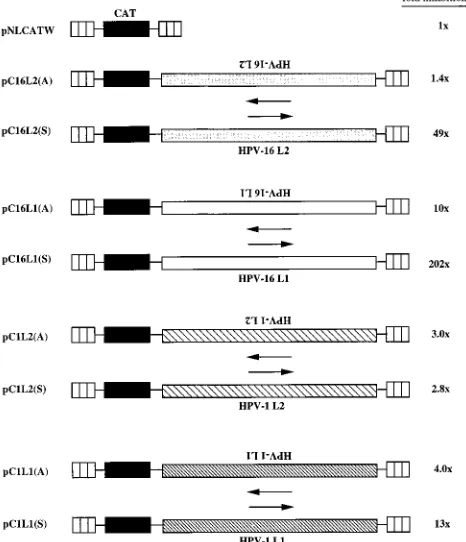
transfec-tions revealed that pC16L2(S) produced 49-fold-lower
lev-els of CAT than pNLCATW (58), whereas pC16L2(A) and
[image:3.612.53.275.76.285.2]FIG. 2. (A) Structures of the L2 expression plasmids. Shaded boxes indicate the HPV-16 L2 coding region, striped boxes represent HIV-1 LTRs, and trian-gles represent poly(A) signals (pA). Plasmid names are indicated on the left. T7, bacteriophage T7 RNA polymerase promoter; CMV, CMV immediate-early promoter. (B) Radioimmunoprecipitation of HPV-16 L2 from HeLa cells in-fected with recombinant vaccinia virus vTF7-3 (20) and transin-fected with pT7-16L2 or HLtat cells (48) transfected with pHpT7-16L2 or pCMVpT7-16L2. P, preimmune guinea pig serum; L, guinea pig anti–HPV-16 L2 peptide antiserum (18). Num-bers indicate molecular masses in kilodaltons.
FIG. 3. Schematic structures of CAT expression plasmids. The HIV-1 LTR (striped boxes), the CAT gene, and the HPV-1 or HPV-16 L1 and L2 sequences are indicated. Plasmids contained the L1 or L2 ORF from the first ATG to the translational stop codon. Plasmid names are shown on the left. Arrows indicate sense (3) and antisense (4) orientations. The depicted plasmids were trans-fected in triplicate into HLtat cells, and CAT levels were monitored in a CAT ELISA and normalized to SEAP levels produced from the internal control plasmid pCS1X (58). The mean CAT values obtained after triplicate transfec-tions with pNLCATW (58) were divided by the mean CAT values obtained after triplicate transfections with the indicated plasmids to yield fold inhibition.
on November 9, 2019 by guest
http://jvi.asm.org/
[image:3.612.311.544.369.640.2]pNLCATW (58) produced similar levels of CAT (Fig. 3).
These results demonstrated that the HPV-16 L2 coding region
contains cis-acting inhibitory sequences that acted in an
orien-tation-dependent manner to reduce CAT production. For
comparison, we analyzed the effect on CAT expression of the
HPV-16 L1 coding region. The results demonstrated that
pC16L1(S) produced 202-fold-lower CAT levels than
pNL-CATW (58) and that the presence of L1 in an antisense
ori-entation had a lower inhibitory effect (Fig. 3), as we described
previously (58). The HPV-16 L1 sequence had stronger
inhib-itory activity than the L2 sequence.
The HPV-1 L1 and L2 coding regions do not contain strong
inhibitory sequences.
We next investigated if the presence
of inhibitory sequences in the L1 and L2 coding regions is
a general property of HPVs. The L1 and L2 coding
se-quences from HPV-1 were separately inserted in the sense
and antisense orientations downstream of the CAT gene in
pNLCATW (58), resulting in pC1L1(S), pC1L1(A), pC1L2(S),
and pC1L2(A) (Fig. 3). These plasmids were transfected into
HLtat cells (48), and the levels of CAT were determined. The
results showed that HPV-1 L1 and L2 inhibited CAT
expres-sion 13- and 3-fold, respectively (Fig. 3), demonstrating that
the HPV-1 L1 and L2 coding sequences encode only low
in-hibitory activity. The ratios between CAT levels produced from
each plasmid containing HPV sequences in the sense
orienta-tion and CAT levels produced from the corresponding plasmid
containing HPV sequences in the antisense orientation were
0.32 and 1.1 for the HPV-1 L1 [pC1L1(S)/pC1L1(A)] and L2
[pC1L2(S)/pC1L2(A)] plasmids, respectively, whereas the
cor-responding ratios for the HPV-16 L1 [pC16L1(S)/pC16L1(A)]
and L2 [pC16L2(S)/pC16L2(A)] plasmids were 0.05 and 0.03,
respectively. We concluded that the HPV-16 L1 and L2 coding
regions contain strong inhibitory sequences located on the
coding strand; the HPV-1 L2 sequence appeared to lack
sig-nificant inhibitory activity, whereas the HPV-1 L1 sequence
had weak inhibitory activity.
The inhibitory sequences in HPV-16 L2 are active in cells of
different origins.
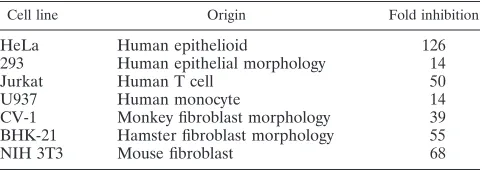
We transfected pC16L2(A) or pC16L2(S)
(Fig. 2A) into cell lines of different origins (Table 1) to test if
the inhibitory activity of the L2 sequences was restricted to
epithelial cells. Table 1 shows a 14- to 126-fold difference in
CAT production between pC16L2(A) and pC16L2(S) in the
cell lines, indicating that the inhibitory sequences were
func-tional in different cell types and in cells from different species.
However, the inhibitory element in HPV-16 L2 acted most
efficiently in human epithelial cells. The results indicated that
the regulatory mechanism involving the HPV-16 L2 sequences
is evolutionarily conserved and is not cell type specific.
The HPV-16 L2 coding region contains cis-acting sequences
that reduce cytoplasmic and nuclear mRNA levels.
To further
investigate the inhibitory effect of the HPV-16 L2 coding
se-quence, plasmids pC16L2(S), pC16L2(A), and pNLCATW
were separately transfected into HLtat cells in the presence of
the internal control plasmid pHCMVtat (see Materials and
Methods), and cytoplasmic mRNA levels were monitored by
primer extension. The results revealed that pNLCATW and
pC16L2(A) produced similar mRNA and protein levels,
where-as pC16L2(S) produced significantly lower mRNA and protein
levels than pC16L2(A) and pNLCATW (Fig. 4A), respectively.
The differences were 20- to 13-fold at the mRNA level and
133- to 147-fold at the protein level. Quantitation of mRNA
and protein levels in cells transfected with serially diluted
pNLCATW verified that the analysis was performed in the
linear range of the assays (Fig. 4B). In addition, we analyzed
cytoplasmic poly(A)
1mRNA by RT-PCR with fourfold
seri-ally diluted mRNA. The results demonstrated that the mRNA
levels produced from pC16L2(S) were approximately 30- to
60-fold lower than those produced from pNLCATW (Fig. 4C).
The levels of internal control EIAV gag mRNA did not vary
significantly between the two transfections. The CAT protein
levels produced from pC16L2(S) were 140-fold lower than
those produced from pNLCATW in the same transfection
experiment (Fig. 4C).
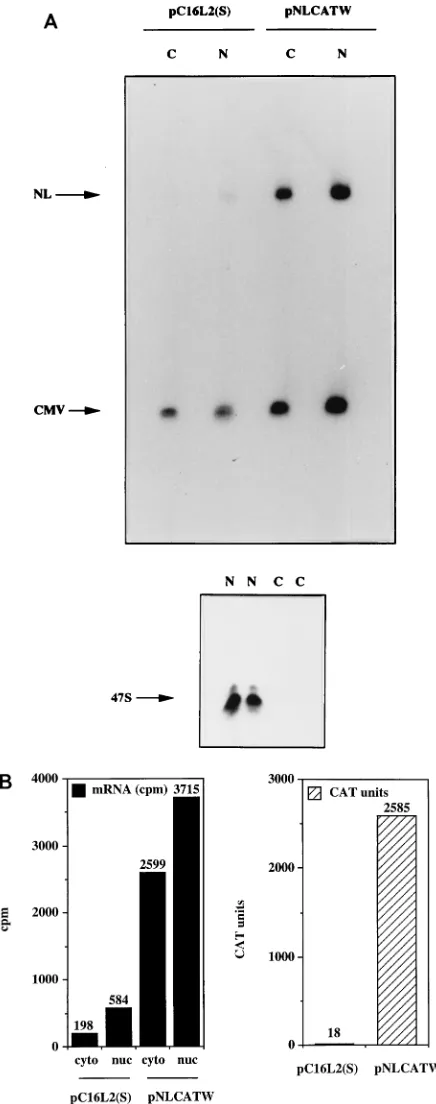
Next, cytoplasmic and nuclear RNAs were extracted and
analyzed by primer extension. The mRNA levels produced from
pC16L2(S) were lower than those produced from pNLCATW
in both cellular compartments (Fig. 5A). The results in Fig. 5B
show that the mRNA levels produced from pC16L2(S) were
13-fold lower in the cytoplasm and 6-fold lower in the nucleus
than those produced from pNLCATW. Analysis of the
subcel-lular distribution of the pC16L2(S) and pNLCATW mRNAs
showed that 25 and 41% were cytoplasmic, respectively (Fig.
5). pHCMVtat mRNA was evenly distributed in the
cytoplas-mic and nuclear compartments (Fig. 5A; 46 and 40% of the
pHCMVtat mRNAs were cytoplasmic in the two
transfec-tions). The 47S rRNA precursor was found only in the nuclear
fractions (Fig. 5A), as expected. CAT protein levels produced
from pC16L2(S) in the same transfection experiment were
73-fold lower than those produced from pNLCATW (Fig. 5B).
It was observed in all transfection experiments that the
inhib-itory effect was greater at the protein level than at the mRNA
level. These results indicated that the L2 sequence acted by
reducing mRNA levels in the nuclear and cytoplasmic
com-partments and suggested an additional inhibitory effect on
mRNA utilization.
[image:4.612.50.292.90.175.2]HPV-16 L2 contains cytoplasmic mRNA instability
determi-nants.
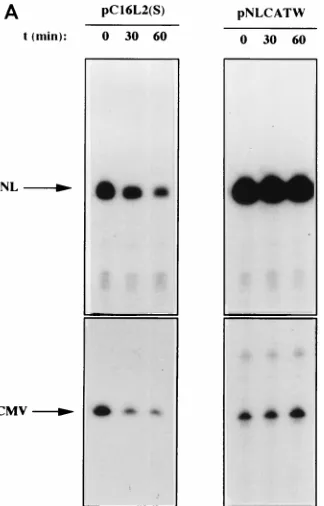
To investigate if the decreased levels of L2-containing
mRNAs could be explained by a reduced mRNA half-life,
HLtat cells were transfected with pC16L2(S) or pNLCATW
and treated with actinomycin D for 0, 30, and 60 min.
Cyto-plasmic RNA was extracted, and mRNA levels were quantified
by primer extension. Figure 6A shows that the mRNAs
pro-duced from pC16L2(S) were less stable than those propro-duced
from pNLCATW, a result which explains, at least in part, the
reduced steady-state levels of L2-containing mRNAs. The
cy-toplasmic half-life of pC16L2(S) mRNAs was 61 min, whereas
the pNLCATW-derived mRNAs had a half-life of 161 min
(Fig. 6B). The mRNA half-life was reduced approximately
threefold when the L2 sequence was present on the mRNA.
The pC16L2(S)-derived mRNAs were more stable in the
nu-cleus than in the cytoplasm (data not shown), and we therefore
focused on cytoplasmic L2 mRNA. The stability of several
cellular mRNAs is affected by translation inhibitors (reviewed
in reference 41). To test if CAT-L2 mRNA levels could be
induced by translation inhibitors, we treated
pC16L2(S)-trans-fected cells with cycloheximide for 0, 1, 2, and 3 h. Levels of
cytoplasmic mRNAs produced from pC16L2(S) continuously
increased during the cycloheximide treatment time course
(Fig. 7A), indicating that the effect on cytoplasmic mRNA
TABLE 1. The negative element in HPV-16 L2 is active
in cells of different origins
Cell line Origin Fold inhibition
HeLa
Human epithelioid
126
293
Human epithelial morphology
14
Jurkat
Human T cell
50
U937
Human monocyte
14
CV-1
Monkey fibroblast morphology
39
BHK-21
Hamster fibroblast morphology
55
NIH 3T3
Mouse fibroblast
68
on November 9, 2019 by guest
http://jvi.asm.org/
stability was dependent on protein synthesis. There was an
approximate fivefold induction after 3 h of cycloheximide
treatment (Fig. 7A), while the difference in steady-state
mRNA levels between pC16L2(S) and pNLCATW was
10-to 30-fold, indicating that inhibition of translation did not
entirely prevent premature cytoplasmic degradation of
CAT-L2 mRNAs. To test if specific inhibition of translation of the
mRNA produced by pC16L2(S) resulted in increased
cytoplas-mic mRNA levels, a stable GC-rich hairpin loop that blocks
translation of the mRNA was inserted at the 5
9
end of pC16L2
(S), generating pC16L2-Stop (Fig. 7B). This plasmid did not
produce detectable levels of CAT protein. The mRNA levels
produced from pC16L2-Stop were twofold lower than those
produced from pC16L2(S) (Fig. 7C). The reason for this may
be that the introduction of a stable RNA structure may have
effects on the mRNA other than inhibiting translation. These
results indicated that the reduction of the cytoplasmic mRNA
levels by the L2 sequence was not dependent on translation of
the L2-CAT mRNAs. The results presented here also
demon-strate that HPV-16 L2 contains a rapid mRNA degradation
determinant and suggest that a labile factor targets HPV-16 L2
mRNAs for premature degradation in the cytoplasm.
We wished to confirm that the low cytoplasmic mRNA levels
produced from the CAT-L2 hybrid plasmids were a result of
the presence of L2 and were not caused by the combination of
CAT and L2 sequences. We therefore compared the
steady-state cytoplasmic mRNA levels produced from p16L2
D
C (Fig.
7B), designed to express the L2 gene from the HIV-1 LTR
promoter in the absence of the CAT gene, with those produced
from pC16L2(S). The two plasmids produced similar low
cy-toplasmic mRNA levels (Fig. 7C), and L2 protein could not be
detected in cells transfected with p16L2
D
C (data not shown).
In conclusion, the presence of the HPV-16 L2 sequence in the
mRNA resulted in decreased mRNA levels, caused by rapid
mRNA degradation.
[image:5.612.72.518.65.423.2]The cytoplasmic mRNA instability sequence is contained in
the 5
*
-most 845 nt of HPV-16 L2.
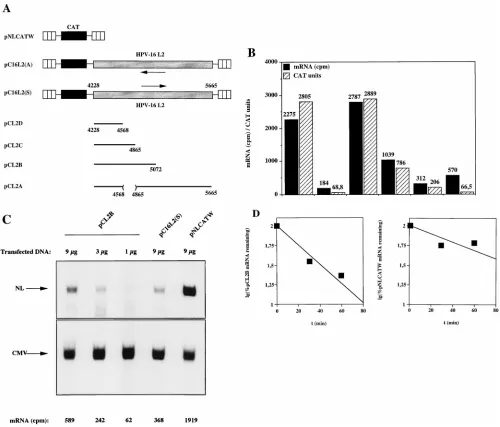
To map the negative
se-quences in HPV-16 L2, we introduced deletions in the L2
sequence contained in pC16L2(S), resulting in plasmids pCL2D,
pCL2C, pCL2B, and pCL2A (Fig. 8A). The L2 sequences
FIG. 4. The HPV-16 L2 inhibitory sequences reduce cytoplasmic mRNA levels. (A) Cytoplasmic mRNA levels produced from the indicated plasmids were detected by primer extension. NL, extension products of mRNAs derived from the HIV-1 LTR promoter; CMV, extension products of the internal control mRNA derived from the CMV immediate-early promoter in pHCMVtat; CAT units, CAT protein levels produced from the indicated plasmids. (B) Serially diluted pNLCATW plasmid DNA was transfected into HLtat cells. Cytoplasmic mRNA levels (counts per minute [cpm]) were quantified by use of a PhosphorImager, and CAT protein levels (CAT units) were quantified by a CAT antigen capture ELISA. NL, primer extension products of mRNAs derived from the HIV-1 LTR promoter in pNLCATW. (C) RT-PCR of fourfold serially diluted cytoplasmic poly(A)1mRNAs extracted from HLtat cells transfected with plasmid pNLCATW or pC16L2(S) as indicated. The upper panel
shows PCR amplification with oligonucleotide primers specific for cDNA generated from the CAT mRNAs produced from pNLCATW and pC16L2(S), and the lower panel shows PCR amplification with oligonucleotide primers specific for cDNA generated from the EIAV gag mRNAs produced from the internal control plasmid pE55 (59). RT-, amplification from poly(A)1mRNA in the absence of reverse transcriptase.
on November 9, 2019 by guest
http://jvi.asm.org/
present in pCL2A, pCL2B, and pCL2C inhibited CAT
expres-sion when compared to pNLCATW but less so than did the entire
L2 sequence present in pC16L2(S) (Fig. 8A). pCL2D produced
CAT levels similar to those produced from pNLCATW (Fig.
8A), demonstrating that the inhibitory sequences had been
destroyed. Therefore, sequences in the 5
9
and 3
9
ends of the L2
coding region contributed to the inhibitory activity.
Alterna-tively, inhibitory sequences were located in the 5
9
end and in
the middle portion of the L2 coding region.
Next, the cytoplasmic mRNA levels produced from
pNLCATW and the HPV-16 L2-containing plasmids pC16L2(S),
pCL2D, pCL2C, pCL2B, and pCL2A were assayed and
quan-tified by primer extension. pCL2D produced mRNA and CAT
protein levels similar to those produced from pNLCATW,
demonstrating that the mRNA instability determinant had
been destroyed by the deletion. pCL2C was partially inhibitory,
indicating that L2 sequences between nt 4228 and nt 4865 were
required for the function of the mRNA instability determinant.
However, these sequences did not encompass the entire
mRNA instability determinant. pCL2B produced mRNA
lev-els comparable to those produced from pC16L2(S), indicating
that the first 845 nt contained the complete mRNA instability
sequence. To confirm this result, mRNA levels produced from
serially diluted pCL2B were determined and compared to
mRNA levels produced from pNLCATW and pC16L2(S) (Fig.
8C). The results verified that pCL2B produced low levels of
mRNA similar to those produced from pC16L2(S) (Fig. 8C)
and that pCL2B and pC16L2(S) produced lower mRNA levels
than did pNLCATW (Fig. 8C). Actinomycin D time course
experiments with pCL2B- and pNLCATW-transfected cells,
followed by analysis of the cytoplasmic mRNA levels produced
from these plasmids, showed that the cytoplasmic half-life of
pCL2B mRNAs was threefold lower than that of pNLCATW
mRNAs (Fig. 8D). These results mapped the HPV-16 L2
mRNA instability sequence to the first 845 nt of the L2 ORF.
Interestingly, pCL2A produced higher mRNA levels than did
pC16L2(S), but these were lower than those produced from
pNLCATW, indicating that the mRNA instability determinant
was affected but not destroyed. However, at the protein level,
the inhibitory activity of the L2 sequence in pCL2A was
stron-ger than that in pCL2B (Fig. 8B), suggesting the existence of
additional inhibitory sequences in the 3
9
end of L2.
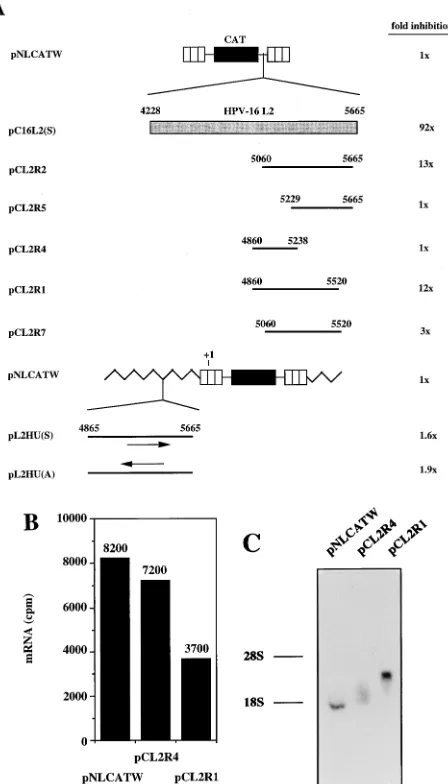
Identification of inhibitory sequences in the 3
*
end of L2.
To
confirm the presence of inhibitory sequences in the 3
9
end of
L2, sequences spanning various parts of the 3
9
-most 800 nt of
HPV-16 L2 (nt 4865 to nt 5665) were inserted downstream of
CAT in pNLCATW. Analysis of the CAT levels produced
from pCL2R1 and pCL2R2 (Fig. 9A) revealed that the L2
sequences present in these two plasmids inhibited CAT
pro-duction to similar extents (Fig. 9A), suggesting that an
inhib-itory region was located in the middle of these two overlapping
sequences. The borders of this region should be nt 5060 and nt
5520. However, the presence of this fragment downstream of
CAT, as in pCL2R7, did not result in strong inhibition (Fig.
9A), indicating that additional sequences in the 5
9
and 3
9
ends
were required for efficient inhibition. This suggestion was
con-sistent with larger deletions of 5
9
and 3
9
sequences, as in
pCL2R5 and pCL2R4, respectively, resulting in a loss of
inhi-bition (Fig. 9A). We concluded that an inhibitory region was
located downstream of nt 4860 in the L2 coding sequence and
that efficient inhibition required the presence of 500 to 600 nt
of the L2 3
9
end.
[image:6.612.60.278.78.630.2]Next we monitored the cytoplasmic mRNA levels produced
from plasmids pNLCATW, pCL2R1, and pCL2R4 (Fig. 9A).
Primer extension revealed that pCL2R1 produced
approxi-mately twofold-lower cytoplasmic mRNA levels than did
FIG. 5. The HPV-16 L2 inhibitory sequences reduce mRNA levels in both cytoplasmic and nuclear compartments. (A) Cytoplasmic (C) and nuclear (N) mRNA levels produced from the indicated plasmids were detected by primer extension. NL, extension products of mRNAs derived from the HIV-1 LTR promoter; CMV, extension products of the internal control mRNA derived from the CMV immediate-early promoter in pHCMVtat; 47S, extension product of the 47S precursor rRNA. (B) Histogram showing cytoplasmic (cyto) and nuclear (nuc) mRNA levels (counts per minute [cpm]) quantified by use of a Phosphor-Imager and CAT protein levels (CAT units) produced from the indicated plas-mids.
on November 9, 2019 by guest
http://jvi.asm.org/
pCL2R4 and pNLCATW (Fig. 9B). The mRNAs produced
from these plasmids were of the expected sizes when analyzed
by Northern RNA blotting (Fig. 9C). These results indicated
that the 12-fold inhibitory effect conferred by the L2 sequence
in pCL2R1 (Fig. 9A) was at the posttranscriptional level. The
presence of the 3
9
-most 800 nt of the L2 sequence upstream
of the transcribed region, as in plasmids pL2HU(S) and
pL2HU(A) (Fig. 9A), had no effect on CAT levels (Fig. 9A),
further indicating that inhibition occurred
posttranscription-ally. We concluded that weaker inhibitory sequences were
present in the 3
9
-most 800 nt of L2. These inhibitory sequences
acted independently of those in the 5
9
end of L2.
DISCUSSION
Here we show that the HPV-16 L2 coding region contains
cis-acting inhibitory sequences that act in an
orientation-de-pendent manner to reduce cytoplasmic and nuclear mRNA
levels. The low cytoplasmic mRNA steady-state levels were a
result of the reduced stability of mRNAs containing L2.
Map-ping experiments demonstrated that the 5
9
end of the L2
cod-ing region contained an mRNA destabilization sequence and
that the 3
9
end of L2 contained a weaker inhibitory sequence
that acted posttranscriptionally to reduce protein levels.
Fur-thermore, we showed that strong inhibitory sequences in the
L1 and L2 coding regions are found in HPV-16 but not in
HPV-1, suggesting that late-gene expression is differently
reg-ulated by these two HPV types.
Regulation of mRNA stability is a common mechanism of
posttranscriptional gene regulation in eucaryotes (reviewed in
references 2, 3, 9, and 40 to 42). Mammalian c-fos, c-myc, and
b
-tubulin mRNAs have been shown to encode mRNA
insta-bility determinants in their coding regions (4, 6, 27, 45, 54, 55,
62–64, 66, 67). Interestingly, c-fos and c-myc mRNAs also
contain mRNA instability determinants in their 3
9
UTRs (9,
41), a property that they share with late HPV-16 L1 and L2
mRNAs (21, 29, 30, 58). The mRNA instability determinants
in the c-fos, c-myc, and
b
-tubulin coding regions are located in
the middle, 3
9
, and 5
9
regions and span approximately 320 (54,
55), 320 (63), and 40 (8, 13–15, 38) nt, respectively. The
HPV-16 L2 coding region mRNA destabilizing determinant is
contained within the first 845 nt (Fig. 8). Mapping of the 5
9
end
of the L2 sequence will show if the size of the functional
element is smaller. The L2 coding region does not contain
AUUUA or UUUUU motifs, which are commonly found in
AU-rich mRNA instability elements (9, 41), but does have a
60% A
1
U content, similar to that of an mRNA instability
sequence located in the HIV-1 gag ORF (50). The human
insulinlike growth factor II mRNA contains an RNA
cleavage-promoting sequence in the 3
9
UTR, consisting of two elements
located approximately 2,000 nt apart (44). These RNA
ele-ments hybridize to form the functionally active stem-loop
structure (44). It remains to be investigated if it is the RNA
primary or secondary structure that is the major determinant
of the activity of the HPV-16 L2 mRNA instability
determi-nant.
It was previously concluded that translation of the c-myc and
c-fos mRNAs specifically was required for deadenylation and
rapid degradation (27, 45, 64). The function of the negative
element in the
b
-tubulin coding region is dependent on the
production of the first amino acids of the
b
-tubulin protein (66,
67). Furthermore, the yeast MAT
a1 mRNA is rapidly
de-graded as a result of the presence in the mRNA coding region
of rare codons (7, 26). Similarly, we showed that treatment of
cells with the translation elongation inhibitor cycloheximide
rendered the CAT-L2 hybrid mRNAs more stable in the
cy-toplasm (Fig. 7A). However, the function of the mRNA
insta-bility sequence in the CAT-L2 hybrid mRNAs was not
depen-dent on translation of these mRNAs specifically (Fig. 7B and
C), suggesting that a labile factor targets the L2 mRNA for
rapid degradation. This suggestion is not without precedent,
since premature degradation of a c-fos 3
9
UTR-containing
[image:7.612.85.247.69.322.2]mRNA was shown to be inhibited by cycloheximide but not by
insertion into the mRNA of sequences that blocked the
trans-lation of c-fos (31). This idea is consistent with our
observa-tions of reduced CAT-L2 mRNA levels in both the cytoplasmic
and the nuclear compartments (Fig. 5), suggesting that mRNA
destabilization occurs in the nucleus and the cytoplasm.
Alter-natively, inhibition of translation by cycloheximide affects the
FIG. 6. The HPV-16 L2 inhibitory sequences reduce cytoplasmic mRNA stability. (A) Cytoplasmic mRNA levels produced from the indicated plasmids were detected by primer extension at different times [t (min)] after the addition of 10mg of actinomycin D (Sigma) per ml to the media. NL, extension products of mRNAs derived from the HIV-1 LTR promoter; CMV, extension products of the internal control mRNA derived from the CMV immediate-early promoter in pHCMVtat. (B) Quantitation of mRNA levels at the indicated times by use of a PhosphorImager after normalization to the internal control mRNA levels. lg, log. A representative experiment is shown.
on November 9, 2019 by guest
http://jvi.asm.org/
stability of the mRNA only in the cytoplasm. The c-fos coding
region instability determinant interacts with cellular factors
(10), and the c-myc mRNA instability determinant binds a
70-kDa protein which protects against degradation of the
c-myc mRNA (39). A recent report indicates that the HPV-16 L2
protein interacts nonspecifically with nucleic acids (69).
How-ever, production of the HPV-16 L2 protein is most likely not
required for the inhibitory activity of the L2 mRNA. It remains
to be investigated by what mechanism L2-containing mRNAs
are degraded in the cytoplasm and the nucleus and if cellular
proteins bind to them. We cannot exclude the possibility that
L2-containing mRNAs are retained in the nucleus, where they
are prematurely degraded.
HPVs infect dividing cells in the basal cell layer of the
stratified epithelium. As the infected cell moves toward the
upper cell layers and differentiates, HPV late-gene expression
is activated (11, 23, 28, 32, 33, 56). This
differentiation-depen-dent HPV late-gene expression pattern has been observed for
several different HPV types, illustrating that the expression of
late genes is suppressed in the lower cell layers, while in the
upper strata, with differentiated cells, this block is relieved.
Interestingly, the expression of c-fos in squamous cell
epithe-lium also is differentiation dependent, with higher c-fos mRNA
and protein levels in the upper strata (19). Therefore, the
inhibitory activity of the c-fos and HPV-16 L2 coding region
determinants must be relieved as the cell differentiates.
Inter-FIG. 7. (A) The effect on cytoplasmic mRNA levels of the HPV-16 L2 inhibitory sequences could be reduced by translation inhibitors. Cytoplasmic mRNA levels produced from the indicated plasmids were detected by primer extension at different times [t (h)]) after the addition of 10mg of cycloheximide (Sigma) per ml to the cell culture media. NL, extension products of mRNAs derived from the HIV-1 LTR promoter; CMV, extension products of the internal control mRNA derived from the CMV immediate-early promoter in pHCMVtat. The graph shows quantitation of the mRNA levels at the indicated times by use of a PhosphorImager after normalization to the internal control mRNA levels. A representative experiment is shown. (B) Translation of the CAT-L2 mRNA specifically is not required for the reduction of cytoplasmic mRNA levels. Plasmid structures are shown. Shaded boxes represent the HPV-16 L2 coding region, numbers indicate nucleotide positions (51), striped boxes indicate HIV-1 LTRs, black boxes indicate the CAT gene, and a GC-rich hairpin is shown as a stem-loop structure. Plasmid names are indicated on the left. (C) Cytoplasmic mRNA levels produced from the indicated plasmids were detected by primer extension. NL, extension products of mRNAs derived from the HIV-1 LTR promoter; CMV, extension products of the internal control mRNA derived from the CMV immediate-early promoter in pHCMVtat.
on November 9, 2019 by guest
http://jvi.asm.org/
estingly, c-myc production decreases as myoblasts differentiate.
A recent report indicated that this effect is attributable to the
c-myc coding region mRNA instability determinant (65),
dem-onstrating an inverse correlation between the inhibitory
activ-ity of the RNA sequence and cell differentiation for c-fos and
HPV-16 late mRNAs. It remains to be investigated if the
inhibitory sequences in HPV-16 L1 and L2 are as active in
terminally differentiated cells as in dividing cells.
An attempt to classify HPVs into different groups based on
[image:9.612.51.551.66.493.2]the amount of virus present in benign lesions has been made
and has suggested that HPVs can be divided into three groups:
productive, weakly productive, and nonproductive (57). It is of
interest to note that HPV-1 categorically falls into the
produc-tive group, characterized by the detection of moderate to large
amounts of virus in lesions, whereas HPV-16 belongs to the
weakly productive group, where only minute amounts of virus
can be detected. Since we have identified strong negative
se-quences in HPV-16 L1 and L2 (58; this study) but not in
FIG. 8. The 59end of the L2 sequence contains a cytoplasmic mRNA instability determinant. (A) Schematic structures of CAT expression plasmids. Striped boxes indicate HIV-1 LTRs, black boxes represent the CAT gene, shaded boxes represent the HPV-16 L2 coding region, and arrows indicate antisense (4) and sense (3) orientations. Numbers refer to nucleotide positions in the HPV-16 genomic clone (51). Plasmid names are shown on the left. The depicted plasmids were transfected in triplicate into HLtat cells, and CAT levels were monitored in a CAT antigen capture ELISA and normalized to SEAP levels produced from the internal control plasmid pCS1X (58). The mean CAT values obtained after triplicate transfections with pNLCATW (58) were divided by the mean CAT values obtained after triplicate transfections with the indicated plasmids to yield fold inhibition (for plasmids from top to bottom, fold inhibition was 1, 1.2, 88, 1, 9, 14, and 56). (B) Histogram showing the cytoplasmic mRNA levels quantified by use of a PhosphorImager (counts per minute [cpm]) and CAT protein levels (CAT units) produced from plasmids pNLCATW, pC16L2(S), pCL2D, pCL2C, pCL2B, and pCL2A. (sets of bars from left to right). (C) Serially diluted pCL2B plasmid DNA was transfected as indicated. Cytoplasmic mRNA levels (cpm) were quantified by use of a PhosphorImager. NL, primer extension products of mRNAs derived from the HIV-1 LTR promoter; CMV, extension products of the internal control mRNA derived from the CMV immediate-early promoter in pHCMVtat. (D) Cytoplasmic mRNA levels produced from the indicated plasmids were detected by primer extension at different times [t (min)] after the addition of 10mg of actinomycin D (Sigma) per ml to the media. NL, extension products of mRNAs derived from the HIV-1 LTR promoter; CMV, extension products of the internal control mRNA derived from the CMV immediate-early promoter in pHCMVtat. The graphs show quantitation of the mRNA levels at the indicated times by use of a PhosphorImager after normalization to the internal control mRNA levels. lg, log. A representative experiment is shown.
on November 9, 2019 by guest
http://jvi.asm.org/
HPV-1 L1 and L2, it is reasonable to speculate that the
neg-ative sequences present in the coding regions may explain the
different amounts of virions present in lesions caused by
HPV-1 and HPV-16. In contrast, both HPV-1 and HPV-16
show strict cell differentiation-dependent expression of late
genes. This property correlates with the presence of a negative
element in the 3
9
UTRs of the late mRNAs of both HPV types
(29, 30, 58, 60), suggesting that the block in late-gene
expres-sion caused by the 3
9
UTR element is alleviated as the cell
differentiates. It would be of interest to determine the effect of
cell differentiation on the activity of the 3
9
UTR and coding
region inhibitory sequences.
The regulation of viral late-gene expression caused by the
presence of negative regulatory sequences on the mRNAs
cod-ing for structural proteins appears to be a common strategy
used by many viruses. Although such inhibitory RNA
se-quences have not yet been characterized in detail, several
re-ports on negative sequences on viral late mRNAs have been
presented. For example, HIV-1 contains inhibitory sequences
in the Gag, Pol, and Env coding regions (16, 34, 37, 46, 47, 50)
and human T-cell leukemia virus type 1 contains inhibitory
sequences in the 5
9
UTR (52) and in the Pol and Env coding
regions (43). An mRNA instability sequence previously
iden-tified in the HIV-1 gag ORF was shown to reduce mRNA
levels in both cytoplasmic and nuclear compartments (50),
similar to the data presented here for HPV-16 L2 (Fig. 5). The
HIV-1 gag mRNA inhibitory element interacted specifically
with poly(A)-binding protein 1 (1), but in preliminary
experi-ments we did not detect binding to the L2 sequences of
pro-teins with an affinity for poly(A).
The presence of multiple inhibitory sequences on viral late
mRNAs encoding structural proteins appears to be a common
property of HIV-1, HTLV-1, and HPV-16. For example,
HIV-1 contains inhibitory sequences in the Env coding region
(12, 37) that would be present on the Env-producing and
Gag-Pol-producing mRNAs as well as inhibitory sequences in
the Gag and Pol coding regions (16, 34, 47, 50). A similar
arrangement is observed for HPV-16, where the HPV-16 L1
coding region contains inhibitory elements (58) that would be
present on both the L1 mRNAs and the L2-L1 mRNAs (5). In
addition to these negative elements, the L2-L1 mRNAs would
contain the L2 coding region inhibitory sequences described
here. Therefore, the inhibitory sequences in HPV-16 L2 would
allow independent regulation of L1 and L2 production.
Per-haps the presence of inhibitory sequences in the L2 coding
region allows a balanced production of L1 and L2 and reflects
a requirement for the production of a certain ratio between L1
and L2 molecules to generate correctly assembled virions.
Al-ternatively, perhaps the posttranscriptional processing and
reg-ulation of expression of a polycistronic mRNA are different
from those of a monocistronic mRNA and therefore require
more complex cis-acting signals. In conclusion, the presence of
negative elements on viral late mRNAs allows the virus to
regulate late-gene expression and virus production. This ability
may be of critical importance for the virus in avoiding host
immune system surveillance and in establishing persistent
in-fections. Subgenomic virus expression plasmids encoding late
genes lacking negative sequences may be valuable tools for the
development of DNA vaccines.
ACKNOWLEDGMENTS
We thank M. Yaniv, F. Thierry, H. zur Hausen, G. N. Pavlakis, and
B. K. Felber for plasmids, J. Dillner for guinea pig anti-HPV-16 L2
peptide antiserum, S. Leonov for help with electrotransfer equipment,
and S. Izadi for participating in some experiments.
Part of this work was performed at the Department of Medical
Immunology and Microbiology, Biomedical Center, Uppsala
Univer-sity. This work was supported by the Swedish Cancer Society, the
Swedish Medical Research Council, the Swedish Society for Medical
Research, the Swedish Society of Medicine, Anders Otto Swa¨rds
Stif-telse, Stiftelsen Lars Hiertas Minne, Jeanssonska Stiftelserna, Magnus
Bergvalls Stiftelse, and Åke Wibergs Stiftelse.
REFERENCES
[image:10.612.58.282.70.462.2]1. Afonia, E., M. Neumann, and G. N. Pavlakis. 1997. Preferential binding of poly(A)-binding protein 1 to an inhibitory RNA element in the human FIG. 9. The 39end of L2 contains weak inhibitory sequences. (A) Schematic
structures of CAT expression plasmids. Striped boxes indicate HIV-1 LTRs, black boxes represent the CAT gene, shaded boxes represent the HPV-16 L2 coding region, and thick black lines indicate subfragments of the L2 coding region. Numbers refer to nucleotide positions in the HPV-16 genomic clone (51). Arrows indicate sense (3) and antisense (4) orientations. Jagged line, vector sequence;11, start of transcription in the HIV-1 LTR promoter. Plasmid names are shown on the left. The depicted plasmids were transfected in triplicate into HLtat cells, and CAT levels were monitored in a CAT antigen capture ELISA and normalized to SEAP levels produced from the internal control plasmid pCS1X (58). The mean CAT values obtained after triplicate transfections with pNLCATW (58) were divided by the mean CAT values obtained after triplicate transfections with the indicated plasmids to yield fold inhibition. (B) Cytoplasmic mRNA levels produced from the indicated plasmids were detected by primer extension. The histogram shows the mRNA levels quantified by use of a Phos-phorImager (counts per minute [cpm]). (C) Northern RNA blotting of cytoplas-mic RNA extracted from cells transfected with the indicated plasmids. The positions of the 28S and 18S rRNA species are shown.
on November 9, 2019 by guest
http://jvi.asm.org/
immunodeficiency virus type 1 gag mRNA. J. Biol. Chem. 272:2307–2311. 2. Belasco, J. G., and G. Brawerman (ed.). 1993. Control of messenger RNA
stability. Academic Press, Inc., San Diego, Calif.
3. Bellman, C. A., and R. Parker. 1995. Degradation of mRNA in eucaryotes. Cell 81:179–183.
4. Bernstein, P. L., D. J. Herrick, R. D. Prokipcak, and J. Ross. 1992. Control of c-myc mRNA half-life in vitro by a protein capable of binding to a coding region stability determinant. Genes Dev. 6:642–654.
5. Billakanti, S. R., C. E. Calef, A. D. Farmer, A. L. Halpern, and G. L. Myers. 1996. Human papillomaviruses: a compilation and analysis of nucleic acid and amino acid sequences. Theoretical Biology and Biophysics, Los Alamos National Laboratory, Los Alamos, N.Mex.
6. Brewer, G., and J. Ross. 1988. Poly(A) shortening and degradation of the 39
A1U-rich sequences of human c-myc mRNA in a cell-free system. Mol. Cell. Biol. 8:1697–1708.
7. Caponigro, G., and R. Parker. 1996. mRNA turnover in yeast promoted by the MATalpha1 instability element. Nucleic Acids Res. 24:4304–4312. 8. Caron, J. M., A. L. Jones, L. B. Rall, and M. W. Kirshner. 1985.
Autoreg-ulation of tubulin synthesis in enucleated cells. Nature (London) 317:645– 651.
9. Chen, C.-Y. A., and A.-B. Shyu. 1995. AU-rich elements: characterization and importance in mRNA degradation. Trends Biochem. Sci. 20:465–470. 10. Chen, C.-Y. A., Y. You, and A.-B. Shyu. 1992. Two cellular proteins bind
specifically to a purine-rich sequence necessary for the destabilization func-tion of a c-fos protein-coding region determinant of mRNA instability. Mol. Cell. Biol. 12:5748–5757.
11. Chow, L. T., and T. R. Broker. 1994. Papillomavirus DNA replication. In-tervirology 37:150–158.
12. Churchill, M. J., J. L. Moore, M. Rosenberg, and D. W. Brighty. 1996. The
rev-responsive element negatively regulates human immunodeficiency virus
type 1 mRNA expression in primate cells. J. Virol. 70:5786–5790. 13. Cleveland, D. W., and J. C. Havercroft. 1983. Is apparent autoregulatory
control of tubulin synthesis nontranscriptionally regulated? J. Biol. Chem.
97:919–924.
14. Cleveland, D. W., M. A. Lopata, P. Sherline, and M. W. Kirschner. 1981. Unpolymerized tubulin modulates the level of tubulin mRNAs. Cell 25:537– 546.
15. Cleveland, D. W., M. F. Pittenger, and J. R. Feramisco. 1983. Elevation of tubulin levels by microinjection suppresses new tubulin synthesis. Nature (London) 305:738–740.
16. Cochrane, A. W., K. S. Jones, S. Beidas, P. J. Dillon, A. M. Skalka, and C.
Rosen. 1991. Identification and characterization of intragenic sequences which repress human immunodeficiency virus structural gene expression. J. Virol. 65:5305–5313.
17. Danos, O., M. Katinka, and M. Yaniv. 1982. Human papillomavirus 1a complete DNA sequence: a novel type of genome organization among pa-povaviridae. EMBO J. 1:231–236.
18. Dillner, L., P. Heino, J. Moreno-Lopez, and J. Dillner. 1991. Antigenic and immunogenic epitopes shared by human papillomavirus type 16 and bovine, canine, and avian papillomaviruses. J. Virol. 65:6862–6871.
19. Fisher, C., M. R. Byers, M. J. Iadarola, and E. A. Powers. 1991. Patterns of epithelial expression of Fos protein suggest important role in the transition from viable to cornified cell during keratinization. Development 111:253– 258.
20. Fuerst, T. R., E. G. Niles, F. W. Studier, and B. Moss. 1986. Eukaryotic transient-expression system based on recombinant vaccinia virus that syn-thesizes bacteriophage T7 RNA polymerase. Proc. Natl. Acad. Sci. USA
83:8122–8126.
21. Furth, P. A., W.-T. Choe, J. H. Rex, J. C. Byrne, and C. C. Baker. 1995. Sequences homologous to 59 splice sites are required for the inhibitory activity of papillomavirus late 39untranslated regions. Mol. Cell. Biol. 14: 5278–5289.
22. Graham, F. J., and A. J. van der Eb. 1973. A new technique for the assay of infectivity of human adenovirus 5 DNA. Virology 52:456–460.
23. Hagensee, M. E., and D. A. Galloway. 1996. Growing human papillomavi-ruses and virus-like particles in the laboratory, p. 85–92. In C. Lacey (ed.), Papillomavirus reviews: current research on papillomaviruses. Leeds Uni-versity Press, Leeds, England.
24. Halpern, A., A. Farmer, and C. Calef. 1996. A survey of papillomavirus variants, p. i43–i185. In G. Myers (ed.), Human papillomaviruses, 1996. Theoretical Biology and Biophysics, Los Alamos National Laboratory, Los Alamos, N.Mex.
25. Heino, P., J. Dillner, and S. Schwartz. 1995. Human papillomavirus type 16 capsid proteins produced from recombinant Semliki Forest virus assemble into virus like particles. Virology 214:349–359.
26. Hennigan, A. N., and A. Jacobson. 1996. Functional mapping of the trans-lation-dependent instability element of yeast MATa1 mRNA. Mol. Cell.
Biol. 16:3833–3843.
27. Herrick, D. J., and J. Ross. 1994. The half-life of c-myc mRNA in growing and serum-stimulated cells: influence of the coding and 39 untranslated regions and role of ribosome translocation. Mol. Cell. Biol. 14:2119–2128. 28. Howley, P. M. 1996. Papillomavirinae: the viruses and their replication,
p. 2045–2076. In B. N. Fields, D. M. Knipe, and P. M. Howley (ed.), Fields’ virology, 3rd ed., vol. 2. Lippincott-Raven Publishers, Philadelphia, Pa. 29. Kennedy, I. M., J. K. Haddow, and J. B. Clements. 1990. Analysis of human
papillomavirus type 16 late mRNA 39processing signals in vitro and in vivo. J. Virol. 64:1825–1829.
30. Kennedy, I. M., J. K. Haddow, and J. B. Clements. 1991. A negative regu-latory element in the human papillomavirus type 16 genome acts at the level of late mRNA stability. J. Virol. 65:2093–2097.
31. Koeller, D. M., J. A. Horowitz, J. L. Casey, R. D. Klausner, and J. B.
Harford.1991. Translation and the stability of mRNAs encoding the trans-ferrin receptor and c-fos. Proc. Natl. Acad. Sci. USA 88:7778–7782. 32. Laimins, L. A. 1993. The biology of human papillomaviruses: from warts to
cancer. Infect. Agents Dis. 2:74–86.
33. Lambert, P. F. 1991. Papillomavirus DNA replication. J. Virol. 65:3417– 3420.
34. Maldarelli, F., M. A. Martin, and K. Strebel. 1991. Identification of post-transcriptionally active inhibitory sequences in human immunodeficiency virus type 1 RNA: novel level of gene regulation. J. Virol. 65:5732–5743. 35. Meyers, C., and L. A. Laimins. 1996. In vitro model systems for the study of
HPV induced neoplasias, p. 79–83. In C. Lacey (ed.), Papillomavirus reviews: current research on papillomaviruses. Leeds University Press, Leeds, En-gland.
36. Miller, A. D., and G. J. Rosman. 1989. Improved retroviral vectors for gene transfer and expression. BioTechniques 7:980–990.
37. Nasioulas, G., A. S. Zolotukhin, C. Tabernero, L. Solomin, C. P.
Cunning-ham, G. N. Pavlakis, and B. K. Felber.1994. Elements distinct from the human immunodeficiency virus type 1 splice sites are responsible for the Rev dependence of env mRNA. J. Virol. 68:2986–2993.
38. Pittenger, M. F., and D. W. Cleveland. 1985. Retention of autoregulatory control of tubulin synthesis in cytoplasts; demonstration of a cytoplasmic mechanism that regulates the level of tubulin expression. J. Cell Biol. 101: 1941–1952.
39. Prokipcak, R. D., D. J. Herrick, and J. Ross. 1994. Purification and proper-ties of a protein that binds to the C-terminal coding region of human c-myc mRNA. J. Biol. Chem. 269:9261–9269.
40. Ross, J. 1996. Control of messenger RNA stability in higher eucaryotes. Trends Biochem Sci. 12:171–176.
41. Ross, J. 1995. mRNA stability in mammalian cells. Microbiol. Rev. 59:15–95. 42. Sachs, A. B. 1993. Messenger RNA degradation in eucaryotes. Cell 74:413–
421.
43. Saiga, A., S. Orita, N. Minoura-Tada, M. Maeda, Y. Aono, M. Asakawa, K.
Nakahara, R. Kubota, M. Osame, and H. Igarashi.1997. cis-Acting inhibi-tory elements within the pol-env region of human T-cell leukemia virus type 1 possibly involved in viral persistence. J. Virol. 71:4485–4494.
44. Scheper, W., D. Meinsma, P. E. Holthuizen, and J. S. Sussenbach. 1995. Long-range RNA interaction of two sequence elements required for endo-nucleolytic cleavage of human insulin-like growth factor II mRNAs. Mol. Cell. Biol. 15:235–245.
45. Schiavi, S. C., C. L. Wellington, A.-B. Shyu, C.-Y. A. Chen, M. E. Greenberg,
and J. G. Belasco.1994. Multiple elements in the c-fos protein-coding region facilitate mRNA deadenylation and decay by a mechanism coupled to trans-lation. J. Biol. Chem. 269:3441–3448.
46. Schneider, R., M. Campbell, G. Nasioulas, B. K. Felber, and G. N. Pavlakis. 1997. Inactivation of human immunodeficiency virus type 1 inhibitory ele-ments allows Rev-independent expression of Gag and Gag/protease and particle formation. J. Virol. 71:4892–4903.
47. Schwartz, S., M. Campbell, G. Nasioulas, J. Harrison, B. K. Felber, and
G. N. Pavlakis.1992. Mutational inactivation of an inhibitory sequence in human immunodeficiency virus type 1 results in Rev-independent gag ex-pression. J. Virol. 66:7176–7182.
48. Schwartz, S., B. K. Felber, D. M. Benko, E. M. Fenyo¨, and G. N. Pavlakis. 1990. Cloning and functional analysis of multiply spliced mRNA species of human immunodeficiency virus type 1. J. Virol. 64:2519–2529.
49. Schwartz, S., B. K. Felber, E. M. Fenyo¨, and G. N. Pavlakis. 1990. Env and Vpu proteins of human immunodeficiency virus type 1 are produced from multiple bicistronic mRNAs. J. Virol. 64:5448–5456.
50. Schwartz, S., B. K. Felber, and G. N. Pavlakis. 1992. Distinct RNA se-quences in the gag region of human immunodeficiency virus type 1 decrease RNA stability and inhibit expression in the absence of Rev protein. J. Virol.
66:150–159.
51. Seedorf, K., G. Kra¨mer, M. Du¨rst, S. Suhai, and W. G. Ro¨wekamp. 1985. Human papillomavirus type 16 DNA sequence. Virology 145:181–185. 52. Seiki, M., A. Hikikoshi, and M. Yoshida. 1990. The U5 sequence is a
cis-acting repressive element for genomic RNA expression of human T cell leukemia virus type 1. Virology 186:81–86.
53. Shah, K. V., and P. M. Howley. 1996. Papillomaviruses, p. 2077–2109. In B. N. Fields, D. M. Knipe, and P. M. Howley (ed.), Fields’ virology, 3rd ed., vol. 2. Lippincott-Raven Publishers, Philadelphia, Pa.
54. Shyu, A.-B., J. G. Belasco, and M. E. Greenberg. 1991. Two distinct desta-bilizing elements in the c-fos message trigger deadenylation as a first step in rapid mRNA decay. Genes Dev. 5:221–231.
55. Shyu, A.-B., M. E. Greenberg, and J. G. Belasco. 1989. The c-fos transcript
on November 9, 2019 by guest
http://jvi.asm.org/
is targeted for rapid decay by two distinct mRNA degradation pathways. Genes Dev. 3:60–72.
56. Stanley, M. A. 1994. Replication of human papillomaviruses in cell culture. Antivir. Res. 24:1–15.
57. Taichman, L. B., and R. F. LaPorta. 1987. The expression of papillomavi-ruses in epithelial cells, p. 109–139. In N. P. Salzman and P. M. Howley (ed.), The papovaviridae. Plenum Press, New York, N.Y.
58. Tan, W., B. K. Felber, A. S. Zolotukhin, G. N. Pavlakis, and S. Schwartz. 1995. Efficient expression of human papillomavirus type 16 L1 protein in epithelial cells by using rev and the rev-responsive element of human immu-nodeficiency virus or the cis-acting transactivation element of simian retro-virus type 1. J. Virol. 69:5607–5620.
59. Tan, W., M. Schalling, C. Zhao, M. Luukkonen, M. Nilsson, E. M. Fenyo¨,
G. N. Pavlakis, and S. Schwartz. 1996. Inhibitory activity of the equine infectious anemia virus major 59splice site in the absence of Rev. J. Virol.
70:3645–3658.
60. Tan, W., and S. Schwartz. 1995. The Rev protein of human immunodefi-ciency virus type 1 counteracts the effect of an AU-rich negative element in the human papillomavirus type 1 late 39untranslated region. J. Virol. 69: 2932–2945.
61. Turek, L. P. 1994. The structure, function and regulation of papillomaviral genes in infection and cervical cancer. Adv. Virus Res. 44:305–356. 62. Wellington, C. L., M. E. Greenberg, and J. G. Belasco. 1993. The
destabi-lizing elements in the coding region of c-fos mRNA are recognized as RNA. Mol. Cell. Biol. 13:5034–5042.
63. Wisdom, R., and W. Lee. 1991. The protein-coding region of c-myc mRNA
contains a sequence that specifies rapid mRNA turnover and induction by protein synthesis inhibitors. Genes Dev. 5:232–243.
64. Wisdom, R., and W. Lee. 1990. Translation of c-myc mRNA is required for its posttranscriptional regulation during myogenesis. J. Biol. Chem. 265: 19015–19021.
65. Yeilding, N. M., M. T. Rehman, and W. M. F. Lee. 1996. Identification of sequences in c-myc mRNA that regulate its steady-state levels. Mol. Cell. Biol. 16:3511–3522.
66. Yen, T. J., D. A. Gay, J. S. Pachter, and D. W. Cleveland. 1988. Autoregu-lated changes in stability of polyribosome-boundb-tubulin mRNA are spec-ified by the first 13 translated nucleotides. Mol. Cell. Biol. 8:1224–1235. 67. Yen, T. J., P. S. Machlin, and D. W. Cleveland. 1988. Autoregulated
insta-bility ofb-tubulin mRNAs by recognition of the nascent amino terminus of
b-tubulin. Nature (London) 334:580–585.
68. Zhao, C., W. Tan, M. Sokolowski, and S. Schwartz. 1996. Identification of nuclear and cytoplasmic factors that interact specifically with an AU-rich,
cis-acting inhibitory sequence in the 39untranslated region of human papil-lomavirus type 1 late mRNAs. J. Virol. 70:3659–3667.
69. Zhou, J., X. Y. Sun, K. Louis, and I. H. Frazer. 1994. Interaction of human papillomavirus (HPV) type 16 capsid proteins with HPV DNA requires an intact L2 N-terminal sequence. J. Virol. 68:619–625.
70. zur Hausen, H. 1996. Papillomavirus infections—a major cause of human cancers. Biochim. Biophys. Acta 1288:55–78.
71. zur Hausen, H. 1991. Viruses in human cancers. Science 254:1167–1173. 72. zur Hausen, H., and E.-M. de Villiers. 1994. Human papillomaviruses. Annu.
Rev. Microbiol. 48:427–447.