S T U D Y P R O T O C O L
Open Access
Intervention for Diabetes with Education,
Advancement and Support (IDEAS) study:
protocol for a cluster randomised
controlled trial
Jun Yang Lee
1, Carina Ka Yee Chan
2,3, Siew Siang Chua
4, Chirk Jenn Ng
5, Thomas Paraidathathu
5,
Kenneth Kwing-Chin Lee
1and Shaun Wen Huey Lee
1*Abstract
Background:The high market penetration of mobile phones has triggered an opportunity to combine mobile
technology with health care to overcome challenges in today’s health care setting. Although Malaysia has a high Internet and mobile penetration rate, evaluations of the efficacy of incorporating this technology in diabetes care is not common. We report the development of a telemonitoring coaching system, using the United Kingdom (UK) Medical Research Council (MRC) framework, for patients with type 2 diabetes mellitus.
Methods:The Intervention for Diabetes with Education, Technological Advancement and Support (IDEAS) study is
a telemonitoring programme based on an empowerment philosophy to enable participants to be responsible for their own health decision and behaviour. An iterative cycle of development, piloting, and collating qualitative and quantitative data will be used to inform and refine the intervention. To increase compliance, the intervention will be designed to encourage self-management using simple, non-technical knowledge. The primary outcomes will be HbA1c, blood pressure, total cholesterol, and quality of life and diabetes self-efficacy. In addition, an economic analysis on health service utilisation will be collected.
Discussion:The mixed-method approach in this study will allow for a holistic overview of using telemonitoring in diabetes care. This design enables researchers to understand the effectiveness of telemonitoring as well as provide insights towards the receptiveness of incorporating information technology amongst type 2 diabetes patients in a community setting.
Trial registration:ClinicalTrials.gov NCT02466880 Registered 2 June 2015.
Keywords:Diabetes management, Remote monitoring, Telemonitoring, Type 2 diabetes mellitus
Background
Globally, an estimated 385 million people are living with diabetes, and this is expected to increase to 552 million by 2030 [1, 2] . This increasing prevalence of diabetes, especially type 2, poses a major public health concern, as it is associated with substantial morbidity, mortality, as well as financial cost due to the associated microvascular and macrovascular complications. In Malaysia, type 2
diabetes affects approximately 12 % of the total popula-tion and, together with ischaemic heart disease, consti-tute nearly 75 % of the total non-communicable disease burden [3]. Clinical care of diabetes currently consumes approximately 16 % of the total national healthcare budget in Malaysia, with an estimated RM2.4 billion (about USD0.55 billion) spent in 2010 [4]. A recent study in Malaysia reported that patients with diabetes spent up to 14.7 % of their household income on outpatient diabetes care [5].
The utilization of self-monitoring blood glucose (SMBG) for individuals with diabetes is low, with only * Correspondence:[email protected]
1School of Pharmacy, Monash University Malaysia, Jalan Lagoon Selatan,
Bandar Sunway, 47500 Subang Jaya, Selangor, Malaysia Full list of author information is available at the end of the article
6.9 and 26.8 % of people with diabetes utilising SMBG in private and public hospitals, respectively [6]. The utilisa-tion of SMBG in people with diabetes is complex. Financial, psychological, and behavioural factors can affect an individual’s utilisation of SMBG [6–8]. Innovative methods are required to overcome these challenges. Currently, with the advancement of tech-nology, there is a promising potential to overcome such barriers [9, 10].
Remote patient monitoring or telemonitoring has re-cently gained much attention as a promising and innova-tive solution to improve patient care and management from a distance, especially for those with diabetes. It involves the use of telecommunication technologies such as video, audio, handheld technologies or intelligent sensors for the digital transmission of physiological and other disease related data for monitoring patient’s condi-tion and clinician’s feedback [11, 12]. Systematic reviews of telemonitoring intervention in diabetes, asthma, heart failure and hypertension showed that telemonitoring is a safe, effective and acceptable intervention method with better glycaemic control, significant improvements in peak respiratory flows and reduction in systolic or dia-stolic blood pressure [13, 14]. Additionally, due to the algorithmic structure of computerised systems, data reported by patients were entirely accurate, overcoming the challenges of inaccurate results [15–17].
However, there is limited evidence regarding the feasi-bility of translating telemonitoring research into practice in a developing country such as Malaysia. Malaysia with a population of 29 million people has a mobile penetra-tion rate of 140 %, indicating that 47 % of Malaysians own more than one mobile phone [18, 19]. Furthermore, Malaysia has a total of 20 million Internet users and 15 million people are subscribers of third generation (3G) networks, indicating a potential to incorporate mobile telemonitoring among the general public [18, 19]. There-fore, this study will design a system, which incorporates current technology, and evaluate the practicality of such a system in patient care, for people diagnosed with type 2 diabetes in Malaysia. The focus of the study will be on the use of remote monitoring to maximise the use of information and communications technology (ICT) to deliver lifestyle intervention, provide accurate data, as well as influence patients’ attitude and behaviour in a community setting in Malaysia. This study will include various factors working interdependently with each other, including an automated feedback mechanism for diabetes monitoring, cost effectiveness, diabetes educa-tion as well as a focus group to understand participants point of view for future intervention implementation. The UK Medical Research Council (MRC) framework for complex intervention will be used to guide the devel-opment and evaluation of this current study.
This framework emphasises that the development, evaluation and implementation of any complex interven-tion require a strong theoretical foundainterven-tion [20, 21]. Furthermore, a wide spectrum of intervention studies which required behavioural changes, information services, education programmes, integrated systems of patient care and complementary therapies have been conducted using this approach [21, 22]. The MRC framework suggests a progression of different phases, starting from the pre-clinical phase up to phase IV clinical trials (Fig. 1). This article will discuss how the MRC framework criteria are used to develop the current study.
Methods/design
Aim of the study
The aim of this cluster randomised controlled study is to evaluate the effectiveness of the Intervention for Diabetes with Education, Technological Advancement and Support (IDEAS) among type 2 diabetes adults, in reducing serum HbA1c levels. The IDEAS involves data transmission, feedback and education.
Outcome measures
The primary outcome of this study is changes in HbA1c levels pre and post intervention. Secondary outcome measures include changes in body weight, fasting blood glucose, blood pressure, quality of life and physical activity.
Theoretical framework
The Health Belief Model (HBM) forms the basis for the theoretical underpinning of this study [23]. HBM is a conceptual framework that has been used extensively to explain health behaviour [24]. However, the theoretical HBM does not suggest a strategy for changing health-related actions. Therefore, modifying factors which include media, health professionals, personal relation-ships, incentives and self-efficacy of recommended health action create a “cue to action” for patients to elicit behaviour compliance.
Articulation of study to HBM framework
sessions will last up to 2 h, will be conducted at separate sessions. Therefore, total contact time commitment for the entire programme will be seven and a half hours over a span of 1 year. To overcome the lack of feedback, partic-ipants in the telemonitoring group will receive an auto-mated e-mail reminder if self-monitoring of blood glucose is not performed for three consecutive times while monthly follow-up calls to participants in the control group will be conducted. Furthermore, feedback will be provided to participants if blood glucose results show three continuous blood glucose values of≤3.9 mmol/l or ≥11.1 mmol/l in the telemonitoring group. To overcome the cost barrier, the programme will be offered free to all participants.
Multidisciplinary committee
In order to enhance the community-specific intervention of the study, a multidisciplinary committee will be estab-lished to receive input from various experts including doctors, pharmacists and nurses. The committee will also provide assistance in participant enrolment, patient counselling and disease education.
Phase 0–1: theoretical phase/modelling
The theoretical basis of this study was established by reviewing published literature on the utilisation of mobile technology in diabetes care [26–31]. To develop a cultural-specific telemonitoring system that is suitable for the Malaysian population, evidence of poor diabetes management and its additional associated risks during Ramadan was reviewed [32, 33]. This allowed for specifi-cation of the required interventions that would
accommodate an ethnically diverse country like
Malaysia.
Phase 2: exploratory trial
This exploratory phase of the study focused on the use of telemonitoring during the holy month of Ramadan. During this period, Muslims are required to refrain from consuming food and water from dawn till dusk. Studies have shown that modified dietary habits could increase the risk of severe hypoglycaemia by nearly 7.5-fold [33, 34]. Therefore, the objective of this exploratory phase was to evaluate the effects of implementing a telemonitor-ing programme to aid Muslims with type 2 diabetes who were fasting during Ramadan. Ethics approval for this study has been obtained from the Medical Research and Ethics committee, Malaysia (NMRR-14-177-19466) and Monash University Research Ethics Committee (CF14/1977-2014001016).
Eligible participants included those who had been diagnosed with type 2 diabetes, aged 18–75 years, with HbA1c level between 7.5 and 11 %, willing to fast for 15 days, had internet access, an e-mail address and a smartphone, and provided informed written consent. Patients from five public health care centres were allo-cated into usual care group (n= 19) or telemonitoring group (n= 18) using clustered randomisation method. Education materials which focused on diabetes manage-ment during Ramadan were provided to participants to standardise education level as well as diabetes manage-ment practice.
During the 7-week intervention, a web-enabled glu-cose meter (Entra Health System, San Diego, CA, USA),
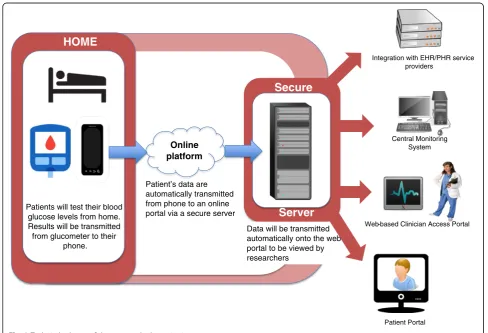
[image:3.595.56.545.88.322.2]connected to an android phone, which could transmit re-corded blood glucose results to a web portal, was provided to all participants in the telemonitoring group. The device also provided automatic feedback to the participant if his/ her recorded blood glucose results for three continuous tests were≤3.9 mmol/l or≥11.1 mmol/l. A schematic dia-gram representing the elements of this system is shown in Fig. 2. Diaries were provided to all participants in the study to record any hypoglycaemic events that occurred during the study. Participants were encouraged to self-monitor their blood glucose levels five times a day during the month of Ramadan. Ten focus group sessions were conducted to elicit participants’experiences of fasting dur-ing the month of Ramadan as well as the study design.
Results from the pilot study showed that hypoglycaemic episodes were lower in the telemonitoring group com-pared to the usual care group [35]. Focus group discussion indicated that participants were open to new technologies, which helped them in managing their disease. Several lim-itations were noted during the exploratory phase of the study. These were mostly related to the study design. Since participants had to be recruited when they were fasting during the month of Ramadan, this limited the recruitment time and hence, the small sample size. In
addition, difficulty in accessing Internet connection affected the delivery of the blood glucose results to the researchers.
Randomised controlled trial (phase III)
The exploratory phase was conducted in a specific popu-lation within a seasonal time period and generalisability of the results could be limited. Generalisation to a larger and more diverse population remains to be tested. To overcome these limitations, we describe the design of a larger study (IDEAS Study), which will take into consid-erations the limitations noted in the pilot study.
Randomisation
The study will follow a cluster randomised design with the public clinics as the unit of randomisation. This will avoid potential contamination between individuals who are assigned to different treatment groups in the same study site. A trained individual, independent of the study team will conduct all the randomisation.
Sample size calculation
A previous study in a tertiary hospital reported a 0.79 % mean difference in HbA1c between adherent and
Patients will test their blood glucose levels from home. Results will be transmitted from glucometer to their
phone.
HOME
Online platform
Patient’s data are automatically transmitted from phone to an online portal via a secure server
Secure
Server
Integration with EHR/PHR service providers
Web-based Clinician Access Portal
Patient Portal Central Monitoring
System
Data will be transmitted automatically onto the web portal to be viewed by researchers
[image:4.595.54.543.387.720.2]non-adherent people with diabetes [36]. A sample size of 100 people per study arm will have an 80 % power to de-tect a 0.5 % difference in HbA1c between the intervention and control arm. Therefore, after accounting for a 20 % loss to follow-up in each arm, 240 people with diabetes will be recruited in this study.
Sample recruitment procedures
A range of recruitment strategies will be used to recruit participants. Investigators will work closely with the doc-tors as well as the nurses at the study sites to promote and identify participants diagnosed with type 2 diabetes. Participants may also be self-referred or referred through their primary care doctors.
Selection criteria include people: (1) with type 2 dia-betes based on diagnosis by a doctor, for at least 6 months prior to study enrolment, determined via self-report with verification (medical records, current treat-ment); (2) aged 18–75 years; (3) residing in the state of Selangor without plans to leave for the next 12 months; (4) with HbA1c levels of≥7.5 % but less than 11.0 % within the most recent 3 months; (5) who have regular access to internet and an e-mail address or access to a smartphone with 3G services. Participants will be ex-cluded if they: (1) are unable or unwilling to give written informed consent or communicate with local study staff; (2) are currently diagnosed with mental disorder; (3) have been hospitalised for depression in the past six months; (4) do not have support from primary health-care provider or family members; (5) are known to have history of bariatric surgery, small bowel resection, or extensive bowel resection, and (6) are currently pregnant or breastfeeding.
Control arm
Participants in the control arm will be advised to con-tinue their routine healthcare with their doctors, includ-ing self-management of blood glucose and recordinclud-ing of results in log books.
Intervention arm
Participants in this arm will be encourage to self-monitor their blood glucose levels and will be provided with a group-based diabetes education, an automated feedback mechanism to both patient and family mem-ber(s) as well as an electronic logbook. The web-enabled function of the web-based glucose meter will be utilised, which when connected to an android enabled smart-phone device, will automatically upload any blood glu-cose readings to an online portal which is currently managed by the Entra Health System. The web portal will host participant’s glycaemic and metabolic results as well as other information such as self-management skills, compliance to eye measurements and screening
for microvascular complications. The system will be cali-brated to generate a message to inform the attending doctor or researcher in the event that three consecutive readings of hypoglycaemia (3.9 mmol/L or below) or hyperglycaemia (11.1 mmol/L and above) are detected. A schematic diagram representing the elements of this system is shown in Fig. 2. The doctor or researcher will have the option to use this information to initiate an intervention. The doctor will be responsible for all treat-ment decisions. Participants in the intervention arm will receive monthly communications from the research team. Communications will focus on self-management skills, blood glucose control, and medication adherence. Figure 3 shows the process of the study trial.
Focus group
To better understand participants’ perception towards this research, focus group sessions will be conducted. In-terested participants will be given an overview of the purpose of the focus group discussion to ascertain their interest in participating in this discussion. These sessions will last between one and a half to two hours, and each session will consist of not more than eight participants, who will engage in discussion on the topics under con-sideration. Selection of participants will be based on common characteristics among them. A semi-structured interview protocol using open-ended questions to encourage group discussion, will be used and a trained moderator will conduct the focus group sessions. The moderator will provide nondirective, supportive and non-evaluative role. He/she is also responsible to facili-tate participants’ responses and to prevent deviation from the topics being discussed. It is estimated that a total of five focus groups will be required to achieve sat-uration. Focus group sessions will be held at the times convenient to the participants. Interviews with the vari-ous healthcare professionals, including doctors and nurses, will be conducted to understand their opinion and acceptability in adapting telemonitoring into current Malaysian healthcare settings.
Measurements
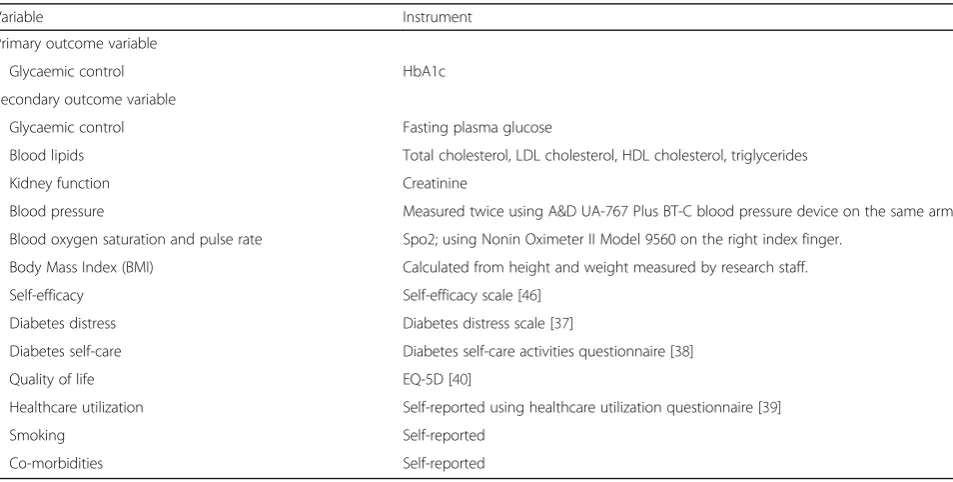
Table 1 details the measures that will be assessed throughout the study. HbA1c will be analysed using ven-ous samples by ion-exchange high performance liquid chromatography (Cobas Integra 800, Roche), and serum lipids using enzymatic techniques (Advia 2400, Siemens). All blood specimens will be collected and analysed in a central laboratory operated by Gribbles Pathology, Malaysia to reduce variability.
Table 1Primary and secondary outcome measures for visit 0, 4, 12, 24, 52
Variable Instrument
Primary outcome variable
Glycaemic control HbA1c
Secondary outcome variable
Glycaemic control Fasting plasma glucose
Blood lipids Total cholesterol, LDL cholesterol, HDL cholesterol, triglycerides
Kidney function Creatinine
Blood pressure Measured twice using A&D UA-767 Plus BT-C blood pressure device on the same arm.
Blood oxygen saturation and pulse rate Spo2; using Nonin Oximeter II Model 9560 on the right index finger.
Body Mass Index (BMI) Calculated from height and weight measured by research staff.
Self-efficacy Self-efficacy scale [46]
Diabetes distress Diabetes distress scale [37]
Diabetes self-care Diabetes self-care activities questionnaire [38]
Quality of life EQ-5D [40]
Healthcare utilization Self-reported using healthcare utilization questionnaire [39]
Smoking Self-reported
Co-morbidities Self-reported
LDLlow density lipoprotein,HDLhigh density lipoprotein
Study Flow
Analysed (n= ?)
• Excluded from analysis (n=?)
Analysed (n= ? )
• Excluded from analysis (n=?)
Analysis
Follow-up
• Assessment at month 1 • Assessment at month 3 • Assessment at month 6 • Assessment at month 12
Follow-up
• Assessment at month 1 • Assessment at month 3 • Assessment at month 6 • Assessment at month 12
Follow-Up
Assessed for eligibility
Excluded (n=?)
• Not meeting inclusion criteria • Declined to participate • Other reasons
Allocated to intervention (n=120) - Telemonitoring with group based
education and automated feedback
Allocated to control (n=120)
- Routine health care with monthly telephone follow-up
Allocation
Randomise 11 clinics (Total of 240 participants)
Enrollment
[image:6.595.60.537.484.725.2]UA-767, USA). Body height and weight will be measured in light indoor clothing and without shoes using a stadi-ometer and a scale (A&D, UC-321 PBT-C, USA), respectively. Blood oxygen saturation and pulse rate will be measured using an oximeter (Nonin Oximeter II, Model 9560, USA).
Several generic and disease-specific instruments will be used in the current study to measure participants’ diabetes knowledge, quality of life, self-efficacy, diabetes distress and health care utilization. These include the diabetes distress scale [37], diabetes self-care activities [38], health care utilization [39] and EuroQol-5D (EQ-5D) [40]. Questionnaires will also be translated to Bahasa Malaysia and Mandarin if required, and subsequently validated.
Data analysis
Data quality
A unique study identifier will be used to tag all study forms and biological samples which are collected during this study. Quantitative data will be entered into a data-base and audited for accuracy. In order to maintain par-ticipant confidentiality, coded form will be kept separately from the code list. Any missing and outlier values will be screened by a research assistant and hence, extensive training of research assistants is import-ant to ensure quality of data entry.
Quantitative data analysis
Analysis of quantitative study data across randomised groups will be conducted in IBM SPSS version 20 (Armonk, NY). Continuous variables will be tested for normality and data, which are not normally distributed, will be analysed using Kruskal-Wallis and Wilcoxon signed ranks test. In the event of missing data, the last observation carry forward method will be used. Apvalue of < 0.05 will be considered as statistically significant for all the tests.
Effectiveness of the research intervention will be mea-sured in terms of differences between study arms with respect to changes in biomedical measures and activities. Logistic regression will be used and both adjusted and unadjusted models will be presented. Benefits, barriers, confidence and knowledge will be included in a model to identify factors associated with the concept of inten-sive treatment and hypoglycaemia. An adjusted t-test using multiple linear regression analysis will be con-ducted to calculate variables for benefits, barriers and knowledge.
Qualitative data analysis
Focus group discussion will be transcribed verbatim and qualitative responses will be independently reviewed by the researchers (one psychologist, one pharmacist and
one research assistant) to identify themes and develop a coding scheme.
Cost-effective analysis
We will conduct a literature review to identify studies, which critically assessed the cost-effectiveness of an intervention in diabetes in this region. We will also col-lect data to examine healthcare resource use and indirect costs using standard economic analytical tools. Cost ana-lysis using direct and indirect costs will be performed on the two study groups based on the number of referrals to specialists (e.g. endocrinologists, optometrists, podia-trist, dietitians), total clinic attendance and prescribed medications and tests linked to diabetes. The indirect costs will include travel cost, and cost such as days of sick leave from work and premature early retirement due to diabetes. The impact on quality of life will be assessed using EQ-5D scale by interviewing patients from the two groups before and after the intervention. This data will be used to estimate the cost/Quality Adjusted Life-Year (QALY) in cost utility analysis.
Discussion
The IDEAS study is designed to assess the feasibility, effectiveness and cost effectiveness of a telemonitoring programme for type 2 diabetes patients in primary care settings. Previous studies have shown that telemonitor-ing is effective to improve health behaviour and encour-age self-manencour-agement of chronic diseases [13, 41, 42]. However, the management of diabetes remains a com-plex issue involving various aspects which include behavioural, financial, and psychological factors. The inclusion of various support structures especially from family members and doctors have produced positive results but further studies are required to incorporate these findings into a real-life community setting in a developing country, such as Malaysia [43–45].
Recruitment of participants commenced in April 2015, and data collection is scheduled to complete by December 2016, after which final data analysis will be performed and the findings will be presented in a separate publication.
Relevance to public health
The results of this study will be of relevance to policy makers on the importance of diabetes management using telemonitoring. The 6-month follow-up period will provide valuable data on the sustainability of the effect of such programme over time. The findings of this study will also enable better approaches to health promotion and the management of chronic diseases and their complications as well as serve as a source of information on the success and limitations that entailed in the implementation of a telemonitoring programme.
Abbreviations
3G:Third generation; CEA: Cost-effectiveness analysis; CUA: Cost-utilities analysis; EQ-5D: EuroQol-5D; HBM: Health belief model; HDL: High density lipoprotein; ICT: Information and communications technology;
IDEAS: Intervention for Diabetes with Education, Technological Advancement and Support; LDL: Low density lipoprotein; MRC: Medical Research Council; SMBG: Self-monitoring blood glucose; UK: United Kingdom
Acknowledgements
The authors would like to thank the Director General of Health, Malaysia and the Selangor Health Department, Malaysia for allowing this study to be conducted in the respective government clinics.
Funding
Funding provided by the e-Science fund from the Ministry of Science, Technology and Innovation, Malaysia [03-02-10-SF0238 (MOSTI)].
Availability of data and materials
After completing the study, authors will share data by reporting study results through publication.
Authors’contributions
JYL, SWHL, CKYC, SSC, CJN, KKCL and TP were involved in the general study design. SWHL was involved in the developing of the methodological approaches and consensus process. SWHL, CKYC, SSC, CJN and TP were involved in drafting the protocol, JYL were involved in the collection and analysis of data, SWHL was involved in obtaining funding. All authors read and approved the final manuscript.
Competing interests
The authors declare that they have no competing interests.
Consent for publication Not applicable.
Ethics approval and consent to participate
Ethical approval was received from the Malaysian Research Ethics Committee (NMRR-14-177-19466) and Monash University Research Ethics Committee (CF14/1977 - 2014001016). Informed written consent from patients was obtained.
Author details
1School of Pharmacy, Monash University Malaysia, Jalan Lagoon Selatan,
Bandar Sunway, 47500 Subang Jaya, Selangor, Malaysia.2School of Psychology, Australian Catholic University, 1100 Nudgee Road, Banyo, QLD 4104, Australia.3Jeffrey Cheah School of Medicine and Health Sciences, Faculty of Medicine, University of Malaya, 50603 Kuala Lumpur, Malaysia.
4Department of Primary Care Medicine, Faculty of Medicine, University Malaya, 50603 Kuala Lumpur, Malaysia.5School of Pharmacy, Taylor’s University Malaysia, No. 1 Jalan Taylor’s, 47500 Subang Jaya, Selangor Darul Ehsan, Malaysia.
Received: 21 January 2016 Accepted: 22 September 2016
References
1. American Diabetes Association. Standards of Medical Care in Diabetes -2011. Diabetes Care. 2011;34(Suppl 1):S11–61.
2. Whiting DR, Guariguata L, Weil C, Shaw J. IDF Diabetes Atlas: global estimates of the prevalence of diabetes for 2011 and 2030. Diabetes Res Clin Pract. 2011;94(3):311–21.
3. World Health Organisation. Global status report on non-communicable disease 2014. Geneva: World Health Organisation: 2014.
4. Zhang P, Zhang X, Brown J, Vistisen D, Sicree R, Shaw J, Nichols G. Global healthcare expenditure on diabetes for 2010 and 2030. Diabetes Res Clin Pract. 2010;87(3):293–301.
5. Norsa’adah B, Ibrahim W, Aljunid SM, Norhayati NM. Patient cost for type 2 diabetes mellitus outpatient care. Int Med J. 2014;21(3):338–42.
6. Ong WM, Chua SS, Ng CJ. Barriers and facilitators to self-monitoring of blood glucose in people with type 2 diabetes using insulin: a qualitative study. Patient Prefer Adherence. 2014;8:237–46.
7. Karter AJ, Ferrara A, Darbinian JA, Ackerson LM, Selby JV. Self-monitoring of blood glucose: language and financial barriers in a managed care population with diabetes. Diabetes Care. 2000;23(4):477–83.
8. Gonder-Frederick LA, Vajda KA, Schmidt KM, Cox DJ, Devries JH, Erol O, Kanc K, Schachinger H, Snoek FJ. Examining the behaviour subscale of the hypoglycaemia fear survey: an international study. Diabet Med. 2013;30(5):603–9.
9. Klonoff DC. Diabetes and telemedicine: is the technology sound, effective, cost-effective, and practical? Diabetes Care. 2003;26(5):1626–8.
10. Klonoff DC. Using telemedicine to improve outcomes in diabetes—an emerging technology. J Diabetes Sci Technol (Online). 2009;3(4):624–8. 11. Louis AA, Turner T, Gretton M, Baksh A, Cleland JGF. A systematic review of
telemonitoring for the management of heart failure. Eur J Heart Fail. 2003;5(5):583–90.
12. Meystre S. The current state of telemonitoring: a comment on the literature. Telemed J E Health. 2005;11(1):63–9.
13. Paré G, Moqadem K, Pineau G, St-Hilaire C. Clinical effects of home telemonitoring in the context of diabetes, asthma, heart failure and hypertension: a systematic review. J Med Internet Res. 2010;12(2):e21. 14. Roots A, Bhalla A, Birns J. Telemedicine for stroke: a systematic review.
Br J Neurosci Nurs. 2011;7(2):481–9.
15. Gonder-Frederick LA, Julian DM, Cox DJ, Clarke WL, Carter WR. Self-measurement of blood glucose. Accuracy of self-reported data and adherence to recommended regimen. Diabetes Care. 1988;11(7):579–85.
16. Chae M, Reith DM, Tomlinson PA, Rayns J, Wheeler BJ. Accuracy of verbal self-reported blood glucose in teenagers with type I diabetes at diabetes ski camp. J Diabetes Metab Disord. 2014;13:14.
17. Kalergis M, Nadeau J, Pacaud D, Yared Z, Yale J-F. Accuracy and reliability of reporting self-monitoring of blood glucose results in adults with type 1 and type 2 diabetes. Can J Diabetes. 2006;30(3):241–7.
18. World Bank. Mobile cellular subscriptions (per 100 people). 2015.
19. Malaysian Communications and Multimedia Commission. Hand phone users survey 2014. Cyberjaya: Malaysian Communications and Multimedia Commision; 2014.
20. Hardeman W, Sutton S, Griffin S, Johnston M, White A, Wareham NJ, Kinmonth AL. A causal modelling approach to the development of theory-based behaviour change programmes for trial evaluation. Health Educ Res. 2005;20(6):676–87.
21. Campbell M, Fitzpatrick R, Haines A, Kinmonth AL, Sandercock P, Spiegelhalter D, Tyrer P. Framework for design and evaluation of complex interventions to improve health. BMJ. 2000;321(7262):694–6.
22. Edmonds P, Vivat B, Burman R, Silber E, Higginson IJ.‘Fighting for everything’: service experiences of people severely affected by multiple sclerosis. Mult Scler. 2007;13(5):660–7.
24. Turner LW, Hunt SB, Dibrezzo R, Jones C. Design and implementation of an osteoporosis prevention program using the health belief model. Am J Health Stud. 2004;19:115–21.
25. Jerant AF, von Friederichs-Fitzwater MM, Moore M. Patients’perceived barriers to active self-management of chronic conditions. Patient Educ Couns. 2005;57(3):300–7.
26. Quinn CC, Clough SS, Minor JM, Lender D, Okafor MC, Gruber-Baldini A. WellDoc mobile diabetes management randomized controlled trial: change in clinical and behavioral outcomes and patient and physician satisfaction. Diabetes Technol Ther. 2008;10(3):160–8.
27. Istepanian RS, Zitouni K, Harry D, Moutosammy N, Sungoor A, Tang B, Earle KA. Evaluation of a mobile phone telemonitoring system for glycaemic control in patients with diabetes. J Telemed Telecare. 2009;15(3):125–8.
28. Katz DL, Nordwall B. Novel interactive cell-phone technology for health enhancement. J Diabetes Sci Technol. 2008;2(1):147–53.
29. Yoo HJ, Park MS, Kim TN, Yang SJ, Cho GJ, Hwang TG, Baik SH, Choi DS, Park GH, Choi KM. A ubiquitous chronic disease care system using cellular phones and the internet. Diabet Med. 2009;26(6):628–35.
30. Turner J, Larsen M, Tarassenko L, Neil A, Farmer A. Implementation of telehealth support for patients with type 2 diabetes using insulin treatment: an exploratory study. Inform Prim Care. 2009;17(1):47–53.
31. Cho JH, Lee HC, Lim DJ, Kwon HS, Yoon KH. Mobile Communication using a mobile phone with a glucometer for glucose control in Type 2 patients with diabetes: as effective as an Internet-based glucose monitoring system. J Telemed Telecare. 2009;15(2):77–82.
32. Al-Arouj M, Assaad-Khalil S, Buse J, Fahdil I, Fahmy M, Hafez S, Hassanein M, Ibrahim MA, Kendall D, Kishawi S, et al. Recommendations for management of diabetes during Ramadan: update 2010. Diabetes Care. 2010;33(8):1895–902.
33. Lee SWH, Lee JY, Tan CSS, Wong CP. Strategies to make Ramadan fasting safer in type 2 diabetics: a systematic review and network meta-analysis of randomized controlled trials and observational studies. Medicine. 2016;95(2):e2457.
34. Salti I, Benard E, Detournay B, Bianchi-Biscay M, Le Brigand C, Voinet C, Jabbar A. A population-based study of diabetes and its characteristics during the fasting month of Ramadan in 13 countries: results of the epidemiology of diabetes and Ramadan 1422/2001 (EPIDIAR) study. Diabetes Care. 2004;27(10):2306–11.
35. Lee JY, Lee SW, Nasir NH, How S, Tan CS, Wong CP. Diabetes
telemonitoring reduces the risk of hypoglycaemia during Ramadan: a pilot randomized controlled study. Diabet Med. 2015;32:1658–61.
36. Chua SS, Chan SP. Medication adherence and achievement of glycaemic targets in ambulatory type 2 diabetic patients. J Appl Pharm Sci. 2011;1(4):55–9.
37. Polonsky WH, Fisher L, Earles J, Dudl RJ, Lees J, Mullan J, Jackson RA. Assessing psychosocial distress in diabetes: development of the diabetes distress scale. Diabetes Care. 2005;28(3):626–31.
38. Toobert DJ, Hampson SE, Glasgow RE. The summary of diabetes self-care activities measure: results from 7 studies and a revised scale. Diabetes Care. 2000;23(7):943–50.
39. van den Brink M, van den Hout WB, Stiggelbout AM, Putter H, van de Velde CJ, Kievit J. Self-reports of health care utilization: diary or questionnaire? Int J Technol Assess Health Care. 2005;21(3):298–304.
40. Schrag A, Selai C, Jahanshahi M, Quinn NP. The EQ-5D–a generic quality of life measure-is a useful instrument to measure quality of life in patients with Parkinson’s disease. J Neurol Neurosurg Psychiatry. 2000;69(1):67–73. 41. Piette JD, Weinberger M, McPhee SJ. The effect of automated calls with
telephone nurse follow-up on patient-centered outcomes of diabetes care: a randomized, controlled trial. Med Care. 2000;38(2):218–30.
42. Piette JD, Weinberger M, Kraemer FB, McPhee SJ. Impact of automated calls with nurse follow-up on diabetes treatment outcomes in a Department of Veterans Affairs Health Care System: a randomized controlled trial. Diabetes Care. 2001;24(2):202–8.
43. Aubert RE, Herman WH, Waters J, Moore W, Sutton D, Peterson BL, Bailey CM, Koplan JP. Nurse case management to improve glycemic control in diabetic patients in a health maintenance Organization. A randomized, controlled trial. Ann Intern Med. 1998;129(8):605–12.
44. Mayberry LS, Osborn CY. Family support, medication adherence, and glycemic control among adults with type 2 diabetes. Diabetes Care. 2012;35(6):1239–45.
45. O’Connor PJ, Sperl-Hillen JM, Rush WA, Johnson PE, Amundson GH, Asche SE, Ekstrom HL, Gilmer TP. Impact of electronic health record clinical decision support on diabetes care: a randomized trial. Ann Fam Med. 2011;9(1):12–21.
46. Standford Patient Education Research Center. Diabetes self-efficacy scale. 2009.
• We accept pre-submission inquiries
• Our selector tool helps you to find the most relevant journal
• We provide round the clock customer support
• Convenient online submission
• Thorough peer review
• Inclusion in PubMed and all major indexing services
• Maximum visibility for your research
Submit your manuscript at www.biomedcentral.com/submit
![Fig. 1 MRC framework adapted from Higginson et al. BMC Palliative Care 2006 5:7 [22]](https://thumb-us.123doks.com/thumbv2/123dok_us/8297446.288343/3.595.56.545.88.322/fig-mrc-framework-adapted-higginson-bmc-palliative-care.webp)