The Impact of Scientific Creative Thinking Skills
on Scientific Process Skills
SibelDemir Kaçan1,*, and Fatma Şahin2
1Ondokuz Mayıs University Sciences, Education Faculty Science Education Department, Türkiye 2Marmara University Sciences, Education Faculty Science Education Department, Türkiye
Abstract. The research aims to determine “the Impact of Scientific Creative Thinking Skills on Scientific Process Skills”. Thus, the research was performed with 24 teacher candidates in the control group and 24 teacher candidates in the experimental group in the second class of the Department of Science Teaching in a university in Istanbul Province. In the experimental group of the research, the laboratory program to be designed by the researchers on the basis of scientific discussion and research; and in the control group, the conventionally designed laboratory program were applied for an academic semester. The research data was gained through “Scientific Creativity Test” to be developed by Hu and Adey [14] and adapted by Kadayıfçı [16]; “Scientific Process Skills Test” to be developed by Okey, Wise and Burns, and adapted by Geban, Aşkar and Özkan into Turkish. The conclusions to be reached by the research are in favour of the experimental group and the last application, and it has positive impact on the opinions of the teacher candidates related with the development of the scientific creativity skills.
Keywords:Science education, scientific creativity skill, scientific process skill
1 Introduction
participation and integration of new information with previous learnings for the students to use their cognitive processes and skills [32]. The development of creative and innovative skills are in central importance in the education and these skills ensure a strong relationship between the information and the learning, so the innovative teaching is required for the creative learning [13]. The creativity contains the science and daily life [12]. Since, the problem solving, formation of a hypothesis, test design, technical innovations need certain form of the creativity [15]. According to Kocabas [19], the scientific creativity means the motivation for scientific researches, formulation of the research problems through the information, forming a comprehensive general field for the solution of a scientific problem, the skill of searching complying with the causes and similarities, and detailed search patience with the strength. Park [26] states the scientific creativity on three dimensions which are creative thinking, scientific information and scientific research and inquiry skills. On the other hand, Zhang, Liu and Lin [33] mention the crucial existence of some basic features like internal motivation, autonomy and initiative for the scientific creativity, together with their insufficiency, alone. Alexander (1992) and Amabile (1987) stated that all the creativities have their certain field of impact and components, so it is necessary to distinguish the scientific creativity from general creativity [quoted by 15]. Likewise, Hu and Adey [14] also mentioned that the scientific creativity is a special need other than usual creativity tests, so they developed “the scientific creativity model” unique to the field. The scientific creativity model to be formed by Hu and Adey [14] on the other hand, consists of three dimensions which are the process, characteristic and product. According to Demir [9], “The scientific creative thinking skill: It can be defined as a skill of thinking providing the formation of numerous original ideas in various fields for the solution of a problem for which the solution is required by the individual, with an innovative and interdisciplinary approach including the science, technology and art (aesthetics). With reference to this definition, the scientific creativity is considered as a multi-dimensional and equipped field ensuring either uniqueness to the field or the aesthetic approaches of various disciplines to bring together under the same roof.”
participation and integration of new information with previous learnings for the students to use their cognitive processes and skills [32]. The development of creative and innovative skills are in central importance in the education and these skills ensure a strong relationship between the information and the learning, so the innovative teaching is required for the creative learning [13]. The creativity contains the science and daily life [12]. Since, the problem solving, formation of a hypothesis, test design, technical innovations need certain form of the creativity [15]. According to Kocabas [19], the scientific creativity means the motivation for scientific researches, formulation of the research problems through the information, forming a comprehensive general field for the solution of a scientific problem, the skill of searching complying with the causes and similarities, and detailed search patience with the strength. Park [26] states the scientific creativity on three dimensions which are creative thinking, scientific information and scientific research and inquiry skills. On the other hand, Zhang, Liu and Lin [33] mention the crucial existence of some basic features like internal motivation, autonomy and initiative for the scientific creativity, together with their insufficiency, alone. Alexander (1992) and Amabile (1987) stated that all the creativities have their certain field of impact and components, so it is necessary to distinguish the scientific creativity from general creativity [quoted by 15]. Likewise, Hu and Adey [14] also mentioned that the scientific creativity is a special need other than usual creativity tests, so they developed “the scientific creativity model” unique to the field. The scientific creativity model to be formed by Hu and Adey [14] on the other hand, consists of three dimensions which are the process, characteristic and product. According to Demir [9], “The scientific creative thinking skill: It can be defined as a skill of thinking providing the formation of numerous original ideas in various fields for the solution of a problem for which the solution is required by the individual, with an innovative and interdisciplinary approach including the science, technology and art (aesthetics). With reference to this definition, the scientific creativity is considered as a multi-dimensional and equipped field ensuring either uniqueness to the field or the aesthetic approaches of various disciplines to bring together under the same roof.”
When the research based learning is considered for the development of the scientific process skills, the interaction of them will be quite effective on the science education [28]. Likewise, the study of Ünal Çoban [30] indicated that the scientific process skills of the science teaching candidates dramatically changed with the laboratory activities on the basis of research and inquiry which are reinforced with the argumentation. The scientific process skills are necessary for the scientific creativity and creative thinking [23]. Meador [22] emphasizes that thinking and discussing like a scientist are necessary for the scientific process skills and creativity, and the creative thinking and the science process skill are one in another, so the scientific creativity skills of the individuals who use the scientific process skills are better. Aktamış and Ergin [2] define the scientific process skills as the requirement for all people in the society to be a scientific reader and the people having these skills use them to solve the problems in their daily lives. They also state that the creative thinking is again important to notice the problems in the daily lives and the scientific process skills and scientific creativity interact with each other in creative thinking models. Liang [21] states that many researchers focus on the creative thinking, products and processes of the scientists in the researches on the scientific creativity, few researchers focus on the creativity of the students. Therefore, it is considered that the number of the researches on the scientific creativity of the students, teachers and candidate teachers should be increased. With reference to this point, the problem of the research to determine “The Impact of Scientific Creative Thinking Skills on Scientific Process Skills”.
2 Methodology
It is research model (pattern) that is the research plan to be developed by the researcher to control the variance in order to test the hypothesis or to answer the research questions [4; 5]. The mixed model is a dominant model that provides the qualitative and quantitative methods to distinguish, define and unite [24]. This mixed model is used for the research. The universe of this research is the 1st and 2nd education programs students in the Department of Science Teaching in a university in Istanbul. The working group of the research consists of 2nd grade of the Department of Science Teaching of the same university. The students selecting this course among candidate teachers in the 1st education program formed the control group and the candidate teachers from the 2nd education program formed the experimental group. Thus, this research was conducted with 24 candidate teachers in the control group and 24 candidate teachers in the experimental group in the Department of Science Teaching. The program to be developed by the researchers was designed with reference to the conventional laboratory program for the control group and 5E model on the basis of scientific discussion and research for the experimental group.
3 Findings
Findings from this study are presented in tables and figures (table 3.1.; table 3.2.; table3.3; table3.4; table3.5.; figure3.1; figure3.2) below.
The fluency points to be gained through first six articles of the scientific creativity test from the candidate teachers are given in below table. There is not any data from the 7th question on apple picking machine having no fluency criteria, so no data from this question.
Table 3.1.Fluency Points of the Candidate Teachers from the Scientific Creativity Test
Question1 Question2 Question3 Question4 Question5 Question6 Pre Post Pre Post Pre Post Pre Post Pre Post Pre Post
Control 146 180 136 161 89 85 99 89 79 78 69 55
Experiment 134 222 124 189 79 111 101 147 78 88 43 68
As it is seen on Table 3.1., the fluency grades of 6 questions on the scientific creativity, there are findings in favour of the experimental group and the post-application.
The flexibility points to be gained through five articles of the scientific creativity test from the candidate teachers are given in below table. There is no flexibility criteria in the question 5, there is no data from this question.
Table 3.2.Flexibility Points of the Candidate Teachers from the Scientific Creativity Test
Question1 Question2 Question3 Question4 Question5 Question7
Pre Post Pre Post Pre Post Pre Post Pre Post Pre Post
Control 62 70 70 57 40 43 47 43 129 117 153 138
Experiment 56 100 60 103 43 71 58 98 99 183 171 237
As it is seen on Table 3.2, the flexibility grades of five questions on the scientific creativity, there are findings in favour of the experimental group and the post-application.
[image:4.482.57.423.430.488.2]The uniqueness points to be gained through the scientific creativity test from the candidate teachers are given in below table.
Table 3.3.Uniqueness Points of the Candidate Teachers from the Scientific Creativity Test
Question1 Question2 Question3 Question4 Question5 Question7 Question1 Pre Post Pre Post Pre Post Pre Post Pre Post Pre Post Pre Post
Control 120 129 137 108 71 81 85 78 26 22 96 80 67 55
Experiment 103 199 116 205 78 118 111 190 26 31 72 122 75 97
As it is seen on Table 3.3, the uniqueness grades of all questions on the scientific creativity, there are findings in favour of the experimental group and the post-application.
[image:4.482.103.376.563.630.2]Thus, in order to support these “quantified” qualitative data quantitatively, t-test of the scientific creativity test was also performed inside and among the groups.
Table 3.4.Pre- and Post-Application Findings for Control and Experiment Groups
N Ort. t p
Experiment pre 24 99,67 5,315 0,000 Experiment post 24 137,54
3 Findings
Findings from this study are presented in tables and figures (table 3.1.; table 3.2.; table3.3; table3.4; table3.5.; figure3.1; figure3.2) below.
The fluency points to be gained through first six articles of the scientific creativity test from the candidate teachers are given in below table. There is not any data from the 7th question on apple picking machine having no fluency criteria, so no data from this question.
Table 3.1.Fluency Points of the Candidate Teachers from the Scientific Creativity Test
Question1 Question2 Question3 Question4 Question5 Question6 Pre Post Pre Post Pre Post Pre Post Pre Post Pre Post
Control 146 180 136 161 89 85 99 89 79 78 69 55
Experiment 134 222 124 189 79 111 101 147 78 88 43 68
As it is seen on Table 3.1., the fluency grades of 6 questions on the scientific creativity, there are findings in favour of the experimental group and the post-application.
The flexibility points to be gained through five articles of the scientific creativity test from the candidate teachers are given in below table. There is no flexibility criteria in the question 5, there is no data from this question.
Table 3.2.Flexibility Points of the Candidate Teachers from the Scientific Creativity Test
Question1 Question2 Question3 Question4 Question5 Question7
Pre Post Pre Post Pre Post Pre Post Pre Post Pre Post
Control 62 70 70 57 40 43 47 43 129 117 153 138
Experiment 56 100 60 103 43 71 58 98 99 183 171 237
As it is seen on Table 3.2, the flexibility grades of five questions on the scientific creativity, there are findings in favour of the experimental group and the post-application.
The uniqueness points to be gained through the scientific creativity test from the candidate teachers are given in below table.
Table 3.3.Uniqueness Points of the Candidate Teachers from the Scientific Creativity Test
Question1 Question2 Question3 Question4 Question5 Question7 Question1 Pre Post Pre Post Pre Post Pre Post Pre Post Pre Post Pre Post
Control 120 129 137 108 71 81 85 78 26 22 96 80 67 55
Experiment 103 199 116 205 78 118 111 190 26 31 72 122 75 97
As it is seen on Table 3.3, the uniqueness grades of all questions on the scientific creativity, there are findings in favour of the experimental group and the post-application.
Thus, in order to support these “quantified” qualitative data quantitatively, t-test of the scientific creativity test was also performed inside and among the groups.
Table 3.4.Pre- and Post-Application Findings for Control and Experiment Groups
N Ort. t p
Experiment pre 24 99,67 5,315 0,000 Experiment post 24 137,54
Control pre 24 99,17 0,077 0,939 Control post 24 99,50
As it is seen on Table 3.4, the t-test results inside the groups are in favour of the experimental group and the post-application, and there is not any difference between the pre- and post-application of the control group.
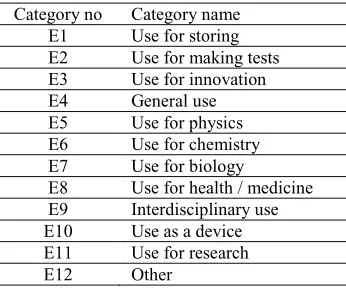
[image:5.482.155.328.169.313.2]The below tables present the qualitative findings in relation with the Question 1 “Please write the scientific use of a piece of glass as much as possible. For instance, ‘a test tube can be made’” for control and experiment groups.
Table 3.5.Categories to be Generated with reference to the “Piece of Glass Question” in the Scientific Creativity Test of Candidate Teachers
Category no Category name E1 Use for storing E2 Use for making tests E3 Use for innovation E4 General use E5 Use for physics E6 Use for chemistry E7 Use for biology
E8 Use for health / medicine E9 Interdisciplinary use E10 Use as a device E11 Use for research E12 Other
[image:5.482.104.380.392.506.2]The answers of the candidate teachers were categorized here. As it is seen on the Table 3.5, there are 12 categories for this question in total. One of the categories is the “other” and the answers which are not considered in other categories with similar characteristics are taken into this category. These categories were defined for each answer to be given and the category of related answer was indicated next to the answers in the part of the annexes.
Figure 3. 1.Sample of Candidate Teacher having the code of dö14
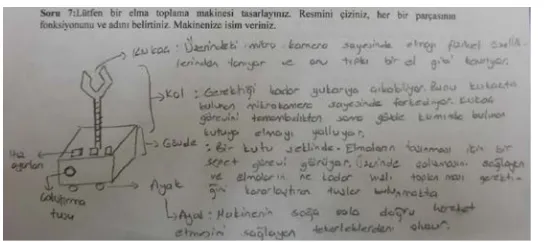
Figure 3.2.Drawing of Candidate Teacher having the Code of “dö24”
The candidate teacher having the code of dö24 performed the functions of reaching to the apple, finding the apple, picking the apple and placing into the carrying vehicle in this figure.
4 Discussion and conclusion
The conclusions to be reached by the research are in favour of the experimental group and the last application, and it has positive impact on the opinions of the teacher candidates related with the development of the scientific creativity skills. According to Kaptan and Korkmaz [17], the scientific process required more than organising the observable information and if the science is taught with these processes, the students acquire these skills and use in daily life, and they have more positive attitudes towards the science and their creativity skills develop. The scientific process skills is an approach focusing on the arrangement of skills which are the reflection of scientific behaviour, appropriate for different science disciplines and transferrable [18]. Likewise, Ewers [11] defines the scientific process skills as observation, classification, deduction, estimation, measuring and communication; however, he states that these skills provide a ground to scientific information, on the other hand, the scientific process skills are not included in science courses formally and many science curriculum focus on the content by ignoring how the information is developed.
Figure 3.2.Drawing of Candidate Teacher having the Code of “dö24”
The candidate teacher having the code of dö24 performed the functions of reaching to the apple, finding the apple, picking the apple and placing into the carrying vehicle in this figure.
4 Discussion and conclusion
The conclusions to be reached by the research are in favour of the experimental group and the last application, and it has positive impact on the opinions of the teacher candidates related with the development of the scientific creativity skills. According to Kaptan and Korkmaz [17], the scientific process required more than organising the observable information and if the science is taught with these processes, the students acquire these skills and use in daily life, and they have more positive attitudes towards the science and their creativity skills develop. The scientific process skills is an approach focusing on the arrangement of skills which are the reflection of scientific behaviour, appropriate for different science disciplines and transferrable [18]. Likewise, Ewers [11] defines the scientific process skills as observation, classification, deduction, estimation, measuring and communication; however, he states that these skills provide a ground to scientific information, on the other hand, the scientific process skills are not included in science courses formally and many science curriculum focus on the content by ignoring how the information is developed.
According to Ferreira [2004], the researchers have defined three main aspects as the requirement and complementary component of the scientific education for the development of the scientific literacy, being a good tool for understanding the scientific information by catching up the changing speed of the information in relation with the mission of the scientific process skills in the science education [quoted by 20]. Therefore, it is so important for the science education to gain these skills. Likewise, Ongowo and Indoshi [25] mention that the aim of every science teacher is to promote the development of the scientific process skills and the use of these skills provide the students to search the important matters in the world and their close environment. One of the basic aims of the science education is to develop the scientific thinking and research skills. The scientific process skills are generally considered as an approach to be applied in a laboratory, so it is a laboratory approach [7]. In addition to the central role of the scientific process skills for the “meaningful learning”, it is also the complementary for a scientific education [20]. The scientific process skills can also be described as the “learning to learn” determining how the learning is formed by using the critical thinking and creative information; learning with observation; organising the concepts, truths; assessing the results with reference to certain
Therefore, the scientific creativity (creativity in science) education is considered to be one of the most crucial targets of the science curriculum and the content, structure and teacher approach of the course should be cared a lot. The creativity is an important aspect of human development. The technological developments and the globalisation trends require the productive and innovative people for all parts of the life. The education organisations have an important place for the development of the creativity skills and capabilities of the students and on that point the science education has the largest share for the improvement of the creative thinking quality [8].
References
1. Akçam, M.İlköğretim fen bilgisi derslerinde yaratıcı etkinliklerin öğrencilerin tutum ve başarılarına etkisi. Yayınlanmamış yüksek lisans tezi, Balıkesir Üniversitesi, Fen Bilimleri Enstitüsü, Balıkesir, (2007).
2. Aktamış, H., & Ergin, Ö. Fen eğitimi ve yaratıcılık. Dokuz Eylül Üniversitesi Buca Eğitim Fakültesi Dergisi,20,77-83, (2006).
3. Ansal, H. bt haber, (2012). http://www.btnet.com.tr/54504-turk-egitim-sistemi-yaraticiligin-onundeki-en-buyuk engel.html adresinden 10 Aralık 2013 tarihinde edinilmiştir.
4. Balcı, A. Sosyal bilimlerde araştırma yöntem, teknik ve ilkeler. Ankara: Pegem A Yayıncılık. 4. Baskı, (2004).
5. Büyüköztürk, Ş.Deneysel desenler öntest-sontest kontrol grubu desen ve veri analizi. Ankara: Pegem A Yayıncılık. 1.Baskı, (2001).
6. Ceylan, E. Effect of instruction using conceptual change strategies on students’ conceptions of chemical reactions and energy.Unpublished master thesis, Middle East Technical University, (2004).
7. Çepni, S., Ayas, A., Johnson, D., & Turgut, M.Fizik öğretimi. Ankara: YÖK/Dünya Bankası, (1997).
8. Daud, A. M., Omar, J., Turiman, P., & Osman, K.. Creativity in science education. Procedia - Social and Behavioral Sciences,59,467-474, (2012).
9. Demir, S. Bilimsel tartışma ve araştırmaya dayalı tasarlanan laboratuvar programının, fen bilgisi öğretmen adaylarının bilimsel yaratıcılıklarına etkisi. Yayınlanmamış Doktora Tezi, Marmara Üniversitesi, İstanbul, (2014).
10. El Bassiti, L., & Ajhoun, R. (2013). Toward an innovation management framework: A life-cycle model with an idea management focus. International Journal of Innovation, Management and Technology,4(6),551-559, (2013).
11. Ewers, T. G. Teacher-directed versus learning cycles methods: Effects on science process skills mastery and teacher efficacy among elementary education students. Unpublished Ph. D. dissertation, University of Idaho, (2001).
12. Farooq, U. Supporting creativity: Investigating the role of awareness in distributed collaboration.The Pennsylvania State University, (2008).
13. Ferrari, A., Cachia, R., & Punie, Y.Innovation and creativity in education and training in the eu member states: fostering creative learning and supporting ınnovative teaching.Luxembourg: Office for Official Publications of the European Communities, (2009).
14. Hu, W., & Adey, P. A scientific creativity test for secondary school students. International Journal of Science Education, 24(4),389-403, (2002).
16. Kadayıfçı, H. Yaratıcı düşünmeye dayalı öğretim modelinin öğrencilerin maddelerin ayrılması ile ilgili kavramları anlamasına. Yayınlanmamış doktora tezi, Gazi Üniversitesi, Eğitim Bilimleri Enstitüsü, Ankara, (2008).
17. Kaptan, F., & Korkmaz, H.İlköğretimde etkili öğretme ve öğrenme öğretmen el kitabı ilköğretimde fen bilgisi öğretimi modül, (1999). 7. 09. 08. 2013 tarihinde http://sakarya63.sa.funpic.de/ilkogretimde_fenbilgisi_01.pdf adresinden alındı
18. Karamustafaoğlu, O., & Yaman, S.. Fen eğitiminde özel öğretim yöntemleri I-II. Ankara: Anı Yayıncılık, (2006).
19. Kocabas, S. Elements of scientific creativity. AAAI Technical Report SS-93-01, (1993).
20. Kurtuluş, N.Yaratıcı düşünmeye dayalı öğretim uygulamalarının bilimsel yaratıcılık bilimsel süreç becerileri ve akademik başarıya etkisi. Yayınlanmamış yüksek lisans tezi, Karadeniz Teknik Üniversitesi, Eğitim Bilimleri Enstitüsü, Trabzon, (2012). 21. Liang, J.. Exploring scientific creativity of eleventh grade students in Taiwan.
Unpublished doctoral dissertation, The University of Texas at Austin, Texas, (2002). 22. Meador, K. S. Thinking creatively about science suggestions for primary teachers.
Gıfted Child Today,26(25),25-29, (2003).
23. Miles, E.In-servıce elementary teachers’ familiarity, interest, conceptual knowledge, and performance on science process skills.Unpublished master thesis, B.S. Southern Illinois University Carbondale, (2008).
24. Moghaddam, F. M., Walker, B. R., & Harre, R. Cultural distance, levels of abstraction and the advantages of mixed methods. A. Tashakkori, & C. Teddlie (Eds.) içinde, Handbook of mixed methods in social & behavioral research(s. 111-134). California: Sage Publication, (2003).
25. Ongowo, R. O., & Indoshi, F. C. Science process skills in the Kenya certificate of secondary education biology practical examinations. Creative Education, 4(11), 713-717, (2013).
26. Park, J. Scientific creativity in science education. Journal of Baltic Science Education,
10(3),144-145, (2011).
27. Rauf, R. A., Rasul, M. S., Mansor, A. N., Othman, Z., & Lyndon, N. Inculcation of science process skills in a science classroom. Asian Social Science,9(8), 47-57, (2013). 28. Şahin, F., & Benzer, E. The effect of the project practices improved with four question
strategy to science process skills. Necatibey Eğitim Fakültesi Elektronik Fen ve Matematik Eğitimi Dergisi (EFMED),6(1),306-337, (2012).
29. Şakir, T. The effect of multiple intelligences based instructıion on students’ achievement in basic compounds of living organisms concepts and attitude toward biology.Unpublished doctoral dissertation, Middle East Technical University, (2013). 30. Ünal Çoban, G. The effects of inquiry supported by argument maps on science process
skills and epistemological views of prospective science teachers. Journal of Baltic Science Education,12(3),271-288, (2013).
31. Villalba, E. On creativity; towards an understanding of creativity and its measurements. İtaly Luxembourg: Office for Official Publications of the European Communities, (2008).
32. Wyke, R. M. Teaching creativity and innovation in higher education. Unpublished doctoral dissertation, University of Pennsylvania, (2013).