White Rose Research Online URL for this paper: http://eprints.whiterose.ac.uk/73987/
Version: Published Version
Monograph:
McCrone, Tami, Rudd, Peter orcid.org/0000-0002-8824-3247, Blenkinsop, Sarah et al. (3 more authors) (2007) Evaluation of the Impact of Section 5 Inspections : Strand 2 Report. Research Report. National Foundation for Educational Research , Slough.
[email protected] https://eprints.whiterose.ac.uk/ Reuse
Items deposited in White Rose Research Online are protected by copyright, with all rights reserved unless indicated otherwise. They may be downloaded and/or printed for private study, or other acts as permitted by national copyright laws. The publisher or other rights holders may allow further reproduction and re-use of the full text version. This is indicated by the licence information on the White Rose Research Online record for the item.
Takedown
If you consider content in White Rose Research Online to be in breach of UK law, please notify us by
National Foundation for Educational Research
Impact of Section 5 inspections:
maintained schools in England
Final report
Tami McCrone
Peter Rudd
Sarah Blenkinsop
Pauline Wade
Simon Rutt
Contents
Acknowledgements i
Executive summary iii
Introduction iii
1. Introduction 1
1.1 Background 1
1.2 Aims and objectives 2
1.3 Methodology 2
1.4 The school sample 4
1.5 Structure of the report 6
2. The inspection process 9
2.1 Stakeholder interviewees’ involvement in the inspection 9
2.2 Completion and usefulness of the Self-Evaluation Form 11
2.3 Update of the SEF 17
2.4 Oral feedback and dialogue 21
3. Impact: the inspection report 27
3.1 The diagnosis and the inspection grades 28
3.2 Identifying strengths and weaknesses 34
3.3 The letter and the report 37
4. Impact on School Improvement 43
4.1 Recommendations for action 44
4.2 Action planning 48
4.3 Progress on actions taken on recommendations 51
4.4 Factors contributing to school improvement 54
4.5 Progress in school improvement 61
5. Impact on outcomes 65
5.1 Impact of actions 65
5.2 Impact on outcomes from follow-up case-study interviews 68
5.3 Impact on quantifiable outcomes 71
5.4 Findings from statistical modelling 74
5.5 Overview on impact 75
6. Overview of schools’ perspectives 77
6.1 Overall satisfaction with the inspection 78
6.2 The Cost of inspection 82
6.3 Main benefits arising from the inspection 83
6.4 Main concerns following inspection 85
6.5 Ways of improving inspections 87
7. Conclusions and recommendations 95
Appendix A Detailed results from multinomial logistic modelling - satisfaction 101
Appendix B Detailed results from multinomial logistic modelling - impact 105
Appendix C Impact of s5 Inspections – School Context for Primary Schools 109
Acknowledgements
The research team would like to thank the headteachers, senior managers, governors, pupils and parents who participated in this evaluation. Their inputs, on the impact of the s5 inspections, were extremely valuable and the study could not have been completed without their cooperation and assistance.
Special thanks are due to our NFER colleagues, in particular to Julia Rose for her unfailing administrative support, to Neelam Basi for putting together the final report, and to Gaby White for her contribution to the research team in the early stages of this project. In addition we are extremely grateful to the following colleagues for assisting with the case-study visits.
Robert Smith Robat Powell Nia Seaton Anne Lines Matthew Walker Thomas Spielhofer Karen Lines Karen Whitby Sandie Schagen David Teeman Tamsin Chamberlain Claire Easton
Sarah Golden
Executive summary
Introduction
A new form of inspection for maintained schools in England was introduced, in accordance with the provisions of Section 5 (s5) of the Education Act 2005, in September 2005. The main elements of the new system include: shorter notice of inspection, smaller inspection teams, more frequent inspections, an increased emphasis on the school’s own self-evaluation evidence, and shorter reports with fewer, clearer recommendations for improvement.
In 2006-07 a research team at the National Foundation for Educational Research (NFER) had a unique opportunity to carry out a detailed and independent evaluation of the new inspection process. The central aim of the research was to assess the extent to which schools felt that the new inspections contributed to school improvement. The evaluation, commissioned by Ofsted, commenced in February 2006, with a pilot phase, and was completed in April 2007. The main research methods used were as follows:
• A survey of all schools inspected between October 2005 and March 2006 (subject to minor exclusions): 1,597 schools responded to this survey.
• Case-study visits to 36 schools where interviews were conducted with a total of 169 headteachers, senior managers, governors and parents, usually individually, along with 243 pupils, usually in small discussion groups.
• Follow-up interviews with headteachers or senior managers, to provide a longitudinal perspective over a short duration.
• Statistical modelling of survey responses and various school background factors, using satisfaction with, and perceived impact of, inspection as outcomes.
• A desk-top review of key case-study school documents and test and examination results.
Key findings
Overall the vast majority of schools were satisfied with the inspection process and this process was generally perceived as contributing to school improvement. The majority of survey respondents and interviewees agreed with the inspection report recommendations and valued the contribution to school improvement in terms of the confirmation, prioritisation and clarification of areas for improvement. On reflection many schools felt that the report had provided an impetus to drive forward progress.
were ‘quite satisfied’. A minority, ten per cent of survey schools, were ‘not at all satisfied’ with the s5 inspection.
• The Self-Evaluation Form (SEF). Although the majority of interviewees reported that it was time-consuming to complete the SEF, there was also a strong view that the SEF had been effective as a means of identifying school strengths and weaknesses. Inspection teams made good use of the SEF and it provided a focus for the inspection. Self evaluation generally was regarded as having improved and the SEF framework had contributed to this improvement.
• Oral feedback. Oral feedback from the inspection team was found to be a vital part of the inspection process. Over half (60 per cent) of the survey respondents found the oral feedback very useful, and further 32 per cent fairly useful. The research also revealed a positive, and statistically significant, relationship between constructive oral feedback and overall satisfaction with the inspection process.
• Self-evaluation and inspection grades. Filling in the SEF required schools to make their own self-assessment of their ‘overall effectiveness’ and a number of other categories such as ‘achievement and standards’. School survey respondents were asked to compare their own SEF grades with those awarded by the inspectors: two-thirds of survey respondents reported no differences between the s5 and school’s SEF grades, indicating a large degree of consistency between the two sets of judgements. In addition, the grades appear to have become more ‘in tune’ the longer the s5 inspection has been in operation.
• The written report. Over three-quarters of case-study school interviewees believed the inspection team’s diagnosis, and the written report, to be fair and accurate. Over half of survey respondents found the written report helpful for identifying areas for improvement. The majority of interviewees found the written report to be useful, helpful and easy to read. A few interviewees believed the report to be too brief and generalised. However, it was perceived to be accessible and parents appreciated an independent assessment of schools. On the whole pupils liked the letter from the inspector and valued involvement in the process.
• Inspection recommendations. Recommendations for improvement were, on the whole, considered to be helpful and sufficiently specific and follow-up interviews showed that almost all case-study schools were implementing all, or most, of their recommendations. The area of greatest perceived impact, from the s5 recommendations, was in assessment, monitoring and tracking.
staff, to have their judgements confirmed by an external and objective body.
• KS2 outcomes. There were some indications in primary schools that, where the recommendations identified a specific subject for improvement, an improvement in key stage 2 outcomes in this subject did indeed occur in several of the case-study schools in 2005-06, though it cannot be said with any certainty that the positive outcomes were directly related to the inspection report.
• KS4 outcomes. The research team ranked the case-study secondary schools on the basis of their key stage 4 outcomes and then examined the recommendations made in the highest-performing schools’ inspection reports. The main finding was that, in the majority of successful secondary schools (in terms of the proportion of pupils achieving five or more good GCSEs in 2006 compared to 2005), a specific recommendation to do with assessment, pupil tracking or marking had been made. It seems that this type of focused recommendation may be particularly helpful to secondary schools but, again, this does not necessarily indicate a direct causal link between KS4 outcomes and inspection recommendations.
• Costs of inspection. A substantial majority of survey respondents (83 per cent) thought that the actual monetary costs incurred due to inspections were minimal and were certainly less than those incurred during the previous s10 inspection process. Furthermore, three-fifths of school respondents thought that the new s5 inspection process was less stressful than the previous system.
Benefits and concerns
• Benefits of inspection. The main benefit was perceived to be that the inspection had been valuable in providing external confirmation of schools’ own self evaluation (86 per cent of survey respondents). Additionally, other benefits were perceived to be that inspection boosted staff morale (42 per cent) and, as well as providing confirmation, it also stimulated improvements (33 per cent).
• Concerns about the inspection process. The biggest concern, mentioned by just over half of the survey respondents, was found to be the time taken for schools to complete the SEF, and just over a quarter perceived that there were issues in relation to the use and interpretation of data.
• Suggested improvements. Although schools were generally satisfied with the inspection, just under half made suggestions for changes. These most often related to perceptions that the SEF should be simplified, more time should be allowed for inspectors to observe lessons, inspections should be less data-driven and that there should be more consistency across inspection teams.
Implications of the research
completion should be less difficult from the second year of the process onwards, it would be worth keeping this area of support and advice for schools under close review.
• Use of data. Concern was expressed over data interpretation by some schools inspected throughout the period from October 2005 to March 2006. This suggests that there may be a need for more evenness and consistency in terms of the way data is used, particularly in relation to fully understanding the school context. With the introduction of RAISE online, there should be opportunities to ensure that consistencies in data use and interpretation are further promoted and strengthened.
• Importance of oral feedback and dialogue. In view of the importance that schools placed on the oral feedback, Ofsted should maintain and perhaps even enhance the central position which oral feedback has in the inspection process. Schools appeared to welcome the opportunity for, and were responsive to, dialogue, especially as this provided opportunities to explain the broader school context.
• Using positive terminology. Though it was widely accepted that inspectors had to work within the agreed standard framework of gradings, there was some dissatisfaction in schools with the terminology used to describe the ‘overall effectiveness’ grades, especially in relation to the ‘satisfactory’ grading. Whilst it was accepted that parents and other stakeholders should be provided with a clear, comparable, external, objective assessment of a school’s performance, some school interviewees expressed a view that the terminology was too negative and too rigid. Several respondents suggested that inspectors should look for further ways of providing praise and encouragement for staff: and it might be possible to do this through the oral feedback and the lesson observation elements of the inspection process.
1. Introduction
1.1 Background
This report presents the findings from an independent external evaluation of the impact of Section 5 inspections, as perceived by schools, commissioned by Ofsted, and carried out by a team at the National Foundation for Educational Research (NFER).
As well as building on the findings from a pilot phase of this research, also carried out by a team from the NFER, between February and July 2006, this research draws on a range of sources of data which include:
• A survey of all schools inspected between October 2005 and March 2006 (subject to minor exclusions reported below).
• Case-study visits to 36 schools where headteachers, senior managers, governors, pupils and parents were interviewed.
• Follow-up interviews with headteachers or senior managers to provide a longitudinal perspective over a short duration.
• A desk-top review of key case-study school documents.
The new form of inspection for maintained schools in England was introduced, in accordance with the provisions of Section 5 (s5) of the Education Act 2005, in September 2005. The main elements of the new system include: shorter notice of inspection, smaller inspection teams, more frequent inspections, an increased emphasis on the school’s own self-evaluation evidence, and shorter reports with fewer, clearer recommendations for improvement.
The Annual Report of Her Majesty’s Chief Inspector of Schools 2005/2006 states that:
The new inspection arrangements have raised the bar, but without putting it out of reach. The performance of schools, and the public’s expectations of them, have both risen, and it is right that inspection should reflect that. The rigour of the new grade descriptors, and the data now available, means that there is an ever more acute appraisal of pupils’ progress and a school’s performance. (Ofsted, 2006, p.7)1
1 OFSTED (2006): Annual Report of Her Majesty’s Chief Inspector of Schools 2005/06. London:
In addition Ofsted recognises that: ‘The new inspection framework focuses on a school’s effectiveness. It combines self evaluation with scrutiny from outside’ (Ofsted, 2006, p. 8). This relationship between self evaluation and inspection was acknowledged in the interim report for this evaluation which concluded that:
the majority view was that the impact of the inspection was primarily focused on the confirmation and validation of the school’s self evaluation, [and] it is important to acknowledge that it is precisely in this capacity that it contributes to school improvement. (McCrone et al., 2006, p.76).2
1.2 Aims and objectives
It was in this context, at the end of the first year of s5 inspections, that Ofsted commissioned the National Foundation for Educational Research (NFER) to undertake a large-scale independent evaluation of how, if at all, the inspection process and outcomes have assisted with the development of school effectiveness and school improvement. The evaluation aims were:
• to establish the differences, if any, in school effectiveness, including the range of pupil outcomes, resulting from s5 inspection
• to identify the elements of the inspection process and contextual factors that affect the extent of difference made by inspection
The methodology used for the evaluation is outlined below.
1.3 Methodology
In order to achieve the aims of the evaluation a range of research methods were adopted, as outlined below:
Desk-top review
Analysis of the key documents for the 36 case-study schools was carried out. These documents included:
• The s5 inspection report
• The Performance and Assessment (PANDA) report (including Contextual Value Added data)
2 McCRONE, T., RUDD, P., BLENKINSOP, S. and WADE, P. (2006). Impact of Section 5
Inspections: maintained schools in England (Interim Report). Available at:
• The completed Self-Evaluation Form
• The DfES’s Achievement and Attainment tables.
Analysis of these documents provided both a contextual background for the case-study schools and, in consultation with Ofsted, an analytical framework in which examination of the data could be carried out. The categories used for the analysis were the same as those used in the pilot evaluation and were drawn from the Guidance for Inspectors of Schools (Ofsted, 2006), the Standard Inspection Report Template (Ofsted, 2005) and other sources.3
In addition pupil outcomes and Contextual Value Added (CVA) or Value Added (VA) scores from the case-study schools visited in both the pilot and the large-scale evaluations (a total of 72 schools) were analysed. The impact of inspection on outcomes in these 72 schools is explored in Chapter 5.
Fieldwork visits
Semi-structured interviews with headteachers, senior managers and governors in each of the 36 schools were a central part of the main research study. These visits provided interviewees with an opportunity to comment on the usefulness of their s5 report, and the recommendations made, in relation to their school effectiveness and improvement processes.
Each school was sent an approach letter and a request for interviews with:
• the headteacher
• one or two other school senior managers
• a governor.
In addition, each school was asked to select a group of pupils for the research team to interview. Up to eight pupils were interviewed in each group. It was requested that pupils would be representative of the school population in terms of age, gender and ability. Where school councils existed, it was requested that some of the members would be included in the groups as it was considered likely that they would have had involvement in the inspection process. Paired interviews were conducted with pupils in special schools.
Interviews were also carried out with parents in case-study schools. With the school’s permission, letters were sent out to the parents of the pupils involved
3 OFSTED (2006). Using the evaluation schedule:Guidance for inspectors of schools. Available at:
http://www.ofsted.gov.uk/assets/Internet_Content/Shared_Content/IIFD/Files/usingTheSchedule.pdf [13 April, 2007]; OFSTED (2005). Inspection Report Template. Available at:
in the group discussions inviting them to participate in a telephone interview about their views on the school and the Ofsted inspection.
The school visits were carried out in September and October 2006. Either the headteacher or a senior manager in the schools was subsequently re-interviewed in January or February 2007. The fieldwork visits were carried out by the ‘core’ research team, plus additional NFER researchers.
The interview data was analysed systematically in order to establish any trends in experiences of the inspection process, and any patterns in post-inspection school improvement strategies. The follow-up interviews also provided a view on the impact of the inspection recommendations and the update of the SEF over time.
Questionnaire survey
A survey, sent to all schools inspected between October 2005 and March 2006 was carried out between October and November 2006. Schools which had been or were to be visited by the NFER were excluded from the list, as were schools included in the pilot questionnaire survey. Schools on special measures were excluded but all other schools graded ‘1’ to ‘4’ were included. In addition schools that had responded to Ofsted’s own evaluation were excluded. The questionnaire was predominantly quantitative in nature, but also incorporated some open-ended questions.
Questionnaires were sent to headteachers in the sampled schools, with a request that they should either fill them in themselves or delegate to another senior manager who had been closely involved in the inspection (details of the achieved sample are provided below).
1.4 The school sample
A representative sample was drawn for the case-study schools, while the entire population of schools inspected between October 2005 and March 2006 was surveyed (subject to the limited exclusions outlined above).
Case-study sample
Datasets were provided by Ofsted of all schools inspected from October 2005 to March 2006. A random representative sample of 36 schools for the case-study visits was drawn, stratified on the following criteria:
• school sector – secondary, primary and special
• geographical region – based on nine government office regions
The achieved sample consisted of 16 secondary, 16 primary and four special schools. In terms of overall inspection grades there were three grade 1 ‘outstanding’, 16 grade 2 ‘good’, 14 grade 3 ‘satisfactory’ and three ‘notice to improve’ schools.
The survey sample
All schools, visited by Ofsted between October 2005 and March 2006 inclusive (apart from the limited exclusions mentioned previously), were selected for the survey. A total of 2,309 schools were invited to participate and a response rate of 67 per cent, or 1,597 schools, was achieved. This was a very positive response rate and, as well as enabling the research team to access a large amount of robust survey data, was indicative of the fact that the majority of school managers were pleased to have an opportunity to express their views about inspection and its impact on their school.
The most frequent reason given for non-response was from schools who had a new headteacher in the academic year and who felt that there was not another appropriate member of staff who could complete the questionnaire.
Characteristics of the respondents
The achieved survey sample of schools was representative of the full population of schools across size of school, achievement bands, school types, and eligibility for free school meals. In terms of the date that the inspection took place, 42 per cent were inspected between 1 October and 31 December 2005, 25 per cent between 1 January and the 14 February and 32 per cent between 15 February and the 31 March 2006. The overall effectiveness grade for 11 per cent was ‘outstanding’, 34 per cent were graded ‘good’, 48 per cent ‘satisfactory’ and seven per cent ‘notice to improve’.
The majority of survey questionnaires were completed by headteachers, as can be seen in Table 1.1 below. Respondents were experienced teachers having a mean of 26 years experience.
Table 1.1 Role in the school
Role in school %
Headteacher 92
Deputy Head 4
Assistant Head 1
Other 2
No response 1
N = 1597
Due to rounding, percentages may not sum to 100 1580 respondents answered this question
Characteristics of interviewees
In total, 167 adults linked with the 36 case-study schools were interviewed. The interviewees consisted of:
• 36 headteachers
• 53 senior managers of which 21 were deputy heads, and seven were assistant heads
• 34 governors of which 22 were the Chair of governors
• 44 parents.
In addition, 116 primary pupils from Years 2 to 6, 101 secondary students from Years 8 to 11 and 26 students from special schools were interviewed.
Senior staff in 32 schools gave follow-up interviews four months subsequent to the first interview.
1.5 Structure of the report
The remaining chapters of this report focus on the impact of different elements of the s5 inspection. They are organised in the follow sequence:
Chapter 2 examines the impact and updating of the Self-Evaluation Form, the dialogue between inspectors and teachers and the oral feedback.
Chapter 3 explores the impact of the written inspection report, the letter to pupils, the diagnosis and the inspection grades. It further examines discrepancies in grades between the s5 report and the SEF and looks at levels of agreement about schools’ strengths and weaknesses.
Chapter 4 considers the impact of the s5 inspection on school improvement. It discusses Ofsted’s recommendations and the actions that followed on from the inspection. It also examines the perceived contribution of the inspection to school improvement, and any progress reported in school improvement.
Chapter 5 reports on the impact of actions subsequent to inspection and any impact on test and examination results. It also presents quantitative and qualitative evidence of impact and incorporates a section on statistical modelling.
said about ways in which the inspection could be improved, and expectations with regard to the next inspection.
2. The inspection process
Key findings
• Although perceived as time-consuming to complete by the majority
(three-quarters) of interviewees, the Self-Evaluation Form was perceived to be effective at identifying school strengths and weaknesses by the vast majority of respondents (97 per cent). It provided focus for the inspection (two-thirds of interviewees) and for the schools’ self evaluation (three-quarters of interviewees). Self evaluation was regarded as having improved and the SEF framework had contributed to this improvement. Statistical modelling revealed that receiving appropriate guidance on SEF completion contributed to overall satisfaction with the inspection process.
• SEF completion was considered to be a collaborative exercise with SMT
and, to a lesser extent, governors involved in the process. Although many schools had not altered the way in which they approached the SEF, there was some evidence that, subsequent to first inspections, a more distributed approach to self evaluation and SEF completion had been adopted in some (five) of the case-study schools. In addition, over half of headteachers were motivated to produce a more concise, evidence-based SEF.
• The modelling revealed a positive statistical relationship between
constructive oral feedback and overall satisfaction with the inspection process. Two-thirds of case-study respondents found the feedback useful, they valued the explanatory dialogue, the direction and guidance offered by inspectors, the confirmation and validation of the SEF and the general reassurance that the oral feedback provided.
• A minority of case-study schools (five) reported disputes. Where these
occurred they centred on school perceptions about the inflexible interpretation of data, a lack of consideration of school context, and a view that the grading system was too rigid and structured.
This chapter commences by examining the involvement of school staff, pupils and parents in the inspection process. It also considers the experience of completing the Self-Evaluation Form (SEF), the success of the inspection process in identifying the school’s strengths and weaknesses, the helpfulness of the SEF as a vehicle for self evaluation, and how, if at all, the SEF has been updated since inspection. It also explores perceptions of the oral feedback and the extent to which disagreements, if there were any, were resolved.
2.1 Stakeholder interviewees’ involvement in the inspection
felt involved either as a member of the senior leadership team, or, for example, in their capacity as subject leader or with regard to child protection or behaviour and discipline. Many said they contributed to the SEF, helped in the lead up to the inspection and were ‘on hand’ during the inspection.
Some interviewees were observed teaching by inspectors and felt that this experience had been worthwhile: ‘The inspector observed me teaching half a lesson. He gave me individual feedback which was useful and fair’. However, others would have liked more feedback from the inspectors, as in the case of a senior teacher in an ‘outstanding’ school who had to ask for feedback, and was then only given some from a colleague.
Several members of the senior management team (SMT) commented on the fact that they were formally interviewed and some felt that the discussions were ‘very short and sharp’. Others would have liked to have been more involved ‘they didn’t really want to see me, so I had to impose myself on them. I had produced three files and made sure that they did get to see them’. Similarly another senior manager said he had ‘very little involvement – I actually had to ask for a meeting and I did then have an interview’.
In the majority of case-study schools the chair or vice-chair of governors had been interviewed by the inspectors. Levels of involvement varied from extensive: ‘I work at the school as well as being a governor so I get it from both sides. When the inspectors came I was in two of the classes which they observed’, to moderate; ‘I was involved in helping to write and compile the SEF prior to the inspection. I greeted the inspectors on the morning of the inspection and was present throughout the inspection in order to support the staff’, to minimal; ‘I had no involvement at all. The only involvement was that I was invited to the feedback’.
A few governors noted that inspectors’ questions were searching: ‘I found the inspector’s questions to be challenging and focused’. Two governors observed that the s5 inspection required less time commitment from governors compared to previous inspections.
The majority of pupils interviewed recalled the inspectors visiting their school, and a few remembered such things as ‘being told to behave on that day’. One secondary student recollected: ‘it was a normal day except that everyone was on their best behaviour’, while a primary pupil stated that the day before the inspection the pupils were told to: ‘look happy and if the inspector asks you anything, remember, …only good stuff!’
were in school council when they talked to us, they asked us what do you like about the school and what don’t you like? They asked about the sports we do here and about anti-bullying’.
Many pupils recalled that the inspectors visited their lessons and for most this appeared to have been an unremarkable experience. Numerous pupils talked as if they were largely indifferent to having inspectors in their lessons, indeed one primary pupil showed a mature attitude to the experience: ‘We were just ourselves, this isn’t a perfect school, we have the odd problem but it was fine’.
Although, for a few, it made more of an impression. For example, one boy found it ‘quite annoying’ being observed, whereas a primary pupil said: ‘It was really scary because they walk around and look at you and they stand behind you and watch what you’re doing and it makes you feel nervous’.
Nearly all of the parents interviewed were aware of the inspection, but most had not been involved in it, although a minority recalled completing a questionnaire for the school or the inspectors. Two parents reported having spoken to the inspectors and two more commented on the fact that they would have liked to have been more involved. One commented: ‘there’s not the same opportunity to talk to inspectors as before [in previous inspections]’.
2.2 Completion and usefulness of the Self-Evaluation Form
Completion of the SEF
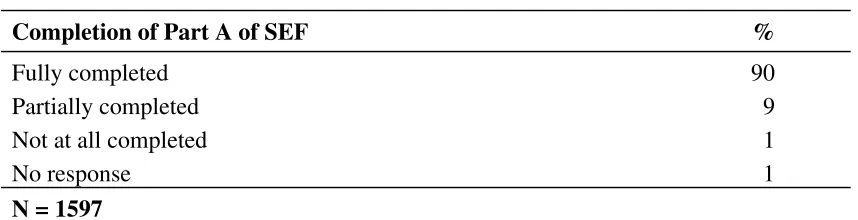
[image:22.595.85.514.530.640.2]The vast majority of survey respondents (90 per cent) completed the SEF before inspection as can be seen in Table 2.1 below.
Table 2.1 Extent to which Part A of SEF completed prior to the inspection Completion of Part A of SEF %
Fully completed 90
Partially completed 9
Not at all completed 1
No response 1
N = 1597
Due to rounding, percentages may not sum to 100 1584 respondents answered this question
Source: NFER evaluation of the impact of Section 5 Inspection School Survey 2006
awareness that the development of the SEF for the first time was time-consuming but subsequent updates would be less onerous, as a secondary headteacher explained: ‘It did divert a huge amount of time to get that first SEF going – but we’re now in the process of reviewing and now it’s a case of updating stuff we’ve already got’. Updating of the SEF is explored in more detail in Section 2.3.
However, a few interviewees were not convinced that the time spent compiling the SEF was time well-spent. A headteacher from a primary school graded ‘3’ stated: ‘I think the document is too detailed and took too much time to complete’. Another primary headteacher, from a school graded ‘good’, agreed: ‘Writing the SEF was not hugely helpful because it was very time consuming and didn’t give anything not already known – it was just a case of putting everything into one document. I haven’t revisited it since’.
The 18 survey respondents (one per cent) who had not completed the SEF prior to the inspection, were asked what other data or documents were used by the school and the inspectors as part of the dialogue. The following sources were drawn upon:
• PANDA (12 respondents)
• other attainment data (12 respondents)
• school’s own self-evaluation sources (11 respondents)
• school development plan (ten respondents)
• parent questionnaires (ten respondents)
• pupil questionnaires (nine respondents) and the
• old SEF (six respondents).
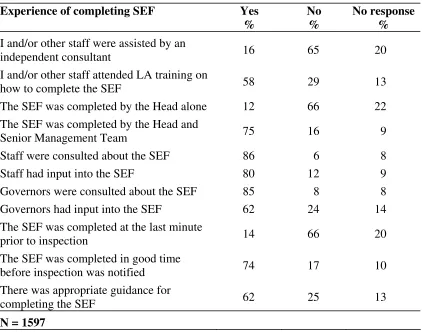
Table 2.2 Experiences of completing the Self-Evaluation Form Experience of completing SEF Yes
%
No %
No response %
I and/or other staff were assisted by an
independent consultant 16 65 20
I and/or other staff attended LA training on
how to complete the SEF 58 29 13
The SEF was completed by the Head alone 12 66 22
The SEF was completed by the Head and
Senior Management Team 75 16 9
Staff were consulted about the SEF 86 6 8
Staff had input into the SEF 80 12 9
Governors were consulted about the SEF 85 8 8
Governors had input into the SEF 62 24 14
The SEF was completed at the last minute
prior to inspection 14 66 20
The SEF was completed in good time
before inspection was notified 74 17 10
There was appropriate guidance for
completing the SEF 62 25 13
N = 1597
Due to rounding, percentages may not always sum to 100
A total of 1245 respondents answered at least one item in this question
Source: NFER evaluation of the impact of Section 5 Inspection School Survey 2006
In comparison to the pilot survey, more respondents reported that the SEF was completed in good time before the inspection (67 per cent in pilot and 74 per cent in main evaluation), and fewer respondents expressed a view that they had not received appropriate guidance on completing the SEF (34 per cent compared with 25 per cent). The statistical modelling analysis revealed that survey respondents who felt that they had received appropriate guidance on SEF completion were more likely to be very satisfied with the inspection overall (see Section 5.4 for more detail).
Usefulness of SEF
Just over one half of survey respondents felt that the self-evaluation process was ‘very effective’ at identifying the school’s strengths and weaknesses, as can be seen in Table 2.3 below.
Table 2.3 Effectiveness of the self-evaluation process in helping to identify the school’s strengths and weaknesses
Identifying strengths and weaknesses %
Very effective 55
Somewhat effective 42
Not at all effective 3
No response 1
N = 1597
Due to rounding, percentages may not sum to 100 1584 respondents answered this question
Source: NFER evaluation of the impact of Section 5 Inspection School Survey 2006
Table 2.4 Helpfulness of the SEF as a vehicle for self evaluation
Helpfulness of SEF %
Very helpful 47
Somewhat helpful 48
Not at all helpful 3
No response 1
N = 1597
Due to rounding, percentages may not sum to 100 1580 respondents answered this question
Source: NFER evaluation of the impact of Section 5 Inspection School Survey 2006
This picture of the SEF as an effective and helpful means of self evaluation was generally endorsed during the 36 case-study visits. Interviewees were asked how the inspection team had made use of the SEF. Over half of the interviewees felt that the SEF offered a good insight into the schools’ performance to the team and that the inspection was based on the SEF and the PANDA. It was generally reported that inspectors used the SEF as a source of data for an examination of the school’s own self evaluation. Inspectors’ judgements were then matched against those of the school.
Most comments about how the SEF provided focus for the inspection team and the way in which the team used the SEF, were positive. A governor, for example, explained that: ‘They used the SEF as a way of giving them some sense of focus, but I wasn’t under the impression that it railroaded them in a certain direction. I thought they were quite capable of seeing outside and beyond it’. However, one headteacher felt that the inspectors provided too much direction: ‘we feel that’s something that’s crept into s5 – that they’re telling us how to improve’. This concept of inspectors’ provision of advice with regard to school improvement is further explored in Section 2.4.
Various headteachers and senior managers believed that the SEF formed the basis of the Pre-Inspection Briefing (PIB), and in the PIB the team identified the areas to be investigated further. This method was generally perceived to work well, however the headteacher in one special school was not quite so sure as, although he felt certain that the inspector had read the SEF: ‘when he phoned up [pre-inspection] and told me their hypothesis, I couldn’t see where it had come from’.
In a few cases some school staff felt that the inspection team had not fully utilised the SEF, which led to feelings of frustration with the inspection process. The following examples are from schools graded ‘3’ or ‘4’.
Case studies: SEF perceived to be not fully used by inspectors
1. One headteacher, in a primary school graded ‘satisfactory’, felt that the whole inspection ‘was a rush and too data driven’ and that the information in the SEF was not fully ‘absorbed – it was all too coloured
by the key stage 2 results’. As a consequence, the contribution the
inspection made to school improvement was limited as the recommendations were, in the school’s view, too focused on improving key stage 2 results.
2. In a different primary school, also graded ‘satisfactory’, the headteacher felt that there ‘was a lot there [in the SEF] for the inspection team to pick
up on, but not all of this made it into the final report’. He gave the
example of science being as good as reading, and writing standards (especially at key stage 1) which were generally thought to be high. He was disappointed that these factors, evident in the SEF, were apparently not reflected in the report.
3. In a third school a senior manager, in a secondary school given ‘a notice to improve’, said that the inspection team ‘used it [the SEF] to bash us
round the head with’. The main issue for them was the sixth form, ‘we
knew that the sixth form outcomes were not good enough’. But the
interviewee maintained that the school had been very honest and ‘they
[the inspection team] said we didn’t know the school and got it wrong’.
worthwhile process because it helped schools to focus, provide evidence and inform school improvement. One headteacher, in a primary school graded ‘3’, observed: ‘It’s helped to put everything together in one place, provide a picture of where we are. It brings everything together so you can see the school as a whole; I think it’s a very good tool. It’s time-consuming, but valuable’.
SEF completion also enabled schools to ‘analyse practice’; it was perceived to be ‘the most useful part of the inspection process’, and the SEF was considered to be ‘a reflective tool’, one that was ‘interesting and revealing’ and helped ‘to focus the mind on the strengths of the school and what one might want to work on in the future’. It was seen, by a senior manager in a pupil referral unit (PRU), as ‘good for harnessing things. It was useful for the school. I felt you could feel things moving tangibly forward with it’.
Staff in a few case-study schools (seven) commented on the contribution of the SEF, from the schools’ perspective, towards increased self-awareness. A member of the senior management team (SMT) in a secondary school graded ‘good’ observed: ‘A strength of the new system is that they [the inspectors] are saying ‘you judge yourself and we will seek to verify the quality of your judgement’. That has strengths. It places the responsibility on us. Having self knowledge [through self evaluation] is significantly more important than any inspection’. Similarly a governor, in a secondary school graded ‘outstanding’ admitted that he was ‘quite cynical’ about the process before it started, but concluded that the SEF was ‘quite good at making us sit down and assess ourselves’.
Other comments included:
I think the inspection itself was so much less stressful this time because of the SEF.
When I think of all the things I have to write for the education department, the SEF is perhaps more useful than the others.
It’s very obvious that there are lots of things happening as a result of the SEF in terms of individual departments doing their own self evaluations. So I think the process is snowballing.
expressed a belief that the inspection had not contributed to school improvement.
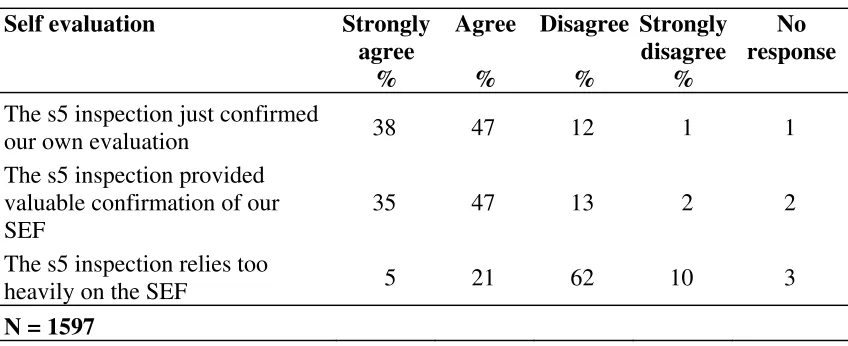
Table 2.5 Levels of agreement with views about self evaluation Self evaluation Strongly
agree %
Agree
%
Disagree
%
Strongly disagree
%
No response
The s5 inspection just confirmed
our own evaluation 38 47 12 1 1
The s5 inspection provided valuable confirmation of our SEF
35 47 13 2 2
The s5 inspection relies too
heavily on the SEF 5 21 62 10 3
N = 1597
Due to rounding, percentages may not always sum to 100
A total of 1551 respondents answered at least one item in this question
Source: NFER evaluation of the impact of Section 5 Inspection School Survey 2006
Staff in 32 of the 36 case-study schools were re-interviewed approximately four months after the initial visit by NFER researchers. The next section examines how these schools revised the SEF after the inspection, and considers interviewees’ reflections on the ongoing SEF completion process.
2.3 Update of the SEF
SEF revision
Staff in approximately two-thirds of the case-study schools revisited had continued to update the SEF. Some interviewees had only just started that update, or had only made small amendments. As one headteacher explained: ‘Yes [I have started to update the SEF], but not a lot, there’s always something more important to do. I planned to take one section per month but so far it has just been me tinkering with it’. Others said redrafts had been on paper and that they had not updated online yet. Two headteacher interviewees reported that they had ‘dramatically’ overhauled the SEF, as can be seen in the example below.
Case study: Update of SEF
One senior manager from a primary school graded ‘good’ explained: ‘We have gone through every section and updated it in regard to our results from last summer. We haven’t changed the parents section yet, we want to get feedback from our parent questionnaires first. We’ve updated the leadership and management section and the main priorities for improvements. Other priorities include points like improve procedures for assessment and recording, improve aspects of health and safety through joining a healthy schools initiative, raise standards through emotional aspects of learning and improve teaching and learning in the Foundation Stage. We’ve raised the percentage targets at key stage 1. Our 2006 results were higher than the
national results’.
Several school interviewees stated that they had not updated the SEF subsequent to the inspection, and a few mentioned that they were waiting for RAISE on-line information but that some of it was not available.
Interviewees were asked in what way they had changed their approach to self evaluation, and whether their approach to the update of the SEF would be different from the initial completion. For just over a half of those who had updated their SEFs, the change involved streamlining the SEF because it needed to be briefer. One interviewee expressed an intention to ensure that the SEF, in the future, would be ‘a lot less descriptive and more analytical’. This theme of a more concise, succinct and evidence-based SEF was common, as can be seen in the examples below.
Case studies: providing more focus in the SEF
1. The headteacher in one small special school, inspected before Christmas, said: ‘It took a lot of time to complete, it was a bit daunting at first. I’m now putting in more bullets, more evidence, less narrative. When you first do it, it’s like writing an MA dissertation. It gets a bit easier each time’.
2. The headteacher in a primary school graded ‘satisfactory’ reported: ‘We
have changed our approach. It [the SEF] has become more focused.
It’s more time-consuming but more focused. It’s now evidence-based. Target setting across the board gives us good evidence across all years… It was painful for some teachers but we needed to do this to achieve results later on. Now we have clear expectations for each year in English and maths’.
statements – makes using the data more effective as we focus on specific groups and progress across year groups.’
Headteachers in several (six) schools explained that the updating of the SEF had changed as more staff were involved and trained to complete different sections: ‘it has raised issues which we may not have addressed before. It is very searching and instigated lots of discussion’. A number of headteachers, subsequent to inspection, delegated the completion of sections of the SEF to subject or department heads. An example of this more apportioned approach to SEF completion is given below.
Case study: More distributed approach to SEF completion
One headteacher explained that: ‘The biggest change was that whereas
before [the inspection] the SEF would reflect my own judgements, from now
on it will reflect those of the whole leadership team’. Although this shared or
distributed method of SEF completion was beneficial in many ways, such as subject heads taking ownership of subject areas, it was not without problems as the headteacher explained: ‘the SEF has helped enormously as the framework is better for self evaluation – but the only problem with distributed
leadership is how do you pull together all the mini SEFs [from departments]?’
A few interviewees stated that, when updating the SEF, they would: ‘make sure that we put down all the positives and don’t undervalue ourselves’. This observation was not just from ‘good’ and ‘satisfactory’ schools. A headteacher in a school graded ‘outstanding’ felt she had ‘a little more confidence’ because she was ‘more familiar and confident with the terminology that defines ‘outstanding’’.
SEF framework
A quarter of schools felt that the SEF provided a useful formal framework for self evaluation, and half felt that self evaluation had improved and that the SEF was significant to this improvement. As one headteacher explained: ‘It gives you a framework to conduct the self evaluation, a structured approach… it works well’. The SEF provided the framework which enabled them to do a ‘good job’ by, for example, ‘drilling down to department level’. A couple of schools, graded ‘good’, were very enthusiastic about the SEF: one headteacher felt that it was ‘more important than the inspection itself’, and another expounded:
I think the SEF is the best thing since sliced bread! It’s tough and time-consuming to do, but it’s a good exercise. It helps you get to know your school. Self evaluation hadn’t come to fruition until the SEF. The inspection doesn’t reflect all the achievements of a school.
headteachers that the SEF was ‘repetitive in parts’ and that ‘it is still hard to judge where to put information, it is still tempting to put information in every place you feel it perhaps should go, and this can result in an overlong SEF’.
SEF influence on inspection
The majority (three-quarters) of headteachers believed that the content of the SEF influenced the outcome of the inspection. At the very least the inspectors used it for ‘a baseline’ for the inspection: ‘lack of time means the inspection team is reliant on the SEF’. In some cases, as outlined below, the content of the SEF was perceived to be the most important aspect of the inspection.
Case study: Influence of SEF content on inspection
While most schools regarded the SEF as influential, a few believed it to be extremely powerful in determining the inspectors’ view of the school. One headteacher said: ‘They have virtually written it [the report] before they come,
based on the SEF’. Another believed: ‘the SEF heavily influences the
outcome of the inspection, the inspectors’ minds are almost made-up before they arrive’.
Furthermore, some headteachers felt the SEF played ‘a part in shaping the inspectors’ views’ by, for example, ‘telling inspectors what to look for’. One primary headteacher explained what had happened during the course of the inspection:
The inspectors take up what’s in it [the SEF], we made one mistake, we made no mention of multi-cultural education. It’s embedded here, we do it, but it was an oversight. But we got stung for it. We will address that in the SEF.
A minority of schools perceived the language, the tone of the language, and the grades used in the SEF, to have influenced inspectors. Senior staff in one school had re-written the document, subsequent to inspection, in a ‘positive language, as we felt the language we used in the first SEF may have led the inspectors to make certain pre-emptive judgements before even seeing the school’. This positive tone also related to the grades. One headteacher in a pupil referral unit observed: ‘If you put down ‘satisfactory’, they [Ofsted] may well look for ‘satisfactory’! All our grades [in the SEF] are ‘good’ now!’
2.4 Oral feedback and dialogue
Oral feedback
As well as the headteacher, the vast majority of case-study schools had members of the senior management team present for the oral feedback from the inspection team. Additionally, interviewees at half of the schools recalled local authority advisers or representatives had also been present. In most cases the chair, or vice-chair, of governors also attended.
The majority (60 per cent) of survey respondents found the oral feedback to be ‘very useful’, and a further 32 per cent found it to be ‘fairly useful’. It was evident that the oral feedback was a very important stage of the inspection process as school staff valued the verbal input (see Table 2.6).
Table 2.6 Usefulness of the oral feedback
Usefulness of oral feedback %
Very useful 60
Fairly useful 32
Not at all useful 8
No response <1
N = 1597
Due to rounding, percentages may not sum to 100 1591 respondents answered this question
Source: NFER evaluation of the impact of Section 5 Inspection School Survey 2006
Furthermore, the statistical modelling (see Section 5.4 for more detail) revealed a positive statistical relationship between finding oral feedback very useful and overall satisfaction with the inspection. Three-quarters (76 per cent) of respondents who found the oral feedback ‘very useful’ were ‘very satisfied’, whereas only four respondents who found oral feedback very useful were ‘not at all satisfied’ with the inspection. Similarly, three-quarters (75 per cent) of those who found oral feedback ‘not at all useful’ were ‘not at all’ satisfied with the inspection, whereas only three respondents who found oral feedback ‘not at all’ helpful were ‘very’ satisfied with the overall inspection. Satisfaction with the inspection process is further explored in Section 6.1.
Interview responses from the 36 case-study schools largely confirmed these views on the importance of the oral feedback. Interviewees in approximately two-thirds of schools found the oral feedback to be very useful. Oral feedback was perceived to be useful in four main ways.
described: ‘it provided an explanation of why they [the inspectors] put in what they did’. Further comments included:
I found it really useful as they go through the draft report with you and it was explained with examples and we talked it through.
It was very useful – it was more meaningful than the written report, which seemed a very cut-down version of the feedback we were given. We needed that explanation.
The oral feedback was very useful, it told the school exactly where the inspectors were in their thinking and enabled the school to respond to that.
• Feedback was useful as it provided direction. As one governor described: ‘we readjusted our priorities slightly’ in the light of the feedback. An interviewee from a school graded ‘notice to improve’ said ‘we knew what we had to do and were able to start straight away, the negative feedback prompted us to do something quickly’. Other examples of the provision of direction and advice for school improvement included:
It gave us additional momentum to tackle the areas we had already identified as needing improvement.
It helped to crystallize and cement our views. No immediate action was taken but a lot of actions were in process and we have continued with those,… the inspectors developed a very accurate view of the school. It did draw attention to a couple of issues that needed to be pushed up the priority ladder.
It was about areas that we had already identified with one or two pointers, one or two tweaks and a few ideas from the inspector. He was very good in that the inspection report is quite short, but he was offering advice as well as inspecting.
• It provided confirmation that the school and the SEF were on track. School staff and governors were encouraged by the receipt of oral validation of the SEF. The following are typical examples:
it confirmed what we thought, it validated what we thought were our strengths and areas of improvements needed.
I think it confirmed for us the areas that we needed to work on. We had a rough idea as a staff anyway. When I came here as head I had a lot to do and I wanted to get everyone into working as a team. We had one failing teacher at the time and they [the inspectors] picked up on that but it was something we were aware of.
• Finally school staff and governors found the oral feedback provided
One of the issues was attendance, and we wrote to parents shortly after the inspection saying that their children must attend. We also clamped down on holidays in term time.
We did take action in terms of one of the things that they found – it was about risk assessments and we hadn’t realised that we had let it go – They highlighted this and we were able to then put it in place, so that was an immediate action.
Staff in five schools (all graded 3 or 4) did not find the oral feedback helpful or useful. (Four of these schools were inspected in October or November 2005, the fifth in February 2006.) In three cases schools believed that the inspectors had relied too heavily on data as the following comments illustrate:
Judgements were made without the full picture. It was intimated that we didn’t know the children’s progress…. They [Ofsted] were too reliant on documents. They said we didn’t get children’s comments, but we do involve children all the time. We check their understanding.
The oral feedback was negative, destructive and an inaccurate representation of their findings [which were based on] a shallow interpretation of data and was unbalanced.
In another school the headteacher found the oral feedback unhelpful as she found there was not enough time and the feedback was ‘rushed’ allowing little two-way dialogue. She did not agree with the findings and subsequently challenged the report. Another headteacher said that ‘there was very little time for reflection’, and she would have liked more time to respond to the inspection team’s findings.
The final school that found the oral feedback unhelpful did so because: ‘It [the inspection] was totally and wholly inappropriate given the state of the school at the time’. The school felt they were given unfair criticism as they were a new school and were still undergoing reorganisation.
In all these five cases where the oral feedback was perceived to be unhelpful, there was a common perception that a meaningful dialogue had not taken place between the school and the inspection team.
Ongoing dialogue
Case studies: The importance of successful dialogue
1. The inspectors were brilliant and I can’t fault them. They kept us fully updated and a couple of times a day they would drop in to give us feedback.
2. Obviously it is a stressful time and one of our fears was that because it
[the inspection] is so short, they [the inspection team] wouldn’t get the full picture. The on-going dialogue was a useful time to ask them have you seen this, or have you seen that? Had we not got that then I’m not sure we would have been happy that they would have got the full picture.
3. I think I developed a very good relationship with the lead inspector. He
would ask questions and give suggestions and we would have an opportunity to explain what we do in response. There was that on-going sort of dialogue happening all the time, which was good because it meant it was more developmental.
4. Every maths teacher was seen and the documentation for maths was reviewed and strategies to improve key stage 2 to key stage 3 progress and CVA progress, were examined. There was a lot of dialogue about that and on the first evening the school was able to gather more evidence to demonstrate that since last year’s SATs (the ones in the PANDA) the progress we have made since then, the strategies we have put in place, and the SATs results that will come out after the inspection, will be much better.
Levels of agreement
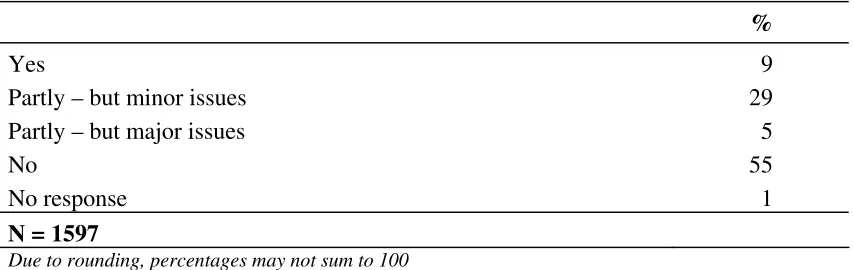
[image:35.595.86.513.545.680.2]Survey respondents were asked whether there had been any disagreements with the inspection team at the oral feedback stage. The majority (84 per cent) reported experiencing none, or minor, levels of disagreement (see Table 2.8 below).
Table 2.8 Disagreements between the school and the inspection team at the oral feedback stage
%
Yes 9
Partly – but minor issues 29
Partly – but major issues 5
No 55
No response 1
N = 1597
Due to rounding, percentages may not sum to 100 1576 respondents answered this question
Source: NFER evaluation of the impact of Section 5 Inspection School Survey 2006
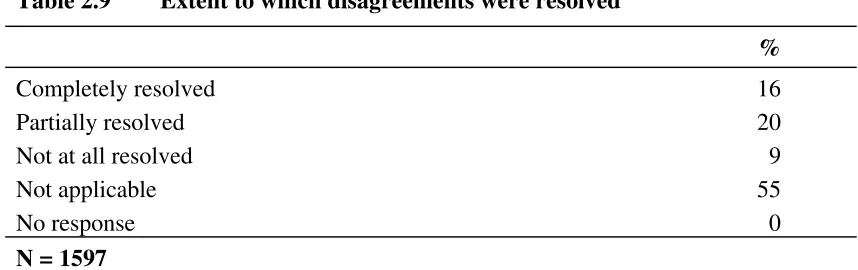
Table 2.9 Extent to which disagreements were resolved
%
Completely resolved 16
Partially resolved 20
Not at all resolved 9
Not applicable 55
No response 0
N = 1597
Due to rounding, percentages may not sum to 100 720 respondents answered this question
Source: NFER evaluation of the impact of Section 5 Inspection School Survey 2006
In most case-study schools inspection judgements were considered to be fair and reasonable, and inspectors were commended for being thorough, even though they were obliged to work under considerable time pressures.
Disagreements were expressed in approximately one-third of case-study schools. As can be seen in Table2.10 below, the main sources of disagreement among survey respondents were due to perceptions of the inspection team having too narrow an approach to performance data (44 per cent) and of the grading system as being too rigid and structured (41 per cent). Both of these reasons relate to a perception, on behalf of school senior managers involved in the inspection, that the team were too inflexible in their approach to data interpretation and the grading boundaries.
Table 2.10 Reasons for disagreements
%
Too narrow approach to performance data 45
Not enough consideration of CVA 8
Too much consideration of CVA 15
Misinterpretation of data in general 12
Lack of professionalism of inspection team 8
Inspection team did not accept evidence 24
Grading system too rigid/structured 43
Other 19
No response to this question 11
N = 691
More than one answer could be put forward so percentages do not sum to 100 An open-ended, multiple response question
A total of 645 respondents gave at least one response to this question
Source: NFER evaluation of the impact of Section 5 Inspection School Survey 2006
significant disagreements occurred these centred around, as discussed above, the overall grades awarded. The grading by inspectors was often perceived to be too rigid and inflexible. Staff in several schools also believed that inspectors adopted too narrow an approach to data, for example ‘they pinned all their judgements on one year’s results’, and especially did not make enough allowance for a weak cohort. The following examples are typical of the minority of schools that expressed this concern.
Case studies: Disagreements over grading
1. The headteacher in a large primary school, which had recently expanded significantly and had altered its socio-economic profile described how: ‘judgements were based on key stage 2 SATs from 2004 to 2005 when two-form entry had just started. That year group had emotional and behavioural difficulties and the results were no surprise to us. No parent in that year complained about the results, many of the pupils were socially disadvantaged and emotionally needy. The s5 was like a tick box grid, inspectors said ‘if results dropped we can’t say the overall effectiveness grade is anything more than satisfactory’ – but we did achieve what was expected in our SEF, we knew the results would be poor in that year’.
2. In another school the chair of governors said that: ‘there were
disagreements’, and he stated that the school had written to Ofsted to
indicate that they were completely dissatisfied with the inspection findings. The LA also wrote to complain. The LA representative was present at the feedback session and it was apparent, said this respondent, that she ‘Just couldn’t believe what she was hearing. The
LA backed the school’. The chair of governors said that everything
seemed to revolve around data, and the school was not good at dealing with and understanding that. ‘So the slogan “Every Child Matters” with regard to the inspection, as far as I could see, didn’t apply – what mattered was the result and added value wasn’t taken into consideration at all’.
3. Impact: the inspection report
Key findings
• The majority (79 per cent) of survey respondents felt that the inspection
findings broadly met the schools’ expectations and this link was strongest amongst schools most recently inspected.
• The majority (71 per cent) felt that the written report was completely
consistent with the oral feedback. The findings from the statistical modelling show that those who found complete consistency between the oral and written feedback were more likely to be very satisfied with the inspection overall.
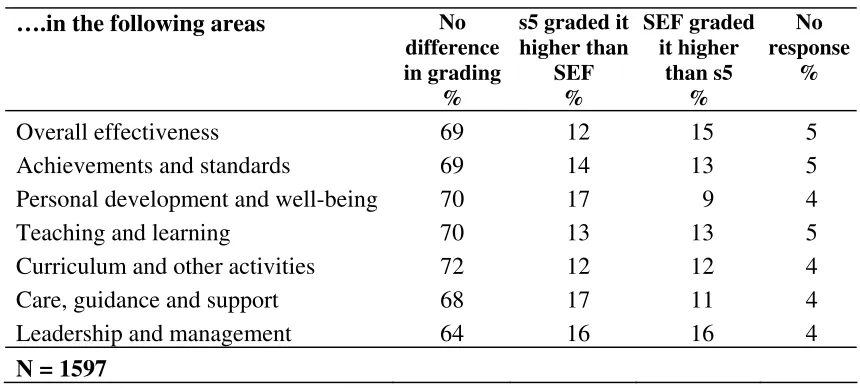
• Two-thirds of survey respondents reported no differences between the s5
and SEF grades. The grades appear to have become more ‘in tune’ the longer the s5 inspection process has been in operation.
• Over three-quarters of case-study schools believed the diagnosis, and the
written report, to be fair and accurate, especially in the areas of ‘personal development’ and ‘care and guidance’. However, some schools felt ‘achievement and standards’ grades were sometimes too data-driven. Disagreements over grades stemmed from perceived poor timing of inspection, too much or too little emphasis on data (including CVA), including, at times, a lack of understanding of a school’s context.
• The vast majority (84 per cent) of stakeholders found the written report
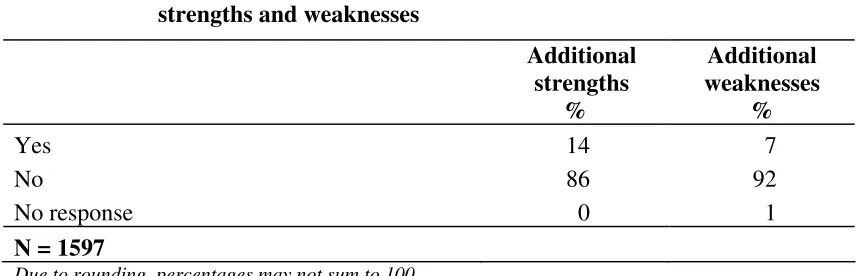
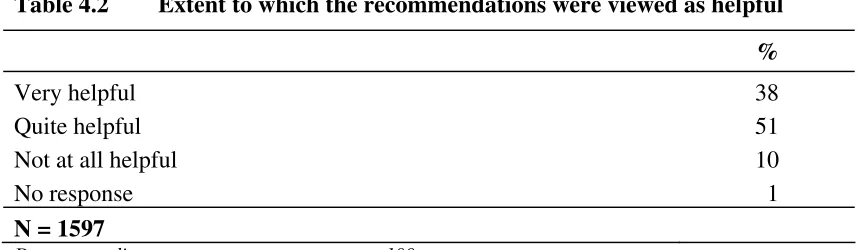
helpful in identifying areas for improvement and approximately three-quarters found it accurate in identifying strengths and weaknesses. A small minority (five) felt that the inspection teams had not correctly identified the school’s strengths and weaknesses.
• Over half (57 per cent) found the written report helpful for identifying areas
for improvement. Furthermore, the statistical modelling analysis revealed that there was a positive relationship between schools who believed the inspection helped to identify priorities and impact on school improvement.
• Parents valued the independent assessment of their schools and the ease
with which they could read the report. On the whole the pupil letter was perceived to be a good development and appreciated by pupils.
• The written report was perceived, by the majority of case-study
interviewees, to be user friendly, easy to read, concise and useful. A small minority (15 per cent) of respondents, however, found the report to be unhelpful in identifying areas for improvement. Case-study interviewees in six schools thought the report was too brief and generalised.
also explored, and pupils’ opinions with regard to the letter, in particular, are considered.
3.1 The diagnosis and the inspection grades
The majority (79 per cent) of survey respondents felt that the inspection findings broadly met the school’s expectations, as can be seen in Table 3.1 below.
Table 3.1 Incidence of inspection findings broadly matching the school’s initial expectations
%
Yes 79 No 6 Partly 15
No response 1
N = 1597
Due to rounding, percentages may not sum to 100 1588 respondents answered this question
Source: NFER evaluation of the impact of Section 5 Inspection School Survey 2006
There was a slightly closer match between expectations and inspection findings the longer the s5 inspection has been in operation, perhaps indicating an increased understanding of the inspection by all concerned with it. A total of 78 per cent of respondents from schools inspected before Christmas 2005 reported a broad match between expectations and inspection findings, this figure rose to 79 per cent amongst schools inspected between 1 January and the 14 February, and to 81 per cent for those inspected between 15 February and 31 March 2006.
Not surprisingly, the lower the overall grade the less likely respondents were to believe that inspection findings matched expectations: 85 per cent of respondents from those schools graded ‘outstanding’ reported a match, whereas this figure fell to 56 per cent amongst those given ‘notice to improve’.