EFFECTIVENESS OF LAUGHTER THERAPY ON
DEPRESSION AMONG ELDERLY RESIDING IN
SELECTED OLD AGE HOME AT MADURAI.
M.Sc (NURSING) DEGREE EXAMINATION
BRANCH - V MENTAL HEALTH NURSING
COLLEGE OF NURSING
MADURAI MEDICAL COLLEGE, MADURAI -20.
A dissertation submitted to
THE TAMILNADU DR.M.G.R. MEDICAL UNIVERSITY,
CHENNAI - 600 032.
In partial fulfillment of the requirement for the degree of
MASTER OF SCIENCE IN NURSING
EFFECTIVENESS OF LAUGHTER THERAPY ON
DEPRESSION AMONG ELDERLY RESIDING IN
SELECTED OLD AGE HOME AT MADURAI.
Approved by Dissertation committee on………
Professor in Nursing Research ___________________________
Mrs.S.POONGUZHALI, M.Sc (N), M.A,M.B.A., Ph.D
Principal,
College of Nursing, Madurai Medical College, Madurai.
Professor in Clinical Speciality________________
Mrs.S.RAJAMANI, M.Sc (N), M.B.A., M.Sc (Psy), Ph.D
Lecturer,
H.O.D in Mental Health Nursing, College of Nursing,
Department of Mental Health Nursing, Madurai Medical College,
Madurai.
Medical Expert ___________________ Dr.T.KUMANAN,M.D.,DPM.,
Professor and H.O.D, Department of Psychiatry, Madurai Medical College, Madurai.
A dissertation submitted to
THE TAMILNADU DR.M.G.R. MEDICAL UNIVERSITY,
CHENNAI- 600 032.
In partial fulfillment of the requirement for the degree of
MASTER OF SCIENCE IN NURSING
CERTIFICATE
This is to certify that this dissertation titled, “EFFECTIVENESS OF LAUGHTER THERAPY ON DEPRESSION AMONG ELDERLY RESIDING IN SELECTED OLD AGE HOME AT MADURAI” is a bonafide work done by
Mr.T.MAHESHKUMAR, M.Sc (N) Student, College of Nursing, Madurai Medical College, Madurai - 20, submitted to THE TAMILNADU DR.M.G.R. MEDICAL
UNIVERSITY, CHENNAI in partial fulfillment of the university rules and regulations
towards the award of the degree of MASTER OF SCIENCE IN NURSING, Branch V-Mental Health Nursing, under our guidance and supervision during the academic period from 2013—2015.
Mrs.S.POONGUZHALI,M.Sc (N), M.A., M.B.A., Ph.D
CAPTAIN Dr.B.SANTHAKUMAR,M.Sc (F.Sc).,M.D(F.M). PGDMLE., Dip.N.B(F.M)
PRINCIPAL, DEAN,
COLLEGE OF NURSING, MADURAI MEDICAL COLLEGE,
MADURAI MEDICAL COLLEGE, MADURAI-20.
MADURAI-20.
CERTIFICATE
This is to certify that the dissertation entitled “EFFECTIVENESS OF LAUGHTER THERAPY ON DEPRESSION AMONG ELDERLY RESIDING IN SELECTED OLD AGE HOME AT MADURAI” is a bonafide work done by
Mr.T.MAHESHKUMAR, M.Sc (N) Student, College of Nursing, Madurai Medical College, Madurai- 20, in partial fulfillment of the University rules and regulations for
award of the degree of MASTER OF SCIENCE IN NURSING, Branch V-Mental Health Nursing under my guidance and supervision during the academic year 2013-2015.
Name and signature of the guide________________
Mrs.S.RAJAMANI, M.Sc. (N)., M.B.A., M.Sc(Psy).,Ph.D
Lecturer,
H.O.D in Mental Health Nursing, College of Nursing,
Madurai Medical College, Madurai.
Name and signature of the Head of Department___________________________
Mrs.S.POONGUZHALI,M.Sc(N)., M.A., M.B.A., Ph.D
Principal,
College of Nursing, Madurai Medical College, Madurai.
Name and signature of the Dean CAPTAIN Dr.B.SANTHAKUMAR,
M.Sc(F.Sc).,M.D(F.M).,PGDMLE.,Dip.N.B(F.M)
Dean,
ACKNOWLEDGEMENT
“Acknowledge him in all your ways and he shall direct your paths”
Any dissertation work is a corporate endeavor necessitating the assistance of
more than one. My attempt to bring out this assignment is therefore team work.I,the
investigator of this study owe deep sense of gratitude to all those who have contributed
to the successful completion of this study.
Many helping hands have smoothened every step of this dissertation first of all I
praise and thank the lord almighty for his abundant grace, Blessing, support, wisdom, and strength throughout this endeavor.
Gratitude calls never expressed in words but this only to deep perceptions, which
make words to flow from one’s inner heart. The satisfaction and pleasure that accompany
the successful completion of any task would be incomplete without mentioning the
people who made it possible, whose constant guidance encouragement, rewards and any
effort with success. I consider it is a privilege to express my gratitude and respect to all
those who guided and inspired me to complete this study.
I wish to acknowledge my sincere and heartfelt gratitude to all my well wishers
for their continuous support, strength and guidance from the beginning to the end of this
research study.
I extend my sincere thanks to Captain Dr.B.Santhakumar M.Sc (FSc), M.D, (F.M), PGDMLE, Dip.N.B (F.M), Dean, Madurai Medical College, Madurai for his acceptance and approval for the study.
I wish to express my deep sense of gratitude and heartfelt thanks to
Madurai Medical College, Madurai for her guidance and suggestions to carry out the
study.
I express my heartfelt and faithful thanks to Mrs. S. Rajamani. M.Sc (N), M.B.A., M.Sc (Psy)., Ph.D, Lecturer and Head of the Department of Mental Health Nursing, College of Nursing, Madurai Medical College, Madurai for her hard work,
efforts, interest and sincerity to mould this study in successful way, her easy
approachability and understanding nature inspired me and she laid strong foundation on
research. It is very essential to mention her wisdom and helping nature had made my
research a lively and everlasting one.
My deep sense of gratitude to Dr.T.Kumanan M.D, DPM, Professor and HOD, Department of Psychiatry, Government Rajaji Hospital, Madurai, for his timely help and
guidance.
I wish to express my sincere thanks to Mr.N.Sureshkumar,M.A.M.Phil.,
(Clinical psychologist) Assistant professor, Psychiatry department, Government Rajaji
Hospital Madurai for his excellent guidance and support for the successful completion of
the study.
I offer my earnest gratitude to all the Faculty Members of College of Nursing, Madurai Medical College, Madurai for their assistance and moral support.
I extend my sincere thanks to Mr.A.Venkatesan, M.Sc, M.Phil. PGDCA., Ph.D, Deputy director of medical Education (Statistics)Chennai for his expert advice and guidance in the course of analysing various data involved in this study.
I extent my thanks to Mrs.M.Saratha, M.A.,M.Phil (Tamil), for Tamil Translating of Tool and editing of the study.
I owe my sincere thanks to Administrative members, Secretary, Care takers and helpers of Sellur Old Age Home, Sellur, Madurai for their co-operation and permitting me to conduct the study in the old age home. I thank all the elderly
participated in the study.
I wish to express my sincere heartfelt thanks and gratitude to Mr.S.Victor Devasirvadam M.Sc (N)., Ph.D, for his valuable guidance and suggestions to carry out the study.
I also thank to Mr.S.Kalaiselvan, M.A., B.LISc, librarian, College of Nursing, Madurai Medical Colleg, Madurai, for his book and journal supply through out the study.
This acknowledgement will not be complete if I fail to offer my special heartfelt
thanks, and words are not adequate to express my gratitude to my beloved parents
Mr.S.Thulasidoss and Mr.S.Asothai and my wife S.Malarvizhi, and my friends
Mr.Selvakumar,Mr.Alagesan, Mr.Venkatesh, Mr.Thirumal, who extended their helping hands and supporting me in all, means round the clock right from the beginning
till the end in bringing out this Dissertation.
Above all the investigator owes his success to god almighty.
ABSTRACT
Title: Effectiveness of laughter therapy on depression among elderly residing in selected old age home at Madurai. Objectives: To assess the level of depression among elderly residing in selected old age home at Madurai, To assess the effectiveness of Laughter
therapy on depression among elderly residing in selected old age home at Madurai, To
associate the level of depression among elderly residing in selected old age home at
Madurai with their selected socio demographic variables. Hypotheses: There is a significant difference between the level of depression among the elderly before and after
Laughter therapy, There is a significant association between the level of depression
among elderly residing in old age home and their selected socio demographic variables.
Modified Imogene King’s Goal Attainment Theory (1981) was adopted for this study.
Methodology: A pre experimental one group pre test post test design was used. 40 elderly 60 and above 60 yrs of age were selected by purposive sampling method. The
study was conducted in Sellur old age home at Madurai. Pre test was conducted by
Geriatric depression scale on the first day after obtaining consent from all the subjects
then Laughter therapy was given 20 minutes twice a day for 5 Consecutive days (total 10
sessions) for the subjects. Post test was assessed on 7th day using the same tool.
Findings: Laughter therapy reduced the depression level of the elderly in the old age homes. There was a significant association between post test level of depression and age
( 60-70 years), sex(male),and medical illness(No medical illness),history of taking
medicines ( Not taking medicines) among elderly in the old age home. Conclusion: The study concluded that Laughter therapy is cost effective, non invasive, non
pharmacological complementary and alternative therapy to reduce the level of depression
TABLE OF CONTENTS
CHAPTER
NO TITLE
PAGE NO
1. INTRODUCTION
1.1 Need for the study 1.2 Statement of the problem 1.3 Objectives
1.4 Hypotheses
1.5 Operational definitions 1.6. Assumption
1.7 Limitation
1.8 Projected outcome
3 12 12 12 13 14 14 14
2. REVIEW OF LITERATURE
2. 1. Literature related to depression among elderly 2.2. Literature related to Laugher therapy and its effectiveness
2.3. Literature related to Laugher therapy on Depression
among elderly
2.4 Conceptual frame work
16 23
26
33
3. RESEARCH METHODOLOGY
3.1 Research approach 3.2 Research design 3.3 Research Variables 3.4 Setting of the study 3.5 Population 3.6 Sample 3.7 Sample size
3.8 Sampling technique 3.9 Criteria for sample selection
CHAPTER
NO TITLE PAGENO
3.10 Description of the tool and technique 3.11 Description of the instrument
3.12 Reliability of the tool 3.13 Pilot study
3.14 Data collection procedure 3.15 Plan for Data analysis 3.16 Protection of human subjects
3.17 Schematic Representation of Data Collection procedure
39 40 41 41 42 42 43 44
4. ANALYSIS AND INTERPRETATION OF DATA 45
5. DISCUSSION 81
6. SUMMARY AND CONCLUSION
6.1 Summary
6.2 Findings of the study 6.3 Conclusion
6. 4 Implications of the study 6. 5 Recommendations 6. 6 Limitations
89 90 92 92 94 94
REFERENCES 95
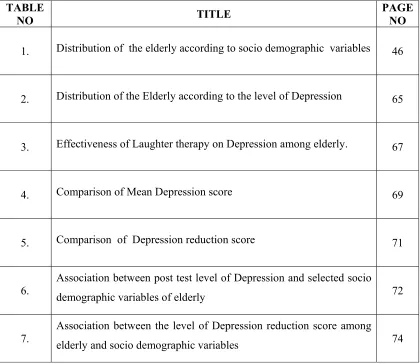
LIST OF TABLES
TABLE
NO TITLE
PAGE NO
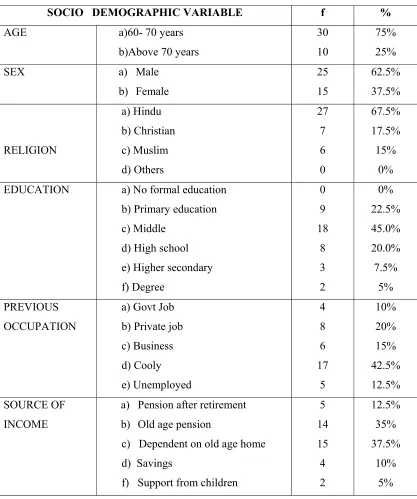
1. Distribution of the elderly according to socio demographic variables 46
2. Distribution of the Elderly according to the level of Depression 65
3. Effectiveness of Laughter therapy on Depression among elderly. 67
4. Comparison of Mean Depression score 69
5. Comparison of Depression reduction score 71
6.
Association between post test level of Depression and selected socio
demographic variables of elderly 72
7.
Association between the level of Depression reduction score among
[image:11.612.110.530.121.485.2]LIST OF FIGURES
1 Conceptual framework 36
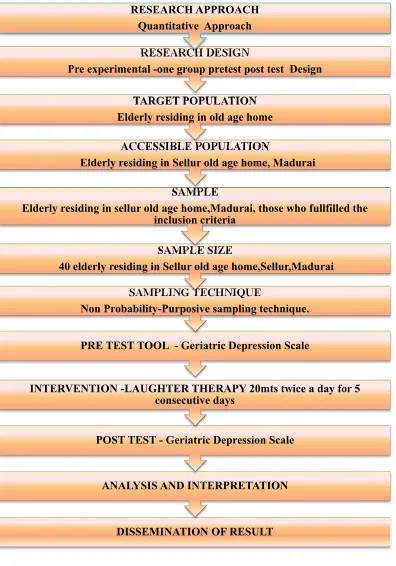
2 Schematic representation of the study 44
3 Distribution of Elderly according to Age 50
4 Distribution of Elderly according to sex 51
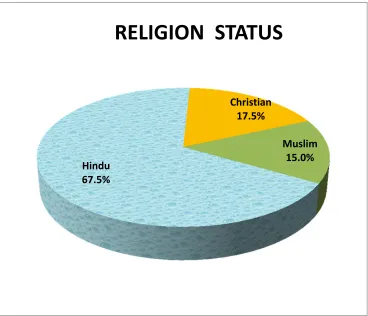
5 Distribution of Elderly according to religion 52
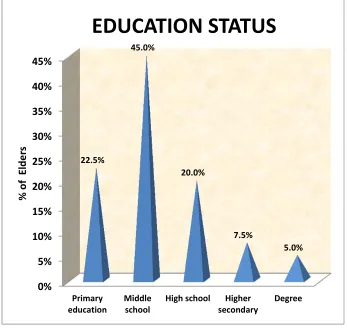
6 Distribution of Elderly according to education 53
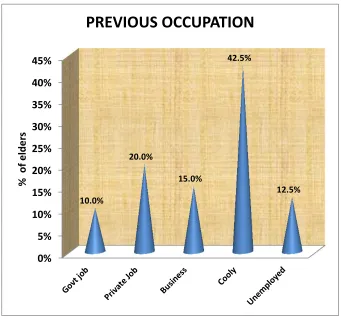
7 Distribution of Elderly according to previous occupation status 54
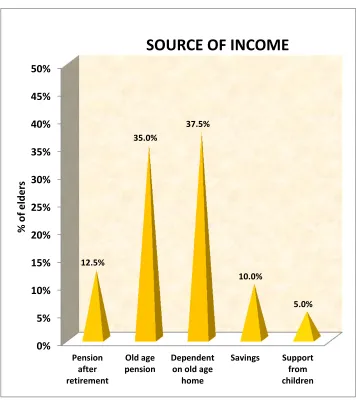
8 Distribution of Elderly according to source of income 55
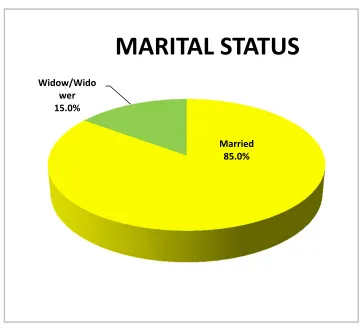
9 Distribution of Elderly according to Marital status 56
10 Distribution of Elderly according to Number of children 57
11 Distribution of Elderly according to type of family 58
12 Distribution of Elderly according to the occupation status of children
59
13 Distribution of Elderly according to the mode of entry 60
14 Distribution of Elderly according to duration of stay 61
15 Distribution of Elderly according to relatives visit time to old age home
62
16 Distribution of Elderly according to the medical illness 63
17 Distribution of Elderly according to the history of taking medicines
64
19 Effect of Laugher therapy on depression among elderly 68
20 Comparison of the mean depression score 70
21 Association between level of depression reduction and elders age 77
22 Association between level of depression reduction and gender 78
23 Association between level of depression reduction and medical illness
79
24 Association between level of depression reduction and History of
medicine taking
LIST OF APPENDICES
APPENDIX
NO
TITLE
I
Letter seeking and granting permission to conduct the study at Sellur old age home, Madurai.
II
Letter seeking and granting permission to conduct the pilot study at inba illam old age home, Madurai.
III Ethical committee approval letter
IV Content validity certificates
V Informed consent form
VI Research Tool – English
VII Research Tool – Tamil
VIII English Editing Certificate
IX Tamil Editing Certificate
X Intervention
XI Training Certificate for Laughter therapy
1
CHAPTER I
INTRODUCTION
"Even the god love jokes" - Plato
Aging is a natural process. It is an incurable disease which is considered as
normal, inevitable biological phenomenon. Aging take place as account of influence
of intrinsic factors and extrinsic factors, but the causes of aging still remain obscure.
Many of the changes have to be faced by people as they grow older such as
retirement, death of friends and loved ones, increased isolation, or medical problem
which can lead to depression. Depression is a common problem in advancing year,
which cause enormous human suffering and interferes with normal day-to-day life.
Mental disorders in elderly persons vary widely, but a conservatively
estimated 25% have significant psychiatric symptoms. In mental disorders,
Depression is the major important disorder affecting majority of people. Major
depressive disorder is a common disorder, with a lifetime prevalence of about 15%.
Geriatric psychiatry is concerned with preventing, diagnosing and treating
psychological disorders in older adults. It is also concerned with promoting longevity;
persons with a healthy mental adaptation to life are likely to live longer than those
stressed with emotional problems.
Health care settings are not being met. While close to 6% of the older adult
2
are available in these settings. Up to 20% of older people live in residential or nursing
homes towards the end of their lives. Entry into such institutions is often due to a
combination of medical, social and psychological factors. The prevalence of
depression in the population is high, though there is an extensive literature to suggest
that depression is under diagnosed and under treated and that neither primary nor
secondary care services are well coordinated to this common condition.
Depression is a combination of symptoms with interferes with one’s ability.
Major symptoms of depression are persistent sad ,anxious, feeling of guilt,
worthlessness, helplessness, loss of interest, loss of appetite, irritability, difficulty in
concentrating, forgetfulness, digestive disorder, chronic pain etc. Depression is not a
normal or necessary part of aging, there are many steps to be taken to overcome the
symptoms. Brain continues to change through out life, so there is no matter of age or
challenges to make positive changes and experience the joy of golden years.
In this modern life caring and sharing relationship with elderly people is
lacking in the family. The lack of two-way emotional dialogue and relationship leaves
them without emotional grounding, often resulting in feelings of isolation and
loneliness. In the modern days parents are not cared by the children, instead they are
kept in old age homes which makes elderly still depressed and feel lonely.
The amount of time spent with elders is not what matters; it is the quality of
interaction that is important. If there is lack of warmth and friendliness, it leads to
anxiety and stress among the elderly. To facilitate better physical and mental health,
emotional bonding is necessary. This provides a sense of emotional security which
3
Emotional bonding is one of the most powerful tools against depression.
Laughter binds people together and increase happiness and intimacy. In addition to
the domino effect of joy and amusement, laughter also triggers healthy physical
changes in the body. Laughter strengthens immune system, booster energy, diminish
pain and protect from the damaging effect of stress.
A cheerful heart is good medicine, but a broken spirit saps a person’s strength.
Over the years, many physical benefits to laughter have been reported by doctors and
health care professionals. patients are in need of the therapeutic effects of humor and
laughter. The ability to see the humor in a situation and to laugh freely with others can
be an effective way to take care of our own body, mind and spirit.
Role of the nurse in providing care to the community includes not only
physical and physiological factors but also psychological and emotional factors.
Nurses can play vital role in reducing depression by using complimentary therapies
which help the patient to cope with stress and alleviate anxiety.
1.1. NEED FOR THE STUDY
In the modern times, the meaning of the word family has gone down to a small
family containing just wife and children only. There is no place for parents,
grandparents, uncles and aunties, brothers and sisters, cousins and nephews or nieces.
Life is being so busy. Most of the people are feeling that they don’t have enough time
to spend with their family members. In this current situation, neglecting old people in
the families is a quite common issue. Some good children (to say) are finding good
old age homes for their parents if they are quite busy with their business or jobs.
Some children are so busy enough that they are just leaving the parents to find the old
4
children and wife would be with a view that in future he can relax in their children’s
company. But he is forgetting the fact that his children are grown up and quite busy
with their works and thinking him as a burden in their lives.
In 1950, the world population aged 60 years and above was 205 million (8.2
per cent of the population) which increased to 606 million (10 per cent of the
population) in 2000. By 2050, the proportion of older persons 60 years and above is
projected to rise to 21.1 per cent, which will be two billion in number. Asia has the
largest number of world’s elderly (53 per cent), followed by Europe (25 per cent).
This pressure of increasing numbers of elderly will intensify in the next 50 years. In
2050, 82 per cent of the world’s elderly will be in developing regions of Asia, Africa,
and Latin America and the Caribbean while only 16 per cent of them will reside in the
developed regions of Europe and North America. Population ageing is therefore
rapidly emerging as the problem of developing countries. Ageing was not only an
Asian trend up until 2000, but it is going to continue to dominate Asia in the next
century as well (UNFPA, 1999).
Bagga (1997) in her study of all-female old age homes showed that younger entrants to the old age homes feel more depressed than their senior counterparts.
Further she added that the residents felt more lonely and depressed in old age homes
where they stayed as guests and did not prepare food themselves.
Various technique are used in reducing the depression such as music therapy,
art therapy, yoga, meditation, guided imagery technique, light therapy and laugher
5
According to Bagchi (1998) the aged person should be as healthy as possible and reasonably meaningful conforming to the WHO slogan. “It is not sufficient to add
years to life but it is more important to add life to years. In the light of this existing
need, the health care climate demands nurses to determine the quality of life in the
elderly and develop supportive care to assist them in attaining and maintaining
maximum quality of life in addition to protecting them during the stress of aging.
(Bagchi, 1998)
Government of India adopted ‘National Policy on Older Persons’ in January,
1999. The policy defines ‘senior citizen’ or ‘elderly’ as a person who is of age 60
years or above. (National policy on older persons) Aging of the population is the most
significant emerging demographic phenomenon in the world today.
From 2004 onwards, October 1st has been celebrated as “WORLD ELDERS DAY”. So elderly citizens are in need of urgent attention. As per recent statistics in
2004 there are 1018 old age homes in India today. Out of these, 427 homes are free
of cost while 153 old age homes are on pay and stay basis, 146 homes have both free
as well as pay and stay facilities and detailed information is not available for 292
homes. A total of 371 old age homes all over the country are available for the sick and
118 homes are exclusive for women. Major reason for old age persons to join old age
home is to meet basic needs (50%), negligence and rejection by family members
(40%) based on the study conducted by the Department of human development and family studies, Haryana, 2004.
Nicholas leng (2005) A study was conducted to evaluate the efficacy of laughter therapy in reducing Depression in Depressive patients. The study, reports and
6
the aim of trying to establish whether laughter has been used and there for could be
used to treat Depression patients. Depression is a most common mental health
problem, with higher prevalence rates in women and men. The study concluded that
Depression seems to be among the most common conditions for which patients seeks
alternatives like laughter therapy. Considering the above facts and review of
literature, investigator felt laughter therapy will reduce the Depression among elderly.
Taqui A.M (2007) reported in their cross-sectional study the prevalence of depression was found to be 19.8%. Multiple logistic regression analysis revealed that
the following were significant (p<0.05) independent predictors of depression: nuclear
family system, female sex, being single or divorced/widowed, unemployment and
having a low level of education. The elderly living in a nuclear family system were
4.3 times more likely to suffer from depression than those living in a joint family
system (AOR=4.3 [95% CI=2.4-7.6]).
According to WHO (2008), In the prevalence of depressive disorders varies throughout the world. The lowest rates are reported in Asian and Southeast Asian
countries. Percentages represent the lifetime chance that a person will experience a
depressive episode that lasts a year or more. For example, Taiwan reports less than
2%, and Korea 3%. Western countries typically report higher rates, such as Canada
7%, New Zealand 11%, and France 16%. The United States has a rate of 6%. Also,
countries plagued by protracted civil war, such as Bosnia and Northern Ireland, report
higher rates of depression.
7
worldwide. The survey findings revealed that depression associated with Elderly
stood second with a prevalence rate of 16.25 surpassing depression associated with
respiratory disease and metabolic disorders.
According to the National Institutes of Health (2010), of the 35 million people, age 65 or older, about 2 million suffer from full-blown depression. Another
5million suffer from less severe forms of the illness. The prevalence of depression is
ranged between 13% and 22% among the elderly. In Tamil Nadu 80 lakh people had
suffered from depression and belonged to above 60 years in that 72% were females
remaining were males. (Madurai Institute of Social Science report 2010) In Madurai 1
lakh people were affected by depression, among them 80% were females and their age
group were above 60 years. In urban area 62% of women were affected and belonged
to age group 60 years.
In 2012 the World Mental Health Day theme was Depression is a Global Crisis Depression is the most common psychological problem among elderly (Chih-Ken Chen). In the general population, the prevalence of major depression is
approximately 1.1%–15% for men and 1.8%–23% for women. However, the
prevalence of major depression among elderlyis approximately 20%–30%, and it may
beas high as 47%. In worldwide 34% patients were suffering from depression among
the clients who are on chronic illnesses. (British Journal of Clinical Psychology) In
India depression is common among older people.
In 2013 the World Mental Health Day theme was mental health and older adults. Nowadays a lot of elderly people are in the old age homes due to their various problems. Old age is an unavoidable reality and is a community need. Aging occurs at
8
molecular. The elderly face several problems like physical health problems, financial
problems. The identified problems in an elderly are feeling of neglect and loss of
importance in the family and environmental problems. These problems further
strengthen the feelings of loneliness, feelings of unwantedness, feeling of inadequacy,
obsolescence of skill and education. Expertise on these aspects is somewhat
interdependent and inductive in nature. Each one of these aspects may affect the
quality and quantity of the problems in other categories.
The elderly are prized resources. We need to create a great awareness to
safeguard the health and dignity of vulnerable section of society and help them live
the rest of their lives with dignity. Elderly are the most rapidly growing segment of
population. In India there are about 77 million elderly populations where as in
Karnataka out of a population of 5.5 crores, 8 percent are elderly.
The old age population has increased dramatically in recent years. In 2014
Approximately 580 million senior citizens are living in the world; among them 335
million live in developing countries. As per 2011 census, India has a population of
120 cores. Out of this, the senior citizens constitute 90 million or 8%. Where as in
tamilnadu the senior citizens population of Tamil Nadu was 4,67,6,481 In Madurai
the total older population is 25, 78,201.Males 13, 03,363 Females 12, 74,838. 60
years and above 2, 57,477(8.5%) (Source census of India 2011).
According to the National Institutes of Health, of the 35 million people, age 65
or older, about 2 million suffer from full-blown depression. Another 5 million suffer
from less severe forms of the illness. The prevalence of depression is ranged between
13% and 22% among the elderly. In Tamil Nadu 80 lakh people had suffered from
9
males. (Madurai Institute of Social Science report 2010) In Madurai 1 lakh people
were affected by depression, among them 80% were females and their age group were
above 60 years. In urban area 62% of women were affected and belonged to age
group 60 years.
There are 1200 old age homes in India in 2015. Out of these, 600 homes are
free of cost while 153 old age homes are on pay and stay basis, 147 homes have both
free as well as pay and stay facilities and detailed information is not available for 300
homes. A total of 371 old age homes all over the country are available for the sick and
118 homes are exclusive for women. Major reason for old age persons to join old age
home is to meet basic needs (50%), negligence and rejection by family members
(40%) based on the study conducted by the Department of human development and family studies, Haryana, 2013.
The World Health Organization has identified major depression as the fourth
leading cause of world wide disease burden by 2020.
A study conducted on global estimation of the elderly population. It revealed
that there are 30.2 percent of total population consists of elderly and this will increase
to 72 percent by 2050. The study also reports that the elderly in Asia are also expected
to increase from 1 million in 2003 to 7 million in 2050.
WHO reports that there are 236 elderly people per 10,000 suffer from mental
illness mainly due aging, physical problems, socio-economic factor, cerebral
pathology, emotional attitude and family structure. Depression occurs in
10
age. The prevalence rate increases from 50 to 75 percent among institutionalized
adults.
In old age, the need for economic, health and the emotional wellbeing assume
special significance because of gradual reduction in abilities. At present, besides
government run old age homes, several voluntary organizations for social welfare and
religion groups are running old age homes and private organizations are also running
old age homes.
Geriatric depression is a common mental disorder in the elderly population,
but often often goes unrecognized and is inadequately treated. It may result in
impaired physical mental and social functioning which places a heavy burden on
society and individuals. Thus, it is important to recognize and treat geriatric
depression properly.
Depression is the most common mental disorder among elderly in India and
one of the most disabling conditions worldwide. Clinical symptoms of depression in
elderly patients are difficult to differentiate from symptoms of normal aging. Elderly
people in India are being traditionally honored and respected. Urbanization, migration
and the break up the joint family system, generation gap causes altered position and
status of the elderly people.
The alarming issue is not merely that of an increase in the grading population
but that of the quality of life lived by them. The increase in age brings with many of
likely hood health changes that may erode the quality of life of older adults (WHO,
11
The World Health Organization predicts that by 2020 depression will be the
second leading cause of health impairment worldwide.
Depression is a silent epidemic.
Depression is currently the leading cause of non-fatal disability in world.
Depression will be second only to heart disease as the leading medical cause
of death and disability within 20years.
On average, one in five people will experience depression at some point in
their life.
For young people 15-24 years old, suicide is the third leading cause of death.
80% of people that seek treatment for depression are treated successfully.
More people die from suicide than from homicide.
The lives of institutionalized elderly tend to be laden with interpersonal losses,
failing health, loss of social and economic resources etc. so they require some
interventions to reduce level of depression. Various technique are used in reducing the
depression such as music therapy, art therapy, yoga, meditation, guided imagery
technique, light therapy and laugher therapy, reminiscence therapy, eco-therapy and
hug therapy.
As life expectancy has increased, there is a need for us especially in India to
think about the care of senior citizens. The joint family system has conspired to
increase insecurity and loneliness among the geriatric population.
Relaxation is essential for healing and repairing the psychological and
physiological consequence. Inadequate rest worsens stress, especially through
impaired mental functioning. In addition to sleep and rest, people can practice
12
need to laugh much more. The power of laughter is unrealized every time we laugh.
Laughter is the over-the –counter medicine available 24hrs a day, to cure a variety of
physical emotional ailments. Laughter is the human gift for coping and for survival.
A good Hearty Laughter gets rid of stress, worry and depression. It touches the
emotional core and alleviates feelings besides being the panacea for good health;
laughter generates positive thoughts and reduces the negative strains. Best of all this
it’s a priceless medicine.
1.2 STATEMENT OF THE PROBLEM
“A Study to assess the effectiveness of Laughter Therapy on depression
among elderly residing in selected old age home at Madurai”
1.3 OBJECTIVES OF THE STUDY
1. To assess the level of depression among the elderly residing in old age home
at Madurai.
2. To assess the effectiveness of laughter therapy on depression among elderly
residing in Old age home at Madurai.
3. To associate the level of depression among elderly residing in old age home
with their selected socio demographic variables.
1.4 HYPOTHESES
The study aims to test the following hypotheses. All hypotheses will be tested
at 0.05 level of significance.
H1: There is a significant difference between the level of depression among the elderly before and after laughter therapy.
13 1.5. OPERATIONAL DEFINITIONS Effectiveness
In this study it refers to the significant reduction in the level of depression
among elderly as determined by the differences between pretest and post test
depression scores as measured by geriatric depression scale.
Laughter therapy
It refers to use the natural physiological process of laughter exercises to help
relive physical or emotional stress. It is administered by the means of laughter
exercises such as Welcome laughter, Milky laughter, Hearty laughter and Lion
laughter for 20 mts twice a day for 5 consecutive days.
Depression
It refers to a mood disturbances characterized by altered feelings, attitudes and beliefs which the elderly people experiences themselves and is measured by
Geriatric Depression Scale (15 Points)
Elderly
In this study it refers to the senior citizens.i.e. men and women residing in old
age home 60 and above years of age.
Old age home:
It is a residential place where the elderly people are allowed to stay for the
14 1.6. ASSUMPTION
Elderly may have varying levels of depression and it may vary from individual
to individual.
Elderly those who are in the old age home may actively participate in the
laughter therapy.
1.7. LIMITATION
The setting of the study (selected old age home) is limited to the study.
The sample size is limited to 40 subjects.
The period of data collection is limited to 6 weeks.
1.8 PROJECTED OUT COME
1. The study helps to identify the level of depression among elderly residing at
old age homes.
2. Laughter therapy reduces depression among elderly residents.
3. The findings of the study helps the health care professional and significant
15
CHAPTER II
REVIEW OF LITERATURE
This chapter explains in detail about the review of literature and conceptual
framework used for the study. A literature review is a body of text that aims to review
the critical points of current knowledge including substantive findings as well as
theoretical and methodological contributions to a particular topic. Literature reviews
are secondary sources, and as such, do not report any new or original experimental
work. Also, a literature review can be interpreted as a review of an abstract
accomplishment.
Literature review serves a number of important functions in research
process. It helps the researcher to generate ideas or to focus on a research approach,
methodology, meaning tools and even type of statistical analysis that might be
productive in pursuing the research problem. Review of literature in the study is
organized under the following headings.
The literature was searched from extensive review from various sources and
was depicted under the following headings.
1. Literature related to depression among elderly. 2. Literature related to laughter therapy on depression
16
2.1. LITERATURE RELATED TO DEPRESSION AMONG ELDERLY
Depression in later life frequently coexists with other medical illnesses and
disabilities. In addition, advancing age is often accompanied by loss of key social
support systems due to the death of a spouse or siblings, retirement, and/or relocation
of residence. Because of their change in circumstances and the fact that they're
expected to slow down, doctors and family may miss the diagnosis of depression in
elderly people, delaying effective treatment. As a result, many seniors find themselves
having to cope with symptoms that could otherwise be easily treated.
Depression tends to last longer in elderly adults. It also increases their risk of
death. Studies of nursing home patients with physical illnesses have shown that the
presence of depression substantially increased the likelihood of death from those
illnesses. Depression also has been associated with increased risk of death following a
heart attack. Depression in the elderly is more likely to lead to suicide. The risk of
suicide is a serious concern among elderly patients with depression. The National
Institute of Mental Health considers depression in people age 60 and older to be a
major public health problem.
Late-life depression affects about 6 million Americans age 60 and older, but only
10% receive treatment.
Clinical depression can be triggered by long-term illnesses that are common in
later life, such as diabetes, stroke, heart disease, cancer, chronic lung disease,
Alzheimer's disease, Parkinson's disease, and arthritis.
Older adults with depression are more likely to commit suicide than are younger
people with depression. Individuals age 60 and older account for 19% of all
17
Mian-yoon chong (2013) conducted a descriptive study to study the prevalence of depressive disorders among community-dwelling elderly; further, to
assess socio-demographic correlates and life events in relation to depression in
Kaohsiung, Taiwan. A randomised sample of 1500 subjects aged 65 and over was
selected from three communities. Research psychiatrists conducted all assessments by
using the Geriatric Mental State Schedule. The diagnosis of depression was made
with the GMS-AGECAT (Automated Geriatric Examination for Computerised
Assisted Taxonomy); data on life events were collected with the Taiwanese version of
the Life Events and Difficulties Schedule. One-month prevalence of psychiatric
disorders was 37.7%, with 15.3% depressive neurosis and 5.9% major depression.
The findings of the study showed that the prevalence of depressive disorders among
the elderly in the community in Taiwan is high.
Barua A, Ghosh MK, Kar N, Basilo MA (2012) conducted a retrospective study to discover the frequency of depressive disorders among the older
adults of the world population. The study was conducted in the continents of Asia,
Europe, Australia, North America, and South America. Outcome of the study had
shown the median prevalence rate of depressive disorders in the world among the
older population was positive to be 10.3 [IQR= (4.7%-16.0%)]. The median
occurrence rate of depression among the older adults, the Indian population was firm
to be 21.9% [IQR=11.6%-31.1%)]. The study concluded that the depression level was
significantly elevated among Indians in recent years than the rest of the world.
Uma Devi pongiya, S.Murugan and S.Subakanmani (2011) conducted a study to assess the degree of depression in Geriatric Population at Coimbatore. A total
18
both sexes were selected for the study. The CES-D (Clinical Epidemiological Scale)
and the ASI (Everyday Ability Scale for India) were administered to the older adult’s
subjects in order to analyze the depression. Out of 91 subjects 20 were depressed. The
average CES-D score for non depressed older adult’s person was found to be 12.5%
Majority of the depressed older adults were married, uneducated, unemployed, and
lived in a joint family and depended on their family members for financial needs. The
study findings pointed to the urgency of improving detection and treatment of
depression to reduce suicide risk among older adults.
Young –ME lee and Karyn Holm (2011) Conducted a study by using descriptive comparative design in Korean American Senior Center to determine the
purposes of family relationships within the context of living arrangements and support
network, and to assess the associations of factors to depression among older adults
wrong Korean immigrants by using Center for Epidemiological Study-Depression
Scale ((CES-D). 160 Korean older adults [(70% including 48 men (30%) and 112
women] participated in this study. The study concluded that twenty eight percent
(N=45) lived with their adult children, and the remaining 72% (N=114) lived
separately from their adult children. “t” – tests and ANOVA were used relationships
(living arrangements and support networks). Korean older adults who lived with their
adult children showed lower CES-D Scores then the group who lived independently
(t=2.669),df=126,p=009)
A. Rashid (2011) conducted a cross sectional study to determine the prevalence of depression among the elderly Malays living in 24 villages of rural
Malaysia. Geriatric Depression Scale was used to screen for depression among the
19
unmarried (OR 2.06), unemployed (OR 1.81), earning less than RM 600 (OR 2.16)
and living alone (OR.2.32) were significantly associated with the risk of being
depressed. Being unemployed (1.82) and earning less than RM 600 (OR 1.79) were
significant predictive variables. The author suggested Employment opportunities
which can provide reasonable income are important for the elderly.
Hannie C Comijs, Harm W van Marwijk, Roos C van der Mast 2011)
conducted a multi-site naturalistic prospective cohort study to assess late-life
depression and its unfavorable course and co morbidities of depressive disorders in
older persons over a period of six years, and to compare these with those of
depression earlier in adulthood in amsterdam, Netharland. 510 older persons (≥ 60
years) at 5 locations throughout the Netherlands were selected. Beck depression scale
was used to assess the depression scale. The prevalence of major depression in older
persons living in the community ranges from 1-5%. Rates of depressive disorders are
substantially higher among specific populations of older persons, ranging from 5-10%
in medical outpatients to 14-42% in residents of long-term care facilities. The
prognosis of late-life depression is often poor. It appears to have a chronic course and
higher relapse rates compared to early-life depression and co morbidity with cognitive
decline and somatic diseases is higher than in depression in younger adults. In
addition, in late-life depression co morbidity with other psychiatric disorders,
especially anxiety disorders is high, and leads to longer time to remission as well as
higher recurrence rates .
Jariwala Vishal Bansal RK, Patel Swati, Tamakuwala Bimal (2010)
conducted Cross-sectional study among elderly belonging to different socioeconomic
20
interviewed, comprising of 35 people each from the elderly living in the old age
homes, those living in the affluent areas and those living in the slums of Surat city.
The majority (80.8%) of the subjects were in the age range of 64–76 years. The mean
age of the subjects was 69 ± 8.84 years. 43 (41%) were males and 62 (59%) were
females and 36.5% females and 63.5% males were aged >70 years. The prevalence of depression was moderately high (39.04%) among the elderly in the study population
and it was observed that several important socio-demographic variables had shown a
significant association with depression in the elderly. Studies have revealed that the
prevalence rates for depression in community samples of elderly in India vary from
6% to 50%14-15. The prevalence of depression in Caucasian elderly populations in
the West vary from 1% to 42%16. We found that those aged who are severely
depressed and who require an institutional treatment are more in old age homes
(25.71%),followed by those living in the affluent areas (22.8%)and those living in the
slums (11.4%).
Zheng Wu (2010) conducted a descriptive study to examine the relationship between age and depression among people aged 65 and older in Columbia, Canada. A
randomised sample of 1000 subjects aged 65 and over was selected. GDS was used to
assess the depression score. The majority (75.8%) of the subjects were in the age
range of 65–76 years. The mean age of the subjects was 69 ± 8.84 years. 670 (67%)
were males and 330(33%) were females and 28% females and 60% males were aged
>70 years. The prevalence of depression was moderately high (52.04%) among the elderly in the study population. There was a significant relationship between age and
major depression, after adjusting for selected covariates and it was observed that
several important socio-demographic variables had shown a significant association
21
Rahul Malhotra (2010) conducted a study on prevalence of clinically significant depressive symptom among older people in Srilanka. Totally 1181 older
adult population was assessed with Geriatric depression scale. The prevalence rate
was observed to be 27.8% for men 30.8% for women. The author quoted that certain
subgroup of older adults. i.e. those with disabilities, functional limitation and low
income older adults living alone were more likely to report depressive symptoms.
Subramani Poongothai (2009) conducted a study to determine the prevalence of depression in an urban south India population Gopalapuram, Chennai India. The
researcher selected 26,001 subjects form Chennai Urban Rural Epidemiology Study
(CURES), by systematic random sampling methods from 46 of the 155 corporation
wards of Chennai city in South India 25,455 subjects participated in this study
(response rate 97.9%) Depression was assessed using a self-reported and previously
validated instrument, the Patient Health Questionnaire (PHQ)-12. The researcher
concluded that the overall prevalence of depression was 15.1% and was higher in
females (females 16.3% vs. male 13.9%, p<0.001). There was an increasing trend in
the prevalence of depression with age among both female (p<0.001) and male
subjects (p<0.001) and higher in the low income group (19.3%) compared to the
higher income group (5.9%, p<0.001) and also higher among divorced (26.5%) and
widowed (20%) compared to currently married subjects (15.4%, p<0.001).
Radha Krishnan (2006) assessed depression among geriatric out patients attending selected hospitals at Belgaum, Karnataka concluded that 63% of the
geriatric out patients had mild to moderate depression and 17% of them had severe
depression according to Geriatric depression scale 15 and there is significant
22
Nguyen.H and Zimmerman (2006) conducted a study reveals the relationship between the age aspects and depression. Results indicate a reasonable
degree of stability among adults under 70 years of age .However there were
significant age- related increases in somatic symptoms and lack of well-being after
approximately 70 years of age Where as symptoms related to depressed affect the
interpersonal problems and remained stable. The addition of co morbid physical
illness to the analysis did not reduce the association between age and depressive
symptoms.
Wilson. K (2006) conducted a study reveals that a prevalence rate of 21 percent and an annual incidence of 12.8 percent (Geriatric depression score of five
or more ) were found Risk factors associated with prevalence depression include not
living close to friends and family ,poor satisfaction with living accommodation and
poor satisfaction with finances. Subsequent development of clinically significant
depressive symptoms was associated with base line increased scores in depression.
Sherina M. S et. al., (2006) conducted a study reveals that the prevalence of depression among elderly in a tertiary care center in Wilayah Persekutan.The results
showed that 54 percent of the elderly respondents were found to have depressive
symptoms age, sex, ethnicity, functional disabilities in bathing, grooming, dressing,
using the toilet, transferring from bed to chair and back, mobility and climbing chairs
were all found to be significantly associated with depression among the elderly
respondents.
23
patients had major depression ,26% percent had mild depression and 48% were not
depressed.
Bradway (2001) conducted a quasi-experimental study to evaluate depression among 30 participants with moderate to severe depression. Participants were evenly
divided into the humour therapy group to receive biweekly sessions for 3 weeks, or a
standard treatment group. The humour therapy group had significantly less depression
than did the standard group as measured with the Beck Depression Inventory, and 1
month later they continued to be less depressed than they were at the beginning of the
study.
2.2 LITERATURE RELATED TO LAUGHTER THERAPY ON DEPRESSION.
Fonzi et al (2013) summarized data on the neurophysiology of laughter and the effect of laughter on the hypothalamus-pituitary-adrenal axis. They noted that
laughter reduces the severity of depression. Laughter increases the connectivity of
patients with people in their life, which further alleviates symptoms of depression.
Dr. Pattypits (2008) conducted studies that shows more than 70% of illnesses related to stress including high blood pressure, heart diseases, depression,
anxiety and psychosomatic disorders. The treatment of mind related diseases is aided
by the earliest form of meditation. Many studies have shown that stressful life
situations generate changes, complexities and challenges to which if individual cannot
respond adequately, illness can result. To get relief from stress, numbers of
interventions were carried out. Among these laughter is considered as the best one as
24
Dr.Narayan (2008) combined Laughter and Yoga with Cognitive Restructuring, with the patients suffering from Stress, Diabetes, Asthma, Depression
and High Blood Pressure. The results showed a reduction in Stress levels, Depression,
Diabetes and Blood Pressure among most of the participants.
Dr. Gita Suraj Narayan (2008) carried out a research study on the Bio psycho-social impact of laughter therapy on depressive patients. It reveals that a
reduction in the Post-Stroke Depression, Enhanced Mobility and the ability to walk
without walking aids. Therapy helped patients recover from Cognitive deficits
resulting from Stroke including Perceptual Disorders, Speech Problems, and Problems
with Attention and Memory and improved communication and relations between the
patient and significant others.
Seaward BL, (2007) conducted an American Cancer society formally states that laughter therapy is the relief of physical and emotional difficulties especially
depression It is used as a complementary tool to promote health, enhance immune
system, reduce stress, increase pleasurable feelings, and stimulate blood circulation.
Hanni.B (2007) conducted to investigate the impact of laughter therapy on quality of life in patients with depression. He used 20 samples with late life
depression they received laughter therapy once in two weeks for 60 minutes in
addition to standard pharmaco therapy. The quality of life scores was improved both
in laughter therapy and standard pharmacotherapy for depressive patients. Patients
with depression showed improvement in mood, the level of depression was reduced.
25
patients receiving Laughter Therapy showed the highest quality of life after treatment.
In addition, patients with depression in both therapy groups showed improvements in
mood, depression score, and instrumental activities of daily living.
Herbert Lefcourt (2006) conducted a study which explored the possibility that a sense of humour and its use can change our emotional response to depression.
Here the subjects were asked to review the frequency and severity of stressful life
changes occurred to them over the previous six months, and their recent negative
mood disturbances were evaluated. He administered test to evaluate the use of
humour and perception of humour. Result of this study showed that the ability to
sense and appreciate humour can buffer the mood disturbances which occur in
response to negative life events.
Wooten.P (2002) states that humor and laughter can be effective in reducing depression and stress, to find humor gives a sense of perspective on problem solving.
Laughter provides a physical release for accumulated tension. He states that humor
and laughter is effective to reduce depression level and stress level.
Taylor (2001) Using mixed methods of interventions for various disorders which was reviewed to evaluate the effect of providing Laughter therapy to 51
undergraduate students. Participants were randomly assigned to the experimental or
control group. The experimental group received one laughter session with music
weekly for 4 weeks, and the control group listened to music. Pre- and post test
measures included Lazarus Coping Scale, Rosenberg’s Self Esteem Scale, and
Goldberg’s General Health Questionnaire, along with a semi-structured interview.
Humour therapy had no effect on the coping ability, self-esteem, and general health of
26
reported less transient stress (p=.05), less chronic stress (p=.05), The qualitative
findings showed that all participants in the Humour therapy group found the
experience positive and reported feeling relaxed, more open-minded, and better able
to think; and they noticed positive changes in sleeping patterns and being in less
hurry.
Kulper, (1997) conducted to investigate the effect of laughter on self esteem, perceived stress, depressive personality, dysfunctional attitudes and depression was
examined on 100 college students. The researcher concluded that laughter apparently
has a larger and more significant direct effect on long term depressive personality
factors and also increased the self esteem.
2.3 LITERATURE RELATED TO EFFECTIVENESS OF LAUGHTER THERAPY ON DEPRESSION AMONG ELDERLY.
Ms Anuja Deshpande (2013) conducted a experimental design to study the effectiveness of laughter therapy in reducing depression in elderly in Mumbai city.
The sample (n=80) consist of males and females above the age of 60 years from north
Mumbai. The mean age of participants was ± 68.5, ranging between 62 to 75 years.
Mean of the Pre test and Post test was 8.67 and 5.35 respectively. The Mean
difference was 3.32. The paired “t” test value was 11.75.This showed that there was a
significant difference between the pretest and post test level of depression. Hence it
was evidenced that laughter therapy was more effective in reducing depression among
the elderly.
27
elderly depression residents within geographically defined areas within each elderly
home were invited to participate. Sites were stratified by size and level of care then
assigned to group using a random number generator. Professional ‘Elder Clowns’
provided 9–12weekly laughter therapy sessions, augmented by resident engagement
by trained staff ‘Laughter Bosses’. Controls did not received laughter therapy.Pre test
and Post test Depression was measured by GDS. Seventeen elderly homes (189
residents) received the intervention and 18 elderly homes (209 residents) received
usual care. The outcome of depression was significantly reduced in the intervention
group compared with controls over 26weeks (time by group interaction adjusted for
covariates: p=0.011). The mean difference in change was 0.17 (95% CI 0.004 to 0.34,
p=0.045). The results showed that laughter therapy was effective in decreasing
depression among the elderly in old age home.
Mari Begonia (2013) conducted a quasi-experimental research to study the effectiveness of laughter therapy in decreasing the level of depression among
institutionalized geriatric clients in golden acres home for the aged in quezon city,
Manila. Ten participants were purposely selected and pre test was conducted.
Laughter yoga therapy was conducted for 30 minutes a day, 5 days a week for 3
weeks for a total of 15 sessions. Post-test was done at the end of each week. Majority
(70%) of the participants were moderately depressed before laughter therapy was
implemented. At the end of 15 sessions of laughter therapy, results (p = 0.016) show a
significant difference in the level of depression of institutionalized geriatric clients
before and after implementation. The findings of the study show that Laughter therapy is
an effective intervention in decreasing the level of depression of the institutionalized
geriatric participants. Laughter therapy can be considered as a good group therapy
28
institutions to promote good relationship among other geriatric clients and caretakers
of the institution.
Eunok (2013) conducted a quasi experimental study to investigate the effects of laughter therapy on depression in the elderly at Tailored old age home, Jeju, Korea.
A quasi-experimental nonequivalent control group pretest-posttest design was used
for this study. The participants were 87 elderly. Data were collected from September
to November 2010. The experimental group received laughter therapy from a visiting
nurse who had taken laughter training provided by laughter therapy experts. The
experimental group received 10~15 min of laughter therapy twice a day for 6 weeks.
The instruments included Geriatric Depression Scale to measure depression before
and after the laughter therapy. The study result showed that the mean post-test
depression scores (13.97) was apparently lower than the mean pre-test depression score
(18.97). There was a significant difference between pre-test depression score and the post-test depression scores (t= 33.696, p < 0.05.The results showed that visiting laughter therapy was effective in decreasing depression among the elderly in old age home.
Sunitha Sharma (2013) conducted a one group pre and post test quasi-experimental research study in Urban old-age home of Chandigarh to assess the
effects of laughter therapy on depression among elderly in the old age home. 33
elderly were selected .Sub-groups were formed using convenient sampling for the
intervention. "Laughter therapy" was conducted in 3 sub-groups as 11 elderly for
twice a day for 7 consecutive days. Geriatric Depression Scale (GDS) was used to
assess and compare pre and post intervention depression scores. Thirty one subjects
completed the study and a statistically significant difference (p=0.000) was found
29
post test mean was 9.5. Results showed that Laughter Therapy has significant effect
on depression among elderly at p less than 0.05 level of significance.
Ko and Youn (2013) studied 48 geriatric depressed patients and 61 age-matched controls, they found a significantly lower Geriatric Depression Scale score
and a better Pittsburgh Sleep Quality Index score in patients who had been exposed to
four weekly laughter groups, compared with persons who had been exposed to a
control group. Before laughter therapy, the GDS scores were 7.78 ± 3.58 and 8.09 ±
3.86; the PSQI scores were 6.76 ± 3.20 and 7.38 ± 3.70 in laughter therapy group and
control groups, respectively. After laughter therapy, the GDS scores were 6.74 ± 3.09
(P=0.027) and 8.33 ± 3.34 (P=0.422). The findings of the study shows that laughter
therapy has positive effects on depression among elderly residing at old age home.
Shahidi et al (2013) randomly assigned 60 community-dwelling female, geriatric, depressed patients to a laughter therapy group, an exercise group, and a
control group. Laughter therapy and exercise were equally effective, and both were
significantly superior to the control condition. The laughter yoga group scored
significantly better than the other two groups on the Life Satisfaction Scale. The
researchers concluded that, in addition to improved mood, patients who laugh
experience increased life satisfaction. In this study the pre test mean score of laughter
group was 10 and post test mean score of laughter group was 7. (t= 37.696, p <
0.05).There was a significant difference in the mean score and S.D before and after
laughter therapy. The findings show that the Laughter therapy is easily-accessible
30
Audrey L. Shaw, PA-S (2012) conducted two randomized controlled trials and one pilot study comparing the effect of laughter therapy on depression were found
using Pub Med, Medline, OVID, and Cochrane databases. Laughter therapy was
shown to be beneficial as both an independent and adjunctive intervention for
depressed elderly patients after several treatment sessions. Laughter therapy yielded
fewer depressive symptoms and increased life satisfaction among patients. These
results are similar to past studies that have shown a correlation between a sense of
humor and decreased depressive features. The pre test mean score of depression of
laughter group and control group were 7.98 and 8.08 respectively. The post test mean
score of depression of laughter group and control group were 6.94 and 8.43
respectively. The p value of the laughter therapy and control group was 0.027 and
0.422 respectively. This showed that laughter therapy is effective in reducing
depression among elderly residing in old age home.
George Jaya Rani (2012) conducted a Quantiative study in Kummarappa old age home at Mangalore to evaluate the effectiveness of laughter therapy in elderly
residing in old age home. Purposive sampling technique was used for selecting the
study subjects. The sample comprised of 60 samples above the age of 65 years. The
tool used for the study were demographic proforma and modified Geriatric
Depression Scale. The study result showed that the mean post-test depression scores
(11.97) was apparently lower than the mean pre-test depression score (16.97). The
pre-test depression score rocked to 43.3% for the moderate level of depression while
the post-test depression score reached an all-time high of 63.3% for the mild level of
depression. There was a significant difference between pre-test depression score and
the post-test depression scores (t= 37.696, p < 0.05).The pre-test depression score was
31
status, years of stay in old age home, any illness. The findings of the study show that
the intervention programme was effective in reducing the depression among elderly
people in old age home.
Ko HJ, Youn CH.(2011) conducted a randomized control study between July and September 2007, the total study sample consisted of 109 subjects aged over 65
divided into two groups; 48 subjects in the laughter therapy group and 61 subjects in
the control group. The subjects in the laughter therapy group underwent laughter
therapy four times over 1 month. They compared Geriatric Depression Scale (GDS),
Mini-Mental State Examination (MMSE), Short-Form Health Survey-36 (SF-36),
Insomnia Severity Index (ISI) and Pittsburgh Sleep Quality Index (PSQI) between the
two groups before and after laughter therapy. From his study the author concluded
that Laughter therapy has positive effects on depression, insomnia, and sleep quality
in the elderly. There were no significant differences in baseline characteristics
between the two groups. Before laughter therapy, the GDS scores were 7.98 ± 3.58
and 8.08 ± 3.96; the MMSE scores were 23.81 ± 3.90 and 22.74 ± 4.00; total scores of
SF-36 were 54.77 ± 17.63 and 52.54 ± 21.31; the ISI scores were 8.00 ± 6.29 and 8.36
± 6.38; the PSQI scores were 6.98 ± 3.41 and 7.38 ± 3.70 in laughter therapy group
and control groups, respectively. After laughter therapy, the GDS scores were 6.94 ±
3.19 (P=0.027) and 8.43 ± 3.44 (P=0.422); the MMSE scores were 24.63 ± 3.53
(P=0.168) and 23.70 ± 3.85 (P=0.068); total scores of SF-36 were 52.24 ± 17.63
(P=0.347) and 50.32 ± 19.66 (P=0.392); the ISI scores were 7.58 ± 5.38 (P=0.327)
and 9.31 ± 6.35 (P=0.019); the PSQI scores were 6.04 ± 2.35 (P=0.019) and 7.30 ±
3.74 (P=0.847) in both groups, respectively. The findings show that the Laughter
therapy is considered to be useful, cost-effective and easily-accessible intervention
32
Melissa Kate Weinberg, Thomas G. Hammond, Robert A. Cummins (2010) conducted a quasi experimental study to evaluate the effect of Laughter therapy on elderly residing at old age home at Melbourne, Australia. Forty elderly
people suffering from depression (72.7% female, Mean age = 58.86, SD = 14.12)
were selected. Laughter therapy was given for 10 members as 4 groups. For Each
group Laughter therapy was given for 15-20 mts for 10 consecutive days. GDC Scale
was used. This study shows that there is significant difference between the mean score
of pre test and post test (mean of pre test 10 and mean of post test is 7 and t= 10.71, p
< 0.05). The results showed that laughter therapy was effective in decreasing
depression among the elderly in old age home.
Hirsch RD and et al (2010) conducted a study on Humor therapy in the depressed elderly. It shows significant improvements only in the experimental group
for resilience and satisfaction with life (p<0.05). Analyses of the subgroups with at
least medium to severe depression showed further significant effects for cheerfulness,
seriousness, bad mood, and satisfaction with life (p<0.05). These severely affected
patients seemed to profit best from humor therapy. The results indicate the efficacy of
this specific therapeutic intervention for older depressed patients.
Mojtahed A, Modabbernia A (2009) conducted a randomized controlled trial study in older adults of a cultural community old age home of Tehran, Iran. To
compare the effectiveness of Laughter therapy and group exercise therapy in
decreasing depression. Seventy depressed elderly who were residing of a cultural
community old age home of Tehran were chosen by Geriatric depression scale
(score>10). After completion of Life Satisfaction Scale pre-test and demographic
33
exercise therapy, and control. Subsequently, depression pre-test and post-test were
done for all three groups by using GDS. The data were analyzed using analysis of
covariance and Bonferroni's correction. Sixty subjects complet