FUNCTIONAL DISABILITY AMONG COMPUTER
PROFESSIONALS AT SELECTED IT COMPANIES,
CHENNAI.
SIGNATURE OF THE EXTERNAL EXAMINER
AMONG COMPUTER PROFESSIONALS AT
SELECTED IT COMPANIES, CHENNAI.
Dissertation submitted to
THE TAMILNADU DR.M.G.R MEDICAL UNIVERSITY
CHENNAI-600 032
In partial fulfillment of the requirement
for the degree of
AMONG COMPUTER PROFESSIONALS AT
SELECTED IT COMPANIES, CHENNAI.
Certified that this is the bonafide work of
Ms. K. Mullai
II Year M.Sc., Nursing
M.A.Chidambaram College of Nursing
V.H.S.,T.T.T.I. Post, Adyar,
Chennai -600 113
Signature
---
Prof. Dr.R.Sudha, R.N., R.M., M.Sc(N)., Ph.D,
Principal and Professor in Nursing
M.A.Chidambaram College of Nursing
V.H.S., T.T.T.I. Post, Adyar,
Chennai -600 113
Dissertation submitted to
THE TAMILNADU DR.M.G.R MEDICAL UNIVERSITY
CHENNAI
±
600 032
In partial fulfillment of therequirement for the degree of
PROFESSIONALS AT SELECTED IT COMPANIES, CHENNAI.
Approved by the Dissertation Committee in FEBURARY-2015
PROFESSOR IN NURSING RESEARCH
Prof. Dr.R.Sudha, R.N. ,R.M., M.Sc(N). ,Ph.D, _______________
Principal and Professor in Nursing
M.A. Chidambaram College of Nursing
V.H.S.,T.T.T.I.Post, Adyar,
Chennai - 600 113.
CLINICAL SPECIALTY EXPERT
Mrs. Uma Raghu, R.N., R.M., M.Sc(N) _______________
Professor in Nursing
M.A.Chidambaram College of Nursing
V.H.S.,T.T.T.I.Post, Adyar,
Chennai - 600 113.
MEDICAL EXPERT
Dr. Dr.A.Shanmugasundaram, M.S (Ortho) Mch (Ortho) _______________
Consultant Orthopedics Ortho Clinic, Adyar, Chennai-600 100.
Dissertation submitted to
THE TAMILNADU DR. M.G.R MEDICAL UNIVERSITY CHENNAI ±600 032
In partial fulfillment of the requirement for the degree of
Firstly, I praise and thank ³/25'$/0,*+7<´for showering his blessings to complete the study successfully.
I express my sincere thanks and honour to the Managing Trustee, M.A.Chidambaram College of Nursing for giving me an opportunity to pursue my post graduate education in this esteemed institution.
I express my deep sense of heartfelt gratitude and cordial thanks to Prof. Dr. R. Sudha,
R.N., R.M., M.Sc(N), Ph.D, M.A. Chidambaram College of Nursing for her untiring intellectual guidance, concern, patience, kind support, enlightening ideas, precious
suggestions, constant supervision and willingness to help at all times for the successful
completion of the research work.
I express my gratitude and thanks to Prof. Dr. Mrs. Shyamala Mannivannan, R.N.,
R.M., M.Sc(N)., Ph.D(N), Former Principal, M.A. Chidambaram College of Nursing for her intellectual guidance and support in initiating this study.
I extend my sincere thanks to Mrs.Uma Raghu, R.N., R.M., M.Sc(N), Professor in
Nursing, M.A.Chidambaram College of Nursing for her constructive suggestion, valuable
support , concern and encouragement to complete the study.
I extend my sincere thanks to Mrs. M. Deepa, R.N., R.M., M.Sc(N), Reader in Nursing, M.A.Chidambaram College of Nursing for her guidance, concern, patience, kind support,
constant motivation, precious suggestions, and willingness to help at all times for the
of the tool and for his guidance.
I express my deep sense of heartfelt gratitude to Dr.S.Raveendran, MS, Ortho Consultant
Orthopaedics, Voluntary health service Hospital, Chennai for his guidance and support in
completing the study.
I sincerely extend my thanks to Ms. Selvakani pandian, R.N., R.M., M.Sc (N), Vice
Principal, SRM College of Nursing., and Prof. Ms. Sudha Devi, R.N., R.M., M.Sc (N),
Vice Principal, VEL R.S. College of Nursing and Mrs. Sreelekha, R.N.,R.M., M.Sc (N),
Associate Professor, Sri Ramachandra College of Nursing forvalidating the content of the
tool for this study.
I am greatful to Mrs. Malar vizhi, Project Manager, Lashron Technologies, Chennai,
Mr.S.Ramaswamy, Managing Director, KKM SOFT (P) LTD, Chennai,
Mr.Senthilpandimani, Human Resource Manager, eSales Technologies India Pvt. Ltd.,
Chennai. for permitting me to conduct the study in their esteemed institutions and also for
providing the needed support during the entire period of my study.
I express my sincere thanks to Dr. K. Pradeepa, MPT (sports)., MIAP., CMPT., D.Accu.,
Pranic healer, consultating physiotherapist who trained me on isometric exercise.
I owe a deep sense of gratitude to all my study participants who consented to
participate in this study.
I am at dearth of words to express my gratitude to my family members, who encouraged
PROFESSIONALS AT SELECTED IT COMPANIES, CHENNAI.
ABSTRACT
INTRODUCTION
Neck pain is the most common complaint among working men and women.
Computer professionals sit at a computer for prolonged periods of time for their job, one of
the most common complaints for them is neck pain. Neck pain may originate from any of
the structures in the neck, which includes muscles, nerves, spine and the cushioning disc.
Non specific neck pain is the one which is not due to serious disease or neck problem and
also there is no exact cause for this neck pain but the contributing factors for non specific
neck pain include having poor posture while working with computer, placing computer
monitor too high or too low, sleeping in an uncomfortable position. Various measures are
available for reducing neck pain includes taking pain killers, maintaining proper body
mechanics and exercises. One of the exercise is isometric exercise. It is found to be
effective in contracting the muscle without appreciable change in length also it increases
the strength and endurance of muscle, thereby reducing the discomfort and stiffness.
STATEMENT OF THE PROBLEM
A study to assess the effectiveness of isometric exercise on neck pain and functional
before and after intervention.
i To assess the effectiveness of isometric exercise on neck pain and functional
disability among computer professionals.
i To associate the post interventional level of neck pain and functional disability with
selected demographic and clinical variables among computer professionals.
i To correlate the post interventional level of neck pain and functional disability
among computer professionals.
HTPOTHESIS
H0: There will be no significant difference between pre and post interventional
level of neck pain and functional disability among experimental and control group.
METHODOLOGY
The research approach was experimental in nature and quasi experimental design
was used. The study was conducted among 60 samples with neck pain and functional
disability, (Experimental group=30; control group=30) were selected by using non
probability purposive sampling technique. Pre test was conducted for both experimental
and control group by using self instructional tool, modified Wong Baker FACES pain
assessment scale & modified Vernon neck disability index. For the experimental group, the
investigator demonstrated the neck stretching and isometric exercise and the samples were
asked to do the exercise two times a day at six hours interval for 18 days
(Neck Stretching- 3 days & Isometric Exercise - 15 days). Post assessment was done on the
mean score of neck pain was reduced from 3.83 to 1.10 and mean score of functional
disability was reduced from 16.97 to 11.97, the reduction of mean score in neck pain and
functional disability, was statistically significant at p=0.001 level. In control group, there
was no statistically significant difference found in mean scores of neck pain and functional
disability between pre and post test.
There was a statistically significant association found between post test level of
neck pain with demographic & clinical variables such as age, gender, years of working
experience, duration of neck pain and duration of working hours at p=0.05 level. Regarding
functional disability, the post test result showed a statistically significant association with
demographic & clinical variables such as age, gender, habits, duration of neck pain, and
mode of transport at p=0.05 level, duration of working hours at p=0.01 level.
There was a statistically significant positive correlation(r=0.58) found between post
test level of neck pain and functional disability in experimental group. Which means that,
when neck pain increases the functional disability also increases.
CONCLUSION
In the experimental group during pre test, the samples had mild to moderate neck
pain with mild to moderate functional disability. Whereas, in the post test the samples
reported that no to mild neck pain and mild functional disability. Hence, the study proved
that isometric exercise is effective in reducing neck pain and functional disability. The
study findings also proved a positive relationship between neck pain and functional
I INTRODUCTION 1
Background of the Study 2
Need for the Study 3
Statement of the Problem 5
Objectives of the Study 5
Operational Definitions 5
Hypothesis 6
Assumptions 7
Delimitation 7
Projected Outcome 7
Conceptual Framework 8
II REVIEW OF LITERATURE 12
III METHODOLOGY 22
Research Approach 24
Research Design 24
Variables of the Study 24
Settings of the study 25
Population of the Study 25
Samples of the Study 26
Criteria for Selection of Sample 26
Sampling technique 27
Data collection tool 27
Description of data collection Tool 28
Validity and reliability of the Tool 31
Protocol for intervention 31
Human rights and ethical consideration 33
Pilot Study 33
Recommendations of the Pilot Study 34
Data Collection Procedure 35
Plan for Data Analysis 36
IV DATA ANALYSIS AND INTERPRETATION
37V DISCUSSION
60VI SUMMARY, CONCLUSION, IMPLICATIONS,
AND RECOMMENDATIONS
691.1 Frequency and percentage distribution of the
demographic variables of the samples based
on age, gender and marital status.
39
1.2 Frequency and percentage distribution of the
demographic variables of the samples based
on religion, educational status and monthly
income.
41
1.3 Frequency and percentage distribution of the
demographic variables of the samples based
on years of working experience, dietary habit,
type of family and habits.
42
2.1 Frequency and percentage distribution of
clinical variables of the samples based on
duration of neck pain and type of neck pain.
43
2.2 Frequency and percentage distribution of
clinical variables of the samples based on
working hours, mode of transport and
travelling hours.
duration of mobile use and appropriate
posture.
2.4 Frequency and percentage distribution of the
clinical variables of the samples based on rest
period and self care measures.
48
3.1
3.2
Frequency and percentage distribution of the
level of neck pain experienced by the samples
in the experimental and control group.
Frequency and percentage distribution of the
level of functional disability experienced by
the samples in the experimental and control
group.
49
50
4.1 Pre and posttest level of neck pain and
functional disability among samples in
experimental and control group.
53
4.2 Mean and standard deviation score of neck
pain and functional disability among samples
in experimental and control group.
54
5.1 Association between the post test level of
neck pain with demographic variables such as
age, gender and years of working experience
neck pain with clinical variables such as
duration of neck pain and working hours in
experimental group
5.3
5.4
6.1
Association between the post test level of
functional disability with demographic
variables such as age, gender and habits in
experimental group.
Association between the post test level of
functional disability with clinical variables
such as duration of neck pain, working hours
and mode of transport in experimental group
Correlation between post test level of neck
pain and functional disability among computer
professionals in experimental and control
group.
57
58
1
2
3
4
5
6
7
8
9
Conceptual framework based on
:HLGHQEDFK¶V KHOSLQJ DUW RI FOLQLFDO
nursing.
Schematic representation of methodology.
Percentage distribution of the samples
based on age.
Percentage distribution of the samples
based on gender.
Percentage distribution of the samples
based on duration of neck pain.
Percentage distribution of the samples
based on working hours with the computer
Percentage distribution of the samples
based on mode of transport to reach work
place.
Percentage distribution of pre and post test
level of neck pain of samples of
experimental and control group.
Percentage distribution of pre and post test level of functional disability of samples of experimental and control group.
11
23
40
40
44
46
46
51
APPENDIX NO. TITLE
i Letter seeking permission for conducting the study
ii
iii
Certificate for content validity
Certificate for English editing
iv Informed consent form
v
vi
Data collection tool (English )
SECTION ± A: DEMOGRAPHIC DATA
(Kindly go through the following statements and encircle the appropriate option given
below)
1. Age in years
a) 21-25 year
b) 26 - 30years
c) 31 - 35years
d) 36 - 40years
2. Gender
a) Male
b) Female
3 .Marital status
a) Single
b) Married
c) Widow/Widower
b) Christian
c) Muslim
d) Others
5. Educational status
a) Diploma in computer
b) Graduate
c) Post graduate
6. Monthly income
a) Rs 10,000-15,000
b) Rs16,000 - 20,000
c) Rs21,000-25,000
d) Rs 25,000 and Above
7. Years of working experience
a) 1- 2 years
b) 2- 3 years
c) 3- 4 years
d) 4 - 5 years
8. Dietary habit
a) Vegetarian
b) Joint family
10 Habits
a) Alcoholism
b) Smoking
c) None
others specify...
SECTION ±B: CLINICAL DATA
(
Kindly go through the following statements and encircle the appropriate option given below)1. Do you have neck pain?
a) Yes
b) No
2. How long have you been suffering with neck pain?
a) Less than a month
b) 1-< 3 months
b) Pain of tight touch
c) Hot or burning
d) Electrical shock
4. How long do you work with computer per day?
a) 8 hours
b) 8-10 hours
c) > 10 hours
5. How do you commute to work place?
a) By bus
b) By two wheeler
c) By car
d) By train
6. How many hours do you travel per day?
a) 1- 2 hours
b) 2- 3 hours
c) > 3 hours
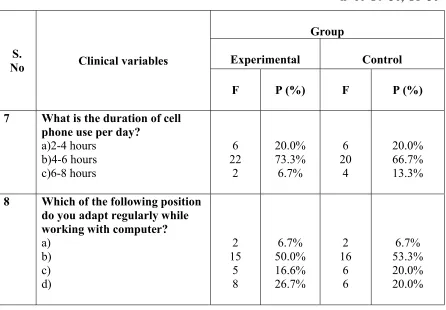
7. What is the duration of cell phone use per day?
a) 2- 4 hours
b) 4- 6 hours
c) 6- 8 hours
b)
c)
d)
9. Do you utilize rest hours in between work?
a) Yes
b) No
If yes specify the position you adopt regularly during rest hours
a)
b)
c)
10. Do you take any self care measures for neck pain?
a) Yes
b) No
[Kindly encircle the appropriate number given below]
SCORING AND INTERPRETATION
0-No pain
1-3-Mild pain
4-6-Moderate pain
appropriate)
1. Personal care
a) I can look after myself without difficulty
b) I can look after myself normally but it causes some difficulty
c) I need some help but I manage most of my personal care
d) I need help every day in most aspect of self care
2. Lifting
a) I can lift heavy weights without extra pain
b) I can lift heavy weights but it causes extra pain
c) Pain prevents me from lifting heavy weights off the floor, but I can lift
heavy weight if they are positioned properly
d) I avoid lifting heavy objects
3. Reading
a) I can read as much as I want to, with no pain in my neck
b) I can read as much as I want to, with slight pain in my neck
c) I cannot read as much as I want to, because of pain
b) I have slight headache at times
c) I have moderate headache at times
d) I have severe headache at times
5. Concentratation
a) I can concentrate fully with no difficulty
b) I can concentrate fully with slight difficulty
c) I concentrate fully with moderate degree of difficulty
d) I have a lot of difficulty in concentration
6. Work/ Household activities
a) I can do as much work as I want to
b) I can only do my usual work, but no more
c) I can do most of my usual work, but no more
d) I cannot do my usual work
7. Travel
a) I can travel as long as I want without discomfort
b) I can travel as long as I want with discomfort
c) I can travel short distance with discomfort
b) I sometimes experience sleep disturbance
c) I often experience sleep disturbance
d) I experience sleep disturbance always
9. Recreation
a) I am able to engage in all my recreational activities
b) I am able to engage in most of the recreational activities with some pain in
my neck
c) I am able to engage in few of my recreational activities because of pain
d) I limit my recreational activities because of pain in my neck
SCORING
The each sentence will be scored like 1,2,3,4.
SCORING AND INTERPREATION
0-25% No functional disability
26-50 % -Mild functional disability
51 ± 75 % Moderate functional disability
>75 % and above severe functional disability
CHAPTER I
INTRODUCTION
Neck disorders remain a common problem in modern industrialized countries.
Common neck disorders are degenerative disc disease, cervical spondolysis, herniated disc,
rheumatoid arthritis, neck injury such as whiplash, and neck cancer. Neck pain is the most
common complaint among working men and women. Neck pain affects about 330 million
people globally, whereas in 2010 4.9% of the population has been affected. It is more
common in women than in men (Bartleson, J.D. 2012).
Neck pain affects 30±50% of the general population annually. In this 15% of
general population experiences chronic neck pain at some point in their lives and 11±14%
of the working population annually experience activity limitations due to neck pain. At
global point of view the prevalence of neck pain was 4.9%. In 2010, Global Burden of
Disease studied 291 conditions out of which neck pain ranked fourth highest in terms of
disability as measured by yearly living disability scale, and twenty first in terms of overall
burden. Disability-adjusted life years increased from 23.9 million in 1990 to 33.6 million in
2010 (Hoy, D. et al. 2014).
In India, 26 - 71% of the adult population experience episodes of neck pain in their
lifetime. Every year more than 50% of adults experience some degree of neck pain due to
faulty posture and 60±80% of older adults experience cervical pain due to degenerative
Neck pain is the fourth leading cause of disability. It results in dramatic functional
impairments and mobility issues. Most of the cases with neck pain is associated with
disability. In Canada, 54 % of the general population experienced neck pain for 6 months,
among them 5% were highly disabled due to neck pain (Vijay, S. 2013). Neck pain
detrimentally affects an individual¶Vability to function properly at work and at home.
(Dang, C. et al. 2010). The problems of workplace injuries are extremely serious. In India,
thirty percentage of computer professionals had neck pain due to work (Vijay, S. 2013).
BACKGROUND OF THE STUDY
Neck pain may originate from any of the structures in the neck which includes
muscles, nerves, spine and the cushioning disc. Neck pain may also come from regions
near the neck, like shoulder, jaw and upper arms (Kendall, F.P. et al. 2011). Non specific
neck pain is the one which is not due to serious disease or neck problem and also there is
exact cause for this neck pain is unknown (Speksnijder, C.M. et al.2013).
A common cause of non specific neck pain is muscle strain or tension. The
problems of muscle associated with pain in the neck are essentially of two types, one
associated with muscle tightness and other with the muscle strain. Every day activities
which include bending over a desk for hours, having poor posture while watching TV or
reading, sleeping in an uncomfortable position or twisting and turning the neck in a jarring
In computer professionals non-specific neck pain is more common because of
having poor posture while working with computer, sitting at a computer for prolonged
periods of time, placing computer monitor too high or too low. Evidence suggests that
more than 87% of computer professionals reported neck pain (Hoobchaak Liz, 2013).
Neck pain can be treated conservatively. Various measures include taking pain
killers, maintaining proper body mechanics, and exercise. One of the exercises is isometric
exercise, it is a muscle strengthening exercise (Kendall, F.P.et al. 2011). Isometric exercise
is found to be effective in contracting the muscle without appreciable change in length also
it increases the strength and endurance of muscle thereby reducing the discomfort and
stiffness. Isometric contractions should be held against resistance for at least 8 seconds
(Hislop, G.J. et al. 2012).
NEED FOR THE STUDY
Shah, A. (2014) studied 970 computer professional aged between 23 to 36 years. He
found that 46% of them suffered from neck pain. Also in this study he paid attention to
evaluate the effectiveness of various interventions aiming to prevent or alleviate neck pain.
Researcher has been found that exercise therapy is beneficial for non-specific neck pain
which increases the mobility and strengthens the cervical muscle.
People with neck pain also have weak muscle in the neck, by stretching and
strengthening those muscles, more blood flow come to the area to help to repair injury.
Isometric exercise ease the neck stiffness with little or no joint movement also it will help
greater stability to the neck to establish and maintain good posture. Stretching and
strengthening exercises need to be performed 1-2 times daily to ease neck stiffness and
discomfort (Kietrys, D.M.et al. 2014).
Liyanage, E. et al. (2014) conducted a randomized controlled trial to find if
ergonomic intervention with isometric exercise and stretching for neck proves more
effective than ergonomics alone for neck pain among computer professionals. 100 female
subjects were selected through simple random sampling using lottery method and they
were divided into 2 groups. Group I received ergonomic intervention and Group II
received ergonomic intervention with stretching and isometric exercise for neck. Group II
performed isometric exercise and stretching for every 2 hours during their work for 15
days. Results showed that isometric exercises and stretching along with ergonomic
intervention proved more beneficial than ergonomic intervention alone for neck pain
among computer professionals.
The investigator during her clinical posting observed that most computer
professionals had attended Ortho OPD with the complaints of neck pain. While interacting
with them, some ventilated that they work for prolonged period of time without rest and
felt more comfortable at 70 degree position while working with computer. Also they felt
difficulty in doing day to day activities like watching TV, reading newspaper, driving,
travelling. So the investigator felt the need in teaching the isometric exercise in reducing
the neck pain and functional disability. This motivated the investigator to do a study on
effectiveness of isometric exercise on neck pain and functional disability among computer
STATEMENT OF THE PROBLEM
A study to assess the effectiveness of isometric exercise on neck pain and functional
disability among computer professionals at selected IT companies, Chennai.
OBJECTIVES
1. To assess the level of neck pain and functional disability among computer
professionals before and after intervention.
2. To assess the effectiveness of isometric exercise on neck pain and functional
disability among computer professionals.
3. To associate the post interventional level of neck pain and functional disability with
demographic and clinical variables among computer professionals.
4. To correlate the post interventional level of neck pain and functional disability
among computer professionals.
OPERATIONAL DEFINITIONS
ASSESS
The term assess refers to the process of obtaining information about effectiveness of isometric exercise on reducing neck pain and functional disability among computer
professionals by using statistical method.
EFFECTIVENESS
It refers to the extent to which isometric neck exercise has an impact on neck pain
ISOMETRIC EXERCISE
It refers to exercise for the neck which involves contracting neck muscle in a stable
position. This includes static flexion, static extension, lateral flexion of neck holding in
each position for 8 seconds by restricting movement of head which would be repeated 10
times for duration of 6 minutes.
NECK PAIN
It refers to a subjective, unpleasant sensation in the neck, which will be measured
by using Wong ± backer faces scale.
FUNCTIONAL DISABILITY
It refers to impairment of physical and mental function due to neck pain which will
be measured using modified Vernon neck disability index.
COMPUTER PROFESSIONALS
Computer professionals refer to both men and women who are working with
computer for more than 7 hours per day.
HYPOTHESIS
H0: There will be no significant difference between pre and post interventional
level of neck pain and functional disability among experimental and control group.
ASSUMPTIONS
x Level of neck pain will be influenced by the functional disability.
x Neck pain and functional disability will be influenced by demographic and clinical
variables.
DELIMITATIONS
x The study is limited only to computer professionals.
x Is limited to those with non specific neck pain.
PROJECTED OUTCOME
x The study will help to identify the effectiveness of isometric exercise on neck pain
and functional disability among computer professionals.
x The findings of study will help the investigator to make recommendation to
CONCEPTUAL FRAME WORK
Conceptual frame work refers to a frame work of preposition for conducting
research. A frame work is simply the structure of the research ideas or concepts and how
it is put together. So the conceptual frame work is a set of coherent ideas or concepts
organized in a manner that makes an investigator easy to communicate with others. Miles
and Huber man (1994) defined a framework as a visual or written product, one that
explains, either schematically or in narrative form, the key factors, concepts or variables
and the presumed relationship among them. Here the conceptual frame work developed for
this study is based on Weidenbach helping art of clinical nursing theory adopted with
modification.
Ernestine Weidenbach proposed a prescriptive theory for nursing in the year of
1964 which is described as a conceiving of a desired situation and the ways to attain it. It
directs action towards an explicit goal. A nurse develops a prescription based on a central
purpose and implements it. According to the realities of the situation, it consists of three
factors.
Central purpose refers to what the nurse wants to accomplish it which is the overall goal towards which a nurse strives. In this study, the central purpose is to reduce
neck pain and functional disability among computer professionals.
Prescription refers to plan of care for a patient. It specifies the nature of the action
Realities refers to the physiological, emotional and spiritual factors that come into play in situation involving nursing action. The five realities identified by Weidenbach are
agent, recipient, goal, means and framework.
i Agent is the investigator who collects data from computer professionals.
i Recipients are computer professionals who were having non specific neck pain and
working at selected IT companies.
i Goal is to reduce neck pain and functional disability.
i Means is Isometric exercise.
i Framework is the selected IT companies in Chennai.
The conceptualization of nursing practice according to this theory consist of three steps as
follows
x STEP 1: Identifying the need for help
x STEP 2: Ministering the needed help
x STEP 3: Validating whether the needed help was met
STEP 1: IDENTIFYING THE NEED FOR HELP
In this study, it refers to identification of level of neck pain and functional disability
among computer professionals. The level of neck pain was assessed by modified wong-
backer faces pain scale and level of functional disability was assessed by modified Vernon
STEP 2: MINISTERING THE NEEDED HELP
It refers to provision of needed help. In this study, the investigator demonstrated the
stretching & isometric exercise and the samples were asked to do the same exercise.
Isometric exercise consist of 4 steps static flexion, static extension, lateral flexion1 and
lateral flexion 2 each step for 8 seconds, repeated 10 times. The total duration of each
exercise session was 6 minutes. The samples were instructed to do exercise two times a day
for a period of fifteen days.
STEP 3: VALIDATING WHETHER THE NEEDED HELP WAS MET
The nurse validates ministered help. It was accomplished by assessing the post
interventional level of neck pain and functional disability on 19th day by using same scales.
The intervention could result in either positive or negative outcome. Positive outcome
represents the reduction of neck pain and functional disability after intervention and the
samples would be encouraged to continue the isometric exercise. The negative outcome
represents no improvement in neck pain and functional disability and thus the intervention
CHAPTER II
REVIEW OF LITERATURE
Review of literature is a key step in research process. It refers to an extensive,
exhaustive and systematic examination of publications relevant to the research project. The
extensive review of literature has been done and it is organized under following headings
PART I
1. General information on isometric exercise.
2. Studies related to neck pain.
PART I
1. Studies related to effectiveness of isometric exercise on neck pain and functional
disability.
2. Studies related to effectiveness of isometric exercises on other musculoskeletal
conditions.
PART I
1. GENERAL INFORMATION ON ISOMETRIC EXERCISE
Isometric exercise is a static exercise in which a muscle contracts and produces
force without an appreciable change in the length of the muscle and without visible joint
motion. Although there is no mechanical work done, a measurable amount of tension and
holding a weight in a particular position, maintaining a position against the resistance of
body weight.
It helps to,
x activate muscle
x develop postural or joint stability
x develop static muscle strength
There are specific isometric exercises to strengthen the neck muscle. It has four steps
consisting of,
¾ Static flexion
¾ Static extension
¾ Lateral flexion1
¾ Lateral flexion 2
In sitting position on the working chair the neck is held in non-moving or stable position.
Then place the dominant hand flat on the forehead and firmly push forehead against the
right hand. Next step, place the dominant hand behind head, over the occipital region to
firmly push the head backwards against the hand. Then place the right hand flat on the right
side of the head and firmly push the head against right hand, same exercise to be repeated
with the left hand against the left side of the head. In each step, hold hands for 8 seconds
2. STUDIES RELATED TO NECK PAIN
Shah, S.A. & Patel, P.R. (2015) did a cross sectional study to find out the
prevalence of neck pain in computer professionals of Ahmadabad City. The age of
participants ranged between 23-58 years. Data was collected from 700 subjects via
structured mailed questionnaire which included individual variables & work related
variables. Results showed that out of 700, 329 subjects reported neck pain. Prevalence of
neck pain and functional disability was found to be 47%. The study shows that neck pain is
influenced by individual variables and work related variables.
Poonkuzhali, S.K. (2015) conducted a cross sectional study to find out the
prevalence of musculoskeletal pain along with the characteristics and severity of the pain
among the urban adult women. Six hundred adult women between 35 years to 50 years
were selected as samples from Chennai. A semi structured interview schedule was used to
record the data related to musculoskeletal pain. The results of the study revealed that the
prevalence of musculoskeletal pain was 75.7%. About 40.8 % of the subjects had neck
pain, back pain followed by leg pain, joint pain, shoulder pain and hip pain & nearly 50%
of the subjects were living with intense pain. 61.4 % of the subjects had difficulty in
performing their daily activities.
Hoy, D.G. et al. (2014) systematically reviewed on epidemiology of neck pain from
different studies. The estimated 1 year incidence of neck pain from available studies ranged
between 10.4% and 21.3% with a higher incidence noted in office and computer workers.
and 86.8% (mean: 23.1%); point prevalence ranged from 0.4% to 41.5% (mean: 14.4%);
and 1 year prevalence ranged from 4.8% to 79.5% (mean: 25.8%). Many environmental
and personal factors influence the onset and course of neck pain. Most studies indicated a
higher incidence of neck pain among women and an increased risk of developing neck pain
until the 35±49-year age group.
Vijay, S. (2013) did a cross sectional study to identify the prevalence of the
Work-Related Musculoskeletal Health Disorders (WRMHDs) among the computer
professionals working at selected IT companies in India. 300 computer professionals
selected from IT companies located at four metropolitan cities in India. A Nordic
musculoskeletal questionnaire was used to capture the prevalence with their associated
annual disability. 59% of the IT professionals reported that they experienced some form of
WRMSDs in the past 12 months. Out of 59%, 30% of the samples experienced neck pain.
Low back pain, wrists and hand pain and, the shoulder pain were the next frequently
reported symptoms where the annual prevalence was reported as 25%, 14% and 13%.
Kumar, S. et al. (2013) conducted a study to determine the relationship between
level of disability, intensity of pain and working hours among computer professionals with
neck pain. Seventy computer professionals, with neck pain for minimum of 4 weeks, aged
20-40 years were included in the study. All the subjects were assessed for the intensity of
pain and level of disability using visual analogue scale and neck disability index. The
results showed a statistically significant positive correlation between level of pain and
working hours, level of disability and working hours as well as level of pain and level of
Aggarwal, P. et al. (2013) conducted a study on impact of computer use on
prevalence of neck pain and consequent disability. The survey was conducted in various
software companies namely Cognizant Technologies, Tech Mahindra and Copper Lab.
About 100 subjects, aged 20-30 years were randomly chosen. The results showed that there
was significant increase in incidence of neck pain and disability with age and computer
usage. The incidence of neck pain was around 81% for men and around 91% for women.
Lindegard agneta, et al. (2012) did a study to investigate whether perceived
exertion, perceived comfort and working technique is associated with the incidence of neck
and upper extremity symptoms among computer professionals. Self-administered
questionnaire was distributed to 853 participants from 46 different work sites. Work-related
exposures, individual factors, and symptoms from the neck and upper extremities were
assessed. The risk of developing symptoms was recorded. There was an association
between low comfort and an increased risk for neck symptoms, but not for shoulder and
arm/hand symptoms. The study concluded that there was a strong association between high
perceived exertion and the development of neck, shoulder, and arm/hand symptoms.
Moreover, there was an association between poor perceived comfort and neck pain.
Sadeghian Farideh, et al. (2012) conducted a longitudinal study to assess the
relationship between work-related physical and psychosocial factors and persistent neck
and shoulder pains among computer professionals. 182 samples were selected from
Shahroud universities QRUWKHDVWHUQ,UDQ³&XOWXUDODQG3V\FKRVRFLDO,QIOXHQFHVRQ'LVDELOLW\
&83,'´TXHVWLRQQDLUHZDVXVHGWRFRllect data on demographic characteristics, physical,
The results after a one year follow-up showed that 59.7% of them reported neck pain and
51.3% reported shoulder pain. Significant relationships were found between persistence of
neck and shoulder pains and age, gender, and decision latitude at work.
Andrew, S. R. et al. (2012) conducted a cross sectional study to find out the
prevalence of neck pain among computer users in both university staff and students. 328
computer users between 19 and 50 years of age of which 110 desktop users and 218 laptop
users were distributed questionnaires. The ergonomical evaluation on-site of the
participants was also done for the desktop users and various positions used by laptop users
were evaluated. The data obtained were analyzed using descriptive statistics. The
prevalence rate and the percentage of various positions used by computer users were also
analyzed. Finally the team concluded that the prevalence of neck pain among laptop
computer users is higher than desktop computer users.
Grover, M. et al. (2011) conducted a survey to find out the musculoskeletal
problems of computer users and the preventive measures adopted by those users at
Haryana. The sample comprised of 200 computer users ranging from 25-40 years of age,
using computer at least for the last one year and for a minimum of 4-6 hours daily.
Majority of the respondents (81.5%) reported musculoskeletal problems as they were
working long on the computer at a stretch. The magnitude of pain was highest in neck and
lower back. Watching the screen at a stretch, holding neck more or less in the same
position for a long time, and sitting in poor posture for a long time were the reasons
mentioned for pain in different body parts by computer users. Relaxation in terms of rest
PART II
1. STUDIES RELATED TO EFFECT OF ISOMETRIC EXERCISE ON
NECK PAIN AND FUNCTIONAL DISABILITY
Liyanage, E. et al. (2014) conducted a randomized controlled trial to find if
ergonomic intervention with isometric exercises and stretching for neck proves more
effective than ergonomics alone for neck pain among computer professionals. Subjects
were selected through simple random sampling using lottery method. 100 female subjects
were selected from IT companies, Bangalore. Group I received ergonomic intervention,
Group II received ergonomic intervention with stretching and isometric exercises for neck.
The subjects in the experimental group performed isometric exercise and stretching for
every 2 hours during their work for 15 days. Results showed that isometric exercises and
stretching along with ergonomic intervention proved more beneficial than ergonomic
intervention alone for neck pain among computer professionals.
Sowmya, M.V. (2014) did a study to evaluate the efficacy of isometric neck
strengthening exercises as compared to dynamic neck strengthening exercises, in the
treatment of 60 subjects with chronic neck pain. Non probability sampling technique was
used to select the subjects. Patients were randomly divided into two groups, one group
performed dynamic neck exercises, the other group of thirty patients performed neck
isometric exercises. Both group performed exercise 3 times a week for a period of 3 weeks.
Results showed that, isometric exercise was much more effective method than dynamic
Khan, M. et al. (2014) conducted a randomized control trial to evaluate the
effectiveness of isometric exercises as compared to general exercises in chronic non
specific neck pain. A total of 68 patients with chronic non-specific neck pain were recruited
from Alain Poly Clinic and Institute of Physical Medicine & Rehabilitation, Dow
University of Health Sciences, Karachi. Simple randomization method was used to assign
participants in isometric exercise and in general exercise group. Patients in both groups
received 3 supervised exercise sessions per week for 12 weeks. The study concluded that
both interventions are effective in the treatment of chronic non-specific neck pain, however
isometric exercises are clinically more effective than general exercises.
Salo, P.K. et al. (2010) did a one year follow up study to evaluate the effect of
muscle strength training on health-related quality of life (HRQOL) in females with chronic
neck pain. One hundred eighty female office workers, 25 to 53 years of age, with chronic
neck pain were randomized to a strength training group (n = 60), endurance training group
(n = 60). The strength training group performed high-intensity isometric neck strengthening
exercises with an elastic band while the endurance training group performed lighter
dynamic neck muscle training. Results showed that one year of either muscle strength or
Thomas, T.W. et al. (2010) conducted a randomized controlled study to evaluate the
efficacy of a neck exercise program in patients with chronic neck pain. A total of 145
patients were randomly allocated into an exercise (Experimental) and a non exercise
(control) group. Patients in the exercise group had undergone an exercise program with
activation of the deep neck muscles and dynamic strengthening of the neck muscles for 6
weeks. Patients in the control group were given infrared irradiation and neck care advice.
Results revealed that the exercise group had a significant reduction in neck pain and
functional disability.
2. STUDIES RELATED TO EFFECTIVENESS OF ISOMETRIC
EXERCISES ON OTHER MUSCULOSKELETAL CONDITIONS
Rhyu, H.S. et al., (2015) conducted a study to evaluate the effectiveness on types of
isometric exercise on low back pain. 23-25 years aged men were selected as samples.
Subjects were divided into 3 groups ± low back pain control group, low back pain mat
exercise group, and low back pain I-Zer exercise group. Visual analogue scale and
electromyography were used to evaluate the degree of pain and the muscle activity in low
back pain patients. Experimental group performed exercise one set a time, 3 times per week
for 6 weeks. Results showed that patients who had performed isometric exercise had
Amany. S. (2014) conducted a quasi experimental study to evaluate the
effectiveness of acupressure versus isometric exercise on pain, stiffness, and physical
function in knee osteoarthritis female patients. Samples were divided into three groups of
30 patients each isometric exercise, acupressure, and control. Data were collected by an
interview form and the Western Ontario and McMaster Universities Osteoarthritis index
scale. The study revealed that after the intervention, pain decreased in the two intervention
groups compared to the control group. The scores of stiffness and impaired physical
function were significantly lower in the isometric group compared to the other two groups.
Anwer, S & Alghdir. A. (2014) did a randomized controlled study to evaluate the
effect of isometric quadriceps exercise on muscle strength, pain, and function in patients
with knee osteoarthritis. 60 patients with osteoarthritis, age ranging from 40-65 years were
selected as samples. They were randomly assigned into two groups, experimental group
performed isometric exercises for 5 weeks whereas the control group received ultrasound
WKHUDS\DURXQGNQHHMRLQWDVSHUWKHSDWLHQW¶VUHTXLUHPHQWIRUZHHNV5HVXOWVVKRZHGWKDW
isometric quadriceps exercise brought significant improvements in all the parameters after
CHAPTER-III
METHODOLOGY
The aim of the study was to assess the effectiveness of isometric exercise on
neck pain and functional disability among computer professionals. This chapter includes
research approach, design, settings, population, and sample, criteria for selection of
sample, sample size, sampling technique, data collection method and tool, validity of
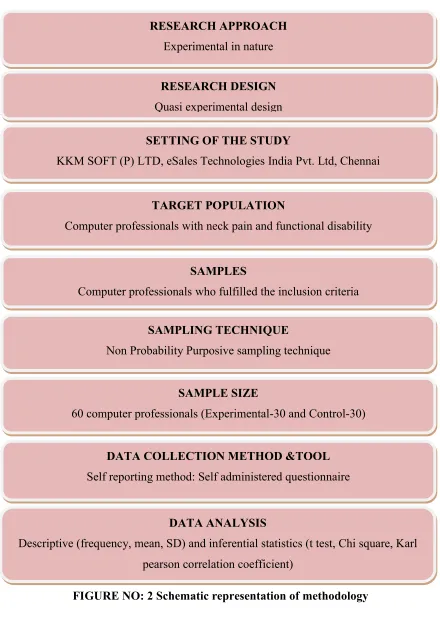
SCHEMATIC REPRESENTATION OF METHODOLOGY
[image:50.612.99.539.107.724.2]Emergency Obstetrical Care Centre at Pulianthope and Saidapet, Chennai.
FIGURE NO: 2 Schematic representation of methodology SETTING OF THE STUDY
RESEARCH APPROACH
Experimental in nature
E
Emergency Obstetrical Care Centre at Pulianthope and Saidapet, Chennai. RESEARCH DESIGN
Quasi experimental design
SETTING OF THE STUDY
KKM SOFT (P) LTD, eSales Technologies India Pvt. Ltd, Chennai
SETTING OF THE STUDY SETTING OF THE STUDY TARGET POPULATION
Computer professionals with neck pain and functional disability
SAMPLES
Computer professionals who fulfilled the inclusion criteria
SAMPLING TECHNIQUE
Non Probability Purposive sampling technique
SAMPLE SIZE
60 computer professionals (Experimental-30 and Control-30)
DATA COLLECTION METHOD &TOOL
Self reporting method: Self administered questionnaire
DATA ANALYSIS
RESEARCH APPROACH
The research approach used in this study was experimental in nature.
RESEARCH DESIGN
Quasi experimental research design was chosen for this study
Group O
1×
O
2Experimental Pre assessment of
Neck pain and
functional disability
Isometric exercise Post assessment of
neck pain and
functional disability
Control Pre assessment of
Neck pain and
functional disability
__
Post assessment of
neck pain and
functional disability
O1= Experimental group, O2= control group,
×
= InterventionVARIABLES OF THE STUDY
Independent variable
Dependent variable
The dependent variables of this study are neck pain and functional disability among
computer professionals.
SETTING OF THE STUDY
PILOT STUDY
Lashron technologies, it is an IT company with total strength of 215 employees
functioning at Parrys, Chennai.
MAIN STUDY Setting-I
KKM SOFT (P) LTD,
It is an IT company with a total strength of 710 employees functioning at Guindy, Chennai.
Setting-II
eSales Technologies India Pvt. Ltd,
It is an IT company with a total strength of 680 employees functioning at Teynampet,
Chennai.
POPULATION OF THE STUDY
The population for this study consisted of male and female computer professionals
who had complaints of neck pain and functional disability working in above mentioned IT
SAMPLE
IT Professionals both male and female who fulfilled the inclusion criteria were
selected as sample.
CRITERIA FOR THE SELECTION OF SAMPLE
INCLUSION CRITERIA
Samples with neck pain and functional disability who were,
in the age group of 21-40 yrs.
suffering from non specific neck pain less than 6 months.
having mild and moderate level of neck pain and functional disability.
willing to participate and knows Tamil and English.
EXCLUSION CRITERIA
Samples who were,
having severe level of neck pain and functional disability.
suffering from osteoarthritis, recent fracture, cervical spondolysis.
undergoing complementary therapy along with medical management for
SAMPLE SIZE
The sample size was 60. The samples were selected from two IT companies, from
eSales Technologies India Pvt. Ltd, out of 710 employees 30 employees were selected as a
samples for experimental group and from KKM SOFT (P) LTD out of 680 employees 30
employees were selected as a samples for control group. The samples were distributed as
follows
Settings Total
sample
size
Experimental
group
Control group
eSales Technologies India Pvt. Ltd
30 30 __
KKM SOFT (P) LTD
30 __ 30
SAMPLING TECHNIQUE
The sampling technique used in this study was non probability purposive sampling.
TOOL FOR DATA COLLECTION
Self reporting method was used to collect the data. The self administered
1. Structured items and questions for collection of demographic and clinical data
2. Modified Wong Baker FACES pain assessment scale(Wong, B., 1981)
3. Modified Vernon neck disability index(Vernon.1989)
DESCRIPTION OF DATA COLLECTION TOOL
PART: A
It consisted of structured questions & items to collect demographic data of the
computer professionals such as age, sex, marital status, religion, educational status,
monthly income, years of experience, dietary habit, type of family and habits.
PART: B
It consisted of structured questions to collect clinical data of computer professionals
such as type and duration of neck pain, working and travelling hours, mode of transport,
mobile use, appropriate posture, rest period, and self care measures.
PART: C
ASSESSMENT OF LEVEL OF NECK PAIN
Modified Wong Baker FACES pain assessment scale (Wong, B., 1981) was used. It
is a visual analog scale combined with numerical scores. The scale shows a five faces
UDQJLQJIURPD³KDSS\IDFH´DW³´DWRQHHQGDQG³KXUWVZRUVW´ZLWKDVFRUHRI³´DWWKH
PART: D
ASSESSMENT OF LEVEL OF FUNCTIONAL DISABILITY
Vernon neck disability index (Vernon.1989) was used after modification. It is a
standardized tool consists of 9 categories such as personal care, lifting, reading, headache,
concentration, work/ household activities, travel, sleeping and recreation.
SCORING AND INTERPRETATION
1) MODIFIED WONG BAKER FACES PAIN ASSESSMENT SCALE
The scale was showed to the samples to assess the level of neck pain. When the
VDPSOHV VHOHFWHG ³)DFHV´appropriate score was given. When the samples expressed the
faces in-between two faces, the median score was given. The total score is 10
The level of neck pain was graded as follows:
Level of Neck pain Grading
No pain 0
Mild pain 1-3
Moderate pain 4-6
2) MODIFIED VERNON NECK DISABILITY INDEX
,WFRQVLVWHGRIFDWHJRULHVZLWKRSWLRQV)RUHDFKFDWHJRU\WKHPD[LPXPVFRUHLV³´
DQGWKHPLQLPXPVFRUHLV³´2verall score is 36.
For each sample the percentage was calculated as follows,
Obtained score
Percentage = --- x 100
Total score
Based on the percentage, the sample¶Vfunctional disability score was interpreted as
follows:
Level of functional disability Grading
No functional disability 0-25%
Mild functional disability 26-50%
Moderate functional disability 51-75%
VALIDITY OF THE TOOL
The tool used in this study was validated by an Orthopaedician and Nursing experts
in the field of medical surgical nursing
RELIABILITY OF TOOL
The reliability of the tool was calculated. Inter-rater method was used for Modified
Wong Baker FACES pain assessment scale, its r ±value is 0.85 and spilt half method was
used for modified Vernon neck disability index, its r ±value is 0.84. These correlation
coefficients are very high and it is good tool to assess the effectiveness of isometric
exercise on neck pain and functional disability
PROTOCOL FOR INTERVENTION
Samples were taught to do neck stretching.
Neck stretching: It is used to stretch and relax the neck muscles, and the total duration of exercise is 5 minutes. Samples were instructed to sit straight and maintain the head in
neutral position and instructed to do the following steps:
i Neck flexion: Samples were instructed to bring the head forward and attempt to
touch the chin to the chest until a stretch is felt in the back of the neck.
i Neck extension: Gently bend the head backward until a stretch is felt in the back of
the neck.
i Right and left lateral flexion: Gently bend the neck to right side to touch the ear to
i Rotation: Turn the head to the right as far as possible, try to bring the chin over the
shoulders, and then repeat the same step on another side. Hold in this position for
about 12 seconds, rest for up to 3 seconds, and then repeat 5 times.
Then samples were taught isometric neck exercise.
Isometric exercise is a neck strengthening exercise. It is used to strengthen the neck
muscle. The duration of exercise is 6 minutes. The samples were instructed to sit straight
and maintain the head in neutral position and the samples were instructed to do the
following steps, while they were asked to press firmly and not to tip the head.
¾ Step ± 1 Static flexion
Samples were instructed to put the heels of both hands against forehead just above
eyebrows. Then press hands against forehead at the same time press head against
the hands. Hold this position for about 5 seconds, rest for up to 3 seconds, and then
repeat 10 times.
¾ Step ± 2 Static Extension
Samples were instructed to put one hand over the other hand and place their hands
against the lower back of the head then press hands against head at the same time
press head straight back against the hands. Hold this position for about 5 seconds,
¾ Step ± 3 Lateral flexion 1
Samples were instructed to place right hand against the right side of head above the
ear. Press against the side of head with hand, also press head back against the hand.
Hold this position for about 5 seconds, rest for up to 3 seconds, and then repeat 10
times.
¾ Step ± 4 Lateral flexion 2
Samples were instructed to place left hand against the left side of head above the
ear. Press against the side of head with hand, also press head back against the hand.
Hold this position for about 5 seconds, rest for up to 3 seconds, and then repeat 10
times.
HUMAN RIGHTS AND ETHICAL CONSIDERATION
The study was approved by the ethical committee constituted by the college.
Permission was obtained from the head of the institutions to conduct the study. Informed
consent was obtained from the participants who participated in this study.
PILOT STUDY
Pilot study was conducted in Lashron technologies Chennai, from 14.05.15 to
19.05.15 after obtaining permission from the project manager. Totally 6 computer
professionals who fulfilled the inclusion criteria were selected as samples, in that 3 samples
questionnaire was given to collect demographic data, clinical data, level of neck pain, and
level of functional disability. Isometric neck exercise was demonstrated to the experimental
group by the investigator on day 1, then the samples did exercise for six consecutive days
for two times a day. The post interventional level of neck pain and functional disability was
assessed on the seventh day for both experimental and control group using the same tool.
PILOT STUDY RECOMMENDATION
There is no practical difficulty experienced in the sample selection. While
collecting data for pilot study the investigator observed that most of the samples with neck
pain were in the age group of 21-25 years. Based on the findings of the pilot study, the
following suggestion was made by the research committee member.
In part A
Q.No:1 Age in years
a) 26 - 30years
b) 31 - 35years
c) 36 - 40years
d) 41 ± 45 years
The above responses were modified as
Age in years
a) 21-25 years
b) 26 - 30years
c) 31 - 35years
DATA COLLECTION PROCEDURE
Permission was obtained from company manager of eSales Technologies India Pvt.
Ltd and KKM SOFT (P) LTD Chennai. The data for main study was collected from
09.06.15 to 28.06.15 between 9am to 5 pm. The employees, who were in duty, were asked
to assemble in a common room during their break time. Employees with neck pain were
identified by oral confirmation and pre test questionnaire was distributed to all employees.
Computer professionals took 20 minutes to complete the tool. After obtaining data,
computer professionals who fulfilled the inclusion criteria at eSales Technologies India
Pvt. Ltd were selected as samples for experimental group and those who fulfilled the
inclusion criteria at KKM SOFT (P) LTD were selected as samples for control group.
After the self introduction, the purpose of study was explained and informed
consent was obtained from samples. The pre interventional level of neck pain and
functional disability was assessed for both samples in experimental and control group. For
experimental group, after pre assessment, active neck stretching exercise was demonstrated
by the investigator on day one, then the samples were advised to follow the exercise for 3
days, two times a day. Then Isometric exercise was demonstrated by the investigator on
day 4, then the samples continued doing exercise for 15 consecutive days for two times a
day. The post interventional level of neck pain and functional disability was assessed on
19th day by using the same scale. The control group was also observed for 18 days. The
PLAN FOR DATA ANALYSIS
DESCRIPTIVE ANALYSIS
i Frequency and percentage distribution was used to describe demographic and
clinical variables of the samples with neck pain and functional disability.
i Mean and standard deviation was used to assess the pre and post interventional
level of neck pain and functional disability.
INFERENTIAL STATISTICS
i 3DLUHG³W´WHVWDQG,QGHSHQGHQW³W´WHVWZDVXVHGWRFRPSDUHWKHOHYHORIQHFNSDLQ
and functional disability of experimental and control group.
i Chi square test was used to associate the post interventional level of neck pain and
functional disability with selected demographic variable and clinical variable in the
experimental group.
i Coefficient correlation was used to correlate the post test level of neck pain and
CHAPTER - IV
DATA ANALYSIS AND INTERPRETATION
This chapter deals with the analysis of the data collected from the selected 60
samples. The aim of the study was to assess the effectiveness of Isometric exercise on neck
pain and functional disability among computer professionals working in selected IT
companies, Chennai. Descriptive and inferential statistics were used to analyze the data.
The data obtained was classified and presented under the following sections.
SECTION I
Frequency and percentage distribution of the demographic data of the samples with
neck pain and functional disability
SECTION II
Frequency and percentage distribution of the clinical data of the samples with neck
pain and functional disability
SECTION III
Assessment of level of neck pain and functional disability of the samples in
experimental and control group.
1. Frequency and percentage distribution of level of neck pain among computer
2. Frequency and percentage distribution of the level of functional disability among
computer professionals
SECTION IV
Comparison of level of neck pain and functional disability among experimental and
Control group
SECTION V
Association of post interventional level of neck pain and functional disability with
selected demographic and clinical variables of experimental group
SECTION VI
Correlation of post interventional level of neck pain and functional disability among
SECTION I
FREQUENCY AND PERCENTAGE DISTRIBUTION OF THE DEMOGRAPHIC
VARIABLES OF THE SAMPLES.
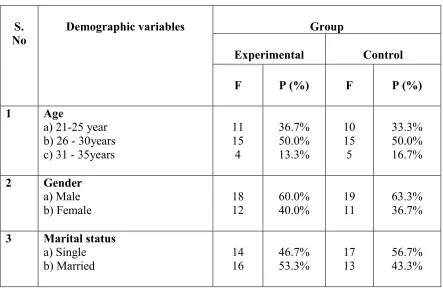
Table 1.1 Frequency and percentage distribution of the demographic variables of the
samples based on age, gender and marital status.
n=60 O1=30, O2=30
S. No
Demographic variables Group
Experimental Control
F P (%) F P (%)
1 Age
a) 21-25 year b) 26 - 30years c) 31 - 35years
11 15 4 36.7% 50.0% 13.3% 10 15 5 33.3% 50.0% 16.7% 2 Gender a) Male b) Female 18 12 60.0% 40.0% 19 11 63.3% 36.7%
3 Marital status
a) Single b) Married 14 16 46.7% 53.3% 17 13 56.7% 43.3%
[image:66.612.99.542.280.569.2]O1=Experimental group O2= Control group
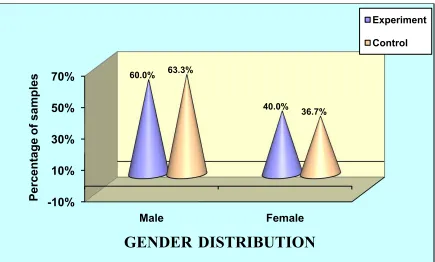
Table1.1shows that in the experimental group, fifteen (50.0%) samples were in the age
group of 26-30 years. Eighteen samples (60.0%) were male. Sixteen (53.3%) samples were
married. In control group, fifteen (50.0%) samples were aged between 26-30 years.
FIGURE NO: 3 Percentage distribution of the samples based on age.
FIGURE NO: 4 Percentage distribution of the samples based on gender. -10%
0% 10% 20% 30% 40% 50% 60%
21 -25 years 26 -30 years 31 -35 years
36.7%
50.0%
13.3% 33.3%
50.0%
16.7%
Percentage
of samples
AGE DISTRIBUTION
Experiment
Control
-10% 10% 30% 50% 70%
Male Female
60.0%
40.0% 63.3%
36.7%
Percentage of
sa
mples
GENDER DISTRIBUTION
Experiment
[image:67.612.102.537.385.647.2]Table 1.2 Frequency and percentage distribution of the demographic variables of the
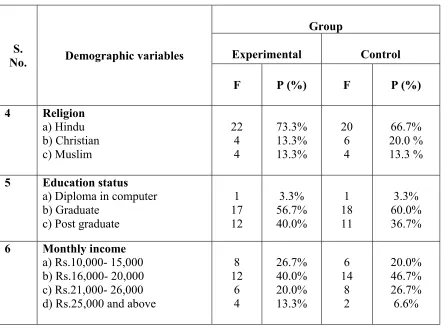
samples based on religion, educational status and monthly income.
n=60 O1=30, O2=30
S.
No. Demographic variables
Group
Experimental Control
F P (%) F P (%)
4 Religion a) Hindu b) Christian c) Muslim 22 4 4 73.3% 13.3% 13.3% 20 6 4 66.7% 20.0 % 13.3 %
5 Education status
a) Diploma in computer b) Graduate
c) Post graduate
1 17 12 3.3% 56.7% 40.0% 1 18 11 3.3% 60.0% 36.7%
6 Monthly income
a) Rs.10,000- 15,000 b) Rs.16,000- 20,000 c) Rs.21,000- 26,000 d) Rs.25,000 and above
8 12 6 4 26.7% 40.0% 20.0% 13.3% 6 14 8 2 20.0% 46.7% 26.7% 6.6%
O1=Experimental group O2= Control group
Table 1.2 reveals that in the experimental group, majority, 22 (73.3%) samples belonged to
Hindu religion. Seventeen (56.7%) of them were graduates. Majority, 12 (40.0%) samples
monthly income was Rs.16, 000-20,000. In the control group, majority (66.7%) of them
belonged to Hindu religion. Eighteen (60.0%) of them were graduates. Majority (46.7%) of
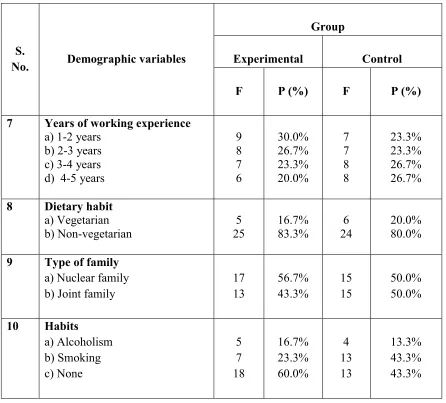
Table 1.3 Frequency and percentage distribution of the demographic variables of the
samples based on years of working experience, dietary habit, type of family and habits n=60 O1=30, O2=30
S.
No. Demographic variables
Group
Experimental Control
F P (%) F P (%)
7 Years of working experience <