Review
Bronchodilator delivery with metered-dose inhaler during
mechanical ventilation
Dimitris Georgopoulos, Eleni Mouloudi, Eumorfia Kondili and Maria Klimathianaki
University of Crete, Heraklion, Greece
Abstract
The delivery of bronchodilators with metered-dose inhaler (MDI) in mechanically ventilated patients has attracted considerable interest in recent years. This is because the use of the MDI has several advantages over the nebulizer, such as reduced cost, ease of administration, less personnel time, reliability of dosing and a lower risk of contamination. A spacer device is fundamental in order to demonstrate the efficacy of the bronchodilatory therapy delivered by MDI. Provided that the technique of administration is appropriate, MDIs are as effective as nebulizers, despite a significantly lower dose of bronchodilator given by the MDI.
Keywords:airway resistance, drug, nebulizer, obstructive lung disease, therapy Received: 22 May 2000
Accepted: 16 June 2000 Published: 11 July 2000
Crit Care2000, 4:227–234
© Current Science Ltd
COPD = chronic obstructive pulmonary disease; FRC = function residual capacity; MDI = metered-dose inhaler; PEEPi = intrinsic positive end-expiratory pressure; Pp = plateau pressure; Ptp = transpulmonary pressure; Rint = Rmin = airway resistance; Rmax = total resistance of the respira-tory system; Vtrap = trapped gas volume above passive functional residual capacity.
Introduction
Bronchodilator therapy is commonly used in mechanically ventilated patients [1]. Bronchodilator drugs significantly decrease airway resistance in patients with obstructive lung disease, as well as in patients with acute lung injury [2••,3••,4]. In patients with obstructive lung disease (chronic obstructive pulmonary disease [COPD] or asthma), these drugs are part of the standard therapy and play an important role in patient management [5••,6••]. By reducing the resistance to airflow, dynamic hyperinflation, a cardinal feature of the pathophysiology in these patients, is decreased. This leads to improved synchrony between the patient and ventilator, less risk of barotrauma and car-diovascular compromise, and enhancement of respiratory muscle performance [5••,6••].
In mechanically ventilated patients bronchodilators may be administered either by the systemic route (ie intra-venously) or directly to the target site in the endobronchial tree by inhalation [2••,3••,6••]. Similar to the situation with ambulatory patients, the inhaled route is preferable during mechanical ventilation because the drug efficacy is com-parable or even greater than that of the intravenous drug, but the side effects are minimized because of the smaller dose and minimal systemic absorption [2••,3••,6••].
patients has received considerable interest in recent years [2••,3••]. This is because the use of MDI has several advan-tages over the nebulizer, such as reduced cost, ease of administration, less personnel time, reliability of dosing and a lower risk of contamination [7–10]. Particularly, in the present era of limited financial resources, the cost of therapy is an important issue. Indeed, it has been esti-mated that substitution of nebulizers with MDIs in a 700-bed hospital could potentially reduce the cost of aerosol therapy by US$300 000 a year [8]. Moreover, the use of nebulizers under certain circumstances may lead to patient/ventilator dyssynchrony [11]. Ineffective efforts have been identified in patients ventilated on assisted modes of support whenever the flow rate of continuous in-line nebulizer exceeded the patient’s inspiratory flow rate [11]. This may lead to serious episodes of hypoventilation, which may not be detected by the alarm function because the bias flow introduced into the system by the continuous flow is falsely interpreted by the ventilator as representing minute ventilation. Finally, nebulizers may damage the expi-ratory transducer of some ventilators, rendering the expira-tory volume measurement unreliable [12].
Although bronchodilator delivery with MDI in mechanically ventilated patients has several advantages over nebulizers, the use of MDIs in this group of patients has not gained widespread acceptance among intensive care unit physi-cians. Indeed, bronchodilator delivery with MDI is consid-ered to be relatively ineffective due to drug deposition in the ventilator circuit and endotracheal tube [13•]. This consideration, however, is not supported by recent scien-tific data. Provided that a proper technique of administra-tion is used, bronchodilator therapy with MDI is clearly effective [2••,3••]. In this brief review we present data regarding the efficacy of MDI in mechanically ventilated patients, and provide guidelines for proper use of this mode of bronchodilator therapy.
Respiratory tract deposition of bronchodilator
delivered by MDI
Several factors may affect respiratory tract deposition of bronchodilator drugs delivered by a MDI during mechani-cal ventilation. In vitro studies [14•,15–22] have shown that aerosol deposition is influenced by the ventilator mode and settings, heat and humidification of inspiratory gas, density of inhaled gas, size of endotracheal tube, and method of connecting the MDI in the ventilator circuit.
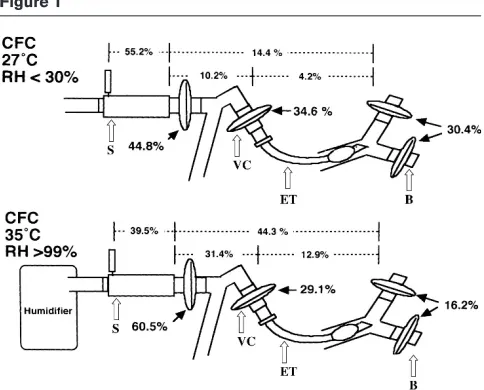
Bypassing the humidifier, using a large-bore endotracheal tube and inhalation of less dense gas are associated with increased aerosol deposition. In particular, heat and humidification have a great impact on aerosol deposition; studies [19] have shown that bypassing the humidifier may increase aerosol deposition to target sites by approxi-mately 50% (Fig. 1). Endotracheal tubes with less than 6-mm internal diameter decreases significantly the efficacy
of aerosol delivery, which an important issue when bron-chodilator drugs are administered in children [15].
Synchronization of aerosol delivery with the beginning of inspiration, large tidal volume, low inspiratory flow and long duty cycle (TI/TTOT) are also associated with greater aerosol deposition [14•,19]. Furthermore, active as opposed to passive mechanical ventilation increases con-siderably the delivery of bronchodilator drugs [14•,23].
[image:2.612.315.557.91.286.2]Finally, connecting the MDI in the ventilator circuit using a spacer device significantly increases the drug deposition to target sites [20–22]. This is probably among the most important factors. Indeed studies demonstrated that the combination of MDI and spacer device resulted in a four-fold to sixfour-fold greater delivery of bronchodilators com-pared with MDI actuation into a connector placed directly at the endotracheal tube or into an in-line device without a chamber [20–22]. The aerosol delivery to target sites may approach 30–35% of the nominal dose when a spacer device is used (Fig. 1) [19]. This is much higher than the corresponding values obtained with nebulizers (for review [2••]). Nevertheless, the results of in vitro studies should be interpreted with caution because bronchodilatation depends not only on drug dose, but also on several other factors that are mainly related to the patient.
Figure 1
In vivo drug deposition to the lower respiratory tract may be estimated by radionuclide methods and by measuring serum or urine levels of the active drug or its metabolites. Studies using these methods confirmed the in vitro find-ings [22,24,25•]. It is of interest to note that Duarte et al
[25•] observed that administration of albuterol with MDI combined with a spacer device produces peak serum levels in mechanically ventilated patients that are compa-rable to those in healthy control individuals, whereas the area under the concentration time curve was lower in ven-tilated patients than in control individuals (Fig. 2). It follows that bronchodilator delivery with MDI and a spacer in mechanically ventilated patients results in satisfactory drug deposition in the lower respiratory tract, although its duration of action might be somewhat decreased.
Assessment of the bronchodilator response
The main outcome variable of bronchodilator therapy is the resistance to airflow [2••,3••]. Measuring the airflow resistance in mechanically ventilated patients is not always an easy task [5••,6••]. In patients with active respiratory efforts in particular, bedside estimation of resistance as well as of respiratory mechanics is rather complicated and imposes unique problems. We briefly review the methods used to assess bronchodilator response in patients venti-lated on controlled (ie passive mechanical ventilation) and assisted modes of ventilatory support.Patients without respiratory efforts (controlled mechanical ventilation)
In these patients the bronchodilator response is usually estimated by measuring inspiratory resistance using the method of rapid airway occlusion at constant flow inflation [26•,27]. Briefly, the airways are occluded at end-inspira-tion, and there is an immediate drop in airway pressure from a peak to a lower value (P1), followed by a gradual decay to a plateau pressure (Pp). Airway resistance (Rint or Rmin) is obtained by dividing the difference between peak airway pressure and P1 by the preceding constant inspiratory flow. By dividing the difference between peak airway pressure and Pp by inspiratory flow, total resis-tance of the respiratory system (Rmax) is obtained. The difference between Rmax and Rmin represents two phe-nomena: time-constant inequalities (pendelluft) and vis-coelastic behaviour (stress relaxation) [26•,27].
Because reduction in the resistance to airflow decreases the dynamic hyperinflation, the bronchodilator response may also be assessed by measuring indices of dynamic hyperinflation, such as Pp, end-expiratory alveolar pres-sure (intrinsic positive end-expiratory prespres-sure [PEEPi]) and the trapped gas volume above passive functional residual capacity (FRC; Vtrap) at the end of expiration [5••,6••]. PEEPi is measured by occluding the airways at the end of a tidal expiration and observing the airway pres-sure [26•,27]. Vtrap is determined by measuring the total
exhaled volume during a period of apnoea for a sufficiently long period to visually detect expiratory volume change to cease, thus allowing the patient to reach the passive FRC [28]. This volume represents the volume above passive FRC trapped at end-expiration.
Expiratory resistance may better characterize the bron-chodilator response because it greatly influences dynamic hyperinflation [5••,6••]. However, expiratory resistance is difficult to measure in patients with obstructive lung disease, in whom expiratory flow limitation during tidal expiration commonly exists [29]. In this case the driving pressure for flow is not the difference between alveolar and mouth pressure, but between alveolar pressure and total pressure head at the choke point, which is very diffi-cult to measure in humans [30]. Nevertheless, the decrease in expiratory resistance after bronchodilator therapy can be indirectly estimated by measuring expira-tory flow at a given elastic recoil pressure (ie Pp) before and after bronchodilator delivery [31]. This technique, however, is cumbersome, time consuming, and necessi-tates stepwise lung deflation at lung volumes between end-inspiration and passive FRC. Furthermore, the pause time may affect Pp independently of volume [32], making the interpretation of Pp–expiratory flow relationship rather complex. For these reasons, measurement of expiratory resistance is rarely used in order to assess the bron-chodilator response.
Figure 2
Venous serum albuterol, corrected for the number of puffs of albuterol administered, in mechanically ventilated patients (j) and nonintubated control individuals (d). Serum levels were similar in both groups except at baseline and 15 min after drug administration. Note that the groups had similar patterns of systemic absorption, with the peak level occurring at 10 min and a rapid decline in serum levels thereafter. Bars represent standard error. *P< 0.05 versus controls. From Duarte et al
Patients with respiratory efforts (assisted mechanical ventilation)
In patients ventilated on assisted modes of support, the bronchodilator response cannot easily be assessed. With assist volume, static and dynamic airway pressure may reflect, to a variable extent, respiratory muscle activity, and thus calculation of resistance using the occlusion tech-nique is misleading [5••,6••,33•]. Similarly Vtrap can not be measured in patients with active respiratory efforts. In these patients the response to bronchodilators may be estimated indirectly by clinical examination. Reduction in the number of ineffective efforts and faster response of the ventilator to patient inspiratory efforts may indicate, among other causes, a decrease in dynamic hyperinflation due to a decrease in resistance [5••,6••]. In patients being venti-lated on pressure support, the decrease in dynamic hyper-inflation and inspiratory resistance may result in higher tidal volume [5••,6••].
Measuring the work of breathing is another index that may by used to assess the bronchodilator response in patients on assisted modes of ventilation [34]. This, however, implies insertion of an oesophageal catheter to measure oesophageal pressure [33•]. This technique is also useful for measuring respiratory mechanics in patients with active respiratory efforts. By recording transpulmonary pressure (Ptp; airway pressure minus oesophageal pressure), flow and volume over a breath, the weighted average of inspira-tory and expirainspira-tory pulmonary resistance can be estimated as the ratio of change in Ptp over that of flow between two points in the breathing cycle in which lung volume is the same [33•]. Alternatively, inspiratory pulmonary resistance can be measured as the difference between Ptp at mid-inspiration and the corresponding pressure on the Ptp–volume axis (ie relaxation pressure) divided by the inspiratory flow at that point. The Ptp–volume axis is obtained by connecting the points of zero flow on the Ptp–volume curve [33•,35].
In mechanically ventilated patients with active respiratory efforts, PEEPi can be measured as the amount of change in oesophageal pressure preceding the initiation of inspi-ratory flow [33•]. PEEPi measured with this method is valid provided that expiratory muscles are relaxed. Otherwise, an additional catheter to record gastric pressure simulta-neously is needed in order to correct for expiratory muscle activity [33•]. However, detailed description of the methods used to measure respiratory mechanics in patients ventilated on assisted modes is beyond the scope of the present review.
The techniques described above are not practical and are rarely used in every day practice. In the busy and crowded environment of intensive care unit, clinical examination and assessment of the patient–ventilator interaction remains the most widely used method to assess the bronchodilator
response in mechanically ventilated patients with active respiratory efforts.
Efficacy of bronchodilators administered with
MDI in mechanically ventilated patients
Traditionally, nebulizers have been used for bronchodilator therapy during mechanical ventilation, because bron-chodilator delivery with a MDI is considered relatively inef-fective. Manthous et al [13•] reported no benefit from administration of up to 100 puffs of albuterol (9 mg) with an MDI and elbow adapter in ventilator-supported patients. Other studies, however, using a spacer device instead of elbow adapter [36,37,38••,39•,40•,41••], did not confirm these findings; bronchodilator delivery using an MDI and a spacer device results in significantly decreased airflow resistance. Thus, a spacer device is thought to be fundamental in improving the efficacy of bronchodilator therapy given by MDI. As a rule, in our unit bronchodilator drugs are administered using an MDI and a spacer device. The spacer device we use (Fig. 3) remains in the ventilator circuit, so that disconnection of the ventilator circuit at each bronchodilator treatment is avoided.
In patients with COPD, delivery of bronchodilators with an MDI and a spacer results in approximately 18–25% and 8–15% decreases in Rmin and Rmax, respectively [36,37,38••,39•,40•,41••]. These decreases are compara-ble to those observed when bronchodilators are delivered with a nebulizer, at a fraction of the drug dose [42]. Although expiratory resistance, the main determinant of dynamic hyperinflation, is usually not measured, indirect evidence suggests an appreciable decrease in expiratory resistance also. Indeed, an approximately 20% reduction in PEEPi has been observed after bronchodilator therapy [39•,40•,41••], indicating a decrease in dynamic hyperinfla-tion as a result of a decline in expiratory resistance.
alveolar deposition of the total drug mass achieved with the nebulizer, although, as a percentage of the nominal dose, the deposition was greater with the MDI [42].
The optimal dose of bronchodilators delivered with a MDI in mechanically ventilated patients is not clearly estab-lished. Manthaus et al [13•] found, in patients who had peak pressure–Pp gradient of more than 15 cmH2O, that five puffs of albuterol (90µg/puff) decreased resistive pres-sure significantly. The addition of 10 more puffs reduced the resistive pressure further, but only slightly. Fifteen more puffs did not result in further improvement. Dhand et al
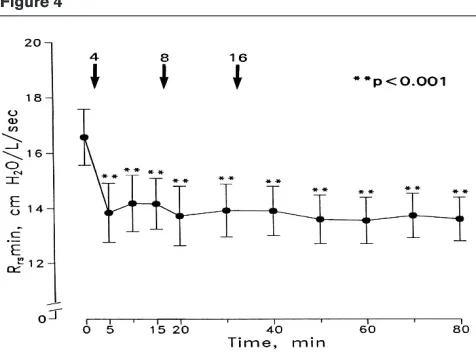
[38••] showed, in mechanically ventilated patients with COPD, that the decrease in airway resistance with four puffs of albuterol was comparable to that observed with cumulative doses of 28 puffs (Fig. 4). In a recent study [41••] we demonstrated in COPD patients that two puffs of salbutamol resulted in significant bronchodilatation that was comparable to that observed with six puffs.
It seems that, in stable mechanically ventilated patients, two to six puffs of short acting β2-agonist may achieve maximum or near maximum bronchodilatation with no side effects. However, patients with acute bronchospasm (ie status asth-maticus) may require higher doses. Individual titration of the dose so as to achieve the best bronchodilatation with acceptable side effects may be an alternative strategy, rather than using a standard dose [6••]. In our unit four to six puffs of short acting β2-agonist is delivered initially, and the dose is increased according to the response. The optimal doses of other bronchodilators, such as anticholinergic agents or long-acting β2-agonists, are not known.
The duration of the bronchodilator response is an important issue, which surprisingly has not been adequately studied. In a recent study [43] we observed, in patients with COPD, that six puffs of salbutamol resulted in significant bronchodi-latation lasting approximately 3 h (Fig. 5). Other studies, pre-sented so far in abstract form, concluded that the duration of bronchodilatation in mechanically ventilated patients is
decreased compared with that in ambulatory patients. These findings are in accordance with those of Duarte et al
[25•], who showed that the relative systemic bioavailability of albuterol as measured by serum level was reduced in mechanically ventilated patients. It follows that the dose interval in mechanically ventilated patients might be shorter than that in ambulatory patients. As a rule, in our unit we administer inhaled short-acting bronchodilators every 3–4 h.
The technique of administration of bronchodilators in mechanically ventilated patients using an MDI and a spacer is an important factor thaty determines the efficacy of this therapy. Proper timing of drug delivery, relatively high tidal volumes, low inspiratory flows and application of end-inspiratory pause (breath-hold) are some of the factors that have been suggested to enhance drug deliv-ery to target sites and, thus, bronchodilatation [2••,3••]. However, these suggestions are based, at least as far as the ventilator settings are concerned, on in vitrostudies.
Recently, in a series of studies [39•,40•,41••], we exam-ined the effects of various ventilator settings on the bron-chodilatation induced in mechanically ventilated COPD patients by salbutamol administered using an MDI and a spacer. These studies demonstrated that neither applica-tion of 5 s end-inspiratory pause [39•] nor increasing the tidal volume by 4 ml/kg [40•] (strategies that probably enhanced drug delivery [14•,19]) augmented the bron-chodilator effect of six puffs of salbutamol. Furthermore, we showed [41••], at constant tidal volume and inspiratory time, that changing the inspiratory flow–time profile from constant (volume controlled) to decelerative flow (pres-sure controlled) did not have any effect on salbutamol-Figure 3
Schematic representation of the MDI adapted to the spacer device in the inspiratory limb of the ventilator circuit. Notice that the MDI flume is directed away from the patient. From Mouloudi et al[40•].
Figure 4
Airway resistance (Rrsmin) in mechanically ventilated patients with
COPD after four, eight and 16 puffs of albuterol (total dose 28 puffs). The addition of eight and 16 puffs did not cause further
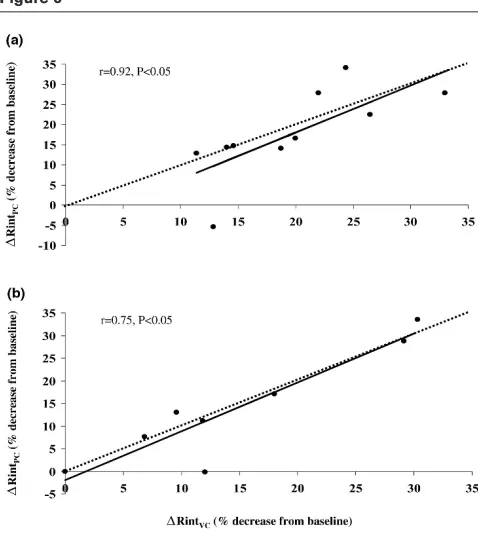
[image:5.612.315.553.91.272.2]induced bronchodilation, given by MDI and a spacer [41••]. This was true with both 600 and 200µg salbutamol (Fig. 6) [41••]. It follows that, in patients with acute exacer-bation of COPD, significant bronchodilatation can be achieved both with pressure or volume control, and with doses of salbutamol as low as 200µg. The similar bron-chodilatation observed with both high and low dose of the drug [41••] suggests that the high drug dose used in the other studies [39•,40•] was not responsible for the failure of manipulation of ventilator settings to modify the salbuta-mol-induced bronchodilatation.
The findings of the above studies do not support alter-ations in ventilator settings when bronchodilator drugs are administered in mechanically, passively ventilated patients. For minimizing the importance of manipulation in ventilator settings, the use of an MDI in mechanically ven-tilated patients is more appealing because it is easier to use. In our unit, the strategy for bronchodilator delivery with an MDI in mechanically ventilated patients is shown in Table 1.
Conclusion
[image:6.612.58.298.92.238.2]There is evidence in the literature that the delivery of bron-chodilators with a MDI and a spacer device in mechani-cally ventilated patients is effective and results in bronchodilatation that is comparable to that achieved with a nebulizer. MDIs have several advantages over nebulizers, making MDI bronchodilator therapy attractive for use in mechanically ventilated patients.
Table 1
Strategy used in our unit for MDI bronchodilator therapy
Step Details
1 Place a spacer device in the inspiratory line of the ventilator circuit* (see Fig. 3)
2 Shake the MDI vigorously
3 Adapt the MDI to the spacer device
4 Remove the heat and moisture exchanger†(if used)
5 Do not change the ventilator settings‡
6 Actuate MDI to synchronize with the onset of inspiratory flow 7 Repeat actuation after 20–30 s until the total dose is
delivered
8 Start with four to six puffs and observe the response 9 Repeat bronchodilator treatment after 3–4 h§
*The spacer device remains in the circuit so that disconnection and manipulation of the ventilator circuit is minimized. †The effect of the
heat–moisture exchanger on the efficiency of bronchodilator therapy has not been studied; if a humidifier is used it should not be bypassed, but the drug dose may need to be increased. ‡If the tidal volume is less
that 400 ml, an increased dose may be required; this has not been studied. §A shorter interval may be needed in some patients,
[image:6.612.315.554.93.361.2]particularly those with status asthmaticus. Figure 5
Airway resistance (Rint) as a function of time after administration of 600µg salbutamol with MDI and a spacer device in 10 mechanically ventilated patients with COPD. *P< 0.05 versus baseline. From Mouloudi et al[43].
Figure 6
Relationship between the individual mean bronchodilatory response of airway resistance (Rint, percentage decrease from baseline) when (a)
200µg (n= 8) and (b)600µg (n= 10) salbutamol were given with volume control (RintVC) and pressure control (RintPC). The mean
References
Articles of particular interest have been highlighted as:
• of special interest
•• of outstanding interest
1. Boucher BA, Kuhl DA, Coffey BC, Fabian TC: Drug use in a trauma intensive care unit.Am J Hosp Pharm1990, 47:805–810.
2. Dhand R, Tobin MJ: Inhaled bronchodilator therapy in mechanically
•• ventilated patients.Am J Respir Crit Care Med1997, 156:3–10. An excellent review dealing with bronchodilator delivery, using MDI and neb-ulizer during mechanical ventilation.
3. Dhand R, Tobin MJ: Bronhodilator delivery with metered-dose
•• inhalers in mechanically-ventilated patients.Eur Respir J1996, 9: 585–595.
An excellent review dealing with bronchodilator delivery, using MDI during mechanical ventilation.
4. Wright PE, Carmichael LC, Bernard GR: Effect of bronchodilators on lung mechanics in the acute respiratory distress syndrome (ARDS).Chest1994, 106:1517–1523.
5. Georgopoulos D, Brochard L: Ventilatory strategies in acute
exac-•• erbations of chronic obstructive pulmonary disease.Eur Respir Monit1998, 8:12–44.
A comprehensive review describing the management of mechanically venti-lated patients with acute exacerbation of COPD.
6. Georgopoulos D, Burchardi H: Ventilatory strategies in adult
•• patients with status asthmaticus.Eur Respir Monit1998, 8:45–83. A comprehensive review describing the management of mechanically venti-lated patients with status asthmaticus.
7. Summer W, Elston R, Tharpe L, Nelson S, Haponic EF: Aerosol bron-chodilator delivery methods: relative impact on pulmonary func-tion and cost of respiratory care. Arch Intern Mer 1989, 149: 618–623.
8. Bowton DL, Goldsmoth WM, Haponic EF: Substitution of metered-dose inhalers for hand nebulizers: success and cost-saving in a large, acute care hospital.Chest1998, 101:305–308.
9. Alvine GF, Rodgers P, Fitzsimmons KM, Ahrens RC: Disposable jet nebulizers; how reliable are they?Chest1992, 101:316–319.
10. Hamill RJ, Houston ED, Georghiu PR, Wright CE, Koza MA, Cadle RM, Goeptert PA, Lewis DA, Zenon GJ, Clarridge JE: An outbreak of Burkholderia (formerly Pseudomonas) cepacia respiratory track colonisation and infection associated with nebulized albuterol therapy.Ann Intern Med1995, 122:762–766.
11. Beaty CD, Ritz Rh, Benson Ms: Continuous in-line nebulizers com-plicate pressure support ventilation.Chest1989, 96:1360–1363.
12. Hess D: Aerosol bronchodilator delivery during mechanical venti-lation nebulizer or inhaler?Chest1991, 100:1103–1104.
13. Manthous CA, Hall JB, Schmidt GA, Wood LD: Metered-dose
• inhaler versus nebulized albuterol in mechanically ventilated patients.Am Rev Respir Dis1993, 148:1567–1570.
A study showing that without a spacer device, 100 puffs of albuterol (9 mg) given with MDI did not have any effect on airway resistance.
14. Fink JB, Dhand R, Duarte AG, Jenne JW, Tobin MJ: Deposition of
• aerosol from metered-dose inhaler during mechanical ventilation: an in vitromodel.Am J Respir Crit Care Med1996, 154:382–387. An in vitrostudy of various ventilator settings that may affect the deposition of bronchodilators given with a MDI to lower respiratory track.
15. Crogan SJ, Bishop MJ: Delivery efficiency of metered-dose aerosols given via endotracheal tube.Anesthesiology1989, 70:1008–1010.
16. Fuller HD, Dolovich MB, Postmituck G, Wong Pack W, Newhouse MT: Pressurized aerosol versus jet aerosol delivery to mechani-cally-ventilated patients: comparison of dose to the lungs.Am Rev Respir Dis1990, 141:440–444.
17. Ebert J, Adams AB, Green-Eide B: An evaluation of MDI spacers and adapters: their effect on the respirable volume of medication. Respir Care1992, 37:862–868.
18. Fuller HD, Dolovich MB, Chambers C, Newhouse MT: Aerosol deliv-ery during mechanical ventilation: a predictive in vitro model.J Aerosol Med1992, 5:251–259.
19. Fink JB, Dhand R, Grychowski J, Fahey PJ, Tobin MJ: Reconciling in vitro measurements of aerosol delivery from a metered-dose inhaler during mechanical ventilation and defining efficiency enhancing factors.Am J Respir Crit Care Med1999, 159:63–68.
20. Diot P, Morra L, Smaldone GC: Albuterol delivery in a model of mechanical ventilation: comparison of metered-dose inhaler and nebulizer efficiency.Am J Respir Crit Care Med1995, 152:1391– 1394.
21. Rau JL, Harwood RJ, Groff JL: Evaluation of a reservoir devise for metered dose bronchodilator delivery to intubated adults: an in vitro study.Chest1992, 102:924–930.
22. Fuller HD, Dolovich MB, Turpie FH, Newhouse MT: Efficiency of bronchodilator aerosol delivery to the lungs from the metered dose inhaler in mechanically ventilated patients: a study compar-ing four different actuator devices.Chest1994, 105:214–218.
23. Fok TF, al-Essa M, Monkman S, Dolovich M, Girard L, Coates G, Kir-palani H: Delivery of metered dose inhaler aerosols to paralyzed and nonparalyzed rabbits.Crit Care Med1997, 25:140–144.
24. Marik P, Hogan J, Krikorian J: A comparison of bronchodilator therapy delivered by nebulization and metered-dose inhaler in mechanically ventilated patients.Chest1999, 115:1653–1657.
25. Duarte AG, Dhand R, Ralston R, Fink J, Fahey P, Tobin MJ, Jenne JW:
• Serum albuterol levels in mechanically ventilated patients and healthy subjects after metered-dose inhaler administration.Am J Respir Crit Care Med1996, 154:1658–1663.
A study demonstrating a similar pattern of albuterol absorption, given with MDI, between mechanically ventilated patients and healthy subjects breath-ing spontaneously.
26. Gottfried SB, Rossi A, Higgs BD, Zocchi L, Grassino A, Milic-Emili J:
• Respiratory mechanics in mechanically ventilated patients with respiratory failure.J Appl Physiol1985, 58:1849–1858.
A study which describes in detail the occlusion method of measuring respi-ratory system mechanics during passive mechanical ventilation.
27. Bates JHT, Rossi A, Milic-Emili J: Analysis of the behaviour of the respiratory mechanics in mechanically ventilated patients with respiratory failure.J Appl Physiol1985, 58:1840–1848.
28. Tuxen DV, Lane S: The effects of ventilatory pattern on hyperinfla-tion, airway pressures and circulation in mechanical ventilation of patients with severe air-flow obstruction.Am Rev Respir Dis1987,
136:872–879.
29. Georgopoulos D, Giannouli E, Patakas D: Effects of extrinsic posi-tive end-expiratory pressure on mechanically ventilated patients with chronic obstructive pulmonary disease and dynamic hyperin-flation.Intensive Care Med1993, 19:197–203.
30. Dawson SV, Elliott EA: Wave-speed limitation on expiratory flow-a unifying concept.Am Rev Respir Dis1997, 140:1–3.
31. Gay PC, Patel HG, Nelson SB, Gilles B, Hubmayr RD: Metered dose inhalers for bronchodilator delivery in intubated, mechanically ventilated patients.Chest1991, 99:66–71.
33. Tobin MJ: Monitoring respiratory mechanics in spontaneously
• breathing patients. In: Principles and Practice of Intensive Care Monitoring. Edited by Tobin MJ. New York: McGraw-Hill, Incorporated, Health Professions Division, 1998:617–654.
A detailed description of methods used to evaluate respiratory system mechanics in patients with respiratory efforts.
34. Mancebo J, Amaro P, Lorino H, Lemaire F, Harf A, Brochard L: Effects of albuterol inhalation on the work of breathing during weaning from mechanical ventilation.Am Rev Respir Dis1991, 144:95–100.
35. Mead J, Lindgren I, Gaensler AE: The mechanical properties of the lungs in emphysema.J Clin Invest1956, 34:1005–1016.
36. Fernandez A, Lazaro A, Garcia A, Aragon C, Cerda E: Bronchodila-tors in patients with obstructive pulmonary disease on mechani-cal ventilation: utilisation of metered-dose inhalers.Am Rev Respir Dis1990, 141:164–168.
37. Dhand R, Jubran A, Tobic MT: Bronchodilator delivery by metered-dose inhaler in ventilator support patients.Am J Respir Crit Care Med1995, 151:1827–1833.
38. Dhand R, Duarte AG, Jubran A, Jenne JW, Fink JB, Fahey PJ, Tobin
•• MJ: Dose–response to bronchodilator delivered by metered dose inhaler in ventilator-support patients.Am J Respir Crit Care Med
1996, 154:388–393.
A study showing that in mechanically ventilated patients with COPD, 4 puffs of albuterol results in comparable bronchodilation to that achieved with 28 puffs.
39. Mouloudi E, Katsanoulas K, Anastasaki M, Askitopoulou E,
Geor-• gopoulos D: Bronchodilator delivery by metered-dose inhaler in mechanically ventilated COPD patients: influence of end-inspira-tory pause.Eur Respir J1998, 12:165–169.
A study demonstrating in mechanically ventilated patients with COPD that end-inspiratory pause did not augment the bronchodilation induced by 6 puffs of salbutamol (600µg) administered with MDI and a spacer.
40. Mouloudi E, Katsanoulas K, Anastasaki M, Hoing S, Georgopoulos D:
• Bronchodilator delivery by metered-dose inhaler in mechanically ventilated COPD patients: influence of tidal volume.Intensive Care Med1999, 25:1215–1221.
A study showing that increasing the tidal volume is not associated with increased bronchodilation induced by 6 puffs of salbutamol (600µg) admin-istered with MDI and a spacer in mechanically ventilated patients with COPD.
41. Mouloudi E, Prinianakis G, Kondili E, Georgopoulos D: Bronchodila
•• tor delivery by metered-dose inhaler in mechanically ventilated COPD patients: influence of flow pattern. Eur Respir J 2000:in press.
A study showing that 2 puffs of salbutamol result in comparable bronchodi-lation with that achieved by 6 puffs and changing the flow pattern during drug administration from square wave to decelerative did not affect the salbutamol-induced bronchodilation.
42. Guerin G, Chevre A, Dessirier P, Poncet T, Becquemin MH, Dequin PF, Le Guellec C, Jacques D: Inhaled fenoterol-ipratropium bromide in mechanically ventilated patients with chronic obstruc-tive pulmonary disease.Am J Respir Crit Care Med1999, 159: 1036–1042.
43. Mouloudi E, Katsanoulas K, Hoing S, Prinianakis G, Zeaki M, Geor-gopoulos D: Duration of effect of bronchodilator delivered by metered dose inhaler in mechanically ventilated COPD patients. Intensive Care Med1999, 25(Suppl 1):S129.
Authors’ affiliation:Department of Intensive Care, University Hospital of Heraklion, University of Crete, Heraklion, Greece