qwertyuiopasdfghjklzxcvbnmqwertyui
opasdfghjklzxcvbnmqwertyuiopasdfgh
jklzxcvbnmqwertyuiopasdfghjklzxcvb
nmqwertyuiopasdfghjklzxcvbnmqwer
tyuiopasdfghjklzxcvbnmqwertyuiopas
dfghjklzxcvbnmqwertyuiopasdfghjklzx
cvbnmqwertyuiopasdfghjklzxcvbnmq
wertyuiopasdfghjklzxcvbnmqwertyuio
pasdfghjklzxcvbnmqwertyuiopasdfghj
klzxcvbnmqwertyuiopasdfghjklzxcvbn
mqwertyuiopasdfghjklzxcvbnmqwerty
uiopasdfghjklzxcvbnmqwertyuiopasdf
ghjklzxcvbnmqwertyuiopasdfghjklzxc
vbnmqwertyuiopasdfghjklzxcvbnmrty
uiopasdfghjklzxcvbnmqwertyuiopasdf
ghjklzxcvbnmqwertyuiopasdfghjklzxc
vbnmqwertyuiopasdfghjklzxcvbnmqw
ertyuiopasdfghjklzxcvbnmqwertyuiop
asdfghjklzxcvbnmqwertyuiopasdfghjkl
“MISS, MY BRAIN HURTS!” REWIRING OUR
TEACHING PRACTICE
by Jennifer McIntyre
1/1/2011
2
ABSTRACT
Over the past decade neuroscientists have made more breakthrough discoveries about brain function than in all previous scientific investigation. Educators see brain research as having implications and application to classroom settings by enhancing teacher practice and student learning experience. Tertiary institutions and practising teachers are implementing brain based teaching strategies to improve student outcomes. However, there is a level of disconnect between brain research discovery and current educational practice.
Researchers from both neuroscience and education fields are calling for collaborative research to be conducted that would support classroom practice for the future. Researchers from neuroscience and education insist that appropriate professional development for teachers is imperative and that a serious undertaking for teaching neuroscientific facts should be included in tertiary education student programs.
Pre-service teachers’ studying at the University of Southern Queensland (USQ) have learned about current developments in neuroscience research during their final year of teacher training. This research investigates how these newly graduated teachers use brain research in their first year of teaching to inform their classroom practices.
3
FIGURES AND TABLES
List of Figures
Figure 1. Interview and data collection schedule... 35
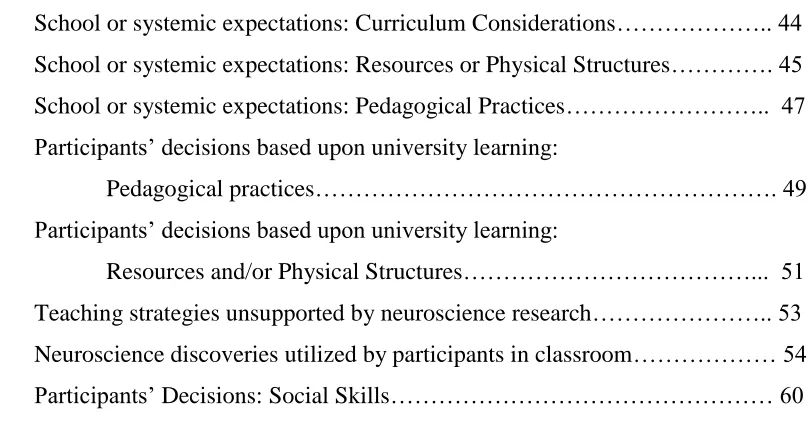
List of Tables Table 1. School or systemic expectations: Curriculum Considerations……….. 44
Table 2. School or systemic expectations: Resources or Physical Structures…………. 45
Table 3. School or systemic expectations: Pedagogical Practices……….. 47
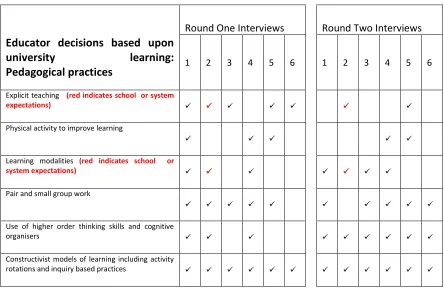
Table 4. Participants’ decisions based upon university learning: Pedagogical practices………. 49
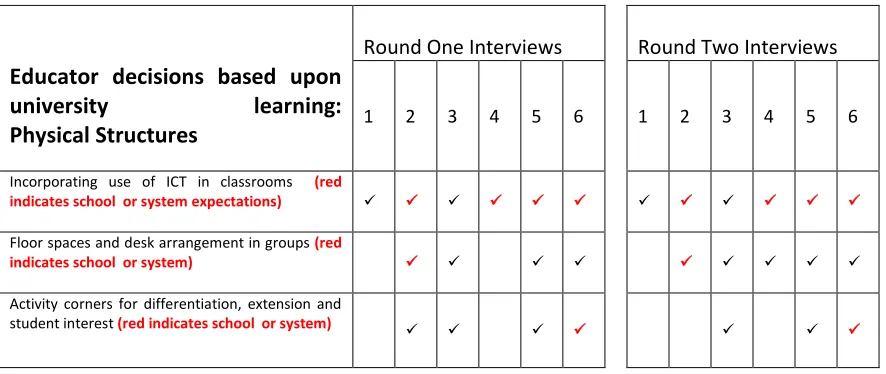
[image:3.612.140.545.249.465.2]Table 5. Participants’ decisions based upon university learning: Resources and/or Physical Structures………... 51
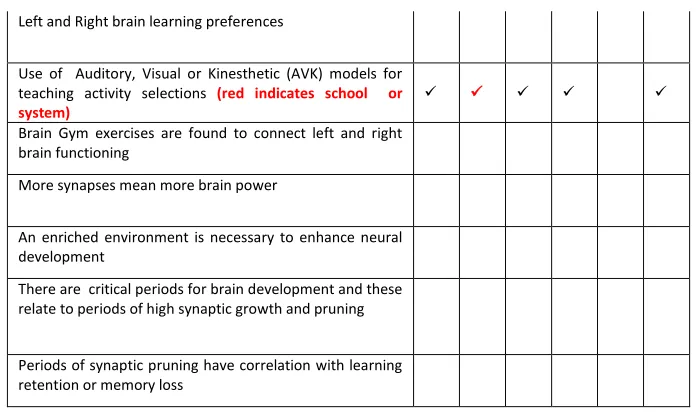
Table 6: Teaching strategies unsupported by neuroscience research……….. 53
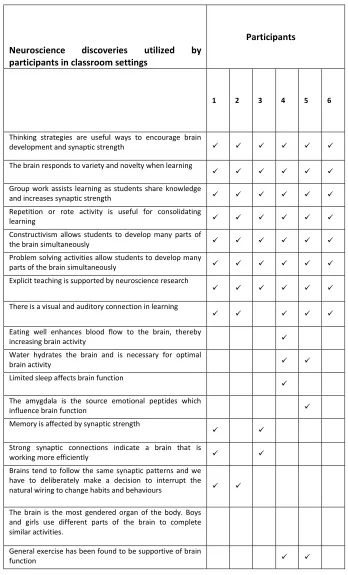
Table 7: Neuroscience discoveries utilized by participants in classroom……… 54
4
ABSTRACT ... 2
Chapter 1: INTRODUCTION ... 7
Background to the research ... 7
Research problem ... 8
Contribution to the field ... 8
Justification for the research (the gaps) ... 9
Methodology ... 10
Delimitiations ... 10
Conclusion ... 11
Chapter 2: LITERATURE REVIEW ... 12
Introduction ... 12
Crossing boundaries to inform a new field of study ... 12
Some differences of interpretation ... 14
Neuroscience discoveries ... 15
Neuroscience studies determine what is proven ... 15
Neuroscience and ‘Neuromyths’ ... 17
Neuroscience and implementation in the classroom ... 19
Acknowledging difference of purpose ... 20
The range of opinions ... 21
Collaboration for mutual benefit ... 22
Conclusion ... 24
Chapter 3: METHODOLOGY ... 26
Introduction ... 26
Purpose of the study ... 26
Delimitations ... 27
Case Study Methodology ... 28
The Participants ... 30
Recruitment of Participants ... 30
Ethical Issues ... 31
Withdrawal of Consent ... 31
5
Reflexivity ... 32
The Researcher ... 33
The case study methods & techniques ... 34
Procedure ... 35
Data Gathering ... 36
Implementation of Interviews ... 37
Recording the Interviews ... 37
Data Analysis ... 37
Evaluative Criteria ... 39
Conclusion ... 40
Chapter 4 – ANALYSIS OF THE DATA ... 41
Introduction ... 41
The participants and their school context ... 41
Addressing research issues ... 42
School or systemic expectations ... 43
Curriculum Considerations ... 43
Resourcing and physical design ... 44
School supported pedagogical practices ... 46
University learning reflected in practice ... 47
From Explicit Teaching to Constructivist Learning Models ... 47
Resourcing and physical design ... 49
Participants’ teaching practices unsupported by neuroscience research ... 51
Participants’ neuroscience supported practices ... 53
Some paintings in the gallery ... 56
Additional findings ... 60
Conclusion ... 61
Chapter 5 – DISCUSSION ... 63
Introduction ... 63
Influences upon decisions about teaching practice... 64
Review of school and system expectations ... 64
Community influence ... 64
Classroom Influence ... 65
6
Review of the neuroscience influence on teaching practice ... 68
Conclusion ... 69
Chapter 6 – CONCLUSION ... 70
Implications ... 70
Conclusion ... 72
Reference List ... 74
APPENDIX ... 78
APPENDIX 1 ... 79
Ethics Approval ... 79
Ethics Approval for Amendment: Email Confirmation ... 81
APPENDIX 2 ... 82
Ethics Participation and Consent Forms ... 82
APPENDIX 3 ... 84
Semi Structured Interview Questions. Round One Interview ... 84
7
Chapter 1: INTRODUCTION
Background to the research
Neuroscience is a new and little understood field of science for those working beyond the neuroscience field. Neuroscience research may hold information of great importance to the development of new teaching approaches and practices for educators as this field investigates the functions of the brain in learning.
Neuroscience has made discoveries connecting brain structure and functional areas (Goswami & Szűcs, 2011; Varma & Schwartz, 2008), wiring and brain plasticity (Geake, 2004), gender differences in brain development (Haier & Jung, 2008) remedial and specific needs programs (Summak, Summak, & Summak, 2010) and some teaching practice applications to enhance learning (Waterhouse, 2006a). In contrast to researchers connecting brain structure and function, Bruer (1997) has long argued against a quick adoption of neuroscience to education contexts. He believes translation of neuroscience findings is limited in these early discoveries. Several researchers have investigated the scientific validity of currently used teaching practices to find that some practices have no scientific support (Geake, 2004; Goswami & Szűcs, 2011; Purdy, 2008; Waterhouse, 2006a).
8
the extent to which brain research has been utilised by six first year teachers in their various school contexts.
The researcher is an educator with over 35 years of experience. Understanding brain development and applying this to benefit students is a long standing interest.
Research problem
During Faculty of Education pre-service teachers’ study at the University of Southern Queensland (USQ) they have learned about current developments in neuroscience research. This project aims to investigate how these newly graduated teachers are using brain research, in their first year of teaching, to inform their classroom practices. The research questions this project seeks to examine are as follows:
How are first year teachers’ teaching practice decisions influenced by their prior university learning and their current school context?
To what extent, if any, do first year teachers incorporate and implement neuro-scientifically supported practices in their teaching program?
Contribution to the field
9
by current neuroscience research with a specific focus upon the brain’s learning functions in the context of education.
The research will also provide an important opportunity for the researcher to understand the impact of their tertiary teaching practices and the effectiveness of the lecturer - student model in this context.
Justification for the research (the gaps)
Whilst there is a growing body of research about how the brain works, the researcher could find only limited research that investigates the influences that affect the pedagogical choices of educators. The literature in this area appears to be even more limited when the pedagogical approaches chosen by teachers are from the field of neuroscience, and specifically, brain based practices which can be applied to education settings.
The literature review in Chapter Two investigates common themes in the links between neuroscience and education and finds a high degree of consternation over some educators’ adoption of neuroscience findings based on a surface knowledge of this field. In more recent years the discussion has turned to the importance of educators and neuroscientists forging stronger links and further developing an understanding of the other context, either education or science.
10
Methodology
A case study methodology was used to interview six individual first year teachers, with their classroom context taken into account. Two interviews were conducted with each teacher approximately 10 weeks apart. Each interview contained a schedule of semi-structured questions to establish consistency but also to allow scope for further exploration of participants’ answers if required.
Photographs of the participants' classroom contexts and personal philosophy statements were also collected, in addition to the interviews for corroboration and triangulation purposes. Visual analysis of the photographs was undertaken to determine how each of the participants creates a working environment for their students and provided important information in relation to their theoretical awareness and implementation of how learning occurs. The photographs were also used in the interviews as artefact elicited prompts to further explore the participants understanding of brain research. Personal philosophy statements were used as artifact elicited prompts to consider alignment of belief statements written during university study with teacher’s current teaching practices.
Patterns and themes in the data were sought and coded to determine similarities and dissimilarities between the interview information given by the participants. Like themes were colour coded across interviews and participants. Categories were developed from repeating themes (three or more occurrences) and neuroscience research findings (taken from the review of literature in Chapter 2). All data was also double coded to provide greater reliability to the data analysis.
11
This case study was conducted over a restricted timeframe and all results are pertinent to this period in time. Findings cannot be extrapolated beyond the case study participants who were first year teachers newly appointed to primary school settings with only six months previous teaching experience. The case study sought to observe the influences on teacher selection of pedagogy from their context and university learning with a particular focus on the study of neuroscience and its application to teaching.
Conclusion
This introductory chapter provides a brief overview of a current, intriguing and rarely investigated field of research. The chapters that follow will systematically draw the reader through the process undertaken by the researcher to address the study of early teacher pedagogical practices and look closely at the impact that school context and university learning has upon this selection of pedagogy. The research will also drill into the pedagogy in order to identify neuroscience based pedagogical choices.
12
Chapter 2: LITERATURE REVIEW
Introduction
This literature review looks at neuroscience discoveries which have some relevance to the field of education and subsequently may have an impact on teaching practice. Traditionally discussion between educators and neuroscientists has been limited by each field’s understanding of the context in which they work. In many cases translating neuroscience findings to useable classroom practices is not a direct or simple task. Neuroscience research has the potential to change the way that educators ‘do business.’ As the debate about translation from research to practice continues, communities of educators and neuroscientists agree that collaborative research will assist both fields to appreciate the other and assist in the development of a common language and shared understanding.
Crossing boundaries to inform a new field of study
Neuroscience is the neurological study of the workings of the brain. This science is able to use functional Magnetic Resonance Imaging (fMRI) and Electroencephalography (EEG) technologies to map the significant electrical circuitry of the brain. Some educators are attempting to link the neurological discoveries of neuroscientists to their pedagogical practices (Chudler & Konrady, 2006; Diamant-Cohen, Riordan, & Wade, 2004; Jensen, 1998; Summak, et al., 2010). There is however, a disconnect between neuroscience findings and their application to an educational setting (Bruer, 1997; Geake, 2004, 2008)
13
promise of new and scientifically supported practices for education and attempt to make links between the two disciplines. Researchers working across conceptual boundaries between education and neuroscience describe their fieldwork by various terms including: neuroscience, psychology, cognitive science, cognitive neuroscience, educational psychology, educational neuropsychology and educational neuroscience.
Akkerman and Bakker (2011) propose that there remains a natural boundary between these two fields. The range of terms used to describe the merged field between education and neuroscience also indicates the range of expertise that is required to make such connections. Engestrom, Engestrom and Karkkainen (1995) proposed the term ‘boundary crossing’ to describe the process of merging different contexts to achieve hybrid situations. In order to connect education and neuroscience for the purposes of developing changes to classroom practice, researchers collaborating within these fields have attempted multiple boundary crossings in order to apply current discoveries to educational contexts.
Boundary crossing involves four different levels of learning: identification; coordination, reflection and transformation (Akkerman & Bakker, 2011). These levels are evident in the boundary crossing that educators and neuroscientists are engaged with. These efforts have been identified by educators (Goswami & Szűcs, 2011; Howard-Jones, Winfield, & Crimmins, 2008; Perkins, 2009; Summak, et al., 2010; Willingham & Lloyd, 2007); discoveries have been coordinated and reported, (Kalbfleisch, 2008; Purdy & Morrison, 2009; Summak, et al., 2010), reflection on practice is evident in the collaboration between education and neuroscience (Christodoulou & Gaab, 2009; Varma & Schwartz, 2008) and transformation has been applied in educational contexts (Howard-Jones, et al., 2008; Purdy & Morrison, 2009; Willingham & Lloyd, 2007).
14
Commonly, this is expressed by researchers as a degree of disconnect best described as a difference of interpretation across the fields of education and neuroscience (Akkerman & Bakker, 2011).
Some differences of interpretation
Researchers provide various reasons for the disconnection between education and neuroscientific discoveries. Many of these reasons are directly related to the need for a shared perspective of the opposing field. Goswami (2009), Murphy and Benton (2010), Tommerdahl (2010) and Goswami and Szucs (2011), contend there is a need for neuroscientists to develop a better understanding of the educational context and what educators actually do in their classrooms. Neuroscience researchers observe teachers applying discoveries without fully understanding the science context. Traditionally teacher practice has more readily utilised the more familiar concepts of educational psychology, such as the proposition of left and right brain learning (Sperry, 1983) Geake (2004, 2008) proposes that teaching focuses upon the behavioural level of practice, whereas neuroscience focuses specifically on brain response and stimulus. Consequently, researchers of neuroscience perceive educators to be misusing neuroscience when they implement brain based strategies without fully understanding the research underpinning the neuroscience.
15
Christodoulou & Gaab, 2009; Geake, 2004; Goswami, 2009; Jacobson, 2000; Miller & Tallal, 2006; Purdy, 2008; Waterhouse, 2006a, 2006b).
During the past decade more researchers have proposed that greater collaboration between the education and neuroscience fields would provide insight for all researchers about the alternate field (Carew & Magsamen, 2010; Christodoulou & Gaab, 2009; Coch & Ansari, 2009; Szűcs & Goswami, 2007; Tommerdahl, 2010). To this end a number of joint studies have been conducted during this time. The range of research conducted is broad and includes: special education support (Alferink & Farmer-Dougan, 2010); auditory visual connectivity of infants (Goswami & Szűcs, 2011); the difference between thinking and neural activity or cognition and brain function (Purdy & Morrison, 2009; Varma & Schwartz, 2008); gender differences of the brain (Haier & Jung, 2008); creativity (Howard-Jones, et al., 2008); mathematical reasoning as a network process (Varma & Schwartz, 2008); and mental representations (Szűcs & Goswami, 2007). These varied studies are indicative of the complexity of the field that is currently occupying researchers.
Neuroscience discoveries
Neuroscientists have made some discoveries that can be applied to teaching practice and believe that many more useful discoveries will be made in the near future. The following section reviews some information that neuroscientists have uncovered.
Neuroscience studies determine what is proven
16
synaptic growth and pruning, although these periods of growth do not correlate with learning retention or memory loss (Bruer, 1993) as previously believed.
Other research has provided clear neuroscientific descriptions about brain structure and brain function(Geake, 2008; Goswami & Szűcs, 2011; Haier & Jung, 2008) and has been able to make correlations between the two. Goswami (2009) has already identified some biomarkers for educational risk in literacy. Biomarkers are molecules that detect and isolate specific functional areas of the brain. Goswami (2009) has been able to isolate various regions of the brain connected to the learning of literacy.
Yet other research indicates it is most likely the brain functions by using a network focus (Szűcs & Goswami, 2007; Varma & Schwartz, 2008); not as activity on a single side of the brain as suggested in early studies of the left and right brain functions(Sperry, 1983). Neuroscientists show that brain function can be identified across brain hemispheres.
Research has also found that the strength of synaptic connections (Freeberg, 2006; Garrett, 2008) is more indicative of a heightened ability to use one’s existing neural network. Similar research in this area has found it is not important to experience an enriched environment to enhance neural development, however, a deprived environment will not enhance neural development (Purdy, 2008).
An auditory and visual connection to learning has been identified. The senses of hearing and sight working in tandem for effective learning (Calvert, 2000; Goswami, 2009; James, 2007). This confirms practices that have been used in schools for many years where educators provide activities with the incorporation of auditory and visual input.
17
Neuroimaging has provided visual confirmation of the way the brain functions and confirms what educators already know (Mason, 2009). For instance, cognitive organisers and thinking strategies are useful learning tools (Varma & Schwartz, 2008; Waterhouse, 2006b). Educators have used cognitive organisers and thinking strategies as part of best practice since curriculum documents were produced endorsing the explicit teaching of critical and creative thinking skills in the 1970s.
Neuroscience discoveries support curriculum variety, teaching problem solving skills, working in cooperative groups and using rote or repetitive practices, each is confirmed as a sound educational practice (Waterhouse, 2006a). Emotion, decision making and social functioning are also found to be connected (Immordino-Yang M.H., 2007) to effective learning by neuroscience research. Each of these teaching considerations and practices are readily adopted when planning classroom experiences for students.
Neuroscience and ‘Neuromyths’
Geake (2004), Purdy (2008) and Waterhouse (2006b) propose that teachers have adopted naive theories of reported brain research for classroom use which are not informed by neuroscientific evidence. They maintain that whilst neuroscientific research is revolutionary regarding a developing understanding of how the brain works, it is not yet readily transferable to an educational context. Neuroscientists have used the term ‘Neuromyths’ to describe the naive adoption of these theories when used in educational settings.
18
Gardner’s Multiple Intelligences (1983) was originally proposed to encourage teachers to consider individual student strengths and interests and to teach to these strengths. However, there are no published studies of psychometric testing that might offer empirical evidence for the validity of the Multiple Intelligences model.
When investigating the Mozart Effect, Waterhouse (2006) found evidence for excitation and reward affecting memory retention but no empirical support for the use of music to enhance brain function. It is suggested that the source of the Mozart Effect may in fact be cortical arousal as revealed by Husain, Thompson, and Schellenberg (2002) and Thompson, Schellenberg, & Husain (2001), although this link has yet to be validated.
Emotional Intelligence (EI) theory was popularised by Goleman in 1995, who proposed emotional intelligence was connected to brain wiring and had a more profound effect upon student learning and achievement than academic intelligence. Waterhouse maintains that 18 of 21 job competencies proposed by Goleman (1995) as Emotional Intelligence indicators could not be differentiated from five basic personality constructs (Matthews, 2005) thereby, having no brain based foundation for neuroscientific credibility. Those constructs included warmth, conscientiousness, sociability, neuroticism and openness (Matthews, 2005; Paris, 2005).
Other researchers are critical of the educational use of frameworks such as left and right brain learning preferences (Sperry, 1983). Original left and right brain function studies were conducted on animal and human subjects that had suffered separation of the corpus callosum, thereby restricting the cross over brain functions that apply in normal subjects. These findings were made from deficit studies and thus provide limited useful knowledge in relation to normal brain functioning (Benton, 2010; Carew & Magsamen, 2010; Christodoulou & Gaab, 2009; Geake, 2004; Goswami, 2009; Purdy, 2008).
19
teachers whom have labelled students by learning preference using labels of A, V or K on the students shirts for easy identification (Purdy, 2008). Scientists maintain that focusing on one sensory modality is in direct contradiction with research which has identified the interconnectivity of the brain (Geake, 2008). Coffield et al. (2004) found that modifying a teaching approach that would cater for learning style preferences does not necessarily result in any improvement in learning outcomes.
Brain Gym techniques (Dennison, 1988) are criticised as moving beyond the findings of neuroscience in the transfer from laboratory to classroom (Howard-Jones, 2008). Blakemore and Frith (2005) suggest general exercise has been found to be supportive of brain function but are they critical of the Brain Gym premise that specific exercises connect left and right brain functioning if used before learning or assessment tasks.
Practices and variations from all these models are currently widespread and are used in many classrooms throughout the education world. Howard-Jones (2007) suggests “this is not to say there is not a glimmer of truth embedded within various neuromyths. Usually their origins do lie in valid scientific research; it is just that the extrapolations go well beyond the data” (p.124).
Neuroscience and implementation in the classroom
20
problem solving. There are high expectations of application from neuroscience to education but at this stage there are very few findings that are practically useful to educators (Ansari & Coch, 2006).
Researchers cite direct transferability issues as the main cause for their limited enthusiasm for usage in school classrooms. Bruer (1997) a highly regarded and much cited researcher in the field of neuroscience application to teaching contexts considered the connection between education and neuroscience to be ‘a bridge too far’. Although opinion has somewhat changed since this statement, several researchers are providing only qualified support for the translation of current neuroscience to classroom contexts (Perkins, 2009; Purdy, 2008; Willingham & Lloyd, 2007).
Much consternation revolves around the premise that the theory of learning used by educators operates at a completely different level to the brain learning theory used by neuroscientists. Willingham (2007) suggests that whereas neuroscience measures brain function under controlled experimental conditions, education has competing systems that include classroom interactions, and school and wider community influences, which cannot be accurately measured in the same context as scientific research.
Educators are seeking clarity regarding transferability of discoveries, whilst neuroscientists openly criticise the use of commonly adopted teaching practices for student differentiation such as MI, AVK or other learning style frameworks (Geake, 2004; Goswami, 2009; Purdy, 2008; Waterhouse, 2006b). Currently it appears there are limited findings that might provide options to replace these common practices (Bruer, 1997; Perkins, 2009; Purdy & Morrison, 2009).
Acknowledging difference of purpose
21
use. He suggests that educators and neuroscientists use opposing theories. Neuroscientists commonly use explanation theories for their work, whereas educators use action theories. Explanation theory refers to the thinking and learning the brain does, and is a theory developed by neuroscientists. Action theory describes how to get something done and is a test of practical efficacy, a theory often used by educators. The field of educational neuroscience therefore comprises educators and neuroscientists who are asking different questions and looking for different answers.
In order to use neuroscience explanation theory in teachers practical (action) contexts, explanation theory will need to be translated to some extent into action theory. For example, the neuroscience discovery that strong synaptic connections indicates a brain is working more efficiently currently has limited application to educators. Until this explanation can be translated into action theory such as through what activities teachers can provide to encourage the development of strong synaptic connections, there will be continue to be a gap in both understanding and implementation of valid neuroscience discoveries into relevant teaching practices.
The range of opinions
22
Some researchers can demonstrate that neuroscience findings are already working in educational contexts, such as in the teaching of creativity (Howard-Jones et al., 2007). Levine and Barringer (2008) provide another example of early program adoption in a Special Education context, their study looks at how neuroscience is able to assist educators by identifying struggling learners and recommending the use of explicit teaching to treat these students.
At times, educators are misusing connections from neuroscience to education. One example of educators linking neuroscience information to pedagogical practices (Diamant-Cohen, et al., 2004; Howard-Jones, 2007) involves a group of library teaching staff who attended a brain based conference and transposed their enthusiasm for the information shared at the conference to classroom practices in the library, believing them to be neuroscience based. The teacher librarian’s adoption of MI, learning styles and Brain Gym into lessons has extrapolated the neuroscientific findings beyond the level of neuroscience application (Diamant-Cohen, et al., 2004).
Purdy (2008) also shares the Northern Ireland curricular reform as an example of teacher enthusiasm gone too far. In Northern Ireland the newest curricular reform of 2007 included endorsing the use of teaching practices that considered Left and Right brain theory; acknowledging and planning funding and resource allocation around critical periods of synaptic development; implementing AVK models; and the use of Brain Gym activity into the national curriculum. Teachers across Northern Ireland are implementing these neuromyths in their classroom practices, yet each of these theories has been disproven from a neuroscience perspective (Geake, 2004; Purdy, 2008; Waterhouse, 2006a).
Collaboration for mutual benefit
23
other field. Researchers from both education and neuroscience insist that appropriate professional development for teachers is of the utmost importance (Carew & Magsamen, 2010; Coch & Ansari, 2009; Purdy & Morrison, 2009). They add that tertiary institutions must include neuroscientific facts in undergraduate education training programs to further address this issue (Ansari & Coch, 2006; Geake & Cooper, 2003; Howard-Jones, et al., 2008; Murphy & Benton, 2010; Twardosz, 2007).
For educators to determine the implications of neuroscience discoveries they need to understand the language and some of the important and relevant concepts to their field. Connecting educators and scientists can assist with this process (Purdy & Morrison, 2009). When educators are critical consumers of neuroscience facts they are better able to determine what applications these findings have for their pedagogical practices. This would enable educators to make informed decisions regarding the use of brain based practices in classroom contexts (Coch & Ansari, 2009; Geake & Cooper, 2003; Hall, 2005) and in the process be able to determine fact from fiction.
In 2004 the Open Education Community Development (OECD) and Harvard Graduate School jointly held a conference for educators. This was an early attempt to connect research and practice for the benefit of both educators and neuroscientists. It was hoped that opportunities to develop an appreciation of the opposing field would assist in providing a degree of translation to each context. Educators learned about the purity of experimental research in the neuroscience field and neuroscientists developed some insight into the complicated and complex role of the educator.
24
Study and training incorporated into undergraduate courses is recommended as an ideal way to affect development of a common language and shared understanding between scientists and educators. To provide training within the university system creates an important opportunity to enhance the discipline area knowledge of the next generation of teachers. Study and training options are proposed and supported by many current researchers (Ansari & Coch, 2006; Geake & Cooper, 2003; Howard-Jones, et al., 2008; Murphy & Benton, 2010; Twardosz, 2007).
Conclusion
Much research has been conducted from a neuroscience perspective to unpack the workings of the brain. It is vital that educators’ reading and use of research based neuroscientific knowledge is informed and appropriate for their classroom practice *** (Geake, 2008; Goswami & Szűcs, 2011; R. J. Haier & Jung, 2008; Howard-Jones, et al., 2008; Kalbfleisch, 2008; Murphy & Benton, 2010; Summak, et al., 2010; Tommerdahl, 2010; Varma & Schwartz, 2008; Willingham & Lloyd, 2007). Collaborative research across neuroscientific and educational fields will provide further opportunity to develop contextual awareness of the education environment and develop future research that has direct relevance to educators.
Collaborative research can assist educators to develop an appreciation of the work and limitations of neuroscience. Sharing research can also provide an insight for neuroscientists into the intricacies of the role of the educator. Both fields agree that developing a common language and shared understanding are long overdue. Strategies to assist this process include professional development for teachers through field visits, conferences and continuing education but there is also an opportunity to train future teachers whilst they are studying in undergraduate courses.
25
understanding the impact of sound research and evaluating common classroom practices that have limited scientific proof. Neuroscientists also need to be invited to be part of this professional development for teachers in order to provide accuracy and accessibility to relevant research. Direct contact between educators and neuroscientists will assist to develop an understanding of the other’s role and research in seeking knowledge about the way the brain functions.
Some researchers propose neuroscience will best assist teachers by focusing upon the application to students with specific learning disorders such as dyslexia, dyspraxia or students with special needs requiring a focus on direct instruction (Christodoulou & Gaab, 2009) or remediation (Varma & Schwartz, 2008). Other researchers propose neuroscience can be the basis of all education practices (Benton, 2010) or the primary source of information regarding teaching practice (Kalbfleisch, 2008). Benton (2010) and Kalbfleisch (2008) propose that neuroscience discoveries should be used to determine the teaching practices and structured activities that are provided for students to learn.
26
Chapter 3: METHODOLOGY
Introduction
This chapter looks closely at the case study approach which has been selected for the research. Consideration is given to the purpose of the study and provides the overarching questions and delimitations of the inquiry. The chapter details the process for the selection of participants and confidentiality concerns that guide the investigation. The researcher’s background pertinent to the study is available for scrutiny and specific methods and techniques determined useful for the study are shared and defended. Data analysis is described and supporting documentation is provided within the appendices. Consideration is given to the reliability and validity of interpretations in relation to pertinent literature.
Purpose of the study
The purpose of this study was to examine and understand the influences that university coursework has upon the selection of the teaching approaches and pedagogy of first year teachers, to investigate to what extent it has been influenced by situational context and to utilize the data to inform future initiatives designed to articulate the findings of neuroscience, where relevant, to classroom teaching and the broader field of education.
The study aimed to collect evidence of current pedagogical practices from first year graduate teachers and review these practices in order to ascertain if previous university coursework related to neuroscience considerations were incorporated in their teaching approaches and practices. The two main research questions which guided the study were:
How are first year teachers’ teaching practice decisions influenced by their prior university learning and their current school context?
27
Delimitations
The following delimitations are presented to provide the reader with an overview of the scope of the study.
This study was conducted inside a data collection timeframe of 10 weeks during which time two rounds of interviews were conducted. These time limitations meant data collection was conducted within a single school term thus providing data specific to Term Three content and resultant pedagogical practices.
The first year graduate teachers in this study have limited experience upon which to draw knowledge and practice as they have had a maximum of two school terms to learn systemic and local school based protocols.
Student behaviour directly impacts the choices of pedagogy used by educators. Poor behavior limits the options available to educators who are required to manage classroom behaviour in order to maximise learning experiences.
This study was designed to observe the phenomenon under investigation, not to evaluate school and systemic based practices.
It is understood that schools and systems will have preferences for teaching practices that to some extent will impact upon the educators’ choice of content and pedagogical approaches and practices.
Practices employed in classrooms are also heavily influenced by educator’s personal preferences. It was not the intention of this study to make value judgments regarding the decisions first year graduate teachers made for their classroom but to investigate what and how these decisions are made.
The university course work, that has become a focus of this study, was not provided initially with the intention of measuring application in classroom settings, but to support sound teaching practice.
28
Case Study Methodology
There are three conditions that made case study methodology ideal for the focus of this study. As Yin (2003) notes, the type of research question posed, the extent of control the researcher has over the actual events and the degree of focus on contemporary versus historical events are all important elements of a case study. Under each of these categories the proposed project has met these conditions. Firstly, the research questions posed are of the ‘what, why and how’ nature characterized in case study methodology (Yin, 1994). Secondly, the researcher has very limited control over the actual events that occur during the research period. Thirdly, the actual research is very contemporary. There remain limited neuroscience pedagogy studies conducted in school contexts and no search has been found that has tracked epistemological knowledge from a university learning context to a teacher practitioner context with this particular focus.
The case study approach has the advantage of being both flexible and adaptive. Case studies can be developed to suit the specific context of the study. Many different ways of gathering data are appropriate, including but not limited to; documentation, archival records, interviews, direct observations, participant observation and artefacts (Yin, 2003). Researchers may select collection methods most appropriate to the specific context thus allowing a high degree of flexibility and adaptivity in the design of the study. Flexibility and adaptivity were highly considered during the selection process as they were necessary to meet research design requirements for data gathering in the classroom contexts. Alternatives were investigated regarding the collection of data after separating phenomenon and context; however this was not considered to yield the richness of information required to inform the project.
29
investigation became compelling as it afforded the researcher the opportunity to explain the findings using rich sources of information including the participants’ personal backgrounds and current teaching school contexts (Lamnek, 1995). It was highly likely that participants’ personal histories would influence their teaching practice and subsequently the findings of the study. If each person was considered to develop their knowledge in context, then the aim of the research was to understand the influences that affected the educators’ selection of teaching practices.
A descriptive case study was chosen for its ability to provide a ‘thick’ description of the phenomenon under investigation. This rich detail provides important detail to enable connections to be made between neuroscientists with limited background in education as well as to provide educators with nil or limited background in neuroscience to see the potential of working together to utilize scientific findings in classroom contexts. Merriam (1998) has suggested that a descriptive case study is best used to chronicle events where little research has been conducted previously, this interpretation complements this study as limited additional research exists.
Yin (1993) proposes three main types of case study: exploratory, explanatory and descriptive. The researcher has utilized a descriptive case study model for several reasons. Firstly, it provides an illustration of the complexities of the education contexts under investigation and provides an opportunity to incorporate how personal background may influence the issue under investigation. Secondly, descriptive case study may also demonstrate how situational context can influence the implementation of pedagogy for a first year graduate teacher.
30
Criticisms of the case study model (Simons, 1996; Kyburz-Graber, 2004) include its focus on singular contexts and/or lack of quality criteria. This project has addressed each of these criticisms in the design of the research. Multiple sources of evidence have been used to develop the validity of the data and the method of pattern matching has supported the relevance of criteria across sources of evidence. Both Simons (1996) and Kyburz-Graber (2004) endorse these approaches to minimise disjunction within the case study methodology.
The Participants
This section details the process used for recruitment of the participants and consideration of ethical and confidentiality issues, including details of voluntary withdrawal from the study if requested.
Recruitment of Participants
An email invitation was distributed to all students at USQ Springfield Campus graduating from their four year Bachelor of Education (BEDU) program at the completion of 2010. There were 74 graduates of the program at this time. A sample size of six was considered large enough to yield sound data for the purpose of this research. Seven students from the population of 74 volunteered for the research project. Each of these volunteers was selected for the study. One student has since withdrawn due to illness. This sample size provided extensive opportunity for comparison of data and the resultant thematic analysis.
31
Queensland schools is currently in the vicinity of 80% female, 20% male (personal communication, Ken Suthers, EQ Human Resources Officer, Central Office, Brisbane, August, 2010). Thus, this percentage provided a cross section basically reflective of the general primary school state education teaching population statistics.
Ethical Issues
Confidentiality of data provided by participants is paramount. Every effort has been made to manage the confidential collection and interpretation of data. Pseudonyms have been used for the participants to de-identify all data. All interviews have been digitally recorded and transcribed in full. These are stored safely in a locked filing cabinet and on a password protected computer. All identifying evidence has been removed from these records. Hardcopy photographs and personal philosophical statements have been treated with the same level of care and confidentiality.
Ethical clearance from University of Southern Queensland’s Ethics Committee was sought and granted under Higher Research Ethical Clearance Approval Number: H11REA095. A request for amendment to include classroom photographs (without students) and personal philosophical statements was also granted under the following approval number: H11REA095.1. (See Appendix 1).
Withdrawal of Consent
32
repercussions which would affect their relationship with the University of Southern Queensland or the researcher if they decided to withdraw.
The Role of the Researcher
It is important to consider the role of the researcher in any study and the potential to bias how the findings are presented. Therefore, due consideration has been made in relation to the influence of the researcher upon the data gathered. The background experience of the researcher has been shared in the following section to provide further insights into their professional interests.
Reflexivity
Findlay (2002) proposes reflexivity to be a defining feature of qualitative research, whereby researchers consider co-construction of knowledge with their participants. Researchers must make explicit their experiences that may impact the trustworthiness, transparency or accountability of data collection (Findlay 2002).
33
categorising data. This empathetic approach to participants should also be highly considered for the research opportunity this presents.
Qualitative research depends to a great extent on the interpersonal skills of the inquirer, such
as building trust, keeping good relations, being non-judgemental, and respecting the norms of
the situation. Researchers use all their personal experiences and abilities of engagement,
balancing the analytical and creative through empathetic understanding and profound
respect for participants’ perspectives. Interpersonal emotions in field work are essential in
data collection activities because of the face-to-face interaction (p. 327). McMillan & Schumacher (2006)
This case study acknowledges the researcher and participant backgrounds and strives to allow each to represent an authentic self in the research as this is shared.
The Researcher
As a researcher it was important to describe my own more complete background and acknowledge how my biases, values and interests can affect the research. This sensitivity to personal biography, known as reflexivity, acknowledges that all research is laden with values (Creswell, 2003).
34
The educational experience of the researcher include 30 years teaching across many Australian schools which finally culminated in the role of Principal at an elite Brisbane Primary School. In this role the researcher convened many graduate and teacher application panels and mentored new teachers in their early career school appointments.
The researcher admits high level interest in achieving good outcomes for the tertiary pre-service teachers in her care and the opportunity to impact their future teaching approaches to primary and secondary students. Developing effective educational pedagogy has always been of high personal interest to the researcher and providing continuing professional development for teaching staff has consistently been a career focus. It is acknowledged that these personal priorities need to be considered in the context of the research being conducted to remove bias and values from the data gathering and analysis processes.
Also acknowledged at this time is the researcher’s experience and expertise which subsequently was used to interpret the data gathering in the school context. This was advantageous to the study as the researcher was more fully able to understand and interpret the influences and nuances of school and systemic expectations and empathise with the constraints of classroom and behavior management issues experienced by the graduate teachers. This background knowledge was pivotal in analyzing and providing important insights in relation to the data.
The case study methods & techniques
35
Procedure
Upon completion of the email invitation to participate process, participants read the information sheets and signed the consent forms (See Appendix 2). They were then informed of the timeline for the interviews and the artefacts which would be required to prompt further discussion during the interviews. The interview and data collection schedule appears in Figure 1 below.
Round 1 Interviews Time
Tues 14 June 2011 11.00am Participant 5
Wed 15 June 2011 4.00pm Participant 4
Tues 21 June 2011 9.00am Participant 1
Tues 21 June 2011 11.00am Participant 3
Wed 22 June 2011 4.00pm Participant 6
Wed 22 June 2011 5.00pm Participant 2
Thurs 23 June 2011 10.00am Participant 7
Friday 1 July 2011 Photographs requested
Personal philosophical
statements requested
Round 2 Interviews Time
Mon 29 August 2011 11.15am Participant 6
Mon 29 August 2011 3.30pm Participant 4
Tues 30 August 2011 5.00pm Participant 1
Wed 31 August 2011 11.15am Cancelled Participant 7
Wed 31 August 2011 3.30pm Participant 3
Thurs 1 September 2011 3.30pm Participant 5
[image:35.612.151.387.243.670.2]Wed 7 September 2011 4.00pm Participant 2
36
Data Gathering
The semi structured interviews were designed to enable the participants to provide relevant information in relation to the two research questions. Both sets of interviews were designed to last between 25 - 30 minutes. The purpose of the Round One Interview questions (See Appendix 3) was to develop an understanding of the teacher’s context and regular routine, the impact of systemic expectations, influences upon their time to develop professionally and their implementation and articulation of prior education training knowledge to their current teaching context. The semi-structured nature of the interview questions provided the researcher with a standard format to follow but also provided flexibility to pose additional questions if answers given required further detail or assisted the line of research.
The Round Two Interviews (See Appendix 3) were designed to corroborate the previous interview information and detail any changes that may have been enacted in the interim between interviews. During the interviews the researcher sought additional understanding or articulation of the research focus, investigating relevant issues raised in the Round One Interviews. Photographs and Philosophical Statements were requested of participants after the Round One Interviews and these were used prior to the Round Two Interviews for corroboration of interview data then again as artefact elicited prompts in Round Two Interviews. The photographs and personal philosophical statements were used to request clarification of meaning, encourage the expansion of responses and confirm participants’ verbal responses, where relevant. Used in this manner the photographs and personal philosophical statements provided additional qualitative data for the project.
37
data sources. The personal philosophy statements were considered useful data, as prior to graduation these philosophies reflected the teachers aspirations for being a great teacher, unaffected by later school or systemic expectations.
Implementation of Interviews
Interviews were conducted either in person or as telephone interviews. All interviews were digitally recorded. Each participant was able to select the mode most accessible for them but in four out of six cases the first interview was held in person and the second by telephone. One participant chose to participate in both interviews by phone. On each occasion, prior to recording the research interview the lecturer spent a few minutes with each participant discussing how their first teaching appointment was progressing and what changes they were experiencing in their daily lives as first year teachers.
Recording the Interviews
Digital audio recordings were made of each interview. The recordings were downloaded and stored in a file on a password protected computer. These recordings were transcribed in order to ensure accuracy of the data and transcriptions were stored on a password protected computer. They will be destroyed at the end of the required five year period from date of transfer.
Data Analysis
38
observed. It is important in completing this data analysis that all evidence is attended to in the process and that consideration is given to possible rival explanations.
For the purposes of this project, a search for themes within each interview transcript was conducted prior to a similar search for themes between the first and second transcripts for each participant. Further levels of analysis include searches for themes across interviewees at the culmination of Round 1 Interviews and repeated after Round Two Interviews. Miles and Huberman (1994) suggest early analysis may involve placing information into arrays or matrices and tabulating frequencies of occurrence. These collation techniques were adopted to categorise the data. An analysis of the classroom pedagogy and practices articulated by each participant during Round One Interviews was collated into one or more of the three targeted categories; systemic and school expectations, university coursework or coursework of neuroscience application. This process was repeated for Round Two Interviews and was graphically displayed in tabular form (Miles, 1984). Round Two Interviews provided the opportunity for teachers to verify earlier information or articulate changes to their practice. Additional questions were asked to gather detail from photographs and personal statements. Another level of pattern matching was conducted comparing participants once again using arrays and matrices to collect and interpret the data.
39
contexts. During the conduct of the interview pattern matching processes, cross references were also made to the supporting data, photographs and personal philosophy statements, to confirm the connections and themes for the purposes of assuring validity through triangulation. Additional themes were noted as this process was conducted and appear in table form (See Table 8).
A system of double coding (Baxter, 2008) was employed after first full analysis to confirm earlier trends and patterns and increase dependability of the data.
Evaluative Criteria
The trustworthiness of a research study is established through credibility, dependability and confirmability (Lincoln, 1985). There are techniques for the establishment of each of these criteria.
Techniques used during this case study to establish credibility include extended engagement to develop a rapport and trust with participants that would facilitate an understanding and co-construction of meaning between the researcher and participants (Guba & Lincoln, 1981). Triangulation is another technique used by gathering information from multiple data sources in order to corroborate findings as a test for validity, in this case study triangulation is conducted after both Round One and Round Two Interviews, then using photographic evidence and personal philosophical statements as secondary data sources. Negative case analysis technique was used to search for elements of data that did not support explanations coming from data analysis this is shared in the findings of Chapter 4.
Dependability is established through an audit of data and a double coding technique. Double coding (Baxter, 2008) requires the researcher to code data in initial stages and return to the data to code again for cross checking purposes. This process was conducted to confirm all findings across participant interviews as well as across participants and schools after completion of an initial data analysis process.
40
statements provided by teachers. Beyond the raw data a spreadsheet of recurring themes has been collated and colour coded at individual interview interview and group levels. Checklists were developed to assist the double coding process. All schedules and notes have been filed for ready access if required. This audit trail has also supported the triangulation process mentioned above under techniques for credibility.
Conclusion
41
Chapter 4 – ANALYSIS OF THE DATA
Introduction
In the previous chapter the case study methodology used in this study was described. This chapter provides an analysis of the data that has been gathered, this data analysis is discussed in the following chapter to assist the drawing of conclusions and consider directions for future research. Chapter Four reviews the research questions and sorts the findings into the following three levels: School or systemic influences, university learning and neuroscience supported practices for application to education contexts. There are patterns that emerge from the data at each of these levels, the case study level and the individual participant level. Participant level data is evident in a series of vignettes provided in this chapter these pictures clearly demonstrate the difficult and complex terrain of a teaching context.
The participants and their school context
This case study collected data from six different participants and sources. These sources were education contexts spread throughout Queensland. Each of the educators shared a common training background, the university, and a common program of study, the Bachelor of Education (BEDU). All participants completed their training program at the end of 2010 and were newly appointed to their school sites early in 2011. Each of their school appointments was a primary school setting, two of the six contexts were private schools with an independent curriculum. The remaining four schools followed state based curriculum guidelines.
42
diverse regions of Queensland including a small country school in an established farming community, a very large inner metropolitan school with a high percentage of students from English as a Second Language (ESL) backgrounds, a large school hurriedly established in a country mining boom town and a small Far North Queensland island community school.
Each of the early career teachers demonstrated different interests, experiences and educational priorities. Their teaching preferences varied and placements were similarly varied, ranging from one Preparatory year (Prep) class appointment to primary school classes including Years One, Two, Five and Six grade students. In two instances these educators were teaching composite classes in their first year appointment. Some participants had completed their university training directly after their secondary school education, whilst others have worked for some years prior to attending university and have established businesses and families prior to university study.
The findings to follow are focused upon the pedagogical practices of each participant and influences that have affected their selection of teaching practices in these educational contexts.
Addressing research issues
As stated in the previous chapter this study aimed to discover if the participants utilized previous university coursework related to neuroscience discoveries in their teaching practices. The two main research questions which guided the study were:
How are first year teachers’ teaching practice decisions influenced by their prior university learning and their current school context?
43
In order to address the research questions, data was collected and analysed for themes that connected with current school expectations, general university learning over the four years of teacher training and then more specifically, neuroscience supported practices.
This data came from two rounds of individual interviews and artefact analysis from two data sources. Two additional themes were common across all sources and these will be shared later in the chapter as they relate directly to the respective participants’ choices regarding their pedagogy. In order to fully investigate the research questions, analysis was undertaken at several levels, two of these levels included the individual and the collective group of educators. Much like viewing individual paintings within an art gallery, each has an individual contribution additional to the overall group ‘picture’. The ‘big picture’ findings are presented here and developmental layers of findings are presented thereafter.
School or systemic expectations
The following section focuses upon aspects of relevance in this study in relation to school and systemic expectations.
Curriculum Considerations
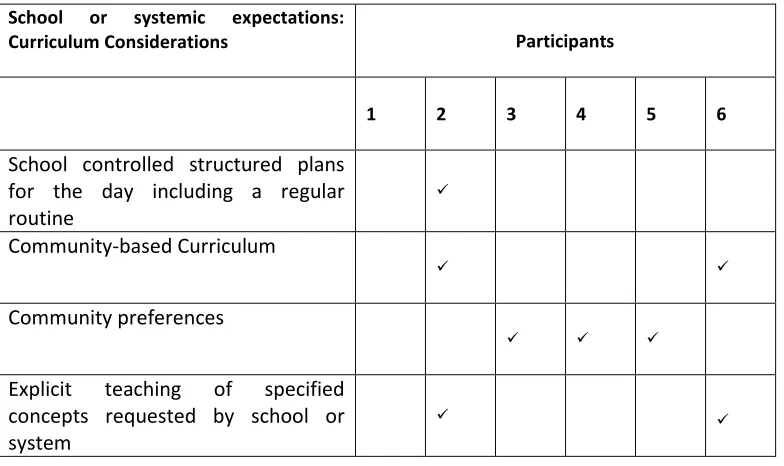
44
Round One Interviews, the researcher then verified this information against school policies on websites and reconfirmation in Round Two Interviews.
School or systemic expectations:
Curriculum Considerations Participants
1 2 3 4 5 6
School controlled structured plans for the day including a regular routine
Community-based Curriculum
Community preferences
Explicit teaching of specified
concepts requested by school or system
[image:44.612.117.509.117.350.2]
Table 1: School or systemic expectations: Curriculum Considerations
Table One summarises the incidence of occurrence across the sources, where school or community expectations were in place. In one instance the community required the teacher to follow a school established timetable and teach using models that were teacher delivery focused. This instance is unusual, most schools allow teachers to develop a personalized timetable incorporating school expectations of subject allocations.
Resourcing and physical design
45
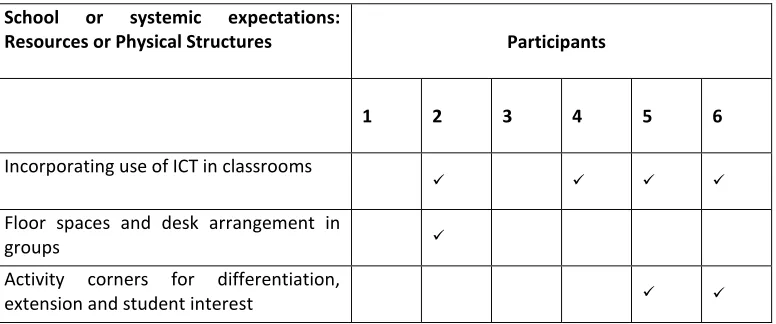
School or systemic expectations:
Resources or Physical Structures Participants
1 2 3 4 5 6
Incorporating use of ICT in classrooms
Floor spaces and desk arrangement in groups
Activity corners for differentiation, extension and student interest
[image:45.612.119.507.55.217.2]
Table 2: School or systemic expectations: Resources or Physical Structures
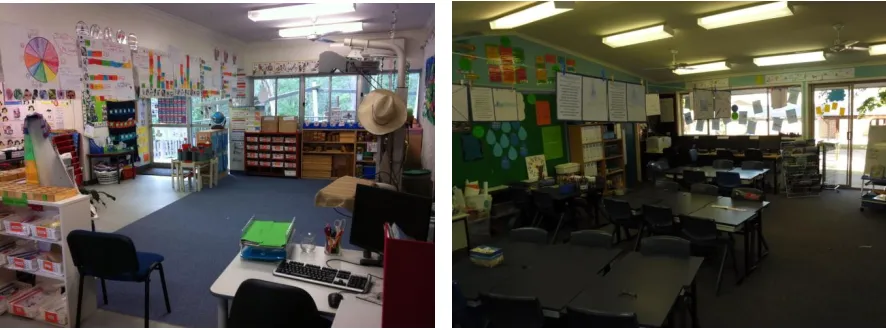
All of the participants provided artefact evidence through photographs that to some extent revealed their choices for catering for student needs. Two participants revealed that student differentiation was a high level school expectation. One example follows:
They [parents] are quite heavily involved with a lot of the decisions that are made... they’re not a very passive group of parents, they’re very involved, very active in education and they regard it highly as an important aspect of their children’s lives. A lot of small groups ... a lot of differentiation and the groupings of the children have really assisted with some children extending and other children just needing that extra time with aides and things. (P5, Round One Interview).
46
S c h o
School supported pedagogical practices
There were some common teaching practices that appeared in first year teachers preferred practices and school directives. In three instances, rote learning (P2, P4 and P6) and activity based learning (P2, P5 and P6) were selected because they were school endorsed models of teaching. One of the participants considered learning modalities (P2) which influenced the teaching practice model the teacher used with students. One school site policy included teaching practices that deliberately taught higher order thinking skills within the school program (P6).
School or systemic expectations:
Pedagogical Practices Participants
1 2 3 4 5 6
Rote learning and automaticity
Learning modalities
Higher order thinking skills and cognitive
organisers
Constructivist models of learning, activity
[image:46.612.115.558.57.222.2]rotations and / or inquiry based practices
47
The School influenced teaching practices listed in Table Three also present later as teacher selected options in Table Four: University Learning to illustrate differentiation between school decision and university learning choices.
Examination of school and systemic expectations regarding pedagogical choices revealed the following common themes: community expectations for curriculum based decisions; incorporating explicit teaching and differentiation strategies; using information and communication technologies (ICT) resources to support teaching practice; and use of rote and activity based instruction.
University learning reflected in practice
The two rounds of interviews revealed significant information at the university learning level and each round of interviews was analysed separately before combining the data to highlight overarching themes. This allowed the researcher to observe changes to the participants’ practice during the course of the study. The participants all used structured plans and routines to guide their daily planning; however, in one instance this planning was also changed in response to student interest and was modified dependent upon the direction taken by student inquiry. This model of planning appeared to be more open than the other five sources.
From Explicit Teaching to Constructivist Learning Models
48
environment or other stimulus to develop new ideas and concepts based upon their current understanding (Bruner, 1985). These practices were discussed and confirmed utilizing data from the interviews and photographs.
I’ve run more hands on, more of the kids controlling...being in charge of the lessons. I did this for two reasons one because I was always losing my voice, the other was watching the class mature, they really got involved, more interested and engaged (P1, Round Two Interview)
Thinking skill development through use of cognitive organisers, and higher order thinking skills were highly considered by all of the participants regardless of the ages of the students. Three of the participants (P1, P2 and P4) mentioned this skill development in their initial interview. Artefacts such as photographs were used to confirm that these skills were taught and this investigation revealed that all of the participants did in fact teach a