OPTIMAL FEATURE SELECTION AND MACHINE
LEARNING FOR HIGH-LEVEL AUDIO
CLASSIFICATION
- A RANDOM FORESTS
APPROACH
Muhammad Mazin Al-Maathidi
School of Computing, Science and Engineering
University of Salford, Salford, UK
Table of Contents ... i
List of Figures ... vii
List of Tables ...x
Acknowledgment ... xi
List of Abbreviations ... xii
Abstract ... xiii
Chapter 1: Introduction ...1
1.1 Introduction ...2
1.2 Aim of the Research...3
1.3 Scope of the Study ...4
1.4 The MPEG-7 Standard ...5
1.5 Research Outcomes ...6
1.6 Thesis Outline ...7
Chapter 2: Background and Current State of the Art ...9
2.1 Introduction ... 10
2.2 Audio Content Analysis ... 10
2.3 MPEG-7 Hierarchical Audio Classification ... 11
2.4 Target Audio Classes ... 12
2.5 Audio Content Classification ... 14
2.5.2 Machine Learning for Audio Content Classification ... 20
2.6 Feature Dimensionality Reduction in the Field of Audio Content Classification .... 22
2.7 Other Related Feature Selection Papers ... 27
2.8 Relevant Publications on Ensemble Tree Feature Selection ... 27
2.9 Summary of Feature Selection ... 29
Chapter 3: MPEG-7 Audio Features ... 31
3.1 Introduction ... 32
3.2 Audio Signal and Digital Representation ... 32
3.2.1 Time Domain ... 33
3.2.2 Frequency Domain ... 33
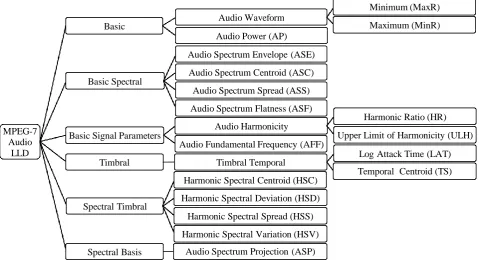
3.3 MPEG-7 Low Level Descriptors for Audio ... 37
3.3.2 Basic Spectral Descriptors ... 39
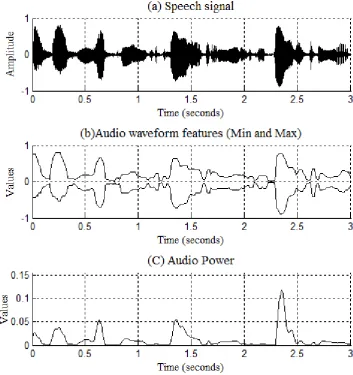
3.3.3 Basic Signal Parameters ... 49
3.3.4 Timbral Descriptors ... 53
3.3.5 Spectral Basis ... 61
Chapter 4: Machine Learning for Classification ... 64
4.1 Introduction ... 65
4.2 Supervised Machine Learning ... 65
4.3 Gaussian Mixture Model ... 65
4.4 Neural Network ... 68
4.5.1 Types of Decision Tree ... 72
4.5.2 The Construction of a Classification Tree... 73
4.5.3 The Selection of a Splitting Rule ... 74
4.5.4 Multiway Split or a Binary Split ... 76
4.5.5 Selecting a Split Condition ... 76
4.5.6 Terminating the Splitting Procedure ... 79
4.5.7 Assigning Class Labels to Terminal Nodes ... 79
4.6 Ensemble Decision Classifiers ... 80
4.6.1 Bagging ... 82
4.6.2 Random Forest ... 84
Chapter 5: Feature Dimensionality Reduction ... 87
5.1 Introduction ... 88
5.2 Feature Selection and Features Dimensionality Reduction... 88
5.3 Features Relevance and Redundancy... 89
5.4 Feature selection ... 90
5.5 MPEG-7 Feature Dimensionality Reduction Techniques ... 92
5.6 Eigenvectors and Eigenvalues ... 92
5.7 Principal Components Analysis... 96
5.8 Singular Value Decomposition ... 97
6.1 Introduction ... 101
6.2 High-level Audio Content Classification and Feature Selection System Architecture ... 101
6.3 Audio Feature Extraction ... 107
6.3.1 Normalisation ... 108
6.3.2 Framing ... 108
6.3.3 Frame Feature Extraction ... 109
6.4 Feature Ranking ... 110
6.5 Feature Selection ... 110
6.6 Class Frame Detector ... 111
6.7 Detection Pattern Smoothing ... 112
6.8 Collective Decision Making ... 113
6.9 Classification System Architecture ... 113
Chapter 7: Audio Sample Database ... 116
7.1. Introduction ... 117
7.2 The Importance of Using a Representative Audio Sample Database ... 117
7.3 Building the Training/Testing and the Validation audio database ... 117
7.4 Audio File Format and Quality ... 118
7.5 The Available Audio Sample Databases ... 119
7.6 The Utilised Audio Sample Databases ... 120
7.8 Audio Database Description ... 122
Chapter 8: RFs Algorithms for High-Level Audio Content Classification & Feature Selection ... 124
8.1 Introduction ... 125
8.2 RFs Feature Importance Ranking and Selection ... 125
8.3 Ensemble Tree Feature selection ... 126
8.4 The Proposed Feature Selection Technique ... 127
8.5 Training Phase of Ensemble Tree Feature Selection ... 129
8.6 Classification Using Ensemble Tree Reduced Features ... 130
8.7 Collective Frames Classification Decision ... 132
Chapter 9: Experiments and Results ... 137
9.1 Introduction ... 138
9.2 Test methodology and Results presentation ... 138
9.3 MPEG-7 Features and Classification Modules Parameters ... 139
9.3.1 The Size of ASP Feature ... 140
9.3.2 Minimum Frame Power ... 140
9.3.3 The Number of Utilised Training Files ... 141
9.4 Machine Learning Technique Parameter Selection ... 142
9.4.1 Gaussian Mixture Model Parameters ... 142
9.4.2 Neural Network Parameters ... 143
9.5 Comparing the Performance of Classification Modules ... 144
9.6 RFs Classification Feature Importance List ... 147
9.7 The Performance RFs Bases Feature Selection ... 149
9.8 Collective Decision Making ... 151
9.9 Validation of the Proposed Feature Selection Technique ... 152
9.10 Validation of the Proposed Collective Decision Making ... 158
Chapter 10: Conclusions & Future Work ... 160
10.1 Conclusions ... 161
10.2 Future Work... 163
References ... 165
Figure 1: Audio content and scene analysis system architecture ... 12
Figure 2: Audible sound classification (Gerhard 2003)... 13
Figure 3: Feature dimensionality reduction ... 23
Figure 4: Hamming window ... 34
Figure 5: Spectrogram of music signal ... 36
Figure 6: MPEG-7 low level audio descriptors ... 37
Figure 7: MPEG-7 basic descriptors extracted from music signal. ... 39
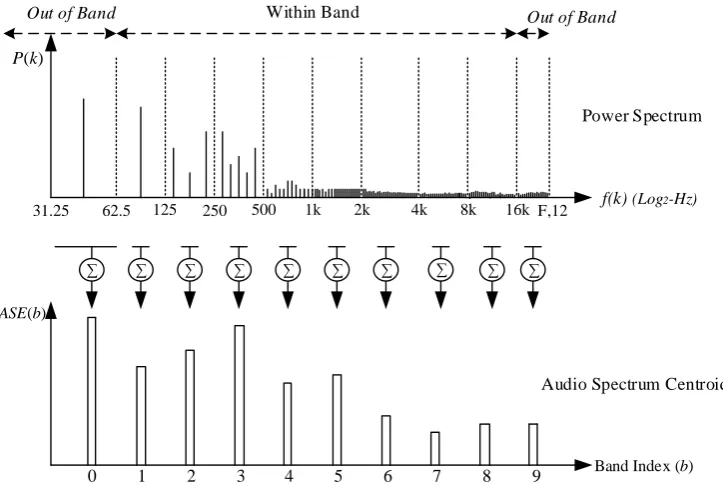
Figure 8: ASE extraction from power spectrum. ... 41
Figure 9: Grouping of power coefficients within 2 bands around 2kHz. ... 47
Figure 10: MPEG7 basic spectral descriptors extracted from music signal. ... 48
Figure 11: MPEG-7 HR and modified HR features extracted from three audio signals. ... 51
Figure 12: MPEG-7 AFF extracted for a music signals. ... 53
Figure 13: ADSR envelop general shape ... 54
Figure 14: The temporal timbral descriptors extracted from a dog bark sound. ... 56
Figure 15: ASP of a speech signal (a) Signal spectrum (b) ASP feature of size 18. ... 63
Figure 16: GMM representing an MFCC of a male speaker ... 67
Figure 17: Multi-layer perceptron NNet ... 69
Figure 18: A decision tree for a loan example. ... 71
Figure 19: A two-dimensional data classification problem ... 72
Figure 21: (a) The binary decision for the data points in Figure 20, (b) the resultant decision
regions ... 75
Figure 22: Node impurity function for binary classification. ... 78
Figure 23: A binary classification problem two linear classifiers ... 81
Figure 24: Graphical visualization of bias and variance ... 83
Figure 25: Dimensionality reduction using (a) feature selection, (b) feature extraction. ... 89
Figure 26: Block diagram showing the architecture developed for high-level audio classification and feature selection techniques ...106
Figure 27: Block diagram of the classification technique stages ...108
Figure 28: Block diagram of feature extraction step ...110
Figure 29: A single class training unit ...112
Figure 30: Block diagram showing the architecture of the classification phase. ...115
Figure 31: Feature selection using ensemble tree and classification module training ...131
Figure 32: Post processing stage of collective decision making. ...132
Figure 33: Collective frame classification results ...136
Figure 34: ROC curves for NNet, GMM, RFs and BT...146
Figure 35: RFs feature selection effect on classifier performance ...149
Figure 36: PCA reduced feature extraction and its effect on classification performance ...151
Figure 37: Collective decision making performance ...152
Figure 38: The validation of RFs based feature selection for speech ...153
Figure 40: The validation of RFs based feature selection for environment sound ...155
Figure 41: The overall performance of validation of RFs based feature selection ...156
Figure 42: Classification performance using 10, 23, 36 and 49 features. ...157
Table 1: Abbreviations utilised in Table 2 ... 16
Table 2: Audio Features ... 17
Table 3: Classification tasks and the utilised audio features... 19
Table 4: Machine learning for supervised audio content classification... 21
Table 5: Dimensionality reduction for audio classification ... 24
Table 6: The utilised audio samples details ...123
Table 7: Abbreviations used in the results tables ...139
Table 8: ASP feature size ...140
Table 9: Minimum frame energy ...141
Table 10: Training and testing files counts ...142
Table 11: Number of Gaussians in GMM ...142
Table 12: The number of hidden layers in NNet ...143
Table 13: The number of trees in the BT ...143
Table 14: The number of trees in the RFs ...144
Table 15: Classification module performance using 49 features ...145
Table 16: The Area under ROC curves ...146
I would like to express my sincere gratitude to my supervisor Dr. Francis Li for his
continuous support during the Ph.D study, for his patience, motivation, enthusiasm, and
immense knowledge. His guidance helped me throughout research and writing. Without his
invaluable support and encouragement, this work would not have been accomplished. He has
a great contribution to every progress I have made.
I especially thank my family members; my parents, my wife and my sisters. I would
have never completed this without their support.
Finally, I would like to thank all people who prayed for me and supported me during
Abbreviations Meaning
AFF Audio Fundamental Frequency
AH Audio Harmonicity
AP Audio Power
ASC Audio Spectrum Centroid
ASE Audio Spectrum Envelope
ASF Audio Spectrum Flatness
ASP Audio Spectrum Projection
ASS Audio Spectrum Spread
BT Bagged Tree
FFT Fast Fourier Transform
GMM Gaussian Mixture Models
HR Harmonic Ratio
HSC Harmonic Spectral Centroid
HSD Harmonic Spectral Deviation
HSS Harmonic Spectral Spread
HSV Harmonic Spectral Variation
k-NN k-Nearest Neighbours
LAT Log Attack Time
LLD Low Level Descriptors
MaxR Maximum Range
MFCC Mel-Frequency Cepstral Coefficients
MinR Minimum Range
MPEG Moving Picture Experts Group
NNet Neural Network
PCA Principal Component Analysis
RFs Random Forests
SVD Singular Value Decomposition
SVM Support Vector Machines
TC Temporal Centroid
ULH Upper Limit of Harmonicity
Content related information, metadata, and semantics can be extracted from
soundtracks of multimedia files. Speech recognition, music information retrieval and
environmental sound detection techniques have been developed into a fairly mature technology
enabling a final text mining process to obtain semantics for the audio scene. An efficient
speech, music and environmental sound classification system, which correctly identify these
three types of audio signals and feed them into dedicated recognisers, is a critical
pre-processing stage for such a content analysis system. The performance and computational
efficiency of such a system is predominately dependent on the selected features.
This thesis presents a detailed study to identify the suitable classification features and
associate a suitable machine learning technique for the intended classification task. In
particular, a systematic feature selection procedure is developed to employ the random forests
classifier to rank the features according to their importance and reduces the dimensionality of
the feature space accordingly. This new technique avoids the trial-and-error approach used by
many authors researchers. The implemented feature selection produces results related to
individual classification tasks instead of the commonly used statistical distance criteria based
approaches that does not consider the intended classification task, which makes it more suitable
for supervised learning with specific purposes. A final collective decision-making stage is
employed to combine multiple class detectors patterns into one to produce a single
classification result for each input frames.
The performance of the proposed feature selection technique has been compared with
the techniques proposed by MPEG-7 standard to extract the reduced feature space. The results
show a significant improvement in the resulted classification accuracy, at the same time, the
The proposed feature selection and machine learning technique enable the use of only
30 out of the 47 features without degrading the classification accuracy while the classification
accuracy lowered by 1.7% only while just 10 features were utilised. The validation shows good
performance also and the last stage of collective decision making was able to improve the
classification result even after selecting only a small number of classification features. The
work represents a successful attempt to determine audio feature importance and classify the
audio contents into speech, music and environmental sound using a selected feature subset.
The result shows a high degree of accuracy by utilising the random forests for both feature
1.1 Introduction
Over the past century, since the invention of recording techniques, a large number of
archives of recorded audio, video and movies has been accumulated. Digitisation can preserve
or even enhance the content, but the usefulness of the archives relies heavily upon the
availability of an effective indexing, search and data mining tools.
Digital media and user-contributed content, in recent years, has led to a further growth
in the volume of media archives, which demands effective content analysis and data mining
systems to manage the content and archives. Soundtracks are information rich and there is a
considerable amount of related information that can be extracted to help to describe their
content. Manual indexing and metadata tagging are time consuming and can be biased on some
occasions due to individual workers.
Soundtracks can be categorised into three classes: speech, music, and environmental
sound. These classes are closely related to the following existing audio information-mining
techniques:
1. Automated speech recognition: This has developed into a mature technique, as
evidenced by the availability of audio dictation tools.
2. Music information retrieval: This has achieved significant progress, allowing not
only automated music transcription and analysis but also advanced analysis.
3. Environmental sound detection: This was developed mostly for environmental
noise classification, but can be used for scene analysis.
To redeploy these tools for an efficient audio content analysis, it is essential to have a
pre-processing stage that accurately classifies and timestamps where speech, music and
Commonly used feature spaces include Mel-frequency cepstral coefficients (MFCC),
sub-band energy ratio, zero-crossing rates (ZCRs) etc. The classifications moreover are
typically based upon supervised learning models such as artificial neural networks (NNets),
support vector machine (SVM), k-nearest neighbours (k-NN), Classification Trees and
Random Forests (RFs). For detailed speech modelling, especially for speech recognition,
probabilistic models such as hidden Markov models (HMMs) and Gaussian mixture model
(GMM) are found suitable. For example, Liu et al. (2007) propose an audio-classification and
speaker-identification method, in which the MFCC, sub-band energy ratio and zero-crossing
rates are used as feature spaces; SVMs are adopted for general audio classification and GMMs
for further speaker identification. Researchers develop individual systems for specific purposes
and choose audio features in an ad hoc or empirical way. It seems that little has been done to
systematically and effectively rank the audio features according to their contribution to the
intended classification task and select the top ranked features as an optimal classification
features for that particular classification problem, as evidenced by a lack of existing literature.
This thesis addresses these issues and proposes the use of random forests to effectively
prioritise features and decision trees to classify audio content into speech, music and
environmental sound.
1.2 Aim of the Research
This research aims at developing a systematic approach for feature selection based on
feature importance ranking, and identifying a more suitable machine learning approach for
audio classification into three categories namely speech, music and environmental sound. The
feature selection approach is based on RFs in order to test the hypothesis that RFs present a
The proposed technique consists of a set of systematic methods that utilise the RFs to
rank the features according to their importance for the intended classification tasks. Ranking
will prepare the utilised feature list for the backward feature selection in order to select the
smallest possible subset of highly related features. Wrapper method combined with
classification accuracy measure is used to evaluate the efficiency of the selected features
subset.
RFs feature ranking provides a direct indicator of the contribution made by each
feature to attain the final classification result, feature selection will utilise this ranking to
produce the smallest possible features that facilitate the optimum classification performance.
The proposed technique will reduce the computational load during the feature
extraction phase by calculating only the critical features that have a direct contribution towards
the final classification result. The required classification time will be reduced also by
simplifying the mapping problem between the input features and the output classification
result.
The classification of the aforementioned classes is performed in two phases. The first
phase converts the multiple class classification task into multiple binary class detectors. The
second phase involves a collective decision making that combines the result of the three binary
classifiers to a single classification result per frame. The results of the multiple class detectors
are processed by a collective decision-making stage to produce the final classification result
that contains the predicted classes label of the input audio file frames.
1.3 Scope of the Study
This study considers three classes: speech, music, and environmental sound to test and
evaluate the proposed feature selection technique. The samples have pure class content without
adopted to enable the smooth development and to evaluate the feature selection technique. The
other reason of the utilisation of such a data set is that the content of these three classes are
intended to be further processed by more dedicated semantic classifiers -as discussed in
Chapter 2- and the semantic classifiers need a good quality audio content to be able to
accomplish a good semantic analysis. This would pave the way for the development of other
audio content classification techniques that study more detailed audio classes.
1.4 The MPEG-7 Standard
MPEG-7 is an ISO/IEC multimedia content description standard that was developed by
MPEG (Moving Picture Experts Group). It provides a rich set of standardisation tools to
describe multimedia content including audio, images and video data. It utilises eXtensible
Markup Language (XML) to store the metadata and utilise time coding by synchronising the
description with specific intervals through the multimedia files (Salembier and Sikora, 2002;
Kim et al., 2005).
The main elements in the MPEG-7 Standard are (Kim et al., 2005):
• Descriptors: they outline the syntax and the semantics definition of audio feature vectors
and their elements.
• Description schemes: they specify the structure and semantics of the relationships between
the components.
• A description definition language: it is used to define the syntax of existing or new
MPEG-7 description tools.
• System tools: these tools deal with the binary-coded representation of descriptors or
The MPEG-7 content description includes many categories of information. The
following list shows a sample of categories and lists few examples for each category (Kim et
al., 2005).
• Production related information (title, author, composer).
• Content usage information (copyright, usage history, broadcast information).
• Storage features (file format, encoding).
• Low level features (spectral descriptors, harmony descriptors).
• Conceptual information (objects, events, objects interactions).
• User interaction information (user preferences, usage history).
After this review of the MPEG-7 standard, it becomes clear that the scope of the study
is highly related to MPEG-7 standard. For this reason, the MPEG-7.
1.5 Research Outcomes
This is an attempt to apply random forests to determine the feature importance and
decision trees to classify sound tracks into speech, music and environmental sound. Attempts
of applying RFs to audio data are relatively new and have just recently been reported. Auditory
contexts which are the acoustic scene of specific location or site such as a restaurant or bus
station (Yang and Su, 2012), and environmental sound data analysis (Zhang and Lv, 2015).
These indicate that the random forests were effective in handling environmental sound
classification. It is also surprising to note that there was no reported effort of utilising the
random forests features ranking to perform feature selection and audio classification into
speech, music and environmental sound.
The features used for environmental sound and soundscapes analysis are generally
different from those used for speech, music and event/or effect sound commonly seen in the
popular, due to the MPEG-7 standardisation. Different sources and diverse features used mean
that the classification behaviour may substantively different. The results from the literature
cannot be generalised to speech, music and environmental sound classification or
discrimination. Therefore, it will be interesting and useful to investigate how the RFs can
handle music speech and environmental sound discrimination tasks.
1.6 Thesis Outline
Following this introductory chapter, the rest of the thesis is structured as follows:
Chapter Two (Background and Current State of the Art): This chapter presents the state of the art research in the fields of audio content classification and automatic feature
selection. The focus is on the used classification module, the classes to be detected, the used
features, and the automatic feature selection technique where one is implemented.
Chapter Three (MPEG-7 Audio Features): This chapter discusses the features and their domains, and lists all of the features that are used in the training/classification process.
Moreover, a mathematical definition is given for each feature.
Chapter Four (Machine Learning for Classification): This chapter reviews machine learning algorithms that are utilised in the proposed technique of audio content classification
and feature selection. This includes GMM, NNet, decision tree and the ensemble classifier
methods.
Chapter Five (Feature selection and Features Dimensionality Reduction): This chapter discusses the topics of feature selection and feature dimensionality reduction illustrating the
difference between feature extraction and dimensionality reduction reviewing their common
approaches. The second part discusses the proposed MPEG-7 feature dimensionality reduction
Chapter Six (Architecture of New High-Level Audio Content Classification and Feature Selection): This chapter describes the architecture and the design aspects of the
proposed high-level audio classification system.
Chapter Seven (Audio Sample Database): This chapter discusses the available audio samples database and shows the need to create a new database one to test and evaluate the
implemented classification system. The chapter also discusses the databases that are utilised
for validation. Finally, some statistics of the utilised samples are listed.
Chapter Eight (Ensemble Tree Algorithms for High-Level Audio Content Classification and Feature Selection): This chapter proposes a systematic technique of the
automated feature ranking and selection using ensemble trees, and illustrating the training and
classification phases of the post-processing stage of the collective decision making.
Chapter Nine (Experiments and Results): This chapter contains the results of the conducted tests to show the performance of the proposed feature selection technique, and
presents the resulting improvement in classification performance in testing and validation
results.
Chapter Ten (Conclusion and Future Work): This chapter concludes the main contribution of this research and suggests the further work that can be performed in the future
2.1 Introduction
This chapter carries out a review of the current state of the art of the research in the
field of audio content classification and feature selection techniques. The chapter comprises
three main parts. The first part demonstrates the general structure of an audio content analysis.
The second part covers the literature review of related publications about audio content
classification system. The third part reviews the techniques used for feature selection in the
field of audio content classification.
2.2 Audio Content Analysis
The topic of audio content analysis is a hot topic in the field of pattern recognition
because audio is information rich media. The automation of audio content analysis will narrow
the gap between human and machine, allowing more natural interaction with the digital devices
and digital content.
Audio includes a wide range content such as speech, music and environmental sound.
In the field of machine learning, some different techniques were developed over the years to
address a specific task such as speech recognition, speaker identification, speech to text
dictation, music information retrieval, query by example, query by humming, real time audio
surveillance. These divert applications emphasise the importance of a pre-processing stage of
identifying the general class of audio content in order to redeploy the content to a relevant
2.3 MPEG-7 Hierarchical Audio Classification
There is a pressing need for an automated audio content analysis system. Such a system
would enable automatic analysis and retrieval of the enormous amount of available digital
audio content and automatically study audio file contents in order to generate a semantic text
that describes the audio content efficiently. Such a system would help to avoid the need for
manual indexing of audio files, which is especially important considering the enormous
amounts of audio files which are available in archives, databases and the cloud. This would
also contribute to the possible creation of an audio search engine that could work by query or
by example.
One of the proposed applications of MPEG-7 is the multimedia mining system, which
aims to retrieve audio information automatically by scanning multimedia data to detect the
presence of specific contents similar to the content that the user has requested. Such a system
contains two main components; the indexer and the multimedia mining server. The indexer
produces an XML file and stores it in the multimedia mining server. Based on the indexing
information, the multimedia mining server makes the required content available to the end user
(Kim et al., 2005).
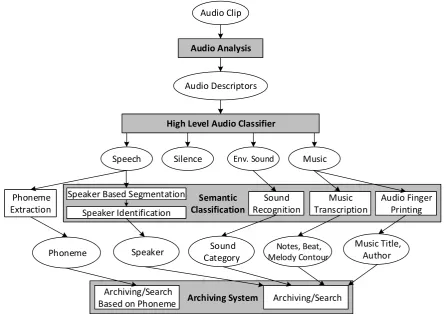
The MPEG-7 standard proposes a hierarchical audio classification system that contains
three stages as in Figure 1. The first stage performs a high-level audio classification and
segmentation. The second stage further processes the basic classes by performing a semantic
classification. The third stage is the archiving stage, which utilises the storage and search of
the index audio files (Kim et al., 2005).
This research will focus on the classification part of the proposed MPEG-7 system.
Two aspects are studied; the first aspect is the classification and the second one is subset feature
Figure 1: Audio content and scene analysis system architecture
2.4 Target Audio Classes
There is a wide variety of audible soundtracks and a successful audio classifier should
be able to deal with these varieties efficiently. One approach to dealing with such a complicated
classification task is to use a hieratical module that does the classification through multiple
stages; the first stage performs a high-level audio classification, followed by subsequent levels
of more detailed classification. The high-level audio classification classified the input audio
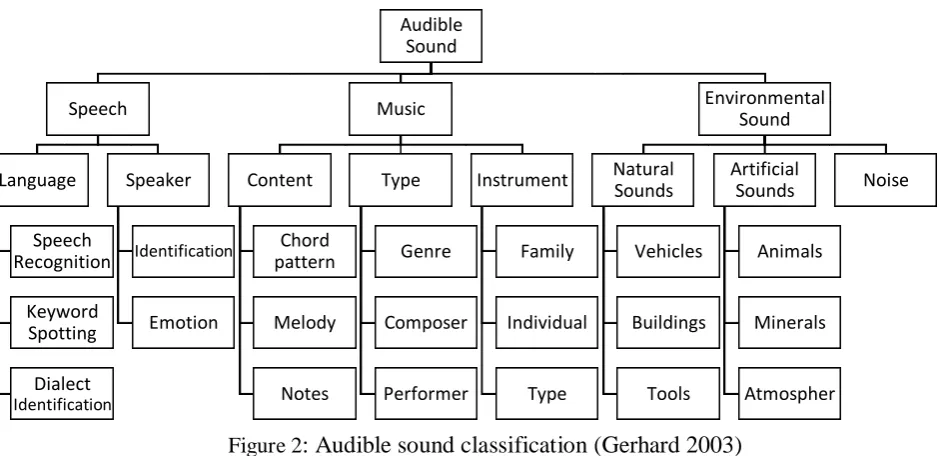
into speech, music and environmental sound, these three classes were proposed by Gerhard
(2003), followed by Temko (2007), Dennis (2014), and Al-Maathidi and Li (2015). Each one
of the three aforementioned classes can be further classified to subcategories as shown in Figure
2 where small sample audio classes are illustrated.
Silence Env. Sound Music Speech
High Level Audio Classifier High Level Audio Classifier
Audio Descriptors Audio Analysis Audio Analysis
Audio Clip
Speaker Based Segmentation Speaker Based Segmentation
Speaker Identification Speaker Identification
Music Transcription
Music Transcription
Audio Finger Printing Audio Finger
Printing Sound
Recognition Sound Recognition Phoneme
Extraction Phoneme Extraction
Notes, Beat, Melody Contour Sound
Category
Music Title, Author Speaker
Phoneme
Archiving System Archiving System Archiving/Search
Based on Phoneme Archiving/Search
Based on Phoneme Archiving/Search Archiving/Search Semantic
Figure 2: Audible sound classification (Gerhard 2003)
Such a high-level audio classification is vitally important as a pre-classifier for many
other systems that are designed to deal with a content of a particular type to accomplish more
specific tasks, the following publications are a sample of the available semantic classifiers that
are designed to process the content of one of the three classes of speech, music and
environmental sound:
1. Speech. There are plenty of publications deal with speech related topics. Some examples
of which are speech detection (Bach et al., 2011), speech recognition (Pieraccini and
Rabiner, 2012), and emotion recognition (Fewzee and Karray, 2013, Gharsalli et al.,
2015), language identification (Muthusamy et al., 1994, Joshi and Joshi, 2013) and speaker
clustering and identification (Liu et al., 2007, Shao et al., 2008), among others.
2. Music. In music, research has taken place in different areas. Some examples are genre
classification (Tzanetakis and Cook, 2002; Yaslan and Cataltepe, 2006), geographical
music origin identification (Zhou et al., 2014), instrument recognition (Morvidone et al.,
2010), mood classification (Myint and Pwint, 2010; Mann et al., 2011; Li et al., 2015),
room parameters acoustic parameters extraction (Kendrick et al., 2006), structure
segmentation (Cheng et al., 2009), and many others. Audible
Sound
Speech
Language
Speech Recognition
Keyword Spotting
Dialect Identification
Speaker
Identification
Emotion
Music
Content
Chord pattern
Melody
Notes
Type
Genre
Composer
Performer
Instrument
Family
Individual
Type
Environmental Sound
Natural Sounds
Vehicles
Buildings
Tools
Artificial Sounds
Animals
Minerals
Atmospher
3. Environmental sound. The environmental sound is the sound that does not contain speech
or music data. Environmental sound can provide very important information for semantic
analysis, there are many publications available in this field, for example the detection of
bird species (Franzen and Gu, 2003; Jancovic and Kokuer, 2015), machine defect
classification(Malhi and Gao, 2004), monitoring of human food intake (Kalantarian et al.;
2014, Bi et al.; 2016, Passler and Fischer, 2011), sport game segmentation (Zhang et al.,
2010), violence detection (Jeho et al., 1998; Giannakopoulos et al., 2010, Acar et al.,
2013), and many others.
The success of this application is highly dependent on a pre-processing stage of
high-level audio classification that classifies audio content into one of these three classes to prepare
each class content to be further processed by a proper semantic classifier. The aim of this
research, is to propose a feature selection technique and test its performance on a high-level
audio content classification system to classify the input audio content into speech, music and
environmental sound. The next sections review the topics of audio content classification,
feature dimensionality reduction and feature selection.
2.5 Audio Content Classification
The discipline of audio content analysis has been around for about 60 years. One of the
earliest systems was built at Bell Labs by Davis et al. (1952). This system is able to recognise
a single speaker spoken digits using spectral estimation using an analogue circuit. After the
development of computers in the 1970s, many people entered the field of audio content
classification. The available processing power and storage space limited the researchers to a
basic set of features and simple classification methods but the rapid growth of computers
processing power and the higher storage capacity enabled researchers to develop and utilise
The two major aspects of audio content classification system are the employed features
and the utilised machine learning model. Each one of these two topics will be reviewed
separately.
2.5.1 Audio Features for Classification
A large number of features were utilised in the field of audio content classification.
These features can be categorised according to their domain. For example, the temporal
domain, the frequency domain, the cepstrum domain, the modulation frequency domain, and
the Eigen domain. A brief description of these domains is given (Salembier and Sikora, 2002;
Mitrović et al, 2010; Tang et al, 2014; Alías et al, 2016):
• The temporal domain. The temporal domain is the native domain of audio signals, this
domain contains a small set of features that can be easily calculated.
• The frequency domain. The features here are extracted from the frequency domain, this
domain contains most of the audio features, audio data is presented in the frequency
domain using transformation function such as Fourier transform, discrete cosine
transform and wavelet transform. The reviewed features in this domain can be
categorised into:
o Physical features that describe the signal by its physical properties
o Perceptual features that describe the signal by its perceptual properties.
• The cepstrum domain. The cestrum domain concept was introduced by Bogert et al.
(1963), It is the result of taking the Fourier transform of the logarithm of the magnitude
of the spectrum. The cepstrum features are considered a good technique for separating
the components of a complex signal that are made up of several simultaneous but
• Modulation frequency domain. The features in this domain are designed to capture a long-term signal variation of amplitude or frequency that is usually captured by a
temporal analysis of the spectrogram.
• Eigen domain features. The features in this domain have a large amount of redundancy,
therefore a statistical method is applied -Such as Principal Components Analysis (PCA)
and Singular Value Decomposition (SVD)- to reduce the feature size while preserving
most of the important information.
Table 2 lists a sample of features that covers all the aforementioned domains along with
some basic features that are well established in the field. While Table 1 lists some abbreviations
that are utilised in Table 2.
Table 1: Abbreviations utilised in Table 2
Column Title Content Meaning
Dimension The dimensions of the feature
Number Feature dimensions is equal to the mentioned number
V Variable
Application field The field in which the feature was utilised
S Automatic speech recognition
E Environmental sound recognition
M Music information retrieval
G Audio segmentation
F Audio fingerprinting
V Several applications
Computational complexity
Feature computational complexity
L Low
M Medium
Table 2: Audio Features
Domain Feature Group Feature Name
P er ce p tu al P syc h oa c ou sti c M od el s D ime n si on A p p lic at ion F ie ld C omp u tati on al C omp le x ity Time (Temporal) Zero Crossing
Zero Crossing Rate (ZCR) 1 V L Linear Prediction Zero Crossing Rate 1 S L Zero Crossing Peak Amplitudes V S M Pitch Synchronous Zero Crossing Peak
Amplitudes V S
M
Amplitude MPEG-7 Audio Waveform 2 V L
Amplitude Descriptor 9 E L
Power
Short-Time Energy, MPEG-7 Audio Power 1 V L
Volume 1 V L
MPEG-7 Temporal Centroid 1 M L MPEG-7 Log Attack Time 1 M L
Frequency (Perceptual)
Brightness
MPEG-7 Spectral Centroid 1 M L MPEG-7 Audio Spectrum Centroid 1 V M
Spectral Centroid 1 V L
Sharpness 1 V M
Spectral Centre 1 M L
Tonality
Bandwidth 1 V L
MPEG-7 Audio Spectrum Spread 1 V M Spectral Dispersion 1 M L
Spectral Rolloff 1 V L
Spectral Crest V F L
Spectral Flatness V F M
Subband Spectral Flux 8 E M (Multi-resolution) Entropy V S M
Loudness Sone V M H
Integral Loudness 1 M H
Pitch
Pitch (dominant frequency) 1 V L MPEG-7 Audio Fundamental Freq. 2 V L
Pitch Histogram V M M
Psychoacoustical Pitch V V H
Chroma
Chromagram 12 M M
Chroma CENS Features 12 M M
Pitch Profile 12 M H
Harmonicity
MPEG-7 Audio Harmonicity 2 V M Harmonic Coefficient 1 G L Harmonic Prominence 1 E M
Inharmonicity 1 M M
MPEG-7 Harmonic Spectral Centroid 1 M M MPEG-7 Harmonic Spectral Deviation 1 M M MPEG-7 Harmonic Spectral Spread 1 M M MPEG-7 Harmonic Spectral variation 1 M M Harmonic Energy Entropy 1 M M Harmonic Concentration 1 M M Spectral Peak Structure 1 M M
Table 2: Audio features (continued)
Domain Feature Group Feature Name
P er ce p tu al P syc h oa c ou sti c M od el s D ime n si on A p p lic at ion F ie ld C omp u tati on al C omp le x ity Frequency (Physical)
Auto Regression Linear Predictive Coding V S L Line Spectral Frequencies V V M Adaptive
Time Frequency Decomposition
Daubechies Wavelet Coefficients Histogram 28 M M
Adaptive Time-Frequency Transform 42 M M
Short-Time Fourier
Subband Energy Ratio V V L
Spectral Flux 1 V L
Spectral Slope 4 V L
Spectral Peaks V M L
Group Delay V S M
Cepstral
Perceptual Filter Bank
Mel Frequency Cepstral Coefficients (MFCC) V V H Bark Frequency Cepstral Coefficients. V V H Autocorrelation MFCCs V S H Advanced
Auditory Model Noise-Robust Auditory Feature 256 E H
Auto Regression
Perceptual Linear Prediction V S H Relative Spectral Perceptual Linear Prediction V S H Linear Prediction Cepstral Coef. V S M
Modulation Frequency
Modulation Frequency
Domain
Auditory Filter Bank Temp. Envelopes 62 M M Joint Acoustic and Modul. Freq. Feat. V V H 4 Hz Modulation Harmonic Coef. 1 G M 4 Hz Modulation Energy 1 G M
Rhythm
Band Periodicity 4 G M
Pulse Metric 1 G M
Beat Spectrum V M H
Cyclic Beat Spectrum V M H
Beat Tracker 1 M H
Beat Histogram 6 M M
DWPT-based Rhythm Feature V M M
Rhythm Patterns 80 M H
Eigen
Rate-scale-frequency Features 256 E H MPEG-7 Audio Spectrum Bases V V H Distortion Discriminant Analysis 64 F H
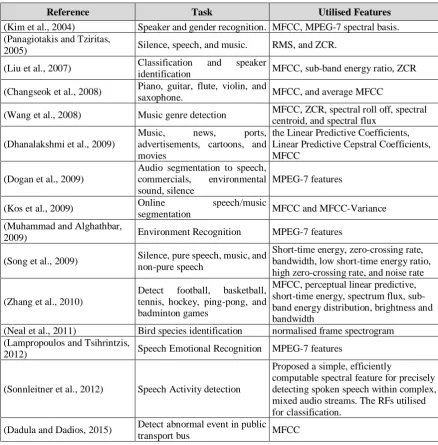
After reviewing the features in Table 2, a selected sample of related publication is listed
in Table 3, for each publication the table will illustrate the intended classification task and the
Table 3: Classification tasks and the utilised audio features
Reference Task Utilised Features
(Kim et al., 2004) Speaker and gender recognition. MFCC, MPEG-7 spectral basis. (Panagiotakis and Tziritas,
2005) Silence, speech, and music. RMS, and ZCR.
(Liu et al., 2007) Classification and speaker
identification MFCC, sub-band energy ratio, ZCR
(Changseok et al., 2008) Piano, guitar, flute, violin, and
saxophone. MFCC, and average MFCC
(Wang et al., 2008) Music genre detection MFCC, ZCR, spectral roll off, spectral centroid, and spectral flux
(Dhanalakshmi et al., 2009)
Music, news, ports, advertisements, cartoons, and movies
the Linear Predictive Coefficients, Linear Predictive Cepstral Coefficients, MFCC
(Dogan et al., 2009)
Audio segmentation to speech, commercials, environmental sound, silence
MPEG-7 features
(Kos et al., 2009) Online speech/music
segmentation MFCC and MFCC-Variance (Muhammad and Alghathbar,
2009) Environment Recognition MPEG-7 features
(Song et al., 2009) Silence, pure speech, music, and non-pure speech
Short-time energy, zero-crossing rate, bandwidth, low short-time energy ratio, high zero-crossing rate, and noise rate
(Zhang et al., 2010)
Detect football, basketball, tennis, hockey, ping-pong, and badminton games
MFCC, perceptual linear predictive, short-time energy, spectrum flux, sub-band energy distribution, brightness and bandwidth
(Neal et al., 2011) Bird species identification normalised frame spectrogram (Lampropoulos and Tsihrintzis,
2012) Speech Emotional Recognition MPEG-7 features
(Sonnleitner et al., 2012) Speech Activity detection
Proposed a simple, efficiently
computable spectral feature for precisely detecting spoken speech within complex, mixed audio streams. The RFs utilised for classification.
(Dadula and Dadios, 2015) Detect abnormal event in public
transport bus MFCC
Reviewing the data presented in Table 2 and 3 emphasize the pressing need for an
efficient feature selections technique that can suggest the optimum feature set for the individual
classification task due to:
1. The huge number of available features, training the classifiers using a huge set of
classification features increase the computational overhead, classification time and the
probability of overfitting (were the classifier fit the training set very well but will fail to
generalize to the new samples). This emphasizes the need for choosing a proper feature set
2. There is no specific answer for the sufficient number of features that will work for the
specific classification task.
3. Feature classification performance is not guaranteed for the intended classification task.
4. The performance of a specific feature is expected to vary according to the target
classification class and the utilised training dataset.
5. Even for the well-established features like the MFCC, the classification performance can be
improved by omitting some of the irrelevant features.
To be able to implement and evaluate MPEG-7 proposed audio content classification
and feature selection technique, a set of features must be extracted first. Due to the nature of
the diverse classes content -of speech, music, and environment sound- there is a need for a
feature set that expected to capture the properties of these diverts classes successfully.
The proposed MPEG-7 audio features are a suitable choice due to the fact that they
contain features that belong to multiple domains, with different complexity levels. The
MPEG-7 audio features have some features that are designed to handle the content of each one of the
target classes.
Therefore MPEG-7 audio features were chosen as the classification features to test and
evaluate the implemented technique of feature selection and dimensionality reduction.
MPEG-7 audio features have well defined mathematical definitions, it contains features that belong to
multiple domains, with different complexity levels.
2.5.2 Machine Learning for Audio Content Classification
The selection of machine learning model can affect the performance of the
classification system. There are several supervised machine learning models which can be
Table 4 lists sample of related publications illustrating their intended classification task
and the utilised classification module. Each row is dedicated to a single publication reference.
The first column shows the reference, the second column illustrates the intended classification
task and the reaming columns show the classification accuracy for the unlisted classification
models.
Table 4: Machine learning for supervised audio content classification
Reference Classification Task
Percentage of Positive Classification Accuracy D e c is ion T r ee G au ss ian M ixtu r e M od e l H id d e n M ar k ov M od el k -N e ar e st N e igh b or s N e u r al N e tw or k R an d om F or e st s S u p p or t V ec tor M ac h in e
(Tzanetakis and Cook,
2002) Music genre classification 61.0 60.0
(Berenzweig et al., 2002) Artist classification 64.9
(Ziyou et al., 2003) Sports audio classification 94.7
(Ghaemmaghami, 2004) Speech, music, speech/ music and
others classification 90.5
(Aronowitz, 2007) Speech, music classification 98.6 98.2
(Changseok et al., 2008) Content based audio classification 94.1 97.1 89.3
(Chu and Champagne,
2008) Speech, music classification 84.8 86.0
(Wang et al., 2008) Music genre classification 76.7 81.4
(Dhanalakshmi et al., 2009) Music, news, sports, advertisement,
cartoon and movie classification 93.7 92.1
(Dhanalakshmi et al., 2010) Music, news, sports, advertisement,
cartoon and movie classification 92.9 93.1
(Al-Maathidi and Li, 2012a) Speech, music and event sound
classification 91.3 86
(Yang and Su, 2012) Audio event detection 76.6
(Al-Maathidi and Li, 2015) Speech, music and event sound
classification 87.4 89.5 89.5
(Murthy and Koolagud, 2015)
Song vocal and non-vocal regions
identification 87.1
(Zhang and Lv, 2015) Environmental audio classification 96.2
The data in Table 4 illustrate that GMM, NNet, RFs and SVM were the preferred option
evaluation in this study. SVM was omitted because it does not perform better than the other
utilised techniques in the reviewed sample of papers, with the exception of one case, where it
was compared with simple tree classifier and scored an improvement of 1.2% in classification
accuracy by Chu and Champagne (2008), the performance of the RFs will definitely provide
better improvement over the tree classifier. Furthermore, the SVM is reported to have a
sensitivity for feature selection by Al-Maathidi and Li, (2012a) and sensitivity for kernel
selection by Harrington (2012).
Including the RFs negates the need to include Decision Trees because it represents an
improved version of decision tree classifier as will be illustrated later in Chapter 4. Finally, the
hidden Markov model is not the preferred option for the task of audio classification using
low-level descriptors, hidden Markov model strength lies in the ability to model the time structure,
such as in work by Ziyou et al (2003) to classify sports audio content by searching a series of
audio event and detect the specific sport. This also makes it one of the preferred options in
speech recognition and many other similar application and not for frame by frame
classification.
2.6 Feature Dimensionality Reduction in the Field of Audio Content
Classification
Most research in the field of audio content classification focuses either on new features
calculation or on employing different classification methods. On the other hand, less attention
was given to features dimensionality reduction, even though it presented a critical step to
improve the classification performance, especially when utilising high-dimensional feature
space. Feature dimensionality reduction will improve classification accuracy, decrease the
features should have a high correlation to the target class and should be uncorrelated with each
other (Guyon, 2003, Tang, 2014).
The two main approaches to feature dimensionality reduction are feature extraction and
feature selection, Figure 3 lists sample methods of each approach.
Figure 3: Feature dimensionality reduction
The key difference between the two approaches of dimensionality reduction is that the
feature extraction can be considered as a function that maps the input features to a new set of
feature set that has a lower dimensionality, while the feature selection performs a selection of
a subset of the input features without manipulation their values. Both of these approaches are
discussed in detail in Chapter 5.
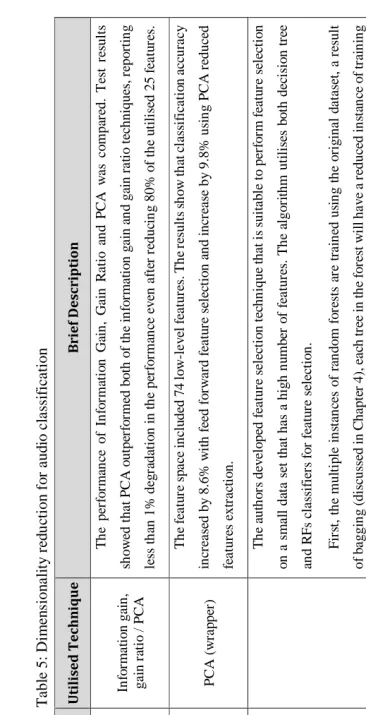
Table 5 lists a sample of related papers illustrating the intended classification task and
the utilised classification model. Each row is dedicated to a single publication, the first column
shows the reference, the second illustrates the intended classification task, the third column
shows the utilised feature dimensionality reduction technique and the reaming column show
the classification accuracy for the unlisted classification models.
Dimensionality Reduction
Feature Extraction
Principal Component Analysis
Singular Value Decomposition
Feature Selection
Filter Methods
Wrapper Methods:
In addition to the listed publications, the environmental audio data classification and
feature selection were studied in Zhang and Lv (2015). The authors tested three tree ensemble
methods including bagging, AdaBoost, and RFs. Two set of features were examined: MFCC
features and linear predictive coefficient features.
The presented results show that RFs classification results outperform the other
ensemble tree methods. Additionally, MFCC obtains a better classification result than the
linear predictive coefficient based features. The feature importance was found by evaluation
of the features GINI index in the trained RFs.
The presented feature selection is the closest technique found in the literature to the
technique proposed in this thesis, but there are some major differences that include:
1. Different classification problems were addressed. In this thesis, the focus was to classify
the audio into speech, music and environment sound, while Zhang and Lv (2015) work
address environmental audio classification.
2. In this thesis, larger and more diverse set features were studied.
3. The work of Zhang and Lv (2015), the training/classification technique is different. This
thesis utilises binary classifiers for each target class rather than a single multi-class
classifier provide, the advantages of utilising multiple binary classifiers are discussed in
Chapter 8.
4. As a result of having a distinct classification module for each target class, this allows the
utilization of the post processing stage of collective decision making that can improve the
classification results significantly.
5. The paper does not propose an automated technique for specifying the optimum size for
6. The technique proposed in this thesis allows the utilization of a subset of the class detectors
-for example just a speech detector as a pre-processor for keyword spotting system-. As a
result, the classification accuracy will be higher.
2.7 Other Related Feature Selection Papers
Feature selection has been utilised in many fields other than audio content
classification. In the work of Peng et al. (2005) the author applied feature selection one multiple
datasets. One dataset of handwritten digits, two other datasets of cancer types and a dataset of
abnormal heart rhythm. The authors have done both forward and backwards feature selection
using the minimum redundancy maximum relevance approach to rank the features according
to their statistical properties. After feature ranking wrapper methods utilised in combination
with three classifiers the Naive Bayes, Linear Discriminate Analysis and the SVM. The authors
reported that through their comprehensive experiments on both discrete and continuous data
sets and multiple types of classifiers demonstrate that the classification accuracy can be
significantly improved based on minimum redundancy maximum relevance feature
selection.
2.8 Relevant Publications on Ensemble Tree Feature Selection
The ensemble tree classification has been utilised in several fields of pattern
recognition, but no publication has been found that suggests the use of ensemble for feature
ranking and selection in the field of high-level audio content classification for the classes of
speech, music and environmental sound. In our work of Al-Maathidi and Li (2015), the use of
RFs and bagged tree (BT) for feature importance ranking and feature selection for high-level
audio content classification was explored by showing how the RFs features ranking will affect
The utilization of ensemble tree feature ranking and selection produces highly
promising results in the field of high-level audio content classification, reported by the test
results in Chapter 9 and in the research paper of Al-Maathidi and Li (2015), our test result
indicate that reducing the classification features to about ten features cause only minor
degradation in classification performance.
The following publications represent a selection of publications that utilise the RFs
classifier for feature selection in some other fields of pattern recognition:
• Joelsson et al (2006) compare the performance of PCA reduced features extraction with
RFs feature selection for morphological feature extraction for aerial images. It was found
that RFs yields equal or better accuracies than PCA while using the same size if feature
space.
• Reif et al. (2006) characterise the performance of RFs on genetic and proteomic datasets
to identify the relevant features in high-dimensional data.
• Xiong and Wang (2009) propose a hybrid method based on improved ant colony
optimisation and RFs for selecting a small set of marker genes from microarray data to
produce a high-accuracy cancer classifier.
• Hu et al. (2009) used RFs for feature selection for intelligent disease and symptoms
diagnosis modelling using five endogenous pathogens as a feature set.
• Wang et al. (2010) use an RFs data-mining method for feature selection for female
sub-health state.
• Pang et al. (2012) use RFs for gene selection in high-dimensional data with survival
outcomes.
• Kayim et al. (2013) use RFs for facial-feature selection for gender recognition. The results
• Paja and Wrzesien (2013) use RFs to find the most important features that characterise melanocytic spots on the skin.
• Yamauchi (2013) studies computer mouse trajectories to find the user state anxiety; RFs
was used to reduce 134 variables to select 3–8 key features.
• Guo et al. (2014) use RFs for feature selection in body-part recognition to estimate body
posture.
• Gharsalli et al. (2015) use RFs to select important face-appearance features in the field of
emotion recognition.
• Murata et al. (2015) use RFs to reduce the image feature vector in the field of image
recognition.
• Uddin and Uddiny (2015) use RFs for feature selection, in the field of human activity
recognition.
• Zhang and LV (2015) use RFs for feature selection, in the field of environmental audio
classification.
As the literature shows, RFs is used successfully in many fields: Image pattern
recognition; genetics; health care and disease diagnostics; emotion recognition and human
activity recognition, none of these publications address the case of high level audio content
classification, that emphasizes the need to pay this topic more attention.
2.9 Summary of Feature Selection
The following topics conclude the review of audio feature selection.
1. There are a vast amount of features available to summarise audio content and there is a
huge amount of target classes that can be studied. However, most publications in the field
of audio content classification either propose and discuss a specific classification
2. There is a high demand for more efficient approaches for optimum feature selection
especially in the field of audio content classification and retrieval.
3. Most of the utilised feature dimensionality reduction techniques does not take into
consideration the feature contribution in classification. An example of this is the PCA
feature extraction. The reduced feature set extracted by PCA relies on features covariance
to perform the dimensionality reduction. This technique will work to some extent, but still
there is a chance of losing some effective classification features that happen to have a
lower variance, in this case, the PCA feature extraction will remove these effective
features, and the classification performance will be decreased, as the result in Chapter 9
shows.
4. A better approach is to study the feature’s behaviour inside an efficient and stable classifier
to find the most contributing features, then use this knowledge to select optimal feature
3.1 Introduction
Feature extraction is an important step in audio classification systems. An efficient
set of features should capture the most significant audio properties of the distinct classes to
be analysed. This chapter starts with a preamble discussion of audio signal domains and
implementation, lists the utilised audio features and illustrates their mathematical
definitions, in order to enable the other researchers to reproduce the results and further
develop it.
3.2 Audio Signal and Digital Representation
An audio signal can be described as a representation of a time variant sound pressure
level. Audio signals can either be a periodic signal or a non- periodic signal, A periodic
signal repeats itself over a constant time interval, while the non-periodic signal cannot be
predicted even if the signal is observed over a period of time. The digitization of an audio
signal is achieved by sampling the signal at specific times. The distance between each two
samples is defined by equation 1:
1 s
s T
f
1
where:
Ts is the time in seconds.
fs is the sampling frequency.
After sampling, the highest frequency that can be reserved equal to half of the
sampling rate, also referred to as the Nyquist frequency. Each sample is quantised using a
44100 sampling rate. The audio samples used for training/evaluation saved using CD quality
as discussed in Chapter 7.
The digital audio signal can be represented in more than one domain, A set of features
can be extracted from each domain, such as time domain and the frequency domain which
are used to extract the MPEG-7 features. Each of these two domains will be discussed briefly
in the next sections.
3.2.1 Time Domain
The Time Domain, also known as the temporal domain, is the native domain for
audio signals. In this domain, the signal is represented by its sampled amplitude over time.
Therefore, the abscissa is time and the ordinate is amplitude. However, the features are basic
in this domain as it will fail to differentiate the mixed-content audio samples. For example,
the zero-crossing rate that has been mostly used to discriminate between speech and music
will fail to discriminate between the mixed-type samples (speech with music background,
and music mixed with environmental sound). It will also fail to discriminate between the
genres of music (Panagiotakis and Tziritas, 2005).
3.2.2 Frequency Domain
In the frequency domain, the audio signal is represented by its spectral distribution
which characterises the short-time spectrum. In the frequency domain, the abscissa is the
frequency and the ordinates are the magnitude and phase.
To extract spectral features, the signal must be segmented into frames. The main
reason for framing is that the audio signal is not stationary by nature.Therefore, windowing
is introduced to make the signal look locally stationary, Windowing therefore utilises an
recommended window size in MPEG-7 standard is 30 ms, with a size of 10 ms, the
hop-size that represents the time interval between two successive frames (Kim et al, 2005).
Framing introduces discontinuities on the edges of the frame, these discontinuities
will distort the resulted spectrum. In order to reduce this edge effect of framing the signal
frame need to be multiplied by a windowing function There are many available windowing
functions. For example, the Hamming window in equation 2 is one of these functions that is
recommended by the MPEG-7 standard as a default windowing function. Figure 4 shows the
Hamming window plot (Salembier and Sikora, 2002; Lerch, 2012; Giannakopoulos and
Pikrakis, 2014).
20.54 0.64 cos , 0,1,..., 1 1
n
w n n N
N
2
where N is the window size.
Figure 4: Hamming window
The resulted windows can be transformed into the frequency domain using the
Discrete Fourier Transform (DFT) as equation 3 shows.
2
1 i
0
( ) ( ) ( ) exp (0 1; 0 1)
FT
FT
nk N
N
l hop FT
n
S k s n lN w n l L k N
where:
lS k is the lth frame signal in frequency domain.
s n is the signal in time domain.
FT
N is the size of Fast Fourier Transform.
hop
N is the integer number of time samples corresponding to hop-size.
L is the total number of frames in the signal.
( )
w n is the windowing function frequency bin index.
The average signal power is implementer in equation 4 according to Parseval’s
theorem.
1 2 0
1
( ) FT
N
l l
k
FT w
P S k
N E
4where Ewis the window normalization factor that is defined in equation 5:
1 2 0
( ) w
N
w n
E w n
5The spectrum symmetry around Nyquist frequency allows to consider only the first
half of the power spectrum without losing any information, so that 0 ≤ k ≤ NFT/2. To ensure
that the summation of power coefficients is equal to the average power defined in equation
5, each power coefficient can be normalized using equation 6:
2
2
1
( ) ( ) for 0 and
2 1
( ) 2 ( ) for 0 < 2
FT
l l
FT w
FT
l l
FT w
N
P k S k k k
N E
N
P k S k k
N E