Key Stage 4
Engagement Programme
Evaluation
Research Report DCSF-RR084
Research Report No
DCSF-RR084
Key Stage 4 Engagement Programme Evaluation
Georgina Cowen and Marianne Burgess
York Consulting
The views expressed in this report are the authors’ and do not necessarily reflect those of the Department for Children, Schools and Families.
© York Consulting LLP 2009
CONTENTS
Page
REPORT SUMMARY 1
1 INTRODUCTION AND CONTEXT... 5
2 PUPIL ENGAGEMENT AND SKILLS DEVELOPMENT... 11
3 PUPIL OUTCOMES... 26
4 VARIABILITY AND EFFECTIVENESS ... 39
5 THE FUTURE ... 67
ANNEX A: CASE STUDY FIELDWORK NUMBERS
ANNEX B: PUPIL NUMBERS
REPORT SUMMARY
Section 1: Introduction and Overview
1. This report presents the findings of a two-year national evaluation of the Key Stage 4 Engagement Programme (KS4EP) - “a personalised programme for those key stage 4 learners most at risk of disengagement”1. The pupils participating in the programme are typically those who are under-achieving, have poor attendance levels, exhibit issues with behaviour and engagement in learning, and are also likely to be from a deprived
background.
2. The evaluation demonstrates that the KS4EP is a positive and engaging experience for most pupils, contributing to improvements associated with engagement in learning, building confidence and self-esteem; developing interpersonal, social and practical skills; and supporting decisions on post-16 progression.
3. Most year 11 pupils on the programme in its first year (2006/07)2 progressed to positive first destinations (further learning and/or full-time employment). While this data alone does not evidence the additionality of the programme, the case study findings show that, for some pupils, the programme is contributing to the achievement of more positive destinations than would have anticipated3.
4. Quantitative measurement of the impact of the KS4EP on pupil outcomes is constrained by both the timing of the evaluation and data access and quality issues. Nevertheless, the qualitative findings show:
• the programme has supported some pupils to achieve better attendance and attainment at key stage 4 than would have been anticipated;
• for many pupils, the impact of the programme is more subtle. Improvements in engagement, skills and decision-making, are contributing towards the potential for more secure long-term destinations (through supporting positive aspirations, better preparation for employment or further learning, and informed decision-making);
• small improvements in overall trends of first destinations in some areas.
5. Different levels and types of impact have been observed for participating pupils, including differences in distance travelled over the course of their time on the programme. This reflects variability across the KS4EP both in terms of the characteristics of the pupils engaged (including their baseline levels of engagement, attainment and attendance) and local partnership approaches to design and delivery of the programme.
6. The future sustainability of the KS4EP is strongly dependent on a range of locally specific factors, though further national alignment of the programme alongside other 14-19
developments (such as Diplomas, Foundation Learning Tier and Functional Skills) would be beneficial. There is also the potential to improve future cost-effectiveness through further developing aspects associated with tailoring provision to individual needs and improving elements of delivery at local level.
2
Section 2: Pupil Engagement and Skills Development
7. For most pupils, the KS4EP programme has contributed to improving levels of engagement in learning and confidence; and the development of employability and vocational skills. The skills developed, experiences gained and support received are having a positive influence on most pupils’ aspirations, preparation for a job or further learning and decisions about what they want to do after year 11.
8. Whilst the programme is having an impact on some pupils’ overall enjoyment and engagement in school-based learning, this is an area that it is generally having least influence. The case study evidence highlights, however, that for some pupils who staff would have expected to disengage from learning altogether during year 11, remaining in learning over the course of the year is regarded as a significant achievement.
9. There is evidence that in isolated cases the programme has not always been effective in engaging pupils and supporting their skills development - some pupils are more negative about the programme; some have demonstrated worsening levels of engagement in the programme and learning more widely; and a minority have dropped out of the
programme.
Section 3: Pupil Outcomes
10. The qualitative evidence from the study provides a rich source of information which has been triangulated to present an assessment of the impact of the programme across the case study areas. This indicates that the positive achievements associated with
involvement in the programme are contributing to:
• better attendance levels, than staff and pupils would have anticipated, for many participating pupils, though varying dependent on the pupils’ baseline levels of attendance;
• attainment levels that represent significant outcomes for some pupils, particularly for those that might otherwise have withdrawn from learning completely during key stage 4, achieving very few qualifications, if any.
11. The majority of year 11 pupils in year 1 of the programme have progressed to positive first destinations - 77% of our sample progressed to full-time learning and 6% to full-time employment; 15% were classed as not settled. This data alone does not evidence the additionality of the programme. However, the case study findings show that, for some pupils, the programme is contributing to the achievement of more positive first
destinations than would have been anticipated by staff and pupils. The programme may also be contributing to small improvements in overall trends of first destinations in some areas.
12. Although it is too early to look at the long-term prospects of these pupils, many of these subtle impacts of the programme have the potential to link to longer-term positive outcomes for the participating pupils (through supporting positive aspirations, better preparation for employment or further learning, and informed decision-making). In turn, there is a possibility that this may also contribute to reducing the likelihood of them being not in education, employment or training (NEET) in the future.
14. In some cases this has resulted in pupils having access to fewer qualifications and generally at lower levels than might have been accessed if they had remained in
mainstream learning. Programmes also sometimes involve certification and accreditation of units rather than full qualifications. The Qualifications and Credit Framework will
provide a new way of recognising achievement, by awarding credit for the achievement of units and qualifications.
15. There are a small number of examples of pupils being inappropriately selected for the programme; less effective partnership or school delivery; and difficulties faced in
identifying or delivering suitable qualifications for pupils. These factors may have limited pupils’ potential to achieve in some cases.
16. Quantitative measurement of the impact of the KS4EP on pupil outcomes is constrained by both the timing of the evaluation and data access and quality issues. In particular:
• evidence of long-term outcomes is not yet available and short-term data is only available for a sample of year 11 pupils participating in year 1 of the programme (representing only 4-6% of pupils on the programme in its first two years);
• where outcome data is available, it has not been possible to definitively comment on the contribution the programme has made (or otherwise) to their achievement through, for example, the use of a comparator group that matches the participants in all respects. Whilst characteristics such as prior attainment and free school meals eligibility can be matched, other influential factors such as motivation, prior
attendance, self-esteem issues, and behavioural difficulties cannot be captured.
Section 4: Variability and Effectiveness
17. Different levels and type of impact have been observed for participating pupils, including differences in the distance travelled over the course of the programme. In some cases preventing complete withdrawal from school is a significant outcome. In others the programme has had a more subtle influence, contributing to improvements in levels of maturity and self-awareness rather than more significant changes in behaviour or attitudes.
18. These differences reflect, on the whole, variable approaches that case study partnerships have taken to implementing the programme. This results in differences in the initial profile of pupils selected, programme design and aspects of delivery.
19. Most partnerships and schools have delivered programmes that are content driven (to meet the interests and ability levels of the pupils engaged) and within alternative and supportive learning environments. There are also a small number of examples of highly personalised and holistic4 delivery. Where these features have been successfully implemented there is the potential to maximise achievements and outcomes for the pupils engaged.
20. However, in many case study areas, the KS4EP has not fully addressed the intended programme features of a personalised and holistic offer and meeting the needs of a wide range of learners. Factors constraining achievement in this respect are primarily
4
21. There is the potential for many case study partnerships to develop a more explicit and formal element of their programmes which is focused on supporting progression and transition to post-16 learning. There is also the potential for some partnerships to place greater emphasis on ensuring suitable access to accreditation for the skills developed (whilst maintaining an appropriate focus on content driven delivery).
22. Recognising achievements and clear pathways for progression are reflected in the core design principles of the FLT. Transition of the KS4EP to FLT by 2010/11 will provide local areas with a clear framework within which to design and deliver this type of provision.
Section 5: The Future
23. The future sustainability of the KS4EP is strongly dependent on a range of locally specific factors including the cost of delivery; existing and future funding arrangements; history and effectiveness of 14-19 delivery arrangements; and levels of commitment amongst schools and other stakeholders.
24. Clear messages about the transition of the KS4EP to the Foundation Learning Tier in 2010/11 would be beneficial, as would clarity about the implications of other 14-19 developments, such as Functional Skills and Diplomas.
25. The evaluation evidence suggests that the KS4EP may be contributing towards the maintenance of positive outcomes between 16 and 19 for some of the participating pupils. Nevertheless, any assessment of the likely contribution made by the programme itself needs to recognise both:
• other factors that may be contributing (associated with individual school context and delivery of other interventions); and
• that there are multiple issues influencing the likelihood of a young person being NEET and earlier intervention (before key stage 4) is likely to make a more significant
contribution to this outcome.
26. There are a range of ways in which the cost-effectiveness of the programme could be improved in the future, including:
• alignment with wider policy and programmes being rolled-out at national, regional and local level;
• developing aspects of design to more fully address features of personalisation, the holistic nature of the programme and access to suitable accreditation for the skills developed, including drawing on the principles of the Foundation Learning Tier progression pathways and making use of the QCF;
• improving the effectiveness of delivery in some partnership areas, for example in relation to:
- pupil selection and induction arrangements (ensuring that the right pupils are selected for the provision on offer);
- training and quality assurance processes for delivery organisations and staff;
- schools’ capacity to support more flexible curricula and timetables;
1
INTRODUCTION AND CONTEXT
1.1 This report presents the findings of a two year national evaluation of the Key Stage 4 Engagement Programme (KS4EP). The programme is “a personalised programme for those key stage 4 learners most at risk of disengagement”5. It was developed in response to the 14-19 Education and Skills White Paper (2005) which set out the need for “a strong work-focused route designed specifically to motivate those 14-16 year-old young people who are at the most risk [of disengagement] and who we know would be motivated by a different learning environment”6.
Figure 1.1: Extracts from QCA Guidance
“It comprises each learner’s whole key stage 4 programme, placing an emphasis on the development of personal, social and functional skills. It includes a work-focused component, preferably taking place in a work environment and is underpinned by high quality and regular
support, advice and guidance from a trusted adult.” Key principles:
• a holistic programme incorporating the whole educational programme for these students; • a personalised offering;
• meet the needs of a wide range of learners;
• timely rigorous diagnostic assessment of each young person’s needs and ongoing, regular assessment of their needs;
• high quality, regular support, advice and guidance; • proper referral, preparation and induction;
• content driven, but with access to assessment for learning and qualifications with real currency; • strong work-focused element;
• mix of functional English, mathematics, ICT; personal and social development, including personal, thinking and learning skills, work-related learning and enterprise education, the balance varying with each individual;
• engagement with out-of-school provision in the local community to result in a flexible, customised offering; • clear progression routes must be identified for each young person and transitional support provided
as they progress out of the programme;
• equal opportunities must be adhered to and stereotyping avoided.
“The success criteria must take into account positive achievements by individual students and the progress they have made. The areas that can be assessed include:
• Functional skills, including skills in English, mathematics and ICT;
• Attitudinal skills, e.g. increased motivation, confidence, self-esteem and enterprise capability;
• Personal skills, e.g. improvements in timekeeping, attendance or personal hygiene;
• Practical skills, e.g. the ability to manage money.”
“The ‘outcome’ measures that should be applied and monitoring and evaluation arrangements will focus strongly on these. The key measures include:
• qualifications achieved;
• awards achieved;
• attendance levels on the programme;
• trends in exclusions;
• progression into further learning post-16 or employment with training. For many young people this will mean into specialised diplomas or apprenticeships.”
“Taken together, the positive achievements and outcome measures will give a clear picture of the success of the programme. Progression routes are also important and successful
participants will complete key stage 4 and progress to further learning, training or employment. Above all, they will be able to engage with society and function as successful members of it.”
6
1.2 The principles of the KS4EP closely reflect many of the of the core principles of the Foundation Learning Tier7 (FLT), including a focus on personalised learning
programmes, incorporating achievements in personal and social development, vocational areas and functional skills, and with clear pathways for progression. It is expected that, by 2010/11, FLT progression pathways will have replaced current arrangements for the KS4EP.
Programme Design8
1.3 The KS4EP is a nationally guided programme, managed and delivered at a local level by 71 partnerships (to rise to 101 in September 2008). Each partnership has employed its own approach to design and implementation of the programme, with differing roles played by the partnership, schools and providers involved.
1.4 The vast majority of partnerships have adopted one of two broad approaches to management of the programme - either partnership-led or school-led. In the
partnership-led approach, the partnership takes on the majority of management roles and responsibilities, and determines a number of features associated with the
programme. In the school-led model, the partnership provides some broad guidance about delivery of the programme, but the schools determine many of the features locally.
1.5 The programme each pupil experiences also varies enormously depending on the approach to design and delivery of the programme, and nature of the participating pupils. This variability exists within the partnerships, and also within some of the
participating schools. There are a range of features that may vary such as the length of time pupils spend on the programme, the proportion of provision that takes place out of school and the type of provision that pupils’ access.
1.6 In most cases the statutory curriculum is delivered by the school and the work-focused components (usually one to three days per week) by an external provider or employer. Personal and social development activities may be incorporated into the school
elements or the out-of-school elements, along with support, advice and guidance.
Pupil Profile
1.7 Across the programme as a whole, the pupils participating tend to be those who are under-achieving, have poor attendance levels, exhibit issues with behaviour and engagement learning, and are likely to be from a deprived background.
7
The foundation learning tier is a part of the wider 14–19 and vocational qualifications (VQ) reform programme. It aims to improve skills of learners aged 14 and over through developing high-quality qualifications at Entry level and level 1 in the Qualifications and Credit Framework (QCF).
8
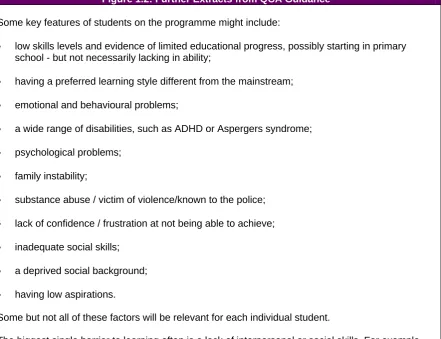
Figure 1.2: Further Extracts from QCA Guidance
Some key features of students on the programme might include:
• low skills levels and evidence of limited educational progress, possibly starting in primary school - but not necessarily lacking in ability;
• having a preferred learning style different from the mainstream;
• emotional and behavioural problems;
• a wide range of disabilities, such as ADHD or Aspergers syndrome;
• psychological problems;
• family instability;
• substance abuse / victim of violence/known to the police;
• lack of confidence / frustration at not being able to achieve;
• inadequate social skills;
• a deprived social background;
• having low aspirations.
Some but not all of these factors will be relevant for each individual student.
The biggest single barrier to learning often is a lack of interpersonal or social skills. For example, the inability to work in a group or relate to a sympathetic adult hinders learning and personal growth. Students who are becoming disaffected or disengaged from their learning find it hard to see the point of learning or even to understand that learning is about them, not simply about an institution. The Key Stage 4 Engagement Programme will be effective if it builds confidence and self-esteem to help young people address these key issues.
1.8 The partnerships have adopted slightly different definitions of the target group with some targeting pupils that exhibit quite serious features of disaffection and
disengagement, while others target those who are less disaffected but have low levels of engagement that are resulting in under achievement. This is also reflected in the focus of activities and provision included in the programmes they develop.
1.9 Compared to all pupils nationally, KS4EP pupils represent wider variability in relation to ethnicity than nationally; include a higher proportion of pupils that are eligible for free schools meals and that have special educational needs; and tend to have lower achievement levels.
8 Evaluation Methodology
1.11 The evaluation was designed as a multi-method approach in order to both capture implementation and effectiveness issues and provide an early indication of
programme’s impact on participating pupils. The evaluation objectives (as outlined by DCSF) are set out in Figure 1.3.
Figure 1.3: Evaluation Objectives9
1) To explore the different delivery models in use across the programme and the relative effectiveness and success of each
2) To track the attitudinal change and skills development of a sample of pupils on the programme in relation to engagement in learning; engagement in mainstream education; and views of the programme
3) To explore key stage 4 attendance patterns (school and off-site) of a sample of pupils on the programme
4) To analyse the first post-16 destinations of a sample of pupils on the programme who will complete their compulsory education at the end of the 2006-07 academic year
5) To propose ways in which DCSF can track the education and employment status of pupils up to the age of 19 and, in doing so, estimate the impact that the programme may be having on the likelihood of the pupils being in the not in education, employment of training (NEET) group at that age
6) To assess the cost effectiveness of the programme and to comment on the main cost differences between the various delivery models
7) To make recommendations for the future mainstreaming of the programme and to identify potential issues or obstacles associated with a wider roll-out
8) To identify examples of good or effective practice, especially those which can be cascaded across the programme
1.12 Detailed fieldwork was undertaken across fifteen case study areas, including ten of the first 21 partnerships to receive funding in 2006/07 and five of the new partnerships that began in 2007/08. Fieldwork involved repeat visits to partnership areas to consult with key stakeholders and to access any locally collated evaluation evidence. The
stakeholders consulted included:
• programme co-ordinators and a range of other partnership staff including connexions personal advisors, youth service workers and others;
• school managers, senior staff, programme and core curriculum teachers, learning support assistants, and key workers;
• pupils on the programme and a sample of parents/carers;
• work-based learning providers and further education colleges engaged in the delivery of the programmes;
• employers and voluntary / community organisations.
9
1.13 On average, 3 schools, 3 providers (work-based learning providers or FE colleges) and 16 pupils were involved in the study per partnership area. In total 47 schools were visited and 250 pupils were consulted. Full details are provided in Annex A.
1.14 Two rounds of pupil survey were also undertaken across the fifteen case study areas. In total 785 pupil survey responses were received from 621 pupils. 164 pupils
responded at both baseline and follow-up stages and 433 responded at the end of their first year on the programme:
• the initial cohort was surveyed at the end of their first year (June / July 2007 - 236 responses) and again in winter 2008 (February / March 2008 - 110 responses, including 61 repeaters);
• the second cohort was surveyed in autumn 2007 (October / November 2007 - 242 responses) and again in summer 2008 (June/July 2008 - 197 responses, including 103 repeaters).
1.15 The potential to use quantitative data on pupil outcomes (attendance, attainment and first destinations) to support the impact assessment has been thoroughly investigated during the study. Due to constraints associated with the timing of the evaluation and data access issues this quantitative assessment is limited in its contribution to the overall impact assessment.
1.16 Evidence of long-term outcomes is not yet available and, due to the timing of the release of pupil outcome data during the timescales of the evaluation (January 2007 to August 2008), short-term data is only available for a those year 11 pupils participating in year 1 of the KS4EP in the academic year 2006/07. This represents a very small proportion (estimated at 4-6%) of all pupils on the programme in the first two years.
1.17 Furthermore, these pupils joined the programme in year 11 and therefore experienced just one year of the programme during key stage 4. In many case study areas pupils participate in the programme for both years of key stage 4. The resulting influence and impact of the programme may differ in relation to the duration of the programme the pupils have experienced.
1.18 Where outcome data is available, it has not been possible to definitively comment on the contribution the programme has made (or otherwise) to pupil outcomes through, for example, the use of a comparator group, given the constraints associated with
identifying a group that matches the participants in all respects.
1.19 Although a close match could be obtained on factors such as prior attainment,
ethnicity, gender and free school meals eligibility, we know that the KS4EP is focused not only on pupils exhibiting under-achievement but also on those pupils with additional complex needs such as self-esteem issues, behavioural and emotional difficulties as well as family instabilities among other sensitive issues. These influential factors cannot be captured through the data, and therefore we would not be sufficiently confident, for the purposes of robust data analysis, that the comparator group pupils and participant group pupils are similar enough.
10
1.21 The First Annual Report (August 2007) for the evaluation outlined how the KS4EP has been designed, managed and delivered at partnership and school level. It identified that whilst there is considerable variability in models of delivery many of the intended features, as outlined in the Qualifications and Curriculum Authority (QCA), are being achieved across partnership areas. This includes elements which provide work-focused learning, alternative/out-of-school learning environments, tailored support and
guidance, and access to qualifications. Whilst some programmes also deliver more holistic and personalised provision these are features which have been less
consistently achieved across partnership areas.
1.22 The Annual Report also provided some early indications of the programme’s impact on pupil learning and progress. This was updated in the Interim Report produced in April 2008 which incorporated the findings from additional research undertaken at that point, including follow-up case study visits, pupil surveys and initial analysis of first
destinations data.
1.23 This final report builds on earlier reports and pulls together the final evidence to present:
• in Section 2, an assessment of attitudinal change and skills development (evaluation objective 2);
• in Section 3, evidence of pupil outcomes (evaluation objectives 3 and 4);
• in Section 4, commentary on the variability and effectiveness issues that are influencing overall achievements and impact from the programme, including illustrative practice (evaluation objectives 1 and 8);
2
PUPIL ENGAGEMENT AND SKILLS DEVELOPMENT
Key Messages
1. The evaluation demonstrates that the KS4EP is a positive and engaging experience for most pupils, contributing to improvements associated with engagement in learning, building
confidence and self-esteem; and developing interpersonal, social and practical skills. Access to accreditation for the employability and vocational skills being developed is also being provided in most case study partnership areas.
2. For most pupils, the KS4EP programme has contributed to improving levels of engagement in learning and confidence; and the development of employability and vocational skills. The skills developed, experiences gained and support received are having a positive influence on most pupils’ aspirations, preparation for a job or further learning and decisions about what they want to do after year 11.
3. Whilst the programme is having an impact on some pupils’ overall enjoyment and engagement in school-based learning, this is an area that it is generally having least influence. The case study evidence highlights, however, that for some pupils who staff would have expected to disengage from learning altogether during year 11, remaining in learning over the course of the year is regarded as a significant achievement.
4. Different levels and types of impact have been observed for participating pupils, including differences in distance travelled over the course of their time on the programme. This reflects variability across the KS4EP both in terms of the characteristics of the pupils engaged (including their baseline levels of engagement, attainment and attendance) and local partnership approaches to design and delivery of the programme.
5. There is evidence that in isolated cases the programme has not always been effective in engaging pupils and supporting their skills development - some pupils are more negative about the programme; some have demonstrated worsening levels of engagement in the programme and learning more widely; and a minority have dropped out of the programme.
Positive & Engaging Experience
“Above all, they will be able to engage with society and function as successful members of it”...
“The biggest single barrier to learning often is a lack of interpersonal or social skills...”
...The Key Stage 4 Engagement Programme will be effective if it builds confidence and self-esteem to help young people address these key issues”
“The success criteria must take into account positive achievements by individual students and the progress they have made.... the areas include... functional skills,
attitudinal skills, personal skills and practical skills”
12
2.1 Most pupils have found the time they have spent on the KS4EP interesting and that the programme has positively influenced their engagement in learning. For some pupils the programme has contributed to demonstrable improvements in attitudes towards
learning and school.
• Improving general attitudes
• Increased motivation
• Maturity
• Improved engagement in learning process
2.2 Across the fifteen case study areas, most pupils are positive about the programme they are on and the benefits they gain from it. The range of stakeholder perceptions and observations collated through the detailed baseline and follow-up fieldwork point to some general improvements in pupils’ engagement, levels of maturity and attitudes towards learning. There are also a number of specific observations which indicate significant changes for some pupils.
Figure 2.1: Examples of Improvements in Engagement and Attitudes
“They are all very engaged now - some more than Level 2 pupils.” (KS4EP teacher)
“They are more enthusiastic about what they are doing.” (work based learning provider)
“The difference between September and now is significant - they are much more mature and engaged with the learning. They used to be more attention seeking and now they have learnt that they can engage in conversations.” (school manager)
“The programme itself and the staff in the training providers make the most impact on pupils rather than natural maturing. The programme has a big impact.” (school manager)
“He didn’t use to like school, now he’s excited in the morning of a KS4EP day.” (parent)
“His attitude to school has improved. He would not necessarily have dropped out of school but he had lost interest in his education.” (parent)
“Two young people at one school admitted they would have been “bunking off” had they not been on the programme.” (case study report)
“It is good that these young people are coming here. If they didn’t have this they would be wandering the streets all day.” (key worker)
“Some of the stuff in class is important now. I have to get a D in Maths and English to get on my course.” (pupil)
Pupil Profiles:
Figure 2.1: Examples of Improvements in Engagement and Attitudes
Pupil B had a history of poor attendance and a poor attention span during KS3. His parents feel he was labelled as a “naughty child” and therefore no recognition was made of his learning needs. His Mum also felt he had fallen in with the wrong crowd and was likely to end up in trouble with the police. He was extremely competent in practical subjects at school. The programme has turned Pupil B’s engagement with learning around. He spends 2 days a week at a local FE College and receives appropriate learning support which he never got while in mainstream schooling. He also has a work placement due to the progress he has been able to make. Attendance, maturity and the ability to achieve are the areas where he has improved most. (pupil, parent & provider)
Pupil C: “The programme has matured him beyond belief. At the start of year 10 he was silly & disruptive. As the year progressed I noticed a change in his behaviour & the quality of his coursework. We can now have productive discussions in class; he responds with higher order answers, is more comfortable and doesn’t push it too far.” (English teacher)
2.3 Evidence from the pupil survey10 supports these qualitative findings (see Table 2.1) - around 80% of pupils responding to the survey at the end of the school year11 said that the time they had spent on the programme had been always or mostly interesting and that it had always or mostly helped them to learn new things. Around 70% also felt that the programme had helped them with their attitudes to learning - to try harder at school and to stick at things and not give up.
2.4 The comparative analysis of baseline and follow-up surveys12 (see Table 2.1) provides some evidence that these generally positive attitudes are translating to demonstrable improvements in engagement for around one third of pupils responding. For around half, attitudes have remained the same and for around one quarter, attitudes have worsened.
10
See Annex B 11
Summer 2007 for year 1 pupils and Summer 2008 for year 2 pupils - average 418 pupils responding to these questions
12
14
Table 2.1: Engagement, Confidence and Behaviour: Pupil Survey Findings
Percentage that agree...
(average n=418) Percentage change
13
(average n=156)
Pupil perceptions at end of school
year Always Mostly
Some-times Never +ve Same -ve
I found the programme interesting 47% 35% 17% 1%
The programme helped me... Change in attitudes between baseline and follow-up surveys
learn new things 42% 38% 18% 2% I enjoy learning new things 30% 46% 24% try harder at school 36% 32% 23% 9% I think it is important to try hard at school 24% 55% 21% stick at things and not give up 35% 36% 25% 4% I given up when school work is difficult 26% 47% 27%
enjoy school 25% 30% 30% 15% I enjoy being at school 26% 50% 24%
feel more confident in new situations 35% 37% 25% 3% I am confident in new situations 28% 45% 27% feel good about myself 37% 34% 24% 5% I feel good about myself 29% 42% 29% behave well at school 40% 36% 19% 5% My behaviour at school is good 32% 46% 22%
Source: National Evaluation Pupil Surveys, YCL
13
Confidence and Self-Esteem
2.5 The KS4EP has contributed to greater confidence and increased self-esteem for many pupils. The level of impact in this respect does vary across the case study areas, which is a function of the variability in the profile of participating pupils across different
partnership areas.
• Increased confidence
• Greater self-worth
• Higher self-esteem
• Taking care of appearance
• Sense of pride
2.6 In some areas the programme has had a significant impact where pupils have started from a low baseline level. In others the impact on self-confidence is more subtle, for example, where achievement of tasks during work-focused activities (e.g. vocational learning) has provided a confidence boost.
Figure 2.2: Examples of Improvements in Confidence & Self-Esteem
“When we get them here at first we mother them, you really have to develop their confidence at first. The big difference comes when they get praised for something and when people say they like what they’ve done; they get such a lift from people paying them compliments more than anything else.” (work based learning provider)
“School teachers, key workers and providers all noted significant changes in pupils’ personal development. Pupils are more confident, have higher self-esteem and greater self-worth. Teachers even noted that some of the participants are now demanding more from their teachers when it comes to class work. One parent consulted felt that programme had had a huge impact on their child’s self-esteem and confidence.” (case study report)
“They have much greater self esteem. They now have the confidence that they can achieve things, and they know there’s hope for them and opportunities after school.” (support assistant)
“As a group they have changed quite significantly over the year - they have grown in confidence, gelled together, have their own identity and feel comfortable within that group - as a family.” (programme teacher)
Pupil Profiles:
“Pupil A lives in the shadow of her two elder brothers who were notorious in the whole area for their behaviour. There is a visible difference in her now because she has been able to go out of school and achieve something.” (school key worker)
“Pupil B is so independent now and confident about what she can do and what she might achieve in the future - it makes me really proud, I’ve never achieved anything and thought she’d be the same.” (parent)
“Pupil C is in Year 11 and has special education needs. He has made fantastic progress because of this programme. His English has really improved tremendously because of the confidence he has gained. The major change in him has been self esteem which has had a knock on effect on his academic performance.” (school manager)
“Pupil E had previously felt he was no good and would never amount to anything. He had low self-esteem and was disengaged. Now he has high shoulders and is completely different. He feels valued and respected, is really happy to go to school, is working hard and has a more positive attitude to other pupils. This has all resulted from the programme and staff working with him.” (parent)
16
2.7 The pupil survey (see Table 2.1) supports the qualitative findings that the programme helps most pupils to feel generally more confident and good about themselves. Around 70% of pupils responding to the survey at the end of the school year reported that the programme had always or mostly helped them to feel more confident in new situations and feel good about themselves. However, a lower proportion indicated, through the survey, that demonstrable changes in attitudes and behaviours had taken place as a result - when comparing pupil attitudes between baseline and follow-up, positive change in levels of confidence and self-esteem is evident for just under one third of pupils.
Behaviour
2.8 The programme has had some impact on a number of pupils’ behaviour, with evidence of improving attitudes towards others and less disruptive incidences. The overall impact of the programme on this aspect of pupil performance varies according to the nature of the pupils and their baseline of attitudes and behaviour. In most partnership areas, the selection process and programme was not designed to target those with the most difficult behaviour.
• Prevented escalation of poor behaviour
• Improved poor behaviour
• Showing respect for others
• Less disruption
2.9 The case study evidence shows that for some pupils, attitudes and behaviour had been acceptable from the start so this was less of an issue. For others, although behaviour was not a significant issue from the start, the programme may have helped prevent escalation of behavioural issues.
Figure 2.3: Examples of Improvements in Behaviour
“They are treated differently. They are treated as adults, and therefore they respond to that. As we give them respect, they show us respect in return.” (School project co-ordinator)
“She used to have regular tantrums. Now I cannot recall the last time she had an outburst.” (Parent)
“Two of them were very disruptive and were regularly excluded from lessons. Their behaviour is now much better, which benefits everyone.” (Head of year 10)
“Teachers have said to me ‘whatever you’re doing with them please keep it up - they’re much better in classes.” (Key worker)
“There has been a reduction in the number of ‘consequences’ that have been recorded in the behaviour management system.” (School 14-19 co-ordinator)
“Kids don’t act in the same way here as they do when they’re at school. Their behaviour generally improves over time; they become a lot more willing to do stuff.” (Training provider)
2.10 For some pupils, the positive changes in behaviour observed when pupils are attending the programme-specific elements are also being translated to more general
improvements in conduct when in school, though this is not always the case.
“Thursday is always a challenge. They’ve been in the workplace and then back at school and feel like they’re treated like a kid. It can be a battle at times.”
(Teacher)
“Two schools noted that some pupils return to school less-focussed having been at the off-site provision. One senior teacher in particular felt that having different working ethics in the two delivery locations can create further problems.” (Case study report).
2.11 The survey findings (see Table 2.1) show that just over half of pupils responding in the summer surveys assess themselves as “always or mostly” behaving well at school. There has also been a demonstrable improvement in behaviour at school for around one third of pupils responding at both the baseline and follow-up phases. Just under half have remained at similar levels and one fifth indicate declining behaviour at school.
Engagement in School
2.12 Evidence from the case studies and pupil surveys suggests that the programme has had least influence on the enjoyment of school. While some partnership areas have noticed less disruption in school, in others this is not the case. The pupils who have improved their attitudes in school report that this is due to the out-of-school elements ‘breaking up the school week’ so that their time in school becomes more tolerable.
• Improved attitudes towards school
• School become more tolerable
• Prevented disengagement
• Incentive to engage
2.13 However, in other cases problems remain. In these instances, it may be that the pupils have simply not responded to the programme, that they were not suited to the
programme, or that some aspects of the programme have been effective. We discuss some of these issues further in Section 4.
“One of the schools has found improvements in behaviour but didn’t feel it was actually a significant issue within the group anyway.The other two agencies found little improvement in behaviour. One stated the pupils’ behaviour was “sometimes good, sometimes bad”. The third agency still has ongoing problems with
behaviour of the pupils.” (Case study report)
“He is doing really well at the training provider. He is still trouble at school but at least he is engaged, and has also identified what he wants to do Post 16.
Otherwise, I expect he would have been excluded and had YOT issues.” (Head of year, school)
18
2.14 Amongst the survey attitude questions (see Table 2.1), the lowest proportion of pupils responded positively to the question regarding the contribution of the programme to the enjoyment of school - only 25% said the programme always (and 30% mostly) helped them to enjoy school. Overall 30% of pupils said that they did enjoy being at school always or mostly, and there was an improvement in attitudes towards school between baseline and follow up for around one quarter of pupils.
Figure 2.4: Examples of Engagement in School
“Some young people have gone back into school and done their GCSEs, having gained the confidence that they could do it. The provision has given them the life skills to re-access the curriculum and also understand why they need to get qualifications, having found a particular vocational area they are interested in.” (Provider)
“The programme has made a fantastic difference to pupils in terms of their attitude and behaviour when they are at school. They are more mature than they have ever been which comes from going out into an adult environment.” (School manager)
“The pupils are taught in the same group for core GCSEs - they enjoy the lessons more and make more progress than if other pupils were in the group as they feel safer.” (Core GCSE teacher)
“The learning centre at school provided a supervised place for pupils to use and for their education to be delivered. The teachers recognised that this worked well because of the close working relationships between classroom and programme staff and the ‘school rules’ that were applied.” (Case study report)
“We tell pupils that if they don’t behave they will get pulled for a week or two weeks, whatever is required. The programme is not seen as a punishment for badly behaved pupils. If it was looked upon like that it would never work - it is regarded as an achievement for pupils to be allowed to attend the programme.” (Key worker)
Pupil Profiles:
“Pupil A has dyslexia and was struggling in school, he felt very pressured about his work because he wasn’t getting the support he needed, and he was coming home very disheartened and de-motivated. He has completely changed now, has grown up a lot, and is interested again in school because he’s getting the support he needs.” (Parent)
Skills Development
2.15 Pupils have developed a range of skills through participation in the programme, with the majority developing employability skills that will support them in a job and further learning.
• Interpersonal & social skills: - communication with others - working with others
• Vocational area or trade
• Practical:
- work readiness skills (e.g. CV writing) - team working
- punctuality
- organisation skills
2.16 The majority of pupils consulted and surveyed through the evaluation report that the programme is helping with skills achievements. This is triangulated with evidence from parents, tutors, teachers, support staff and other stakeholders involved in the
programme’s delivery.
2.17 Based on the small sample of pupils responding to baseline and follow-up surveys (Table 2.2), these positive perceptions of the programme’s contribution to helping with skills development are, for around one third of pupils, translating to demonstrable improvements in interpersonal and practical skills - listening to others and following instructions, working well with others, punctuality and organisation skills. Access to accreditation for the employability and vocational skills being developed is also being provided in most case study partnership areas.
Table 2.2: Skills Development and Post-16 Decisions: Pupil Survey Findings
Percentage that agree... (average n=418)
Percentage change14 (average n=156) Pupil perceptions at end of school
year Always Mostly
Some-times Never +ve Same -ve
The programme helped me... Change in attitudes between baseline and follow-up surveys listen to other people and follow
instructions 40% 36% 22% 2%
I am good at listening to others and following
instructions 31% 44% 25%
work with other people 43% 35% 20% 2% I am good at working well with other people 36% 42% 22% be on time for school lessons 40% 35% 19% 6% I try to be on time for school lessons 30% 48% 21% organise myself 36% 37% 22% 5% I am good at organising myself 34% 43% 22% learn new skills that I can use in a job 49% 34% 14% 3%
decide what I want to do after year 11 46% 29% 18% 7%
Source: National Evaluation Pupil Surveys, YCL
14
The percentage change indicates the direction of change in perceptions between the baseline survey and follow-up survey. For example, a change from ‘never to sometimes’ is a “positive” change, ‘always to always’ is the “same” and ‘sometimes to never’ is “negative”. It does not account for the scale of change on an individual basis but does treat a change from ‘never to sometimes’ as equally valid to a change from ‘mostly to always’.
Figure 2.5: Examples of Skills Development Achievements
“For health and safety reasons we needed to put a barrier round the top of one of the bays where we store materials and equipment. The group followed the instructions, worked brilliantly as a team, and focused on it for two days. The finished product is exactly what was required. At the beginning of the year we could not have expected them to undertake an exercise like that.” (Work-based learning provider)
“We set team tasks, projects that they have to work on together. The first time we do it, we tell them: “you two fetch trowels” etc. to encourage them to work together. We then set the tasks again later and they work in teams instinctively.” (Tutor, provider)
“The focus on work and life skills by a number of schools was beneficial to pupils on the programme. For example, one school commented on the benefits of engaging the pupils in a cooking course. Staff commented that pupils were very engaged in the course, which involved costing the dishes they would make, and going out to choose the ingredients from the local supermarket with the school staff. Thus they developed skills in cooking alongside learning other skills in the cost of food, which would help them later in life. Parents also viewed this course positively, with two parents commenting that their children now cooked regularly at home. One parent commented that their child had recently cooked a meal for the whole family.” (Case study report)
“Year 10 pupils on the Land-Based course have shown a great willingness to work together. They are a mix from 2 different schools and have worked as a group to support the pupils who were not from a farming background.” (Work-based learning tutor)
“Pupils have now adopted a matter of fact approach to changing schools / new experiences.” (Programme teacher) “Offsite experiences provide development in terms of meeting new people and social activities.” (Youth worker)
“An improvement in pupils’ interactions with other adults was consistently reported across all schools consulted, for the majority of pupils on the programme. This was reported to have
improved at both a school level and home level. At a school level, the ability for pupils to converse with and develop relationships with school staff and providers was reported to have improved dramatically.” (Case study report)
Pupil Profiles:
Pupil A: “My daughter didn’t know how to socialise, she now has more confidence, is thinking for herself, knows what she is doing in the day ahead, is planning/looking forward to it and has learnt to remember things.” (Parent)
Pupil B: "I wouldn't have talked to this group last year - I can now see the skills I've got, and recognise the difference it has made." (Pupil)
Pupil C: “It is a very difficult for a young lad to come in to this workplace. His ability to
communicate with the residents and staff alike is fantastic for someone of his age”. (Employer)
22
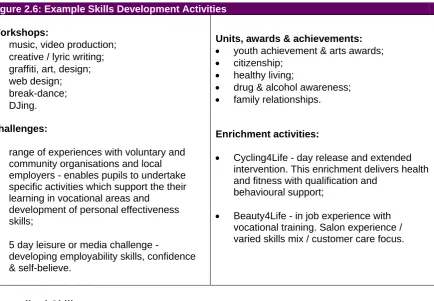
Figure 2.6: Example Skills Development Activities
Workshops:
• music, video production;
• creative / lyric writing;
• graffiti, art, design;
• web design;
• break-dance;
• DJing.
Challenges:
• range of experiences with voluntary and community organisations and local employers - enables pupils to undertake specific activities which support the their learning in vocational areas and
development of personal effectiveness skills;
• 5 day leisure or media challenge -
developing employability skills, confidence & self-believe.
Units, awards & achievements:
• youth achievement & arts awards;
• citizenship;
• healthy living;
• drug & alcohol awareness;
• family relationships.
Enrichment activities:
• Cycling4Life - day release and extended intervention. This enrichment delivers health and fitness with qualification and
behavioural support;
• Beauty4Life - in job experience with vocational training. Salon experience / varied skills mix / customer care focus.
Accredited Skills
2.20 In most of the case study areas, pupils have access to programme-specific accredited units, certification or full qualifications for the skills they have gained. During case study visits stakeholders reported that most pupils were expected to achieve the certificates, units and level 1 qualifications they had been working towards, though in some cases this may be over a few years with the units accredited on the programme available for use for qualifications post-16.
2.21 The Foundation Learning Tier will support greater access to appropriate qualifications for this group of learners. It will provide new units and qualifications at entry level and level 1. In addition, the Qualifications and Credit Framework provides a new way of recognising achievement, by awarding credit for the achievement of units and
qualifications. Together, these developments will ensure that this group of learners can get recognition for a wider range of achievements, including those relating to aspects such as personal and social development.
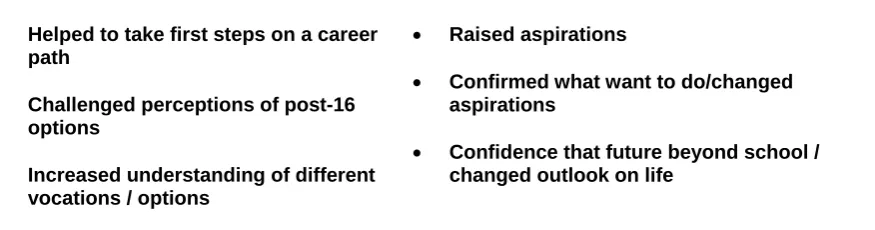
Aspirations and Decisions for Post-16
• Helped to take first steps on a career path
• Challenged perceptions of post-16 options
• Increased understanding of different vocations / options
• Raised aspirations
• Confirmed what want to do/changed aspirations
• Confidence that future beyond school / changed outlook on life
[image:28.595.75.513.85.200.2]2.23 The programme is helping pupils to make decisions about what they want to do after year 11. Stakeholders from the case studies were particularly positive about these areas of impact and this is supported through pupil attitudes in consultation and from the pupil survey. Almost half of pupils responding to the pupil survey at the end of the year said that the programme always helped them to learn new skills and to decide what to do after year 11.
Figure 2.7: Examples of Raised Aspirations
“The biggest difference seen in the first cohort of pupils is that four or five are now very keen to go onto the sixth form where previously they couldn’t wait to get out of the classroom. They now feel they have more say in their destiny.” (Senior school staff member)
“The majority of pupils consulted in one partnership said the programme had helped them to decide what they wanted to do post 16 and parents and teachers felt that they were now much more determined to progress on to college.” (Case study report)
“They have a more positive attitude about what they will do next.” (School co-ordinator)
“The students on the programme this year are the students who are likely to leave school at 16 and want to get into employment straight away. This course gives them the necessary skills to be able to do this effectively, as they gain a qualification in core subjects, together with the subject that interests them but also experience of the working world.” (Connexions PA)
Pupil Profiles:
Pupil A: “We have one lad who would not have still been coming to school if it wasn’t for this programme. He started a two day per week work placement in Year 10 and is now going to college. He was so keen that he came and did a mock interview with me before he went to the college interview to make sure he got in.” (School)
Pupil B: “At least now he knows that mechanics isn’t for him and he’s found out early on before he started a real job.” (Parent)
Pupil C: “Before I came here I thought that only certain people could work somewhere like this. Now I have realised I can too. It has been a dream come true.” (Pupil)
Pupil D: “I’m getting a head start on some of my mates.” (Year 11 pupil)
24
Scale and Reach
2.24 It is clear that whilst most pupils and stakeholders that we consulted are generally positive about the benefits and influence of the programme they have participated in, demonstrable changes in attitudes, confidence and skills are not evident for all pupils. This is most evident from the survey analysis which shows that responses have remained the same for around half of those responding and have declined for around one fifth.
2.25 Whilst caution should be taken when interpreting these survey findings15, the case study evidence shows that there is variability in the nature and levels of impact observed for participating pupils, including differences in distance travelled over the course of the programme. This is a function of variances both in the baseline profiles of pupils selected and the design and delivery of programmes across different partnership areas.
2.26 These differences reflect the nature of the programme which, as outlined in the QCA guidance, is intended to be tailored to individual needs and issues and we them in more detail in Section 4.
2.27 For some pupils, overall attitudes towards learning, levels of confidence and skills development appear to have worsened. Amongst the survey respondents this predominantly occurs amongst those that rated attitude statements as “always or mostly” at the baseline stage. This supports the view, expressed by many of the stakeholder’s consulted, that for some pupils a negative change may reflect increased awareness (and levels of maturity towards) of their own attitudes rather than a
significant worsening of actual engagement in the learning process.
2.28 However, there are also a small number of examples from the case studies that
indicate that programmes have not always been effective in engaging pupils. There are examples where less effective selection processes, programme design or aspects of delivery have resulted in some pupils being particularly negative about the programme; some have demonstrated worsening levels of engagement in the programme and learning more widely; and a minority have dropped out of the programme. We discuss some of the delivery effectiveness issues influencing these outcomes in Section 4.
15
Figure 2.8: Examples of Lack of KS4EP Impact
“There is an example of one group of pupils who are experiencing ineffective delivery of the programme through qualifications not appropriate to their abilities, and staff without the skills and expertise to support them. This has actually worsened the pupils’ engagement in learning, and in school.” (Case study report)
“Some pupils are observably less engaged than others and expressed disappointment and frustration that they are the programme.” (Case study report)
“For some pupils, a range of factors appear to have resulted in less positive experiences compared to others. Initial selection, together with other aspects of delivery (limited additional learning
26
3
PUPIL OUTCOMES
Key Messages
1. The qualitative evidence from the study provides a rich source of information which has been triangulated to present an assessment of the impact of the programme across the case study areas. This indicates that the positive achievements associated with involvement in the programme are contributing to:
• better attendance levels than staff and pupils would have expected for many participating pupils, though varying dependent on the pupils’ baseline levels of attendance;
• attainment levels that represent significant outcomes for some pupils, particularly for those that might otherwise have withdrawn from learning completely during key stage 4,
achieving very few qualifications, if any.
2. The majority of year 11 pupils in year 1 of the programme have progressed to positive first destinations - 77% of our sample progressed to full-time learning and 6% to full-time employment; 15% were classed as not settled. This data alone does not evidence the additionality of the programme. However, the case study findings show that, for some pupils, the programme is contributing to the achievement of more positive first destinations than would have been anticipated by staff and pupils. The programme may also be contributing to small improvements in overall trends of first destinations in some areas.
3. Although it is too early to look at the long-term prospects of these pupils, many of these subtle impacts of the programme have the potential to link to longer-term positive outcomes for the participating pupils (through supporting positive aspirations, better preparation for employment or further learning, and informed decision-making). In turn, there is a possibility that this may also contribute to reducing the likelihood of them being not in education, employment or training (NEET) in the future.
4. Evidence captured during the evaluation highlights, however, that the design of the programme in some areas may limit the potential attainment for participating pupils. The programme’s focus is to engage pupils in learning and provide a supportive environment.
5. In some cases this has resulted in pupils having access to fewer qualifications and generally at lower levels than might have been accessed if they had remained in mainstream learning. Programmes also sometimes involve certification and accreditation of units rather than full qualifications The Qualifications and Credit Framework will provide a new way of recognising achievement, by awarding credit for the achievement of units and qualifications.
6. There are a small number of examples of pupils being inappropriately selected for the
programme; less effective partnership or school delivery; and difficulties faced in identifying or delivering suitable qualifications for pupils. These factors may have limited pupils’ potential to achieve in some cases.
7. Quantitative measurement of the impact of the KS4EP on pupil outcomes is constrained by both the timing of the evaluation and data access and quality issues. In particular:
• evidence of long-term outcomes is not yet available and short-term data is only available for a sample of year 11 pupils participating in year 1 of the programme (representing only 4-6% of pupils on the programme in its first two years);
Context for Outcomes Assessment
3.1 Given the overarching goals of the KS4EP, the most important indicator of the
programme’s performance will be the long-term 16-19 destinations for the participating pupils. In particular, some assessment should be made of the extent to which the programme has contributed towards pupils obtaining and remaining in positive and secure destinations that, without the programme, they may not have achieved.
“Above all, they will be able to engage with society and function as successful members of it”...
“Key outcome measures include qualifications and awards achieved; attendance levels on the programme, trends in exclusion and progression....
....successful participants will complete Key Stage 4 and progress to further learning, training or employment...“
[14-19 White Paper Advice: Key Stage 4 Engagement Programme Template, QCA]
3.2 It is too early to provide this long-term assessment since, due to the timing of the evaluation (finishing towards the end of the programme’s second year), many of the pupils are still on the programme or have only very recently completed it. We can, however, provide an assessment of the interim outcomes for these pupils, and
therefore focus, in this section, on our assessment of the shorter-term outcomes of the programme, including:
• pupils’ first destinations (early progression);
• pupil attendance;
• pupil attainment at the end of key stage 4.
3.3 Our assessment of impact across these outcome measures draws together the detailed impact assessment evidence across the 15 case study areas. These case study assessments are based on triangulation of findings from in-depth, longitudinal research, including stakeholder consultations and focus groups; along with evidence from pupil surveys and data (where available) and any additional evidence available from the partnerships themselves.
28
Progression
“The key success indicator is that after key stage 4 the young people remain in education or move on to training or employment with training”
[Key Stage 4 Engagement Programme: Making the programme work for your students, Qualifications and Curriculum Authority, 2007]
3.5 Our impact assessment indicates that, for some pupils, the programme is contributing to the achievement of more positive first destinations than would have been anticipated by staff and pupils. The programme may also be contributing to small improvements in overall trends of first destinations in some areas.
3.6 Although it is too early to look at the long-term prospects of these pupils, many of these subtle impacts of the programme have the potential to link to longer-term positive outcomes for the participating pupils (through supporting positive aspirations, better preparation for employment or further learning, and informed decision-making). In turn, there is a possibility that this may also contribute to reducing the likelihood of them being not in education, employment or training (NEET) in the future.
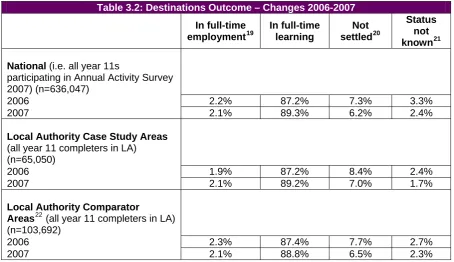
3.7 Most (83%) of the year 11 KS4EP pupils in our sample had progressed to a positive first destination in Autumn 2007. This includes 77% that progressed to some form of full-time learning (full-time education, full-time employment with training or full-time training) and 6% to full-time employment. 15% of pupils were classed as not settled16 and for just 2% a first destination was not known. This data alone does not evidence the additionality of the programme but it does indicate the first destinations for a sample of programme participants.
[image:33.595.68.517.414.665.2]
Table 3.1: First Destination Outcomes
Young people completing year 11 in 2007....
In full-time employment (without planned training) In full-time learning Not settled17 Status not known18
National (i.e. all year 11s participating in Annual Activity Survey 2007)
(n=636,047)
2.1% 89.3% 6.2% 2.4%
Local authority case study areas (all year 11 completers in 2007 in LA)
(n=65,050)
2.1% 89.2% 7.0% 1.7%
KS4EP sample participants (programme participants in our case study areas completing year 11 in 2007)
(n=1,070)
6.0% 76.5% 15.2% 2.3%
Source: Annual Activity Survey 2007 (Connexions)
16
This figure includes those that are temporarily economically active or in part-time destinations but not in full-time education, training or employment and those not active in the labour market.
17
Includes those in part-time learning or work 18