EFFECTIVENESS OF CO-OP APPROACH IN
IMPROVING ADL PERFORMANCE IN PATIENTS
WITH STROKE
DISSERTATION SUBMITTED
FOR
MASTER OF OCCUPATIONAL THERAPY
2016
–
2018
KMCH COLLEGE OF OCCUPATIONAL THERAPY
AFFILIATED TO THE TAMILNADU Dr. M.G.R. MEDICAL
CERTIFICATE
This is to certify that the research work entitled “EFFECTIVENESS OF CO-OP APPROACH IN IMPROVING ADL PERFORMANCE IN PATIENTS WITH
STROKE”was carried out by Reg.No.411614001, KMCH College of OccupationalTherapy, towards partial fulfillment of the requirements of Master of
OccupationalTherapy (Advanced OT in Neurology) of the Tamil Nadu Dr. M.G.R.
MedicalUniversity, Chennai.
Project guide Principal
Mrs. Sugi .S. M.O.T.(Paeds), Mrs.Sujata Missal, M.Sc. (OT), PGDR (OT), Professor, KMCH College of Occupational Therapy
KMCH College of Occupational Therapy
___________________________________
Clinical Guide
Dr. Arul Selvan. V, MD., DM (Neuro)., MRCP (UK) FRCP(LONDON)., FRCP(EDIN)
Consultant Neurologist
Kovai Medical Center and Hospital, Coimbatore
DATE OF SUBMISSION:
ACKNOWLEDGEMENT
First and foremost I thank God Almighty for his unconditional love and for
giving me the wisdom to accomplish this project and bring it to a successful culmination.
I would like to thank my family and my sister for being a constant source of
encouragement and support through their powerful prayers throughout my study.
I would like to extend my heartfelt gratitude to my Guide, Mrs. Sugi Sowmiyan,
M.O.T. in Advanced Pediatrics for supporting and giving me valuable suggestions for
my thesis.
I am extremely thankful to Mrs. Sujatha Missal, Principal, KMCH college of
Occupational Therapy, for her incredible support, constant encouragement and patient
teaching.
I am thankful to Mr. S. G. Praveen MOT, Vice Principal, for his support
markedly by raising questions regarding my study so that I could continue without
hardship later.
I am very much thankful to Dr. ARUL SELVAN.V, Consultant Neurologist for
his incredible support, and also for gving me his valuable time and suggestions.
I would like to mention my friends Sakthi, Merin Franklin, Dinesh,
Bhuvanesh who were with me in all my ups and downs and supported me throughout
my thesis, as we supported each other.
Special thanks to my friends Rhema, Nivedha, Agnus, Anu, Ida, Tharani and
Shuba akka and all my seniors and juniors who supported me with their prayers.
My heartfelt gratitude to all the patients and care takers who participated and
cooperated in my study without them the thesis would not be possible.
Thank you each and every one!
CONTENTS
S. No
CONTENT Page No.
1 ABSTRACT
2 INTRODUCTION 1
3 AIMS AND OBJECTIVES 5
4 HYPOTHESIS 6
5 OPERATIONAL DEFINITION 7
6 RELATED LITERATURE 8
7
REVIEW OF LITERATURE 17
8 CONCEPTUAL FRAMEWORK 23
9 METHODOLOGY 27
10 DATA ANALYSIS AND RESULTS 37
11 DISCUSSION 53
12 CONCLUSION 59
13 LIMITATIONS AND RECOMMENDATIONS 60
14 REFERENCES 61
15 APPENDIX
ABSTRACT
AIM:
To investigate the effectiveness of COOP approach in improving the ADL performance in patients with impairments after stroke.
Methods
This study was done to find the effectiveness of CO-OP approach in improving
the ADL performance in stroke patients and for this purpose 16 stroke patients were
assigned according to convenience into the experimental and control group. There were
with 5 men and 3 women in the experimental group and 4 men and 4 women in control
group. FIM scale was used to measure the ADL skills, COPM was used to measure the
performance and satisfaction in patients, PQRS was used to measure the quality of
performance and Fugyl Meyer was used easure the motor performance.
Results
All the parameters of the experimental group increased significantly after the
coop intervention (FIM self-care Z= -2.552 p < 0.05; FIM total Z= - 2.521, p <0.05;
COPM performance Z= -2.524, p < 0.05; COPM satisfaction Z= -2.521,p <0.05; PQRS
Z= -2.55, p<0.05; Fugyl Meyer UE Z= -2.375 p<0.05 ; Fugyl Meyer total Z = -2.375,p<
0.05) except Fugyl Meyer LE Z= -1.841 p> 0.05 and also all the parameters of control
group also improved significantly after the regular ADL intervention (FIM selfcare Z=
-2.524 p < 0.05; FIM total Z= - 2.530, p <0.05; COPM performance Z= -2.521, p < 0.05;
COPM satisfaction Z= 2.521,p <0.05; PQRS Z= 2.536, p<0.05; Fugyl Meyer UE Z=
2.201 p<0.05 ; Fugyl Meyer total Z = 2.214 ,p< 0.05) except Fugyl meyer LE (Z= -1.342 p> 0.05) .
Conclusion
Although both the groups improved significant CO-OP group should slightly
1
INTRODUCTION
The WHO defines stroke as an “acute neurological dysfunction of vascular origin with symptoms and signs corresponding to the involvement of focal areas of the brain” 1
Stroke is one of the leading causes of death and disability in India. A study conducted in 2013 showed the estimated prevalence rate of stroke range in India is 84-262/100,000 in rural and 334-424/ 100,000 in urban areas. The incidence rate is 119-145/100,000 considering the recent population based studies2
A large percentage of stroke survivors have significant disabilities. Stroke involves a variety of clinical deficits such as the impairments of motor, sensory, perception, attention, cognition, and language. These defects affect the performance of daily functional activities. 3, 4
Two-thirds of stroke survivors experience upper-extremity (UE) impairment which can lead to difficulty performing meaningful occupations.5 This reports participation restriction and about half remain dependent in Activities of Daily Living (ADL) after stroke. 6
ADL refers to activities that are the fundamental elements that are required to live in a social world, they enable the basic survival and the well-being25.ADL includes self-care tasks of eating, grooming, dressing, bathing and toileting. Mobility, communication, communication are also frequently added in this category.26
The purpose of an ADL training program is to make the patient to optimally perform, within the limit of his disabilities; all activities inherit to his daily life.9
The role of an occupational therapist with respect to ADL is to assist in
2
Even after inpatient rehabilitation, most people do not achieve their functional goals following stroke. To overcome this limitation, the studies suggest that a new intervention paradigm must be found. 6
The focus in present decade is shifted from traditional component-focused rehabilitation to more comprehensive, holistic approaches that maintain therapeutic gains and also support the generalization and transfer of skills for long term outcomes. To address this need a goal oriented cognitive approach, COOP was developed to overcome the ADL deficits.6
CO–OP is an individualized “client-centered, performance-based, problem-solving approach that enables skill acquisition through a process of guided discovery and strategy use”. It is associated with changes in occupational performance, increase in motor, cognitive, psychosocial abilities, and motivation. It is based on contemporary theories of learning, including cognitive, behavioral, and cognitive– behavioral paradigms. 3, 4
The main focus of the CO-OP approach is to teach patient to apply the acquired skills in various environments, and allow transfer to different occupations. 4
CO–OP starts with the client being taught a global problem-solving strategy, “Goal–Plan–Do–Check,” which is used throughout the intervention as a framework to support the Acquisition of the chosen skills. The therapist guides the discovery of Domain-specific strategies (e.g., altering body position and modifying the task) that is necessary to support performance. Underpinning the identification of strategies is a process referred to as dynamic performance analysis (DPA), which is used iteratively to identify the specific performance problems requiring strategies. 3
3
demonstrated, and improvements gained in therapy are not consistently maintained once therapy stops. In CO-OP, retention, generalization and transfer have consistently been reported.10
CO-OP was originally developed for children with DCD, later on studies were done on other populations and proved the effect of CO-OP in conditions such as acquired brain injuries. The results obtained from these studies provide support for CO–OP’s potential utility in treating conditions with more diverse performance deficits, such as stroke.3
Previous researches provide the evidence for CO-OP’s capacity in improve occupational performance in adults with stroke5. However, they emphasized on all the occupational performance components using COPM which is client-rated. Hence the present study emphasize on the self-care as the primary outcome using FIM scale.
NEED FOR THE STUDY
There are no studies done using CO-OP for stroke patients in Indian population Previous studies done had considered all occupational performance components,
which leaves self-care less emphasized.
The primary outcome measure used in previous researches was COPM which is completely client rated.
4
RESEARCH QUESTION
Will COOP approach be effective in improving ADL performance in patients with
5
AIM AND OBJECTIVES
AIM:
To investigate the effectiveness of COOP approach in improving the ADL performance in patients with impairments after stroke.
OBJECTIVE:
To determine the effectiveness of COOP approach in improving the ADL performance in individuals after stroke.
To determine the effectiveness of other contemporary training methods in improving the ADL performance in patients after stroke.
To compare the effectiveness of COOP approach over the other contemporary ADL training methods in improving the ADL performance in patients after stroke. To determine the effectiveness of COOP approach in improving the motor
6
HYPOTHESES
NULL HYPOTHESIS:
CO-OP is not an effective treatment approach in improving ADL in patients with stroke.
ALTERNATE HYPOTHESIS:
7
OPERATIONAL DEFINITION
EFFECTIVENESS:
It is the degree to which the desired goal is achieved. In this study effectiveness is measured y degree to which ADL has improved after CO-OP intervention.
CO-OP:
It is a client centered cognitive based intervention which focuses on functional goals. It involves the client to plan, set goals, and brings out problem solving strategies by self.
OTHER CONTEMPORARY APPROACHES:
8
RELATED LITERATURE
COGNITIVE ORIENTATION TO DAILY OCCUPATIONAL PERFORMANCE
(CO-OP)9
CO–OP is an individualized “client-centered, performance-based, problem-solving approach that enables skill acquisition through a process of guided discovery and strategy use”. Cognitive Orientation to daily Occupational Performance (COOP) is an approach that uses cognition to drive performance. Initially it was created for use with children who have occupational performance deficits, the CO-OP approach can be used for promoting the acquisition of new skills and the improvement of existing skills.
Verbal self-instruction and using the global problem solving strategy developed by Meichenbaum in his cognitive behavioral approach was adopted as a cornerstone for the this approach.
CO-OP was under development since 1991. Initially it was called Verbal Self-Guidance (VSG) which stressed the verbal guidance aspect of the approach. Later on Mandich showed that verbal self-guidance was only one of the features of this approach and that there were many additional cognitive strategies used throughout the therapy. To give importance on the cognitive strategies, the name was changed to CO-OP.
Objectives
CO-OP has three basic objectives:
9
Cognitive strategy development: the client learns to use a global problem solving strategy to frame the discovery of domain specific strategies that will solve performance problems and thereby, improve performance and promote learning of the skill.
Generalization and transfer: the client uses the newly acquired skills and strategies beyond the treatment session, in everyday life, and these skills and strategies serve as a foundation for learning related skills and strategies.
Prerequisites:
For the CO-OP approach to be successful, there are a number of prerequisites for all involved: the child, his/her parents and/or caregivers and the therapist.
To benefit from the CO-OP approach, the client must:
have adequate cognitive and language ability to respond to the COPM; be able to identify at least three occupational goals;
be able to respond and also attend to the therapist; have enough potential to perform the task; and have the motivation to learn the skills.
10 Key features of the co-op approach:
The six key features of the CO-OP approach are session structure, child-chosen goals, dynamic performance analysis, cognitive strategies, enabling principles and parent/caregiver involvement.
Session Structure: In Cognitive Orientation to daily Occupational Performance (COOP) the therapy is offered in a structured format. CO-OP is usually delivered over twelve, one-to-one sessions, each of about one hour in length. Parents and/or caregivers are encouraged to observe in order to encourage generalization and transfer. The therapy process is divided into five phases: Preparation, Assessment, Introduction, Acquisition and Consolidation.
Client-Chosen Goals: CO-OP is a client-centered approach. The client’s perspective is of main importance throughout, beginning with the process of goal setting and throughout the intervention. Finally having client choose their own goals ensures ecological relevance, which promotes motivation, transfer and generalization. A daily activity log is provided to the client in advance of the goal-setting session. The log helps them to reflect upon the activities that they do each day. At the beginning of the assessment phase, the COPM is used to ensure that the goals that will be focused on during intervention are client-chosen.
Dynamic Performance Analysis: The third key feature of CO-OP is dynamic performance analysis (DPA), it is an iterative process of performance analysis, as it happens. DPA was developed in collaborating with the CO-OP approach to allow for continuous evaluation of performance and to develop the problem solving process. DPA begins during the first session and continues throughout the intervention program. The purpose of DPA is to solve performance problems by
CO-OP approach
Session structure
Client chosen
goals
Dynamic performance
analysis
Cognitive strategies
Enabiling principles
11
identifying where performance breaks down, identifying possible solutions and testing them out in a trial and error method.
Dynamic performance analysis (DPA) is based on three assumptions regarding occupational performance: that motivation is a necessary prerequisite for successful performance; that an individual requires adequate knowledge of a task before he or she can successfully perform the task and that occupational performance is the result of the interaction of person, occupation, and environment.
Cognitive Strategies
Cognitive strategies are cognitive operations that are a natural consequence of carrying out a task. They are strategic thinking processes aimed to achieve goals. In CO-OP, two types of strategies are used: a global strategy and domain-specific strategies. A global strategy is a general strategy that focuses on increasing metacognitive awareness and helping the individual to self monitor and self-evaluate. The global strategy utilized in CO-OP is the Goal-Plan-Do-Check. The global strategy provides a structure within which the therapist or client can talk through the problems encountered in task performance.
Domain Specific Strategies is an array of specific cognitive strategies, which focus on facilitating or improving performance that are task, client, or environment specific. There are eight domain specific strategies used in CO-OP: body position, task specification/modification, feeling the movement, verbal
motor mnemonic, verbal rote script, verbal instruction, verbal self-instruction,
and attention to doing.
Enabling Principles of CO-OP
12
Make It Fun: Experience with CO-OP indicates that therapists who are good in their interactions with the clients have the greatest success in getting them to use cognitive strategies and to improve occupational performance.
Promote Good Strategy Use: Strategies form the bridge between abilities and skill acquisition.. They suggest that effective use of cognitive strategies involves the coordination of many components including: sufficient task knowledge; a broad repetition of strategies; and the realization that effort and strategy use will affect performance.
Frame It in Goal-Plan-Do-Check: Throughout the intervention, the global strategy Goal-Plan-Do-Check provides the framework for solving performance problems. The therapist guides the client through the process of articulating the performance goal, developing a plan, carrying out the plan, and checking the effectiveness of the plan.
One Thing at a Time: Client learn best when one thing is presented at a time. While the therapist may identify a number of issues that need to be addressed, it is important to keep the client focused on only one thing and not to place excessive attentional demands on the client.
Work Toward Independence: The nature of the interaction between the therapist and client changes over the course of CO-OP intervention. During the initial phases, the therapist takes the lead role in modeling the application of the strategy. As the client becomes more competent in strategy use, the therapist slowly relinquishes the lead role so that the client can take the lead in solving performance problems.
Guided Discovery: The process of guided discovery is explained by four catch phrases: ‘‘Ask, don’t tell,’’ ‘‘guide, don’t adjust,’’ ‘‘make it obvious,’’ and ‘‘bridge beyond.’’ The therapist also helps the client to develop and test out plans (as part of the Goal-Plan-Do-Check strategy) for achieving their goals. The process of guided discovery is an iterative one and occurs throughout the therapy.
13 IMPACT OF STROKE ON FUNCTION:
The stroke survivors even after longer time after the incident have residual functional limitations.
Approximately two thirds of stroke survivors have residual neurological deficits that impair function and approximately 50% are left with disabilities making them dependent on others for activities of daily living. The specificity of impairment are quite heterogeneous and varies with the particular regions of the central nervous system (CNS) that has sustained damage. Among the more common are physical impairments in upper limb use. Upper limb dysfunction remains an important hurdle for many stroke survivors. Only 5% of adult stroke survivors regain full function of the upper limb and 20% regain no functional use. The key to minimizing disability following stroke is rehabilitation to retrain patients to improve their capacity.
In Basic ADL skills such as feeding, bathing, dressing, and toileting are also compromised during acute stroke, with 67 to 88 percent of patients demonstrating partial or complete dependence. Independence in ADL also improves with time with only 31 percent of survivors requiring partial or total assistance a year later. The ability to perform functional tasks is influenced by a number of factors. Motor and perceptual impairments have the greatest impact on functional performance, but other factors include sensory loss, disorientation, communication disorders, and reduced cardiorespiratory endurance. Enablement factors include high motivation, stable supportive family, financial resources, and intensive training with repetitive practice.27
MIDDLE CEREBRAL ARTERY INFARCT:27
The middle cerebral artery (MCA) is the second of the two main branches of the internal carotid artery and supplies the entire lateral aspect of the cerebral hemisphere (frontal, temporal, and parietal lobes) and subcortical structures, including the internal capsule (posterior portion), corona radiata, globus pallidus (outer part), most of the caudate nucleus, and the putamen.
14
extremity (LE), with the face and UE more involved than the LE. Lesions of the parieto-occipital cortex of the dominant hemisphere (usually the left hemisphere) typically produce aphasia. Lesions of the right parietal lobe of the nondominant hemisphere (usually the right hemisphere) typically produce perceptual deficits (e.g., unilateral neglect, anosognosia, apraxia, and spatial disorganization). Homonymous hemianopsia (a visual field defect) is also a common finding. The MCA is the most common site of occlusion in stroke. The Clinical Manifestations of Middle Cerebral Artery Syndrome are
Contralateral hemiparesis involving mainly the UE and face (LE is more spared) Contralateral hemisensory loss involving mainly Primary the UE and face (LE is
more spared)
Motor speech impairment: Broca’s or nonfluent aphasia with limited vocabulary and slow, hesitant speech hemisphere.
Receptive speech impairment: Wernicke’s or fluent aphasia with impaired
auditory comprehension and fluent speech with normal rate and melody. Global aphasia: nonfluent speech with poor comprehension.
Perceptual deficits: unilateral neglect, depth perception, spatial relations, agnosia Limb-kinetic apraxia
Contralateral homonymous hemianopsia Loss of conjugate gaze to the opposite side Ataxia of contralateral limb(sensory ataxia) Pure motor hemiplegia (lacunar stroke
CEREBELLAR INFARCT:
The cerebellum is a part of the brain that controls balance and coordination of the body and coordination of eye movements. The blood vessels that reach the cerebellum are called the superior cerebellar artery, the anterior inferior cerebellar artery, and the posterior inferior cerebellar artery. A disruption in blood flow through any of these arteries result in cerebellar stroke.
15
Dizziness, nausea, vomiting, headache, lack of balance, and difficulty walking are the most common presenting symptom.The most striking sign is truncal ataxia, which might be expected since both processes involve the deeper portions of the cerebellum including the vermis.
There are some trademark stroke signs that may be present when someone has a cerebellar stroke, and this can help your doctors identify the stroke. These include jerking of the arms or legs, subtle shaking of the body, and a jerking appearance of the eyes when they move from left to right. However, not everyone with cerebellar stroke has these signs- it depends on how large the stroke and its exact location within the cerebellum.7
THALAMIC BLEED
The thalamus can be thought of as a "relay station," receiving signals from the brain’s outer regions (cerebral cortex), interpreting them, and then sending them to other areas of the brain to complete their job. The thalamus has dense connections to all the parts of the brain and receives information from all parts of the brain. Only a small part of the thalamus receives input from the outside world or sends information to the outside world. Mostly the thalamus helps the cortex and other cells deep within the brain to communicate with each other.The thalamus have many functions, including:
It manages our sensitivity to temperature, light and physical touch and controlling the flow of visual, auditory and motor information;
The thalamus is involved in motivation, attention and wakefulness;
It’s in charge of our sense of balance and awareness of our arms and legs;
It controls how we experience pain;
It’s also involved in aspects of learning, memory, speech and understanding
language; and
Even emotional experiences, expression and our personalities involve the thalamus
16
17
REVIEW OF LITREATURE
COOP INTERVENTION:
Erin Henshaw, Helen Polatajko, Sara McEwen, Jennifer D. Ryan, Carolyn M. Baum (feb 2011)3 did a study using CO–OP to guide treatment with 2 older women.
They stated that most interventions directed treatment and evaluated outcomes at the impairment level and that there is a “persistent need” to evaluate the effects of interventions on “relevant, functional, outcomes. The CO–OP approach is directed specifically at relevant, functional outcomes, and the intervention was associated with performance improvements in functional outcomes in the two cases presented here. The findings of the study suggested that this approach has the potential to successfully help clients with stroke achieve their everyday occupational goals. The study was concluded by saying that it is a possible alternative for shifting the focus of rehabilitation from addressing impairments to improving
the skills of everyday life. Motivating goals, customized guided discovery, and structure and support may be important for adapting the CO–OP approach for use with the stroke population.
Helene J. Polatajko, Sara E. Mcewen, Jennifer D. Ryan, Carolyn M. Baum (feb 2012)5 did another study compared changes in client performance on three goals post stroke after the Cognitive Orientation to daily Occupational Performance (CO– OP) intervention or standard occupational therapy (SOT) . Eight people living in the community after stroke received CO–OP (n=4) or SOT (n =4). CO–Op, cognitive-oriented approach to improve performance that uses client-driven cognitive strategies was provided for 10 sessions, SOT was therapist driven and combined task-specific and component based training. Goal performance was measured by the therapist-rated Performance Quality Rating Scale (PQRS) and the participant-rated Canadian Occupational Performance Measure (COPM). In the study they mention that the process of learning dynamic performance analysis and problem-solving
strategies in concert with meaningful skill acquisition enables the patient to
18
A study conducted by Sara e. Mcewen, Helene j. Polatajko Maria P. J. Huijbregts & Jennifer d (dec 2009).11 Ryan suggested the use of cognitive strategies has potential to improve skill performance in people living with the effects of
stroke, but there is no specific protocol has been identified. This study aimed to explore the potential of using the Cognitive Orientation to daily Occupational Performance (CO-OP) protocol to improve the functional performance of adults with chronic stroke. Single case experimental design studies with two replications were conducted. Three community-dwelling participants were recruited for the study. Each of them selected three functional goals for the focus of the CO-OP intervention and a 1-month follow-up was conducted. The findings lend additional evidence to the role of cognition and specifically executive functions in motor skill acquisition. The study also stated that the neurophysiological evidence suggests an important cognitive component exists in tasks that are often considered to be purely motor-based and this lends support to the use of cognitive-strategy based approaches such as CO-OP. The study results showed that CO-OP treatment approach is associated with significant improvements in the performance of the majority of complex, self-selected goals and clinically significant improvements in self-perceived performance and performance satisfaction.
19
Sara mcewen, Helene Polatajko, Carolyn Baum, Jorge Rios, Dianne Cirone, Meghan Doherty, and Timothy Wolf (Jan 2015) 18 did a study aiming to find out the effect of the Cognitive Orientation to daily Occupational Performance (CO-OP) approach compared with the usual outpatient rehabilitation on activity and participation in patients <3 months poststroke. An exploratory, single-blinded, randomized controlled trial, was conducted. Participants were referred to 2 stroke rehabilitation outpatient programs and were allocated to receive either usual care or CO-OP. The primary outcome was to measure the actual performance of trained and untrained self-selected activities, using the Performance Quality Rating Scale (PQRS). Additional outcomes measures used were the Canadian Occupational Performance Measure (COPM), the Stroke Impact Scale Participation Domain, the Community Participation Index, and the Self-Efficacy Gauge. The study concluded that incorporating the CO-OP approach as part of an outpatient rehabilitation program is associated with a large effect at follow-up on actual performance of
trained and untrained self-selected functional activities compared with programs incorporating usual occupational therapy. Thus suggesting COOP not only improved performance on skills trained in rehabilitation but also transfer of cognitive strategy training to permit those living with the effects of stroke to learn new skills outside of the rehabilitation setting as the need arises.
A study conducted by Camille Skubik-peplaski, Cheryl Carrico, Laurel Nichols, Kenneth Chelette, Lumy Sawaki (nov 2012)12 We evaluated the effects of occupation-based intervention on post stroke upper-extremity (UE) motor recovery, neuroplastic change, and occupational performance. A 55 year old chronic stroke patient with moderately impaired UE motor function is made to participate in 15 sessions of occupation based intervention. The behavioral motor function (Fugl-Meyer Assessment, Stroke Impact Scale, Canadian Occupational Performance Measure)and the neural plasticity (transcranial magnetic stimulation [TMS]) were assessed as the base line and post intervention. The results of this study indicated that a brief period of occupation based intervention in a hospital setting designed to simulate a home environment considerably enhanced affected UE motor
20
Elizabeth R. Skidmore, Margo B. Holm, Ellen M. Whyte, Mary Amanda Dew, Deirdre Dawson & James T. Becke (2011)16 did a study to examine the feasibility of administering meta-cognitive strategy training to an individual with cognitive impairments who was simultaneously engaged in inpatient rehabilitation after acute stroke. A 31-year-old college-educated patient was selected for the study. On rehabilitation admission, the patient was 7 days post-stroke and presented with mild impairments in attention and severe impairments in visuospatial functions (visual attention and visuospatial relations) and delayed memory. The outcome were measured using ADL disability at rehabilitation admission and discharge using the Functional Independence Measure and the Performance Assessment of Self-Care Skills. The results of the study demonstrated despite mild impairments in attention and executive functions, and severe impairments in visuospatial function and
delayed memory, the patient exhibited the ability to learn and apply the
meta-cognitive strategy to his daily activities. Thus, based these results they suggest
that the meta-cognitive strategy training appears to be feasible for
implementation during inpatient rehabilitation.
A study was conducted by Deirdre R. Dawson, Arvinder Gaya, Anne Hunnt, Brian Levine Carolyn Lemsky , Helene J. Polatajko (april 2009)19 to test the applicability of cognitive orientation to occupational performance approach (COOP) to use with adults having executive dysfunction that arise from traumatic brain injury (TBI). .A single-case design was used. 3 adults, 5 to 20 years post-TBI and also their self-identified significant others were included in the study. Assessments were done by neuropsychological tests and the Canadian Occupational Performance Measure. The intervention included guiding patients to use a meta-cognitive problem-solving strategy to perform self-identified daily tasks that they needed and wanted to do and with which they were having difficulties. The intervention was conducted over 20 one-hour sessions in participants’ environments. Results of the study show that the
approach produces positive changes in both trained and untrained goals, though
21
OTHER CONTEMPORARY ADL INTERVENTIONS:
Dora YL Chan, Chetwyn CH Chan and Derrick KS Au (2006) 9 conducted a study to find out the effectiveness of the motor relearning approach to promote physical function and task performance for patients with a stroke. 52 out patients with either a thrombotic or hemorrhagic stroke completed either the experimental or control group. The patients received 18 2-h sessions in six weeks either the motor relearning program or conventional therapy program. The outcome measures used were the Berg Balance Scale, the Timed Up and Go Test, the Functional Independence Measure (FIM), the modified Lawton Instrumental Activities of Daily Living (IADL) test, and the Community Integration Questionnaire. The study conclusion showed that the motor relearning program was found to be effective in enhancing functional recovery of patients with stroke.
Gajanan Bhalerao, Vivek Kulkarni, Chandali Doshi, Savita Rairikar, Ashok Shyam and Parag Sancheti (sep 2013)17 did a study aiming to compare the effectiveness of Motor Relearning program (MRP) versus Bobath approach on Activities of Daily Living (ADL’s) and ambulation at every two week’s interval in Acute Stroke Rehabilitation in first six weeks training. 32 subjects with first unilateral stroke (middle cerebral artery territory involvement) were included in the study. They were randomly allocated into Group A included 17 subjects underwent Motor Relearning Program (MRP) and Group B, 15 subjects underwent management based on Bobath approach for a period of six weeks. The outcome measures used were Functional Independence Measure and Barthel Index used for ADL assessment and Functional ambulation category and Dynamic gait index for ambulation performance.
The results were found to be clinically significant and thus MRP approach can
be used in early phase of rehabilitation for improving activities of daily living and ambulation as it includes daily task specific activities, which are required for ADLs & thereby it helps in getting good co-operation from patients.
A study was conducted by el-Bahrawy MN, Elwishy AAB (Jun 2012)14 to find out the effectiveness of motor relearning program on improving hand functions in
chronic stroke patients. It was a single blinded randomized controlled study design. 40
stroke patients selected and randomly allocated into two groups. They were provided
22
control group received treatment based on Bobath approach while the experimental
group underwent the motor relearning program. The results showed that a significant
difference was found in experimental group only for hand grip strength and ulnar
deviation after treatment. The study concluded by stating that Motor relearning
program has substantial effect on improving hand grip strength and decreasing
spasticity of ulnar deviation but not the fine hand functions or wrist flexor spasticity.
Chanuk Yoo and JuhYung Park (May 2015)10 conducted a study to examine
the improvement on hand function and activities of daily living in stroke patients after implementing task-oriented training. Thirty-two patients who were diagnosed with stroke and had undergone rehabilitation therapy participated in the task-oriented training. The task-oriented training was provided for 30 min per day for 4 weeks. Their hand function and activities of daily living was evaluated before and after the training. The results of the study suggested that the task-oriented training had a significant impact in terms of improving hand function and activities of daily
living.
JackieBosch, MartinJ.O’Donnell, SusanBarreca, LehanaThabane, and LaurieWishart (2014)15 conducted a study To determine if task oriented practice provided soon after stroke is more effective than usual care in improving post stroke upper extremity motor recovery and to. A systematic review of the literature was performed from1950 to November2012, to determine randomized controlled trials of task-oriented practice compared to usual care, or to indentify different amounts of task-oriented practice to improve motor impairment and activity. Studies were exclude specific types of interventions were used as comparators or if they were of poor methodological quality. The results of the study showed that three of the six studies demonstrated a statistically significant effect of task-oriented practice. The results demonstrate that an increase in the amount of task-oriented practice
after stroke may result in reduce in upper extremity impairment; further research on both effect and required dosage is needed as results are in consistent.
23
CONCEPTUAL FRAMEWORK
The CO-OP is a client centered approach which emphasizes that cognition plays an important role in the acquisition of occupational skills and also the development of occupational competency. This approach can be used to promote the acquisition of new skills and the improvement of existing skills.
CO-OP provides a different orientation in comparison with the traditional approach. In contrast with traditional approaches, CO-OP is focused directly on occupational performance issues and is a verbal approach.
During treatment, the patient is actively engaged in problem solving during performance and testing the solutions. The assumption states that occupational performance is a complex multivariate phenomenon resulting from the interaction of person, environment and occupation.
In CO-OP, a global problem-solving strategy is used to frame the development of domain specific strategies that helps in successful task performance and promote skill acquisition.
INTERVENTION STRUCTURE:
The therapy sessions were offered in a structures format. CO-OP is usually delivered over twelve, one-to-one sessions, each of approximately one hour in length.. The therapy process was divided into five phases: Preparation, Assessment, Introduction, Acquisition and Consolidation.
Orientation on CO-OP
Establish contact with client and caregiver
Client and caregiver was then oriented to Cognitive Orientation to daily Occupational Performance (CO-OP)
Assessment Administered Canadian Occupational Performance Measure (COPM) and identify the ADL goals.
Baseline of client’s performance was measured using the
24
SESSION 1 Introduce global strategies.
Global Cognitive Strategy: Goal-Plan-Do-Check (GPDC) was introduced
Therapist teaches the client to apply the strategy The client practices the strategy
The caregivers are also asked to observe.
Session 2-10 Dynamic Performance Analysis is conducted : Ongoing
Whenever the client performs an ADL task he is asked to analyse performance from which he findout definite problems which should be worked upon for skill acquisition. Eg:The client while performing eating identifies a problem of holding the plate in the affected hand (left hand) while eating. So he came up with a plan of using table to rest the plate and then use the left hand to stabilize it while eating. Facilitate the clients acquisition and application of the Global
Cognitive Strategy: Goal-Plan-Do-Check
Every time the client comes up with a problem solving strategy he is asked to use them in goal-plan-do-check pattern to check whether the plan works or not.
Guided discovery of Domain Specific Strategies (DSS) and mediate their application to skill acquisition.
The therapist helps the client to use proper domain specific strategies to improve the task performance.
Application of Enabling Principles
25
Teach the caregivers about Goal-Plan-Do-Check and applicable Domain Specific Strategies
The caregiver helps the clients to confine to the strategies in times other than the interventions.
Post-test Re-administered COPM, PQRS, Fugyl Meyer Assessment, FIM Probe client for generalization and transfer of Global and
Domain Specific Strategies: GOAL PLAN DO CHECK
Review and reinforce CO-OP , and cognitive strategy use with caregiver
Cognitive strategies:
. In CO-OP uses two kinds of strategies: a global strategy and domain-specific strategies. A global strategy focuses to self monitor and self-evaluate. The global strategy utilized in CO-OP is Goal-Plan-Do-Check. It helps the client to identify the proper solution to the ADL performance problems identified. Eg:
GOAL : I want to sit and wear a shirt independently.
PLAN : Try supported ssitting and wearing using more f unafected hand and affected hand as support
DO : Practice wearing the shirt
CHECK: Was I able to sit, hold the shirt properly and wear.
GPDC is taught to the client during the second intervention session, and reinforced throughout subsequent therapy sessions. Using GPDC the Domain Specific Strategies are developed. Domain Specific Strategies focus on facilitating and improving task performance.
26
27
METHODOLOGY
PLACE OF STUDY:
The study is conducted in Kovai Medical Center and Hospital and Coimbatore Physiotherapy foundation.
STUDY DESIGN:
The study is Quantitative, two group pre-test and post-test quasi experimental design.
The study involves a control group and an experimental group.
TARGET POPULATION:
Patients with stroke
SAMPLE SIZE:
Sample size was determined by the formula;
Proportions of subjects in group 1=q1=N1/NTOTAL=0.500
Proportions of subjects in group 0=q0=1-q1=0.500
α =1.5= threshold probability for rejecting the null hypothesis(type 1 error rate)
β =0.84=probability of failing to reject the null hypothesis
A= (1/q1 + 1/q0) = 4.00
B= (zα + zβ ) = 7.84
N=AB/ (E/S)2 = 16
N1=8, N0=8, N TOTAL =16
16 (8 in the experimental group and 8 in control group)
SAMPLING TECHNIQUE:
28 SELECTION CRITERIA:
Inclusion Criteria:
Patients affected with any type of stroke
Age group between 40-70 years
Sub-acute stroke (2-6mnths post stroke)
Both genders
Exclusion Criteria:
Global aphasia and expressive aphasia. Any cognitive impairment. (MOCA >_26)
VARIABLES
Independent variable
Cognitive strategies of coop approach to improve ADL for the experimental group.
MRP and Task Oriented Approach as regular ADL training methods for control group.
Dependent variable:
ADL Performance of the subjects in experimental and control group.
MOTOR performance of the subjects in experimental and control group.
Extraneous variable:
The client’s involvement and interest.
The patient early discharge.
Availability of patients during treatment sessions.
29 TOOLS USED
Screening Tools:
• Montreal Cognitive Assessment (MOCA)
Outcome Measures:
• Canadian Occupational Performance Measure (COPM)
• Performance quality rating scale (PQRS)
• Functional independence measure (FIM)
• Fugyl Meyer Assessment (FMA)
MONTREAL COGNITIVE ASSESSMENT (MoCA)
The MoCA test was created in 1996.
It was designed as a rapid screening instrument for mild cognitive dysfunction. It assesses different cognitive domains: attention and concentration, executive functions, memory, language, visuo constructional skills, conceptual thinking, calculations, and orientation.
Scoring
o Time to administer the MoCA is approximately 10 minutes.
o The total possible score is 30 points; a score of 26 or above is considered normal.
Psychometric properties 12
Reliability:
Test-retest reliability (r = 0.92). Internal consistency (α=0.83)
Validity:
30
CANADIAN OCCUPATIONAL PERFORMANCE MEASURE (COPM)
• The COPM is a criterion-based measure of occupational performance used to determine and prioritize intervention goals in which clients rate the level of importance , performance , and satisfaction with goals in areas of self-care, productivity, and leisure on a 10-point scale
• Using a semi-structured interview, the therapist initiates the COPM process by engaging the client in identifying daily occupations of importance that they want to do, need to do, or are expected to do but are unable to accomplish. Areas of everyday living explored during the interview include self-care, productivity or leisure.
• Once the therapist is confident that the client has identified the occupational performance problems experienced in everyday living, the second step of the COPM process is undertaken. In step two, the client is asked to rate the importance of each of the occupations to his/her life using a 10-point rating scale. • In the third step of the COPM process, the client chooses the most important
problems identified in step two to be addressed in intervention. The therapist enters the chosen problems and their importance ratings in the scoring section. This process serves as the basis for identifying intervention goals.
• In step four, the client is asked to use a 10 point scale to rate their own level of performance and satisfaction with performance for each of the five identified problems. The therapist calculates an average COPM performance score and satisfaction score. These typically range between 1 and 10, where 1 indicates poor performance and low satisfaction, respectively, while 10 indicates very good performance and high satisfaction.
• In this study only the self-care component of the COPM is considered.
Psychometric properties:20
Test-retest value: -0.79 and 0.75
31
PERFORMANCE QUALITY RATING SCALE (PQRS)
• The performance quality rating scale (PQRS) is observational tool intended to measure the actual performance of individual client-selected activities.
• The PQRS rates performance of participant selected activities on a 10-point scale, with a score of 1 indicating “can’t do the skill at all” and 10 indicating “does the skill very well”. The activities performed are determined using the COPM. The PQRS has substantial test-retest reliability and good internal responsiveness
Psychometric properties
Reliability:
• Inter rater reliability 0.83 to 0.93.Test–retest reliability was 40.80.
Validity:
• Convergent validity with the Canadian Occupational Performance Measure (COPM) was inconsistent, with scores ranging from low to moderate.
FUCNTIONAL INDEPENDENCE MEASURE (FIM)
It is a tool devised to assess the patient’s level of functional ability.
It is intended to the population having any motor impairment associated with any condition.
It helps to asses and grade the functional status of a person based o the level of assistance he or she requires. Grading categories range from total independence to total dependence.
The FIM includes components such as self-care (which includes feeding, grooming, bathing, upper body dressing, lower body dressing, and toileting), bowel and bladder control, transfers, locomotion, communication, social cognition.
Scoring
32 Psychometric Properties: 21
Reliability:
Internal consistency (α=0.91) at discharge.
Test –retest reliability (r=0.90) is excellent, Motor FIM (ICC =0.90),Cognitive FIM (ICC=0.80)
Inter-rater reliability ranging from 0.86 to 0.88
Intra rater reliability were excellent =0.90-0.99
Validity:
Concurrent validity has excellent co-relation between motor FIM with Barthel Index is ICC > 0.83
Between motor FIM and modified ranking scale (r=0.89)
Excellent co-relations were found between the motor and cognitive FIM and disability rating scale (r=0.64 and r=0.73)
FUGL MEYER ASSESMENT (FMA)
The Fugl-Meyer Assessment (FMA) is a stroke-specific, performance-based impairment index. It is designed to assess motor functioning, balance, sensation and joint functioning in patients with post-stroke hemiplegia.
The scale is comprised of five domains and there are 155 items in total: Motor functioning (in the upper and lower extremities)
Sensory functioning (evaluates light touch on two surfaces of the arm and leg, and position sense for 8 joints)
Balance (contains 7 tests, 3 seated and 4 standing) Joint range of motion (8 joints)
Joint pain
Equipment :A chair, bedside table, reflex hammer, cotton ball, pencil and small piece of cardboard or paper, small can , tennis ball and stop watch and blindfold.
33 Scoring
Scoring is based on direct observation of performance. Scale items are scored on the basis of ability to complete the item using a 3-point ordinal scale where 0=cannot perform, 1=performs partially and 2=performs fully. The total possible scale score is 226.
Psychometric properties22
Reliability:
The test- retest reliability for total FMA scores (r =0.98-0.99), Motor domain UE (r =0.995 -0.996), Motor domain LE (r =0.96)
Intra-rater reliability for the expert rater was high for the motor and sensory scores (range, 0.95–1.0).
Validity
34
PROCEDURE
An approval from the ethical committee, permission from the institutional head and consent from the patients and caregivers were attained.
The samples were screened using Montreal Cognitive Assessment (MoCA) before the assessment.
All the patients a score of <_26 in MoCA were considered for the study. A pretest was performed for the target population using COPM, PQRS, FIM,
FUGL MEYER which is taken as the baseline of the patients motor and functional performance.
The patients were classified into experimental and control group, 16 patients were randomly assigned in the experimental (8 patients) and the control group (8 patients) after the pretest.
Next day after the pretest the experimental group was introduced to COOP which included 10 consecutive days of ADL training methods except for Sundays.
The experimental group underwent regular occupational therapy for one hour and ADL session involving COOP for 45 minutes to 1 hour for 10 consecutive days.
The control group underwent went standard occupational therapy treatment for 1 hour and regular ADL interventions for 1 hour for 10 consecutive days except for Sundays.
After completing the 10 sessions both the groups underwent posttest using COPM, PQRS, FIM, FUGL MEYER to evaluate the motor and the ADL performance post intervention.
35 INTERVENTION
COOP APPROACH (EXPERIMENTAL GROUP)
The patient identifies the goals and is asked to give his strategies for goal attainment.
The therapist can also suggest options to the client among which a proper strategy is chosen and the therapist guides the patients in application of the planned strategy.
The patient has to apply the strategy to see if it works, if not achieved the therapist guides the patient in modifying the strategy.
Eg: while training for dressing- the patient is asked to perform the action and then asked to list out the area of difficulty like buttoning and which part is difficult like holding the button or pushing the button through the hole. Then patient has to then come up with a corrective plan and has to practice it
With each plan the patient has to repeat the Do- Check cycle until a proper strategy to achieve the goal is attained.
The patient should then practice the taught strategy before the next session, the care giver is also taught the strategy for the adherence of practice.
All the ADL components are considered for the intervention.
OTHER CONTEMPORARY APPROACHES (CONTROL GROUP)
The control group will undergo standard occupational therapy treatment for their deficits and ADL will be trained using regular treatment approaches. The regular treatment approaches used were the Task Oriented Approach
(TOI) and the Motor Re-learning program (MRP).
MRP was applied to the clients on the basis of the four major concepts (1) analyses of the task, (2) finding the missing component, (3) practice of missing component and (4) practice of task and transference of training.
36
37
DATA ANALYSIS AND RESULTS
This chapter discusses the analyses of the collected data. The aim of this study was to find out the effectiveness of using COOP approach to improve ADL performance in patients with stroke.
STATISTICAL DESCRIPTION OF THE VARIABLES
For this study analyses were done using SPSS for windows (version 20.0). Descriptive analyses were performed to characterize the groups and inferential analyses to compare the performance of the groups (Mann Whitney U, Wilcoxon) were used.
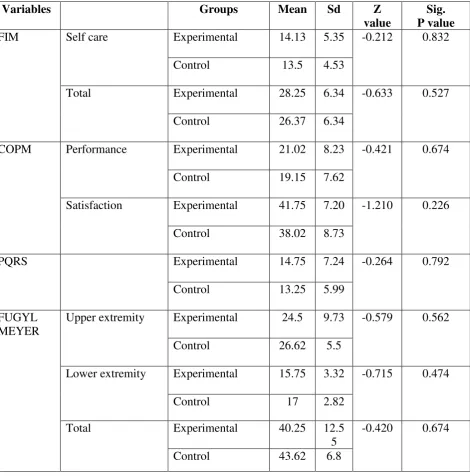
Pretest scores of experimental group and control group analyzed through the Mann Whitney U test. (table 5)
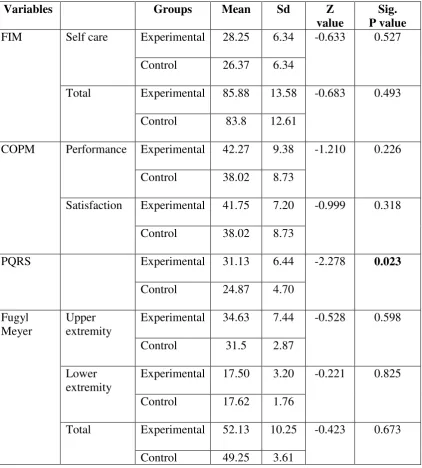
Post test scores of experimental group and control group analyzed through the Mann Whitney U test.(table 6)
Pretest and posttest and both experimental group and control group separately were analyzed using the Wilcoxon signed rank test. (table 3, and table 4 respectively)
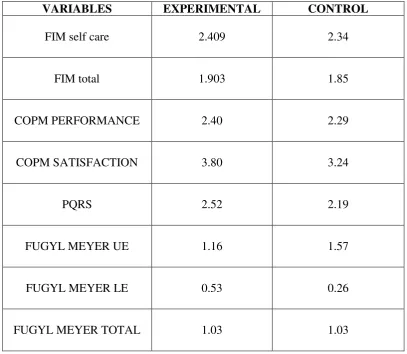
To compare the means of experimental group and control pre-and post and to find out the effect size from the groups paired sample t-test and Effect Size Calculator formula were used respectively. (table 7)
Effect Size:
d = M1 - M2 / Spooled
Spooled = √[(S1²+ S2²) / 2] where
d is the descriptive measure(difference between the means) Cohen’s
M1 and M2 are means of posttest and pretest scores of each individual group.
Spooled is the pooled standard deviation (the square root of the average of the squared standard deviations S1 and S2) of each individual group.
38
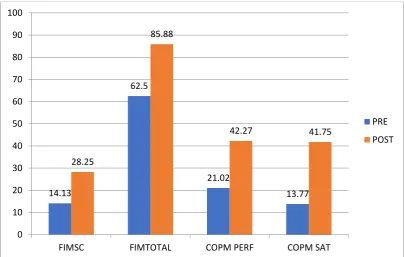
TABLE 1: DESCRIPTIVES OF EXPERIMENTAL GROUP
GRAPH 1a: COMPARISON OF FIM, COPM PRE AND POST TEST SCORES
OF EXPERIMENTAL GROUP.
14.13
62.5
21.02
13.77 28.25
85.88
42.27 41.75
0 10 20 30 40 50 60 70 80 90 100
FIMSC FIMTOTAL COPM PERF COPM SAT
PRE POST
Variables Mean Sd
PRE POST PRE POST
FIM
Self care 14.13 28.25 5.35 6.37
Total 62.5 85.88 10.83 13.58
COPM
Performance 21.02 42.27 7.28 7.20 Satisfaction 13.77 41.75 9.73 7.44
PQRS 2.45 5.20 1.20 1.09
Fugyl Meyer
Upper extremity 24.5 34.63 9.73 7.44
Lower extremity 15.75 17.50 3.32 3.20
39
GRAPH1 b: COMPARISON OF PQRS, FUGYL MEYER (FMA) PRE AND
POST TEST SCORES OF EXPERIMENTAL GROUP
The above table 1 and graphs (1a,1b) show that there is improvement in post test scores of compared to the pretest scores of experimental group.
2.455
24.5
15.75
40.25
5.201
34.63
17.5
52.13
0 10 20 30 40 50 60
PQRS FMUE FMLE FMTOTAL
40
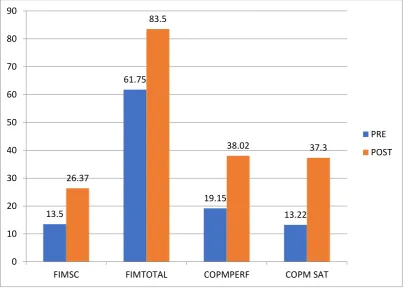
TABLE 2: DESCRIPTIVES OF CONTROL GROUP
GRAPH 2a: COMPARISON OF FIM AND COPM PRE AND POST TEST
SCORES OF CONTROL GROUP
13.5
61.75
19.15
13.22 26.37
83.5
38.02 37.3
0 10 20 30 40 50 60 70 80 90
FIMSC FIMTOTAL COPMPERF COPM SAT
PRE POST
VARIABLES MEAN SD
PRE POST PRE POST
FIM
SELF CARE 13.5 26.37 4.53 6.34
TOTAL 61.75 83.5 10.79 12.61
COPM
PERFORMANCE 19.5 38.02 7.62 8.73 SATISFACTION 13.22 37.3 6.02 8.59
PQRS 2.20 4.14 0.99 0.78
FUGYL MEYER
UPPER EXTRIMITY
26.62 31.5 5.5 2.87
LOWER EXTRIMITY
17 17.62 2.82 1.76
41
GRAPH 2b: COMPARISON OF FIM PRE AND POST TEST SCORES OF
CONTROL GROUP
The above table (2)graphs(2a,2b) show that there is improvement in post test scores of PQRS,COPM,FUGYL MEYER and FIM compared to the pretest scores of control group.
2.2
26.62
17
43.62
4.14
31.5
17.62
49.25
0 10 20 30 40 50 60
PQRS FMUE FMLE FMTOTAL
42
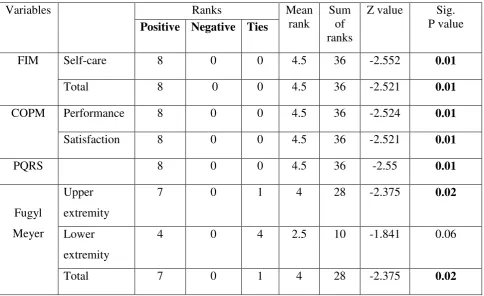
TABLE 3: WITHIN GROUP COMPARISON OF PRE AND POST TEST
SCORES OF EXPERIMENTAL GROUP. (N=8)
Variables Ranks Mean
rank
Sum of ranks
Z value Sig. P value
Positive Negative Ties
FIM Self-care 8 0 0 4.5 36 -2.552 0.01
Total 8 0 0 4.5 36 -2.521 0.01
COPM Performance 8 0 0 4.5 36 -2.524 0.01
Satisfaction 8 0 0 4.5 36 -2.521 0.01
PQRS 8 0 0 4.5 36 -2.55 0.01
Fugyl Meyer
Upper extremity
7 0 1 4 28 -2.375 0.02
Lower extremity
4 0 4 2.5 10 -1.841 0.06
Total 7 0 1 4 28 -2.375 0.02
The above table ( TABLE 3) shows that there is statistically significant difference (p<0.05) between PRE and post test scores of PQRS, COPM, Fugyl Meyer UE and total and FIM scales of experimental group. but there is no significant difference between the pre-post test scores of Fugyl Meyer LE.
43
GRAPH 3: RANK VALUES OF EXPERIMENTAL GROUP
The above graph indicates the rank values of the experimental group. the FIM ,COPM,PQRS scores show 8 positive ranks, 0 negative and 0 ties indicating that there is improvement in all the patients. The Fugyl meyer UE and Fugyl meyer total showed 7 postive rank, 0 negative ranks ad 1 tie. The fugyl meyer Le shows 4 postive rank, 4 ties and 0 negative ranks.
8 8 8 8 8
7
4
7
0 0 0 0 0
1
4
1
0 1 2 3 4 5 6 7 8 9
TIES
44
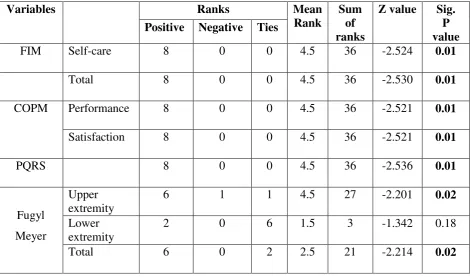
TABLE 4: WITHIN GROUP COMPARISON OF PRE AND POST TEST
SCORES OF CONTROL GROUP. (N=8)
Variables Ranks Mean
Rank
Sum of ranks
Z value Sig. P value Positive Negative Ties
FIM Self-care 8 0 0 4.5 36 -2.524 0.01
Total 8 0 0 4.5 36 -2.530 0.01
COPM Performance 8 0 0 4.5 36 -2.521 0.01
Satisfaction 8 0 0 4.5 36 -2.521 0.01
PQRS 8 0 0 4.5 36 -2.536 0.01
Fugyl Meyer
Upper extremity
6 1 1 4.5 27 -2.201 0.02
Lower extremity
2 0 6 1.5 3 -1.342 0.18
Total 6 0 2 2.5 21 -2.214 0.02
The above table ( TABLE 4 ) shows that there is statistically significant difference (p<0.05) between PRE and post test scores of PQRS, COPM, Fugyl Meyer UE and total and FIM scales of control group.
45
GRAPH 4: RANK VALUES OF CONTROL GROUP
The above graph indicates the rank values of the control group. The FIM, COPM, PQRS scores show 8 positive ranks, 0 negative and 0 ties indicating that there is improvement in all the patients.
The Fugyl Meyer UE scores show 6 positive ranks 1 negative rank and one tie indicating that 6 patients improved well from the pre test, 1 patient gone down the pretest level and one patient remained in the same level compared to the pretest.
Fugyl Meyer total showed 6 positive ranks, 0 negative ranks and 2 tie indicating that 6 patients improved well from the pre test and 2 patients remained in the same level from the pretest.
The Fugyl Meyer LE shows 4 positive rank, 4 ties and 0 negative ranks, indicating that 4 patients than the pretest scores and 4 patents remained in the same level as the pretest.
8 8 8 8 8
6
2
6
0 0 0 0 0
1
0
0
0 0 0 0 0
1
6
2
0% 10% 20% 30% 40% 50% 60% 70% 80% 90% 100%
TIES
46
TABLE 5: BETWEEN GROUP COMPARISON OF PRE TEST SCORES OF
EXPERIMENTAL AND CONTROL GROUPS.
Variables Groups Mean Sd Z
value
Sig. P value
FIM Self care Experimental 14.13 5.35 -0.212 0.832
Control 13.5 4.53
Total Experimental 28.25 6.34 -0.633 0.527
Control 26.37 6.34
COPM Performance Experimental 21.02 8.23 -0.421 0.674
Control 19.15 7.62
Satisfaction Experimental 41.75 7.20 -1.210 0.226
Control 38.02 8.73
PQRS Experimental 14.75 7.24 -0.264 0.792
Control 13.25 5.99
FUGYL MEYER
Upper extremity Experimental 24.5 9.73 -0.579 0.562
Control 26.62 5.5
Lower extremity Experimental 15.75 3.32 -0.715 0.474
Control 17 2.82
Total Experimental 40.25 12.5
5
-0.420 0.674
Control 43.62 6.8
47
TABLE 6: BETWEEN GROUP COMPARISONS OF POST TEST SCORES OF
EXPERIMENTAL AND CONTROL GROUPS.
Variables Groups Mean Sd Z
value
Sig. P value
FIM Self care Experimental 28.25 6.34 -0.633 0.527
Control 26.37 6.34
Total Experimental 85.88 13.58 -0.683 0.493
Control 83.8 12.61
COPM Performance Experimental 42.27 9.38 -1.210 0.226
Control 38.02 8.73
Satisfaction Experimental 41.75 7.20 -0.999 0.318
Control 38.02 8.73
PQRS Experimental 31.13 6.44 -2.278 0.023
Control 24.87 4.70
Fugyl Meyer
Upper extremity
Experimental 34.63 7.44 -0.528 0.598
Control 31.5 2.87
Lower extremity
Experimental 17.50 3.20 -0.221 0.825
Control 17.62 1.76
Total Experimental 52.13 10.25 -0.423 0.673
Control 49.25 3.61
48
GRAPH 5a: COMPARISON OF SCORES PQRS, COPM, FIM SCORES OF
CONTROL AND EXPERIMENTAL GROUP
GRAPH 5b: COMPARISON OF FUGYL MEYER SCORES OF CONTROL
AND EXPERIMENTAL GROUP.
The above graphs 5a and 5b indicates that there is improvement in both the experimental and the control group post intervention.
14.13 28.25 62.5 85.88 21.02 42.27 13.77 41.75 2.45 5.2 13.5 26.37 61.75 83.8 19.15 38.02 19.15 38.02 2.2 4.14 0 10 20 30 40 50 60 70 80 90 100 EXPERIMENTAL CONTROL 24.5 34.63 15.75 17.5 40.25 52.13 26.2 31.5 17 17.62 43.62 49.25 0 10 20 30 40 50 60
FMUE PRE FMUE POST FMLE PRE FMLE POST FMTOTAL PRE
FM TOTAL POST
49
Table 7: COMPARISON OF EFFECT SIZE OF EXPERIMENTAL AND
CONTROL GROUPS.
VARIABLES EXPERIMENTAL CONTROL
FIM self care 2.409 2.34
FIM total 1.903 1.85
COPM PERFORMANCE 2.40 2.29
COPM SATISFACTION 3.80 3.24
PQRS 2.52 2.19
FUGYL MEYER UE 1.16 1.57
FUGYL MEYER LE 0.53 0.26
50
GRAPH 6: COMPARISON OF EFFECT SIZE OF EXPERIMENTAL AND
CONTROL GROUPS.
The above table (table 9) and graph (graph 9) shows the effect size of both control and experimental groups of PQRS, COPM, FUGYL MEYER and FIM.
Both the groups shows larger effect size (>0.8) and experimental group has larger effect size when compared to the control group for PQRS,COPM, FIM, Fugyl Meyer LE scores.
But for Fugyl Meyer UE scores control group shows larger effect size compared to the experimental group and shows similar effect size for Fugyl Meyer total scores.
2.4
1.9
2.4
3.86
2.52
1.16
0.53
1.03 2.34
1.85
2.29
3.24
2.19
1.57
0.26
1.03
0 0.5 1 1.5 2 2.5 3 3.5 4 4.5
FIM sc FIM total COPM perf
COPM sat
PQRS FM UE FM LE FM total
51
GRAPH 7:COMPARISON OF EVERYDAY CHANGES OF MEAN PQRS
SCORES BETWEEN EXPERIMENTAL AND CONTROL GROUPS.
The above graph (graph 10) shows that there is improvement in PQRS scores from day 1 to day 10 in experimental and control groups.
14.75 16.5
19.63 22.13
23.88 25.62
26.75 28.75
30.63 31.13
13.2513.875 15.37
17
18.75 19.37
21
22 22.5
24.62
0 5 10 15 20 25 30 35
DAY 1 DAY 2 DAY 3 DAY 4 DAY 5 DAY 6 DAY 7 DAY 8 DAY 9 DAY 10
52
GRAPH 8a: PQRS PERFORMANCE SCORES OF EXPERIMENTAL GROUP
GRAPH 8b: PQRS PERFORMANCE SCORES OF EXPERIMENTAL GROUP
The above graphs 8a and 8b shows that the patients of the experimental group started showing change in performance by the 2 and 3 sessions where as the control group patients had started showing improvement slightly later.
The maximum PQRS scores attained by the experimental group reached a value of 6.83 where as the maximum value attained by the control group came only up to 5.83.
0 5 10 15 20 25 30 35 40 45
PT8 PT7 PT6 PT5 PT4 PT3 PT2 PT1
0 5 10 15 20 25 30 35
53
DICUSSION
The study was conducted among patients affected with stroke in and around Coimbatore aiming to find out the effectiveness of CO-OP approach in improving ADL performance in stroke.
16 patients with stroke were included in the study of which 8 patients were assigned to the experimental group and 8 patients were assigned to the control group. The age of the selected subjects ranged from 50 to 64 years with 5 men and 3 wo