A Dissertation on
STUDY ON ADOLESCENT GYNAECOLOGICAL
PROBLEMS
Dissertation submitted to
THE TAMIL NADU Dr.M.G.R.MEDICAL UNIVERSITY CHENNAI.
in partial fulfilment of the regulations for the Award of the degree of
M.S., (Obstetrics & Gynaecology)
Branch – II
INSTITUTE OF SOCIAL OBSTETRICS AND
GOVT. KASTURBA GANDHI HOSPITAL FOR
WOMEN AND CHILDREN
MADRAS MEDICAL COLLEGE MADRAS MEDICAL COLLEGE MADRAS MEDICAL COLLEGE MADRAS MEDICAL COLLEGEBONAFIDE CERTIFICATE
Certified that this dissertation is the bonafide work of Dr. RADHE
AKANG on “STUDY ON ADOLESCENT GYNAECOLOGICAL
PROBLEMS” during her M.S., (Obstetrics & Gynaecology) course from
April 2012 to April 2015 at the Institute of Social Obstetrics, Government
Kasturba Gandhi Hospital for Women and Children, Madras Medical
College, Chennai.
Prof.Dr.T.G. Revathy, M.D, D.G.O., Prof.Dr. Baby Vasumathi, M.D., D.G.O.,
Professor & Chief of the Department Director Dept. of Obstetrics & Gynaecology, ISO-KGH
ISO-KGH Madras Medical College, Madras Medical College Chennai.
Chennai.
Prof. Dr. R. VIMALA, M.D,
DEAN,
Madras Medical College &
Rajiv Gandhi Government General Hospital, Chennai.
Place :
DECLARATION
I solemnly declare that the dissertation titled “STUDY ON
ADOLESCENT GYNAECOLOGICAL PROBLEMS” is done by me
at INSTITUTE OF SOCIAL OBSTETRICS AND GOVT.
KASTURBA GANDHI HOSPITAL FOR WOMEN AND
CHILDREN, Madras Medical College under the guidance and
supervision of Prof. Dr.T.G.Revathi M.D., D.G.O., Professor of
Obstetrics and Gynaecology, Madras Medical College, Chennai.
This dissertation is submitted to the Tamil nadu Dr. M.G.R
Medical University towards the partial fulfillment of requirements for the
award of M.S. Degree (Branch II) in Obstetrics and Gynaecology.
Place : Chennai
Date :
ACKNOWLEDGEMENT
I Thank Dr. R. Vimala, M.D., Dean Madras Medical College for
permitting me to conduct this study in Institute of Social Obstetrics and
Government Kasturba Gandhi Hospital for Women and Children,
Chennai.
I owe my sincere thanks to Prof. Dr.Baby Vasumathi, M.D.
D.G.O. Director, ISO – KGH for her valuable guidance, during the study.
I express my profound gratitude to my guide Prof.Dr.T.G.
Revathy, M.D., D.G.O., Professor of Obstetrics and Gynecology for her
unwavering support and encouragement.
I also my sincere thanks to Prof. Dr. S. Dilshath, M.D, D.G.O.,
Former Director, ISO – KGH for her support and encouragement.
My gratitude to my Assistant Professors, Statistician Mr.Ravanan
my colleagues and Hospital Staff and patients for enabling me to
CONTENTS
Sl.No. TOPICS Page No.
1. INTRODUCTION 1
2. AIM AND OBJECTIVES OF THE STUDY 4
3. REVIEW OF LITERATURE 5
4. MATERIALS AND METHODS 51
6. OBSERVATIONS AND RESULTS 54
7. DISCUSSION 96
8. SUMMARY 102
9. CONCLUSION 104
BIBLIOGRAPHY
ANNEXURE
PROFORMA
ABBREVIATION
INFORMATION SHEET
CONSENT FORM
ETHICAL COMMITTEE APPROVAL FORM
TURN IT IN SCREEN SHOT
1
INTRODUCTION
Puberty coined from latin word ‘Pubertus’ meaning ‘grown up’ (Foster 1992). “Puberty is the period of physiological changes in secondary sexual characteristics development and their attainment of capability of sexual reproduction”. Puberty not only deals with mere physiological changes but there is also tremendous psychological and emotional changes in the life of the adolescent. Adolescence, in simple words is nothing but the phase of life during which a carefree child becomes the responsible adult.
“WHO defines adolescence as the period in human growth and development that occurs after childhood and before adulthood, from age 10-19 years”. It is an ongoing process i.e; the psychological and physiological changes which occur may begin before and even can continue after this age( Progress in Obstetrics and Gynaecology, vol 12; John Studd).
2
the pattern of this period like the time of onset of puberty, urbanization, changing attitude towards sexuality, behavior etc.
Adolescence in girls has been regonised as a special phase in their life. It requires a specific approach and special attention. This period of transition makes them vulnerable to various problems e.g., general, reproductive health related, sexually related and psychological problems. This period in a girl’s life is the preparation for safe motherhood. These adolescent girls are the direct reproducer for the future generation. So, the health of these girls not only influences her own health but, also the health of future generation.
Reproductive health related problems of adolescent girls has its own special space in the spectrum of gynaecological problems of all ages. This is because of its unique presentation and association with emotional and psychological factors.
Today, adolescent forms 20.9% of total Indian population (Population Census of India 2011) and their health determines the
3
adolescent health and addressed the need for adolescent health clinics but still it remains a sub specialised area of gynaecology which still needs a great deal of attention.
With this preview, my thesis titled ‘ Study on adolescent gynaecological problems’, I have made an attempt to review and analyse
4
AIM OF THE STUDY
To study various gynaecological problems encountered in adolescent girls who attended the gynaecological out patient department of Obstetric and Gynaecology in ISO & Kasturba Gandhi hospital for women and children, Triplicane.
5
REVIEW OF LITERATURE
Puberty is the phase of life in which there is a transition from childhood to adulthood. There is development of secondary sexual characteristics, onset of menstruation and also the sexual reproduction capability. Puberty includes a series of events which are predictable but vary in timings, pace and also in sequence. It initiates through a cascade of endocrinal changes that leads to sexual maturation and reproductive capability (Patton and Viner 2007)
TIMING OF PUBERTY :
6
There has been various researches showing influence of ethnic backgrounds, body mass index , family income on the onset of puberty. Menarche occurs earliest in those girls whose BMI falls under the obese category( upto 20% above normal weight for age), followed by normal weight, then underweight and lastly the girls who suffers from anorexia. But, it is to be noted that the pathological obesity is associated with delayed puberty rather than earlier onset. Conditions like chronic illness, strenuous physical activity as in atheletes, malnutrition are responsible for delayed puberty in some. Puberty starts earlier in those staying in low altitude areas than those in high altitude.
PHYSICAL CHANGES OF PUBERTY :
The most frequently staging system to describe the physical changes of puberty was described first by Marshall and Tanner in the year 1969. The physical change constitute three main components :
a) Secondary sexual characteristics
b) Gonadal development and function leading to menarche c) Growth spurt
7
PHASES OF PUBERTAL GROWTH:
Phase 1 ( Thelarche ) :
The first sign of puberty is the development of breast. It indicates
the competency of HPO axis. Marshall and Tanner described the breast
changes in five stages :-
Tanner stage 1(B1) : Pre pubertal state, no palpable breast tissue,
with areolar less than 2 cm in diameter.
Tanner stage 2(B2) : Breast budding occurs, visible and palpable
mould of breast tissue
Tanner stage 3(B3) : Further enlargement and elevation of the entire
breast.
Tanner stage 4(B4) : Projection of areola and papillae to form a
secondary mould above the level of breast.
Tanner stage 5(B5) : Breast is mature in contour and proportion.
Areola receeds into the general contour of the
breast.
According to the Copenhagen Puberty study (Paediatrics
Vol.123, No. 5, May 2005), there is a decline in the age at breast
8
Phase 2 ( Adrenarche ) :
It indicates the rise of adrenal androgen secretion with a rise in
blood level of DHEAS and androstenedione. This ultimately results in
the growth of pubic and axillary hair( pubarche ).
Tanner stage 1 : No sexually stimulated pubi hair
Tanner stage 2 : First appearance of sparse growth of long coarse
and crinkly hair along the labia majora.
Tanner stage 3 : Hair are coarser, darker and curlier extending into
the the mons pubis
Tanner stage 4 : Adult type of hair but does not typically extends to
inner side of the thighs.
Tanner stage 5 : Adult hair type extending even to inner aspects of
9
Phase 3 ( Growth spurt ) :
Girls usually reaches peak height velocity in puberty 2 years earlier
as compared to the boys. Growth hormone, insulin like growth factor
(IGF-1), and gonadal steroid mainly estrogen plays an major roles.
Growth spurts preceeds about one years prior to menarche.
Phase 4 ( Menarche ) :
This is the first menstrual cycle which follows thelarche by about 2
years. The initial menstrual cycles are anovulatory, this is due to the
immature HPO axis which may take 1 -5 years to completely mature .
Onset of menstruation depends on various factors.
Average age of menarche in India
Study Age of Menarche
Prabhakar et al , 1972 13.2 years
Ghosh et al , 1973 13.2 years
Singh et al , 1987 13.4 years
Grover et al , 1989 12.6 years
10
Phase 5 :
This is includes complete sexual maturity with ovulatory menstrual
cycle , full breast development and adult pattern of pubic and axillary
hair and complete pubertal growth.
PHASE DESCRIPTION MEAN AGE(INDIAN
STANDARD)
I Thelarche 10-11 yrs
II Adrenarche 11-12 yrs
III Growth spurt /Peak growth velocity
12-13 yrs
IV Menarche 11-14 yrs
V Mature sexual hair and breast
14-15 yrs
GONADAL DEVELOPMENT AND FUNCTION
During fourth and fifth month of fetal life, there is appearance of
primordial follicles. It constitutes the life long store of follicles for an
individual. Thereafter, these follicles grow and enters the antral stage ,
but before menarche they undergo the process of atresia . During puberty,
follicular growth occurs and forms oocytes which enlarges and forms
11 reproductive life, forming corpus luteum. It is the main source of gonadal
steroids after ovulation. In the absence of fertilization, these follicles
undergoes dedifferentiation and cytolysis.
Ultrasonographic studies show that during the pubertal growth,
there is an increase in the corpus of uterus form an initial tubular form to
bulbous form. There is increase in the length of uterus from 2-3 cms to
5-8 cms. After the onset of puberty, there is increase in ovarian volume
from 0.7-0.9 ml to 2-9 ml. According to Yen SSC in 1980, “ normal
ovarian volume is 4 ml in age group of 12-20 years and around 7.5 ml in
20-32 years age”.
CONTROL OF GROWTH SPURT IN ADOLESCENT
The greatest growth occurs in infancy, thereafter it reduces to
minimal till the beginning of puberty. During puberty, a significant
proportion about 17-18% gain in the adult height ( Leon Speroff &
Marca Fritz, 8th edition 2011). Growth in puberty is controlled by
complex hormonal mechanism involving growth hormone ,insulin like
12 a) The most important decisive factor of pubertal growth rate is the
rate at which circulating GH level increases. GH acts by secretion
of IGF-I ,which promotes growth and differentiation.
b) Gonadal steroid act via induction of GH secretion and limiting the
adult height by stimulating epiphyseal fusion.
Marshall and Tanner (1969) showed that the mean age for attaining
peak height velocity in girls was between 12-14 years.
SEQUENCE OF PUBERTAL MILESTONES
13
BEHAVIOURAL CHANGES OF PUBERTY :
Adolescence is a difficult time for both the child as well as parents
as it involves not only profound physical changes but also triggers
emotional, cognitive, and behavioural changes Patton and Viner 2007.
This alternation in the cognitive processing clearly are associated with
change in attitude of adolescents to not only themselves but also towards
others. The psychosocial changes during puberty predispose to increased
incidence of depression, twice more common in girls as in boys.
HORMONAL
AND
METABOLIC
CHANGES
IN
PUBERTY :
Puberty is the stage which extends from sexual differentiation and
the ontogeny of the hypothalamic- pituitary- gonadal axis to completion
of the sexual maturation. Development of hypothalamic-pituitary- portal
venous axis results in dramatic rise in FSH and LH in fetal pituitary
gland, but it falls around term due to negative feedback effects of
estrogen and progesterone derived from placenta. It remains suppressed
in early infancy. This pre-pubertal pause lasts about approximately one
decade. The HPO axis in girls develop in two distinct stages during
puberty:
14
COMMON PROBLEMS ASSOCIATED WITH PUBERTY
1) Delayed Puberty :
Delayed puberty in girls may be defined as the absence of physical
manifestation of puberty by the age of 13years, or the absence of
menstruation by the age of 16 years in the presence normal sexual
growth.
Causes includes:-
a) Constitutional delay (commonest cause)
b) Hypogonadotropic-Hypogonadism
c) Hypergonadism-Hypogonadism (Primary gonadal failure)
Constitutional delay which is by far the most common cause of the
delayed puberty is considered to be due to physiological immaturity or
functional deficiency of gonadotropin hormone. Such girls frequently
give history of delayed menarche in their mother or sisters.
Evaluation of Delayed Pubertal Development:
1) Evaluation starts with careful history taking, which must also
includes complete family history. Emphasis should be given on the
age at the pubertal milestones in other siblings and also parents too.
2) A thorough physical examination.
15
Laboratory evaluation and Imaging :
1) Measurement of serum FSH, LH, Estradiol, TSH, free
thyroxine(T4), prolactin , DHEA-S( wherever indicated).
2) X-ray of bone
3) Karyotype
4) MRI or Cranial CT scan (when indicated)
Treatment:
1) Reassurance and psychological support to the girl as well as the
parents.
2) Correct specific cause if diagnosed such as thyroid hormone
supplementation in case of hypothyroidism, dopamine agonist in
hyperprolactinemia, neurosurgical procedure in operable cranial
tumors etc.
3) Hormonal therapy – It promotes the age related secondary sexual
development ad also induce growth.
Oral estrogen 0.25- 0.5 mg is given, increasing gradually at an
interval of 3-6 month according to response ( Tanner stage, bone
16 Progestin in general is started only after the commencement of
menses, or after 12-24 months of estrogen therapy in order to
ensure that it does not interfere with the development process of
breast. After the accomplishment of breast development and
establishment of menstruation, hormonal therapy can be
discontinued for 1-3 months at intervals, in order to observe
commencement of spontaneous menses , as expected in case of
constitutional delay of puberty. Persistent hypogonadism even after
age of 18 years suggests congenital GnRH deficiency.
2) PRECOCIOUS PUBERTY:
It is defined as the occurrence of pubertal growth ≥2.5 standard
deviations earlier than the average age.It is more common among
girls than in boys ( Speroff et al 1999).
Classification:-
a) Gonadotropin- dependent precocious puberty- also known as
“Central or True Precocious Puberty”. It is due to early
maturation and activation of HPO axis, and development of
both breast and pubic hair. They are isosexual, consistent with
17
b) Gonadotropin- independent precocious puberty- also known
as “Peripheral or Pseudo Precocious Puberty”. It is the result of
early exposure of sex steroid, independent of GnRH and
gonadotropins ending up in early sexual development. They
may be isosexual or contrasexual.
Evaluation :
a) Clinical, medical and family history
b) Physical examination including Tanner staging and measurement
of bone age.
c) Endocrinal evaluation : Basal gonadotropin level
: Serum LH
: Thyroid function test
: GnRH stimulation test
: Serum estradiol, DHEA-S, testosterone,
cortisol in gonadotropin- independent
precocious puberty.
d) Imaging : i) MRI brain
18
Treatment:
The aim of treatment is to slow down the development until the girl
is of normal pubertal age, to maximize adult height, and to reduce risk of
psychological problems associated with early sexual maturation.
Reassurance and psychological support to both the adolescent girl and
parents is an important aspect of the treatment.
GnRH agonist therapy is the drug of choice in cases of GnRH
dependent precocious puberty (Michael, Thomas & Robert et al).
MENSTRUAL CYCLES :
Menarche is coined from greek word ‘men’ meaning ‘ moon’ and
‘arkhe’ meaning ‘beginning’. The normal menstrual cycle results from
complex feedback mechanism involving the hypothalamus , pituitary ,
ovary and uterus. According to Zarcharias et al (1970) , regular
menstruation was shown to occur little more than a year after menarche.
Most of the early menstrual cycles are anovulatory. In Vollman’s series
(1977) , 55% of cycles were anovulatory at gynaecological age 1-2,
decreasing to 3% at gynaecological age 11-12. Anovulatory cycles
usually persists for 12-18 months but can even prolong for 4-5 yrs after
the menarche. There are variation in the interval between periods, their
19 variation are within the physiological limits and requires basic
investigation and proper counseling.
According to Metcalfal 1988, “ menstrual dysfunction is common
in the first 18 months following menarche. As many as 58% of
adolescents with gynaecological complaints will present as menstrual
disorder ( Dramusic et al 1991).
MENSTRUAL DISORDERS IN ADOLESCENTS :
Types of menstrual disorders
1. Amenorrhoea
2. Dysmenorrhoea
3. Irregular menstrual cycles
a) Oligomenorrhoea
b) Polymenorrhoea
4. Menorrhagia
AMENORRHOEA IN ADOLESCENTS :
Amenorrhoea meaning absence of menstruation. It is a symptom,
not a disease, having various causes. Any of the following criteria needs
to be fulfilled to be evaluated for amenorrhoea as per Fertility &
20 a) Absence of menses by age of 13 years in the absence of
development of secondary sexual character.
b) Absence of menses by age of 15 years irrespective of presence of
secondary sexual character.
c) Absence of menses in a previously menstruated women, for an
interval of time equivalent to a total of at least three previously, or
6 month.
First two criteria falls under primary amenorrhoea, while the third
one under secondary amenorrhoea.
Etiologies of Amenorrhoea :
Primary amenorrhoea is usually the result of genetic or anatomic
abnormality. Etiologies are:-
i) Abnormalities of HPO axis –
• Constitutional delay
• Functional ( stress, exercise, anorexia etc)
• Kallmann’s syndrome
• Gonadal dysgenesis
21 ii) Chromosomal abnormalities
iii) Anatomic abnormalities- e.g. Imperforate hymen, absent vagina,
transverse vaginal septum, MRKH Syndrome etc.
iv) Medical disorders – Chronic illness : Juvenile diabetes
: Tuberculosis
: Thyroid disorders
v) Enzyme deficiency - 5α- reductase deficiency
- 17,20 desmolase deficiency
Secondary amenorrhoea are more commoner than primary
amenorrhoea. Causes are divided into:-
i) Hypothalamic dysfunction – Stress, excessive weight gain / loss,
tumors.
ii) Pituitary disorders - Cushing’s disease, adenomas.
iii) Ovarian disorders – PCOS, Premature ovarian failure.
iv) Uterine diseases – Tubercular endometritis
v) Medical disorders – Thyroid dysfunction, chronic illness
22
Approach to Patient of Amenorrhoea
1. History taking : A thorough history regarding the patient as well
as family history should be elicited. It must include girl’s menstrual
history, physical growth history , previous medical and surgical
history, etc.
2. Physical examination : Detail examination of patient including
the height / weight/ BMI/ Nutrition /anthropometry and growth
charts, thyroid, breast (Tanner staging), hair distribution,
secondary sexual character ,etc.
3. Pelvic examination :
a) Examination of external genitalia : Tanner staging of pubic hair/
virilization / ambiguous genitalia.
b) Examination of internal genitalia : Presence or absence of
uterus /vaginal septum/ imperforate hymen/absent vagina.
4) Pregnancy – to be ruled out
5) Tuberculosis should be looked for.
6) Hormonal evaluation :
a) FSH/LH
23 c) Plasma testosterone
d) DHEAS
e) TSH, T3 and T4
f) Serum Progesterone
g) Estrogen
The hormonal tests must be done at an appropriate time of
menstrual cycle.
7) USG : It is an important diagnostic tool.
Hormonal assessment :
• Serum FSH, LH, estradiol – if low then the cause lies in the
pituitary.
• If FSH and LH are high, estrogen is low then –
a) Evaluate for the bone age, if lower than chronological age,
then wait and watch.
24
Treatment:
The main objective of treatment of Primary amenorrhoea is to
correct the underlying pathology, if possible, and to prevent complication
of the disease process. ACOG recommends initial reproductive health
visit at 13-15 years of age.
Principles in the management of Primary amenorrhoea :
1. Identification of underlying disease and treating the cause.
2. Reassurance :
Adolescent girls and her parents should be reassured regarding
anticipated normal pubertal development in case of delay in both
growth and puberty.
3. Short –term therapy with sex steroids (estrogens)
This may be needed in girls with Combination delay of growth and
puberty (CDGP) to trigger the onset of puberty.
4. Induction and maintenance of puberty :
To prevent the early epiphyseal clsure and also avoid psychological
embarrassment due to the peer pressure, the therapy should be
25 The starting dose of ethinyl estradiol is 1-2 mg mg/day, gradually
increased every 2-3 months. Progestin should be added to either on
full breast development or after the break through bleeding occurs.
5) Growth promoting and potentiating strategies :
In cases like Turner’s syndrome (TS) and Prader-Willi syndrome
(PWS) with abnormal physical growth like short stature is
managed with growth hormone therapy. And to assure maximum
gain in height, estrogen replacement therapy can be timely added
for optimum synergistic action and preventing early epiphyseal
closure.
6) Prevention of osteoporosis :
Adolescence is a critical period of bone acquisition depending on
nutrition, lifestyle and estrogen. Girls with permanent gonadal
failure need estrogen for not only for maintenance of puberty but
also for prevention of osteoporosis.
7) Fertility :
With newer advancement in the reproductive medicine, a large
number of patients with pubertal disorders have been assured of
26
• Induction of ovulation with gonadotropins - in
hypogonadotropic hypogonadism
• ART with donor eggs – in hypergonadotropic hypogonadism
• Trans-sphenoidal surgery – in Pituitary adenoma
• Bromocriptine – Hyperprolactinemia
• Mullerian agenesis – IVF with surrogacy using woman’s own
egg and husband’s sperm.
DYSMENORRHOEA :
Dysmenorrhoea is a gynaecological medical condition which is
characterized by severe uterine pain during menses. In around 5-10%. It
is severe enough to unable them to attend their normal day today work,
attend school or college (Sheil & Turner 1996). This kind of
dysmenorrhoea may lead to fear psychosis in adolescents (Dickens
1974).
Study by Sheil & Turner, 1996 says 20% of these adolescents
have a family history of dysmenorrhoea either in their mother or sister.
Dysmenorrhoea can be mild, moderate, or severe depending upon
the severity, or can be of primary or secondary type depending upon the
27 modification are the simple measures to overcome this problem.
Complete history taking is the most important aspect in the management
of such cases, includes details about the menses and associated problems.
But depending upon the severity and associated underlying cause if
needed, to be treated by pharmacological or surgical management.
Diffentiating features between Primary and Secondary dysmenorrhoea
Features Primary Secondary
Onset First day of menses Prior to to menses
Duration 12-24 hours Throughout the menses
Ovulation Present Absent
Pathology Usually absent Uterine/ pelvic pathology present
Aetiology Increased PGE2 & PGF2α
Congestion
Prevalence Most common Less common
Severity In 5-10% Not so severe
IRREGULAR MENSTRUAL CYCLE
Menstrual irregularities are the commonest gynaecological
28 abnormal vaginal bleeding, the cause is dysfunctional uterine bleeding.
DUB is a subset of AUB which is defined as excessive, prolonged,or
unpatterned bleeding from the uterine endometrium without an organic
cause. These complains varies from excessive bleeding that is regular
(menorrhagia), irregular (metrorhagia), combination of both
(menometrorrhagia) intermittent or sparse cyclical bleeding
(oligomenorrhoea). The treatment of these disorders varies from mere
observation to pharmacological and/ or surgical management. About 45%
of adolescent girls have an anovulatory cycles for approximately 1-2
years after the onset of menarche (Sheil & Turner 1996), which leads to
irregular menstrual cycles. There are mainly two types of irregular cycles:
a) Oligomenorrhoea
b) Polymenorrhoea
OLIGOMENORRHOEA :
Oligomenorrhoea is infrequent menstruation. It is defined as the
periods occurring at a interval of more than 35 days for atleast 6 months
in a previous normal cycle.This in adolescents are commonly due to
anovulation but if the history and clinical examination is suggestive of
29 Causes of Oligomenorrhoea :
a) Emotional stress and exercise
b) PCOS
c) Thyroid dysfunction
d) Anorexia nervosa
e) Adrenal hyperplasia
f) Pituitary tumors
g) Excessive weight loss
h) Obesity
Treatment :
1) Reassurance :
Adolescents and also their parents needs to be counseled properly
regarding the problem and reassured that this is usually self
limiting and this is not going to affect their fertility in future, if no
pathological cause is observed.
2) Hypothalamic or Pituitary causes :
Due to the rise of expectation from parents , society and peer
pressure these adolescents are in constant physical and
psychological stresses leading to defect in pulsatile secretion of
30 managed with proper counseling and behavioral therapy. No drugs
are required for regularization of menstruation.
3) Hyperprolactinaemia :
Hyperprolactinaemia in adolescents is rare but if present can be
treated with medical drugs like cabergoline, bromocriptine and
definitive surgery for prolactinomas, if diagnosed.
POLYCYSTIC OVARIAN SYNDROME ( PCOS )
Hyperandrogenism is a frequent cause of oligomenorrhoea in
adolescence. The most common form is the syndrome of PCOS. PCOS is
a heterogenous disease . It requires special mentioning because they are
common in adolescent population.
Several studies have been performed regarding pathophysiology of
PCOS but till date no final consensus have been agreed although recently
familial clusters of PCOS is reported- suggesting a major component of
its etiology. Steven Frank study suggests the involvement of two key
genes in the etiology of PCOS , the steroid synthesis gene CYPIIa and
insulin gene- Variable number tandem repeats (VNTR).
PCOS comprise of a wide spectrum of signs which ranges from
31 menstrual irregularities, infertility and to even cardiovascular disorders –
all due to metabolic disturbances involving increased level of LH, insulin
and androgen and dyslipidemia.
Pre-pubertal ovaries are usually multicystic. These multicystic
ovaries are normal findings in the evolution of mature hypothalamic-
pituitary-gonadol axis, as described by Merrill.
Therefore, PCOS is defined as a dysfunctional condition of the
ovary in which there is increased LH dependent secretion of androgen
from hyperplastic theca and stromal cells of ovary.
Clinical features of PCOS :-
a) Hirsutism
b) Menstrual irregularities
c) Central obesity
d) Infertility
e) Pelvic examination( if done) – often normal, as it is uncommon to
32
Rotterdam criteria (2003) suggests presence of at least two criteria to be
diagnosed as PCOS, these criteria are :-
i) Oligo/ amenorrhoea, anovulation, infertility
ii) Hirsuitism
iii) USG features of PCOS as described above.
Laboratory Findings :
Endocrinal Screening :
Prolactin and TSH levels are tested to rule out pituitary or thyroid
disease as an etiology of anovulation.
In PCOS there is –
• Normal or increased LH
• Normal or increased 17 ketosteroid
• Normal or increased FSH
• Normal or increased E2
33
Sonographic Findings:
Typical USG findings in PCOS
i) No. of cyst = >10mm pushed periphery (Necklace pattern)
ii) Abnormal stroma
iii) Uterine width : ovarian length=<1,
iv) Increased ovarian volume( > 10 ml),
v) Increased ovarian roundness index=>0.7
Ovarian Histology :
Multiple microcysts with atretic and immature follicles , fibrosis
thickening , and sclerosis of ovarian capsule.
Treatment : Depends on various factors such as :
• Age of girl
• Presence or absence of acne, hirsutism , obesity
• Menstrual irregularities
• Presence or absence of hyperinsulinemia or hyperandrogenism or
high LH
34
The purpose of treatment is to-
• Treat menstrual irregularities
• Treat hirsutism
• Treat infertility
• To prevent long term consequences of PCOS.
Thus, the treatment is modified or prescribed as per the
requirement of women. It is subdivided into:-
a) Life style modification
b) Medical management
c) Surgical management
Lifestyle modification :
It include weight reduction, exercise, low calorie diet intake,
abandoning cigarette smoking etc. Weight reduction has beneficial effects
on menstrual abnormalities as well as in hirsutism (Guzick, Wing, Berga
et al 1989). Studies have shown reduction in the level of (a) Serum free
testosterone (b) Insulin and insulin like growth factor I( IGF-I) and (c)
increase in the level of SHBG due to intake of very low energy diet in
35 ovarian P450c17a activity and cause decrease serum free testosterone
level in obese girls with PCOS.
Weight loss causes for decrease in both hyperinsulinemia and
insulin resistance, increases SHBG and thus results in overall reduction in
hyperandrogenism.
Medical Management :
Most commonly used are metformin which reduces
hyperinsulinemia and hyperandrogenism independent of changes in body
weight (obesity) and OCPs for regularization of periods. The usual dose
of metformin is 500 mg thrice daily and can be gradually increased if
required. But girl should be cautioned that it make take 6 months or more
for complete results. And, patients should also be cautioned that it may
recur, later in reproductive life.
Surgical Management:
Surgical management is reserved only in following cases: -
• Medical therapy fails
• Hyperstimulation following medical treatment
• Infertility
36 Surgical procedure comprises of :-
a) Wedge resection of ovary
b) Laparoscopic ovarian puncture- for not more than four cysts in
each ovary either by laser or by unipolar electrocautery.
But these surgical procedures have disadvantages of forming pelvic
adhesion postoperatively which may further add on to reduction in
fertility rate.
SEQUELAE OF PCOS
Long- term sequelae in PCOS is important to know because mainly
two reasons:-
• Higher incidence of PCOS in adolescent (20%) diagnosed by USG
• Because of its impact on the future reproductive life.
Complication of PCOS
a) Short- term sequelae –
i) Obesity
ii) Hirsutism
iii) Menstrual irregularities
37 b) Long- term sequelae
i) Diabetes
ii) Cardiovascular disease
iii) Osteoporosis
iv) Cancer
POLYMENORRHOEA
Polymenorrhoea is the least common menstrual complaint in this
age group. It is usually caused by luteal phase defect (LPD). Adolescents
with such complaints are treated with progesterone support in luteal
phase. OCPs are used to regularize the cycles.
PUBERTY MENORRHAGIA
Puberty menorrhagia is the excessive menstrual blood loss between
menarche and 19 years of age. Menorrhagia is defined as menstrual loss
greater than 80 ml. Anovulation and bleeding disorders make up the vast
majority of menorrhagia in adolescent. In adolescents, the HPO axis takes
time to mature after menarche, which can lead to anovulation.
In first 2 years after menarche, 55-82% 0f cycles are anovulatory,
and by fourth and fifth year this decreases to 20% of cycles being
38 mechanism necessary to initiate an LH surge and subsequent ovulation
despite increased follicular estrogen levels. But, the negative estrogen
mechanism is intact in these patients. These are hypothalamic problems
rather than pituitary as indicated by normal GnRH stimulation.
Unopposed estrogen stimulates endometrial growth, which ultimately
outgrows its blood supply. The endometrium becomes excessively
thickened and unstable , and the lining breaks down irregularly and
unpredictably. This leads to heavy bleeding and prolonged menstruation.
Causes of Puberty Menorrhagia :
• Anovulatory uterine bleeding
• Coagulation disorders – Von willebrands disease (32-100%)
– Idiopathic thrombocytopenic purpura
– Platelet disorder-e.g. Bernard –Soulier
Syndrome (51%), Glanzmann’s
thrombasthenia(98%)
• Endometrial tuberculosis
• Thyroid dysfunction
• Pregnancy (In cases of heavy bleeding, adolescent pregnancy
39
History & Physical Examination:
The evaluation of the adolescent with menorrhagia should begin
with detailed history. It is important to assess family history for presence
of any known bleeding disorders. Upon physical examination, height,
weight, BMI, orthostatic blood pressure and pulse should be recorded.
Examination of major body systems gives insight to endocrinological or
systemic disease.
Investigation :
1) Complete blood count ,
2) coagulation profile ( bleeding time, clotting time, PT, ApTT),
3) Thyroid function test( TSH ,FT4,FT3)
4) Ultrasonography of pelvis are useful parameters.
If history indicates a bleeding disorder, if bleeding is severe,
prolonged or associated with menarche, or if initial screening is
abnormal, specific laboratory test for coagulation defects should be done.
In developing countries like of ours, where tuberculosis is still highly
prevalent, it is a routine test to rule out tuberculosis by laboratory tests
like montoux, chest X-ray, and even TB-PCR of the first day menstrual
40
Treatment :
The goal of initial assessment is to determine which adolescent
needs treatment and which adolescent can be observed until the
maturation of HPO axis results in regular normal menses.
1) Counseling and reassurance - In most of girls this is the only
therapy required.
2) Anaemia is corrected with iron supplementation and high protein
diet and if required blood transfusion is suggested.
3) NSAIDS like mefenamic acids, antifibrinolytic such as tranexamic
acid and aminoaproic acid , can reduce menstrual blood loss by
50%.
4) Acute bleeding is stopped by 5-10 mg of norethisterone
medroxyprogesterone orally. Later on, cyclic progesterone therapy
is recommended
5) Hormonal therapy: Hormonal therapy is the most effective
therapy, with more than 93% of adolescents responding to some
form of hormonal treatment. Indication for start of hormonal
41 a) Anaemia
b) Recurrence
c) Restricted routine activities
The initial treatment is the use of oral medroxy progesterone
acetate followed by the use of combined oral contraceptive pills. OCPs
can also be used as a first line of treatment in treating menorrhagia in
adolescents with bleeding disorders.
If OCPs are contraindicated, or the patient or family does not wish
to start oral contraception, cyclic progestins can be used.Oral
medroxyprogesterone acetate 5mg can be given for 10-14 days or 21 days
each month to induce a withdrawal bleeding that is cyclic and predictable.
This pattern is continued for 3-6 months.
6) Diagnostic curettage ( Sheil & Turner 1996) is rarely indicated
in non responder to hormonal therapy in these age group patients.
If endometrial hyperplasia is seen then she is put on progesterone
for a period of 6-12 months, after which she re-evaluated.
Careful assessment and prompt recognition is important in the
adolescent with menorrhagia. No single therapy or treatment is
universal, and it must be tailored to the adolescent and clinical
42
INFECTION IN ADOLESCENT :
Due to lack of oestrogen and alkaline vaginal secretions, young
girls are more prone to infection in the pre menarche period . Vaginal
discharge is generally the result of infection caused by non specific
causes, resulting from poor hygiene or as a result of specific infection.
Aetiology :
1) Chemical / Irritant ( or Allergic )
2) Poor hygiene :
Poor personal hygiene may lead to candidal vulvovaginitis, vulval
irritation may follow worm infection like pin worms , thread
worms secondary to anorectal contamination.
3) Infection :
Infection of vulva and vagina i.e, vulvoginitis most commonly due to the infection caused by the normal vaginal flora, which includes mixed aerobes and anaerobes, commonly staphylococcus epidermidis, lactobacilli, bacteroides etc. Sexually transmitted infections like that caused by Neisseria gonorrhoea, Chlamydia trachomatis, Trichomonas vaginilis.
4) Foreign bodies
43
Diagnosis :
a) Detailed history including sexual ativity, type of discharge, use of antibiotics, concomitant infection elsewhere in body, treatment taken etc.
b) Clinical examination – with utmost care. P/R Examination may be
required.
c) Vaginal or urethral discharge collected and wet smear examined in
microscope.
d) Examination under anaesthesia may be required if suspicion of
foreign body in vagina or foul smelling discharge is present.
Management :
Appropriate antibiotics for specific organism.
Non specific Infections : improve hygiene of private parts. Local
application of estrogen cream 0.10% for
2-3 weeks.
Specific infections : Trichomoniasis : Metronidazole 20 mg
three times a day for 7 days Alternative
44
Candidiasis : Oral nystatin 5 lac units three times a day
for two weeks or oral fluconazole.
Locally clotrimazole or miconazole
cream for 6-12 days.
OVARIAN MALIGNANCIES IN ADOLESCENT :
Total incidence of ovarian cancer in adolescents ranges from 95 to
225 per million person years and highest being recorded in Australia and
Israel, and lowest in India and Japan.
Ovarian neoplasm accounts for approximately 1% of all malignant
tumors in girls aged 17 years or below ( Young & Miller, 1975).
Ovarian masses may be of benign or malignant. Dealing with
ovarian tumors in adolescents is particularly a challenge because of its
rarity, atypical symptoms, malignant potential, and probable serious
outcome on the patient’s reproductive life.
Functional ovarian cysts are the most common benign ovarian
masses detected in adolescents. Amongst all age group, adolescents have
the highest rates of PID which pre-disposes them to develop tubo-
45 comprise 1.5% of all adolescent tumors with an absolute incidence of
approximately 5.5%.
Clinical Presentation :
Ovarian neoplasia are known for their silent presentation and
detected mostly as an incidental finding. Commonest presentation will be
the complain of only vague abdominal discomfort or bloating sensation
which is invariably treated with antispasmodics and antiflatulents. The
presenting complaints are pelvic pain, pressure symptoms on bladder or
rectum, menstrual irregularities etc. The vast majority of children with
malignant ovarian tumors are detected at an advanced stage as in majority
of cases it doesn’t show symptoms till it reaches advance stage. However
it has now become clear that ovarian neoplasms also cause particular
symptoms in particular stages of disease progression. Keeping this fact
into mind, Symptom index has been developed for screening of ovarian
cancer is under trial in USA. Torsion may occur in as many as 35 to 45%
of ovarian tumors in adolescents. These cases are wrongly diagnosed as
suffering from appendicitis. The use of imaging modalities such as X- ray
and ultrasound will increase the diagnostic accuracy to 80%.
According to National Cancer Institute’s SEER program,
46 adolescent females (15 -19 years) are germ cell tumors (15%).
Dysgerminoma are the most common malignant germ cell tumors, which
account for about 30-40% of all ovarian cancers of germ cell origin.
Dysgerminoma destroy the ovarian tissue may cause amenorrhoea which
must be differentiated from tuberculosis which often presents as an
abdominopelvic mass due to encysted ascites.
Endodermal sinus tumor of ovary are also common germ cell
tumor seen in paediatric and adolescent age group. They grow rapidly and
present usually as abdominal or pelvic pain or abdominal enlargement.
Asymptomatic pelvic pain is seen in 100%. Granulosa cell tumors present
as precocious puberty in young adolescent or as abnormal vaginal
bleeding in the older adolescent. It accounts for about 1-2% of all ovarian
malignancies.
Investigation :
Baseline investigation should always include pregnancy test
regardless of elicited sexual history. USG, CT Scan, MRI forms the
cornerstone for evaluation of the exact size, location, internal
consistency, relationship with other structures and also spread to other
organs ( metastasis). Chest radiograph should be done. Abdominal X-ray
47 Tumor markers are an important laboratory investigation which are
extremely useful in monitoring ovarian neoplasms. CA 125,
alphafetoprotein, human chorionic gonadotrophins( HCG) are such tumor
markers which are elevated in specific malignancies. CA125 is elevated
in epithelial tumors . HCG and alphafetoprotein are raised in endodemal
sinus tumor and non gestational choriocarcinoma.
Management :
The main aim of management of ovarian tumor is to conserve the
reproductive potential without jeopardizing her life. Asymptomatic cystic
adnexal masses requires only observation as these are always benign and
regress spontaneously in 3-6 months or promotes regression with oral
contraceptives for 3 months.
Surgery is indicated in following conditions :
• Ovarian cyst > 6 cm without regression for 6-8 weeks
• Any cystic lesion > 10 cm
• Solid ovarian lesion
• Ovarian lesion with papillary excrescences in its wall
• Bilateral
48 Usually cystectomy is the choice of surgery in order to preserve her
reproductive potential. Benign conditions should be managed by
conservative surgery either by laparoscopy or laparotomy. Surgery like
salphingo oopherectomy is consider in cases associated with torsion and
infarction.
Endometriosis in adolescent is managed primarily by non surgical
methods and includes prolonged suppression of ovulation. Mature cystic
teratomas are managed surgically by only removal of the affected gonad
with preservation of ipsilateral tube. In case of teratomas, close inspection
of the contralateral ovary should be done for evidence of bilateral disease.
Fertility preservation surgeries in adolescent girls:
Preservation of fertility in adolescent girls has been a matter of
great concern for the gynaecologist dealing with them, at the risk of
ovarian damage. In adolescent girls, fertility may be impaired by repeat
ovarian surgeries ,use of gonadotoxic treatment or genetic disorders. In
recent times, various options have emerged in order to preserve fertility in
teenage girls like cryopreservation of embryos, mature and immature
49 Cryopreservation of ovarian tissue has been proposed for
adolescent girls suffering from Turner’s syndrome, especially the mosaic
type.
Treatment of cancer in adolescents should be a multi-disciplinary
settings and is based on the degree of malignancy. The primary treatment
is surgery with proper staging. In advanced cases of malignant germ cell
tumor , which is associated with metastasis, ascites etc surgery is
followed by post operative radiation therapy as these tumor are
radiosensitive. But the major disadvantage of radiation therapy is the loss
of fertility. So, now the treatment of choice is the combination
chemotherapy eg. BEP,VBP,VAC.
Adolescents treated for ovarian tumors should be closely followed
up, particularly if ovarian preservation was attempted. In the follow up,
detailed history , thorough clinical examination, USG and specific tumor
marker should be done.
Adolescent Sexuality :
Adolescence is a critical time when there is curosity and increase in
sexual drive. This time offer an ideal window of opportunity for building
the foundation of sexual and reproductive health in adolescents. The
50 adolescent and the society. Developmentally, adolescent reaches physical
maturity before they are cognitively able to appreciate the consequence of
their behavior. A teenager’s major source of information regarding
sexuality is his or her peer group, all of whom are experiencing and
reinforcing the same behaviors. The family, the major socialize of other
behaviors is not as powerful a force in shaping responsible sexual
behavior because of parental discomfort in sex education and sexual
discussion. A healthy attitude towards healthy sexual interaction, and
awareness of their behavior and needs, followed by counseling can
51
MATERIALS AND METHODS
A total of 150 cases of adolescent girls aged 13-19 years who
attended gynaecological OPD and emergency department in ISO & KGH
hospital, Triplicane were included in the study.
Study Design :
Prospective study.
Inclusion Criteria :
Married / unmarried, non –pregnant, non lactating adolescent girls
aged 13-19 years.
Exclusion criteria :
Teenage pregnancy
History :
Detailed history with regard to the gynaecological problems was
taken from the patient and girl’s mother was also interviewed to get
52
Physical Examination :
A thorough clinical examination including height, weight,
secondary sexual character, general examination of breast, thyroid,
cardiovascular system, respiratory, and central nervous system or any
congenital anomalies were noted.
Body mass index (BMI) or quetelet index was calculated using the
formula:-
Weight in kg BMI =
(Height in cm)2
General examination comprising thyroid examination, presence of
hirsutism, pubertal stage of breast and pubic hair were graded according
to Marshall and Tanner staging. External genitalia examined. Per
abdominal examination done to rule out any mass. Per rectal and
bimanual pelvic examination done whenever indicated.
Then patients were subjected to various investigations like
haemogram, coagulation profile, hormonal assays, and ultrasonography
53 Amenorrhoea cases were referred to endocrinologist and genetic
counseling done. For all cases, relevant investigation like karyotyping
was done and the diagnosis confirmed. Patients were also referred to
54
[image:61.595.102.513.175.433.2]OBSERVATIONS
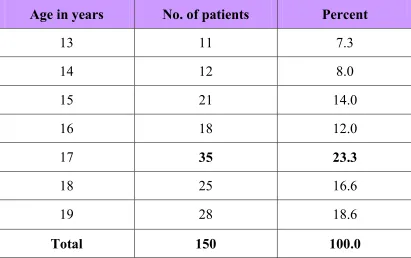
Table 1 : Age Distribution
Age in years No. of patients Percent
13 11 7.3
14 12 8.0
15 21 14.0
16 18 12.0
17 35 23.3
18 25 16.6
19 28 18.6
Total 150 100.0
The table shows the age distribution in the study group. It ranged
from 13- 19 years of age. Maximum number of adolescent girls attending
the gnaecology OPD in KGH were of 17 years of age (3/150), followed
55
Chart 1 : Age Distribution
11 12
21
18
35
25
28
0 5 10 15 20 25 30 35 40
13 14 15 16 17 18 19
Age in Ye ars
N
o
.
o
f
P
a
ti
e
n
ts
This bar diagram shows the diagramatic representation of age
distribution among the adolescent girls in the study group. Maximum
56
Chart 1 : Age Distribution
7.30%
8%
14%
12% 23.30%
16.60%
18.60%
The bar chart depicts that the, adolescent girls of age group 17
57
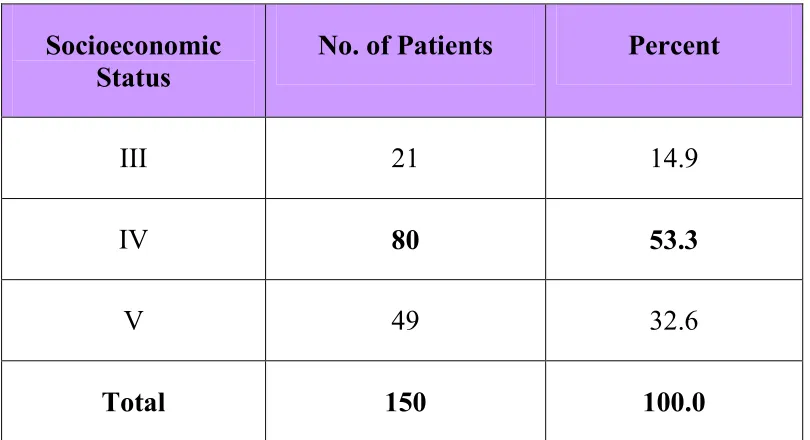
Table 2 : Socioeconomic status
Socioeconomic Status
No. of Patients Percent
III 21 14.9
IV 80 53.3
V 49 32.6
Total 150 100.0
In the present study, all the girls were mostly from family with
58
Chart 2 : Socioeconomic status
21
80
49
0 10 20 30 40 50 60 70 80 90
III IV V
Socio Economic Status
N
o
.
o
f
P
a
ti
e
n
ts
In the present study majority of adolescent girls came from low
socio economic background with highest number of 80 cases under
59
Chart 2 : Socioeconomic status
14.90%
53.30% 32.60%
III
IV
V
Out of 150 adolescent girls, 14.9% belonged to class III socio
economic status, 53.3% belonged to class IV, 32.6% belonged to class V
60
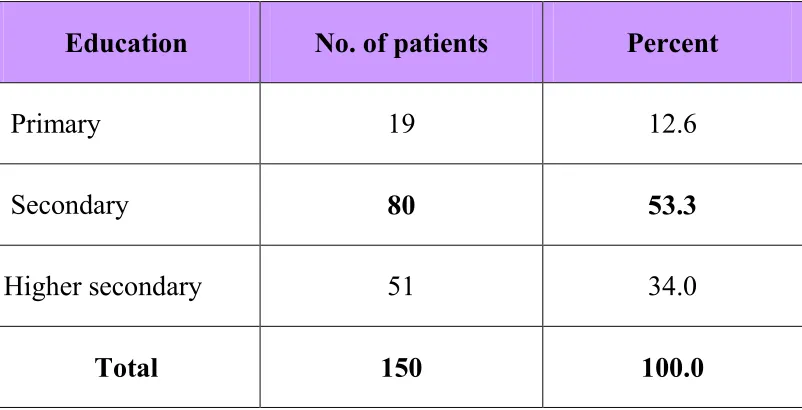
Table 3 : Educational Status
Education No. of patients Percent
Primary 19 12.6
Secondary 80 53.3
Higher secondary 51 34.0
Total 150 100.0
This table shows the number of adolescent girls in the study group
with their educational status. Though literacy rate among the adolescent
girls was found to be 100 percent, but percentage of school dropouts were
61
Chart 3 : Educational status
19
80
51
0 10 20 30 40 50 60 70 80 90
Primary Secondary Higher secondary
Educational Status
N
o
.
o
f
P
a
ti
e
n
ts
No. of patients
In the present study, majority of girls were studying in secondary
standard (80/150), followed by girls with higher secondary educational
62
Chart 3 : Educational status
12.60%
53.30% 34%
Primary Secondary Higher secondary
This pie chart represents that maximum percentage (53.3%) of
adolescent girls in the present study group were having educational status
63
Table 4: Demography
Place of living No. of patients Percent
Urban 117 78.0
Rural 33 22.0
Total 150 100.0
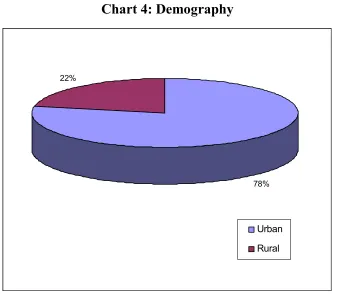
Majority of the adolescent girls under study belonged to urban area
(78.0%)
Chart 4: Demography
78% 22%
Urban
Rural
This pie chart shows that maximum percent (78.0%) of adolescent
64
Chart 4: Demography
117
33
0 20 40 60 80 100 120 140
Urban Rural
Place of Living
N
o
.
o
f
P
a
ti
e
n
ts
Out of 150 cases studied, 117 girls came from the urban area and
65
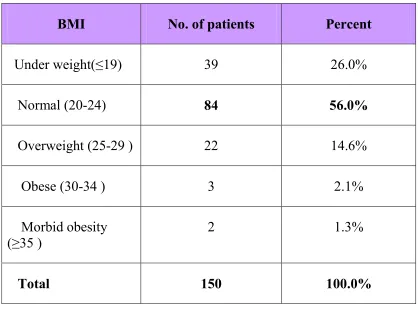
Table 5 : Body mass index (BMI)
BMI No. of patients Percent
Under weight(≤19) 39 26.0%
Normal (20-24) 84 56.0%
Overweight (25-29 ) 22 14.6%
Obese (30-34 ) 3 2.1%
Morbid obesity (≥35 )
2 1.3%
Total 150 100.0%
In the study group, adolescent girls were categorized into normal,
underweight, overweight, obese and morbidly obese, as per their BMI
66
Chart 5 : Body mass index (BMI)
39 84 22 3 2 0 10 20 30 40 50 60 70 80 90 Under w eight(≤19)
Normal (20-24) Overw eight (25-29 )
Obese (30-34 ) Morbid obesity (≥35 ) Body Mass Index
N o . o f P a ti e n ts
Out of total 150 cases of adolescent girls, majority (84/150) were
having normal BMI, followed by (39/150) underweight, overweight
67
Chart 5 : Body mass index (BMI)
26.00%
56.00% 14.60%
2.10% 1.30%
Under weight(≤19) Normal (20-24) Overweight (25-29 ) Obese (30-34 ) Morbid obesity (≥35 )
Among the 150 adolescent girls in the study group, maximum
percent of girls had normal BMI (56.0%), 17.6% had higher range of
68
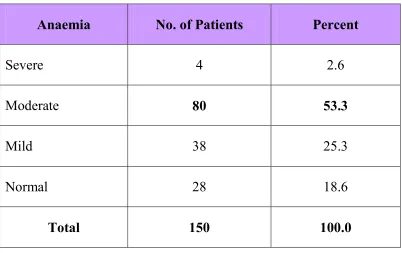
Table 6 : Anaemia incidence (Hb% estimation)
Anaemia No. of Patients Percent
Severe 4 2.6
Moderate 80 53.3
Mild 38 25.3
Normal 28 18.6
Total 150 100.0
Majority of the adolescent girls under study were anaemic, which
ranged from mild to severe type based on the haemoglobin estimation.
• 28/150 cases had no anaemia with hb% ≥12 gm%.
• 38/150 cases had mild anaemia with hb% ranging
from11-11.9 gm%.
• 80/150 cases had moderate anemia with hb% ranging from
8.1-10.9 gm%.
69
Chart 6 : Anaemia incidence (Hb% estimation)
4
80
38
28
0 10 20 30 40 50 60 70 80 90
Severe Moderate Mild Normal
Anaemia
N
o
.
o
f
P
a
ti
e
n
ts
Moderate type of anemia with haemoglobin percent ranging from
70
Chart 6 : Anaemia incidence (Hb% estimation)
2.60%
53.30% 25.30%
18.60%
Severe Moderate Mild Normal
Majority of the adolescent girls under study were anaemic, 25.3%
had mild anaemia, 53.3% (maximum) had moderate anaemia and 2.6%
suffered from severe anaemia. Only 18.6% of cases were not anaemic as
71
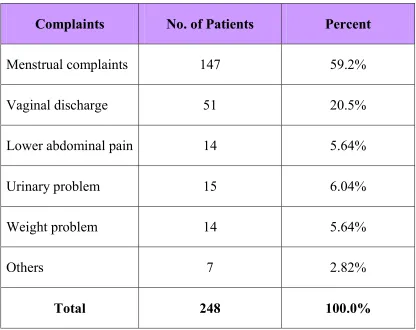
Table 7: Presenting complaints in the study population
Complaints No. of Patients Percent
Menstrual complaints 147 59.2%
Vaginal discharge 51 20.5%
Lower abdominal pain 14 5.64%
Urinary problem 15 6.04%
Weight problem 14 5.64%
Others 7 2.82%
Total 248 100.0%
In the present study, various presenting complaints among the
adolescent girls were depicted in the table. Most common presenting
complaints among the teenage girls was menstrual complaint. Majority of
72
Chart 7: Presenting complaints in the study population
147
51
14 15 14
7 0 20 40 60 80 100 120 140 160 Menstrual complaints Vaginal discharge Lower abdominal pain Urinary problem Weight problem Others Presenting Complaints N o . o f P a ti e n ts
In the present study, girls were allowed to have multiple responses
regarding their presenting complaints. Menstrual complaints the most
common complaint ( 147) among the study group attending the OPD,
73
Chart 7: Presenting complaints in the study population
59.20% 20.50%
5.64%
6.04% 5.64% 2.82% Menstrual complaints
Vaginal discharge
Lower abdominal pain
Urinary problem
Weight problem
Others
Majority of the girls had menstrual complaints 59.2%, followed by
second common complaint was vaginal discharge 20.5% and then
74
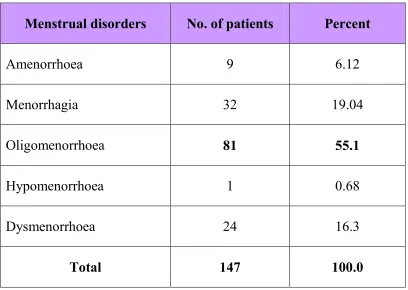
Table 8 : Types of menstrual dysfunction
Menstrual disorders No. of patients Percent
Amenorrhoea 9 6.12
Menorrhagia 32 19.04
Oligomenorrhoea 81 55.1
Hypomenorrhoea 1 0.68
Dysmenorrhoea 24 16.3
Total 147 100.0
Menstrual complaints being the most common complaints among
the studied adolescent group of girls. Menstrual complaints ranged from
amenorrhoea to menorrhagia. Dysmenorrhoea was also included in this
75
Chart 8 : Types of menstrual dysfunction
9
32
81
1
24
0 10 20 30 40 50 60 70 80 90
Amenorrhoea Menorrhagia Oligomenorrhoea Hypomenorrhoea Dysmenorrhoea Menstural Disorders
N
o
.
o
f
P
a
ti
e
n
ts
Among the menstrual complaints, the most common type of
complaint was that of oligomenorrhoea (81/147), followed by
76
Chart 8 : Types of menstrual dysfunction
6.12%
19.04%
55.10% 0.68%
16.30%
Amenorrhoea Menorrhagia Oligomenorrhoea Hypomenorrhoea Dysmenorrhoea
Majority of girls were suffering from oligomenorrhoea (55.1%)
77
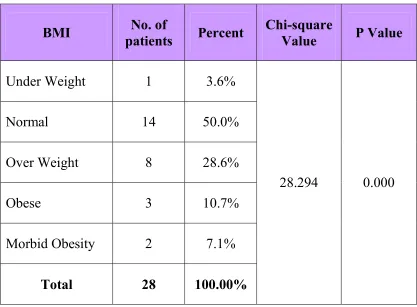
Table 9 : Association between BMI and PCOS among the study group with menstrual complaints.
BMI No. of
patients Percent
Chi-square
Value P Value
Under Weight 1 3.6%
Normal 14 50.0%
Over Weight 8 28.6%
Obese 3 10.7%
Morbid Obesity 2 7.1%
Total 28 100.00%
28.294 0.000
A highly significant statistical association between BMI and PCOS
was seen. Adolescent having higher BMI had increased incidence of
78
Chart 9 : Association between BMI and PCOS among the study group with menstrual complaints
1 14 8 3 2 0 2 4 6 8 10 12 14 16 Under Weight
79
Table 10 : Etiology of Amenorrhoea
Etiology Karyotype No. of
patients Percent
Mullerian agenesis 46 XX 4 44.4
Turner syndrome 45 X0 2 22.2
Turner mosaic 45 X0 / 46 XX 1 11.1
Constitutional delay 46 XX 1 11.1
Pure gonadal dysgenesis 46 XX 1 11.1
Total 9 100.0
Commonest cause of primary amenorrhoea in this study group
80
Chart 10 : Etiology of Amenorrhoea
4
2
1 1 1
0 0.5 1 1.5 2 2.5 3 3.5 4 4.5 Mullerian agenesis Turner syndrome Turner mosaic Constitutional delay Pure gonadal dysgenesis Eiology N o . o f P a ti e n ts
Out of 9 cases giadnosed with primary amenorrhoea in the study
81
Chart 10 : Etiology of Amenorrhoea
44.40%
22.20% 11.10%
11.10%
11.10%
Mullerian agenesis Turner syndrome Turner mosaic Constitutional delay Pure gonadal dysgenesis
In the present study, maximum percent (44.4%) of cases
amenorrhoea was diagnosed with mullerian agenesis, followed by
82
Table 11 : Etiology of Menstrual dysfunctions
Etiology No. of patients Percent
Dysfunctional uterine bleeding
86 74.7
PCOS 24 20.8
Thyroid disorder 4 3.47
Hyperproactinemia 1 0.86
Total 115 100.0
This table shows various causes for the menstrual irregularities in
the adolescent girls under study. Most common is the Dysfunctional
83
Table 11 : Etiology of Menstrual dysfunctions
86 24 4 1 0 10 20 30 40 50 60 70 80 90 N o . o f P a ti e n ts Dysfunctional uterine bleeding Thy