COATED TABLETS OF PANTOPRAZOLE”
Dissertation Submitted to
THE TAMIL NADU Dr.M.G.R. MEDICAL UNIVERSITY
Chennai-32
In Partial fulfillment for the award of the degree of
MASTER OF PHARMACY
In
PHARMACEUTICS
Submitted by
Reg.No: 261210253
Under the guidance of
Mr.V.KAMALAKKANNAN, M.Pharm.,
APRIL - 2014
DEPARTMENT OF PHARMACEUTICS
J.K.K.NATTRAJA COLLEGE OF PHARMACY
KOMARAPALAYAM-638183, TAMILNADU.
APRIL-2014
This is to certify that the dissertation work entitled “ FORMULATION
AND EVALUATION OF ENTERIC COATED TABLETS OF
PANTOPRAZOLE” submitted by student bearing Reg.No.261210253 to The TamilNadu Dr. M. G. R. Medical University, Chennai, for the partial fulfilment of the degree of MASTER OF PHARMACY was evaluated by us during the examination held on………
Internal Examiner External Examiner
CERTIFICATE
This is to certify that the work embodied in the dissertation
“FORMULATION AND EVALUATION OF ENTERIC COATED TABLETS
OF PANTOPRAZOLE” submitted to The TamilNadu Dr. M. G. R. Medical University, Chennai, was carried out by Mr.T.GOBINATH, (Registration No 261210253], for the partial fulfilment of the degree of Master of Pharmacy in Pharmaceutics under direct supervision of Mr.V.KAMALAKKANAN, M.Pharm., Lecture, Department of Pharmaceutics, J.K.K.Nattraja College of Pharmacy,
Komarapalayam, during the academic year 2013-2014.
Place: Kumarapalayam. Dr. R. Sambathkumar., M.Pharm., Ph. D.,
Date: Principal,
J.K.K. Nattraja college of Pharmacy,
Komarapalayam - 638183
TamilNadu
CERTIFICATE
This is to certify that the work embodied in this dissertation entitled
“FORMULATION AND EVALUATION OF ENTERIC COATED TABLETS
OF PANTOPRAZOLE” submitted to The Tamil Nadu DR. M.G.R. Medical University, Chennai, in partial fulfillment to the requirement for the award of degree
of MASTER OF PHARMACY in Pharmaceutics, is a bonafide work carried out by
Mr.T.GOBINATH [Reg. No. 261210253] during the academic year 2013-2014, under my guidance and direct supervision in the department of Pharmaceutics,
J.K.K.Nattraja College of Pharmacy, Kumarapalayam.
Mr.V.Kamalakkannan., M.Pharm., Dr.R.Sambathkumar., M.Pharm., Ph.D.,
Lecturer, Principal,
Department of Pharmaceutics, J.K.K.Nattraja college of Pharmacy,
J.K.K.Nattraja college of Pharmacy, Kumarapalayam – 638183
Kumarapalayam-638183. TamilNadu
Tamil Nadu.
CERTIFICATE
This is to certify that the dissertation entitled “FORMULATION AND
EVALUATION OF ENTERIC COATED TABLETS OF PANTOPRAZOLE” is
a bonafide work done by Mr.T.GOBINATH [Reg. No. 261210253] J.K.K.Nattraja College of Pharmacy, in part and fulfillment of the university rules and regulation for
award of Master of Pharmacy in Pharamaceutics under my guidance and supervision during the academic year 2013-2014..
Mr.V.Kamalakkannan., M.Pharm., Dr.R.Sambathkumar., M.Pharm., Ph.D.,
Lecturer, Principal,
Department of Pharmaceutics, J.K.K.Nattraja college of Pharmacy,
J.K.K.Nattraja college of Pharmacy, Kumarapalayam – 638183
Kumarapalayam-638183. TamilNadu
Tamil Nadu.
Dr.R.Sambathkumar, M.Pharm., Ph.D., Principal, Head of the Department,
J.K.K.Nattraja College of pharmacy,
Kumarapalayam-638183
The work presented in this dissertation entitled, “FORMULATION AND
EVALUATION OF ENTERIC COATED TABLETS OF PANTOPRAZOLE” was carried out by me, under the direct supervision of Mr.V. KAMALAKKANNAN, M.Pharm., Lecturer, Department of Pharmaceutics, J.K.K.Nattraja College of Pharmacy, Kumarapalayam.
I further declare that, the work is original and has not been submitted in part or
full for the award of any other degree or diploma in any other university.
Place: Kumarapalayam. Mr.T.GOBINATH
Date: Reg.No:261210253
ACKNOWLEDGEMENT
I am proud to dedicate my deep sense of gratitude to the founder, (Late) Thiru
J.K.K. Nattaraja Chettiar, providing us the historical institution to study.
My sincere thanks and respectful regards to our reverent Chairperson Smt. N.
Sendamaraai, B.Com., Managing Director Mr. S. Omm Sharravana, B.Com., LLB., and Executive Director Mr. S. Omm Singarravel, B.E., M.S., J.K.K. Nattraja Educational Institutions, Komarapalayam for their blessings, encouragement and support at all times.
It is most pleasant duty to thank our beloved Principal Dr. R.SambathKumar,
M.Pharm., Ph.D., J.K.K.Nattraja College of Pharmacy, Komarapalayam for ensuring all the facilities were made available to me for the smooth running of this project.
I express my whole hearted thanks to my guide Mr.V.KAMALAKKANNAN M.Pharm., lecturer , Department of Pharmaceutics, for suggesting solution to problems faced by me and providing indispensable guidance, tremendous encouragement at each and
every step of this dissertation work. Without his critical advice and deep-rooted knowledge,
this work would not have been a reality.
It is my privilege to express deepest sense of gratitude toward Dr. N. Mahadevan, M.Pharm., Ph.D., Professor and Head, Department of Pharmacognosy and Mr. P. Balasubramaniam, M.Pharm., Lecturer, Department of Pharmacognosy for their valuable suggestions during my project work.
My sincere thanks to Dr. M. Vijayabaskaran, M.Pharm., Ph.D., Assistant Professor
and head Department of Pharmaceutical chemistry, Dr. S.P.Vinoth kumar, M.Pharm., Ph.D., Assistant Professor, Department of Pharmaceutical chemistry, Mr. S.V. Arunachalam, M.Pharm., Lecturer, Department of Pharmaceutical chemistry, Mrs. S. Gomathi, M.Pharm., Lecturer, Department of Pharmaceutical chemistry and Mrs. B. Vasuki, M.Pharm., Lecturer, Department of Pharmaceutical chemistry, for their valuable suggestions and inspiration.
My sincere thanks to N. Venkateswaramurthy, M.Pharm., Assistant Professor and
Head, Department of Pharmacy Practice. Mrs. K. Krishna Veni, M.Pharm., Lecturer, Department of Pharmacy Practice, and Dr. K. Sattanathan, M.Pharm., Ph.D., Lecturer Department of pharmacy practice, for their help during my project.
My sincere thanks to Dr.V.Sekar, M.Pharm., Ph.D., Professor and Head of The Department of analysis, and Mr.M. Senthilraja, M.Pharm., Assistant Professor, and Mr.A.Jeyaseelan, M.Pharm., Assistant Professor, Department of Pharmaceutical Analysis for their valuable suggestions.
I greatly acknowledge the help rendered by Mrs. K. Rani, Office Superintendent, Miss. Prabha, Mrs. V. Gandhimathi, M.A., M.L.I.S., Librarian, and Mrs. S. Jayakala, B.A., B.L.I.S., Asst. Librarian for their co-operation.
My special thanks to all the Technical and Non Technical Staff Members of the institute for their precious assistance and help.
Last, but nevertheless, I am thankful to my lovable parents and all my friends for their
co-operation, encouragement and help extended to me throughout my project work.
Mr.T.GOBINATH
Pantoprazole is a proton pump inhibitor, belongs to group of benzimidazole,
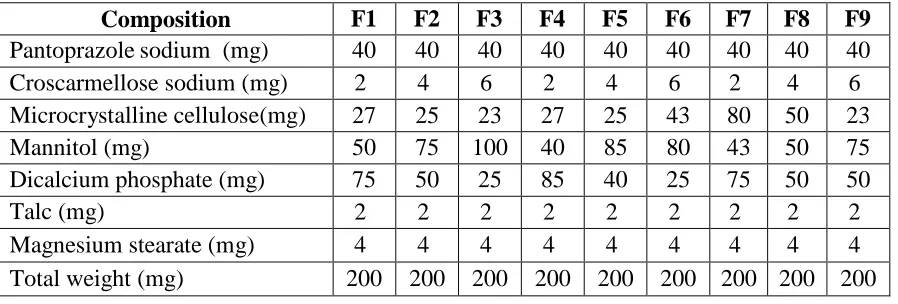
Pantoprazole sodium were prepared by direct compression method using different
concentration of, microcrystalline cellulose as filler, mannitol and dicalcium phosphate as
diluents, crosscarmellose sodium as disintegrating agents, magnesium stearate and talc was
used as a glidant and lubricant respectively. Direct compression is economic compare to wet
granulation since it requires fewer unit operations. This means less equipment, lower power
consumption, less space, less time and less labour leading to reduced production cost of
tablets. The prepared tablets were evaluated for hardness, weight variation, friability and drug
content uniformity and it was found that the results comply with official standards. The
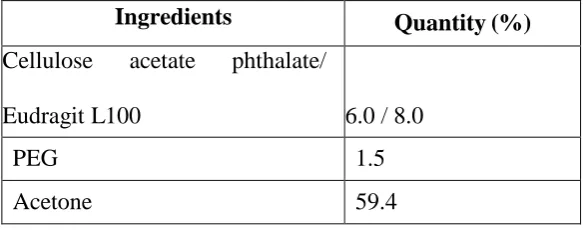
prepared tablets were coated using enteric coating polymer such as cellulose acetate phthalate,
Eudragit L100 and by dip coating method. The in vitro release was studied using acidic buffer
pH 1.2 and phosphate buffer pH 6.8. Prepared all batch’s C2F9 was found best, with hardness
5.60 ± 0.24 (Kg/cm2), drug content 99.08 ± 0.35(%), disintegration time 7.02± 0.21(min), and
percentage cumulative drug released which started after 120 min and reached 99.72 after 180
min. Stability studies indicated that the developed tablets were stable and retained their
pharmaceutical properties at room temperature and 40 °C / 75% RH for a period of 3 month.
SL. No. CONTENTS Page No.
1. INTRODUCTION 1
1.1. Structure and functions of the stomach 1
1.2. Acid formation 1
1.3. Gastric Defenses against Acid 3
1.4. Definition of ulcer 4
1.4.1. Peptic ulcer 5
1.4.2. Types of peptic ulcer 6
1.4.3. Epidemiology 6
1.4.4. Pathophysiology of peptic ulcer 6
1.5. Gastro esophageal reflux disease (GERD) 7
1.5.1. Epidemiology 8
1.5.2. Pathophysiology 8
1.6. Treatment of acid-related diseases 9
1.6.1. Antacids 9
1.6.2. H2-receptor antagonists 9
1.6.3. Proton pump inhibitors 10
1.7. Proton pump inhibitor 10
1.7.1. Chemistry and pharmacokinetics 10
1.8. Tablet 11
1.8.1. Types of tablets 12
1.8.2. Coated tablets 13
1.8.2.1.2. Development of film coating formulations 14
1.8.2.2.Materials used in film coating 14
1.8.2.2.1 .Film formers 15
1.8.2.2.2.Solvents 16
1.8.2.2.3.Plasticizers 16
1.8.2.2.4.Colorants 16
1.8.2.3 Ideal properties of enteric coating material are summarized 16
1.8.2.4 New materials used for tablet coating 17
1.9 Directly compression 17
1.9.1 Advantages of direct compression 19
1.9.2 Factors in formulation development 20
2 AIM AND OBJECTIVES 21
3 PLAN OF WORK 23
4. DRUG-EXCIPIENTS PROFILE 24
4.1 Pantoprazole 24
4.2. Microcrystalline cellulose 27
4.3. Magnesium stearate 28
4.4. Talc 29
4.5. Croscarmellose sodium 30
4.6. Mannitol 31
4.7. Cellulose Acetate Phthalate 32
5. REVIEW OF LITERETURE 35
6. METHODOLOGY 44
6.1. Preformulation studies 44
6.1.1. Preparation of standard graphs 44
6.1.1.1 Determination of absorption maxima 44
6.1.1.2. Preparation of standard graph 44
6.1.2. Preparation of standard graph using pH 6.8 phosphate buffer 44
6.1.2.1. Determination of absorption maxima 44
6.1.2.2. Preparation of standard graph 45
6.1.3. FT-Infrared spectroscopy 45
6.2. Evaluation 46
6.2.1. Precompression parameters 46
6.2.1.1. Bulk density 46
6.2.1.2. Tapped density 46
6.2.1.3 compressibility index 46
6.2.1.4 Angle of repose 47
6.3 Formulation studies 47
6.3.1 Preparation of pantoprazole sodium tablets 47
6.4 Post compression parameters 48
6.5 Coating of compressed Pantoprazole tablets 50
6.6 Stability studies 52
7.1. Preformulation studies 53
7.1.1. Preparation of standard graphs 52
7.1.2. FTIR spectral study 56
7.2. Evaluations 59
7.2.1. Pre compression parameters 59
7.2.2. Formulation studies 59
7.2.2.1. Preparation of pantoprazole sodium tablets 59
7.2.2.2. Post comparession parameters of pantoprazole sodium core
Tablets 60
7.2.2.3. Physicochemical evaluation of coating films 61
7.2.2.4. Physicochemical evaluation of pantoprazole sodium
enteric coated tablets 62
7.2.2.5 In vitro drug release studies of enteric coated tablets 63
7.2.2.6 Stability studies 70
8. SUMMARY & CONCLUSION ` 72
Table No.
Title Page
No.
1 Tablet manufacturing methods 12
2 Ideal requirements for direct compression 19
3 Formula for the preparation of pantoprazole sodium
sesquihydrate 48
4 Composition of coating solution 50
5 Calibration data of pantoprazole sodium in 0.1N HCl 54
6 Calibration data of pantoprazole sodium in 6.8 buffer 55
7 IR spectra study 56
8 Pre compression parameters of pantoprazole sodium 60
9 Post compression parameters of pantoprazole sodium 61
10 Physicochemical evaluation of different polymer coating films 62
11 Evaluation of enteric coating 63
12 In vitro drug release of formulation C1F3 64
13 In vitro drug release of formulation C2F3 65
14 In vitro drug release of formulation E1F3 66
15 In vitro drug release of formulation E2F3 66
16 In vitro drug release of formulation C1F9
67
17 In vitro drug release of formulation C2F9 67
18 In vitro drug release of formulation E1F9 68
19 In vitro drug release of formulation E2F9 69
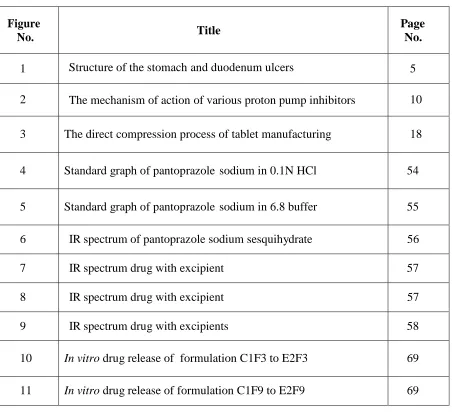
Figure
No. Title
Page No.
1 Structure of the stomach and duodenum ulcers 5
2 The mechanism of action of various proton pump inhibitors 10
3 The direct compression process of tablet manufacturing 18
4 Standard graph of pantoprazole sodium in 0.1N HCl 54
5 Standard graph of pantoprazole sodium in 6.8 buffer 55
6 IR spectrum of pantoprazole sodium sesquihydrate 56
7 IR spectrum drug with excipient 57
8 IR spectrum drug with excipient 57
9 IR spectrum drug with excipients 58
10 In vitro drug release of formulation C1F3 to E2F3 69
BP British pharmacopoeia
CAP Cellulose acetate phthalate
CDR Cumulative drug release
CLA Cumulative loss
Conc Concentration
EC Ethyl cellulose
FTIR Fourier Transformer Infra red
GERD Gastroesophageal reflux disease
GIT Gastro-intestinal Tract
HCl Hydrochloride
IR Infra red
KBr Potassium bromide
MCC Microcrystalline Cellulose
MS Mass spectroscopy
NSAID Non steroidal antiinflamattory disease
PCT press-coated tablet
PEG Poly ethylene glycol
pH Hydrogen ion concentration
PPI Proton pump inhibitor
PUD Peptic ulcer diseases
RH Relative humidity
S.S Standard Stock solution
SD Standard Deviation
TEC Triethyl citrate
USP United states Pharmacopoeia
UV Ultra-violet
% Percentage
(o) Degree
°C Degree centigrade
cm Centimeter
gm/Kg/day Gram per kilogram per day
gm Gram
gm/cm3 Gram per cube of centimeter
h Hour
hrs Hours
Kg/cm2 Kilogram per square of centimeter
m/v Mass by volume
mg micro gram
mg Milligram
MHZ Megha Hertz
min Minute
mL milli Litre
mm milli metre
nm nano metre
r2 Regression value
rpm revolutions per minute
v/v Volume by volume
w/v Weight by volume
w/w Weight by weight
g micro gram
Dept.of Pharmaceutics 1 J.K.K.Nattaraja college of Pharmacy
1. INTRODUCTION
More than 50% of pharmaceutical products are orally administered for several
reasons. This route of administration is considered as the most widely used route as it offers
advantages like ease of administration, versatility, patient compliance and accurate dosing.
Undesirable taste is one of the important formulation problems that are encountered with
such oral product.
1.1. Structure and functions of the stomach
The stomach is continuous with the oesophagus at the cardiac sphincter and with the
duodenum at the pyloric sphincter. It has two curvatures. The stomach is divided into three
regions: the fundus, the body and the antrum. At the distal end of the pyloric antrum is the
pyloric sphincter, guarding the opening between the stomach and the duodenum. When the
stomach is inactive the pyloric sphincter is relaxed and open and when the stomach contains
food the sphincter is closed.
Temporary storage allowing time for the digestive, chemical digestion, preparation of
iron for absorption, production of intrinsic factor needed for absorption of vitamin B12 in the
terminal ileum regulation of the passage of gastric contents into the duodenum. When the
chyme is sufficiently acidified and liquefied, the pyloric antrum forces small jets of gastric
contents through the pyloric sphincter into the duodenum1.
1.2. Acid formation
The stomach secretes about 2.5 litres of gastric juice daily. The principal exocrine
secretions are proenzymes such as prorennin and pepsinogen elaborated by the chief or peptic
cells and hydrochloric acid (HCl) and intrinsic factor secreted by the parietal or oxyntic cells.
Dept.of Pharmaceutics 2 J.K.K.Nattaraja college of Pharmacy
ions are also secreted and are trapped in the mucus, creating a gel-like protective barrier that
maintains the mucosal surface at a pH of 6-7 in the face of a much more acidic environment
(pH 1-2) in the lumen2.
Gastric acid secretion is a complex, continuous process in which multiple central and
peripheral factors contribute to a common endpoint: the secretion of H+ by parietal cells.
Neuronal (acetylcholine, ACh), paracrine (histamine), and endocrine (gastrin) factors all
regulate acid secretion. Their specific receptors (M3, H2, and CCK2 receptors, respectively)
are on the basolateral membrane of parietal cells in the body and fundus of the stomach. The
H2 receptor is a GPCR that activates the Gs-adenylylcyclase-cyclic AMP-PKA pathway.
ACh and gastrin signal through GPCRs that couple to the Gq-PLC-IP3-Ca2+ pathway in
parietal cells. In parietal cells, the cyclic AMP and the Ca2+-dependent pathways activate
H+,K+-ATPase (the proton pump), which exchanges hydrogen and potassium ions across the
parietal cell membrane. This pump generates the largest known ion gradient in vertebrates,
with an intracellular pH of about 7.3 and an intracanalicular pH of about 0.8. The most
important structures for CNS stimulation of gastric acid secretion are the dorsal motor
nucleus of the vagal nerve, the hypothalamus, and the solitary tract nucleus. Efferent fibers
originating in the dorsal motor nuclei descend to the stomach via the vagus nerve and synapse
with ganglion cells of the enteric nervous system. ACh release from postganglionic vagal
fibers directly stimulates gastric acid secretion through muscarinic M3 receptors on the
basolateral membrane of parietal cells. The CNS predominantly modulates the activity of the
enteric nervous system via ACh, stimulating gastric acid secretion in response to the sight,
smell, taste, or anticipation of food (the "cephalic" phase of acid secretion). ACh also
indirectly affects parietal cells by increasing the release of histamine from the
enterochromaffin-like (ECL) cells in the fundus of the stomach and of gastrin from G cells in
Dept.of Pharmaceutics 3 J.K.K.Nattaraja college of Pharmacy
proximity to parietal cells. Histamine acts as a paracrine mediator, diffusing from its site of
release to nearby parietal cells, where it activates H2 receptors. The critical role of histamine
in gastric acid secretion is dramatically demonstrated by the efficacy of H2-receptor
antagonists in decreasing gastric acid secretion. Gastrin, which is produced by antral G cells,
is the most potent inducer of acid secretion. Multiple pathways stimulate gastrin release,
including CNS activation, local distention, and chemical components of the gastric contents.
Gastrin stimulates acid secretion indirectly by inducing the release of histamine by ECL cells;
a direct effect on parietal cells also plays a lesser role. Somatostatin (SST), which is produced
by antral D cells, inhibits gastric acid secretion. Acidification of the gastric luminal pH to <3
stimulates SST release, which in turn suppresses gastrin release in a negative feedback loop.
SST-producing cells are decreased in patients with H. pylori infection, and the consequent
reduction of SST's inhibitory effect may contribute to excess gastrin production.
1.3. Gastric Defenses Against Acid
The extremely high concentration of H+ in the gastric lumen requires robust defense
mechanisms to protect the esophagus and the stomach. The primary esophageal defense is the
lower esophageal sphincter, which prevents reflux of acidic gastric contents into the esophagus.
The stomach protects itself from acid damage by a number of mechanisms that require
adequate mucosal blood flow, perhaps because of the high metabolic activity and oxygen
requirements of the gastric mucosa. One key defense is the secretion of a mucus layer that
protects gastric epithelial cells. Gastric mucus is soluble when secreted but quickly forms an
insoluble gel that coats the mucosal surface of the stomach, slows ion diffusion, and prevents
mucosal damage by macromolecules such as pepsin. Mucus production is stimulated by
prostaglandins E2 and I2, which also directly inhibit gastric acid secretion by parietal cells.
Thus, alcohol, aspirin, and other drugs that inhibit prostaglandin formation decrease mucus
Dept.of Pharmaceutics 4 J.K.K.Nattaraja college of Pharmacy
of the normal mucosal defense is the secretion of bicarbonate ions by superficial gastric
epithelial cells. Bicarbonate neutralizes the acid in the region of the mucosal cells, thereby
raising pH and preventing acid-mediated damage 3.
Drugs are employed with the following therapeutic aims: (1) to relieve pain; (2) to
accelerate healing; and (3) to prevent ulcer recurrence. Therapeutic approaches are threefold:
(a) to reduce aggressive forces by lowering H+ output; (b) to increase protective forces by
means of mucoprotectants; and (c) to eradicate Helicobacter pylori4.
1.4. Definition of ulcer
Ulcers are crater-like sores (generally 1/4 inch to 3/4 inch in diameter, but sometimes
1 to 2 inches in diameter) which form in the lining of the stomach (called gastric ulcers), just
below the stomach at the beginning of the small intestine in the duodenum (called duodenal
ulcers) or less commonly in the esophagus (called esophageal ulcers). In general, ulcers in the
stomach and duodenum are referred to as peptic ulcers An ulcer is the result of an imbalance
between aggressive and defensive factors. On one hand, too much acid and pepsin can
damage the stomach lining and cause ulcers. On the other hand, the damage comes first from
some other causes, making the stomach lining susceptible to even an ordinary level of gastric
acid5.
An ulcer may arise at various locations:
Stomach (called gastric ulcer), Duodenum (called duodenal ulcer) Oesophagus (called
Dept.of Pharmaceutics 5 J.K.K.Nattaraja college of Pharmacy
1.4.1. Peptic ulcer
A peptic ulcer, also known as ulcus pepticum, peptic ulcer disease (PUD),7 is an ulcer
(defined as mucosal erosions equal to or greater than 0.5 cm) of an area of the gastrointestinal
tract that is usually acidic and thus extremely painful. As may as 80% of ulcers are associated
with Helicobacter pylori, a spiral-shaped bacterium that lives in the acidic environment of the
stomach. Ulcers can also be caused or worsened by drugs such as aspirin and other
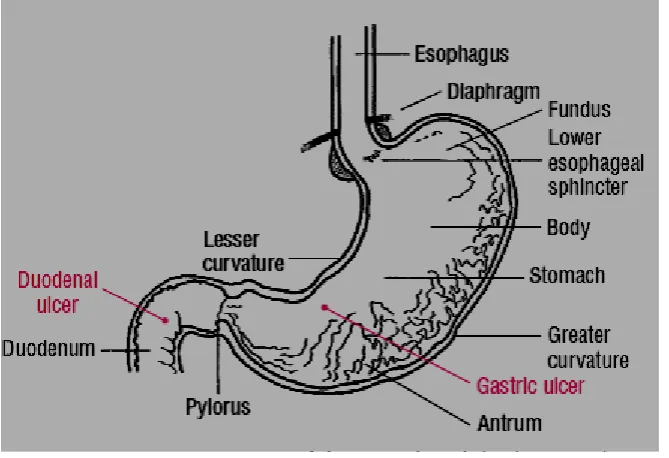
non-steroid anti-inflammatory drugs (NSAIDs)8. The anatomic structure of the stomach and
duodenum ulcers is shown in Figure 1.
[image:24.595.133.468.333.562.2]
Dept.of Pharmaceutics 6 J.K.K.Nattaraja college of Pharmacy
1.4.2. Types of peptic ulcer
Type I: Ulcer along the lesser curve of stomach
Type II: Two ulcers present - one gastric, one duodenal
Type III: Prepyloric ulcer
Type IV: Proximal gastroesophageal ulcer
Type V: Anywhere along gastric body, NSAID induced
1.4.3. Epidemiology
The lifetime risk for developing a peptic ulcer is approximately 10%. In Western
countries the prevalence of Helicobacter pylori infections roughly matches age. Prevalence is
higher in third world countries. Transmission is by food, contaminated groundwater and
through human saliva.
1.4.4. Pathophysiology of peptic ulcer
Classical causes of ulcers (tobacco smoking, blood groups, spices and a large array of
strange things) are of relatively minor importance in the development of peptic ulcers. A
major causative factor (90% of gastric and 75% of duodenal ulcers) is chronic inflammation
due to Helicobacter pylori, a spirochete that inhabits the antral mucosa and increases gastric
production. Gastric, in turn, stimulates the production of gastric acid by parietal cells.
Smoking leads to, atherosclerosis and vascular spasms causing vascular insufficiency
and promoting the development of ulcers through ischemia. A family history is often present
in duodenal ulcers, especially when blood group O is also present. Inheritance appears to be
Dept.of Pharmaceutics 7 J.K.K.Nattaraja college of Pharmacy
1.5. Gastroesophageal reflux disease (GERD)
It is a very common problem presenting as 'heartburn', acid eructation, sensation of
stomach contents coming back in foodpipe, especially after a large meal, aggravated by
stooping or lying flat. Some cases have an anatomical defect (hiatus hernia) but majority are
only functional (LES relaxation in the absence of swallowing). Repeated reflux of acid
gastric contents into lower one third of esophagus causes esophagitis, erosions, ulcers, pain
on swallowing, dysphasia strictures, and increases the risk of esophageal carcinoma10.
Endoscopy is used to evaluate mucosal damage from gastroesophageal reflux disease
(GERD) and assess for the presence of Barrett’s esophagus (BE); 24-hour ambulatory pH
testing or a therapeutic trial of a proton pump inhibitor are useful for diagnosing GERD in
patients with persistent symptoms or atypical symptoms; manometry is useful in evaluating
motility and before antireflux surgery. The goals of treatment of GERD are to alleviate
symptoms, to decrease the frequency of recurrent disease, to promote healing of mucosal
injury, and to prevent complications. Treatment of GERD involves a stepwise approach
determined by disease severity and includes lifestyle changes and patient-directed therapy
(Phase I); pharmacologic treatment with nonprescription and prescription medications (Phase
II); and interventional approaches such as antireflux surgery or endoluminal therapies (Phase
III). Patients with typical GERD symptoms should be treated with lifestyle modifications and
a trial of empiric acid suppression therapy. Those who do not respond to empiric therapy or
who have more complicated symptoms should undergo diagnostic tests.
1.5.1. Epidemiology
Gastroesophageal reflux disease occurs in both adults and children. Although
mortality associated with GERD is rare (1 death per 100,000 patients), GERD symptoms
have a greater impact on quality of life than do duodenal ulcers, untreated hypertension, mild
Dept.of Pharmaceutics 8 J.K.K.Nattaraja college of Pharmacy
is difficult to assess because (a) many patients do not seek medical treatment, (b) symptoms
do not always correlate well with severity of disease, and (c) there is no standardized
definition or universal gold standard method for diagnosing the disease.
1.5.2. Pathophysiology
The key factor in the development of GERD is the retrograde movement of acid or
other noxious substances from the stomach into the esophagus.9 In some cases,
gastroesophageal reflux is associated with defective lower esophageal sphincter (LES)
pressure or function. Patients may have decreased gastroesophageal sphincter pressures
related to (a) spontaneous transient LES relaxations, (b) transient increases in intra-abdominal
pressure, or (c) an atonic LES—all of which may lead to the development of
gastroesophageal reflux. Problems with other normal mucosal defense mechanisms such as
anatomic factors, esophageal clearance, mucosal resistance, gastric emptying, epidermal
growth factor, and salivary buffering may also contribute to the development of GERD.
Aggressive factors that may promote esophageal damage upon reflux into the esophagus
include gastric acid, pepsin, bile acids, and pancreatic enzymes. Thus the composition and
volume of the refluxate as well as duration of exposure are the most important aggressive
factors in determining the consequences of gastroesophageal reflux. Rational therapeutic
regimens in the treatment of gastroesophageal reflux are designed to maximize normal
mucosal defense mechanisms and attenuate the aggressive factors11.
1.6. Treatment of acid-related diseases 1.6.1. Antacids
Antacids are alkali preparations that neutralize hydrochloric acid in the stomach.
Antacids can contain aluminium, magnesium, calcium or combined substances. Antacids are
Dept.of Pharmaceutics 9 J.K.K.Nattaraja college of Pharmacy
but they require frequent administration (4 to 6 times a day) because of their short duration of
action.
1.6.2. H2-receptor antagonists
Parietal cells in the stomach express receptors for acetylcholine, gastric and
histamine. Stimulation of these receptors results in gastric acid production. H2-receptor
antagonists (H2RAs) inhibit acid production by reversibly competing with histamine for
binding to H2-receptors on the parietal cells. Four different H2RAs are available: cimetidine,
famotidine, nizatidine and ranitidine. H2RAs are indicated for reflux-oesophagitis, ulcus
duodeni, ulcus ventriculi, prevention of recurrent peptic ulcers and the treatment of NSAID
related ulcers. These agents are primarily effective in decreasing basal acid production and
nocturnal acid breakthrough. They are however less effective in controlling food-stimulated
acid secretion during daytime. In general, H2RAs are administered twice a day. Although
H2RAs have reasonable efficacy, patients develop tolerance in particular with continuous
therapy.
1.6.3. Proton pump inhibitors
Proton pump inhibitors (PPIs) suppress gastric acid secretion by specific inhibition of
the H+/K+- ATPase in the gastric parietal cell. This process starts with absorption of the PPI
in the parietal cell. PPIs are weak bases, so protonation takes place in the acidic region of the
secretory canaliculus of the parietal cell.
PPIs are indicated for the treatment of GERD, reflux oesophagitis, peptic ulcers and
Zollinger-Ellison syndrome. In addition, PPIs are used for gastroprotection in patients using
NSAIDs. In combination with two suitable antibiotics, PPIs are also used for the eradication
Dept.of Pharmaceutics 10 J.K.K.Nattaraja college of Pharmacy
esomeprazole, lansoprazole, omeprazole, pantoprazole and rabeprazole12.
1.7. Proton pump inhibitor
Since their introduction in the late 1980s, these efficacious acid inhibitory agents have
rapidly assumed the major role for the treatment of acid-peptic disorders.. The mechanism of
[image:29.595.108.487.285.556.2]action of various proton pump inhibitors is shown in Figure 2. 13.
Figure 2. The mechanism of action of various proton pump inhibitors
1.7.1. Chemistry and pharmacokinetics
Five proton pump inhibitors are available for clinical use: omeprazole, lansoprazole,
rabeprazole, pantoprazole, and esomeprazole. All are substituted benzimidazoles that
Dept.of Pharmaceutics 11 J.K.K.Nattaraja college of Pharmacy
protect the acid-labile prodrug from rapid destruction within the gastric lumen, they are
formulated as acid-resistant enteric-coated. After passing through the stomach into the
alkaline intestinal lumen, the enteric coatings dissolve and the prodrug is absorbed. These
prodrugs are lipophilic weak bases (pKa 4–5) and therefore diffuse readily across lipid
membranes into acidified compartments (such as the parietal cell canaliculus). Within the
acidified compartment the prodrug rapidly becomes protonated and is concentrated >
1000-fold within the parietal cell canaliculus. There, it rapidly undergoes a molecular conversion to
the active, reactive thiophilic sulfonamide cation. The sulfonamide reacts with the H+/K+
ATPase, forms a covalent disulfide linkage, and irreversibly inactivates the enzyme14.
1.8. Tablet
Tablets are solid dosage forms containing medicinal substances with or without
suitable diluents. They are the most widely preferred form of medication both by
pharmaceutical manufacturer as well as physicians and patients. They offer safe and
convenient ways of active pharmaceutical ingredients (API) administration with excellent
physicochemical stability in comparison to some other dosage forms, and also provide means
of accurate dosing. They can be mass produced with robust quality controls and offer
different branding possibilities by means of colored film coating, different shapes, sizes or
Dept.of Pharmaceutics 12 J.K.K.Nattaraja college of Pharmacy
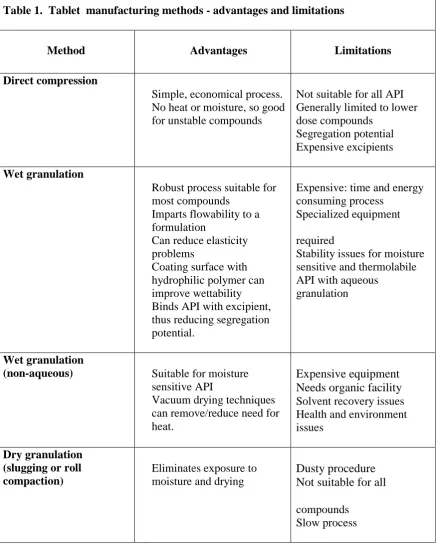
Table 1. Tablet manufacturing methods - advantages and limitations
Method Advantages Limitations
Direct compression
Simple, economical process. No heat or moisture, so good for unstable compounds
Not suitable for all API Generally limited to lower dose compounds
Segregation potential Expensive excipients
Wet granulation
Robust process suitable for most compounds
Imparts flowability to a formulation
Can reduce elasticity problems
Coating surface with hydrophilic polymer can improve wettability Binds API with excipient, thus reducing segregation potential.
Expensive: time and energy consuming process
Specialized equipment
required
Stability issues for moisture sensitive and thermolabile API with aqueous
granulation
Wet granulation
(non-aqueous) Suitable for moisture
sensitive API
Vacuum drying techniques can remove/reduce need for heat.
Expensive equipment Needs organic facility Solvent recovery issues Health and environment issues
Dry granulation (slugging or roll compaction)
Eliminates exposure to moisture and drying
Dusty procedure Not suitable for all
compounds Slow process
1.8.1. Types of tablets
The tablet dosage form is a versatile drug delivery system. Different types of tablet
formulations are available, which could be broadly classified based on: (1) route of
Dept.of Pharmaceutics 13 J.K.K.Nattaraja college of Pharmacy
rectal delivery or vaginal delivery, and (2) formulation characteristics such as immediate
release tablets, effervescent tablets, melt-in mouth or fast dissolving tablets, delayed release
or extended release tablets15.
1.8.2. Coated tablets
Enteric coated dosage forms, such as coated tablets, sugar-coated tablets, soft and
hard gelatin capsules, granulates or pellets, have their firm place in the medical arsenal. The
preparations most commonly provided with enteric coatings contain pancreatin and other
proteolytic enzymes, diclofenac, cardiac glycosides, electrolyte preparations with sodium,
potassium and magnesium salts as well as calcium, iron and manganese preparations.
Bisacodyl preparations, preparations containing valproic acid as well as formulations with
plant extract or terpenes are also common. Nowadays, enteric coatings are particularly used
to
Protect active substances destroyed by the acidic gastric juice
Improve tolerability of medicaments irritating the stomach by only releasing them in
the small intestine
Making active substances available after a time delay (sustained release),
Achieving targeted release and concentration in the small intestine16
1.8.2.1Techniques
Generally three methods are used for tablet coating
Sugar coating
Film coating
Enteric coating
1.8.2.1.1 Sugar coating process involves five separate operations
Sealing / Water proofing: provides a moisture barrier and harden the tablet surface
Dept.of Pharmaceutics 14 J.K.K.Nattaraja college of Pharmacy
Grossing/Smoothing: smoothes out the subcoated surface
Predetermine dimension
Colouring gives the tablet its color and finished size
Polishing produces the characteristics gloss
1.8.2.1.2 Development of film coating formulations
If the following questions are answered then one can go for film coating:
Is it necessary to mask objectionable taste, color and odor
Is it necessary to control drug release
What tablets size, shape, or color constrains must be placed on the developmental
work
1.8.2.2 Materials used in film coating
Film formers, which may be enteric or no enteric
Solvents
Plasticizers
Colourants
Opaquant-Extenders
Dept.of Pharmaceutics 15 J.K.K.Nattaraja college of Pharmacy
1.8.2.2.1 Film formers
Ideal requirements of film coating materials are summarized below:
Solubility in solvent of choice for coating preparation
Solubility requirement for the intended use e.g. free water-solubility, pH -dependent
solubility
Capacity to produce an elegant looking product
High stability against heat, light, moisture, air and the substrate being coated
No inherent colour, taste or odor
High compatibility with other coating solution additives
Nontoxic with no pharmacological activity
High resistance to cracking
Film former should not give bridging or filling of the debossed tablet
Compatible to printing procedure
Commonly used film formers are as follow
Hydroxy Propyl Methyl Cellulose (HPMC)
Methyl Hydroxy Ethyl Cellulose (MHEC)
Ethyl Cellulose (EC)
Hydroxy Propyl Cellulose (HPC)
Dept.of Pharmaceutics 16 J.K.K.Nattaraja college of Pharmacy
Sodium carboxy methyl cellulose
Polyethylene glycols (PEG)17
1.8.2.2.2 Solvents
Solvents are used to dissolve or disperse the polymers and other additives and convey
them to substrate surface.
Ideal requirement of solvents used for enteric coatings are summarized below
Should be either dissolve/disperse polymer system
Should easily disperse other additives into solvent system
Small concentration of polymers (2-10%) should not in an extremely viscous solution
Should be colorless, tasteless, odorless, inexpensive, inert, nontoxic and
nonflammable.
Rapid drying rate
No environmental pollution
1.8.2.2.3 Plasticizers
Phthalate esters , Phosphate esters, Stearates, Sebacate.
1.8.2.2.4 Colorants
1.8.2.3 Ideal properties of enteric coating material are summarized as below
Resistance to gastric fluids
Susceptible/permeable to intestinal fluid
Compatibility with most coating solution components and the drug substrate
Dept.of Pharmaceutics 17 J.K.K.Nattaraja college of Pharmacy
Nontoxic, cheap and ease of application
Ability to be readily printed
Polymers used for enteric coating are as follow
Cellulose acetate phthalate (CAP)
Acrylate polymers
Hydroxy propyl methyl cellulose phthalate
Polyvinyl acetate phthalate
1.8.2.4 New materials used for tablet coating18
Zein
Aqua-Zein®, which is an aqueous zein formulation containing no alcohol
Amylose starch and starch derivatives
Dextrins
1.9 Directly compression
The International Pharmaceutical Excipients Council (IPEC) defines excipients as
"Substances, other than the Active Pharmaceutical Ingredient (API) in finished dosage form,
which have been appropriately evaluated for safety and are included in a drug delivery
system to either aid the processing or to aid manufacture, protect, support, enhance stability,
bioavailability or patient acceptability, assist in product identification, or enhance any other
Dept.of Pharmaceutics 18 J.K.K.Nattaraja college of Pharmacy
use". Solvents used for the production of a dosage form but not contained in the final product
are considered to be excipients, i.e. the granulation fluids, which might be dried off later,
should comply with relevant requirements of Pharmacopoeia unless adequately justified.
Excipients no longer maintain the initial concept of "inactive support" because of the
influence they have both over biopharmaceutical aspects and technological factors. The
desired activity, the excipients equivalent of the active ingredient's efficacy, is called its
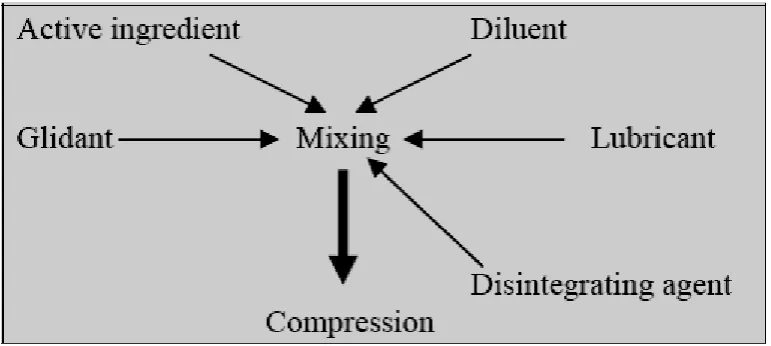
Functionality19. Figure 3 indicating the direct compression process of tablet manufacturing20and
[image:37.595.109.495.319.492.2]Table 2 shows the ideal requirements, advantages and limitations of direct compression.
Dept.of Pharmaceutics 19 J.K.K.Nattaraja college of Pharmacy
Table 2. Ideal requirements, advantages and limitations of direct compression
1.9.1 Advantages of direct compression
Direct compression is economic compare to wet granulation since it requires fewer
unit operations. This means less equipment, lower power consumption, less space,
less time and less labour leading to reduced production cost of tablets
More suitable for moisture and heat sensitive APIs, since it eliminates wetting and
drying steps and increases the stability of active ingredients by reducing detrimental
effects
Changes in dissolution profiles are less likely to occur in tablets made by direct
compression on storage than in those made from granulations. This is extremely
important because the official compendium now requires dissolution specifications in
most solid dosage forms
Ideal requirement Advantage Limitation
Flowability Cost effective production
Segregation
Compressibility Better stability of API Variation in functionality
Dilution potentia Faster dissolution Low dilution potential Rework ability Less wear and tear of
punches
Rework ability
Stability Simplified validation Poor compressibility of API
Controlled particle size
Lower microbial
contamination
Dept.of Pharmaceutics 20 J.K.K.Nattaraja college of Pharmacy
Disintegration or dissolution is the rate-limiting step in absorption in the case of
tablets of poorly soluble API prepared by wet granulation. The tablets prepared by
direct compression disintegrate into API particles instead of granules that directly
come into contact with dissolution
The high compaction pressure involved in the production of tablets by slugging or
roller compaction can be avoided by adopting direct compression
The chances of wear and tear of punches and dies are less21-22
1.9.2 Factors in formulation development
Many factors influence the choice of the optimum direct-compression filler to be used
in a tablet formulation.
More than in any other type of tablets, successful formulations of direct compression
tablets depend on careful consideration of excipient properties and optimization of the
compressibility, fluidity, and lubricability of powder blends. The importance of standardizing
the functional properties of the component raw materials and the blending parameters cannot
be overstressed. Preformulation studies are essential in direct-compression tableting even for
Dept.of Pharmaceutics 21 J.K.K.Nattaraja college of Pharmacy
2. AIM & OBJECTIVE OF WORK
The tablet enteric coating is perhaps one of the oldest pharmaceutical processes still in
existence. Enteric refers to the small intestine; therefore enteric coatings prevent release of
medication before it reaches the small intestine.
Enteric-coated dosage forms do not release the active ingredient until they have been
transported down to the neutral reacting part of the small intestine; hence they offer the best
possibilities for the protection of unstable drugs at low pH values. The most important
reasons for enteric coating can be summarized as follows: - to protect acid-labile drugs from
gastric fluid (e.g. enzymes and certain antibiotics), - to prevent gastric distress or nausea due
to irritation from a drug (e.g. sodium salicylate), - to deliver drugs intended for local action in
the intestines (e.g. intestinal antiseptics could be delivered to their site of action in a
concentrated form and bypass systemic absorption in the stomach), - to deliver drugs that are
optimally absorbed in the small intestine to their primary absorption site in their most
concentrated form, - to provide a delayed-release component for repeat action .
The modified enteric-coated Pantoprazole sodium formulation that provide immediate
release in the small intestine and simultaneously provide sustained input of drugs that have an
absorption window and at the same time may improve or maintain bioavailability of the
formulation.
The most potent suppressors of gastric acid secretion are inhibitors of the gastric H+,
K+-ATPase (proton pump). In typical doses, these drugs diminish the daily production of
acid (basal and stimulated) by 80% to 95%. Available PPI’s for clinical use: Omeprazole,
esomeprazole, lansoprazole, pantoprazole, rabeprazole.
The primary treatment goal patients with peptic ulcer and GERD are relief of
Dept.of Pharmaceutics 22 J.K.K.Nattaraja college of Pharmacy Pantoprazole is a substituted benzimidazole derivative that targets gastric acid proton pumps
,the final common pathway for gastric acid secretion. The drug covalently binding to the
proton pumps, causing prolonged inhibition of gastric acidsecretion. But the drug causes
irritation to gastric mucosa which may lead to nausea and vomiting. The stability of
pantoprazole is rapidly degrades in acid medium of the stomach, but has acceptable stability
in alkaline conditions. Therefore, pantoprazole should be delivered into the intestine. Hence,
formulation of pantoprazole as an enteric coated tablet may solve the stability problem of
drug in the stomach and release the drug in the intestine.
The main objectives of the present study was
To formulate and evaluate enteric coated tablets Pantoprazole sodium by direct
compression method
Selection of suitable coating material to develop the dosage form
To overcome the drug degradation by the gastric enzymes as well as the acidic
Dept.of Pharmaceutics 23 J.K.K.Nattaraja college of Pharmacy 3.PLAN OF THE WORK
1.Pre-compression parameters
Bulk density
Tapped density
Carr’s index
Haussner ratio
Angle of repose
2. Formulation of core tablets, by direct compression
3. Post compression parameters
Weight variation
Hardness test
Friability test
Drug content
Disintegration time
4. Tablets coating
Filmthickness
Film solubility
In-vitro dissolution studies
Dept.of Pharmaceutics 24 J.K.K.Nattaraja college of Pharmacy 4. DRUG AND EXCIPIENTS PROFILE
4.1 PANTOPRAZOLE24, 25, 26
Chemistry: Chemically, pantoprazole sodium sesquihydrate, is a sodium 5- (difluoromethoxy)-2[[(3,4,dimethoxy-2pyridinyl)methyl]
sulfinyl] -1H benzimidazole sesquihydrate.
Molecular formula: C16H15F2N3O4S. 1.5 H2O
Molecular weight: 432.4 gm/mol.
Mechanism of action: Pantoprazole is a proton pump inhibitor (PPI) that suppresses the final step in gastric acid production by covalently
binding to the (H+,K+) - ATPase enzyme system at the
secretory surface of the gastric parietal cell. This effect
leads to inhibition of both basal and stimulated gastric
acid secretion irrespective of the stimulus. The binding to
the (H+, K+)- ATPase results in a duration of antisecretory
Dept.of Pharmaceutics 25 J.K.K.Nattaraja college of Pharmacy
Pharmacokinetics: Pantoprazole sodium is prepared as an enteric-coated tablet so that absorption of pantoprazole begins only after t h e tablet area
under the serum concentration time curve (AUC) increase in a manner
proportional to oral and intravenous doses from 10 mg to 80 mg.
Pantoprazole does not accumulate and its pharmacokinetics are
unaltered with multiple daily dosing.
Absorption: The absorption of pantoprazole is rapid, with a Cmax of 2.5 μg/ml that occurs approximately 2.5 h after administration of a single or multiple
oral 40 mg doses of pantoprazole sodium delayed release tablets.
Pantoprazole is well absorbed; it undergoes little first-pass metabolism
resulting in an absolute bioavailability of approximately 77%.
Administration with food may delay its absorption.
Distribution: The apparent volume of distribution of pantoprazole is approximately 11.0 to 23.6L, distributing mainly in extracellular fluid. The serum
protein binding of pantoprazole is about 98%, primarily to albumin.
Metabolism: Pantoprazole is extensively metabolized in the liver through the cytochrome P450 (CYP) system. Pantoprazole metabolism is
independent of the route of administration (intravenous or oral).
Elimination: After a single oral or intravenous dose of pantoprazole to healthy, normal metabolizer volunteers, approximately 71% of the dose was
excreted in the urine with 18% excreted in the feces through biliary
Dept.of Pharmaceutics 26 J.K.K.Nattaraja college of Pharmacy Drug-drug interactions: Pantoprazole given with atazanavir, indinavir, nelfinavir may be
reduce the plasma concentrations. Coadministration with atazanavir is
not recommended. Plasma levels of certain azole antifungal (e.g.
itraconazole, ketoconazole) may be reduced, avoid this combination if
possible.
Contraindications: Pantoprazole sodium delayed-release tablets are contraindicated in patients with known hypersensitivity to any component of the
formulation.
Precautions: Generally, daily treatment with any acid-suppressing medications over
a long period of time (eg, longer than 3 years) may lead to
malabsorption of cyanocobalamin (vitamin B-12).
Side effects: The common side effects are abdominal pain, blurred vision, dry mouth, fatigue, flushed, dry skin, increased hunger, increased thirst,
increased urination, nausea, sweating.
Uses: Pantoprazole is used to treat erosive esophagitis or "heartburn" caused by gastroesophageal reflux disease (GERD). Pantoprazole may also be
used to treat Zollinger- Ellison syndrome, stomach produces too much
acid.
Dose: It is administered orally dose of 40 mg once daily.
Dept.of Pharmaceutics 27 J.K.K.Nattaraja college of Pharmacy 4.2MICROCRYSTALLINE CELLULOSE27
Non-proprietary names: Cellulosum microcristallinum, microcrystalline cellulose Synonyms: Avicel, Emcocel and Tabulose, Crystalline cellulose
Chemical Name: Cellulose
Empirical formula: (C6H10O5) n, Where n=220
Molecular weight: Approximately 36,000
Description: white, odorless, tasteless, crystalline powder
Functional category: Adsorbent; suspending agent; tablet and capsule diluent; tablet disintegrant.
Solubility: Slightly soluble in 5% w/v sodium hydroxide solution; practically insoluble in water, dilute acids, and most organic
solvents.
Applications: Adsorbent-20 to 90%, Antiadherent–5 to 20%, Capsule binder/diluents -20 to90%, Tablet disintegrant-5 to 15%, Tablet
binder/diluents-20 to 90%.
Stability and Storage Conditions: Microcrystalline cellulose is a stable though hygroscopic material. The bulk material should be stored
in a well-closed container in a cool, dry place.
Incompatibilities: Incompatible with strong oxidizing agents.
Dept.of Pharmaceutics 28 J.K.K.Nattaraja college of Pharmacy 4.3 MAGNESIUM STEARATE27
Non-proprietary names: Magnesium stearate, Magnesii stearas.
Synonyms: Magnesium octadecanoate; octadecanoic acid,
magnesium salt; stearic acid, magnesium salt
Chemical Name: Octadecanoic acid magnesium salt
Empirical formula: C36H70MgO4
Molecular weight: 591.34
Description: Magnesium stearate is a very fine, light white, precipitated or milled, impalpable powder of low bulk
density, having a faint odor of stearic acid and a
characteristic taste.
Functional category: Tablet and capsule lubricant.
Solubility: Practically insoluble in ethanol, ethanol (95%), ether and water; slightly soluble in warm benzene and warm
ethanol.
Applications: It is primarily used as a lubricant in capsule and tablet manufacture at concentrations between 0.25% and 5.0%
w/w. It is also used in barrier creams.
Stability and Storage Conditions: Magnesium stearate is stable and should be stored in a
well closed container in a cool, dry place.
Incompatibilities: Incompatible with strong acids, alkalis, and iron salts.
Dept.of Pharmaceutics 29 J.K.K.Nattaraja college of Pharmacy 4.4 TALC27
Non-proprietary
names: Purified talc, Talc, Talcum.
Synonyms: Altalc, hydrous magnesium calcium silicate.
Chemical Name: Talc
Structural formula: Mg6(Si2O5)4(OH)4
Description: Talc is a very fine, white to greyish-white, odorless, impalpable unctuous, crystalline powder.
Functional category: Anticaking agent; glidant diluent; tablet and capsule lubricant.
Solubility: practically insoluble in dilute acids and alkalis, organic solvents, and water.
Applications: Talc was once widely used in oral solid dosage
formulations as a lubricant, diluent and lubricant.
Stability and Storage Conditions:Talc is a stable material and may be sterilized by heating at 160 ºC for not less than 1 hour. Talc should be stored
in a well-closed container in a cool, dry place.
Incompatibilities: Incompatible with quaternary ammonium compounds.
Safety: Talc is not absorbed systemically following oral ingestion and is therefore regarded as an essentially
Dept.of Pharmaceutics 30 J.K.K.Nattaraja college of Pharmacy abuse of products containing talc can cause granulomas
in body tissues.
4.5 CROSCARMELLOSE SODIUM27
Synonyms: Ac-Di-Sol; Cross-linked carboxymethyl cellulose sodium; Description: It occurs as white, odourless powder.
Functional categories Tablet and capsule disintegrate.
Solubility: Insoluble in water, but rapidly swells to 4-8 times its original volume on contact with water. Practically insoluble in acetone,
ethanol and toluene.
Stability and storage: Croscarmellose sodium is stable, though it is a hygroscopic material. It should be stored in airtight container in a cool and
dry place.
Safety: It is nontoxic and non-irritant material and widely used in oral pharmaceuticals.
Application: It is used in oral pharmaceutical formulations as a disintegrate for capsules and tablets. In tablet formulations, croscarmellose
sodium may be used in both direct-compression and
wet-granulation processes. Croscarmellose sodium at concentrations
up to 5% w/w may be used as a tablet disintegrant, although
normally 2% w/w is used in tablets prepared by direct
compression and 3% w/w in tablets prepared by a
wet-granulation process.
Incompatibilities: Not compatible with strong acids. Drug and Excipients Profile Dept. of Pharmaceutics, Gautham College of Pharmacy
Dept.of Pharmaceutics 31 J.K.K.Nattaraja college of Pharmacy 4.6 MANNITOL27
Non proprietary name: Mannitol, D-Mannitol ,Mannitolum
Synonyms: Cordycepic acid; C*PharmMannidex; E421; manna sugar; Chemical name: D-Mannitol
Category: Diluents, diluents for lyophilized preparations; sweetening agent; tablet and capsule diluent; tonicity agent.
Description: Mannitol occurs as white, odourless, crystalline powder, or
free-flowing granules. It has a sweet taste, approximately as
sweet as glucose and half as sweet as sucrose.
Solubility: Soluble in water, alkalies, ethanol, glycerine and propane. Stability and storage: Mannitol is stable in the dry state and in aqueous solutions.
Solutions may be sterilized by filtration or by autoclaving and
if necessary may be autoclaved repeatedly with no adverse
physical or chemical effects.
Safety: Mannitol is a naturally occurring sugar alcohol found in animals and plants; it is present in small quantities in almost all
vegetables. Laxative effects may occur if mannitol is consumed
orally in large quantities. If it is used in foods as a bodying
agent and daily ingestion of over 20 g is foreseeable, the
product label should bear the statement ‘excessive consumption
Dept.of Pharmaceutics 32 J.K.K.Nattaraja college of Pharmacy 4.7 CELLULOSE ACETATE PHTHALATE27
Nonproprietary names: Cellacephate; Cellacefate Synonyms: CAP, Cellulose acetophthalate
Chemical name: Cellulose, acetate, 1,2-benzenedicarboxylate. Category: Pharmaceutical aid (for enteric coating of tablets).
Description: White, free-flowing powder or colorless flakes; odorless or with a faint odor of acetic acid; hygroscopic.
Solubility: Freely soluble in acetone; soluble in diethylene glycol and in dioxan; practically insoluble in water, in ethanol (95%), in
toluene and in chlorinated and non chlorinated aliphatic
hydrocarbons. It dissolves in dilute solutions of alkalis.
Storage: To be stored in tightly-closed containers at a temperature between 8° and 15 °C.
Viscosity: 50-90 cps good coating solution with a honey like consistency, but the viscosity is influenced by the purity of the solvent.
Applications: CAP is used as an enteric coating material for tablets or capsules.
Incompatibilities: Cellulose acetate phthalate is incompatible with ferrous sulfate, ferric chloride, silver nitrate, sodium citrate, aluminum sulfate,
calcium chloride, mercuric chloride, barium nitrate, acetate,
Dept.of Pharmaceutics 33 J.K.K.Nattaraja college of Pharmacy
4.8 EUDRAGIT L-100 27
Synonyms: Methacrylic acid
Functional category: Film former, tablet binder
Description: White powders with a faint characteristic odor.
Solubility: 1 gm of Eudragit L-100 dissolves in 7 g methanol,
ethanol, in aqueous isopropyl alcohol and acetone.
Insoluble in ethyl acetate, methylene chloride, petroleum
ether and water.
Stability and storage conditions: Eudragit and L 100 polymers are stable at room
temperature.
Safety: Acute toxicity studies have been performed in rats, rabbits
and dogs. No toxic effects were observed. Chronic toxicity
studies were performed in rats over a period of 3 months.
No significant changes were found in the animal organs.
Applications: Eudragit L 100 and S 100 are employed as film coating
agents resistant to gastric fluid with solubility above pH
6.0 and pH 7.0 respectively, for enteric coating of
formulations. Eudragit L and S, also referred to as
methacrylic acid copolymers in the USP32–NF27
monograph, are anionic copolymerization products of
methacrylic acid and methyl methacrylate. The ratio of
free carboxyl groups to the ester is approximately 1 : 1 in
Eudragit L (Type A) and approximately 1 : 2 in Eudragit S
Dept.of Pharmaceutics 34 J.K.K.Nattaraja college of Pharmacy 4.9 CALCIUM PHOSPHATE27
Nonproprietary Names: Anhydrous Calcium Hydrogen Phosphate, Anhydrous Dibasic Calcium Phosphate
Chemical Name: Dibasic calcium phosphate
Molecular Weigh: 136.06
Functional Category: Tablet and capsule diluent.
Applications: Anhydrous dibasic calcium phosphate is used both as an excipient and as a source of calcium in nutritional
supplements. It is used particularly in the
nutritional/health food sectors. It is also used in
pharmaceutical products because of its compaction
properties, and the good flow properties of the
coarse-grade material.
Description: Anhydrous dibasic calcium phosphate is a white, odorless, tasteless powder or crystalline solid. It occurs
as triclinic crystals.
Stability and Storage Conditions: Dibasic calcium phosphate anhydrous is a nonhygroscopic, relatively stable material. Under
conditions of high humidity it does not hydrate to form
the dihydrate.