0022-538X/93/031159-10$02.00/0
Copyright C)1993, AmericanSociety for
Microbiology
Functional Analysis of the
Herpes
Simplex Virus
UL42 Protein
PAUL
DIGARD,'
CONNIES. CHOW,2LINDSAY PIRRIT,'tANDDONALD M.COEN`*
Department of Biological Chemistry and Molecular Pharmacology' and Committee on Virology,2
HarvardMedical
School, Boston,
Massachusetts 02115 Received 24September 1992/Accepted 3 December 1992Theherpessimplex virus UL42geneencodesamultifunctional polypeptide (UL42) thatisessentialforvirus
DNA replication. To further understand the relationship betweenthe structureof UL42 and the rolethat it playsduring virus replication,weanalyzedanextensivesetofmutantUL42 proteinsfor theabilitytoperform the threemajor biochemicalfunctionsascribedtothe protein:bindingtoDNA,stablyassociatingwith the virus DNApolymerase (Pol),and actingtoincrease the length of DNA chains synthesized byPol. Selectedmutants
werealso assayed for theirabilitytocomplement the replication ofaUL42 null virus. Theresultsindicated that
the N-terminal 340 amino acids ofUL42 were sufficient for all three biochemical activities and could also
support virus replication. Progressive C-terminal truncation resulted inthe loss of detectable DNA-binding
activity before Pol binding, while several mutations near the N terminus of the polypeptide resulted in an
altered interaction with DNA but had no apparent affect on Pol binding. More dramatically, an insertion mutation at residue 160destroyed the ability to bind Pol but hadno effect on DNA binding. This altered
polypeptidealsofailedtoincrease thelength of DNAproduct synthesized by Pol, andthemutantgenecould
notcomplementthe growth ofaUL42 nullvirus,indicating thatthespecific interaction between PolandULA2 is necessaryfor fullPol function and for virus replication. This study confirms thevalidityof the Pol-UL42 interactionas atargetforthe design ofnovel therapeuticagents.
Herpes simplexvirus(HSV) providesan excellent model
systemfor thestudyof DNAreplicationineukaryotic cells inpartbecause it encodesmanyifnotall of the proteins that
aredirectly requiredforreplication of the virusgenome(6). HSV is also a ubiquitous human pathogen whose control
relies primarily on antiviral drugs. The ultimate target of most of thesedrugs is thevirus-encoded DNApolymerase (Pol), althoughin principle, anyof the essential replication
proteins couldserve as an excellent target(8).
TheUL42protein (productofthe UL42 gene),another of the essentialreplication proteins,wasoriginallyidentifiedas adouble-stranded DNA(dsDNA)-binding protein (40).More
recently, it has become apparent that the virus Pol in fact consists ofa heterodimer ofa catalytic subunit (productof the UL30 gene)and UL42. As firstdescribed forHSV-2(39,
44) and more recently for HSV-1 (11, 17, 20), the two
polypeptides copurifyunderavarietyofconditions, indicat-ing a stable association. Although the Pol polypeptide by
itself has catalytic activity (31), the processivity of the
enzyme on single-stranded templates is enhanced in the presenceof UL42(20, 21).TheUL42-binding siteonPol has
beenmappedtothecarboxy (C) terminus of the protein (13, 14), butlittle is known of the functional domains ofUL42 itself or how it increases the processivity of Pol. The fact
thatUL42 has an intrinsic affinityfor dsDNAsuggests the attractive hypothesisthat ittethers Poltothe template and therebyincreases processivity bydiscouraging dissociation of the enzyme from the primer terminus (20). UL42 is essential for viral DNA replication (23, 30), but it is not known whetherthis derivesfrom itsroleas aPolaccessory
subunitorwhether itperforms other functions.
* Correspondingauthor.
t Present address: NERC Unit, Stirling University, Stirling,
ScotlandFK8 2BX.
In this report, we present the results of experiments designedto maptheregionsofUL42necessaryforbinding todsDNAand Polby analysisofanextensivesetof insertion and deletion mutants. We then tested the ability of these mutants toincrease thelengthof DNAproduct synthesized by Pol on a singly primed single-stranded DNA (ssDNA)
template.Theseresultspermittedacorrelationbetween the
bindingactivities of themutantsandtheirabilitytosupport Pol-drivenlong-chainDNAsynthesisand also allowedusto makepredictions regardingtheorganizationof thedomains of thepolypeptide. Inaddition, by correlatingthe results of the in vitroassayswith theabilityof themutants to
comple-mentthegrowth ofa UL42 nullmutantin transfected Vero cells,wetestthehypothesisthat thePol-UL42 interaction is necessaryfor viralgrowthand isthereforeavalidtargetfor thedesign ofantiviraldrugs.
MATERIALS AND METHODS
Linker insertion mutagenesis.Aplasmid-encodedcopyof the KOS strain UL42 gene (pINGUL42 [14]) was
pseudo-randomlylinearizedby digestionwiththefrequently cutting restriction enzyme HaeIII (New England Biolabs), ThaI (BethesdaResearch Laboratories), orAccII(Stratagene) in thepresenceof ethidium bromide(38)and then linker tailed with the 12-bp palindromic oligonucleotide TGCATCGAT GCAaspreviouslydescribed(13). Unit-length plasmidwas
gel purified and transformed into Eschenchia coli DH5ot, followingwhich colonieswerescreened for intact plasmids
containinga singleinsertion withinthe UL42coding region by standard miniprep and restriction enzyme digest. The oligonucleotide was designed to include a ClaI restriction
enzymesite andnottoencodeprolineorstopcodonsin any translational readingframe. Insertions resultingin amutant
phenotype, and those insertions which couldnot be
unam-1159
on November 9, 2019 by guest
http://jvi.asm.org/
biguously located by restriction enzyme mapping, were
confirmed by dideoxynucleotide sequencing.
Deletion mutagenesis of UL42. The C-terminal deletion mutants AC478, AC441, AC375, AC340, and AC307 (num-bered according to the last UL42-specific residue present)
wereobtained by linearizing plasmids containing the
appro-priate insertion mutant with ClaI to provide a truncated
templatefor invitrotranscriptionandsubsequent translation inrabbitreticulocytelysate. AC269wassimilarlyexpressed
by linearizingpING42ataSalIsite atnucleotide 1049 (33). To obtain constructs capable of expressing the desired C-terminaldeletions after transfection into Verocells, plas-midspING42(I-441), -(I-341), and -(I-308)werelinearizedas
describedabove and then linker tailed with the self-comple-mentary oligonucleotide CGCTAGTCTAGACTAG, which
wasdesignedtocontainstopcodons in all threetranslational reading frames, as described previously (13). Plasmid
pING42A35-280 (numbers referto theamino acids deleted)
wasconstructed by excising the central 750-bp PstI fragment fromthe UL42genefollowed by religation oftheremaining plasmid. Plasmids pT742AN35AC282 and pT742AN281 (N-terminal deletions are named according to the first UL42-specific residue present) were constructed by cloning the central750-bpPstIfragmentanda3'1,350-bpPstIfragment, respectively, into the PstI site of plasmid pT7-7 (43). Plasmid pT742AN10 was constructed by using the ClaI site of the
insertionmutantI-9 and anEcoRV site 3' totheUL42gene
inthepING42 plasmid polylinkertoexciseall but thevery5' endof thegene. AftertreatmentwiththeKlenow fragment of E. coli Pol I togenerate blunt-ended DNA, theresulting fragment was ligated into similarly blunt-ended EcoRI-cut
pT7-7. Similarly, plasmids encodingAN132 andAN160were
constructed by using the end-filled ClaI sites of mutants I-131andI-160, respectively,exceptthataHindIlI site inthe
polylinkerwas used to cleave the 3' end of the gene. The insert for AN132wasligatedintopT7-7cutwithHindIII and EcoRI(end filled),whileAN160wasconstructedwithpT7-7 cutwithSmaI andHindIII. Inthe latter fiveconstructs, an
in-frame ATG is supplied by thevector. In-frame internal deletions of UL42, i.e., A9-20, A20-131, A114-159, A131-191, A161-223, A20-191, A242-250, A250-308, A308-356, A191-250, A250-376, and A191-376, wereallconstructed in a similar fashion. Constructs containing the appropriate
linker insertionmutations (Table 1)weredigestedwithClaI and HindIII to divide the plasmids into a vector portion containingthat part of the UL42gene5'totheinsertion and
aseparateDNAfragmentcontaining the 3' end of thegene down to the unique HindIII site inthe plasmid polylinker. After agarose gel purification, vector and insert fragments derived from plasmids containing linker insertions in the
same translational reading frame were ligated together to generate the specified gene deletion. As these constructs
werederived from linker insertionmutants, eachencodesa
four-amino-acid insertionaswell astheindicated deletion.
Invitrotranscription-translationandimmunoprecipitation. After linearizationwiththeappropriate restriction enzyme,
plasmids were transcribed invitro by either bacteriophage
SP6orT7RNAPol, and the resulting mRNAwastranslated
in rabbit reticulocyte lysate (Promega) as previously
de-scribed (14). To assay the
[35S]methionine-labeled
UL42 mutantsthusproducedfor theabilitytobindtotheHSVPol, the reticulocyte lysate was microcentrifuged for 10 min atroomtemperature,and5-pul aliquots of thesupernatantwere
thenincubatedwith either140ngof
0-galactosidase
(Sigma) [image:2.612.306.546.94.284.2]or140ngofpurified HSVPol(generous gift ofK.Weisshart of this laboratory). After an incubation of 1 h at room
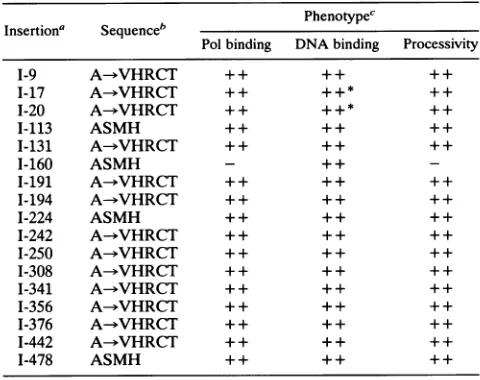
TABLE 1. Locations and phenotypes of linker insertion mutations in the UL42 gene
b ~~~~Phenotype'
Insertiona Sequenceb
Polbinding DNAbinding Processivity
1-9 A-VHRCT + + ++ ++
1-17 A-bVHRCT ++ ++* ++
1-20 A-bVHRCT ++ ++* ++
1-113 ASMH ++ ++ ++
1-131 A-*VHRCT + + ++ ++
1-160 ASMH - ++
-1-191 A-VHRCT + + ++ ++
1-194 A-bVHRCT + + ++ ++
I-224 ASMH + + ++ ++
I-242 A-*VHRCT + + ++ ++
1-250 A--VHRCT + + ++ ++
1-308 A-bVHRCT + + ++ ++
I-341 A-*VHRCT + + ++ ++
1-356 A-VHRCT + + ++ ++
I-376 A->HRCT + + ++ ++
1-442 A-bVHRCT + + ++ ++
I-478 ASMH + + ++ ++
aMutants aredesignated accordingto thecodonnumberdisrupted bythe linker insertion.
bThe aminoacids encodedbythe inserted linker aregiven in standard
single-lettercode. Alsoindicatedwhereappropriatearethe identitiesof amino
acids alteredbyout-of-reading-frameinsertions.
IScoredasfollows: ++, indistinguishable from wild-typeUL42; -, no
detectableactivity;+ +*,the mutant bound DNAbutdisplayedanalteredsalt
elutionprofile.
temperature,thealiquotsweredilutedbytheaddition of 100
,ulofimmunoprecipitationbuffer(IPbuffer; 100 mM KCI, 50 mMTris-CI[pH7.6],5mM
MgCl2,
1 mMphenylmethylsul-fonyl fluoride, 0.02% NaN3) containing 0.1% Nonidet P-40 and 50 ,ul of a 10% (wt/vol) suspension of protein
A-Sepharose (Sigma)in the previousbuffer. Finally, 2 ,ul ofa rabbit antiserum raisedagainstaPol-i-galactosidase fusion proteincapableofprecipitatingboth Poland
P-galactosidase
(PP5 [47])was added, and the mixturewas incubated over-nightat 4°C ona rotator.The following day, the Sepharose beads were collected by centrifugation and washed twice with 750 ,ul of IP buffer containing 1% Triton X-100, 1%sodium deoxycholate, and 0.1% sodium dodecyl sulfate
(SDS)andoncewith IP buffercontaining 0.1%Nonidet P-40. Boundproteinswerethen elutedbyboiling in SDS-polyac-rylamide gel electrophoresis (PAGE) sample buffer and
analyzed bySDS-PAGE and autoradiography.
DNA-cellulose chromatography. Aliquots of reticulocyte
lysate-expressed
protein (10 p,l)were diluted into 100 p,lof TMbuffer(20mMTris-Cl[pH7.6], 5mMMgCl2)
containing50 mM
NaCl,
treatedwith 2 ,ul of an RNaseA/T1
mixture(RNace-it; Stratagene) for 20 min at room temperature to removefree RNA, and thenappliedto a0.5-ml-bed-volume dsDNA-cellulose (Sigma) column equilibrated in the same buffer. The column was washed twice with 0.5 ml of TM bufferplus 50 mM NaCland thensequentiallyeluted with2 column volumes each ofTMbuffercontaining 100mM,250
mM,
500mM,and1 MNaCl.
Theresulting0.5-ml fractions were then concentrated by ethanol precipitation in the presence of 40 ,ug of carrier bovine serum albumin (BSA; Sigma) andanalyzed bySDS-PAGE.Pol assays. Reticulocyte lysate-expressed ULA2 mutants were assayed for the ability to increase the length of the DNAproductssynthesized by purified HSVPol on asingly
primed M13 ssDNA template. Aliquots of
lysate
were di-luted in 50 ,ul of buffer containing 100 mM (NH4)2SO4, 20on November 9, 2019 by guest
http://jvi.asm.org/
Ability
to:UIA2
ORF
Wild Type (488 aa) AC478 AC441
AC375
AC340
AC307 AC269
ANIO
AN132
AN160
AN281 AN35AC282
A9-20
A20-131
Al 14-159
A131-191
A161-223
A20-191 A242-250
A250-308
A308-356
A191-250
A250-376
A35-280
A191-376
Bind Bind Stimulate Pol DNA Pol
++
++
++
++
++
+1
+1
++
+1-++
++
++
++
++
++
++
++
++
++
++
++
++
++
++
++
FIG. 1. Summary of UL42 deletionmutants.Expressed portions
of the UL42ORFarerepresentedasboxes,anddeletedregionsare
shown aslines. Phenotypesofthemutantsinthree in vitro assays
aretabulated onthe right. Scoreswere assigned as follows; ++,
indistinguishable from wild-type UL42; +/-, weak activity; -,
minimalorundetectableactivity; + +*,themutantbound DNA but
displayedanaltered salt elutionprofile.Overallphenotypesarealso
indicatedgraphically bytheshadingof theboxesasfollows:black,
mutantsthat behavedindistinguishably from wild-type UL42intwo
mMTris-Cl (pH 7.5), 3 mM MgCl2, 0.1 mM EDTA, 0.5 mM dithiothreitol, 4% glycerol, 40 ,ug of BSA per ml, 60 F.M dATP, dGTP, and dGTP, 10 p.M [a-32P]dCTP (2 ,uCi), 25 fmol ofpurified Pol (generous gift of K. Weisshart), and 50 fmol of a singly primed M13 ssDNA template prepared as describedpreviously (13). Aftera30-min incubationat37°C, 10-pul samples were taken and analyzed by SDS-PAGE to monitor the integrity of the mutant UL42 polypeptides, while DNA synthesis was terminated in the remainder of the reaction by the addition of 50 pul of 1% SDS-10 mM EDTA-10 mM Tris-Cl (pH 8)-200 p.g of proteinaseKperml. Following incubation at 37°C for 1 h, the samples were extracted once with phenol-chloroform (1:1, vol/vol) and ethanolprecipitated, and the newly synthesizedssDNA was detectedby alkaline gelelectrophoresis (29) and autoradiog-raphy.
Transient complementation of a UL42 null mutant. Vero cellsatapproximately 80% confluencewere transfected with 100 ng of the indicated pING42 plasmids (which contain a functionalpromoter) by the DEAE-dextran method. Sixteen hourslater, the cells were infectedwith the virus CgalA42at a multiplicity of infection of 3. CgalA42 has a 1.26-kb deletion of the UL42 gene and is therefore phenotypically null forUL42 (23; generously supplied by Paul Johnson and Deborah Parris). After virus adsorption for 1.5 h, the cells were washed twice with serum-free medium, treated for 2 minwith an acid-glycine saline wash (5) to remove extracel-lularvirus, and then washed twice with serum-free medium, after which fresh medium was added. Twenty-four hours later, viruswasharvested(9) and titeredonthe V9 cellline, which contains a resident copy of the UL42 gene and is therefore permissive for CgalA42 growth (23; generously provided by Paul Johnson and Deborah Parris). Progeny were also titered on Vero cellsto ensure thatthey did not arise from recombination events.
RESULTS
Insertion and deletion mutagenesis of UL42. To map the
regions ofULA2 important for its functions, we created a library of 12-bp linker insertion mutations withinthe UL42 gene asdescribed in MaterialsandMethods. Table 1shows thelocations of the 17mutantsgenerated, numbered
accord-ingtotheamino acid residueinterrupted by the insertion.As the insertedoligonucleotide containedauniqueClaI restric-tion enzymesite, plasmidscontainingthesemutations could then be used to construct a series of N- and C-terminal deletion mutants and a set of in-frame internal deletions
(MaterialsandMethods). Additional deletion mutants were also constructed by using convenient restriction enzyme siteswithin the UL42 gene. Figure 1 summarizes the sizes and locations of the 24 deletion mutants examined in this study.
MappingthedsDNA-bindingsite ofUL42.SinceUL42 has anintrinsicaffinityfordsDNA, which may be ofsignificance
for the protein's role as a processivity factor or other
functions, we assayed the panel of insertion and deletion mutantsdescribed above for theabilitytobindtoa dsDNA-cellulose column. Aliquots of the [35S]methionine-labeled
polypeptidesweredilutedatleast10-foldin buffercontaining
or moreassays; grey,mutantsthat hadsome activityinoneassay;
andwhite, those that had minimal orundetectable activity in all
threeassays. aa,amino acids.
p3
p M
S
on November 9, 2019 by guest
http://jvi.asm.org/
[image:3.612.58.310.76.632.2]mM NaCi
A
:Z
B S:.~~
Ffi
*H
I,J-.
WT UL42
AC375
AC340
AC307
AN10
AN281
A20-131
A161-223
1-160
[image:4.612.87.262.64.358.2].::..
..I-20
FIG. 2. DNA-bindingassay.[35S]methionine-labeled UL42
poly-peptides expressed in rabbit reticulocyte lysate were applied to
DNA-cellulose columns and eluted with buffer containing the
indi-cated concentrationof NaCl. Fractionswerecollected and analyzed
forprotein contentby SDS-PAGE and autoradiography. An
equiv-alent unfractionated amount of each sample was also analyzed
(Total). WT, wild-type.
50 mMNaCl andappliedtoaDNA-cellulose column before
stepwise elution with 2 column volumes each of buffer containing saltatthe concentrationsshown in Fig. 2. Frac-tionsof 1 columnvolume eachwerecollected and analyzed
bygelelectrophoresisafter concentration by ethanol precip-itation. Wild-type UL42 synthesized in rabbit reticulocyte lysate was retained by the column, with very little protein
appearing in the wash fractions (50 mM). The bound polypeptide was eluted by increasing salt concentrations, with the majority ofthe material appearing in the 250 mM fractions (Fig. 2A). Control experiments using cellulose aloneas acolumnmatrix revealednosignificantretentionof
the polypeptide (data not shown), indicatingthat the assay
reflects a genuine interaction with DNA. Two C-terminal
deletionmutants(AC375andAC340)behavedlikefull-length
UL42inthatthe majority of the proteinwasretained by the
columnat50 mM NaCl butthen eluted in thepresenceof250
mM NaCl (Fig. 2B and C). However, further C-terminal truncation (AC307; Fig. 2D) resulted in a polypeptide that
eluted almost entirely in the first wash fraction, indicating that in50 mM NaCl, ithadverylittle affinity forDNA.
The smallest N-terminal truncation tested (AN10)
dis-played an altered ability to bind DNA (Fig. 2E). Like wild-type UL42,mostof thepolypeptidewasretainedby the
columnat50mM NaCl, but insteadof the majorityelutingat
250 mMNaCL, approximatelyhalf of thematerialwaseluted
by1MNaCl. AN10wasnotretainedbyacellulose column
(data not shown), indicating that the altered elution profile from dsDNA-cellulose results from an altered interaction with DNA. Mutants AN132 and
AN160
eluted almost en-tirely in the wash fractions, indicating the loss of DNA-binding activity (Fig. 1), but unexpectedly, further trunca-tion of the N terminus of the polypeptide apparently restored DNA binding, as mutantAN281 was retained by the column at 50 mM NaCl but eluted with 500 mM salt (Fig. 2F). Additionally, AN281 did not bind to a cellulose column (45). We also tested 13 internal deletion mutants that removed in sum residues 9 to 376 for the ability to bind DNA. Eleven of these mutants were not retained significantly by the column at 50 mM NaCl (Fig. 2G[A20-131]
and H [A161-223]; results for other mutants are summarized in Fig. 1). However, a small deletion near the middle of the polypep-tide, A242-250, apparently did not affect DNA binding, as the polypeptide eluted normally at 250 mM salt (Fig. 1). Interestingly, a mutant containing a small deletion near the N terminus, A9-20, behaved similarly toAN10
in that it eluted in two populations, one at 250 mM and one at 1 M NaCl (Fig. 1).The panel of 17 linker insertion mutants was also assayed for DNA-binding ability. As shown forI-160(Fig. 2I), 15 of the insertion mutants bound DNA normally and eluted with 250 mM NaCl (summarized in Table 1). However, two insertion mutations near the N terminus (1-20 [Fig. 2J] and
1-17[Fig. 1]) eluted partially at 250 mM and partially at 1 M salt, similarly to the N-terminal deletion mutants
AN10
andA9-20.
The results of these experiments are summarized in Fig. 1 and Table 1; the N-terminal two-thirds of the polypeptide is sufficient for DNA binding, while the C-terminal 148 amino acids are dispensable. Consistent with this finding, all of the deletion mutants assayed that lacked more than 12 residues from within these N-terminal 340 amino acids failed to bind DNA, with the notable exception ofAN281,while mutations within the first 20 amino acids altered the interaction with DNA.
Mapping thePol-binding site onUL42.Next, we attempted to map the region of UL42 responsible for binding to Pol by analyzing the ability of various deletion mutants to copre-cipitate with Pol. Figure 3a shows the results obtained with wild-type and mutant UL42 polypeptides lacking 113, 148, and 219 residues from the C terminus of the protein.
[35S]me-thionine-labeled wild-type UL42 synthesized in rabbit reticulocyte lysate was immunoprecipitated by antisera di-rected against aPol-,B-galactosidase
fusion protein when mixed with unlabeled purified Pol but not when incubated with I-galactosidase (Fig. 3aA). This specific coprecipitation is indicative of a stable complex formed between the two polypeptides. Truncated UL42proteins lacking as many as 148 amino acids from the C terminus (AC375 and AC340) similarly coprecipitated with Pol but not with 1-galactosi-dase (Fig. 3aB and C). Consistent with this finding, mutants containing smaller deletions of the C terminus (AC478 and AC441) also bound Pol normally (Fig. 1). However, further deletion of C-terminal sequences resulted in polypeptides that coprecipitated with Pol to a substantially reduced extent and also displayed some nonspecific precipitation with,3-gal-actosidase (AC269 [Fig. 3aD] and AC307 [Fig. 1]).
Figure 3b shows the results of similar experiments carried out onUL42 mutants containing progressive deletions of the Nterminus. The loss of nine residues from the N terminus of the polypeptide (AN10) did not prevent the altered UL42 protein from coprecipitating with Pol (Fig. 3bA). Larger deletions of the N terminus such as AN132 or
AN281
on November 9, 2019 by guest
http://jvi.asm.org/
WT AC375 AC340 AC269
T-+- -± T + T- +
A
.
BI
A B C D
AN1O()
i- +
AN132 AN281
-T--+ 1- - +
AN35 AC282
T - +
A20- A161- A242-
A250-131 223 250 308
T - + T - + T -±+ 1 - +
A B C D
A308- 1-131
I-356
T -+ -+
4i
be..- ...
wim. a,
__ X ~~~~~~~~~~~~~.ffs.
-160 1-950
A B C D
FIG. 3. Ability of N- andC-terminally truncated UL42mutants
tobind Pol.Aliquots of the indicated[35S]methionine-labeled UL42
polypeptides expressed in rabbit reticulocyte lysatewereanalyzed
by SDS-PAGE before (T)orafter immunoprecipitation with antisera
reactiveagainst Pol and 3-galactosidase in thepresenceof
3-galac-tosidase(-)orPol(+). Migration of the UL42 proteins is indicated
byarrowheads. (a) C-terminal deletionmutants;(b) N-terminal and
both N-terminal andC-terminal deletionmutants. WT, wildtype.
destroyed this specificinteraction, asthe radiolabeledUL42
polypeptidewasnotsignificantly immunoprecipitatedinthe
presenceof Pol (Fig. 3bB and C). Indeed, larger quantities could be precipitated in thepresence of 3-galactosidase. A
UL42 mutant truncated at both the N and C termini
(AN35AC282) was weakly coprecipitated by the anti-Pol
serum, indicating that it retained some Pol-binding ability
(Fig. 3bD).
The results of these experiments suggested that the Pol-bindingsite of UL42was situated between residues 10 and
340,withsomeactivityresidingupstreamofamino acid 269. Therefore, we next tested the effects ofthe set of in-frame internal deletions. Figure4 shows the results obtained with five ofthese mutants. Ingeneral, mostinternaldeletions of UL42 resulted in the loss ofPol-binding ability, asshownby the lack of significant coprecipitation of mutants A20-131 (Fig. 4A), A161-223 (Fig. 4B), A250-308 (Fig. 4D), and A308-356 (Fig. 4E) by the anti-Pol-I-galactosidase sera. A
variety of other internal deletionssummarized inFig. 1were
assayedfor heterodimerizationbut also resulted in polypep-tides unable to bind Pol. However, the two smallest dele-tionstested, A9-20(Fig. 1) andA242-250(Fig. 4C),retained theabilitytoform astablecomplexwithPol,much asthey
retainedthe abilitytobind DNA.
We also examined the effects of 17separate four-amino-acid insertions on heterodimerization. Sixteen of thelinker
insertions bound Pol with wild-type efficiency (Fig. 4F [I-131] and H [1-250]; Table 1). However, the insertion
mutantI-160wasnotprecipitated bythe anti-Polserainthe
presence of Pol, indicating that it could no longer form a
stable complex with Pol (Fig. 4G). The results of these experiments are summarized inFig. 1 and Table 1.
[image:5.612.102.265.74.310.2]E F G H
FIG. 4. Ability of ULA2 mutants containing in-frame internal deletions orlinker insertion mutations to bind Pol. The indicated
UL42mutantsweretested for theirPol-binding activityasdescribed in thelegendtoFig.3. ThesamplesinpanelHwereelectrophoresed
on ahigher-percentage gelthanwerethe others.
Ability of selected UL42 mutants to increase thelength of DNAproduct synthesized by Pol. UL42 has been shown to enhancesynthesis oflongerDNAproductsfromauniquely
primed ssDNA template by Pol through an increase in
processivity (20). Therefore, we tested the ability of our
panel of UL42mutants toincrease the size of DNAproduct synthesized byPol from asingly primed M13 ssDNA tem-plate. Aliquots of eachmutantsynthesized in rabbit reticu-locyte lysate were incubated with 50 fmol of the primed
template and 25 fmol of Pol purified from a baculovirus
overexpression system in thepresenceof allfour deoxynu-cleoside triphosphates (dNTPs), including [a-32P]dCTP. Newly synthesizedssDNAwasthen detectedby
autoradiog-raphy after fractionation on an alkaline agarose gel. This approachis similar to that of Gallo and coworkers (16), in which cell-free translated UL42was used to stimulate Pol activityon anactivated DNAtemplate. However,ourassay uses purified Pol anda template thatmore directly reflects
the processivity of DNA synthesis. Figure 5 shows the results obtained withwild-type and fivemutantUL42 poly-peptides. Purified Polsynthesized onlyshortlengthsofDNA when incubated withwater-programmed reticulocyte lysate (Fig. 5A, lanes n, o, and v; the small amount of material migratingslightlyfaster thanfull-lengthM13 in lanevresults from incompletedenaturation ofelongated primer-template duplex),whereasreticulocyte lysatealone hadnodetectable Pol activity (lane m). However, as increasing amounts of wild-type UL42-programmed reticulocyte lysatewas added to purified Pol, synthesis of small DNAproducts was
re-duced and replaced by production of substantially longer strands, including some full-length M13 (lanes a to c). Therefore, invitro-expressedUL42appearstoincreasethe processivity of purified Pol. Similarly, deletion mutants AN10 (lanes d to f) and AC340 (lanes j to 1) and insertion
mutant I-131 (lanes p to r) also increased Pol-mediated
a
b
A%b.
on November 9, 2019 by guest
http://jvi.asm.org/
[image:5.612.366.517.76.304.2]WT AN10 AC307 AC340 blank
_ -
3(-)
_
1
M1-131 I-160 blank
mo:1I
^ Full
length
M13DNA
a
bcd
e
f g hi
j
k I
m no
fta.:
[image:6.612.104.510.70.377.2]p
q
r
s
t
u v
FIG. 5. Ability ofUL42 mutants to increase the length of the DNA strandsynthesized byPol. Aliquots ofrabbit reticulocyte lysate programmed with water(blank)orwith mRNAencoding theindicated UL42polypeptideswereincubatedwith 25 fmol ofpurifiedPol[except for lanem(-),inwhich Polwasomitted],50fmol ofasingly primedM13 ssDNAtemplate, and all fourdNTPs,including
[cx-32P]dCTP,
as described in Materials andMethods; 1-,2.5-,and5-,ulaliquotsoflysates expressingUL42polypeptideswereused; while thesamplesrunin lanesm, o, andvcontained 5 ,u1 of blanklysate,and the samplein lanencontained 1 ,ul.(A) Sampleswereanalyzed for their content of[ax-32P]dCTP-labeled
DNAbyelectrophoresison a1.3%alkalineagarosegelafterproteinaseKdigestion. Migrationoffull-lengthreplicated M13is indicatedby the arrowhead.(B) Sampleswereanalyzedfor their content of[35S]methionine-labeled proteinbyautoradiographyafter SDS-PAGE. WT, wild type.synthesis of longer DNA strands while decreasing the amountof short products. In contrast, addition of deletion mutant AC307 (lanes gtoi) orinsertion mutant1-160(lanes s to u) did not increase the length of DNA synthesized by Pol.Toruleoutthepossibility that this defect resulted from instabilityor underexpression of thepolypeptides, we ana-lyzed aliquots of the Pol assays after the reaction period by SDS-PAGE for the presence of the[35S]methionine-labeled
UL42 mutants. As shown in Fig. 5B, theAC307 and 1-160 polypeptides were present in amounts similar to those of mutants which were able to mediate synthesis of longer DNAproducts.
We also tested the other UL42mutantsfor the abilityto increase the length of DNA polymerization product synthe-sizedbyPol. We found that the 13 insertion and5 deletion mutantsthat were unaffected forboth Pol and DNA binding also functioned normally to increase the length of DNA product synthesized by Pol (Fig. 1; Table 1). Interestingly, insertion mutants 1-17 and 1-20 and the deletion mutants /N10 and A9-20, which showed an altered interaction with DNA, alsobehaved like wild-type UL42 (Fig. 5, lanes d to f; Fig. 1; Table 1). The14deletion mutantsthat bound Pol and DNAweakly ornegligibly did notaffect thepolymerization
activityof Pol(Fig. 1). These results are consistent with but
substantiallyextendthose of Galloandcoworkers(16),who
found that a UL42 mutant lacking28 residues from the C terminus could still stimulate Pol activity, while one trun-catedat amino acid 249 andoneequivalentto our A35-280 couldnot.
Transient complementation of a UL42 null mutant. To assessthe effect of the UL42 mutationsonvirusreplication
invivo, we tested theability of selected plasmids containing mutant UL42 genesto complement the replication of virus CgalA42. CgalA42 containsalargedeletion within theUL42
codingregion and therefore cannotreplicate in the absence of an exogenously supplied source of UL42 (23). Accord-ingly, Vero cellsweretransfected with the UL42-encoding
plasmidsandthensuperinfectedwithCgalA42.Anyresulting
virus progenywerethen harvested andtiteredonthecell line V9,which contains aresident copy of the UL42 gene and is therefore permissive for the growth of CgalA42. Table 2 shows the results obtained with a subset of the UL42 mutants. InsertionmutantI-131 and the two carboxy-termi-naldeletionmutantsAC441 and AC340, whichallbound Pol andDNAnormally and increased thelength ofDNAproduct
polymerizedbyPol, substantiallycomplemented thegrowth ofCgalA42. However, mutantI-160,whichwasable tobind DNAbutunabletobind Polor tofunctionas aprocessivity factor, failed to complement replication of the UL42 null mutant. Deletion mutant AC307, which bound Pol weakly
A
B
Protein
.4ft,:.n:...I
V.
1. .4
M,
NW,
AW4040
.z. :..?'
r
.111.
-No,%.ANMPRW
on November 9, 2019 by guest
http://jvi.asm.org/
TABLE 2. Ability of selected UL42mutants tocomplementa UL42 null mutant
Genie %
mentationa
Comple-AC441... 51
AC340... 35
AC307 ... ... 0.04
AN160 ... ... 0.2
A114-159... ... 0.02
I-131... 61
I-160... 0.2 Noplasmid ... 0.0013
aPercentagerelativetothecomplementationseenwiththewild-typegene.
All resultsare averagesofatleast twoindependent experiments. Figures in italicsareconsideredto representsubstantially lower than wild-type
comple-mentation.
butwasunabletobind DNAorto functionas aprocessivity factor, also failed to complement replication of the null mutant,asdid themutantsAN160and A114-159,whichwere
impaired in all three in vitro assays.
DISCUSSION
The DNA-binding domain ofUL42. In the assay for DNA
binding used in this study, wild-type UL42 synthesized in rabbit reticulocyte lysate bound to dsDNA-cellulose in 50 mM NaCl and was eluted predominantly by 250 mMNaCl. Other studies have reported elution of UL42 from DNA-cellulose columns only at higher concentrations of NaCl (32). However, this discrepancy most likely reflects the stepped elution gradientused here, as UL42purified froma
baculovirus overexpression vector eluted similarly to the cell-free translated UL42 in this assay but at higher salt concentrations whenacontinuous gradientwas used (45).
C-terminaltruncation ofUL42indicated thatthe C-termi-nal one-third of the polypeptide was not necessary for dsDNA binding, as mutant AC340 eluted from a dsDNA-cellulose column indistinguishably from wild-type UL42. Further truncation of the C terminus, as in mutant AC307, destroyed the ability of the polypeptide to bind DNA, suggesting that residues between amino acids 308 and 340
play at least an indirect role in nucleic acid contact. In contrast to the relative insensitivity of the C terminus to truncation, the N-terminalinsertion mutationsI-17and 1-20 and the deletion mutations AN10 and A9-20 all affected DNAbinding. Allfourmutants showed a biphasic
fraction-ation profile from the dsDNA-cellulose column, with one
population ofmaterial eluting normally at 250 mM and one
elutingat 1 MNaCl. This findingsuggeststhat this region of the polypeptide affects DNA-binding properties. However,
mutant AN281 was also retained by the dsDNA-cellulose
column and eluted predominantly at 500 mM NaCl. This
finding is consistent with the importance of residues up-stream of amino acid 340 inferred from the analysis of C-terminallytruncatedpolypeptidesbutsurprising inviewof
the clusterofN-terminalmutations thataffected interaction with DNA,andalso becausethelargerC-terminalfragments AN132 and AN160 and several internal deletion mutants
retainingresidues 281to448lacked significantDNA-binding ability. Thebehaviorof the lattermutants could resultfrom malfolding of the polypeptideinducedby theextra upstream
sequences. The central regions of UL42 also appeared
important for DNA binding, as all internal deletions tested
except the small deletion A242-250 failed to bind DNA.
However, since these mutants also failed to bind Pol, as
suggested above, they maybe malfolded polypeptides and thereforeprovide little information on the direct function of the deleted residues.
One possible interpretation of the results presented above is that UL42 contains two regions that influence DNA binding: one site downstream of amino acid 281 that in some sequence contextsis sufficient to bind DNA alone, and a site closer to the N terminusthat includes but is not limited to the first 20 residues that may contactDNAaswell or otherwise modulate the activity of the C-terminal region indirectly. In this respect, it is interesting thatAN281 eluted from DNA at a higher NaCl concentration than did full-length UL42, while several N-terminal mutations also showed a partial increase in salt resistance. This interpretation requires that in the cases in which sequences outside of amino acids 281 to 340 were deleted with loss of DNA-bindingfunction, the mutant polypeptide was incorrectly folded. The fact that in every such instance Pol binding was also lost isconsistent with this proposal, but further analysis isnecessary to test thevalidity of this hypothesis. It is also interesting to note that the N-terminal one-quarter of UL42 contains a region of weak sequence similarity with the DPS polypeptide, a dsDNA-binding protein from E. coli (1).
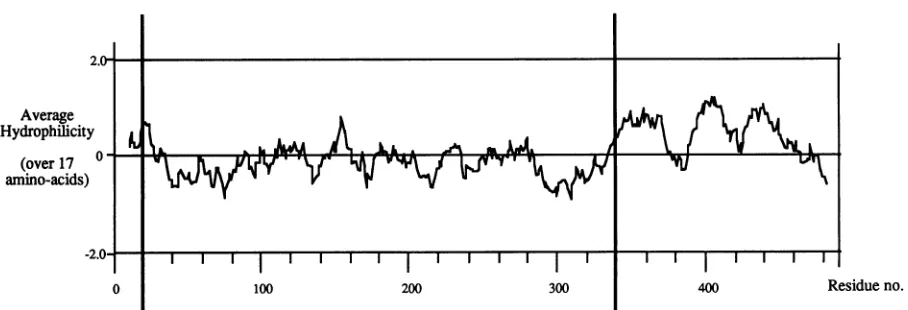
The Pol-binding domain of UL42. The analysis of UL42 deletion mutants suggests that the Pol-binding site is con-tained between residues 21 and 340, since separate removal of the first 20 and last 148 residues of thepolypeptide did not affect complexformation. Additional removal of C-terminal sequences in mutants AC307, AN35AC282, and AC269 re-duced heterodimer formation but did not totally destroy it, implying that at least part of the Pol-binding site lies up-stream of amino acid 269. Interestingly, these three mutants had little or no detectable DNA-binding activity, suggesting that the two activities areseparable, although it is difficultto gauge the sensitivities of the assaysused.Consistent with an N-terminal Pol-binding domain, most internal deletions within the N-terminal 350 residues prevented heterodimer-ization, and the only 1 of 17 four-amino-acid-insertion mu-tations to affect Pol association was at position 160. 1-160 bound DNAnormally, indicating that its inability to form a stable complexwith Pol did not result from global malfold-ing. This result also confirms that the activities of DNA and Pol binding are separable. It is premature to conclude that the I-160 mutation lies directly within the protein-protein contact site, but as shown in Fig. 6, I-160 does fall within a highlyhydrophilic stretch of amino acids and may therefore be a plausiblecandidate for a solvent-exposed binding site. The UL42-binding site on Pol has been characterized in some detail. Previous work showed that the C-terminal 227 amino acids of Pol are sufficient to bind UL42 (14), and a more recent study has demonstrated that the final 35 amino acids of Pol are crucial for complex formation (13). This region of Pol contains a 3, -4 hydrophobic repeat and is predicted to be predominantly at helical by the Robson-Garnier secondary-structure prediction algorithm (13, 18). This finding raised the possibility that Pol and UL42 het-erodimerize by a coiled-coil hydrophobicinteraction, similar to that seen in many fibrous proteins and the leucine zipper class of transcriptional activators (10, 27, 37). The best candidate for a matching amphipathic ox-helical region in UL42 lies between residues 242 and 253 (there are other regions of UL42 that contain a 3, -4 repeatofhydrophobic
amino acids but which are not predicted to beao helical by
Robson-Garnier analysis). However, as shown in Fig. 3, the major portion of this area was deleted in the mutant
on November 9, 2019 by guest
http://jvi.asm.org/
0 100 200 300 400 Residueno. FIG. 6. Hydrophilicity plot of UL42. The predicted sequence of HSV strain 17 UL42 was analyzed for hydrophilicity, using the Hopp-Woods algorithm andawindowsize of17residues.Thick vertical bars indicate theextentof N- andC-terminaltruncations thatwere tolerated without lossofprotein activity.
250 without affecting Pol binding. Therefore, we do not currently favor thecoiled-coilmodel ofinteraction. Interest-ingly, thehydrophilic regionaround amino acid 160(residues
148to 163) isstrongly predicted tobe (xhelical, raisingthe
possibility of a more novel polar or charged interaction between twohelices.
Possiblestructure ofUL42. In the absence oftrulyaccurate methods of predicting protein conformation, some predic-tions can nevertheless be made from cautious sequence
analysis interpreted in the light of experimental data. For example, hydrophilic stretchesof residues may function as linker regions between independently folded domains of a
polypeptideormaybe surfaceexposed loopson onedomain
(41). The results ofgenetic, biophysical, and biochemical
experiments can be used to decide between these
alterna-tives.Figure6showsahydrophilicity plotfor strain 17 UL42
(33) generated by using the Hopp-Woods algorithm (22),
whichpredictsthat thepolypeptidehashydrophilicstretches atboth the N and C terminiand, internally,centered around amino acid 155. The verticalbars indicate the extent of N-and C-terminal deletions thatweretolerated without loss of DNA-orPol-bindingfunction and also showaclose corre-lation with the hydrophilicterminal regions.
The hydrophilic region around amino acid 155 could
potentially indicate a boundary between N-terminal and central domains of the protein. However, we prefer to
interpretitas asurface-exposed region on asingle domain,
sinceavarietyof deletionmutantslackingsequenceseither NorC terminaltoamino acid 155weregloballydefective in the assays used in this study. The fact that theonlylinker
insertion mutation to affect Pol binding (but not DNA binding) laywithin thishydrophilic stretchalsosupports this hypothesis. Therefore,wepropose thatUL42consists of an N-terminal domaincomposed approximately of the first 308 to340amino acids andaC-terminalregion including the final 148 residues. The N-terminal domain includes both Pol- and
DNA-bindingfunctions, is sufficient to increase the apparent
processivity of the Pol subunit, and can also complement replication of a UL42 null mutant. This region of UL42 is alsothemosthighlyconservedin open reading frame (ORF) 16, encoding the corresponding varicella-zoster virus protein
(12). The C terminus ofUL42is not required for any of the assayed functions in vitro and also seems to be nonessential forreplication in tissue culture. It is alsohighly hydrophilic
(Fig. 6) and rich in proline residues, so it may not fold
compactly in the true sense of a domain. The results of
partial proteolyticdigestion experimentsareconsistent with the predictions presented above, since the major stable
proteolytic fragments generated by a variety of proteases arose from the N-terminal two-thirds of UL42, while no stablefragmentsincludingtheC terminus of theproteinwere observed (26). Although the proposed N-terminal domain
envelopsPol-andDNA-binding activities,thetwofunctions areclearly separable, sinceaninsertion mutationatposition
160 destroyed heterodimerization without affecting DNA
binding. Similarly, several mutations at the N terminus altered DNAbinding butnot complex formation, and pro-gressive truncation of the Cterminus abrogatedDNA
bind-ing before Polbinding in ourassays.
Mechanism of UL42 as a processivity factor. Previous studies have shown that Pol synthesizes longer DNA
prod-ucts in the presence ofUL42 (20, 21) and that this activity
results from an increase in processivity (20). Therefore, it seemed likely that this activity resulted from a specific
interaction between the two polypeptides, although some workers havereported stimulation of HSV Pol by unrelated DNA-binding proteins (35). The failure of mutant I-160 to increase the size of DNAproducts synthesized by Pol argues that the UL42-mediated increase in processivity directly
requiresthe Pol-UL42 interaction, since I-160 bound DNA normally but didnotbind Pol. Inaddition, the failure of I-160 tocomplementgrowth ofaviruslackingafunctional copy of the UL42 gene confirms that the Pol-UL42 interaction is necessaryforvirusreplication. This result is consistent with the observed phenotypes of Pol mutants unable to bind UL42(13) and therefore validates thePol-UL42 interaction
as atarget for directed drug design(14).
We generated three mutants that retained a low level of Pol-binding activity but had minimal DNA-binding ability
(AC307,
AN35AC282, andAC269).
None of these mutants wereable to increase the apparent processivity of Pol, but they do not conclusively test the hypothesis that UL42 increases theprocessivity of Pol by tethering it totheDNA template(20),astheir marked reduction in Polbindingcould also have caused the defect. However, all of the mutants which associated with both Poland DNAalsoincreased the length ofDNAsynthesized by Pol, which is consistent with but does not prove the idea that Pol binding and DNAbinding are sufficient for functionas aprocessivity factor. If UL42 does increasethe processivity of Pol throughits
on November 9, 2019 by guest
http://jvi.asm.org/
[image:8.612.78.532.72.227.2]ownDNA-binding activity, then it is interesting to note that this implies a different mode of action to the best-character-ized Pol processivity factor, the
1B
subunit of E. coli Pol III (PolIII-\). PolIII-,B has no intrinsic affinity for DNA (42) but rather dimerizes to form a torus that is sterically retained on the nucleic acid strand (24). The DNA-binding model for UL42 as a processivity factor also raises the problem of how the protein slides to follow the elongating primer without acting as a brake on Pol.Other known processivity factors include the gene 45 protein ofbacteriophage T4 and the proliferating cell nuclear antigen of eukaryotic Pol 8, but similarly to Pol
III-,B,
gene 45 and proliferating cell nuclear antigen have little affinity for DNA (3, 25, 28, 34); in fact, an analogous structure has been proposed for the three polypeptides (24). However, as eukaryotic Pol 8 is also a heterodimer of =125- and 50-kDa subunits (4), possibly a better cellular analog or homolog for UL42 may be the as yet uncharacterized 50-kDa subunit.DoesULA2 play a role other than as a
processivity
factor? In the course of a normal productive HSV infection, Pol expression peaks early in infection and is then turned off at late times via translational regulation (46, 47). However, synthesis and accumulation ofUL42continues at late times, leading to an excess of UL42 over that needed for a 1:1complex with Pol (19, 36). This raises the possibility that the free UL42 performs an additional function to the
het-erodimerized form, though it should be noted that a cell line expressing approximately 1% of the normal levels ofULA2 efficientlycomplements the growth of a UL42 null virus (23). TheC-terminal 150 amino acids ofUILA2are apparently not involved in increasing the processivity of Pol, so it is tempting to speculate that this region of the protein may be involved in such alternative functions. In support of this idea, many of the counterparts ofUL42 in other herpesvi-ruses such asvaricella-zoster virus (ORF 16), Epstein-Barr virus (BMRF1), and cytomegalovirus (UI44) contain a hydrophilic region at the C terminus that is similarly proline rich in ORF 16 and BMRF1 and glycine-rich inUL44 (2, 7, 12, 15). Such conservation of structure is suggestive of a functional role for the C-terminal domain. However, this region ofULA2 is clearly not essential for virus replication in Vero cells, as mutant AC340 complemented growth of a UL42 null virus, albeit at less than wild-type efficiency (Table 2). Therefore, if the C terminus ofULA2does have a
function, it may besubtle or required in cells other than Vero cells. Construction of a recombinant virus containing the
appropriatelytruncated UL42 gene should resolve this ques-tion.
ACKNOWLEDGMENTS
We thank PaulJohnson and Deborah Parris forsupplying virus CgalA42 and the V9 cell line and Klaus Weisshart for supplying purified Pol. We also thank MattZalnaskyand Heidi Tissenbaum for help with some of thepreliminary experiments, Roberto Kolter for discussing unpublished experiments, and Bill Bebrin for general advice anddiscussion.
This work was supported by NIH grants R01 AI19838, U01 AI26077, and S07RR05381toD.M.C. C.S.C. was supported in part by theHowardHughes Medical Institute.
REFERENCES
1. Almiron, M., A. J. Link, D. Furlong, and R. Kolter. 1992. A novel DNA binding protein with regulatory and protective roles instarved E. coli.Genes Dev. 6:2646-2654.
2. Baer, R., A. T. Bankier, M. D. Biggin, P. L. Deininger, P. J. Farrell, T. J. Gibson, G. Hatfull, G. S. Hudson, S. C. Satchwell, C. Seguin, P. S. Tuffnell, and B. G. Barrell. 1984. DNA
sequence and expression of the B95-8 Epstein-Barr virus ge-nome. Nature (London) 310:207-211.
3. Bauer, G. A., and P. M. J. Burgers. 1988. The yeast analog of mammalian cyclin/proliferating-cell nuclear antigen interacts with mammalian DNA polymerase 8. Proc. Natl. Acad. Sci. USA 85:7506-7510.
4. Burgers, P. M. J. 1989. Eukaryotic DNA polymerase a and 8: conserved properties and interactions, from yeast to mamma-lian cells. Prog. Nucleic Acid Res. 37:235-280.
5. Cai, W., S. Person, C. DebRoy, and B. Gu. 1988. Functional regions and structural features of the gB glycoprotein of herpes simplex virus type 1. An analysis of linker insertion mutants. J. Mol. Biol. 201:575-588.
6. Challberg, M. D., and T. J. Kelley. 1989. Animal virus DNA replication. Annu. Rev. Biochem. 58:671-718.
7. Chee, M. S., A. T.Bankier,S. Beck, R. Bohni, C. M. Brown, R. Cerny, T. Horsnell, C. A. Hutchison, T. Kouzarides, J. A. Martignetti, E. Preddie, S. C. Satchwell, P. Tomlinson, K. M. Weston, and B. G.Barrell. 1990. Analysis of the protein-coding content of human cytomegalovirus strain AD169. Curr. Top. Microbiol. Immunol. 154:125-169.
8. Coen, D. M. 1992. Molecular aspects ofanti-herpesvirus drugs. Semin. Virol. 3:3-12.
9. Coen, D. M., H. E. Fleming, Jr., L. K. Leslie, and M. J. Retondo. 1985. Sensitivity of arabinosyladenine-resistant mu-tants of herpes simplex virus to other antiviral drugs and mapping of drug hypersensitivity mutations to the DNA poly-merase locus. J. Virol. 53:477-488.
10. Cohen, C., and D. A. D. Parry. 1986. a-Helical coiled coils-a widespread motif in proteins. Trends Biochem. Sci. 11:245-248. 11. Crute, J. J., andI. R.Lehman. 1989. Herpes simplex-1 DNA polymerase: identification of an intrinsic5'-3' exonuclease with ribonuclease H activity. J. Biol. Chem. 264:19266-19270. 12. Davison, A. J., and J. E. Scott. 1986. The complete DNA
sequence of varicella-zoster virus. J. Gen. Virol. 67:1759-1816. 13. Digard, P., B. Bebrin, K. Weisshart, and D. M. Coen. 1992. The extreme C terminus of the herpes simplex virus DNA poly-merase is crucial for functional interaction with the processivity factorUL42 and for viral replication. J. Virol. 67:398-406. 14. Digard, P., and D. M. Coen. 1990. A novel functional domain of
an a-like DNA polymerase: the binding site on the herpes simplex virus polymerase for the viral UL42 protein. J. Biol. Chem. 265:17393-17396.
15. Ertl, P. F., and K. L. Powell. 1992. Physical and functional association of human cytomegalovirus DNA polymerase and its accessory protein (ICP36) expressed in insect cells. J. Virol. 66:4126-4133.
16. Gallo, M. L., D.I.Dorsky,C. S. Crumpacker, and D. S.Paris. 1989. The essential 65-kilodalton DNA-binding protein of her-pes simplex virus stimulates the virus-encoded DNA poly-merase. J. Virol. 63:5023-5029.
17. Gallo, M. L., D. H.Jackwood,M. Murphy, H. S. Marsden, and D. S. Parris. 1988. Purification of the herpes simplex virus type 1 65-kilodalton DNA-binding protein: properties of the protein and evidence of its association with the virus-encoded DNA polymerase. J. Virol. 62:2874-2883.
18. Garnier, J., D. J. Osguthorpe, and B. Robson. 1978. Analysis of the accuracy and implications of simple methods for predicting the secondary structure of globular proteins. J. Mol. Biol. 120:97-120.
19. Goodrich, L. D., F. J. Rixon, and D. S.Paris.1989. Kinetics of expression of the gene encoding the 65-kilodalton DNA-binding protein of herpes simplex virus type 1. J. Virol. 63:137-147. 20. Gottlieb, J., A. I. Marcy, D. M. Coen, and M. D. Challberg.
1990. The herpes simplex virus type 1 UL42 gene product: a subunit of DNA polymerase that functions to increase pro-cessivity. J. Virol. 64:5976-5987.
21. Hernandez, T. R., andI.R. Lehman. 1990. Functional interac-tion between the herpessimplex-1DNA polymerase andUL42 protein. J. Biol. Chem. 265:11227-11232.
22. Hopp, T. P., and K. R. Woods. 1981. Prediction of protein
antigenicdeterminantsfrom amino-acid sequences. Proc.Natl. Acad. Sci. USA78:3824-3828.
on November 9, 2019 by guest
http://jvi.asm.org/
23. Johnson, P. A., M.G. Best, T. Friedmann, and D. S. Parris. 1991. Isolation of aherpes simplex virustype 1 mutantdeleted for the essential UL42 gene and characterization of its null phenotype.J. Virol.65:700-710.
24. Kong, X.-P., R. Onrust, M. O'Donnel, and J. Kuriyan. 1992. Three-dimensional structure of the ,B subunit of E. coli DNA polymeraseIIIholoenzyme:aslidingDNAclamp. Cell 69:425-437.
25. Kornberg, A., and T. A. Baker. 1991. DNAreplication.W. H. Freeman, New York.
26. Kuo,A. A., K. Weisshart, and D. M. Coen. Unpublished data. 27. Landschulz, W. H., P. F. Johnson, and S. L. McKnight. 1988. The leucine zipper: ahypothetical structurecommon to a new class of DNAbindingproteins. Science240:1759-1764. 28. Mace, D. C., and B. M. Alberts. 1984. The complex of T4
bacteriophage gene 44 and 62 replication proteins forms an ATPase thatis stimulatedby DNA and by T4 gene45 protein.J. Mol.Biol. 177:279-293.
29. Maniatis, T., E. F. Fritsch, and J. Sambrook. 1982. Molecular cloning: alaboratory manual. ColdSpring Harbor Laboratory Press, Cold SpringHarbor, N.Y.
30. Marchetti, M. E., C. A. Smith, and P. A. Schaffer. 1988. A temperature-sensitivemutation inaherpessimplex virustype 1 gene required for viral DNA synthesis maps to coordinates 0.609through0.614 inUL. J. Virol.62:715-721.
31. Marcy, A. I., P. D. Olivo, M. D. Challberg,and D. M.Coen. 1990. Enzymatic activities of overexpressed herpes simplex virusDNApolymerasepurified from recombinant baculovirus-infectedinsect cells. Nucleic Acids Res. 18:1207-1215. 32. Marsden, H. S., M. E. M.Campbell, L. Haarr, M. C. Frame,
D.S. Parris, M. Murphy, R. G. Hope, M. T. Muller, and C. M. Preston. 1987. The 65,000-Mr DNA-binding and virion trans-inducing proteins of herpes simplex virus type 1. J. Virol. 61:2428-2437.
33. McGeoch, D. J., M. A.Dalrymple, A.Dolan, D. McNab, L. J. Perry, P. Taylor, and M. D. Challberg. 1988. Structures of herpes simplex virus type 1 genes required forreplication of virus DNA. J. Virol. 62:444-453.
34. Nossal, N. G., and B. M. Alberts. 1984. Mechanism of DNA replication catalyzed by purified T4 replication proteins, p. 71-81. In C. K.Mathews, E. M.Kutter, G. Mosig, and P. B. Berget(ed.),BacteriophageT4.American Society for
Microbi-ology, Washington,D.C.
35. O'Donnell, M. E., P. Elias, B. E. Funnell, and I. R. Lehman. 1987. Interaction between the DNA polymerase and single-stranded DNAbinding protein (infectedcellprotein 8)ofherpes simplexvirus 1. J. Biol.Chem.262:4260-4266.
36. Olivo, P. D., N. J. Nelson, and M. D. Challberg. 1989. Herpes simplex virus type 1 genes required for DNA replication: identification and overexpression.J. Virol.63:196-204. 37. O'Shea, E. K., J. D. Klemm, P. S. Kim, and T. Alber. 1991.
X-ray structure ofthe GCN4 leucine zipper, a two-stranded, parallel coiled coil. Science 254:539-544.
38. Parker, R. C. 1980. Conversion of circular DNA to linear strandsfor mapping. Methods Enzymol. 65:415-426.
39. Powell, K. L., and D. J. M. Purifoy. 1977. Nonstructural proteins ofherpes simplexvirus. I. Purification of theinduced DNApolymerase.J. Virol. 24:618-626.
40. Purifoy, D. J. M., and K. L. Powell.1976.DNA-binding proteins inducedby herpessimplex virustype2 in HEp-2 cells.J. Virol. 19:717-731.
41. Rose,G. D., and S. Roy. 1980.Hydrophobic basisofpackingin globularproteins. Proc. Natl. Acad. Sci. USA 77:4643-4647. 42. Stukenberg, P. T., P. S.Studwell-Vaughan, and M. O'Donnell.
1991. Mechanism of the sliding p-clamp of DNA polymerase III. J.Biol. Chem. 266:11328-11334.
43. Tabor, S. 1990. Expression using the T7 RNA polymerase/ promoter system.Unit 16.2. In F. M.Ausubel, R. Brent, R. E. Kingston, D. D. Moore, J. G. Seidman,J. A. Smith, andK. Struhl(ed.),Currentprotocolsinmolecularbiology. John Wiley &Sons,New York.
44. Vaughan, P. J., D. J. M. Purifoy, and K. L. Powell. 1985. DNA-binding protein associated with herpes simplex virus DNApolymerase.J. Virol.53:501-508.
45. Weisshart, K., C.Chow,A. Kuo, P. Digard, and D. M. Coen. Unpublisheddata.
46. Yager, D. R., and D. M. Coen. 1988.Analysisof the transcript of the herpes simplex virus DNA polymerase gene provides evidence thatpolymerase expressionisinefficientatthe level of translation. J. Virol. 62:2007-2015.
47. Yager, D. R., A. I. Marcy, and D. M. Coen. 1990. Translational regulation of the herpes simplex virus DNA polymerase. J. Virol.64:2217-2225.

![FIG. 2.peptidescatedDNA-cellulosefor(Total).alent DNA-binding assay. [35S]methionine-labeled UL42 poly- expressed in rabbit reticulocyte lysate were applied to columns and eluted with buffer containing the indi- concentration of NaCl](https://thumb-us.123doks.com/thumbv2/123dok_us/1302532.83396/4.612.87.262.64.358/peptidescateddna-cellulosefor-methionine-labeled-expressed-reticulocyte-containing-concentration.webp)

![FIG. 5.programmedM13describedlanesforSDS-PAGE.[ax-32P]dCTP-labeled Ability of UL42 mutants to increase the length of the DNA strand synthesized by Pol](https://thumb-us.123doks.com/thumbv2/123dok_us/1302532.83396/6.612.104.510.70.377/programmedm-describedlanesforsds-labeled-ability-mutants-increase-strand-synthesized.webp)