UNIVERSITI TEKNIKAL MALAYSIA MELAKA
FLEXURAL BEHAVIOUR STUDY OF POLYPROPYLENE
AT DIFFERENT ASH FILLER LOADING
This report submitted in accordance with the requirement of the Universiti Teknikal Malaysia Melaka (UTeM) for the Bachelor’s Degree in Manufacturing
Engineering Technology (Process Technology) (Hons.).
by
WAN HIQMAL HISYAM BIN WAN HUSSIN B071410152
921105-11-5549
FACULTY OF ENGINEERING TECHNOLOGY 2017
3
i
DECLARATION
I hereby, declared this report entitled “The Flexural Behaviour Study of Polypropylene at Different Ash Filler Loading” is the results of my own research
except as cited in references.
Signature : ………
Author’s Name : Wan Hiqmal Hisyam Bin Wan Hussin
Date : ……… 2.5
ii
APPROVAL
This report is submitted to the Faculty of Engineering Technology of UTeM as a partial fulfillment of the requirements for the degree of Bachelor of Manufacturing Engineering Technology (Process Technology) (Hons.). The member of the supervisory is as follow:
iii
ABSTRACT
iv
ABSTRAK
v
DEDICATIONS
To my lovely parents,
With love, sacrifice and their unconditional support throughout my life,
To my family, fiancée, and friends,
Who are always willing to help to prepare and complete this report,
Also,
For those who always pray for my success
And last but not forgotten,
vi
ACKNOWLEDGMENTS
Bismillahirrahmanirrahim.
Alhamdulillah, all praises belong to Allah SWT who has given me health and the strength to accomplish this thesis. May the blessing and peace of Allah be upon the messenger of Allah, Muhammad SAW, his family, and his companions.
Many people have directly and indirectly helped me in the process of completing this research. My deepest gratitude to my supervisor, Mr Hairul Effendy Bin Ab Maulod who showed me the road and helped to get me started on the path to this, UteM staff, technicians, family, and friends who helped me a lot.
Last but not least, thanks to my parent Wan Hussin Bin Wan Ahmad and Wan Hasnah Binti Mohamad, my friends who have given spirit and support all the time. May Allah SWT bless us forever.
vii
TABLE OF CONTENT
DECLARATION ... i
APPROVAL ... ii
ABSTRACT ... iii
ABSTRAK ... iv
DEDICATIONS ... v
ACKNOWLEDGMENTS ... vi
TABLE OF CONTENT ... vii
LIST OF TABLE ... x
LIST OF FIGURE ... xi
LIST OF EQUATION ... xv
LIST OF ABBREVIATIONS, SYMBOLS AND NOMENCLATURE ... xvi
CHAPTER 1 ... 1
INTRODUCTION ... 1
1.0 Background of Study ... 1
1.1 Problem Statement ... 1
1.2 Objectives ... 2
1.3 Scope ... 2
CHAPTER 2 ... 3
LITERATURE REVIEW ... 3
2.0 Introduction ... 3
viii
2.2 Thermoplastic ... 7
2.3 History of Polypropylene ... 9
2.3.1 Polypropylene Structure ... 10
2.3.2 Polypropylene Properties ... 11
2.3.3 Reinforcement of Polypropylene ... 13
2.4 Filler ... 14
2.4.1 Organic Filler ... 15
2.4.1.1 Eggshell ... 15
2.4.1.2 Kenaf ... 17
2.4.1.3 Rice Husk Ash ... 19
2.4.1.4 Fly Ash ... 21
2.5 Flexural of Polymer... 22
2.5.1 Flexural on Polymer with Filler ... 23
CHAPTER 3 ... 26
METHODOLOGY ... 26
3.0 Introduction ... 26
3.1 Methodology ... 27
3.2 Materials Preparation ... 27
3.2.1 Preparation of Polypropylene ... 28
3.2.2 Preparation of Coal Ash ... 28
3.2.3 Sample Fabrication... 29
3.2.3.1 Composition Formulation ... 29
3.2.3.2 Hot Press Compressing ... 32
3.3 Material Testing ... 34
3.3.1 Flexural Testing (Three-Point Bending Method) ... 34
ix
3.4.1 Flexural ... 36
3.4.2 Optical Microscopy ... 37
3.5 Gantt Chart ... 39
CHAPTER 4 ... 40
RESULT AND DISCUSSION ... 40
4.0 Introduction ... 40
4.1 Flexural Analysis ... 40
4.1.1 Flexural testing result with comparison between polypropylene (PP) with coal ash (CA) ... 41
4.1.2 Tensile testing result with comparison between polypropylene (PP) with coal ash (CA) ... 54
4.2 Density ... 56
4.2.1 Density meter result with comparison between polypropylene (PP) with coal ash (CA) ... 56
4.3 Optical Microscope ... 60
4.3.1 Optical microscope surface analysis sample of coal ash (CA) with polypropylene (PP) ... 61
CHAPTER 5 ... 69
RECOMMENDATION AND CONCLUSION ... 69
5.0 Summary of Research ... 69
5.1 Recommendation ... 70
x
LIST OF TABLE
Table 3.1: Formulation of polypropylene (PP) with coal ash (CA). ... 30
Table 3.2: Polypropylene and coal ash formulation in grams during hot press processes. ... 31
Table 4.1: Flexural test result for control sample. ... 41
Table 4.2: Flexural test result for sample 1% of coal ash (CA). ... 42
Table 4.3: Flexural test result for sample 2% of coal ash (CA). ... 44
Table 4.4: Flexural test result for sample 5% of coal ash (CA). ... 45
Table 4.5: Flexural test result for sample 7% of coal ash (CA). ... 47
Table 4.6: Flexural test result for sample 10% of coal ash (CA). ... 48
Table 4.7: Density of sample 1% of coal ash (CA) from 100 grams of polypropylene (PP). ... 57
Table 4.8: Density of sample 2% of coal ash (CA) from 100 grams of polypropylene (PP). ... 57
Table 4.9: Density of sample 5% of coal ash (CA) from 100 grams of polypropylene (PP). ... 57
Table 4.10: Density of sample 7% of coal ash (CA) from 100 grams of polypropylene (PP). ... 58
Table 4.11: Density of sample 10% of coal ash (CA) from 100 grams of polypropylene (PP). ... 58
Table 4.12: Density of control sample from 100 grams of pure polypropylene (PP). ... 58
xi
LIST OF FIGURE
Figure 2.1: Processes for generating plastics and examples(Rolf Klein, 2011)... 4
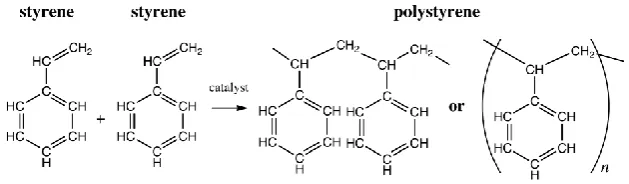
Figure 2.2: Reaction scheme for the preparation of polystyrene (O’Connell, 2014). ... 5
Figure 2.3: Reaction scheme for the preparation of Glyptal (O’Connell, 2014). ... 6
Figure 2.4: Crosslinking of the Glyptal resin (O’Connell, 2014). ... 6
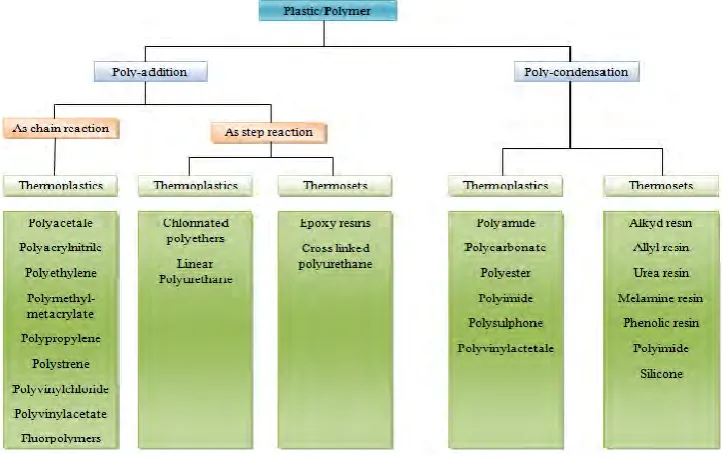
Figure 2.5: Classification of plastic/polymer (Rolf Klein, 2011). ... 8
Figure 2.6: Chemical formula structure for Polypropylene. ... 9
Figure 2.7: Schematic illustration of existing stereo-chemical configurations of Polypropylene (PP) (Stern, n.d.). ... 11
Figure 2.8: The properties of polypropylenes and competitive polymers (Vogl, 1999). ... Error! Bookmark not defined. Figure 2.9: Growth of Polypropylene production (Vogl, 1999). ... 13
Figure 2.10: PP–filler composites with 40% w/w filler: Young's modulus (E). Triangles represent composites containing eggshell (Toro et al., 2007). ... 16
Figure 2.11: Compressive strength of kenaf pultruded composites with different filler loadings. ... 18
Figure 2.12: Rice husk ash. ... 20
Figure 2.13: Fly ash. ... 21
Figure 2.15: Tensile and flexural result for kenaf filler (Ismail & Aziz, 2015). ... 24
Figure 3.1: Flow chart of methodology process...26
xii Figure 3.3: Polypropylene and coal ash granules after the mixing-crushing process. ... 30 Figure 3.4: Hot press compression machine. ... 32 Figure 3.5: Sheet of polypropylene (PP) mixing with coal ash (CA) after hot press. ... 33 Figure 3.6: Different percentage of sample compound polypropylene (PP) and coal ash (CA) by ASTM D-790 shaping using waterjet machine. ... 33 Figure 3.7: Range of loading nose and support radius by ASTM D-790. ... 34 Figure 3.8: Universal testing machine. ... 35 Figure 3.9: The standard dimension of a specimen according to ASTM D-790. ... 35 Figure 3.10: Flexural testing of the compound at Universal Machine Testing Instron 5969. ... 36 Figure 3.11: Flexural strength variation between small particles and larger particles of fly ash on polypropylene (PP). ... 37 Figure 3.12: Optical microscope with Solution DT Software ... 38 Figure 3.13: Microscopy of a polypropylene hollow fiber. ... 38
xv
LIST OF EQUATION
xvi
LIST OF ABBREVIATIONS, SYMBOLS AND
NOMENCLATURE
PP - Polypropylene
CA - Coal Ash
SA - Stearic Acid
MA - Maleic anhydridegrafted
%wt - Percentage of weight
°C - Degree Celcius
%PP - Percentage of Polypropylene
%CA - Percentage of Coal Ash
FA - Flexural Analysis
DMA - Dynamic Mechanical Analysis
OM - Optical Microscopy
S - Stress
N - Number of Cycle
HCF - Highest Common Factor
Phg - Per hundred grams
Php - Per hundred polypropylene
HDPE - High-Density Polyethylene
CC - Calcium Carbonate
EG - Eggshell
TA - Talc
KF - Kenaf
RHA - Rice Hush Ash
iPP - Isotactic Polypropylene
sPP - Syndiotactic Polypropylene
1
CHAPTER 1
INTRODUCTION
This chapter will explain the overview of the study and the purpose of this study. The chapter includes the background of the study, problem statement, objectives that are expected to be achieved and the scope of the study that is going to be conducted.
1.0 Background of Study
Polypropylene (PP) is one of the most common types of material used in Malaysia due to their reasonable cost and several of utilization. In Malaysia, the use of polypropylene (PP) in so many applications results in growing volume of plastic products. This study is about flexural behaviour study of polypropylene (PP) at different ash filler loading. The effects of different loading of fillers on polypropylene (PP) compounds are been studied, in search of flexural properties. Thus, this study is aimed at the potential use of coal ash (CA) in polypropylene (PP) compound.
1.1 Problem Statement
2 This research study is to evaluate the formulation of coal ash (CA) to improve the type of filler in mixing with polypropylene (PP) compounds. In order to get the appropriate formulation on the mixing of polypropylene (PP) compound with coal ash (CA) as a mixing material, some research studies on the flexural properties of polypropylene (PP) and coal ash (CA). The appropriate formulation on the mixing of polypropylene (PP) compound with coal ash (CA) will be interpreted in the industrial applications.
1.2 Objectives
The imprecise objective of this project is to enhance the study of polypropylene. The objective of the project is to:-
i. To study the current formulation of polypropylene (PP) compound coal ash (CA) filler from literature.
ii. To prepare compound with polypropylene (PP) and coal ash (CA).
iii. To study the flexural behaviour of polypropylene (PP) with coal ash (CA).
1.3 Scope
3
CHAPTER 2
LITERATURE REVIEW
2.0 Introduction
This chapter explains about all findings obtained from many literature reviews, which may come from the internet, journals, article and books about the topic related to this study. This section includes findings of the overview of polypropylene (PP), properties of polypropylene (PP), structure and characteristics of polypropylene (PP).
Every year the usage of plastics has been increasing significantly for the lifestyle of the society. With the increase of usage of plastic, the plastic product has increased in developed and less developed countries. There is various type of plastic that is needed in order to create and enhance either a new or existing product (Impacts, 2011).
4
2.1 Polymer
Nowadays, natural resources and synthetic polymer are definitely important in our daily life. In addition, the outstanding properties of these macromolecules give an advantage towards community and social which greatly useful both in nature and in product manufacturing. Probably, polymers can be identified as monomers, or we called smaller repeating units that linked together applied by a covalent bond. Two categories of polymerisation process are addition polymers and condensation polymers.
[image:21.595.136.498.367.596.2]Addition polymers are generated by addition reaction which is link mutually of monomers that consisting multiple bonds. As an example of the process is polymerisation between styrene generated in the form of polystyrene.
Figure 2.1: Processes for generating plastics and examples (Rolf Klein, 2011).
5 Furthermore, identification of poly-addition can be evaluated when a combination of monomer units process without a reaction, either double bond or low molecular compounds separation. The position of hydrogen composition atom can be changed through this process which is no presence of product will be detached and no presence of hydrogen atom will moved inside the chain amid the response of the process itself and (Rolf Klein, 2011). However, using catalyst is one of the energy requirements needed in order to preceding the process compared to the natural sources such as light, heat or radiation (O’Connell, 2014).
Figure 2.2: Reaction scheme for the preparation of polystyrene (O’Connell, 2014).
6 Figure 2.3: Reaction scheme for the preparation of Glyptal (O’Connell, 2014).
Several elements are added to glyptal and it can change the properties of glyptal which are known as a crosslinking process. The process of the crosslinked polymer is only determined by a long chain of molecules that attach each other which are covalent bonding (O’Connell, 2014).
Figure 2.4: Crosslinking of the Glyptal resin (O’Connell, 2014).
[image:23.595.218.434.422.580.2]7
2.2 Thermoplastic
Thermoplastics is commonly known as a rigid or higher elasticity that can be melted through energy input such as mechanical, thermal or energy forms by radiation (Rolf Klein, 2011). Nowadays, mostly of thermoplastics is used frequently in automotive, electrical, and building industries depended on their advantages such as economic cost, low of density, high corrosion resistance, and extensive range of accessible properties (Parenteau, Ausias, Grohens, & Pilvin, 2012).