R E S E A R C H A R T I C L E
Open Access
A multicentre, double-blind, randomised,
controlled, parallel-group study of the effectiveness
of a pharmacist-acquired medication history in an
emergency department
Jesus Becerra-Camargo
1*, Fernando Martinez-Martinez
2and Emilio Garcia-Jimenez
2Abstract
Background:Admission to an emergency department (ED) is a key vulnerable moment when patients are at increased risk of medication discrepancies and medication histories are an effective way of ensuring that fewer errors are made. This study measured whether a pharmacist-acquired medication history in an ED focusing on a patient’s current home medication regimen, and available to be used by a doctor when consulting in the ED, would reduce the number of patients having at least 1 medication discrepancy related to home medication. Methods:This multicentre, double-blind, randomised, controlled parallel-group study was conducted at 3 large teaching hospitals. Two hundred and seventy participants were randomly allocated to an intervention (n = 134) or a standard care (n = 136) arm. All consecutive patients >18 years old admitted through the ED were eligible. The intervention consisted of pharmacists conducting a standardised comprehensive medication history interview focusing on a patient’s current home medication regimen, prior to being seen by a doctor. Data recorded on the admission medication order form was available to be used by a doctor during consultation in the ED. The admission medication order form was given to doctors at a later stage in the control arm for them to amend prescriptions. The effect of the intervention was assessed primarily by comparing the number of patients having at least 1 admission medication discrepancy regarding medication being taken at home. Secondary outcomes concerned the characteristics and clinical severity of such medication discrepancies.
Results:The intervention reduced discrepancies occurring by 33% (p < 0.0001; 0.1055 odds ratio, 0.05-0.24 95% confidence interval), despite recall bias. Regarding total discrepancies, omitting medication occurred most
frequently (55.1%) and most discrepancies (42.7%) were judged to have the potential to cause moderate discomfort or clinical deterioration.
Conclusions:A pharmacist-acquired medication history in an ED focusing on a patient’s current home medication regimen available to be used by a doctor at the time of consulting in the ED reduced the number of patients having at least 1 home medication-related discrepancy.
Trial registration:Current Controlled Trials ISRCTN63455839.
* Correspondence:[email protected]
1
Pharmacy Department, Universidad Nacional de Colombia, Ciudad Universitaria, Edificio 450 oficina 204, Bogotá 14490, Colombia Full list of author information is available at the end of the article
Background
Medication histories are an effective way of contributing to a decrease in hospital admission-related medication discrepancies [1]. An accurate history of medication use is an important part of patient appraisal on admission [2]. The completeness of such medication use history depends on different factors concerning a particular patient, including the time available for interview, language barriers, illness severity, cognitive status and a patient’s familiarity with his or her medication regimen [3]. A pharmacist’s involvement as part of the care-team in an admission clinic can improve patient safety [4]. Studies have shown that a pharmacist-acquired medication history is more comprehensive than that obtained by other health professionals [5-7], as pharmacists represent an ideal resource because they possess the pertinent knowledge and training [7-12].
Unintentional medication discrepancies frequently occur on admission to an emergency department (ED); up to 60% of patients admitted to an in-patient unit have at least 1 unintended medication discrepancy regarding their home medication regimen and the admission orders [2,3,12]. The most common error lies in omitting a medication being taken at home [11,12]; this problem concerns the multi-disciplinary health-care team’s difficulty in accessing a complete and accurate home medication list. Hospital admission is thus an interface in the care process regard-ing a potential gap in the transfer of medication-related information [4].
The Joint Commission on Accreditation of Healthcare Organizations has defined medication reconciliation (MedRec) as the process of comparing a patient’s medica-tion orders to all of the medicamedica-tions that such patient has been taking. An accurate and up-to-date medication history is considered an essential component of safe and effective medical practice. MedRec is aimed at avoiding medication errors such as omissions, duplications, dosing errors or drug interactions. It should be made during every care stage/transition where new medications are ordered or existing orders may be rewritten. Transitions in care include changes in setting, service, practitioner or care level [13].
It has been hypothesised that a hospital involving the pharmacist as part of a multidisciplinary team in the ED for supporting medication being prescribed on admission and incorporating MedRec will prevent and reduce home medication-related discrepancy frequency on admission.
Aim
This study’s primary objective was to evaluate whether a pharmacist-acquired medication history in an ED focusing on a patient’s current home medication regimen, and available to be used by doctor at the time of consulting in
an ED, would reduce the number of patients having at least 1 medication discrepancy related to home medication.
Methods Trial design
A multicentre, double-blind, randomised and controlled parallel-group trial study was conducted in accordance with the provisions of the Declaration of Helsinki (1996) and Good Clinical Practice (GCP) guidelines. All partici-pants gave their written informed consent. The trial was registered as Current Controlled Trial ISRCTN63455839. The allocation ratio for the intended numbers of par-ticipants in each comparison group was 1:1. The report involved using consolidated standards of reporting trials (CONSORT) [14].
Testing the survey questionnaire
The procedure for validating data collection forms and standardising the admission medication order form in-volved 30 patients (ten participants per hospital). Particular emphasis was placed on examining whether the researchers were able to complete the questionnaires in full without difficulty (i.e. responding to the patients’answers) and the length of time required for doing so. This was verified using a simulated exercise.
The whole team received formal training on how to complete a MedRec form, including a description of data-collection tools and procedures. Two pharmacists per hospital independently filled out the forms, different per-centages of agreement being obtained between hospitals (100% Fundacion Cardio Infantil, 60% Hospital Samaritana and 50% at Hospital San Carlos). Differences and the team were evaluated, agreement being reached by consensus.
Participants
answer the questions needed to complete the study, were unable to communicate due to language difficulties, were under psychiatric care, had a medical record of dementia or confusion and/or were unable to give their consent.
Pharmacist intervention
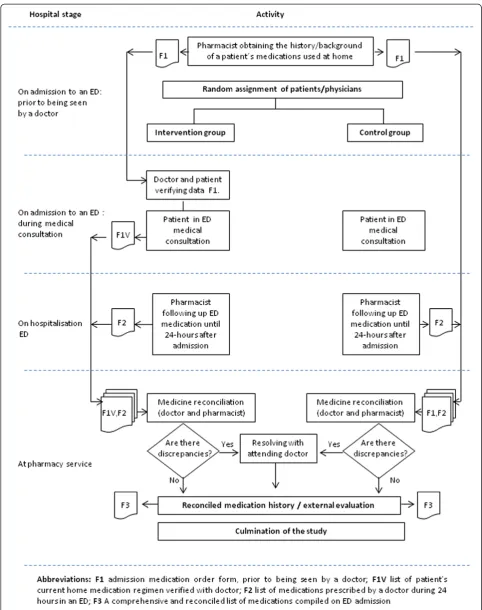
The intervention consisted of a pharmacist-acquired medi-cation history in an ED focusing on a patient’s current home medication regimen documented on the admission medication order form (F1) which was available to be used by a doctor when consulting in an ED. Doctors verified the data with patients and indicated which home medications were to be reordered, suspended or discontinued. This resulted in an accurate and comprehensive history of a patient’s current home medication regimen, called medi-cation order form verified with patient (F1V).
On admission to an ED
One team of research pharmacists employed for this study conducted a standardised, comprehensive medication history interview, focusing on current home medication regimen for all patients included in the study, prior to being seen by a doctor. A thorough history of all regular medication use (prescription, non-prescription, nutritional supplements, vitamins, over-the-counter, herbal, vaccines, drugs and diagnostic contrast or radioactive agents, paren-teral nutrition, blood products and intravenous solutions) was ascertained using all the following sources of informa-tion: patient and/or caregiver interview, a check of the last prescription and an inspection of the medicines carried by a patients (i.e. in the ED). Pharmacists conducted telephone interviews with caregivers or family members when patients were unable to clarify their medication regi-men. Relevant demographic and medical data was collected and documented on F1.
F1 was used by a doctor during consultation for issuing prescriptions in an inpatient ED (just for the intervention group). By checking boxes, the doctor verified with a patient and indicated which home medications were to be reordered, suspended or discontinued (F1V). For patients who were in the control arm, F1 was given to the doctors at a later stage for them to amend prescriptions.
Follow-up medication
Another team of regular pharmacists blinded to interven-tion status in the hospitals being studied reviewed each medical chart regarding all the drugs prescribed 24 hours after having been admitted to an ED. The data came from various information sources including a patient’s computerised hospital medical record, F1, the physician-recorded medication history, the nurse-recorded medication history, interviews with patients, medication administration records and demographic information. The pharmacist also attempted to verify with the patient if any
medication changes had been made since their clinical assessment (i.e. on admission to an ED). This was documented in the list of medications prescribed by a doctor during 24 hours in an ED (F2).
Medicine reconciliation
MedRec was used for comparing a patient’s current home medications to medications prescribed 24 hours after having been admitted to an ED to see whether patients’ home medications were also prescribed by a doctor in an ED. This was done by an independent team (pharmacist and doctor blinded to intervention status) and took place the day after admission.
If incongruity was detected and the reason had not been documented in the medical record, this was clarified with the medical team and patient. External evaluation was made by the chief of each hospital’s ED after MedRec had ended; this person then resolved any discrepancies with each doctor. Following MedRec, further medication required doctors to write separate medication orders (see Figure 1).
Standard group
Patients in the control group received standard care; this included doctors documenting medication histories in admission notes and nurses reviewing medication orders for appropriateness. Doctors wrote in-patient orders during consultation without having access to F1. The medication information was entered on each medical chart forming part of a hospital’s electronic health records. Pharmacists were not routinely involved in documenting patients’ admission medication histories; this function is primarily the admitting resident doctor or medical student’s respon-sibility at the institutions involved in the present study.
Outcomes
The effect of the intervention was assessed by comparing the number of patients having at least 1 admission medi-cation discrepancy regarding medimedi-cation being taken at home. Secondary outcomes concerned the characteristics and clinical severity of such medication discrepancies. Admission discrepancies were defined as any medication clarification related to current home medication made whilst being cared for in an ED. They could have been associated with any of the following: drug, dosage, fre-quency, administration route, appropriateness of restarting medication, therapeutic duplicity and/or medications lacking indication. Discrepancies were identified using a systematic approach (i.e. MedRec).
method used by Cornish et al. [2]. Disagreements were resolved by discussion and consensus was reached for all discrepancies. The degree of effect for each medication discrepancy was defined as follows. Class 1 discrepancies were classified as being those unlikely to cause patient discomfort or clinical deterioration, Class 2 those having the potential to cause moderate discomfort or clinical deterioration and Class 3 discrepancies had the potential to result in severe discomfort or clinical deterioration.
Allergies were identified using part of F1; this only focused on requiring information about food and drug allergies and type of allergic reaction.
Interactions were identified using the Drug Interaction Checker; it also displayed any interactions between the drugs being chosen and food and explained the mechanism for each drug interaction (interaction significance level could have been major, moderate or minor) [17].
Sample size
A multicentre study was conducted. The baseline number of patients having at least 1 medication discrepancy was 30%; this was used for calculating sample size. A 2-tailed Chi square test (α= 0.05 and ß = 0.20) gave a minimum enrolment of 120 patients in each arm for the study to have sufficient power, assuming that the intervention arm would reduce the number of patients having at least 1 of admission medication discrepancy related to home medication by 50%. This was increased to 135 patients in each group to compensate for dropouts. The reference values used for establishing sample size were taken from previous studies [4].
Randomising
Patients and doctors were randomly assigned to the inter-vention or standard care arm using random-number com-puter generation in Microsoft Excel. Allocation by each randomisation manager was daily and depended on the number of patients, doctors and residents per shift. Randomisation involved 3 blocks of 90 numbers, one per each hospital. The allocation group could have equated odd and even numbers for interventions A and B, respectively, to ensure equal allocation.
Allocation concealment mechanism
The combined coded numbers concerning intervention al-location were concealed in sequentially-numbered, sealed, opaque envelopes and kept by the clinical trials group at the Universidad Nacional de Colombia (UNALCO, Bogota). The assignments were also concealed in sequentially-numbered containers, according to the allocation sequence. It was ensured that all envelopes were numbered in advance and that they were equal in weight and similar in appearance. It was guaranteed that the envelopes were opened sequentially and only after a participant’s name
and other details had been written on the assignation list. Stringent procedures were used for ensuring enrolment before randomisation. Two exactly similar copies of the randomisation list were prepared; one was used by the randomisation manager and the other copy was kept under lock and key by the emergency coordinator. The envelope was made of cardboard to render it impermeable to intense light. An audit trail was created.
Implementation
Each block of 90 numbers was sent from the central office to a person who acted as the randomisation manager in each hospital. A nurse (epidemiologist) not involved in caring for the trial patients and independent of the site investigator was responsible for trial allocation and record-keeping (i.e. the randomisation manager). The randomisation schedule was thus concealed from all care providers, ward doctors and other research personnel. The pharmacists worked in different shifts to obtain the records. The MedRec procedure was adapted and standardised from the Institute for Healthcare Improvement “toolkit” that provides extensive details on where and how to reconcile medications, how to implement procedures and provides sample flow-charts, algorithms and forms [18,19].
Blinding
No patient, nurse, doctor, investigator or any other medical or nursing staff in an ED was aware of the intervention assignments for the duration of the study; neither the patients nor the doctors could distinguish between the intervention and control group. All patients were inter-viewed by pharmacists. They were supplied with uniforms and ID cards similar to those of the hospital workers; they were involved in admission work.
The doctors were assigned to receive only patients in the intervention or control group during their shifts to ensure blinding. The randomisation manager placed an F1 into the medical chart so that a doctor would think that it was regular documentation. If they asked about the form, the randomisation manager told them it concerned an on-going pilot study. The randomisation manager was instructed to report any suspected breach of the masking procedures.
Statistical methods
An exact X2 test was used to investigate differences in the percentage of patients having at least 1 medication discrepancy between treatment groups; baseline charac-teristics were compared using the exactX2test as appro-priate. Multivariate logistic regression analysis was used to investigate predictors of at least 1 medication discrepancy. Comparisons were made between the intervention and control groups by logistic regression analysis for binary responses using odds ratios (Cox proportional hazards model). Linear regression analysis was used for continuous responses using differences and Poisson regression analysis for incidences; fractions were used for comparisons. All tests were 2-tailed and a test result was deemed statistically significant at p < 0.05. All statistical analysis involved using R statistical software.
Results Participant flow
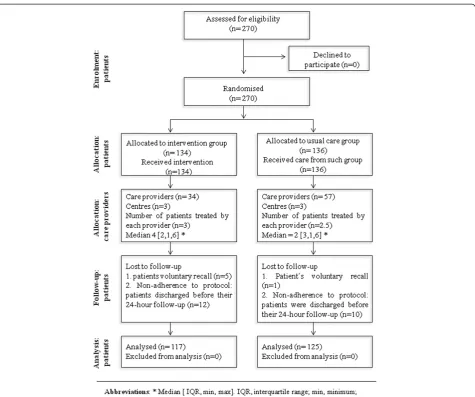
The 270 patients who were randomised and selected by consecutive sampling for the study (134 intervention and 136 controls) were cared for by each of the 3 randomised teams and by 91 admitting doctors. Twenty-two patients (12 interventions and 10 controls) had been assessed and ranked incorrectly during triage and were discharged on the same day. They were excluded from the main study analysis and the most common reason for patient exclusion was non-adherence to protocol because they had been discharged before their 24-hour follow-up. Six patients (5 interventions and 1 control) voluntarily decided to leave the hospital and seek care at another hospital and they were consequently excluded. Figure 2 shows the flow of participants throughout the trial.
Baseline data
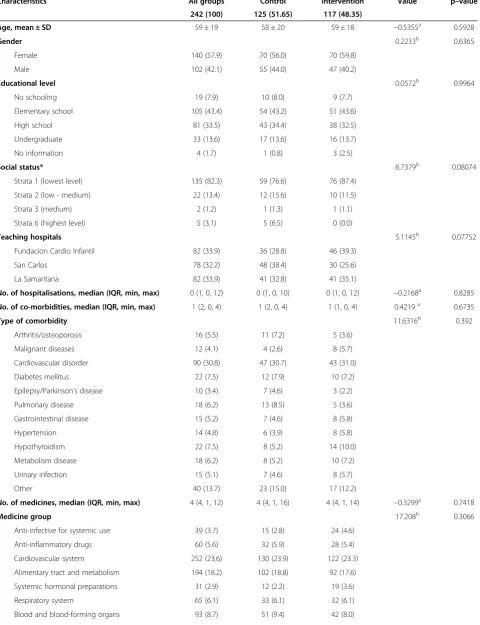
Table 1 give patients’ baseline demographic and clinical characteristics regarding the intervention and standard care arms. There were no statistically significant differences between both treatment arms. Patient characteristics in the 2 study arms were similar.
Effect of the intervention
For the primary end point, 117 (93.6%) of the 125 patients had at least 1 admission medication discrepancy in the standard care arm, compared to 71 (60.7%) of 117 patients in the intervention care arm (p < 0.0001; 0.1055 odds ratio (OR), 0.05-0.24 95% confidence interval (CI)). The overall discrepancy rate was 3.35 per patient (SD 3.32); it was 4.23 (SD 3.26) in the standard care arm and 2.43 (SD 3.14) in the intervention arm.
Doctor/pharmacist agreement on identifying allergies was also studied using Cohen’s association coefficient (K= 0.434; 95%CI; p < 0.001), showing a moderate level of agreement between both types of reviewer as the
pharmacists identified 48 patients suffering allergies and the doctors 23.
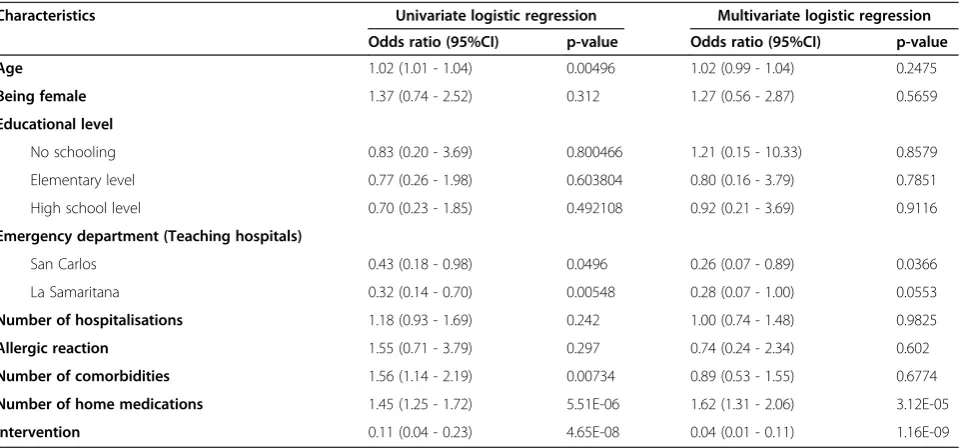
The association between discrepancies and baseline patient characteristics was also evaluated (Table 2). Increas-ing age was a weak predictor of havIncreas-ing a medication dis-crepancy only in the univariate model (1.02 OR, 1.01-1.04 95%CI). Regarding the study population’s clinical character-istics in the univariate model, the number of medications taken at home (1.45 OR, 1.25-1.72 95%CI; p = 5.51E-06) and number of co-morbidities (1.56 OR, 1.14-2.19 95%CI; p = 0.00734) increased the risk of discrepancy most whilst healthcare-service settings regarding ED admission and intervention significantly decreased such risk.
Patients’clinical conditions accounted for the decrease in discrepancies revealed by multivariate analysis. Due to the association between variables, the number of medicines being taken increased discrepancy risk (1.62 OD, 1.31-2.06 95%CI; p = 3.12E-05) while the healthcare-setting regarding ED admission decreased discrepancy risk (0.26 OR, 0.07-0.89 95%CI; p = 0.0366). Pharmacist intervention was also associated with an increased effect concerning reducing discrepancy risk (0.04 OR, 0.01-0.11 95%CI; p = 1.16E-09). The effect of such intervention remained statistically sig-nificant (p < 001) after adjustment for all other predictor variables.
Medication discrepancy characteristics and clinical severity
The most common discrepancy concerned the omission of home medication being reordered (55.1%); 66.3% of omission discrepancies were in the standard arm and 34.3% in the intervention arm. This was followed by incorrect or omitted dose and being slow to restart drug therapy. Over-the-counter-medicines were omitted in 100% of the cases. Other types of medication discrepancies are summarised in Table 3. The two most common classes involved in discrepancy were cardiovascular agents (23.6%) and alimentary tract and metabolism agents (17.0%).
A higher percentage of patients who were interviewed by pharmacists were identified as using home medication (457, 82.8%) compared to those in the standard care arm (255, 42.5%) regarding 1,169 medications consumed by patients in the study.
The likelihood that a medication discrepancy might have caused discomfort and/or clinical deterioration was appraised and categorised. Fleiss’ kappa coefficient was used (κ= 0.829; p = 0) [20]. There was very good agreement among evaluators in judging the potential clinical effect of medication discrepancy.
Four hundred and sixty-three interactions were identified: 8.7% major, 68.2% moderate and 23.1% minor. The major interactions were associated with the inflammatory, blood and central and peripheral nervous systems. One hundred and fourteen patients had at least one interaction, 63.2% in the standard care arm and 36.8% in the intervention arm. Intervention reduced the occurrence of interactions.
Assessing the process
All discrepancies were communicated to the chief of each hospital’s ED after data collection had ended; this person then resolved discrepancies with each doctor. Our results confirmed that pharmacists’interventions were well-received by ED doctors, having a 96% acceptance rate. The result was unknown in only 4% of the suggested actions.
The median time required for each pharmacist to complete the medication record for each patient was 29.5
minutes (IQR = 22.25 minutes, minimum 6 minutes, max-imum 135 minutes).
Discussion
Several publications [5,9,21,22] have demonstrated that pharmacist-acquired medication histories in an ED have led to reducing discrepancies; our results were consistent with previous studies. The effect of the intervention re-duced discrepancies occurring by 33% (p < 0.0001; 0.1055 OR, 0.05-0.24 95%CI), despite patient recall bias.
[image:7.595.62.538.86.483.2]Although every attempt was made to interview patients or family members and inspect prescription vials or medication bottles for all study subjects, medications could not be inspected in many cases; the interviewer/ researcher relied on written medication lists provided by the patient, caregiver or family or calling his/her house in such situations.
Table 1 The study population’s baseline demographic and clinical characteristics
Characteristics All groups Control Intervention Value p–value
242 (100) 125 (51.65) 117 (48.35)
Age, mean ± SD 59 ± 19 58 ± 20 59 ± 18 −0.5355a 0.5928
Gender 0.2233b 0.6365
Female 140 (57.9) 70 (56.0) 70 (59.8)
Male 102 (42.1) 55 (44.0) 47 (40.2)
Educational level 0.0572b 0.9964
No schooling 19 (7.9) 10 (8.0) 9 (7.7)
Elementary school 105 (43.4) 54 (43.2) 51 (43.6)
High school 81 (33.5) 43 (34.4) 38 (32.5)
Undergraduate 33 (13.6) 17 (13.6) 16 (13.7)
No information 4 (1.7) 1 (0.8) 3 (2.5)
Social status* 6.7379b 0.08074
Strata 1 (lowest level) 135 (82.3) 59 (76.6) 76 (87.4)
Strata 2 (low - medium) 22 (13.4) 12 (15.6) 10 (11.5)
Strata 3 (medium) 2 (1.2) 1 (1.3) 1 (1.1)
Strata 6 (highest level) 5 (3.1) 5 (6.5) 0 (0.0)
Teaching hospitals 5.1145b 0.07752
Fundacion Cardio Infantil 82 (33.9) 36 (28.8) 46 (39.3)
San Carlos 78 (32.2) 48 (38.4) 30 (25.6)
La Samaritana 82 (33.9) 41 (32.8) 41 (35.1)
No. of hospitalisations, median (IQR, min, max) 0 (1, 0, 12) 0 (1, 0, 10) 0 (1, 0, 12) −0.2168a 0.8285
No. of co-morbidities, median (IQR, min, max) 1 (2, 0, 4) 1 (2, 0, 4) 1 (1, 0, 4) 0.4219a 0.6735
Type of comorbidity 11.6316b 0.392
Arthritis/osteoporosis 16 (5.5) 11 (7.2) 5 (3.6)
Malignant diseases 12 (4.1) 4 (2.6) 8 (5.7)
Cardiovascular disorder 90 (30.8) 47 (30.7) 43 (31.0)
Diabetes mellitus 22 (7.5) 12 (7.9) 10 (7.2)
Epilepsy/Parkinson’s disease 10 (3.4) 7 (4.6) 3 (2.2)
Pulmonary disease 18 (6.2) 13 (8.5) 5 (3.6)
Gastrointestinal disease 15 (5.2) 7 (4.6) 8 (5.8)
Hypertension 14 (4.8) 6 (3.9) 8 (5.8)
Hypothyroidism 22 (7.5) 8 (5.2) 14 (10.0)
Metabolism disease 18 (6.2) 8 (5.2) 10 (7.2)
Urinary infection 15 (5.1) 7 (4.6) 8 (5.7)
Other 40 (13.7) 23 (15.0) 17 (12.2)
No. of medicines, median (IQR, min, max) 4 (4, 1, 12) 4 (4, 1, 16) 4 (4, 1, 14) −0.3299a 0.7418
Medicine group 17.208b 0.3066
Anti-infective for systemic use 39 (3.7) 15 (2.8) 24 (4.6)
Anti-inflammatory drugs 60 (5.6) 32 (5.9) 28 (5.4)
Cardiovascular system 252 (23.6) 130 (23.9) 122 (23.3)
Alimentary tract and metabolism 194 (18.2) 102 (18.8) 92 (17.6)
Systemic hormonal preparations 31 (2.9) 12 (2.2) 19 (3.6)
Respiratory system 65 (6.1) 33 (6.1) 32 (6.1)
In spite of the intervention, 71 patients (60.7%) in the intervention arm still had at least 1 ED admission medica-tion discrepancy related to home medicamedica-tion. Emphasis was placed on patients reporting the use of at least 1 medi-cation during ED admission. Error rates may have differed regarding services other than admission or among patients taking more than 1 medication. Our results were consist-ent with previous studies [21,22] which have reported that medication discrepancies when being admitted to an ED are frequent and clinically significant. Omission regarding over-the-counter medications in our study was 100%.
Obtaining medication history can be challenging. One study has reported that unintentional medication discrepancies were more often due to errors in recording medication history than errors reconciling the history with medication orders. It also reported that relying on family members or caregivers as sources of medication informa-tion represented a risk factor [23].
[image:9.595.56.542.101.272.2]Our study incorporated MedRec when being admitted to an ED. It has proved useful for improving patient safety by reducing medication discrepancies before harm can occur to patients [8]. The reduction of medication
Table 1 The study population’s baseline demographic and clinical characteristics(Continued)
Nervous system 168 (15.7) 90 (16.5) 78 (14.9)
Vitamins and nutrients 39 (3.7) 21 (3.7) 18 (3.4)
Herbal medicine 21 (2.0) 7 (1.3) 14 (2.7)
Over-the-counter medicine 75 (7.0) 37 (6.8) 38 (7.3)
Other 30 (2.8) 14 (2.6) 16 (3.1)
Allergic reaction 0b 1
No 194 (80.2) 100 (80.0) 94 (80.3)
Yes 48 (19.8) 25 (20.0) 23 (19.7)
No. of interactions
Minorc, median (IQR, min, max) 1 (0, 1, 3) 1 (0, 1, 3) 1 (0, 1, 2) −0.3943 0.6942
Moderated, median (IQR, min, max) 1 (1, 1, 7) 1 (1, 1, 7) 1 (1, 1, 3) 0.9524 0.3416
Majore, median (IQR, min, max) 1 (0, 1, 4) 1 (0, 1, 2) 1 (0, 1, 4) −1.4242 0.1787
Abbreviations:a
t student;b
Chi-square;SD(standard deviation).IQR,interquartile range; min, minimum; max, maximum.*
Social status is not important data during the interview on admission to the ED at the San Carlos teaching hospital.
c
Minor: Minimal clinical significance, involving minimising risk, assessing risk and considering an alternative drug, taking steps to circumvent interaction risk and/ or instituting a monitoring plan.
d
Moderate: Moderate clinical significance, usually avoiding combinations, being used only in special circumstances.
e
Major: High clinical significance, avoiding combinations; the risk of the interaction would outweigh the benefits.
Table 2 Association between patients’baseline characteristics and medication discrepancies
Characteristics Univariate logistic regression Multivariate logistic regression
Odds ratio (95%CI) p-value Odds ratio (95%CI) p-value
Age 1.02 (1.01 - 1.04) 0.00496 1.02 (0.99 - 1.04) 0.2475
Being female 1.37 (0.74 - 2.52) 0.312 1.27 (0.56 - 2.87) 0.5659
Educational level
No schooling 0.83 (0.20 - 3.69) 0.800466 1.21 (0.15 - 10.33) 0.8579
Elementary level 0.77 (0.26 - 1.98) 0.603804 0.80 (0.16 - 3.79) 0.7851
High school level 0.70 (0.23 - 1.85) 0.492108 0.92 (0.21 - 3.69) 0.9116
Emergency department (Teaching hospitals)
San Carlos 0.43 (0.18 - 0.98) 0.0496 0.26 (0.07 - 0.89) 0.0366
La Samaritana 0.32 (0.14 - 0.70) 0.00548 0.28 (0.07 - 1.00) 0.0553
Number of hospitalisations 1.18 (0.93 - 1.69) 0.242 1.00 (0.74 - 1.48) 0.9825
Allergic reaction 1.55 (0.71 - 3.79) 0.297 0.74 (0.24 - 2.34) 0.602
Number of comorbidities 1.56 (1.14 - 2.19) 0.00734 0.89 (0.53 - 1.55) 0.6774
Number of home medications 1.45 (1.25 - 1.72) 5.51E-06 1.62 (1.31 - 2.06) 3.12E-05
Intervention 0.11 (0.04 - 0.23) 4.65E-08 0.04 (0.01 - 0.11) 1.16E-09
[image:9.595.59.543.501.725.2]discrepancies in the intervention arm reflected the im-portance of obtaining accurate and complete medication histories.
Some studies [5,9,24] have reported that pharmacists are ideal for supporting a multidisciplinary healthcare team because of their increased familiarity with medications. Our results agreed with previous studies which reported that pharmacists involved in ED admission could increase medication detection level and identify more medications per patient than doctors or nurses when noting their medication history [7,24], i.e. such histories were more accurate and complete.
Pharmacists used multiple sources for gathering a complete medication history for proactively issuing medication orders to support doctors making prescriptions during ED admission. Dawson et al.,[25] have shown that doctors obtained an average of 79% of the complete drug history regarding prescription drug use and 45% for over-the-counter drug use, whereas pharmacists obtained a
100% complete history for both categories of drug use. Todd et al., [26] has stated that pharmacists documented significantly more medication doses and dosage schedules than physicians did (614 cf 446 and 614 cf 404, respectively) (p≤0.001 for both comparisons) and 614 medications were identified by pharmacists for the 55 patients interviewed, compared to 556 identified by doctors (p≤0.001).
In some earlier non-randomised studies of pharmacist-conducted medication histories and assessment before admission to an ED [21], the most common type of discrepancy involved the omission of a medication which a patient was taking at home (57%); our findings confirmed such report (55.1%).
Hayes et al., [27] found that allergy documentation was recorded for 62 patients in a control group (79%) compared to 60 patients in the study group (100%) (p = 0.001). Twenty-five patients were identified in our study suffering from allergies in the intervention arm whilst the standard care arm identified 23 (p < 0.001). Pharmacists identified an almost equal number of allergies as did the doctors.
Overall, a reduction in discrepancies was due to interven-tion, expected clinical conditions (number of medications being taken) and a particular ED setting. Although the hospitals participating in the study were selected as they had very similar general characteristics, it was revealed that an ED healthcare setting significantly affected the risk of discrepancies occurring.
[image:10.595.56.543.101.267.2]The hospitals may have had different results because staff training/procedures were different and training admitting physicians and medical students could have had some impact. Significant barriers often occur regarding accurate and complete medication information being obtained during admission related to patients who go to hospitals due to the differing demographics of the populations which they serve. The amount and availability of resources for healthcare attention and the hospitals’ capacity for attending patients could have influenced
Table 3 Characteristics regarding medication discrepancies
Type of medication discrepancy All groups Standard care arm Intervention arm Value p-value
242 (100) 125 (51.65) 117 (48.35)
Type of discrepancy 97.5313 < 2.2e-16
Incorrect or omitted dose 165 (20.4) 83 (15.7) 82 (29.0)
Therapeutic duplication 5 (0.6) 4 (0.8) 1 (0.3)
Incorrect or omitted frequency 6 (0.7) 6 (1.1) 0 (0.0)
No indication 2 (0.3) 2 (0.4) 0 (0.0)
Drug omission 447 (55.1) 350 (66.3) 97 (34.3)
Too soon to restart drug therapy 26 (3.2) 15 (2.8) 11 (3.9)
Slow to restart drug therapy 156 (19.2) 64 (12.1) 92 (32.5)
Inappropriate route 4 (0.5) 4 (0.8) 0 (0.0)
Number of discrepancies, median (IQR, min, max) 3 (4, 0, 15) 3 (4, 0, 15) 1 (4, 0, 13) 4.3812 1.765e-05
Abbreviations:IQR, interquartile range; in, minimum; max, maximum.
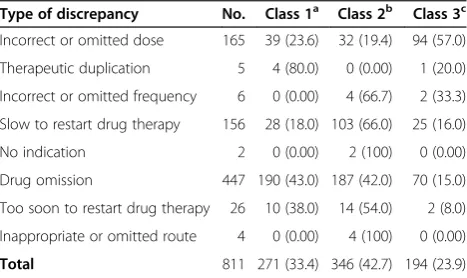
Table 4 Discrepancy type and potential severity
Type of discrepancy No. Class 1a Class 2b Class 3c
Incorrect or omitted dose 165 39 (23.6) 32 (19.4) 94 (57.0)
Therapeutic duplication 5 4 (80.0) 0 (0.00) 1 (20.0)
Incorrect or omitted frequency 6 0 (0.00) 4 (66.7) 2 (33.3)
Slow to restart drug therapy 156 28 (18.0) 103 (66.0) 25 (16.0)
No indication 2 0 (0.00) 2 (100) 0 (0.00)
Drug omission 447 190 (43.0) 187 (42.0) 70 (15.0)
Too soon to restart drug therapy 26 10 (38.0) 14 (54.0) 2 (8.0)
Inappropriate or omitted route 4 0 (0.00) 4 (100) 0 (0.00)
Total 811 271 (33.4) 346 (42.7) 194 (23.9) a
Class 1: discrepancies unlikely to cause patient discomfort or clinical deterioration.
b
Class 2 discrepancies which could cause moderate discomfort or clinical deterioration.
c
[image:10.595.57.291.551.690.2]the results. These observations were made during data collection.
Evaluating the potential clinical impact of the uninten-tional discrepancies identified during our study showed that 23.9% were judged to have had the potential to cause a patient severe discomfort. Potential harm was driven by the type of discrepancy (incorrect or omitted dose). An example would be a patient who was admitted with cardiac arrhythmia; 150 mg propafenone was ordered by the ED doctor (R2) because it had been noted during the first patient interview (R1) that he had been taking propafenone; however, the ED doctor did not know that a lower dose had already been ordered by a cardiologist 6 weeks earlier (i.e. based on later scrutiny of the patient’s record by MedRec staff–R3).
Zed et al., [28] evaluated incidence, severity and prevent-ability of medication-related visits to an ED, establishing that severity had been classified as moderate; of all patients having medication discrepancies at the time of ED admission in our study, more than two thirds of such discrepancies had the potential to cause moderate harm.
The number of patients having at least one interaction was very high (36.8%), compared to studies elsewhere [29]. This could have been related to different definitions or prescribing practice. Further analysis is required for identi-fying what might have motivated the above differences (our group is currently working on an adverse-events-based paper to extend this line of research). Interactions do not always represent contraindications for use, but knowledge and an appreciation of them before prescrip-tion is essential for the safe use of medicaprescrip-tion. This should thus be considered when a doctor decides to continue with a set prescription after evaluating any possible interaction.
It was estimated that a pharmacist would have to spend 29.5 minutes per patient to provide this service for patients in a similar ED. However, such calculation was based on uninterrupted work-flow times and may have underestimated the actual time required outside a research setting. A consultation with just a pharmacist in an ED focusing on a medication list may be a solution. Models maximising the use of a pharmacist should be evaluated in future research.
This study had several limitations. Despite the study being conducted in teaching hospitals, the results may not be generalised to other settings because an ED setting was a factor regarding the risk of a discrepancy appearing. Future research could examine the effect of ED admission setting and blocking; a cluster study should thus be carried out.
It is acknowledged that the validity of any method for scoring medication discrepancy is difficult to assess because there is currently no gold standard for compari-son. A reconciled history (F3) should provide the gold
standard for identifying home medication use; however, this could have been a limitation of this study. Patient or caregiver reports were relied on, in conjunction with collateral information from medication vials whenever possible.
Error rates may differ regarding services other than an ED concerning admissions which are elective or involve a transfer from another healthcare facility, or concerning patients taking more than 1 medication. Our findings may not have been representative of other institutions using processes different to MedRec for admission. Eligible patients were not followed-up beyond the study; thus, we are not aware of the effect of such ED admission process on medical outcomes.
The rating method used for assessing the potential severity of the discrepancies and F1 questionnaire used during a medication history interview has not been validated. Inter-rater agreement was also not evaluated as interviewing the same patient twice could have led to recall bias.
The hospitals involved in this study are developing a MedRec pathway which will incorporate some strategies based on the present study’s findings. The next phase will involve an assessment of medication discrepancies once the new MedRec protocol is in place. The data presented herein has suggested that recording medication histories on admission could be improved. Future research could involve a cost-benefit analysis of the intervention for implementing such initiative.
Conclusions
To improve patient care and minimise unintended discrepancies in an ED, the healthcare system should explore ways for involving a pharmacist as part of the multidisciplinary team to improve ED admission medica-tion history accuracy thereby improving patient safety during admission. A pharmacist-acquired medication history in an ED focusing on a patient’s current home medication regimen available to be used by a doctor at the time of consulting in an ED reduced the number of patients having at least 1 medication discrepancy related to home medication.
Ethics approval
Competing interests
The authors declare no competing interests regarding the content of this article.
Authors’contributions
BJ, submitting author, directed data abstraction, analysis and interpretation. MF, involved in design, devised the initial research proposal concept. MF and GJE guided the team of pharmacist researchers for this article covering all sections. BJ drafted our results and table section. MF and GJE drafted the discussion and conclusion sections. MF provided mentorship for our research team and acquired funding. All authors have read and approved the final manuscript.
Acknowledgements
We wish to acknowledge the support of Dr Carlos Camargo MD chief of the Emergency Department, Fundacion Cardio Infantil. Dr Gina Lucia Lacorazza, MD chief of the Emergency Department Samaritana teaching hospital and Dr Jose Dario Beainy MD chief of the Emergency Department San Carlos teaching hospital. We are grateful to the chiefs of the Pharmacy services (PharmD Natividad Poveda) and Granada University’s pharmaceutical care research institute for their contribution. We would like to thank all researchers who in one way or another made this research possible.
Author details
1Pharmacy Department, Universidad Nacional de Colombia, Ciudad
Universitaria, Edificio 450 oficina 204, Bogotá 14490, Colombia.2Pharmacy Department, Universidad de Granada, Granada University’s pharmaceutical care research institute, Paseo Cartuja, S/N, 18071 Granada, Spain.
Received: 19 April 2013 Accepted: 26 August 2013 Published: 29 August 2013
References
1. Slee A, Farrar K, Hughes D, Constable S:Optimising medical treatment -how pharmacist-acquired medication histories have a positive impact on patient care.Pharm J2006,277:3.
2. Cornish PL, Knowles SR, Marchesano R, Tam V, Shadowitz S, Juurlink DN, Etchells EE:Unintended medication discrepancies at the time of hospital admission.Arch Intern Med2005,165:424–429. edn. United States. 3. Beers MH, Munekata M, Storrie M:The accuracy of medication histories in
the hospital medical records of elderly persons.J Am Geriatr Soc1990, 38(11):1183–1187.
4. Kwan Y, Fernandes OA, Nagge JJ, Wong GG, Huh JH, Hurn DA, Pond GR, Bajcar JM:Pharmacist medication assessments in a surgical preadmission clinic.Arch Intern Med2007,167:1034–1040. United States.
5. Carter MK, Allin DM, Scott LA, Grauer D:Pharmacist-acquired medication histories in a university hospital emergency department.Am J Health Syst Pharm2006,63:2500–2503. United States.
6. Gurwich EL:Comparison of medication histories acquired by pharmacists and physicians.Am J Hosp Pharm1983,40(9):1541–1542.
7. Nester TM, Hale LS:Effectiveness of a pharmacist-acquired medication history in promoting patient safety.Am J Health Syst Pharm2002, 59(22):2221–2225.
8. Gleason KM, Groszek JM, Sullivan C, Rooney D, Barnard C, Noskin GA: Reconciliation of discrepancies in medication histories and admission orders of newly hospitalized patients.Am J Health Syst Pharm2004, 61(16):1689–1695.
9. Cohen V, Jellinek SP, Hatch A, Motov S:Effect of clinical pharmacists on care in the emergency department: a systematic review.Am J Health Syst Pharm2009,66:1353–1361. United States.
10. Kaboli PJ, Hoth AB, McClimon BJ, Schnipper JL:Clinical pharmacists and inpatient medical care: a systematic review.United States2006, 166:955–964.
11. Chisholm-Burns MA, Kim Lee J, Spivey CA, Slack M, Herrier RN, Hall-Lipsy E, Graff Zivin J, Abraham I, Palmer J, Martin JR,et al:US pharmacists’effect as team members on patient care: systematic review and meta-analyses.
Med Care2010,48(10):923–933.
12. Lau HS, Florax C, Porsius AJ, De Boer A:The completeness of medication histories in hospital medical records of patients admitted to general internal medicine wards.Br J Clin Pharmacol2000,49:597–603. England.
13. Using medication reconciliation to prevent errors: http://www.jointcommission.org/assets/1/18/SEA_35.pdf. 14. Boutron I, Moher D, Altman DG, Schulz KF, Ravaud P:Extending the
CONSORT statement to randomized trials of nonpharmacologic treatment: explanation and elaboration.Ann Intern Med2008, 148:295–309. United States.
15. Iserson KV, Moskop JC:Triage in medicine, part I: Concept, history, and types.Ann Emerg Med2007,49(3):275–281.
16. Salud M:GuíasparaManejodeUrgencias.Tomo III2009,3:279–271. Bogotá.
17. Drugs.com:Drug Interactions Checker; 2013.
18. Medication Reconciliation Toolkit: www.ncqualitycenter.org/downloads/ MRToolkit.pdf.
19. Greenwald JL, Halasyamani LK, Greene J, LaCivita C, Stucky E, Benjamin B, Reid W, Griffin FA, Vaida AJ, Williams MV:Making inpatient medication reconciliation patient centered, clinically relevant, and implementable: a consensus statement on key principles and necessary first steps.
Jt Comm J Qual Patient Saf2010,36(11):504–513. 481. 20. Fleiss JL:Statistical Methods for Rates and Proportions.New York:
John Wiley & Son; 1981.
21. Vasileff HM, Whitten LE, Pink JA, Goldsworthy SJ, Angley MT:The effect on medication errors of pharmacists charting medication in an emergency department.Pharm World Sci2009,31(3):373–379.
22. Shepherd G, Schwartz RB:Frequency of incomplete medication histories obtained at triage.Am J Health Syst Pharm2009,66:65–69. United States. 23. Pippins JR, Gandhi TK, Hamann C, Ndumele CD, Labonville SA, Diedrichsen
EK, Carty MG, Karson AS, Bhan I, Coley CM,et al:Classifying and predicting errors of inpatient medication reconciliation.J Gen Intern Med2008, 23(9):1414–1422.
24. Aldridge VE, Park HK, Bounthavong M, Morreale AP:Implementing a comprehensive, 24-hour emergency department pharmacy program.
Am J Health Syst Pharm2009,66:1943–1947. United States. 25. Dawson P, Gray S:Clinical significance of pharmacist-obtained drug
histories.Pharm J1981,227:420.
26. Reeder TA, Mutnick A:Pharmacist- versus physician-obtained medication histories.Am J Health Syst Pharm2008,65(9):857–860.
27. Hayes BD, Donovan JL, Smith BS, Hartman CA:Pharmacist-conducted medication reconciliation in an emergency department.Am J Health Syst Pharm2007,64:1720–1723. United States.
28. Zed PJ, Abu-Laban RB, Balen RM, Loewen PS, Hohl CM, Brubacher JR, Wilbur K, Wiens MO, Samoy LJ, Lacaria K,et al:Incidence, severity and preventability of medication-related visits to the emergency department: a prospective study.CMAJ2008,178:1563–1569. Canada.
29. Tulner LR, Kuper IM, Frankfort SV, van Campen JP, Koks CH, Brandjes DP, Beijnen JH:Discrepancies in reported drug use in geriatric outpatients: relevance to adverse events and drug-drug interactions.Am J Geriatr Pharmacother2009,7(2):93–104.
doi:10.1186/1472-6963-13-337
Cite this article as:Becerra-Camargoet al.:A multicentre, double-blind,
randomised, controlled, parallel-group study of the effectiveness of a pharmacist-acquired medication history in an emergency department. BMC Health Services Research201313:337.
Submit your next manuscript to BioMed Central and take full advantage of:
• Convenient online submission
• Thorough peer review
• No space constraints or color figure charges
• Immediate publication on acceptance
• Inclusion in PubMed, CAS, Scopus and Google Scholar
• Research which is freely available for redistribution