Thomas Mayer is Founding Director, Flossbach von Storch Research Institute.
CEPS High-level Briefs, a new CEPS publications series written by eminent economists, offer opinions, insights and solutions into the salient challenges confronting European policy-makers and markets. The views expressed are attributable only to the authors in a personal capacity and not to any institution with which they are associated.
Available for free downloading from the CEPS website (www.ceps.eu) © CEPS 2015
Centre for European Policy Studies▪ Place du Congrès 1 ▪ B-1000 Brussels ▪ Tel: (32.2) 229.39.11 ▪ www.ceps.eu
A Parallel Currency for Greece
Thomas Mayer
20 May 2015
Key Point
Greece and its creditors seem to be engaged in a game of chicken: both sides expect the other to yield at the last moment. The game will almost certainly end with each side deviating somewhat from its preferred course.
In this Brief, we discuss how a parallel currency could contribute to a resolution of the conflict. In our view, it would be the least-bad option for both sides among three possible options on the table.
The dilemma of EMU
In our existing ‘fiat’ money system, book money is created by private banks through credit extension. The central bank accommodates banks’ demand for reserve money and the public’s demand for cash in the form of bank notes. By setting lending rates for reserve money, the central bank indirectly influences banks’ credit rates and through this the growth of credit and money. A fiat money system needs a state that sets the rules for banks and the central bank, and gives democratic legitimacy to the operation of the central bank.
money supply, and there is no need for a central bank or a state to protect and legitimise money.
EMU combined elements of the pure commodity money system (super-independent central bank, no bail-outs) with the fiat money system. And the former were supposed to substitute for the state that EMU did not have. But the construction turned out to be flawed. States and banks behaved as if they operated in a complete fiat money system and over-borrowed. To prevent the failure of EMU, the European Central Bank (ECB) assumed state functions during the crisis. Most importantly, it assumed the role of the buyer of last resort of government debt. The Governing Council of the ECB decided which governments benefited from ECB purchases of their debt and on which terms. The ECB’s role as buyer of last resort of government debt raises three problems: i) The ECB lacks democratic legitimacy for this role.
ii) The ECB creates moral hazard as the benefits of debt purchases accrue to individual governments and the costs in the form of higher inflation are (eventually) borne by all EMU members.
iii) The influence of governments on the ECB is strongly skewed towards larger countries.
This set-up is unstable and EMU cannot survive in the long-term, unless the set-up is changed. To survive, EMU has either to evolve to become a state with monetary and most fiscal sovereignty vested in a central government (which can delegate part of its monetary sovereignty to an independent central bank), or it has to regress to a pure commodity money system.
The options for Greece
The main reason for Greece’s debt crisis is that the public and private sectors behaved as if the government still had control over the buyer of last resort of their debt. Since this is no longer the case in EMU, Greece has surrendered its sovereignty to those who can act as buyers of last resort of Greek debt. Assuming that the creditors will not completely yield to Greek demands for unconditional help, Greece now has three choices:
i) Accept the loss of sovereignty (and follow the programmes demanded by the creditors),
ii) Regain full sovereignty by exiting EMU and introducing its own currency or iii) Regain partial sovereignty by introducing a parallel currency to the euro for
domestic use.
Clearly, the third option requires Greece to make concessions so as to secure the approval for the action by its partners.
The road towards a parallel currency
1. Arrange for sufficient euro government revenue to service the debt to the IMF and the ECB (or find an arrangement for the rescheduling of the debt to the ECB, e.g. a stand-still agreement for a designated period of time for the repayment of the debt, or complete the present programme under the conditions outlined below for receipt of the last tranche) so as to avoid technical default.
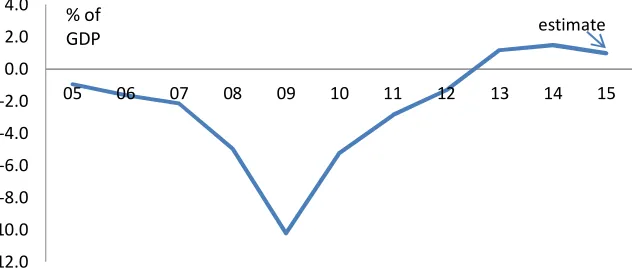
[image:3.612.148.464.321.459.2]2. Fund other government expenses by issuing special government debt as means of payment. Thus, instead of issuing government bonds to raise euros as payment for government spending, payment is made directly with special government debt. The two means of payment can be mixed (depending on the availability of euros). For example, existing pensions are paid in euros, pension increases are paid in special government debt. Ordinary (euro) government finances would remain unaffected by the issuance of special government debt. In this way, the Greek government could fund additional expenses without affecting the primary budget surplus in euros, or it could replace euro spending and increase the primary budget surplus (see Figure 1).1
Figure 1. Greece’s primary budget balance
Source: Haver Analytics.
3. Denomination of the special debt would be in ‘Greek euros’ (in 2012 we called these ‘Geuros’), and the exchange rate at issue would be 1:1.2 However, the government would not intervene in the market to stabilise the exchange rate. The Geuro would float against the euro. The Geuro could be backed by government assets, which could be moved into a separate trust for this purpose. This would limit issuance and hence raise confidence in the new instrument.
1 The savings of euros would be given by the euro spending replaced by special government
debt minus any taxes lost on previous euro incomes generated by euro spending. Thus, y = x – t x, where y denotes euro savings, x euro spending replaced by special government debt, and t the tax rate applying to incomes generated by the previous euro spending. Assuming that t = 20%, the replacement of one euro by special government debt with the face value of one euro would lead to effective budgetary savings of 0.8 euros.
2 Thomas Mayer, “The Geuro: A parallel currency for Greece”, DB Research, May 2012.
-12.0 -10.0 -8.0 -6.0 -4.0 -2.0 0.0 2.0 4.0
05 06 07 08 09 10 11 12 13 14 15
Primary general government balance % of
4. Create demand for special government debt by requiring employers to pay any increase in the minimum wage in this denomination. Thus, the minimum wage would consist of a part paid in euros and another part paid in special government debt. Taxpayers would be allowed to pay taxes in the currency (or mix of currencies) of their taxable income.
5. To protect banks’ balance sheets, tax withdrawal of deposits and money transfers abroad at the rate of the discount of the Geuro to the euro in the market (e.g. if €1 = 1.25 Geuro, then a withdrawal or transfer abroad of €100 would lead to an account debit of €125).
6. As the use of special government debt as means of payment increases, it becomes a parallel currency to the euro. With the supply of parallel currency initially exceeding demand, it would depreciate against the euro (although the value of the collateral in the Trust Fund would limit the depreciation). As labour costs would accrue in part in euro and in another part in the parallel currency, labour costs composed of both euro and parallel currency would decline against labour costs in euro only. This would raise competitiveness and especially help labour-intensive exports (e.g. tourism).
Figure 2. Greece’s gross general government debt
Source: Haver Analytics.
9. The monetary programme cannot substitute for a further modernisation of the Greek economy, but it could ease the straightjacket imposed by the single European currency on aggregate demand while supply-side reforms continue (see Figure 3 for recent developments of government expenditures and revenues). As Greek output and with it the demand for Greek euros rise, the government could gradually tighten the supply of Greek euros so that the exchange rate between the euro and the Geuro moves back to parity. Eventually the government could lock the exchange rate, repurchase Geuros against euros, and return to the single currency regime.
Figure 3. Greek general government expenditures and revenues
Source: Haver Analytics.
80 100 120 140 160 180 200
05 06 07 08 09 10 11 12 13 14 15
Gross government debt % of
GDP
estimate
35 37 39 41 43 45 47 49 51 53 55
05 06 07 08 09 10 11 12 13 14 15
General government revenues General government expenditures % of
[image:5.612.144.466.477.650.2]Better than ‘Grexit’
CENTRE FOR EUROPEAN POLICY STUDIES, Place du Congrès 1, B‐1000 Brussels, Belgium Tel: 32 (0)2 229 39 11 • Fax: 32 (0)2 219 41 51 • www.ceps.eu • VAT: BE 0424.123.986
ABOUT CEPS
Founded in Brussels in 1983, the Centre for European Policy Studies (CEPS) is widely recognised as the most experienced and authoritative think tank operating in the European Union today. CEPS acts as a leading forum for debate on EU affairs, distinguished by its strong in-house research capacity, complemented by an extensive network of partner institutes throughout the world.
Goals
• Carry out state-of-the-art policy research leading to innovative solutions to the challenges facing Europe today,
• Maintain the highest standards of academic excellence and unqualified independence
• Act as a forum for discussion among all stakeholders in the European policy process, and
• Provide a regular flow of authoritative publications offering policy analysis and recommendations,
Assets
• Multidisciplinary, multinational & multicultural research team of knowledgeable analysts,
• Participation in several research networks, comprising other highly reputable research institutes from throughout Europe, to complement and consolidate CEPS’ research expertise and to extend its outreach,
• An extensive membership base of some 132 Corporate Members and 118 Institutional Members, which provide expertise and practical experience and act as a sounding board for the feasibility of CEPS policy proposals.
Programme Structure
In-house Research Programmes
Economic and Social Welfare PoliciesFinancial Institutions and Markets Energy and Climate Change
EU Foreign, Security and Neighbourhood Policy Justice and Home Affairs
Politics and Institutions Regulatory Affairs Agricultural and Rural Policy
Independent Research Institutes managed by CEPS
European Capital Markets Institute (ECMI)European Credit Research Institute (ECRI)
Research Networks organised by CEPS
European Climate Platform (ECP) European Network for Better Regulation (ENBR)
European Network of Economic Policy Research Institutes (ENEPRI) European Policy Institutes Network (EPIN)