TRAINING AND ESTABLISHMENT SURVIVAL
William Collier, Francis Green and Young-Bae Kim
RESEARCH REPORT 20
MARCH 2007
TRAINING AND
EST
ABLISHMENT
SUR
VIV
AL
RESEARCH REPOR
T 20 – MARCH 2007
This report is a summary of a research report carried out by
the University of Kent on behalf of the Sector Skills Development Agency.
To obtain copies of this document contact Sector Skills Development Agency Callflex Business Park
Training and Establishment Survival
William Collier, Francis Green and Young-Bae Kim
Sector Skills Development Agency: Research Series Foreword
In October 2002 the Department for Education and Skills formally launched Skills for Business (SfB), a new UK-wide network of employer-led Sector Skills Councils (SSCs), supported and directed by the Sector Skills Development Agency (SSDA). The purpose of SfB is to bring employers more centre stage in articulating their skill needs and delivering skills-based
productivity improvements that can enhance UK competitiveness and the effectiveness of public services. The remit of the SSDA includes establishing and progressing the network of SSCs, supporting the SSCs in the development of their own capacity and providing a range of core services. Additionally the SSDA has responsibility for representing sectors not covered by an SSC and co-ordinating action on generic issues.
Research, and developing a sound evidence base, is central to the SSDA and to Skills for Business as a whole. It is crucial in: analysing productivity and skill needs; identifying priorities for action; and improving the evolving policy and skills agenda. It is vital that the SSDA research team works closely with partners already involved in skills and related research to generally drive up the quality of sectoral labour market analysis in the UK and to develop a more shared understanding of UK-wide sector priorities.
The SSDA is undertaking a variety of activities to develop the analytical capacity of the Network and enhance its evidence base. This involves: developing a substantial programme of new research and evaluation, including international research; synthesizing existing research;
developing a common skills and labour market intelligence framework; taking part in partnership research projects across the UK; and setting up an expert panel drawing on the knowledge of leading academics, consultants and researchers in the field of labour market studies. Members of this panel will feed into specific research projects and peer review the outputs; be invited to participate in seminars and consultation events on specific research and policy issues; and will be asked to contribute to an annual research conference.
The SSDA takes the dissemination of research findings seriously. As such it has developed this dedicated research series to publish all research sponsored by the SSDA.
Lesley Giles
Contents
Executive Summary 6
Chapter 1 Introduction 10
1.1 Overview 10
1.2 Research Objectives 11
1.3 The Report Structure 13
Chapter 2 Training and Business Performance 15
2.1 Previous Evidence on Training and Business Performance 15
2.2 Training Beliefs, Business Performance and Establishment Survival 19
Chapter 3 The Workplace Employment Relations Survey (WERS) 22
3.1 WERS 98 Cross-section Survey 22
3.1.1 Survey of Managers (MQ) 23
3.1.2 Survey of Employees (SEQ) 24
3.2 WERS 2004 Panel Survey 25
Chapter 4 Sample Characteristics 27
4.1 Establishment Employment 27
4.1.1 Distribution of Employment by Gender and Employment Status 27
4.1.2 Distribution of Employment by Establishment Size 28
4.1.3 Distribution of Employment by Industry 29
4.1.4 Distribution of Employment by Occupation 30
4.2 Establishment Closure 32
4.2.1 Establishment Closure and Establishment Status 32
4.2.2 Establishment Closure by Largest Occupational Group & Industry 33 4.2.3 Establishment Closure by Average Educational Attainment of Employees 34
4.3 Employer Training 35
4.3.1 Training, Establishment Status and Industry (MQ) 36
4.3.2 Training and Training Intensity by Largest Occupational Group (MQ) 37
4.3.3 Training and Training Intensity by Occupation (SEQ) 39
4.4 Summary of Chapter 4 40
Chapter 5 Training and Establishment Closure 41
5.1 Training and Establishment Closure 41
5.1.1 Training and Establishment Closure (MQ) 41
5.1.2 Training and Establishment Closure (SEQ) 45
5.2 Training and Closure by Occupation 46
5.2.1 Training and Closure by Largest Occupational Group (MQ) 46
5.2.2 Training and Closure by Occupation (SEQ) 50
5.3 Training and Closure by Industry (MQ) 52
5.4 Multivariate Analysis of Training and Establishment Closure 58
5.4.1 The Effects of Training on Establishment Closure (MQ) 59
5.4.2 The Effects of Training on Establishment Closure (SEQ) 63
5.5 The Effects of Training on Closure by Occupation 65
5.5.1 The Effects of Training on Closure by Largest Occupational Group (MQ) 66
5.5.2 The Effects of Training on Closure by Occupation (SEQ) 68
5.6 The Effects of Training on Closure by Industry (MQ) 70
5.7 Summary of Chapter 5 72
Chapter 6 Determinants of Establishment Training 75
6.1 Introduction and Motivation 75
6.2 Previous Studies on the Determinants of Training 76
6.3 Data Overview 78
6.4 Multivariate Analysis of the Determinants of Establishment Training 80
6.4.1 The Determinants of Establishment Training 81
6.5 Summary of Chapter 6 84
Chapter 7 Summary & Conclusions 86
7.1 Key Findings 86
7.1.1 The Link Between Training and Establishment Closure 86
7.1.2 The Determinants of Training in a Panel of Establishment 89
7.2 Policy Implications 90
Annex I References 95
Annex II The Analysis for Sector Skills Councils 100
A1 Sector Skills Councils (SSC) 100
A2 Distribution of Employment by SSC 100
A3 Establishment Closure by SSC 102
A4 Employer Training by SSC (MQ) 103
A5 Training and Closure by SSC (MQ) 104
A6 The Effects of Training on Establishment Closure by SSC (MQ) 106
A7 Summary 108
Executive Summary
Introduction
This study reports on a research project “Training and Establishment Survival” which has been funded
by the Sector Skills Development Agency (SSDA) to help inform one of the 3 key research themes of the
SSDA - “Understanding the demand for skills, the links between skills and performance”. The study
builds upon an array of emerging evidence which posits a positive link between employer training and
business performance. In particular, the research seeks to throw light on the relationship between
off-the-job training and business performance as captured by the commercial survival of establishments in
Great Britain over recent years. It also seeks to generate new estimates of the determinants of job
training at the establishment level. As such, the study aims to develop our understanding of the links
between skills and performance, and to provide insight into the drivers behind skills demand and
employers’ skills requirements. The respective consequences for policy formation are also considered
This report investigates whether training in British workplaces is associated with the chances of
establishment closure over a recent 6-year period. Its premise is that the survival of an establishment
provides an indicator of its long-term profitability. It has proved difficult, hitherto, to examine links
between training expenditures and profitability directly, so this study aimed to contribute to the
information set upon which decisions to train are made by businesses and to provide some evidence of
value to policy-makers whose aim may be to foster training through the dissemination of best practice,
and the promotion of training as good for employers without the need for costly public subsidies or
unpopular levies.
The Approach
The study used statistical methods to examine a sample of 2,191 establishments with at least 10
workers, whose managers and employees were interviewed in 1998 for the Workplace Employment
Relations Survey. In each establishment information was obtained from a senior manager and
separately from a sample of up to 25 employees. All establishments were traced again in 2004 to see if
they were still operating or had closed down, and re-interviews were sought in a randomly drawn
sub-sample of 1,479 establishments. Since survival is presumed to depend on profitability, the conjecture
here was that, if investment in training has an above-normal rate of return for the establishment, then a
The results
Overall, 15% of establishments closed down between 1998 and 2004 with variations by a number of
workplace characteristics, such as industry sector (33% of establishments in Manufacturing closed down
compared to 2.5% in Public Administration).
The report distinguishes “non-training establishments”, who are the establishments that provided no
off-the-job training to the largest group of non-managerial employees in the workplace, from “training
establishments” which provided at least some such training. Overall, 24% of the establishments were
non-training in this sense.
There was a substantial association found between training and the chances of establishment closure.
More than one in four non-training establishments (27%) closed for business over the 1998-2004 period,
while only about one in nine training establishments (11%) closed down. This difference is also evident
when analysing specific populations, for example, for each size of category, those establishments which
had provided training had lower closure rates than those which did not. Confirmation of this link is
provided by the separate reports of training provided by the employees from all occupations in the
establishments.
The study also controlled for the effects of other variables on establishment closure, including among
other factors the average education level of employees, the size of the establishment, its age, sector and
industry. After applying these controls to the manager-provided data, the estimated effect of providing
training remains substantial and serves to reduce the probability of closure by 9 percentage points. With
a slightly differing definition of training, the employee-provided data implied a downward impact of a
similar size, but these estimates were less precisely determined and hence statistically insignificant.
A one-level increase in the average education of employees (say from GCSE to A Level) was found to
be robustly associated with a 4 to 6 percentage point reduction in the chances of establishment closure,
depending on the statistical specification used. This impact of human capital on establishment closure is
independent of the negative impact identified for employer training and supports evidence from a
number of recent studies which demonstrate a significant and positive impact of human capital
accumulation on business performance.
Each factor was explored by occupation and industry (as the data allowed) and showed some
particularly strong effects for some groups. For example, taking other factors, such as establishment
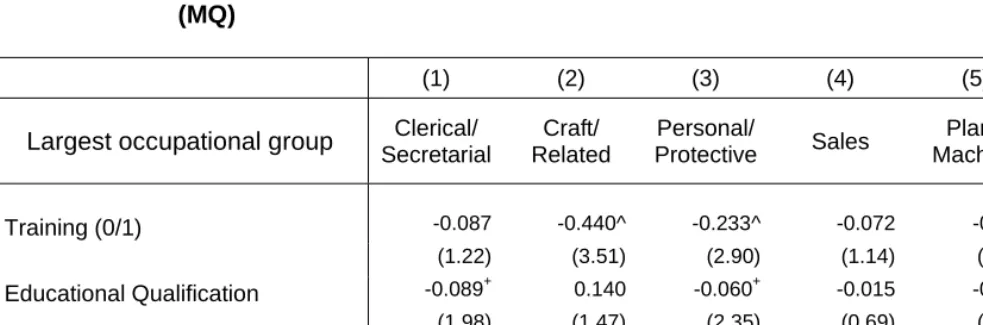
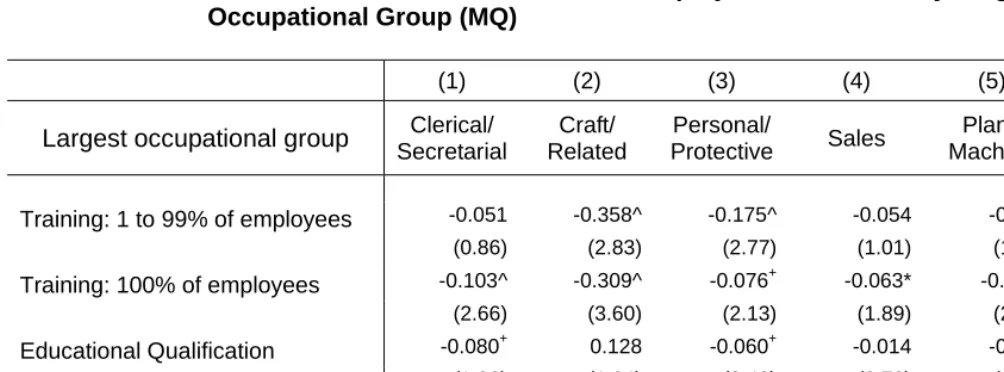
size and age into account, establishments which provided training to the largest occupational group of
Craft occupations were 44 percentage points less likely to close down after 6 years than those which did
not provide training for this largest occupational group. Similar results were observed for Personal
Service staff (23 percentage points less likely to close) and Routine Unskilled (21%). Again, these
patterns were reflected in industry sector, where, for example, establishments which trained their largest
occupational group in Construction were 67 percentage points less likely to close and those in Hotels
and Restaurants 58 percentage points less likely to close than those which had not provided such
training. An exception is Other Business Services where training establishments are more likely to close,
but, those with higher levels of education are less likely to close. This emphasises the importance of
considering training need and the relevance of training across different circumstances.
The report notes some limitations to the study. First, while the data covers off-the-job training it does not
cover informal training, and the management-provided data does not cover all types of employees in the
workforce. Second, while many observed factors are controlled for, some unobservable factors might
have been generating some of the association between training and closure. Our findings are thus
subject to the usual caveats about inferences drawn from cross-section data.
The study also investigated the determinants of training using longitudinal data drawn from WERS,
allowing the study to take into consideration the impact of unobserved establishment characteristics
which may be important determinants of training but which are not otherwise observed in cross-section
analysis. The study finds that the characteristics identified as important in earlier studies are also
identified in this longitudinal analysis, this organisation size has a positive effect on the proportion of
employees trained in the largest occupational group, but a high proportion of female employees has a
negative effect.
Implications
The conclusion that training participation affects the chances of establishment closure implies that those
establishments that do not train at all have under-invested in training. The conclusion that training
intensity makes little or no difference to the risk of closure suggests that, among training establishments,
the amount of training may be close to the optimal amount. This arises if managers of training
establishments are better attuned than their non-training counterparts in recognising the efficacy of
judgements regarding appropriate levels of training investment. In contrast, it may be that managers that
do not train at all have given insufficient thought to the benefits of training and hence their survival
chances are diminished. Given these findings, the report argues that the general policy implication is
that attempts to influence businesses through persuasion and advice should be concentrated as far as
possible on non-training establishments i.e. where under-investment is sub-optimal and inhibiting
performance and indeed long-term prospects. Among training establishments, interventions and advice
could still be focussed on providing services and improving training quality. The case for dissemination
and training market interventions to promote the wider benefits (social returns) of training arising through
labour mobility are not affected by the findings of this report. It serves to highlight an important role for
Chapter 1 - Introduction
1.1 Overview
This study reports the empirical findings of the research project “Training and Establishment Survival”
which has been funded by the Sector Skills Development Agency (SSDA) to help inform one of the 3 key
research themes of the SSDA - “Understanding the demand for skills, the links between skills and
performance”. The study builds upon an array of emerging evidence which posits a positive link
between employer training and business performance. In particular, the research seeks to throw light on
the relationship between off-the-job training and business performance as captured by the commercial
survival of establishments in Great Britain over recent years. It also seeks to generate new estimates of
the determinants of job training at the establishment level. As such, the study aims to develop our
understanding of the links between skills and performance, and to provide insight into the drivers behind
skills demand and employers’ skills requirements. The respective consequences for policy formation are
also considered.
Many studies have sought to explore the relationship between skills and economic performance,
whether at the level of the individual, the firm or of the country as a whole. However, remarkably little is
known about the relationship between employer training and the financial performance of companies.
There are several studies which provide evidence that employer training benefits employees (examples
are Bartel, 1995; Blundell et al, 1996; Green et al, 1996; Booth et al, 2003; Vignoles et al, 2004). A
number of other studies provide evidence to support the view that employer training may have positive
effects on organisational productivity (e.g. Holzer, 1993; Alba-Ramirez, 1994; Zwick, 2002). Nonetheless,
few existing studies directly examine the longer term impacts of training on business performance.
Knowledge of the link between training and business performance is a useful input for business
development and policy making. If, for example, the returns to training are found to be high for a
particular group of workers, this supports policies and practices that make use of this information to
encourage increased training. By contrast, where the returns to training are less than normal, one could
infer that firms may be spending too much on training though the training could still be too low from
society's point of view (Stevens, 1994 & 1999). In this light, the dissemination of information about the
effectiveness or otherwise of different types of training can thus be viewed as a public good. This has
decades, which have sought to foster training through the dissemination of best practice, and the
promotion of training as good for employers.
Although many firms evaluate their own training expenditures, the benefits of training in terms of
productivity gains, revenue streams or profit rises are difficult (and sometimes impossible) to measure,
even ex post.1 Uncertainty may surround any of several inputs that combine to generate the return to training, including the quality of the training process, the effectiveness of the generated skills in raising
productivity (which may depend also on physical investments), and the extent to which the benefits may
be depreciated through random or induced labour turnover. Such uncertainty makes it hard for a firm to
assess the impact of its training expenditures on profits. As a consequence, there is an increased
likelihood that firms may either over-invest or under-invest in training. Many commentators expect the
latter outcome, arguing that “short-termist” firms will accord disproportionate weight to known current
training expenditures, and less weight to unknown future benefits (Finegold, 1991; and Vickerstaff, 1992).
If short-termism prevails the policy implication is that, if government agencies could influence firms’
perceptions about the effect of training on their profitability, firms would increase their investment in
employees’ skills.
Lacking data on training costs and profits, an alternative approach to considering the impact of training
on establishment performance is to examine the closely-related question as to the impact of training on
medium-term commercial survival. Since survival is presumed to depend on profitability, the conjecture
here is that, if investment in training has an above-normal rate of return for the establishment, then a
marginal increase in training will enable the establishment to increase its chance of commercial survival.
The converse also applies: If training expenditures are too high, then a reduction in training would be
associated with a greater chance of survival.
1.2 Research Objectives
This study utilises the link between profitability and establishment survival to investigate the impact of
training on business performance as measured by commercial survival utilising two substantial and
nationally-representative data sets drawn from the Workplace Employee Relations Surveys Series,
concerning a broad range of industrial relations and employment related issues across almost every
sector of the economy in Great Britain. The WERS 98 and WERS 2004 data provide establishment level
evidence concerning the incidence of off-the-job training and the degree of such training undertaken by
the largest occupational group. The WERS 2004 data also provide objective evidence of establishment
performance as measured by the commercial survival (or closure) of those establishments surveyed in
WERS 98. The ability to observe establishment level off-the-job training alongside the medium-term
commercial survival of each establishment permits a quantitative analysis of the association between
off-the-job training and the commercial survival of establishments in Britain over recent years. It also permits
a longitudinal investigation into the determinants of training at the establishment level. The latter is
important in helping to identify causal determinants of training whilst avoiding any biases associated with
unobserved characteristics of establishments that remain fixed between periods.
Identifying the key drivers which underpin the demand for training is essential to further our
understanding of employers’ skills requirements and the constraints they face therein. Likewise,
evidence on the association between training and business performance, gleaned from a nationally
representative sample of establishments, can contribute to the information set upon which the private
judgements of firms are made, and assist policy-makers in the Sector Skills Councils and elsewhere
whose aim may be to affect the amount of employer training through the engagement with employers
and the dissemination of information, without the need for costly public subsidies or unpopular levies.
The objectives of the report are therefore:
1) to discuss the theoretical and empirical background to the impact of training on establishment
survival
2) to identify the key research questions for investigation
3) to outline the methodology used in the empirical analyses
4) to present evidence on the relationship between training and the economic survival of
establishments, and
5) to present evidence on the determinants of training in a longitudinal panel of establishments
1.3 The Report Structure
The report proceeds as follows.
Chapter 2 provides a précis of the existing empirical literature on the effects of training on business
performance and is used to motivate and contextualise the research questions of the current study within
the existing literature. The Chapter provides an overview of the evidence on the relationship between
training, profitability and other agreed measures of economic performance. Since this body of research
is small, this part of the study is relatively brief and does not seek to re-visit in detail areas covered
adequately by other recent overviews of this field (e.g. Tamkin, 2005). The Chapter also provides a
simple exposition of the relation between training, profits and establishment survival by considering how
the training decision of establishments depends upon beliefs about the efficacy of training on productivity
and future profits.
Chapter 3 presents an overview of the Workplace Employee Relations Surveys (WERS). The chapter
describes the survey design of the WERS 98 Cross-section and WERS 2004 Panel Survey and
considers the information contained therein that can be utilised to undertake a quantitative analysis of
the link between training and commercial survival. The chapter explains how the (discrete) commercial
survival outcome of establishments over the period 1998-2004 can be identified using these two data
sources. It then proceeds to provide a discussion of alternative measures of training that can be derived
from the Survey of Managers (MQ) and the Survey of Employees (SEQ) using the WERS 98
Cross-section.
Chapter 4 provides a descriptive statistical analysis of establishment closure and the incidence and
degree of training undertaken across establishments using the WERS 98 and WERS 2004 data. The
Chapter examines the distribution of employment by gender and employment status, and then proceeds
to examine the distribution of employees and establishments by occupation, industry and establishment
size. The Chapter also considers the distribution of establishment closure and training at both the
sectoral level and across occupational groups. As stated previously, the discrete variable of commercial
closure is an indirect indicator of the medium to longer-term profitability of an establishment.
Chapter 5 contains the main analysis of the study and discusses the empirical findings of the report. The
Chapter first reports the results of a bivariate analysis of establishment closure according to both the
training on closure are due to differences between those disaggregated groups. The Chapter then
proceeds to report multi-variate probit analyses of the impact of training on establishment closure having
controlled for additional determinants of commercial closure as identified in previous studies.
Disaggregate analyses which investigate whether there are differential effects of training on closure
across occupational and industrial groups are also reported.
Chapter 6 investigates the determinants of employer provided off-the-job training using the 1998-2004
longitudinal component of the WERS 2004 data. Unlike most previous studies which utilise cross-section
data, the Chapter utilises a panel fixed-effects specification that is able to control for important time
varying processes and establishment specific effects. The Chapter provides a brief literature review on
the determinants of training and an overview of the 1998-2004 panel data focusing on the distribution of
training. It then presents first estimates of the determinants of training using both Ordinary Least
Squares (OLS) and panel fixed-effects (FE), and draws relevant conclusions regarding the perceived
wisdom of existing studies using conventional cross-section data.
Chapter 7 summarises the main empirical conclusions from the above analyses and provides an
interpretation of the empirical findings. The Chapter draws relevant policy implications of the study and
considers important avenues for future research which may help to shed further light on the relationship
Chapter 2 – Training and Business Performance
2.1 Previous Evidence on Training and Business Performance
There is now an established body of evidence that employer training benefits employees through
increased wages (e.g. Bartel, 1995; Blundell et al, 1996; Green et al, 1996; Booth et al, 2003; Vignoles
et al, 2004).2 The magnitude of estimates differs, reflecting differences in the training measures and in training quality across data sets. There is also evidence that the returns to training are greater for those
chosen to receive it than for those not chosen (e.g. Vignoles et al, 2004), suggesting that firms are at
least to some extent rational in allocating their training budgets between workers. There is also growing
evidence to support the view that training has positive effects on individual or organisational productivity
(e.g. Holzer et al, 1993, for the US; Zwick , 2002, for Germany; Alba-Ramirez, 1994, for Spain).3 An
exception, notable because of the high quality of its data, is the finding reported by Lynch and Black
(1995 & 2001) that the numbers of employees in training in US manufacturing establishments has no
significant impact on contemporaneous productivity.4
Barron et al (1989), Bishop (1994), and Dearden et al (2000) agree with each other in finding that productivity gains are greater than employees' wage gains. We should expect the value of the
organisational productivity gains to exceed employees' wage gains for two reasons. First, if employers
are to obtain a positive return to training, unit labour costs need to fall – the more so, the greater are the
up-front training costs borne by the employer. Second, we expect there to be benefits to training that are
external to the individual trainee but internal to the organisation. This happens because others in the
organisation also benefit from working with newly skilled workers, and because training can act as a
gateway through which knowledge and expertise enter the organisation, improving the work-based
learning of other employees (Eraut et al, 1998). Kitching and Blackburn (2002) investigate the impact of
training (including informal training) on business performance among small firms with 2-49 employees
utilizing quantitative and qualitative data, the latter being drawn from face-to-face interviews with 50
employers. They report that training gives rise to better business performance: those employers who
measure the benefits of training have greater chances to improve business performance; likewise, those
employers who have a strategic orientation to training are more likely to experience growth in both
employment and real sales.
2
There are other benefits too. Dearden et al (1996) and Green et al (2000) report that company training
has modest effects on indirect indicators of performance such as labour turnover and mobility. Finally,
Booth and Zoega (2000) suggest that training helps to attract good quality workers.
Yet, lacking information on training costs, the above studies do not generate estimates of any impact of
training on financial performance. This objective is achieved by two "econometric case studies", where
findings are based on individual performance data drawn from a company's internal records, including
cost data. Bartel (1995) computes rates of return ranging from 7 to 50 per cent for a large manufacturing
company; while estimates from Krueger and Rouse (1998) imply a return of 7 to 9 per cent (Bartel, 2000).
In both studies, training's effect is derived from the impact on individuals' performance in the first year
after training. Cosh et al (2003), using the survey data set of Dun & Bradstreet, consider whether training
has an impact on profitability and labour-market conditions. They report that training expenditure per
establishment yields a significant and positive impact on employment and/or turnover growth. They also
report that the change in the profit margin is in general positively correlated with training expenditure per
establishment. This latter effect appears stronger among smaller establishments. However, the impact of
training on the profit margin is less significant once training is measured by training expenditure per
employee. Furthermore, the authors are unable to identify a significant relationship between training
intensity and productivity growth for either training measure.
Also relevant are studies that find an impact of human resource management policies on performance.
Although there is as yet no consensus as to how bundles of the human resource practices are
constructed or indeed suitably measured, influential studies by Huselid (1995), Huselid and Becker
(1996) and by Ichniowski et al (1997) point to the conclusion that introducing modern human resource
management systems that include high training levels tend to raise profits. Michie and Sheehan-Quinn
(2001) also report a positive correlation between Human Resource Management (HRM) systems that
include training and a subjective measure of financial performance.
Ichniowski et al find the impact of the choice of HRM systems to be large and argue that it is only the switching costs of moving to a high performance system that prevents firms exploiting the profit gains.
An alternative argument is that firms may be unaware of the potential gains. In these studies, the impact
of training is likely to be greater if accompanied by other elements of a human resource policy bundle,
such as consultative committees or appraisal schemes. Nevertheless, the precise impact of training
within systems of HRM is unclear, since the studies typically do not present estimates of the effects of
of the impact of these High Performance Work Practices (HPWPs) on business performance and
considers the implications of the wider evidence on skills, training and HR for employers. Godard (2004)
also provides a critique of this high-performance paradigm.
Hitherto, studies of workplace closure have (to our knowledge) not considered any potential role for
employer training. The emphasis of these studies has been on whether unionism is detrimental to
establishment survival (Machin, 1995; Bryson, 2001), or, relatedly, whether plant closure is linked to
conflict in industrial relations (Kirkham et al, 1999). Such studies also focus on the role of greater market
power and/or better financial performance in reducing the chances of plant closure. Other researchers
have emphasised the importance of entry size and of early entry in the product life cycle (Klepper and
Simons, 2000), the stock of professional and technical workers at the establishment together with
investments in research and development (Hage et al, 1993), and the role of higher technology and
ownership in reducing the chances of closure (Agarwal, 1996; Colombo and Delmastro, 2001).
This brief overview of existing studies has revealed that remarkably little is known about the impact of
employer training, or of human capital generally, on the financial performance of companies. Moreover,
few existing studies directly examine the longer term impacts of training. In view of the importance of this
empirical issue, this knowledge gap in the research and policy-making community might seem surprising,
leading one to ask why more is not done to investigate the issue more comprehensively. An obvious but
significant reason is the lack of appropriate data sets with adequate information on profitability, and
accurate data on the sums invested in training.5 Clearly, both data are required for computing the rates
of return to training.
As stated previously, an indirect approach around this problem is to consider the longer-term impact of
training on establishment survival. This is the approach taken by Collier et al (2005). Using data taken
from the longitudinal element of the Workplace Industrial Relations Survey (WIRS3) 1990-1998 and the
1991 Employers’ Manpower and Skills Practices Survey (EMSPS), they derive the commercial survival
or failure of an establishment. The impact of training investment is then evaluated against this objective
indicator of establishment performance. Since the EMSPS data affords detailed measures of the annual
training given to each occupational group in the organisation, the authors are also able to distinguish
between the effects of training different sections of the workforce. Accordingly, they find that increased
training of non-manual workers in large establishments (defined as establishments with 200 or more
increase in the average establishment’s training of non-manual workers is associated with a 0.8
percentage point reduction in the risk of closure. This is a notable efficiency gain when set against an
average closure rate of 14 per cent over the entire period. Notably, finer disaggregation of the data
reveals that the association differs across occupational groups. In smaller establishments which employ
less than 200 employees, increased training for Craft and Technical workers is associated with better
chances of survival, while for Professional workers the opposite effect is found.
The study by Collier et al is important because it provides a useful first step in approaching a better
understanding of the link between training and firm performance. Since the study uses survey data
drawn from all (private) sectors of the British economy (subject to a minimum of 25 employees in the
establishment), the findings can be regarded as applicable in a wide range of contexts. Nonetheless, the
data utilized is now relatively dated and as such raises questions as to whether further insight can be
gleaned on the relationship between training and business performance. Not least, both the quantity and
quality of employer provided training have increased since the beginning of the 1990s perhaps reflecting
greater awareness among employers of the need for training in order to meet skill requirements and the
increased policy emphasis on skills in recent years.
It is in this regard that the current study seeks to build upon the existing literature. Utilising the
methodology of Collier et al, the study investigates the impact of training on business performance
utilising more recent data drawn from the 1998 cross-section and 2004 longitudinal component of the
Workplace Employment Relations Survey (WERS). The WERS 98 data provide detailed indicators of
whether each of eight largest occupational groups within establishments are given training and, if so,
what proportions of employees are trained. By contrast, the longitudinal component of WERS 2004
provides objective evidence of business performance as measured by the commercial survival (or
closure) of those establishments surveyed in WERS 98. As such, the combined WERS data facilitate
further enquiry of the relationship between training and establishment performance over a period of time
when training and education have been at the forefront of the government’s policy agenda to promote
2.2 Training Beliefs, Business Performance and Establishment Survival
Identifying a link between business performance and establishment survival is relatively straightforward.
It is commonly assumed that the objective of a firm is to maximise profits. In the case of a firm with
multiple establishments, the central management will wish to expand those parts of the firm that are
profitable and close down unprofitable parts. Thus, the manager of a specific establishment will wish to
be as profitable as possible to avoid closure by the central management or through take-over/merger.
Similarly, for the case of a single plant firm, the management will wish to maximise profits so as to avoid
closure through bankruptcy or take-over. Of course, a firm might close down for personal rather than
financial reasons (e.g. retirement or ill health of the owner, where the owner does not want to sell up),
but closures of this type are very much the exception and are more relevant in the case of very small
enterprises with only a few employees. This study is restricted to establishments that have at least 10
employees. Amongst these establishments, closure is directly linked to profitability. In this regard, the
medium-term commercial survival or closure of a company can be considered a good indicator of
business performance.
However, identifying the potential effects of employer-provided training on profitability (and hence
commercial survival) requires greater consideration. Firstly, one must consider why employers seek to
provide training for employees. Secondly, one must also recognise that employer-provided training is an
outcome of two decisions – those of the employer and the employee. For employees, the decision to
undertake such training will be dependent upon their expectations regarding the future benefits of
training either in higher wages (reflecting higher productivity) and/or increased knowledge/job security
within the workplace.6 For employers, the decision is normally assumed to depend on expectations
regarding post-training productivity gains and the reduced costs associated with lower labour turnover.
Yet in deciding how much resource to devote to training, and where best to allocate it, the employer
generally lacks any precise metric. How a firm benefits from training its employees can sometimes be
captured through measures of improved job performance. However, the impact on organisational
productivity and a fortiori on profits has typically to be a matter of judgement in the face of uncertainty.
A general presumption of economic theory is that in a competitive market investments would receive a
normal risk-adjusted return on capital. If there is too little investment, the returns would be high and more
investments would be made; but beyond some optimal point there would be diminishing returns, so that
great uncertainty, so the returns can deviate from a normal rate without there being a
market-equilibrating reaction. It is thus quite possible for a firm's marginal returns to training investments to be
substantively above or below a normal rate of return without stimulating an adjustment in the size and
distribution of its training budget. The effect of such uncertainty in the economic returns to training is that
the amount of training can be influenced by the “culture” of a firm, and more particularly by the beliefs of
managers about training’s effectiveness. Moreover, differences in those beliefs which result in more or
less training could then be reflected in market returns that deviate from the normal return, with
consequent implications for the chances of commercial survival.
If one assumes that some part of employer-provided training is in effect firm-specific, then there is no
difficulty in rationalising why firms have an incentive to invest in training. How much training firms should
provide can then be shown in a formal logical model to depend on their beliefs about the efficacy of
training.7 If one abstracts from thinking about the impact of training on profits to the impact of training
upon commercial survival, the decision about how much training to provide is concerned with maximising
the probability of survival with respect to the proportion of the labour force trained. The probability of
survival across several periods of time depends on the profits obtained in each period. The impact of
training on combined profits over time is, however, uncertain. Training expenditures incur costs which
reduce profitability (and hence the probability of survival). These expenditures raise subsequent
profitability (assuming the training raises productivity) but the true economic returns to such training are
unknown. Management has a perception about the efficacy of training. However, perceptions about the
efficacy of training differ across establishments. Accordingly, differences in perceptions about the
efficacy of training will give rise to differences in the levels of training investment.
One can think of this link between perceptions about the efficacy of training and levels of training
investment in simple terms by comparing “pessimistic” and “optimistic” managers/establishments.8
Relative to establishments with a pessimistic view on the efficacy of training, optimistic establishments
will believe that any given positive level of training generates greater expected second period profits.
They will also believe that an increase in training gives rise to a greater increase in second period profits.
Hence, relative to establishments with pessimistic beliefs, establishments with more optimistic beliefs will
choose to invest more in training. This theoretical finding is important because it demonstrates logically
that beliefs are important. For each firm, there is an unknown optimal amount of training which would
maximise the probability of survival in an uncertain commercial world. However, unduly pessimistic
7
For a full exposition of our theoretical model, see Collier et al (2005) 8
managers choose training levels below that optimal level, while unduly optimistic managers would
over-invest in training. Among a group of pessimistic establishments one would find a positive relation
between training and subsequent survival, while the opposite would be true for a group of optimistic
managers.9
This conclusion is important for our research because it gives us a way of indirectly determining the
beliefs of managers/establishments about training, and about whether their chosen training levels are
above or below the optimum. If one observes in reality a positive relation between training and survival
probability (after allowing for other causal factors), one could infer that on the whole their views are
pessimistic relative to the optimal amount of training. The opposite inference could be made if training
and survival are found to be negatively related, while if there is no demonstrated relationship (and the
data is well-measured) one could conclude that managers are choosing the right amount of training. 10
The policy significance of this modelling approach is that, if there is empirical evidence of mainly
pessimistic beliefs, there is a rationale for government intervention with demonstration projects to show
the profitability of investment in training. As noted in the introduction, it has frequently been the objective
of successive governments to raise firms’ expectations about the profitability of training through the
dissemination of best practices and without the need for costly public subsidies or unpopular levies. This
view fits with the widely held belief that British companies have under-invested in training activities
typically because they underestimate their true economic value. Evidence to support this view would
vindicate this past approach to policy and would reinforce the need for greater engagement with
employers to ensure that the full economic benefits of training are recognised both in the workplace and
across the economy as a whole. On the other hand, if it is found that there is no relationship between
establishment survival and training expenditures, and provided one can be confident that there are no
major measurement errors leading to downward bias in the estimated effects, it could then be argued
that there is no need for the government to try to persuade employers to invest more in training than they
are already doing. The findings from the research can therefore be thought of as a public good,
generating information from which employers can benefit through improving their decision-making in this
uncertain field.
9
Chapter 3 – The Workplace Employment Relations Surveys (WERS)
The study utilises data drawn from the 1998 Cross-section and 2004 Panel component of the Workplace
Employment Relations Survey (WERS). WERS 98 and WERS 2004 are the fourth and fifth in a series of
surveys carried out at British workplaces for central government and other funders.11 Both surveys are
based on a stratified random sample of establishments and a sample of employees at those
establishments. The WERS 98 Cross-section Survey consists of a sample of just under 2,200
establishments drawn from both the private and public sectors of the British economy subject to a
minimum of 10 employees in the establishment. The WERS 2004 Cross-section Survey was widened in
scope to include establishments with 5-9 employees, and incorporates an increased sample size of just
under 2,300 establishments. The Panel Survey of WERS 2004 retraces those establishments that took
part in the WERS 98 Cross-section and provides objective evidence of whether they are still in existence
or have subsequently closed down.
In addition to the richness of the information contained in these surveys, an advantage of using this data
is the high quality of data collection, resulting in largely reliable evidence. After proper allowance through
weighting for the stratified sampling methods, the findings presented in this report can be expected to
apply without bias to the national population of establishments. In this context, the current chapter
provides a short overview of the WERS data and of the WERS survey design. A descriptive overview of
the WERS establishments and their characteristics is provided in Chapter 4.
3.1 WERS 98 Cross-section Survey
The WERS 98 cross-section is a nationally representative survey of 2,191 British establishments with 10
or more employees in all sectors excluding agriculture, forestry and fishing, and coal mining. The survey
collected information from a wide range of establishment representatives including managers with
responsibilities for employment relations or personnel, trade union or non-union representatives, and a
random sample of 25 employees.12 For the purposes of this study, we utilised data from both the Survey
of Managers (MQ) and the Survey of Employees (SEQ) and at best 2,062 establishments for the sample.
11
3.1.1 Survey of Managers (MQ)
The Management Questionnaire consists of two parts: a self-completion Employee Profile Questionnaire
(EPQ) and the Main Management Interview itself. The EPQ was sent to the workplace in advance of
each interview, to be used for the recording of workforce data that may require the respondent to consult
workplace records. As such, the EPQ provides a detailed breakdown of each workforce by employment
status, gender, race, age and occupation. The EPQ is utilised throughout the Main Management
Questionnaire and assists in routing questions that relate to the largest occupational group within an
establishment.
The Main Management Questionnaire was conducted on-site by a trained interviewer, using Computer
Assisted Personal Interview (CAPI) technology. The main objective of the Management Questionnaire is
to examine the characteristics of establishments and employers. Such characteristics include the size,
type of business and ownership of establishments, employers’ skill needs, recruitment practices and
training, trade union representation and fair treatment at work, along with payment systems and pay
determination. In particular, the MQ provides a breakdown of employment across establishments
according to nine major occupational groups using the 1-digit Standard Occupational Classification
(SOC) 1990 and twelve industrial groups using the Standard Industrial Classification (SIC) 1992 (see
Annex III for the SIC coding frame).
The MQ also enables us to analyse the distribution of establishments at the more disaggregate level of
Sector Skills Councils (SSC) sectors. The SSC sectors are not available using the main release of the
WERS 98 data. However, more detailed information concerning industrial classification is available using
restricted files held by the Department of Trade and Industry (the official depositor of the data). We
utilise this more detailed information to code establishment across 28 SSC sectors. This yields a final
working sample of 2,036 establishments from the WERS Surveys which may be used for statistical
analyses. The analysis for the SSC sectors is reported separately in Annex II.
The Management Questionnaire contains information on a variety of training measures for the largest
occupational group in each establishment. Three major types of training are identified in the data
including an induction programme for new employees, formal off-the-job training to experienced
employees in the largest occupational group, and formal training to enable employees to do jobs other
where off-the-job training is defined in the survey as “training away from the normal place of work, but
either on or off the premises.” The data records this information in the survey both as the proportion of
experienced employees having received training in the past 12 months and the average duration of such
training. We utilise this information to consider two distinct measures. The first measure is a simple
dichotomous measure of whether or not the establishment is a provider of formal off-the training to any
experienced employees in the largest occupational group within the establishment. The second measure
identifies the average number of days experienced employees spent in formal off-the-job training (i.e.
training intensity) in the preceding 12 months.
A cautionary note must be added concerning the distribution of the above training measures across
occupations. Whilst the EPQ provides a detailed breakdown of the workforce by 1-digit SOC, the survey
design of the MQ does not permit the identification of Managers and Administrators to be the largest
occupational group within the establishment. Accordingly, where the EPQ identifies this occupational
group as being the largest within the establishment, survey respondents of the Management
Questionnaire have been asked to discuss the second largest occupational group within the
establishment. For a very small sample of establishments, this procedure did not appear to be adopted
correctly at the time of interview. As such, 15 establishments in the 1998 cross-section data report
Managers and Administrators as being the largest occupational group. These observations are
erroneous and are accordingly excluded from the sample for statistical purposes.
3.1.2 Survey of Employees (SEQ)
Whilst the Survey of Managers provides an important insight into the incidence and degree of formal
off-the-job training undertaken by the largest occupational group within each establishment, additional
information can be gleaned from the WERS 98 Survey of Employees (SEQ). The SEQ was drawn from a
random sample of 25 employees at each establishment employing 25 or more persons. For
establishments with fewer than 25 employees, all employees were included in the scope of the survey.
The Survey of Employees contains information concerning employees’ views about themselves, their
jobs and their workplaces. Accordingly, the survey provides information on a wide range of issues
including the number of years of company experience (i.e. job tenure), employment status, union or
non-union representation at work, gender, age, educational attainment, occupation and salary. Importantly,
their normal duties to undertake it.
As in the Management Questionnaire, we consider two distinct measures of training. Once again, the
first measure is a dichotomous variable identifying whether or not the employee has received any
training from his/her employer. The second measure identifies the extent of such training as measured
by the average number of days spent training during the past 12 months. Although the training measures
here do not relate directly to formal-off-the-job training, employee responses are available across the full
1-digit spectrum of occupations. Hence, we are able to glimpse some insight into the extent of such
training for Managers and Administrators and other occupations alike.
An overview of the training measures derived from the Survey of Managers and the Survey of
Employees is outlined further in Chapter 4.
3.2 WERS 2004 Panel Survey
The Panel (longitudinal) component of WERS 2004 was selected from the WERS 98 achieved sample of
2,191 Cross-section interviews using a stratified random sample defined by establishment size at the
time of the 1998 interview. Of the 2,191 establishments interviewed in the WERS 98 Cross-section
Survey, 1,479 establishments were issued for the longitudinal component of WERS 2004. The remaining
712 establishments were also contacted to establish their continuing existence as an establishment with
10 or more employees. Hence, the longitudinal component of WERS 2004 provides an objective
measure of the commercial survival of all 2,191 establishments interviewed in the WERS 98
Cross-section Survey.
Of the 2,191 establishments interviewed in WERS 98, 1,916 establishments were found to still be in
existence whilst 273 establishments were identified as having closed down. The ongoing existence of
establishments could not be determined in 12 cases. This results in a within sample establishment
closure rate of 12.6% between the 1998 and 2004 WERS cross-sections and equivalently, using survey
weights, 14.8% of establishments in the economy. More disaggregated analysis of establishment
survival (closure) is provided in Section 4.2 of Chapter 4.
Linking the establishment survival outcomes derived from the WERS 2004 Panel Survey to the WERS
establishment observations from the WERS 98 cross-section data for which the occupational distribution
of employment and/or indicators of formal off-the-job training are either incomplete or missing.13
Combined with the 12 establishments whose ongoing existence could not be traced in the Panel
component of the WERS 2004 data, this yields a final working sample of 2,062 establishments from the
WERS Surveys which may be used for statistical analyses. The next chapter provides a descriptive
overview of these 2,062 establishments across a range of socioeconomic variables including
employment status, occupational, industrial and sectoral classification, and the incidence of both formal
off-the-job training and commercial closure.
13
Chapter 4 – Sample Characteristics
This chapter reports the results of the descriptive statistical analysis of the Workplace Employment
Relations Survey (WERS) data which are used to construct measures of employer training and business
performance. The descriptive analysis is disaggregated across a range of socioeconomic variables
including occupation, industry and establishment size. Some of this descriptive analysis will be included
in a more comprehensive review of the data in the next chapter. The statistical evidence that is
presented in tables utilises both weighted and unweighted data. Accordingly, inferences concerning the
relationship between training and establishment survival are in general drawn for the UK population of
establishments when using the survey weights.
4.1 Establishment Employment
This section examines the distribution of employment across establishments using the WERS 98
cross-section data. Tables 4.1.1 to 4.1.4.1 utilise employment information drawn from the WERS 98 Survey of
Managers (MQ) to analyse the distribution of employment across establishments across three principal
themes: gender, industry and largest occupational group. Table 4.1.4.2 provides further information on
the distribution of employment by occupation drawing upon information contained in the WERS 98
Survey of Employees (SEQ).
4.1.1 Distribution of Employment by Gender and Employment Status
Table 4.1.1 reports the distribution of employment for WERS 98 by gender and employment status. The
table reveals that the proportion of male and female employees across establishments in the economy is
very similar (50.5% and 49.5% respectively). However, there is a notable difference in the distribution of
gender by employment status. Part-time employees account for approximately 27% of total employment
in the economy. More than 90% of male employees are employed on a full-time basis. Part-time male
employees account for 5% of total employment. Unlike male employees, only 55% of female employees
are employed on a full-time basis. This descriptive analysis is largely unaffected by the use of the WERS
Table 4.1.1 - Total Employment by Gender & Employment Status
Male Female Total
Part-time 29,442 128,323 157,765
(%) (5.0) (21.9) (26.9)
(Weighted %) (5.2) (21.4) (26.6)
Full-time 267,232 161,379 428,611
(%) (45.6) (27.5) (73.1)
(Weighted %) (45.3) (28.1) (73.4)
Total 296,674 289,702 586,376
(%) (50.6) (49.4) (100)
(Weighted %) (50.5) (49.5) (100)
Sample: All establishments (2,062) with 10 or more employees.
4.1.2 Distribution of Employment by Establishment Size
Table 4.1.2 reports the distribution of establishments by establishment size which is measured by the
number of employees within each establishment. The sample is divided into six size groups. According
to the table, half of total establishments in the economy are small establishments with between 10 and
24 employees. Overall, the proportion of establishments tends to decline as establishment size
increases. Small establishments with up to 99 employees appear to cover almost 90% of total
establishments in the economy. Note that the distribution of establishments here differs from other data
sources (e.g. the Annual Business Inquiry) due to the WERS sampling frame and the exclusion of small
businesses with less than 10 employees. Nonetheless, the WERS data is otherwise representative and
enables a discrete analysis of establishment size.
Table 4.1.2 Total Employment and Number of Establishments by Size
Establishments SIC92 code
no. (%) (weight%)
10 to 24 employees 251 (12.2) (50.1)
25 to 49 employees 384 (18.6) (26.5)
50 to 99 employees 373 (18.1) (12.4)
100 to 199 employees 364 (17.7) (6.0)
200 to 499 employees 422 (20.5) (3.7)
500 or more employees 268 (13.0) (1.3)
4.1.3 Distribution of Employment by Industry
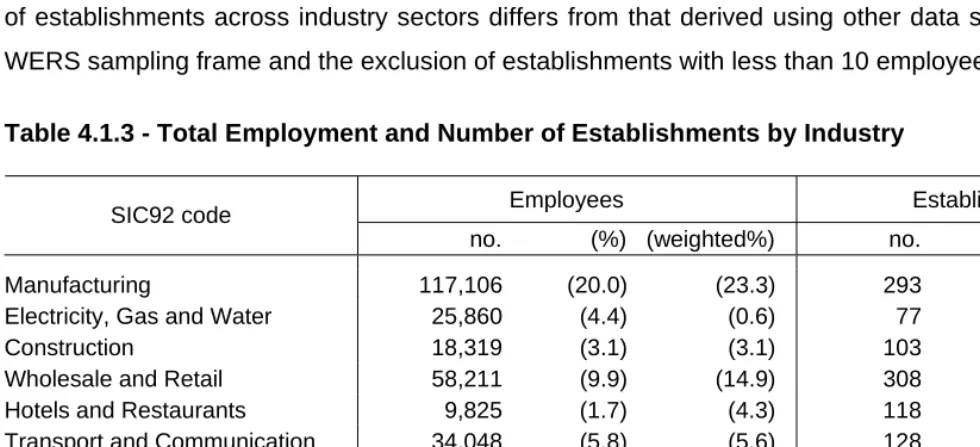
Table 4.1.3 reports the distribution of employment and establishments by industry using Standard
Industrial Classification 1992 (SIC92). The fourth column presents the proportion of employees working
in each of twelve sectors in the economy. Manufacturing is identified as the largest industry of the
economy in terms of employment (23%) and accounts for the third largest number of establishments
(13.2%). Wholesale and Retail is observed as the second largest industry in terms of employment
(14.9%). The smallest share of employment is occupied by the industry of Electricity, Gas and Water
(0.6%).
The final column of Table 4.1.3 reports the weighted proportion of establishments affiliated to each
1-digit industry. The two most prevalent industries identified in the economy are those establishments
affiliated to Wholesale/Retail and Manufacturing. These industries account for 19% and 13.9% of
establishments in the economy, respectively. The least represented industry of the economy in terms of
the number of establishments is Electricity, Gas and Water (0.2%). Once again note that the distribution
of establishments across industry sectors differs from that derived using other data sources due to the
WERS sampling frame and the exclusion of establishments with less than 10 employees.
Table 4.1.3 - Total Employment and Number of Establishments by Industry
Employees Establishments
SIC92 code
no. (%) (weighted%) no. (%) (weighted%)
Manufacturing 117,106 (20.0) (23.3) 293 (14.2) (13.2)
Electricity, Gas and Water 25,860 (4.4) (0.6) 77 (3.7) (0.2)
Construction 18,319 (3.1) (3.1) 103 (5.0) (4.2)
Wholesale and Retail 58,211 (9.9) (14.9) 308 (14.9) (19.0)
Hotels and Restaurants 9,825 (1.7) (4.3) 118 (5.7) (7.7)
Transport and Communication 34,048 (5.8) (5.6) 128 (6.2) (4.5)
Financial Services 30,498 (5.2) (3.6) 96 (4.7) (3.2)
Other Business Services 73,140 (12.5) (9.6) 204 (9.9) (11.1)
Public Administration 53,115 (9.1) (7.6) 167 (8.1) (4.7)
Education 40,561 (6.9) (10.2) 228 (11.1) (13.1)
Health 111,572 (19.0) (14.1) 237 (11.5) (13.9)
Other Community Services 14,121 (2.4) (3.1) 103 (5.0) (5.2)
Total 586,376 (100) (100) 2,062 (100) (100)
4.1.4 Distribution of Employment by Occupation
Table 4.1.4.1 reports the occupational distribution of employment within WERS 98 alongside the largest
occupational group within each establishment. The 1-digit Standard Occupational Classification (SOC)
1990 is used to include nine major occupational groups. The fourth column reveals that the largest
occupational groups in terms of total employment across establishments in the economy are
Clerical/Secretarial occupations and Plant/Machine Operatives occupations (15.7% and 13.1% of all
employees respectively). By contrast, the smallest groups are Personal/Protective Service occupations
and Managers/Administrators (8.2% and 8.6% respectively).
The final column of Table 4.1.4.1 reports the weighted proportion of establishments within WERS 98 for
which each 1-digit SOC90 is identified as the largest occupational group. Across establishments in the
economy, Personal/Protective Service occupations are most frequently identified as the largest
occupational group within the establishment followed by Clerical/Secretarial occupations (20% and
17.2% of all establishments respectively). Associate Professional/Technical occupations (5.3%) are the
least frequently reported across establishments in the economy.
Table 4.1.4.1 - Total Employment and Largest Occupational Group by Occupation (MQ)
No. of employees Largest occupational group
in establishments SOC90 code
no. (%) (weight%) no. (%) (weight%)
Managers/Administrators 42,645 (7.3) (8.6) . . .
Professional 73,921 (12.6) (12.6) 282 (13.7) (12.2)
Associate Prof./Technical 73,620 (12.6) (8.8) 167 (8.1) (5.3)
Clerical/Secretarial 98,254 (16.8) (15.7) 369 (17.9) (17.2)
Craft/Related 63,477 (10.8) (10.7) 225 (10.9) (11.8)
Personal/Protective Service 36,382 (6.2) (8.2) 301 (14.6) (20.1)
Sales 35,764 (6.1) (9.8) 227 (11.0) (13.2)
Plant/Machine Operatives 96,392 (16.4) (13.1) 269 (13.1) (10.7)
Other Occupations 65,921 (11.2) (12.5) 222 (10.8) (9.5)
Total 586,376 (100) (100) 2,062 (100) (100)
Sample: All establishments (2,062) with 10 or more employees.
Note that as discussed in Chapter 3, the design of the WERS cross-section Management Survey does
not permit Managers and Administrators to be identified as the largest occupational group within an
recorded in the data as the largest occupational group have been excluded from the sample for
statistical purposes.
Table 4.1.4.2 reports the occupational distribution of employees using the WERS 98 Survey of
Employees (SEQ). Recall that this survey consists only of a random sample of employees from each
establishment. As such, it is not representative of the occupational distribution of employment across
establishments unless utilised with appropriate weights that reflect the probability of an employee being
selected for interview within a given establishment. This weighted analysis is provided in the final column
of Table 4.1.4.2 and is broadly in line with the weighted occupational distribution of employment reported
in the fourth column of Table 4.1.4.1.
Table 4.1.4.2 - Total Employment by Occupation (SEQ)
Employees SOC90 code
no. (%) (weighted%)
Managers/Administrators 2,962 (10.8) (8.6)
Professional 4,667 (17.0) (13.0)
Associate Professional/Technical 2,815 (10.3) (9.0)
Clerical/Secretarial 5,639 (20.6) (15.9)
Craft/Related 2,164 (7.9) (10.4)
Personal/Protective Service 1,998 (7.3) (8.3)
Sales 2,045 (7.5) (9.6)
Plant/Machine Operatives 2,355 (8.6) (12.9)
Other Occupations 2,767 (10.1) (12.4)
Total 27,412 (100) (100)
4.2 Establishment Closure
This section reports the distribution of establishment closure rates according to whether establishments
which existed in 1998 were still in existence or had subsequently closed down by the time of the WERS
2004 Survey. As discussed in Chapter 3, the within-sample (non-weighted) closure rate across those
establishments sampled in the WERS 98 data is 12.6% and the closure rate for all establishments in the
economy is 14.8%.
4.2.1 Establishment Closure and Establishment Status
Table 4.2.1 provides a simple summary of establishment closure rates when considering the formal
status of establishments. There is a distinct difference in establishment closure rates between the private
and public sector. Public sector establishments account for just under one third (31%) of establishments
in the sample and one quarter (25%) of the UK population of establishments. The closure rate for such
establishments is a little over 5% in both instances. This compares with a closure rate for private sector
establishments of between 16% (within sample) and 18% (UK population). Of course, public sector
establishments may not be exposed to the same commercial and competitive pressures faced by those
establishments operating in the private sector. Indeed, the pursuit of economic profit (and hence
commercial survival) may be less meaningful for many establishments operating outside of the private
sector. Accordingly, the descriptive analysis presented here indicates that the formal status of
establishments will need to be considered in any multivariate analysis of the data that is utilised to
explore further the relationship between employer training and establishment performance.
Table 4.2.1 - Establishment Closure by Formal Establishment Status
Establishments Closure
no. (%) (weighted%) (% establishments
within sector) (weighted%)
Private sector 1,434 (69.5) (75.2) 15.9 17.9
Public sector 628 (30.5) (24.8) 5.1 5.5
Total 2,062 (100) (100) 12.6 14.8
4.2.2 Establishment Closure by Largest Occupational Group & Industry
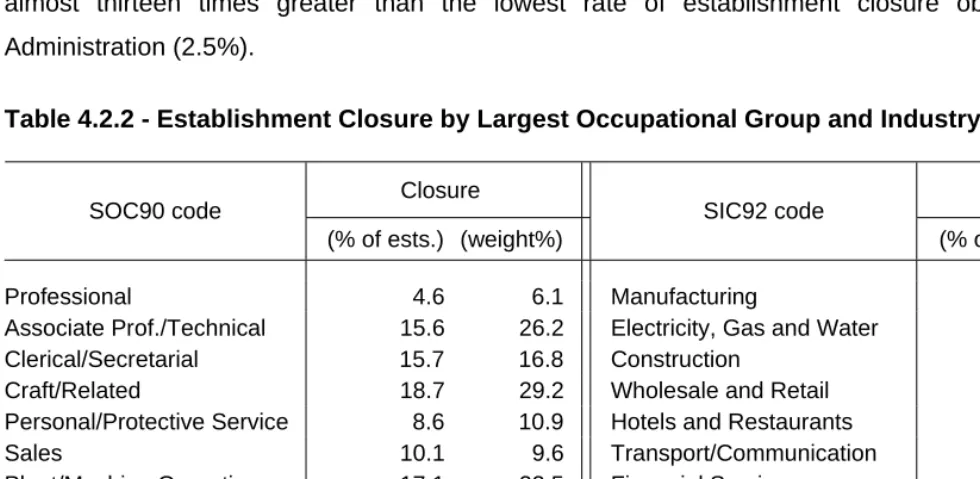
Table 4.2.2 reports establishment closure rates by both the largest occupational group and industry. The
third column of the table reports the closure rates of establishments in the economy by the largest
occupational group. The column reveals that establishments whose largest occupational group is either
Other Occupations or Professional occupations are observed as the group with the lowest closure rates
(5.6% and 6.1% respectively). The highest closure rates appear in those establishments whose largest
occupational group is manual workers in both Craft/Related and Plant/Machine Operatives occupations
(29.2% and 22.5% respectively).
The final column of Table 4.2.2 reports weighted establishment closure rates by industry. The highest
rate of closure across establishments in the economy is observed in the Manufacturing industry (32.7%).
This closure rate is around 18 percentage points higher than the average closure rate (14.8%) and
almost thirteen times greater than the lowest rate of establishment closure observed in Public
Administration (2.5%).