
Flow regime transition criteria for two-phase flow at reduced gravity conditions
Full text
Figure



Related documents
We find that, if H s is more than 500 m above the valley floor for the path geometry of Vallée de la Sionne, entrainment of warm surface snow leads to a com- plete flow
The exception is at very low mass flux where nucleate boiling in the annular flow regime occurs; here the heat transfer coefficient is reduced compared with that in normal gravity..
A new correlation in annular flow regime that accounted for the effect of near critical pressure of such refrigerant and the high temperature of the coolant air in the geometry of
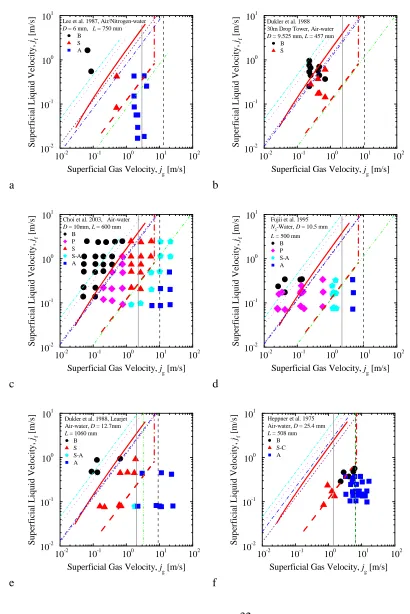
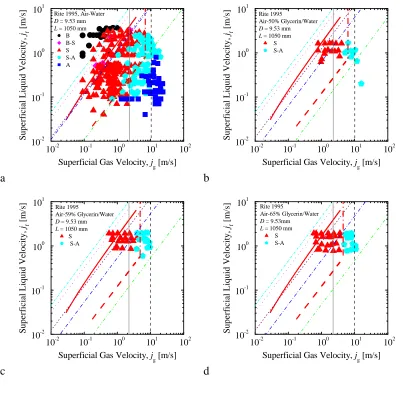
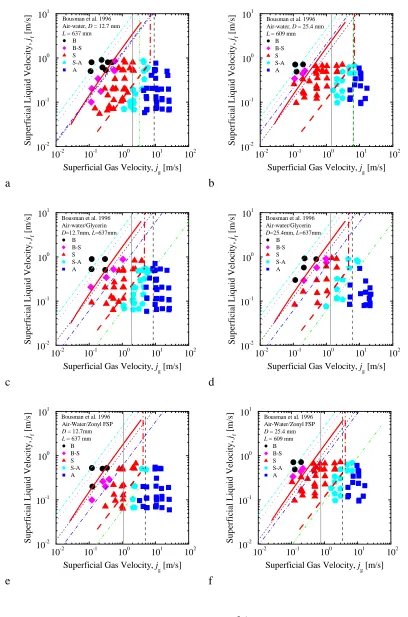
9 that the Hewitt and Roberts map predicts major region of the flow to be in slug- annular transition, while the code written based on the map developed from works of Taitel and
The Eulerian-Lagrangian model for three-phase flows has been constructed since the mathematical validity of the model was confirmed for bubbly two-phase flow in
There is a wide use of two-phase flow in the process and related industries as it includes various flow regimes, such as annular, slug, stratified, and bubble.. There are
Overall, the study contributes towards improving the characterisation of the transition flow by assembling analytical solutions for different two-phase flow parameters, including
This review demonstrates that: (i) channel size has a significant effect on the morphology of gas–liquid two phase flow, (ii) the most frequently identified flow patterns are
